Loading summary
Transcript74 lines
- [00:01]
NPR Sponsor Announcer
This message comes from Memorial Sloan Kettering Cancer Center. With nearly 2,000 clinical trials underway, the next cancer breakthrough is just around the corner. Make your triple matched gift@msk.org holidaymatch.
- [00:15]
Emily Kwong
Hey, everyone, Emily Kwong here. Just a word before today's episode 2025 is almost over. And at NPR and our local stations, we are excited to begin a new year. This year was tough, the loss of federal funding for public media attacks on the free press. But despite it all, we are not shying away from our jobs, from exercising the critical right to editorial independence guaranteed by the First Amendment. With your support, we will continue our work without fear or favor, and we will continue to produce a show that introduces you to new discoveries, everyday mysteries and explains the science behind the headlines. If you're already an NPR supporter, thank you. And if you're not a supporter, please become one today before the end of the year, at least. @plus.NPR.org Sign up to unlock a bunch of perks like bonus episodes and more from across NPR's podcast. Plus, you get to feel good about supporting public media while you listen. So end the year on a high note and invest in a public service that matters to you. Visit plus.NPR.org today. Thank you. You're listening to Short Wave from NPR. Hey, shortwavers. Emily Kwong here with Rachel Carlson, one of our show's producers. Hey, Rachel.
- [01:30]
Rachel Carlson
Hey, Emily. So I am here today to talk to you about something becoming more popular. It's called kratom or kratom. People pronounce it both ways, but a lot of the sources I talked to said kratom. So I think that's what we'll stick with for this episode.
- [01:45]
Emily Kwong
Well, where does kratom come from exactly?
- [01:47]
Rachel Carlson
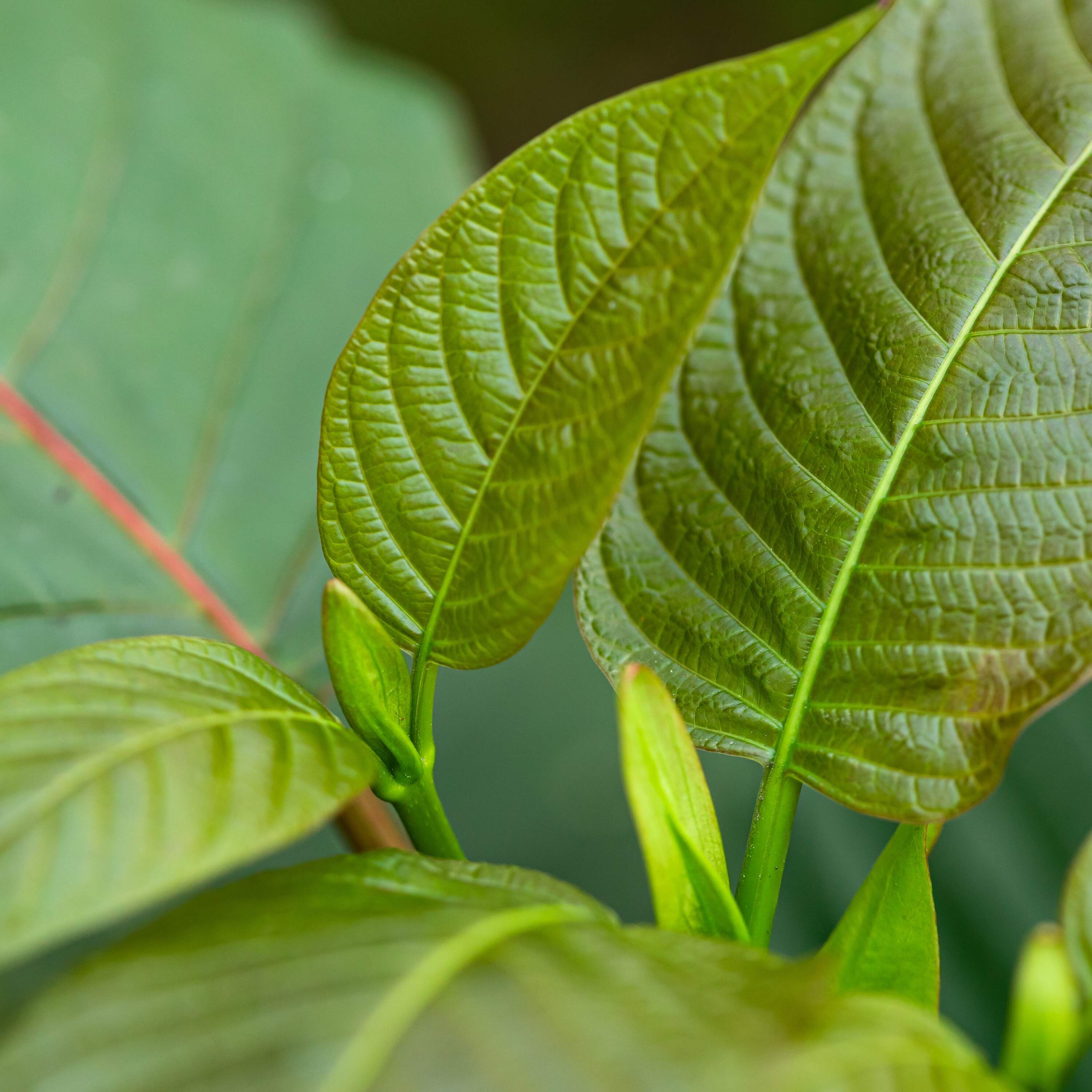
Kratom's derived from tree leaves. It's been used for centuries in Southeast Asia, mostly Indonesia, Malaysia and Thailand, for energy and to treat pain. But in the US it's sort of an umbrella term that includes a bunch of different products like teas, pills, extracts, synthetic goods that all vary in strength depending on how they're made. It's kind of like when someone says cannabis products, that could mean whole leaf or extracts from the leaves or synthetic products.
- [02:16]
Emily Kwong
Okay. So the term kratom could actually mean a bunch of different things.
- [02:19]
Rachel Carlson
Yeah, I've heard it referred to as a drug, as a supplement, as an ingredient. So I asked the fda, the Food and Drug Administration, and they told me in an email statement it depends on the specific product.
- [02:33]
Memorial Sloan Kettering Cancer Center Announcer
Okay.
- [02:33]
Emily Kwong
Complicated.
- [02:34]
Rachel Carlson
And on top of that, there's one compound in the Kratom plant in particular, that's been in the headlines recently. People call it 7OH, which stands for 7Hydroxymetragynine. Some people also pronounce it mitral gyne. But mostly people just say 7 oh.
- [02:50]
Emily Kwong
7 oh. Okay, where do people buy 7 oh?
- [02:54]
Rachel Carlson
You can pretty much buy it anywhere. So it's sold in smoke shops, gas stations, convenience stores. It's possible you've actually seen it advertised on those neon signs that say weed, but instead, it'll say kratom or 7oh in those bright letters.
- [03:10]
FDA Commissioner Marty Makary
7Oh is not just like an opioid, it is an opioid.
- [03:15]
Rachel Carlson
That was FDA Commissioner Marty Makary during a press conference in July. And that's when the FDA said they were recommending certain 7oh products be scheduled alongside opioids.
- [03:26]
FDA Commissioner Marty Makary
Our focus is not on Kratom. Our focus is on 7 oh, which, according to the Journal of Medical Chemistry, is 13 times more potent than morphine.
- [03:37]
Rachel Carlson
But not every researcher I talked to was ready to sound those alarm bells. They told me Kratom and 7oh are at the heart of a big public health debate right now. Past estimates for how many people use Kratom every year run anywhere from 2 million to more than 10 million. But there's not that much recent data. And those numbers include people who use kratom or 7oh to wean themselves off opioids like heroin or as a way to manage chronic pain without prescription drugs.
- [04:07]
Emily Kwong
Oh, okay. I can see why people are so drawn to it because, of course, opioids are known for being really addictive.
- [04:14]
Rachel Carlson
Yeah. I mean, According to the CDC, 76% of drug overdose deaths in 2023 involved opioids.
- [04:21]
Emily Kwong
I can imagine having an alternative, a way out of using opioids would be.
- [04:26]
Rachel Carlson
Really appealing for some people. It is. And some researchers say further restricting access to these products could affect those who've benefited. Others say kratom and 708 products have addictive properties themselves and that they should be better regulated.
- [04:42]
Emily Kwong
So today on the show, what we do and do not know about Kratom.
- [04:47]
Rachel Carlson
Why people are drawn to it, what it does to the body, and what happens when the drug market gets ahead of the science.
- [04:54]
Emily Kwong
You're listening to Short Wave, the science podcast from npr.
- [05:10]
NPR Sponsor Announcer
This message comes from Charles Schwab. When it comes to managing your wealth, Schwab gives you more choices like full service, wealth management and advice when you need it. You can also invest on your own and trade on thinkorswim. Visit schwab.com to learn more.
- [05:25]
Memorial Sloan Kettering Cancer Center Announcer
This message comes from Memorial Sloan Kettering Cancer Center. With nearly 2,000 clinical trials underway at Memorial Sloan Kettering Cancer center, the next breakthrough in cancer research is just around the corner. Like a recent clinical trial where 100% of participants achieved complete remission from rectal cancer, that outcome is now inspiring new trials that could change the standard of care for other types of cancer. In Give the gift of hope this holiday season@msk.org holidaymatch and your gift will be tripled.
- [05:58]
NPR Sponsor Announcer
Support for NPR and the following message come from freshworks, who believes complexity is the enemy of efficiency. Stop wrestling with bloated, expensive software. Uncomplicate with Fresh service for it and Freshdesk for customer support. Learn more@freshworks.com.
- [06:16]
Emily Kwong
Okay, Rachel, so you've been looking into a whole suite of products sold under the names Kratom and 7.
- [06:22]
NPR Sponsor Announcer
Oh.
- [06:23]
Emily Kwong
What exactly do these products look like?
- [06:25]
Rachel Carlson
Yeah, naturally, I wanted to know that, too. So when I started reporting on this, I went to go look for some.
- [06:32]
Emily Kwong
What'd you find?
- [06:33]
Rachel Carlson
I found so many different permutations of it on shelves. Pills, tablets, gummies, seltzers. Kind of like your average alcoholic seltzer beverage thing. Some companies even make chocolates. And it's available in smoke shops, liquor stores, gas stations, a lot of places.
- [06:52]
Emily Kwong
But it originally comes from a plant, right?
- [06:54]
Rachel Carlson
Yeah, it comes from a tree in the coffee family. And traditionally, people brew the leaves like a tea or they'll pick them off and chew them.
- [07:02]
Emily Kwong
Wait, if it comes from a tree in the coffee family, does that mean it's a stimulant?
- [07:05]
Rachel Carlson
So it's a little weird because in smaller amounts, Kratom can be a mood booster. I talked to David Epstein. He's a senior investigator at the National Institute on Drug Abuse, or nida. He wasn't speaking on behalf of NIDA when we talked, but he said it can make people feel energized, more focused.
- [07:23]
FDA Commissioner Marty Makary
And often actually, they do compare that feeling good to what a cup of coffee does.
- [07:28]
Rachel Carlson
Some people even use it to manage depression, anxiety, ptsd, and adhd. But in larger doses, the they also.
- [07:36]
FDA Commissioner Marty Makary
Compare it a little bit to what.
- [07:38]
Rachel Carlson
Opioids feel like, which is what FDA Commissioner Marty Makary was referring to earlier. It can relieve pain, make people feel kind of calm or even euphoric.
- [07:48]
Emily Kwong
Okay, interesting. And like you said earlier, the term Kratom can refer to a lot of different things, Right. When people are talking about it.
- [07:56]
Rachel Carlson
Right. The Kratom plant contains different compounds called alkaloids, metragynine and 7 hydroxymetragynine 7OH are two of the major psychoactive ingredients. Mitragynine binds to opioid receptors, but also things like serotonin receptors in the brain and in the Kratom plant and in natural kratom leaf products. 7oh shows up in tiny quantities.
- [08:19]
Emily Kwong
But what about products that have higher concentrations of 7oH? What does that do to the brain?
- [08:24]
Rachel Carlson
7Oh does seem to bind more exclusively to opioid receptors in the brain, just like heroin, morphine, or fentanyl, your classic opioids.
- [08:32]
NPR Sponsor Announcer
Yeah.
- [08:33]
FDA Commissioner Marty Makary
So I would see 7 hydroxymetragynin more as an opioid than Kratom.
- [08:40]
Rachel Carlson
That's Oliver Grundmann. He's a professor at University of Florida College of Pharmacy.
- [08:44]
Emily Kwong
Okay, so he's saying that it's a compound of Kratom that's really worrying people because it's so potent. Yeah.
- [08:50]
Rachel Carlson
The concern is that there are a lot of new 7oh products popping up, like extracts and pills, that are much stronger than the Kratom products researchers have been studying for the last decade or so.
- [09:01]
Emily Kwong
Got it. Okay, so seven oh it binds to opioid receptors. Does it make those products more addictive?
- [09:07]
Rachel Carlson
I asked Ed Boyer that. He's a medical toxicologist at the Ohio State University, and that means his job is dealing with things like poisonings and overdoses in humans. Can you get addicted to Kratom? Yes. Can you get addicted to 7 hydroxy mitrogynine? Yes. Is the propensity towards addiction greater for Kratom than other opioids? I don't know.
- [09:33]
Emily Kwong
Is there any data about this?
- [09:34]
Rachel Carlson
There's not a lot, but there's some. One study surveyed around 2,000 people who used Kratom in the natural leaf form or concentrates or extracts, and a little over a quarter met criteria for Kratom use disorder. David Epstein told me those symptoms typically include withdrawal, increased tolerance, and cravings, which.
- [09:53]
FDA Commissioner Marty Makary
Look like mild opioid withdrawal when they try to stop using it and they need to keep using it in order not to have those symptoms.
- [10:01]
Emily Kwong
Gotcha. But what about seven OH products? Are there reports of, like, addiction concerns?
- [10:06]
Rachel Carlson
I have seen anecdotal reports on addiction. There are Reddit channels devoted to people quitting kratom and 7oh products. Of course, there are also ones where people say they've benefited. But when it comes to the research, there's even less data on that. Some animal studies and early data suggest 7OH could be more addictive, especially because there are some products that are manufactured specifically to have a stronger impact on the body.
- [10:30]
FDA Commissioner Marty Makary
When you think about something that is, for example, a nasal spray or something that is a tablet that dissolves under the tongue, then you actually circumvent many of the processes that would potentially prevent 7Hydroxymitragn from getting into the bloodstream and then through the bloodstream into the brain. Whoa.
- [10:57]
Emily Kwong
Okay. I mean, given that, how are 7 oh formulations affecting people?
- [11:01]
Rachel Carlson
There have been deaths related to kratom and 7 oh, but the numbers of how many deaths are tricky. A lot of them involve other substances like drugs or medications. And then, of course, there's the fact that kratom and 7oh aren't regulated by the FDA in. In the same way that prescription medications are. And that's created some health scares over the years. The FDA has recalled karatom products for salmonella contamination and for unsafe levels of heavy metals like lead and nickel.
- [11:30]
Emily Kwong
Oof.
- [11:31]
Rachel Carlson
And then there's the fact that the products may not be labeled well to begin with.
- [11:35]
NPR Sponsor Announcer
Yeah.
- [11:36]
Emily Kwong
Right. So people don't always know, then how much of these different ingredients they are taking.
- [11:41]
Rachel Carlson
Yeah, you might not. Here's what Albert Garcia Romeo told me. He's an associate professor of psychiatry and behavioral sciences at Johns Hopkins School of Medicine.
- [11:50]
FDA Commissioner Marty Makary
The real problem, too, is that even some of these products that are extracts that have high levels of 7OH are not labeled as such. They often just say Kratom. So it would be like picking up a bottle of beer that should have 5% alcohol in it and actually getting a bottle of Everclear that has a very high content of alcohol.
- [12:09]
Emily Kwong
Oh, that doesn't sound good. Okay, Rachel, at the beginning of our conversation, we talked about how the FDA wants to schedule 7oh products, which would be a big deal. It would regulate them. Do you think this could actually happen?
- [12:21]
Rachel Carlson
It's really tricky. A similar question came up almost a decade ago. August 2016. The Drug Enforcement Administration, or DEA, wanted to make those two active ingredients in kratom. We talked about metragynine and 7 hydroxymetragynine CO, controlled substances, meaning Kratom would go from being widely available to highly restricted. And there was a huge wave of protest following that announcement. People were sending letters, writing comments, saying.
- [12:50]
Emily Kwong
Like, don't touch our Kratom. Don't regulate it.
- [12:53]
Rachel Carlson
Right. And after getting all those comments, the DEA decided not to move forward. Wow. So it's possible 7oh could follow a similar path, but for now, it's up to states. There are some, like Ohio, Florida, Rhode Island, Vermont, Indiana. They have either bans, limitations or age restrictions on either kratom or 7 oh there are also some countries where Kratom products are illegal, including Australia, Sweden, France. And after reporting all this, I feel like we're in ethical and legal limbo. Where are the lines? When you're weighing the risks of a drug against its potential rewards, Ultimately, whether or not 7 oh is scheduled will be up to the DEA. So I'm interested to see where they draw this line and what happens next.
- [13:43]
Emily Kwong
Rachel Carlson, thank you for diving into this. I learned a lot.
- [13:48]
Rachel Carlson
Yeah, you're welcome, Emily.
- [13:49]
Emily Kwong
This episode was produced by Rachel Carlson and Anna Chin. It was edited by Rebecca Ramirez. Ramirez Tyler Jones checked the facts. Jimmy Keeley was the audio engineer. Beth Donovan is our vice president of podcasting. I'm Emily Kwong. Thank you for listening to Short Wave from npr.
- [14:15]
NPR Sponsor Announcer
This message comes from BetterHelp. The holidays bring traditions and joy, but they can be tough, too. Therapy helps you care for yourself so you can truly show up for what matters most. Visit betterhelp.com NPR for 10% off.
- [14:30]
Memorial Sloan Kettering Cancer Center Announcer
This message comes from Vanta. What's your 2am Security worry? Is it do I have the right controls in place, or are my vendors secure? Enter Vanta. Vanta automates manual work so you can stop sweating over spreadsheets, chasing audit evidence, and filling out endless questionnaires. Their trust management platform continuously monitors your systems, centralizes your data, and simplifies your security at scale. Get started@vanta.com that's V A N T A dot com this message comes from NPR sponsor Capella University. With Capella's flexpath learning format, you can set your own deadlines and learn on your schedule. A different future is closer than you think with Capella University. Learn more@capella.edu.