Loading summary
Transcript60 lines
- [00:00]
Sponsor/Advertisement Voice
This message comes from US bank simplify how you do business with Business Essentials. A powerful combination of no monthly maintenance fee, checking and card payment processing. Deposit products are offered by US bank national association member fdic.
- [00:15]
Bradley McCoy
Hey, short waivers.
- [00:16]
Kemi Ashingiwa
I have a free and quick favor to ask right now on the app or platform where you're listening.
- [00:22]
Bradley McCoy
Could you leave us a rating or a review because it really helps new.
- [00:26]
Kemi Ashingiwa
Listeners find our show and we read what people write. Like this listener who recently said quote, bite sized pieces of fascinating science news. It's now one of my go tos as a source of interesting non political news feedback like this helps us figure out what you like and what you don't. So leave us a review and keep listening to Short Wave. All right, onto the show.
- [00:48]
Bradley McCoy
You're listening to Short wave from NPR. Hey Shortwavers producer Burley McCoy guest hosting. Today we're with an episode about a mysterious mass extinction.
- [01:00]
Kemi Ashingiwa
So 251.9 million years ago there are these volcanoes that erupt and they pump all these greenhouse gases into the atmosphere.
- [01:11]
Bradley McCoy
This is Kemi Ashingiwa. She's a paleophysiology graduate student at Stanford University. And this volcanic activity she's talking about wasn't just one or two eruptions. It was on the scale of a whole continent in what is now the Siberian Traps in Russia.
- [01:27]
Kemi Ashingiwa
And as a result of this, there is global climate change. Temperatures go up, oxygen in the ocean goes down. Not everything dies, but almost everything dies.
- [01:39]
Bradley McCoy
This mass extinction, Earth's third, is known as the Great Dying, though the official name is the Permian Triassic, or the end Permian mass extinction.
- [01:48]
Kemi Ashingiwa
The End Permian is the largest loss of animal diversity in Earth's history.
- [01:54]
Bradley McCoy
The vast majority of all species on land and at sea were wiped out, but a small percentage survive, like a class of marine filter feeders called bivalves.
- [02:04]
Kemi Ashingiwa
Bivalves are essentially like clams, which there.
- [02:07]
Bradley McCoy
Are a lot of on Earth relatively.
- [02:10]
Kemi Ashingiwa
Which is why when you go to a seafood restaurant, there are mussels up the wazoo.
- [02:15]
Bradley McCoy
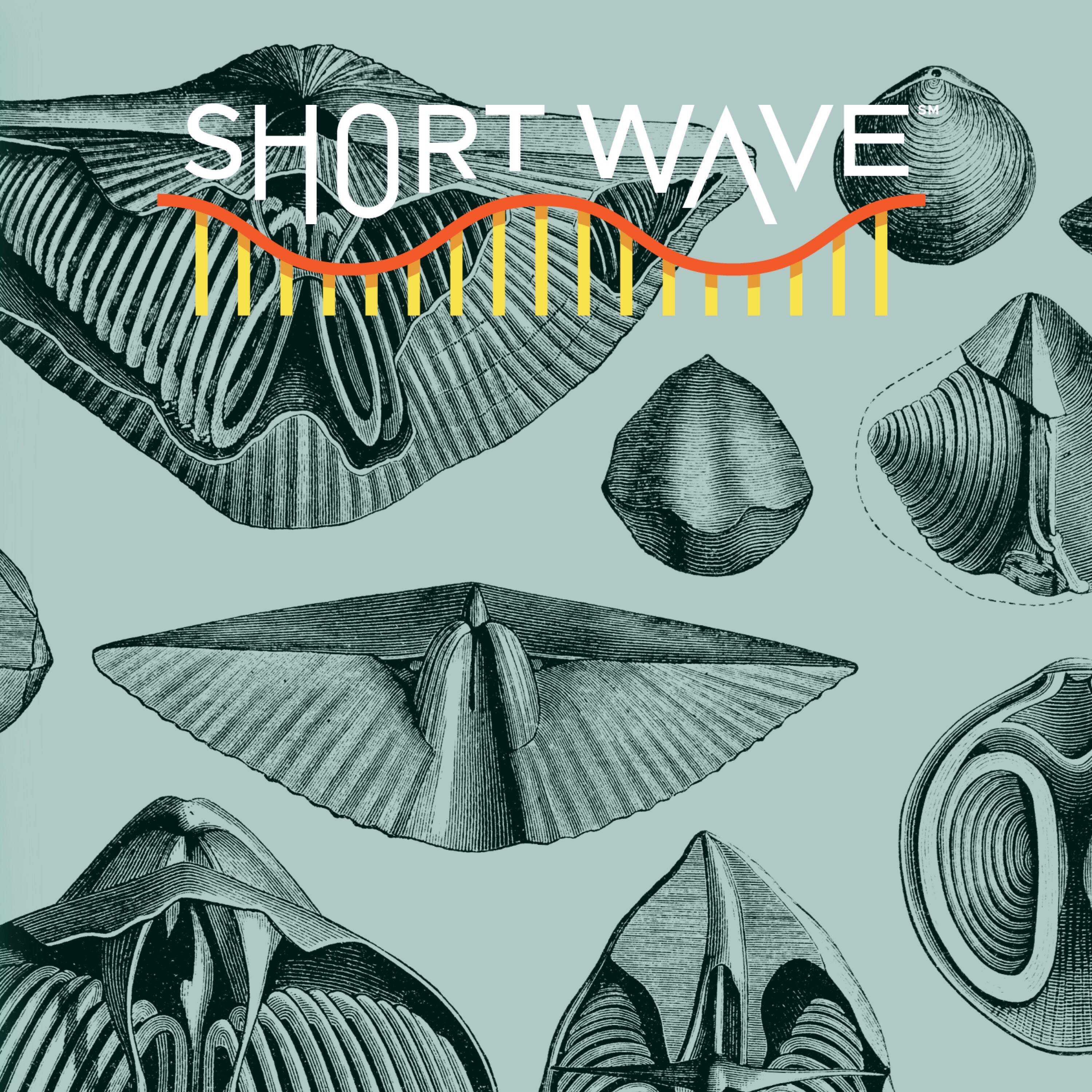
Less triumphant, the tale of their distant cousins, the brachiopods.
- [02:19]
Kemi Ashingiwa
They both have shells, they're both filter feeders. But brachiopods almost no one has heard of because they almost all went extinct at the end Permian.
- [02:30]
Bradley McCoy
And the mystery is why did bivalves do so good when brachiopods almost went extinct?
- [02:36]
Kemi Ashingiwa
We want to know how climate change impacts species on the scale of planets.
- [02:41]
Bradley McCoy
Because Kemi says the conditions that led to the world's largest mass extinction, those volcanoes that erupted some 250 million years ago and spewed greenhouse gases into an ancient sky.
- [02:53]
Kemi Ashingiwa
Those greenhouse gases is actually similar to anthropogenic cloud climate change.
- [03:00]
Bradley McCoy
Today on the show, a mass extinction mystery. How scientists are looking to descendants from the great dying for clues that may help the species of today. You're listening to Shortwave, the Science podcast from NPR.
- [03:17]
Sponsor/Advertisement Voice
This message comes from AT&T. America's First Network is also its fastest and most Reliable based on RootMetrics, United States Root Score Report 1H2025 tested with best commercially available smartphones on three national mobile networks across all available network types. Your experiences may vary. RootMetrics rankings are not an endorsement of AT&T. When you compare, there's no comparison. AT&T. This message comes from LinkedIn ads. One of the hardest parts about B2B marketing is reaching the right audience. That's why you need LinkedIn ads. You can target your buyers by job title, company role, seniority and skills. All the professionals you need to reach in one place. Get a $250 credit on your next campaign. So you can try it yourself. Just go to LinkedIn.com nprpod that's LinkedIn.com nprpod Terms and conditions apply only on LinkedIn ads.
- [04:14]
Bradley McCoy
Okay, Kami, can you lay out the possibilities of why some species in this epic mass extinction called the Great Dying die out while a handful lived?
- [04:25]
Kemi Ashingiwa
Okay, that is, that is the question. So at the end, Permian bivalves beat out their distantly related cousins, brachiopods. And one of the biggest questions for this extinction is how? And people suggested all sorts of things. People have talked about maybe bivalves are better at dealing with high temperature. Maybe bivalves are better at dealing with low oxygen. People have talked about competition and food availability, availability and the quality of this food. And so there are all these theories, but there's not as much quantitative data. And so that's where eco physiologists and paleo physiologists come in. We're trying to collect data, quantitative data to support these theories.
- [05:17]
Bradley McCoy
Okay, and what, what have you learned from that data? Like, what are bivalves better at that brachiopods aren't, or vice versa?
- [05:25]
Kemi Ashingiwa
So brachiopods are better at dealing with low oxygen, but then when you increase the temperature, the, let's say the quote, unquote, advanced gills of the bivalve let them oxygenate themselves better, and they went out in the end. So just to restate that, brachiopods are a bit better at dealing with low oxygen, but bivalves are better at dealing with high temperatures. When it comes to my own research, I recently finished up a study looking at the impact of sulfide on bivalves and brachiopods. And what I saw in this study was that bivalves are much, much better at dealing with sulfide than brachiopods are. And this could help explain potentially how bivalves were able to win out in the end.
- [06:19]
Bradley McCoy
Okay, so your experiments are spec. Specifically looking at how clams versus brachiopods respond to sulfide. What is sulfide?
- [06:28]
Kemi Ashingiwa
Yes.
- [06:28]
Bradley McCoy
Where did it come from? And what's it doing to them?
- [06:31]
Kemi Ashingiwa
Okay, so sulfide is H2S. It is this chemical that is produced by bacteria in anoxic settings.
- [06:42]
Bradley McCoy
No oxygen.
- [06:43]
Kemi Ashingiwa
No oxygen. Yeah. So essentially, when the end Permian happened, greenhouse gases resulted in this huge spike in temperature. It resulted in this huge decrease in oxygen. And these microbes that produce sulfide love anoxia. They love it when there's no oxygen. And so this deoxygenation happened. These microbes that produce sulfide were living it up. They produce tons of sulfide, and then you have a lot of sulfide in the ocean, and that put pressure on animals.
- [07:18]
Bradley McCoy
I see. Okay, so what made you want to go this route? All the other things that could have been this kill switch. Why did you pick sulfide?
- [07:27]
Kemi Ashingiwa
So there's been a lot of discussion about temperature, there's been a lot of discussion about oxygen, there's been a lot of discussion about sulfide. But there's a limited number of experiments on all three of these together, or even two of them together. And I think in the labs that I'm part of, there is definitely an emphasis on, you know, these synergistic effects between all of these different factors. And I think that's important to investigate and interesting to study. Yeah.
- [08:03]
Bradley McCoy
And so are you looking at sulfide with other things?
- [08:06]
Kemi Ashingiwa
Yeah.
- [08:06]
Bradley McCoy
Are you like.
- [08:07]
Kemi Ashingiwa
Okay, so with the study, I was looking at the impact of sulfide or the impact of euxineas. That's sulfide with no oxygen. I was looking at the impacts of anoxia, which is just no oxygen at all.
- [08:22]
Bradley McCoy
No oxygen.
- [08:23]
Kemi Ashingiwa
No oxygen at all. Yep. And I was looking at these effects on the species at a range of temperatures.
- [08:31]
Bradley McCoy
Okay. And then briefly paint the picture of what your experiments look like. Like, you don't have a clam in your left hand. And like your.
- [08:41]
Kemi Ashingiwa
Pretty much. With these experiments, I collected a bunch of bivalves and brachiopods, and then I put some into a euxine setting. So sulfide with no oxygen. And I put some into Anoxic settings. So no oxygen and no sulfide there. And I looked at their survival over a couple months at these different temperatures.
- [09:06]
Bradley McCoy
And then what did you learn from your experiments?
- [09:08]
Kemi Ashingiwa
Yes, what I ended up seeing overall was that at the low temperatures in anoxic settings, brachiopods ended up beating out bivalves. But then at higher temperatures, when you added sulfide, bivalves ended up surviving much, much better. And this indicates that bivalves are better able to deal with these added stressors that mass extinctions like the end Permian presented animals with.
- [09:35]
Bradley McCoy
Okay, so at low temperatures, brachiopods good. High temperatures, sulfur bad.
- [09:44]
Kemi Ashingiwa
Bracha bad. Yes.
- [09:45]
Bradley McCoy
Okay, got it. And so then how does this work help us solve the mystery of what happened during the end Permian mass extinction?
- [09:53]
Kemi Ashingiwa
So the experiments indicate that bivalves are better able to deal with these stressors, which helps explain why they did so.
- [10:01]
Bradley McCoy
Well post extinction and why most people haven't heard of brachiopods.
- [10:05]
Kemi Ashingiwa
Right. Because they got their butts kicked.
- [10:07]
Bradley McCoy
The winners, right? History.
- [10:09]
Kemi Ashingiwa
Yeah, the clams. The clams, the clams, yeah. Yeah.
- [10:12]
Bradley McCoy
Now how could all of this together, your experiments, what you know from other researchers, help the species of today.
- [10:19]
Kemi Ashingiwa
Yeah. So mass extinctions provide a lot of critical information about how climate change, changes in temperature, changes in oxygen, changes in things like sulfide, how those changes animal life and life in general. And so what we have learned from our experiments, from these various models and all of these studies is that it's not just temperature that matters, it's not just oxygen that matters, it's not just sulfide that matters, it's all of these things together because their combined effects are so much worse. And I think it means that climate change is an extremely tricky problem, an extremely complicated problem, and we really want to limit our impact on the climate and on these ecosystems as much as possible because everything is interlinked. I think brachiopods have been around for a really, really long time. They survived the end Permian, and it would be a real tragedy for anthropogenic climate change to be the thing that knocks them out for good.
- [11:29]
Bradley McCoy
Kemi, thank you so much for chatting with me today.
- [11:32]
Kemi Ashingiwa
Thank you so much for having me today.
- [11:36]
Bradley McCoy
This episode was produced by Hannah Chin and edited by our showrunner, Rebecca Ramirez. Tyler Jones checked the facts and Jimmy Keeley was our audio engineer. Beth Donovan is our Vice president of podcasting. I'm Bradley McCoy. Thanks for listening to Short Wave from NPR. Aside from pursuing a science PhD, you are also a bestseller selling sci fi author. You've said that you get a lot of your sci fi ideas from your science, which I get makes sense. I'm wondering, does it ever work the other way around?
- [12:11]
Kemi Ashingiwa
I would say yes, absolutely. I think writing science fiction and reading and watching really good science fiction helps me maintain this. I think constant excitement about science and the work. I think it's easy to get lost in the nitty gritty of of experiments when you've spent, you know, like 10 hours in the lab. But I definitely use science to inspire my fiction and I definitely use the media that that I love to, I think bolster my excitement for science.
- [12:48]
Sponsor/Advertisement Voice
This message comes from vanta. What's your 2am Security worry? Is it do I have the right controls in place or are my vendors secure? Enter Vanta. Vanta automates manual work so you can stop sweating over spreadsheets, chasing audit evidence, and filling out endless questionnaires. Their trust management platform continuously monitors your systems, centralizes your data, and simplifies your security at scale. Get started@vanta.com that's V A N T A dot com this message comes from Ezcader, a business tool for food helping organizations order food for meetings and events from favorite restaurants, set up meal programs for their employees, and manage food. Spend all in one place@easycater.com this message comes from NPR sponsor Capella University. With Capella's Flexpath learning format, you can set your own deadlines and learn on your schedule. A different future is closer than you think with Capella University. Learn more at Capella. Eduardo.