Loading summary
Transcript36 lines
- [00:01]
Sponsor/Advertiser
This message comes from Avalara. What's it like running a business with Avalara? No thinking about tax and compliance. It's handled calculating, filing, validating accurately and audit defensibly. Avalara Agentic tax and compliance with confidence.
- [00:18]
Regina Barber
You're listening to Short Wave from npr. Maybe you've heard of the movie Cocaine Bear, which came out in 2023. It features a black bear going on a murderous rampage after eating 75 pounds of cocaine.
- [00:34]
Jack Brand
Oh my God, he's gonna die. It's like cocaine Christmas.
- [00:42]
Regina Barber
And I couldn't help but think about it when I read a recent study
- [00:46]
Jack Brand
asking whether sort of trace amounts of these really potent neuroactive drugs that are in our environment can actually affect the movement and behavior of fish in the wild.
- [00:56]
Regina Barber
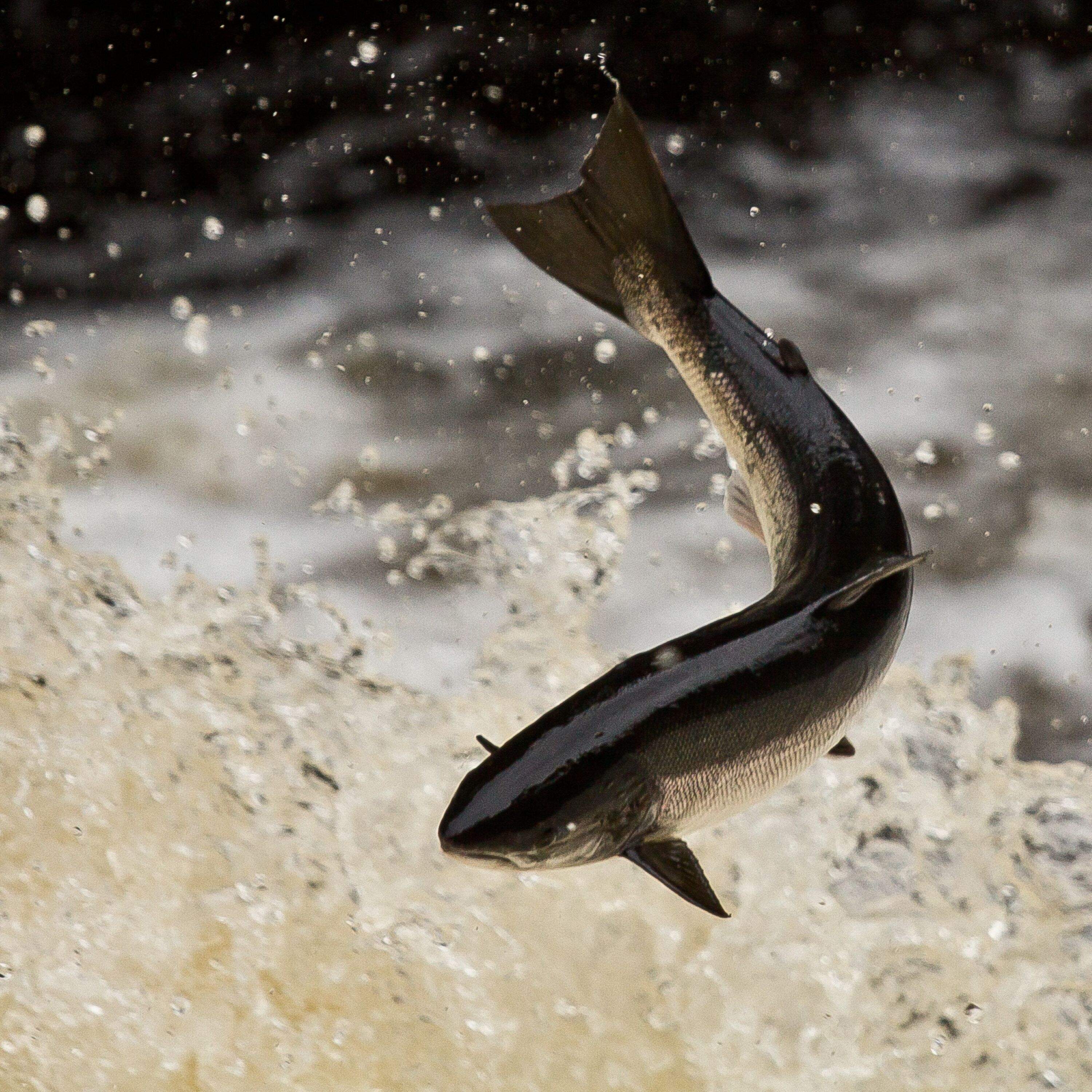
That's Jack Brand, an aquatic ecologist at the Swedish University of Agricultural Sciences. And to answer that question, Jack and his team gave a bunch of salmon cocaine for science. Now researchers know that prescription drugs pollute aquatic environments when people use the bathroom. Past studies have shown even anti anxiety drugs can change how fish act.
- [01:21]
Jack Brand
Fish become, as you'd expect on anti anxiety drugs, sort of more relaxed and that's not very good for a small fish.
- [01:28]
Regina Barber
A chill pill is not ideal when you have a lot of predators to worry about. Beyond that, drugs people use can change how fish forage, how they mate and reproduce. And Jack says these drugs are everywhere. But scientists are just starting to understand the consequences for wildlife.
- [01:45]
Jack Brand
It's definitely present in sort of most ecosystems on earth now, unfortunately, these sorts of issues of chemical pollution and pharmaceutical pollution, but we're only sort of really starting to scratch the surface into understanding the potential consequences of that.
- [02:06]
Regina Barber
Today on the show Cocaine Salmon what happens when researchers get salmon high for science and why? One scientist hopes that will change how we treat water for the better. I'm Regina Barber and you're listening to Shortwave, the science podcast from npr.
- [02:36]
Sponsor/Advertiser
Support for this podcast and the following message come from E. Trade from Morgan Stanley. Simplify your finances and discover the convenience of investing in banking all in one place. Plus, get up to $1,500 when you open a brokerage account with a qualifying deposit today. Learn more@etrade.com offer banking products and services are provided by Morgan Stanley Private Bank national association member FDIC. Terms and other fees apply. Investing involves risks. Morgan Stanley Smith Barney LLC Member SIPIC
- [03:08]
this message comes from Capella University. That spark you feel, that's your drive for more. Capella University's Flexpath learning format lets you earn your degree at your pace without Putting life on pause. Learn more at capella. Edu Support for this podcast and the following message come from Strawberry Me. If you could go back and talk to your younger self, would you tell yourself that you have a job that truly makes you happy? Many people are stuck in jobs they've outgrown or never really wanted. A career coach from Strawberry Me can help you move on to something you actually love. Benefit from having a dedicated coach in your corner, and get 50% off your first coaching session at Strawberry Me. NPR
- [03:54]
Regina Barber
okay, Jack, we're talking about your, like, recent study where you expose salmon to cocaine first. Can you explain how you did that?
- [04:02]
Jack Brand
So basically what we did is we wanted to get fish of all the same age, genetic background, life history, and so that we could be sure that any changes in movement was caused by that drug administration, not some other confounding effect. What we did was we took 105 fish from a hatchery who were usually reared to be stocked into the lake, and we divided them up into three groups. One group received a slow release implant of containing cocaine. Another received a slow release implant containing its main metabolite, which basically is the breakdown product of cocaine in humans bodies, which then gets extracted, excreted into the wastewater. And one was a control group, so they received no drug. And to do that, we basically sedate the fish and perform a sort of minor surgery. We make a small little incision on the underside of the fish and slowly inject the implant. And then we also implanted an acoustic tracker. So this is just sort of a small little black pinging tag which emits a unique sound. And then in the lake we placed a number of underwater microphones or what are called hydrophones. And these can pick up, you know, when a fish passes by those microphones. So we know where a fish was and when.
- [05:16]
Regina Barber
Oh, that's so cool. So you want to study both cocaine and this byproduct.
- [05:21]
Jack Brand
So basically what happens when people take cocaine is that their bodies partly break it down into this byproduct. Not all the cocaine and this byproduct are absorbed into your body. And what happens is it ends up being excreted when people go to the toilet. And so you have both cocaine and this byproduct being excreted, and then this enters wastewater. And then subsequently, because our wastewater treatment plants aren't really designed to remove these substances, ends up in our aquatic environment.
- [05:49]
Regina Barber
And you wanted to look at like, not just cocaine, but also this byproduct because they're both in there.
- [05:55]
Jack Brand
That's Right. And often the byproduct, this metabolite is present at higher concentrations than cocaine itself. But largely in mammals, this chemical is thought to be more or less, you know, all this a little bit complicated, more or less biologically inert, so not very biologically active. And so we wanted to see whether that was also true in fish. But I think one of the interesting parts of our study was we found that the metabolite actually had a greater effect on fish behavior than cocaine, which was not something that we expected. And we think this is important because, you know, typically when people are doing environmental risk assessments for these types of compounds, they're mainly focusing on the parent compound. So that's cocaine itself.
- [06:35]
Regina Barber
Right.
- [06:35]
Jack Brand
And not really, you know, accounting for these byproducts. And so here we sort of showed that some of these byproducts may be having actually even greater effects than we originally thought.
- [06:46]
Regina Barber
That's fascinating. Okay, and when you're talking to people, how do you explain why this work matters?
- [06:52]
Jack Brand
The reason that we're often concerned about these chemicals is because they target receptors in people's brains that are also present in a wide variety of wildlife species. And so they're what we call evolutionarily conserved, meaning that the same biological systems that these drugs target endue are also present in fish and a wide variety of other vertebrates. And so that's what makes us particularly concerned about these sort of really potent neuroactive chemicals and how susceptible sort of the vertebrate tree of life may be to the effects of these chemicals on their nervous systems and their behavior.
- [07:24]
Regina Barber
Okay, so you found salmon exposed to cocaine and this byproduct, this main metabolite, swam further than other salmon. Like what does swimming distance tell you about salmon behavior or their life?
- [07:38]
Jack Brand
Yeah, so we basically found that they were moving around twice as far towards the end of the study. And basically, you know, this is a massive increase in energy expenditure. Animal behavior is fairly finely tuned, and to exert more energy, that energy has to come from somewhere. And so at this stage, we don't know if they're increasing their foraging behavior to compensate for this or if their condition just slowly deteriorates over time and they become in worse and worse health over time. We don't know. But definitely there has to be a trade off there. There has to be a trade off in the energy they're consuming as well, which can also then have flow on effects for if they need to eat more, perhaps they're putting themselves more at risk to predators because they're not hiding or they're moving into new areas, they're altering food webs and predator prey interactions and things like that.
- [08:30]
Regina Barber
Now that you've done this experiment in salmon, what questions do you still want to answer?
- [08:35]
Jack Brand
Many, many. So one of them that's, that interests me is we don't really know the mechanism that's driving this change. So we don't really understand what it is about this metabolite that's actually causing these increased movement rates in the wild and these fish. Another thing is, I'd like to understand, like I said, our study was only relatively short, a couple of months, but what the long term consequences of this are, we don't know. And of course ours is a pretty controlled situation. You know, we deliberately exposed a particular group of fish to a particular quantity of a chemical. But in reality what happens is there's sort of dilute cocktails of these drugs in the environment. There are many different types of chemicals that affect all different levels of the ecosystem. You know, predators, prey, et cetera. How that all interacts is very, very difficult to disentangle. And I think of these chemicals as sort of this invisible agent of global change is because people can't really see them and so they don't get the sort of recognition that I think they likely deserve. And I think they're probably having far wider impacts on our wildlife than people are actually aware. And so I think it's really great to sort of raise the issue of this in the public domain.
- [09:49]
Regina Barber
What can be done? What can governments do, cities do to limit this?
- [09:55]
Jack Brand
Yeah, there are advanced wastewater treatment techniques that can aid in this. So things like activated carbon filtration, ozonation, which sort of breaks down some of these chemicals. And so these can be implemented to remove a substantial portion of the chemicals being let out into the environment. The main issue there is these things are often a little bit costly and so they're not evenly distributed around the world. So you can imagine in places, especially low income countries, these things are often lacking or entirely absent. I see there are things we can do, but it requires sort of collective effort in treating this wastewater with these advanced treatment techniques and, you know, making them more affordable and accessible to countries around the world.
- [10:45]
Regina Barber
Jack, thank you so much for bringing us. You know, your study about salmon and I hope you do get that salmon fishing trip one of these days.
- [10:53]
Jack Brand
No worries. Thanks for having me. It's been fun.
- [11:03]
Regina Barber
If you like this episode, please share it with a friend. And check out our episodes on what Chimpanzee Civil War tells us about humans and The Secret of Bees. This episode was produced by Rachel Carlson and edited by our showrunner, Rebecca Ramirez. Tyler Jones checked the facts. Jimmy Keeley was the audio engineer. I'm Regina Barber. Thank you for listening to Short Wave from npr. See you next time.
- [11:40]
Sponsor/Advertiser
This message comes from Thumbtack Avoiding your unfinished home projects because you're not sure where to start. Thumbtack knows homes, so you don't have to don't know the difference between matte paint, finish and satin or what that clunking sound from your dryer is. With thumbtack, you don't have to be a home pro. You can. You just have to hire one. You can hire top rated pros, see price estimates and read reviews all on the app. Download Today.
- [12:05]
Regina Barber
For a growing number of women, single motherhood feels like the right choice. She locked eyes with me and that
- [12:12]
Sponsor/Advertiser
was the moment that I knew we
- [12:13]
Regina Barber
were about to have one hell of a life together.
- [12:15]
Sponsor/Advertiser
On the Sunday story, how these single mothers are making it work. Listen now to the Sunday story from the upverse podcast on the NPR app. This message comes from Jerry. Many people are overpaying on car insurance. Why Switching providers can be a pain. Jerry helps make the process painless. Jerry is the only app that compares rates from over 50 insurers in minutes and helps you switch fast with no spam calls or hidden fees. Drivers who save with Jerry could save over $1,300 a year. Before you renew your car insurance policy, download the Jerry app or head to Jerry AI NPR.