← Skin Anarchy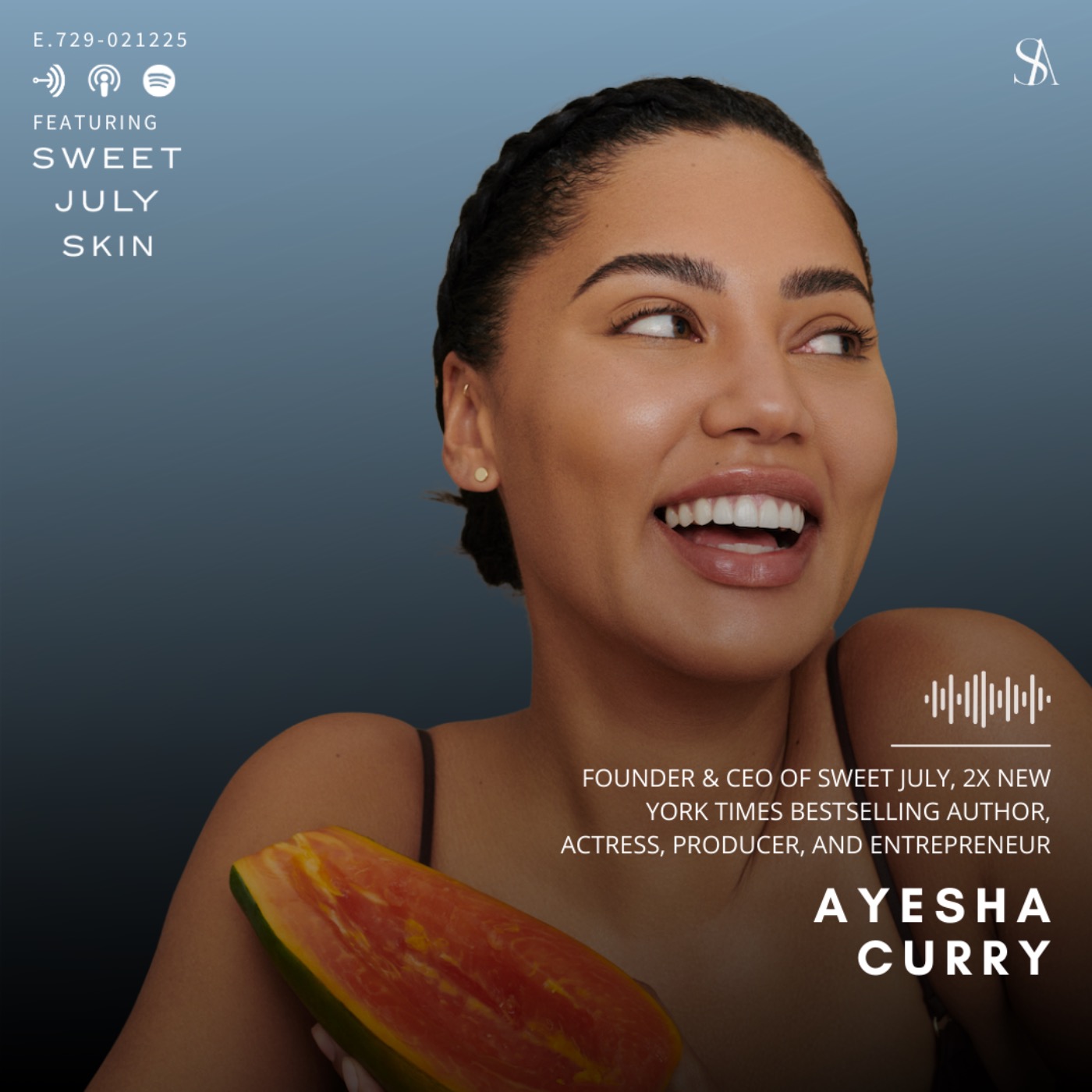
Skin Anarchy
Ayesha Curry Unveils Sweet July Skin’s Newest Launch, Blending Jamaican Heritage with Culinary Influence
00:26:26
Loading summary
Transcript47 lines
- [00:03]
A
Hey, guys, welcome back to Skin Anarchy. I have such an amazing guest with me today. I am such a fan of hers and the beautiful brand that she's created. And now she's expanding into the skincare realm. So many of you might have heard of her. She is a renowned restauranteur, a chef, a two times New York Times best selling author, an actress, a producer and an entrepreneur featured in the prestigious Forbes 30 under 30 list. So without further ado and me ranting too much, I want to introduce you guys to Aisha Curry. Welcome, Aisha. It is such an honor to host you.
- [00:34]
B
Thank you. Thank you for that intro.
- [00:36]
A
Yeah, no, I mean, I'm just listing your accolades. It's so phenomenal, all the amazing work you've done and really inspiring. So, you know, it's. It's truly an honor and I can't wait to dive in. I would love to learn about you and your inspiration behind, you know, Sweet July. Like, where, where did all of this start? If you could kind of walk us down memory lane?
- [00:56]
B
Yeah, absolutely. So, ironically, the Sweet July brand truly started with Sweet July Skin. It just so happened to take the longest to develop and launch. And within that time frame of developing Sweet July Skin, we launched Sweet July, the magazine, Sweet July, you know, the digital portal. And we now have Sweet July books. And so we were able to launch all of these arms that really wrap around storytelling and telling the small businesses stories, small community leaders, people doing really incredible things that might not have had the platform to be able to speak about it. We were able to be that platform for people. And so it's been a really special journey. And now Skin has been around and launched for a year now, going on a year and a half. And it's honestly been such a passion project, a project that was developed out of sheer need from my end and then also from the desire to kind of fill this white space and pay homage to my heritage and my culture.
- [02:07]
A
That's so beautiful. I love that. And I want to actually wrap that a little bit because what were some of the skin concerns or just the needs that you noticed, you know, when you were coming up with a concept and crafting the line?
- [02:19]
B
So quite frankly, for me, I was going through a period where my skin was just freaking out. And I've had problem skin since puberty into adulthood. Now I'm in my mid-30s. It's still something that I suffer with and I'm always trying to find what's going to work, and that's obviously ever changing. I mean, you know, it all when it comes to skin. And so you, you know that like, no one thing is going to be the fix. It's ever changing and it's ever evolving. And so for me, I wasn't finding anything that worked and I was at my wit's end and I started doing a deep dive into, I took my stubborn hat off and started doing a deep dive into all of these home remedies that my grandma and my mom would tell me about growing up that used Jamaican ingredients. And I started to do a little bit of research on the back end into like, I, I know I eat these things, but could they be used on topically on the skin? And you know, came across some great results and, and great facts that they, they could in fact be, be used topically as well. And so we kind of started to go on this journey of formulating these products first and foremost for myself to try and find some resolve when it came to my skin and then put it out into the market for people to enjoy as well.
- [03:49]
A
I love that. And I love that you kind of like, you know, went back into your heritage and you looked for, for things that are like, tried and true. Right. Like, I feel like cultures, cultures tell you so much, you know, about just what actually works. I mean, I, I've seen that so many times. I'm Indian myself and you know, my mother, I remember growing up was kind of like always telling me, oh, do this. You know, she grew up in rural India, so it was like, you know, using like herbs and stuff. And I, I just remember feeling like, yeah, this works, like, why don't we tap into that more? So I love that you brought that forward, you know, in your line that's so important.
- [04:25]
B
Yeah, yeah, I did. And honestly, sometimes it is that simple when you're looking for something that's effective and going to help your skin. But now unfortunately, like, the naked truth is that we live in a society where there's just a ton of, you know, pollution. You have fumes and different substances being emitted from cars and like society just looks a little bit different. And so you kind of have to add that added value of having science based ingredients mixed in with those everyday herbal, topical, backyard remedies.
- [05:01]
A
Absolutely. Now I know you've worked directly with some great labs, you know, when you've spent years formulating, but you know, I want to know why was it important to you to create the line from scratch rather than taking that white label approach that we see so much?
- [05:15]
B
I think selfishly, like, there's an element of control there's like a level of control that I like to have in the products that we create. And then I think for me, it was just important to know every single ingredient that was going in and to make our formulas unique. Because if we would have went the white label route, we would have just been every other product that's on the shelf. And that wasn't the goal here. This is not like I tell people all the time, I'm sure they don't believe me, but it's. It's not a money grab. We want to build a community of people that trust us when it comes to their skin and to become this household name when it. When it comes to sweet July skin and a leader when it comes to Caribbean Jamaican backed products. And so that was really important for me for the team to start from scratch. No pun intended.
- [06:10]
A
Yeah. No, I love that you did though, because it really shows. I mean, I really love your eye cream. I just want to put that out there.
- [06:16]
B
Thank you so much.
- [06:18]
A
It's so good. And it really just. It does exactly what I feel like an eye cream should do to hydrates. It really makes your skin feel so nourished and you can tell the quality that's gone into this product, you know what I mean? Like, immediately. And so I. I'm glad you didn't take shortcuts, you know what I mean? Like, it shows, really shows.
- [06:35]
B
We didn't take shortcuts. And I think from a profitability standpoint, we kind of took the short end of the stick there because I wanted to make sure that the ingredients we were putting in were of the utmost quality. And so sometimes some of our formulas cost a little bit more on our end. Maybe another brand would like for it to cost. And so I'd rather do it that way because I know that I'd rather have like five people buy the eye cream, see that it works and keep coming back than have like a hundred people off the bat buying, buying the eye cream. You know, I'd. So I'd rather take the hit there and know that what. What is inside of that vessel is pure gold.
- [07:19]
A
I love that. I really love that. I think that we need so much more of that in the beauty space. Not even gonna lie, you know, Like, I've joked so many times on the podcast about how we have so much packaging out here, you know, like, that's. I literally say that. I'm like, I don't feel like there's differences in formulas anymore, you know, and like, really like where they come from and what they do for your skin. Like, it's become so redundant. And so when you finally, like, find brands that are doing things in a new way, you know, a new angle, something, whether that's from the self care angle or from that, you know, the science angle, it's so refreshing for consumers because you just want to keep supporting and supporting, you know, because it's, it's rare to see. I would love to touch on, you know, your background, your. Your culinary background, because I know that, I mean, it's, it's so impressive and you've brought it over in such a beautiful way. I'd love to learn how that translated into the skincare line. Maybe some ingredients or anything you want to discuss.
- [08:13]
B
Yeah, for sure. I think for me, also, another touch point on why it was so important to start from scratch was that we were really able to build these formulas in the exact same format that I would develop a recipe for me that was really, really fun. It was kind of like, okay, we know that this works and that this is a quote unquote kitchen staple and that this is going to make sense paired with this and that you're going to get the efficacy from this. But, like, now let's add our flavor to it. Like, what is unique, that's going to really set this over the edge. And so being able to approach it from a food standpoint, I think is, Is also what makes this brand and what makes the products really special. So I think food plays a huge part. I. I just think about, like, several years ago, and even still to this day, we're always researching, but, like, sitting on my laptop and just trying to, like, break down all of these different Jamaican ingredients in, like, the middle of a pandemic, when you have no access to those actual things in the moment and trying to, you know, like, break down, like, is this going to be effective? Is it not? Looking at studies, looking at, you know, percentage values, what is the most potent in vitamin C and how that's gonna play out topically, Just all of those things. I don't know. I think having that food background really helped put things into perspective.
- [09:40]
A
Yeah, no, I can definitely, I can definitely see that. And, you know, I think one of the big things I wanted to ask you about, because I think even in your books, you know, you really focus on this concept of nourishment, you know, And I feel like when you look at the skincare line, like, that's really what I think of, you know, as a consumer is nourishment. Right. Of your skin. And this is A big topic that I think in the skincare space, you know, it comes up but it's not really focused on from that self care angle. So I'd love to learn like what were some like superfoods or like Caribbean inspired superfoods that, that went into that, that whole concept of truly nourishing.
- [10:14]
B
I think for me, from like an anti inflammation perspective, I think several of our products have turmeric in it and not only does that brighten, but it does help and aid with the anti inflammation and is a bit of an antiseptic and so and that's something that we use in teas and in, I mean, you know, turmerics and curry powder in Jamaican cooking. I mean it's just used almost every day. And so that was like the probably the most glaring ingredient and then the not so in the forefront in the limelight ingredient would have to be soursop. I think just our vitamin C serum is formulated with soursop and that's something that I hadn't seen on the market before. But through my research I realized it was just a great antioxidant and really, really high in vitamin C. And so we kind of worked backwards for me being like, this is going to be a vitamin C serum with soursop to working with our, our chemist at the time and being like, hey, is this going to work? And kind of talking it out and him sampling things and realizing like, no, this is actually super effective and potent in vitamin C. And so that's a product I think that, that we as a team are really proud of. I think it's, it's one of our most unique formulas. And so I just, I love it so much.
- [11:38]
A
That's so cool. I love that you work backwards. That's a really cool concept. Yeah. You know, I'm interested, you know, going back to the eye cream, I know that it's like coffee based, right? Like, I would love to learn a little bit more about that.
- [11:50]
B
Yeah, I'm really excited to talk about this because it's the first time I'm getting to talk about it publicly. So it's our coffee fix peptide eye cream. So it's clean, vegan, cruelty free, but it's just the most amazing super rich, thick under eye cream that doesn't pill under makeup, which I know is so important, but it has peptides and then turmeric root again, which is a through line in our line. Hibiscus flower, another through line. But I think what makes this so incredibly special is that we formulated this around Jamaica's very Famous Blue Mountain coffee. And so the eye cream has a bit of Jamaican Blue Mountain coffee extract in it, and we're really proud of this. It truly wakes up the eye. It also, you know, again, pays homage to my Jamaican roots, but it was a great way to take something that's traditionally, you know, just sipped and put it into this beautiful eye cream that truly, like, awakens and brightens and tightens and reduces fine lines. It's. It's truly remarkable what a bit of caffeine can do topically.
- [12:59]
A
Yeah, it is. No, it is. I love it. And, you know, I know I said this earlier, like, I really love this product and I. I love it because of everything you said. I completely, you know, can support what you said about the pilling, because that was the first thing I noticed. I'm like, literally does not pill up. Like, that is so rare in eye.
- [13:16]
B
Products, you know, thick eye cream, you know.
- [13:18]
A
Yeah, yeah, it literally does. It sit. It sits on your skin that seeps right? And it absorbs so beautifully, and it leaves the most soft finish, you know, afterwards. And I'm finally starting to get to that age. Like, I'm in my late 30s, and I'm getting to that age of, like, getting those lines, you know? You know, and so it's just so helpful from that standpoint to have, like, it's. It's really a, you know, powerful tool in my makeup.
- [13:44]
B
So happy.
- [13:45]
A
No, and it's true. I mean, it's. It's a really great product. And I love that you did incorporate, you know, that coffee aspect, because I know caffeine is. Is a super buzzword, you know, in the industry for waking up the eye, but it's like, no one really talks about it the way you described it. You know, it's like, we don't. We don't go into it like that. And I love that. And I want to talk about that self care aspect that sweet July skin is really bringing forward. I would love for you to talk to us about. What do you feel like self care really means to you? You know, if you were to, like, define it or describe it, like, what does that elicit for you?
- [14:20]
B
It could be so many different things, but I think specifically when it comes to self care and skin care, it's really like taking yourself back to the joy of the routine. And so I try to, like, give myself at least five minutes to just be in that moment. And truly, like, you only get one shell in this lifetime, right? So it's so important to nurture it. And if. If you can do that in like five little minutes more if you have the time. I just think it's so important and so valuable. I think it's just for me, that routine, being able to wash the stress of the day away or like wash like a four night's sleep and a bad dream off. I think it's, it's just important. It's, it's that, it's that ritual of doing that too, I think. And then furthermore, to like be able to have great products to put on your skin as you're doing that I think just makes all the difference too. So for me, that's what it is. From a food perspective, I'd say it's like, can be your favorite bite. That is self care to me. It's truly just taking a moment to go within yourself.
- [15:42]
A
I love that. I really love that. And I feel like that's something that we could all kind of learn from, you know, because there's, it's so much busyness now everywhere. Like, I feel like everyone's like running, you know, wherever they go or whatever they're doing. It's like they're running, they're sprinting to this finish line. But then we talk about like the beauty industry. Like, we talk about self care, but like we're not really understanding, you know, that like, yeah, layering on products, you know, it's about exactly what you said. Like, like pause for a minute.
- [16:14]
B
You know, I feel like it's something though that you're, you gonna spend forever working on and that's okay. Like, I'm just laughing right now because I'm like, I, I could spend that however much time you give me, like loving on my face, but I 90 of the time will forget to like lotion my ankles and go, I just looked out and I'm like, my ankles are ashy.
- [16:46]
A
No, I'm right there with you. We can have ashy ankles together. That's okay. I mean, it's true though. I mean, I think all of us are a little bit guilty of it. You know, we don't really sit down and be like, well, you know, what do I really need? You know, what does my body really need? And so when we do, it's like, it's so refreshing. Like it really, it makes your whole day better, you know, that's why I love skincare, because of that. I, I would love to actually kind of like ask you because I think beauty is a big, like, it's a big word, you know, especially like right now in the landscape that we're in. I know you're a mom, and I know with, you know, social media, there's so many things out there, you know, in terms of, like, how we perceive beauty, how we, like, admit it, you know, how we put it out there for the younger generation to, like, kind of understand. And I would love to get your take on, like, what do you think we're doing right or wrong in terms of, like, portraying this concept to the youth, you know, about what it means to be beautiful or what it means to feel beautiful.
- [17:45]
B
I think we're doing a lot wrong, honest. And I don't know how to speak to that. All I can speak to is, like, the way that I tend to feel about myself on a consistent basis, even in my, like, 35 years of age. Like, days can go by and you just don't feel beautiful. And it's like, I even think sometimes I'm like, I. I was a cover girl for like, three years and I forget that 364 days out of the, out of the year, every single year, and feel like, so run down and like, not put together and, and so hard on myself. And then I'll have these moments where, like, I put on my big girl pants and I'm like, why, like, why am I so hard on myself? It's so unnecessary. And I think a little bit of that does play into all of that stuff and the way that things are marketed and the way that things are presented and the impossible standards that are set for people. And so you forget that there's, like, beauty, that beauty truly comes from the imperfections in life and the imperfections in people, not just, like, glaringly what's put together that makes no sense. And so I think I wish I could have, like, an internal post it note in my brain to remind myself of that. And I wish I could, like, go around boisterously voicing it to other people. At the end of the day, like, beauty, beauty, beauty isn't on you. It comes through you.
- [19:23]
A
I love that. No, that's, that's really powerful. And I think that, you know, definitely now, like, in the age of four, you just see so much, like, filters and like, you know, just so much makeup, like Instagram makeup. I talked about this a lot, like, on the, on the show, where it's like, you see these girls and they have all this makeup on and then you're looking at that. And unfortunately, especially when you're young, like, you establish this, like, self.
- [19:49]
B
Yeah.
- [19:49]
A
Impression. Right. It's like, it imprints on you and that's it's kind of sad to watch that, you know, because I know that we've all gone through that phase, you know, and I, I always worry about the youth because I'm like, I hate for them to see this and then compare themselves to that because that's not real, you know?
- [20:06]
B
Exactly. But it's like no matter how many times you tell yourself like that's not real, your brain is still programming that in and it, what you're looking at kind of becomes you eventually.
- [20:17]
A
Exactly.
- [20:19]
B
So, yeah, I, I hope, I don't know, I hope it starts to change.
- [20:24]
A
Yeah, no, I agree. I, you know, I think it will though. I think it's, it's definitely moving in some direction. You know, we can hope that it goes in the right direction. But I mean, back to the line though, back to switch your skin. I know. I, I love that you've blended, you know, this idea of just genuine self care, you know, with everything. Like, do you think that this is going to go further in the space?
- [20:45]
B
No, honestly, I hope so. That's the goal. That is the absolute goal. And more so to like keep listening to our consumers and formulating products that way so that people are truly getting what they want and getting the products that they deserve. I think it'll be really exciting in the future to start to branch off into different skin care needs, different skin type needs. I think that'd be great. That'll. That'll be the moment when we know, I think we've made it. We can start branching off into different subcategories. But for me, at the end of the day, when all is said and done, like, I am just happy that I got to enjoy these products and that they made my skin just a little bit better than where I started. So if all else fails, I will truly hold on to that.
- [21:37]
A
I love that. I think that, you know, that's beautiful and I, I think that really resonates more than anything is like, that it comes from a genuine place, you know, like what you're creating is from a genuine place. And you know, in the, in all of this, like, craziness out here of trying to find the best skincare products and the best beauty products, I think that's really what shines at the end of the day is like, does something actually resonate with you? You know, does it connect with you? And I feel like Sweet July skin, like, even the name Sweet July, like I, I obsessed with it. Like, it's beautiful. Yeah. And immediately, you know, it connects, like in that very special place. In our hearts. For me, it does, you know, and it just comes through. So thank you for creating such a beautiful brand and from such a meaningful place. It means a lot to consumers. You know, I would love to get, like, any advice you could offer, you know, any words of wisdom for anyone tuning in that wants to become an entrepreneur or kind of get their voice out there, you know, through products or something beautiful that they're creating. Any guidance or advice that you can offer them?
- [22:41]
B
Yeah, I would say, because you. You can. You can talk about, like, financing all that stuff. That's the hard stuff. Like, that's the stuff I don't like to talk about. I feel like I can speak to is if you have an idea or a passion and you have created this ethos or world in your head for something that you want to exist, as long as you have that fire, you need to keep talking about it to people and you will meet the right people. I mean, with disclosure, though, let's be honest. NDAs are very important.
- [23:21]
A
Right?
- [23:23]
B
Just keep verbalizing what it is that you want to see in existence. And people. People are such dot connectors that these days, ultimately, I feel like you'll be directed in the right direction to at least take a step forward in the journey of, like, developing what it is that you want to create.
- [23:45]
A
Yeah, no, that makes sense, and I agree with you. I think it's. It's really interesting, you know, to watch people and how they view success, right? Like, how they see the growth of what they're doing, and it makes sense. They are people. We are dot connectors, all of us. Like, you know, I do it every day in my career, and also, especially, I mean, I think this message for me is really important for anyone that is, like, a person of color. Like, I feel like we all have something that weighs us down at the end of the day about, like, how far we can go, how much we can succeed. I know I've dealt with that my whole life, like, in my medical career, and I'd love to get your insight on that. Like, you know, what is your advice for anyone that feels like that, you know, or that feels like there are these boundaries that they have to overcome?
- [24:27]
B
You know, it's interesting these days because it. It feels like if you. If you don't have it, it's too hard to get it. And if you have it, you're now being discredited and told that you have it because of what made you not good enough in other people's eyes before. And so I think in this Day and age, it's like, just really important to tune out the noise, drown out the noise. Your tribe is always out there, and there are. There are really good people in the world. I feel like the. The bad is just so loud right now, but there really are good people in the world doing good things who want to see people in great places. And so I think it's like, do a little bit of research and find those people. Drown out the rest.
- [25:16]
A
Yeah, I mean, that's actually really, really interesting. You say that. You know, there's my first day of medical school, we had a lecturer, and he was like. He said something similar, but not like the way you said it. You know, he was like, you got to pick that one person that you want to impress and then just screw all the rest. You know, like, just ignore everybody else. Yeah, it's really powerful. I love that. Well, I love everything you're doing. Aisha, thank you so much for, you know, sharing Sweet July Skin with us and telling us all about the beautiful creations that you've come up with. And for everyone listening, you guys got to check out the brand. It's beautiful.
- [25:50]
B
So thank you so much.
- [25:53]
A
Thank you. Hey, guys, I hope you love that interview with Aisha Curry. Make sure you definitely check out Sweet July Skin. We will be linking the website in the show notes of this episode, so scroll down and you'll see it right there. Also, don't forget to show shop our episodes if you love them. You can find all of the amazing picks that we have from each brand on our shop My Shelf, which is also linked in the show notes. So check that out. Let us know what you guys thought about the episode, any feedback that you have, any insights, if you've tried the brand, I would love to hear from all of you. Thank you so much for tuning in and we will be back next time.