Loading summary
Transcript91 lines
- [00:01]
Elise Hu
Hey, I'm Elise Hu, host of the podcast Ted Talks Daily. For more than 20 years, Paylocity has been leading the way with cutting edge work solutions like on demand payment which offers employees access to wages prior to payday, flexible time tracking features which enable staff to clock in and out through their mobile device, and numerous other cutting edge solutions that simplify collaboration across hr, finance and it. Learn more about how Paylocity can help streamline work and enhance business outcomes for your organization@paylocity.com.
- [00:35]
Sarah Gibson Tuttle
Hi. Who here loves when their nails are perfectly done? Me. I'm Sarah Gibson Tuttle and I started Olive in June because let's be real, we all deserve to have gorgeous nails. But who wants to spend a fortune or half their day at the salon? And that's why I created the MANI system. So you can have that salon perfect manicure right at home. And guess what? The best part, each mani only costs $2. Yep, you heard me. $2. No more. 30, 40, $50. Salon trips that eat up your day. Now you can paint your nails whenever you want, wherever you want. And trust me, you're gonna be obsessed with your nails and everyone is gonna ask you where did you get your nails done? And here's a little something extra. Head over to oliveandjune.com and get 20% off your first mani system with code perfectmanny20@oliveandjune.com perfectmanny20. That's code perfectmanny20 for 20% off@oliveandjeune.com perfectmanny 20. You're all set for a nail glow up. Let's get those nails looking fabulous, shall we?
- [01:35]
Elise Hu
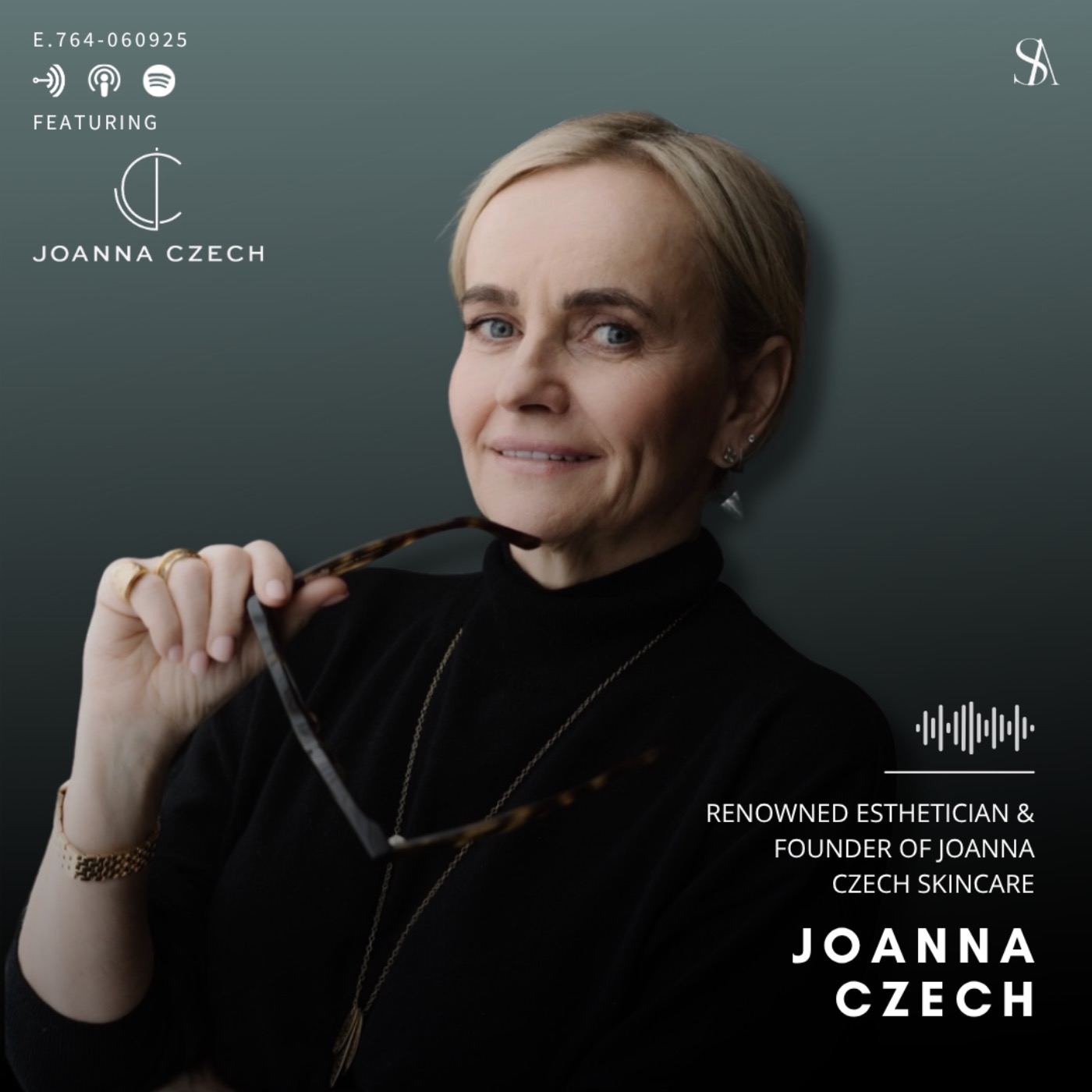
This episode is brought to you by Progressive Insurance. Do you ever think about switching insurance companies to see if you could save some cash? Progressive makes it easy to see if you could save when you bundle your home and auto policies. Try it@progressive.com Progressive Casualty Insurance Company and affiliates. Potential savings will vary. Not available in all states. Hey guys. Welcome back to Skin Anarchy. Today I am thrilled to welcome a legendary guest who is a world renowned esthetician. She has over 39 years of experience and she has transformed the skin of Hollywood's elite. From clients like Jennifer Aniston to Kim Kardashian. Joanna Check is truly a visionary in this realm and so I'm very, very excited to welcome her today. Hi Joanna. Thank you so much for coming on the show. I'm so excited to chat.
- [02:24]
Joanna Czech
Thank you so much for having me. I'm fan likewise and I'm quite honored actor to be here with you today. So I mean I can, you know, we appreciate each other. That's already great start.
- [02:36]
Elise Hu
No, thank you so much. That means the world. I Joanna, you have such an amazing career and everything you've accomplished so far and I mean you've seen everything. When it comes to skin, I want to like pick your brain and understand because I think all of us want to try to understand the skin better in terms of what actually makes us look better, you know, that's the bottom line. And I feel like with all of the noise in the industry, it's so hard to figure that out, you know. So I'm really excited about diving into that. But I would love to talk about your background and learn more about you because it's so fascinating how you've, you know, you've come from like a really, you know, humble beginnings. Right. And you've turned something into something huge. So can we talk a little bit about your background? If you can walk us down memory lane?
- [03:18]
Joanna Czech
Absolutely. So I'm an esthetician. This year cuts to 40 years of me being an esthetician. That's when I started playing that job. I still keep talking about it as playing. I come from Poland. That's where I got all my education with extended program of biology and then 13,000 hours of being in Beauty Institute versus 600. So it's a. It's a quite serious approach to it in Poland. So by all main education, that's where I brought it from and that's what I learned all my basics and that's what I'm what I keep actually implementing for last 40 years in everything that I do regarding aesthetics. Aesthetics is kind of. I'm not sure if it's a right word in my situation because I really mainly talk about skin's health from skin's health. That's where we get everywhere. And so anyhow I was a young athlete. So I was always very disciplined person. Always had interest in human's body and understanding what to do the best, to perform the best. I was 5k runner and I was the second shortest basketball player. Now in my 60s, I'm already 5 3. I probably was the highest ever 5 4. And I became an esthetician. Not ever planning like the rest of my life, never having major plan. Only became an esthetician because I did not pass physics to medical school. I my actually a little dream that I had, it was being a doctor. And that's kind of also coming from background in Poland. Being born in a family, parents that survived the second World War. My Brother was destined to be a lawyer and I was destined to be a doctor. I became an esthetician and he became a chef. And he was for the longest time with San Francisco Giants. So we did okay. You know, we are both United States and that my beginnings are simple beginnings. As you said. I came here as a 25 years old girl. That's how I can talk about her now, 36 years later. Because that's how long I've been in United States. With four years of aesthetics in Poland before that without ever planning to come to United States. But I am that kind of story of an immigrant. Right. I don't know where to go from there. But maybe that noticeable moment of my career here I will jump from straight back from Poland to United States. It started in 1995. That was about six years after I arrived to United States when I got a job. Polar Brick Salon and Spa on the Upper west side in Manhattan. That was a Reebok sports club. Very, very popular. Very. I mean the coolest part in the city then.
- [06:12]
Elise Hu
Yeah, it was the happening. Yeah, it was happening. Yeah.
- [06:15]
Joanna Czech
Yes. And I was, and I was actually a member. I was a member of that club. And my coach says, Joanna, you should just go and get a job in a spa downstairs. I did not even realize that was a spa downstairs. That's how interested I was in it. I was having already the way how my life went. I had my private clients. I was not looking for a job and I end up going there. They don't have really openings for estheticians, but they say they are looking for manicurists. I within my 13,000 hours, I was taught how to do medical pedicures. I was taught how to do water body treatments. And that was a lot. That was the whole very holistic approach to taking care of yourself. Not just patting the skin and changing creams. That's actually what made my decision as 21 years old when I started taking tutoring in physics. I'm going back to Poland to apply again for medical school. School. Because physics, that's what I did not pass.
- [07:19]
Elise Hu
That was the worst subject, actually. I know what you mean.
- [07:22]
Joanna Czech
I was good in physics. I was not bad. But that was not my day. I missed nine points out of 50. I missed nine points. So which was not bad. But when there were 14 people per seat, that was enough to fail. And anyhow, I got fascinated by a nail plate. You know that I can analyze someone's nail plate and, and read what's happening with their digestive system, with their cardiovascular system if they smokers, if they are drinkers. And after that three months of studying on the nail plate in Beauty Institute, I was like, I am a doctor, you know, you are brilliant when you are 21. Not at all. That's what we think. And without confirming with my parents, I kind of quit my physics and proceeded with the Beauty Institute. But now going again jumping to 1995, that's how I accepted that two days job offer from Paula Brecht to be manicurist. And I became quite recognizable manicurist very quickly because within the first six weeks I had my two years booking for manicure and that was. I enjoyed doing pedicures, manicures, I loved doing brows. That was my actually kind of dissertation that I wrote at the end of Beauty Institute was a framing of your eyes. So there are many things that people not necessarily know about my background. I like looking at it all, but, but at the end, the healthy skin, because it is about 2 square meters when we flatten it, average size of a skin of a human and three kilo weight. Right. It is in fact the largest organ. So healthy skin, that was always the most, and it is, remains the most important subject of mine. And then from then on my career kind of, I don't know, being at the right place at the right time because I believe that there are many phenomenal technicians and experts, but not everybody gets a chance to be in a place that they get proper recognition. I don't know how.
- [09:24]
Elise Hu
Yeah, no, it's a, it's a hard industry. This is a, it's a very like kind of a cutthroat industry. There's so many people and. But I mean at this, at the same time though, like, I think what really fascinates me about, about this is like, I mean people like yourself, you, you love what you do, you know, and it shows in your work because you wouldn't be so successful if it wasn't that, you know. And that's where I'm so fascinated by your knowledge because we hear so much from like dermatologists and it's wonderful, you know, I love learning from everybody, you know, in the, the skin health space. But I think when it comes to aesthetics and like really working with the skin, that's when you start to understand like what is it that makes the skin glow? What is it that makes you truly healthy? You know, and like not just like for that day when you get the facial, but like afterwards, you know, what keeps your, the overall skin health going. And that's, that's my Biggest curiosity is like, when did you realize that, you know, the skin was much more than just okay, you know, you do a couple of things here and there. It was like, when did you have that moment where you realized, I want to understand the skin?
- [10:27]
Joanna Czech
You know, that from the day, number one, when I was always interested in a human's body, that we know that our digestive system, that 65 to 70% of our immune system. So really it starts with whatever you put into your body. That's where it all begins. We know that, that our emotions are connected to it. Our brain is connected. The way how we look and feel and then how we look and feel sometimes then affects our brain. Goes the other way around, right? Then how much rest do we get? How much water do we drink and when do we drink that water? I always give example of, you know, like in the United States, there is very traditional thing, tons of water and especially ice cold water. And you take one sip and there are three waiters, you know, filling up your glasses. It's really not the right thing for the healthiest gut. And that where it all begins for everything, for skin, for brain, for it all, for our joints, for the whole body. You should stop drinking big amounts of water about half an hour before your meal and you should start drinking about 45 minutes after. Because otherwise you keep rinsing through all the potential nutrients that you can gather from your meal. And that's what's very important. This proper, intuitive meal. Your body almost will tell you what it wants. Don't listen when your body is screaming, Lady M. Cake. That's what my body very often screams. But that's a lot of sugar. But really choosing proper meals and when and how you eat it and how you support it with the water, that's. That's another. Sorry. You should have half of glass of water. Maybe just not to choke on your meal, but not keep. I don't love that. Very often I hear from nutritionists or drink a lot of water, tons of water during dinner, before dinner, so you will not have your appetite. That's kind of a weight loss program. I personally don't appreciate it. Yes, they are of doing it.
- [12:29]
Elise Hu
I think there's a lot of misinformation out there, especially about nutrition now because you know how it is, people are just like, I think people are finally waking up and realizing, wait a minute, oh, this is an organ. I have to take care of it, you know, like, I have to do something. So then they're overdoing it, you know what I mean? Like they're going, they're overcompensating. And I think that's the very intriguing part is that, you know, the skin is, you know, as much as we know that it's the largest organ. And as much as we know that, you know, we, everything we do, it needs to be rooted in science. I think there's still so much like all these trends, you know, like I'm sure you've seen it. Like the beef tallow trend. I mean that drives me crazy. I mean, what are your thoughts on, on these trends?
- [13:08]
Joanna Czech
So all the trends act up from collagen powder. That. Yeah, that's going to stimulate your collagen. I have not heard about collagen stimulating collagen. I have not. I don't know how it works. Yeah, then beef tallow. But then in the meantime. So beef tallow was used during the war in Poland. That's from the stories of my parents. Because otherw they would freeze their faces and bodies off. That's only what they had when they didn't have food and. But when completely vegan and vegetarian person is screaming about beef tallow with honey. I really don't understand. But I don't understand people screaming within last few years about exosomes. We are still really analyzing it. If how do they work and how do they really work. And when they are extracted from original body. We already know. And I don't know why people are still selling stem cell serums or stem cell screens. There is no way that stem cell can be alive after extracted from original body. Maybe re injected right away, you know, as those plasma facials at the doctor's offices. Through microneedling, maybe a few thousands of the cells will survive proper environment. Exosomes are quite novelty. Exosomes are produced also by stem cells, right? We don't know yet. They are only messengers. But in the cream, I'm really not sure yet. I'm not jumping into it. So what who I am in this business for last 40 years. I don't believe Ekta in trends. I believe in science. I believe in practicality. I believe in common sense. And I believe in starting again with. I don't believe just in the area that I consider completely vanity. Nipples up. That's your face. That's what I always say. Because I don't believe in separate neck and the contact creams. That's why we, we do nipples up. But really that's, that's our. As I mentioned, that's our vanity. That's what I think. And really we, we almost like we invest in phase, but we put some, I don't know, whatever oil on our body. Right?
- [15:30]
Elise Hu
Yeah. We don't do anything for the body. Like literally nothing.
- [15:34]
Joanna Czech
Every next product is going to be body. And that's. That's my dream because I. I want to have proper ingredients. That's the largest part of that skin. The body more than the nipples up face. And one of many responsibilities of the skin is also absorbing things. Right. So that's how we very often apply medicinal patches on the arm, abdominal or bad area. And skin absorbs that. You know, people did numbing creams and they never got up after that because they got completely paralyzed. Right. So we don't. We don't. Oh, this is a little estrogen cream that I'm. But right. Estrogen cream we are applying on our belly. So that means the skin absorbs it. It does penetrate through the skin. So it's super important what we apply on our. Invest.
- [16:24]
Elise Hu
Exactly.
- [16:25]
Joanna Czech
You think should invest. But if they are smartly chosen products, they don't need to be super expensive. Right. As long as they are whatever that means clean. I not sure if I love that word in the industry because there is still not completely explained to me. Also love that situation. I'm jumping a little bit all over. But that's how I want to debunk all those myths and trends. Client comes to the studio and it's completely paralyzed by Botox. It's all good, whatever. Everybody makes own choice. But I have no idea if the person is hysterically crying or smiling or is surprised.
- [17:01]
Elise Hu
You can't tell.
- [17:02]
Joanna Czech
Yeah, no expression. And that's okay. That's a woman's choice. But this is the person who is asking me if my products are clean. So my response was, you know, I just dusted them off. Yeah, that literally what I said. Because why do you worry they're clean if you have paralyzer, you know, in your face, in your body? So.
- [17:23]
Elise Hu
Well, that's the whole thing though, right, Joanna, is like this industry has become this, like. I don't know. I mean, I. I love skin care just like the other person. I love, you know, beauty, everything about it. But at the same time, there's so many contradictions. You know, there's so many people walking around screaming from the top of their lungs, like, clean beauty is everything. It's like, what the hell is clean beauty?
- [17:45]
Joanna Czech
You know, like, what does that mean?
- [17:47]
Elise Hu
Yeah, science is not clean. Like, that's what I don't understand. It's like, what are you talking about? Like, science does if you want real efficacious products, you're gonna have to accept that we have to do some scientific, you know, stuff on this. Like we have to run it through trials. We have to, you know, experiment a little bit. I mean, you can't get that just out of nowhere. So. I agree. I think it's crazy.
- [18:10]
Joanna Czech
Yes. When you take olive oil, I mean, yes, it's might be all great, but it has no right to penetrate to your skin. Molecules are not right. And yeah, famous person applied body, you know, olive oil for three months on the body. If ordinary person will do it, they're going to be so dehydrated from it because oil is going to destroy lipid layer on your skin. After three months, you're going to be so dehydrated it will. With nothing. I don't know, maybe some initial comfort. But there are no humectants in that product to create even comfortable hydration, you know. So as I say, stem cells, exosomes, just random product on the body without paying attention. All that salmon, beef tallow for vegans and vegetarians. That's very inconsistent, you know, Very inconsistent. It maybe creates protection, may not kill you. It didn't kill my parents. They survived, you know, they were for six years without homes. So.
- [19:07]
Elise Hu
But also the environment, I mean, that's another thing that really I. I would love to get your insight on this because this is. People talk about, for example, you know, everyone's talking about celebrities all the time. And you've worked with countless celebrities, you know, you've worked with.
- [19:21]
Joanna Czech
Yes, right.
- [19:22]
Elise Hu
So I mean, people always say this, that oh well, so and so has great skin because they can afford to go get like ridiculous amounts of, you know, like procedures done or whatever. But at the end of the day, like what is it really about celebrity skin versus a normal consumer that's different.
- [19:41]
Joanna Czech
You know, no difference. Actor. There is no difference. There is. They are the same humans, they have the same skin very often due to their profession because they need to have makeup five times a day, adjusted and so on. Makeup is quite destructive for skin, especially when it's not properly. I did studies on that, especially on the powders on the skin. But we did studies on it and so anyhow, so I just recommend removing it properly. Celebrities, everybody has the same need plastic procedures. They don't create glowing skin, they remove extra skin. There is no such a thing. Like lifting cream. There is no such a thing lifting their procedures. If you are that person who will analyze or overanalyze themselves in the mirror five times A day you probably are leaning towards the moment that one day you will go for your plastic surgery. But creams can create comfort. And I put on the same regimen on comparable regimen because I believe in four to five steps. I don't believe in 17 steps in a skin care. It's completely overloaded with, with 60,000 skin care lines born per year, which is absolutely unbelievable. 94% of them, they are white label. So these people are buying completely the same products and just under different name. So to me it's. My goal is to educate people about what I think is the most important. And the most important in my opinion is a night care. That's the little thing that skincare can do because it really, if everybody would do everything wrong all day long and they only would concentrate on their face, that they still would not change the cream. Cream on its own would not help. If somebody is not leading a property. This, you know, like I would say 70 to 80% healthy lifestyle.
- [21:40]
Elise Hu
Right, Right.
- [21:41]
Joanna Czech
Doesn't matter. I'm an esthetician, I can support, I can create hydration, I can create a little glow. I can create, I can change even the temporarily the shape of the face by muscle manipulation, by fascia manipulation. But this is not that kind of one minute red carpet facial. This takes time, this takes appointments, this takes program, this takes planning. It's not just, it's. I always try to say and always use tons of analogies when you want to be in a great shape. You don't work out once every three months or once a month, right?
- [22:20]
Elise Hu
Yeah, yeah, exactly.
- [22:21]
Joanna Czech
If you want to feel better, if you want to feel less bloated or you want to lose weight and let's face it, I no probably two women in my life that they want to gain weight. So this is not also eating one day a month properly. It's just being consistent, being disciplined and making the right decisions and looking for someone who will educate them. I want to call, you know, like my, my, my little studios. I have three of them. New York, Dallas and Los Angeles. I want, I almost want to call them a little universities because for me one of the most important things in a, in a skincare world is educating people, but not selling nonsense. And the least what I believe in, it's trends in the skincare. Trends in fashion are phenomenal. Trends in makeup. Yes. Trends in haircuts. Even if you look crazy, you can put a wig on, you know, make and wash off pants. If they make you look horrible, you will take them off. If you cannot go with the trend because everybody is rushing for monthly lasers all of a sudden or some pills and whatever. It just does not necessarily. You may not help yourself at all, but you may deal with some consequences of wrong decisions.
- [23:42]
Elise Hu
Right. No, I agree. I think that's a very powerful statement. And I think that, you know, a lot of times what happens is people. And this is why I asked you about celebrities. People will see celebrities on TikTok or Instagram where, right. And they see the skin and they see a filter or they see something and they're like, oh well, I have to have that skin. And I really believe truly, like, you know, as just a general consumer watching, when I see people who are obsessed with glass skin or they're obsessed with that really hydrated look, or they just are obsessed with how many, how many products can I pile on and get that artificial glass look? Well, that's, I hate to break it to you guys, but that's not glass look. You know, that's literally just products piled on top and that's going to go away as soon as you wash them away.
- [24:26]
Joanna Czech
So yeah, created a healthy skin from within. That's what all begins. That's what. Yes.
- [24:33]
Elise Hu
Yeah. No, I would love to talk about, you know, just in terms of like, because you, you brought this up earlier. I mean there are so many different procedures we can do in the space of like, you know, when you go and see an esthetician, there's different procedures you can get done, there's facials, there's. What is, what is something that you would recommend to somebody maybe in their 30s, you know, if they're very new to this and they want to start being more proactive about their, their routine.
- [24:59]
Joanna Czech
I would start with a proper self care, right. And then seeing occasionally however, of if they are, if they have proper self care, if they really already. But I would go first for consultation with an expert. I do very often I do them on FaceTime and that's when I create after one hour conversation there even without touching the skin, but asking questions about their lifestyle, about what they do, what is their profession, you know, because I, I need to create very realistic tea for them because I know if they're spending a lot of time outdoors, I'd be prescribing different things. If they are 10 hours a day in the office, I will be suggesting different things, especially for the daytime. Nighttime might be comparable, but so I would start with consultation with the therapies that they trust, then start proper skincare routine and then once a month or maybe once a season have depending what's their goal and what they want to achieve. Having a professional facial. So regarding skin care at night, that's going to be with some adjustments for nearly every age. I of course proper cleansing and that's I will mention here my check is, I call them my check isms, you know. Oh yes, yeah. So first of all I already said don't do what your girlfriend does. Right. Because we, we are such individuals, we have different health conditions, we have different needs, we have different skin conditions, we have different lifestyles and, and we will react differently. So that's one thing. So then don't bring the streets to the sheets. That means taking care of your body and face at night, rinsing your day off. Exactly. We turn into those little babies, we bathe them at night, we put all the body oils or lotions, then we feed them, then we read one page of a book and they are peacefully asleep. We need the same ritual. So nighttime proper adequate cleanser for your skin suggested depending because there's going to be so many skin conditions cleansers you can have so many different. I strongly believe that people don't talk about it a lot and many people don't agree with me but actually many also do, even scientists that PH of the skin is super important because if PH is off, that's going to be one of the reasons for then many inflammatory situations because then lipidic layer will be off. Then we will start experiencing transepidermal water loss and then itching and redness and flare ups. And that's already all forms of inflammation. So proper PH of the skin created we need to have it slightly acidic 5.59 and after washing the face, you know it could get a little diluted. So I love applying slightly acidic toner. I very often recommend that not necessary exfoliating toner on daily basis but just slightly acidic around 5 or 5.5. My toner happens to be 5.5. Then for the nighttime I recommend Vimna A. My very favorite form is retinyl Y L. That's the form that kind of belongs on the surface of the skin because retinoic acid is already that form. As you know that that's what speeds up that cellular turnover. But has ability to convert into retinal, retinol and then retinoic acid. And then after speeding up cellar turnover converts back into retinol. And we have access vitamin A within our skin. We get vitamin A from our fruit and vegetable fat efficient meat. So vitamin A at night and then comforting moisturizer for 30 years old person, depending what it is. If the skin feels dehydrated, I would put even something balmy because skin could be oily but dehydrated, for instance. So doily that's conditioned. Dehydrated. No, oily. That's a type dehydrated is conditioned. So yes, we have many skin conditions and that's when we go to kind of epigenetics more than genetics. We genetically get skin type, but then we kind of almost create our skin condition by the lifestyle. So that's when we observe epigenetics of the of everything. But I'm talking about skin here. That would be your nighttime routine. As you noticed, I did not talk about eye cream. I did not talk about.
- [29:20]
Elise Hu
Yeah, neck.
- [29:21]
Joanna Czech
And every product that I name and recommend, they are actually good to apply to be applied obviously on neck and the conte or the eye area. If somebody is really psychologically an eye cream person, then I recommend eye cream. So that would be your step right before your final moisturizer. So then from four steps you go to your five steps and in the morning similar situation, removing residue of your nighttime routine, using your ph controlling toner. Then I love recommending my own VMNA C which is tetrahexadesyl ascorbate. In my opinion and my chemist's opinion, the most stable form of vitamin C at the moment. Within my 30 and a half years of existence of my tiny little line, very few products, nobody yet had reaction. Within 40 years experience many reactions to vitamin C. But we do not. Again, that was misunderstanding completely. You know, opening little jars and you see orange rim or yellow rim. This is already free radical. That's not your antioxidant, that's your vitamin D already got oxidized. And tetrahexa Dysyl does not get oxidized very easily. It's because being so stable so has a chance to penetrate deep enough where we stimulate synthesis of elastin and collagen and also inhibits hyperpigmentation. That's great again for anyone 30 or above or below. And then comforting moisturizer. For me, being 61, my comforting moisturizer is going to be always the bomb because I have zero estrogen in my system. But for 30 years old, depending that might be a lighter cream. And then SPF, depending on their lifestyle, if they are spending 10 hours in the office, I know people will hate me for that, but I would not apply spf. And you know, and my dermatologist who happens to be a professor of their of dermatology thank goodness he preaches the same. If they are outdoorsy people or they will spend an hour, you know, walking to work or whatever, then yes, for sure. Spm. Otherwise I personally, if I am six minutes in the car going to work or if I am at 8am walking on the streets of New York to work and I'm seven minutes outdoors at 8, 8:30am I actually don't have my SPF and then I leave at 7pm.
- [31:48]
Elise Hu
So it's interesting that you brought up SPF because I think the world is so obsessed with it right now, you know, like there. And it's wonderful because I know that people suffer from skin cancer every day. You know, it's a very real thing. You know, I understand that, but I also know that vitamin D is a real thing, you know, and. Yes.
- [32:09]
Joanna Czech
Did you, did you read the study that against one melanoma there are eight heart diseases now? You know, last 25 years when started using SPF 100 and SPF 100 umbrellas and SPF 100 clothing, then people stop, people are depressed and nitric oxide does not get stimulated. And that's what Vimna D stimulates. Right? And nitric oxide, you know, it's a, it's our natural ingredient of a blood that is responsible for hydration of our veins, capillaries, arteries. And if those become brittle, that's when the heart diseases come. So it's like we tend to jump to extremes. We just, we are unbalanced as exactly.
- [32:51]
Elise Hu
No, we're very unbalanced. And I think that's where, you know, and this is why I find it to be so fascinating to talk to someone like you, because you have, you've seen it, you know, And I think that for anyone who's out there and you don't understand skin care and you don't understand, like what should you be doing? I mean, the last thing you should do is be piling on like excessively SPF all day, every day. I mean, I'm not saying don't protect.
- [33:14]
Joanna Czech
Your skin, but like this, Absolutely, this is. And the very first step is really to have physical protection. I mean, step, you know, if you can manipulate or you can control the time spent outdoors when it's very hot, that's the very first step. Then you have your physical protection. So wear your hat, right? And then you apply your spf. That's your only third step because there, as you know, there is such a thing like heat induced hyperpigmentation. So it does not matter if you have SPF 100 and you are laying for nine hours. You're gonna be all pale. But if you have tendencies to hyperpigmentation, it's gonna be. It's gonna resurface after summertime.
- [33:55]
Elise Hu
Right, Right, exactly. No, I agree. I think it's just a crazy world we're living in right now.
- [34:00]
Joanna Czech
You know, people are communicating because whatever happened with the machine of beauty or aesthetics, just everybody's producing something and I'm not sure what is the reason for.
- [34:09]
Elise Hu
It, because in my money that's the only reason.
- [34:14]
Joanna Czech
I guess because they are like I'm. I was nervous with coming up with five products of mine, but I. That if nothing else talking about ph of the skin, about two basic creams, very light and very thick for winter time to prevent maybe broken capillaries for the skiers, skaters and whatever. Because that's kind of what I those, those very basics. And then anti redness soothing and then proper form of aynasi. That was like my goal. And I thought I snuck in into something that was not maybe talked enough about it. I think, you know, where we gather our ingredients from, you know, the banks of ingredients and so on, how they being cultivated and all those things make difference in their efficacy. So I. When I was creating my product, my chemist at Giovanna, you have been building handmade Rolls Royce. I said listen, that's perfect for my age roll stories work because literally they were my choices. But you know, it's a example. I always give example of colostrum. Yeah, we jumped recently to colostrum, right?
- [35:25]
Elise Hu
Yeah, everyone's making one now. Like it's a. Yeah, everyone's making this.
- [35:30]
Joanna Czech
One thing that I'm not against that our cows in United States are very skinny. They feel like being skinny here. So I think colostrum in United States, it. It is about 1.7 international units because that's how we measure efficacy of colostrum as we kind of measure effic and strength of vitamin D. People talk about grams milligrams and that's not always. Does not always apply. Including vitamin A, by the way. People talk about percentage and that's. I don't think if that's the right way to refer to it. But the strongest efficacy of colostrum is from San Miguel, from Azores islands. It's an island in Azores Islands in Portugal. And it's 4.7 international units.
- [36:19]
Elise Hu
Yes. Yeah, that makes sense. I mean, at the end of the day, like it all comes down to like what are the most nutritious sources, you know, for our overall health and I think a lot of times, like you brought up, you know, since we're talking about, like, immunity, I think this is a good place to talk about, like, inflammation right now. I see a lot of this, you know, and I recently, I published a review on it just recently about the inflammasome. And, like, you know, what it really actually means, because right. Everybody right now is saying, my. My skin is inflamed. I have retinas. I have all these different things popping up. You know, my acne is inflammatory acne, which doesn't make sense. Every acne is inflammatory acne. You know, like, it's. It's just to become a buzzword, you know, that's my point. It's become this big buzzword that everything is inflammation. What are your thoughts on that?
- [37:04]
Joanna Czech
You know, my favorite thing is, oh, my God, you have dermatitis.
- [37:08]
Elise Hu
Yeah, everybody has dermatitis.
- [37:13]
Joanna Czech
Dermatitis. And how many hundreds of forms of dermatitis do we have? I don't know if you can count in hundreds even anything. Right. Is dermatitis.
- [37:23]
Elise Hu
Yeah, everyone has dermatitis. But what are your thoughts on that? I mean, what do you think about this stuff? Because I think, like, this is a big question. Right. Because science, you and I, we understand, you know, science is. There are certain things that are proven in science, but there are also a lot of things that are being harmful because you're used. The people are using scientific words to describe products that are simply not doing that.
- [37:48]
Joanna Czech
You know, it's misunderstanding. They don't probably even understand the words that they are using. Yeah. In my opinion. And that's where they shouldn't be talking this way. I. Whenever I ask anyone about. About what means anti inflammatory, what does it mean? Like, where do we start? I would always go first to diet, to. To heal your gut. That's where I would go.
- [38:16]
Elise Hu
Yeah.
- [38:16]
Joanna Czech
No way. That's my understanding of it. Because that's really a huge. That. That's the most important, I think our system, that's where we have our immune system. But inflammation, it could be through diet. Inflammation could be by killing our skin, superficially. Or inflammation could be created by strange ingredients. Whatever they are piling up. I don't know, maybe that beef tallow or sperm.
- [38:43]
Elise Hu
Yeah. Whatever it is they're putting. I mean, honestly, here's my biggest thing to Jonah and I. And I'm just saying this because I feel like you'll understand what I mean. I'm not against all these, like, you know, I'm. I'm all about. Okay, do Your research, find things that work. You know, that's fine. We all do this.
- [38:59]
Joanna Czech
But then talk to us about it.
- [39:02]
Elise Hu
Yeah, yeah. Like, talk to somebody who knows what they're doing at the end of the, you know, like, if you're gonna use something, like, it's all, you know, the salmon sperm thing is like that PDRN stuff. PDRN has efficacy in literature as it's reported. But can I say that the products on the market right now that are PDRN products, if they're efficacious. No, I don't think so. I think, yeah.
- [39:25]
Joanna Czech
Have no right of performance.
- [39:27]
Elise Hu
Not to mention they're coming from. They're coming from the East. Right. So let's talk about that. I mean, the east doesn't regulate anything, by the way. You know, like in Korea, most of the time, the things, the products that are made, they're not even disclosing the ingredients on those products.
- [39:43]
Joanna Czech
Nothing. And we just buy it and don't even understand.
- [39:45]
Elise Hu
We don't even care. Exactly. We're like, oh, it's from Korea. Done. We're doing. We're using this. You know, it's like, it's so crazy to me because I, I really feel like consumers have hit this, like, wall where they're like, I'll buy anything, just make sure it works. And it's like, we can't do that. But at the same time, us based products, we start scrutinizing and you know, again, that clean conversation comes up. Like, you know, it's like, if you. We really want to have efficacious products, we need to do it in a system that allows for safety and efficacy at the same time. And if we don't really want that, then we can drop the conversation altogether, you know?
- [40:22]
Joanna Czech
Yeah, I love that. I love the fact that. Let's not talk about it because. Yes. What is. I mean, for me, when I, to me, when I can control and I kind of like, control. I mean, like, you know, controlling my decisions to, to, to certain extent. But if I can control what I put into my body or, or I put into the bottle and I see exactly how those things mix. How do they react or not react together. If they are even mixable together and they start making sense, that's what can bring potential efficacy. But if I just mix, you know, I don't know, whipped cream with something.
- [41:04]
Elise Hu
Yeah. Beef tallow.
- [41:07]
Joanna Czech
And add some tallow and sprinkle with collagen and I. And put on your face. What is going to happen? You know, just.
- [41:14]
Elise Hu
Exactly. No, I agree. I completely Agree. And I think that there's so much. I mean, I could talk to you for hours about this because there's so many myths and there's so much garbage out here in terms of information. And people are really. Every day I see a new. Some Somebody post something about how they broke out in terrible acne or it's like something terrible happened to them in response and these adverse reactions are all over the place. But we're still not st. We're not pushing the brakes. You know, as a culture, as a society. We're not saying, guys, it's time to stop. Okay? And it's time to. For a minute and go to the experts. You know, go to the experts.
- [41:50]
Joanna Czech
Like really the expert.
- [41:53]
Elise Hu
Like, I mean, at the end of the day, if it's not. And there's no harm in saying, I don't know. That's my biggest problem, I think Joanna is with people that say, okay, I'm gonna go find my own solutions. Okay, go find your own solutions. But if you don't know, then just say I don't know what the scientific word means or I don't know what this concept is. And then consult somebody that does, like whether that's a dermatologist, whether it's. You know, you're seeing your.
- [42:21]
Joanna Czech
Back in Poland, we collaborated directly with dermatologists. Like literally I would take biopsy. I was allowed to do it from any acne changes. And we would send to laboratories. And then dermatologist and I decided is deep pore cleansing and certain treatments will be enough. Or we do need to incorporate in this situation already antibiotic. We really were working together and. Or is it gut health? Like we literally. What's your diet? What do you do? And that's where we would start. And then we would check hormones level and I would read blood tests and. And. And then we would decide how we're gonna approach that acne because exactly as you said, there are 5 billion different ACNEs. It's. Acnes are for different reasons there. So what I think that I want to say. I have my check ism. So I started with that them don't bring the streets to the sheets. Start with your nighttime routine, what you do in the morning. If you prepare your skin for relaxation and rejuvenation time. And I'm talking about from the toes to the nose, the whole body. That you will be much stronger to face that day because you already will have proper ingredients. As much as they will penetrate. Let you know this is not again, not miracles here, but that being consistent that helps tremendously. Then don't do what your girlfriend does. Then your face starts at the nipples and ends in a hairline. That difference between neck and the coat head, that lipidic layer is reduced 30 to 40% in comparison to our face because we have simply less sebaceous glands. And the jawline creates almost perfect borderline. But if I would have a miracle cream that would change my neck or the cot I would put all over my face. Why not if it would be such a phenomenon on it's a motion of application or simply applying anything that can help create hydration and, and that more comforting feeling. Then another thing is be disciplined and, and, and as I said discipline and consistency and then not over treating your skin. It's unnecessary. But kind of acetylated hyaluronic acid with different lengths of, of a chains and different sizes of the molecules as it ingredient that's very important. Ceramides obviously essential for maintaining, you know, that healthy skin barrier.
- [44:46]
Elise Hu
That's the thing though, Joanna is like, you know, we talked about this like you're, you're rooting your practice in science, you're rooting your practice in experience. There are many, many people here that don't understand that if you want to become successful in anything, you have to understand what your actual, where your knowledge comes from. You know what I mean? Like, I feel like that's across the board. Even in medicine. I see this all the time where you know, doctors don't want to get the extra training. And it makes you wonder. It's like if you don't invest in yourself and your knowledge and your understanding of whatever you're working with, you'll never become the expert, you know, you'll never become that guiding light for other people. So I think, yeah, that's why people copy you because you know what you're doing.
- [45:26]
Joanna Czech
I love I, I, I would be really successful in my life if they would pay me for my education, you know, that if I could be paid for my ed, for, for educating myself because I am ready to educate others because it's another set thing. And it's too bad, you know, in United States that they are states already that they don't require school at all. You can sign and become an esthetician. How scary is that?
- [45:54]
Elise Hu
That's very scary. That's really, that's.
- [45:57]
Joanna Czech
Yeah. So you know how I teach? I, I teach clients. That's where I feel like, like whatever years I have left, whatever minutes I have left, I want to teach clients as much as I can. And I want to teach other estheticians the way how I work in my studios. Wherever I go, there is always esthetician assisting me. We both make. I have like nurse practitioner next to me. We have files of every client. We have what we've done, what we talked about, if they were feeling okay that day. Because I did not understand why I had to study psychology for six years in my life until I saw the first client. How important is to understand even where to start conversation to make them feel better? Because sometimes after conversation, they will look better without even doing any phenomenal things on the skin, which I love massaging, because I think that makes very often instant, even though temporary, but instant difference. That's something that I definitely believe in. That many massage techniques that are so phenomenal, which again, 36 years ago, they were yelling at me here in the United States that I was stretching the skin. I said, you know, why is it called massage? Because I'm massaging muscles. You know, that's what it is. And, yeah, my first instructor said, treat the skin like a sponge and the muscles like a dough. And that was phenomenal. Very simple, you know, advice.
- [47:26]
Elise Hu
Yeah, I love that. That's really. I think that's brilliant because, you know, we don't really talk about that at all. It's. I think with. There's like a really strong divide between when people start talking about muscles or fascia or anything like that, everybody starts going towards surgery, and it's like, no, guys, you don't always have to go down that road. You know, it's like, you can still talk about these things and, and have it make sense because the skin is just like, you know, the top covering of everything.
- [47:53]
Joanna Czech
Yes.
- [47:54]
Elise Hu
So you have to understand that you're working with the full system. You're not just working with, you know, the covering. And so I think it's fascinating. I mean, at the end of the day, a lot more education is needed. I completely understand what you mean. Where, you know, I wish there was a system in place that allowed for people who want to go into aesthetics to have the systematic way of learning, because that's what makes great providers at the end of the day. And, you know, you see it even in. In medical fields where the training is kind of shoddy, you know, it's not always consistent. And that's why some people, you know, they're great, and some people just don't know what they're doing because there's no consistent way to educate. So I would love to see that, actually, if we can, you know, it.
- [48:36]
Joanna Czech
Would be so phenomenal to create some like postgraduate program, right? Just licensed estheticians if they could come and, and spend some time with me.
- [48:47]
Elise Hu
Even dermatologists, I feel like, should get that, you know what I mean? Like, if you're going into dermatologist residency and you want to really understand the skin, you should train at something like, like do a certification, you know, it'll teach you more, you know, then it's.
- [49:02]
Joanna Czech
Important paying attention to, to the skin through your, through your lifestyle, through taking care of it, through making right decisions. Skin can save your life. I mean, it's saving your life on daily basis because it's protecting you, is regulating your temperature, is purifying, right? Because we sweat absorbs things that needs to absorb and sometimes that doesn't need to absorb. But if your skin is a mess on daily basis, it's itchy, it's patchy, it's dehydrated, you have brown spots, does not matter on the skin tone, it's all gray. You will not notice that something is happening within your system. If your skin looks healthy, if it's going to be healthy, automatically it's going to be proper tone for your ethnicity or whatever. It's going to be proper elasticity and so on. And then if something is wrong, maybe color is changing, maybe all of a sudden in your inner arms you have some rash. That means you are most likely having allergic reaction to something. If you are patchy and scratchy all the time, you will not pay attention to a change. And your skin could be a very significant organ to tell you that something is going on within. So it's worth it even just for, for that reason.
- [50:20]
Elise Hu
I agree, I completely agree. I think that's, that we need to have more deep dives into really understanding like what the body is trying to tell you. I, I think that's, that's very true what you said. The skin does reflect everything that's going on. And you know, I've written some, some posts about this myself because it's very intriguing. You have something wrong with your liver or something's wrong with their digestion. It will reflect on yourself.
- [50:42]
Joanna Czech
I mean, you be yellow, you're gonna be flaring up, you get. That's gonna be. And that's gonna save your life.
- [50:48]
Elise Hu
No, it's been, it's been so wonderful to chat with you and I, I love that, you know, you have such a holistic understanding of, of, you know, the human body when you approach your clients. Because I think we need to really learn from that and to Just you know, as you know. Closing thoughts I would love to get your advice for any, anyone out there who wants to go into aesthetics, who wants to become an esthetician. What is your, your advice for them when they're approaching their education?
- [51:13]
Joanna Czech
First try to find the best school you can. I don't know what to recommend in United States but Christine Valmy that's what I took to to get my license in United States. Apparently avida schools are not bad. Then study as much as you can. Physiology, anatomy, pathology of the skin. Learn those basics. Learn about basics in basic ingredients existing in the products but not necessary. Just dwell like dive into all of it and then try to find work or some internship in the like best regarded salons or try some postgraduate courses. Sometimes they are offered by some skincare lines, you know environ skin care line or biology week. Yes, they gonna be pushing towards their products but they will teach you maybe basic massage movements, maybe some extra technology. There are some skin care lines that they provide that postgraduate education. So I would go there or if not just come here, call me. Maybe, maybe we will do something because this is, this is for me moment. I think that I would based on everything what I'm seeing. I would never want to give up on clients. I would love to see a few amount or a few a week but. But I would really love to teach because there's a mess. That's all what I have to say.
- [52:37]
Elise Hu
Yeah.
- [52:42]
Sarah Gibson Tuttle
When your workforce, tech stack and business needs are evolving all at once, you need HCM software that moves just as fast. That's why Paylocity builds what's next? Providing innovative and simplified solutions for clients.
- [52:54]
Elise Hu
To tackle the real challenges they face every day.
- [52:56]
Sarah Gibson Tuttle
From AI driven insights to automated workflows across HR finance.
- [53:00]
Elise Hu
And it pays. Paylocity's platform doesn't just keep up, it leads. It's time to simplify complexity, drive results and move forward together. Start now@paylocity.com Simplified.
- [53:12]
Sarah Gibson Tuttle
Every idea starts with a problem. Warby Parker's was simple. Glasses are too expensive. So they set out to change that. By designing glasses in house and selling directly to customers, they're able to offer prescription eyewear that's expertly crafted and unexpectedly affordable. Warby Parker glasses are made from premium materials like impact resistant polycarbonate and custom acetate. And they start at just $95 including prescription lenses. Get glasses made from the good stuff. Stop by a Warby Parker store near you.
- [53:42]
Elise Hu
This episode is brought to you by Progressive Insurance. Do you ever think about switching insurance companies to see if you could save some cash. Progressive makes it easy to see if you could save when you bundle your home and auto policies. Try it@progressive.com Progressive Casualty Insurance Company and affiliates. Potential savings will vary. Not available in all states. Hey guys, so I hope you love that episode. Please make sure to hit subscribe if you're tuning in to us on any podcast platform. We are available on so many different platforms, so wherever it is that you're tuning in, just go hit subscribe. You will be immediately notified when we publish new episodes. This way you're able to tune in to amazing insights from experts, experts, brand founders, industry leaders, authors, all the wonderful people that we host. And that's very important for me because I love to hear from you guys and really understand what you love and what you want to hear more of. Also, make sure to give us a follow on all of our social media outlets. We're available on Instagram, TikTok X, you name it, we're there. We also have a blog on Medium, so if you're a reader and you love Medium blogs, check us out on Medium. We publish some really great articles on there that do deeper dives than just what's available on the podcast, and it's really a great place for all of you science geeks out there that want to learn a little bit more. We go above and beyond with our research and making sure we're bringing you information that you usually probably won't hear about in other outlets. So check us out, leave us a comment, leave us a review, and we'll be back next time with another episode. Thank you.