← Skin Anarchy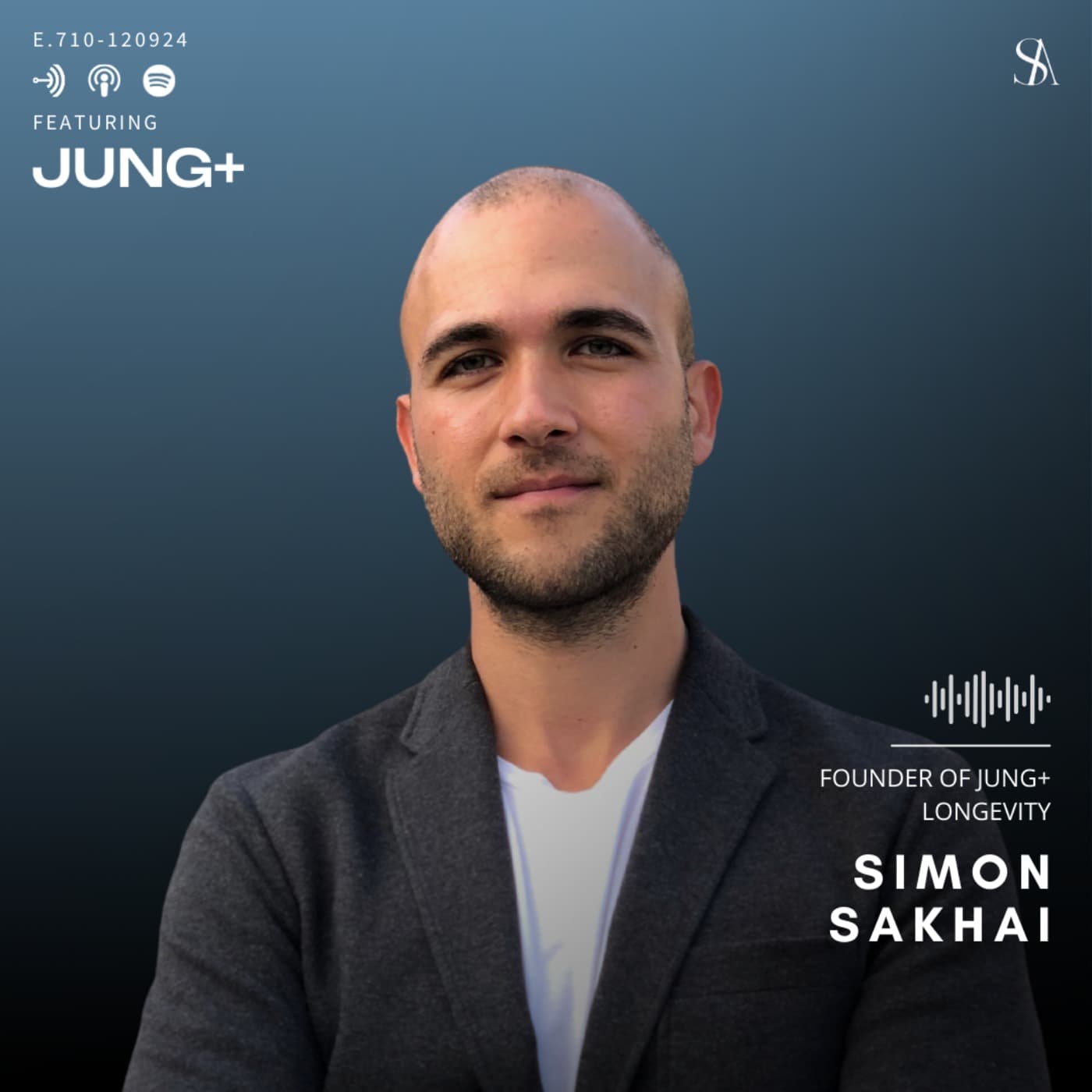
Loading summary
Transcript80 lines
- [00:02]
A
Hey, guys, welcome back to another episode of Skin Anarchy. This is Ekta, and I'm really excited because today we're going to be diving into the fascinating world of skin longevity and anti aging science. And with me today, I have the wonderful founder of a brand that's been on my radar for a long time. And I'm just such a huge fan of the brand and what they're doing and how they're really creating an impact in this space. A lot of you might have heard of them. Young Longevity is the brand and the founder we have today. Simon Sakai. Welcome to show. Simon, I'm so excited to host you.
- [00:35]
B
I am so excited to be here. What. What an honor.
- [00:38]
A
No, the honor is truly mine. I mean, you have such an impressive background as a scientist, and what you're doing with Young, I think really, truly speaks to the space of longevity science in the most meaningful way, in a way that consumers can get the best of the best. Right. And I would love to learn more about you and if you could, you know, kind of walk us through what led you to creating the brand and just the background behind it.
- [01:04]
B
Sure, absolutely. Well, funnily enough, I didn't start out in longevity. I was working in sleep, and I happened to be a student at Oxford at the time. I was working on a sleep diagnostic startup, working with a bunch of scientists to develop this program that would allow people to diagnose their disorders without having to go to a doctor, because doctors basically don't know anything about sleep. You go to the gp, they're like, oh, just like, sleep at a good time and, you know, try to avoid lights. In total, doctors only get about two to four hours of training in sleep medicine in their entire careers. But sleep is insanely complex. So I sort of started, you know, in lifestyle medicine, sleep. And then while we were working on the program, on the startup, a couple of the scientists that I was working with were like, hey, why don't you. And this is about six years ago now. Why don't you come to this. This talk on longevity? You know, this talk on, like, you know, these. There's this guy, they want to. They're talking about how they want to cure aging. And at the time, I was just like, what are you smoking? Like you're aging. What are you talking about? But, you know, it's Oxford. So, you know when someone says something and it sounds crazy, you're kind of like, okay, no, but maybe there's something behind this. So I go to the talk and, you know, it. It was supposed to be 60 minutes. It was two and a half hours there. Like, it was a tour de force. And, you know, the. The speaker, who's actually, funnily enough, now an investor in. In our company, was. Was mapping out the different methodologies and the framework that longevity science is all about. And I think what was happening and the reason I was so resistant to the idea at first was because when people usually talk about anti aging, you know, it's really in terms of the cosmetic definition of the term. And, you know, it's. It's. It's sort of like it's a term that's been used and abused so much by the cosmetic space that you sort of go into it thinking that, like, oh, you're just talking about Botox, like, this is. What do you mean? Like, you can't stop aging. What I realized was that there is now a real incredible framework and an understanding of how aging works. And with that understanding, we are actually in a position to solve it. So it went from me going like, what do you mean you're curing aging? That's impossible. To realizing, like, wow, we actually have a fighting chance. And that changed everything for me. I started really focusing on longevity in the work that we were doing with the sleep startup and then started collaborating with other longevity scientists on campus. There's a society, the Oxford Society of Aging and Longevity at Oxford, that does lots of research and advocacy and education around the space. I joined that, and then just one thing led to another. I joined the committee, became more involved. I decided to change the startup from a sleep one to a longevity one. And. And then I became the president of the society and then later chairman. And, like, I was just like, yeah, I don't know. It became a. It became a passion and obsession for me. So that's kind of how it all. How it all happened.
- [04:38]
A
I love that. I mean, I think that that's when, like, that's truly, like, the recipe of, like, how good science is born. I feel like, you know, you have to become obsessed with it. It's. I mean, it's an interest for sure. Going from sleep into longevity. I guess there is some sort of, like, a nice interplay there. I know that I haven't gotten a lot of sleep through my training. It's definitely aged me over time. So, you know, but it's really cool to hear how you. How you transitioned. And, you know, I think longevity is a really. I mean, even though we have a lot of. A lot more people talking about it now, there's still a lot of haziness around this. Right. I mean, there's a lot of gray area, and people, especially consumers, have a hard time grasping what exactly are we talking about when it comes to, like, skin aging and the science. So I'd love for you to talk a little bit about that with us. You know, the science of skin aging.
- [05:27]
B
Absolutely. So I think the, the, the core idea behind the science of longevity is that we can't look at, we can't look at our body in silos, we can't just look at sleep, we can't just look at skin, we can't just look at, you know, how you eat. It's all connected, which of course, is not how our health care system works. You have people that are specialists in different things, they give you recommendations, and then the recommendations don't stack up to the larger story. But in addition, there's this idea that despite the fact that everything is connected, there must be some root causes or some fundamental things that are happening that are driving the aging process. And it's sort of like the big discovery of, you know, the last two decades that launched this whole industry was this idea of the hallmarks of aging. The at first it was nine hallmarks of aging, where, you know, a group of people came together and said, these are the nine mechanisms which we believe to be the things that lead to age related deterioration. And if we improve one of them, we improve your health. If we improve all of them, we make you live longer. If we fix all of them, we can make you live forever. I mean, I know that sounds crazy, but like, that's the kind of. That's the idea. You have these fundamental drivers. And now that we have them identified, we can actually target them. So the question is, what does that mean for skin? Right. Like, that's why we're here today. It's one of my favorite topics because there's a couple of ways to look at these hallmarks and a couple of ways to use them. And there is the fundamental drivers of aging. And, you know, I could just give you a couple of them. You've probably heard them. We'll talk about some of them more in detail later on. But one of the hallmarks, for example, is chronic inflammation. That actually is one of the things that were added recently. In the past three years, we, we increased from nine to 12 hallmarks. So chronic inflammation is seen as a major driver of aging. The next is a buildup of senescent cells. You might have heard about senescent cells or zombie cells. These are basically cells usually what happens When a cell replicates many, many times, at some point, they just can't function anymore, so they experience apoptosis, which means they kill themselves because they, they're not functioning. Senescent cells are cells that refuse to die. Great for them. But the problem is that they're not functioning correctly. And they are, they are secreting agents and enzymes that are actually increasing and accelerating aging. And, and they cause more inflammation, they cause more senescent cells. So the very, it's not just that they're not working properly, but they're also causing aging to accelerate. Fun fact. Your skin is the largest site of senescent cell production. We'll get to that later. Another thing that you guys have probably heard of is this thing that's related to nad, basically your mitochondrial health, the way that your body produces energy on the very, very deepest level. So NAD decline is a factor of aging. It's one of the 12. As you age, we, we create less NAD, which means that we're not, the body's not creating energy. Energy is not just for you to feel like you're not. You don't need coffee. Energy is needed for every single function of your body to actually work. So every time your body needs to regenerate a cell or clear out a cell or do its fundamental thing, it needs energy. So we're not just talking about like, how are you feeling every day, but how is your fun body able? And you know, then you've probably heard of DNA damage. You've probably especially heard it with skin care just because of uv, and we can talk about that later. But DNA damage and, and, and the way that DNA is damaged over time is one of the factors of aging. So These are the 12 hallmarks of aging. And then there's a sort of, like, there's a way of thinking about it systemically. But I think in order to look at the intersection between longevity and skin, you need to think about how do these hallmarks interact with skin as an organ specifically. And that's where really interesting stuff happens. And I think that's really the big opportunity for the skin care and quote, unquote, dermal longevity space, which I think is going to disrupt, you know, the traditional cosmetic anti aging space. So aside from the 12 hallmarks, which are the deepest fundamental lever levels, I think it's also to think important to think about what's happening with skin as an organ as it ages. And a lot of times people talk about skin aging, they talk about it in terms of wrinkles or sagginess or loss of elasticity. Now, I want to be clear. Those are symptoms. That's what happens once aging happens. Those aren't drivers of aging. And what we're actually talking about when we're talking about skin aging is not wrinkles and, and sagging. We're talking about deeper mechanisms. So I'm just going to highlight a couple of them that I think are really important. The first, and I think the most important and my favorite are the impairment of fibroblasts. So, sorry if I'm using terms that sound unfamiliar. I'll do my best to explain them. Basically, your skin as an organ has various layers. Within those layers, there are different things that do different things. Fibroblasts are a type of cell that live in your skin. And in terms of the science of skin aging, they may be the most important one. And that's because fibroblasts are responsible for the production of hyaluronic acid, collagen, and elastin, those other three you've heard of. But if you're thinking about how am I going to get more. It's really about making sure your fibroblasts are healthy and those cells are, are working optimally. The other three I mentioned, things like elastin, hyaluronic acid loss, collagen decline, those are really important factors of skin aging. They, they, it's not just for good looks. They are things that you need to think about as part of your overall skin aging strategy. But I think where it gets interesting is where you start linking the production of those different elements. Collagen, hyaluronic acid, elastin, through the fibroblasts as they relate to those initial hallmarks of aging, as I mentioned. So that's sort of like a whistle stop tour on the various things you need to think about when it comes to skin aging.
- [12:29]
A
Yeah, no, that was really great. I love that. And I, I think there's a lot to unpack. You know, there especially, you know, what really caught my attention was when you're talking about senescent cells, definitely heard about them before. I think, you know, in the longevity space, the term is used a lot. You know, it's thrown around, but there's not a lot of explanation. So just to kind of learn more, could you tell us about what role they actually play in skin aging and how does managing them improve not just our skin health, but just overall longevity?
- [13:00]
B
Absolutely. Well, it's, it's a really interesting topic because the senescent cells in your skin impact your overall health. So basically, as I mentioned, you have These cells that refuse to die, when they refuse to die, they become zombies, like in zombie movies. They walk around wreaking havoc. They. They bite other cells. They make more zombies. They cause inflammation. They secrete all these toxins. They're. They're not. They're not good. You don't want them. And senescent cells happen everywhere in your body. They're a hallmark of aging. They're one of the 12. But your skin is your largest organ. You know, I'm sure listeners to this podcast have heard multiple times about skin being a barrier organ. And I would like to impress the magnitude of what that means and how that relates to senescent cells. Now, I think it's important to understand that every other organ in your body is protected. Your heart is protected, your lungs are protected, your kidneys are protected. So everything has a casing that blocks it from the environment. I want you to imagine for a second what would happen if we were to expose your heart to the elements. I mean, you don't have to be a doctor to know that's insane. You would never want that. Now, there is an organization that is constantly exposed to elements, and that's your skin. And its entire job is to be that barrier. Now, you have to imagine that every second, every day, every square inch is being bombarded with trillions and trillions of things that you don't want in your body. You don't want it in your heart, you don't want it in your liver, you don't want it anywhere else. And as you age, of course, the barrier function declines. We'll get to that. But what also happens when your skin is dealing with the external environment is it experiences damage. So the sun is an environmental stressor that you all know about. That's why people talk about sunscreen. I have thoughts on that. We can get to that. But because the skin is experiencing all of this damage, what happens aside from DNA damage and inflammation? You have the buildup of senescent cells. And because your skin is your largest organ, it's also probably the largest site of senescent cell production in your entire body. Now, why is that problematic? So, yes, you can say it's problematic because you get senescent cells. They accelerate aging in your skin. So you look saggy, you look in the mirror, and it makes you unhappy. Okay, big deal. Well, the really big deal is, is that senescent cells don't just stay where they're born. Senescent cells leave where they're born, and they go into other parts of your body, and they accelerate aging in those other parts. So what that means is your skin is driving aging in the rest of your body by being a production site of senescent cells that then get fed into your bloodstream travel, end up in your brain and your heart and your liver, and then go and wreak havoc over there. And like. And this is another thing. Senescent cells are not just on your face. You know, this is one of the things that, you know, when it comes to topical skin care, that really bothers me. People are only thinking about, like, oh, well, I just want to put this cream on my face because I want to look young. Like, yeah, your skin is an important organ. It's an important organ everywhere. And if you have to go and put a cream on every square inch of your skin to make sure it stays healthy, well, that's just not going to happen. Right?
- [16:46]
A
Yeah.
- [16:46]
B
It's really about thinking about the systemic nature, and I think senescent cells are a perfect example of that.
- [16:54]
A
Yeah, no, I. This is so interesting to me because, I mean, what you mentioned about kind of like traveling and migrating to other organs. So important to understand because if our skin is essentially, you know, functioning as like, kind of a nest, right. For these, like, these cells, I mean, it's good for us to then explore more systemic options in terms of how to combat aging, I guess. You know, so it's really, really interesting, this tie in that you did with the. The topical skin care and, you know, options versus, I mean, I guess, the supplements. Right. I mean, I'd love for you to talk a little bit more about that in terms of what can consumers actually expect? You know, what should we be doing, really? I mean, I know a lot of people will buy the serum, but I mean, should you even buy the serum if you're, you know, looking at a brand, or should you buy the actual supplements to go along with it?
- [17:46]
B
Okay, so lots of ways that I can break this down. First off to say is, when it comes to topicals, the skincare industry has really focused on moisture. When you look at the bulk of topical products, what they're doing in order to make you feel like you're aging less or your skin is glowing or whatever is to focus on this idea of, let's moisturize the skin. Yeah. And first of all, moisture is not a factor in aging is the first thing I need to say. Moisture is important, but it is not one of the core drivers of aging. So I think this over reliance on topicals and serums is, you know, and the end point being, let's moisturize so it looks more plump so you think you're aging less. That's not really a credible way of slowing the aging process. Second thing I'll say in terms of moisture is the skin has multiple levels to it. You know that there's the epidermis, there's a dermis, there's different layers. Part of the skin that we see is the epidermis. That's just dead skin. That's the outer layer of skin. It's an important feature, but it's not where organ health is made. Skin organ health is made before, but below the outer layer. Now, when you apply a topical cream, more often than not, it's just sitting on the top of your skin. So. And you can plump that layer up, you can make the epidermis feel plump. But where the real magic happens of skin health, and also where the real magic happens of, like, your wrinkles disappearing and your elasticity restoring is when you actually start increasing those. Those key factors within the organ. So factors like hyaluronic acid or collagen production or, or repairing the elastin. I mentioned these three before. They're really. They're really important. So, you know, and the last thing I'll say about, like, skin moisture and you know, should you be taking. Using topicals and when you should be using topicals really comes down to a topic I'm very passionate about is molecule size. So, you know, we know that the epidermis, this outer layer, has a certain pore size. There's something called the 500 Dalton rule.
- [20:18]
A
Yeah.
- [20:19]
B
So the 500 Dalton rule basically means dalton is a unit of size. It's often used in, In. In. In pharma skin when they're creating, like, medicines that need to go through the dermal layer. Yeah. They need to be smaller than 500 Daltons to actually get into the organ to do their thing. Now, the problem is, is that most of these compounds that we're talking about, things like elastin or collagen or hyaluronic acid, the things that they're putting in these creams and serums, to quote unquote, help with skin aging or help with moisture, they cannot pass through the space required to get into the organ. It's.
- [21:05]
A
Yeah.
- [21:05]
B
It's literally fake news. So just like, as. As like some examples. So your. The. The opening in. In. In. In skin size for it to pass through that layer is. Is 500 daltons. A collagen molecule can be 120,000 daltons. Yeah. A Hyaluronic acid molecule is anywhere from like 10 to 15,000 Daltons. Elastin, 60 to 70,000 Daltons. Enzymes, if you ever heard of enzymes, 20,000 to 400,000 Daltons. Growth factors, you've probably heard of things like growth factors anywhere to 6 to 7,000 Daltons. I mean, what we're talking about here is like, you know, I can see what the science was trying to do because it's sort of like if someone told you, hey, do you want better eyesight? Why don't you eat an eyeball? Yeah, but it doesn't actually work the way. And it's sort of this, this recurring theme when it comes to the cosmetics industry of like, you know, there's only so much you can do with, with, with a cream. And again, this is not to say that things like collagen and hyaluronic acid are not important, and it's not to say that moisture is not important. Hyaluronic acid is extremely important to the functioning of your skin as an organ, but applying it topically is not going to be the thing that helps replenish those levels. You need to look more systemically. You need to look more deeply. So.
- [22:36]
A
Yeah, that's, that's really interesting because I think, you know, in terms of like the actual size of the molecules we're using, I mean, the most I've ever seen about this, it's, so it baffles me as well, is, is, is in the space of hyaluronic acid, you know, ingredients. And I haven't really seen anybody talk about it, you know, at all. When it comes to everything that you mentioned, you know, like the enzymes, the collagen, the growth factors. I mean, no one really discusses this very obvious problem, you know, and we're all.
- [23:06]
B
Why would they? Because it'll, it'll compromise their entire businesses.
- [23:10]
A
Exactly.
- [23:10]
B
I don't want to sound like a, like a conspiracy theorist, but it really does come down to that.
- [23:16]
A
Yeah, it really does. It's not even conspiracy. It's just facts, you know, and I think that consumers, we. You don't hear about it because, I mean, I'm sure most of us haven't heard of Dalton unless you've taken a physics class, you know, at some point in your life. Like it's not even come up. So it's very hard, you know, for consumers, I think, to keep up. But you know, going back to just the focus of this inside out solution, I really want to focus on that. What is, you know, can you explain how the strategy addresses the Root cause of aging and improves skin health from within. This whole inside out approach.
- [23:49]
B
Okay, so I think there's two approaches you could take. There's a supplement approach and there's a lifestyle approach. And I'll start with the supplement approach because we have a product for it. You know, it's our cellular skin renewal formula. And basically the, the strategy that we developed was we said, what's every single hallmark of skin aging? Like, what are those key mechanisms that we're going to target? And then how can we make sure that if you wanted to take a supplement protocol for skin anti aging or dermal longevity, whatever you want to call it, how can you make sure that it's addressing all of those? And it's very important to address all of those because you have to understand that when we talk about aging and we use the word aging, aging is one word, but it's actually describing multiple processes at the same time. So if you're, if you're just solving for nad, or if you're just solving for senescent cells, it is related to longevity, but it's not solving aging. Because the whole methodology of solving aging is about taking this portfolio approach and putting it all together. That's why you have longevity clinics, that's why they cost so much. You spend 100 grand, 200 grand a year, and they create these portfolio of interventions around you. So the strategy behind our product, and I think the strategy, whether you buy our product or whether you don't, what I would impress on anyone creating a supplement strategy specifically for skin is to map out every single factor and to make sure that you're solving for each one. I know it sounds dull, daunting, but this is the difference between slowing aging collectively and thinking about it systemically and trying, you know, silver bullet solutions that, you know, can help individually but don't really speak to what the promise of longevity science is. So with our cellular skin renewal product, we, we aligned those hallmarks with some really fantastic ingredients. These are the ingredients that have shown the most evidence to respond to, to that particular hallmark. We don't own the rights to any of these ingredients. That's not our business. Our business is just selecting the best based on the evidence and create and then using the longevity framework. So I mean, I can talk to you about a couple of them because, yeah, everyone, we've got a lot of skin tolectuals on, you know, on the podcast. Indeed, though they, I can, I can give you a couple of, of our favorites. Again, we've put them in the Formulas, you don't need to get our formulas. You can do this yourself. But let's, let's, let's go through a little list. So for NAD decline, you know, we could talk about NAD in more detail later, but I think there are various supplements you can take for NAD and to improve NAD levels. You've probably heard of NR&MN niacin. Again, we could talk about those later. But specifically, when it comes to skin, niacinamide has been the most effective to increase NAD levels in skin. Now you've definitely heard of niacinamide as a topical, but you can also take it as a supplement. A niacinamide is a cousin of NMN and nr. I'm sure you've heard of these. All of these are precursors to nad. But if you're really focused on skin, I would suggest that one, senescent cells. There are various supplements that you can take that can help clear out senescent cells. There's things like quercetin, terastyl bean, lots of polyphenols. But the one that seems to work the best and also has lots of added benefits in skin is something called spermidine. Spermidine is interesting because it has a funny name with the words and people are like ew, does that mean, and the yes does mean that spermidine was first discovered in human sperm. But luckily the spermidine that we take as supplements today is not derived from human sperm. And there are various sort of like nutritional sources that you can get it from. Mushrooms, broccoli greens, wheat germ. But you, those generally come in low doses when you're taking them like through food. So you get a super concentrated version of spermidine and that helps stimulate autophagy and clear those synapse cells. In terms of the fibroblasts I mentioned fibroblast before, they're a really interesting cell. And in terms of thinking about how you can improve the health of those fibroblasts, you need to think about a couple of things. One, improving the health so actually giving it tools that make it healthier. Two, protecting it from damage so that it doesn't get damaged and it doesn't decline. And, and then three, giving it the energy it needs to stimulate the production of new fibroblasts. So it's a, it's a sort of like multi pronged strategy. You need to think about when you're thinking about improving the health of fibroblasts. And for those, there's, for fibroblasts there's like a, there's three supplements I think everyone should have in their stack. So niacinamide. I already talked about as, as, as, as something that helps support NAD levels and energy production. That when you do that, you're going to see fibroblasts have the ability to replicate and create more fibroblasts. So that's an example of the systemic nature of how the hallmarks relate to individual kind of mechanisms or cells in the body. And then vitamin C and vitamin E. Old school. Nothing revolutionary. But vitamin C and vitamin E separately, but especially together, they have shown tremendous effect for protecting, protecting from oxidative stress, helping feed the fibroblast with what they need to kind of like, you know, work properly. A lot of people are probably already taking vitamin C and vitamin E, but they're, they're not to be missed. They're fantastic. They're a fantastic duo, especially for fibroblast health. Next, I want to talk about hyaluronic acid, something that's come up before. So hyaluronic acid, a couple of ways that you can increase those levels. One, as we mentioned, keep those fibroblasts healthy, keep them replicating. But two, supplementing. So two things that you can supplement for with hyaluronic acid. One is hyaluronic acid. So take hyaluronic acid as a supplement anywhere from like 50 to 100 to 150 milligrams a day. But then the other supplement that we really like is something called nag N acetyl glucosamine. And basically NAG is a precursor of hyaluronic acid. And what you want to try to do is not only replace hyaluronic acid, but give your body the building blocks that will help it create more hyaluronic acid. So what you're doing is you're basically combining these building blocks with the improved fibroblast health, which will then make sure that you're, you're, you're optimizing the production of hyaluronic acid. And it's a similar story with collagen. So I'm sure you guys have spoken about collagen at length. You know, obviously I'm not a fan of topical collagen. It just doesn't make sense. Collagen is, like, really, really complex. It's actually the most abundant protein in your body. And because of that, there are many different types of collagen. So people have heard of type 1, 2, 3. It's way more complicated than even that. And unfortunately, every different type of collagen requires a different lock and key, so to speak. So the collagen in your skin and the collagen in your nerves and the collagen in your eye and the collagen in your joints are completely, completely different. So one, you need to be making sure that you are taking a collagen that is specific to the outcome that you're looking to have. So there's a lot of collagen mixes out there that are just like general collagen. And they say they're for skin, but it's really important to make sure that you have one that's been validated and shown to actually improve collagen synthesis in skin. Because there really is a huge complexity of different types of collagen. The other thing I'd say when it comes to collagen is that whole collagen just, just gets broken down as, as normal amino acids. It's almost just like taking protein powder. Yeah.
- [32:46]
A
I was going to say, like, I, I'm like, not a fan of that. Like, there's so many supplements out there. Like, yeah, you know, we have collagen. It's like it's not going to do anything.
- [32:53]
B
No, it's that same story of like eating eyeballs to improve eye health. It doesn't work like that.
- [32:59]
A
Yeah.
- [33:00]
B
The best strategy that we have right now or what you've probably heard of collagen peptides. So tides are broken pieces of the broken pieces of collagen. And what happens is when you take that broken down collagen and your body sees pieces of it, it all of a sudden says, oh my God, my collagen is broken. I need to make more. And that's when you're stimulating the production of more collagen. So people might think when they're taking collagen peptides that they're just like replacing the collagen. That's actually not, that's not what's happening. That's not what we're trying to do. What we're trying to do is we're sending the right key to send the right message to those fibroblasts and the rest of your body to create more collagen. So we, we use a version of a collagen peptide called verosol. It's not the only one out there that's been proven for skin. There's like maybe two or three out there that I've seen that has the same level of clinical evidence, but it's our favorite. So we've included that collagen peptide into our formula. And then the last thing I'LL talk about is DNA damage. DNA damage is another driver of aging, and probably the biggest factor of DNA damage when it comes to your skin is sun. And I'm sure you have all heard about sun. And, you know, skin care industry is always telling you, oh, don't forget your sunscreen. Oh, don't forget this product. Now, this is a controversial statement, but I think that it's a little. This is a. I need to word myself correctly because people get really angry about this. I think the skincare industry is looking for new ways to monetize. And, you know, there's only so much foundation or so much moisturizer, so many serums that you can put. So they're always trying to invent new categories, and I think sun cream may be one of them.
- [35:00]
A
Yeah, fear mongering. It's fear mongering.
- [35:02]
B
It's a lot of fear mongering. You know, there's a statistic that came out recently where there were more. There were orders of magnitude more deaths due to cancer that are probably associated or can be associated with a lack of vitamin D. Yeah. Than there were skin cancer. So what's happening is the skincare industry is telling people to walk around every day, put tons of more extra stuff on their face. Half the times as we know, these sunscreens have chemicals in them. That's why everyone's like, oh, no, try the mineral or do this. No, I mean, like, we want to minimize the amount of stuff we put on our face. And at the end of the day, what that's also doing in, like, is. Is blocking the sun. It's blocking, you know, the UV that helps our bodies create the vitamin D that we actually need. Now, I. I live in New York. I work a lot, so I'm in front of a screen all day. If I'm able to get 30 minutes out in the day of sunlight, I'm gonna take every drop that I'm gonna get. And you know what I hear often people showing off is saying, like, I wear sunscreen every day no matter what. And I don't know if that's the best strategy. Now, look, there are caveats here. If you live in Australia, if you live under the hole in the ozone, please wear sunscreen every day.
- [36:29]
A
Exactly. Yeah.
- [36:30]
B
Going on a beach holiday. If you're spending the whole day outdoors hiking, please wear sunscreen because we're not trying to burn, but we do want to allow the sun and the UV to do what our skin has evolved to do, which is to turn, to reset our circadian rhythm. You know, rebalance a lot of hormonal stuff that happens when we get UV rays, but also make that vitamin D. So question is, and the last thing about sunscreen that really annoys me is that, like, sunscreen is only going to work where you put it. And like, you know, it's just really, on a practical level, annoying to get it to every single part of your body. So all of which is to say, have I got the solution for you. I almost sound like a used car salesman now. But, like, there's a supplement that's unbelievable. And it's like my favorite supplement. It's the queen of supplements, Astaxanthin. Astaxanthin is. Does multiple things. And the story. I'm going to start with the story of astaxanthin, which is. Which is really cute. So the reason that salmon are orange, pink or flamingos or pink are because of astaxanthin. Astaxanthin is a carotenoid and it starts in krill or algae. It starts in algae and then the algae are eaten by the krill, the krill are eaten by, you know, the. Either the salmon or the flamingos, and then everyone turns orange or pink. But that's important because what happens is that those carotenoids build up in your skin and they protect against sun damage. So they allow your skin to receive the UV and all of the things from the sun, but they help prevent it from actual damage. And it also works systemically. Right. Like, I don't have to spread astaxanthin on my skin. I just take it as a supplement. It goes into my body and it goes to. It gets ferried to where it needs to go. And. Sorry, there's one last thing I want to say. Sorry. Yeah. Inside out approaches. I think it's worth reminding, reminding people a little bit about evolutionary biology.
- [38:38]
A
Yeah.
- [38:39]
B
And how different organs, different organs evolve to do different things. So my, my ear, for example, evolved to listen. If I wanted to listen to, you know, a song, I wouldn't put my headphone on my toes because my toes are not designed to take in sound. I think this whole thing about topical products, again, it's like. I think I find it crazy because it's like the skin was not designed to absorb nutrients.
- [39:10]
A
Yeah.
- [39:11]
B
Like, it's literally designed for the opposite. It's designed to keep everything out. The only organ that's been designed to absorb nutrients is our stomachs, is our digestive system. Over hundreds of millions of years, our stomachs have been. Have evolved as this place where nutrients arrive, there's then a decision that's made of where should the nutrients go. And then they get ferried there. Like that's how evolution wanted it to work. And then we've come and we've said, let's take all of these chemicals and fillers and this and that and slap it on our face in hopes that it gets in. I mean, it's like a counterintuitive process. And like astaxanthin is a great example of this. Like, if it was sunscreen, you'd have to apply it, you'd have to worry about all the chemicals that are on it. You'd, you know, we're not even going to get into skin microbiome. And like, what all these topicals are doing to that micro bio is a factor of aging. It's another one of the hallmarks. And why. Another reason why you should be very judicious with what you put on top of your skin. Whereas you take astaxanthin, you know, it's sort of like sunblock in a supplement and you have that built in protection that allows, you know, your systemic system and all of your skin to benefit from that process.
- [40:28]
A
No, I love that you. I love that you did a, you know, like, I want to say deep dive, but I know you can go a lot deeper than that, you know, in terms of explaining the signs. I love that you talked about this because I've always said this, and I've said it many times on other episodes of if anyone remembers is that I always look at topical products as like, kind of like broth, you know, like when you do cell culture in a lab, you put nutrients on top of cells to help them grow. But in the case of topical products, you're not even doing that, you're just providing. And I think you had brought this up, Simon, was this idea of moisture, like the skincare industry is obsessed with moisturizing, you know, and I think that that's pretty much the extent of what you can do with topical ingredients and products. Because, yeah, the top layer is dead, you know, it's a dead layer of cells. And at the end of the day, it's very much like the comparison of the skin barrier to the blood brain barrier, you know, you don't want things to get across, actually. It's not like it's not a problem that we have to solve as humans. It's. No, it's. We have to solve the problem of us wanting to solve the problem, you know, because it's meant to protect us. Like, I think you've stressed that, you know, in various ways that it's really, it's an organ, but it's made to for protection because it does interact with our environment and all of these stressors out there. And it has to make sure that whatever is underneath is protected. So that's so important for consumers. I think, especially now, when I look at the skin care space and I see nothing but, you know, I say this a lot. I say, you know, there's a lot of packaging out here and it is, it's a lot of packaging. You know, there's not a lot of, like, depth to these products and really what they do from the health perspective. So I think for consumers, it's very important to understand these fundamentals that you explained. You know, really, really important. But I want to, actually, I want to circle back because I know you had brought up nad, and I really want to talk more about nad. I think NAD has become a huge buzzword, especially in the longevity space. I mean, you know, for all of our listeners out there, you know, some of you might be familiar with it. For those of you who are not, I would love for you, Simon, to explain to us what is NAD and why is it so essential for skin and also systemic health?
- [42:41]
B
So, yeah, NAD is a. Is a great case study to bring together everything that we've talked about. First of all, thing to remember with NAD is that it's a factor of aging. So it's one of 12, maybe more things. So just solving NAD won't stop aging. And you, of course, you see a lot of even, you know, companies that call themselves longevity companies or longevity products, saying here, you know, take this NAD thing, but it's not enough. That's not the portfolio approach. Like when you're thinking about what, what is longevity is a field trying to solve what is a longevity doctor trying to solve. It's part of a bigger package. So that's the first thing I'd say in nad. Second thing I'd say about nad, it's, it's. It's a great case study to look at how we, how we solve for an endpoint and what that means in terms of your body. So NAD is a, is, is. Is part of a process of energy production. And that process has many layers. And oftentimes in science, it's not clear whether it's the end product that is the benefit or a mechanism that's happening through the end product that gets to the end product that is the benefit. Or even if we know that the end product is, is beneficial. Whether just supplementing or replacing for the end product is actually the thing that's going to help. Let me explain what I mean by that.
- [44:07]
A
Yeah.
- [44:08]
B
So you've heard of nad and you've also probably heard of things that are called molecules that are called nmn, nr, niacin, niacinamide. I've mentioned one of these. It becomes really confusing because NAD is three letters, NMN is three letters. And then people are like, oh, well, they're the same thing. They're not. You have precursors, so molecules that you can take to that help the body produce more of something. And then you have the end product, which in this case is nad. So one of the things I'm seeing a lot right now is NAD products. And you know, I think it's just weird because, like, you know, we know that for various reasons that just supplementing for NAD doesn't, really, doesn't really work. We need these precursors. So the first issue really is that NAD is a very, very unstable molecule. You know, it as soon as it's produced, it sort of unravels and it's not NAD anymore. It doesn't do its things. So you have this issue where I'm seeing a lot of either NAD supplements or NAD topicals where it's just the end product. And like, we know this, the science is clear. Like, just supplementing for NAD doesn't really work. You know, oftentimes it's, it's, it's an issue of absorption. It doesn't really help increase NAD levels. You really, really need these precursors. So the first thing that I would say is don't just use an NAD product. Focus on a product that's using a precursor strategy. And really the best precursor strategy that we know of based on longevity science are these, these, these B3 vitamins, which are either NMN and are niacin or niacinamide. That's, that's really the four, you know, choose. Choose your pick. Now the other thing that's really interesting is you've, you've probably heard of NAD drips. And if I'm shot tomorrow, let's hope not, like, if my body is found like, you know, like, like falling off the 15th floor of a balcony. Like someone in the longevity industry is trying to silence me, basically, like lunge, like these IV drips, these NAD IV drips have become huge. Now everyone has a different perspective. Take what I say with a grain of salt because it's just a little old me talking. But there's sort of two issues with NAD drips. The first is, the first one I mentioned, the, the lack of stability of nad. In order to make sure that the NAD molecule is still, is still stable, it needs to be in like a perfectly temperature controlled environment from the moment it's produced to the moment it arrives at the place to the, to the moment it ends up going into your body. You know, I'm not an expert on NAD stability and what that process has to look like, but I do know that it's, it's incredibly complex and I don't know if anyone's necessarily testing the levels of NAD before they hook that IV up and, and, and, and you know, putting it into your body. They just want to collect their 150 bucks. You know, they've got like a technician that's making minimum wage oftentimes just to like, you know, put the needle into your, into your thing. It's not, I think that there's like a, there, there's a lot of hype writing on that. The second thing, and probably more interesting thing is a study that I saw about what happens where the NAD ends up once it goes into an iv. And you know, you might say that. Oh, Simon. Like if you put it in an IV and it goes into your bloodstream, it's going directly into your blood. So we got it through the skin. So that's great, right? Well, actually, you know, there was a study that was done. Again, this is just one study and they saw that while I've. Nadiv drips can increase NAD levels in your blood or in your plasma, something called extracellular outside the cell. What they failed to do or what they didn't see was intracellular inside the cell, increase in NAD levels. And, and that's really where you need the nad. The nad. Yeah.
- [48:41]
A
That's the whole purpose.
- [48:42]
B
That's the whole purpose. And that comes back to this idea of why we need to go with the precursor strategy and why we need to follow the body's natural. Sometimes we need to follow the body's natural mechanisms. You know, we need to insert ourselves in a way that gives the right ingredient at the right time, in the right place, so that it ends up making NAD increases in cells. And right now what seems to be the best method is to take a precursor, let that land in your stomach, and then let that go through the digestion process and then the body will actually make sure it goes to the right place, which, you know, in this case is inside the cells. But this was just based on one study More research needs to come out. You know, I might be wrong, but, you know, this is, this is, this is my hot take on NAD and IV drips. And also.
- [49:34]
A
No, I love it. I really love it. And I think you're so like, I love what you're saying because there's such a thing as redox reactions, you know, and there's the instability of NADP plus. For everyone listening. Just to add to what Simon said, the plus that you see at the na. At the end of the word, the letters nad, it just means that there's, it's dealing with electrons, like the exchanging of electrons. So what happens is like NAD will turn to nadh. And so you know what, the reason it's so unstable is because it's a very reactive molecule when you have it in that state. And so the likelihood of it doing anything for your body on a cellular level is very slim to none if you don't have it in a form. What you're saying, Simon, which is like, you know, you need some sort of a precursor to actually form the, you know, form it within a cell. I completely understand that from a scientific perspective because it's, it's simple chemistry, really. You know, so that is something consumers need to be aware of and understand because you're. There's hundreds of supplements out here that are promoting NAD. I think just the other day I was on TikTok and someone was. Many influencers right now are just like pushing out these random companies that are making NAD supplements. And I'm just like banging my head against the wall. Please stop. You know, so it's very, very interesting. But I know that you guys have a different approach though, Simon. I mean, you know, what, what is your approach? Like, what makes it different the way you guys are doing it?
- [50:59]
B
So I, you know, I think that, like, aside from taking the inside out approach, you know, the other thing that we're really, really big on is lifestyle. You know what also kills me? Like, literally I cry when I see this. You see a supplement company and they're like, you know, here's this pill and it does, you know, it'll grow all your hair back and it'll make you grow six inches taller and it'll make you lose 100 pounds. And then in fine print it'll say, but it's not as effective as a healthy lifestyle. Like, that pisses me off because it's like, why would you bother making a product if you're not going to make the best product? And you know, what's better out there? Like, don't make crap products. And, you know, fundamentally, when it comes to longevity, you know, and this new framework, we're thinking about systemic health, we're also thinking about lifestyle and how your health interacts with your lifestyle. Is a. Is, is what is one of the factors that we're missing with our, let's say, old version of health care that was very reactive, that wait, waited until you're sick, you went to a doctor, and they never asked, how's your sleep? What are you eating? I mean, basic things like, like sleep drives every single one of your, you know, like cognitive or physiological processes. They're just not addressing that. Right. So lifestyle plays a huge role. It also plays a huge role in skin. So, you know, as part of our system, we, we've created this build a kit like program. And what we basically done is we've taken these molecules that have all, all the evidence that you could possibly want, but we've divided them into, like, this program that helps you design a lifestyle strategy. So rather than just taking molecules for no reason, you're really focusing them on the goals, the lifestyle behaviors that you are, you are engaged in. So if you're doing intermittent fasting, well, you should probably take these molecules instead of those. If you're doing low carb, well, then you should probably do these things instead of those. If you're focusing on your sleep optimization, you're trying to improve that, well, then you should probably focus on these and take these instead of those. And this is like, you know, something that bothers me about, like, what a lot of companies do, but also sometimes what a lot of people do, which is they take a spray and pray approach. They say, I'm going to try everything, and, you know, I'm just going to hope that it works. And you listen to a podcast like this and I tell you a million different things in a million different directions, and you want to do it all. And I'm sorry, and I'm part of the problem too, but, you know, you really need to think more carefully. So I'm, I'm. To make it more specific to skin. I'm going to give a little bit of advice that relates to our products and also how they can, how they can help with skin. And when I say products, I really mean, like, our recommendations on what you should be focusing on for your health. So I already talked about sun. You know, that's a big lifestyle behavior. I've given you my caveats on that. The next two I want to talk about are sugar and sleep. So people Intuitively will understand that your diet affects your health. When it comes to sleep, this is especially sorry. When it comes to skin, this is especially true. Now one of the major issues with our modern western diets is the amount of sugars and carbohydrates. It is insane. It is completely abnormal to the whole of human history and also the rest of the world. Like the crazy thing is like if you look at human remains, the teeth of human remains before we started remind refining sugar, they were perfect.
- [54:43]
A
Yeah.
- [54:44]
B
Now you look at human remains, you see someone who died in their old age, they have no teeth. So yeah, sugar is killing us. But what's especially aside from just skillet killing us and everyone is like, okay, well I know that it's bad for my health. A skin aging. A huge factor in skin aging is the acceleration of these, these things called ages that cross link with the elastin in your, in your skin and are made by having high blood sugar levels. So let me break that down. Basically every time you have a blood glucose spike and you have lots of sugar or you have a bowl of pasta or a pizza and your, your, your body is flooded with all of this sugar and this glucose. And by the way, glucose is carbs, but it's also sugars. It's the same thing. It's also the same in fruit. Fruit is, is. Fruit can be evil. It's the same like it's all the same thing. And what happens is your body needs to do something about it. And oftentimes because we're eating a lot more than we need because of our modern diets, the, the body has these sort of mechanisms of figuring out how to store and get rid of all of this glucose from your bloodstream. One of those things that it does is it creates age advanced glycation end products. These are one of the fact, one of the things that happens when you have too much glucose. And these are one of the things that cause wrinkles because they cross link the elastin. The elastin are those are these long strips that connect your skin layers and fill out the layer of collagen and hyaluronic acid. And they're what make your skin elastic basically. So if, if they're, if there's lots of them and they're not tangled, your skin is elastic. If, if there's few of them and they're all tangled up, your skin is inelastic. That's how wrinkles happen. So number one, cut sugar. Try a low carb diet. And we, we have a product called a Glucose blocker. And this is a specific protocol for people who are trying to go low carb. It's a product that you take with meals. When you're having a cheat meal or you have the inevitable pasta or whatever, you basically pick the, the meal in your day that is going to have the most carbs or sugars. You take this with it and it helps mitigate a part of the effects. So it's sort of a cheat for your cheat meals. And it's got like lots of great longevity ingredients that do other things, but specifically related to this insulin response. The next thing I want to talk about is sleep. You know, probably thing to, to end with because it's, it's, it's what I, what I began with. You know, sleep is, this is, is literally nature's longevity miracle. Right? Like we talk about longevity and anti aging as if it's something we're just discovering. Your body does it every night. When you sleep is when your body is literally repairing damage, rejuvenating cells, clearing out, you know, broken proteins. And let me be clear, that is a reversal of factors of aging. That is literal age reversal. That's happening while you sleep. Now you just said you get bad sleep. You know, this is the perfect example. We've got a, a leader in the science of skin care space who knows everything about skin care and who's doing the best of the best. Right. Like I'm sure your listeners would like kill to have the knowledge and ability and access that you do when it comes to sleep. Sorry. When it comes to skin care. And yet here you are not sleeping. Not sleeping. Like that's just crazy. That's crazy. So you know, focusing on your sleep is really important. And there's a whole strategy behind getting high performance sleep. There is. And I'm not talking about insomnia. I'm not talking about people who have issues falling asleep. I'm not talking about people of restless leg syndrome. I'm talking about making sure that when you sleep you are increasing the amount of, of slow wave phases or they're different, this whole sleep architecture. But basically the times that your, your sleep is able to get into those repair mechanisms and that's, we have a, we have a whole sleep protocol for that. And that's a, that is, I'm not going to get into it, but it's, it's an entire product with. That gives your body the building blocks to help that regeneration process and to rebuild things like collagen or tissues. Like really, if you want to think about how can you regenerate, you really need to think about like tissue repair, high level, I would just say at night making make sure you're taking zinc, magnesium and B6 because those three together are really important factors that help support like wound repair and healing. Glycine is a really great one, you've probably heard in skin care as a supplement, but also really great for sleep, specifically for support supporting those regenerative, regenerative processes at night. This is where we start getting into the question of like what to take when. Yeah, lots of supplements you can take whenever, but if you want a specific outcome, you're going to want to take them at a certain time. So you know, take a look at our advanced sleep repair product. A lot of those supplements you've probably seen elsewhere like things like magnesium, zinc, B6 tart, cherry, glycine. If you want to improve your sleep and you want to enhance the regenerative mechanisms that can support younger skin, you're going to want to take those before you go to bed so that they're there when those critical repair processes are happening.
- [60:30]
A
Interesting. Now that is, that's really interesting because I think with sleep we just, I don't know, there's so little information out there about sleep as it ties to just overall health, I think, I mean I know that we all know like you need to sleep, you know, to be healthy, but like no one really discusses in depth. I feel like with, you know, what it does and how sleep actually repairs your body. I mean that it's very, very interesting that you brought that up, you know, and, and thank you for listing some ingredients off because I know that there's, there's just not enough education about it. You know, I don't, I, I certainly don't see it from my perspective so.
- [61:05]
B
Well that all of that's changing. Right. Like, I think what's really exciting about this moment of time is that we're going from a top down healthcare system to a bottom up. Yeah, and a bottom up healthcare system is when you have more educated consumers that are demanding more from the companies that are providing their services.
- [61:29]
A
I love that. I, I feel like everyone listening demand more, you know, like genuinely demand more. Yeah, I completely agree, Simon. I think that it, it's time for change, you know, in that regard. So I, I really hope it reflects in the next years to come, the next decade to come, you know, that we get more knowledge around these topics, you know, and speaking of sleep, something that really comes to mind and you know, I know you had spoken a little bit about the microbiome earlier is this concept of inflamma aging. And I really want to talk about inflammation and immunity and all those things and their relation to longevity. If you could kind of give us a little understanding there's. And explain how it impacts your skin overall.
- [62:10]
B
Yeah, I mean, chronic inflammation is like oxygen. It's everywhere. And it's one of these things that gets talked about a lot. And like, when you see a health company or you see a, you know, supplement company, they'll throw that around everywhere, partially because it literally is like oxygen. I would say it's something that people, if they're living a healthy lifestyle, they shouldn't really worry about it. But it, it is an important part of these processes, and they're all interlinked. So in, in, in the example of senescent cells, I know we talked about that a lot. One of the things that ends up happening when you have lots of senescent cells, it causes more inflammation, it causes an inflammatory response, and then vice versa. When you have an inflammatory response, your body's not able to react properly to oxidative stress. It's not, it's not able to clear those senescent cells. So chronic inflammation is one of these, these things that cuts through every, every part of your body and every and every process. And, and, you know, the kind of thing I would, I would impress upon all of you is to live a healthy lifestyle. There are supplements that can support, you know, that, that can help with chronic inflammation. The good news is, is that, like, what we see with a lot of the supplements we normally talk about, you know, most supplements seemed, you know, most supplements that have evidence that, that they improve their health also have a positive effect on inflammatory levels. And the likelihood is because those two are interlinked, it's like, no surprise that every time we find a good supplement, it like, relates to inflammation levels. So if you're already living a healthy lifestyle and if you're already taking supplements, I wouldn't actually, you know, say that you need to think about it too much. You know, I think a lot of what I'm seeing especially is we're, we're doing a lot of, like, biomarker testing with our community and the types of people that we, that we work with. And I'm, and I'm reviewing their numbers and I'm seeing like, C reactive proteins and like, what their inflammation levels are like in their body. One of the interesting things I'm seeing is that it's not really the big problem that, you know, you might think it is, but it's not, it doesn't mean it's not a big problem for everyone. It's probably not a big problem if you're already taking good care of yourself. And it's, you know, this is another thing to think about and something I say a lot like, you know, and I, I say it in terms of weight loss. Like there are people that are, you know, 500 pounds and need to get down to 300 pounds. And then there are people with a six pack and they want to get down to an eight pack. And sometimes getting down from a six pack to an eight pack is harder than going from 500 to 300 pounds.
- [65:03]
A
Absolutely. Yeah.
- [65:04]
B
And I, and I think probably like, you know, inflammation is one of those things that, like, if you're leading a healthy lifestyle, you know, you're doing all of these things, taking all these supplements. I wouldn't make it like the primary, the, the primary factor.
- [65:16]
A
Okay, yeah, that's good to know, though, because I feel like it's become another big buzzword is this whole idea like inflammation inflammasome and skin flammasome and you know what I mean? Like, it's just everywhere these days.
- [65:29]
B
No, it is. And look, there are ways that you trigger it, you know, like using loads of topical products. Yeah, things like it's going to trigger it, you know, so it comes down to like, what choices are you making? Same with microbiome. You mentioned that. So, you know, your, your body has a microbiome everywhere. Of course we know about the one in the gut, the one in the skin is. We're still learning about it. It's huge. There are more, there are more foreign cells in our body than there are human cells. So they play a huge role in how we function. And you know, when we. And again, all these things are interconnected. Right. When we mess with the skin microbiome, I bet you I don't have a study in front of me. I could bet you, you know, my entire life savings that we, we compromise the skin microbiome, the signaling responses. The barrier is not working properly. More toxins are getting in. What happens? Inflammation. Right.
- [66:22]
A
Yeah.
- [66:23]
B
So.
- [66:24]
A
Yeah, yeah, yeah, no, I agree. I completely agree. I think it is kind of like this vicious cycle we're in. We're trying to fix a problem that doesn't really exist. And I just don't understand why there are so many efforts geared at, you know, basically penetrating the skin barrier in order to fix inflammation. It doesn't even make sense when I look at it. And I'VE seen it many, many times. And you know, speaking of the microbiome, I've done my own research in with the microbiome and I can tell you guys, one thing for everyone listening. It's not going to help if you keep messing with it with all these different products. You know, those microbes, they existed long before skin care existed and they're going to continue to exist. And the more we mess with them, the more likely we're going to mutate them and actually cause problems.
- [67:07]
B
Oh, my God. I don't want to go off piste here.
- [67:10]
A
Yeah.
- [67:11]
B
You know, we know more about the surface of the moon that we know about our microbiome.
- [67:16]
A
Yes, exactly.
- [67:18]
B
What I'm seeing a lot now is a lot of companies that are making probiotic products and every company is saying, no, we have the perfect strain and we don't. The truth is, is that we don't know what the right ecosystem is. Right. Like, if you look at, if you look at how ecosystems work in nature, I don't know how people are familiar with, like, with the history of Australia and like, the natural history of Australia, but like, basically Australia was like, not connected to the rest of the world for a very long time. It was very far from the rest of the world and it developed its own unique ecosystem. What happened was, you know, the western world started colonizing it and without realizing, it accidentally introduced, like, what seemed like really inconsequential species. So they introduce things like frogs and rabbits, like certain types of frogs and rabbits. And these small introductions have utterly decimated and completely ruined huge parts of an entire continent's ecosystem. Because we didn't, we didn't realize it at the time, but we were completely messing things up. And I think, you know, we're gonna, I think we're gonna look back on, you know, this, this journey we're taking right now with our microbiome. And probably there's going to be some similar things. I don't, I only take probiotic products when I'm taking an antibiotic, if I absolutely have to.
- [68:39]
A
Yes, exactly. Yeah.
- [68:41]
B
But what I, what I, what I like much more, like we don't have a microbiome product, but if we did, we would do a prebiotic product. I'm a big fan of prebiotics because what a prebiotic is, is basically food for the microbiome. So what you're saying is, rather than introduce new strains, we're going to let you know, whatever your natural thing is, take its course and, and we're going to feed it you know, and we're going to try to feed that beneficial bacteria. Of course this doesn't mean that you can't have imbalances and it can't mean that there's something wrong with your microbiome. But you know, what I'd say on that front is like caveat mtor, like I see lots of promising stuff and I do know that there are some amazing doctors out there that like live this and they, they, they've been working with patients just on their guts for like decades and have a lot of first hand experience that doesn't even exist in, you know, in a research setting because they're, they're living it. So not to say that it can't exist, but just caveat emptor, you know, like it's something that we're still figuring out 100%.
- [69:51]
A
I couldn't agree with you more. I think that that's something that we have to keep in mind as consumers is that, you know, these things sound very like pro health and very like you're being very proactive and also even preventative in your efforts. But a lot of times it can do more damage than good. But I mean, coming back though, Simon, I want to come back to just, you know, what you've done here because I really love what you've built, you know, with young longevity. I think that the whole concept of creating something that is really a holistic approach to health, I mean that is really, I think the future of every type of science. I mean not, not just the aging, but really everything. Whenever you look at, whenever I look at science, I always think of like, you know, you have to have different angles that you're approaching one problem from, you know, and I feel like that's what you guys are doing. And I would love for you to offer some practical advice for those who are listening who want to start improving their skin health. They want to see real results. What are, for example, what are three lifestyle changes or any habits that can, they can adopt and also reduce the impact of the, the 12 drivers of aging as you discussed.
- [70:59]
B
Oh gosh, there's so many more than three. Let me just, I'll just try to.
- [71:04]
A
Narrow it down for us.
- [71:06]
B
The first thing, the first thing I'd say is like always think about things in terms of a portfolio approach. You know, you aging or skin is a complex process and I don't want to make your life more complicated. But when you're trying to solve for these things, avoid silver bullet solutions. Right? Like, you know, I listen, I love companies like the ordinary. You know, I actually think what they've done is amazing. I love this whole idea of democratizing, you know, individual ingredients and helping you build your own thing. I think that's great. But in order to do that, it comes with a big responsibility. If you're going to be making your own protocols, you know, you really need to make sure that you're, you're covering all of your bases. Which is part of why we've done what we've done is because we've made pre, made protocols. You know, we, we have these different categories. We have skin, we have sleep, we have fasting, we have glucose, we're launching a strength product. We have a foundational product. We've done all of the heavy lifting in creating that portfolio where we've, where we've looked at all of the hallmarks, we've looked at all of the mechanisms and we've tried to solve for them. So rather than taking one or two ingredient, you're applying a strategy. As the first thing I'd say. Second thing I'd say like try to cut the topicals. And of course me, we have a supplement company so of course I'm going to say that. But really there's a reason that we're, we're a longevity slash anti aging brand and we don't have a topical product. You know, like I'm, I'm, it's not do as I say, it's do as I do. And we're doing what we believe. So yeah, be really cautious. There are some great topical ingredients out there. You know, things like vitamin C. I'm a big fan of. You know, you use a vitamin C serum. You know, vitamin C is a molecule super, super tiny. It'll pass through. But again, you're only, you're only covering where you touch. Skin is a big organ. So yeah, yeah, next, like look at your lifestyle. Like, what are you eating? You know, are you eating lots of sugars? Don't do all of this work on your skin and then, you know, eat McDonald's or have ice cream every night. You know, like McDonald's is going to cause systemic inflammation. Like a big ice cream is going to cause a glucose spike. And those glucose, glucose spikes, though the damage of the ages are irreversible, by the way. So there's a lot of stuff that we've, we've figured out how to reverse, like clearing senescent cells, you know, repairing, repairing cell damage. Things like ages that are, that we can't remove them, we can slow them down. Like in our products, we've created strategies that help mitigate that. But yeah, that's. The sugar is really a big thing. And. And I would say, like, really look at your diets specifically around sugar. You know, fasting is another big thing that people can try. I would say fasting is more. You need to be really careful, especially for women. I would say fasting does a lot of things to your hormones. Depending where you're at with your cycle or, you know, where you're at with, with your age, you might decide that fasting is right for you or fasting is not right for you. But all of which is to say, if you did want to try fasting, intermittent fasting or calorie restriction, I mean, these are things that have been, like, proven. They're two separate things. Calorie restriction, intermittent fasting to either slow aging on various, like, aging tests, like, calories has been shown to, like, actually slow aging in humans, or things like intermittent fasting. It stimulates something called autophagy, which helps renew and clear out, you know, dead cells and bad cells and broken proteins and stuff like that. And that's where you're going to get those rejuvenative aspects. So, you know, you could try things like that and sleep, you know, get good sleep and exercise. I guess in a lot of ways, like, you know, when I list these out and I listen to myself, it's not rocket science. You kind of got to pick a lane. You got to say, okay, I am going to actually do something about sleep. I'm actually going to do something about, you know, my blood sugar. And what I also say, probably, like, you know, some little lifestyle advice. All of these things are good for you. Like, yeah, all of them are good for you. And unfortunately, you're not going to be able to do them all properly. That's just a fact. People are always asking me, Simon, like, what's the best thing I can do for my longevity? What's the best thing I can do for my skin? And like, the truth of that answer is the best thing that you can do is not this or that, because they're all good. They all do different things, but they're all good. The best thing that you could do is the thing that you actually enjoy doing and you're willing to commit to for the long term. And that's really the key. Like, there's a lot of, like, you know, self discovery you need to do when starting one of these routines before you even start them and be like, am I really going to be able to Commit to this. You know, do I really love sugar too much or am I too hungry in the mornings? Or like, is my schedule too all over the place to really commit to one of those routines? Well, if it is, try one of the other ones that you care more about and then I promise you, your results will be exponential because you're doing something that you love and it doesn't feel like work. And when we're talking about longevity, this is a long term strategy, you know, and I'm sorry to say that you have to do this for the rest of your life. Like, you don't do this weeks and then you're suddenly like, you know, the 20 year old version of you. This is something that you're like, this is now part of my life and something that I'm willing to commit to for, you know, the next several decades.
- [76:34]
A
Yeah, I mean, it's a, it's a true commitment. I mean, I think that's the, that's the hallmark of this is that, you know, if you want it to work, it will work, but you have, you have to stick to it. You know, you can't just do it for five days and then be like, why am I not looking 10 years younger than I was yesterday? Like, it's, it just not. And I think that's. Honestly, Simon, I'm glad you said that because there's a lot of, you know, in medicine they call it managing expectations of patients. And I feel like in the OTC space we just don't see that, you know, we don't see a lot of brands taking ownership of this idea that, you know what, I have to be very careful with my marketing because there's a lot of people out here who are looking at longevity science right now and they're thinking, oh, this is going to actually make me younger, you know, like, this is going to make me like, I don't know, I don't know what they're thinking, but it's not the correct way to approach it, is my point. You know, so I think that that's very important that you said that in terms of like knowing what to expect, you know, and sticking to a plan, it's very, very important. I would love for you to offer some advice though, in terms of if anyone wants to dive into the young longevity products, where can they start in terms of seeing the optimal results? You know, what, what is a good starting place?
- [77:47]
B
Okay, so the way that we've designed our system is we've got a master formula, and this is the master formula. You Know, everyone should really be taking it it drive it. It targets all 12 height drivers of aging with the best in class ingredients. It's, it's a, there's actually two formulas in it, one for morning, one for night, where we separated the ingredients based on what's happening in your internal biology, making sure that the right ingredients get, gets administered at the right time with the right dose for it to do the thing that we want to do. And then there's our boosters. And our boosters are where you can carve out like your, your own longevity path. So if skin is really what you care about, then you should probably take the cellular skin renewal protocol. If sleep is the thing that you really care about, do the sleep one. You can also combine them. Everything has been designed to work together. So if you go on our website, you can sort of see how you can build that kit for yourself and build that lifestyle for yourself. The next tip that I'd give is to say you don't need to take our products. You can. You know, one of the things that we really care deeply about is this idea of longevity for the billions, not just for the billionaires. Because of that, we've been extremely transparent. I don't think there's any website or consumer product that has more published research and more details about the mechanisms and the science and the studies about each, each ingredient and how it works and what it does. The reason we did that was because we, we didn't just want to sell products, we wanted to sell protocols and advice on what you could be doing yourself. So you can go through your website. Go through our website. Our product pages are insanely long. I apologize in advance, but, but we have a lot of resources there. We talk about how each molecule targets each hallmark of aging and what each mechanism is doing. We go through each ingredient one by one. We talk about the synergies between them. We highlight individual really interesting studies and give a summary of some of the key studies that have come out about individual ingredients or synergies of ingredients. And then at the very end we have all of our references. So if you read through our entire product page, every time we make a claim, every time we say something, does something, there's a little number next to it and then all the way at the bottom there's a list of references. Sometimes we have like 150 or 200 references for each product where you can find that number. Click on the link and then go to the study itself and make your own mind up about whether you're, whether you're happy with it. So you could, you can, you know, you can go and Frankenstein your own, your own, you know, protocol and ways of doing things. And really, like, the way that I see it, like, our products are just ways of making them more convenient and cheaper. Because if you were trying to, like, buy all of these ingredients individually at the level of quality and at the therapeutic dose that you needed to, would end up costing you like, three, four, or five times more. And it would just be really annoying. You'd have to, like, you know, have like 10 pills, something sometimes for some of our things, or 12 pills taken at different times of day. So really, you know, build. Build your own perspective. You guys are. You guys are smarter about your own health and your own needs than I ever will be or that any brand owner ever will be. You know, the. The power is in your hands. And, like, you know, go on our website and learn what you can. If you ever have any questions. My first, favorite, favorite thing to do is to answer customer service requests.
- [81:19]
A
Oh, yeah, I love that.
- [81:21]
B
No, no, like, genuinely, like, I just think it's like the most magical thing when, you know, I spend all of this time dealing with researchers and manufacturing and this and that. Like, you know, but when I get to, like, talk to an actual customer and, like, ask them, you know, what are you thinking or what are your concerns? Like, it's the best part of my day. So shoot us an email. You know, I'm more likely than not going to read that email and either I'll get back to you or someone from my team will get back to you. And we're always here. We love it.
- [81:51]
A
So where can we find you? Where can we find the brand? Simon?
- [81:54]
B
Like, okay, so it's Forever Young Jung Co. So Forever Young Co. So young is obviously Jung is a play on words. So the German word for young is J U N G Jung. But it's also after Carl Young.
- [82:11]
A
So I was wondering. I was wondering.
- [82:15]
B
He said he. So Carl Jung's really interesting because he famously had a midlife crisis. Yeah. And then some of his best work came out of his midlife crisis. And midlife crisis are famously moments where we reckon with our mortality. It's the moment we enter into our 30s or 40s and we suddenly realize, oh, my God, I'm deteriorating. And this, this party is not going to last. I'm not as beautiful as I was. I'm not as energetic as I was. And you have this whole crisis. So I don't know, guys will get a Corvette or something or whatever. You want to do. So he did a lot of studying around this and. And, like, what it means. And he came out with this amazing quote, and he said, Life begins at 40. Up until then, you're just doing research when you're thinking about what's really happening with longevity science. Like, yes, the biology and. And the science is very interesting, but what we're really talking about is the opportunity to reframe our understanding of our future and of getting older is getting better, not clinging on, but like, wow, the best is yet to come. And I've planted all of these incredible seeds in the past 30, 40 years, and now I really get to do something about them. And your. Your biology is. Is your tool for that. So, yeah, it's called Young Young Longevity Forever Young Co. And, you know, our hope is really to make sure that you guys feel that you have all the tools and resources to be excited about the future and to really think about aging not as this scary process, but to say, hey, I can be in the driver's seat and I can be doing everything that I can to slow that process down.
- [84:02]
A
I love it. And I want to thank you so much for this incredible deep dive into truly the science of skin aging and all of the innovative solutions you're bringing to the table. I know that longevity science right now, like I said in the beginning, it's a very, you know, it's a very hot field, and there's a lot to know, and there's a lot of knowledge to gain. And the fact that you guys have such a comprehensive website, you have so many resources available for consumers to really sift through, I really applaud you for that. And just the way you're building this brand and bringing this to the masses, I mean, it's. It's amazing. So thank you for doing what you're doing. It's. I know that this is going to obviously make an impact on all of your boomers and your customers, but also for anyone in the future that wants to go into longevity, you know, it's important for us to. I strongly believe that, you know, as scientists, you have to pave the road for whoever comes next. And I. I really see that with, you know, what you're doing with Young Longevity. So thank you so much for your work.
- [84:58]
B
Thank you. Coming. Coming from you, that means so much.
- [85:01]
A
No, it's really. It's truly from the heart. I really believe in. In good science. And, you know, I. I can't tell you how many times I've seen science go wrong in this space. You know what I mean? And it's like, I feel like sometimes people don't have that. I don't want to say, moral, ethical compass in the right place without saying it. I'm gonna say it because I think that that's important to acknowledge when a brand has put so much thought and true innovation into something. And that's exactly what you've done. So thank you for your work.
- [85:29]
B
Thank you, Ekta. That means a lot. And thank you so much for having me today on the podcast. What a. What a special opportunity to talk about one of my favorite topics, the intersection of longevity and skin care.
- [85:40]
A
Yeah, no, thank you for your time and for everyone listening. Definitely, definitely check out the brand. I highly recommend it. If you are not, you know, familiar with longevity science, you don't know where to begin. This is the brand for you. You have to check out the website, look at all the wonderful literature on there, read up about things, and really dive in. Guys. You know, I think that's one of the biggest messages that I would send to you is that science is for everybody. We're all scientists, and the more information you can gather for yourselves, the more informed you decisions you're going to make. And I really think that there are truly brands out here that are trying to give you those options, and this is definitely one of them. So check them out, let us know what you think. Definitely tune in for all of our other episodes and if you haven't subscribed already, please subscribe to us on Spotify, Apple Podcasts, or wherever it is that you tune in. And we will be back next time. Thank you so much. Thank you, Simon.
- [86:34]
B
Thank you.