← Skin Anarchy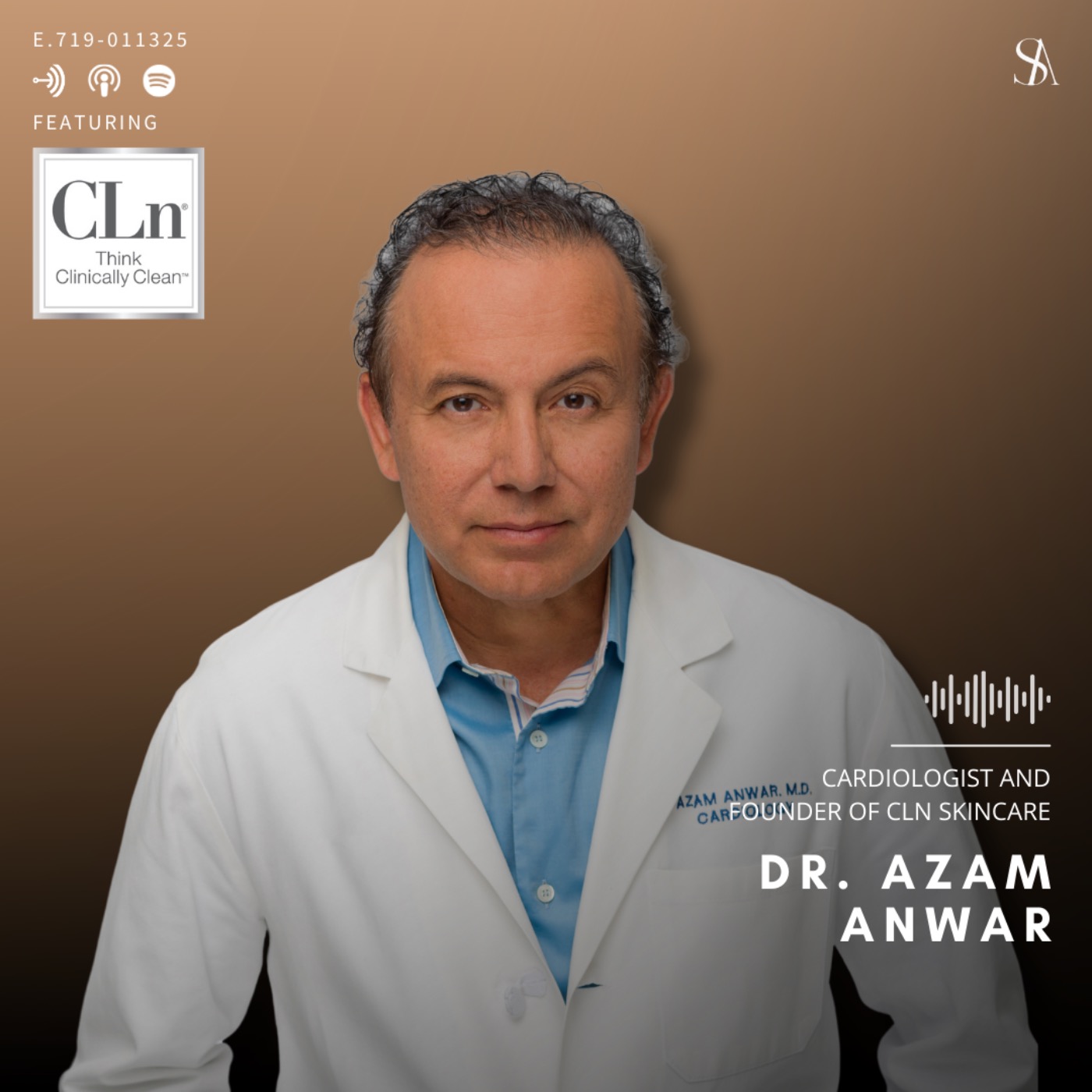
Loading summary
Transcript70 lines
- [00:03]
Ekta
Hey, guys. Welcome back to Skin Anarchy. This is Ekta, and I have such a wonderful guest with me today. I'm really excited because I think when it comes to skin care, we have so many different terminologies out there, but a lot of them are not really rooted in medicine and science. And there's so much to know, especially when it comes to things like cleansing your skin and understanding different types of pathologies of that manifest with skin skin and how to take care of them. So with us today is Dr. Anwar, who is a renowned cardiologist, an inventor, a passionate entrepreneur, and he's also the CEO and founder of Clean Skincare. So welcome, Dr. Anwar. I'm so excited to chat with you today and to learn from you.
- [00:45]
Dr. Anwar
Thank you, Dr. Ekta. I'm so happy to be on with you and share whatever I can.
- [00:50]
Ekta
Yeah, I would love to get started because I know that you have a very personal aspect, the story behind Clean. I would love to learn more about yourself and what got you into medicine and then led you to integrating, you know, your field with dermatology and getting into the skincare space. If you could kind of walk us down memory lane.
- [01:10]
Dr. Anwar
Yes, absolutely. So I'm a cardiologist, interventional cardiologist, and was very busy taking care of any patients doing angioplasties and putting stents in coronary arteries. And then I became a dermatologic patient about 15, 16 years ago and developed a very small little rash on my shin, scratched it. And then this turned out to be come a cellulitis or, you know, tissue level skin infection that was moving pretty rapidly. A very tiny little scratch to a size of a silver dollar in a matter of literally a week.
- [01:50]
Ekta
Wow.
- [01:51]
Dr. Anwar
I went to my dermatologist and he cultured it and said I had methicillin resistant staph aureus growing there. And he placed me on antibiotics orally and topically and recommended cleansers. And then I couldn't tolerate the chlorhexidine cleanser, you know, hepicleans. And then he said, well, why don't you do bleach baths? Bleach baths were pretty cumbersome to make. You put a quarter cup of Clorox in half a tub of water, which is 13 gallons of water. So you dilute your Clorox bottle or bleach a thousand fold, and you sit in it for about 10 minutes and then take a shower to rinse off, and the whole process is umbersome. It takes 30 minutes. But I did it for two to three months and I went back to him and I said, well, you know, this is pretty cumbersome, but the science is pretty good. I think we should be able to simplify this. He goes, well, this has been around for many decades and we do this all the time. And I'm telling you as a patient, it's really cumbersome and really, bathtubs are dangerous and so on and so forth from there. We, you know, we partnered and hired chemists. It took us four years, four to five years to develop the product. And what we wanted was sodium hypochlorite, you know, the main component of bleach in a really low concentrations in there and add some actance and so on and make it safe. So that's how clean got started.
- [03:22]
Ekta
Wow, that's really interesting to me because I think about a lot of the different skin conditions, right? Like psoriasis and eczema, and there are so many different things. Cellulitis is a very, you know, unfortunate and extreme situation that happens. And, but even for like the daily consumer, I mean, there are so many different conditions that require a very specific protocol when it comes to cleansing, you know, and I. That's where I feel like, you know, I would love to learn a little bit about what you've discovered over the years of, you know, being behind clean about these kind of different needs that consumers might have, you know, if they have conditions like that, in terms of, you know, how they should be cleansing. And if you could share a little bit.
- [04:05]
Dr. Anwar
Sure. So I'm a, a plumber or an interventional cardiologist, and we have developed coronary stents, and I was in the middle of that many years ago. So for me, developing products was really pretty simple and straightforward. What was very interesting in dermatology is the skin. Although so simple, it's so important, you know, such an important shield and has so many different structures. And what I found was a common thread with a lot of the common of the common skin diseases. Probably two thirds of the conditions of dermatologists see with eczema, psoriasis, folliculitis, dermatitis, when the shield breaks down, the skin barrier breaks down, the microbes or allergens get involved there and create an inflammatory reaction down to the cellular level. So actually the various conditions have a simple common reason, but the, the inflammatory agent or the thing that causes problem, the redness and itching and breakdown of the skin could be different microbes. It could be a virus, could be a fungus, it could be different bacteria, it could be staph aureus, it could be strep and then it also could be allergens, right, like poison ivy or even products. So when you mix that all together, you get a variety of symptoms and then the doctor goes, well it's this condition or you know, condition A, B, C or D. You know, you guys deal with hundreds and hundreds of conditions. So mechanistically it's pretty common. And the main thing for skin problems is to get the canvas cleaned properly without damaging the surface. So it turns out that you need something that's not going to damage the skin. It's going to have some anti inflammatory properties. And the anti inflammatory properties of sodium hypochlorite or even hypochlorous acid are really interesting because it reduces NF kappa B, which is the final signaling protein in cells that cause all the, you know, manifestation of the symptoms. So diluted bleach bass reduces that by 50% in the rat model, radiation rat model. And also diluted bleach is anti aging. It reduces the protein P16. And then we've known from the past that low levels of sodium hypochlorite is also antimicrobial without the microbes becoming resistant. So it has, you know, couple theoretical advantages. And then on top of that we added surfactants because you need to loosen up the, the debris and oils and bacteria and so on from the skin. So I think the act of using surfactants that are not too harsh but also getting them in the shower, so the act of washing, so you add a combination of something anti inflammatory, antimicrobial lathering and using lukewarm water, all of that leads to a very clean platform. So that was our core product, was the clean body wash. And then if someone has really kind of dry skin, we've added hypochlorite and glycerin. So to make it more humectant and more hydrating. And if somebody needs a more deeper cleansing with follicle issues, you know, hair follicles, et cetera, arachne salicylic is a acid, is a really wonderful product. So sodium hypochlorite and salicylic acid combines there and it gives you a deeper cleansing. So I look at skin, whether it's normal or mixed or oily or dry, and then you can kind of use the various products that we have, but the core ingredient being sodium hypochlorite and surfactant.
- [08:27]
Ekta
That's very interesting. And you know, especially this makes me think of also like athletes because when you're, you know, when you're an athlete, or you're in the gym a lot and you're sweating a lot, and you're then waiting, right, to, like, go and take a shower or whatnot. I mean, all of that that's happening is creating this, like, crazy environment, you know, and people end up breaking out, and they're always like, why am I breaking out so much? But it's because your sweat is literally sitting on your skin, you know, for like, whatever amount of time after you work out to when gets to the point where you can take a bath or whatnot. And I'm curious, you know, at that point, I think sometimes I've also heard that people can overdo it, you know, with the cleansing because they feel like they need more. So I would love to, like, understand. I mean, you had mentioned surfactants. What is that balance that you found with the use of surfactants? Because there's a lot of literature and, you know, hype around this idea of why surfactants can be damaging to the skin barrier. And I just want to learn a little bit more about that in terms of this context. You know, where does that play in with, you know, how you've crafted clean and, you know, what we usually see in conventional products.
- [09:41]
Dr. Anwar
Yes. As far as athletes and sweaty skin, an important concept that people need to realize is wet skin tears easily. So these little micro tears that you can't even really see are more prominent. So you're, for instance, a piece of paper tears more easily when it's wet. So the first thing athletes should do or people that are active, you know, sweat anywhere, just, you know, dry, get dry, get out of wet clothes, get out of wet shoes, get. Just wear flip flops. Just having the skin dry with air is going to be protected. So the other issue with athletes is that anytime we come in contact with towels, equipment, or other human beings, like, such as MMA and wrestling and so on, the microbes transfer over from the thing or people to the other person very, very quickly. So the key is to get in the shower right away. So I think the key is get in the shower within 30 to 60 minutes. Get into dry clothes. Those are the most important things. And then remember that the skin barrier is what you're trying not to break. And that's the most important defense that you have. It's better to just rinse off without even really any soap and not hurt your skin, you know, and do it quickly. It's almost like washing your dishes, you know, with ketchup on it. Right. You. If you trace it off right away it's gonna, you know, everything's gonna slide off easily. So I think the, the product should be non damaging or the barrier shouldn't be broken down. So if you're scrubbing really hard or you're really using really harsh products, then that's actually going to do more damage. And then I wouldn't, I wouldn't use, you know, heavy duty scrubbers or bristles or so on. So you want to gently and quickly clean the skin afterwards. And you know, for us we've just made the, the clean sport wash which is the same as the body wash. I mean the ingredients are, you know, really gentle and non drying and, but it still has enough muscle to do some other things, but not too much. So there was a really good balance. And we started every thing with our company with doing studies in the most vulnerable. So although theoretically we developed the product and we thought it was going to be excellent, I wanted to be sure that clinically it would work in children with atopic dermatitis or eczema as young as six months. And as you know, they're very, very sensitive and irritated skin and they all had moderate to severe eczema. And we found that our products were well tolerated by them.
- [12:34]
Ekta
Wow.
- [12:34]
Dr. Anwar
So when we showed that in, hey, in a six month old with eczema and staff colonization, they did well with our product, we had really good confidence that that 14, 15 or 18 year old wrestler or football player, you know, lacrosse, would tolerate the product. Well.
- [12:56]
Ekta
That's really cool. That's really interesting that you were able to test it in a younger demographic. You know, I mean that's, I think that's a lot of being talked about right now is that there are a lot of products out here, you know, in the OTC space for skin health. But that, that component about whether it's actually tolerable by younger skin types, you know, that's a very big question mark. And so that's very interesting that you found that.
- [13:22]
Dr. Anwar
That is one in Dallas. Dr. Golly. And then we did another study in Chicago and Houston and both were published in the PD derm journals. And so we, we got our start with the most difficult group, I would say children with, you know, skin conditions. We met the standards of the pedia derm community, so it's become a standard of care in that community. And then from there it was a lot easier to go to adults. And we continue to do studies in very difficult skin conditions with our products. And we think, well, you know, that's a good way to contribute to the Field, but also prove out the product, you know, for instance, with eczema or hs, you know, hit or not a supertiva. We're also working other conditions like CTCL and staph colonization. So that's where I come from. I want to really prove the products in very difficult conditions and then give the doc really good confidence on the, you know, day to day care as well.
- [14:22]
Ekta
That makes sense to me, I think, you know, in terms of like, you know, skincare. I, I personally like as a consumer even I look at it and I'm like there. It needs to be a more data driven approach rather than just, you know, this is a cool package and you know, I'm gonna put it on my shelf. It needs to actually serve a purpose. So that's very exciting that you, you know, you have done the, the work and the, the research is there to back it now. One thing I wanted to actually kind of circle back on, you'd briefly mentioned it was this, the NF kappa B. Just for our audience to further understand, you know, NF kappa B is involved, obviously. I mean it's a pretty big marker and you know, it's involved in a lot of the inflammation that's seen across the board and skin conditions. So when we're talking about something like psoriasis or eczema or any of those, can you discuss with us a little bit about why it's important to downregulate NF kappa B and actually impact this inflammatory cascade that happens? I mean, just so that you know, we can understand therapeutic, therapeutic benefits of that.
- [15:26]
Dr. Anwar
Yes, great question. So the way I would think about NF kappa B is start out at the skin level. And then when your skin either has an internal condition such as psoriasis or eczema or drug reaction or something external from the outside coming in and irritating it, like you know, radiation or a knife or micro needle or, or in wrestling or jiu jitsu, somebody's twisting your skin. It creates an insult. So when that insult is there and that insult gets activated, the signals go into our cells and various interleukins are activated. You know, the, you'll hear IL23, IL17, all of those interleukins are activated. And then finally those proteins unsheathe NF kappa B. NF kappa B sits out outside of the nucleus of the cell on the cytoplasm.
- [16:32]
Ekta
Yeah.
- [16:33]
Dr. Anwar
So it's sitting in the goop, so to speak. And then. And it's inert, it's inactive, but those interleukins activate and pretty Much unsheath and activate NF kappa bacteria, which then moves into the cell, into the brain, of the cell and tells the brain, hey, we're under attack, you know, we better produce proteins to cause, you know, more blood flow or itching or whatever. And so you manifest the disease such as itching and irritation, redness that the patients see. So NF kappa B is activated. And so when you down regulate that, which you know, various drugs do and so on, and so does bleach bath, you know, something really simple, it's a beautiful thing because that's the common pathway for various, you know, various diseases. Right. And the various diseases we give different drugs, right? We give Humira, you know, for TNF Alpha, which, you know, eventually stimulates enough Kappa B. Are we, you know, given some IL 13 or 23 blockers, or 17 blockers. Those all activate NF kappa B as a final signaling protein as well. So it's kind of a non denominational protein which activates, you know, the things that you see.
- [17:57]
Ekta
Interesting. Yeah, so it's basically like the, like the end result of a lot of different, you know, inflammatory, you know, like, I guess stimuli, you know, the different cytokines and the different interleukins you mentioned, they can all go and activate. It mean it's interesting to me because, because everyone's talking about the inflammasome. You know, that's really why I brought up that and wanted to learn more because it's a big buzzword right now in the beauty and skincare space is this idea of there's a skin, a skin flamazome, you know, and how can we manage that and how can we work with that, especially in the setting of something like these skin conditions that we were discussing earlier. And you know, it's very fascinating to learn that there are, I mean, obviously from a pharmaceutical standpoint there are drugs, but what can we do really topically? So I mean, what is your recommendation in terms of just general cleansing? I mean, do you think that everyone should incorporate products that are using ingredients such as hypochlorous acid and them? Do you mean, are they safe for just general use and everyday use?
- [19:03]
Dr. Anwar
I think if, if someone, someone has really, you know, good skin and they're doing well, you know, I think just, you know, a gentle, you know, cleanser, things that are readily available will be, will be good. I think the main thing is to realize that a lot of skin care products and makeup and so on have preservatives in them. The preservatives are there to Kill microbes. And so that the, you know, the jar of whatever product you're using does not grow, you know, aspergillus, you know, fungus or staph or whatever it is in it. And a lot of people may develop allergies and so on to those, to those products. So I think it's important to really wash those off at night, you know, in the shower and to go to bed with really, you know, clean, you know, clean canvas and, you know, let it naturally, you know, rest overnight. And then if you have some issues, then you might need to use something a little bit more intense. Now, I would be careful with the hypochlorous, you know, products. So we are putting out a hypochlorous product ourselves as well, because the stability of those products are really difficult. So, you know, they're not very. It's not a very stable product. So it has to be really manufactured well, and there are only, you know, probably a couple manufacturers that do a really good job of that. So although theoretically hypochlorous and hypochlorite can reduce inflammation, I think the manufacturing should be kept in mind. And hypochlorous, which comes out in a spray, ours, you know, our products are washes where you go in the shower. And I'm a big believer in, you know, showering, but sometimes it's not possible. Hypochlorous is just a spray that you spray on. And theoretically it could reduce, you know, the inflammation. It could be anti aging and so on. But, you know, is it really any better than just, you know, a good, good, gentle cleanser that you, you would use at night? I don't know that I can really say that.
- [21:09]
Ekta
Yeah, that makes sense. I mean, it's just interesting, you know, because it's everywhere right now. Hypochlorous acid is. I think it definitely had its big moment when we first saw it in the spray form, like you mentioned, you know, a few companies came out with it and everyone was using it. I literally saw it all over social media. And, you know, like, the big thing like this is the miracle product right now, especially for people who are more acne prone, you know, they were very much gravitating towards the sprays and whatnot. And it just, you know, it was interesting to me to watch because it's like, well, do we all really need it? You know, and so consistently being used, you know, it just makes you wonder in the long term, what are we really doing to the skin if we're using it so often?
- [21:53]
Dr. Anwar
Yeah, I think it's it's going to be fine in the long term because, you know, the amount of microbial kill is very little. So it's not going to affect your normal, you know, your normal flora. Yeah, I think especially after procedures, you know, microneedling, etc. Anything dermabrasion or if you have problems and it's helped it, you know, certainly continue it. Right. You're going to be your own best doctor. What's going to work for you? So I'm not worried really about the overuse. I'm worried about the overhype. We have to be honest, if something works or not, or if there's evidence or there's not evidence, you know, for it. I think the spray is very good for, you know, let's say there's a child who doesn't really want to wash, but, you know, it cools down their, you know, their eczema. I think it's going to be wonderful, you know, or if somebody has acne and it's really helped them, you know, why not? Or if they're going under radiation therapy and they're irritated, you know, why not? But for somebody with normal skin, I don't know.
- [23:05]
Ekta
No, it makes sense. I think that it's the overhype. I like that. I like what you said, you know, you're not worried about the overuse with the overhype. I think that's definitely something I can get behind as well. I think right now, the way that, you know, skin care products are kind of like, recommended in this space, it's really about hype. And you have to really think as a consumer, do I need this? You know, do I need this in my routine? Or do I already have 15 steps that I'm using and this is not really necessary? So it's very interesting. I wanted to actually, you know, ask you about this because I know that clean products are recommended by a lot of dermatologists, you know, and you guys are doing so great in this space. How did you build trust with the medical community, especially the dermatological community, your products?
- [23:52]
Dr. Anwar
Well, I just love working with dermatologists because, you know, one, they have incredibly high intelligence. As. As you well know, getting into dermatology is the hardest specialty now. One, working with smart docs, you know, and they also have the time, you know, and it's a small enough community to create great relationships. And they're also very, very skeptical, you know, so they took us in and they did. They said, hey, great, it might work, it might not. Let's just do Some clinical studies, you know, so we, we did studies, we had anecdotal information that it's going to work on this and that. But then we worked on, you know, the study in Dallas that I mentioned. Then we went to Chicago, Northwestern and University of Texas in Houston. They studied it and we go, hey, great. We spent, you know, for a consumer company, we spent well over a million dollars in our studies and invested a lot. And I had some administrative people in our company that were not happy that we were spending so much on clinical studies versus marketing. I go, listen, I don't want to put anything out that the derms don't like. You know, we're here for the dermatologists, they're going to make this or break us.
- [25:06]
Ekta
Yeah.
- [25:07]
Dr. Anwar
And then we are very confident of our products. So we provide over, gosh, almost a million bottles of samples per year now. Wow, the dermatologist. And we service them the best we can so we want them to try it. And then lastly we're extremely confident of the products and we have a really good return policy. So I think over time that has built a lot of goodwill and confidence. And we have the derms come in to a lot of educational seminars with us and we provide them free product to use. So they've got in their own shower, their kids use it, we send it to their kids. So we've built a company, you know, around dermatologists. I added a very strong medical advisory board. We've got, you know, over a dozen luminaries and you know, they're big supporters of the product and they, we just don't add people willy nilly. We add people that actually use the products and understand it and are really big believers in cleansing. And then we continue to do more studies. We just finished survey study with HS, you know, 145 patients. It was presented at HS foundation meeting. It's a small community but very important to us to show that our products really worked well there. It worked beautifully, you know, reduced itching, pain, odor, you know, drainage, etc, and the HS community itself has really adopted our products and promoting it. So we go to the doc, we go to the derm and we go to the people with conditions, you know, the skin conditions. So we're, we're strong on the, you know, medical support or endorsement if you would call it quote unquote.
- [26:55]
Ekta
Yeah, no, I mean that's really, really exciting to hear actually, because I think you're absolutely right in what you said. I mean dermatologists are very, they're very skeptical and I think that especially when they're able to get behind a product. I mean, for me as consumer, it definitely sparks my interest automatically because, you know, to be able to impress them is a big deal, you know, and right now, there's a lot of products that I see where I'm like, well, there's not a single medical professional that I'm seeing talking about your product, you know, so it makes it more difficult for me as a consumer to then say, I'm gonna go and buy this and put this in my daily routine. That's what. Something that I think a lot of times this industry kind of overlooks the idea of, like, well, we're using. These aren't just like beauty products, you know, like with something like makeup, right, you're using it maybe, you know, on and off, but with skincare, you're using it every day for maintenance. You know, it's actually part of health care. And so when you're, you know, for this. For my. For our listeners, you know, if you're actually investing in products, you have to be able to say that there is a medical community backing it and there is proof why they're backing it. You know, and I. And I don't know why we've strayed away from this concept so much, but I see it all the time, you know, on social media where people are recommending things that have. They don't have dermatologist approval, they don't have doctors and, you know, scientists behind them saying, yeah, this makes sense, you know, why this works, like, it actually adds up. So to see that you guys are actually creating that and you're really bridging a gap, in my opinion. I mean, it's very, very exciting and fascinating to me as a consumer.
- [28:32]
Dr. Anwar
Thank you.
- [28:33]
Ekta
I want to talk a little bit about scalp health, if you don't mind, because I know that you have wonderful products in the range that are focused on, you know, also the. The hair care aspect. And scalp health is a huge, huge topic right now. I think as a community, the consumer, consumer, consumer, consumer community, we've realized that the scalp is not just. It's not just, you know, about washing your hair. You know, to put in layman terms, I mean, it's. It's really about taking care of your scalp, making sure it's healthy, making sure your hair growth is healthy. So why can you tell us, like, why is the scalp such an important area to address for overall skin health and hair growth?
- [29:09]
Dr. Anwar
I think people need to divide their head and into really two. Two, you know, two ways to Manage one is the hair, right. Which is luscious and conditioned and so on. And. And we focus more on the scalp, which we think is, you know, where the itching and redness and bumps and all those things really start. And we found that our product, the Healthy Scalp Shampoo, which has sodium hypochlorite, salacid, it has a little bit of glycerin as well. It was just a wonderful product that anytime there's itching in the scalp, you know, whether it's folliculitis, SAP, derm, it worked. It worked really beautifully. And even scalp psoriasis. So we found that the common denominator of the symptom is itching.
- [30:04]
Ekta
Yeah.
- [30:05]
Dr. Anwar
And the itching can be caused from anything as simple as, you know, dandruff or those other conditions that I mentioned. And by cleaning the scalp one to three times per week, it was adequate. In order to really clean the scalp, you need a little bit of muscle. You know, you need, you know, surfactants and salicylic acid and so on. While that's really good for the scalp, it might be drying for the skin. So I'm an advocate of cleaning the scalp, but not too much, not too often, because then you're going to dry up the scalp and then you'll get more itching from the dryness.
- [30:43]
Ekta
Yeah.
- [30:44]
Dr. Anwar
And. And then we've added, you know, a really nice conditioner that people can use a couple times a week. You know, leave it on for five, five or 10 minutes and then rinse it off, you know, for the hair. And then we've got another product that does not have salicylic acid. That's a two in one gentle wash. So that has sodium hypochlorite and glycerin, but no sal acid. So if the scalp is really dry already, then, you know, you can use that or you can alternate it with the Healthy Scalp shampoo, which has salicylic acid so you can mix and match. But I just think on the scalp, we are over. We're over treating it, we're over shampooing it. I think we're. Obviously there are a lot of, you know, colors and so on and so forth and more is not better. More cleansing is not better. Actually, it may make it worse because what happens is you may have really dry scalp, but the follicles are all plugged up. You clean it up and then it doesn't become dry. But then if you keep washing it, oh, this is good. I'm going to do it more and then it Dries out again, right? So you're dry for the wrong reason. And then as far as the. The hair, I think people know best for themselves, you know, on what's going to work for their hair versus.
- [32:03]
Ekta
Yeah, yeah, no, that makes sense. I mean, it's interesting because the scalp is like, you know, we have. We don't have a lot of, I guess, targeted education out there about scalp health. I mean, I think it's become a very broad, I guess, topic that's being discussed. But really, it's like, you know, you talk about dandruff or like, you had mentioned, you know, redness in the scalp. I mean, have you noticed anything that is like an underlying concern when it comes to scalp health that we should be aware of as consumers? I mean, I mean, I guess we could say inflammation, right? I mean, that's. That's a kind of a given. But anything that we can really target. I mean, what was the clean's approach to targeting scalp health from, like a molecular perspective?
- [32:52]
Dr. Anwar
I think it's, you know, this. The scalp has, you know, the hair follicles, right? And the hair follicles, you know, have a lot of sebum. The microbes are different. You know, there's more, you know, you know, fungus there. Really. We put, when we added the product with sal acid, it just had a disproportionate positive response. It became our best seller, surprisingly. And, you know, our body wash is, you know, still the top seller. But it, the shampoo just, just took off. The only reason that I think it took off is we just understand the basic science. Hey, there's a follicle, there's more oil, there's, you know, more fungus. You need a little bit deeper cleansing with that. And the sal acid does wonders in just, just a very small amount of sal acid, you know, at 0.5% with sodium hypochlorite is enough. And if you go higher, it's going to be drying. So Salacid had a really kind of a difficult situation. So to get approval as a, you know, for scalp psoriasis or dandruff or so on, you need to have 2% salicylic acid. Well, at that level, I think it might be more drying. We were able to get the synergy of sodium hypochlorite and sal acid, and it just worked well for, for the scalp. And I can't say that we designed it like that. At the beginning, day one, we thought theoretically would help because our foundational product really did well. And then the sal acid has Been kind of magical for scalp help. And also acne, you know, again, a follicular problem, you know, Follicle problem.
- [34:39]
Ekta
Yeah, that makes sense, actually. Yeah, that makes a lot of sense because I guess the exfoliation aspect also intrigues about scalp health. You know, we saw silic acid is a very small molecule, you know, so it's able to really get in there and. And clear out a lot of stuff. I just. I'm just curious about where this, this niche is going to go in the future, you know, and that really leads me to my next question, which is about where is the future headed for clean? I mean, do you guys have any new products on the horizon or anything you can share with us?
- [35:11]
Dr. Anwar
Yeah, so I think we're moving in two directions. One is we're building out our hypochlorite, hypochlorous franchise. So we're adding a spray. Oh, hypochlorous spray. Where, you know, a lot of our, you know, dermatology customers want. So that'll be available in. In June. So we'll have hypochlorite and hypochlorous, and we really understand the, you know, the chemistry of those two. And that's our home. And then we've added some moisturization products. Just. These are adjunctive products, you know, such as the. We're going to have a body moisturizer with 2% colloidal oatmeal for eczema, because we. We deal daily with eczema, so why not provide one of their. Our products to them, so it's a complementary product. And then we also found, surprisingly, people like variety in sizes, you know, for travel and so on. And, you know, I hadn't really realized that at the beginning that people want so many different sizes, so being a variety of sizes available of our products. And then also we're bringing the sodium hypochlorousal acid combination in the form of pro strength, and we'll make that available to consumers in June. So that's actually, you know, that a little bit stronger cleanser which you can use as a scalp shampoo once or twice a week and then use it as a daily wash for, especially for, you know, busy male athletes or male active, because they just want one product and they don't want to fool with a bunch of different products. Yeah, so those are the things around the corner.
- [37:06]
Ekta
Those are.
- [37:06]
Dr. Anwar
Those are. We're staying mainly in the cleansing realm in. In not moving it to a lot of different directions.
- [37:16]
Ekta
That's pretty cool, though, because I like that you brought up male consumers. Like, I always, like, I always wonder, you know, and I'm a bit concerned about if we're reaching them or not. And I feel like you guys are really a brand that does reach them. And that's very exciting for me to see because there's so many men out there that are just not, you know, they don't really get into the whole, you know, like these personal products. And I always wonder like, what is that thing that's going to get them to start utilizing, you know, certain washes or, or whatever it is that they need in their routine. And so I think it's very exciting that you're also speaking to that demographic as a brand because it's so needed, you know, and all the marketing in the world, I've seen it fail time and time again, you know, in the space with, with regards to this demogr traffic. So for any male consumers that might be listening in, this is a really great option for you guys, you know, to, to get something truly science backed and, and really validated by the scientific and medical community. I mean it's a great option. So I'm glad that they respond to your products.
- [38:19]
Dr. Anwar
Yeah, if I could just. On, on the, on the male. Male side there of the clean sport wash would be a really great go to product for a variety of reasons. One, if you have sunscreen, you want to remove it at the end of the day. It's just a great way to end your day and take the, all the sweat and sunscreen off, you know, as I'm plugging sunscreens.
- [38:42]
Ekta
Right.
- [38:42]
Dr. Anwar
As you would as a dermatologist as well. And if they're wearing baseball caps, wash them once a week. You know, don't wear the same baseball cap all the time because I think that get out of wet clothes and if you have body odor or foot odor, let the product, our product, stay on your skin for at least two minutes. So the body wash and the sport wash, if you think there's microbial involvement, follicular involvement, I'm not talking about the shampoo. The shampoo you can put on for 30 minutes and lather it in or you know, you don't need to do a full two minutes, but if you think there's something going on and with an inflammatory or infectious process or microbes or smell or whatever, let the product be lathered on the skin for a couple minutes. In two minutes is an eternity in the shower.
- [39:34]
Ekta
Yeah.
- [39:36]
Dr. Anwar
So that's what I would say is just be patient and really work the product in And a little bit goes a long way. So. And then for. We have lots of tricks and for beard and so on. If you want to talk about that, I'd be happy to do that, too.
- [39:50]
Ekta
Yeah, I'd love to learn about that. That's something that we never learn about is, like, beard care and, like, the importance of it.
- [39:57]
Dr. Anwar
Okay. So with. With beard care, you can use our shampoo if it's just a normal big beard. You know, there's those are. They have a lot of nastiness in them. And so you need to shampoo your beard, you know, once or twice. If you have a very short beard and have ingrown hairs, which is common in African American males, we have, you know, a nice regimen because they have a combination of problems where the skin is very dry. So the facial cleanser with glycerin would actually be a really good product to clean with and even shave with. Then if they have a punctate follicular problem of folliculitis, like a lesion, they can just put a little dab of the sport wash right on it and leave it there for 10, 20, 30 minutes and wipe it off later. It'll just kind of shrink things. So I think for ingrown hair, a lot of time it's either very dry and also inflamed. So you may want to, you know, clean with our products either in shave with. With the facial cleanser, which has glycerin, or clean the surface before you shave. So anytime there's hair involved and you move the hair shaft around and you cut it, there's an inflammatory reaction. So you may need to wash and clean it before you shave it and then afterwards as well. And that's that. That's the same concept for hair removal, you know, on the back and so on. Reduce the folliculitis there with, you know, the body wash or the sport wash.
- [41:36]
Ekta
It's interesting. So you can use that as like, a spa treatment and a mask. I mean, you can use it in multiple ways.
- [41:43]
Dr. Anwar
Yeah, I would be careful as a mask, and I don't. Because I don't want the product to get in the eyes because it won't damage the eyes, but it'll sting.
- [41:50]
Ekta
Yeah.
- [41:51]
Dr. Anwar
So I just think a very small little dab. Yeah, dab on a lesion. Hey, I've got a. I've got a acne pimple coming up. Just put a little dab of the body wash or the acne and just leave it on there. Let it. Let it go to work. And then wipe it off with a wet towel later.
- [42:07]
Ekta
Yeah, yeah, that makes sense. That's really interesting. And that's very helpful to know that you can utilize it in different ways. I mean, I think that with beard care especially, I know that there's not a lot of education around the fact that there is, you know, because there's so much hair and. And it's. You know, it needs to be taken care of. Like, the follicles need to be properly cleansed. That's never discussed, you know, and so this is very fascinating, you know, that you can. You do that with this product, and it's actually something you can use on a daily level and. And for maintenance. So that's really cool.
- [42:38]
Dr. Anwar
Right? Especially athletes, you know, they're getting out there with traps and. Or they're doing contact sports. Yeah, that's. And remember that if you have contact with, you know, a partner or whatever who's got, you know, they're in dirty environments. You know, they're. They're working in a. In a jail, or they're going to big. Correct. You know, big centers, lots of people or athletic facilities, they can transfer those microbes onto you really pretty easily. And, you know, and wrestling is the prototype of all that. So you have to keep yourself clean and be aware who you're coming in contact with. You know, so to protect. Protect yourself. And then you can bring those microbes home, right?
- [43:22]
Ekta
Yeah, yeah. And it can cause acne for yourself. I mean, you can get. You know, it'll impact your own skin. So. Yeah, well, that's really fascinating, and I really love. I. I really love what you've done with the brand, doctor. And it's really fascinating to see that there are brands out there that are not compromising the science. You know, for me, I think as a consumer, it goes such a long way to realize that and to see that, because oftentimes, you know, there was a. While. There was a podcast episode I did a while ago where I asked, you know, a very renowned dermatologist, and I asked him his opinion about, you know, do you think in the future there's going to be an integration between this OTC space and actual, you know, allopathic medicine as it applies to dermatology. And, you know, it was. I think the answer was clear where it's like, we're already there in a sense, you know, and so I. When I look at your brand, I. I see this integration that's so needed, you know, because people are. We need actual efficacious products, you know, that aren't about the fluff. And. And that's exactly what you guys are doing, and I love that. So thank you for creating something so wonderful and. And for really standing behind the science. You know, it goes a long way for us consumers.
- [44:38]
Dr. Anwar
Thank you for the kind words. And I think that we bring a product that makes the shower a, you know, therapeutic and beauty center. You know, I think that's where skin health and beauty starts, is in the shower, in my opinion.
- [44:55]
Ekta
Yeah.
- [44:58]
Dr. Anwar
So we. We think that that was a wide open space that nobody was really thinking about.
- [45:06]
Ekta
Right.
- [45:07]
Dr. Anwar
So we're.
- [45:08]
Ekta
Yeah, yeah, I know. It still is. You know, body care is still like. It's. It's just now being recognized as, like, in the category of skin care for some reason. You know, it's like you guys are definitely ahead of your time in that way because body care is now becoming, you know, the new buzzy, trendy thing where people are realizing, well, wait a minute, I've got 50 products for my face, you know, and I don't have anything for what I can use in the shower daily for all, you know, full body care, full skin care. So it's very, very exciting to see that you already have those options in place.
- [45:42]
Dr. Anwar
You know, and one more point, when you're talking about body care, which reminds me.
- [45:47]
Ekta
Yeah.
- [45:47]
Dr. Anwar
On, you know, in the city life, active life, people are walking, moving around, and they're wearing clothes and so on that are tight and binding. So tight and binding clothes. When there's a lot of rubbing of the skin, it can lead to breakdowns such as inner trigo or the skin folds in the groin or under the breast or armpits. If you have. If there are patients or people who have issues with that, you could actually pre apply the sport wash or the body wash there, brush your teeth and do whatever, and then step into the shower at the end of the night. So there's. They're nice. There are so many different hacks that you can use proper, you know, our products prior to getting in the shower. And then when you get in the shower, you've got the product on there, you add a little water and lather it on, and then you rinse it off. You know, so if. If there are problems in the skin fold area, applying the product even before getting in the shower and then lathering it is a good way to approach it.
- [46:48]
Ekta
That's pretty cool. I love that there are different ways that we can, you know, kind of incorporate the products in our daily routine. That's really great. Yeah. And I really encourage everybody listening. You know, if you're looking for great options for, you know, your shower care, this is kind of, you know, the best brand that I've come across in terms of, like, clinically backed, you know, efficacious products for that purpose. And so I really encourage you guys. Check it out. We'll be linking everything in our show notes, so definitely go check that out and shop the brand. But, Dr. Honor, thank you so much. It's been an honor to host you and learn from you today. It's been very fascinating, everything you've shared with us and taught us.
- [47:24]
Dr. Anwar
Thank you so much for having me on and been a great pleasure.
- [47:29]
Ekta
Yeah, I'd love to have you back if your schedule allows. Maybe you can do like a part two.
- [47:34]
Dr. Anwar
Yep. Okay.
- [47:35]
Ekta
Yeah. Thank you.
- [47:36]
Dr. Anwar
Thank you. Bye.