← Skin Anarchy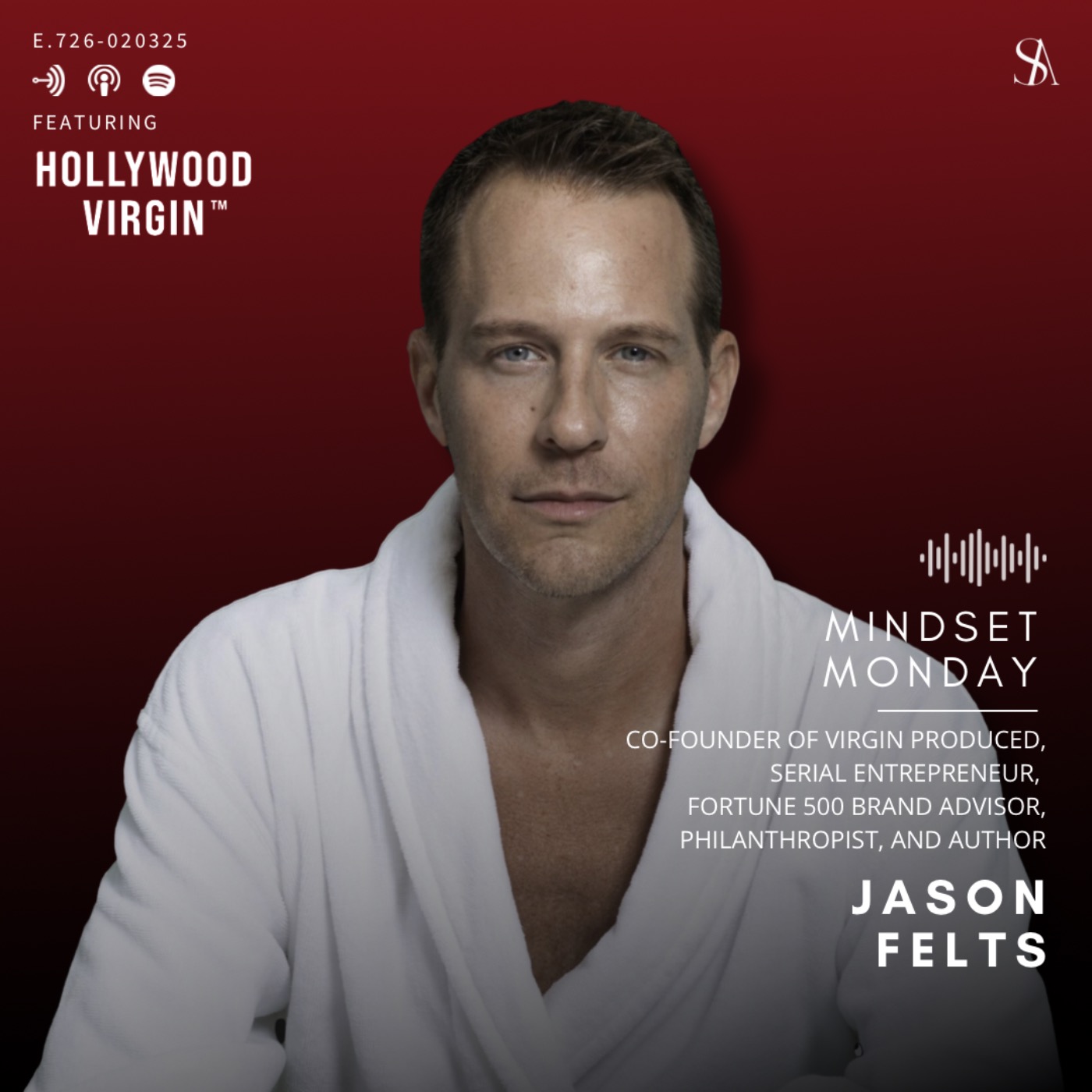
Skin Anarchy
From Small-Town Dreams to Hollywood's Elite: An Exclusive with Jason Felts on His Tell-All 'Hollywood Virgin'
00:44:46
Loading summary
Transcript65 lines
- [00:00]
A
Hey guys, welcome back to another episode of Skin Anarchy. I'm really excited because we're going to be interviewing someone today that I hold in such high regards, not only because he has reached a pinnacle of success with his work in Hollywood, but also because he's lived to tell about it. And now he has written an amazing book that is coming out. It's out right now called Hollywood Virgin. So without further ado, please welcome Jason Felt. Jason was the youngest CEO in the history of Virginia behind Sir Richard Branson himself. He co founded Virgin, produced, and was also the CEO of Virgin Fest music festivals. As a producer, his films cumulatively grossed over $1 billion worldwide and he was named by Variety in the top 10 to watch. So welcome Jason. I'm so excited to dive into the book and everything. Amazing that you're coming out with a book and such a candidal. This is really cool stuff. And your journey and your career trajectory has been like phenomenal. You know, I mean, the fact that you literally went into Hollywood, you know, rocked out and then decided to leave and now you have a book coming out. I just want to learn more about that. What led you to Hollywood in the first place?
- [01:12]
B
Really? I think at the end of the day, it was my 16 year old self. You know, I was in small town, small town Texas. And much like, you know, most, most kids in a small town, they, they sort of see another side, whether it be through the movies or TV or the news, now social media, you know, they sort of see what the possibilities are. They envision the possibilities. And I was a dreamer, still am actually, but I was a dreamer. I was someone who was fascinated with the entertainment industry, everything, music and movies and television. And I just desired to go west. I desired to go to Los Angeles to pursue a career behind the camera. This is a little surreal for me, being in front of the camera, sort of doing interviews and self promoting because it just doesn't come, doesn't come naturally. I've, I've always been behind projects, but, but nevertheless, it's great to be able to share how I envisioned a future and, and went to go tackle it and now, you know, old enough to write about it.
- [02:14]
A
Yeah, no, that's amazing though. And I mean, it's really cool that you got to see Hollywood from that angle, you know, of being behind the camera. And I mean, that must have been really fascinating. What were the initial projects that you took on, if you don't mind me asking?
- [02:27]
B
You know, in initially. Ton of things that you would never know about. Right. Because you Got to cut your teeth on, on things. You got to, you know, trial and error and you need to, you know, in the entertainment industry and the, in the sector in general, there's a lot of exploratory. There's a lot of working on projects that never see the light of day. And I'm. I'm certainly no stranger to that. So there's a, there's a term in the entertainment industry called development hell. And that really summarizes the journey that most producers, actors, directors undertake, which is they have a concept and they go to develop it, whether it be based on a book or be just sort of an original concept about certain characters and a scenario. And they go develop it and they keep developing it. And then ultimately maybe they get a sale to a studio or to a network or to a streaming service now like a Netflix or Hulu, and then you go into a further development process. So some of my early projects you might not would know, but, but some of the most notable early ones are a project called Romance and Cigarettes that I had the, the good fortune to be involved with as a, as a first film project and that starred James Gandolfini and Susan Sarandon and Kate Winslet. And a friend of mine was producing it and, and came to me and said, there's an opportunity for you to get behind this and help us put together some of the pieces. Are you interested in this? And it was a musical comedy that was being produced by the Coen brothers. And so that was the sort of the first. My, my, my first, you know, sort of jump in. And we helped put together some financing for it and brought some talent to it and ultimately the movie got made. And then I went on to create with my business partner Justin Burfield, who was, this is prior to Virgin Justin Burfield, who was on a TV show called Malcolm in the Middle, which is actually coming back on Disney. I think they're shooting the new season, sort of the reboot in, in April. So kind of full circ that it's coming back the year that, that my book's coming out. My business partner Justin Bur, we hatched an idea for a show called Filthy Rich Cattle Drive on E. On the E. Network. And really, really what we wanted to do is we wanted to take celebrities, kids and wanted to send them out on like a city Slicker style cattle drive. And this was two, this was 2005 before reality television. You know, there was the Simple Life and the Osbornes, but there was really no reality television. And so we went to the president of E. With this harebrained scheme to create a cast of characters that we would be pulling them out of their plush Beverly Hills homes or what have you, and send them out onto a cattle drive, and they would have to work the ranch. And that show came out to huge success. But one of the key things, key takeaways from that was that it introduced the Kardashians to television. We casted Kourtney Kardashian on the show. Nobody, beyond Bruce Jenner being an Olympian and Courtney's d being a prolific attorney representing O.J. simpson many years prior, you know, no one knew who the Kardashians were from sort of like a mainstream perspective. Right. The world did not know who they were. Right. Certain circles may. People who were big fans of Paris Hilton knew that Paris's, you know, friend was Kim, but no one knew the Kardashians. And so we really advocated and aggressively sort of pushed to get Courtney onto this show called Filthy Rich cattle drive in 2005. And then the following year, you know, the network who did not, weren't so sure about, you know, casting Courtney on the show, then ended up creating a whole series called Keeping up with the Kardashians, and the rest is history. So those were some early, early things pre virgin, and then obviously post virgin. We did big, big commercial movies.
- [06:10]
A
That's insane. This is, like, way before mainstream media, like, the way we see it now. I mean, this is really, really interesting to me because, I mean, that takes a certain level of. Extreme level of, like, creativity, obviously, but also just, like, fearlessness to be like, no, you know, this is a good idea. We're going to do this. I mean, how was that in terms of having this, like, fearless mindset?
- [06:30]
B
Yeah, I would say. I would say persistence. You know, I'm quite persistent in my own pursuit of seeing through a vision. So if I see something or I desire something or I believe in something, it's pretty hard to get me to waiver off of that. So, you know, with the instance with Filthy Rich and Courtney Kardashian and the cast of that show, I was pretty insistent on who, you know, who I thought would be a good character. And, you know, when you create TV shows or films, it's all about characters and, you know, and being able to sort of speak to as wide of an audience as possible. So I would say persistence is one of the biggest attributes, and I would say the other is. Is just a sort of an unwavering desire to. To reach an end goal. So, you know, I sort of Established goals in my head about where I want to be in a situation. So whether that's in my career or that's in my personal life or that's in my sort of, you know, my hobbies. Say I want to learn to fly. Yeah, I'll set goals. I want to. I want to learn to fly without a co pilot by this date, this time. And I'm just. I'm pretty relentless in my pursuit. And it's not about checking boxes, but I'm just relentless in my pursuit to see things through. I can't. One of the things that drives me crazy is sort of people who start things and don't finish them. And so. So, yeah, I would say persistence and then just pursuit.
- [07:51]
A
I love that. I love that so much because I feel like that's what we're lacking right now. A lot of the younger generations. Like, I'm in the medical field, and I see this all the time where people will start something and they're just like, oh, I can't do it. You know, it's like, you're gonna have to invest time if you want to succeed. I see that a lot with, like, the younger generations where it's just like, they don't push as hard.
- [08:09]
B
I. I grew up in the Ritalin sort of generation, Right. Where if a kid had ADD growing up, their parents would just pop them onto R, you know? Yeah. And I never did that. My parents never did that. I never did that, you know, And I have add, and so I always needed to sort of, in my head, harness the ability to. To try and combat as much as I could, my add. So I'll find myself sort of starting a project, and then I'll wander off, and then I'll come back to it. And so that goal setting, that goal setting and then that persistence and pursuit to accomplishing that goal is what I focus on. That's my key to. Key to continuing on here.
- [08:57]
A
Yeah, no, I mean, that's really profound, and I think that's something that it really needs to. It needs to sink in, I think, for people that you're going to have to keep going. And so that's really inspiring. I want to talk about your book in terms of some of the things you talked about. I mean, you share a lot of highs and the challenges of navigating Hollywood, and I can't even imagine what that's like, you know, being in such a competitive environment and then having to then excel even more, you know. So what was one lesson you learned about the entertainment industry that you think a lot of aspiring creators often overlook.
- [09:31]
B
I think the biggest lesson was that you're going to be you as an individual or creative are going to be the only person, entity or organization that you're going to be your largest advocate. Right? And at the end of the day, so much of the entertainment industry, you don't control your destiny, right? You can have a fantastic idea. You can have a great concept for a song, a great concept for a movie or TV show. You can have these great characters built out. You could have, you know, just a. A great vision. But ultimately, at the end of the day, you then need to be so convicted in that and the, and the sort of competitive landscape of what could be a competing project or, or complementary project. And then you need to go sell that. You have to go sell that to a studio or a network or a streaming service. So you've got to go sell that to Universal or Lionsgate or Paramount or, you know, or abc, NBC, cbs, Fox, you know, or Netflix, Hulu, Amazon. You've got to go sell that vision. So oftentimes you could be as creative as the day is long, but if you don't have the sales abilities or somebody who can sort of link up with you, believes also in that creative vision, and then can go sell it with you, then it just, it's an even more of an uphill battle. So I would say, you know, that's where the persistence comes into play at the end of the day. One of the things that I, I learned is that you don't control your destiny. And so in order to have your strongest foot forward, it's about doing a considerable amount of research up front on, you know, the competitive landscape. And then really like a chess match, like a chess game, you know, anticipating move number two, move number three, move number four, move number five. You just can't sit there and say, I've got this great idea and I know it's going to get on the air and this is what I'm going to do. You have to anticipate the other side of that chessboard and those pieces moving against you and trying to, if we're keeping with the chess analogy, someone to take your queen. And, you know, that's the key. That's the key is being, you know, being proactive and anticipate.
- [11:44]
A
Yeah, I mean, I guess they say for a reason, the game is chess, not checkers.
- [11:48]
B
No, checkers is easy. Chess is hard.
- [11:50]
A
Yeah, it sure is. No, I mean, I think that's really fascinating that you say that because, you know, we Often think about like, what can I do next? You know, rather than thinking about, well, what can the whole landscape really be, you know, and turn into and what should I anticipate? I think that's a concept that we don't really focus on because everyone's just focused on what am I going to do, what am I going to do? But it's like, well, you're in an environment. You have to think about every moving variable, you know, with your career, how was all keeping everything together and really, you know, understanding all the moving parts.
- [12:21]
B
Of Hollywood, you know, early on it was a lot easier than, than, than later in my career in the beginning, you know, I don't know if it was because of a sheer sort of, you know, you know, naivety, you know, me just being naive and, and, and not having learned certain lessons. But I came in really wide eyed, you know, I came in really eyed, wide eyed to the industry, to a town. You know, Hollywood is a very polarizing town. It's very image first and substance second. And, and you know, me coming from, you know, sort of very simple southern, you know, background. We're substance first and image second to some degree. Unless you're in some of the major cities where it's about sort of what kind of car do you drive, where'd you go to school and who's your daddy and what does he do? And so moving to Hollywood was very polarizing in that, in that regard. And I would say ultimately it was very easy early on to be, you know, naive and just be dream chasing and sell my projects and produce my projects. I would say it was later that when I, you know, co founded Virgin, produced with Richard Branson and Justin Burfield and became that second CEO or second youngest CEO next to Richard of a, of a Virgin company that I was the same guy, just had a cooler business card. But unfortunately what I learned throughout that process was that there's a lot of schadenfreude, German word for sort of finding joy in other people's pain. In Hollywood, you know, there's that whole sort of you're only as good as your last hit type of thing. And so if you aren't producing, you know, if you're not producing something and you, and it's been a while because of the competitive nature of the, of the, of the landscape and the industry in general, you know, there's a lot of sort of behind the scenes schadenfreude just like, hey, that's, you know, that guy's movie failed. Well, that's great. That's good for us because then ours won't, you know, ours is, you know, ours is coming out that weekend, the same weekend. So we need to, you know, we're happy his movie failed because ours is number one, right? And so there's a lot of sort of negative energy that, that, that really, you know, because it is so competitive. And also what I found was that, you know, unless you have something, you know, worth taking, people want to take it, right? You, you start to get a lot of media attention when you have, you know, successful movies or music festivals or TV shows. And, and as a direct result of that, you know, people want to take it from you. And so, you know, there, there's the legal system, you know, allows for anybody to sue anybody for any reason and allows people to, you know, behave badly and take money from people. And so, you know, again, you know, you have to be as, as, as the naivety wore off a little bit, I got a little bit less green and a little bit more experienced. I learned that, you know, that the, the, the industry is very cutthroat. And, and ultimately, as you, as you learned in the book, I get to a place in my life where I go, do I really want to return to this?
- [15:21]
A
Yeah, yeah, exactly. No, that's the really interesting part. It's like, you know, you literally saw everything, and we're like, yeah, I'm out, you know, and I mean, I want to talk about that, but I really want to ask, just to follow up, what you just said is this idea of, like, authentic connections and friendships with people, right? What I see, I'll tell you, you know, as a normal person, is I feel like there's a lot of clicks and there's a lot of things going on, and I always wonder, it's like, how authentic are people? And so for you, you know, how was that? How do you differentiate between that genuine connection and then surf or survival level connections?
- [15:56]
B
It's a really good question. Obviously, I've met a lot of people, you know, and I've been on a lot of sets and I've, you know, had cocktails with a lot of people and dinners with a lot of people. And at the end of the day, you know, I think the ones, the most authentic relationships are the ones that come judgment free and they're the ones that survive a paycheck. You know, I, I, you know, from day one, I've always believed, you know, there's two things that I saw very early on was I saw an interview with Oprah Win or. I saw an interview with Prince and he said, anybody on your payroll is not to be trusted. Their paycheck comes first. And, and I saw an interview with Oprah where she said, you know, even now I sign every single check. I know where every dollar of my money goes. And so I think from a genuine, sort of an authentic relationship perspective, I've always leaned into and leaned towards individuals, whether they be famous or not famous, that didn't benefit from our relationship. So will I am is never financially benefited from our friendship, yet it's an authentic friendship, right? Invite and vice versa. The symptoms never benefited from, you know, our relationship. It's an authentic and it's a real relationship. And I have, I have many of those that are authentic and real and ones that you can be unapologetically yourself. I'm sure you've heard of imposter syndrome, right? So imposter syndrome obviously afflicts a lot of people. Imposter syndrome is not what you think it is on the surface, which is like, I'm an imposter. I'm pretending to be something that I'm not. It's that feeling of someone who has achieved a level of success and that success can, it doesn't have to be producing movies and winning awards and sort of being on a red carpet. It could be success in your small town. It could be like, you know, I'm the number one hairstylist in this small town, right? But imposter syndrome is that overarching sense of, do I really, am I really this person? You know, I've achieved this level of success, you know, do I deserve it? Do I deserve it or do I feel shame for it? Do I feel like I'm an imposter? Do you know, am I comparing myself to other people? And so I think, you know, when it comes to my relationships and authentic relationships, it's about surrounding myself with people who are like minded. They don't think of themselves as higher, better than someone else. And I got that with Richard Branson, you know, day one, he said, the worse someone's job is, the better I treat them, you know, and the better you should treat them. So, so I think authenticity in your relationships really comes from surrounding yourself with people who are genuine, not benefiting from you financially and that they are, you know, they genuinely want to be around you and vice versa. That was a long answer to your short.
- [18:58]
A
I love it. It's so genuine though, what you said. I, I really resonate with that and I think that that's something that all of us can really learn from. But I'm. I'm curious, you know, in terms of. But what were some times where you felt like there were setbacks or any rejection? I mean, how did you deal with that?
- [19:14]
B
Oh, yeah, there were plenty of those. Plenty of those. And I'm sure they're. I'm sure they're not over in, you know, this next phase of my life. Right. I'm sure there's going to be situations where there's going to be a setback. I mean, obviously there's a setback. Two weeks ago, my house in Palisades, Malibu, is, you know, impacted by the fires. Right. I wasn't planning that in the middle of my book tour, but, you know, so setbacks. Setbacks are sort of par for the course, I would say. The sort of key ones that I talk about in the book. Prior to joining Virgin, I had a small production company, as I mentioned earlier, with Justin Burfield, who was on the show Malcolm in the Middle. And our small little production company had, you know, had finished, you know, doing Romance and Cigarettes and had finished doing, you know, Introducing the E Show with the Kardashians. And, you know, it's starting to get some traction. And we were approached by an investor who said, hey, I want to. I want to take your business to the next level. Let me invest in your business. And you, you guys make an investment in my. In my, you know, private equity fund, and I'll subsequently make an investment in your business, and you're going to be off to the races. We're gonna, you know, we're gonna pump some steroids into your business. You want to do, you know, you do two projects a year? How about doing 10? You know, I'm going to turn you into a studio. And we, you know, as the, as the naive, you know, sort of young entrepreneurs that we were, and myself specifically, you know, was like, yeah, let's do it. Let's do it. And, and that, you know, that story didn't. Didn't end well. Right, because this gentleman ended up taking considerable amount of money, you know, from us. We invested in his, quote, unquote, hedge fund, and then he vanished. He's in jail now, which I, I talk about in the book, because he ended up doing that, you know, to one too many people. And, and, and it caught up with him, which, you know, all those things do catch up with you. And so, you know, speaking of authenticity and living a life of integrity and purpose, like, this gentleman did not do that. So that was a setback. You know, that was something that was, that was my first blush with, you know, people aren't, you know, how they report themselves to be always right. And that was another sort of, you know, as an eye opening experience of, you know, if you have something worth taking, there's always going to be somebody who wants to take it. And this gentleman, you know, wanted our company and, you know, wanted our money and, you know, we'd only achieved a tiny bit of success. It wasn't like we had some big coffers of cash, but he took. And that was a huge setback. And then obviously I addressed more in the book, you know, which were learning moments for me. But you'll have to, you'll have to get the book. Hollywood version.
- [21:42]
A
Yeah, yeah, no, I know. It's a really, it's a really great.
- [21:45]
B
Well, you have a copy. But your listeners. I don't want to reveal all that. I don't want to reveal all this.
- [21:50]
A
I know. I don't want, I don't want to ask you questions where you're like revealing the whole book. I know, it's, it's. But it's so good that you've written.
- [21:56]
B
Thank you.
- [21:57]
A
So good. And for everyone listening, you guys have to get this book. It's really, I mean, I think initially when, you know, people, you know, that have had so much success, like you, Jason, when we look at you guys, right, it's. It's kind of like, well, they're never gonna understand what it's like for the common person to struggle, right? But then you're.
- [22:16]
B
Oh, I understand.
- [22:17]
A
You understand? Yeah. And that's the cool part about.
- [22:20]
B
And I don't believe there's a such thing as common or not common. I think everybody is dealt a deck of cards and then we all play our decks of cards and, you know, and sometimes we're down, sometimes we're up, you know, but we just got to keep. You just got to keep playing and playing and playing and playing and playing, right?
- [22:35]
A
Absolutely. Yeah, absolutely. I think that's my favorite part about, you know, what you're putting out here. I mean, I want to actually ask you about mentorship a little bit because I know, I mean, start. Richard Branson. I mean, that's like, what, the ideal mentor. How was that? What was that one thing that you learned from him that's gonna stick with you for the rest of your life?
- [22:51]
B
It's actually not a tough question. It's very easy to answer. You know, I did have the, you know, the good, the good fortune and luck, the Ability to work with him and still, you know, still very, very close. Obviously. He wrote the forward for the book, which I was honored, and I was so proud that I sold the book to the publisher before he was on. You know, before he had written the forwards. I, like, didn't have to need. I didn't need his help, which made me feel so good, you know, Such a gratifying feeling not to have to sort of, like, go back to dad, so to speak. Right. Like. Or go back and sort of have a. Have a crutch. Although crutches are okay. You know, I. Crutches are okay as long as you're not on them forever. You gotta, you know, you can use them every now and then, but you want to sort of be careful. But I would say the sort of biggest piece of. There's several pieces of advice that I learned either, you know, by virtue of sort of watching him or osmosis or just, you know, or inherited. And one of them is, you know, if your dreams don't scare you, they're not big enough. And so I never. And I still don't dream small. I dream big. It's just as much effort to sort of dream small as it is to dream big. So why not dream big and then. And then. And then work every angle you can to chip away and ultimately get to a place where you accomplish the goal. Right? And I have goals that I set in high school that I still haven't achieved yet, but I will, you know, and then I have goals that I set last week that I achieved, you know, last week. And so, you know, at the end of the day, you know, if you. If you stop. If you stop dreaming or you don't dream big enough, if these dreams don't scare you, then they're not, you know, then they're not big enough. So I would say that, you know, that is sort of a key foundational sort of methodology. And the second is. There's actually three. But the second is, you know, in an organization, whether it be a small organization, you know, say you've. You've got a spa, or you've got a. You've got a. You know, you sell used cars, or you are in a big. You're in an insurance company or you're a Hollywood producer in a small or large organization, master the art of delegation. Surround yourself with people who are smarter than you are because you don't know everything. I don't know everything. I know my lane. I stay in my lane. Sometimes I'll dip in and out of my lane to kind of learn other people's lanes. But I surround myself when everything I do with people who are smarter than I am and know the things that I don't know. Right? And even if I was 90 years old, there's a lot of people out there that are going to be smarter than I am and know the things that I don't know. Right. It's not that I'm going to be some Yoda, you know, this like all wise Yoda at age 90. So I think if, if you never, if you just always are surrounding yourself with people who know the things that you don't know, then you know, you'll be able to get to a place ultimately where you're achieving, achieving your goals if you're just surrounded by yes people, although all the time that are saying, oh my gosh, you're just so amazing and you're just so brilliant. You're just. I don't want that. I want people who challenge me. I want people that tell me no, I want people that tell me why I'm wrong or challenge my mindset or challenge my thinking. So that from a mentor perspective, Richard certainly has braced that methodology all of his life. And so I inherited that, that mindset for sure. And then, you know, delegate to those people, you know, you don't need to take on everything, you know, delegate to those smart people to have that opportunity to, you know, to, to create some success in, in your business and in, in, in your life. And then the last thing, and then the last thing from a mentor perspective. And, and I talk about this, or Richard talks about this in his masterclass, which I had the ability to, which was a sort of a full circle art imitating life situation where I get to help architect the curriculum for his masterclass was like, this is really, this is crazy because I actually got to do the real life masterclass with him, right?
- [26:33]
A
Yeah, yeah.
- [26:34]
B
And now everybody can like subscribe and get his masterclass, which is really cool. But I would say the third thing is stay curious, right? Like, why, why wouldn't you ask questions? Why wouldn't you be curious about new things? You know, when I started creeping up and I was like, what, what is, what is AI? And I could have, you know, I just, I remember like some older people when I was growing up, family members, they're like, I don't need to do that social media thing. And I remember, and I remember that my grandmother, my gran, I don't know, maybe she was in her 80s or 90s, she's like, what's this AOL thing? Sign me up, I want to do that. And I was like, wow, I love the fact that you, like, you're curious there, you want to do it. And so I think staying curious, staying out ahead of things like understanding right now this whole polarizing world of AI, what does it mean? Lean into it, you know, don't be afraid that the world's going to be taken over by robots. Lean into it, get educated, Figure it out. Figure out how it can work for you. I think AI is going to make smart people even smarter.
- [27:34]
A
Yeah. And so understand why people are so scared of AI. I'm like, I think it's the most fascinating thing ever.
- [27:39]
B
Like, I wouldn't be scared of it. Because if you're scared of it and you're not educated, you shouldn't turn a blind eye to it. You should understand it. So then that way you can utilize it in a resourceful way to only help you, you know, to, to, to, to help enhance what you do. It's, it's not going anywhere. So absolutely embrace it, you know, Absolutely.
- [28:02]
A
No, I, I love that. And I think that's, that's really big, like taking that leap, you know, with anything. And you know, I think with right now just the way things are with the landscape, I mean, everyone's always making excuses. Well, I can't do this right now. I've got all this stuff going on, but it's really about, I don't know, taking that leap and doing things, you know, and figuring out if it's a fit for you. I think that's something that I, I really take away from everything you've accomplished and your story is this idea of like obviously resilience, but then just, you know, going, keep going. You know, that, that really resonates with me when I'm looking at your career and the book and everything that you've shared. It's, it's really amazing to see that and at such a young age you've done all of this. I mean, I want to ask you, though, you mentioned this earlier, what actually led you to saying, I'm done, I'm going to leave Hollywood now. Like, what was that moment?
- [28:50]
B
The moment was this sort of COVID era, you know, my book opens up with 16 year old Jason, you know, sitting in his high school bed watching Entertainment Tonight and sort of envisioning a world in Hollywood and behind the scenes and dreaming. You know, that's how the book opens up. And the book ends, obviously. Well, I won't say the full Ending, but you know what it is, but your listeners don't. But you know, to address your question specifically, when the pandemic hit, our worlds all came to a screeching halt, right? The world that we knew, the life that we knew, came to a screeching halt. And so I found myself, you know, for the first time since my 16 year old self or 18 year old self, I found myself, you know, under one roof with my entire family. My parents, my brothers and their partners or spouses, me, my partner and like all the dogs. And we, we came together during the pandemic when we realized it wasn't going to end in like a month. You know, we came together under one roof and you know, we all, you know, it was back with mom and dad and everybody had chores, you know, and you know, you had to take out the trash and you had Wednesday night to cook dinner and then we did this and you had to be in charge of cleaning up this area. And you know, everyone had to make their own bed. Like there was no creature comforts. And you know, there was, you know, there was no gardener coming to mow the grass or there was no, you know, there, there was no sort of really going out to restaurants. You had to cook every single night. You had to cut your hair, right? So one person in the group sort of learned how to cut hair. You know, it's like, so this sort of, I found myself feeling like my 16 year old self again. That, that, that, that little boy at the beginning of the book with a big dream. And so it gave me a lot of opportunity to kind of reflect. And then as the news cycle was saying, the world's coming back, we're going to get back to normal. You're going to be without your mask. You can travel the world again, you can jet set the way you want to. It's all coming the world. You can come back. I thought, oh God, please, no, I really don't, I really don't want to go back to that world. I don't want to manage 72 people. I don't want two offices. I don't want to be on a plane every single day. Because I realized I'd been to all these cities but never had seen them. Because the moment I landed, I would get in a town Car or an Uber and I would just, my face would be glued to my phone. I never looked out the window. And I had been to all these places but had never seen them. And I thought, I am not going back to that life. I am not going Back to that life. And I'm going to trade in all of this for a more simplified approach and simplified life. I've achieved everything beyond my wildest dreams in terms of what 16 year old Jason wanted to achieve as a, you know, become a movie producer. And so when I stepped down as the CEO of media and entertainment for Virgin and I, and I made a conscious decision to focus on, you know, to reframe my focus on purpose and the non profit, you know, causes that I care about and to spend time with my family and to ensure that my traveling was travel where I'm actually traveling and enjoying it versus going hotel car, you know, airport, hotel car, hotel, airport, car. You know, when I, when I had that epiphany that, you know, I had, I had sort of checked all my, my dream boxes, but, you know, but that's all I was really doing. I was just sitting there checking a bunch of boxes and I thought, wow, that's just no way to live. And then what happens? You turn, you turn 70 or 80 and then you sort of create a bucket list and then you got to go check those boxes. And then what happens after you check all those bucket list boxes? Then you just die. I was like, oh my God, what a daunting, what a terrible, what a terrible existence to just be busting your, your ass, to then ultimately just, you know, be able to buy another pair of shoes, you know, and then it's like, but then, and then you're older and then what, you retire and then you check another set of boxes and then, which is called the bucket list, and then you just die? I was like, not doing that. Yeah, not doing that.
- [32:54]
A
Wow.
- [32:54]
B
I just, I just, I, I, I just completely re reframed.
- [32:59]
A
That's amazing. That's amazing that you had like that moment of this is, this is not it. You know, like, I don't think a lot of people get there, unfortunately, where it's like, no, I can't do this. You know, every day where it's like, literally what you said, checking boxes. And then you wake up one day and you're like, where the hell is my life?
- [33:17]
B
You know, they don't, because they're on a hamster wheel. Everybody, we're all on him, we're all on hamster. Yeah, we all get up in the morning, the alarm goes off, we go get our coffee, we do our face regimen, we do this, we do that, you know, blah, blah, blah, we get dressed, we go, we're on the hamster wheel. And then the same thing that you know, maybe some months you make more money than another month, or some months you get to go on a vacation for the weekend or whatever. But we're all on the hamster wheel. And so I was like, I got to get off this thing.
- [33:45]
A
Yeah. Yeah.
- [33:46]
B
And I'll tell you, that's a scary feeling. It's a scary feeling to give up your job and your salary and all the perks and the power and all the things. It's a scary feeling. But I thought, you know, no, I'm going to do it. And now, you know what I'm going to do? I'm going to write a book. I'm going to tell my story, so hopefully I can inspire, you know, others that there is a way forward, there's a way to do it, you know, and you don't have to be scared. You know, you just have to be thoughtful about it.
- [34:13]
A
Yeah. And I think you've definitely accomplished that with your book. I mean, it is very, very inspiring. And, you know, I do have to ask you, though, Jason, because we talk a lot about self care on this podcast, and I have to ask you, what were some rituals or like, daily habits that you've had or trained yourself to have over time that kind of got you through the day?
- [34:32]
B
I would say. I wish I could say that I'm like a big yoga person. I've done it. I like it. I just, like, I haven't really leaned into it completely, and I want to. That's sort of what that's on my list for 2025, is just to be able to be, you know, completely, you know, immersed in. Immersed in the. The practice of peace and reflection. Right.
- [34:53]
A
Yeah.
- [34:54]
B
I don't know if I do hot yoga. That's not really my vibe, but that's.
- [34:57]
A
Not very peaceful either, I'll tell you.
- [34:59]
B
Yeah, it's not very pe. Yeah, right. You come out, it's like, oh, my gosh, it was the workout. And so I would say my. My routines that. That ground me and that I need. And by the way, it's a really good question because I was talking about it last night because, as you know, I'm displaced given the fact that my. My. My home in Malibu, you know, is impacted by the fire. So we've been bouncing around from hotel to Airbnb and hotel to Airbnb, blah, blah, blah, blah. And I. And I. And I realized that establishing and keeping some of my routines in place has actually been that sort of, you know, has. Has grounded this situation. Right. So I don't feel as, you know, disoriented. And some of those things are in the morning for the first two hours, I don't talk to anybody. I don't get on my phone. I don't get on social media. My phone is plugged in. Not in my bedroom. It used to be plugged in right next to my bed. It's not anymore. It's plugged in in the living room. I started this about two years ago and so I'm not like the first thing I do when I go, when I get in bed, it's. It's bad, right? Yeah, it's not phone and bed or TV in bed, it's bed. So likewise in the morning, part of my routine is I don't just get on my phone. I don't hop on Instagram, I don't like, get on LinkedIn. I don't do emails because I don't want my brain to be dealing with whatever's on that email or whatever. I don't want my brain to be seeing, you know, political news, you know, on Instagram or, you know, or, you know, some celebrity news. I just don't. Why would I want to fill my brain with that in the morning? Right? So, so my sort of early morning regimen is not super early, by the way. I don't wake up until probably 7:30 or 8. I don't like waking up early. I'm not an early person. And so, but everybody in my world knows they're not going to hear from me until 10. They just know it. They know it. And everybody in my world knows that after 5:30 they don't hear from me at all. I don't pick up the phone. I just don't do it.
- [37:00]
A
That's so cool. I love that.
- [37:02]
B
So it's, it's me time in the morning and it's. And, and it's, and it's home time at home. In terms of other regimens, you know, I have a skincare routine which, you know, kind of brings me peace, you know. Oh, wow.
- [37:13]
A
What is your, what is your skincare routine? That's interesting.
- [37:16]
B
I mean, you're. The only reason why I broach the subjects is because, you know, your podcast, obviously, you know, yeah, we love skincare here, dives into the world of beauty and fashion. But, but yeah, no, I have a full, I have a whole full regimen. So obviously, you know, you got to, you got to clean your face first. And then there's just a whole variety of, you know, serums and, you know, and rose oil and just all the stuff, you know, just all the stuff, all the usual, all the usual suspects. But you know, I've been doing that since my 20s, so I've been doing it for 20 years.
- [37:49]
A
Start your own line.
- [37:51]
B
No, I don't want to do that. But it's a very peaceful thing because it's like, it's. It's like that's a moment. It's like, it's kind of like, like when you go to the bathroom or you're in the shower, that's your time. That's your time. And so the, the skincare routine, you know, So I sort of like, that's part of my process. I really like that, you know, and I've gotten all my brothers and my dad and everybody into it, you know, I think. And, and that self care, that level of self care is, is really, really important. I also try and I try and walk every night, so I try and walk every single night just before sunset for about an hour. And I don't. I know this sounds probably very dangerous, especially in this day and age, and. But I don't bring my phone with me. Yeah. Kind of, kind of crazy because, you know, no one can track you. No one can track you.
- [38:37]
A
No.
- [38:37]
B
But it's just like. But I do, I do. I do the walk and I. And I do it for about an hour, you know, and I. I don't have any music, no audiobooks, no phone. And so you are left with your sight, which is looking at your surroundings and sort of like, you know, taking that in and yourself, your brain and thinking through things. And there is nothing more powerful that I believe than having an hour. In the morning, I do my walk. And then at night and it's with no distraction, no tv, no phone, no. No nothing. It's just. And people, it takes a while for you to get used to that because I'll tell you, it's very daunting. You're like, oh my God, I'm bored. But once you get over the I'm bored and you just kind of. Then what happens is your mind just opens up. You're creative. You can solve those problems that have been stressing you out. You're trying to figure out how to pay that bill or whatever it is when you're clear and you don't have a phone in your hand or a TV on or you're. And you're just walking. It's amazing what happens.
- [39:49]
A
No, I can imagine. That's really, that's really not neat. I need to do that. I need to take A page from your book on that. I'm bad about that. I know a lot of people are. We kind of just like end our day and we're like, okay, time for bed, you know, and that's it. And it's like.
- [40:01]
B
And you. And, and then you, you put the phone down, you know, five feet from your head.
- [40:05]
A
Yeah, exactly. I do that. I'm guilty of that.
- [40:09]
B
Yeah. But try, you know, it takes two weeks to form a habit and three days to break it.
- [40:15]
A
Yeah.
- [40:16]
B
So if you try that, you try plugging your phone in the kitchen or the living room or whatever it is, you try that and you do it every day for two weeks, you'll have the habit formed. It's like people who work out, you know, beginning of year, but it's like, I'm going to work out, I'm going to get healthy this year. It's like if you do it for two weeks, you'll form the habit. You'll do it. But then if you don't do it for three days, you've broken the habit. So try, you know, so if you start, if you do it for two weeks with your phone not beside your bed, and then you don't do it for three days up, habits broken. So just try. It's all about habit forming. Right. So if you. I encourage you to try it. Maybe. I don't, I don't necessarily encourage everybody to walk alone without a phone because it's like, you know, that's. I'm sure people would have sort of, you know, anxiety around that, but I mean, it works for me. But that doesn't work for everybody.
- [41:03]
A
Yeah, no, I, I'm gonna do it, though. I'm sold. I need to do that. I feel like that's, that's actually brilliant. And I've never really thought about that, like, what would happen if you just completely disconnected for even a little bit during your day, you know? So I can't, I can't imagine how it would be, you know, how difficult it would be to just disconnect, even though it is for a few hours. But, Jason, this has been so amazing to, to chat with you and to learn so much about your journey and every beautiful thing you' this book, it's amazing. You will resonate with it, it will speak to you. It definitely did to me. But as just a round out question, Jason, I want to ask, what do you hope that people take away from the book and the memoir?
- [41:42]
B
I would say probably that at the end of the day that they come away from reading the Book feeling inspired that, you know, the American dream is still alive, right? The ability to sort of dream and have a vision and ultimately, you know, conquer it is still there. You know, it requires a little bit more. A little bit more effort. It requires persistence. But I would hope that a future generation of young folks and that, you know, those other entrepreneurs that are out there maybe struggling with their business or getting traction with their product or what have you, would ultimately, you know, close that last page of the book and realize that. That, you know, that. That anything, you know, worth, you know, achieving is not easy, but it is achievable. It is definitely achievable. And, and, and not to stop dreaming like you should, you know, that's. That. That's the beauty of we get one big ride around. You know, it's like, let's just dream as big as possible, right?
- [42:52]
A
I love that. I love that so much, and I really, really hope that everyone tuning in, you guys, really enjoy the book and, you know, get a chance to dive into it. I think it's very rare for us to have these kind of, you know, pieces of writing come out that are truly authentic, genuine from a place of experience and knowledge. I mean, I can't say enough good words about what you've done, Jason, with this book. I honestly, I mean that. I mean, it's so hard to get that perspective. You know what I mean?
- [43:17]
B
Thank you. I really appreciate it. And the good news is it's not written by AI. Yeah, it might be the last book not written by AI, but it's. It's not. So, you know. Yeah, yeah, I love that. I appreciate, you know, wouldn't. It wouldn't be very genuine and authentic if it was written by, you know, AI. But I really appreciate the opportunity to be on and, you know, I've been. Been listening to. To your podcast and it's. It's been. It's been a pleasure being on here. Thank you so much.
- [43:42]
A
Thank you so much. It's been an honor to host you. I hope you love that interview with the amazing. Jason felt his book is truly astonishing, and it's amazing what he's been able to put on paper if you guys didn't catch it already. The book is called Hollywood Virgin. It is, is out now. All of the links are in the show notes of this episode. So if you're tuning in on somewhere like Spotify, Apple or anywhere, you can scroll down in the show notes and you will see the links right there. Make sure to grab a copy for yourself and for your friends. For your families. Everybody could benefit from reading this book, so cannot rave enough about it. Also, if you guys are tuning in on any of our platforms, don't forget to click the subscribe button. Definitely follow us on all of our outlets. We're on social media, we're on Instagram, TikTok, Twitter threads. I mean, you name it. We are everywhere. So please give us a follow. Subscribe to our newsletter, which can be found in our link bio. And if you have any questions, please always reach out to us. Give us some suggestions about who you would love to see on the show and what we can do to improve. Thank you so much for tuning in and we'll be back next time.