← Skin Anarchy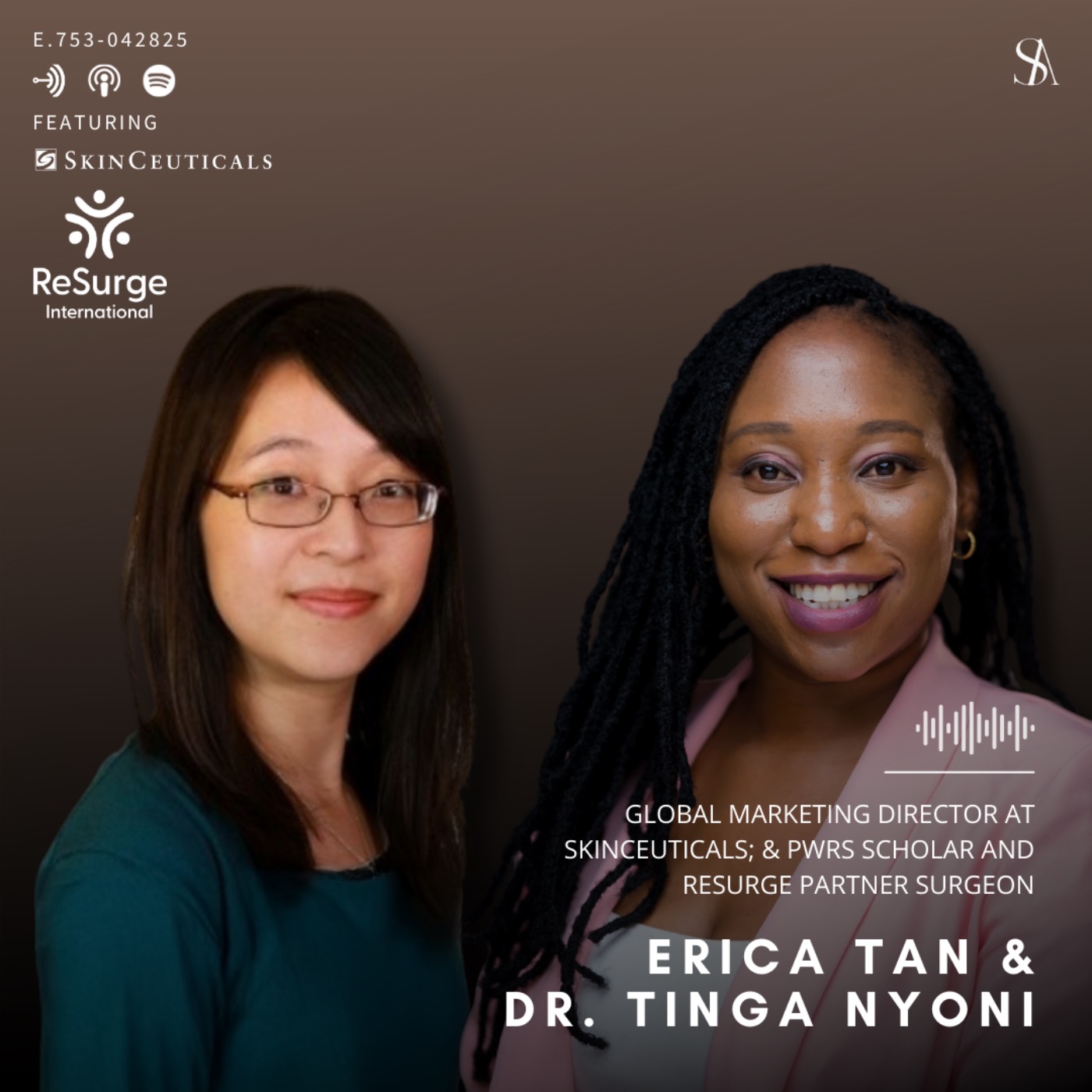
Skin Anarchy
How the PWRS Program Is Empowering the Next Generation of Female Surgeons with SkinCeuticals and ReSurge
00:43:34
Loading summary
Transcript54 lines
- [00:00]
Host
Hey guys, welcome back to Skin Anarchy. It's a very special episode today because we're going to be shining a spotlight on a program that has really caught my attention when it comes to empowering women in the field of medicine, specifically in reconstructive surgery. And it's called the powers program by SkinCeuticals. So with us today are two guests, the first being Erica Tan, who is the global marketing director at SkinCeuticals. Erica is truly a visionary and a pioneer when it comes to, to, you know, global marketing and understanding the needs of this industry. And then we. And she is currently the marketing director of SkinCeuticals. And then Dr. Tinga Nyoni, who is a power scholar and a research partner surgeon and she has gone through the Powers Program and really seen it from the inside out. So I'm very excited to chat with them today and to discuss such a meaningful initiative. Welcome, Erica. Welcome Dr. Mioni.
- [00:58]
Erica Tan
Thanks for having us. Super excited.
- [01:00]
Host
Yeah, I'm really excited to host, to host both of you. I mean, this is a very exciting conversation, I think, and I would love to kind of understand where this partnership between SkinCeuticals and the, where the PWRS program really started.
- [01:13]
Erica Tan
So back in say like 2015, 2016, the SkinCeuticals leadership at the time kind of looked at our business and looked at our wealth of resources. So we're so we are, we were then, as we are today, the number one medical aesthetic brand worldwide. And then of course, we're actually owned by a huge global company like L'Oreal. So we know that we have the power, the positioning and resources to do a lot of good in the world, frankly. So they started a search. Research International really rose to the top of a short list of NGOs we were looking at at the time because they like us, they have a long history of medicine. They place great importance on the value of quality research and education because they have that great association with Stanford Medical. They also, we felt like, had the ideal mix of, of high level global visions for what could be. Well, also they're very committed to addressing where people are on the ground. So we thought that was a great balance of knowing where they wanted to go, but yet being realistic so they can still keep moving the needle day to day. We also really liked research's focus on not just facilitating knowledge transfer from countries blessed with more resources like the US through mission trips, but also investing in really building up the local infrastructure and the expertise in the communities that we're trying to help. To ensure long lasting sustainable change. With that, we decided to partner together and started this program called Pioneering Women in Reconstructive Surgery. The acronym is POWERS since 2017, I think we just started our fourth class last year and it's been a really, really worthwhile partnership to work on. And I just have to pinch myself every day that I have the honor of working on something like this.
- [03:00]
Host
That is so, so cool. And I love that that's such a cool initiative and you know, I'd love to learn. Dr. Nyoni, maybe you could tell us a little bit about what got you interested in the program as well and you know, your journey with it.
- [03:13]
Dr. Tinga Nyoni
Well, I got involved with the program because Research International, which is a non governmental organization that's based on trying to teach plastic surgeons from poor economic backgrounds from different countries such as Zimbabwe. So as a research has been coming to Zimbabwe for quite to offer surgical training and to just offer support in our program. So I got introduced to research at a very early stage in my, in my training. I was quite young. I think I was still in my first year of training when Reese, when I first got introduced to the people of research. And then I was working with them throughout my training. And then in the first cohort, my predecessor, Dr. Faith Machemo, was part of the first cohort of PWRs. And after that, that's how I got to know about it. And she would talk about how a lot of the things that she's learned from it and how it was such an engaging program and how what. And how she got to connect with a lot of people through that program. And it was only then that I got like to know about the program and then I got nominated to go onto the second cohort. So that's how I got onto the program myself.
- [04:20]
Host
Wow, that is, that's really fascinating. And you know, I feel like these programs, I've not haven't seen very many, you know, collaborations like this and I'd love to learn. Erica, you. How did you manage to connect the powers program to SkinCeuticals core brand values? Because I know SkinCeuticals has truly been a leader in the space and I know a lot about the skincare side, but just overall. Right. I mean, I'd love to learn how that tied in together.
- [04:46]
Erica Tan
Yeah, of course, Great question. So as mentioned, when we first came up with the idea we wanted to do this program morally, we felt like it's our duty to share the wealth of resources and knowledge as far and wide as you can. Actually, if you Go to our brand website right now in our value section it says says right at the top of the page. We are dedicated to providing quality skin care solutions while working to promote a more sustainable and equitable world. Speaking of an equitable world in particular, we know the value of equitable representation in medicine. I mean I actually think there was a study by Harvard done recently that showed that women who were treated with a male surgeon actually had much higher rates of readmission to a hospital, higher rates of complications and actually a 32% higher risk of death, so higher mortality rate than if they were treated by women. So women in medicine really matters. Dermatology, which is a major focus of ours as being a big skincare brand is lucky it is one of the more gender equal fields of medicine. But that's not really the same of the other disciplines that we play in like plastic or reconstructive surgery. There's a stat that research likes to use that says that while the half of the world's population are women, women only make 33% of the surgical workforce. And in lower middle income countries like the those that research operates in that tinga is in that a lot of our Powers women are from, the gap is even wider. So by putting by investing in programs like Powers can suitable feels that things like POWERS that specifically target first generation women reconstructive surgeons and gives them the tools that they need to keep going forward. Advanced surgical training, leadership coaching, network opportunities, we can help close this gap and really empower the leaders of tomorrow to set examples. Graduates of the Powers program not only go on and of course they treat patients directly themselves, but they also share their learnings with the communities that they're in. So if you work the numbers, it's really fantastic to see the impact that the program has had worldwide and will continue to go and have.
- [06:49]
Host
That's really fascinating because I think when I think of surgery, the amount of skill that is needed in terms of the training, right. It's exponential. I mean Even in the US I'm, I'm also in trauma, Dr. Neoni and I know that trauma training can be very, very difficult to acquire because it just takes so much exposure to different cases. It takes so much, you know, insight into understanding really how different things are handled. So I mean, I'm sure it's different everywhere in the world, right? The way trauma surgery protocols are conducted. How was that for you going through the Powers program and like streamlining your knowledge and your expertise with this program's help? I mean, what was that experience like for You.
- [07:31]
Dr. Tinga Nyoni
So it was quite an interesting program because, you know, surgical training, as you said, training is different and from whichever country you're coming from. But there's also quite a lot of similarity, which is quite crazy because we come from different patient populations, we come from different backgrounds and all that. But the Powers program has been made in such a way that even from our different programs, we're able to, like, meld and still be able to work together and be able to learn all at the same time, given up at different backgrounds. So what was crazy for me was that our, despite all our different backgrounds, and we know you get to talking a lot with the people that are part of the program and getting to know a lot about their, where they're coming from. It is crazy how similar we are. So despite the fact that our training, our background training is different and everything else is different, there was a lot of similarities that we had as, as a group and even from the people we met, from the mentors that we met even in the States and everything, especially like women surgeons or women's surgeons in the end. So it's crazy that even women's surgeon from Zimbabwe and a women's surgeon from New York can still have the same issues in the workplace and things of that sort. So all I can say is that the Powers, despite bringing a lot of things together, a lot of people from different backgrounds together, we were able to actually find a common ground. And that still allowed us to learn from each other and to learn from the program, even though we were so different, but we're so, we're so similar as well.
- [08:58]
Host
That's amazing. I love that. I love, I love what you said. And I think that's, that's really genuinely, like, at the heart of, you know, why medicine is so powerful. Powerful, I think. And, you know, everything that you guys explained about women, especially in the surgical, you know, fields that we encounter, I mean, surgery is almost unheard of. I remember, you know, when I was first applying for my training, I'm sure Dr. Nuni, maybe you've heard this as well. It was all people were saying, oh, good luck, you know, good luck to you getting in. You know, it's like they kind of put you down along the way. That's the reality of it, you know, in Western, Eastern, everywhere. I mean, women in surgery is almost like it's one of the hardest places, I think, for women to thrive because we're constantly being, you know, kind of pushed in a corner and told, like, you're never going to make it. That's what makes this program and this partnership so valuable. I think, Erica, maybe you could tell us a little bit about other global health initiatives and how the Powers program is set apart from them.
- [09:54]
Erica Tan
L'Oreal as a company is really, really cool because it has, every brand is actually supposed to have some sort of philanthropic program attached to it. So if you look on L'Oreal's website, we have so many different brands. Each one of them has a philanthropic program. But even within L'Oreal, I think what sets the Powers program apart specifically is our targeted focus on women surgeons and then the depths that we do when we work on them. We're the only program of its type, I think, in my division certainly, and possibly within the L'Oreal as a whole. I had to double check that works with the same small core group of women throughout the program for two years. That's a really, really long time to work with a certain class. And during those two years, SkinCeuticals funds almost everything. As I mentioned before, the Powers program includes advanced surgical training, it includes leadership coaching, it includes mentorship and networking. So we try to find a full 360 effect. As you mentioned, getting the advanced surgical training and being approved to capitalize on those opportunities and get in front and get the hands on practice. A lot of times that's, that's unfortunately a lot harder for women than it might be for their male counterparts. But at the same time you're in that environment, there's also a mental aspect of it as well. I think you've mentioned. And then Tinga and I know the women in our current program have mentioned it can be somewhat isolating and that can be really, really hard. You have the stresses of being a surgeon as well as then kind of the context of the workplace you're in. So the Powers program I think is the only one that pairs not only the training, but we also have executive coaching, so teaching people. They. We actually hired an outside person to come in, outside consultant and she works with the women through a full year in terms of talking about how they can present themselves, how they manage conflict, how they deal with difficult situations. And in the last year of the program, we actually pair each of the women with a mentor. So a female surgeon who's a little further on her career so they can talk together one on one, I think 72 hours throughout that year. So they know that they're not alone. They know that they have these extra resources to help the so called softer skills that might get a little overlooked but are actually Incredibly valuable. I think SkinCeuticals is the only program of its kind that I know of that just goes in that depth and provides that full 360 approach.
- [12:25]
Host
I love that and I love how it's something that's genuinely. I mean, from the sounds of it, it sounds like something that's genuinely meant for this purpose. It's like, you know, sometimes I watch brands do collaborations or, or whatever it might be, and it's always like a huge plug for that brand. You know, it's less about the impact they're creating and it becomes more about their own marketing. I love what you said. Where you're spending two years, right, with a class or a cohort. I mean, that's huge. I mean that's literally like a, like a mini training program right there. You know, most universities, their fellowships are what, two to three years? That's very unique networking. I couldn't agree with you more. I think that in medicine, one thing that's overlooked is networking. I. I've made this comment many times on the podcast where it's like, you know, I feel like when I was getting into my career, finding a mentor was like going up an uphill battle. Even being in the. The western system, the mainstream of everything, like you still had problems, you know what I mean? Finding female mentors, finding people who can guide you down this road of not, not necessarily your skills, right, but more so like your networking. You're the way to interact with people, to grow your own practice, grow your own potential. That's a huge, huge positive. I want little bit into the documentary. Erica, I would love for you to tell us a little bit more about a place at the operating table. What did you learn through the process of capturing these stories on film?
- [13:48]
Erica Tan
So it's. It's kind of funny what you said, what you just said about how sometimes you see these cause programs and you think they're more just like another for profit marketing campaign and not necessarily impact. I think also the challenge I feel like with Powers is almost the opposite. We do such amazing work and we're so, so dedicated to making. It's real work, real impactful work and it's tailored to the needs of the population we're trying to serve. But like not a lot of people know about it. So that's why actually last year I invested in creating this documentary that follows the women that shares the story of Powers and follows two women in particular, actually. Tinga's in it, as well as her mentee Tandi, who's in our current class. To share their stories. Because what I found when I first took over this program is their stories are just so powerful. We really need to get the brand needs to get out of these women's way to give them a platform to share their stories instead of us explaining what they're going through. It's just, it hits different and it's just more powerful. And I feel like whoever views it has more of a connection with these women when it hears their true stories about everything. It's not just the challenges that they have going through and getting the training that they need. It's also balancing their, all the other different asks on their time. A lot of these women come from their, their mothers, their sisters, their brothers, their partners. Thandi, for instance, she's a single mom of two and she was mentioning how, she told me how she actually was using some of the money that she was making to put her own sister through school. So it's not just them concerned with supporting themselves and advancing themselves through the career, but also they have a real deep dedication to advancing everyone else around them. So I think with the documentary, it's a long form documentary, which is a little odd in the marketing space, it's 10 minutes long. But I think we really needed that. Sometimes you really need that time to tell the true story. And then again making sure that we were, our role in it was providing the platform for the women to speak and taking a step back to showcase them rather than brand being upfront foremost.
- [16:06]
Host
Right, that's, that's beautiful. I love that. And I, I think that what the impact this is going to have on, on true, like global health and just, I think medical literacy, I mean that's, that's the most beautiful thing right to watch because, and Dr. Nyony, I'd love to talk to you about this actually because you know, you're, you're truly extraordinary. I mean you not only passed your boards, you know, during the global pandemic, but you topped 14 countries. You know what motivated you during this time when you're doing all of that?
- [16:37]
Dr. Tinga Nyoni
So honestly, what motivated me the most was the support I was getting from all the different, what you call this, from all the different people who support reconstructive surgeons in their training. And I always tell the people that.
- [16:51]
I am now training myself that, you.
- [16:53]
Know, it's quite a good time to be a plastic surgeon, to be training in plastic surgery right now, especially for women, because now you're seeing women training in the same thing as you are. So you can visualize who you want to be one day. And then there's also quite a lot of programs that are still, that are really focused on making sure that we get a good training experience. And also we get to make to, to achieve our goals of becoming good surgeons. Because ultimately that's what we want, right? We want to be good surgeons, people who can impact our communities in a positive way. So during COVID I, I'm sure you can. As you were saying, being a surgeon alone, being a female surgeon alone is a very, is a very isolating experience. And it became only worse during COVID because now you're alone and you know, plastic surgery, because of the nature of the job, a lot of the cases in plastic surgery were not being done. So most of the hospitals were concentrating on emergency cases, that's cases that will cause immediate death. And because plastic surgery in, in essence is about improving quality of life as opposed to actually life or death type cases, it meant that there were, there were very few cases being done in the hospital during COVID So not a great thing for someone who's about to sit for the exams because this started, the COVID pandemic started about a year before I sit for my exams. And you know, during the year leading up to the exam, you're trying to get as much experience, as much as last minute experience and as much exposure to the or as you can to be as ready as you are for your, for your, for your exams. So what would happen is all the different organizations that are, that are there to support the training that was supporting me through training, then that was research. Another organization was Second Chance. They would just say, they would talk to me frankly and be like, oh, Tinga, what's going on? And then I'll say, you know, this is what's going on. I'm scared because I'm not getting enough exposure, I'm not getting enough teaching and I'm about to write my exams. And they would just say, okay, we've heard that in Tanzania they're still doing, they're still getting all our time. Would you like to go there for two weeks? And stuff like that. So it was, it was a lot of patchworks work, but it actually, it actually worked out very well for me because I got a lot of different exposure from different places. But also in that in itself, knowing that there are a lot of people who are rooting for you, it was very humbling and also very encouraging to be like, oh wow, there's a lot of people who invested in me doing well. And another One was that Dr. Chang from Research would actually personally mentor me, like, towards my exams. We will be meeting, I think, at least three times a week. It would be like, like meeting online and we'll go through, like, exam questions and all that. And to think that someone who's so busy with their own, like, trainees and their own, like, he's a very busy man and he also was taking time and. And to invest in me passing my exams was also quite humbling. So it was just mostly the support that. That got me through it. And it made me feel like, oh, okay, Tinga, you can do this. And also the encouragement, like, because you won't support someone you don't have any hope in. So if a lot of people are supporting you in that way, it means that they have quite a lot of hope in you. Was a very humbling experience, but also it was very enriching experience. So I'm glad that I managed to get through that during such a crazy time.
- [20:01]
Host
Effy, that's amazing. I. I think that's such a cool thing. And yeah, I mean, at the end of the day, I think sometimes it just takes somebody to really believe in you and for you to believe even more in yourself, you know, and that's exactly what that reminds me of. I mean, I think whenever you're going through anything as rigorous as that, I mean, you. It's. It's hard, right, to stay confident every single day and say, yes, I'm going to top my exams and I'm going to do amazing. But that' beautiful that you had that to lean on and, and that support. And I think that's something, you know, it really does for me, it rings a personal bell because I think in the field of medicine, and we had talked about this earlier, right, is the idea that women are not represented, especially in surgical fields. And a part of that, I think, is also the fact that there's not support, right? And there's not a lot of, like, you know, here's how you do it, here's the road you walk on, and here's how you get to where you want to be. And so, you know, from that perspective, I think this is where, you know, Dr. Nunu, like, what you're doing and what you've accomplished. I can see this later in life, you know, you're going to motivate so many other young women, right, because you've been down that road now. You've seen, like, this is what it takes and this is what the positive motivation can lead to. And so I think that's where global Health is so it's so much more complex than I think what we talk about, you know, on a mainstream level where you know, people are only talking about initiatives. It's a lot deeper than that because you have to actually understand people on a human level. Right. And, and not just look at them as okay, you're going through medical training threw you into the field of reconstructive surgery in the first place.
- [21:32]
Dr. Tinga Nyoni
Okay. So first of all, why I got it, why I ended up in reconstructive surgery was because I've, I've always known I was going to be a surgeon like from mid school because I'm more of a hands on problem solver type person. So you'll find that that is a perfect space for a surgeon. We go out there and we cut out the problem.
- [21:50]
Problem.
- [21:50]
But what, what would strike me about like reconstructive surgery. And it took me a while to get to know about reconstructive surgery because again in my country there's not a lot of plastic surgeons or reconstructive surgeons that are around and a lot of the times a lot of our, the cases for reconstructive surgery will get, were going around abandoned because there was no one there to be able to treat the conditions that require reconstructive surgeon. So for, for me what, what really got to me was the fact that first of all, yes, you're getting in there, you're solving the problem. But number one, it's a problem that has been not being solved for a very long time until today. You'll go into the rural areas, especially in Zimbabwe, you'll find people with burnt tractors that they've had for years and they just think that's their life and they've never thought about the fact that they sorted it out. And so it's one of those things where it was a part of medicine that I feel was abandoned in my community. And that's what drew me to it most of all. Because you're looking at people and, and, and I, yes, medicine. For, for a long time medicine was about life or death. Is this person going to die or they're going to survive? And a lot of the times in the, in the, in our developing countries, that's what we were focusing on to keep a person alive. And if they're not, if they're alive, then they're fine. But now you find that there was a whole group of people that were neglected because the fact that they were alive was okay enough for everyone. But then when you look at their lifestyle and you look at their quality of life, you're thinking, hey, this person hasn't been able to go to work because of something like this. This person has a huge deformity place and they're not able to go out into society. And that's really affecting them. And is it, is this a life? So this is one of the things that has kept me on, in and reconstructive surgery and that, that keeps me going because you're, you're, number one, you're, you're dealing with a group of people that were essentially abandoned for a very long time. And number two is just the joy of being able to finally give the service that was just not there and giving people hope that they just never thought was actually there. So they, that's what really keeps me in, what got me in and what's keeping me in.
- [23:45]
Host
That's awesome. I love that. And I, yeah, I really resonate with what you're saying about this. The rural aspect of, you know, patients feeling like, you know, something like a burn is the end of, you know, something for them. You know, exactly what you mentioned. I actually have, I had a family member, you know, one of my uncles actually, when he was in his youth. I mean, my family grew up in rural India. And I remember my father telling me this, you know, when I was a child. He said that your, your uncle burned like, he burned like half his leg and it fused with the other part, other leg, because he was like a child, you know, so he hold them together and it was such a traumatizing experience, not only for him, but for the family. He's supposed to grow up and earn money and support the family and all this. And then you have this kind of thing happen where in the west we could easily treat that. You know, that's an easy thing. And, and trained surgeons anywhere can treat that. But then when you have that kind of situation in rural communities, you're right, it becomes this life or death kind of situation for them and the families involved. And it's so unfortunate to see that because there's so much advancement now in modern medicine and surgical techniques that there should never be a situation like that. I think that's why the Powers program really is very close to my heart. I think that what's being done here and what you guys are aiming to do, it goes much further than just this program. It's truly a message to the world that there needs to be a truly organized way to train medical professionals. But I'd love to kind of circle back, Erica, and talk about, you know, I know the Powers Impact Report launched this year for the first time. What data stood out to you the most?
- [25:21]
Erica Tan
Yeah. So I love this little Powers Report infographic that we did because I think it's one of like we've kind of tracking the impact year over year, but I think this is the first time we kind of just tried to gather it all together in one EGL piece. And I think what that, the thing that surprised me the most was when you're in it, you don't really feel it. But when you look at these hard numbers, and they are hard numbers that have been quantified, the truly far ranging impact of the program is enormous. So far we've had three or four classes. That's 57 surgeons. They're from 18 different countries. And then when you look at what happens after they graduate the program. So each year the Power surgeons and Matchalasse scholarships that we also give out for reconstructive surgery potentially treat a conservative estimate of almost 17 million patients directly.
- [26:19]
Host
Wow.
- [26:19]
Erica Tan
And then throughout their entire career, so assume each surgeon, after they graduate the program, they go on to have like a 20 to 30 year total career. Throughout that entire career, if you total up all the patients and then all the people that the power surgeons will then train to treat even more patients, that's going to be, that's in like the millions on us. I think the number is actually just with the 25 powers graduates that we currently have, not even counting the people we've given the reconstructive surgery training scholarships to. Just those 25, that's 10 million lives they are potentially being able to change throughout their entire career. Career, like that is fantastic. That is huge. And it's just because we're starting with this like this small little group of women that were slowly growing year over year over year and being very region conscious and working with it, but it truly does have an outsized impact, really. So I think that was just the most amazing thing once I, when I looked at this report.
- [27:21]
Host
That's amazing. That's, that's like huge, like exponential impact. I mean, and I think that has a lot to do with, I mean, just as a person looking from the outside, right? I mean, everything you guys have described here about the way the program is structured, the way that it's doing a multifaceted approach to training, it's not just like, you know what I mean? It's not just about surgical skills. It's a lot more than that. It's true support. I mean, you're training global surgeons at this point, you know, and that's absolutely magnificent to see that, you know, because it's very exciting. I think when I. When I look at global health and when I look at global health initiatives, it's very difficult. I think, Dr. Nuni, you had touched on this earlier where it's like very hard to see where a surgeon from completely on the opposite side of the world can completely communicate with somebody on the other side, you know, and understand that this is the, you know, standard of care that every human being, you know, deserves. And that is going to always resonate. I think, when you give people quality care, that's what spreads like a wildfire, you know what I mean? They go and they tell everybody like, oh, this doctor, doctor knows what they're doing. I mean, I can't think. I know there are so many instances I've come across this where, you know, not just in surgery, but there are so many doctors in a lot of these underdeveloped countries that I've seen where they're not actually credentialed. Right. So they ended up treating people. It causes problems, and then people are left kind of taint, you know, tainted a little bit. And they think that this is what medical, you know, care is, but it's not. And so when they see a truly trained surgeon or physician come to them and treat their problem, it's very transforming. So your numbers make sense to me because when you see that happen to you and you've never been exposed to that, you're going to tell your friends, you're going to tell your family, everyone's going to want to get involved in that, and that's very powerful. That's a movement on a global scale. So congratulations on those numbers, by the way. That's amazing.
- [29:17]
Erica Tan
Thank you. Thank you.
- [29:19]
Host
So what are some, Erica, what are some of the systemic obstacles, you know, that you hope Powers can continue to dismantle? Just beyond the training, I think just.
- [29:31]
Erica Tan
Beyond the training, again, is the barriers in terms of making assumptions about a person's ability to do something just because how they look like, what their gender is, where they come from, how they're placed in the world even today. Sometimes I talk to the women in the PARS program and they share with me stories of them going through earlier schooling and the kind of discrimination and barriers to different opportunities. Access to training, access to resources, just getting treated differently or having people make decisions for them not to include them in surgery because it assume that surgery tired, not to ask them for help for something because it's Assumed just because they're women, they're going to have no idea what to do. There's not something. Not being picked to handle a case because it's assumed that they can't handle it. Just, I hope this program, the more, more women that we can help advance through this program and therefore the more women that are able to go back to their communities being really the role models of what could be. I hope it really changes the perception of how, of what it takes to succeed in this field and, and really broaden horizons on what a good doctor, what a great doctor, what an amazing doctor can look like, where they can come from and who they can be. I think this is, this program really is a true, true initiative to be like, if you can see it, you can be it. I'm hoping all the women in our Powers program that graduate, they go home and they, they inspired later generations of girls and saying, like, hey, that, that's amazing. She can do that. I can do that too.
- [31:12]
Host
Yeah, that's amazing. And I, I hope the same. I mean, that's very, very powerful to have that kind of, you know, chain effect that. And, you know, Dr. Nanny, I'd love for you to speak on that as well, because what was that, you know, what was it like for you having gone through the program and then, you know, your afterthought, I guess, maybe afterwards, you know, when the program was over in terms of what you wanted to do for Global Health personally, I mean, how did that shape your, how did the program shape your perspective about Global Health?
- [31:41]
Dr. Tinga Nyoni
It got me thinking a lot because when you get into, when you get into surgery as a female surgeon, you start thinking, okay, my problems are my own, and you kind of just give up on the system. And then you're just like, okay, this is just survival mode, right? It's just me trying to make it through, and if I make it through, then I've won. But, like, when you start interacting with, with a lot of other women who are in the same situations, or it was slightly even more difficult situations, and they're, and they're doing it and they're thriving and they're actually doing, making a lot of difference in their communities, you start thinking, okay, so, yes, this is a problem I'm going through, but I'm not alone. And a lot of women are still thriving in that system. So it's not only about surviving anymore, it's about thriving in that system. So it's about, like, making the difference that you can instead of just surviving the, the, the torture that is becoming a, becoming a surgeon and training in, in surgery. So now you're, you're a lot more. There's a lot of light at the end of the tunnel. Once you realize what you're going through and what other women are still going through, that you're not alone. Because solitude can be a very real thing. So if you feel that you're going through something by yourself, you start thinking, okay, okay, so, okay, I'm in this situation. Let me just, let me just do it as. Let me just suffer. Let me just suffer through it and finish. And that's a very like, disheartening kind of feeling. You don't feel inspired to do more. But like, when you see, when you share stories with other women that are going through the same thing, you feel like, okay, this, this, this, this is not, this is not the end of the world. This is not just about survival. This is about doing the best I can for my community. So it made me start thinking about the community as a whole. It also made me start thinking about the way I approach, the way I approach problems. Now. It's not just, okay, let's fix the problem, as I would if I was just trying to get through my training, trying to get through my career. Now I'm thinking it as a holistic type situation because through your leadership to the leadership training that I got from Powers, I got to see myself as a leader. What is the pluses that I have, what I am lacking as a leader and how I can improve on myself. And part of that was learning a lot of empathy and start and trying to look at the problem as opposed to just looking at it as, okay, this is a kid with a burn, but as opposed to be, okay, this is a kid with a burn, but where are they coming from? What do they need? Why? What will keep them from getting into the situation again or getting to have them recover in their best and in the best way. Sometimes you have to take a patient and let them stay a little longer in the hospital because they, they live a little further and you know that there's no hospital close to them, so they won't be getting the dressings they need where some, someone who's sitting, staying in the city, you can let them, you can let them out of the hospital earlier because they have the help they need. So you start approaching things as more of a holistic type situation. And that's what, and that's what global medicine is all about, right? It's not just attacking the problem and saying, okay, one plus one is equal to two, say let me fix that and then, and, and send the patient home. You want to talk about what the real problem is? Why are we in the situation? And that gets you thinking the more you interact with people and the different, different problems that they have, because you start seeing that with our differences, why they, where we are different and why exactly we're different, what other countries are doing right and what other countries are doing, what are doing wrong. And then you can be able to like start thinking holistically from that period and actually getting ideas from people who have actually managed to sort out certain problems that you currently have but have not solved, but they have managed to somehow get through it. So yes, I would say that's just a total shift of my mindset was what I would say I took away from the Powers program. Program.
- [35:07]
Host
That's amazing. I love that. I agree with everything you said and I think it's, it's really, really cool to see that because at the end of the day, you know, medicine has to become global. I mean, I think I was having a conversation with, you know, you know, a person in the UK she's, you know, board certified in 19 different countries and she was saying this as well, you know, very similar to what you said, Dr. Nyony, is that it has to become, you know, something that you can learn from every place that you go in the world. There's something you can learn when it comes from the medical perspective. And you know, I have. That's one of my biggest questions for you is, you know, what do you think you were able to incorporate in your practice? When you look at Western medicine and the way it's done, I mean, what was one of the biggest skills that you acquired through this program?
- [35:50]
Dr. Tinga Nyoni
So to be honest, it was more of the soft skills. Not exactly the actual surgical, surgical, what you call this techniques, because surgical techniques are technically quite similar. This is the access to, to the instruments that might be different. Like you might have different, different instruments or different facilities at your exposure, but it's the soft skills that do then that do change. It's an issue of, you know, when you have, when you are very few plastic surgeons in a country, then it means that the system in which practice of plastic surgery is not refined and therefore your systems don't work as well as they should. But if you then go like we've, we've had an opportunity to visit John Hopkins and other, other, other well established university hospitals and things of that sort, and through that you start seeing what a working system looks like. Because they have had like plastic surgery departments that have been running for decades. Right, Decades and some even centuries. And then you start thinking, okay, why is the system working? And therefore you'll be able to implement, implement systemically in your own home. What? Because a lot of the times we probably have the same skills and everything. Maybe not as much of the resources, but a lot of the times what we're lacking is, is yes, it's the equipment, but it's also the systems that make things more efficient and make things run much better. So you are able to then take that, the systems you've seen work very well in certain departments and come back home and say, okay, how can I implement this in my, in my, in my hospital in a way that works? So basically that's what I definitely learned. It's the soft skills of it. How to, how to, how the systems work in order for things to flow and things to become more efficient.
- [37:33]
Host
That makes sense. That makes sense. Yeah. I think you have to see something up close and you have to see the system at play. Yeah, I can definitely see that. You know, where, you know, you have to understand how things are being done so that you can implement it in your own way. That's very interesting. I'm just, I'm curious though. Where is the Powers program headed next? I mean, what's, what's on the horizon for 20, 25 and, and even beyond that.
- [37:54]
Erica Tan
Oh gosh, how big can I dream?
- [37:58]
Host
I hope. Yeah, as big as possible, please.
- [38:02]
Erica Tan
Yeah, yeah. So I mean, I definitely think we're going to continue doing the cohort structure. Like I said, it's. They're typically small classes between six, we, I think the recent one, we recently increased into eight. But I think the smaller size classes really provide intimacy through that two years that you don't really get once you reach past the higher word count. But at the same time, we are defin. Looking for ways to expand our impact as well. Really leveraging more of the skinceuticals bank of expertise. Like I think potential opportunities to get some of our doctors into the Powers program as guest lecturers, for instance. That's something that we talking about with Research International constantly. I think also now the fact that we have three classes that have graduated and the fourth, that is about half, is working on the program right now. We've kind of built an alumni camp for this for Powers as well. So as mentioned numerous times, I feel like through this entire conversation, the Power community is really, really powerful. So I've been talking with Research about how do we foster that sense of community to keep going after graduation. I know the women are very, very tight during those two years together. They go through the virtual lectures together. They often go on training trips together and stuff like that. In two years, there is a significant amount of time, but not as much when you look over the total longevity of a surgeon's career. And we have found sometimes after they graduate the program, without the immediacy and without being in it, they kind of forget that the resources are there. They forget that they have this community of women they can talk to and bank on and stuff like that around the world. So a lot of recent conversations I had with research is how do we continue to foster that and rebuild and strengthen those connections worldwide between women, between countries, between cohorts everywhere after they graduate the program. So it's not just one thing on the radar, Hey, I did this. It was fantastic. Now I get it. Need to get on with their life. No, it's something that they can continue to access and leverage and enjoy and take advantage of for support throughout their entire life, lifetime.
- [40:20]
Dr. Tinga Nyoni
Wow.
- [40:21]
Host
I love that. I love that so much. And I, I think for closing remarks, Dr. Nuni, I'd love for you to comment for any listeners that are aspiring surgeons out there, you know, or want to go into medicine, what some words that you could offer about being, you know, globally, like having a global mindset with medicine. I mean, any advice you can offer, especially for female doctors or aspiring physicians, you know, about approaching this road and going on this journey of becoming a global, you know, physician and having that impact.
- [40:54]
Dr. Tinga Nyoni
Okay, so what I would say as a final note is that medicine is a very difficult journey to go through. Like whether you're going to choose whatever specialty you decide on choosing, whether it's an internal medicine or you decide to be a surgeon. It you. No one can take away the fact that it is a very trying time in your life getting that kind of training. But to those who got in it for the right reasons and for those, if you truly are. You truly feel drawn to the, to, to. To that field and you get in, in it because you want to be in it, it is truly worth all the things that you're going to go through because you get to impact a lot in people's lives and you're not going to just impact your patients. You're going to impact fellow surgeons. You're going to impact people who have nothing to do with. Who have nothing to do with medicine altogether. You get to be in a space where you actually can. Can cause Change and significant change. And I'm not just talking about healing someone because you're definitely going to do that, but you're also going to just inspire the world because if, if, if a girl from Zimbabwe can be a plastic surgeon, then surely a girl from Nigeria can be a world renowned pilot. Right? Because now what's, what's out of what, what cannot, what, what can't you reach anymore? Right? So that's what I am saying. I am saying it, it is a, it is, was a truly a tiring journey, but definitely worth it. And, and the fact that there's so much support now around, there are a lot of people that are there willing to help you for no reason whatsoever, but just so that to see you thrive. So this is the best time to get into medicine. It is the best time to be getting into into global surgery. And yeah, I feel like if you really want to be in it, go for it. You will never regret it.
- [42:40]
Host
I love that. Thank you so much. And Erica and Dr. Nun, thank you both so much for this wonderful interview. I've learned so much and I really congratulate, you know, Skin for the Powers Program. This is, this is real change, you know, and I love to see a brand like Skin Zicals doing this because so many can follow in these footsteps and learn from, from these initiatives. And again, you know, if, if there are any brand founders listening out there, I mean, when you're trying to do an initiative, it has to be impactful. It can't be about brand marketing. It has to be about the cause. And I think this is such a shining example of that. So truly hats off to Erica, your whole team, you know, and, and the whole SkinCeuticals team for, for doing this and for the Powers program. It's so remarkable to see that.
- [43:25]
Erica Tan
Thank you so much. It's my honor.
- [43:27]
Host
Thank you.
- [43:28]
Erica Tan
Thank you so much for giving us a platform to talk about it. I can talk all day.
- [43:32]
Host
Yeah, no, likewise. Thank you both so much. Hey guys.
- [43:36]
Podcast Outro
So I hope you love that episode. Please make sure to hit subscribe if you're tuning in to us on any podcast platform. We are available on so many different platforms, so wherever it is that you're tuning in, just go hit subscribe. You'll be immediately notified when we publish new episodes. This way you're able to tune in to amazing insights from experts, brand founders, industry industry leaders, authors, all the wonderful.
- [43:59]
Host
People that we host.
- [44:00]
Podcast Outro
And that's very important for me because I love to hear from you guys and really understand what you love and what you want to hear more of. Also, make sure to give us a follow on all of our social media outlets. We're available on Instagram, TikTok X, you name it, we're there. We also have a blog on Medium, so if you're a reader and you love Medium blogs, check us out.
- [44:20]
Host
On Medium.
- [44:20]
Podcast Outro
We publish some really great articles, articles on there that do deeper dives than just what's available on the podcast, and it's really a great place for all of you science geeks out there that want to learn a little bit more. We go above and beyond with our research and making sure we're bringing you information that you usually probably won't hear about in other outlets.
- [44:37]
Host
So check us out, leave us a.
- [44:38]
Podcast Outro
Comment, leave us a review, and we'll.
- [44:40]
Host
Be back next time with another episode. Thank you.