Loading summary
Transcript143 lines
- [00:01]
Dr. Ekta
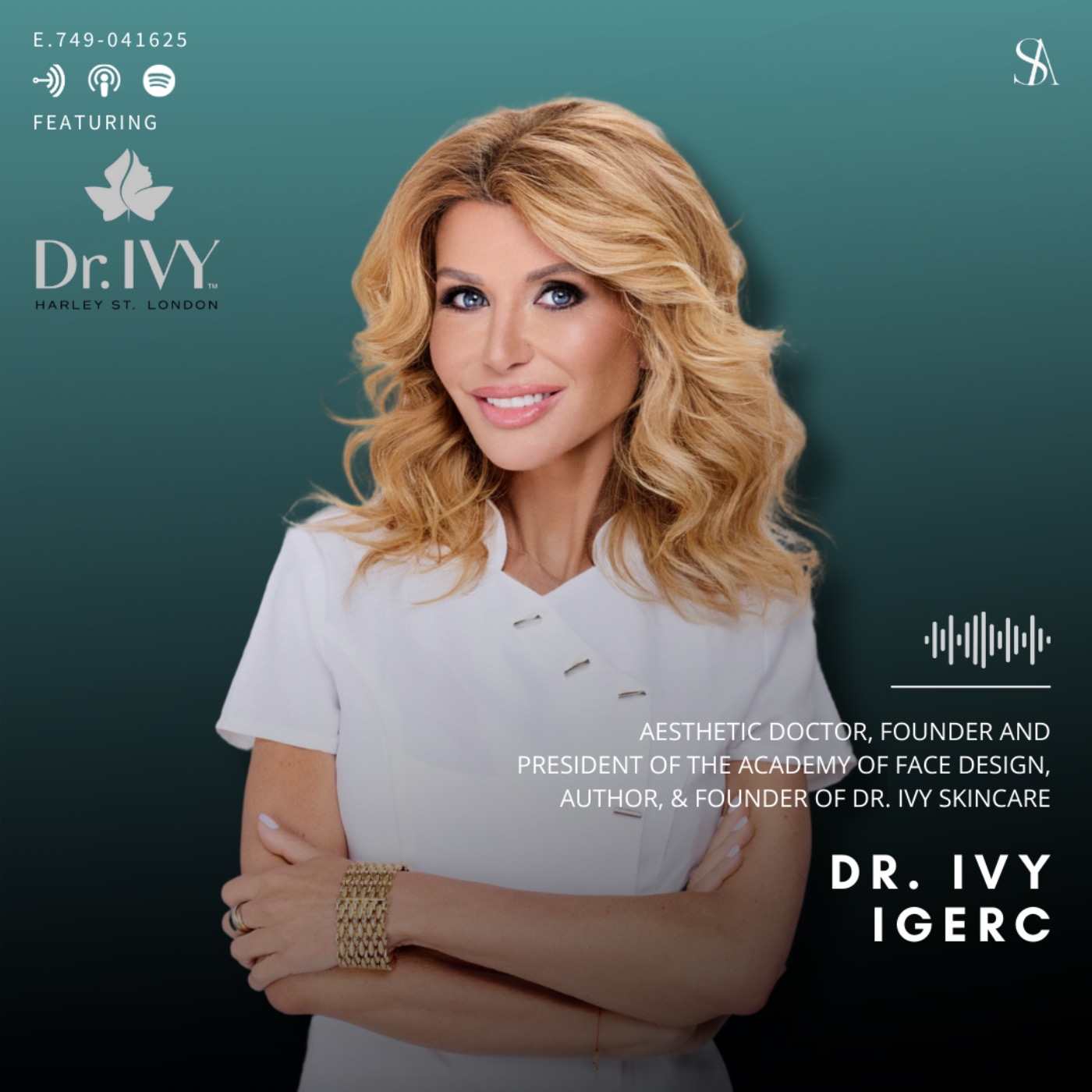
Hey, guys. Welcome back to Skincare Anarchy. I'm excited to host our guest today because she is truly a leader in aesthetic medicine, dermatology. She's innovating the space of skincare with her beautiful new brand that I've been absolutely obsessed with. And this is a great opportunity for us to discuss exosomes. I know a lot of you have heard about them. They're definitely buzzing right now in the industry and, you know, on social media, but no one's really talking about the science. This is a really great opportunity for us to understand that. So I would love to introduce you guys to Dr. Ivona Egrets. Welcome, Dr. Ivy. I'm so excited to host you.
- [00:37]
Dr. Ivona Egrets
Hi. Hi. I'm very happy to be with you today and to explain something more about exosomes, because my big passion lay in regenerative medicine. I dedicated my work and all my.
- [00:50]
Travel to Asia to exosomes and also to stem cells. So now something what legally we can use in skin care, in treatments, in clinic, and also out of clinic are definitely exosomes.
- [01:02]
Dr. Ekta
Yeah, no, I, I would love to actually learn more about you and your background because I know it's very, very impressive and you've worked in so many different countries. You have great grasp. Right. Of. Of the whole understanding of aesthetics and you've written books and I'd just love to learn more about you if you could tell us what led you into medicine. When did you know that you wanted to be a doctor?
- [01:23]
Dr. Ivona Egrets
Well, I think that's a brilliant question, but I come out of family of medical doctors.
- [01:29]
Actually I am third generation of medical doctors in my family and believe it or not, I didn't know anything else.
- [01:35]
So I remember my early years being.
- [01:38]
In my mother's practice and you know, playing with, with all the stuff she had around exposed in, in her clinic. And somehow there was, it was a natural way for me, for my brother and we finished in. In medical world, but I just did not know what I want to be. I had cravings and love of pediatrics because most of the practitioners in my family were pediatricians and my mom was dentist. So I decided to take both ways and joined it into surgery. So I was actually oral surgeon by education, but I was also specialized and I did my PhD on bone regeneration. And that time everything was about BMP proteins and stem cells, but just empirically. So I decided to leave Europe and dive into Asia because Asia gave me opportunity to try something clinical with stem cells.
- [02:32]
Dr. Ekta
Wow. Wow, that's really fascinating. Yeah, I mean, I feel like There is a lot more flexibility in Eastern countries with trying to, you know, go further.
- [02:41]
Unknown
Right.
- [02:41]
Dr. Ekta
With the science. I mean, the US is very, very restricted. I know, you know.
- [02:45]
Dr. Ivona Egrets
Yeah, same as Europe. Yeah, same as Europe. But China at that time was just blooming. It was very open for new treatments. And in the moment I came to China, Hong Kong, Singapore, everything was about aesthetics. We all know that China was in communism, but prior to communism there was Taoism, which was somehow enhancing, very open for all the beauty treatments, connecting them actually with well being and not with vain like in the Western world, but with something which is connected to health. You are beautiful and it, it mean in China you are healthy and. Yeah, and then it was somehow natural that after communistic time when everything started to happen and China started to rise also this craving for beauty was, was incredible there. China, South Korea, all these countries were just blooming and they were very, very open. And China invested a lot of money in research in biotech industries and that was also part of biotech industry. So I was doing research and developments of different European collectibles. And yeah, I somehow found the great ground and the great Disneyland, I would say, in China, because whatever I was dreaming of, I could somehow make happen at that time in China and South Korea. And everything started there. I would say Asia was the cradle of all this new wave in, in minimal invasive aesthetics and anti aging. Yeah, I'm talking about 25 years ago.
- [04:14]
Dr. Ekta
Yeah, yeah. No, that's really fascinating because I think, you know, when I think of aesthetics in the U.S. i've, you know, I've been most exposed, right, to the US system of how people are looking at esthetics and talking about it. I mean, the approaches seem very redundant, you know. So I'm curious, how did all of this experience shape your understanding and your approach towards esthetics overall?
- [04:40]
Dr. Ivona Egrets
Well, I would say that's a brilliant question because Asian countries opened me on very, very holistic approach to beauty, to well being, to anti aging. So it was impossible for me and it is still now to think, okay, I have a patient who is going to come for a few injectables and that's it, that's beginning. In the end, it's just a part of this journey. I watch on aesthetics and beauty like a marathon rather than a sprint. And I always think it's all about hobby, hobby, sleep, hobby. You know, it's much more bigger than any clinical approach or anything we apply on our faces is the lifestyle actually.
- [05:17]
Dr. Ekta
So.
- [05:17]
Dr. Ivona Egrets
So this is where Asia shaped me on a very precise way, on A very, very holistic approach.
- [05:25]
Dr. Ekta
It's very interesting. Now I know you've written books and you've explored the mathematical side to beauty, especially with facial symmetry. I know a lot of us know about the golden ratio. It's talked about a lot in just, I guess, normal conversation now. But what inspired you to study beauty from that angle? Like bringing in the mouth?
- [05:47]
Dr. Ivona Egrets
Yeah, again, a brilliant question because you.
- [05:50]
See, that's, that's my knowledge in, in dentistry, orthodontics actually encephalometric analysis. So cephalometric analysis is part of orthodontics, which is on a way defining geometrically precise growth of the bone and skelet of human face and as well as, as right positioning of the soft tissues. So everything is already there for us. We have all these parameters, all the right which are set up for beauty. But also beauty lies in some little tiny imperfections, some little tiny charming things on our faces. So I somehow had a holistic approach.
- [06:28]
So it's all there.
- [06:29]
So beauty is in geometrics and mathematics, but also it's something much more individual than that.
- [06:37]
Dr. Ekta
It's interesting. So I mean, in terms of like, you know, I think a lot of people have very many misconceptions, right. And in terms of understanding just how a face should look, you know, I remember back in, when I was growing up, like, you know, people used to talk about certain celebrities and they would be like, oh, you know, they're very symmetrical, their face is very symmetrical. And I would be staring at these pictures, you know, like trying to figure out like what is it that they're talking about, you know, And I'd love for you to address this. You know, what's one misconception that you think people have about symmetry or proportion when it comes to the face?
- [07:13]
Dr. Ivona Egrets
Well, I think beauty is definitely everything close to symmetry. But I was analyzing in one of.
- [07:19]
My books actually is symmetry 100 beauty. And what I concluded at the end.
- [07:25]
Being 100 symmetric is rather boring than beautiful.
- [07:29]
So beauty comes from inside. And beauty is connected to our special.
- [07:34]
Features or special mimics on the faces.
- [07:37]
So it's very important when we treat.
- [07:38]
The face, when we do botulin toxin treatments, especially not to freeze the face because we kill the best part of, of of identity of special person or human and also to keep certain imperfections.
- [07:50]
To make it more real and to give it a special charm or I.
- [07:55]
Would say underline this individual, individual beauty.
- [07:59]
So beauty is close to symmetry, I.
- [08:02]
Would say, not symmetrical. And beauty is, is, is something special.
- [08:07]
With what we can Define on those faces. That's what always fascinated me in this.
- [08:12]
Aesthetic medicine actually is very, very knowledge.
- [08:16]
Of anatomy, comprehensive knowledge also of sculpturing. I used to do sculptures when I was young.
- [08:23]
This is, I think, the talent I.
- [08:24]
Inherited from my late grandfather who was.
- [08:28]
Who was a sculpture.
- [08:29]
And I somehow combined all that into. Into modeling the faces, re. Sculpturing the faces. And also very, very important thing is to understand the social aspects of beauty. You know, I was working in China, I was working South Korea, I was also working in. Working in India. And it was really interesting when I.
- [08:47]
Would come those markets because I used to be president of American Academy of Facial Aesthetics.
- [08:53]
So I would set up education trainings.
- [08:56]
For different dentists and doctors in.
- [08:59]
In this area, Southeast Asia. But before I would come to new market, I wanted to be briefed about social aspects of beauty. That's very, very interesting, especially on Far east, because position of the ears, for example, height of the nose bridge, then.
- [09:16]
Width of the temples is so different.
- [09:18]
Than in our Western. So we could really easily make a.
- [09:22]
Mistake on those spaces.
- [09:23]
If you are not briefed clearly what.
- [09:25]
An Asian Far East Asian lady wants.
- [09:28]
Or Far east male patient wants. It's very, very important to consider all of that before doing any treatments to two different people who belong to different social backgrounds.
- [09:42]
Dr. Ekta
I love that. And I think that is so unique. And you know, I've never really been able to speak to a doctor that's so well versed in this because I always wonder, you know, we look at aesthetics and we look at facial rejuvenation, but then no one speaks about the cultural differences, you know, that exist, like in terms of obviously the geometry of everyone's face depending on what race you are, where you. Where your ancestors were in the world, right when you were. The world was developing. That's a huge player in how our face is set. And like exactly what you said, you know, like with things like ears or like the nose or these things play a huge role. So I don't know why no one speaks about that. And also when I look at somebody sometimes who has gotten some word done, sometimes it almost feels as if the person who did the work, they didn't know how to translate in terms of this is not. This face doesn't have the features of what my normal patients have, you know what I mean? So I have to adapt and I have to actually think about this individual. I mean, I've seen that a lot where people refer to them as like botched surgeries, you know, and that really makes you wonder that there needs to be this more global training when it comes to really understanding facial rejuvenation and any kind of surgical procedures, you know.
- [10:56]
Dr. Ivona Egrets
Yes, yes.
- [10:57]
I was always upset because, you know, I have European background, but I have licenses in a lot of different European countries, like in Austria and Croatia and Slovenia, in Switzerland, Italy, you know, it's already those countries who are so small and so close one to.
- [11:12]
To another have different social aspects of beauty.
- [11:15]
So you can't inject on the same way or approach on the same way. Once this lady and one English lady.
- [11:21]
So it's very, very different. But then when we talk about far.
- [11:25]
And then, I don't know, London, this is night and day. And I think medical trainings definitely should be much more.
- [11:33]
Bit of a different training for Far.
- [11:36]
East Asians, even Koreans and Japanese have.
- [11:40]
Different requirements in beauty.
- [11:42]
And also anatomy is a bit different as well.
- [11:45]
And what I said before, social aspects and the most different part of the face, you know what it is for injecting or for approaching. It's somehow with the nose, I find.
- [11:53]
Dr. Ekta
Out, oh, wow, shape of the nose. Yeah, no, I can imagine because usually that's the first thing that actually to the normal eye, when you look at someone's face and you feel like, you know, people always say this, right? They say so and so has gotten work done when people say the first thing that comes to mind is the nose, because that's where I think you can see it the most, you know, 100%.
- [12:17]
Dr. Ivona Egrets
And this what you said as well. It's so important that with whatever face, we do some work work, that this work stays undetected. Not that somebody's kind of pointing the finger on that face saying, oh, you did your cheeks, or, I don't know.
- [12:31]
You did your lips.
- [12:32]
It has to be blended into one. That's why I developed a treatment called Space Design, long, long time ago. Because I truly believe that beauty lies in this undetect, that beauty is meticulous and lie in this undetection.
- [12:47]
So people have to comment about you, oh, wow, you look so nice, so refreshed. Something is great about you, but not like kind of point the finger and oh, your lips are done. That's the worst aesthetics. I think that, that, that drives into this. Both jobs.
- [13:03]
Dr. Ekta
Exactly. Yeah, exactly. That's what it. I think that's one of the biggest question marks I always had was this idea of, you know, well, if you're going to, you know, for a lot of the surgeons that I would see them doing this, I'd be Like, you know, your job is to make this person feel more beautiful, you know, at the end of the day. So if, if they feel like everyone can tell that they've gotten something done, you know, and now this becomes a new insecurity for that person, you know, so it's like a. It, it's just, it's a lot, it's a lot to take in. But I love that, I love your approach. People can really learn from that. You know, I think that when it comes to medical education, I'm a huge believer in like international education. Like, I really think that doctors need to understand, expand their horizons, you know what I mean? And they need to go to other places in the world. They have to see different techniques and understand, you know, that there are serious cultural, anatomical, various different, you know, differences in people. And you have to be able to grasp that in your practice. Now let's talk about skincare. I love your line. I'm obsessed with it.
- [14:03]
Dr. Ivona Egrets
Yeah, thank you, thank you.
- [14:05]
Dr. Ekta
It's beautiful. And you know, I want to like, tell us all about it. Like where, where did you come up with the idea and you know, what led you to wanting to work with exosomes? If you could tell us about, you know, the background of how it started.
- [14:18]
Dr. Ivona Egrets
Yeah, yeah. So in Asia, I was very early exposed to stem cells and stem cell anti aging, stem cell rejuvenation. So not just empirically, but also clinically. And I fall in love in this approach of regeneration of all the facial tissues. And I did my first STEM Cell Forum 2011. Imagine at that time in Europe and at that time people were thinking this is a witchcraft. Now we all know stem cells and we all know how powerful they can be. But again, in western world there is not enough medical trials, not enough experience with number of stem cells which can bring to certain tissue rejuvenation or regeneration. So closest we can get to those stem cells where exosomes. And believe it or not, when I was working with stem cells, because in the labs when you develop stem cells and you culture them, then there are exosomes present. But at that time we thought that this is just a waste, this is just a product of stem cell which can be thrown away. But then 20 years ago, they started to talk about different particles inside of this little tiny vesicles. Like they found messenger and growth factors and all these beneficial little important molecules. And somehow conclusion came to the point that exosomes are up basically like little messengers like dhl, bringing information from one cell to another. So they're very, very Interesting.
- [15:49]
And.
- [15:49]
And somehow the idea that I can bridge the gap in between clinical practice and in between skincare line with something which is new and which can give to my patients possibility that at home they work on their cell level and on changing of the cell information of their fibroblasts for ex collagen. It. It was so tempting and I found.
- [16:16]
Very good support in German biotech and.
- [16:18]
Somehow we came to idea to produce the first exosome line in Europe.
- [16:23]
Dr. Ekta
Wow, that's. That's really fascinating. And you know, the thing is with exosomes, you know, I have was very skeptical when I first heard about them, you know, because in the West I think they wonders lack of education, that's the number one thing. And then two, you know, you'd only hear selective information. So many times the papers that are published or maybe somebody is citing something, it's not telling you the whole story. And it. It's very difficult to understand how do these things work when it comes to especially like delivery methods. You know, one of the biggest questions I have about exosomes and I'd love for you to educate me is that you know, as you said, exosomes are waste particles. You know, they're carrying waste from cells outwards. Right. And so how does that work when you're incorporating them as delivery systems? Because I would think that the surface proteins have to be modified, right. For the docking and for then for them to enter actually into certain areas.
- [17:18]
Dr. Ivona Egrets
I mean they have to be modified in the labs.
- [17:21]
And the exosomes actually they have lot of good advantages. Their first nanoparticles, they're very, very tiny and they can ally us with, with the membrane of the, of the human cell in the process of endocytosis. And actually during the incorporation in. In Germany, during the incorporation in all this kinker line, we have to change like you said, expressions on their tiny membranes and that way they would be more lipophilic and get penetrate into the cell. But in the moment, when I finish those exosomes and out of our research, 43.5 million was quite enough to kick into rejuvenation process into one month I was reading a lot of publications and a lot of new exciting things happening with different light wavelengths of the different lights like yellow, blue and red light and lasers, radio frequency and. And ems. So combination of all of that can imagine push exosomes to work even harder and stronger and bring this, this rejuvenation intracellular level 170 to 200 times more. So for example, very interesting for Me was that exosomes in conjunction with yellow light from LED mask can bring into clearing the skin imperfection and tone. We all know that this is the month of rosacea. So for example, for rosacea patients would be very useful on long term to work with exosomes together joined with yellow lines. The only problem of all those kind of treatments with exosomes and light therapy or low level laser therapy or radio frequency is that it's regenerative. So needs time to kick in. It's not quick like it would be, for example, botulin toxin, three to four days, you see the first results. So needs time, that body somehow kicks in with the right number of exosomes. Normal people, 43.5 million, I would say normal population. But somebody who is maybe more hard to response needs, needs longer time than one month, so five to six weeks to, to, to see the first, first results. But they are absolutely beautiful. And I think this is the future that's very exciting.
- [19:37]
Dr. Ekta
And you know, it's interesting because when, when we were looking at these new technologies, you know what, for me what comes to mind is very dated dermatological drugs that have been used. You know, I'm a, I'm a big advocate for this and you know, some people might hate me for it, but I think that dermatology drugs are outdated, dated. You know, I think that when you get like accutane when you're 15 years old, right, for acne, or when you get these really ridiculous prescriptions for retinol and retinol and you know, tretinoin, it's, it's damaging your skin. You know, it does. And there's been studies and people can see, you know, any scientist can see that, right? It's like you're completely destroying your skin barrier and, and they're using things from like such a long time ago. And, and that's a huge problem I have, you know, myself as a physician, because I think that there's better options, you know, out there. And so I would love for you to explain, you know, what can people expect from, you know, something like this? Like you've developed this very cutting edge, you know, breakthrough line versus traditional treatments that they get maybe even over the counter, like retinol, vitamin C serums, like all of these. What's the big difference here between them?
- [20:44]
Dr. Ivona Egrets
Well, this is a very, very interesting question.
- [20:46]
So I can compare that as symptomatical use of drugs, right?
- [20:51]
So when a kid has a fe.
- [20:53]
Fever and then we get, we give to the kid paracetamol and that's it done?
- [20:56]
And here we are treating cold.
- [20:58]
So with regenerative medicine, we are trying to reprogram the cells, we are trying.
- [21:02]
To boost collagen, we are trying to speed up the cell turnover, we are trying to reduce on inflammation, we are.
- [21:09]
Trying to modify ATP acceleration of production.
- [21:13]
Cellular energy, we are trying to reduce an oxidative stress. So it's, it's totally different approach.
- [21:18]
I would say it, it's more core.
- [21:21]
Approach to the problem. So core approach tackling the core approach.
- [21:25]
To anti aging, to, to beauty, to everything rather than tackling a symptom and as you said, bringing out lot of different side effects of the medication. I totally agree with you, by the way.
- [21:38]
Dr. Ekta
Yeah, yeah, no, very interesting. But I, I trained a little bit internationally and one of my mentors, he was a Nigerian trained doctor and he told me, he said, you know, one of the biggest differences between the medicine that is practiced in the west, right, like in the US and compared to everywhere else is as doctors and everywhere else we use our hands, you know, we use our intuition, we use our gut and we don't need medical IQ.
- [22:03]
Dr. Ivona Egrets
Doctor, medical IQ, which we forgot in Western world. Yeah, 100%.
- [22:08]
Dr. Ekta
Yeah, yeah, exactly. And that's exactly what he said as well. And, and when, you know, he used the example of cardiology because you know, now they have these like machines that can det. Murmurs and stuff here and it's like, you know, there's no, nobody's actually practicing medicine. So when I look at the way, you know, for example with skin care, when I look at the way that dermatology is practiced in the US A lot of it feels like we're just using an old equation over and over and over again, you know, and at some point you have to modify that equation and you have to come up with new variables. And so I think this is where I find what you're doing so innovative because you know, there needs, needs to be a new benchmark set at this point where patients and you know, consumers alike, we can look and say, okay, this is where my skin should be. You know, it should be normal, that I have clear skin, that I have beautiful skin. And I, and I should have be able to have products that can give me that. And so it's very important, I think in that way, very important.
- [23:03]
Dr. Ivona Egrets
Total agree with you.
- [23:04]
We lost this natural intelligence in medicine.
- [23:07]
And somehow everyone is great in what, his own little, little tiny bubble, you know, but, but there is no this holistic approach.
- [23:15]
What exists in Asia, what exists in Africa, 100% there is a holistic approach.
- [23:20]
Which we, which we are missing in western world.
- [23:22]
Dr. Ekta
Now you also developed a proprietary at home laser. Can you tell us about that a little bit and what sets it apart from other devices on the market?
- [23:31]
Dr. Ivona Egrets
Well, I would say that I, you know, I started also my journey with Photona lasers. I don't know if they are, they are popular in America, but they are quite great laser equipment in Europe. I brought this laser to China. I developed 4D facelift with Fotona lasers. So I got quite deep into into laser approach and laser technologies at the time. And I was also key opinion leader for Venus concept. This is radio frequency and I always.
- [23:59]
Thought, you know, at some point the technology could be adjusted to be used at home on a safe way for the patient. And also I was never really happy with those very aggressive erbium laser, you know. So I used to do the first Airbnb lasers and I, I saw how much better is going softly and slowly to the skin instead of destroying all this keratin layer aggressively with erbium, it's, it's nicer and the more genuine results I get if I do something more softer in combination of different kind of lasers, but softer, not so aggressive. And this is the where the idea came from that I can produce something or make something which is beneficial for home use, which should be used maybe more often in shorter periods of time rather than once per month aggressively. So exosomes were the core. Regenerative medicine was the core. But how to enhance it, how to help it to work even better? That's why the devices came in LED mask with yellow light, blue and red light and then low level laser therapy together with radio frequency and ems, electromagnetic stimulation of the muscles. We know all that. That face has 43 muscles. And I think the biggest problem is aging of those muscles and inadequate way of working of those muscles because they are not support enough.
- [25:22]
The lack of support of, of different fat, fat tissues.
- [25:26]
And that's why it's very important. Lymphatic drainage and vascularization.
- [25:31]
You know, exosomes work beautifully with blue.
- [25:34]
Light and they create angiogenesis, neo angiogenesis, new blood vessels, muscles and a lot.
- [25:39]
Of oxygenation under the skin.
- [25:41]
Dr. Ekta
That's so fascinating. I love that you did that. I love that you've approached it like that. Because I look at this on social media and I cringe because there's so many young women right now especially. Well, I think young people in general and they're running to these clinics, these med spas and they're getting Botox every week or something, you know, and they're getting all these laser treatments, all this stuff, and I'm just like one. It's terrible for your, your finances, you know, that's one thing. But then also, you know, from the health perspective, you know, you have so many people. I mean, I mean, just think of the people that are using all these fillers now, you know, and then they're going, and they're saying, no, dissolve my filler. And it's become this weird culture where they, people think that, okay, I got it done, now I can reverse it. It shouldn't be like that, you know.
- [26:27]
Dr. Ivona Egrets
Yeah, it shouldn't be like that. It's so abused. Everything started to be over, consumed and the beauty. And mostly who will suffer at the end is the patient. Is the patient face the patient. Skin, skin barrier, skin cell. And everything is going in the wrong direction. I would say people, I see more and more botched people walking down the street. And yeah, aesthetics, aesthetic is not anymore in the frame of something normal and anatomical or physiological. It, it becomes abused.
- [26:58]
Dr. Ekta
I would say, yeah, yeah, less is more. I agree, I agree. And I think that's, it's wonderful the way that you practice medicine and then that you've really honed in on your craft because I think that a lot of doctors can learn from your approach. I mean, I think that at the end of the day, medicine, you know, we learn, even in medical school, they tell us do no harm. And when I look around, you know, Dr. Ivey, I see a lot of people and I'm not blaming anybody, you know what I mean? As a doctor myself, I will never point a finger at any other physician. You know, it takes a lot of studying and hard work to get to where we are, are. But then at the end of the day, you also have to do no harm. You know what I mean? And you have to be able to say, say no to people when they say, you know, fix my face, make me look like Angelina Jolie. You can't do that, you know, so, so it's, it's really, you know, it's crazy to me. And, and sometimes I see that, you know, there's a lot of people like LA based doctors. I know, I've seen them do this, you know, and it's just not, it's not ethical. And, and you know, there needs to be, like you said, there needs to be a really a good way to approach this. And then the way you've created your line is remarkable because it gives people that feeling of yes, it's in my hands now. I can take care of my skin, I can take care of my results and make sure that I'm, you know, constantly doing what I need to do rather than these quick fixes, you know, so that's very important. But I want to ask you, you know, you, you've worn so many hats. You're a doctor, you're an author, you're an educator, brand founder. Now, now, which role really challenged you the most out of all of these?
- [28:28]
Dr. Ivona Egrets
I live for the patient. You know, when I came in uk, somehow it was, it was the time in my career when everybody advised me to stop working with the patient and, and, and start just doing education and develop educational programs and PhDs and, and whatever they it was needed, right? And in deep in myself I thought, okay, fine, maybe, maybe I should really, you know, maybe I should really know when to say note a patient and go into the other direction and then write more medical articles and you know, consider my, my career going in the point of education. But I couldn't live without patients, so I went back to the patients and I'm still practicing all of that plus biotech industry, which I think Dr. Ekta is very, very important in my concept and understanding of beauty. Because there is a lot big knowledge in chemistry behind all those injectables and how they really work, you know, because what think for example, Sculptra, one simple example. This was material which when I was very young we started to develop it in biotech industry to help HIV patients because they had lipo atrophy on the faces. And sculpture is material which works your personal answer of your own body. So it brings to fibrosis. And when I see the same sculpture I've been nowadays injected and abused in, in, in patients faces all over London and creating complications on the necks. And I just think there is such a lack of knowledge of materials and, and, and chemistry behind those materials which are used to be injected in human faces. This is what is always bothering me. So I live for the patient and in the center of my world is patient and well being of single person. I would say.
- [30:16]
Dr. Ekta
I love that. That's so. I love that you, you're doing what you're doing in such a ethical way, in such a moral way. And I, I agree with your example with sculpture. I mean, I think that's, there's a lot of things like that now where I, I look and I'm like, what are we doing? You know, like what is going on? I mean. Yeah, yeah. And then these young Kids, I mean, I worry about the 20 year olds, you know. Yeah, like that's, that's the one that really hits home for me because I remember being that age group and how, how much you to feel about your own body and you know, they're still figuring out how to feel about themselves and their, their own opinion and then they go and they, they meet people that say, I can inject this and you're going to look better and you're going to feel. But then, you know, some downstream side effect happens and then what, what does that kid do? You know, there's, I mean it's a very, very complex situation and I think that's where doctors have to reevaluate. Like we have an ethical book that we have to follow there. It has to be morality in this, you know. So. Yeah. I love what you're doing, Dr. Ivy. I really applaud you. I mean you're, you're truly a leader and I, I hope that a lot more people can learn from the way that you're conducting your practice. You know, it's wonderful.
- [31:28]
Dr. Ivona Egrets
I love what you're saying now about the young people. So young people are really, really have to be careful with all these aesthetics because you know what? I see more and more that young people, if they're injected, they start to look very old. I can't say the age anymore. And that's what is really worrying me. So in my pract, I don't, I don't like to inject people who are young if they really don't have certain malformation on the face. Unfortunately had few patients from stroke in their early 20s. And that's, that's the thing when I help, you know, or some serious issues.
- [31:59]
But, but you know, preventative, fine, but.
- [32:02]
Injecting them, it's just a crime, I would say. But you know what is worrying me now? I had a mother telling me before Christmas that her daughter, who is nine years old old, wants certain skincare and she showed me the list of skin care this daughter wants and I said, are you really going to buy that for her?
- [32:22]
It was a drunken elephant.
- [32:24]
Even la mere on that list.
- [32:26]
Dr. Ekta
Oh my God.
- [32:28]
Dr. Ivona Egrets
Don't you think this is a disaster?
- [32:30]
I mean what these kids are going to do to their skin health, to.
- [32:33]
Ph of their skin, to you know.
- [32:36]
Barrier of the skin. I'm just like wondering where this is.
- [32:39]
Going to and yeah, it's very.
- [32:44]
Dr. Ekta
No, no, I completely agree. I think that's, you've hit a very important spot for me in my heart about this because I created a regulatory seal for teens because of this, actually. And I, yeah, I talked to pediatric dermatologists because we, the more this was happening, I was noticing in Sephora, you know, you've, I'm sure you've heard the stories. People are, you know, kids are running to Sephora and they're buying these acids and they're buying retinol products and, and, and it's just, it's crazy and you know what no one's saying. And I'm still looking for this on social media, by the way, if anyone's listening and you're a social media creator, I want to see this on you guys feeds. Talk about what retinol does to developing skin. Let's talk about that. You know, like, let's talk about what happens to those receptors and how they actually develop and their regulation when you actually start applying these ridiculous chemicals, you know, and what's going to happen to these kids 20 years down the road and how their skin is not going to respond to any treatments at that point because now we've over sensitized and we've over upregulated certain receptors. You know, it's a whole book. I could, you know, I could talk about this for days.
- [33:50]
Dr. Ivona Egrets
It's a horror movie out there.
- [33:52]
Dr. Ekta
No, I want to ask you though, you know, you've already done so much and I, and I love, you know, everything new that you're doing and all the line is beautiful. You, you've created something truly efficacious. First and foremost, I want all of our listeners to understand that, that this is. I've been using Dr. Ivy's line regularly and my skin has never looked better. And I'm not saying that lightly. It's be, it's really, I'm, I mean, it, it looks amazing and I love it because the products are doing what they're supposed to do. You know what I mean? I don't ever feel like, well, maybe I should do an extra exfoliation this week. You know, like, it's never like that. It's just, I use my skin care. I'm good. My skin looks great. I don't have to think about it. So, you know, I want to ask you, what is next? I mean, for you? I mean, are there any innovations down the line that you're working on or, you know, anything new?
- [34:37]
Dr. Ivona Egrets
There are some innovations. Yeah, yeah, yeah. There are some innovations looking into. And everything is based on rejuvenation, regeneration. I'm not supposed to talk about that, but before I start the concept I have to have a team. And now I think I built up a really nice team in Germany. So we are all excited about new things to come. So we are always looking into something like general approach to beauty, general approach to anti aging. Something what can be used mass population and something which is based on rejuvenation and regeneration that does not harm the skin. That can just improve everything as well as in technology. So I want to combine all these things together. Technology and rejuvenation, regeneration. And I have my inspiration in the East. For example, I didn't explain well about exosomes in Europe. We ethically, we can use just exosomes from the plant. Plant based. So why I choose Central Asiatica and.
- [35:35]
Then we got exosomes from, from that plant. So the exosomes were extracted in Japan. I was working closely with Nobel Prize winning team in Japan with IPL derivated stem cells 2011. So I have my connections there. And we got Japanese exosomes and we in Germany implemented them, changed the receptors and implemented them into skincare line. So it was an interesting journey as well. So next again rejuvenation, but a bit.
- [36:06]
More innovative I would say.
- [36:08]
Always a step a step further.
- [36:10]
Dr. Ekta
That's so fascinating. Wow, I didn't know that you went to Japan to get the, the, you know, the, the real technology. That's, that's really fascinating. I'm a huge fan of Japan. I love, me too. I love Japanese scientists and you know, just the way that science is done there. Yeah, that's really cool.
- [36:26]
Dr. Ivona Egrets
Yeah, science is beautiful there, but everything is beautiful.
- [36:29]
Food, concept of life.
- [36:31]
Everything is minimalistic and beautiful and precise. I also wanted to tell you that I have education and I'm running it in 23 world countries. And my idea, my wish was to connect all the doctors around the world that they can easily go to Thailand and you know, in educational centers in Thailand work during a certain period of time. Because you need a month or two months to be in a foreign country and understand what is beauty in that country. Then to go to Japan, then to go to Germany or Switzerland, then to come back to us. That would be a brilliant concept for every young person who wants to somehow start to live in the world of facial aesthetics. Because we have so faces, so different skin tones and so different requirements and understanding of beauty.
- [37:21]
Dr. Ekta
Absolutely. Well, that's really fascinating and truly, you know, hats off to you, Dr. Ivey. I mean you're really, you know, I think you're, you're setting such an example, you know, in, in medicine. And I, I Really, I don't say that lightly. I think that it's rare to meet people like you and to meet doctors like you that. That are not just doing it because, you know, it's a profession they thought was cool or something, or, you know, somebody pushed them in it. You're doing it for all of the right reasons, and you're innovating in this space, and that's very rare to see. So, truly, thank you for everything that you do. And your line is amazing. Honestly, I can't say that enough. It's amazing.
- [37:59]
Dr. Ivona Egrets
Thank you so much.
- [38:00]
Dr. Ekta
You changed my mind, actually. You changed my mind about exosomes when I tried. Yeah, you did. You did. You asked me, like, you know, six months ago when I thought about exosomes. I was not. I was confused. You know, I was very confused. And then I experienced your line, and I did more reading and I started under, and it really works. And I think that there's so much that can be learned here from anyone who's, like, you know, really into skincare, and you want to understand, you know, like, what's truly efficacious, what makes skincare efficacious. This is a great line for you to actually even study. You know what I mean? Just like. Like, look at the. Look at the results that people have had. I mean, it. It speaks for itself. So I really encourage our listeners. You guys gotta check it out. We'll be linking everything in the show notes, so make sure you scroll down and go to the. The link and the website. Dr. Ivey, thank you so much. This was an honor to host you.
- [38:50]
Dr. Ivona Egrets
Thank you. Thank you, Dr. Ekta. It was really nice, interesting, interesting talk and. And journey with you today. Thank you.
- [38:57]
Dr. Ekta
Hey, guys. So I hope you love that episode.
- [39:00]
Unknown
Please make sure to hit subscribe if you're tuning in to us on any podcast. Please platform. We are available on so many different platforms, so wherever it is that you're tuning in, just go, hit subscribe. You'll be immediately notified when we publish new episodes. This way, you're able to tune in to amazing insights from experts, brand founders, industry leaders, authors, all the wonderful people that we host. And that's very important for me because I love to hear from you guys and really understand what you love and what you want to hear more of. Also, make sure to give us a follow on all of our social media outlets. We're available on Instagram, TikTok X, you name it, we're there. We also have a blog on Medium, so if you're a reader and you love Medium blogs. Check us out on Medium. We publish some really great articles on there that do deeper dives than just what's available on the podcast, and it's really a great place for all of you science geeks out there that want to learn a little bit more. We go above and beyond with our research and make sure we're bringing you information that you usually probably won't hear about in other outlets.
- [39:59]
Dr. Ekta
So check us out, leave us a.
- [40:01]
Unknown
Comment, leave us a review, and we'll.
- [40:03]
Dr. Ekta
Be back next time with another episode. Thank you.