← Skin Anarchy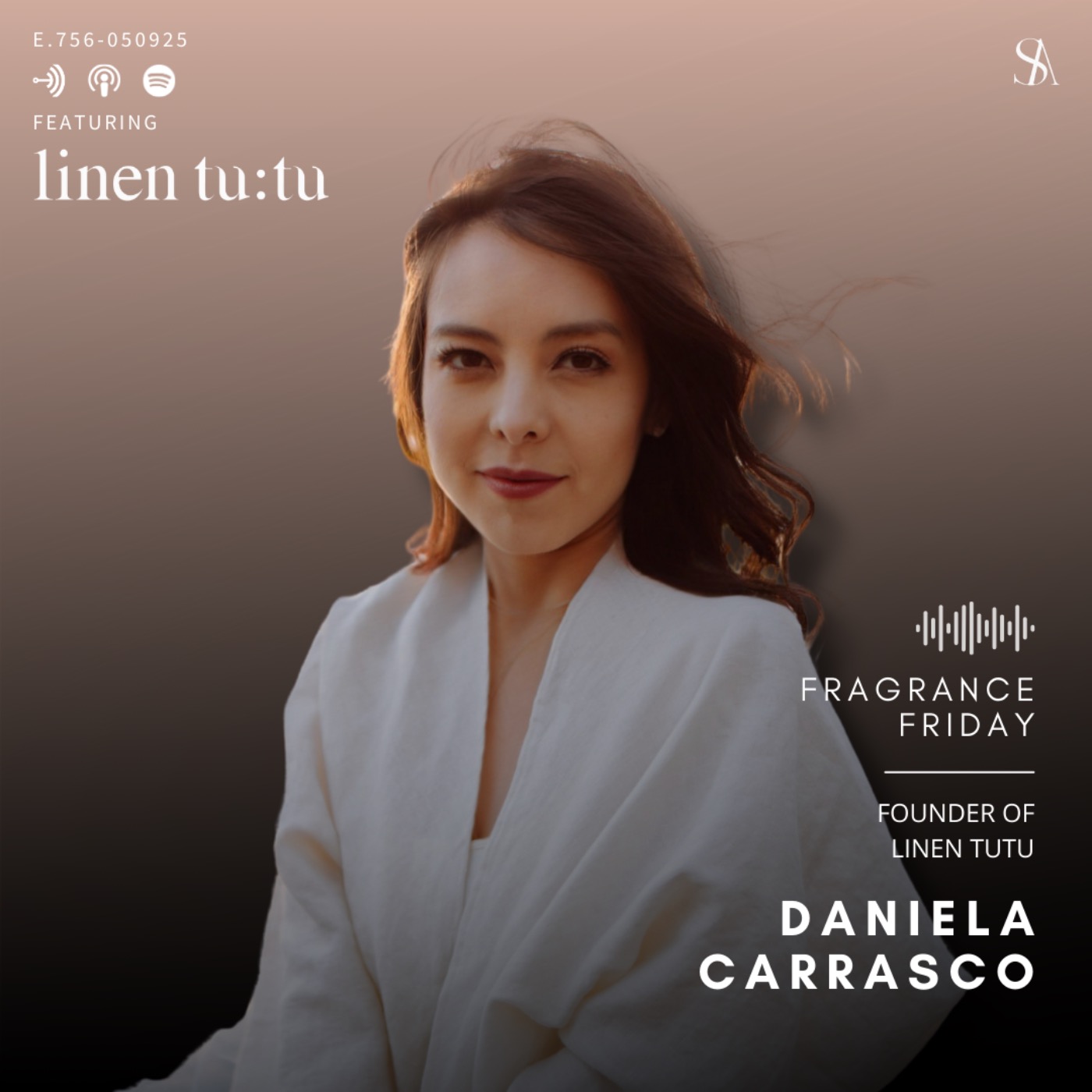
Skin Anarchy
Reframing Our Relationship With Time Through Fragrance With Linen Tutu
00:40:19
Fragrance Friday
Loading summary
Transcript45 lines
- [00:01]
Ekta
Hey, guys, welcome back to Skin Anarchy. This is Ekta. I'm really excited because this is a Fragrance Friday episode, and we're gonna be introducing you guys to a brand today that I've absolutely fallen in love with, especially one fragrance specifically. It's just a beautiful, luxury, niche brand. And I think that's, like, for me personally, that's when I feel like I found the hidden treasure, you know, in the fragrance world is when I can discover beautiful brands that are very niche, but they're extremely well crafted, you know, so this is one of them. So without me ranting too much, I want to introduce you guys to the founder of Linen Tutu, Daniela Carrasco. Welcome, Danielle. I'm so honored to host you.
- [00:37]
Daniela Carrasco
Oh, thank you so much. I'm so happy to be here. Big fan of the podcast and I appreciate all the kind words.
- [00:44]
Ekta
Yeah, no, I mean, they're. I mean, they're well deserved. You've created such a beautiful brand, and I can see how much of yourself you've poured into this, you know, the creativity. Because like I said, you know, I kind of already shouted out one of the fragrances going called Afterthought. And for anyone listening, you know, if you're looking for the first thing, you know, the first fragrance, look for this one is so. It's beautiful, it's complex, and I can't wait for you to explain the vision to us. Right. Of the whole brand. I would love to get started. Can you tell me about your background? Because it's really interesting, you know, like the way you're approaching fragrance.
- [01:17]
Daniela Carrasco
Yeah, sure. So before I got into technical perfumery, I found the world of scent through aromatherapy. This was almost a decade ago. I was kind of going through a period of time where my anxiety. I've always struggled with anxiety, but it was at an all time high. And I was. I somehow stumbled into an aromatherapy course in New York City at the time. And honestly, just my life has never. I mean, this sounds like a cliche, but my life hasn't really been the same after that. It finally gave me a way to quiet my mind. Like, I'm kind of person that struggles with, you know, when people say, like, oh, quiet the mind, you know, I. I'm like, what does that like? I don't know what that means, but when I'm immersed in an aromatic material, I finally, like, understand that it's the only way I can actually, like, be present and focused. And so it really transformed my life. So it kind of found the world of scent through that. I Had always been interested in aromas. And like, you know, looking back in hindsight, I could see that a lot of my childhood I was curious about it, but I just maybe didn't have a forum to explore it. Aromatherapy. So I did become a certified aromatherapist. And, and I'm, you know, I'm talking about like, not, not necessarily the woo stuff, nothing wrong with that. But like actually studying the like clinically backed effects of certain aromatic substances on the psyche.
- [02:44]
Ekta
Right.
- [02:45]
Daniela Carrasco
Which is, which is a very different. I feel like sometimes the word aromatherapy gets tossed around, but like there are actually a lot of really interesting studies that try to, to distill and unpack the effects that. Yeah. Different aromatic substances can have on mood, on how you feel. Right.
- [03:01]
Ekta
Yeah, 100%. Yeah. No, I know, exactly. I think like a couple of times I tried to bring this topic up before, but like you're, you've explained it so perfectly. Is that it's real. There's. This is real. You know, there's a science to this. And like, that's where I feel like aromatherapy, you're absolutely correct, is that it gets kind of misconstrued, you know, and that like we're talking about like essential oils and we're talking about, you know, all this like incense stuff or whatever. I don't know what people perceive. Right. When they hear aromatherapy, but I agree that it's much more structured than what we realize.
- [03:35]
Daniela Carrasco
Yeah, a hundred percent, 100%. There's the like kind of more clinical practice which is like if you have a muscle pain or like a physiological symptom that. And aromatherapy does have its limits with this for sure. But like, you know, having a muscle oil that may. With some ingredients that, that can help, you know, calm it or reduce pain, you know, to. Again, to a certain extent. And that part was interesting to me, but not. I was not as kind of enamored by it as the other part of aromatherapy, which is more the emotional piece and the esthetics. Right. Because to, to convey a feeling or an impression, an emotional or. Yeah. Impression. You really do need to consider the aesthetics of an aroma, that of a formula that you're putting together. And so that opened up my mind into like, wait a minute, this is actually like, this starts to veer into the direction of perfumery. So I began, you know, in the US it's tough because we don't have a lot of like formal programs for perfumery. I mean, there are really great courses and really amazing organizations doing the good work. Like the Institute of Art and Olfaction in LA is a big one. Karen Gilbert, who's based out of the uk, she runs an online program. She's fantastic. So I learned a lot from her. Her there's like, there's a number of experimental perfume club also based out of the uk, so you can, over course of time, like you can build your own sort of curriculum. But it is actually pretty challenging, especially at that time. Now there's more, but it was pretty challenging to find like courses and textbooks. And so I spent years really trying to like study this, practice it, building my lab and my studio, building my perfumer's organ and kind of. It sort of like went in that direction.
- [05:23]
Ekta
Yeah, yeah, no, that's really interesting, like how you said that, though. I don't want to interrupt, but like, it reminds me, you know, what fragrance has always reminded me of. I'm a big, like computer game geek. So like, it's always. I always reference like MMOs. But like, alchemy is what it reminds me of. Like alchemy, like, it's really a craft like you. And I don't know how you would teach that. You know what I mean? I know that there's like you said, like, I think Europe very, is very good about having like these, you know, kind of an institutional system where you can learn and you can really. But yeah, we have nothing on the US side. I. I haven't seen anything either. So. That's interesting that you said that.
- [06:00]
Daniela Carrasco
Yeah, yeah. And you know what, what's interesting about that is it's kind of led to this, I don't know, exploration of perfumery in the States that is very creative because we have a less structured way of learning about perfumery. I think in some ways, like, yes, on the surface it's a limitation, but if you go deeper, it can also be a source of creative freedom because you kind of. You don't know what you don't know, and like, maybe you're more free to explore certain things. And so it's led to like, a different genre of independent perfumery in the us which is super interesting. But so I was kind of still, to be honest, like, craving a more. I'm a nerd, I have to tell you. Like, I love school, I love textbooks, I like learning. Like, if I could be a student my entire life, I would. And so I was craving something a little bit more structured. And I found a program at Parsons School of Design. It's a strategic design program, but big part of its curriculum was about multisensory design. And so I thought, this is interesting. And I met with the program director and she was very encouraging of being able to, within the program, spend some time and really focus my independent study on olfaction. And so it gave me like, a structured learning environment in more of like an art school setting to really. Yeah. Explore my. And define my perspective on perfumery. And I loved it. It was. I mean, it's been. Yeah, it's been really transformational for me.
- [07:26]
Ekta
That's really cool, though, because I feel like there is this, like, unspoken. You have to learn almost like in a classical way, art to like, really understand, like, what fragrances, right. Because I mean, the art and design and all these things are not. It's a totally different thing that we're talking about right. When we're going in that realm. But at the same time, like, fragrance is not any other beauty category. You know, it's like a. It's literally like, you know, when you're painting, you combine colors to make a very specific hue. And like the. There's so much that's happening all at once from the creative angle that, like, you almost do need this classical kind of art background or some sort of training. I think that's going to get your mind in this place because oftentimes what I've noticed, and I'm, you know, I'm no expert by any means, but what I've noticed sometimes with niche brands and I. And this is why yours really stood out to me was because sometimes niche brands can do like. Like one note is extremely strong, you know what I mean? In the. In the fragrance. And it's like, that's. Maybe they were going for something, but it comes off as almost like there's no depth to the scent. And then it, like, doesn't. It doesn't translate for consumers. You know what I mean? I think the way that they think and I always wonder about that, right, because it's like you start thinking about, like, what goes into, like, people can say, like, there's ton top notes, there's, you know, middle notes based, whatever. But, like, what does that really mean when it comes down to the end product? And so that's where I find it to be very. I find the creativity to really shine there. You know what I mean? If someone can create that end product, that's going to give you this, like you said, that multisensorial experience. So having an education in sensory. Right. Is like, it makes sense for this. And.
- [09:08]
Daniela Carrasco
Yeah, 100. And there's so many, like, you know, if you look at the principles of visual design. So if you're talking about, like, contrast and balance and hierarchy of palette.
- [09:19]
Ekta
Right.
- [09:19]
Daniela Carrasco
Of materials, all of those things translate into composing a formula. Like, perfumery is definitely a science too, but there is a lot of art that goes within it. And, like, finding that balance, I personally feel, is a combination of the science and the art. I don't think that you can, like, you can approach perfumery from a very technical standpoint and say, well, in theory, these molecules should work well together. But there's this. If you really want to, like, get to people's, you know, understanding and emotion and, like, move them, I do think, like, having, I don't know, a sort of, like, artistic point of view, and that might look different for everyone, but I do think that it really makes a difference in being able to communicate something, you know, that is more than one dimensional. To your point.
- [10:08]
Ekta
Absolutely. Yeah, absolutely. And so I'm curious though, what made you think of the name? Because the name is very unique.
- [10:15]
Daniela Carrasco
Yeah, that's a great question. So linen tutu is the juxtaposition of two textures that together represent the DNA of the brand. So you have linen on one end, which is a fabric made of flax. It's both bio based and biodegradable in its unaltered form. And then you have tutu, which is kind of short for tulle, like the fabric that ballerina skirts are made of. And this is very fluid. It's transparent. It's kind of like a watercolor. You know, if texture was a visual art medium, it'd be like watercolor. So these two things together, that's really. I think that's a common thread that you see throughout the collection.
- [10:53]
Ekta
That's so beautiful. Oh, my gosh. Wow. I love that.
- [10:56]
Daniela Carrasco
Oh, thank you.
- [10:58]
Ekta
Yeah, no, that's so beautiful. And it's such a. It evokes such a beautiful mental visual. You know, like, I was just thinking as you were speaking and then having experienced your scents, I see it, you know, I see why your scents reflect that, actually. Because. And I want to dive into that, actually. I'm. Now I'm excited because, like, it really. That was a cool experience just now. So, you know, I want to talk about your scents because I think that that's where your brand is. So. So, like, I feel like the amount of care you've taken, it really shows. Right. And the. In the overall way the fragrance is experienced. I, you know, I keep mentioning the afterthought at seven. That one is stunning. And. But all of them are stunning, you know, And I think the reason I'm saying that is exactly what you just described, because when you first experience the scent, for me, I can say this would happen when I first experience that. After that, seven is supposed to be, I think, a marine scent. Right? Like a fresh. Okay, so I. I do experience that. But then it's like you've blended in this beautiful subtlety of, like, floral, and it just comes in, and it's like you ride a wave when you experience this fragrance. And I just. It really did take me on that, like, emotional ride when I first, you know, smelled it. And I'd love for you to explain your vision with this scent and also the whole collection, you know, in terms of how did you do that?
- [12:18]
Daniela Carrasco
So the collection, the debut collection, is four fragrances. There's up at one, Hearsay at three, Lately at five, and after that at seven. Right. And they kind of. Each fragrance represents the human relationship with time. So up at 1 is about anticipation. Hearsay at 3 is about individual presence. Lately at 5 is connected. Presence, like being with someone else or with other people and connecting with them, being present and. And Afterthought at seven is about reflection. And it's really interesting that that one resonated the most with you. I. This is one, I would say I was probably when I was formulating after that at 7, it was a very emotional time period in my life. It was just kind of actually the height of the pandemic. We were still in lockdown. I was. Had just left the city. My husband and I had just left the city. And we were missing people. We were missing places. I was, you know, kind of wistful, kind of missing what I had, but also grateful that now, you know, we. Where we moved, we had a little bit more space, and we were able to just walk over to the Hudson river and kind of, like, unload there and just, like, stare at the water. And there's something about water that's very magical to me. It's very meditative. I grew up in Miami, so I've, for the most part, I've been around water most of my life. And so each one of the fragrances represents a different vantage point. And the way I went about that is in aromatics or in aromatherapy and the therapeutics of scent. But there are ingredients that are more stimulant, so citrus, spices, right. These are, like, invigorating, energizing. And then you have other ingredients on the opposite end of the spectrum that are more sedative. So woods, incenses, Right. These are grounding. They're very calming. I took that. And this is where design comes in. Like, I took that framework and applied it to the collection. So you have like, up at. One has. It's much more of like a stimulating. Right. Stimulant fragrance, has a lot of citrus, it has coriander, so there's that initial burst. Whereas if you go, you know, to the afterthought part of the spectrum, this is more sedative afterthought. Like you. Beautifully articulated. It's a riverside scent. So it's a river take on an aquatic. It's not oceanic, but it is. It's really about a river, which is. And the Hudson river, which is an estuary which actually combines freshwater and salt water, but it's anchored by a lot of woods and there are some florals in there as well, and there's greenery. And so this is a much more reflective and melancholic kind of fragrance, if you will.
- [15:03]
Ekta
Yeah, no, it's so. You know what? I love that you've. You've incorporated time. You know, this is so special because I. I've always said this. Like, I. I've told my family this, my friends, is always my favorite time of day. Is that around that seven o' clock time, because it fe. Like, especially on something like a Friday. You know what I mean? That feeling that you get of, like you're so excited because you're like winding down, but you're just done for the day and it's like, you can't really explain that feeling. It's just like, I don't know. You know, when people ask you things like what's your favorite day of the week? Or what's your favorite time of the day? For me, it's always been because of exactly what you said. It's. It makes so much sense to me psychologically now because I love that time of day because it's not just about like unwinding. It's like you. You take a breath for a minute, you know, and it's like, that's my time of the day where I'm just like, okay, you know, and you sit down and you reflect. And it's interesting what you said about, you know, like the. It's not like oceanic, and that's exactly what it brings forth. It's not like this super strong, like, marine, like kind of, you know, all the. All the fragrances lately that I've smell in this category have been very strong on the marine side. That's why I found this to be Unique, because it's very. Like, it's there, but then it doesn't, like, kind of smack you in the face, you know, it's like, very subtle, and it allows for the other notes to really come through where you feel like it's like sitting in your garden, you know what I mean? And you're, like, casually, like you're smelling different things, right. Whether it's the flowers or the air or the breeze, like you're having an experience. And that's what this evoked for me, you know, when I first tried it, so that it actually makes psychological sense. That's my point.
- [16:43]
Daniela Carrasco
No, I love that. And I love that. I mean, it's so interesting that your favorite time of that 7 o' clock is your favorite time of day. And, like. Yeah, I just, you know, there's so much to unpack there. Like, something about that, right. Something about that feeling of, like, the sun setting and maybe taking a walk outside, like something connected to you. And it's. I love how you articulated the contrast between. Or the difference between something that's more oceanic versus riverside. When you go to the beach, right? You go to the ocean, and I live near the ocean for many years. That is the main event. Like, you were there for the ocean, right? You're there to be on the beach. When you take a walk near the river, it's. I mean, yes, you want to be near the river, but there's so much happening around you. Like, there's a lot of greenery. Like, maybe it just rained and it's a little bit dewy, and there's like. There's just so much more. And so the river isn't. It's not as much as, like, the main event as everything else. Like, it really works very. In a very balanced way and more in unison with the other botanicals in the environment.
- [17:44]
Ekta
Yeah, yeah. No, I. It's really, really unique. Now, I want to ask you, like, I want to explore the whole idea because, you know, you said, you've said before that your work really explores the human relationship with anticipation, presence, reflection. How did you bottle this up? I mean, this is a very deep concept, and I think that's kind of the. That that resonates throughout your. Your brand and, you know, what you've spoken about so far. I mean, how did you really bottle this up in a fragrance?
- [18:12]
Daniela Carrasco
Yeah. So, I mean, I think, you know, a big part of it is. Is that stimulant to sedative framework or spectrum and just kind of taking that and finding parallels. So. And in the design world, that's something. I mean, that's a tool I love to use, is like, finding analogs and parallels in the natural world around us to kind of guide the creative process. So I, I. When I was formulating, for example, you know, up at 1, I knew that this is a Saturday morning, right? Like, you're waking up late on a Saturday morning. You have the whole weekend ahead of you. What's that. What's that feeling that you have when you first open your eyes? You first wake up? There's this sort of, like, rush of energy. There's the optimism, right? And so if we look at that spectrum and, like, what's more, what is energizing? What's invigorating? What are the molecules or the raw materials that, you know, and I. And part of it was also just looking at studies, like, what has been proven to have an invigorating effect or a stimulant effect. And so this one has a lot of citrus, and it's very aldehydic, and it has, like, this initial burst. But then, you know, I took some creative liberties because I know in the real world, anticipation, right, is really beautiful because it's this, like, pristine picture of what the future can look like. But as. As time goes by, the reality, like, it may be beautiful as well, but it might be a little bit different than that initial burst. So when this fragrance dries down, it's much more creamy, and it's a little bit more like a blanket, and it's comforting. And so that. That wave, that, like, contrast of the. The lived experience of anticipating, you know, I baked in. So it's a combination of, like, the science of, like, what's a stimulant, what's sedative? And, you know, in between, like, the. The ones that are about presence, like, hearsay at 3 is about individual presence, lately at 5 is about connected presence. Those kind of have to have a mix of both, because I do feel you need, you know, that. That balance to be able to be present in life. I think the other, you know, the other thing I will say is the human relationship with time and the passage of time and is something that really intrigues me and really inspires me. And I think it's something that we humans struggle with partly because it's tied to our own mortality, kind of. It really is tied to our mortality, which is a scary thing. And it's something that I feel many of us grapple with. We live so much of our lives. And I'll speak for myself, I Know, I've lived a lot of my life focusing on the past, what I could have done differently, or focusing on the future to come and trying to be present. But I have a really hard time being present, if I'm honest. And so our struggle with time ends up being a source of stress. And through this collection, I wanted to actually reclaim that and transform it into a source of awareness or even a source of empowerment. So that kind of, like, all of that formed the inspiration for what ultimately was bottled.
- [21:19]
Ekta
That's so cool. I love that. I love everything you said. And I think that's so valid. You know, this. This idea of time is so closely tied to our own mortality, but also it's so tied to our perception as well of everything. You know, it's like we accelerate our own time. We also decelerate. You know, it's like there is this whole phenomena going on with the human experience when it comes to time. It's not just about like, okay, well, it's noon, and noon is experienced the same way everybody experience. You know, everybody doesn't experience different times of the day the same way, just like we don't experience different events in our life the same way. Right? So it's like that there's a fluidity in time. And fluidity is like, you know, exactly what I was trying to explain to you, like, earlier, you know, when I was saying, like, seven o' clock is my favorite time of day for my own reasons, you know what I mean? Because it evokes this feeling in me that causes me to feel happiness or, you know, calmness or just reflection. Right. Like, those things are not easily explained. So I really like that you brought time into the equation here. Because I think sometimes when you're not able to explain the emotions or our experiences, we can kind of do it through reflecting on the time period in which that thing occurred, if that makes sense. You know what I mean?
- [22:35]
Daniela Carrasco
I love that.
- [22:37]
Ekta
I think that's the whole idea of presence, right? It's like. It's like you're the people say be present. And it's like you're always present. But it's like, when do you notice that you're present? It's when something in time has caused you to experience something that makes you notice your presence. So you know what I mean? And so that's where I feel like the fragrance world is so powerful and it has so much strength behind what, you know, what you're able to do with fragrance, because it will pull someone in and you'll really experience presence. There. And then that's when people say, oh, yeah, scent is tied to memory. Yeah. That's why it's tied to memory, because you were pulled in for a minute. You know what I mean? And so that's. I love it. I love it. I love that you've. What you've done. And. And that is real thought. You know what I mean? And creativity. It's just beautiful how you've crafted this.
- [23:29]
Daniela Carrasco
Thank you.
- [23:30]
Ekta
Yeah. You know, I want to talk about, like, how it was for you to create a brand that is obviously, you know, it's. It's beautiful. I mean, the products speak for themselves. Right. But also, you're doing this. This approach of, like, it's biodegradable. All the. You're using botanicals. You know, how was that whole formulation process like for you, you know, from the creativity standpoint point?
- [23:52]
Daniela Carrasco
Yeah. So it was pretty challenging. And I'll. You know, the first thing I'll say is I work with all materials, generally speaking, naturals and synthetics. This collection in particular and this brand, I wanted it to spotlight botanicals for a number of reasons, but it is. It's a huge challenge to formulate using botanicals. So two, you know, initial challenges that come to mind. One. One is just because something is botanical doesn't mean it's inherently sustainable. And in fact, when we're using materials that come from the earth, we have to do it with even more care and respect, in my opinion. Right. We're taking something from the planet, and so we have to have a way of kind of giving back to it and making sure that there's renewability. So this is really challenging. And doing the research in terms of sourcing and suppliers for each raw materials, that takes time. And it's. It's not easy. I don't believe in blanket statements. Right. I believe in nuance. And I think saying, like, oh, all natural materials are this, or all synthetic materials are that. Like, that's not true, nor science based. Each substance, each molecule is unique, and you kind of. We have to treat them as such. So doing the research, supplier sourcing, all of that really matters. So that's. That's one challenge. And then the second one is there's just a practical challenge of a palette restriction. So although I generally work with a full palette inclusive of both naturals and synthetics, that. That generally gives you the ultimate creative freedom. Right. You can use any ingredient. There are thousands of ingredients, and you have, like, this is a very freeing thing. But this collection, as you know, was intended to be bio Based biorenewable, which means immediately you're restricting your palate to a much narrower set of ingredients, which is a restriction on how you formulate, how you create what you're using in each of the fragrances. Now one caveat to that is, or one addition maybe I should say is there are a number of newer aroma molecules that are coming out that are actually bio based and derived from renewable feedstock through fermentation, for example. So like the ambroxide that I use is developed through fermentation. And I believe the, the origin source or like the feedstock is sugar cane. And so I think this is really cool. A lot of the big fragrance houses have invested in green chemistry over the past, I don't know, however many years, 10, 20 years, maybe more. And so over the past several years, we're seeing more and more ingredients added to the palette that are biorenewable. And so this has expanded the palette of like botanical or, you know, naturally dry derived materials that you can work with for a fragrance that has a brief or a kind of creative palette restriction that's specific to natural. So those are the, I would say like the two initial challenges that come to mind. But yeah, it is, you know, sometimes you say like, for example, if, if I don't have this restriction, oh, I want a base of a lot of different kinds of musks. Well, there aren't that many musks that are available like plant based. Right. So not animal products, but like there aren't many that are available in the natural palette. And so you, it kind of this restriction I actually find to be sometimes a source of inspiration for creativity because you kind of have to get creative in terms of what you blend together, what you combine and maybe like even question how things have been done before and like try something new. And so that part I find really challenging and fun.
- [27:36]
Ekta
That's really cool actually what you said, because it kind of makes me think of how, you know, like I think like personally speaking, I think biotechnology is the future, you know, when it comes to a lot of different, you know, industries. But I think also there is this beauty in, you know, when we're talking about something like botanicals. Right. Like I've always thought this, like when nature creates something, there are so many layers to that, you know, and so you're going to discover like a fractal. You know, everything's like, it's like one thing that reflects the same way on a smaller scale and you can't keep read. It's like you, you know, it's much more than, like, peeling back layers. That's not even, like, the right, you know, phrase for me to use. It's like you're rediscovering molecules by experiencing the first ones, right? So, like, that's how nature works in general. That's just science. And so I think there's a real beauty in that when you're working with that, you know what I mean, from that angle. But I. I'm genuinely curious to see, like, where this industry goes in the future of biotechnology, because I think, like, if we could figure out how to do that in a sustainable way in a lab, that would be amazing. And then, like, link that up with, like, neuroscience, right, where you're able to then see, like, the parts of the brain that light up when you do experience, like, you know, what you've created with your sense. Like in this collection, like, if you could neuro image somebody experiencing a fragrance that's supposed to evoke, like, you know, something that's more like, you know, enzytic or something, right? Something like that. That. That's powerful to see that. And that then can guide, right, Biotechnology. And so I'm very fascinated by this. This whole bot world, you know, because of that. Because, you know, we've used botanicals in so many areas of just human innovation. You know, look at our medicines, you know what I mean? Look at everything that we've discovered in terms of like, even, like, penicillin. Everything comes from this place of extreme complexity, you know, and botanicals are definitely a reflection of that. So I find that to be very unique, you know, with your brand that you did this. And it doesn't even reflect, actually. Like, it shows that you have very precision in your formulas. Actually, you know, it's not messy at all. So I'm very intrigued by this. Oh, yeah.
- [29:46]
Daniela Carrasco
Thank you. I love how you articulated this, like, what the future can look like. I completely agree. I think biotech, right, having more, having access to a palette that's increasingly renewable and combining that with the neuroscience of things. And I feel like there are pockets of that happening. But I love your vision of putting those things together. I think that could be the next, like, this could be the future of fragrance, you know, I mean, it would be a dream.
- [30:14]
Ekta
I'd love to see it, you know, because that would be so, so powerful. Even from, like, the stance of, you know, people talk about there's like, Eastern medicine, Western medicine. Well, a huge part of that is fragrance, actually. You know, like, a huge part of it is like, neurocognitively. Like your brain completely lights up when you, like, smell really good food or, like, you go somewhere that you remember, you know, And I don't know why we should be investing in that in this industry.
- [30:40]
Daniela Carrasco
I agree, I agree. I do think that's the future. And you hit on something else that I find really, it has been kind of a personal, transformative experience for me. Working with a lot of naturals for this collection is. So I find them, as I mentioned before, more challenging to control. And part of that is, with synthetics, you're talking about an individual molecule, an individual chemical constituent, right. Most of the time. And so you can be much more precise. It's easier to scale, it's easier to replicate a formula that has a lot of synthetics, naturals, Right. If you look at the gcms of a, for example, lavender oil, right. You're going to see a number of chemical constituents within them. Linalol and a low acetate, coumarin. Right. And so being able to look at that and say, well, if I'm going to formulate with this ingredient, you, like, I need to kind of like follow, like, ride the wave of ingredient that that exists, right. So if I want to take that lavender and make it more floral, I would push the Linalol, right? So maybe have more Linalool in there. Or if you want to push the freshness, you can dial up the linole acetate. And so for me, in my personal life, you know, and I'll be really honest, like, I struggle with control. If I feel like I don't have control of what's going on, of my plans of the future, it's something that I grapple with quite a bit. And when I'm formulating with naturals, it's kind of like a very humbling reminder that I have to ride the wave. Because control can also be a barrier to creativity. And if I relinquish a little bit of that control and go with the flow and kind of like move to the march to the beat of the ingredients drum. Instead of trying to, like, super control everything, you can explore creative territories that maybe you wouldn't have otherwise.
- [32:37]
Ekta
That's so real. Yeah, I love that. I love that. I completely resonate with that. Because, you know, some, like a mentor told me a long time ago, I'll never forget this. Like, I was, like, so young and this is like, totally in another, you know, it's. This is medicine. But they were talking about how, like, there's no better machine than the human body. You're never going to learn more than you're going to learn from what naturally happens exists, you know what I mean? Because it's like, like that idea of like, there's so much complexity, but there's so much precision, you know what I mean? In the, in, in all of it, it looks like a big gray area. It just looks like, well, this is just a lot of different. But no, it's very precise, you know what I mean? And that's why I said what I said about your, your fragrances. There is a precision. You can smell it, you know what I mean? It's not like your everyday marine fragrance. It's not like you're, you know, another floral scent in your collection. It's very apparent that you've done this, you know what I mean? The way of, like you've tweaked it perfectly. And I can smell that because of the way that the fragrance lingers. You know, I'm like, I am no fragrance expert, you know what I mean? It's very. It's actually hard for me as a consumer to articulate what fragrance actually makes me feel. But one thing I do recognize as a consumer is when something can, it gives you an experience, but then it also lasts in a very unique way. You know, that's what they call, I think, when they say a scent feels like it's lived in, you know, that's what I mean that, to me, that's what that means. So, like, I experience that with your collection, you know, and that's very difficult to achieve because you're essentially replicating what we see in nature all the time. And that's the hardest thing to replicate, you know what I mean? Like, that's like nature is the most exquisite thing in the world, you know, so it's like, I. I don't know, I. I find it to be so fascinating that you've been able to do this. And you know what's really cool? What's really cool is that you mentioned that you have struggled with anxiety. I mean, that's not cool that you have to do that. But it's cool because I've noticed that people who experience anxiety have this ability to filter. Like they're. You're hyper aware of like everything, you know what I mean? Like, the nuances of every situation. I myself have. Have had anxiety. So, like, I know that experience of like, you, this emotional, I think, I don't know, like change in life as you're experiencing it, where it allows you to decipher or notice things. Maybe another person wouldn't Notice normally and so those little things stand out more and that, you know what I mean, like, that adds to like your own understanding. So I, I feel like I can see you in your collection. You know, the way your personality might be is reflected in this as well. So that's very cool.
- [35:15]
Daniela Carrasco
Oh, that means a lot. But that went straight to the heart.
- [35:18]
Ekta
Oh no, I really mean it. I, I just, you know, like I said, I'm not the best with words but you know, I'm noticing certain trends, you know. But I would love to talk about what is the future for linen tutu. Are you working on another collection or are you, you know, coming out with something in the near future?
- [35:34]
Daniela Carrasco
Yeah, so there is a. Yeah, there are a couple things I'm working on. So longer term there are, there's a collection, maybe more I kind of. And maybe you picked up on this. But like I kind of like to work in concepts so it's really hard for me to be like, oh, like this ingredient is trending next year. Let me create a fragrance around that. Like that's just not my, that's not how I roll. I need to be inspired. I need to have like a, a concept for. I need to like really like over analyze the concept and, and be able to communicate it through scent. And so I'm exploring something that's a little bit more long term. But in the meantime there is a short term update which is actually something that's launching next week. And this is a limited edition seasonal body oil and it is lavender cookie is the scent. It's inspired by a trip I took to the south of France. It's a little bit aromatic and it's also a little bit bit edible. It has both like lavender notes and lemon peel pastry notes. So cookie and candied ginger. And it's what I love about the format of body oil. A, it lends itself to self care. Right. There's a whole, there's like the application of it is just, it's very like you're taking care of your body, you're nourishing yourself. Like, and so I really love that. And it's also kind of a less serious format than like, like an edp, right, where I can just kind of have fun with it. And so I'm toying with the idea of having more like seasonal limited edition runs.
- [37:12]
Ekta
I love that.
- [37:13]
Daniela Carrasco
Or like bursts of inspiration and yeah, we'll see how it goes next week. We're launching it so.
- [37:18]
Ekta
Well, if anyone's listening, this is probably around the time that it's Launching. So, you know, this is really. That's really cool. I mean, I. I love that you're. You're kind of going with the seasonal thing. That's really neat. And I like seeing that, actually, because it's hard to find. I mean, I. You know, this especially for when we get into summer months. Like, everyone's always trying to do, like, a summer scent or like a body mist or something. I always see these launches, you know, that come out, and I'm like, God, can we stop doing this over and over again? You know what I mean? Like, let's get something new, you know, rotating here.
- [37:49]
Daniela Carrasco
Yeah, exactly. And there's something, like, really, I find interesting about just having a limited run of something, and then, like, that's it. It, like. Yeah, you know, like, that's okay. It's like with wine, right? Like, there's a certain vintage, like this vintage, right? Had, you know, the climate was X, Y and Z, and so therefore it produced a wine that was blank. And once the wine runs out, like, that's it. You'll never taste that vintage of the wine again. And there's something beautiful about that. And I think that that's okay. And I feel like, yes, of course we want collections that will be around forever, because if you find a scent that you love, you want to be able to repurchase it. But I think that mixing that with, like, things that are maybe more fleeting and, like, don't have to be around forever, like, that's life, you know, like, that's okay, too.
- [38:40]
Ekta
Truly. Yeah. You took the words out of my. I was like, yeah, because life is truly fleeting, you know, it's like, yeah, I love that. I think that's so, so cool. And I think it really adds to, like, the collectibility of, like, fragrances. You know what I mean? Like, that is really, I think, a lot of fragrances, people that love fragrance. You collect perfumes, you know what I mean? There's a lot of lot in your collection, and you like to have options. That's a really cool way to expand your entire collection, I think, is to have pieces like that. Because then you're able to say, like, oh, this is that, you know, one memory that I have, and I can, you know, evoke it whenever I want, but it is limited. So there's beauty in that. I like that. So, yeah, no, I love it. I think that, you know, what you're doing is really, you know, it's really unique. I mean, I don't know how else I can describe it. I just. I've fallen in love with your brand. I think it's just very truly a breath of fresh air, you know, especially in the niche category, the luxury category of niche fragrances. I love discovering scents, you know, but it's very difficult in the world of, like, big fragrance, because big fragrance is like, I think it's just too much sometimes, you know, with what you experience, it's like you can't really put your finger on it. Like, what are they trying to evoke for me here? You know, that's my experience. Like, when I go into, like, a retail store, for example, you know, and I spray something, I'm like, I don't know, you know, I can't figure out if I want to keep this or. Or what. And so that's always been my experience as a consumer. And that's why I think when I talk about niche fragrances with people, it's like, I don't know, it just kind of. It feels more special, you know, it's really cool. But yeah, this was wonderful. Thank you so much for your time and I love chatting with you.
- [40:16]
Daniela Carrasco
Likewise. Likewise. It was such a pleasure. Acta.
- [40:19]
Ekta
Yeah. Hey, guys. So I hope you love that episode. Please make sure to hit subscribe if you're tuning in to us on any podcast platform. We are available on so many different platforms, so wherever it is that you're tuning in, just go, hit subscribe. You will be immediately notified when we publish new episodes. This way, you're able to tune in to amazing insights from experts, brand founders, industry leaders, authors, all the wonderful people that we host. And that's very important. Important for me because I love to hear from you guys and really understand what you love and what you want to hear more of. Also, make sure to give us a follow on all of our social media outlets. We're available on Instagram, TikTok X, you name it, we're there. We also have a blog on Medium. So if you're a reader and you love Medium blogs, check us out on Medium. We publish some really great articles on there that do deeper dives than just what's available on the podcast. And it's really a great place for all of you science geeks out there that want to learn a little bit more. We go above and beyond with our research and making sure we're bringing you information that you usually probably won't hear about in other outlets. So check us out, leave us a comment, leave us a review, and we'll be back next time with another episode. Thank you.