Loading summary
Transcript76 lines
- [00:00]
Ekta
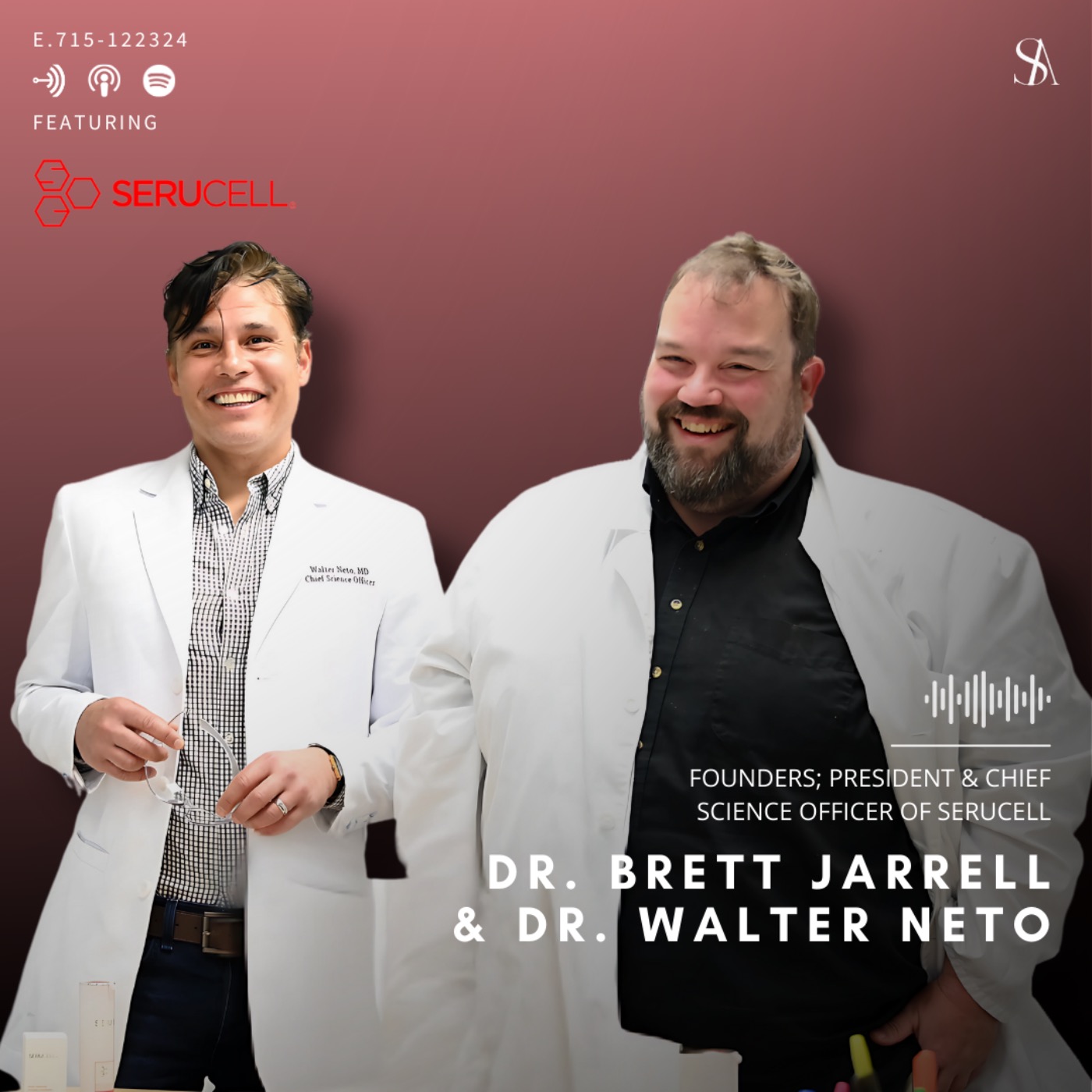
Hey guys, welcome back to another episode of Skin Anarchy. This is your host, Ekta. And I'm really excited to introduce you guys to a new brand that I've come across lately. And mostly because as everybody knows, we love science backed options here at sa and I think rightfully so, because the skincare industry is growing so rapidly and there are so many options. And I think with all the promises out there, it's really important now more than ever to lean on science and to follow it, you know, when it comes to true innovations in skin health. So with all that said, I would love to introduce you guys to the co founders of the brand, Serousell. I have with me today, Dr. Walter Netto and Dr. Brett Gerald. Welcome, Dr. Netto and Dr. Gerald. I'm so excited to host you.
- [00:41]
Dr. Walter Netto
It's a pleasure, it's a pleasure to be here. Thank you so much for the opportunity.
- [00:44]
Dr. Brett Gerald
Yeah, thank you.
- [00:46]
Ekta
Yeah. No, it's an honor to host you both and to learn from you today. I'd love to understand more about how you guys came to the decision to begin Sericel and where all of this did innovation and the vision started. If you could kind of walk us down memory lane.
- [01:01]
Dr. Walter Netto
Yeah, sure. I'll let you know a little bit of my background. So I'm a licensed physician. My background is in general surgery. Also specialize in wounds. I started doing research about 30 years ago, started doing medicinal plants research into the rain, into the Brazilian rainforest where I am originally from. And then I then from that, you know, went to doing cancer stem cell research, bone engineering and skin engineering as well. But over the last few years, about eight, nine years, I've been working on cct, which is cell communication technology, which is the programming of the body, which is how, you know, what, like how your cells communicate and what happens as you get older and then, and then suicide was basically born out of this work that I have been done over the last few years. Focus on cct.
- [01:53]
Ekta
That's really exciting.
- [01:54]
Dr. Brett Gerald
This is Brett, ER physician, still practicing, and biomedical researchers as well. My mom was a biology professor. I have a graduate degree in biology and I did a lot of work in the lab and I've been friends essentially since college. We find something that interests us or if there's a question that we find fascinating, we tend to go down these wormholes and that was kind of ignited for Serousil. Walter was doing some really cool stuff, trying to understand how wounds were operating, how, how they actually function in real time. And so we had a lot of conversations just discussing how how cells interact with each other. And that's, that was. So we pursued this and that's, that's how we are evolved to this today.
- [02:44]
Ekta
Yeah, that's very exciting actually, because I think this cell to sell communication aspect, I've never really seen it addressed, you know, in the OTC space. We don't get the chance as consumers to learn as much as I think you would, you know, in medical school and graduate training. But I would love if you guys could kind of give us a one on one, you know, on this is this aspect of truly like what is, what are the hallmarks of wound healing and what are, what were some of the things that were kept in mind when you were crafting the brand and coming up with the formulations?
- [03:14]
Dr. Walter Netto
You know, one analogy that we love to use that, you know, I think everyone is kind of familiar with is comparing the body to a computer. You know, you have the hardware which is, you know, your organs, what you can feel and touch, but you have the software as well, which is the programming of your body. Now as we get older, this programming just start accumulating errors just like, you know, you have a computer and then, you know, everything works well. And then 10 years later, the computer doesn't run as well anymore. And then you download the new Windows version, then suddenly everything works well again. It's basically the same principle. Your programming, you know, your cell programming, you know, the way that your cells communicate when you, when you're younger, they are vibrant and the cells communicate in a very robust and a very healthy way. And as you get older, this program is start accumulating arrows and things don't work the same way. And it is the same way with aging. And what we wanted to do, update your cellular programming. And then your aging cells, in a way they start to remember the way that they used to behave the way when they were younger. And that's when you see an increase in elastin and increasing collagen. You see some, some of the reverse aging signs that we all have, like you said.
- [04:40]
Ekta
And I'm thinking back to my old computer, you know, from like 2001, and how you would defrag the hard drive or something, you know, because I mean, it's a really, it's a great analogy. And you know, I know right now, you know, longevity science is kind of taking off and they're talking a lot about like methylation of DNA and there's a lot of things going on.
- [04:58]
Dr. Brett Gerald
One of the things that's interesting is we don't really, we don't think about aging until we start seeing the ramifications of aging. You know, cell cellular aging probably starts in the early to mid-20s when you're invulnerable. And so you don't really notice the effects of these compound issues. You know, be it diet, rest, uv, light pollution, alcohol, smoking, you know, whatever you throw into the mix. All these things are having direct impact on, on health and in this case specifically, skin health. And your body, when you're young and vibrant, you don't notice this stuff and then all of a sudden you're faced with the, the ramifications, so to speak.
- [05:38]
Ekta
Yeah, it kind of like builds up over time, you know.
- [05:41]
Dr. Brett Gerald
Absolutely.
- [05:41]
Ekta
I know in skin health, I'm sure both of you are pretty familiar with it, but for consumers out there, we talk a lot about like micro trauma. And you know, people discuss this a lot in a way that I think is they're using it as an umbrella term. But I want to further understand from a wound healing perspective about this concept of micro traumas. You know, I know you just mentioned UV light. Right. And I think along with that comes things like, you know, physical exfoliation, little nicks and tears that we might get in our skin. So how does wound healing play a role in our day to day skin health and just kind of, you know, repairing these little micro traumas?
- [06:17]
Dr. Walter Netto
I think that like, you know, in order for us to understand aging in particular, I think we need to understand what actually happens on your skin in the pathology level. Right. When you look at the natural slides. Because we have actually done biopsies and trying to figure, figure it out. And you know, and that kind of, you know, makes me think of an.
- [06:37]
Dr. Brett Gerald
Article, no animal testing. The biopsies were on us.
- [06:39]
Dr. Walter Netto
Yes. They were not on us. That is true. Yeah, but, but you know, like, you know, there was this L'Oreal study that was basically conducted on the 1980s. You know, they're really trying to understand what is the difference between somebody who is 18 and somebody who is 60 when it comes to their skin. You know, what, what is the difference? So they actually saw a decrease in elastin, that which makes your, you know, your screen in that elasticity that we all naturally have when we were younger, you know, a decrease in collagen. And we also see change in what we call like the red ridge. You know, the red ridge is basically the, the interface between the two layers of the skin that we have. So basically on the skin we have two layers. We have the dermis, which is the deeper layer. It's made 90% of this particular cell type named fibroblast. And that is the epidermis, which is the top layer where you can feel and touch. And that's made 90% of this other particular cell type named keratinocytes. Now the interesting part about these two layers is that the epidermis has no blood vessels, two skin. So these two layers are communic communicating basically at all of the time. You know, when it comes to a wound, when it comes to any kind of stress that basically creates them to do particular interface that you have when you are younger, they. They almost look like Lego locks. You know, they, you know, the two layers connect each other and they are almost in an undulating pattern. When you get older, this undulated pattern becomes almost like a flat line skin. You know, it's not con. The two layers are not conn. And that's what causes your thin skin. When you get older, interface is decreased. So there is less oxygen, so that is less nutrient and there is less support going from the dermis to the epidermis, because the epidermis like we're talking about is avascular and has no blood vessels. So these are the things that we actually need to understand how actually aging skin is. You know, on a cellular level. We do with serous cell, we take all of that into consideration and what we try to do, you know, we try to mimic what your skin is in a dish. That's why the importance is of the dual cell secretome, of the multicellular secretome that we actually create, because your skin is not a particular cell lines. And that's what also makes us different from having a single cell line secretomes like you see in some other brands. And then we kind of. So we use these healthy cells. We try to replicate what your skin is in a dish. Then we create a stress. Because you only heal when you're wounded, right? You know, being a cut, being in a burn, everything that you do, it is a stress. So when your body is stressed, it start this cascade of signaling, basically make your skin healing. And then we, we do the same thing, you know, on an in vitro or in a dish, you know, in our lab. And then we collect all of this signaling that the cells are basically trying that, you know, to, to. To heal themselves, which you would see normally in me or you, you know, if we get cut or if we get burned. And that's what basically Serocell is. Now what makes us different is that a lot of, a lot of brands out there, they use like A single cell line. I'm not going to mention any names, you know, of particular brands.
- [10:29]
Dr. Brett Gerald
There's a few brands, There are few.
- [10:31]
Dr. Walter Netto
Not many, but they're like a few brands out there. But that's only seen part of the, of the picture because that's not how your skin actually works, you know, and we, we have actually analyzing. If you, if you use a single cell line, either fibroblast or keratinocytes, or if you use the dual cell line, you know, which is keratinocytes and fibroblasts together, the result of the stress, the physiological stress that we created to these cells, it is a way different, it's much more complex, which mimics much more of what the human body can actually do. So what we do is literally we just, we don't really create anything. We just tap on our naturally ability to heal. And that's where serous cell really shines and that's what it's based on.
- [11:24]
Dr. Brett Gerald
One thing to consider is like when people go to their esthetician and they're getting poke, prodded, scraped, burned, peeled, that's all an attempt to injure the skin to elicit a response. We're able to elicit a similar response in a dish. So you don't have to go through all those sort of mechanizations.
- [11:47]
Ekta
I think we've used this analogy a lot on the podcast where, you know, somebody will come on and we're trying to explain to them how does skincare work. And I, you had spoken very wonderfully about this, about the keratinocytes, how they're avascular layer. There's, they're really dead cells, you know, so whatever you're putting on top of them is really like a broth that you put in a cell culture. You know, you're putting the media on top of the cells and you're feeding them. Right? That's the whole idea that people are going for. But it really is important to highlight exactly what you guys explained, which is that there, this interconnection between the dermis and the epidermis and the actual signaling that's happening is what's leading to healthy outer layer skin that we're looking at continuously.
- [12:28]
Dr. Brett Gerald
You bring up a really important part, you know, like when we do our secretome, there's, there's well over a thousand proteins and, and molecules that we are able to, to generate and they all act in concert to maintain a homeostasis. And that, that's, you know, fundamentally that's what the body is trying to do is just Maintain a certain level of cellular activity. These to elicit an injury is to kind of ramp up that, that response. Otherwise the cell is going to be operating kind of as, as it always does. And so, you know, this is the other thing that's great, I think that is unique to our product, is that we utilize. Since we're utilizing skin cells, it's already a language that the body is aware of. As Walter alluded to. We're not adding anything new. We're just augmenting what's already there.
- [13:23]
Ekta
Yeah, no, that makes a lot of sense. And I would love to actually learn more about the KFS complex. I know that's your proprietary ingredient in your formula. And if you could talk to us a little bit about this.
- [13:34]
Dr. Walter Netto
Yeah. So, you know, everything has, you know, comes, comes from the anatomy of your skin. So we take into consideration how the skin actually works, especially with the epidermis being avascular and these two cells interacting all of the time for anything that they do. It made sense for us whenever we were collecting the signalings that we get from these cells under stress. If we could replicate the skin much closer to what your natural skin actually is. And that means these two cell lines working together. And that's what we do. We create this multicellular secretome that resembles much more of your skin, what actually is and what it looks like than if you're using a single cell line. And that's what KFS was actually born. And just going back, you know, when, when talking about aging, you know, I mean, I like to call true anti aging, you know, it's not something that is just superficial. You know, to, to really achieve what anti aging really means, you need to, you know, boost your elastin, you need to boost your collagen. You know, it's something that really is, you know, is on the cellular level. And that actually, you know, comes back to us on the Red Ridge. You know, because some of the biopsies that we have actually seen is that some of the things that we see on the Red Ridge when the Red Ridge gets older, which is the flattening of the line, we have seen some, some of, some, some reverse on that to basically, you know, make the Red Ridge much more like similar and look like when you were younger. So that's what I, we like to call like true anti aging. And we think that we can achieve that by mimicking what your skin is with a dual cell line on a cell level with the stress, which, you know, creates a much more, you know, innate intelligence of healing that we have than if you're using like, you know, a much more simplistic approach, which would be a single cell line mass specs.
- [15:47]
Dr. Brett Gerald
Of our single cell lines. We did keratinocytes, we did fibroblasts, and they. They all produced, you know, unique profiles. But what was really cool to witness is when we. When we co cultured them together, there was actual synergy and there was molecules and proteins created that didn't exist in either of the. Of the single cell line samples. So there is real communication happening. You know, this goes to the, you know, the brilliance of the body and how. How amazing it is. You know, Walt spoke about the Rhett Ridge. Going back on that we see in our, you know, as people continue to use our product, the KFS serum, we see increase in the undulation of the Rhett Ridge. So we're getting more surface area and more repegs, pegs. So you have increased communication, you have increased vascularity, increased oxygenation. That's all going to the epidermis. Interestingly, also, you're seeing below that you're seeing a much more organized cellular matrix of collagen and elastin below the retrigs. So the whole. All. All these cells are responding to this, to these signaling in a positive manner.
- [17:07]
Ekta
The Rhett Ridge, you guys, just for. I know we just. You mentioned undulating, and that's a great word to use just for everybody to understand. It's kind of like your skin taking, like, dips into the dermis. So it, like.
- [17:20]
Dr. Brett Gerald
Yeah, if you're looking at a profile, it's kind of like a wavy line.
- [17:25]
Ekta
Yeah.
- [17:25]
Dr. Brett Gerald
And that, you know, as if you think of a wave wave. There's much more surface area under a wave than there is under a flat line.
- [17:34]
Dr. Walter Netto
And, you know, and. And it is basically the interface, you know, is the communication line between the two layers. And, you know, as we were talking about, you know, because the epidermis is avascular, that's a very important line because everything from the derms has to have to diffuse through this layer to nourish the epidermis. So the red ridge is basically the communication line where everything diffuses from the dermis to the epidermis.
- [18:04]
Ekta
Your top layer, the epidermis, doesn't communicate with the dermis. It doesn't know, like, there's no communication in the body telling it what it needs. You're gonna see levels like the signaling is gonna be completely different because your body's interpreting that everything's fine on the top layer when it's not.
- [18:19]
Dr. Brett Gerald
And like, you know, for example, people using collagen creams and things of that, you know, collagen's a huge molecule. It doesn't penetrate through the skin, you know, because the skin is a huge barrier. So, yes, it acts as a moisturizer. A moisturizer and a good shield, but it's not able to diffuse through and really augment change.
- [18:41]
Ekta
It's. What is it, 500 Daltons limit that if you're putting something on your skin, like, it will not go through. And collagen is way beyond that. We really miss the mark, you know, with a lot of the products we see on the market where, you know, we're just thinking that, okay, if I slather something on my skin, you know, going to eventually glow and it's going to look beautiful and my makeup is going to look great on it. But really, that's not what's going to heal your scars or your hyperpigmentation or, you know, that's. It's not doing anything because again, the same principles that you stated, you know, you're not getting the adequate blood supply and the nutrients that come from the dermis.
- [19:16]
Dr. Brett Gerald
You know, people that utilize our products, they feel some changes initially, but you're not really going to start seeing results for a couple weeks because the skin is turning over every 28 to 60 days, depending on your age. As you increase the healthy signaling over time, that's when you start seeing the results of healthier skin. And there's no magic bullet for this stuff, contrary to what people would say. So we're really very much results driven. And. And so that's where our, you know, our. Our science focuses.
- [19:56]
Ekta
I love that. I. I love that so much, and I'm so glad you guys are bringing that to the space because we need more of that. I think with, you know, I'm sure both of you have seen it, you know, in the world of medicine, I think it's kind of a bubble because you're so used to actual, like, you know, like, medications and stronger, stronger options. But in the OTC space, it's so unregulated, and now people are hitting a wall. You know, I see so many posts all the time where consumers are saying, well, nothing works. You know, I'm going to go apply some beef tallow to my skin. Yeah, like, that's not it. That is not it. You know, you have to keep looking. So what you're doing is so novel and it's so needed in this space because there's. Consumers are very confused. That's What I see every day.
- [20:37]
Dr. Walter Netto
One thing that I love about our product is what Brett mentioned. Like these are all natural peptides, you know, so this is a language that your body understands. So these are not synthetics, like just like you see in, in, in a lot of products out there. So in a way it's a program and that your body already understands. We are just updating and make your body remembering the way that you used to behave when he was younger.
- [21:06]
Dr. Brett Gerald
One thing that's also kind of, I think, cool about our product is, is that it, you see it positive impacts on ages and types, skin types and male and female. Because what happens is the body, you know, whatever it needs, it finds in our serum and then it gets augmented. And so what doesn't need it? You know, it's. So we get a lot of positive feedback where people have tried numerous products, they just weren't ever getting the result they needed. And all of a sudden they are getting something they find that they don't need. Makeup now, you know, like they're almost going down to just, just our serum and they're thrilled about it, which is, it's cool. It's. I work in an emergency room typically, so most of my, my patients are, are not terribly happy. So it's really cool to, to see people, you know, coming back with exciting in and positive results.
- [22:05]
Ekta
At the end of the day, you know, I think what we're all really looking for is for our skin to heal as we age, you know, and I think that a lot of us kind of miss the mark and we, we look over that. But really the skin concerns that I hear about, you know, from just general people that chime in to us, you know, as a show that they ask us, you know, what's going to help with my sagging skin, what's going to help with my hyperpigmentation, like I mentioned before, you know, or like for example, acne is a huge concern. And not just the acne, but like the post inflammatory stu, you know, like the hyperpigmentation, the scars, the pitting. I mean it's a huge problem and there's nothing on the market that is really doing, we're talking about here where they're saying we're going to have to change how your skin communicates, you know, for it to actually heal.
- [22:52]
Dr. Brett Gerald
There's something about aging with dignity and there's a lot of products that people initially have a fond response to, but then all of a sudden there's, you know, they're left with like scar tissue, you know, Some, some pretty invasive things. And, and ideally with our products people are circumventing this and they don't have to experience that. You know, if you're 70, you're never going to look 20, but you could look 40, you know, and that's not an unreasonable ask. If, if you're taking care of yourself.
- [23:24]
Ekta
I want to actually highlight one thing. I think Walter, you said this about the peptides and I, I think this is so important to highlight because all of us know about peptides. So like if you're a skincare enthusiast, you love skincare, you've heard some point, but that's very important what you said versus natural peptides, versus synthetic peptides. And this is a concept I've never heard anyone really talk about where they don't discuss that with your natural peptides. They're actually going to go to the location that they're supposed to go to. There's a lot of synthetic peptides don't possess that I would love to talk to you guys a little about, a little bit about this AI driven approach. I know that you've utilized it in your brand and just I would love to learn more about AI R&D.
- [24:06]
Dr. Brett Gerald
Our technology is, we have six manufacturing patents and so what that is is when we talk about a secretome. So the secret tone for those that don't know is the stress response of a cell. And so what we've, we've done and we're exploring not to get too crazy with it, but what we're doing is like so these secretomes are essentially data banks of your body. And what we do is like when we're investigating a particular thing we will access our secretome and, and we, we educate an AI about it. And that means so say we have problem A and so we try to give as much information to the particular AI about problem A and problem everything that, that's normal about it and then we try to find as many things that are abnormal about it. And then we test the AI to review what we're doing in our, what we have in our secretome to possibly create therapies or possible to address a particular issue. So like you know, one of the things we have a biomedical side of our company that we're using this to look at other organs. But skin is where kind of where our love is because it's where we deep dove with the most hard science. And so this is where we're really pushing and we, we're, we're coming up with some really exciting results.
- [25:41]
Dr. Walter Netto
Multicellar circuitome can stand on its own or it can also be used as a library when you can pick and choose with the help of AI to determine some possible combination to have a terra therapeutic use. We are already on the second phase of that particular process and we actually have partner with Marshall University Pharmacy School to do some testing for us. And we're really excited to the next phase of that, of that project.
- [26:13]
Ekta
I think AI is definitely the next step in everything. Pretty much.
- [26:21]
Dr. Brett Gerald
The thing is providing us is we had reams and reams the, you know, of data and there's just no efficient way of going through it. And AI just provides a tool to evaluate data, look for patterns that you may be aware of or more likely not be aware of. It's not making decisions, it's just accelerating, accelerating data interpretation. So we can, you know, to see what the next step is. It's expedited our research by decades probably.
- [26:58]
Ekta
I think that the more we can learn, the faster we can learn it about skin health, the more likely we're going to get consumers away from this whole like, you know, made in a kitchen skin care and get them real options.
- [27:09]
Dr. Brett Gerald
Oh yeah. I mean, gosh, yeah. You know, Walter and I, you know, used to watch like Shark Tank or some shows like that. You're just like, what is going on? And that was kind of like, you know, when we were crazy enough to create a brand, we're like, we're going to make something that's medically sound and something will be proud of, you know, to put out on the market. And that's how KFS started.
- [27:32]
Dr. Walter Netto
Yeah. You know, like, and KFS is a total spin off of my, of our burning wound healing research and the way that actually we, we decided to develop serous cell is that like, because, you know, since this was created for wounds and, but just learning everything that goes around the wounds and learning about cell communication and how it integrates with the time. Now I was talking to Brett and I was like, Brett, I think that this could have some really positive impact on aging cells. You know, very small batch and we gave it to some, you know, to some friends and family, you know, about 50 to 100 bottles to see. And people went absolutely crazy about it. And that's how Serocell was born.
- [28:13]
Ekta
I, I'll tell you what, you know, I've tried the products and I really love them. They're very nice. Like even on first application, I mean the formulations are very, very nice and very sophisticated. And also obviously the long term refracts are really Butter here. Right.
- [28:27]
Dr. Brett Gerald
Well, at the end of the day, people want stuff that, that doesn't, you know, they want things that impact their life positively. They don't, they don't want a homework assignment. Yeah. It's got to be results driven and it's got to play well with others.
- [28:39]
Dr. Walter Netto
Our product is hypoallergenic. It absorbs very easily. We only recommend to be used first, but you can layer all the products with it if you want to. But, you know, it plays well with others. It does great by itself as well. And, you know, we, we get some really great comments. 1 of people to have a good experience, you know, when they are applying our serums.
- [29:04]
Dr. Brett Gerald
Yeah. I mean, like, even, even our bottle, like, we designed the, the dispenser so you. It's actually overfilled and you get 100 of the bottle. Because, you know, we were reading when we first started that, you know, people buy products and sometimes up to 20% was unaccessible.
- [29:19]
Ekta
Yeah, yeah.
- [29:20]
Dr. Brett Gerald
And we're like that. Well, that's. That's not cool. We try to be really thoughtful in how we created this.
- [29:27]
Ekta
You really nailed it. I mean, I appreciate that.
- [29:29]
Dr. Walter Netto
Thank you.
- [29:30]
Ekta
Yeah. No, it's, it's a great set of products, and I think that it definitely shows that you've put thought into, you know, even the little things, even though the science is hard hitting. But I think when it comes to, unfortunately, you know, with consumers, all of the other stuff also, you know, it resonates sometimes more than it should, in my opinion. You know, but with, with the products, I've noticed everything's great, the packaging's great. That, you know, the application, like, you know, Walter, you're mentioning, it absorbs. It absorbs really fast, actually, into your skin. And it doesn't leave any kind of residue. And it's very, very workable. You know, and I know for a lot of women out there, this is very important for U.S. consumers, you know, female consumers, because we do wear makeup. It's important to make sure your skincare is working with your routine. It's not just, you know, that's, it's not just the only thing you do and then you can't do anything afterwards. So that is a big aspect of it.
- [30:18]
Dr. Walter Netto
You know, we had some makeup artists who, you know, they love our products so much. They all, they, they were using almost as a primer before makeup.
- [30:26]
Dr. Brett Gerald
Yeah. We had, we had an Oscars event a few years ago. We had four winners, evidently.
- [30:31]
Ekta
Wow.
- [30:33]
Dr. Brett Gerald
We didn't know who they were, but it was. We got Some feedback. So that was kind of cool.
- [30:38]
Ekta
That's really cool.
- [30:40]
Dr. Walter Netto
Yeah, yeah, yeah, yeah. We have, we have been in the Oscars bag for the maybe three years.
- [30:46]
Dr. Brett Gerald
Over the last everyone wins back and.
- [30:49]
Dr. Walter Netto
We have also, you know, been on the, the Grammys, on all of the Grammys bags as well over the last three to, to four years. And their response has been really positive.
- [31:00]
Ekta
So you're like the secret that all the celebrities aren't telling us about that it's like we're not hearing about this.
- [31:05]
Dr. Brett Gerald
It's time to, time to let the secret out.
- [31:07]
Ekta
Yeah, letting it out. No more gatekeeping.
- [31:11]
Dr. Brett Gerald
You know that's right. No more gatekeeping.
- [31:14]
Ekta
Believe in the idea that, you know, if you put the science there it's gonna work. And I just, I wish more people would understand that, you know, I really do. Because at the end of the day your skin is an organ. We've said that like I think ad nauseam at this point, you know, on this podcast you have to really treat it like that. So the fact that you guys have such a heavy hitting product, it really brightens my day to know that you're, you're doing it right. What is the future for serious law? Anything that's coming up that you can share with us. I don't want to pry too much, but anything you can share with us.
- [31:43]
Dr. Walter Netto
Currently we have three products on the market. We have our eye serum, our facial serum and our recovery serum which is our post procedure but it can also be used for ultra sensitive skin. But we have nine products already formulated and ready to be launched. We have a next serum which is, we are really excited about that as well. We have a dual sphere exfoliant which we're also very excited and all these have been tested already. We have a hair serum that it is, people are really loving it right right now. And we have versions of both worlds, you know, because as we were talking about it before, our product, you know, KFS takes about two weeks to. So you start seeing, you know, a tuning in your lesson and collagen. But a lot of people want quicker results. So we found a way to incorporate our KFS serum with a topical, almost like a topical Botox. So you can have bad the best of both worlds. So all of these in the pipeline to be launched in the next few years.
- [32:48]
Dr. Brett Gerald
Yeah, so like people if they sign up for our email often we do specials and, and we test new products. You know, if people buy something we, we send other things to see how people like or hopefully not dislike your stuff. But we're always testing and trying new things. Our approach is let's address real world problems with real answers. And that's kind of what drives the products that we design for everyone listening.
- [33:17]
Ekta
If you haven't checked out the brand yet, I will be linking everything in the show notes of this episode. So definitely go check them out. Got the website. There's a lot of information on there as well and some reviews that you can look at. But I really recommend that you guys invest in science backed skin care. I cannot stress that enough. If you're looking for real options and you want to actually change your skin, you want to heal your skin, this is such a solid option for you. Check them out. But thank you both so much, Walter and Brad. This was such an honor to host you and to learn from you.
- [33:45]
Dr. Walter Netto
Thank you so much. Opportunity, you know, because what, you know, we basically don't do almost like no marketing. So, you know, everything that we do is, you know, has achieved to like an organic, you know, a ground, you know, movement level. So being here is a, a, it was a great opportunity. Thank you so much. And we hope that people can try our serum and enjoy it.
- [34:06]
Dr. Brett Gerald
And if people have questions they can email, we're happy to answer. Walt and I don't sleep a whole lot, so we're always available.
- [34:13]
Dr. Walter Netto
Yes.
- [34:14]
Ekta
Yeah. As true physicians. Right? Like no sleep. No sleep needed. Yeah, no, I mean, that's great. That's really great. I love what you guys are doing. And yeah, everybody chime into us as well. We can connect you to the star, your soul team as well. So please let us know if you need anything. But thank you again and I'll be back next time.