← Skin Anarchy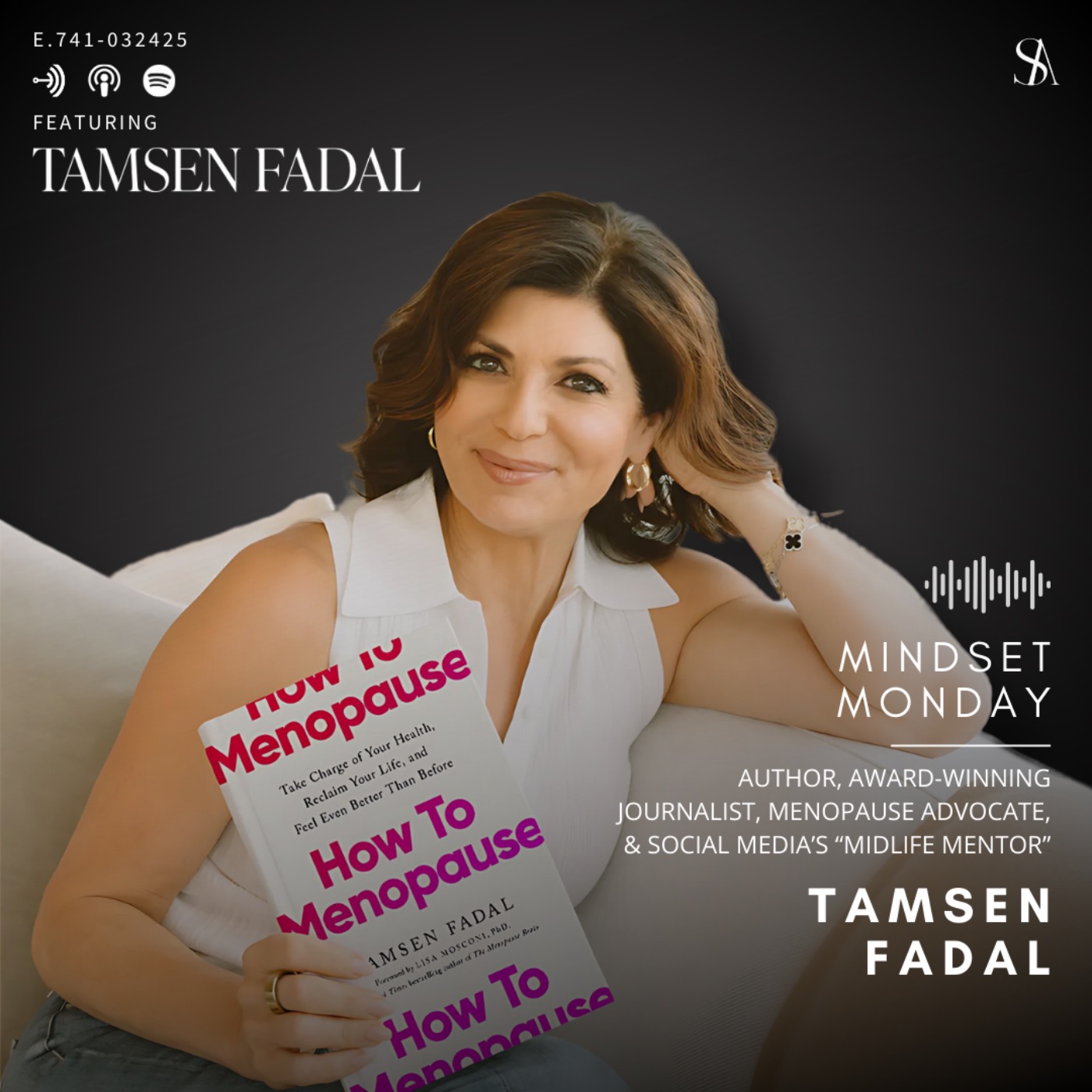
Skin Anarchy
Tamsen Fadal is Redefining Menopause With Her New Book, ‘How To Menopause’
00:21:14
Mindset Monday
Loading summary
Transcript43 lines
- [00:00]
Host
Hey, guys. Welcome back to another episode of Spinanarchy. I'm really excited because we're welcoming back a guest that I truly believe is a leading voice in the space about menopause and the conversation around menopause. She is an Emmy award winning journalist, author, and just so into women's health advocacy. Welcome back, Tamsen. I'm so excited to host you and to dive into your book today.
- [00:25]
Tamsen Fadal
Thank you so much for having me.
- [00:27]
Host
Yeah, it's really. It's always an honor to host you, and I love learning from you. And I'm so excited that you wrote a book. You know, I. I can't wait to learn about it. And that's kind of where I want to start off, is. Can you tell me, like, what led up to you wanting to take the step and go into this journey?
- [00:42]
Tamsen Fadal
Yeah, I mean, I think the journey happened to me, and that's where it really all began. I wound up, and I think I've probably told you this before, but I landed on the floor of the news studio one night not knowing what was wrong with me, not knowing it was menopause at all, just knowing I didn't feel right. Felt like my heart was racing out of control and just couldn't get it together and had a hot flash that was so intense. If you've had one of those, you know exactly what I'm talking about, where your whole body just breaks out into a sweat. And, yeah, it was a scary moment. I went doctor to doctor thinking, what is going on? I've been having problems sleeping. I've been stressed out. I'm not feeling good. I was put on antidepressants. And it turns out I got four notes and four words, my patient portal, that said, in menopause, any questions? And so, of course, I had lots of questions because I had no idea. And then, you know, what I really found out is my story was anything but unique, is that so many women with many worse symptoms than what I had experienced had been dealing with this and dealing with it for years. Because, you know, what I didn't know is there was a thing called perimenopause that came to me as something that I needed to solve for myself and along the way found an entire community.
- [01:53]
Host
That's. Yeah, that's gotta be, like, so scary, you know, going through that and then not having a doctor that can really kind of give you that first initial response, you know, I mean, I think even doctors, like, on the medical side, that we don't get trained in menopause, that's The. That's the truth of it. You know, there's no medical school class that you take about menopause, unfortunately. And so, you know, with that, I really want to. I'm curious, how did you pick the experts for the book? I mean, what was that whole process like?
- [02:19]
Tamsen Fadal
Yeah, you know, I had done a lot of interviewing and a lot of researching, a lot of talking to people. And, you know, I think. I think I went along in the process. I mean, the book took a few years, and every time that I would find somebody saying something else that really, you know, helped me is what I wanted to share. And I. It was hard because I think there's so many incredible, you know, for. For so many doctors that don't know about it. There are so many that are so incredible. And it wasn't just doctors that we put in the book. You know, we put thought leaders in this space. Midlife is a time where there's a lot of things that happen to you and not a lot of answers, not a lot done on it, not a lot of attention paid to it. So I wanted to make sure that it went beyond the doctor's office, you know, and it was not just hormones, it was not just supplements or nutritional advice, but that we really go into mindset and relationships and what happens in the bedroom and brain fog and, you know, having those experts in this book, I think, you know, for me, I've always been about elevating somebody else's platform, an expert. And that's really what this book allowed me to do. And I really love doing that because that's the only way we all learn.
- [03:26]
Host
Yeah, no, I agree. And I like that you have these different angles, you know, that you've incorporated. And that's really interesting because I feel like when we talk about these topics, such as menopause, I mean, there's various health areas I feel this about, but especially menopause, it gets the. The conversation can get very generic, and it gets very annoying for me, you know what I mean? From the medical professional side, I look at it and I'm like, no, we want in depth conversations. And I think that's why I love your platform so much, is because you have insights, you know what I mean, that are actually helping. And so from that angle, what did you want this book to really become for women as they're reading it?
- [04:01]
Tamsen Fadal
I think I have a couple of goals. I think what I'm seeing more and more right now, one of my big goals, goals is to make sure that women know how to go into this part of life, you know, I mean, this is. The menopause is one day what happens. And what we need to learn is how to get ready for that one day and all the things that come before it. I mean, for set years, you know, we're going through these transitions in our life and feeling different feelings and experiencing different symptoms, and we don't know what to do. So I think it's important for me that, you know, if I looked at an age group for this book, it's like 30s on up. I wanted it to be perimenopause, menopause and beyond. So my goal with it is to start conversations. It's what the documentary did. I always say it's not the film that, you know, the film started the conversations, but the women made the conversations. And I think that that's what's really important to me is to make sure that that's what this book does, is has those conversations, makes those conversations happen, and then women take it away. Because women are pretty incredible. I mean, you know, we really do understand what community means, and I think this is a time that we need it more than ever.
- [05:04]
Host
Yeah, absolutely. And I think. I love that you said, you know, 30s and up, because, you know, like, you'd say perimenopause is a phase. I mean, obviously, menopause is not talked about nearly. Not even close to enough. But especially perimenopause. Like, we don't even. I don't think the word even existed, you know, I think a couple decades ago in terms of, like, mainstream understanding in any way, you know. So, like, what are your thoughts around that? What were some things that you discovered while you were writing this book, doing the research in terms of, you know, the hallmarks of this. This phase and how it begins for women and, you know, areas that you could really educate?
- [05:41]
Tamsen Fadal
Yeah, I think there's a lot of confusion, and I think that that confusion comes from, you know, different things. It comes from hormones, obviously, but I think it also comes from a. A time where we're dealing with a lot of things in our life. And so I was very aware of that for myself, anyway. I was brushing up against, you know, phrases like, is this it? Now? What? What's going on? And then along with that, I was having these physical symptoms that I couldn't understand either. So that part of this part of the journey that I think we've not talked about, we get right up into, you know, reproductive years, and then women just kind of fall off the map. And I think that that's what's then. The most important part to me is to make sure that that doesn't happen and to make sure that we know how to go through all of these different transitions, or at least we're aware of them, and there's some kind of conversation happening around them. The worst thing that you can feel is alone. And I think that that's what, you know, if everyone says, like, what's the, you know, what did you learn the most? Yes, I learned that a lot of doctors aren't trained. Yes, I learned there's. Yes, I learned that we're confused about hormones. But what I learned more than anything else, that we feel really alone during this time. And that is the part that we have to stop. And that's where I'm hopeful that the book comes in on a different level. I'm not a doctor, but that's why I interviewed the doctors in the book, to make sure that that information is set and solid and important to get across. But I am a woman, and I am a woman that felt very alone. And so I wanted to make sure those real women's stories were just as big a part of this as any kind of doctor advice.
- [07:10]
Host
Absolutely. Yeah. And speaking of, like, you know, just the real stories, I mean, beyond just the physical symptoms, I mean, there's so much. Right. That comes into menopause. And I wonder about things like, you know, the impact of it on your career, you know, your relationships. And I'm just curious, you know, how do you think women can navigate these potential challenges and thrive in this stage?
- [07:30]
Tamsen Fadal
Oh, gosh. You know, I think there's a few different ways. I think, first of all, what I, you know, what I really had to do is say, like, what's. What's important for me going forward. Like, you know, you're on this second half of life. Right. We're. No, we're not going to live forever. And I think I wanted to make sure. I stopped checking boxes of like, I got to do this, I got to do that, and change that word of God to want to. And that was really, really important. And also understanding that, yes, we're all going to go through these things. We're all going to have aging parents. We're all going to be dealing with changes in our body. And I think it's that understanding those and being educated about those is half the battle. I don't think any of that is easy. Wake up one day and go, who am I? That's not easy. It's not easy to answ. But I think if at least there's an awareness and a conversation out there. Then we're, you know, we're doing a real service for women and women that might not be in places where this is a conversation that, that people feel comfortable with.
- [08:23]
Host
Yeah, no, I agree. And I think, you know, in terms of, like, I'm just curious like, what your insight is on this, because I feel like a lot of people that are in powerful positions in women's lives, you know, whether that's their family, whether it's their employer, you know, what is something that everyone can kind of take away from what you're putting out here in terms of how to support?
- [08:43]
Tamsen Fadal
I love that question so much. You know, I think first of all, men get educated about things and listen and don't make this a, you know, a joke. I think in terms of, you know, supporting, if you have a mom or you have a sister or there's somebody in your life, have the conversation. Don't be afraid to talk about it or ask or say, how are you doing? Or, you know, is this going on? I know this could be happening right now and being real open, when we normalize this, it's so much better. And then I guess, you know, my, my goal right now is when I find somebody that just needs the information or education, I just try to share it as much as I can. I know pay it forward is, is used quite a bit, but I do feel like that's a little bit of everything when I open. I was at an event last night and it was just a conversation of women. And by the end of it, there was like 30 of us and we didn't want to leave the room because we just kept talking about, you know, menopause, perimenopause, what we didn't know. And then it went into women's health, then it went into understanding, you know, the narrative of midlife. And so I just, I think we have to have room for those kind of spaces. And look, I don't think it's easy. You know, women, women are working one job, two job, taking care of kids, taking care of parents. But even if there's just a blip of a little time for yourself to make sure you take that self care. It's critical.
- [09:54]
Host
So interesting you said that this conversation evolves the more you have it. I mean, I think I've definitely, you know, even with like the little bit of conversation I've had, it does, you know, you, you kind of have so many emotions that come up just out of curiosity. I mean, I'm I haven't gone through menopause yet, but I. I'm always been curious about it. You know, I think as a woman, you're always curious about your body, right? I mean, it's always an ongoing discussion in your head, and the more you can put it out there, the better. But unfortunately, that. And this is why I asked you that question, because unfortunately, sometimes when we do put it out there, we get this, like, shut down, you know what I mean? Like, the other side shuts down, no discussion, you know, And I think that's where it becomes very interesting to me, like the work you're doing, because it's really opening up a space. And I hope that women, you know, go into this and say, it's time to talk. You know, we need to talk now and we need to open up and. And sit down, have these conversations because no one's ever had it before.
- [10:50]
Tamsen Fadal
Yeah, me too. But I feel like we're getting there. I feel like we're starting. I feel like there's a lot more to do and I feel like we need a lot of research, and you above everyone else know that. So I think that that's going to be the next big important part of all this.
- [11:01]
Host
I am curious about your advice on this because I think, you know, just what I was talking about earlier about opening this discussion up. If you are somebody that feels like, you know, this is kind of a hard topic, right. It's hard for me to discuss. What would you suggest, you know, in terms of, like, how to approach talking to others? Where should we start in terms of opening this conversation?
- [11:24]
Tamsen Fadal
Yeah, I think I always started with opening the conversation about myself first, you know, this happening to me. And, you know, I don't know if you've experienced this, but this is what's happening to me or if it's not happening to you. Wow. I've. I keep hearing about this. I don't know if you've heard about it, but I want to pass it along. You know, this is some new information. I think that it can be just that simple. But I do think that, wow, if you can bring this to somebody who feels. Feels like there's a safe zone to be able to talk about it. Can you imagine what you've done to help change their lives?
- [11:54]
Host
Yeah, yeah, exactly. No, that's. That's powerful. And, you know, I really think also this narrative. I'm very curious about the narrative around menopause because it can be often. Often be very negative, you know, and there's not a lot of positivity in this space, unfortunately. But that's something. I mean, I'm just curious. How do you think we can reframe that conversation?
- [12:16]
Tamsen Fadal
We're seeing women that are just so incredible right now. I think talking about it out loud. And I think that that's a big deal. I mean, I do. I think that it's a big deal when you see somebody that recognize, you know, it's like, wow, if she's talking about that, then I can talk about that. Or, you know, if. If our daughters are seeing us talk about that out loud. I mean, that's really where it all starts, right? Like, this is something that should have been talked about over and over again. And not every, you know, moms weren't comfortable talking about it to each other or the doctors weren't comfortable talking about it to them. You know, I don't blame parents or. Or moms for not having had that conversation. So I do think that starting with. Within the family and you seeing a mom or sister or. Or an aunt or somebody talking about really going to help that next generation.
- [13:00]
Host
Yeah, I agree. Now, in terms of, like, we talk a lot about beauty on this podcast and, you know, not just like, products and stuff, but also, like, perception of beauty, right? I mean, we all have our way of perceiving what we believe to be beautiful about ourselves, about the world. And I'm curious, you know, what's your opinion about what happens to a woman and especially when it comes to mental health, what we go through in terms of our perception of beauty. Maybe you could share your own example or any insight you had, you know, with your own journey.
- [13:27]
Tamsen Fadal
Look, I stayed in. I was in front of a television camera for a long time. That's what I grew up in front of. I always. My perception of beauty was like, oh, gosh, I gotta stay as young as possible, because if I don't, they're not going to want me anymore. That was kind of my narrative constantly playing from when I was 20 years old. And that's sad. And I don't think I'm alone in that narrative. I'm hopeful that as we see more women come forward and say, like, look, that is youth doesn't mean beauty. There are beautiful women who are young, there are beautiful women that are older. And, you know, we start to reframe what that looks like. I mean, this is something that is going to take a very long time, I think, to change this conversation, but I don't think it's impossible. I do think, however, that, you know, we have to look at some of the women and men that are doing just incredible things at different ages and. And pay attention to that and see. See what is possible versus saying like, wow, as I get older, I'm going to dread that time in my life. You know, everyone was like, oh, my God, when did I become 50? Well, I think 50 is pretty beautiful and pretty fabulous. And so I think we have to start changing that narrative, and I think we'll get there. I really, really believe that. I don't believe it's going to happen tomorrow, but I believe it will happen.
- [14:40]
Host
Yeah, No, I think it will, too. And I mean, you know, I've heard that saying a lot where it's like, you don't even start your life till you're 40, you know, and then you figure out what you want to do by 50, you know, so it's like, I've been hearing about it. Yeah. And I'm. I'm in my late 30s now, and I'm just like, yeah, thank God. You know, I mean, it's like, you have time, you know, there's still time. And I think that's like, the real. I think the moving part about it is that, like, kind of reaffirming this for women is that we're not running out of time. And I feel like that's where menopause, the word menopause for so long was this. Yeah. The negative connotation of you're running out of time. It should be a term that opens you up to more exploring and understanding and, you know, all of those wonderful things. But unfortunately, for so many decades and, you know, centuries, we've just not been having that conversation. Yeah. I'm curious, though, with this in terms of, like, the negative conversation. Like, I think a lot of misconceptions lead to it. And especially, you know, you discuss, like, for example, the men in your lives, you know, or whoever it is, that support aspect. I think a lot of that is fueled by misconceptions. So what were some misconceptions that you kind of debunked?
- [15:48]
Tamsen Fadal
Gosh, I think there's a lot. I mean, you know, one is that this is time, is when, you know, it's over. You know, that, you know, some people think of menopause means like, you're dead, you know, that. That that's the end. Because that is what we have said and thought for a long time. And quite frankly, we're living longer than ever before. We know that that longevity is a big part of this. This newer conversation. Now. I would think the other Things that. That were debunked really were understanding, you know, some of the changes that take place during this time, whether it's your skin or whether it's your hair, you know, all these things people thought there are no solutions to. Well, there are solutions to those things. When it came to muscle mass, when it comes to sex, sex life, you can have an incredible sex life. And so I think that those are some of the things that I learned and some of the things that I wanted to keep pushing forward and sharing.
- [16:33]
Host
How do you think that brands can come into this conversation more?
- [16:37]
Tamsen Fadal
Oh, gosh. I mean, you look. I think the brands are paying attention. I'm seeing brands like Estee Lauder putting women who are older out there in front. I'm seeing different brands that are paying attention to every. Every part of this age, and I absolutely love it. I'm hopeful that we continue to do that more. I'm hopeful that we continue to make those faces the norm versus the exception. And I think when we. When we do that, that's going to be a lot, lot easier.
- [17:03]
Host
Yeah. Yeah. Well, I mean, I think that there's. I mean, I'm not gonna lie, I think there's still a lot of work that we need to do, though. You know, I look at the beauty industry and I'm like, yeah, there's like, maybe about a handful of brands I've personally interviewed that I think are really, you know, they're. They're trying really hard. But I just feel like this entire category needs to expand in so many ways, especially with, like, skincare. Like. Like skincare. To me, it's like this integration between, like, healthcare and otc. Right. But then you have menopause, and menopause kind of falls in this area where there's a lot of stuff we can create in the OTC realm that's going to help, and that's really going to help women understand their bodies. I mean, looking ahead, what changes would you like to see in the representation of menopause in the media, in healthcare, you know, in these big platforms?
- [17:50]
Tamsen Fadal
You know, I'd like it to. I'd like it to be there. And, you know, we're finally seeing a little bit, but I'd like it to be talked about a whole lot more. I spent a lot of time in the media, and it was not really ever discussed. That's changing. But I think that we have more room, obviously, to have that conversation and not make it such a weird thing. Like, we don't talk about periods all the time in the media, but we know they exist. So hopefully we get to a place where it's normal, normal part of the transition and we don't have to keep bringing it up because we do have the information.
- [18:17]
Host
Yeah, no, what, like, what are some examples though? Can you like, give me some examples of like, topics you think we should be talking about in the media?
- [18:24]
Tamsen Fadal
Well, I mean, I think we should be talking about the lack of research dollars. I think we should be talking about the fact that women aren't in, you know, health studies until the night, weren't in them until the 90s. I think we should be paying attention to those things. I think we should talk about the fact that, you know, we need some changes in the workplace. I think we have to also make sure it doesn't ever weaken women or make women perceived to be weakened. I think we should talk about different ways to be prevent in terms of lifestyle. I think we do talk a lot about belly fat and weight and all those kind of conversations, but I think you can incorporate it into anything. I think if you add that age group in menopause comes into play and I think that that's the way to do it. Right?
- [19:02]
Host
Yeah, yeah, absolutely. Especially with, also with health care too. Right? I mean, I think that we talked about this earlier, like with just understanding. I mean, doctors don't get that formal training. So with health care, what do you think we could do in terms of gearing, you know, the next generation to be ready for this and to have this conversation?
- [19:20]
Tamsen Fadal
Look, I think that we have to educate, educate, educate. And I hate to say that, but that is the only way to do it. And I think it's going to start at home, it's going to start in the doctor's office, it's going to start in medical schools. It's going to be everywhere. And it has to also, you know, I've said it before, but has to include men.
- [19:35]
Host
A lot of, you know, obs and like, you know, a lot of them are men. And I think that's like the misconception about like obgyn, for example, is like there's a lot of women in here and there are women doctors, but there's a lot of men, you know, and it's, it's kind of difficult, you know, to educate, I think male students sometimes when it comes to women's health and women's reproductive systems. I remember when I was in medical school, even our, the conversations we had in the lectures we had were so like anatomical, you know, and that's a good thing. You Know, you want to be fact based, but it was almost like, gosh, like, we're not even discussing, like, what this means. Like, you know, on a full human physiology level, like, you know, the. All the things that you're bringing up. Right. And discussion like mental health and all the changes that happen, it was just never done. And I feel like a part of that was because it is kind of an awkward conversation for men in the beginning.
- [20:25]
Tamsen Fadal
I don't know. I'd love to see where we're going to be in five years, you know?
- [20:28]
Host
Yeah, absolutely. Just one key piece of advice you would give to every woman approaching menopause.
- [20:34]
Tamsen Fadal
Oh, yeah, Don't. Don't fear it. Be prepared for it. Lifestyle wise. I would add strength training. I'd add protein. I'd pay attention to hydration in your body, and I'd get sleep more than anything else and find a doctor who listens.
- [20:47]
Host
Yeah, I love that. Well, sleep is definitely needed. I think that's very important. But no, I'm really excited. Tamsen, I'm so glad you wrote this book and I'm so glad that you're putting this out there. Yeah, it's so needed. I mean, honestly, I think everybody can benefit from it. So if you're tuning in and you don't feel like you're there yet, you're not, you know, you feel like, oh, I'm not even close to menopause. I think you should definitely educate yourself. We all need to be educated.
- [21:09]
Tamsen Fadal
You're so right about that.
- [21:11]
Host
Yeah. Well, thank you so much.
- [21:13]
Tamsen Fadal
Thank you.
- [21:15]
Host
Hey, guys.
- [21:15]
Podcast Producer
So I hope you love that episode. Please make sure to hit subscribe if you're tuning in to us on any podcast platform. We are available on so many different platforms. So wherever it is that you're tuning in, just go, hit subscribe. You'll be immediately notified when we publish new episodes. This way you're able to tune in to amazing insights from experts, brand founders, industry leaders, authors, all the wonderful people that we hope. And that's very important for me because I love to hear from you guys and really understand what you love and what you want to hear more of. Also make sure to give us a follow on all of our social media outlets. We're available on Instagram, TikTok X, you name it, we're there. We also have a blog on Medium. So if you're a reader and you love Medium blogs, check us out on Medium. We publish some really great articles on there that do deeper dives than just what's available on the podcast. And it's really a great place for all of you science geeks out there that want to learn a little bit more. We go above and beyond with our research and making sure we're bringing you information that you usually probably won't hear about in other outlets. So check us out, leave us a comment, leave us a review, and we'll be back next time with another episode.
- [22:22]
Host
Thank you.