Loading summary
Transcript87 lines
- [00:00]
Echa
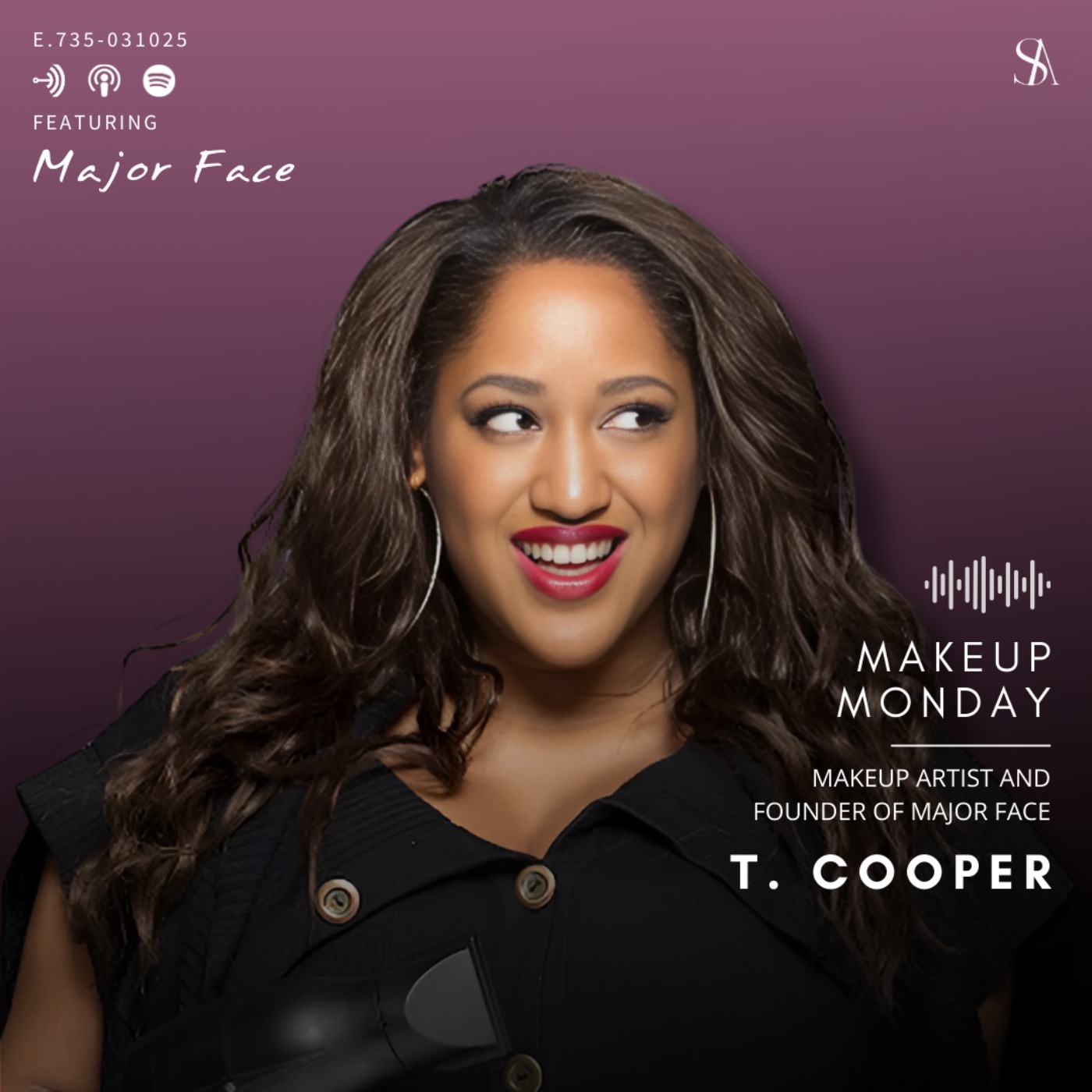
Hey, guys. Welcome back to Skin Anarchy. This is Echa. I'm really, really excited about our episode today because we're going to be getting some key insights from someone who's been behind the scenes with New York Fashion Week. She is truly an accomplished beauty professional and has worked with so many people across the board, including celebrities. She's led makeup teams, like I said, at New York Fraction Week, she's contributed to editorial shoots for major magazines and in the highly competitive industry that we know is as makeup and, you know, professional makeup especially, I mean, that's truly remarkable. So without further ado, please welcome T Cooper. Welcome T. I'm so excited to host you.
- [00:39]
T Cooper
Hi. Thank you so much for having me. Excited to be here.
- [00:42]
Echa
Yeah. I'm excited to chat with you. I can't wait to learn from you. I know that you have so much experience, and there's so much cool stuff that you've. You've done and you've seen, you know, especially working with so many different people. So I'd love to dive into that, but I want to learn a little bit about your journey, like what got you involved with the makeup scene and what led you to makeup.
- [01:02]
T Cooper
Oh, gosh. Okay. So whenever I tell this story, I always preface it by saying I can't give you the story that you want. The story where I say, I did my makeup as a kid. I did it on my dolls, I did it on my mom. I practice. I didn't give a crap about any of that. So it was not that journey. Probably six months prior to me becoming a makeup artist, I would have laughed in your face if you'd have told me that I would have become a makeup artist. I was a professional tailor. Oh, wow. Yeah, I was a tailor. And on set, like, I worked mostly on sets. Like, I did photo shoots, I did campaigns, I did E Commerce, and I did fashion shows. So a lot of times, they would always keep hair, makeup, and wardrobe, me, wardrobe in the same place. And I would look at the beauty transformations, and I would think, oh, that's really cool. You know?
- [01:54]
Echa
Yeah.
- [01:55]
T Cooper
My industry started to change, and I started getting replaced by a pin or a clip. You know what I mean? So instead of paying a professional tailor to do the alteration on set, they just started clipping it in the front, taking the picture from the back, clipping in the back, taking the pictures from the front instead of doing a professional alteration work started to get a little bit tricky. And then I started having to take jobs that I didn't necessarily wanted to take, and I needed an outlet. Like, I just needed a hobby, so I figured, okay. You know, I always thought hair and makeup was really cool. Like, let me just start doing some test shoots for fun. And at the very least, I thought at least I'd be able to do my makeup really well. And it changed into a completely. A complete career change. Like, I never saw this coming. I was just doing this for fun.
- [02:39]
Echa
Yeah, that's really cool, though. I feel like the best things start that way, you know, like, you're just getting into it, you're just playing around, and then eventually you get to a point where you're like, I'm really freaking good at this.
- [02:50]
T Cooper
When people told me that I was doing good, yeah, I thought that they were giving me called false confidence. Like, you know when you see a little kid's crappy drawing and you say it's beautiful, even though it looks like, you know? So I thought people were just telling me it was good to be kind, you know? So it took me a while to believe that I was actually good.
- [03:06]
Echa
I feel like I always look at TikTok and Instagram, and, you know, when, like, Instagram makeup blew up and everybody was talking about, like, all these looks that these influencers were showing, and it was just kind of like, ah, you know, like, I can't do that. I can't do the 18 different colors on my eyelid and make it look normal. Absolutely. You know, and so, like, it was crazy because I remember back in the day watching, like, influencers and just being like, I don't feel like I even belong as a consumer. I would look and be like, I don't feel like I can even keep up with this, you know? And even if I liked what they were doing, it was like, I. I don't know, like, it just kind of scared me a little bit. Right. As like, a normal person trying to get my makeup done and. And making sure that I look my best. Even if it is like, something like, you're going out with your girlfriends, you're. You're trying to get that glammed up look, it was just a very, like, unachievable thing. And that always kind of turned me off about that. But I want to get your take on that. You know, how do you feel like, like, what do you feel in terms of, like, how people approach makeup in general? Ability to actually bring the best of their own features out?
- [04:10]
T Cooper
Well, I. I actually love the way that people approach makeup now because it's fun. It's not about you're doing things right or you're doing things wrong. It's just about experimenting with your face and then seeing what it is you like and what it is you don't like and what it is that makes you feel good. So I love to see girls actually having fun with their makeup now because when I first started, makeup was so serious. And as you talked about the influencers, there was a time when there was a divide between professional artists and influencers. We hated them for a very long time. I feel differently now, but for a very long time, we didn't like it because that sort of makeup wasn't the makeup that we did. And when clients would request it, we would be like, I'm not gonna do this. It's, it's. It's changed the attitude towards makeup over the years, and I love that everybody's getting involved, even, like, kids. You see 12 year olds that are better makeup artists than me, and you see, like, older women that aren't afraid to put makeup on anymore, not thinking that makeup's gonna age them. So I love it.
- [05:10]
Echa
There's really interesting what you said, where there was. There was this divide. And I remember, you know, even from my side, right, as a consumer, I was looking and I. I would watch the professional makeup artist, and it was always just like, oh, that's so beautiful. You know, and it was always like, almost unattainable also, because it was, you know, you're watching somebody with such a refined hand doing this. So when they're doing a cat eye, when you guys do cat eye, it's like seamless, like, beautiful. It comes off like. Like nothing, you know, effortlessly. And then you do it yourself and you're like, oh, my God, I look like I belong in, like, ancient Egypt. And, you know, it just looks terrible. I mean, I think there's this whole cultural thing that happened at some point where we brought over, you know, speaking of the Instagram thing, we brought over this, like, more, I guess, I don't know, like, I guess the Instagram, not Instagram look as it was. But we brought over, like, this idea what people perceive glam makeup should be, and we brought it over to our more professional side. So did you. Do you feel like that. Do you feel like there was a cultural shift that happened where there was a more so like an integration?
- [06:12]
T Cooper
I do. And me personally, everybody will think it happened at a different time. Me, I feel like it happened more. So when Euphoria came out as Euphoria, it showed fun, editorial makeup, but it was applied expertly by artists. So it was like the blending of the two worlds where the makeup artist could see, okay, like, I can incorporate some of this into what I do without it looking like the makeup that we just didn't want to do and we had no interest in doing, there was kind of a refinement to it, and I'm sure on influencer side, it was the same thing. Like, oh, this is fun makeup, but, wow, there's actually some technique that I can apply to it to make it look a little bit more refined. So for me, that's when it started to happen. That's when I kind of opened up my eyes to makeup as well. When euphoria happened, I was like, oh, this is, like, really interesting makeup, but it doesn't look. You know, that's interesting.
- [07:09]
Echa
You said that, though. I mean, I feel like that's. Yeah. Like, I definitely. I think for. For me, even going into, like, for example, Mac, like, I was obsessed with Mac growing up. You know, I'd go into every Mac store, no matter where I was, and I'd always try to find, you know, they had all sorts of stuff. They had, like, the glitters and they had the eyeshadows and the crazy colors. Right. There was like. I remember once I saw a purple shade, and I was like, I am never going to use this, but I'm going to buy it anyways, because why the hell not? Like, there's always a curiosity for that more bolder, I guess you could say, look that we do often see on social media, but it's. I think it's that translation that everyone gets caught up in. Did see the fashion side, right? I mean, having a tailoring background is actually amazing that you have that, because one of my biggest questions is how people match their looks, like, their fashion with their makeup. What are your thoughts on that?
- [08:01]
T Cooper
It's just so subjective, because just the same way makeup and fashion, they're both so personal, but, like, you know, you can kind of adapt. If you have more, like, of a classic silhouette, you might want to go for, like, softer, more classic makeup and just have maybe one or two elements of a pop. Whether it's a pop of color on the lip, whether it's a pop of color on the eyeliner, whether it's a nice cat eye. So you kind of want to. You kind of want to just evaluate where you're at. But, like, there are no rules to it, because I've seen people wear some really elegant stuff with some really out there makeup. But, yeah, it's for my. My general rule is if you have a more classic More laid back look. You might want to incorporate one or two fun elements. And if you have something that's really, really fun, you might want to go crazy with the makeup. Lots of color, lots of shapes. Just go ham.
- [08:53]
Echa
It's interesting because I always wonder, like, you know how they always tell you, like, you match your shoes with your purse or like, you match your accessories. Like, there's like this unspoken rule about these things. So, like, in terms of makeup, like, what is your take on that concept? In terms of our makeup, should we treat it more like an accessory?
- [09:11]
T Cooper
I think makeup shouldn't be the accessories. I think makeup should be part of the outfit. If you ask me, it all goes together. So I wouldn't. I wouldn't look at makeup as an accessory. I would look at it as an extension of the outfit because it can really pull everything together. One of the jokes I always make with my friends is I gotta kill it with the face because the outfit's gonna be basic because I wear black all the time. Like, I'm always wearing black stuff, and it's hard to make black look special. But I really pull it in by, like, trying to do really fun stuff with my makeup. I. I don't know. As far as rules go, it's another thing. It's subjective because makeup is so personal. There used to be a rule, like when I first started, where they would say your eyeshadow to your outfit or your gown, and now that's what everybody does. Everybody matches the eyeshadow to the gal. You know what I mean? I would just go with what makes you feel good and what makes you feel beautiful. That's what I always tell my clients. Because it. You have to have the swag for it. There are certain things that some people can wear that I can't wear, vice versa, because you have to feel it. You have to believe it. You have to love it. You have to have the swag for it. And you. It has to make you feel good because it comes. The beauty comes from within.
- [10:22]
Echa
I used to be the girl that was wearing a sweatshirt and jeans at all times, and then I had a full face of makeup on and all. Like, what's wrong with you?
- [10:30]
T Cooper
Like, you look, I love ready to.
- [10:32]
Echa
Go out and you're wearing. Yeah. So, I mean, I think a lot of, you know, especially young women, I feel like they can relate to that because you. Who has time to, like, constantly dress up? You know, I didn't in college.
- [10:42]
T Cooper
But you know what? It applies the same logic as I did. Like, hey, the outfit's gonna be basic, but the makeup's gonna slay, you know?
- [10:49]
Echa
Right, right. Yeah, no, exactly. I think so. I. I think that's pret to be able to do that. And in terms of that, one of the biggest. I remember, for me, one of the biggest hurdles was, like, getting that really flawless look with especially something like my foundation. Now you've really seen it, you know, in terms of, like, all angles, like, where, you know, the professional side, obviously, but then also trying to bring that the, you know, the real side. Right. So what is some. What is the technique like that maybe you could share with us where you can really make foundation look absolutely gorgeous?
- [11:21]
T Cooper
Okay, so I have two rules for foundation. My first rule is that I like to build it right. So I don't start with a lot like, how you see, I'm not going to name names, but you see, some people add a ton of foundation and blend it out to make it look softer. I think that's just way too much work, and it's counterproductive. So what I like to do is I like to start with a little bit blend, Put a little bit more blend, and then add as you go until you get the amount of coverage that you need. So that's my first rule. You start with a little bit, and then you build up slowly to get the coverage that you need. And that way you can ensure that as you blend, it still looks like skin. And my second rule is that I like to keep the perimeter of the face a different color than the middle. So I will use a different foundation color, not concealer. I'll use a different foundation color in the middle of the face than I do on the rest of the face, so that you naturally have the brightness cone in the middle of the face. That's where the eye is directed, and then it fades out. And then if you want to do the brightening under the eye. But I find a lot of times if you do that technique, you don't need concealer.
- [12:25]
Echa
Yeah, that makes it. Actually, that's interesting because I feel like for a long time, people were doing that whole three shades, like, lighter than your skin tones, concealer. And, like, I remember trying that, and I felt like a ghost. Like, I was like, this is not working for me.
- [12:40]
T Cooper
I use foundation and concealer interchangeably, even for myself. Like, a lot of times I use concealer as foundation.
- [12:48]
Echa
Okay.
- [12:49]
T Cooper
I. I don't. I don't let the name of what the product is like. I. I judge it by performance. So if the concealer performs well enough to be A foundation for me, that's what I'll use. I'm very minimal in the amount of product that I use because I don't like to carry around a lot of stuff. And I like my makeup to be fast. And that's something I'm known for in the industry as well. I'm pretty quick. I can get a face done in minimal time.
- [13:12]
Echa
Oh, wow. Yeah, maybe I like some of that will rub off on me after a conversation because I take forever on my makeup. I'm like, that girl takes two hours and I'm still working on my eyeshadow.
- [13:23]
T Cooper
Because you don't need as much stuff as you think you need. I'm telling you, if you use half of this stuff that you use and you just like take your time with it, you'll notice, wow. I got a very similar result with half the products. And once I started noticing that, that's when I started to scale back.
- [13:39]
Echa
Interesting. I mean, I think that also one thing I'm curious about, and I'd love to get your take on this, is like the use of powder should be really be using like powder. And is there a real difference between the different kinds of powder? Because you always see setting powder. But I'm just always curious, are there different powders that we should be aware of?
- [13:58]
T Cooper
I mean, it depends on what you're trying to achieve. If you're trying to make your makeup last all day, then you definitely want to use a setting powder. A lot of times you can layer powder so you can do a setting powder and then you can do a blurring powder on top of that. What I like to do sometimes is one of my secrets, especially if when you use a powder, it kind of like enhances your lines. I'll put product on top of it, whether it's some sort of a balm, whether it's some sort of concealer, something a little more emollient, just to add some moisture back to the face so that it doesn't look so dry. But powder is necessary if you want your makeup to last all day. But a confession for me, on an everyday basis, I do not use powder every day. When I'm going out at night, yeah, I'll use it, but like on a day to day basis, I'll just do my makeup and if I need to spot reapply anywhere, I'll do it. Because like, I just, I don't like to be bothered with a whole lot of products on myself, but on my clients, especially when I'm trying to lock it in, you do need powder.
- [14:55]
Echa
Interesting. Okay, cool. So we don't all need powder. That's the takeaway here. We don't need to be slathering ourselves.
- [15:01]
T Cooper
And you don't need to slather yourself in like. I'm not a fan of baking, and a lot of people disagree with me. I see it all over Tick Tock. They bake, and then they put more powder on top of that, and it looks beautiful. I don't do that. I'm not a big fan of bacon because I don't like the way that it looks in real life. So not everybody needs powder. Sometimes you can get away with Mally Roncal. She makes a really great product called Poreless Face Defender, and it's the alternative to powder. So it's just like this. Clear it. I don't even know what to call it because it's like a jelly kind of like a balm.
- [15:40]
Echa
Like a bomb?
- [15:40]
T Cooper
Yeah, it's like a jelly kind of. It's in a compact. And then what it does, it absorbs the oil, and it keeps your face matte, and you can keep reapplying it throughout the day. So if you're a girly who doesn't like powder, that Face Defender, I think it's one of Mally Beauty's best selling products. When I discovered that, it totally changed my game. Not everybody needs it, but if you do want your makeup to last all day, right. You do need to use a powder. And it'd be nice if you use a setting spray as well.
- [16:09]
Echa
Well, so I want to get that. Actually, I'm good at buying.
- [16:13]
T Cooper
It's really, really good. I learned about that years ago when I used to assist, and I was like, holy crap. Whenever I do editorials. Because the person I assisted, he did not like powder, but he didn't want the model to look like a, you know, a shiny, greasy mess either. So it did a really good job at letting the skin shine and do its thing without making you look oily.
- [16:33]
Echa
That's. That's solid. I need to get that because I feel like I'm just not the. Like, especially as I'm aging, like in my late 30s right now. And I feel like whatever I put on my face, it's kind of what you were saying earlier where you're like, you know, sometimes I just do concealer, and that's it. I'm feeling like that the more and more as I age, because obviously, you know, as, you know, like, our skin gets drier as you age, start noticing things a lot more, especially with Fine lines. I find that foundation now for me is more like it becomes a curse almost sometimes because it's like, it looks great when you apply it on, but then through the day, like, making sure it's not settling into lines and then having to adjust. Yeah. It's just like a hassle. Yeah.
- [17:12]
T Cooper
The less product that you use, the less probability there is of it settling in the lines. There's also another foundation that I really love that's great for that. It's called Face Atelier. Have you ever heard of it?
- [17:23]
Echa
Yeah, I can't.
- [17:24]
T Cooper
Yeah.
- [17:24]
Echa
I'd tell you more about it, though. I've only heard about it. Yeah.
- [17:27]
T Cooper
Face Atelier. I love Debbie. She's amazing. And she was a lawyer. Right. So, like, beauty was not her thing. But she had a trouble as a woman who was in her 40s, finding foundation that didn't settle into her lines. So she created one. And it's one of my favorite foundations that I use on women. It tends to, like, sit above and if you. And it. It's so pigmented that you don't need a lot, which is also very helpful because very little product and it doesn't, like, just set in your lines increase all day. It's really pretty foundation.
- [17:59]
Echa
You're like giving me a shopping list. I love this. Like, I need to get everything.
- [18:03]
T Cooper
Yes. But as far as powders that don't make you look, don't. Don't make your. Don't enhance your lines. I love the Kosas blurring, those baked powders that Kosas makes.
- [18:14]
Echa
Yes.
- [18:14]
T Cooper
Amazing. I use that all the time. That's my go to.
- [18:18]
Echa
I think I use them once. I really. I remember really loving. I like Kosas in general. I feel like it's a great brand, but I know exactly what you're talking about. I used it, I think, once or twice. I fell in love with it. Talk about the new trends, because I know that spring 2025 is here, and, like, there's obviously spring always brings with it new beauty trends. What are some things that you see?
- [18:39]
T Cooper
I'm in love with the Ardell Pre Mapped lash extensions. I'm in love with them. So you may or may not know that I was the lead makeup artist for the Alice and Olivia New York Fashion Week presentation. So, you know. Oh, that's so cool.
- [18:53]
Echa
Congratulations. That's amazing.
- [18:55]
T Cooper
Thank you. Thank you. And Ardell was actually one of our sponsors. And I love Ardell lashes. I've always used them. I use the naked lashes all the time. But I had never heard of the Pre Mapped extensions, because they were new. And what they do is they cut them up into four, right? So instead of it just being one continuous lash, it's four lashes. And then you can use as many or as little as you want. So if you just want to use a couple in the corner, you can do that. And if you want to use all four of them, you can do that. And it takes the guesswork out. It's super easy to apply. They look really, really natural, and they're just less intimidating because a lot of women are like, I don't know how to put on a lash. I can't put on a lash. I don't know how to do this. So it kind of takes the guess that they're just little baby strips and you put them on little by little. But I love that you can use the whole thing or you can use just a few and then get the look that you want.
- [19:45]
Echa
Got it. Add to cart. Okay, got it.
- [19:48]
T Cooper
Yeah, I gotta get that.
- [19:49]
Echa
No, I know exactly what you mean, though, with the whole. I like that they're cut up because for me, lashes were such a huge, huge problem because I would see these beautiful eye looks and people had these gorgeous lashes, and every time I would try them, it was like, I look like clown, because it was just too much. And so for me that. I mean, especially somebody like me, I think I would benefit a lot from that because just to be able to add a little bit, you know, like some dimension there so you feel like you're. You're doing something, but you're not, like, over the top, where it's a full, you know, row of lash. And then you have to figure out how to shape it and, like, get it there.
- [20:22]
T Cooper
And my clients, a lot of them used to ask me to, oh, can you just, like, put it in the corner? So I would end up cutting the lashes anyway. So the fact that it came pre cut like this, it's amazing. And, you know, it's created by artists for artists. I guess they knew that that was something that a lot of our clients were looking for. And it's just incredible. I love them.
- [20:43]
Echa
So what are your. What are your personal, like, spring trends that you're really, like, kind of, you know, bringing to the table when you're doing, you know, anything? Maybe it's like, you know, a professional event or even, like a recommendation to a friend. What are some things that you love?
- [20:57]
T Cooper
First of all, I'm gonna go back to the lash because I feel like no look is complete without a la lash. Whenever my Clients are like, oh, just give me some mascara. I'm always like, absolutely not. Unless it's, like, a teenager or something. I'm like, absolutely not. Like, we need some lashes to bring it on home. But I love that pops of color I saw. Like, watercolor is huge now, so I'm seeing all of these luscious blues and oranges and yellows, and I love that because I love, like, a nice, bright statement eyes. Because when you have an eye like that, you don't really need much else. Like, you can just have an eye like that and just. Just a little concealer and just clear gloss or lip balm or whatever, and you're already slaying. So that was. That was a fun trend. I like that we're getting back to actually applying makeup with technique. So they're bringing back a lot of the 90s looks. Like a lot of the 90s eyes.
- [21:47]
Echa
Yes. Yeah.
- [21:48]
T Cooper
You saw that, right?
- [21:49]
Echa
I love it. Yeah.
- [21:50]
T Cooper
Yeah.
- [21:51]
Echa
I'm a millennial, man. I grew up in the 90s. I love seeing that. Yeah.
- [21:56]
T Cooper
I'm what they call a zennial, so I'm on the cusp.
- [21:58]
Echa
Oh, love that. Love that. Yeah.
- [22:02]
T Cooper
The early 80s. So, yeah, I. I love that we're back to the. The. The creases and, like, the sculpting, and then we're back to, like, the. The shimmery colors. I love that because remember when that was a thing for a while, those frosted colors? Now they're bringing all that frosted makeup back. Oh, and that 90s lip. Oh, my God. Have you been seeing that? The.
- [22:22]
Echa
Yeah, with the liner. Oh, my God. I love that look. Like, I remember, like, doing that when I was younger, and I was like, this is the best makeup, like, the best lipstick look. And honestly, in my opinion, I love it so much. I saw that. They're bringing it back.
- [22:36]
T Cooper
Oh, absolutely. We did a rendition of that for Alice and Olivia. We did a. A brown lipstick with a brown lip liner with a red lipstick in the middle. But my favorite way to do it is either like, a brown with either a clear or just a light pink in the middle. So, like, the light. It's really. The Star show is really prevalent. Kind of like a Lee and one in a million.
- [22:56]
Echa
Yes. Oh, my God. Don't even talk to me about Aaliyah. She was, like, my favorite. Like, she was, like, my idol.
- [23:02]
T Cooper
Her eyebrows were ahead of their time.
- [23:04]
Echa
Yeah.
- [23:04]
T Cooper
When everybody was plucking them and they were, like, super thin. Always had, like, a nice, juicy, sculpted brow. Like, her eyebrows are always Nice and full and perfectly arched.
- [23:14]
Echa
Absolutely. And she always had, like, that natural makeup. Like, her face was always, like, it looked very, like, I don't know what people now call natural makeup now. I love that. I love that, and I love seeing that they're bringing the 90s back, honestly, because we had some really cool stuff. Like, we had some, like, fun makeup and fun techniques. And also, like, in terms of doing 90s makeup, I mean, I want to get. Your product recommendations are. What is your favorite, like, liner right now for, like, getting that lip look that you're talking about?
- [23:44]
T Cooper
Oh, gosh. Okay, so there are three. So my knockdown drag out. You'll have to pry it out of my cold, dead hands. Is Citizen Cosmetics. I love it because it's the creamiest lip liner ever. Sometimes I'll put it on his lip liner, and then I'll just, like, smear my lips a little bit, and then the color looks so pretty as a lipstick, I'll just throw gloss over and just won't even use it as a lip liner. It's that creamy where you can use it as a lip liner, as a lipstick, but as a lip liner, it's super gorgeous. And it comes in a lot of colors. I love Bobbi Brown Chocolate. That's another fun brown one. Oh, the Citizens cosmetic. I use the color Cinco on a lot of skin tones. Cinco's gorgeous. But yeah, the. I like the Bobbi Brown, and it's called Chocolate. That's a really pretty one. And Anastasia Beverly Hills. Oh, my gosh. She makes. There are so many colors. Like, I can't even just name one, but, like, I slept on Anastasia because, you know, she is the brow girl. I was like, what do you know about lips? But, yeah, the Anastasia lip liners, so many good ones. They have, like, these liquid lipsticks, but it's a different formula. They're matte velvet, so they're not drying. This formula is super creamy. It feels almost like a lip balm, but it's super matte, and it comes in a lot of great colors. You know, I really like it when I won't put it in my kit, when I'm just like, okay, my clients. This is for me.
- [25:04]
Echa
When you steal it. Yeah. You're like, yeah, this is mine. Like, for me, even in college, like, my go to lipstick was a liquid lip. Like, I could not do normal lipsticks, and I would do the whole. Like, I would apply a normal lipstick on top to, like, top it off or something. But, like, baseline, it was always liquid lip. Like, that's what I always went to. So they're just such great products. I love them.
- [25:25]
T Cooper
I tried with the liquid lipsticks. Like, I used to do the Anastasia ones. And remember when Morphe used to have all those fun colors, blue and purple and turquoise and everything, and it was just so drying for me, I couldn't do it. I couldn't do it. Like, at some point I would end up putting a gloss over my lips would physically hurt. Even if I put a bomb underneath it, I could. So you're better than me?
- [25:48]
Echa
No, I mean, I honestly, though, I won't even lie. The only reason I used liquid, there was a Kat Von D lipstick lip color, which I was shocked it was from Kat Von D, because she. She never had colors I could use except for her lipsticks and her lipstick color. I think it was called Lolita at the time. Lolita. And it was like this pretty brownish peach mauve. Like, I don't even know how to describe it. But for brown girls, like, if you're in the medium shade range, Lolita was the color for nude. But I just remember using it all the time. So when you brought it up, when you brought up liquid lip, I was like, yep, I can get behind that. I used to use them all the time.
- [26:26]
T Cooper
Yeah, yeah. The Matte. The Matte, totally. The Matte lipsticks are completely back. I'm loving that love that you gave.
- [26:32]
Echa
Us so many recommendations. I want to round out everything by getting your advice, because I know there's a lot of young women that tune in, and I want you to give, like, honest advice about, you know, getting into the industry, what it takes. Because I feel like these days, no one talks about, you know, the hard work that it takes to get to, like, you know, where you are and, like, having to really, you know, go into it with specific mindset is what I'm trying to say. So what are your thoughts on that? Any words of wisdom that you could offer?
- [26:58]
T Cooper
Oh, girl, I do this all the time. And a lot of the girls, they don't like to hear my advice because it's not what they want to hear. But you have to be willing to work for free.
- [27:10]
Echa
And.
- [27:11]
T Cooper
And no one wants to hear that. And I get it. You know, things are expensive, Life is expensive. But when you're first starting off, you don't have a portfolio yet, you don't have clients yet. So you're just marketing yourself, and you're trying to build your book and you're trying to build your portfolio. So when I tell people, especially the Artists that are just starting out. Like, unless you work at a counter. I never went that route. I started off on set, I started off working on set doing photo shoots. That's how I started. But like, unless you work in a counter or something like that, then you're gonna have to be prepared to do some free work. And. No, nobody wants to hear that. But it is true. I needed to build my book. Thankfully, I found somebody in the beginning of my career who kept it real with me because a lot of people were just, you know, giving me these unrealistic expectations. And someone said, look, you need to be prepared to work for free for about two years. I was just like, oh, okay. And I accepted it because I really wanted it. Thank God for me, I started getting paid after like 10 months. But that's what it is. You're building your career. You're, you're building your name. And you have to be willing to do things if there's not a price tag attached to it.
- [28:22]
Echa
I love that, I love that, that you're keeping it real with that advice. Because every industry is like this. Like, I, I mean, I'm in medicine and I remember our attendings used to take advantage of us as residents. Like we were working 80 hour weeks, you know what I mean? And you're not getting, you're getting paid like pennies, you know, even at that stage. But especially like in any industry, you have to make a name for yourself. Like, you have to. And I feel like Gen Z right now. I love Gen Z, I really do. But there are so many people that I see that are like, well, I need a job. And I'm like, honey, you need experience is what you need. You need to go get some experience because you're not going to get a job. No employer is going to hire you. You know, with no experience, you have nothing to offer.
- [29:01]
T Cooper
They don't want to hear it. Or sometimes I get pushback. Oh, I'm not going to let this industry use me. I'm like, okay, hey, you know, you know better than. I've only been doing this for 13 years, so you know better than I do. So do what you need to do. They all think, well, not all. I'm gonna be fair. A lot of them think that they can just become an influencer and start making money like that, or they can just become a YouTuber and start making money like that. And Even the top YouTubers and the top influencers will tell you in the beginning they made no money. You know, they were building their audience. They were Building their community. And then the money came. So you need to have a side hustle. When I first started, I was tailoring, I was bartending, and I was doing test shoots. And then eventually I was able to stop tailoring, and I was just bartending and doing shoots. And then eventually I was just able to just sustain myself off of doing makeup. But it was a transition. It took a while.
- [29:55]
Echa
Yeah, yeah. And you worked hard. And that's the bottom line is, like, hard work. I feel like now no one preaches that anymore, where no one is, like, sitting down and saying to these kids, like, listen, I know you have dreams and that's beautiful, but you need to work hard. Like, you got to put in the hours, you got to put in the time. Like, it's. There's no shortcut to any of this. So, yeah, I love what you said, and I couldn't agree with you more. And I hope someone listening out there, if you're wanting to go into artistry and you really want to make something of it and you want to be behind the scenes in your fashion week, you want to be doing these big gigs, like, I really hope you take, you know, T's advice to heart and really listen because it's very, very important. But thank you, T, so much. This was so lovely hosting you and learning from you. I'm going to buy everything that you recommended, so I hope that you love it.
- [30:42]
T Cooper
Please, you know, let me know what you think of everything because I'd love to hear your feedback on my wrecks.
- [30:47]
Echa
Absolutely. And I will be linking everything in the show notes for anyone tuning in. So you guys can also shop the products. Definitely check them out and leave us some feedback yourself so we can share it with Tea and also so we can learn from you. So thank you so much and I'll be back next time.
- [31:01]
T Cooper
Thank you. Love you. Have an amazing day.
- [31:03]
Echa
Hey, guys. So I hope you love that episode. Please make sure to hit subscribe if you're tuning in to us on any podcast platform. We are available on so many different platforms, so wherever it is that you're tuning in, just go hit subscribe. You'll be immediately notified when we publish new episodes. This way, you're able to tune in to amazing insights from experts, brand founders, industry leaders, authors, all the wonderful people that we host. And that's very important for me because I love to hear from you guys and really understand what you love and what you want to hear more of. Also, make sure to give us a follow on all of our social media outlets. We're available on Instagram, TikTok X, you name it, we're there. We also have a blog on Medium, so if you're a reader and you love Medium blogs, check us out on Medium. We publish some really great articles on there that do deeper dives than just what's available on the podcast, and it's really a great place for all of you science geeks out there that want to learn a little bit more. We go above and beyond with our research and making sure we're bringing you information that you usually probably won't hear about in other outlets. So check us out, leave us a comment, leave us a review, and we'll be back next time with another episode. Thank you.