Loading summary
Transcript70 lines
- [00:00]
A
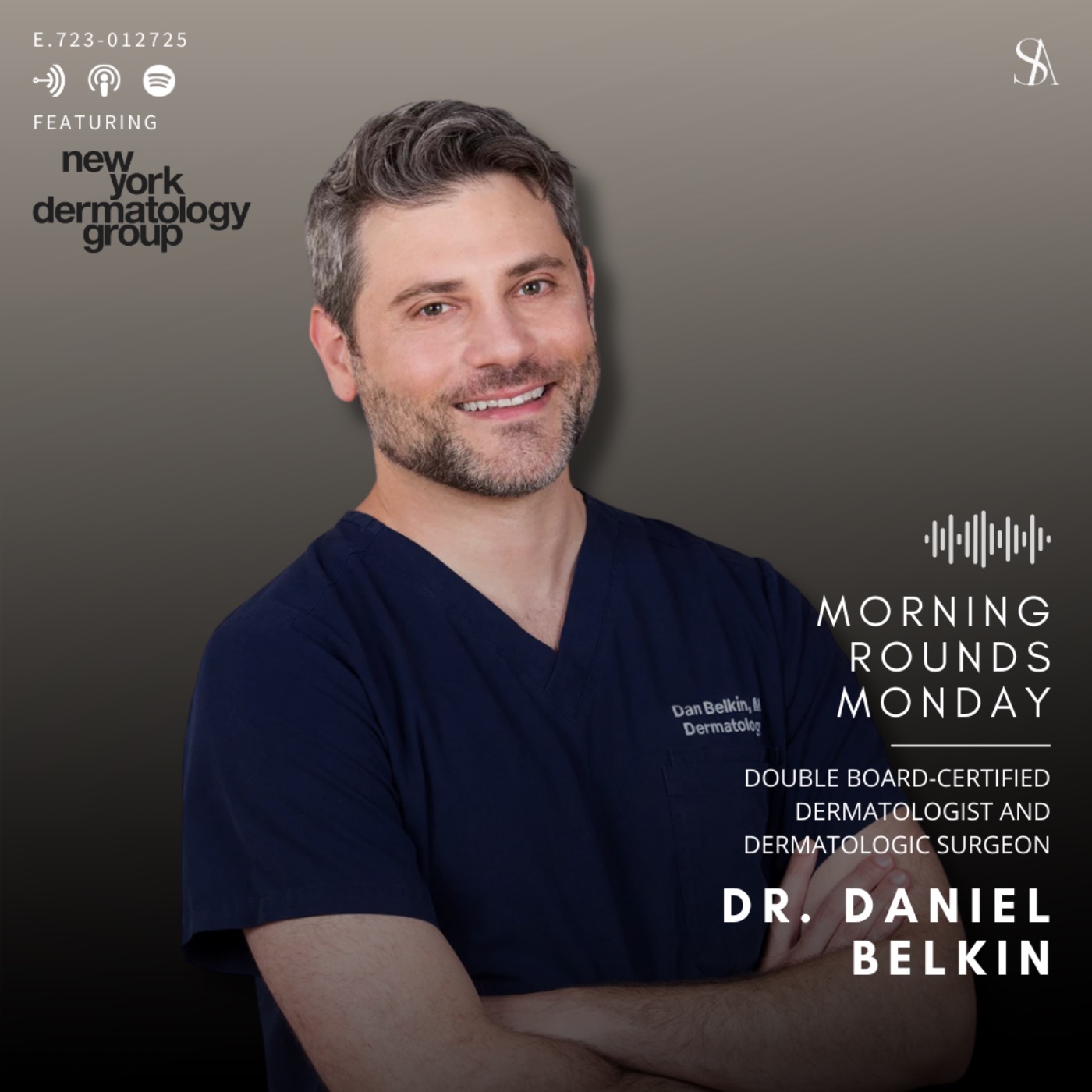
Hey guys. Welcome back to Skin Anarchy. This is Ekta. I'm really, really excited about our guest today because he is truly an expert in his field and I've been really meaning to talk to him for a while. Without further ado, I would love to introduce you guys to Dr. Daniel Balkan, who is a double board certified dermatologist and dermatologic surgeon. And he's also very much an expert in the field of laser. That's really what I would love to discuss today. Dr. Balkan is lasers but walking the show. I'm so excited to host you.
- [00:26]
B
Thank you so much. I'm excited to be here. Thank you for having me.
- [00:29]
A
Yeah, it's an honor. I would love to actually kind of get started with learning more about you. What got you into dermatology?
- [00:35]
B
So my parents, both were doc are doctors and, and they always encouraged me to go to medical school and I kind of resisted for a while. And I was really into art, actually. So I explored a bunch of things in college. And then eventually you sort of wasn't sure what to do with. Myself. I ended up going to medical school and was really drawn to sort of more aesthetic fields because of my interest in art. And I found dermatology and dermatologic surgery, also known as Mohs surgery, which is where we kind of cut out and reconstruct from skin cancers. I found a mentor when I was at Cornell Med school is a well known Mohs surgeon, and he and I did some research together and that sort of how I got into the field. So. And then I did residency at USC in Southern California, and then I came back to New York for a fellowship in dermatologic surgery. And usually fellowships in derm surgery include both Mohs surgery and also, depending on the program, some cosmetic and laser. And I did a very laser heavy fellowship with a man named Roy Geronimus, who was sort of one of the pioneers of laser medicine.
- [01:47]
A
I mean, you know, I feel like dermatology, we don't really talk about the field a lot, but it's such a competitive field and there's so much that is there in terms of specializing that we don't really get to hear about it. I'm just talking from the medical side.
- [02:00]
B
Yeah, it's a very rich field with so many varied places to go. You could focus on allergy or rheumatology, dermatology, and then it, you know, goes all the way to sort of lasers, which has a lot of physics to it. A lot of people are drawn to it because it's such A varied field. And sometimes your day can go from sort of a heavy medical case to a procedure to a surgery. You just. A very varied, exciting day.
- [02:28]
A
I know lasers is. It's a topic that, you know, we see a lot of it. We see a lot of reference laser treatments and procedures, but we'd never. As, you know, someone on the outside, we never learn anything. I feel like, as consumers, love for you to kind of give us this, like, laser 101. If you could just kind of tell us about where you first saw lasers come into medicine, especially dermatology, maybe even the first time you use them.
- [02:52]
B
When I was in residency, even a lot of our attendings weren't that fluent with lasers. And I think it. It's just. It's not a very strong component of most residency programs. And I remember that when I was a senior resident, I was tasked with giving a lecture to the younger residents about lasers. And so I really had to learn about the physics behind how these lasers work. And it's. It was really fascinating toward me, and that's part of why I ended up going into a fellowship that focused on lasers. Because. And I'll explain now, and I think you'll be fascinated by it, too. But basically, the field of laser is. Has a lot of different sort of modalities that have different wavelengths and different pulse durations, and all of these things allow the laser to sort of target different molecules in the skin. When in the late press, people will just, you know, talk about laser as sort of a blanket term. But it really is, of course, very complicated and varied. If a patient comes in and says, oh, my friend came to you for laser, I want laser, too. It's like it couldn't be one of 20 different things that they could be talking about or needing, I think. And I think people just know it sort of as laser. But what laser is, is light. So all it is is light. It can be ultraviolet light, it can be visible light, or it can be infrared light. And all of that exists on a spectrum of wavelengths. And a laser takes a single wavelength of light, and it fires only that wavelength. The way that lasers work is you pick a wavelength that you want to use based on the target that you're trying to get. So different targets in the skin absorb different wavelengths of light in different ways. And I wish we had some visuals, because I could draw you out some curves. But, for example, let's talk about melanin. So a lot of people do lasers for hyperpigmentation. A lot of people do lasers for hyperpigmentation. So when you're treating hyperpigmentation, what do you want to target? You want to target melanin, because melanin is the pigment in our skin that creates pigmentation. Melanin evolved to protect us from UV light. Melanin at the UV end of the spectrum absorbs a ton of light. And then as you go from UV to infrared light, which is heat, melanin absorbs less and less. Rigorously.
- [05:35]
A
Yeah.
- [05:36]
B
So if you map that out, you go from uv, where it absorbs a lot, to blue light, where it absorbs a lot, you know, down to green light, down to red light, where it absorbs a little bit less, and then infrared light, where it absorbs less. So you want to think about what you're targeting and different wavelengths that target absorbs. So if we use. If we want to treat hyperpigmentation, we might choose a light where melanin absorbs a lot of it. So I often use a green light to treat hyperpigmentation. So I would use a green light to treat sunspots, because green is very avidly absorbed by melanin because it's closer to blue. You know what I'm saying?
- [06:22]
A
Yeah, yeah.
- [06:23]
B
That's. So that's one whole aspect. So you're thinking about the wavelength that you're trying to use, because you want to target a certain molecule that absorbs that wavelength. So that's one thing, and then there's this whole other axis that you're thinking about, which is called pulse duration. Pulse duration is how quickly the laser fires, and that is proportional to how big the molecule is that you're trying to get.
- [06:48]
A
Okay.
- [06:49]
B
So if you want to get a larger molecule, like a hair follicle, you might use a light that is absorbed by melanin because you're. You're. Presumably you're targeting, you know, dark hairs, but you want to get a large macro hair follicle. It's not microscopic. You can see it with your. With your eyes. You're going to want to choose something with a longer pulse duration. So hair removal lasers will be a light in the visible spectrum, I mean, or near infrared spectrum, but visible or near infrared. So lasers that are absorbed to some extent by melanin.
- [07:29]
A
Yeah.
- [07:29]
B
And they have a millisecond pulse duration. Now, if we wanted to target a little melanin granule, which is totally microscopic and a tiny little thing inside a cell, we might choose a wavelength of a similar color. It might still be red, but it's going to fire much, much faster. So you're delivering that energy on a smaller pulse duration in order to target that tiny molecule. And that could be on the order of nanoseconds or picoseconds. So if you've heard of lasers that are like a picosecond laser like that we use for tattooing, those fire orders of magnitude faster than a hair removal laser. So if I'm doing, if I'm sort of toning somebody's skin with a picosecond, a red light picosecond laser, and they say, will this get rid of my hair? Also, I can confidently say no, because the pulse duration is so fast that it's only going to target the little tiny melanin granules. And in order to get the hair, if they wanted it or if they didn't want it, if it was a man who was worried about his beard, if I wanted to get that, I would have to use a pulse duration that was so much slower on the order of milliseconds, which is thousands of times slower. You choose your color and you choose your pulse ration. And that's a really good way to think about when you're learning lasers, how, how they work.
- [09:06]
A
That's so interesting. I, I did not know that. I'm looking at it like, just in layman terms, you know, when you're constantly hitting a ball against a wall or something, you know, like how fast you're hitting it, the force that you're applying overall.
- [09:19]
B
So there's a force and then, you know, so if you think about, like, you can apply the same force. I push you with a certain force. Yeah, but I, but I slowly move you, right? You know, it's not, you're not going to have as much of a reaction. You're just going to slowly move with me. But if I slam you with the same amount of overall force, but over like a split second, then you're going to fly against the wall. That's how the pulse duration sort of relates. It's like to, to the amount of energy that you're acquiring. It could be the same amount of energy, but you can fire it quickly or you can fire it slowly. If we fire it slowly, we're heating up sort of a larger area. And if we fire it fast, we're heating up a very, you know, small amount of area.
- [10:03]
A
I mean, you mentioned hair removal, right? That's, that's where I want to actually ask you about. If you're doing hair removal, does that matter, like, the area that the laser is actually treating? Like, does that come into play with Things like this. Is it like their pinpoint instruments versus like larger diameter?
- [10:20]
B
Yes, but a little less important in terms of the physics of it.
- [10:25]
A
Okay, it's.
- [10:26]
B
That's important in terms of the technology you're using. And when lasers get better and better, they often have larger spot sizes. So if you can imagine, you know, if you go get in, go get laser hair removal and they have a 10 millimeter or centimeter, you know, spot size to do your whole back or, you know, or your legs, that takes forever because it's a tiny little spot size. That's the, that's all of the energy that that machine can muster. As machines get better, you can have larger spot sizes and still deliver the same punch. One day we might have a laser hair removal machine where the spot size is the size of a Coke can or, you know, you know, a larger circle where would take a minute to do the whole thigh versus a little spot size. So that usually that more has to do with how the technology is and how good the device is.
- [11:27]
A
Interesting. That's very interesting. Yeah, because I've heard, I've heard of that, that it takes forever with.
- [11:32]
B
Yeah.
- [11:33]
A
Hair removal. So that's, that's very fascinating. What are CO2 lasers and what do we really get from them in terms of results?
- [11:41]
B
That's a great question. And it's a great segue because we talked about melanin as a target. You can also use blood as a target. So you can use heme, like hemoglobin, the heme molecules. And that has its own curve in terms of what wavelengths of light that absorbs. And so any laser that would be considered a vascular laser or a laser that targets blood vessels would fall somewhere at the peaks of that curve where heme absorbs a lot of that light. And then you can have lasers that target water. And CO2 is a laser that targets water. And water is usually targeted by lasers in the infrared spectrum. Near infrared is kind of just beyond visible light. So it's just, you get red and then the next category would be near infrared. But then you can get into sort of like mid infrared light, where it's an infrared light is basically just heat, but it's still a single wavelength of infrared light and that targets water in different ways. And you have water at all levels of your skin and body. So if you target water, you can heat up a whole column of skin from the top to the bottom. And that's what CO2 does. So CO2 targets water, and it does so very strongly. And when you look under the microscope at a column that a CO2 laser creates, you see little column where the skin is gone, so it's totally vaporized, it's burned into nothing. And then you see a layer around that column where the skin is what we call coagulated, where it's damaged and contracted. When you do a CO2 laser, we consider it an ablative resurfacing laser. We call it ablative because it's vaporizing that little column of skin. When we treat a whole face, for example, you get all of these little columns of vaporization surrounded by coagulation, where the skin is sort of contracted and you heal from it, and you have all of these areas that are not affected so that the healing is relatively quick. And that's what we call fractional. So back in the day, CO2 lasers used to be fully, like full field ablative, where it would just rip off a layer of skin, almost like a really deep chemical peel. And they would be very effective, but they would take a really long time to heal from, and they were high risk. Now lasers are fractional, where it's little, little columns of injury with normal skin in between. That allows your cells to come in and quickly heal up those little columns of injury. So they're much lower risk and much faster healing. Still, CO2 is a big deal. And healing can take a week of, you know, redness and swelling and raw skin because you've now you've created all these little holes in the skin that, that ooze and have to heal. But it can be a really powerful laser in terms of tightening and treating wrinkling and sun damage and laxity.
- [15:08]
A
So CO2 lasers then, like, what are some of the most common conditions you use them for?
- [15:13]
B
CO2 lasers are great for scars. So, you know, we have CO2 lasers are kind of the gold standard for resurfacing what we call resurfacing. That means taking old skin, old collagen, and causing enough of an injury where that old damaged collagen is broken down, and we get regeneration of sort of new, fresh, firm collagen. Your collagen is constantly being created and broken down, but as you get older, you're sort of accumulating collagen that's not fully broken down. You're not getting that much new collagen. So you have all this collagen sitting around that's sort of frayed and fragile and thin. And when we do the CO2 laser, we cause a lot of destruction and your body comes in and cleans a lot of that up. And then replaces it with. With sort of new, fresh, firm collagen bundles. It's great for scars because scars have abnormal collagen that we want to kind of try to normalize. And it's good for some laxity and wrinkling, because wrinkling is from the loss of extracellular matrix molecules like collagen and elastic fibers. We want to stimulate the fibroblast to just sort of lay down some new matrix. I really like using CO2. I mean, we can do it for the full face, but it's a big deal in New York. It's can be a hard sell in New York. I mean, people are very busy here. You know, it's hard to stay in your apartment all day. You're always seeing people. It's. It's a hard downtime to have a week of swelling and rawness on your face. But certain areas can work really well, like around the eye. It works beautifully where people start to see wrinkling around their eyes. And we can CO2 just around the eyes and the eyelids, and people can wear sunglasses for a week, and it can really firm things up there.
- [17:16]
A
Wow. So that's great for men too, right? Because I think men get crow's feet earlier than women.
- [17:21]
B
Yeah. I'm trying to find a time for one of my colleagues to do it to me because I'm getting wrinkly around the eyes. I think it's an area that so many. That people really start to see aging first. You know, I think, like mid-30s and up, you really start to see, like, volume loss and wrinkling around the eyes. I think that's a really common area to start seeing it.
- [17:43]
A
Absolutely. Yeah, I've heard that. And also, you know, one thing. I mean, I guess this is a different topic, but I want to tie it into lasers because, as you know, you know, acne is at the forefront of conversation, especially for most people that I see. You know, whether it's online or just in conversation, everyone's concerned about acne, whether that's actual active lesions or, you know, post inflammatory hyperpigmentation or whatever it might be. That journey is what seems to be talked about the most. What is your take on the treatment of acne? And then incorporating laser treatments at some point in. For whatever aspect, get an understanding of how it might tie in with acne treatments.
- [18:22]
B
Yeah, yeah, that's a great question too, because there's a group of new lasers out. You know, there's. There's not. It's not often that a completely new type of laser Sort new modality, a new wavelength comes out. There's always new machines coming out, but they're usually sort of recycling older concepts. So maybe it's a machine with the same wavelength and same pulse duration as all the devices before, but it has a larger spot size, so you can treat quick, more quickly. We don't often have kind of totally new technology coming out. There was some new technology in the last couple of years for acne. And it's a wavelength in the near infrared spectrum that targets sebaceous glands. And acne is a multifactorial process. But one of the pathological processes in acne is sort of like overactive sebaceous glands. And so if you, the thought was if you could target those sebaceous glands and destroy them, you could treat acne. And you can to some extent. I think that they were a little oversold and overhyped because it's only targeting that one factor in the development of acne. And it just hasn't been quite as good in my experience and what I hear from my colleagues as treating acne medically, you know, and which of course we've been doing for decades and decades with the medicine isotretinoin or accutane, which also shrinks sebaceous glands but has other effects on the skin that create a more curative effect than the lasers which only target the sebaceous glands. Usually with acne, I advise my patients to treat it medically, get it sort of under control or cured, and then we use lasers for addressing pigmentation, post inflammatory redness, scarring and so on. So any kind of sequelae of acne, the medical treatment still works better. You can sort of get to the root cause. For example, in women, acne, you know, after your 20s, acne is typically hormonal. And so the first line medicine in women with acne who are in their 20s and above is oral spironolactone, which blocks the male hormone effects on the follicles. And that's getting to more of the root cause. Somebody who has hormonal acne who ends up doing one of these lasers for acne. It's not quite getting to the right spot. Maybe it puts them into remission for a few months, but you're not really getting to the root cause. I haven't adopted lasers for active inflammatory acne as much yet.
- [21:22]
A
Interesting. Now, you know, you know, Dr. Baggin, we always hear about this. I mean, I guess more recently I've heard about it is this idea that like melanin rich skin types are, you have to be more careful, you know, in terms of what you opt in for when it comes to laser treatments. Can you speak on that a little bit just so we can understand? I mean, is it really a thing where we have to kind of, you know, we can't get certain treatments if you're melanin rich as compared to others?
- [21:50]
B
Definitely you, you can do laser and melanin rich skin, but you have to have a really good understanding of all of those things that we talked about, like wavelength, pulse duration. You want to make sure that you're really being precise with what you're targeting. For example, in laser hair removal, what you use for melanin rich skin is you use a near infrared laser. Now, as if you remember on the melanin curve, melanin doesn't absorb as much or as avidly in that area of the spectrum. It absorbs really avidly at ultraviolet and blue light and less so at red and near infrared. But when you're treating melanin rich skin with a hair removal laser, you don't want to target that. You don't want melanin to absorb that light so avidly. You want it to absorb it enough to get the follicle. If it absorbs it really avidly, you're going to create damage and hypopigmentation. So you use a near infrared laser that is gentler on melanin overall and you use a pulse duration that's maybe a little higher than you would normally use. Because if you remember, pulse duration determines what sort of target, how big the target is going to be. A larger pulse duration will target a larger follicle and a small pulse duration is going to target a melanin granule. So you want to stick to pulse rations that are a little higher. If you're treating somebody with, you know, very fine vellus hairs in a melon rich person, that can be really difficult because you have to turn the pulse duration down to get to these smaller hair follicles. And then you start to get into sort of like you're going from milliseconds and you're kind of getting closer to microsecond territory which can target melanin. That's why melanin rich skin is more complicated. There's a lot more target around. If you had, you know, super fair skin and a black hair follicle, you could use, you know, kind of whatever pulse durations you want and sort of blast it and you're not going to be picking up that much Laser light around the follicle. But in a melanin rich person, there's all of this melanin around that's now competing for the laser light. So it is complicated. It can still be done, but you just have to go to somebody who really understands what they're doing.
- [24:23]
A
I guess just so people understand. Like what are some credentials individuals should look for if they're going in for a treatment? They are kind of a little scared about this. Like I want to make sure that I'm not getting anything done that's going to harm me in the long run or like take away, you know, pigmentation on my skin. What are some credentials we should look for?
- [24:40]
B
That's, that's a great question also because there's a lot of misleading these days and it's very hard to know sort of what people's training is. Yeah, there's a lot of, a lot of people who call themselves derms who aren't or call themselves plastic surgeons who aren't. There are people who call themselves doctors who aren't. On the other hand, there are people who may not have traditional training where they did a dermatology residency and a fellowship in lasers, but they've been operating a medis spa for 30 years and they could be really excellent with lasers and dermatologic procedures. So it can be really hard. I think, if you find somebody who's a board certified dermatologist and you can sort of look up their credentials. Board certification means that they did a dermatology residency and they took the dermatology boards. It doesn't necessarily mean that they're amazing injectors or amazing with lasers, but for the most part, you know, they've had a basic level of training with other practitioners. You don't always know that. It's possible that they are amazing and maybe through word of mouth you can find somebody who's really good. Even if you can't sort of verify what sort of training they've had. But you just don't really know.
- [26:05]
A
I think this is such an important topic and thank you for, for speaking so clearly on this because I feel very strongly about it as well. I think that the word doctor is thrown out around a lot these days. People don't know like Anyone with a PhD is called a doctor, you know, and they have absolutely no medical training. I mean, it's very difficult, I think, for consumers because especially with the rise of social Media, I'm sure, Dr. Bachman, you've seen it everywhere. Everyone's literally Dr. So and so. And then you dig a little deeper and you figure out you don't even have an md and unfortunately, I mean, it becomes confusing because you have a lot of people speaking about these topics that might be reading from Google. They're totally reading from a resource. Or like, I could open a textbook right now and like, read something about lasers. That doesn't mean I know what I'm doing.
- [26:51]
B
The problem is, even when you look into it, it can be really hard to figure out it. They'll say like, oh, they did a cosmetic fellowship because they shadowed somebody for a while and they. And they call it on their website a cosmetic fellowship. Or kind of more vague terms for consumer. It's really, really hard. And I. I don't know. You know, I don't think it's going to get easier unless, you know, medical boards or nursing boards or whoever sort of starts to regulate the language a little bit. For me, I can tell because I can read a bio and I can figure out from the bio, like, I like, I'm like, that's not a legitimate fellowship. I don't know if anyone else can figure that out.
- [27:31]
A
No, I mean, because fellowships are fully funded programs. Like, you, like, you're competitive, you get in and they're fully funding.
- [27:37]
B
It's not like that you just determined that you did a fellowship. You know, a doctor online who like, looks at celebrity before and after, analyzes what they do and kind of as a way to promote herself, I think, and to say, like, oh, they did this wrong and their Botox is bad and, you know, and it's like she is a pathologist, which is, you know. Yeah, it's like. But nobody else would ever know that. I looked her up and I could and I figured it out. But, like, that's not how she advertises herself, you know, so, like, if people knew that she, like, didn't even train in live people, you know, it's like.
- [28:17]
A
Right, right.
- [28:18]
B
They wouldn't necessarily trust it, but it's. And who knows? You know, maybe she has a lot of experience doing aesthetics, but still, it's just everything is so misleading these days.
- [28:28]
A
I agree. It's a topic that I feel like literally no one's discussing because we do not want to step on people's toes. And I'm sorry, having gone through medical school and been y yelled at by so many doctors in my life, in my training, you know what I mean? And, yeah, the rigor of it.
- [28:43]
B
Yes, yes, yes.
- [28:45]
A
Yeah, it's kind of crazy. I mean, I. I feel like that we need to kind of have that culture though, like in today's world, for any consumers that are listening in, you guys have to question people. It's, it's okay to ask your doctor, what did you train? You know, like you're allowed to ask that and they should be happy to tell you.
- [29:00]
B
They should. They.
- [29:01]
A
Yeah.
- [29:01]
B
If, if you look on a website and somebody and you cannot figure out what sort of residency they did.
- [29:07]
A
Yeah.
- [29:07]
B
Then you should be skeptical because it should be very, you know, it should be very clear from someone's bio, like what their training was. And if you're, if you're like having trouble figuring it out, then that's not a great sign.
- [29:20]
A
You know, board certified as a specialty, like it's recognizing a specialty. And no one really talks about that. You said, you know, dermatology or plastic surgery, they're going to have the letters to signify that.
- [29:32]
B
Unfortunately, that term has also been co opted where, you know, sometimes you'll be reading a bio and it'll be a board certified esthetic pa. Yeah, like, what does that mean? I mean, I don't know. They're, they're like there's some sort of board for, you know, when you graduate school, I guess. And so you're sort of, you're a board certified PA and then you've decided that your esthetic injector PA and so, and then, so you say you're board certified. I don't think you and I are going to solve this today. I mean, it's like. It's a hard problem.
- [30:06]
A
No, it's a hard problem. But I'm glad that we're talking about it and I'm glad that we're saying it because honest to God, I feel like people are too scared to even say it. But coming back to lasers, I want to ask you about skin tightening. We're seeing skin tightening everywhere. I'm sure you've heard a lot of people talking about like, you know, Ozempic and how it's led to this whole, you know, ozempic phase. I mean, I'd love for you to speak to us a little bit about some techniques that you utilize or you've seen people really opt in for when it comes to skin tightening.
- [30:34]
B
You know, skin tightening. I consider non invasive skin tightening the holy grail of, of cosmetic medicine. There's a few types of technologies that can give you some skin firming, some skin lifting. It's hard to get true skin tightening. With Ozempic and the other GLP1s. I love those medicines. I actually recommend Them to a lot of my patients. I think they're really great medicines and they cause weight loss. And I don't really think that they're doing something specific to facial fat. That's my. I feel. Some people, I think, do feel that way, but I think it's just when you lose weight, you lose some facial fat. And if you lose weight quickly, you can lose facial fat quickly. And then you really see that, you know, you see that laxity much more robustly. So when somebody has ozempic face, you know, where they've lost a lot of weight and they feel very hollow, we talk about ways to re inflate them with different types of fillers because in that case it's a lot, a lot of it is volume loss. We don't want to overuse hyaluronic acid fillers. There's a whole backlash against kind of the overuse of hyaluronic acid fillers. And we can talk about that too. I mean, there's a lot there. You can use them. I, you know, I think in general, most germs and plastics and well trained people in this area will use hyaluronic acid fillers very conservatively. Little tweaks and things like that. They won't use sort of 10 syringes at a time. There's a lot of people that will. And I think that there's sort of a totally justified backlash to sort of, to that type of way of using them and what that does to your face over time, which is not good. But there are other types of fillers called bio stimulatory fillers, and those are non hyaluronic acid products that stimulate your fibroblasts to make more collagen. And these can be controversial too, because the question becomes sort of what kind of collagen are they making? It turns out that they make both type 1 collagen and type 3 collagen. Type 1 collagen is nice, good, healthy collagen that we want. And type 3 collagen is fibrosis, which is more scarred type collagen. And they do both. And so you have to use them correctly and conservatively and thoughtfully. But they can be really, really nice to sort of give you that rejuvenation and sort of overall sort of subtle natural volumization. And so I love for the one that I love with GLP1s is Sculptra, because Sculptra is a lactic acid polymer that you inject in. It's been shown to stimulate your fibroblast it's been around for a long, long time. It was initially created for HIV lipoatrophy. Over the years we've discovered that it's just a great collagen stimulator on the whole body. Replacing volume in key areas can give a lifting effect. Not true lifting, as many plastic surgeons will tell you. Kind of the only way, the only real way is to do it invasively where you do a lift. Replacing volume in key areas can give at least the illusion of lift because you're replacing volume that's been lost and you're propping things up. If we want, if somebody who had good volume though, and they're still seeing laxity and they don't want to have a surgical lift, then we can talk about other skin tightening, skin firming devices. These are usually not lasers, interestingly. CO2 laser can tighten, but that's more invasive and there's more downtime with that. You're poking little holes in the skin, you're bloody afterward. If we're talking about non invasive skin tightening, these typically fall into two categories, which are radio frequency and ultrasound. These are not lasers per se, they're energy based devices. It's a different type of energy than an electromagnetic spectrum, although I guess radio frequency is, but it's not a laser in the sense that it's not a single wavelength. Those can be done in different ways. Radio frequency can be done over the surface of the skin. A device called Thermage is one of those that's, that's famous. They can be done with microneedling, so the needles go in and release radio frequency between them. A famous example of that is the Morpheus 8, which you may have heard of. Yeah. And then you can do radio frequency, even kind of subdermal with a probe. So those are kind of three ways that radio frequency is used. Ultrasound is used in two devices that are available in the US and other countries. They have other devices that use sort of the same, same technology. But in the US there are two. There's Ulthera, which is, or Ultherapy, which is ultrasound. That goes sort of to the deeper tissues of the face. And then there's something called software which goes kind of more superficially to the face. I really like them a lot. I like the ultrasound ones a little bit better. And I think that they have nice results but subtle. And so I always, you know, I ask my patients sort of what are their plans? Are they thinking about a lift? When are they trying to avoid a lift altogether? I try to sort of, you know, I explain that These devices can help. They can be synergistic with volume replacement and Botox and neuromodulators like that. And we may have to use all of these things in combination to get a really impactful result, but they're never going to match a surgical lift.
- [36:54]
A
That makes sense. But, you know, I love that there is so much technology now that you don't have to do the surgeries as much. I remember, you know, just like growing up and seeing like you would see the botched up surgical jobs and everybody got a facelift. It was like, gosh, you know, when are we going to get to a point where there's more often. So it's really exciting to hear that there is so much stuff out there now.
- [37:15]
B
Yeah, there really is. And I think if you kind of know ahead of time that you want to try to avoid a surgical lift, then it's good to establish with somebody, you know, maybe earlier, before you've let the laxity go too far. Because once this once there's a lot of redundant skin that really has lost a lot of its elasticity. It's very hard to get to tighten it without cutting some of it out. You want to try to start to kind of plan long term if you think you're somebody who wants to avoid a surgical lift. Now, surgical lifts are also better these days than they used to be. So it used to be that you could really tell if somebody had a facelift. Now things can be. It can be very subtle. There's lifts that are, I think, the best type, which is a whole other kind of can of worms in terms of semantics. But I think the best types of lift are the deep plane lifts where they go underneath the muscular layer and they keep the skin and the muscle layer attached and then just lift everything up together because that makes it don't look as odd when you're. Yeah, right, exactly. Because, you know, you're not separating the skin from that underlying musculature that previously was animating it a certain way. And so you don't, you don't look as different after.
- [38:44]
A
You don't get the weird pulling and the.
- [38:46]
B
Right.
- [38:46]
A
Yeah, the traction.
- [38:47]
B
Right, right.
- [38:48]
A
That's really interesting. I mean, I find that to be fascinating because I think I had asked. I was interviewing a plastic surgeon, you know, a couple years ago. I'd asked him about that question about, you know, what makes facelifts look so fake. And he was, he was talking about like vertical versus horizontal and all of that. But that's exactly what you just said was My question was that, well, why aren't we looking at going deeper? One thing I wanted to discuss with you was this idea of injectables. I know right now the youth especially, you know, I'm in my late 30s, but I look at like 20 year olds and they're getting like, crazy, you know, amounts of like Botox or whatever it might be, or even fillers. And a lot of them are now reporting back and they're saying, hey, you know, I had to get my filler dissolved. It completely ruined my face. You know, what is your advice for the younger generation about approaching things like fillers and any kind of cosmetic alterations?
- [39:40]
B
I think that they should. They should. They should think of these things as more permanent. Maybe not like getting a tattoo, but, you know, they're somewhere between getting a tattoo and getting a temporary tattoo. They do things long term. Now, that's not necessarily a bad thing, but it's not like, oh, I can blow up my lips, and if I don't like it, I just get it dissolved. Plus it goes away in six months anyway. You know, it's. That's not really how it works. Probably a lot of it doesn't go away. Some of it does, some of it doesn't. You know, you keep layering it on top or you overfill, you're gonna kind of overtake the amount of space that's available in the, in the lip itself, and it's gonna start to migrate up to the cutaneous portion of the lip. And that's where you get that sort of ducky appearance without, you know, and lose that definition of the vermilion border. Yes, there are dissolvers, but the dissolvers also don't necessarily dissolve everything. And it's another procedure that can get expensive. And so it's not worth causing problems for yourself. You know, on the other hand, it can be. It can be hard. I mean, the medispas are much more accessible than a cosmetic dermatologist, you know, just in terms of price, in terms of availability. The medispas are. They're. They're much less thoughtful for the most part. Again, like we talked about before, there could be somebody there who's a brilliant with, you know, a brilliant injector. There totally could, but you just never know. And they're often trained by the companies themselves. And the companies like Allergan, which makes Juvederm products, right? They. They're motivated. It's a, It's a good company, but they're. And they make good products, but they're motivated to sell More syringes of the product. So when they go to train anybody, even when they try to train me and doctors, they're really aggressive about how many syringes to use. And so you would come in and they'd tell me, like, oh, do one syringe in one cheek, one syringe in another cheek, one syringe on this jaw, one syringe on that jaw, another syringe in the chin, one syringe in each temple. That's now seven syringes of this shapeless gel that might look really nice and defined right after, but then over time, you have these balls of gel in the face that lose their projection. They, you know, they sort of flatten out. They become shapeless. And so then you become just like, sort of boggy and full. And that's the way the Medispas are trained. So that's why if you look for somebody who has at least sort of a basic understanding through the act, through, you know, in an academic way, through the field of medicine, they know, you know, for the most part, like germs and plastics and. And medical doctors who are injecting, they. They are more conservative because they understand sort of the effect of this product in the skin and they don't want to use it that way. I mean, some totally do, but the Medispas typically are much more aggressive. So I guess I would say to young people, just be thoughtful. You don't have to go every year to get the lips redone. Ask your friends. I think there's something, you know, I think looking at yourself in the mirror, it can be hard to sometimes see yourself accurately. There is something called perception drift, where you get filler, your lips are bigger, you don't remember what they were like before. You think they've deflated. You want to get them. You know, it's a little bit addictive. You want to get them injected again. You go, the same thing happens. Meanwhile, your friends are like, look at her lips. They're massive.
- [43:54]
A
Yeah.
- [43:54]
B
And you don't necessarily see it yourself. Find somebody who you can trust, who you know is going to say to you, not like, you don't need that. They're not just going to sell it to you. You know, I think sometimes with the Medispas, again, like, you sort of book online, you just book lip filler. You come in, you get numbed, you get the lip filler, and you go, nobody's talking to you and saying, you know, I don't think that's going to make you more attractive. Like, I think your Lips are very well filled. Why don't we use this, you know, to sort of maybe enhance the chin a little bit? I think that would harmonize your features a little bit more. No one's doing that with you. They're just filling your lips and you.
- [44:33]
A
Move on, you know, with injectors, no hate. But like, you don't have that whole facial mapping thing going on in your head you're not really thinking about. I mean, most injectors that I've seen and, you know, talk to and I mean, they're good at what they do, but it's not like they're exactly what you said they're not thinking about. Where else can I utilize this for the full face look the way that this patient wants it to look? I mean, at the end of the day, it really comes down to, again, training. How much do you have and how many patients have you seen?
- [45:03]
B
And people are, and people have different standards. I mean, if you want bigger lips and you don't care if they look natural and you don't care if they look pretty or, you know, and you don't care if they match your face and you know, you want that, I mean, then okay, like go do that, you know, But I think most people do care about that. And so, you know, and then, so then you have to find somebody who you trust to say, I don't think you need filler today. We can do something. Like, there's always something you can do. You could do a little light laser refresh or, you know, there's always something if you, if you feel like you want to get something done, but you need somebody who you trust to say you don't, you don't need anything more on your lips today.
- [45:50]
A
That's like, I think that's the patient management part of it, that they don't have edging expectations kind of deal. And that's, it's unfortunate, but that is kind of the reality of today is we're living in a lot of super accessible options that I feel, I personally feel like should not be that accessible because you need an actual guided way of doing this. There's a reason we have dermatologists, you know, there's a reason they're specialized and it, that needs to be talked about. But Dr. Bin, thank you so much. This is so awesome. I would love to have you back anytime. You know, you're a well of knowledge. I, I could talk to you for days.
- [46:25]
B
Thank you. No, thank you so much.
- [46:27]
A
I really enjoy this conversation. I hope everyone listening, you guys learned as much as I did because I learned a ton.
- [46:32]
B
Amazing. Thank you so much. I really appreciate it. We'll talk soon.