Loading summary
Transcript45 lines
- [00:00]
Host (possibly a beauty or wellness influencer)
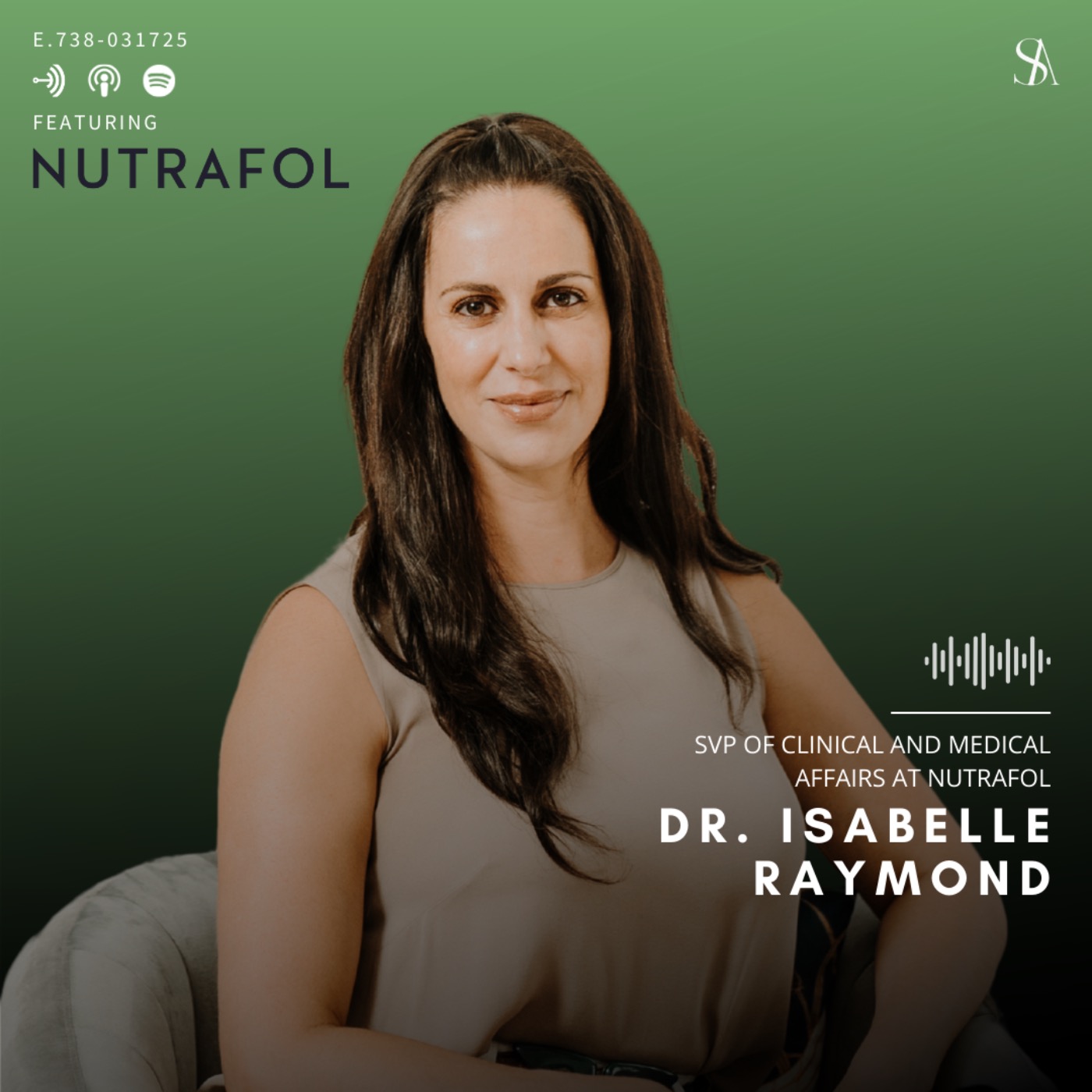
Hey, guys. Welcome back to Skin Anarchy. I am so, so excited about this interview because we're going to be talking to a brand that I've been, you know, a consumer of for a very long time. I've really, really loved this brand for many years. And, you know, just being able to talk about a topic that I think affects a lot of us, which is hair health. And so, without further ado, I want to introduce you guys to the Senior VP of Clinical and Medical affairs at Nutrafol, Dr. Isabel Raymond. Welcome to the show, Isabelle. I'm so excited to host you.
- [00:29]
Dr. Isabel Raymond
Thank you for having me. I'm really happy to be here today.
- [00:32]
Host (possibly a beauty or wellness influencer)
Yeah, I'm excited to chat and, you know, kind of dive into hair health because I think it's definitely a topic that's trending now, but it's been very, very important, you know, in the realm of wellness, beauty, and, you know, all these different categories. But I'm so glad that it's finally, you know, coming to the forefront and everyone's kind of really discussing it. So before we dive in, I'd love to learn about your work with Nutrafol, if you could kind of give us a little information about yourself and walk us down memory lane, how you got involved the brand and.
- [01:01]
Dr. Isabel Raymond
Sure. So I was a friend of the founders. I have been. I have a PhD in biomedical science. I have been in med affairs, clinical research in industry for a little while now. I'm not going to reveal how long, but it's been a while. And I've done everything from medical dermatology to aesthetics. But before that, I was even in neurology and cardiovascular. So I've done kind of like all the gamut in terms of the pharmaceutical and medical devices and going to a conference, the AAD or the dermatology, the American Academy of Dermatology. I met the founders of Neutrophil and they were like, really great talking about their supplement and eventually got me to join. And so it was a very interesting time because they were growing as a company, people had awareness of them, and our studies were just starting to come out. So I joined just to head, you know, help with the science and the clinicals. And again, still very small that we could, you know, be very creative in terms of, like, how we. How we studied the product, et cetera. And so really have enjoyed this new chapter of supplements versus the pharma and the med devices that are so mandated already by, you know, the FDA and how we study them. So it's been a very, very fun journey. So I've been there for five years and have just been leading the team and it's been really, really, really exciting and fun to see this company grow so much.
- [02:25]
Host (possibly a beauty or wellness influencer)
I always wonder about when scientists get involved with, with certain things that I feel like are, are a little kind of in the gray zone. I feel like supplements for a long time were there. You know, I remember growing up and like not knowing much about supplements and like whenever I'd see them it was kind of like, well, my doctor didn't prescribe it so I'm not going to really take them. But then as you get older, you start like doing your own research and like you start actually, you know, wanting to invest in certain brands. And for me, Neutrophil was always, you know, ever since I discovered the brand, I was like, I really like how everything is very research backed. I would love to learn about, I mean, maybe some of the misconceptions you had that you personally held about supplements before you joined the company.
- [03:05]
Dr. Isabel Raymond
Yeah, no, exactly. So I was skeptical. You know, I think as, as anyone, you know, supplements, you know, they just, when you hear about them or their advertisers, like, you know, what is behind it, how is it studied and you know, when you know the, the how pharma is done, you just don't assume or know much about how supplements are regulated and people assume it's the wild west. And, and you can say whatever you want and write whatever you want on your labels and make whatever claims you want without any substantiation. Not really true. But again, that was my vision or that was my thought I would say about, about that. So when they asked me to join, I was a little bit skeptical, you know, because I said I feel like I have a really good reputation. I'm well known in this, in this, in the derm world. And then when they were sharing their data with me, that really is what opened my eyes because I said they're just applying, you know, the basic research principles on their supplement when they don't have to. And I think that's what I really loved about it. Like there's no mandate. They don't have to do full formula testing for efficacy. So for safety, yes, but not for efficacy. And so to have a company invest so much money in hair research and I don't know if you, you're you or your fault or your followers are really familiar with how hair research is done, but it is so hard. It is hard because you are using objective measures. You are taking a photo, a macro photo of, of an area of a hair of a head that you have to go back to and count the hairs. Right. And so it's just the methodology is, is quite difficult. And for a company to doing the right methodology, but also in the right studies and then a full clinical program to me was just really cool because I feel like we're at the forefront and we're kind of like the leaders in terms of how would you study a supplement? Well, right. How do you provide that credibility? How do you provide what is necessary for people to believe that a supplement can do something and it will do the right thing for you? So I think it was a challenge, but looking back, I'm really thrilled because I feel like we really setting the bar or for supplement companies in the future.
- [05:06]
Host (possibly a beauty or wellness influencer)
Absolutely. No, I actually do look at Nutrafol like that because I feel like there has been a bar set, you know, in terms of just supplements that are actually trustworthy. I mean, I won't lie to you. I think that when it comes to supplement research, there are a lot of spaces that I always felt like were not filled. You know what I mean? Like, I'd go to websites of other brands and I'd be like, where's the data? Where are the clinical trials? Where's, you know, like looking for the actual facts and like, you couldn't find them. Those of us who come from science backgrounds, we know what to look for. So, like, you know, you can go. But for general consumers, I can imagine how much more difficult that would be. I want to ask you about that because, you know, you have this background, right? And like the rigorous research background. So how did you know your experience in pharmaceuticals really shape the way that you approached product validation?
- [05:52]
Dr. Isabel Raymond
It was challenging. And I'll say why? Because in the pharma world, you are mandated by the FDA to. These are the endpoints you need to study. This is the number of subjects you need. So it's kind of laid out for you in terms of how you're going to get product approval. So there's no gray zone in terms of how should we design the study and what should we be looking for and what's going to be meaningful. So for supplements, though, there's no guidelines. There is absolutely no guidelines. So you really have to think about what is going to be meaningful and what are the claims you, you want to make. And so I think first and foremost, it's just, it's just being a smart scientist. Honestly, it's, it's. I don't think we did anything that was outside of the box in terms of how we think scientifically, it was just done, which is, is what stands out. So really thinking about what studies, do we need to show that it works? Right? We need a placebo controlled trial for that. Let's do that. Okay. Now we need to show that it works in the population that we intended for. So let's do a different study now in a more diverse group. Now we need to know will it work in this, in this population at large, or what are the side effects, or what are the, you know, safety around it? And so we really designed a full program like we would for pharma. It's just not mandated. And we had to be a little more creative with it too, because, again, so we did model in terms of, like, what physicians would be looking for and what's meaningful to them. So looking at, you know, phototrichograms and hair counts, etc. That matters, right? We know that our audience of physicians would see the benefits there. And with their endorsements and with their becoming advocates for us, it kind of also helps with knowing that we're on the right track. And they also say, you know, I'd love to know what happens if I give neutropol in this population. So working together with, with thought leaders in the space also helps us design the best studies. So it really is having an open mind and being able to be a creative, but also scientifically sound in the methodology that we use.
- [07:42]
Host (possibly a beauty or wellness influencer)
I'm really happy to hear that you got the medical side involved, because I think that's. That's such a valid point that you brought up is that with the doctors, it's like you kind of have to really understand, like, you know, when you're talking to a patient, like, there are certain things you have to address. And so knowing that for companies to know that is very important, I think. I mean, that's very, very rare to see when you can really kind of address all the needs like a physician would have. Right. And all the questions they would have when they're. Especially because we're the ones that interface with the, with the patients when they're going to ask us questions, like, we have to be able to give like, you know, answers rooted in actual fact.
- [08:21]
Dr. Isabel Raymond
Yeah, no, exactly. And then also I think in what people kind of tend to forget sometimes subjective measures, like asking people about, you know, do you believe that your hair grew? Do you see an. Do you see an improvement that is seen as more subjective and maybe less rigorous, if you will. But in a addition to the, the objective measures that we use to show the product works. It also is important that your patients will see an effect because if I say, you know, objectively, you'll have, you know, so much increase in hair growth, that's great, but if, if, if the person does not see their own results, then it's kind of meaningless. Right. So it really is important to be able to measure efficacy and, and results in different ways, in different manners. So, so when you tell your patients, well, you know, subjects who took this or patients who have taken this have seen improvements in so long, especially with hair, because hair is not immediate. Hair takes three to six months to see results. Regardless of what you are doing, regardless of the treatment, hair cycle is long. It will not happen overnight. You know, so, so to see claims and say like your product will improve hair within a week for growth, it just, it doesn't make sense. And so it really is kind of like we need to, to be humble in what we're sharing and also in what we expect and what we want our, our patients, subjects, and consumers ultimately to expect.
- [09:39]
Host (possibly a beauty or wellness influencer)
It's a fight between science and marketing.
- [09:42]
Dr. Isabel Raymond
I think a lot of times.
- [09:44]
Host (possibly a beauty or wellness influencer)
Yeah, it's like this ongoing battle. But, you know, with, with that said, I would love to learn. I mean, are there any myths about hair health and supplements that, you know, you find yourself debunking a lot on a daily basis?
- [09:56]
Dr. Isabel Raymond
On a daily basis, I said, you know, if I travel and I, I want to talk on an airplane or something, I tell people I study supplements and, and that just keeps me talking the entire trip. If I don't just, I say I do something else curious. And everybody has their, their preconceived notions of base, you know, of what, what they get on their feed or what they've been told or how they grew up, you know, so we have some physicians who are such believers and they believe in, you know, making sure that you have the healthiest, you know, whatever you can contribute beyond your diet is important. And so it's, it's where people come from. And, and the questions we get are always similar to what I said earlier about hair growth, for example. That is a big one. And why don't I see results right away? And just debunking, that's not even supplement related. It is biology related.
- [10:40]
Host (possibly a beauty or wellness influencer)
Yeah.
- [10:40]
Dr. Isabel Raymond
Our growth cycle is a very long cycle and you will not see any benefits in terms of growth for, for weeks to months. We say at least three months and six months and beyond. Right. So that's a big one. Secondly, supplements, the fact that they're not regulated. I think there's a lot of confusion there. They say, well, you guys can do whatever you want. It's like, well, that's not true. And there is regulation more specifically related to quality and safety. And you have to work with the FDA to submit these, these claims, and you have to work with them to, to show the safety and how it's manufactured. And, you know, and then we see these articles about like, all these heavy metals that are found, you know, and whether you talk about protein powders, you know, there's just so much out there that people have a hard time understanding how they are, how supplements in general are, are manufactured, how are the quality and how they're tested. You know, like we. And even adverse events, for example, adverse events post marketing. So that's done in the drug world. You know, we're well aware that anytime you do a study or if you are post marketing, so that means once you're on the market, if, if a healthcare professional hears about an adverse event for a drug, for example, they're, they have to report it. And if you work for the company, you also have to report it. There's a certain timeline, et cetera. That is a process that you follow. And we have to follow that too. And that's a big misconception that people don't know. So when we do, we do monitor for adverse events, we do all that, and we have third parties, you know, tabulate that for us, and we do submit to fda. So I, there is a level of safety there that people are not aware of. That I think is important to know as well.
- [12:20]
Host (possibly a beauty or wellness influencer)
That's really interesting. Like you guys have to actually report all of the adverse events and stuff. That's very interesting because, you know, I think a lot of times people have this misconception around supplements. I've seen this a lot where, you know, people will chime in consumers, and they're just like, you know, I don't think anyone's hearing me. And it's like, I think they are, you know, because you have to like, right. You have to add at some point, if somebody reports something, you have to actually, like, address that. You can't just ignore it. Yeah, do.
- [12:48]
Dr. Isabel Raymond
And there should be a number. There should be very clear who you're supposed to call and what you're supposed to do. And that kind of is also a sense of, that gives you the, the, the confidence that the company that you're, you're purchasing from will provide all the services, does have all the regulatory structure in place. Right. And I think that's, that's one of the misconceptions that I hear about a lot. You know, everything related to the quality. And you guys can just put whatever the labels can say, whatever. Another thing that I get asked about a lot is, is, God, there's, there's so many ingredients and there's so much of it. Like, how do you know which amount? Like, are you just choosing your. Your, you know, randomly putting in, you know, south palmetto or. And it's like, no, it's based, again, it's based on studies. It's based on what is the serving of that ingredient that you need to address, what you want to address. Right. For us, again, it's going to be related to hair. So we want to make sure that the amounts of the ingredients in our product have us have a scientific base, number one. And number two, that it's consistent across. Right. People don't believe that, oh, supplements, you, you know, you get different batch from one to the other, you won't have the same ingredients. And that's not, again, necessarily true. Companies should have standardized ingredients and they should be standardized across each bottle. And so, yeah, that it's consistent. So you know that when you're taking your product, you take the same thing in the same dose or serving on a daily basis.
- [14:17]
Host (possibly a beauty or wellness influencer)
There's a lot of stuff out there that's misinformation. So I'm glad that you're speaking on this, you know, honestly, because I, I feel like that is the general consumer, like, you know, they, they do think. And all of us have this tendency of thinking like, well, am I really taking what this advertises? Right? I mean, I want to talk to you a little bit about biotin. I feel like this is like one of my. The big questions I have, you know, is this idea of like, for a long time, when it came to hair health, right? I mean, all like hair health, nail health, all of that, biotin was the ingredient. It. Everybody take biotin. And I mean, as you know, like, from a medical standpoint, there's a lot of downsides also to excessive biotin, you know. So, like, what are your thoughts about the single ingredient, you know, method versus, like the more holistic approach.
- [15:05]
Dr. Isabel Raymond
People want to know, why am I taking, you know, 26 ingredients and four pills, right? Why is that important? So I think again, going back to what I said earlier, each the ingredients are there at the servings that are needed that have been studied to show an effect. And then we study the formula in its own to make sure that there's an effect. But when you think about hair growth, and I think this is what the founders started talking about a decade ago now, because they've been out for a decade, is really, you know, thinking about how hair growth was approached in the past. It was very monadic. It was like one ingredient was one root cause. It was, you know, we're addressing hormones more specifically. So minoxidil, finasteride, biotin are all targeting one thing. So what they really put out there is they're looking at the research of what affects the hair follicle and knowing that your whole body is going to affect it. Right? So you know that the gut microbiome is hugely important for hair growth. The stress is important for hair growth. Oxidative stress, lifestyle hormones, you know, a lot of these things are all feeding healthy hair growth, right? So if you have a, an imbalance, if you have an issue, if you're super stressed, if you're, if you have leaky gut, all these things will affect hair growth. So it's providing a product that addresses each one of these root causes, knowing that all of them together will support a healthy hair follicle and therefore healthy hair growth. Just targeting one can help, but it kind of, it misses half. It misses most of the picture, right? So really. And when talking to dermatologists, you know, when they, they see patients, they throw the kitchen sink at, at their patient. We don't know what their cause is going to be, so they do a lot of tests. But also knowing that it could be so many things affecting your hair. So we're going to make sure that we look at you holistically. And I think that was a very important first part to understanding hair biology and how are all pathways. I mean, that gets a little more complicated, but really the big, the big picture is a lot of things can affect your hair growth, and hair is a reflection of your health. So looking at it that way, one ingredient is not going to be helpful, but it's not going to be the most helpful because you're probably missing other things.
- [17:09]
Host (possibly a beauty or wellness influencer)
I completely agree. And I think that that's something that's also like a big education point is that, you know, just adding to what you said, there needs to be this understanding that with supplements and I feel like with anything, right. I mean, in the, in the grand scheme of things, you're. The human body is not designed for single ingredients. You know, like the way the body works is just, it's contradictory to that. You know, it's like, even when people talk to me about skincare. Right. And they talk about things like collagen production. I'm just looking at them and I'm like wondering, I'm like collagen production is not like a one done, you know, kind of thing. Like there's about like five, six co factors involved. Yeah. So like just like the way the body works. I think it's very important for consumers and everybody to understand that, you know, when you are taking something like a supplement, it does need to follow this kind of ethos, kind of what you were talking about, where there are multiple ingredients, they're working synergistically, there's different reasons they're in there. That is how the body works and processes information.
- [18:06]
Dr. Isabel Raymond
Absolutely. And again, I think, you know, what we try to do, which I really, really respect, is if you don't take care of your body, you know, you need to move, you need to eat well. You know, all these things are also, they have to be in combination. They have to be that the, they have to, you have to start there because if you, you know, a supplement is going to help, but not if you don't help yourself too. So I think that's also a key point. People assume like, oh, I'll just take this and it'll be better, it'll counteract what I do, and that kind of defeats the purpose. So we really try to talk about, you know, your hair is a reflection of your health and if you're going to be stressed, then what are you going to do to help that stress? What are you going to do to, you know, just taking it, you know, a stress adaptogen. Sure, it, it'll help. But you know, there's other things too. There's the meditation, there's the, there's the parts of practicing methodology to, to remove your, to, to reduce your stress. So I think, I think we also talk about lifestyle a lot because without lifestyle supplements it's going to do very much and, and even like what is, what comes first. If you don't have a good diet, you know, you're not going to absorb the nutrients that you need for hair. And like giving a supplement will help again. But you know, let's, let's bring you to a good balance first. Right. And this could be something that kickstarts your, your journey. Right. One doesn't have to, to start with the, start without the other. But I think it's important to look at it again from a holistic perspective, not just from a supplement standpoint and what the supplement is doing for you, but also how you how you address your health in general.
- [19:32]
Host (possibly a beauty or wellness influencer)
I agree. I agree. That's. That's very, very valid what you're saying. And, you know, I actually want to talk about a specific subgroup of individuals, and I think this is definitely something that, you know, finally we're discussing more as a society is. Which is menopause, you know, and I think this is very important because when I think about. About, like, hair thinning, for example, you know, there's a lot of. I know there's a lot of, like, autoimmune conditions, and there's a lot of different reasons why people experience hair thinning, but when it comes to menopause, it is a very common symptom. So, you know, when it comes to, like, kind of testing across different life stages, like, what are. What is neutrophils? Take on that and how you see that in terms of just the overall data that you guys are able to present.
- [20:16]
Dr. Isabel Raymond
This is what I love about it too, is that, you know, you're not the same person you were in your twenties as you grow older, and you go through different life stages, specifically women, you know, more related to. To. To reproductive health, et cetera. So thinking about a woman before she has kids, postpartum, menopausal, and also, you know, based on diet. So our vegan is also a formula. So we try to have formulas that really address root causes. Again, the root cause are going to be very similar, but maybe push a little harder depending on where you are in your life, including menopause, for example. And ironically, you know, as our menopause data came out, I was going. I realized I was like myself in. In on zoom calls and realizing, oh, my God, this is happening to me, and I had no idea. So the fact that I'm an educated woman in this space and I had no idea this would happen to me, just goes to show how much work we have to do to educate and what we can do about it. So it was very ironic that I was living through menopause. Still am as. As I go through this and noticing the hair changing, and I was like, oh, thank God we have something, right? Or I understand why. And it's not something that I'm doing to myself. This is actually a symptom of. And being part of. Of developing products that are specifically tailored for women throughout their lives, I think is so important, not only because we identify those. Those life stages as unique, but also we care about women's health and we're studying women, which is, again, another thing that's different, you know, Historically, women are not as studied as much as men. So the fact that we're investing, again, in studies for women to see results in women, to me, is also very important at, again, the different stages. And I don't think I can tell you how hard it is to study postpartum women because getting women who's just had a baby come in to evaluate. Yeah, it was so hard. But again, I mean, I love the challenge because it hasn't been done, but just because it hasn't been done doesn't mean it's not doable again. You know, talking about menopause is. Is a big thing because women were not wanting to, and now all of a sudden it is blown up and. And women are just, you know, talking about it constantly, which is so phenomenal because we also are saying this needs to change and what are, what are solutions that we can take? So the holistic approach, not only from a body perspective but also from a lifespan perspective, to me, is just. Is really genius. And it sets us apart because we know that. That the ingredients you're going to need postpartum are not the same as. As when you're going through menopause. So I applaud them for. For having that forward thinking, you know.
- [22:53]
Host (possibly a beauty or wellness influencer)
Absolutely. No, I. Absolutely. I couldn't agree more. I think that that's. It's so, so important, especially like you said. Yeah. Like now, I mean, finally we're talking about this, you know, and it's like menopause. I mean, I can't even tell you. I've had this conversation with people, you know, on the show before, where it's like, you know, I remember going to. And sitting in medical school classes. Right. And we didn't even have a single lecture on menopause. Like, the medical community even is catching up with this, even though every woman goes through it. And I feel like with hair health especially, that's one of the biggest things that women experience is this, you know, change in the way your hair looks and feels and, you know, and so much is tied to that. So the fact that we're not addressing that or we haven't been addressing it is baffling to me. I think that I was. I was talking to a colleague the other day, and we're talking about how there are certain vitamins, like, you don't. Don't end up realizing that your body no longer is even absorbing them anymore going through menopause. So it's like there's multiple things going on. You know, it's a huge topic.
- [23:51]
Dr. Isabel Raymond
It's such a huge topic. And you're so right. And you know, I'm learning every time I feel like, oh, and I actually, because this was so important to me going through it, I became a certified menopause coach just to be able to learn because I'm like, where am I going to learn this? And you know, there's so much I can read, etc, so I, I think I, I want to be an expert in understanding what's going on for women and myself included, and also to be able to know what, what would they need? You know, I know I needed this. But everyone is so different too when they go through menopause. Like the, the, the symptoms are going to be different because everyone's different and there's estrogen and progesterone receptors all over your body. So you know, your itchy ears may affect one person more than another or vertigo or like all these things that you had no idea. But what I love about the, the, the balance formula that we have, you know, the funny story behind it is we first came out Nutriflow, first came out with a men and a women's formula. And big difference between the two is there was more saw palmetto in the men's version. A little more hormonal support for men to help with the conversion of into from testosterone to D. Sure to, to stop it. Right. So dermatologists were giving men's formula to women in their 40s. Say, this will have more self palm, it'll be better for you. So we could have just stopped there and just slapped a, you know, this one's for menopausal women, you know, with the men's formula. But we reformulated with the right amount of self palmetto, but also added more ingredients specifically for women who are going through menopause. So it's, it wasn't just like, oh, you know, here, just take the leftovers. That'll be good enough for you. It's like, no, let's develop a product actually meant for you. Which now I feel like it's taken for granted. But even like five years ago, no one was, no one was doing this. And so I just, I, it's, it's, it's really focusing on who your client is and who your customer is going to be and what do you develop for them. And they really had an ear to really hear what was going on related to hair again. Right. But even like the gut microbiome that, that changes to your point, that changes and you, you no longer have certain strains in your gut. So you Cannot absorb the, you know, so you. It's. Here's a new body with no directions, no instructions, and figure it out when you've been living in a body for 40 years. So it's, it's understanding and understanding, like, oh, my gut's all messed up now, or, or it's not absorbing. So I need to change what are the strains that are going to help me and help me absorb, you know, the nutrients. And so I have better hair. So it's, it's really, it's, it's a beautiful story when you have the right data. And I feel like supplements do play a huge role here because again, you're not broken, you're not diseased, you are going through changes and you need some support, but you need the right support. And thank God it's studied in you.
- [26:36]
Host (possibly a beauty or wellness influencer)
Really hats off to Nutrafol because they've. I've always seen the company as truly a leader in the supplement space because of these things that you're mentioning. I think that, you know, it's. For me as a consumer, you know, I can't speak for anyone else, but for me as a consumer, I've always seen that, that you guys are always ahead of the curve. You know, you're always trying to, like, do things that are not already done. There's so many things that are just not studied. I mean, I brought up autoimmune disorders before. Right now we're seeing the largest uptick in autoimmune disorders since ever, you know, in the history of modern medicine. You know, like, no one's talking about these things. At some point, you know, someone needs to take the lead and say, no, we're going to study this and we're going to come up with solutions, you know, and that's, that's the bottom line. And I feel like that's what neutrophil, for me, as a consumer, it really stands for that. You know, the whole company stands for that. And it takes a lot of guts to do that, you know, it does.
- [27:29]
Dr. Isabel Raymond
And I, you know, I was skeptic and I, I understand. And so now I feel like I unders. I understand skeptics and I think we all do. And so I, I feel like we're armed to be able to, to have these conversations and to debunk some myths and to really clarify positions because we have the data, you know, and we publish our data too, which is, you know, not, not. You don't have to. But I think it's important that if we are going to do research, yes, it's good for research, for the supplement, for the company and for our claims, etc. But also it puts, it puts the importance out there. Like we are studying menopausal women, we are studying postpartum women. It is doable. It's hard, trust me, it's really hard. But doable. Right. And, and, and a lot of times women, oh, we're not going to study them because it's, they're, they're hormonal and they go through these things. Even, even female animals are hard to study. Right. And so very difficult by, by being gutsy and doing, and I can't believe it's saying gutsy by studying women because we're half the population. But it's, it's, I'm like, sure, of course. But let's not take this for granted because, you know, women didn't have to be studied up until like 1993.
- [28:36]
Host (possibly a beauty or wellness influencer)
Yeah.
- [28:37]
Dr. Isabel Raymond
So, so, and I don't know, I don't know if consumers know that. And so I think when you see companies who invest in clinical research and yes, we pay for it, but, you know, who else is going to pay for, you know, industry is industry. We pay for our studies just like pharma does. So we do everything we can to minimize bias, to have third parties. You know, we do all the right things, but people need to understand that, they need to be educated on how the process is to begin with. What is the scientific process, how do you conduct clinical trials, how do you study things? And that's the same principles we're applying here. So that doesn't change. The only thing that's different is that we're not mandated to do it to go to market. And the fact that we do it is incredible. And I just, I, I, I mean, I, I'm just, I'm thrilled. So again, like, from a skeptic to now being able to lead the clinical program and decide or convince. You know, what I've loved about my journey here is that going to the founders and saying, we need to do this, we need to, I need all this money to study this. They could have said, oh my God, no, you're crazy, we're not going to do this. But they're like, is it going to help? What's it going to add to the, to the literature? And by telling them, they say, do it. Right. Because we are trying to provide data to perhaps develop other things or in combination with other, you know, with treatments. And so it's research is valuable, I think, regardless of who does it, if it's done well, it adds to, it adds to our knowledge.
- [30:00]
Host (possibly a beauty or wellness influencer)
Yeah, it adds to the pool. I mean, it's literally like. That's what I meant. Like, you guys are, you're pushing that, you know, you're pushing that boundary and that line and saying, like, no, we need to figure this out. You know, as a consumer, for me, it matters a lot. Right. Because for me, companies are not just about, okay, they make a product, it feels good. It's really about somebody who decided to change something. And I'm glad you brought up the statistic about, you know, women weren't even being studied before the 90s. You know, we weren't even being looked at. And so it's huge. This is absolutely huge. It's very gutsy, even though it shouldn't have to be. You know, we shouldn't have to say it's gutsy, but it is.
- [30:37]
Dr. Isabel Raymond
And hopefully we change that. And we, you know, we, we really say this is, this is important because, you know, to me now, knowing these things, knowing that, you know, procedures and other, you know, drugs themselves may not have been studied in, in women, and so the doses are all based on men and it's extra, it's extrapolated and applied to women. When. Where's the safety data there? We don't know. So I, I've started looking at things a lot more differently a. As I'm doing my research to really understand the history of, of studying women in this country. I'm actually Canadian, and so I, it was all new to me. I just assumed that women were studied because why wouldn't we? But when you really start understanding, you know, it's only been in the last 30 years. So I think it's important that we look at everything from a lens and we really focus on the population, you know, and this is true for either, you know, treatments or even supplements in terms of who is this for and has it been studied in that population?
- [31:33]
Host (possibly a beauty or wellness influencer)
Absolutely, I agree. Now I want to talk about the synergy complex. I know it's a key part of neutrophils formula. I would love for you to walk us through the science behind it and how it really supports hair health.
- [31:46]
Dr. Isabel Raymond
Sure. So, you know, the good thing is we have like all these wonderfully published papers that, that go in, like the very, very, you know, deep science of, of each ingredient. But, you know, going back to the root causes that we mentioned earlier, right. It's really understanding that the hair follicle is affected, you know, locally, obviously by, you know, different factors, but your body contributes Your whole body will contribute to how hair follicle is, is affected in the hair growth cycle. So if we talk about the hair growth cycle just for a second, just for people to understand, there's, there's kind of three, three or four phases of the hair growth cycle. There's the antigen phase, which is the growth phase, right? And that can last anywhere from two to seven years depending on, on, on, on your genetics and other factors. And so your hair's grow and then it gets into the catagen phase, which is kind of like a little resting phase in between until you get to telogen phase. So catagen is a few weeks and telogen can last a few, a few weeks to a few months. And that's when your hair sheds. Right. So every hair follicle is its own little organ, if you will, that all have their different clocks, right? So not, you're not going to lose all your hair at once. And you know, you shed hairs on a daily basis and those are the hairs that should be shed, but there's always new ones coming in. So that's kind of like the good of the growth cycle, which is why it takes a really long time to see effects on the hair. So understanding that cycle, understanding what factors will affect, so how stress will affect the, the growth phase. So ideally we want to stay in antigen, right, because that's when her hair is growing and it grows longer. But things can make it switch from anagen to telogen. And those can be, you know, like weight loss, really rapid weight loss. It could be stress, it could be fever, it could be, you know, lifestyle. All of these things will affect the, the growth cycle of, of the follicle. And so when you think about all these root causes, it's like, well, it's, you're not sick, you're not broken, but like, what is it? Are there some things that can be used to support these root causes in order to, to improve your, your, your hair growth? And so that's based, that's how the synergy compl is based. And since there are several root causes, it takes several ingredients. And that's why people are like, why do you have four pills and all these things? It's like, well, because we're trying to be so comprehensive in everything that. Yeah, so it's like, you know, we talked about earlier, it's not one, a single root cause that's going to affect your hair. It's a lot of different things. So we try to put everything in there for you so you don't have to take more than four. But the four pills really are. Are packed with the. I think we have 26 ingredients depending on. On which formula. But again, each one is tailored to, to address the root cause with these ingredients. And so the synergy complex is, is, you know, you have yourself palmetto, you have your ashwagandha, you have your curcumin, you have your tocotrienols. I mean, miss some, but that's kind of like the base. And then you have your, your, you know, other vitamins and minerals, amino acids, all the things to keep you functioning properly. So we'll have more or less of sub palmetto. Like I said earlier, in men's and women's. And in women's balance, Balance has the synergy complex plus other ingredients like maca and astaxanthin. So all of these ingredients have research behind them in hair to show that it does help improve hair growth, but also to help that root cause. And I think when you put it all together, the synergy complex really tries to be the most comprehensive formula to address all the possible or most of the root causes affecting hair growth.
- [35:17]
Host (possibly a beauty or wellness influencer)
I would love to really understand like, each of these ingredients, like, separately, because, I mean, honestly, not right now. That's a whole podcast, I feel like, on its own. But, you know, I would love to actually dive deeper because it's interesting how, you know, hair health is so much more complex than we ever understood it to be. You know, people talk about like, there's the follicle and then there's the actual, like, shaft of the hair and, you know, the strand and whatnot. But like, no one's talking about, like, what leads to actual turnover of hair cells. Feeding your scalp with what it needs to be able to be healthy.
- [35:48]
Dr. Isabel Raymond
There's the feeding from inside, right? We talk about supplements and. But there's also the outside part too, which is also important. That shouldn't be neglected either, because if you don't have a healthy scalp microbiome, if you're, you know, washing your ha. With, with products that are be stripping, you know, that can be also affecting your hair growth and whatever, you know, you could have conditions on your scalp. So the in, in and out approach are both very important. Again, it's the whole holistic view of, of. Of hair growth. Like, it's kind of like I like to say, like, you know, you, your skin, if you protect your skin on a daily basis, it, it, it's important, right? So which, so protecting your hair as well is important in how you wash it, how you Treat it. But to your point, there's more and more. There's a lot of research done on hair follicle and beyond my comprehension at this point because it could get really in the weeds with like the wind pathway and all of these, you know, very, you know, down cascades of, of, of of what happens to keep the hair in and also keep it in antigen, but also what all the triggers can be to get it out of antigen. So I, that's a little beyond, beyond the conversation for me at this point. But I know that there's constantly like new targets that are being being developed. But again, I think regardless of what happens locally at the follicle and the understanding of, of these pathways and like other, you know, potential new drugs that can come out to, to help with hair growth, I think it doesn't take away from the fact that your whole body is feeding it. And to me this is such a base for everything if like, you know, you need to take care of your gut microbiome. You know, we have a hair biotic specifically designed for that to make sure that that root causes address because without it you're just, I feel you're going to be spinning, you're going to be spinning your wheels because you're not addressing the root cause. And to me like this is kind of the base to really bring your body to the healthiest possible to be able to, to have the best results with other treatments as well.
- [37:37]
Host (possibly a beauty or wellness influencer)
Yeah, no, this is like, it's actually huge. And I'm glad you brought up the microbiome because I feel like that's something that we really do kind of underestimate. You know, with hair health in general, when we talk about these things and we're talking about like what actually leads to like, you know, hair thinning or anything that has to do with like, you know, you're noticing a difference in like the health of your scalp or itching or whatever that might be. Like you have to start thinking as consumers, like there is a very real medical reason here, you know what I mean? That we need to understand and like, and start to understand your own microbiome.
- [38:08]
Dr. Isabel Raymond
Totally agree. And I think, you know, we will see more like specialized medicine as we, as we move on. You know, individualized and really kind of tailored to you. You know, an example of that, like I recently wore a blood glucose monitor just to, just for, just to see because I'm going through menopause, things are changing. You know, I was starving. You know, all these things that I new body didn't know what was going on. So yeah, this, this glucose monitor and you know, you always think like, oh, these things were, these are the generally healthy foods and it is so individualized. What. Why are the. My sugar blood spiked. Eating certain things that I never would have thought and for others. So it really is important to know your body and know certain things. Even like general recommendations are general, but you need to understand how your body functions and, and what, how you're going to respond to. And so I think thinking about these root causes really is important, you know, not only for, for hair supplements, but for, for your, your, your health in general and understanding how you can be the healthiest. Because if you're eating things that you think are healthy and they're not. Yeah, not helping you. So same for supplements, right. You know, you want to take the ones that are going to be helping you, you as best possible.
- [39:22]
Host (possibly a beauty or wellness influencer)
I think medicine is definitely going in that direction as well. You know, like precision medicine is on the rise and stuff because of these reasons. Exactly what we're discussing here, you know, because there is no one answer fits all. But I think there are certain things that everybody can do to just improve your overall well being, you know, and I think that a really great supplement is definitely one of those things. You know, I think most times when you go to a doctor's office, you're going to be prescribed some sort of a supplement, whether it's a vitamin D, whether it's a multivitamin, whether it's, you know, your doctor at some point is going to tell you your body does need a little bit of extra help now, you know, you're reaching that age, you're reaching that point where things do start to kind of break down a little bit, you know, and so it's important for people to be able to choose the right things. And I think that's, for me, that's one of the biggest reasons I was very excited to host, you know, Nutriful, because I know that you guys are one of the only brands, you know, that like someone can reach for and they know that they're going to get something that's very well researched. It's actually beneficial to them. At the end of the day, quality is what matters. You know, if no matter what it is, like whether you're doing a topical treatment or like a skincare product or a hair product, you have to look at quality of ingredients, quality of formulation, quality of the science.
- [40:35]
Dr. Isabel Raymond
Well, thank you so much. And you know, I think it takes a lot of education too and like doing, doing things like this not only reaching consumers, but also reaching physicians. Because I don't think there's a lot of education that's done also for supplements in medical school. You know, you learn about, you know, drugs and, and maybe devices, I'm not quite sure. But I, I think we're not only trying to put a product out there, we're also trying to educate. You know, part of my, my job at the company is really to educate, you know, residents and, and physicians and really make sure that they know. So, and if they don't know, I'm there to help too. Right. I'm here to say like here's, here's, you know, the regulations etc and just so they know, so they can feel confident and also know what to look for in a supplement, which questions to ask ask and just to give a little more confidence when recommending something because you want to recommend the best things for your, for your patients, but you also want to make sure that you are, you have all the right answers for use for, to make that recommendation. So not only in the data but in the quality in the manufacturing, in the, in the, the resourcing, in the, you know, all of those things and the quality of the ingredients and the why those ingredients are in there and why is there that much in there. You know, all of those things need to be answered. And, and part of what we do is making sure that we educate, educate as well.
- [41:45]
Host (possibly a beauty or wellness influencer)
Absolutely. I love that, I love that so much that you guys are so behind education and you really want to spread the actual real facts, you know, out here rather than just marketing and all that. That's so meaningful. I would love to get your advice though, you know, because I think that when it comes to hair thinning, it can be a very scary place, you know, for a lot of people. But just as overall advice like what would you say to somebody who's experiencing hair thinning? They don't know where to start. You know, just some words of wisdom on this.
- [42:15]
Dr. Isabel Raymond
Well, I would say, you know, really depends on where you are in your life. But first, first and foremost, you know, to me it's always important to go see your board certified dermatologist. That's what I'll always recommend. Because you don't know what the cause is and you know, what, what you guys do and how you see patients will be able to determine what is the cause. Right. If there's one and if there's an underlying condition, I think that's always first and foremost important to know. Secondly, you know, if it's related to menopause. Know that it's, it's, you're not crazy, it's not all in your head. You know, if you're going through postpartum, all these things, I think chances are it, to me it's a sign and it's a sign that, you know, maybe, you know, go see your board certified dermatologist and, and assess what is going on with you in terms of everything, possibly in terms of your gut, your stress, your, you know, hormones, anything like that. I think it's worth, you're worth it. I think your hair said is, is we always come back to this. It's a reflection of your health. And so to us it's really important that you, it's not ignored, it's not dismissed. And even if you go see your physician and they say, well, your hair looks really great, you know, your hair, you know, if your ponytail is a little smaller now, so really, you know, know that there are options. I think, you know, don't stress about it, know that there are options. There's groups, there's people you can talk to. But to me it's like you're not alone like that first and foremost and you're not, not, you're not a singled out person that this happening to and there's no solution. I think there's solutions, there's people who are willing to listen and there are many new treatments now. I've honestly, like when I first started five years ago, there was very little things and now there's more and more really cool things, not just related supplements for hair growth. And so I'm like, look out there, find a really good resource that can walk you through these options. Someone who's credible, hopefully who can really kind of walk you through. I think there's, there's solutions out there that I don't think were available before.
- [44:03]
Host (possibly a beauty or wellness influencer)
I think that's wonderful. And thank you for, thank you for saying that. I think that's really, really a very key message because it is very scary, you know, and, and I know that whenever, especially for women, like we have so much pride, you know, in the way that we look and take care of ourselves. And it can be a very scary thing when you start noticing something like, you know, hair thinning and, and you start noticing these changes. So yeah, I completely resonate with that. You know, you can't panic. You have to find the solution. And yeah, it, I just, you know, for anyone listening that's going through that, just know that there is a way, you know, that you can approach it very systematically. Thank you so much. This has been so wonderful to talk to you as well. This was very, very informative for me. You know, I learned so much. Definitely a topic that needs a lot more education, you know, especially in like the social media space and the, in anything in any conversation, especially when it comes to menopause, you know, like, I don't even want to get started again on that, but we could do a.
- [44:57]
Dr. Isabel Raymond
Whole session just on that. No, absolutely. And thank you for listen, it's been a pleasure. And any, any opportunity we have to be able to like share and educate is, is so wonderful. So thank you, thank you for this opportunity.
- [45:08]
Host (possibly a beauty or wellness influencer)
Thank you so much. And for everyone listening, I hope you guys learned as much as I did during this episode. And if you have any feedback, anything you want to chime in about, please do. You can email us and definitely check out nutrafols supplements. I will link everything in the show notes of this episode so you guys can access it very easily. But thank you for tuning in. Hey guys. So I hope you love that episode. Please make sure to hit subscribe if you're tuning in to us on any podcast platform. We are available on so many different platforms, so wherever it is that you're tuning in, just go hit subscribe. You will be immediately notified when we publish new episodes. This way you're able to tune in to you amazing insights from experts, brand founders, industry leaders, authors, all the wonderful people that we host. And that's very important for me because I love to hear from you guys and really understand what you love and what you want to hear more of. Also make sure to give us a follow on all of our social media outlets. We're available on Instagram, TikTok X, you name it, we're there. We also have a blog on Medium, so if you're a reader and you love Medium Blue blogs, check us out on Medium. We publish some really great articles on there that do deeper dives than just what's available on the podcast. And it's really a great place for all of you science geeks out there that want to learn a little bit more. We go above and beyond with our research and making sure we're bringing you information that you usually probably won't hear about in other outlets. So check us out, leave us a comment, leave us a review, and we'll be back next time with another episode. Thank you.