← Skin Anarchy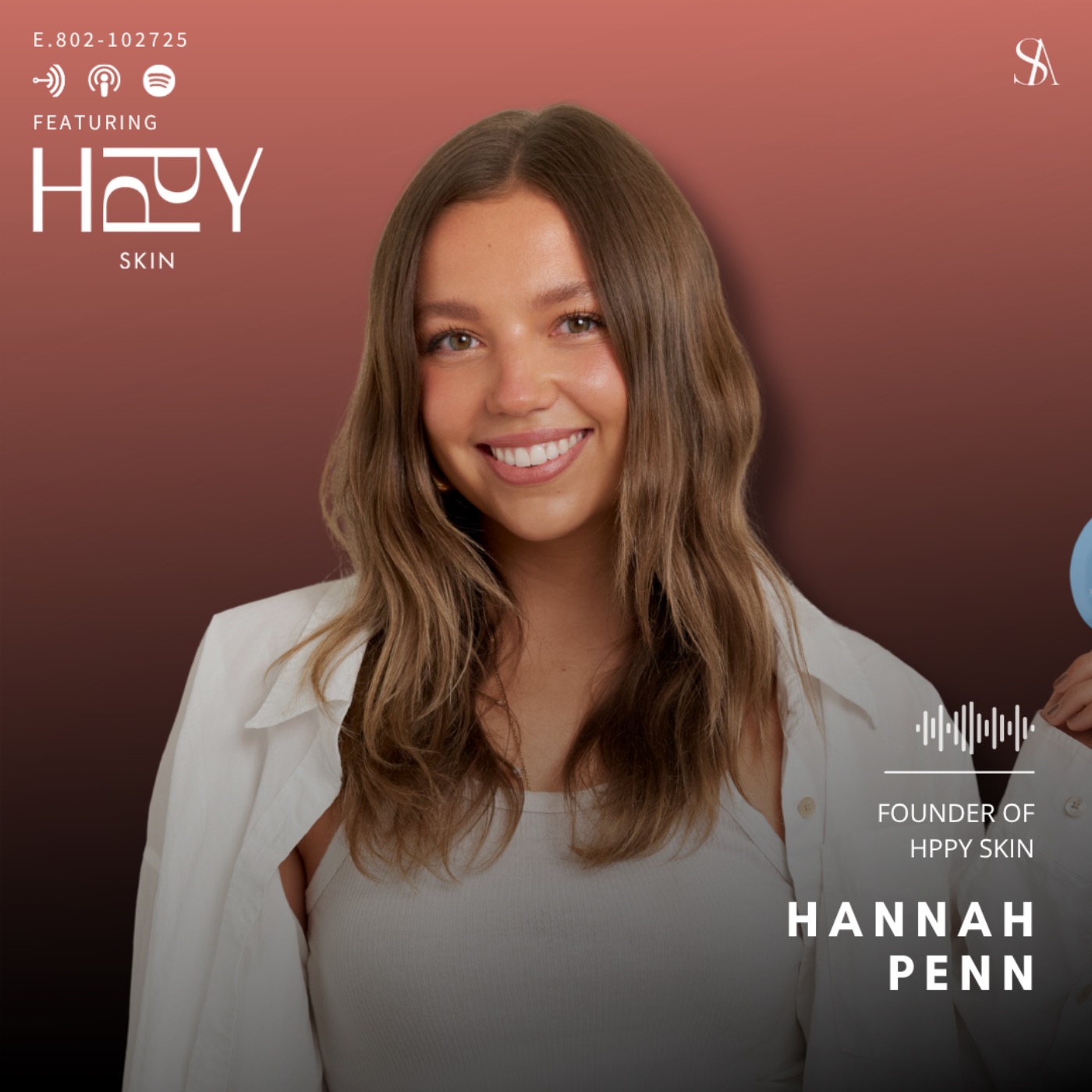
Loading summary
Transcript47 lines
- [00:01]
A
Hey, guys. Welcome back to Skin Anarchy. Today's episode is going to be all about how we extract ingredients when it comes to skincare products. I think this is very rarely talked about in our space because companies don't want to disclose that maybe X amount of the product or the ingredient is being lost during this extraction method. And so I find this to be very unique and interesting about HPPY Skin. So welcome Hannah Penn, who is the founder. Welcome, Hannah. I'm so excited to dive in and chat with you.
- [00:28]
B
Thank you so much for having me. I'm so excited to be here and to talk more.
- [00:32]
A
Yeah, no, I'd love to get started. I mean, you started happy skin at 20 something. I mean, that's really young for starting a business. How was that? Tell us about your journey.
- [00:42]
B
Yeah. I grew up in a family business. My dad started Good Foods that also uses HPP technology in 2008. It has been quite a journey. I was introduced to the technology really young as well. There's like a. A few moments in my childhood that really stand out to me. One of them was when my family first started talking about high pressure processing. There was a conversation that my parents had where he never saw the technology, he never saw the equipment in person, but knew what it did. So he decided to invest sight unseen. He just believed that it was going to change the food industry. That's kind of where this all started, was how significant that moment was in my life and my family's life. And every single thing we did revolved around this food business and bringing people really high quality products that they saw the label, they knew exactly what was in it. There was no preservatives, and it's excellent, it's healthy for you. And that piece of technology was really the sole purpose of what it was meant to do. So the three main benefits of HBP is safety, extending the shelf life of a product, and nutrient retention. And so when I started digging into skincare and how actives and ingredients are made and processed in the skincare industry, I just knew HPP could really transform this space through that nutrient retention piece. It's been ingrained in me from a very young age and I just was a personal mission to bring HPP into skincare.
- [02:23]
A
I love that. I think this is so fascinating. I want to learn more though, about the, the actual HPP component, the technology itself. Could you tell all of us how does this work? What is it? I know the benefits are immense, but just kind of walk us through, like what the actual tech is.
- [02:38]
B
Yeah. So it is a 90 ton stainless steel machine, you really would not think that that would fit in beauty. I mean, it is not a thing at all. But it essentially uses 87,000 psi of cold water pressure. So if you imagine taking a product to the deepest part of the ocean and then six times deeper, that's the amount of pressure that high pressure processing uses. And so typically what you see in the skincare industry, the traditional methods of extracting ingredients is heat or chemical solvents, both of which really degrade the nutrients, which then in return really degrades the benefit for the consumer. So HPP uses universal pressure because it's universal, it's very gentle and it doesn't smush anything. Like I feel like when you think about pressure, you think if you put a grape in the machine, it would come out completely smushed because it's universal. You really, you put a grape in and you get a grape out. And so what happens with that intense amount of cold water pressure is that it pokes holes into the plant cell walls and, and the plant cell walls, it's like a balloon of nutrients. It just kind of like pops the balloon and allows the nutrients to flood out into the formulations and into the substrate. It's really able to keep whole food ingredients and their nutrients intact and even more bioavailable and more bioactive than they were when they were stuck behind the plant cell wall.
- [04:17]
A
Wow, I love that. That is really cool. I mean, that's like literally taking a lot of plant derived, botanical derived ingredients to the next level. I mean, I think that's half the battle in this sector of the industry where we often are using products that do have very botanical heavy formulas, but then half the time most of those ingredients get denatured. This is something that I know a lot of us as consumers struggle with. Maybe you believe that when you're buying a product, it's got all that stuff jam packed in it, but unfortunately it doesn't survive the processing that takes place in the industry. So that's really cool.
- [04:52]
B
You are like speaking my love language back. I mean, that's, I think, why natural skincare has gotten such a bad rap. And just because blueberries doesn't mean we're a natural brand. I really believe in science and I really believe in delivering consumers results. But I think because of my background, I have grown up on a manufacturing floor and so I've always judged a product based off of how it was manufactured, how it was processed, and how it's delivered to the consumer. So when you start seeing these Natural ingredients use heat or chemical solvents. You just know that the nutrients are completely degraded. And we've even done a ton of testing with leading universities and third party labs to show our formulations are 10 times more potent when you look at our antioxidant content. So they, I mean this piece of technology is just really able to deliver bioactive and bioavailable nutrients to your largest organ, which is your skin.
- [05:56]
A
I love that. This makes me think of when like cold pressing became a thing, you know, in the skincare industry. Like everybody was obsessed with like cold press oils and like that was a big thing, right, For a lot of us consumers was like, okay, great, you know, my oil is going to do what I want it to do, you know, that kind of thing. So this is taking it to like a whole different level. I mean I, this is very fascinating, especially when it comes to, you know, one of the big things I would love for you to also speak on is a lot of times, and I'm a huge fan of botanical based beauty, I really am, because I think that that's how nature intended it to be. You know what I mean? The way that molecules interact in nature is something we can never replicate in a lab. It's just, that's just where science is and we're going to be there for a long time because it's, it's truly an enigma how things happen. So when you're able to bring things out for, from natural, I don't want to say natural ingredients because ingredients are ingredients, but the point is like when you're able to bring them out right, with disrupting them the least amount that you do, the formula itself is so dynamic that we can accomplish that in a lab. Yeah, very, very fascinating for me to.
- [07:01]
B
Hear this and I think the really cool part and to even just distinguish it from what cold pressing does. So cold pressing, imagine actually taking a grape and smushing that between your fingers and you're really just getting like the ju and a very small part of that nutrient spectrum. But because HPP is universal and it's 87,000 psi, I mean it's down to the plant cell wall where all of these little holes are poked and so the nutrients flood out and you're able to get so much more. And because of the way we process it, it's actually bioavailable. And that's something I really care about because I think we talk a lot about absorption in skincare, but I mean, bioavailability goes a step further where the ingredient remains stable. And can reach the target layers of your skin and in a form that your cells can use and recognize. And I think that's kind of the part that you were talking about from nature as intended. We're taking six berries that have a full nutrient profile. And what we're doing, we highlight our anthocyanins because of how amazing of an ingredient they are. But you're getting the vitamins, the minerals, the antioxidants, all of the nutrients from those berries as well. And I think it goes back to too, you nourish your body, you eat berries all the time to nourish your inner body and your skin's your largest organ. So being able to offer it the same nutrients in a form that your skin can use and recognize is really where you see those results.
- [08:47]
A
Absolutely, Absolutely. I love that. Thank you for diving into the, the cold press versus this is very fascinating and I want to touch on the idea of clean beauty because I'll be real with you. I think right now we're seeing a shift in this industry from what I'm seeing. And people are finally realizing that clean beauty isn't what we thought it was for a long time. And I think that this is a really great conversation for us to bring this up because you're not doing, you're not claiming that. You know what I mean, even though you're using a new technology for natural ingredients, this is a whole different approach. So can you talk to us a little bit? Where do you see the brand? Where would you. I hate putting things in boxes, but if you were to put a box around it, where would you place the brand on that spectrum?
- [09:27]
B
So we def. I mean, we're clean because of how we're made and what we are made with. It's so funny. Clean doesn't really mean anything. Every brand, every retailer, they're able to kind of define what clean means to them. And that was very actually similar to what I saw, saw in the food industry of the term natural. So really the way that I look at it is I kind of look at it from the industry as a whole. What I know is 40% of skincare users say that their products don't work and beauty innovation is at a 10 year low. I just really look at HPPY as bringing true innovation down, down to the ground level. Like we started, we really started looking at this industry as, okay, how is everything being made from an ingredient level, from a formulation level and then down to what packaging does it go in and why is that important? And then how do we deliver that in the most effective way to the consumer. So, I mean, I really built this to be as transparent as possible and not to rely on these fuzzy ingredients that continue to kind of show up in the industry, make impact and then kind of just leave. So I, I really wanted to look at it from the ground level of how do we process this in a way that the ingredient is going to stay intact, stable, and get the maximum benefit to the consumer. That's really kind of where we just went back to the beginning rather than just trying to find an ingredient that was going to make headlines.
- [11:10]
A
Right? I, oh my God, I love that. Now you're speaking my language. I really love that because I think this whole performance driven, science driven approach, you just can't, you cannot replicate that by just doing the buzz buzzy thing. Like the, oh, this is what's trending right now. Consumers love a quote unquote clean product. I mean, that just, it's time to go with that. And that's just my message to the whole industry out there. I've been kind of blowing the whistle on that for, I think for a while now because I just don't like, I don't like it. I think that when you, you take the science out of things and you're not able to focus on why does this work the way it does and what benefits can I expect from this? So I love what you're doing where you're saying that, listen, you can still use botanicals, you can still use nature derived ingredients. We're just going to do it in a better way so that you actually get what you're paying for. That kind of deal. So I think this is great. This is really, really great. I want to talk to you a little bit about what was, what were some of the early versions of your product. You mentioned that some of them smelled like spoiled baby food in the beginning. Can you tell us about the beginning phases of kind of the trial and error portion of all this?
- [12:17]
B
Yes, I totally miss those days. It was just so much fun. I really, I just was so driven to bring this technology into this industry. I saw what it did in the food industry and I knew there was a nutrient gap in skin care and HPP was going to be the way to fill that gap. So the rotten baby food was definitely not fun to put all over your face. I mean, we were making masks, we were making serums. And so it was a lot of trial and error. It was a lot of test and learn. Because I think the crazy part about our brand is that we built a process that we were able to patent. So we use HPP in an incredibly novel way that no one has done before. And it's basically a method of extraction. And so our first products used HPP quite traditionally, which is you make the formula, you put it in its packaging and then you HPP it. That's what gives you the safety, the shelf life and the nutrient retention. We were able to then take those learnings and for our Biobury infusion, create ingredients using HPP as a method of extraction, which nobody has done before. That's patented, it's novel and it's only something that HPPY can do. That level. We just. It was such a test and learn of like, wow. We're trying to bring this technology into this industry. It's never been done. How are we going to continue to do it? And I'm so lucky. I'm surrounded by experts that have really been able to help me wrap my mind around what all of this could look like and took a very long time. Been developing this for about five years now. Yeah, it's. It's been quite the journey. But starting at foul, foul baby food mass and being able to get to where we are today, I'm incredibly proud and I'm. I'm incredibly excited about the journey.
- [14:21]
A
I love that. Well, it always takes a lot of trial and error. I think what you're creating is truly, it's important and you have to go through those phases. So that's very cool. I mean, I'd like that you've assembled a team that's really kind of blending different disciplines too. I mean, I think this is also a topic that rarely gets brought up where we think of skincare. We're only thinking about like cosmetic chemists. And I. I don't ever hear about different disciplines coming into the picture. I know you have a few different people on your team that are like, from different backgrounds and expertise, like food scientists. Can you talk to us about that in terms of what was that kind of collaboration like, watching that kind of take place and. And bring all this to life?
- [15:01]
B
Yeah, we work with the. One of the top cosmetic chemists in the industry in the country. I mean, she's amazing. When we brought her on, that really just leveled us up from. That was like the foul, rotten baby food days was really me tinkering around in a kitchen and I still put it on my face, which I will say you did see results. That's why I kept going. But we brought our cosmetic chemist on and she really leveled us up. And then we have a. An HPP process authority expert on our team. She's one of, I think, three in the country. And then, so she's just an expert on the technology, anything that you wanted to know, and even down to, like, the molecule, she's able to tell you how the technology will impact it. So. And then we've also blended my food background. We have a food scientist on our team who is really able to look at it from the food side of things, like how what berries should we be looking at that have the highest anthocyanin concentration? And how are these all going to be blended together and interact together to bring you all of the maximum benefits? So it's been quite a team effort over here.
- [16:21]
A
I love that. And I think that's what it takes. It takes multidisciplinary teams to create really magical products. I'm a firm believer in that. I think science reflects that so heavily. Rarely will you see a full wet lab only consisting of like the same type, same type of scientists. You know what I mean? Like, you need to collaborate. You need the people from across the street to help you out with certain parts. I mean, it's just, that's just how science works. I love that you did that. I think it's bringing true scientific collaboration to the forefront of your brand. I think that a lot of brands can actually learn from that approach. So really hats off to you for that.
- [16:53]
B
Oh, thank you. And I think it's really pushed us, it's challenged us to look at things differently and to, like, bring all of their knowledge together. And I think that's really where we've been able to see the results side for the consumer is just. It's been amazing. And so I think we just have such a holistic approach of, let's go back to the beginning. Let's look at how everything is processed down to the ingredient. How are we going to formulate, how are we going to then process and manufacture these products? And then even to take it a step further, what packaging are we going to use to protect these nutrients? And I don't know if we ever would have been so holistic with our approach if we didn't have all of their expertise guiding us throughout this journey.
- [17:43]
A
Yeah, no, absolutely. I think it's really critical. And, you know, I'll give you an example. And I'm not, I'm not bashing anyone when I say this. Okay. But, like, I, I have to share this for everyone listening, because recently there was an ingredient that came up. I Was like, there was a comment that I was replying to, and I wrote an article about it. And it's one of those ingredients where it was only based in cosmetic chemistry, you know, like, it wasn't based. Like, if you look at it from the perspective of physiology, it doesn't make sense, you know? So I was writing this article and I got a lot of comments about it and questions, and it really brought this topic up to the surface where it was like, when you ask. If you were to ask a different scientist that same question, they would have a totally different response for you. So, like, I think as an industry, you have to, like, we have to come to the point where we're saying, like, like, okay, we want to see how many different levels of review did you go through? You know what I mean? Or, like, insights did you go through. Right. When you created something final? Because that really shows you the multifactorial, the systems level approach that you've taken. So that because you're dealing with the skin, at the end of the day, this isn't. This isn't makeup. This isn't anything that you just use for like two minutes. Like, no, this is something that you're putting on your skin. You want results, you want things to improve, improve whatever it is for you. And, And I think that requires that conversation. You know, it requires that amount of homework being done on the part of brands, on the part of even consumers when we're shopping, like, voting with our dollars, like, okay, this brand did that homework. So I'm gonna get. I'm gonna buy them versus somebody who just put, like, you know, one ingredient together, and there you go. So, I mean, I think it matters a lot at the end of the day. So, yeah, I'm, I'm a huge fan of it.
- [19:18]
B
Absolutely. And I think that's where a lot of the conversations I have today, it totally lends to that. It's like, just because an ingredient's on the label doesn't mean that it's actually making impact. And I think that's where, like, I loved bringing HPP into an industry that has never experienced this technology. It makes impact and it's important because of the way in which it'll interact with your skin and the way in which it'll deliver results. And so I think that's. It's. It's so true.
- [19:51]
A
Yeah. And also, you know, we're living in a. In a world right now where most skincare brands are just white label from the same five to 10 manufacturers. It's literally the reality of, of the industry. So I want to ask you, why did you really choose to take this harder path? I mean, I'm sure that you were pausing at some point, right, and saying like, okay, I'm doing this from scratch. Like, I have to really kind of brace myself. How was that for you?
- [20:15]
B
Oh my goodness. Thank God for like all of my support systems and all of the people that have just surrounded me. I mean, it's definitely not been easy. There's a lot of days where you kind of look in the mirror and you're like, oh my goodness, like, what am I doing? It's been quite the journey. I think my family business is so important to me. It is, it has shaped me from a really young age. It has completely shaped my family. And HVP is a part of that journey. And so I never would have done this, I never would have created this brand if it wasn't going to follow the same principles of innovation, quality and excellence that my, that my dad really believed in bringing into the food industry. I've seen exactly how that that has changed the industry, how it's uplifted it. And I wanted to do the same exact thing in skincare. From a really young age. I was just a beauty lover. I mean, throughout my high school years it was makeup. In college it was skincare. I really wanted to be able to go to class with no makeup and feel great. And so I think what it really comes down to is that I never would have done this if it wasn't going to be important, if it wasn't going to be impactful and if it wasn't going to deliver real results for the consumer. Innovation, quality and excellence has been ingrained in me from a really young age. And so I just, I never would have done this if I didn't think that this was something that the consumer needed. There's, the space is crowded enough, it doesn't need another person coming in and white labeling a formula at those five to 10 factories that you mentioned. I mentioned earlier, beauty innovation is at a 10 year low and so I have access to a piece of technology and I don't take that lightly. So I was determined to fill that nutrient gap that's present in skincare and skincare formulas today.
- [22:19]
A
Yeah, no, I love that. I think that it's, it's so needed and it's so genuine to come from this place because we're just overwhelmed as consumers. Like, I'll be real, I go to like CVS and I'm sure you've, you feel the same Hannah. Right? I mean, you go to, like, a. Like a retail store and you're just looking at these shelves, and, I mean, it's the same stuff over and over and over. And I'm. And I love this industry as a consumer, as somebody, like. But at the same time, it's exactly like, you hit the nail on the head. We've got to innovate. Like, you got to put the innovations out there, and you got to find different ways to deliver. Even if it is vitamin C. Right. Even if it's like a source of vitamin C or it's a source of antioxidants. You have to find a way to deliver that so that the person who's buying these things, especially in the economy we're living in now, is going to say, you know what? I'm glad I invested in this. I need this on my shelf every night. I need this in my. In my bathroom. And I think that's the difference between skincare and most of beauty, is that we as consumers, when you invest in a skincare product, I think you go on this different journey. Expectation of, like, of hope. Because it's exactly what you were saying, where I want to be able to have no makeup on and walk in with confidence and feel beautiful and. And that requires, I think, a greater amount of, I think, ethical responsibility, because you're working with an organ the end of the day. So, like, you have to have that, as, I think, as entrepreneurs, as businesses, like we. You have to have that in the front of your brain at all times that you're dealing with people who want results, and they want to see them, actually see them, not wait, like, 15 months before anything shows up. And then, by then, they've spent all their money and that kind of thing. So I think it's. It's huge. It's absolutely huge.
- [24:02]
B
Huge. And it's a huge responsibility. And, you know, I experienced horrible hormonal acne right at the start of COVID and that's really when I started tinkering around with HPP in skincare formulations. But I have felt that. I mean, I have felt like, what do I do? Who do I turn to? And I'm in pain. It is not just. It's an uncomfortable, painful experience. And it's not just painful from, like, a physical standpoint, but even mentally. I really entered this space with one goal, and that was for the consumer and their results.
- [24:37]
A
Yeah, no, I love that. Now, I want to ask you about ingredients, because I know I brought them up earlier, but if there was one popular skincare ingredient you think is totally misunderstood or maybe misused. What would that be and how would you change it?
- [24:56]
B
Yeah, we are bio barrier infusion. We talk a lot about anthocyanins and antioxidants. And so I feel really passionate about antioxidants. I think they are able to change your skin and your skin health. And we've really, we've really honed in on that. And that's really why we, we added berries into our bioberry infusion collection today. What you are seeing within the industry are antioxidants that have been completely processed out of these formulations. So you're really not able to get those benefits. I mean, even going down to the antioxidants, they're really unstable, so it's hard to get them into your formulation. So using heat and chemical solvents are just. That's not going to do it. So we've been able to take six berries, use our patented process through HPP to obtain a 10 times more potent formulation for these antioxidants and anthocyanins. Something that I love about anthocyanins is that's what give berries their color. And so when you look at our products, they have these beautiful hues and you can see that they're actually present in the formulation, which I think is so cool. And if we want to talk about, I mean, like even why antioxidants are so important, you walk outside, you wake up every single day, and there's just so much free radical damage that happens to your skin. I mean, it's UV rays, it's pollution, it's the toxins and the environment and all of it, and even your daily stress in the sugar that you consume that all causes free radical damage. And in return, you see accelerated aging within your skin. I always think of it like rust. It just breaks down your collagen, it causes dullness, a loss of elasticity, dark spots, and just, just speeds everything up for your skin. I was very passionate about addressing this because antioxidants are really one of the best ways to do it. And you'll see in skincare today, most skincare only targets one type of free radical. We go after all three major threats to your skin health. What's so amazing about our bioberry infusion and the way in which we've approached the patented process using HPP and the ingredient is that we're scientifically proven to protect against 91% of free radical damage. So that's breakthrough. I mean, it's unheard of. In the industry. And I love antioxidants because I think a lot of our skin concerns come from this free radical damage.
- [27:39]
A
Yeah. Can you go through more in more detail that 91% number, what type of damage is that really, like blocking. Like kind of go into more detail about it.
- [27:49]
B
Were able to really impact your cells. So we always say we block and we boost. So we block your cells from the damage. And so what you'll see from that damage, those cells are there to help your collagen production, help your hyaluronic acid production, help your elastin production. And also you just want healthy cells. So we're able to protect your cells against that damage, against the free radical damage and the oxidative stress. And then anthocyanins are shown to even help stimulate your collagen, elastin and hyaluronic acid production. So we're really that dynamic of we're going to protect your skin cells so they can continue to give you that healthy foundation to continue to help your skin be at its healthiest and strongest, but then also stimulate those really great like collagen, elastin and hyaluronic acid production. So you see even more benefit. So we, we always say we block and we boost their biobarian fusion.
- [28:53]
A
That's so cool. I love that. And I, I think it's really fascinating because I have a few of my favorites already in the line. I've been using them pretty consistently. And your cleansers are actually on the top of the list for me. And believe it or not, I love, I love them. And I think this is something that we really kind of skip over as an industry because we're so hyper focused on all the serums. But the, the cleansing step is like the absolute most important step in our routine. Hands down, my favorite step. And I've been falling in love with both the cleansers in the line. The oil cleanser is phenomenal. I literally, I love it because it doesn't leave any residue for me at all. And it gives you the most beautiful glow afterwards. You feel like you've really kind of done something great for your skin just after that step. And then you go in with the, the second step. And so I really love it. In general, talk to us about your cleansers. Like, what. What did you do to create those?
- [29:42]
B
Yeah, both of them. So the, the two colors of the cleansers are amazing. We really. I am such a fan of cleansing. I think you should get your skin really clean. And that's really when you Go through your skincare routine. If you don't cleanse well, then you're really just kind of setting your skin up not to receive the products in the best way. So our steps were really important to me. I love our oil cleanser so much. I, as someone who is very acne prone, was very scared to use an oil cleanser. I thought it was going to completely break me out. What I learned and what I started loving about the oil cleanser specifically was that oil really attracts oil and it helps break down oil soluble makeup and any other oil that you have in your face. So what I really saw after using the oil cleanser was a balance of my oil production. I absolutely love that product. And then being able to get all of the oil soluble makeup off of your skin really helped set my skin up. And then using the gel cleanser to get everything else and just do a really nice deep cleanse that foams. What I love about our gel cleanser is that it doesn't strip. I think both of those steps really set you up for your skin to have success because of the way you are then able to layer your serums and your moisturizers and those and those other products.
- [31:11]
A
Absolutely. No, it's a really, really great cleansing duo and I think we're finally getting on board with double cleansing. I know I've seen a lot more on TikTok these days than before and I just, I love that first of all. But then also kind of always a problem finding a great oil cleanser. At least for me, it's always a problem. So I was like thrilled when I used yours, but I was like, oh my go, this is amazing. Doesn't leave that gross film on my face and it really works. So I love it.
- [31:38]
B
Oh, I'm so happy to hear that. I think that the difference with our products that you just see time and time again after you use them is you see the results very quickly. But also you just, your skin feels different. It feels nourished. It feels like. I don't know. I always think about your inner body. It's, it's just nourished and it feels like fall and it, I don't know, I always say like my skin just drinks our formulations and is so nourished afterwards.
- [32:07]
A
Yeah, I think it's probably because it's receiving them in, in the way that it would normally receive whatever is. And I mean, that's a big, it's a big phenomenon. I think it's hard to sum up in layman terms, but it's True. Like your, your skin will love what it's supposed to love and it's, it's naturally made to love and then you'll see it in products, you will see that phenomena come through. So yeah, I love it. I think what you're doing is so great because the products are meaningful. I think for me as a consumer, that's what stood out the most when I tried the line was that every product feels meaningful. It's not overkill. Where I think a lot of times brands miss the mark because they're trying to force this new formulation on us. You know what I mean? Where it's like, no, you need this, your skin needs this. I know right now nanotech is huge in the industry. I'm a huge fan of nanotech. But I think sometimes when you go that into that world, you end up doing things that are just not needed. And I think when it comes to, when it comes to skin, you have to keep it simple but advanced at the same time, if that makes any sense. Keep your ingredients meaningful at the end of the day. And I think that's exactly what I see in your line, is that you have very meaningful ingredients and they're being created and the technology you're using is going to preserve them and that's what's going to make your skin react in a positive way. So I'm a huge, a huge believer in what you've created.
- [33:20]
B
Oh, thank you so much. It really means the world. I mean we've just done so much work around it and to see the real results that our consumers are seeing, I mean it just means the world to me. And it's really what we, what we set out to do. We use our patented process. And you mentioned nanotechnology. I love some of the ingredients that we're seeing in the space and so we didn't want to just stop at the bioberry infusion. In each of our formulations, we've included these clinically active, clinically effective ingredients that really help our products, products do more for the consumer. I didn't want to just do like one serum that had a hero ingredient that might not work for everyone's skin. I really wanted to bring together this holistic approach of I was acne prone. Vitamin C, specifically L ascorbic acid doesn't work for everyone, especially with sensitive skin. So where else can you get the biobury infusion within your, within your routine. So that's really where we approached. We wanted to make sure that we balanced this, this bioberry infusion with ingredients that will Also help make even more impact for the consumer and then give it to them in ways that fit their skin type and fit their skin concern.
- [34:36]
A
I love that you've hit on such an important point because I think sometimes we think to have one, you have to sacrifice the other. When it comes to ingredients and tech, I really think we've kind of, of we're at that phase that is an industry where if either we get the really advanced tech involved and we sacrifice on how many ingredients we're going to put in this, or we go the other route, we have no tech. I don't think you have to do that. I think it's really, you have to think and you have to figure out a way where you might be using tried and true ingredients. But yeah, exactly, like put it together in a way that the technology caters to them, to their potential. I think vitamin C is one of the most iconic ingredients in the skincare industry, always will be because of the immense amount of data that surrounds it. But you have to find a way to deliver vitamin C that's not going to irritate, it's not going to be non bioavailable, going to actually interact with your skin the way it's meant to. And if you are able to do that, then bam, there it is, that's your hero product. So that's why I really love your approach to tech. It's not, you're not trying to shove it down someone's throat with saying, okay, well we got to go super nano, you know what I mean? If we want to do this, we gotta get super. That's great and I'm here for it. I love the crazy innovations. Right. But at the same time, sometimes it's, it is about how are you getting the ingredients out, are they even available in the, in the formula? At the end of the day, that is really the real conversations.
- [35:57]
B
Yeah. I mean, looking at how ingredients interact together, their compatibility. I mean, what's so cool about our anthocyanins and the vitamin C is that there's so many synergistic effects. So we've just, just seen so many amazing benefits by pairing them, pairing our bioberry infusion with ingredients that have done really amazing things within this industry already. So it all goes down to getting the consumer results and, and that's why we exist for sure.
- [36:28]
A
Absolutely. Now you've said that your formulas are nutritional supplements for the skin. Where do you see the future of skincare headed with this in mind? Especially as biotech is evolving and we're kind of growing out that space.
- [36:41]
B
Yeah, I mean, I definitely want to continue conversations around bioactivity and bioavailability. I want that to become something that the consumer understands, they recognize and they see results because of. So I really see biotech being pushed to deliver skin care ingredients in a more effective, more targeted and more accessible way. And that's exactly what we're doing at HP PY Skin. We're applying our biotech to create these really amazing formulations that just deliver results beyond what traditional approaches have been able to.
- [37:16]
A
That's awesome. So what's next? Are you guys coming out with anything in the near future or what's. What's on the horizon?
- [37:22]
B
We actually just are launching our Minis collection today, so I am super excited to get our travel sizes out there. I feel like I'll be able to open up so many doors as it's a commitment to buy a skincare product. You are putting it all on the lines. I think the Minis will really help people be able to try and see what they like and then just continuing to prove that these biotech beauty methods can really just outperform what's out there today.
- [37:51]
A
I love that. No, I love a good mini because it lets you try the brand and it lets you experience it. I love that. That's. That's. Congratulations on the launch.
- [37:58]
B
Oh, thank you. We're so excited.
- [38:00]
A
Yeah, no, I'm, I'm really excited for you. And I just, I really, I've said this, like, I think 8, 18,000 times at this point, but, like, I really do believe in this. I think what you're doing is so needed in so many different ways. Obviously this, the line is phenomenal. For anyone listening, once you guys try the products, you'll see exactly what I mean. It's just the principle that you're standing on. I, I'm really here for that. I'm here for making meaningful tests, tech stand out, you know, and I think that what you're doing is, it's setting a bar in the industry and I think we need to see that and we need to see how we can approach things in different ways rather than chasing something down a rabbit hole. And I think we can learn a lot from that approach. So I'm, I'm really, really here to kind of root you on. I think what you're doing is so needed. So truly hats off to you for creating this. I think it's phenomenal and I can't wait to see where the line goes in the future.
- [38:52]
B
Thank you so much. Yeah, we do not just repackage what's already out there. We're really here to deliver innovation that's impactful and meaningful and that the consumer will just see upon their first use. I'm so happy that that's what you're experiencing and I'm so happy we've been able to dive in deeper.
- [39:12]
A
Absolutely. And for everyone listening, if you guys have not gotten your hands on it already, make sure you check out the line. We will be linking everything in the show notes of this episode, so scroll down wherever you're tuning in and you will see the link. Definitely chime in and let us know if you enjoyed the products and what which ones you love the most. Like I said, I love the cleansers. I'm literally obsessed with them. So chime in and let us know. But thank you so much, Hannah. This has been a pleasure chatting with you.
- [39:35]
B
Thank you so much.
- [39:37]
A
Hey guys. So I hope you love that episode. Please make sure to hit subscribe if you're tuning in to us on any podcast platform. We are available on so many different platforms, so wherever it is that you're tuning in, just go hit subscribe. You'll be immediately notified when we publish new episodes. This way you're able to tune in to amazing insights from experts, brand founders, industry leaders, authors, all the wonderful people that we host. And that's very important for me because I love to hear from you guys and really understand what you love and what you want to hear more of. Also, make sure to give us a follow on all of our social media outlets. We're available on Instagram, TikTok X, you name it, we're there. We also have a blog on Medium, so if you're a reader and you love Medium blogs, check us out on Medium. We publish some really great articles on there that do deeper dives than just what's available on the podcast. And it's really a great place for all of you science geeks out there that want to learn a little bit more. We go above and beyond with our research and making sure we're bringing you information that you usually probably won't hear about out in other outlets. So check us out, leave us a comment, leave us a review, and we'll be back next time with another episode. Thank you.