Loading summary
Transcript45 lines
- [00:00]
Advertiser
Avoiding your unfinished home projects because you're not sure where to start. Thumbtack knows home, so you don't have to. Don't know the difference between matte paint, finish and satin or what that clunking sound from your dryer is. With Thumbtack, you don't have to be a home pro. You just have to hire one. You can hire top rated pros, see price estimates and read reviews all on the app. Download today. This episode is brought to you by Progressive Insurance. Do you ever think about switching insurance companies to see if you could save some cash? Progressive makes it easy to see if you could save when you bundle your home and auto policies. Try it@progressive.com Progressive Casualty Insurance Company and affiliates. Potential savings will vary. Not available in all states.
- [00:40]
Nature Enthusiast
We all belong outside. We're drawn to nature. Whether it's the recorded sounds of the ocean we doze off to or the succulents that adorn our homes, nature makes all of our lives, well, better. Despite all this, we often go about our busy lives removed from it. But the outdoors is closer than we realize. With alltrails, you can discover trails nearby and explore confidently with offline maps and on trail navigation. Download the free app today.
- [01:14]
Podcast Host
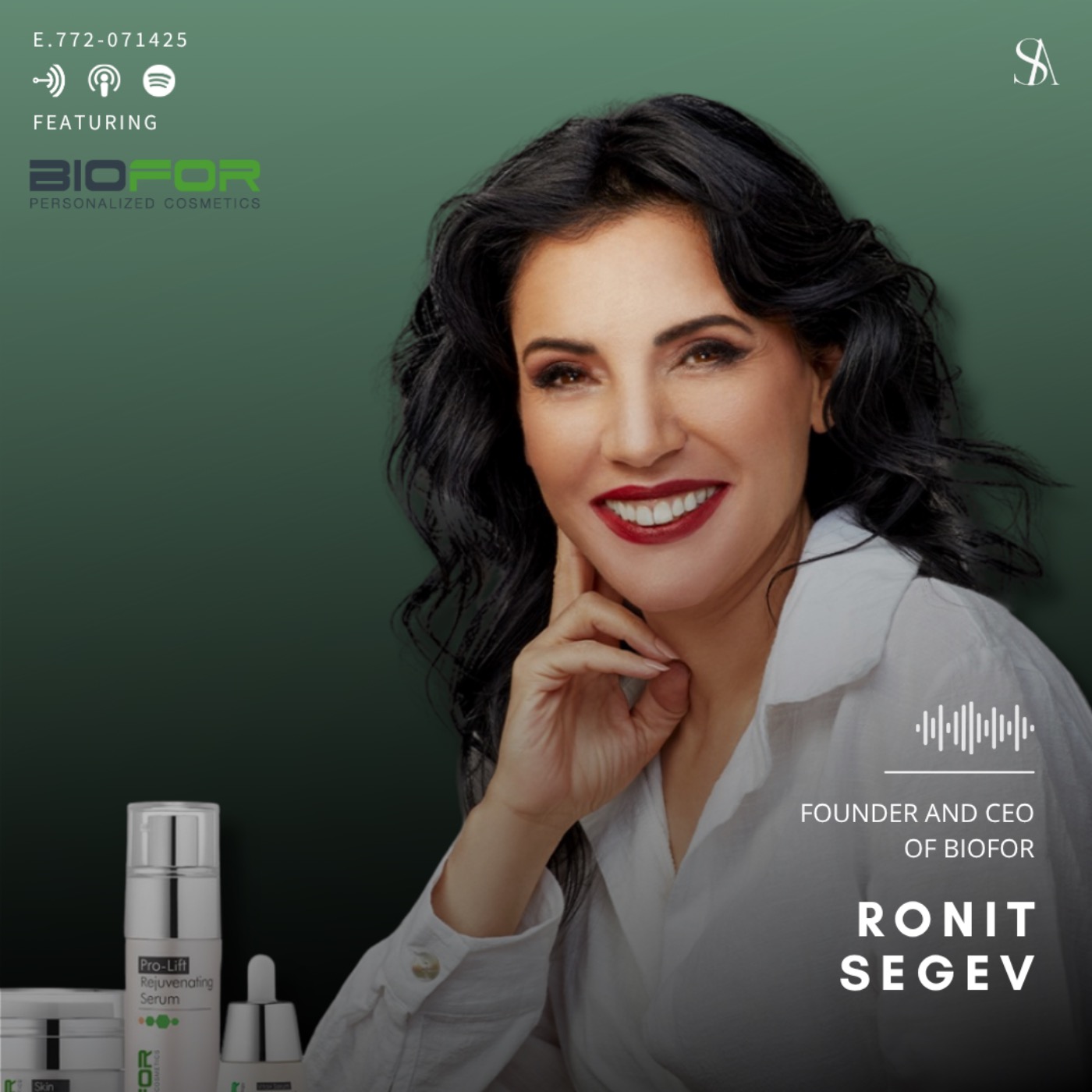
Hey guys, welcome back to Skin Anarchy. Today we're having a very fun conversation because we never get to talk about the world of professional grade skincare very much because it's usually, you know, kind of locked into the spas and the aesthetic clinics and stuff. So we don't really get that behind the scenes look into truly professional grade products. So with me today, I have the CEO and founder of Biophor, which is this amazing brand. They're truly innovating the space of professional grade products. So without further ado, please welcome Dr. Ronit Sagav. Welcome, Dr. Ronit. I'm so excited to host you.
- [01:46]
Dr. Ronit Sagav
Yeah, happy to be here with you.
- [01:48]
Podcast Host
Yeah, I'm excited to dive in. You know, I know you have a lot of science in your background, you know, in your educational background. And I'd love to really dive into the moment that, you know, you decided to launch Biophor. I mean, what was that moment of frustration for you where you thought, I need to start something on my own.
- [02:04]
Dr. Ronit Sagav
So the turning point for me was when I have noticed my first signs of aging at age of 36. And you know, it happens toward the end of my undergraduate degree in biology in this point where all of us students are deliberating which direction to take for the masters. And for me it became very clear. So biology for me Is second career. My first career was I was a marketing manager with a degree in business administration. But you know, since I was a kid and very young, I was very passionate about biology. I love biology. I was always envious in the scientists that developed drugs and solution to physical problems. I always wanted to be in this place. So at the age of 32, I took myself back again to the university and signed to the first degree in biology. And when I saw my first signs of aging, I was really frustrated. This was the frustration. I wasn't willing to accept them. And this is when I knew what I want to do further, what I want to explore. I wanted to explore skin aging, all the ingredients involved in fixing the signs of aging, all, all the methods, why skin agents, what are the processes inside? And I wanted to develop solutions to, you know, to slow down the signs of aging, to treat aging skin, to let us have even attractive skin at any age. And I wanted to develop solution. I knew those have to be very powerful and very targeted solution quick and that can deliver fast and visible results. And this kind of product should be very concentrated and cannot be, you know, offered on stores or on the shelf. Can be shelf products. They should be offered by professionals. And after skin analysis and understanding the skin and tailoring the product to the customer and you know, monitoring the skin and being available in case of side effects, which we do have, we have side effects. So such kind of product cannot be picked from the shelf, at least not if you want to really get a change in the skin. And that what and how and why I launched Biophor, the professional skincare brand that worked through professionals.
- [04:29]
Podcast Host
That's really interesting because, you know, you started with biology. I think that's very fascinating to me that you have this very deep rooted understanding of the biology that goes into understanding skin, you know, and what really is anti aging, what does it mean, mean to have beautiful, healthy skin? I think many times founders don't come with this understanding, you know. So it's very, very interesting to me. You know, what was that true foundation for you that you wanted to build the brand on? I know you mentioned the ingredients, but like what was that key foundation that you said? This is where I want to base my products off of.
- [05:03]
Dr. Ronit Sagav
You know, I entered the market with a purpose to deliver powerful, effective solutions for skin concerns. So it's a mission and not it's not just a product line. And you know, it began with my personal interest to treat aging skin. But I knew I'm going to serve cosmetologists and anestheticians and they treat not only signs of aging, but also, you know, acne and pigmentation and texture problems. And so dug deep in those topics because they're important as well. And they're very interesting, very fascinating. They diminish the quality of life. I wasn't intending to learn them, study them deeply and come up with solutions for all kinds of skin concerns. And the thing is, when you want to solve a skin issue, you have to understand skin. You have to understand what went wrong. You can start with a line, you have to start with understanding of the physiology and pathologies and the behavior of the skin and skin processes. Anything you want to fix, if you want to. If the mechanic wants to fix the car, you have to understand what went wrong. Only then can you fix the car. And if the doctor want to deal with a kidney disease, we have to know how the kidneys function and what can be wrong. And the skin is no different. It's an organ. It's a complex, very complicated organ. And every change that you see on the outside is rooted in changes in the inside, in the behavior, in the structure and in processes in the skin. You have to understand them. And in order for you to be able to plan a process, a product that can change the skin, this product should be based on a deep understanding of biology. And not just the product, but the way of delivering the product and treated with the product. This have to be based on knowledge in the biology of the skin. That's why bioflow didn't start with the usual checklist. Day cream, night cream, serum lotion mask and so on. This wasn't the vision. The goal was to create targeted solution that can fix skin concern. And they can come in any form. They can come as a cream or as the serum, whatever, with the carrier or the best vehicle to deliver the actives inside the skin and change it.
- [07:29]
Podcast Host
Yeah, that makes a lot of sense actually. And I agree with everything you said. I think that because we know that the skin is an organ, we understand that there's a very dynamic organ. And that is something that oftentimes we don't. I don't see that addressed in a lot of skincare brands. You know, that's the truth. A lot of times people are not approaching it from this understanding that, you know, you have to understand how the skin turns over, you know, what's going on to make it. You know, people say, oh, I want glowing skin. Well, what does that mean? You know, on in a scientific way, what does glowing skin mean? So I think it's Very relevant what you pointed out here, you know, and I want to actually do some myth busting, if you don't mind. You know, there's a lot of misinformation. I think also there's this widespread belief that serums are the most active product. Right. That you can have in a skincare line. You know, more so than things like creams and, and other things. So what is the actual truth about this? I mean, is that true, is that false? How does that work?
- [08:26]
Dr. Ronit Sagav
Yes, I come across this myth a lot, not only with the end user, but even with many, many professionals. It's very common. So I think it may come from the, this incorrect information that they get in their, their initial training, the cosmeticians. So, yeah, but when I discuss with them, with the professionals, and we go deep in their deep beliefs about serums and we break it down and see one by one all the thoughts that they adapted without checking, and all the other people thought that they believed to without asking themselves, is this logic, can this be true? So when we look at it, we see the simple truth that it's far from the compelling beliefs that they have. So let's just do the process. So I asked cosmeticians, what's the difference between a cream and a serum? And I get several answers. They tell me serums are more active, serums are more concentrated, serum contains smaller molecules, serums help bigger molecules to penetrate the skin. And so we try to break it down one by one. I ask them, who decides which ingredient and in what concentration to put in a serum? So the answer, the manufacturer. Correct. And if I, the manufacturer, decide to make a cream with 3% matricul, which is a biomimetic peptide, and also a serum with 3% matrix, those are the only active ingredients, just matrix in the serum and in the cream. So would the serum with matricil be more active than the cream? Would it be more concentrated than the cream? Would the matrixyl molecule be smaller? Because it sits in the serum. So it's not. And we have to remember, creams, serum gels, those are carrier. They're meant to carry active ingredient inside the skin. The skin. If I would plan a serum with let's say 5% and 3% niacinamide, those green tea and niacinamide are meant to kind of leave the serum and enter the skin. Not all the other 40 ingredients, the emollients and emulsifiers and the perfume and, you know, humectants and so on, just the active ingredients. The same way if I would plan a cream with this Niacinamide and green tea. It wouldn't be less effective. Those are the same actives. The manufacturer can choose any ingredients and put them in cream and in the serum as well, and they will be active as well. It's not that the serum will be more active. And another thing, it's not that the serum can help big molecules penetrate the skin. If the molecule is big, too big to. And it cannot inherently penetrate the skin. It will penetrate the skin because it's in a serum. The serum doesn't make tiny holes in the skin or ingredient that they push the big molecules with little tiny ropes into the skin. There's no such ingredients. And even if there were, couldn't we put them in a cream?
- [11:48]
Podcast Host
Yeah.
- [11:49]
Dr. Ronit Sagav
So actually, the only argument we cannot argue with is that the serum is more liquid and the cream is more creamy. It's the consistency. It's thicker, less liquid.
- [12:04]
Podcast Host
No, that's really. That's really interesting because I think that's something that no one really discusses. Right. Is this idea of like we're really buying whatever texture we prefer, you know, in the product. It's not really about exactly what you said. It's not about really. Is it more active or not? And I think a lot of times users don't. I mean, consumers, everybody doesn't really associate this because in our minds, we think, okay, the serum goes on first. You know what I mean? So it's like they think, oh, yeah, first. So it must be the most active. And it's not true. You're right. You know, it really depends on what's in the serum. So, you know, with that, I wanted to congratulate you. You just won the gold award for a skin renewal serum. That Biofour has. Congratulations on that. When is the. So, you know, let's really debunk this. So, like, when is the real right time to incorporate serums into our skincare routine?
- [12:56]
Dr. Ronit Sagav
Yeah, actually, this year we won three golden awards. One of them, as you said. Yeah, yeah. One of them is for a serum called Prolift to rejuvenate the skin. And for your question, actually, you can triple your question because Biofur has three serums, not just one. Okay.
- [13:16]
Podcast Host
Yeah.
- [13:16]
Dr. Ronit Sagav
So that's the first question that the cosmetologist or cosmeticians ask me after we finish debunking the serum myth. So why do you have C serum? They ask me. We have serum, vitamin C. So the answer is, for your question, you introduce a serum whenever the skin needs an ingredients or one ingredient or more, and this ingredient is included in a Serum. So let's take, for example, vitamin C. When do we think the skin needs vitamin C with the professionals? Whenever, for example, this is a smoker skin, or the skin is exposed to free radicals or to stress, or whenever this is dehydrated skin, or whenever we want to boost collagen production. All of those treatment goals indicate that we can give a vitamin C to improve the skin. So, yeah, we could give vitamin C cream as well, and it would do the same job, by the way. But many times the client already have moisturizer. A lot of them have. And, you know, it doesn't sound so natural for a client to apply a cream on top of a cream. You know, it sounds strange, but when it's a serum, it sounds natural. You know, everybody loves serum. The cosmetician, the client, Everybody loves the serum. And it's very natural to apply a serum beneath the cream. So we didn't just sell another product or we didn't just give automatically serum because. Because every. Women need a serum. We gave the solution. We gave an ingredient that the skin needed based on skin analysis and understanding the needs of the skin. For us, it's a smart recommendation. It's not just a consistency.
- [15:03]
Podcast Host
Yeah, that makes a lot of sense. I think this idea of like, ingredient, ingredient, like synergy. Right. Because that's where I think a lot of people get confused, is that, you know, we, we are so tied to this ritual of skin care. You know, people say, you know, I need to do these steps and this routine, otherwise I'm not going to get the benefits. And I've said this before on the podcast where I say, I like to think of it like we have skin cells like in a petri dish, and whatever you're putting on top of that is the treatment. Right. For those cells. So it's just like that. And it's the same understanding I think, that consumers need to have is that your cells are being exposed no matter what. You know, whether it's a serum, a cream, a toner, you're getting exposed to whatever active is there. And it's up to you to decide what am I going to pair, you know, together in terms of ingredients. And that's. I think that's where a lot of people get lost in that whole conversation. Right. It's like we, we are so tied to this cultural understanding of this is how skincare routines are supposed to be, you know, 1, 2, 3, 4, 5. But it's not the case. Yeah. So I want to talk about this idea of, you know, ingredients, infusion and understanding, like, you know, what ingredients are safe to use through things like microneedling, you know, microneedling and ultrasound. Let's talk about that a little bit. Ingredient infusion, if you could educate. Yeah. Hey guys, let's take a second and talk about summer burnout because it is so real. The sun is up longer, we're sleeping shorter hours, and honestly, I think we're just expected to out point push through no matter what during this time. If you're seeing things like energy crashes or your mood is all over the place or your skin is flaring up, this is an indicator that there's something much deeper going on. And that's exactly why I chose Function. It's the only health platform that lets you test over 160 biomarkers from heart health, hormone fluctuations, stress levels, inflammation, and so much more. Also, you can add on CT and MRI scans and track them in one place securely, securely over time. That's why top health leaders like Dr. Mark Hyman, Dr. Andrew Huberman are getting behind Function Health. When I tested, I found out my vitamin D was super low, which was shocking because I spent a good amount of time in the sun. And also I understood my hypothyroidism better, like my TSH and my T4 levels. This helped explain things like my constant fatigue, my brain fog, lack of energy. It really puts things into perspective and allows me to take more action towards these health goals. So if you're experiencing anything and you want to find out more, use our link. Go to www.functionhealth.com skinanarchy.
- [17:44]
Nature Enthusiast
Out here, we feel things. The sore calves that lead to epic views, the cool waterfall mist during a hot hike, and the breeze that hits just right at the summit. But hey, don't just listen to us. Experience it for yourself. Alltrails makes it easy to discover the best of the outdoors. With more than 450,000 trails around the world, points of interest along the trail, and offline maps for always on navigation, download the free app today and find your next outdoor adventure.
- [18:15]
Dr. Ronit Sagav
So this idea, as we know, as you all know, really sparks the imagination of skin therapists and clinicians. Infusing of ingredients. So basically we're speaking about treatment. When we take cocktails or ampoules and infuse the ingredients via electroporation and ultrasound and maybe other device. And this treatment is performed once in a month or once in three months. The manufacturers that produce these cocktails, they say those are very concentrated cocktails of vitamins and peptides and minerals. And so and you know, many clinicians Many cosmeticians are very fascinated. They view them like the fountain of youth, the magical potion that we give to the skin and it wakes up and wakes up to life. I always looked at those, this kind of treatments and I didn't understand, you know, I, as I come from science, I try to understand the clinical logic behind every treatment and I didn't find one. I did not find. And let me share with you the why. So first I want to remind something that maybe many clinicians do, you probably know it, but most of the ingredients inside this cocktail have therapeutic windows. This is the range of concentration within the ingredient works. Below that, we won't get the benefit. And above this therapeutic window, we won't get better results. We won't even in some cases, if we exceed the upper limit of the therapeutic window, we will get side effects. And even in peptides, for example, they have very narrow therapeutic window. If we exceed it, we get the opposite effect. So it's not the more the better, we should understand with active ingredients, it's not the more the better, it's the exact concentration that was established. So this is for the claim that the injections or the cocktails are very concentrated and maybe now that we see them, we can deal with them. So many therapists look at the skin like they think the skin acts like a camel. You know, this camel that can drink a lot of water, and in the desert it can manage without water two months, three months. So only camels do that. Our skin doesn't function like this. We don't have in the skin, tiny storage unit with tiny storage, guys that get all those vitamins and keep them and then slowly, slowly releases them every day according to the skin's needs. It doesn't happen like that. The skin doesn't work in intensive loading, it doesn't work like that. The skin, like the body needs every day, over the day, the actives that are essential for healthy functioning. So that's the first thing and another thing that I want to pull and take it to the daylight and look at it in the eye. The mistake that we do, we professionals do, between methods and goals, or means and goals. So we should have, every one of us professionals should have therapeutic goals. Therapeutic goals are, for example, even toned skin, skin without acne, cleared of pigmentation, firmer skin. Okay? We define a therapeutic goal in means of how the skin looks after the process. So I ask the professionals, is infusing ingredients, is it a therapeutic goal? Is it a therapeutic goal? Is it kind of appearance? Or maybe it's a method so they give it a little thought and they have to realize it's not a goal, it's a method. It surprises many of them, by the way. So as they say that it's not a goal but a method, we must ask, okay, so what's the goal? And here I can hear several goals, like firmer skin and tighter skin and skin without pores or lesser pores or less pigmentation. So I urge them to take every such goal and ask themselves about each one of them. Three questions. Question one. Let's take firming, for example, as the goal, right? Question one, which ingredients can firm the skin in the cocktail? They don't always know what, what's inside the cocktail. Many times they don't know. So let's think which ingredients can firm the skin? So they. They tell me vitamin A and vitamin C and biomimetic peptides. Okay? Question two, are they capable of penetrating the skin with simple application, daily application. So we have to admit that, yes, they can penetrate the skin. And question three, do you think really, that once in a month or once in three months, if you apply these ingredients, can it firm the skin? And I will remind you, there is no slower list and there's no meaning of high concentration. Could it happen? So I strongly recommend every clinician to take all of the therapeutic goals that they expect to get from these infusions and honestly and strictly and very precisely ask themselves all of those questions. And, you know, I promise that you will get very surprising answers.
- [24:07]
Podcast Host
Yeah, no, I love that. I love that you said that. That is brilliant, actually, because, you know, this is something that nobody asks about skin. Nobody talks about this with the skin. And it's very confusing to me, right? As well, because when you. It's exactly what you said when you're exposing your body, no matter what organ it is, to an extreme amount of something, right? Whatever you're dealing with, whether it's a pharmaceutical, even vitamins, right? Something like that, you will put it into shock. It will go into shock state. Like, the cells will react very aggressively to that. So it's very, very true what you're saying in that you have to understand how do cells respond? Does it matter in the overall, you know, in the overall goal that you have. And then also, like just the physiology of what's going to happen later. You know, a lot of these treatments, like you said, people go for like once a month, right? They'll go to their esthetician, they'll go to wherever they go, the dermatologist, and say, I want this once A month treatment. But then nobody's asking what happens after you, you know, for the next 29 days, what's going on with your skin? You know, are you, are you, you know, still kind of chasing that goal? Are you still meeting your goal? At the end of the day you're probably not, you know, because after you get that one thing done, you're not taking care of your skin or you're not, you know what I mean, doing the everyday routine that you should be doing to maintain. And this is a very big topic actually. You know, it applies to everybody across the board, not just in the professional world, but even the brands that are more towards the non professional side. You have to ask yourself that, you know, it's like, what are you really selling to people at the end of the day? Are you selling a promise, like a, you know, a marketing gimmick? Or is it really how the skin works? So I love that, I really love that you brought that up.
- [25:48]
Dr. Ronit Sagav
I want to add another thing. All the information that we have on ingredients is gathered from studies that were conducted with applying the ingredients daily, application sometimes twice a day, and not injecting them. So what do you think? And, and of course that we got the outcomes from applying the ingredients, not from injecting. So why did you think it should work? On what, on what places?
- [26:17]
Podcast Host
Right, exactly. That's very true. Yeah, like nobody talks about that. And this is actually very true, you know, in terms of medicine and anything that has to do with the human body, like the modality with, through which you deliver ingredients, deliver drug is the most important, I think. And it's really because your body has, it's the most advanced machine that we know of. Right. So it's going to adapt. It has to go through its normal process to adapt. And we don't, we completely bypass that by doing things that are kind of, I think, contradictory to normal physiology, you know. And so it really makes you wonder with all of the, all of the treatments that are out there and all of the things that we as consumers are every day going for and opting in for, do we understand what this is going to do? Like right now, I'll give you an example that's really perplexing for me. I'm seeing this huge buzz right, right now in the PDRN skincare and all of this stuff people are talking about. But then it's exactly what you said. You have trials people have done with injecting it, you have trials people have done with, you know, with topical. But then we're not Using it like that as consumers, you know, we're using it in a totally different way. So it's really interesting that the world of beauty and skin health, like the data doesn't really often match the modality through which it's being practiced. You know, that using that same ingredient or that same treatment. It's very true, you know, it's, it's across the board. So yeah, very fascinating. I want to actually ask you, how do you define what an active skincare product is? You know, what does that mean scientifically when somebody says this is active skin care first?
- [27:51]
Dr. Ronit Sagav
Yeah, I rely only on scientific validation, deciding on it on an, an ingredient. I don't go with buzzwords or trends of kind of the articles that follow the Internet because we need to remember the skin is an organ when we want to treat an organ. This is science and we have to collect the science. Now you are, you're asking how do you decide what's your science? So you know, when I check clinical studies papers, I always check who is behind it, whether one of the authors work for this ingredients company, whether it is funded by a cosmetics company, any kind of conflict of interest. This is a term as you know, conflict of interest. And any paper have to claim if there is a conflict of interest. So I try to rely only on papers and clinical studies that are objective and this is how I assess ingredients. But you know, having said that, the field of active ingredients is evolving super fast. I get dozens of emails every week about new ingredients and I read them and you know, I get with every new ingredients I get this dossier, it's a pack of information with the lab tests and the internal studies that this manufacturers have done about his new ingredients. And I read them and then try to understand the clinical logic behind the mechanism they claim. And some of them sound interesting. You know, I apply my experience, of course I take all of it with a grain of salt. This is not so objective. But you know, not every ingredient is glycolic acid or Q10 or Centella sciatica. Not every ingredient will get university grade study. Most of them, most of the new one won't get. So I really try to understand this and ask myself whether I see here a potential. And whenever I do see a potential based on my experience, I ask them to get a sample and I make test cream or test serum, you know, it's the same, we spoke about that. And I give to my test groups, I have my test groups that experience those ingredients and give me feedbacks and I'm trying to Understand what we're dealing with and whether this is really a potential that we can move forward with.
- [30:27]
Podcast Host
Yeah, that makes sense. Actually, it's very fascinating that you said that because we never get to see much about the ingredients, like, you know, the new and emerging ones, till they're already out in the market, unfortunately, you know, so it's very. I think it's very important to do that sifting through of, like, understanding how do ingredients really work? Because, yeah, it's not like academia, right, where we're testing like cancer drugs or something, and you have so many papers and so many, so much data, it's often very lacking. So I think it's. Yeah, it's very interesting that you're doing your own kind of testing of these ingredients and figuring out does this actually work, you know, in the. In actual use. That's very cool. So what do you see for like, you know, because bio 4. I love your products, by the way. I want. I never got to say this, you know, so far I really love them. And I think that it shows how much, you know, precision you've taken with picking what is offered in the line. And I think that's very unique, you know, in today's world. And the way that skincare is evolving, what I'm seeing every day is more brands are popping up and it's the same thing over and over and over. You know what I mean? Like, it's the same stuff. And no one's really focusing on exactly what we've discussed here, but this idea of precision skin care, you know, where they're really figuring out, this is what I need, this is how my skin will respond. This is what I expect to happen. No one's doing that. And so what is your viewpoint about the skincare industry? I mean, where do you see the future of skincare headed?
- [31:56]
Dr. Ronit Sagav
Well, we have some trends and shifts in the market. One of them, the key evolution in the. We will have to embrace the rise of the lifespan, the life expectancy, the lifespan. And when we speak wellness, we say is the years that we live in good health. And I think we in the cosmetics industry should embrace the term beauty span. That's a new one. You won't find it in Google.
- [32:23]
Podcast Host
I love that.
- [32:24]
Dr. Ronit Sagav
Yeah. So beauty span is how long our skin can be heavy and cared for and vibrant. And we have to think about the older skin because this is an issue. And beyond the 50s and the 50s and the 60s, we should care for the more aging skin, like the 70s and 80s, which they have very unique characteristics. This can have not the usual menopausal skin of the 50s and the 60s. We have to find the ways, the treatments, the products that can be suited to this kind of skin. So this is one, this is one good way to go with. And another thing which is quite related is the field of senescent cells. I'm sure you've heard on that, this term senescent cells or zombie cells. So they're all over the body, not just in our face. And they age the body, they linger. There are dysfunctional cells that linger in the body and accelerate the process of aging. And there are very promising studies that target those cells or their byproducts in order to slow down the aging from the inside out. So that's a fascinating topic that's in development. Also. We see a progress in carrying delivery systems of many kinds. One of them is microcapsules that can not only protect ingredients or stabilize them or prevent irritation, it happens. But also to deliver more of these ingredients in the skin. So it goes deeper, but also it utilizes most of the ingredients so it allows us to put a lower concentration and still get results. That's very important, especially because this time we have a very strict regulation about ingredients. And another fascinating thing is genetic based skin care. And with the test you get the results, you get your genetic skin genetic map. So they test genes that are related to skin's behavior and appearance. And I can share with you that Bio4 is building AI powered tool to help the end user as well as the cosmeticians. So at the end user part they can upload very clear photos and add some details and they will have a general recommendation to treat their skin and also it will refer them to the nearest cosmetician according to their location.
- [35:19]
Podcast Host
Wow, that's really fascinating. I love that. I've been watching AI and how much is transforming, you know, the world of especially like longevity and stuff that's very, very novel for you to do this. I think that we need, we need this kind of thing because you're absolutely right and everything you said, I've been, you know, also following along. And genetics is the future. You know, if we can figure out like genetics, epigenetics, all these like, you know, blueprints that define how our skin ages and also how to kind of tailor and again, that precision medicine component, you know, this is going to be completely game changing.
- [35:54]
Dr. Ronit Sagav
Very cool. I agree.
- [35:56]
Podcast Host
Wow. Well, I'm very excited. I love Biophor and I, I think what you're doing is so, so wonderful for the industry and you're really leading with science and I think that we don't see enough of that, you know. And I think for anyone listening out there, whether you're consumers or your professionals in the skin health space, I think it's very important to ask yourself these questions of where does the science make sense? You know, where does it lead you in your understanding, in your practice? You know, and I think that's it's something really valid. You know, everything we've discussed here is something to think about. So thank you so much Dr. Ronit. This has been so wonderful to host you and to learn from you. It's been wonderful.
- [36:33]
Dr. Ronit Sagav
My pleasure.
- [36:34]
Podcast Host
Thank you.
- [36:35]
Dr. Ronit Sagav
Thanks.
- [36:40]
Podcast Host
Listen up.
- [36:41]
Dr. Ronit Sagav
You can get the new iPhone 16e.
- [36:43]
Podcast Host
With Apple Intelligence for just 49.99 when.
- [36:45]
Dr. Ronit Sagav
You switch to Boost Mod.
- [36:49]
Podcast Host
We pulled so many all nighters to give you this deal and hey, stop.
- [36:53]
Dr. Ronit Sagav
Messing with the mic.
- [36:54]
Advertiser
I'm just helping us catch people's attention. This is a great deal.
- [36:59]
Dr. Ronit Sagav
Exactly. So it doesn't need all that. Fine.
- [37:04]
Podcast Host
Head to your nearest Boost Mobile store right now.
- [37:06]
Advertiser
Visit your nearest Boost mobile store for full offer details. Apple Intelligence requires iOS 18.1 or later. Restrictions apply. This episode is brought to you by Progressive Insurance. Do you ever think about switching insurance companies to see if you could save some cash? Progressive makes it easy to see if you could save when you bundle your home and auto policies. Try it@progressive.com Progressive Casualty Insurance Company and affiliates. Potential savings will vary. Not available in all states.
- [37:30]
Nature Enthusiast
Ready to elevate your everyday Quince has the luxe Staples insider swear by minus the markup. From 100% European linen styles and 14 karat gold jewelry to gorgeous leather bags and elevated home finds, Quince has it all. And by partnering directly with top artisans and ethical factories, Quint delivers premium quality at half the cost of similar brands. Discover everyday luxury without the markup at quint. Go to quint.com styleupgrade for free shipping and 365 day returns. Quince.com styleupgrade.
- [38:07]
Podcast Host
Hey guys. So I hope you loved that episode. Please make sure to hit subscribe if you're tuning in to us on any podcast platform. We are available on so many different platforms, so wherever it is that you're tuning in, just go hit subscribe. You'll be immediately notified when we publish new episodes. This way you're able to tune in to amazing insights from experts, brand founders, industry leaders, authors, all the wonderful people that we host. And that's very important for me because I love to hear from you guys and really understand what you love and what you want to hear more of. Also, make sure to give us a follow on all of our social media outlets. We're available on Instagram, TikTok X, you name it, we're there. We also have a blog on Medium, so if you're a reader and you love Medium blogs, check us out on Medium. We publish some really great articles on there that do deeper dives than just what's available on the podcast, and it's really a great place for all of you science geeks out there that want to learn a little bit more. We go above and beyond with our research and making sure we're bringing you information that you usually want probably won't hear about in other outlets. So check us out, leave us a comment, leave us a review, and we'll be back next time with another episode. Thank you.