← Skin Anarchy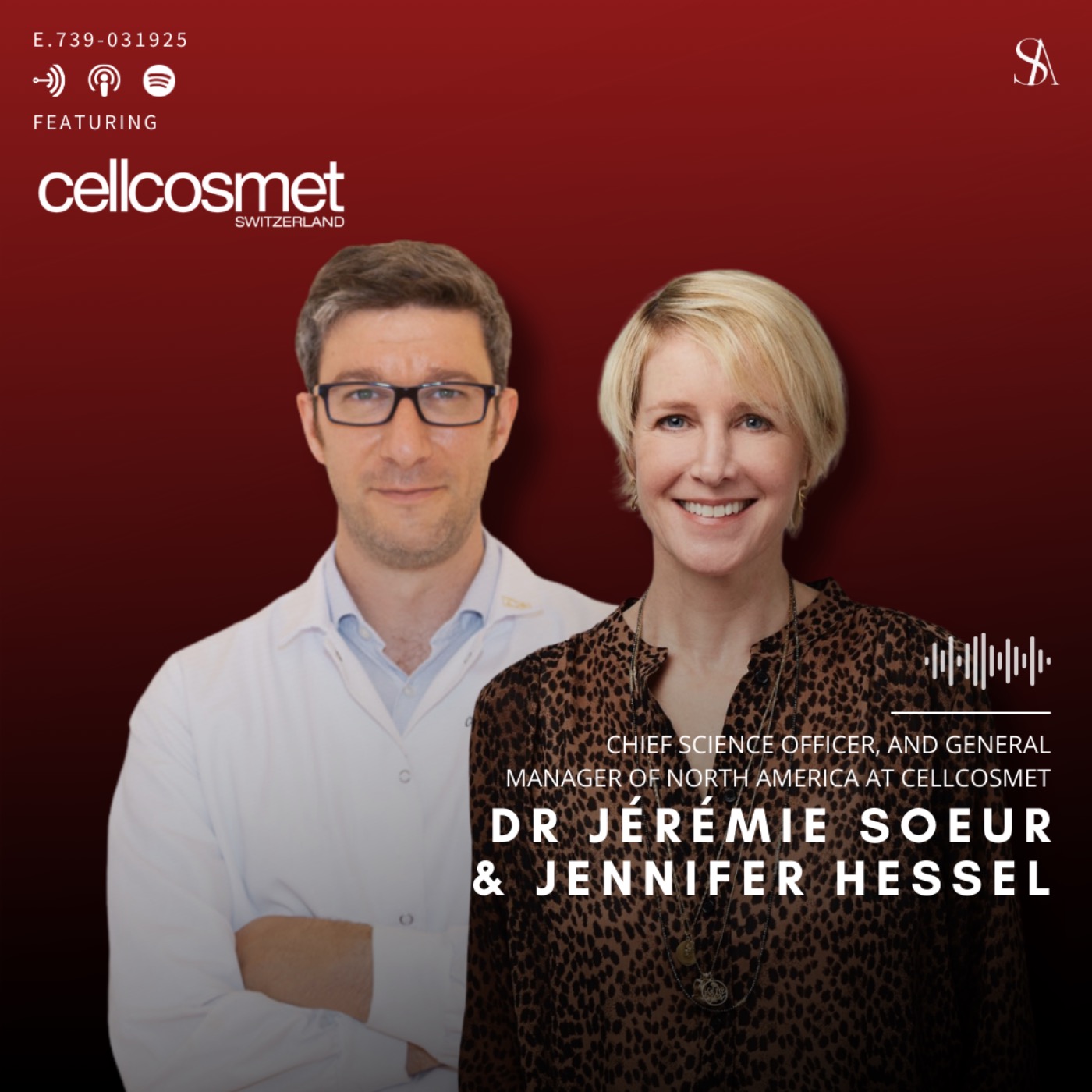
Loading summary
Transcript54 lines
- [00:00]
Host
Hey guys, welcome back to another episode of Skin Anarchy. I am really excited to introduce you guys to a new brand today that I have fallen in love with. You know, as you know, we're always looking for very science backed solutions here at Skin Anarchy. Many of you chime in with wanting recommendations, wanting new options for your skin health. And I feel like the brand we're going to be talking about today is really kind of focusing right there, you know, in terms of the whole skill, skill, skin health component when we talk about skin care. So without further ado, I want to introduce you guys to the chief scientific officer and the, the general manager North America of Saul Cosmit. So without further ado, Let me introduce Dr. Jeremy Sawyer and Jennifer Hassell. Welcome to the show.
- [00:47]
Jennifer Hassell
Thank you so much for having us. We're really excited to be here.
- [00:51]
Host
Yeah, I'm excited to have you.
- [00:53]
Dr. Jeremy Sawyer
So for the invitation.
- [00:55]
Host
Yeah, yeah. Dr. Sawyer, I'm excited to kind of pick your brain a little bit, you know, on the show because I feel you have a background in cellular and molecular biology. And you know, back in, when I was in, in college, all of my professors that were, you know, of similar background, it was like talking the most intelligent people on the planet. So, you know, you're gonna get a lot of questions from me, you know, about clarifications, but I'd love to get started if we could talk about Dr. What made you want to get involved with this brand? What is Cell Cosmic's vision when it comes to skincare?
- [01:29]
Dr. Jeremy Sawyer
Yeah, absolutely. So once again, thank you for invitation. I'm so happy to talk with you about the brain and science behind Cell Cosmit. So Cell Cosmit's vision is driven by the belief that science is both a key driver of innovation and rigorous essential method to guarantee improve that quality and efficacy of product. And four years ago when I talked with Stonehead or CEO, I immediately connected with vision because I firmly believe that science, scientific method is one of the best ways to address the current crisis of the trust everywhere in the society in science in beauty industry many brands promise impressive result without providing solid scientific proof. And finally it is the sense of purpose of CellCoSmith who claim behind each claim we have a rigorous robust sciences efficacy claim. You know, for example, we are claiming that our last generation of products are preserving skin microbiome several brain guarantee or claim microbial frenny and assume or support this claim within vitro studio study only in petrish dish completely disconnected with real time. In our situation when we claim that we preserve and we Strengthen skin microbiome we perform clinical studies that mean for each volunteer of the clinical study, we sequence each bacteria living on the skin of the people. And before and after we measure the percentage of each bacteria and what we will be able that we maintain and we think the right and good microbiome. It's just an example to explain why I may be the most lucky chief science of cosmetic brand because I have an opportunity to spend a lot of money to prove the efficacy of a product.
- [03:39]
Host
That's amazing. I love what you said because I think that that's one of the biggest, biggest misunderstandings that I've seen because the microbiome became a buzzword, you know, at some point, I think a few years ago in this industry. And exactly what you said, when you're looking in a petri dish at bacteria and the way they grow, the way they interact, it's incredibly different than the way they are going to act on actual human tissue. You know, that's a very, very different scenario. And so I just from the get go that you've mentioned, this is wonderful, you know, because very few brands talk about this very relevant piece of information and you know, if you're going to, if you're going to market something to say that this is a microbiome related product, you know what I mean? And it's meant for skin health and it's meant to actually fix the dysbiosis going on, you know, that's ruining your skin barrier. You have to actually try it on people, you know, you have to actually have studies. So I agree with you. But Jennifer, I would love to for you to chime in because I know you have so much experience in this industry. I mean, what was it like for you to get involved with, with the brand and you know what they were doing? I mean, what are your thoughts on, on this whole topic of the microbiome?
- [04:52]
Jennifer Hassell
Oh, absolutely. So I actually, when I met Tankard is the CEO as well as the chairman, I actually knew this brand from my esthetician. So when I used to go obviously same esthetician today almost, but I discovered cell cosmet a long time ago and was impressed by the product. So when I was introduced to the brand, I was really excited to get involved in a brand that really held the science at the forefront of the products that they produced and have been doing it for decades. So it wasn't about kind of jumping on a trend. It was really about the belief that we could care for the health of our skin in a much more positive aging process. By constantly revitalizing, right. Constantly working at the cellular level to help us age gracefully. Right. And so for me, that was what was really exciting. And then when the introduction, with the process and the technology that they used with the ingredients before for the microbiome and understanding that not only, yes, these are the ingredients, yes, they are extremely kind of strong ingredients that will work to protect the microbiome. But we proved it out that as we age, right. It becomes more and more fragile. And the fact that the good bacteria that we're losing, we're actually proving that we're actually getting it back when these ingredients are applied to our skin. So I think every day I spend time with, with Jeremy and I constantly learn how we can improve from a scientific level and scientific testing of what ingredients are truly from a holistic standpoint in our formulas, going to make a difference in our skin.
- [06:38]
Host
That's wonderful. I love that and I love that you guys are really approaching the microbiome with this, with this fresh perspective. I think, you know, that we haven't really seen in the industry. You know, Dr. Sawyer, I'd love for you to dive in deeper for us to understand the technologies that are, that have been developed and that are being used in the products the, you know, that cell cosmic has and it's lineup. Can you tell us a little bit about the technology portion?
- [07:04]
Dr. Jeremy Sawyer
So let's start by cell control meter, for example. So maybe before to deep dive on the on or exclusive and owner proprietary technology. Let's explain some biochemistry information. You know, basic biochemistry of protein and peptide. Because you know your cytopep, the main innovative technology are a huge cocktail of protein and peptide. But let's explain why cell cultural method was and is still a disruptive method. You know, peptide and protein are made of small building block called amino acid. And it is this amino acid assemble with a huge and complex structure forming 3D shape which bring the activity. If you heat, if you remove the water of the environment of protein peptide, you completely lost the activity of protein a peptide. It's really clear, for example, if you put growth factor igf, he is able to activate some specific receptor. If you disrupt the structure of fgf, you completely lost the activity. Finally, the cell control method is a method which guarantee and preserve the 3D structure. And so the activity of protein and peptide during the industrial process. You know, it's really important to keep in mind that in cosmetic and prodront protein and peptide are often decelerated to simplify manufacturing process to extend the shelf life in our situation. Cytopeps complex peptide and protein are still in water in the natural environment. In order to keep the huge activity from the laboratory up to the final product, you applied every day in the bus. Yeah, it's, it's, it's really a huge, huge technological and, and manufacturing challenge. You know, each day my passion chief asked me if I can simplify the process. You know, because it's a nightmare for, for the, the manufacturing. But to be sure to keep the best activity as possible, we developed this method. But behind this cell control metals, there is another characteristic. Because the protein in peptide come from cells and you know, cellular environment is liquid and crowded. You know, it's not an empty environment. There is sugar, protein, peptide. It's a crowded environment. And if you are not able to recreate the croated environment, there is a huge risk to keep the structure of protein. So in cell control method there is some secret ingredients that we had, we put in the specific step of the formulation to keep, to maintain, to mimic the crowded environment, natural crowded environment once again, to keep the, the 3D structure and to, to amplify the activity of, of, of protein.
- [10:35]
Host
Wow, that's really, really fascinating. I've, you know, and I think that's something that it's never really talked about at all is this idea that there is a crowded. Yeah. Inside of every cell. It's very, very crowded. And everything has its place, you know, and everything's going where it's going for a reason. And, and that's a, that's very interesting when I look at that, you know, bringing that whole system out in, you know, in the way that we're now talking about putting it in a formula and then, you know, making it available. I mean, the bioavailability, for example, is a topic nobody speaks about, you know, but then with that also comes these components that you're talking about, which is that a peptide isn't always the same thing. You know, a peptide, if it's, if it loses its functionality, like I said, if even one amino acid, acid is messed up or lost, you know, you've completely lost the ability to bind with the receptor and you know, and to work. So, so I mean, these are very fundamental scientific topics that unfortunately, you know, I think a lot of consumers believe that all peptides are the same. And this is why it's so important. Yeah, yeah.
- [11:42]
Dr. Jeremy Sawyer
And let me take the link with our own technology. Cytopep. You know, cytopep, just the name is cyto in Greek mean cells. In last Greek it means apep for peptide. And finally, oxytopep is huge complex cocktail of protein, peptide, amino acid, enzyme. Much more 5000 different peptide and protein. This is why it's absolutely an evidence for me to keep in good environment. Because we have so huge difference specificity with protein peptide and in fact why we choose to to capitalize on the protein. Peptide DNA is the code of the life. Protein and peptide are the motor of the life. That's why our technology capitalized on the holistic activity of protein and peptides. And finally the great diversity of the protein. Once again, much more 5,000 is the guarantee that you'd address, you'd activate several lots of different pathway in the skin. Finally, for me it's an evidence because aging is multifactorial process. There is not only one pathway involved in the aging. Between intrinsic factor, extrinsic factor, there is imbalance of oxidative stress, transcription factor activity, another one as are under regulated. That's why for me to have a huge diversity of protein, peptide is a guarantee to stimulate to have a better anti aging activity.
- [13:29]
Host
Yeah, no, that makes a lot of sense actually. Because at the end of the day, I like, I like what you said that, you know, aging is a multifactorial thing. And especially when you look at it from the biology standpoint or physiology standpoint. I think one of the biggest pitfalls for consumers is this idea that, you know, if I just buy something that, for example, look at growth factors, right? People think if I buy a serum that is packed with growth factors, it's going to work on my skin. But what happens instead of working, it causes inflammation because none of those things are, you know, optimized. None of those proteins that you're working with are actually optimized to work with your skin's normal physiology. So what you end up doing is putting a lot of, you know, probably poorly manufactured, you know, bioproducts all over your skin and eliciting this immune reaction, right? So that's where I feel like it's very, very important for consumers to understand that there is a very specific science behind anything that is meant to interact with your skin or its receptors or any of the proteins or anything that's found on the surface. You know, that's very specific and it's a very meticulous process to be able to understand that as well. I mean, everybody's microbiome is different. So we have to understand what species exist in what concentrations and then understand what do they need. So based off that understanding, can you talk to us a little bit about the microbiome and educate us, you know about this so we understand what we should be expecting. You know, if we're looking for a support for a microbiome based product, what should we be expecting?
- [15:11]
Dr. Jeremy Sawyer
Yeah, yeah, absolutely.
- [15:12]
Host
Yeah.
- [15:14]
Dr. Jeremy Sawyer
And yeah, so regarding the microbial territory, just an amazing revolution for me in medical in skincare because we just learned that finally in quantity in terms of number of bacteria living on the skin is quite just below of the bacteria of the gut. So that means it's in quantity in quality skin microbiome absolutely important for, for the skin quality. Sorry, do you want to add something, Jennifer?
- [15:44]
Jennifer Hassell
No, no, but I just think, I mean actually I'm learning, right. I mean I didn't realize that it actually had the same volume that your gut bacteria has. So to me, I mean I don't think people assimilate the two. I'm sure maybe a lot of of your listeners do. But I think it's really important to understand that the impact of how being able to manage and help control and protect that microbiome on your skin really does impact how your, your skin reacts way.
- [16:12]
Dr. Jeremy Sawyer
Yes, yeah, yeah. And what it is really interesting because it's finally there is several link in the clinical study we performed 10 years ago aiming to decipher the impact of pollution. We finally, we understood that pollution could modify directly skin cavity for sure, but modify as well the skin bacteria. And finally and you're absolutely right doctor each skin microbial are unique. And thanks to new technology, huge big data AI second six technology we are able to follow to quantify more and more different bacteria living on the skin and to predict some skin events. And what we learned and what we published two years ago that there is a specific bacterial signature we could predict the appearance of skin disorder in environment, in polluted environment. And you know, for me it's why I'm really lucky to be there because we are absolutely convinced that the next skin care generation as a personalized generation the product but before the product is to be able to offer the best skin diagnosis, holistic diagnosis. That means in the future I would like to be able to develop my product according to the skin microbial sequencing, according exposure measurement. We are able to measure the pollutants which are exposed every day by just a sampling of several air fiber. We are able to predict and to measure the physiological age with the epigenetic markers. And for me it's really fantastic. It's so, so interesting period. Regarding the science and what we have in term of opportunity to develop the product.
- [18:17]
Host
Absolutely, yeah. No, it's like the, you know, the sky's the limit, I think with this topic, because there's so much that we don't know. And you know, Jennifer, talking about, like, the gut and the skin that Dr. Sawyer mentioned, I agree with you. I feel like for consumers, it's a very big learning curve. Right? Because, like, we, we don't really understand that the gut microbiome, like, you know, we think of the gut is like super populated, but everything kind of mimics that. I mean, at the end of the day, when I, when I first started learning about these products, I mean, microbiome came on the scene, it was almost as if, like, you know, you're now trying to understand that bacteria play a much bigger role than just like what we know about with digestion and what, there's this whole, like, gut skin axis and like gut brain ax and there's all these different things. So I would love to get your perspective here because you have so much, you know, experience. Like, you've seen so many brands and you've seen the industry evolve. How do you think, you know, this is going to, like, with everything Cell Cosmit is doing and also what's being propagated in the industry, like, how do you think the microbiome really fits in to overall, you know, beauty and wellness?
- [19:25]
Jennifer Hassell
Yeah, personally, I've kind of gone down this journey, so kind of both personally and professionally, I started looking at the gut health. So I actually was at Viva Meyer many years ago, and I really wanted to understand how stress, what I was eating, what was happening in my life, how my skin was reacting, how my hair was reacting, that I couldn't seem to get a handle on it until kind of I stepped away to figure out how truly all the interconnections of our body. And we know, right, we know our body is all interconnected, but I think we, as an average consumer, we don't think about that every day. And when we started to change what was going on in our diet, what was happening with how our body was processing. And, you know, I, I'm always open up. I, I have a thyroid issue. It slows down. Well, when I, when I spent the time to fix basically my gut health and my diet, my thyroid started working all by itself again. Right. And then my skin was brightening up and my hair was getting more stronger. And I started to see all of these correlations just as an individual. And then I look at the business that we're in and the fact that we need more education about the science of how we're Going to take care of our skin health and I'll say our hair health and overall, obviously our gut health so that we can make a difference in the microbiome are all interrelated. And you know, I always defer back to the scientists is how can you help us better understand how we can make an impact? When we ran the test for our, the postbiotic complex, right, the three marine ferments of our, of our product and the fact that we didn't even know about PCR tests until Covid. Right. We say consumer didn't. And when we ran the PCR tests, I didn't realize that we were losing all of our good bacteria as we were aging. We just knew that we had lots of different bacteria in our skin. But there, there are good forces at work and we need to make sure that we're protecting them as we age and make sure that we're increasing them if at all possible, between protecting against the exposomes as well as what we're actually putting into our bodies. So it really is this holistic story that I think we all have to get stronger at telling. And very specifically, when we're talking about skincare, how do we help our consumers, our family, our friends actually make those decisions to protect the health of their skin? Because in the end. Right. It's all about the longevity of the health of our skin, no matter how we choose to care for ourselves.
- [22:13]
Host
Right, yeah, absolutely. I completely agree and I think that that's very, it's very, very important because I think especially with, you know, this whole anti aging conversation, that's the most relevant piece is that we are changing when we age. I mean, it's the biggest part about it. I mean, I think people have this terrible way of like, kind of portraying anti aging in the industry where they're always talking about like things like wrinkles and sagging and all this, but no one's really discussing what you brought up just now. You know, it's like your body is changing, that you're, the bacteria on your skin are, you know, the different concentrations of things are changing. I mean, all of these things have to be accounted for just to have a healthier life. So. Yeah, I, I agree and I think that's a very strong pillar, you know, that I would love to see more amplified in our industry is this idea of like health before anything else, you know?
- [23:04]
Jennifer Hassell
Yeah, yeah, I agree with you. And you know, one of the, I think what you asked in the beginning about, you know, why did I join cell cosmet? And it was Fascinating to me is when I started using the products, I came, I came back from Switzerland and two weeks later, maybe two or three weeks later, people started complimenting on me on my skin. Now I've been using beautiful products, right, most of my, my career at least, and people just would cut. Your skin looks great. It looks, it's glowing. It looks healthy. Like I made all of these kind of contacts to someone that's in an industry. And then when I would share this experience with other people, I said, just wait, don't say anything. Use the products, use them regularly. People will comment on the vibrancy and the health of your skin and you may not even see it yet. And so to me that was just such a turning point that if we can produce beautiful, scientific based products where people can see a visible difference in their skin, sometimes unbeknownst to them, they're taking good care of their skin. You know, that was very compelling when, when I started. So I kind of want to put that introduction.
- [24:15]
Host
I love that. No, I love that. I think that's really cool. And I know that, you know, one more question I do have to follow with that. I know that Swiss based skin care is always like, I always associate it with like the best. The best. Like, I just have like very deep admiration for Swiss products. And I would love to get your insight, Jennifer, on this because I feel like, you know, what is going on that we don't do here in America or anywhere else because I mean, the technology seems to just be much more advanced, you know, in the products that come out of, you know, that part of the world. So anything you can share with us?
- [24:49]
Jennifer Hassell
Well, I, I know Jeremy can share some of that, the deep science and technology behind it. But there is, there is a true source of pride and integrity on, on safety being always tantamount to anything that's being produced in Switzerland, but very specifically by cell cosmet. But the precision in all of the development and the technology, in every step of the way of the, of the development process, everything is checked, triple checked. Everything from triple filtration systems for our water that's going into our products to air evacuations, to having ISO certifications, we have four ISO certifications. Jeremy loves this topic, but for me it's, it's about every point in the process. We are making sure that we are at the highest standards to protect the end consumer bottom line. We want to deliver the best quality products and we want to protect them in every process. Doesn't mean that every person's skin is indifferent, but We've taken all the safeguards to deliver the highest quality products and cell cosmetic is 100% Swiss made. So when we look at from our footprint and the impact we make, we make sure that 100% Swiss made and that every, every step in the process complies with all the EU standards which are very important.
- [26:17]
Dr. Jeremy Sawyer
So yeah, I think what the difference is we are really, really demanding during each, each step we would like to make sure we make the best quality, the best safety. An example once again it's a link with microbial. We would like to protect, to preserve all microbiome. But you know, when you are putting cosmetic product on the market in European authority, you have to prove that you are very low level in terms of contamination. And for every normal cosmetic product you can reach 1000 Colony Forming Unit CFU. CFU is a measurement unit to measure the level of bacteria there is inside of our product. Once again the authority guideline allow to reach 1000 CFU in your situation or threshold. If you visit or manufacturing lab every people have a mask to protect the. We have the best protection level to protect the product. And at the end to make sure that the product works. The efficacy, we perform one clinical test for each product. Not only hero product, for example gentle cream cleanser. Just a cleanser. We perform clinical tests to make sure that you preserve the hydrolipidic films that we hydrate. They are gentle, there is no aggressive. And finally for each product we make the best quality, make best standard as possible.
- [28:00]
Host
Wow. Yeah, 10 is very, very low. Yeah, I was going to say that's basically sterile.
- [28:05]
Dr. Jeremy Sawyer
So yeah, for sure, 10 CFU is equivalent to the pharmaceutical standard.
- [28:12]
Host
Yeah. That's amazing. I mean I've gotten some products, I mean, no, I'm not, you know, talking bad about any other brand but like sometimes I've gotten PR where I'm looking at the bottle and I'm like, I think something is growing in this. This is not good.
- [28:26]
Jennifer Hassell
You know, so definitely not good.
- [28:28]
Host
Yeah, so there's a huge difference actually. I mean just keeping that in mind between like some of the products I've seen, you know, is that don't go through that regulatory, you know, rigorous check at every level. That's, that's a huge, huge thing. I think for anyone out there. I think that should be for us at this point, now that we've seen that there is clinical grade, actual clinical grade skin care, there should be an absolute understanding in the consumer base that like we demand that, you know what I mean? There shouldn't be a compromise with that. Because especially if you're buying something that's supposed to really help you with things like acne or anything, you know, that's like a pathology, you have to be very careful that there have been regulatory things that have been, you know, implemented in the production of those, those, you know, products that you're using. So I encourage that for all of our listeners. But Dr. Sawyer, I want to talk to you about postbiotics. I would love for you to talk about this topic as a general understanding so our listeners can understand like what are postbiotics? And also how are you guys approaching them differently?
- [29:32]
Dr. Jeremy Sawyer
That's a good question. You know, postbiotic defined as a preparation of inanimate microorganism and all their components or byproduct of good bacteria having benefit good effect on the health of the host. It was published in nature in 2021. Finally, because in cosmetic products it's forbidden to put live in bacteria. So we decided to capitalize on the good byproduct, some metabolites named postbiotics. And finally we create our own blend of three. Postbiotic coming from marine bacteria living in really stressful situation. You know, because these bacteria, the postbiotic coming from these bacteria are living in really stressful situations. That means they are able to stay alive in stressful condition and capable to product some specific postbiotics. And finally, this unique complex is made of one coming from. It's a secret the origin. But one is rich in protein and exopolysaccharide to improve the skin barrier to create a film former technology. Another one come from bacillus family is rich in lipids, antioxidant and anti inflammatory property and it protects against blue light. And finally another postbiotic coming from another bacillus batch is rich in phospholipids, protein and vitamins to energize the skin. And you are right, we were probably one of the first brand capitalizing or introducing postbiotic technology in the cosmetic product.
- [31:25]
Host
Yeah, no, that's very fascinating to me. Especially with like extremophiles like what they produce, you know, in terms of. Yeah, that's really cool. I think postbiotics have been very misunderstood for a long time. I think many times consumers don't really understand where they fit in, you know.
- [31:41]
Dr. Jeremy Sawyer
Yeah, so that's true between probiotic prebiotic, a food problem for bacteria and postbiotics the byproduct and metabolite metabolite coming from bacteria. You are right, it's quite difficult. That means we need to explain a bit here.
- [32:01]
Host
So you know, I would love to understand, you know, in terms of like trying to kind of stay ahead of the curve. I mean, what are you, what do you think is the biggest hurdle right now with, with this category of cosmetics? I mean, I know that the microbiome is a very complex topic, you know, so maybe, maybe you can kind of tell us a little bit about what, what do you think some of the hurdles right now for the industry are in terms of bringing products. Obviously Cell Cosmit is wonderful. The brand is, you know, it's, it's a great brand. But I'm sure that when you look forward into the future, what do you imagine is going to happen with the microbiome as it pertains to OTC products? And what should, where should we be going with this?
- [32:43]
Dr. Jeremy Sawyer
From the science we can imagine as the first essay in for the gut graft of healthy microbiome. You know, we can imagine in the future to have a kind of mask made of living good living bacteria, but a blend capable to mimic the complex microbiota of people with really nice skin care or Elsie people and so on. And I'm sure in the next few years we'll see application with kind of maybe occupied living bacteria or mask with biomaterial. Because in the past I worked a bit on biomaterial and bioprinting and I'm sure and I know some company are working on to develop biomaterial capable to apply and to mimic and modify skin microbial. Today in Europe it's forbidden to claim that we modify, we improve modulate skin microbiota. That's why we only claim that we protect. But in reality we are already able to modify to strengthen skin bacteria. In our clinical study we observed that 28 day after application of ultravital, one of our iconic products, we improved the percentage the quantity of nice bacteria Cutibacterium bacteria which is now to decrease with aging. We are able with our product to maintain and increase a bit this well known good bacteria from one part in terms of technology once again coming soon and some brand proposing something now. But I'm not sure we reach the best way. It's to measure to identify the unique skin microbiota signature for everyone. Because today you need PCR mass spectrometry to perform to sequences the signature in laboratory. But in the next few years I'm sure we'll be able to to in real time on in maybe in clinics to seconds in real time the signature to be able to predict maybe appearance of some skin disorder.
- [35:18]
Host
That's very, very fascinating. I think, you know, you're right. I think imaging is like the next level also. You know, right now they have all of those imaging techniques and like, you know, dermatology offices at least I see them a lot here in the States where they're able to then look at your, you know, your dermatologists, thermos and, and figure out like, you know, different levels of like, collagen and, you know, just elasticity. But then when I think about the microbiome, I'm like, you know, there should be some imaging mechanism where we can tell what kind of strains are present on someone's face. You know, if they come into like an office and then you customize it right, right there based on that.
- [35:56]
Jennifer Hassell
Yeah, I think the personalization is going. You know, I think we've all been talking about personalization for a really long time, and I just think it's getting closer to more reality of how we can actually turn personalization around in quicker turns. In terms whether it's in a dermatologist office where you could do these types of scanning. And imagine if you could do those kind of bacteria scannings, you probably could help some of the skin concerns that are just constantly kind of, you know, test and try different products to see if you can get the results that you're looking for. But if you could get the information right and be able to work, those course of action would be huge. And I think personalization is really kind of on the next frontier. If we can make it efficient to be able to turn it around and, and provide the consumer or the client or the patient what they're really looking for and what they.
- [36:50]
Host
No, I agree. And I think, you know, what's really fascinating about this and everything, everything that we've discussed is the idea of the pathologies. I think I get most excited about people because right now there's a, there's a very strong increase. And, you know, I was reading something the other day about this with people who are being diagnosed with like, autoimmune disorders. And what that's doing is it's causing an uptick in people with eczema and these like, you know what I mean, these kind of skin pathologies. And when you look at eczema and you look at the dysbiosis of eczema, it's very much linked to, you know, the microbiome. It's very much linked to, like, why the skin barrier is not strong. And, you know, I know there's genetic component there as well, and that's fine. But the microbiome is fascinating to me, especially for very severe conditions. You know, I think that's where it's going to make a huge different when it difference when it comes to like how we are treating allopathically, you know, patients that come in for these serious conditions and you know, what those options will look like 10 years from now compared to just right now where we don't have much, you know, that we can offer these patients. So it's very exciting.
- [38:02]
Jennifer Hassell
Yeah, it is. I think, I think the future holds a lot for us in terms of how we care, how doctors care for people and how we care for ourselves.
- [38:12]
Host
Absolutely, absolutely. So I want to actually ask, you know, in terms of like being a luxury brand, right? Because I mean, I look at Cell Cosmic and you guys are definitely in that luxury sector. I mean, how has that been in terms of fitting? Because you're so science backed. So like, where is that in between, between luxury and like clinical grade? I mean, is there like a differentiation do you think, or is it blending together now?
- [38:37]
Jennifer Hassell
I think. I think it's blending more and more together. I think, I think clinical and luxury were very separate, but I think individual people are so much more well educated about ingredients, about how they take care of their skin, of their health, their hair, everything that I think that there is this blending and people want the science to support luxury too. Right. You know, it would be like if you were to purchase a very expensive handbag, knowing that the master craftsmen have been for decades studied, trained to develop something very specific that's going to last and work very well for a very long time. It's the same thing in luxury. We're looking for the science to support that, this luxury, you know, at a price point that is higher than the average to deliver the results that we really want. So I think that there's really a blending and I think there's a blending between luxury and clinical. From a retail standpoint, I think there's a blending of luxury and clinical. From a dermatologist, you know, from the dermatologist office or the plastics surgeon's office. Right. We're seeing a rise in that space where more and more people are having plastic surgery and more and more people still continue to go to the dermatologist and seek the advice. So I do think that there's a nice blending and merging of the two. And I think it's very important. If you're going to invest in the health of your skin, you want to make sure that it's backed by science.
- [40:09]
Host
I agree. I totally agree. Now I want to. Dr. I want to ask you about the Ultracell Intensive XT. I know that it's a new launch in the US coming up. I'd love for you to talk about that and what that is and what we can look forward to.
- [40:23]
Dr. Jeremy Sawyer
Absolutely. So in fact for the first time ever we. We developed a product with never reached of cellular extract concentration. You know we already have Ultracell. It's a cure for 12 days with. Because I don't speak about the cellular index. You know it's. It's a huge part of personalization of brain. You know we have our technology Cytopep blend and cocktail of protein peptide and at different concentration according to the product and cellular index start by one and reach level six. Six is the highest concentration of Cytopep serula extract. And with Ultracell XT we launch the product with 50% more of cellular extract and with Adex 8. What's the benefits that mean? It's simply we are just doubling the efficacy compared to classic ultracell formula. That means it's for 24 day of treatment. After the application we doubling the benefits the clinical measurement compared to the the classical one. And finally for the first time we put really highest huge concentration of cellular extract. And what we observe at this concentration in the lab we perform some tests molecular and cellular test. We observe that at this concentration we stimulate wind nailing process. There is a test meaning scratch test where we are able to mimic skin injury and we measured the capacity and if we are able to accelerate the recovery step and the wound healing test. And at this concentration with the IC8 cellular index we accelerate this step. So that means this product is already used for post procedure because it soothes the skin, it reins for skin barrier function, it decreases the redness. And with this concentration we will improve significantly the recovery especially the wounded process. And so it makes sense for post procedure application. For example.
- [42:49]
Host
Oh wow, that's really exciting for post procedure. That's really, really fascinating. So I'd never thought about that with the microbiome how it can help with post procedure stuff. Because that makes sense actually in the.
- [43:02]
Dr. Jeremy Sawyer
Wound healing that's it's not the microbial, it's this activity is bring by Cytopep, you know, the blend peptide. It's not due to postbiotics.
- [43:15]
Jennifer Hassell
Yeah, but there is post. There is postbiotics in the product. So there are only two.
- [43:20]
Dr. Jeremy Sawyer
There is as well.
- [43:21]
Jennifer Hassell
So it's cytopep plus the postbiotic. But the all of the testing that we've been doing is specifically on Cytopap and how as we've been talking with dermatologists, the opportunity with pre and post treatments with ultracell intensive truly does make a difference in that kind of recovery period and repair period. And the current product today is brilliant. And it really is a product that consumers is one of our best selling products and is used regularly to reboot your skin. Right, Because Cytopep actually, you know, through ATP testing stimulates the cellular energy. Right? It boosts the cellular energy in our skin. And so that testing proves that we're, we're getting our skin to work harder. Right. When we apply Cytopep to the skin.
- [44:12]
Host
That makes sense. Yeah, that makes sense. Well, it's very exciting. You know, I think that the way you guys are really approaching this topic is so novel and it's exciting to see that technology is, is now, you know, really advancing when it comes to this. It used to be something micro, the microbiome peptides, all of these were such buzzwords for me, you know, even a year ago. And I always used to look at brands and say, I just wish that we had more understanding, you know, of, of what, how this works, is it even working? And I feel like you guys are really kind of bringing that forward for consumers to get behind this, the science and really understand how these things work and physiologically how they actually improve skin health overall more than anything. So very exciting.
- [44:56]
Jennifer Hassell
Thank you.
- [44:56]
Host
Well, thank you both so much for your time. This has been so great to learn from you and to chat with you. I hope everyone listening, I hope you guys learned as much as I did. But you know, I'm a huge believer in the line. I think it's wonderful. I've been using it and I love it. It's. It definitely does make a difference. After you use it for even a week, I think you will start noticing changes in your skin. It just look, you look healthier overall. So, yeah, it's very nice.
- [45:20]
Jennifer Hassell
Well, thank you so much for having us.
- [45:22]
Dr. Jeremy Sawyer
Yeah.
- [45:25]
Host
Thank you so much. Hey guys. So I hope you love that episode. Please make sure to hit subscribe if you're tuning in to us on any podcast platform. We are available on so many different platforms, so wherever it is that you're tuning in, just go hit subscribe. You will be immediately notified when we publish new episodes. This way you. You're able to tune in to amazing insights from experts, brand founders, industry leaders, authors, all the wonderful people that we host. And that's very important for me because I love to hear from you guys and really understand what you love and what you want to hear more of. Also, make sure to give us a follow on all of our social media outlets. We're available on Instagram, TikTok X, you name it, we're there. We also have a blog on Medium, so if you're a reader and you love Medium, Medium blogs, check us out on Medium. We publish some really great articles on there that do deeper dives than just what's available on the podcast, and it's really a great place for all of you science geeks out there that want to learn a little bit more. We go above and beyond with our research and making sure we're bringing you information that you usually probably won't hear about in other outlets. So check us out, leave us a comment, leave us a review, and we'll be back next time with another episode. Thank you.