← Slow Burn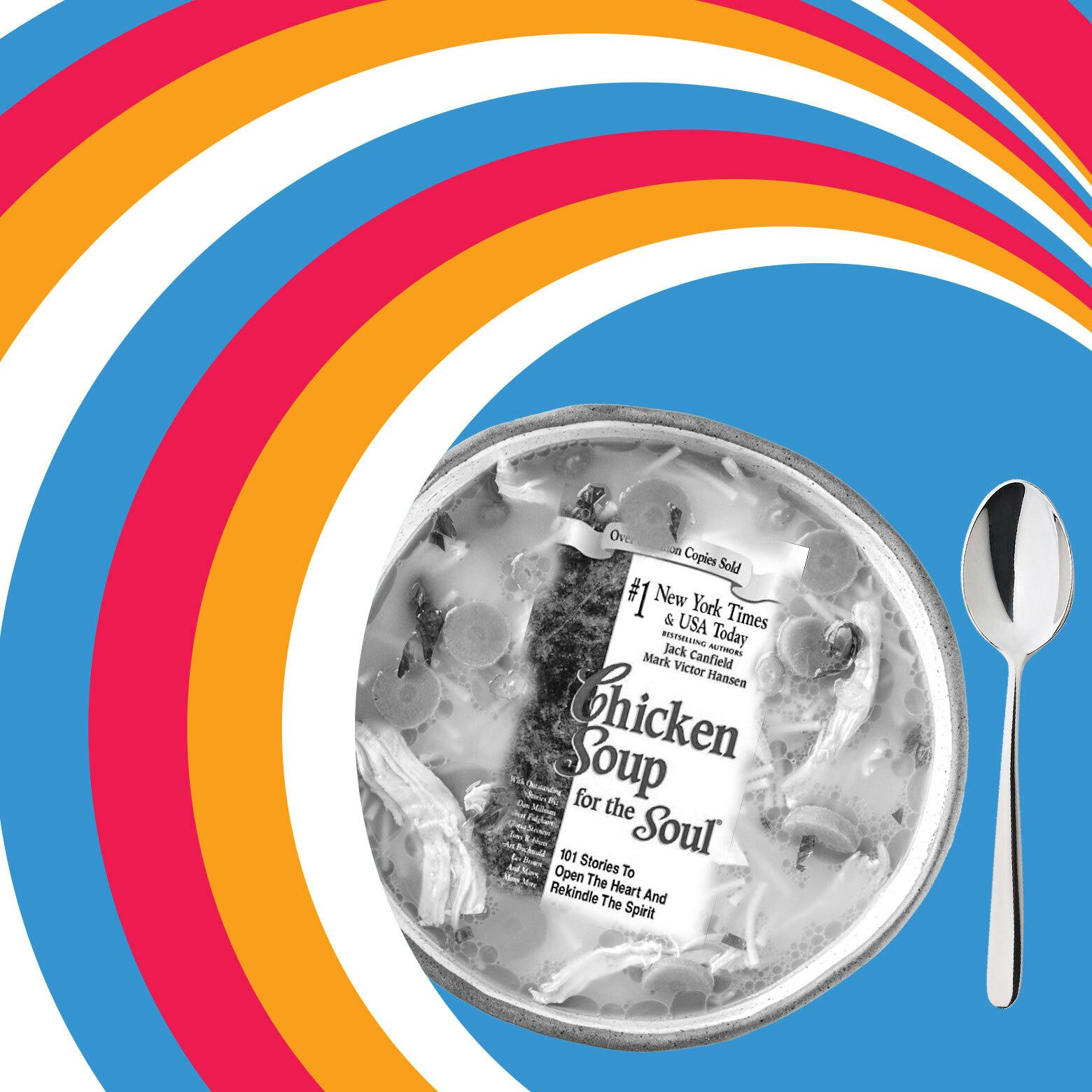
Slow Burn
Decoder Ring | How “Chicken Soup” Sold Its Soul
00:50:49
The self-help book series’s strange journey from best-seller to meme stock.
Loading summary
Transcript200 lines
- [00:00]
Narrator
Spring savings are in the air. And at Ross where they have savings on all the brands you love from the latest fashion to outdoor decor and even pet supplies. Savings are in every aisle. Go to Ross and save 20 to 60% off other retailers prices on your favorite spring finds.
- [00:20]
Jack Canfield
24 chefs 24 culinary.
- [00:23]
Mark Victor Hansen
Showdowns for 24 hours straight.
- [00:28]
Willa Paskin
Which chef will out cook outpace, outlast the competition?
- [00:35]
Narrator
No chef escapes the clock.
- [00:38]
Mark Victor Hansen
Season Premiere 24 and 24 Last Chef Standing Sunday, April 27 at 8 see it first on Food Network Stream next.
- [00:44]
Willa Paskin
Day on Max before we begin, this episode contains adult language. When Amanda Chicago Lewis was growing up in the suburbs of New York City, she was a big reader.
- [01:01]
Amanda Chicago Lewis
I would read everything that came to the house, every magazine. If my parents had a weird book laying around, I would just like pick it up and start reading.
- [01:08]
Willa Paskin
But one day she came across a book, it's title in swoopy multicolored letters. That wasn't for her parents. It was for her.
- [01:16]
Amanda Chicago Lewis
Chicken Soup for the Teenage Soul came out when I was in like fifth or sixth grade, and that really imprinted on me.
- [01:22]
Narrator
Teens will welcome Chicken Soup for the Teenage Soul like a good friend, one.
- [01:27]
Willa Paskin
Who understands their feelings, is there for.
- [01:29]
Amanda Chicago Lewis
Them when needed, and cheers them up.
- [01:32]
Narrator
When things are looking down.
- [01:33]
Amanda Chicago Lewis
Chicken Soup for the Soul is so accessible and chewable that I just like, hoovered it up.
- [01:40]
Willa Paskin
Published in 1997, Chicken Soup for the Teenage Soul contains scores of short, uplifting stories. What we learned that year was that.
- [01:49]
Amanda Chicago Lewis
Nothing can beat persistence. We learned that we were the stuff of which winners are made.
- [01:55]
Willa Paskin
The stories are about all aspects of teenage life. First loves, first heartbreaks, teachers, tests, sports.
- [02:02]
Jack Canfield
Jason played like a first stringer that day. He ran fast, found every open hole in the line and jumped up after every tackle as if he had never been hit.
- [02:11]
Willa Paskin
They're about the hard things, too. Grief, disordered eating, depression.
- [02:15]
Narrator
Angela, I have to tell you something. When you called, I was in the basement. I was about to kill myself. But then I heard your voice on the machine upstairs.
- [02:26]
Willa Paskin
To Amanda, who was not quite yet an actual teenager herself, Chicken Soup for the Teenage Soul felt like a window into the intense world of adolescence, one in which bad things happen, but kids overcome them.
- [02:40]
Amanda Chicago Lewis
I just sort of felt like, wow, everything's possible.
- [02:45]
Willa Paskin
And she wasn't alone.
- [02:46]
Amanda Chicago Lewis
Everyone was obsessed with it. Girls would sort of like carry it around. It was like a status item, kind of like an ace bandage. I don't know if you remember the moment when it was cool to have like a sprained wrist and even Then.
- [02:58]
Willa Paskin
Amanda knew the Chicken Soup for the Teenage Soul was part of something bigger.
- [03:03]
Amanda Chicago Lewis
You know, we used to go to Barnes and Noble on the weekend and kind of like wander, and there were always tables filled with Chicken Soup for the Soul bucks.
- [03:10]
Willa Paskin
There are literally hundreds of books in the Chicken Soup for the Soul family.
- [03:15]
Amanda Chicago Lewis
There's like Chicken Soup for the Grandma's Soul, Chicken Soup for the Preteen Soul.
- [03:19]
Willa Paskin
There's Chicken Soup for the Mother's Soul and Chicken Soup for the Pet Lover's Soul, and Chicken Soup for the Golfer Soul, and on and on. In the 1990s and 2000s, all these variations turned the Chicken Soup for the Soul franchise into a phenomenon. It was like the paperback equivalent of a decorative pillow or a wall hanging with an optimistic aphorism. On maybe even more common, Chicken Soup.
- [03:45]
Amanda Chicago Lewis
For the Soul is the best selling non fiction book series of all time.
- [03:51]
Willa Paskin
Amanda had grown up swimming in Chicken Soup for the Soul. But like so many things you're into when you're a kid, she never questioned its prevalence, thought about why it was so popular, or even who wrote them or why. And then late one night in the summer of 2022, by which point she was a fully grown journalist, Amanda got curious.
- [04:15]
Amanda Chicago Lewis
Suddenly, out of nowhere, who even knows what made me think of it? I was like, whatever happened to Chicken Soup for the Soul? And I googled Chicken Soup for the Soul and I was like, oh my God. First of all, this company still exists. Shocking. Second of all, the company is buying Redbox, the DVD kiosk company. And third of all, there's like a meme stonk crusade against both companies.
- [04:41]
Willa Paskin
This was not the Chicken Soup for the Soul that Amanda remembered.
- [04:46]
Amanda Chicago Lewis
And I was like, what in the world is happening here?
- [04:57]
Willa Paskin
This is decoder ring. I'm Willa Paskin. Chicken Soup for the Soul began in 1993, the brainchild of two successful self help gurus with a distinction distinctive belief system. The books brimmed with uplifting, crowdsourced stories about kindness, courage and perseverance. And they tapped into something powerfully comforting and lucrative. The books collectively sold 500 million copies while covertly disseminating an out there philosophy. And then things got truly bizarre. In recent years, the company behind this monumentally popular book series has become many things besides a publisher, a streaming service, a financial instrument, a meme stock, a bust. In this episode, Amanda Chicago Lewis, who has written and reported about Chicken Soup for the Soul, is going to walk us through the strange saga of a company with so much upside, it came crashing down. So today on Decoder Ring how does a feel good brand go from comfort food to junk? Hi, we're calling all Decoder Ring fans in the Boston area. We're going to be live at the WBUR Festival in Boston on Saturday, May 31. It's a celebration of WBUR's 75th anniversary and there are going to be a lot of great live shows there. Everything from Slate's Amicus to Wait, wait, don't tell me. Modern Love and Us. We'd love to see you there, but we would also love your questions. If you happen to be in the Boston area, are free that Saturday and have a cultural mystery you want us to solve, please send us an email@decoderringlate.com or call us at 347-460-7281. You can find out more details about the festival and how to get tickets@wburfestival.org we hope to see you there. This podcast is brought to you by Progressive Insurance. Do you ever find yourself playing the budgeting game, shifting a little money here and a little there and hoping it all works out well? With the name your price tool from Progressive, you can be a better budgeter and potentially lower your insurance bill too. You tell Progressive what you want to pay for car insurance and they'll help find you options within your budget. Try it today@progressive.com Progressive Casualty Insurance Company and affiliates Price and coverage match limited by state law. Not available in all states. So after Amanda Chicago Lewis checked up on Chicken Soup with the Soul, like a long lost middle school classmate, her curiosity was piqued.
- [08:08]
Amanda Chicago Lewis
I was like, maybe I have to write about this. Like this is so weird.
- [08:12]
Willa Paskin
She wanted to know everything about it and she started with the authors.
- [08:17]
Jack Canfield
Hi, I'm Jack Canfield.
- [08:18]
Mark Victor Hansen
I'm Mark Victor Hansen and the two.
- [08:20]
Jack Canfield
Of us wrote a book called Chicken Soup for the soul. 101 stories to open the Heart and Rekindle the Spirit.
- [08:27]
Willa Paskin
So who's Jack Canfield?
- [08:28]
Amanda Chicago Lewis
Jack Canfield is the guru, the hippie. California I can convince you of anything.
- [08:37]
Jack Canfield
Everything you need is in you now. You have everything you need to do, everything you want to do.
- [08:43]
Amanda Chicago Lewis
The energy is so intense.
- [08:44]
Willa Paskin
Amanda met Jack Canfield, a motivational speaker and self described human potential expert, at a weekend seminar called Breakthrough to Success held in an airport hotel ballroom. Canfield's been leading seminars like it for more than 40 years, and in them he offers up his own story as a model of overcoming adversity.
- [09:06]
Jack Canfield
I had a dysfunctional family. My mother was an alcoholic, my father was a workaholic and somewhat abusive. She divorced him when I was six, you know, to save the kids from getting beat up. And so if I can do it, you can do it.
- [09:18]
Amanda Chicago Lewis
Jack Canfield grew up working class, like, West Virginia, taught at, like, a predominantly black high school in Chicago for a year. After graduating Harvard as a teacher in.
- [09:29]
Willa Paskin
The late 60s, Canfield became concerned that his students weren't motivated. He wanted to make them believe that it was possible for them to, as he put it, get out of the ghetto and have a successful life. And then he learned about a force in the universe that seemed like it could provide a solution, something called the law of attraction.
- [09:51]
Amanda Chicago Lewis
The law of attraction is that your thoughts create reality that you will attract whatever it is you are thinking about.
- [09:58]
Jack Canfield
When you are vibrating at the level of 100% expectancy that you're going to get something, it's already a done deal, then what happens is the universe literally responds.
- [10:08]
Willa Paskin
The idea is that the human mind is so powerful that if you just think about what it is you really want, just focus on it, you can bring it to you. Like attracts like.
- [10:23]
Amanda Chicago Lewis
It's about happiness, about relationships, about any goal that you might want to achieve. But what it really means for most people is making money.
- [10:32]
Willa Paskin
The idea is like, think good things. Visualize your richness, visualize your happiness, visualize your health kind of thing.
- [10:39]
Amanda Chicago Lewis
Yes. So, you know, you need to have a pma, a positive mental attitude.
- [10:44]
Willa Paskin
But the flip side of this belief system is that if you think too much about what you don't want, well, you can attract that, too.
- [10:52]
Amanda Chicago Lewis
Everything bad that's ever happened to you is your fault.
- [10:55]
Jack Canfield
Take 100% responsibility for your life and your results. 100%.
- [11:00]
Amanda Chicago Lewis
Any illnesses you got fired, or you tripped and fell, or your parents were mean to you, that's actually on you. That's all about you. You messed up, Willa. You.
- [11:11]
Jack Canfield
We want to blame someone else. Blame my wife, blame my kids, blame the economy, blame the. We blame something all the time or some other reason other than us. Right. The point is it's you.
- [11:23]
Amanda Chicago Lewis
It's okay, though. We're going to cry it out, and then I'm going to tell you. What happens next is also up to you. So it's demoralizing and empowering at the same time. And it's a very extreme view of individual agency.
- [11:39]
Willa Paskin
As far out as this may sound, it's a notion that has been with us for a long time. The phrase the law of attraction was coined in the late 19th century by an author named Prentiss Mulford. Mulford was synthesizing a lot of existing ideas like Ralph Waldo Emerson's concept of self reliance. Everything you need is already inside you and the doctrine of Christian Science, which says you can heal yourself or God can with prayer alone.
- [12:10]
Amanda Chicago Lewis
What Prentice Mulford did in the 1880s was really put, you know, the wealth and material possessions spin on it.
- [12:17]
Willa Paskin
In just about every decade since Mulford first came up with the Law of Attraction, there's been some variation that has found eager new adherents.
- [12:27]
Amanda Chicago Lewis
There was Napoleon Hill, Think and Grow rich in the 1930s.
- [12:31]
Jack Canfield
Let me call your attention to a great power.
- [12:34]
Willa Paskin
It is the power to take possession of your own mind and direct it.
- [12:37]
Amanda Chicago Lewis
To whatever ends you may desire. Norman Vincent Peale, who was a pastor, his thing was the power of positive thinking.
- [12:44]
Willa Paskin
The happiest person is he who thinks the happiest. Most interesting, finest thoughts.
- [12:55]
Amanda Chicago Lewis
This guy named W. Clement Stone started every day with like, I feel happy, I feel healthy, I feel terrific, I.
- [13:03]
Willa Paskin
Feel healthy, I feel happy, I feel terrific. And it was W. Clement Stone who became Jack Canfield's mentor.
- [13:15]
Amanda Chicago Lewis
Jack Canfield learned about the Law of Attraction and this became his entire life.
- [13:22]
Willa Paskin
By the 1980s, Canfield was spreading the message himself.
- [13:25]
Jack Canfield
In three months, I tripled my income. Not because I knew how I was going to do it, because I declared I'm going to do it. And the how started showing up because I affirmed it and I visualized it.
- [13:36]
Willa Paskin
This is from one of Canfield's seminars published in 1987 on a four hour cassette tape called Self Esteem and Peak Performance. In it you can hear him deploy one of the tricks of his trade over and over again.
- [13:51]
Jack Canfield
Let me start by telling you a story that kind of illustrates one of the points I want to make. I'll tell you a story out of my life, help demonstrate how this works. Let me share a little story with you. Let me tell you a story about that. Let me tell you one story.
- [14:02]
Amanda Chicago Lewis
A crucial part of these trainings is sort of like bringing people in with a story.
- [14:06]
Jack Canfield
There was a man named Frank Zamanski. He was a football player at Notre Dame University. Another story, a friend of mine who's a real estate agent named Bert Dubin, Rick Little, 19 year old, he drives his car off the side of a road in the middle of the winter. Ends up all winter long hanging out in what a body cast.
- [14:21]
Amanda Chicago Lewis
Jack Canfield knows wisely, like, you know, when you tell a really good story, you don't have to like beat people over the head with the lesson because they get the message from the story.
- [14:30]
Willa Paskin
The Football player, the real estate agent, the kid in the body cast. All their stories end with versions of the same moral. Believe in yourself. Listen to the little voice inside your head. Don't hide your light under a bushel.
- [14:45]
Jack Canfield
Perseverance, don't give up. Keep going, no matter what.
- [14:50]
Willa Paskin
At some point, Jack Canfield decided he wanted to take the most compelling stories he'd heard and put them into a book, creating a kind of gospel of positivity. But to do so, he wanted a partner. And there was another law of attraction loving motivational speaker he'd known for years.
- [15:09]
Mark Victor Hansen
Hi, I'm Mark Victor Hanson. I want to tell you that technology is bringing me to you. And technology times me equals unlimited results. I believe that's a new formula. And I think technology times you equals unlimited results. And I think for the first time in human history, we can have fundamental abundance.
- [15:25]
Amanda Chicago Lewis
Mark Victor Hanson is much more energetic, happy, filled with factoids and aphorisms.
- [15:34]
Mark Victor Hansen
Goal setting is goal getting. So what I teach is you got to write at least 101 goals, and that's called a good beginning. I personally have in writing 6,000 goals. Now there's only one other human being that has over 6,000 goals in writing.
- [15:47]
Willa Paskin
When Canfield and Hanson started talking about Canfield's book project, they realized they would make a perfect team.
- [15:54]
Mark Victor Hansen
Jack is an educator and I'm a business guy. And so we synchronized on what our skills were.
- [15:59]
Amanda Chicago Lewis
Jack Canfield is the calm hippie guru and Mark Victor Hansen is the like, overexcited wind up toy sales guy. And together, unstoppable force.
- [16:12]
Willa Paskin
They got to work collecting and choosing stories for their book.
- [16:15]
Amanda Chicago Lewis
The stories that at the end, you can't stop yourself from crying, you can't stop yourself from laughing. It's like stories that elicit a big emotional response.
- [16:25]
Willa Paskin
Like take this story in which a little boy sees a sign in a pet shop advertising puppies and asks the owner to see them.
- [16:32]
Jack Canfield
One puppy was lagging considerably behind the rest, and immediately the little boy singled out the lagging, limping puppy and said, what's wrong with that little dog?
- [16:42]
Willa Paskin
The store owner explains, the puppy doesn't have a hip socket and will always have a limp.
- [16:47]
Jack Canfield
The little boy became excited. That is the little puppy that I want to buy, he said. The store owner replied, no, you don't want to buy that little dog. He is never going to be able to run and jump and play with you like the other puppies. To this, the little boy reached down and rolled up his pant leg to reveal a badly twisted, crippled left leg supported by a big metal brace. He looked up at the store owner and softly replied, well, you see, I don't run so well myself, mister. And that little puppy is going to need someone who understands.
- [17:22]
Willa Paskin
This story is exemplary of the others in the book. It's heartwarming and tear jerking, not because bad things don't happen, but because people face them with grace and grit and positivity. What this story is not, though, is obviously about the Law of Attraction.
- [17:42]
Amanda Chicago Lewis
The crazy thing about Chicken Soup for the Soul is that the law of attraction stuff is really subliminal.
- [17:49]
Willa Paskin
Like if you were just a random person, you'd be like, oh, these are all such sweet stories.
- [17:53]
Amanda Chicago Lewis
Yes, yes. And you wouldn't necessarily understand that behind it is this theory about, as Jack Canfield has said, like, you are at fault for your own cancer.
- [18:04]
Willa Paskin
Essentially, Canfield And Hanson picked 101 uplifting stories for the book. Hanson says he'd learned in India that 101 is a sacred number, but they were having a hard time with the title, so they decided to meditate on it. On the third day of meditation, Canfield says a chalkboard appeared to him.
- [18:25]
Jack Canfield
And on that chalkboard a hand writes the words chicken soup. And I said to the hand, which I assume was God, what does chicken soup have to do with my book? And he said, when you were a kid, your grandmother gave you chicken soup when you were sick. I said, but this is not a book about sick people. And the voice said, people's spirits are sick. I went, chicken soup for the spirit. Chicken soup for the. Chicken soup for the soul. And I got goosebumps.
- [18:51]
Willa Paskin
Canfield and Hansen had taken an old, controversial idea, mixed it with comforting, nourishing ingredients, and given the entire recipe the perfect non threatening name. The whole endeavor was a cozy, warm soup. When we come back, that soup proves to be delicious to just about everyone. This episode is brought to you by Saks Fifth Avenue. Shopping at Saks is the perfect way to discover the latest styles, elevate your everyday look, and refresh your wardrobe just in time for spring. At Saks, you'll find inspiration for every occasion, from casual outfits to special events. One of the things I like about Saks is just how many different brands and designers they have and how easy it is to mix and match them while putting an outfit together. Bod Eileen Fisher, apc, Rachel Comey, and so much more. They have clothes for every occasion, be it a work event, a party, a date, or just a lounge around the house. Whether you're refreshing your entire wardrobe or shopping For a vacation. Saks makes it Fun and easy. Saks.com is personalized with arrivals from brands picked just for you, making it simple to find inspiration for your everyday style. So if you're looking for a fun, effortless shopping experience and want to elevate your personal style, head to Saks. That's Saks.com for everyday inspiration. Today's episode is sponsored by Smart Travel, a new podcast from NerdWallet. Want to travel like a savvy jet setter? No, that doesn't mean monogramming your passport. It means making smart decisions every step of your trip, which means knowing your options. Smart Travel unpacks the facts, like which booking sites actually save money, how to fly first class using points, and if that fancy travel card is a smart investment, all so you can save more on your next adventure. Stay tuned at the end of the episode to hear the Smart Travel trailer and be sure to follow Smart Travel from Nerd Wallet so you can start traveling like a pro. So Jack Canfield and Mark Victor Hansen had selected their 101 stories, polished them, and assembled them in a book. They even had the title. What they didn't have was a publisher. The book was rejected by every mainstream publishing company they sent it to. So in 1993, they decided to pay a small company in Florida themselves to print 20,000 copies of Chicken Soup for the Soul. They were on the hook for all those books, but Mark Victor Hansen wasn't worried.
- [21:43]
Mark Victor Hansen
I've been successfully selling greeting cards and every other dang thing since I was 9 years old. So I thought, well, I'll figure out how to sell this.
- [21:50]
Amanda Chicago Lewis
They take all these copies and these guys are amazing at sales. They sell them out of bakeries, they sell them out of mortuaries. Anyone who does a seminar is like, required to buy five copies or something like this. They have all these sort of like little schemes. And then the stories in the books are very powerful and people read them and they're like, oh my God, I love this. I'm giving it to my neighbor. And so it sort of spreads in this, like, word of mouth but also like hard sales tactic, groundswell thing. And within like a year and a half, it becomes a bestseller.
- [22:26]
Willa Paskin
The first, Chicken Soup for the Soul eventually sold a 11 million copies around the world. At the end of the book, almost as an afterthought, they included an invitation to readers to submit their own tales. And they did.
- [22:40]
Amanda Chicago Lewis
People just started sending in their stories and they were like, we have a hit, so we're going to keep doing more.
- [22:46]
Willa Paskin
So There was a sequel called A Second Helping of Chicken Soup for the Soul, followed by a third serving of Chicken Soup for the Soul, a fourth course, a fifth portion, a sixth bowl.
- [22:58]
Amanda Chicago Lewis
And then they started doing theme ones.
- [23:00]
Willa Paskin
Chicken Soup for the Child's Soul, Chicken Soup for the Woman's Soul, Chicken Soup for the Couple's Soul, Chicken Soup for the Entrepreneur's Soul, Chicken Soup for the Prisoner's Soul, Chicken Soup for the Soul of America. Chicken Soup for the Soul Christmas Magic.
- [23:14]
Amanda Chicago Lewis
They got at something which is like, people want to buy something. It's like Chicken Soup for the Canadian Soul. It's like, I'm Canadian, right? It was like Chicken Soup for the cat lover soul. I was like, oh my God, my aunt has a cat. I'm going to buy her this book.
- [23:26]
Willa Paskin
Where there was more demand, there were more sequels. Chicken Soup for the Teenage Soul had three follow ups. And then there was also Chicken Soup for the Christian Teenage Soul and Chicken Soup for the Indian Teenage Soul. And these books weren't just being received by teens as some eye rolling adult approved purchase.
- [23:45]
Amanda Chicago Lewis
By 2003, research showed that young people were more likely to seek guidance from Chicken Soup for the Soul than from the Bible.
- [23:55]
Willa Paskin
By then they were publishing around four or five titles a month, including brand partnerships like Chicken Soup for the NASCAR Soul and Chicken Soup for the American Idol Soul. And they didn't stop at Books Tuesday on Banks tv.
- [24:09]
Mark Victor Hansen
Chicken Soup for the Soul, your favorite series of books come to life in the all new top rated feel good show of the season.
- [24:16]
Amanda Chicago Lewis
I mean, these are people who are very sales oriented. So they really knew like we're going to milk this thing as much as possible, right? Like they were selling Chicken Soup for the Soul calendars and they were selling Chicken Soup for the Soul mugs and they were selling Chicken Soup for the Soul like stationery and postcards.
- [24:31]
Willa Paskin
Their most successful brand extension though, was not the kind of thing you could find in a bookstore.
- [24:38]
Amanda Chicago Lewis
The thing that ended up taking off was Chicken Soup for the Soul pet food.
- [24:43]
Willa Paskin
Premium affordable nutrition from the name, you know, and trust. Chicken Soup for the Soul Pet food, where healthy begins.
- [24:49]
Amanda Chicago Lewis
I mean, it does actually make sense that the pet food thing took off because a lot of the Chicken Soup for the Soul books were about animals.
- [24:57]
Willa Paskin
Seemingly everything Chicken Soup for the Soul did connected with people. But all of the success did not come without critique. The publishing industry treated Chicken Soup for the Soul with a mix of envy and contempt. The content was dinged as treacly hokum. A New Yorker article from 2003 pointed out how strenuously the books avoided politics or controversy. Saying, nobody in a chicken book rekindles the spirit by coming out of the closet or leading a union organizing drive or deciding to have an abortion. But avoiding overt politics doesn't mean the books have no underlying politics.
- [25:38]
Amanda Chicago Lewis
Okay, so like the first story in the first book, but something like, there was once a teacher in the slums of Baltimore, and all the kids in the school, they don't say black, but they're implying black. All the kids in the school were growing up to be, you know, like criminals and failures, but this teacher loved her students so much that 176 out of 180 students of hers went on to become, like, lawyers and doctors. So first of all, it's this classic chicken soup for the saw that they're just like throwing numbers in there. So you're like, oh, it's real. But like, is that a real story? Like, what are you talking about?
- [26:23]
Willa Paskin
True or not, though, the story has a message, one that echoes the Law of Attraction, but also takes a side in the culture wars of the 1990s and today.
- [26:34]
Amanda Chicago Lewis
These are stories that are telling you there is no such thing as structural racism. And if a teacher just loves her students, those kids will overcome any, you know, socioeconomic and racial things going on.
- [26:48]
Willa Paskin
From its first story, the Chicken Soup books had subtly embedded the idea that you are personally and solely responsible for everything that happens to you, good or bad. But Jack Canfield was about to get involved in another project that would put it all much more explicitly.
- [27:06]
Narrator
A year ago, my life had collapsed around me.
- [27:11]
Willa Paskin
Little did I know at the time, out of my greatest despair was to.
- [27:17]
Amanda Chicago Lewis
Come the greatest gift.
- [27:20]
Narrator
I'd been given a glimpse of a great secret.
- [27:25]
Willa Paskin
The Secret is a best selling book and documentary film released in 2006. Its titular secret is not much of a secret. It's just another term for the law of attraction, which the documentary states plainly.
- [27:39]
Mark Victor Hansen
The secret is the law of attraction. Everything that's coming into your life, you are attracting into your life.
- [27:48]
Willa Paskin
The movie features dozens of talking heads, self help gurus and advisors who believe in the law of attraction, including Jack Canfield.
- [27:58]
Jack Canfield
I live in a four and a half million dollar mansion. I have a wife to die for. I get to vacation in all the fabulous spots of the world. I've climbed mountains, I've explored a bit on safaris. And all of this happens and continues to happen because of knowing how to apply the seed.
- [28:16]
Willa Paskin
Putting the law of attraction in a shiny, melodramatic new package made a huge splash the book sold 30 million copies. Oprah was obsessed with it, helping to popularize and mainstream its ideas. Basically, the message of the Secret is the message that I've been trying to share with the world on my show for the past 21 years. The message is that you're really responsible for your life. You are responsible for your life. You really can change your own reality based on the way that you think. But though the Secret was immensely popular, it was also controversial. Unlike Chicken Soup for the Soul, which soft pedaled the law of attraction, the Secret took it just about as far as it could go. I've seen cancer dissolved.
- [29:01]
Mark Victor Hansen
I always say that incurable means curable from within.
- [29:03]
Willa Paskin
You can change your life and you can heal yourself.
- [29:07]
Amanda Chicago Lewis
That got a lot of backlash because it was so explicit and it's like you're at fault for whatever's happening to you. And there was like an SNL sketch where Amy Poehler plays the author of the Secret and like, Kenan Thompson plays like a refugee in Darfur. And Amy Poehler is like, oh, Leslie, I know this is hard for you.
- [29:25]
Willa Paskin
To hear, but your outlook is what's hurting you. No. Oh, I think it's the Janjaweed.
- [29:35]
Amanda Chicago Lewis
I'm fleeing a genocide lady.
- [29:38]
Willa Paskin
Jack Canfield was undaunted by the backlash.
- [29:41]
Jack Canfield
I just got asked the other day, well, what about Darfur and what about Katrina and what about 9 11? I'm now coming to believe that everything is attracted into our life. We actually create more of everything we have intense feelings about.
- [29:56]
Willa Paskin
And this message was finding a very receptive audience. Canfield and Hanson's seminars were full. Their speaking engagements jammed their other books selling. In 2007, they decided it was time to cash out of the Chicken Soup for the Soul business.
- [30:14]
Amanda Chicago Lewis
They sold the company for $63 million.
- [30:18]
Willa Paskin
Whether it was through a positive mental attitude, old fashioned salesmanship, or both, Jack Canfield and Mark Victor Hansen had manifested their fortune. If this were a story inside a Chicken Soup for the Soul book, that's how it would end. Through the power of positive thinking, Jack Canfield and Mark Victor Hansen overcame obstacles, inspired a lot of cat lovers and teens, made a ton of money, and lived happily ever after. The end. But that's not where it ends. There is another chapter to the Chicken Soup for the Soul story, one with some unexpected twists. Chicken Soup for the Soul Entertainment completes its deal to buy DVD retailer Redbox Entertainment. When we come back, the series of circumstances that led Chicken Soup for the Soul to buy a DVD vending machine company in 2022.
- [31:20]
Amanda Chicago Lewis
Foreign.
- [31:27]
Willa Paskin
Season is nearly upon us this year. It's time to treat yourself to the luxe upgrades you deserve with Quince's high quality travel Essentials at fair prices. They have some really nice sturdy hard shelled carry ons right now and handsome leather shoulder bags that look to me like a big upgrade over your average duffel. And they have backpacks in some great colorful prints my kids would love. The best part? All Quint's Items are priced 50 to 80% less than similar brands. By partnering directly with top factories, Quince cuts out the cost of the middleman and passes the savings on to you. For your next trip, treat yourself to the luxe upgrades you deserve from Quince. Go to quince.comdecoder for 365 day returns plus free shipping on your order. That's Q U I n c e.com decoder to get free shipping and 365 day returns. Quince.com decoder it's smart to always have a few financial goals. What's a really smart one? You can set earning cash back on what you buy every day. With Discover you can get this. Discover automatically matches all the cash back you've earned at the end of your first year. Seriously, all of it. Discover trust you make smart decisions. After all, you listen to this show see terms@discover.com credit card chicken soup for the Soul had started out as the creation of two motivational speakers with incredible sales skills who saw the books as an extension of their work to spread the gospel of positivity. But in 2008 they sold the company to new owners who were not Law of Attraction gurus, motivational speakers or even salesmen. They were a one time telecom CEO named Bill Ruhana and his wife, a former hedge fund manager named Amy Newmark.
- [33:29]
Amanda Chicago Lewis
They were based in Greenwich, Connecticut. So this kind of went from being a like hippie, dippy Southern California feel the vibrations self help thing to like a shiny financial object.
- [33:44]
Willa Paskin
About 89% of Americans know Chicken Soup for the Soul. It's an amazing number.
- [33:50]
Mark Victor Hansen
Only 90% of the Americans in the same survey by Gallup knew Ford that.
- [33:55]
Willa Paskin
Threw Hana on a New York area radio station talking about why he and Amy Newmark purchased Chicken Soup for the Soul. So I thought to myself, you know, pet food, books, there's a lot of.
- [34:06]
Mark Victor Hansen
Room between those two things that you could fill in with branding that might be very successful. And that's why we bought the company. We saw a great opportunity to fill.
- [34:14]
Willa Paskin
In all of that space in between.
- [34:16]
Amanda Chicago Lewis
It's much more like, okay, we're Going to analyze the market and make a very strategic play.
- [34:24]
Willa Paskin
Their new strategy was to aggressively expand the Chicken Soup portfolio through licensing deals. Chicken Soup for the Soul puzzles, beauty products, pasta sauce, and yes, Chicken Soup for the Soul soups, which co owner and publisher Amy Newmark talked up herself.
- [34:42]
Narrator
Our food packaging says, always there for you, because that's how we feel. We feel we're always there for people and it's a privilege and an honor to be on their bookshelves. And now we feel very privileged that we're going to be on their pantry shelves.
- [34:58]
Willa Paskin
Within three years, licensing deals accounted for half of the company's revenue. And it pursued another new business opportunity, too.
- [35:06]
Amanda Chicago Lewis
Chicken Soup for the Soul. It's like, oh, huge brand awareness, very positive feelings. I think, like, very natural to try and go Hollywood.
- [35:17]
Willa Paskin
So they did.
- [35:18]
Narrator
For more than 20 years, chicken soup for the Soul has been changing the world one story at a time. Now we take those stories to the.
- [35:25]
Willa Paskin
Next level as we shine a light.
- [35:27]
Narrator
On the heroes that surround us.
- [35:31]
Amanda Chicago Lewis
They made a show called Hidden Heroes, which was basically like Punk, but instead of pranking people, they would like, surprise a woman with like, her soldier husband who she thought was deployed. And like, here he is.
- [35:48]
Willa Paskin
It's like, feel good punk.
- [35:49]
Amanda Chicago Lewis
Yeah, feel good punk.
- [35:51]
Willa Paskin
They also tried to sell a daytime talk show and a movie with interlocking stories. Love, actually style. They would eventually strike up a partnership with Mr. Punk himself, Ashton Kutcher. But none of this was enough to turn Chicken Soup for the Soul into a multi platform media empire. And those new Chicken Soup branded consumer products never took off either, and most were eventually discontinued. Even the Soup. The truth was, by the mid 2010s, chicken soup for the Soul was a weak legacy brand remembered, if at all, for the heyday of its books. Decades earlier, their strategy hadn't worked. But they weren't going to give up yet. If the company wasn't going to achieve great success making TV and movies, maybe it could just host them. Instead, they decided Chicken Soup for the Soul would become a streaming platform. Not a subscription one like Hulu or Netflix, but one that has ads. But to make this happen, they needed content to put on the platform. And to get content, they needed money. And here's where things start to get strange and a little technical, too. So in 2017, to raise money, Chicken Soup for the Soul spun off a subsidiary company called Chicken Soup for the Soul Entertainment and took that company public in an unusual way. They took advantage of a new statute called Regulation A plus that allowed smaller companies to forego a certain amount of regulatory review and raise a capped amount of funds from normal folks instead of the usual wealthy people, hedge funds, big firms and big banks.
- [37:39]
Amanda Chicago Lewis
The intent is to like maybe help the average Joe get rich off of your tech company. But like in practice, other companies that used regulation A plus to go public, one had to do with like UFOs, one had to do with like flying cars.
- [37:55]
Willa Paskin
And one of them would be Chicken Soup for the Soul Entertainment.
- [37:59]
Amanda Chicago Lewis
It's on brand right, because Chicken Soup for the Soul is for the people.
- [38:02]
Willa Paskin
The stories in the books had been crowdsourced. Now the company's money would be too. They used the $30 million they raised to acquire a couple of existing streaming services like Crackle and a few film and TV libraries, giving them distribution rights to an assortment of faith based films, music, documentaries and old TV shows like highway to Heaven.
- [38:28]
Jack Canfield
Nothing's free in this world, pal.
- [38:30]
Willa Paskin
$10 kindnesses.
- [38:32]
Amanda Chicago Lewis
What kindness is free?
- [38:38]
Willa Paskin
Chicken Soup for the Soul Entertainment stock price went up. According to Amanda's reporting, its CEO Bill Ruhana bought a lakefront home with eight bathrooms, a wine cellar and a private island. But the stock price soon started to go down and so the company made another more head scratching acquisition.
- [39:01]
Amanda Chicago Lewis
Redbox, if you recall, is like a kiosk that would be outside of like every gas station across America and you could like rent a DVD for like 299.
- [39:14]
Willa Paskin
Between Blockbuster's heyday and streaming's rise, Redbox had thrived. As late as 2018, it was making $1 billion. But its fortunes had taken a nosedive as the DVD business cratered. By May of 2022, when Chicken Soup for the Soul announced it was planning to acquire Redbox, it was on the verge of bankruptcy and the deal reflected this. It was also announced that when the two companies merged, Redbox shares would basically be marked down. They were set to lose a lot of value. But that guaranteed decline actually created a potential windfall. Canny investors could short Redbox. They could bet on the fact that its value would indeed go down. A year earlier, Wall street traders had made a similar bet on the video game store GameStop. They had shorted it in an attempt to profit off GameStop's predicted decline. But as you may recall, things did not go the way Wall street expected. Shares of the video game retailer Gamestop have suddenly become a white hot must.
- [40:29]
Amanda Chicago Lewis
Own, skyrocketing over the last week or so.
- [40:32]
Willa Paskin
It's an extraordinary story.
- [40:33]
Amanda Chicago Lewis
This is populism coming for capitalism.
- [40:37]
Willa Paskin
Retail investors on Reddit hadn't liked the idea of Wall street know it alls reaping in profits by betting against Gamestop. So they banded together to try and stick it to them through something called a short squeeze.
- [40:50]
Amanda Chicago Lewis
The rich guys say the price is going to go down. Well, you know what we're going to do? We're going to buy more and more stock so the price goes up.
- [40:57]
Narrator
And it worked. Gamestop skyrocketed, going from $3 in April to nearly 350 today. Several large hedge funds were severely wounded in the process.
- [41:09]
Willa Paskin
That populist uprising had worked so well that now very online retail investors were keen to do it for Redbox. So people at home on their computers rallied around Redbox to try and make its price go up and stick it to those betting against it.
- [41:26]
Amanda Chicago Lewis
Like we're gonna go get the plutocrats, like take them down.
- [41:29]
Willa Paskin
They got caught again. You were supposed to write off red box. That's what you're supposed to do, you stupid peon, blue collar dumbass. Nobody, okay?
- [41:41]
Jack Canfield
You write it off while they make.
- [41:43]
Willa Paskin
Bank and everybody on the way to the moon. Well, we're going to the moon.
- [41:48]
Amanda Chicago Lewis
We're going beyond that.
- [41:50]
Willa Paskin
Chicken Soup for the Soul, which had once been a book on a shelf at someone's friend's mom's house, the series that kept a thousand airport bookstores afloat, the perfect church lady gift, was now all tied up with a meme stock. That's right, ladies and gentlemen, we have a new meme stock. This penny stock is about to go insane and could be the biggest short squeeze of 2022. A small amount of money could turn to a very large amount of money and it's just going to get better and better. But as Amanda watched videos of online traders encouraging others to short squeeze Redbox, she started to think that this latest twist in the story was strangely appropriate.
- [42:31]
Amanda Chicago Lewis
The people on the meme stock crusade had kind of a delusional, or you would say like you know, positive mental attitude about manifesting the merger not going through, promising if you take this risk you will make money and if you want it badly enough, it will happen.
- [42:54]
Willa Paskin
As different as it seemed from a feel good book, this whole meme stock thing had all the flavor of classic Chicken Soup for the Soul except the law of attraction didn't work this time. This was not GameStop 2.0. The deal went through, the value of Redbox stock went down and the short squeezers lost. And things didn't work out for Chicken Soup for the Sole Entertainment either. Redbox was not a cure for what ailed it. In fact, the merger saddled the company with tenfold more debt and never came close to profitability. A few months after the acquisition, Chicken Soup for the Soul Entertainment stock price started to fall and kept falling until in early 2024, chicken soup for the Soul Entertainment was delisted from the Nasdaq. And in June, less than two years after the Red Box deal went through, it filed for bankruptcy. In the filing, the company disclosed it was nearly $1 billion in debt. Now a judge has ordered all their assets be liquidated. 24,000 DVD kiosks are shutting down nationwide after 22 associated food partners like Bowman's were all told that removing the kiosk is up to them. Redbox would not be sending anyone to remove them, no matter how much Regular Joe Investors who'd bought Chicken Soup for the Soul Entertainment stock believed it was going to rise no matter how much would be short. Squeezers had visualized and focused on success. No matter how hard they'd all tried to attract like with like, their minds were no match for reality. The decline of the dvd, the difficulty of the streaming business and corporate mismanagement outdid them all.
- [44:43]
Amanda Chicago Lewis
The brand was so successful that they were able to like, milk it until there was like nothing left and the only thing left was like the idea and the memory and the nostalgia for the thing.
- [44:56]
Willa Paskin
Bill Ruhana and Amy Newmark have been sued by creditors and former employees for millions of dollars in unpaid debts and obligations. A lawsuit filed just in March of 2025 by the trustee in charge of the company's bankruptcy proceedings alleges that Ruhanna in particular used the company's assets as his personal piggy bank and describes mismanagement and pillaging by insiders on a scale rarely seen with public companies. That same suit also describes the Red Box merger as being wildly optimistic, unrealistic, and not based on reasonable assumptions. Through their lawyers, Ruhanna and Newmark did not respond to a request for comment in one to Bloomberg Law, though Ruhanna denied the allegations and said the claims of wrongdoing against the company, its management and me are false. If the story ended here, it would not be the kind you would find in Chicken Soup for the Soul, but it would be familiar nonetheless. It has the elements of so many stories these days, and not the uplifting kind. It's a story of hubris, greed, wishful thinking, tired IP litigation, and the rich getting richer. But the story still isn't over because though the Chicken Soup for the Soul Entertainment spinoff is a corporate entity, no more Chicken Soup for the Soul is still around, and Bill Ruhana and Amy Newmark still own it. Today, Chicken Soup for the Soul is still publishing books and selling pet food, and there's even, maybe inevitably, a Chicken Soup for the Soul podcast hosted by Newmark herself.
- [46:41]
Narrator
The amazing thing is that even if you just pretend to be a more positive person, everyone will react to you differently. And then before you know it, it will be true. You will be a more positive person. This is proven over and over again in our new book, Chicken Soup for the Soul. Think positive. Live happy. It's so simple.
- [47:01]
Willa Paskin
And that means, despite everything that's happened, Chicken Soup for the Soul can keep pretending that its story might have a different ending, so long as there are people willing to buy it.
- [47:15]
Amanda Chicago Lewis
Pretend you're happy when you're blue.
- [47:21]
Mark Victor Hansen
It isn't very hard to do.
- [47:26]
Willa Paskin
This is Dakota Ring. I'm Willa Paskin. You can read Amanda Chicago Lewis in depth piece on the story of Chicken Soup for the Soul at Business Insider, and we'll link to it on our show page. If you aren't already a Slate plus member, you you can subscribe now on Apple Podcasts by clicking Try Free at the top of the Decoder Ring show page or visit slate.comdecoder/ to get access wherever you listen. We're releasing bonus episodes regularly now, so please sign up. And don't forget, Slate plus members also get to listen to our show and every other Slate podcast without any ads, and you get unlimited access access to Slate's excellent website. Again, you can subscribe on Apple Podcasts by clicking Try free or visit slate.comdecoderplus to sign up. This episode was written and produced by me and Max Friedman. We produced A Codering with Katie Shepard and Evan Chung. Our supervising producer, Merritt Jacob, is senior Technical director. We'd like to thank Rachel Strom. If you have any cultural mysteries you want us to decode, please email us atdecoder ring slate.com. you can also call us now at our new Decoder Ring hotline. That number is 347-460-7281. We'd love to hear any and all of your ideas for the show. Thanks for listening. We'll see you in two weeks.
- [48:58]
Narrator
Today's episode is sponsored by Smart Travel, a new podcast from NerdWallet. I'm Sally French. And I'm Megan Coyle. We're Travel writers at NerdWallet, and we love helping you make your travel budget work smarter. Because who doesn't love more trips for less money? People who hate fun. Megan that's Who? But that's definitely not you person who is listening to this right now. On Smart Travel, we don't just hand out travel advice. We break it down. Like, should you get that fancy airline credit card with the huge sign up bonus? Or is that just a shiny trap leading you to financial ruin? We have the answers. The answer is it depends. By the way, that's why we do the research for you. We crunch the numbers, dissect the fine print, and make sense of loyalty programs so you don't accidentally spend all your hard earned points on a sad airport hotel booked amidst a canceled flight. Each week we tackle real travel questions like is travel insurance worth it? How do you spot a good flight deal before it's gone? And can you actually use those random miles your aunt gave you for Christmas? Also, I want that on. Look, we don't just sit here and talk about travel. We live it. I once turned a canceled flight into a free trip to Denver. $200 in United vouchers and $45 in Starbucks gift cards. And you are so patient. Through it all, we've got practical tips, expert interviews, and plenty of hot takes. I call them hot takeoffs to help you travel smarter, not harder. So whether you're planning your next getaway or just love staying ahead of the travel game, follow Smart Travel on your favorite podcast app. Your passport will thank you and so will your wallet.
- [50:26]
F
I'm Leon Nayfak and I'm the host of Slow Burn Watergate. Before I started working on this show, everything I knew about Watergate came from the movie all the President's Men. Do you remember how it ends? Woodward and Bernstein are sitting at their typewriters clacking away. And then there's this rapid montage of newspaper stories about campaign AIDS and White House officials getting convicted of crimes. About audio tapes coming out that prove Nixon's involvement in the COVID up. The last story we see is Nixon resigns. It takes a little over a minute in the movie. In real life, it took about two years.
- [51:00]
Amanda Chicago Lewis
Five men were arrested early Saturday while trying to install eavesdropping equipment.
- [51:05]
Willa Paskin
It's known as the Watergate Incident.
- [51:06]
F
What was it like to experience those two years in real time? What were people thinking and feeling as the break in at Democratic Party headquarters went from a weird little caper to a constitutional crisis that brought down the President. The downfall of Richard Nixon was stranger, wilder, and more exciting than you can imagine. Over the course of eight episodes, this show is going to capture what it was like to live through the greatest political scandal of the 20th century. With today's headlines once again full of corruption, collusion and dirty tricks, it's time for another look at the gate that started it all. Subscribe to Slow Burn now. Wherever you get your podcasts.