← Slow Burn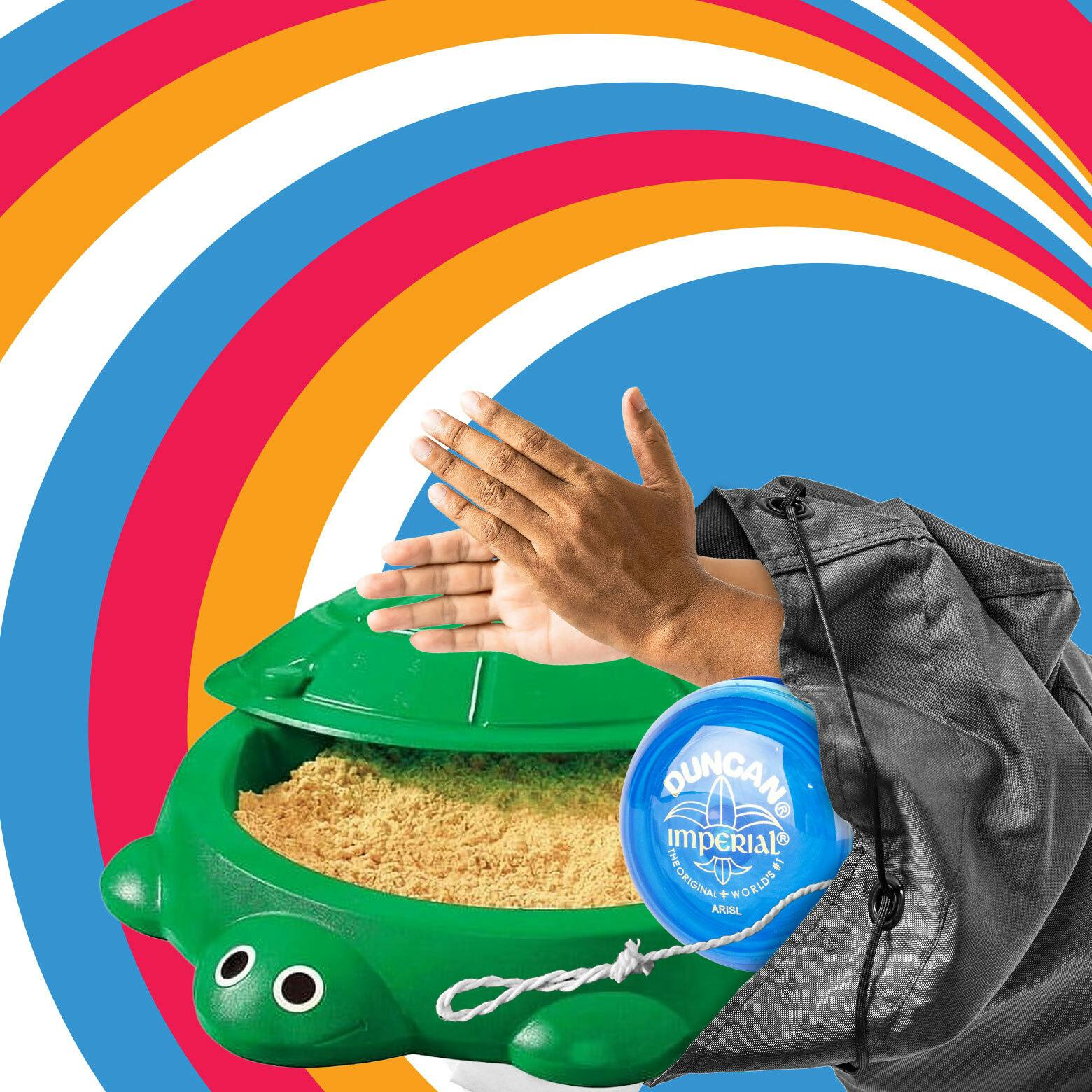
Slow Burn
Decoder Ring | Mailbag: Yo-Yos, Sandboxes, and Encores
01:06:41
Why kids play with sand, why rock bands play encores, and how yo-yo masters started selling at school assemblies.
Loading summary
Transcript297 lines
- [00:01]
Willa Paskin
Hey Decoder Ring listeners. You know how much I love a good deep dive. And since you're tuning into the show, I know you do too. This holiday season, you can give the gift of endless exploration to like minded friends and family with Apple Gift Card. They can use it for research apps on the App Store, documentaries on the Apple TV app, or even ad free podcasts. It's the perfect present for the curious mind. Visit applegiftcard.apple.com to learn more and gift one today. Hearing a voice can change everything. So @&t wants everyone to gift their voice to loved ones this holiday season because that conversation is a chance to say something you'll hear forever. @ t connecting changes everything. Hi, it's Willa and I have a request which is that you really listen to what I'm about to say. I have a pitch for you. It's not an advertisement though. Something more important to the long term health and survival of Dakota Ring than that you may or may not be aware, but the kind of show that we make or that we strive to make, one that is reported and researched and polished and belabored and obsessed over until hopefully the whole thing gets so good that it achieves a kind of liftoff and you don't even know how hard we worked on it. And it all just seems easy and fun and buoyant and engaging. Well, that kind of show is becoming a rarer and rarer thing in the world of podcasts. And for us to be able to keep doing it just straight up, we need your help. If you enjoy decoder ing, if you get something out of it, if you've learned something, if you've laughed, if you've thought something new, if you've gotten a fun fact to share at a party, I am asking for you to sign up for Slate plus through the end of the year. We are running a 50% off special on slate plus membership. To get that enormous discount, all you have to do is go to slate.com decoder/ and at checkout enter the code decoder50. It will give you access to a full year of Slate's content for just $59, which is less than $3 per episode of Decoder Ring. And that's not even including all our exclusive Slate plus content, which we've been running all year. And we're going to stuff that includes extra interviews, segments and mailbag questions. And a Slate plus membership gets you more than just access to Decoder Ring. You get ad free listening and access to PLUS content across all Slate podcasts. You get unlimited reading on Slate.com and the Slate app. You get every Slate game and you will be supporting Slate's independent journalism at a time when independent journalists, Slate and we here at Decoder Ring could really use your help. As you will hear in this episode, we could not make Decoder Ring without our listeners. We get so much from you guys and we work really hard to give you back something good in return. Please consider joining Slate plus to help us keep doing that again. Slate plus is 50% off through the end of the year. All you have to do is go to slate.com decoder+ and enter decoder50 at checkout. I thank you in advance. Please enjoy the show. One day, when our listener, Sebastian Medense was about nine years old, he and his classmates were called into an assembly that he's been wondering about ever.
- [03:47]
Sebastian Medense
Since. I don't think we'd had much intimation of this being on the horizon. It just kind of happened one.
- [03:53]
Willa Paskin
Day. This was around the turn of the millennium at a Catholic grade school in Billings.
- [03:58]
Sebastian Medense
Montana. So they bring us into the gym, which is where we typically have assemblies. I mean, it was a Catholic school, so I think we would have sometimes kind of conduct assemblies where they would just talk to us about how to behave in a Christ like.
- [04:12]
Willa Paskin
Manner. But immediately it became clear that this was not that kind of assembly. There was a man in the gym Sebastian had never seen.
- [04:20]
Sebastian Medense
Before. This upbeat white guy. I don't think he had like a fancy outfit or.
- [04:26]
Willa Paskin
Anything. But what he did have next to him on the gym floor was a table full of yo.
- [04:34]
Sebastian Medense
Yos. And he just goes at it and pumps us up for the yo yo lifestyle. He gave us this demonstration where he's like doing all these cool yo yo tricks and trying to make us think that yo yos are the new.
- [04:49]
Willa Paskin
Hotness. So, like, he comes out, he's like walking the dog. Like, he's just like doing cool yo yo.
- [04:54]
Sebastian Medense
Tricks. Yes, like very advanced yo yo tricks. Like talking about how we could do the same tricks if we are willing to take the.
- [05:02]
Willa Paskin
Leap. Were you guys like.
- [05:04]
Sebastian Medense
Agog? I think so, yeah. We definitely wanted to be a part of this and devote our lives to yo yos. And after he's done, they have the yo yos for us to.
- [05:18]
Willa Paskin
Purchase. There were all sorts of yo yos to choose from. Basic yo yos in a wide array of colors, more expensive, professional grade yo yos iridescent green yo yos light up yo yos and the kids lined up to buy them, as I.
- [05:34]
Sebastian Medense
Recall. Everybody got a Yo.
- [05:35]
Willa Paskin
Yo. What did your yo yo look.
- [05:36]
Sebastian Medense
Like? I want to say I got the glow in the dark one. And I think we normally would not have been allowed to have a toy like this on the playground, but I think they gave us special permission. We might have even had permission to bring them, like, into class with us if we were, you know, not disruptive. Like, the school was making a lot of concessions to the. To the yo yo.
- [05:55]
Willa Paskin
Man. How much did you guys play with the Yo.
- [05:57]
Sebastian Medense
Yos? I mean, that was like. All we did was, like, try to replicate the demonstration that the man had done because he made it look so easy. He was such a.
- [06:05]
Willa Paskin
Natural. But try as they might, the kids could not approach the yo yo mastery of the yo yo master. And after that initial frenzy, the toy began to disappear from the.
- [06:17]
Sebastian Medense
Playground. Probably after a week, we all started leaving our Yo Yos at home, and the whole thing was quickly forgotten. I remember mine being maybe in my bedside table drawer for a long time, just kind of sitting there as a memento of that glorious.
- [06:33]
Willa Paskin
Week. But as the years have passed, Sebastian has begun to see that week through adult eyes and to wonder what the heck was going on with the yo yo.
- [06:43]
Sebastian Medense
Salesman. Because I don't recall other demonstrations of this sort of where somebody came to our school, got us out of class, did a demonstration of their product, and then we all purchased the product from that person. So, yeah, I'm like, why Yo.
- [06:59]
Willa Paskin
Yos? It's very. It's sort of like the music man. Yeah, it's like very traveling salesman. But this guy's like, I have a briefcase full of Yo Yos. I'm going to the.
- [07:08]
Sebastian Medense
School. Yeah, this is basically a captive audience sales presentation to the most impressionable group of people you could probably imagine, because it was so odd. It was so out of the blue, like this. This guy steps into your life, shows you the wonder of Yo Yos, recedes back into the shadows, and you're left wondering for 25 years the meaning of it all. Who was that Yo.
- [07:34]
Willa Paskin
Yo? This is Decoder Ring. I'm Willa Paskin, and we're back with another listener Mailbag. We are so lucky to get so many great questions from you, the people that listen to the show. And today we're spelunking into three of them. We're starting with the mystery of yo yo assemblies. And actually just take a second right now to try and guess when in the last century yo yo sales were at their peak. Okay. Remember that. It'll pay off later. We're also exploring how and why it became totally normal to plop children down in a playpen of beach dirt. Or in other words, where do sandboxes come from? And finally, why do all rock concerts end with that little bit of theater known as the encore? So today on Decoder Ring. Thanks to our listeners, some mailbag mysteries. This podcast is brought to you by Progressive Insurance. Do you ever find yourself playing the budgeting game, shifting a little money here, a little there, and hoping it all works out well? With the name your price tool from Progressive, you can be a better budgeter and potentially lower your insurance bill too. You tell Progressive what you want to pay for car insurance and they'll help find you options within your budget. Try it today@progressive.com Progressive Casualty Insurance Company and affiliates Price and coverage match limited by state law. Not available in all states. Hey Decoder Ring listeners. You know how much I love a good deep dive. And since you're tuning into the show, I know know you do too. This holiday season you can give the gift of endless exploration to like minded friends and family with Apple Gift Card. They can use it for research apps on the App Store, documentaries on the Apple TV app, or even ad free podcasts. It's the perfect present for the curious mind. Visit applegiftcard.apple.com to learn more and gift one today. Sebastian has poured over his memory of the mysterious yo yo man coming to his school and wondered why he was there. Was it supposed to be educational? Was a school getting a cut? Was this some weird thing unique to his Billings, Montana Catholic school? For what it's worth, I had never encountered this yo yo thing. No yo yo assemblies ever rolled into any of my schools. But Decoder Ring supervising producer Evan Chung assured me that Sebastian was not alone in his.
- [10:34]
Evan Chung
Experience. Yes, because it happened to me too. We had a Yo yo assembly come to my public school in suburban Chicago. This would have been in the mid-90s, probably just a few years before Sebastian's, and I remember it going down pretty much the same way that he does. The only difference being that I don't think it ended so much because we lost interest. It was that the Yo Yos became so distracting that they eventually banned them from school property. And I can name at least one other school where this same thing happened. Kids, this is a Yo Yo Springfield.
- [11:07]
Sebastian Medense
Elementary. Kinda dull, huh? Not much competition for a video game. Or is it? Presenting the Twirl King.
- [11:16]
Evan Chung
Champions. This is from a classic Simpsons episode from nineteen nineteen ninety two where a Yo yo assembly comes to the school and Wows all the.
- [11:24]
Sebastian Medense
Kids. Those guys must be.
- [11:26]
Willa Paskin
Millionaires. How big they.
- [11:28]
Sebastian Medense
Get? All kinds of.
- [11:29]
Evan Chung
Girls. And just like at Sebastian School, every kid ends up buying a Yo.
- [11:34]
Sebastian Medense
Yo. How much do those Yo Yos cost? I don't.
- [11:36]
Evan Chung
Care. This suggested that the strange appearances that Sebastian and I experienced in childhood were not isolated incidents. I wanted to know who exactly these mysterious yo yoers popping in and out of schools were. And I found.
- [11:52]
Sebastian Medense
One. Remember, everybody, crisscross applesauce. The kid behind you wants to see.
- [11:56]
Evan Chung
Too. This is Dave Schulte, better known as Dazzling.
- [12:00]
Sebastian Medense
Dave. And I'm here today to talk about these. Right here. What are these called? Yo Yos. That's right. These are Yo.
- [12:06]
Evan Chung
Yos. We met up with Dazzling Dave at an elementary school in Minneapolis where he opened with a freestyle routine of yo yo.
- [12:13]
Sebastian Medense
Tricks. And now here is the DNA. You've seen one Yoyo guide, but we're not done. Now's the time for.
- [12:29]
Evan Chung
Two. Dave is a national Yoyo master and an inductee into the Yo yo hall of Fame, and he's traveled the world showing off his.
- [12:37]
Sebastian Medense
Skills. Well, I've been to Japan, Korea, France, Australia, all over the US Doing.
- [12:45]
Evan Chung
Yo yo assemblies and demonstrations has been his full time job for over 25 years. When we caught up with them, it was already his third.
- [12:53]
Sebastian Medense
Show. That day, it's run from one show to the next show to the next show. It's great. Thank you. Thank you very.
- [12:59]
Evan Chung
Much. This wasn't the life Dave had planned for. He was a middle school teacher who entered yo yo competitions on the side. He even took first place at the world championships one year. And then in 1998, he got a call from a Yo yo company.
- [13:13]
Sebastian Medense
In Honolulu asking me if I would be interested in leaving my teaching job to become a Yo yo.
- [13:18]
Evan Chung
Professional. A Yo yo professional. You may never have known such a thing existed, but the roots of the profession go back a century to the moment America first fell in love with the yo yo, which is thanks in large part to a mostly forgotten figure named Pedro.
- [13:37]
Sebastian Medense
Flores. I never knew who Pedro Flores was, and as I would talk with other people, even in the Philippines, nobody had heard about.
- [13:47]
Evan Chung
Him. Rob Penaeus is the author of a children's biography called Pedro's Yo Yos, which he was inspired to write once he realized how important Flores.
- [13:56]
Sebastian Medense
Was. Maybe he didn't invent the yo yo, but he made the yo yo what it is.
- [14:02]
Evan Chung
Today. Pedro Flores was born in the Philippines in 1896, shortly before the US took over as colonial rulers. Over 100,000 Filipinos migrated to America over the next couple decades, and Pedro was one of them. He worked a lot of jobs in a lot of places. Sugar plantations in Hawaii, aboard ships up and down the west coast. He tried studying law for a while, but he was back to doing odd jobs in California when he made his mark on the world. There's a lot of competing lore about how it happened exactly, but here's one version of the story. In the 1920s, Pedro was working as a hotel bellhop and lodging in the home of a white.
- [14:42]
Sebastian Medense
Family. He was renting a place in the basement, and the landlord's son wanted to play.
- [14:49]
Evan Chung
Ball. But it didn't take long for Pedro to get a little bored with playing.
- [14:53]
Sebastian Medense
Catch. And he thought, well, I can come up with a better.
- [14:56]
Evan Chung
Toy. And he had a specific toy from his childhood in a top that spun up and down on a string. This kind of toy is actually very old. The first version probably originated in China a couple thousand years ago. The ancient Athenians called it the disk. To 18th century French aristocrats, it was an incroyable. The Duke of Wellington knew it as the bandalore and was reportedly an enthusiastic. But in the US These toys had never made much of an impact. And so Pedro thought he'd introduce his American landlord son to what the kids back in the Philippines called a yo yo. Pedro carved by hand a yo.
- [15:37]
Sebastian Medense
Yo in the basement of the home he was staying as a boarder. He twisted the twine and set it up in such a way that it would not only come back to you, but you could start making up.
- [15:49]
Evan Chung
Tricks. Pedro showed off his creation and what it could do to his landlord's son, who showed it to his parents and friends and.
- [15:56]
Sebastian Medense
Neighbors. It was different, it was.
- [15:58]
Evan Chung
Unique. And so they were fascinated. Word spread around town, and soon Pedro found himself hand carving dozens of yo.
- [16:05]
Sebastian Medense
Yos. As demand continued to grow, he was able to get capital to open up a.
- [16:11]
Evan Chung
Factory. And he realized quickly how to sell sell the wooden yo yos now pouring out of that factory. He had seen how people reacted when he yo yoed in front of them. He understood that a piece of wood with some string sitting on a shelf doesn't sell itself. Kids needed to see a yo yo in.
- [16:28]
Sebastian Medense
Action. So Pedro would demonstrate one on one or in groups in front of stores, street corners, stages, anywhere you could gather.
- [16:39]
Evan Chung
People. And soon Pedro wasn't doing it.
- [16:41]
Sebastian Medense
Alone. And this is my version of the slingshot. There you.
- [16:46]
Evan Chung
Are. This is a 1978 film of Nemo Concepcion, one of several Filipino men Pedro hired in the 20s and 30s to demonstrate yo yo tricks and teach kids how to do.
- [16:58]
Aileen
Them. How do you know which fingers to.
- [16:59]
Sebastian Medense
Put? 1, 2, 3, 4, there. Then before it goes, goes down, and before it dies out, you got to catch it. Do you go from this one onto the.
- [17:14]
Evan Chung
Peaky?
- [17:14]
Sebastian Medense
Yeah. Oh, so like that? Yeah, that's. You'll get it. Don't worry. That marketing involved interacting constantly with people. Pedro took what could have been a solitary toy, and he made it a social.
- [17:29]
Evan Chung
Phenomenon. When Pedro's demonstrators would schedule an appearance, the newspapers would trumpet their arrival, emphasizing the exotic nature of their new Filipino toy. And across the late 20s and early 30s, they helped set off a yo yo.
- [17:47]
Sebastian Medense
Craze. And some of them became almost like celebrities. It's astonishing how it just took.
- [17:54]
Evan Chung
Off. Within a few years, Pedro Flores sold off his company and its trademark to a white businessman and inventor named Donald Duncan. Duncan really knew how to work the publicity machine. Over the next few decades, he transformed the yo yo from an exotic depression era fad to an all American toy every kid should have. And he did it by taking the marketing strategy that Pedro had already established and systematizing.
- [18:29]
Sebastian Medense
It. The whole idea is to teach kids how to yo.
- [18:34]
Evan Chung
Yo. Dale Oliver was hired as a traveling Duncan yo yo demonstrator in.
- [18:38]
Sebastian Medense
1957. Because the best yo yo salesman in the world is a kid that knows how to yo yo. Because he's going to go show his friends, and all of his friends are going to want to do it, too. Well, if that kid can do it, I can do it. Yeah. There you have it. Duncan marketing in a.
- [18:57]
Evan Chung
Nutshell. Dale was just 11 years old when one of Pedro Flores, original Filipino yo yo men, rolled into his hometown of Kansas City in the early 50s. By the time he was 17, he was good enough at yo yoing to hit the road himself. He and his crew chief were one of several sales teams Duncan employed, each with their own territories. When they pulled into a city like Detroit or Baton Rouge or Poughkeepsie, they would plan to spend two months there. They'd find a place to live, visit the local toy stores and wholesalers, and then they'd get a.
- [19:29]
Sebastian Medense
Map. You plot out the city. You know, you plotted all the schools and all the stores. And once you did that, then the next day you'd.
- [19:39]
Evan Chung
Start. They plotted the schools and the toy stores because in order to sell yo yos to kids, you gotta know where the kids are. They post up in the most likely spots to intercept them on their.
- [19:51]
Sebastian Medense
Way to school in the morning, you have to Go find a spot on the sidewalk where a lot of kid traffic came.
- [19:59]
Evan Chung
By. And if a kid happens, you see a kid walking down the street, what do you.
- [20:03]
Sebastian Medense
Do? You just start yo yoing, you know, walk the dog, rock the baby, make a star. So they're going to stop and look at you, and then you can talk to them. So I'm telling kids after school, I'm going to be at so and so at 3:30 or 4:45. Well, I can't yo yo. You don't have to. You get free lessons and you can win a free yo.
- [20:22]
Evan Chung
Yo. After school, the kids would catch up with Dale at a nearby toy shop or five and dime store for what they called yo yo contests. But really, they were a chance to teach kids some basic tricks and get them hooked so they could go off and get their friends.
- [20:37]
Sebastian Medense
Hooked. That was the secret. We know that the kids we taught would go back into school and the whole 400, 500 kids at that school would see.
- [20:46]
Evan Chung
Them. But you know what the kids wouldn't see at school? A yo yo assembly. In the 1950s, Dale and his peers were not welcome on school grounds, which is why he had to sneak in every day at.
- [20:59]
Sebastian Medense
Recess. And I would just walk out onto the playground, you know, playing yo yo. And the kids would see me and. And the teachers would run to the school to call the cops because there was some weirdo on our playground. I think probably every place we went, they called the police, but we were gone by the time they got.
- [21:22]
Evan Chung
There. So how did all this change? How did the yo yo professional go from Persona non grata to invited guest? Well, first yo yos had to go bust. Duncan's traveling sales techniques worked until the early 1960s, but then the company decided to shift its marketing strategy toward.
- [21:44]
Sebastian Medense
Television. I'll tell you what we do. We're going to run down the 10 basic tricks, and we start off by demonstrating. Ladies and gentlemen, boys and girls.
- [21:51]
Evan Chung
This Saturday morning on the Duncan school.
- [21:53]
Sebastian Medense
Of yo yo the spinner, television was very powerful. Basically, the only thing we had to do was to show up at the contest.
- [22:00]
Evan Chung
Spots. Dale no longer had to sneak onto playgrounds so much to attract kids when he held a contest. A crowd of 200 might now show up because they'd heard it was happening on tv. But this did not prove to be the blessing that it seemed facing a mob of children crammed into one.
- [22:16]
Sebastian Medense
Store. How much teaching do you think went on? All you could do was put on a show. But when there was 10 kids, you could go individually to Each and.
- [22:26]
Evan Chung
Every one, the whole one on one interaction that Pedro Flores had built. The American yo yo craze around back in the twenties had disappeared in the age of.
- [22:36]
Sebastian Medense
Tv. So as a result, there were very few kids that learned how to yo yo. What's the best yo yo salesman in the world? A kid that knows how to yo.
- [22:45]
Evan Chung
Yo. Now, when the Duncan demonstrators came back to a town after a year, they found fewer and fewer kids who had stuck with the yo yo sales began to plummet. In 1965, the bottom finally dropped.
- [23:00]
Sebastian Medense
Out. Dunkin yo yo went.
- [23:01]
Evan Chung
Bankrupt. The Dunkin brand would eventually be purchased by another company. But the golden era of yo yo demonstrators crisscrossing the country, stirring up yo yo crazes, and town after town was over. We are talking about yo yos here, though. And what goes down must come up. And when they did come up higher than ever before, it happened inside schools. Flash forward to 1989. Dale Oliver is now living in Seattle, paying his bills primarily in the restaurant business, but still as devoted to the yo yo as.
- [23:39]
Sebastian Medense
Ever. And the Pacific science center called me and said, every year we do a kids program during the Christmas break. And this year we're doing things that spin says, could you do a show reasonably well connected with science? Then I said, yeah, I can do.
- [24:00]
Evan Chung
That. Dale put together a show full of dazzling yo yo tricks that also included physics lessons on gyroscopic stability, rotational inertia, and friction. And when he performed it at the science center, everyone ate it.
- [24:13]
Sebastian Medense
Up. And I said, school.
- [24:16]
Evan Chung
Program. And so soon after, Dale began advertising to schools his brand new yo yo assembly for.
- [24:24]
Sebastian Medense
Hire. So was born the science of.
- [24:27]
Evan Chung
Spin. What was your pitch to them? How would you convince them it was a good idea to have you, you know, taking kids away from classes to do.
- [24:33]
Sebastian Medense
This? Well, you teach these lessons in your fourth and fifth grade anyway, and it will stick with the kids far better than what you try to teach them in the class. So it just fit. It was perfect. And a lot of schools thought so.
- [24:49]
Evan Chung
Too. The way it worked is that he would offer schools a choice for how to pay for the.
- [24:54]
Sebastian Medense
Assembly. You say, well, the cost is $800 unless you sell the yo yos for a week after we leave, then it's free. So what percentage of the schools do you think took the sell the Yo Yo's option.
- [25:06]
Evan Chung
98%. Over the course of the 90s, Dale spun the science of spin into a popular and lucrative business. And he wasn't the only one who saw the potential in this pricing scheme. There Were several Yo yo assembly programs competing with each other for time in schools across the country throughout the decade. Some purported to be based around science lessons, While others were more motivational, like the Ned show or team high performance. That's the one that dazzling Dave Schulte was first recruited.
- [25:36]
Sebastian Medense
Into. And we would have a message behind our yo yo fun called Dream Dare do to set goals that would be your dreaming and then dare, you know, get over obstacles and avoid all the pitfalls in life and to then finally achieve your goals and do so. Dream, dare and.
- [25:51]
Evan Chung
Do. Dave was hired to do this in 1998, meaning it was right around the time when our listener Sebastian remembers the yo yo man coming to his school, which Dave says checks out because believe it or not, that was the moment of peak yo.
- [26:06]
Sebastian Medense
Yo. Yes, 1998 was the height of the yoyo boom. Across the world, more yoyos were sold in 1998 than any other.
- [26:14]
Willa Paskin
Time. Yo you want to ride the.
- [26:16]
Sebastian Medense
String? Yo yo yo this thing Yo Mega. And everywhere, I swear, Every school in 1998 had a yo yo.
- [26:25]
Evan Chung
Demonstrator. So the Yo Yo's greatest moment came not during the depression, not in the Eisenhower administration, but in the same year the Game Boy color was released. Dale Oliver personally reported selling a million yo Yos in 1998. And he was far from alone. And he attributes the craze entirely to the existence of the school. Yo yo.
- [26:45]
Sebastian Medense
Assemblies. That was it. There wasn't any other thing. It was only a craze when it came to your school, okay, Like a school mile away. They weren't playing yo yo at.
- [26:57]
Evan Chung
All. And that's why the 90s yo yo phenomenon might have passed you by if you weren't a kid there to see. Wasn't a huge national news story, A top down mass media craze like power Rangers or Pokemon. It was a thousand local crazes sparked from school to school individually by demonstrators Just like the old time yo yo man going back to Pedro Flores, Traveling to towns one by one until each city's kids had caught the buck. And just like the old time yo yo men, the 90s school demonstrators were fundamentally there to sell yo yos. An estimated $200 million worth in 1998 alone. Each school program was operated by or represented a different yoyo manufacturer. The Ned show was super yo team. High performance was yo mega. Dale Oliver had his own company called Spintastics and it continues on up to today. Dazzling Dave has a line of Yo Yos.
- [27:57]
Sebastian Medense
Too. When you get a Yo yo, make sure it's a good one. If it came free from your parents work or cost less than 10 bucks, that's not a good one. You want to make sure it's heavy duty. Make sure it can unscrew all the dazzling Dave yoyos. Do that. So I bring the yoyos with me and I do the show, and I teach them how to do it. And I say, hey, kids, if you'd like to buy a yoyo, you can buy.
- [28:14]
Evan Chung
One. How many kids actually buy a yo.
- [28:16]
Sebastian Medense
Yo? Most schools for My average is 65% of the kids. Wow. So if it's a school of, you know, 300 kids, you're selling quite a few yo.
- [28:27]
Evan Chung
Yos. Dave gives around a dollar for every yo yo sold back to the school, Though plenty of schools pay him the flat fee instead and opt not to have him sell yo yos there at.
- [28:36]
Sebastian Medense
All. It makes sense, actually, in some situations where, you know, if you have a school where there's a lot of kids that have money and some kids that don't, it could cause strife at that school if you're bringing a product.
- [28:47]
Evan Chung
In. And school yo yo assemblies have indeed caused some strife and controversy because it's not inaccurate to view them ultimately as sales presentations to a captive audience of kids. Even the teachers on the simpsons were.
- [29:01]
Willa Paskin
Wary. I question the educational value of this.
- [29:04]
Sebastian Medense
Assembly. Hey, it'll be one of their few pleasant memories when they're pumping gas for a living. Well, most of the complaints, I am sure, came from the other programs because my program was teaching science, so that kind of knocked that kind of complaint.
- [29:23]
Evan Chung
Out. To be clear, though, your business.
- [29:26]
Sebastian Medense
Still was selling yo yos? Yes. I mean, that was the way we made a.
- [29:32]
Evan Chung
Living. But what about the idea that you're kind of pressuring kids to buy.
- [29:36]
Sebastian Medense
Things? Well, you're going to turn your TV set off. It's just another.
- [29:42]
Evan Chung
Avenue. So it's no worse than just seeing a toy commercial on Saturday.
- [29:46]
Sebastian Medense
Morning. Yeah, same thing. Except we just figured out a new way to. Instead of paying for television.
- [29:53]
Evan Chung
Commercials, There is a cynical way to look at all this. That they got away with a lot that they otherwise wouldn't have been able to because what they were selling were innocent, harmless yo yos. But at the same time, what they're selling are innocent, harmless yo yos. It's pretty hard to get worked up about them, Especially when you see some kids getting.
- [30:16]
Sebastian Medense
Dazzled. Let's go for it. 4 and 5. This trick is the corkscrew. I just see so much of the benefits of the kids learning how to do it. Teaching each other skills, nurturing each other to get better at it. They get past that thing that's really, really hard. And when they get past it, they. They've grown, they've learned. They just feel better about themselves. Oh, hit the floor. Are you supposed to hit the floor? No. Is it okay to make mistakes? Of course it is, guys. You're gonna make tons of mistakes when you're learning, but that's.
- [30:48]
Willa Paskin
Okay. Coming up after the break, we dig into another childhood mystery on the mind of one of our listeners. You know, AT&T believes hearing a voice can change everything. It's why people love a good podcast or save voicemails from loved ones. Because we appreciate the sound of a familiar voice. And when I need a recharge, I call my best friend. When I want some comfort, it's my mom. ATT wants everyone to share their voice over the holidays. So send a voice note, leave a voicemail, call someone. Because that convo is a chance to say something they'll hear forever. Happy holidays from AT&T. Connecting changes everything. You know, AT&T believes hearing a voice can change everything. And if you love podcasts, you get it. The power of hearing someone speak is unmatched. It's why we save voicemails from our loved ones. They mean something. You know, for me, when I need a one on one holiday boost, I know who to call. My mom's voice always feels like home. And when I need to get hyped for something big, it's my best friend. Her voice gives me the lift I didn't know I needed. AT&T knows the holidays are the perfect time to do just that. Share your voice. If it's been a while since you called someone who matters, now's the time. Because it's more than just a conversation. It's a chance to say something they'll hear forever. So spread a little love with a call this season. Happy holidays from AT&T. Connecting changes everything. Our next question comes from a listener out in California. My name is Aileen, and I.
- [32:50]
Aileen
Would really like to know when sandboxes became a thing. I am super curious as to when and why. We started putting sand in boxes and then corralled our children into them.
- [33:03]
Willa Paskin
As a place to play. Because it's kind of weird, right? It's so.
- [33:06]
Aileen
Weird. And our local. This is why I thought of.
- [33:09]
Sebastian Medense
It. There's a brewery in town here.
- [33:11]
Aileen
In Alameda, and they have massive sandboxes. Like, you can go, you can have a beer, you can let your kids play in the giant.
- [33:18]
Sebastian Medense
Sandbox. But I was just thinking to.
- [33:20]
Aileen
Myself, we're only three blocks away from the beach, like why, why do we have this.
- [33:24]
Willa Paskin
Thing? Did you growing up ever experience like the playground sandbox, like the big.
- [33:30]
Aileen
Ones? You know, we really didn't have sandboxes in the big playgrounds near me, but most of the backyard playsets had a place where you could put one underneath it. I. I have this imprinted on my.
- [33:43]
Willa Paskin
Brain. The turtle.
- [33:43]
Aileen
Ones. There is a turtle shaped piece of plastic with a weird half lid that never worked. And that's a sandbox.
- [33:51]
Sebastian Medense
Why?
- [33:51]
Aileen
How? Like why are we buying sand in bags and considering it clean and then putting it here as just like a completely acceptable place for our kids to gather? This is.
- [34:05]
Willa Paskin
Crazy. So basically I want to tell.
- [34:08]
Sebastian Medense
You. Tell me the.
- [34:09]
Willa Paskin
Answer. What we figured.
- [34:10]
Sebastian Medense
Out.
- [34:11]
Willa Paskin
Amazing. We figured out the answer with some.
- [34:15]
Aileen
Help. Where do sandboxes come from? Sandboxes come from.
- [34:19]
Willa Paskin
Germany. Alexandra Lang is a critic and the author of the Design of Childhood. She's spoken with us before for.
- [34:26]
Aileen
Episode about malls circa 1850 in Germany. That is the origin of much of what we like, do and see and think is good in early childhood education today. Because up until this time, children were basically considered to be kind of useless both in terms of productivity and educability. Before they could.
- [34:51]
Willa Paskin
Read. Enter an educator named Frederick Frubel who was not ready to write kids off learning.
- [34:57]
Aileen
Wise. He felt like there were things that children could learn before then if you made it non word based, the principles of geometry and math and gravity and.
- [35:09]
Willa Paskin
Nature. And he thought kids could learn all these things if you engaged their curiosity, that they learned best not from instruction, but by observing, touching, playing, doing.
- [35:20]
Aileen
So. He came up with a series of toys and blocks and other exercises that teachers could lead students through. And this is like 4 year olds and 5 year.
- [35:31]
Willa Paskin
Olds. In 1837, he began opening schools for very young children based around these blocks and exercises. They would also often have outdoor workspaces which might contain something like an herb garden. He actually thought of his schools as a place to nurture and grow children themselves. So he called them children's gardens, Though you are probably more familiar with the term in German. Kindergarten. Soon, kindergartens modeled after Flubels opened in England, France, Belgium and India. And then a former student of his added another element to the outdoor workspace next to the herb garden. A.
- [36:09]
Aileen
Sandbox. So the sandbox really kind of went along with like, okay, you have blocks inside and you have a garden outside, and then you also have a sandbox. And we can use the sandbox as kind of a microcosm of the earth to teach things about how water flows, you know, like how you can build a structure, all of this other.
- [36:28]
Willa Paskin
Stuff. Why sand? Like, what is special about.
- [36:33]
Aileen
Sand? Sand is incredibly malleable. I mean, you can basically do whatever you want with sand. So it lends itself to all different kinds of play. You can do make believe play with sand. You can do structural play with sand. You can kind of run around, like, climb over a mountain of sand. So it's just something that really lends itself to the maximum amount of childhood creativity and, like, in the best case scenario, a minimum amount of adult.
- [37:07]
Willa Paskin
Input. The sandbox was so fantastic, so fun, so casually educational. It broke free of the kindergarten itself in 1850 when one opened in a public park in Berlin. It was quite different from a contemporary sandbox, though, down to its name, it was known as a sand.
- [37:27]
Aileen
Garden. A sand garden is actually, in my opinion, way more fun than a sandbox because it's.
- [37:33]
Willa Paskin
Bigger. So a sand garden would be like, the entire lot is just, like, covered in.
- [37:37]
Aileen
Sand. The entire lot is covered in sand. And there are, like, mistresses who are minding the sandbox, and the kids from the neighborhood can just flow in and out and play. And, you know, it's like all the sand gets piled to one side, and then it gets brushed back and it rains, and then you can make sandcastles with it. So there's something to me, much more beautiful and anarchic about a sand garden than a.
- [38:02]
Willa Paskin
Sandbox. German children can now revel in the messy liberty of a big lot full of beach dirt. But American children, meanwhile, were being left in the dust, because at this time, not only were there no sand gardens or sandboxes in America, There were no designated public spaces for kids to play in at.
- [38:24]
Aileen
All. Children historically just played in the street with whatever they could.
- [38:29]
Willa Paskin
Find. By the 1880s, there started to be more widespread concern about the welfare of children, especially immigrant ones living in cities on increasingly trafficked streets. And this motivated a number of female philanthropists and educators to seek guidance abroad. And where better to seek it than a place where they were doing all sorts of innovative things with childhood.
- [38:52]
Aileen
Education? They went to Germany, and so they saw the Froibel kindergartens, and they saw the sand gardens, and they were like, oh, you know, we need that in our.
- [39:02]
Willa Paskin
Cities. In 1885, the first American sand garden opened in Boston's north end. It was basically an empty lot next to a church they dumped a bunch of sand into. But out of it grew something kind of spectacular because it was way more than just America's first sand.
- [39:20]
Aileen
Garden. The sand gardens kickstart the larger playground movement in America. They are the first move to get give kids something to do off the streets. They're the precursor to.
- [39:32]
Willa Paskin
Playgrounds. Sand gardens made people see the virtues of designated play spaces for children. Cities across the country began investing in these spaces, which soon expanded to include slides and swings and seesaws. But to make room for all these different elements, the anarchic and giant sand garden had to come down to size as just the.
- [39:55]
Aileen
Sandbox. As the playground becomes something that cities want to invest in, they become regularized. More people get involved in thinking about what they think is best for children and all the different things they think children should be doing in a playground. And so the sandbox becomes just one of a set of apparatuses that children are supposed to use to strengthen their bodies, strengthen their social skills, etc. And the sandbox becomes more of a way station for the younger children before they can use the climbing structures of the monkey bars, the swings, and the slides, and then eventually move on to organized.
- [40:40]
Willa Paskin
Sports. But even if the status of the sandbox had been downgraded to just a temporary way station for toddlers and little kids, Toddlers and little kids need a place to play too. And so the sandbox remained a standard feature of just about any every playground until the sands began to shift in the 1970s and.
- [41:01]
Sebastian Medense
80S. Did you know that every year thousands of children like you are hurt in playground accidents? That's why you need to learn and practice the rules of playground.
- [41:13]
Aileen
Safety. That is the era in which there start to be some major lawsuits around playgrounds and tighter regulations. Regulations on playground.
- [41:22]
Willa Paskin
Equipment. Is this really a serious.
- [41:24]
Sebastian Medense
Problem? It's a very serious.
- [41:26]
Max Friedman
Problem. We have reports every other month.
- [41:29]
Sebastian Medense
Of accidents, injuries that could be.
- [41:32]
Aileen
Prevented. The issue with sandboxes is not so much physical safety as it is the cost of maintenance. Replacing the sand and cleaning the sand, People start becoming worried about, like vermin, rats nesting in the sandbox, and also toxoplasmosis from cats peeing and pooping in the sandboxes. So a lot of cities just decide they're too much trouble and take them out of the.
- [42:00]
Willa Paskin
Playgrounds. And so playground sandboxes shared by thousands of children began to disappear. But at the same time, the sandbox was becoming available in individual kid sizes, perfect for private backyards. Slow and steady wins the.
- [42:16]
Sebastian Medense
Race.
- [42:16]
Willa Paskin
And. And the little ones have raced across backyards to play in the little tykes. Classic turtle sandbox for decades. In 1979, Little Tykes, the toy company behind the kid sized plastic red and yellow cozy coupe car, which, yes, you can picture it, it's that one also introduced the turtle sandbox that our listener Aileen grew up.
- [42:36]
Aileen
With. That turtle sandbox was really everywhere, I think, because the turtle shell was a cover. So if you bought that sandbox, you could cover it at night when you were done and you didn have to worry about some of these.
- [42:50]
Willa Paskin
Problems. But while the turtle is cute and useful, it's a far cry from the glory days of the giant sand garden or even the standard community.
- [42:59]
Aileen
Playground. When you have a suburban backyard and you have your own climbing structure and your own sandbox and your own paddling pool, the assumption is, I think mostly that you'll be playing in those things with your siblings and maybe, you know, one other set of siblings that you'll invite over. So it's really like limited in its social value and limited in size. But the beauty of the urban playground, you know, really from the origins of the urban playground, was that you could end up playing with so many different.
- [43:30]
Willa Paskin
Kids. This version of a communal playground is still thriving, but rarely with a sandbox anymore. They had pretty much disappeared in New York City by the time my kids were little. In fact, generally speaking, the only playgrounds with sandboxes left are, are the fanciest playgrounds of all, like the one in Brooklyn Bridge.
- [43:49]
Evan Chung
Park. A great day for Brooklyn and.
- [43:52]
Sebastian Medense
Really a great day for all of.
- [43:53]
Evan Chung
New York City because people from all five boroughs are going to come over here and enjoy this most wonderful.
- [44:00]
Willa Paskin
Park. Brooklyn Bridge park is a $350 million redevelopment project. It's home to a very impressive playground that includes huge slides emptying into deep blonde sand, and also a $19 million penthouse that was the most expensive home ever sold in the borough of Brooklyn. It's in these kinds of places where you see sandboxes.
- [44:24]
Aileen
Today. Over the past 10 years, there has been a new period of investment in urban parks and they're now seen as this way to make your city a world class city. In that kind of marquee park that often has some private funding or a conservancy for maintenance. You can have that kind of big sandbox, and I think they're more likely to put in that kind of big sandbox because it can double as a soft surface to land on the urban.
- [44:52]
Willa Paskin
Sandbox. That anarchic, low key, generative patch of basically dirt has become a kind of status marker. And so if you happen to be near a state of the art playground backed by some kind of private investment or have a backyard, the sandbox is alive, if not quite well. It, or at least its ethos, is doing better in another place, though it just happens to be a virtual one. In the extraordinarily popular video game Minecraft, players don't have any particular mission, they just get to build whatever they want. And it belongs to a category of game referred to as a sandbox.
- [45:32]
Aileen
Game. There's none of the kind of like competition and violence of most video games. Basically, you enter a world and then you can do whatever you want. I mean, I think it's one of the ironies that as the number of sandboxes in the country has diminished, there has been a rise in those sandbox games. Now that we have fewer sandboxes, that we have fewer places for kids to go, we're only giving them that kind of freedom in this video game.
- [46:03]
Willa Paskin
World. It's enough to make me want to go touch some actual sand. Up next, an encore presentation. No, literally a segment about encores. This episode is brought to you by Wondery. In just a few years, Ozempic has gone from a diabetes drug to a global phenomenon. But behind the miracle claims, another battle is raging. Demand is exploding. Supply can't keep up. And as drug maker Novo Nordesk scrambles to produce more, its rival Eli Lilly is racing to take the crown. Meanwhile, a darker market is emerging. Shady online sellers are offering cheap, unregulated knockoffs. Business wars is a podcast that tells the real story of what drives companies and executives to riches or to ruin. In their latest season, Business wars is diving into the race to Ozempic and the billion dollar showdown between Big Pharma's biggest players. Can they close the supply gap before one bad vial destroys everything? Follow Business wars on the Wondery app or wherever you get your podcasts. You can binge all episodes of Business wars early and ad free right now on Wondery Plus. This episode is brought to you by Planned Parenthood Federation of America. In the time it takes to pour yourself a cup of coffee, reply to that email you've been ignoring, or toss your dishes into the dishwasher. You can help protect reproductive health care for millions of years. Every gift to Planned Parenthood helps provide high quality healthcare like birth control, STI testing and abortion to people who need it. They need your support now. The Trump administration and Congress passed a law to defund Planned Parenthood, jeopardizing care for 1.1 million people. Whatever you give helps Planned Parenthood Health centers provide the care patients count on. Think about it. You can do so much good in just a few minutes. And isn't that so much more rewarding than just doing the dishes? So don't wait. Pull out your phone and go to planned parenthood.org defend and give today. Our last question comes from a listener named Kate in.
- [48:34]
Sebastian Medense
Indianapolis. I am a big music lover.
- [48:37]
Aileen
And I go to live shows pretty.
- [48:40]
Willa Paskin
Often, and she's wondered about something that almost always happens at the end of these shows. A kind of game between the band and the.
- [48:47]
Aileen
Audience. The ritual always goes like.
- [48:50]
Sebastian Medense
This. The band says, this is our last song and then they play it. Then they leave. But oh no, they didn't play their two biggest singles. I guess they're not going.
- [49:08]
Aileen
To. But the lights don't come up. The venue doesn't play like the regular music, and if you're in the.
- [49:17]
Sebastian Medense
Front, a lot of times you can.
- [49:19]
Aileen
See that the artist is just standing back there.
- [49:22]
Willa Paskin
Waiting. The band lets a minute or two go by and the crowd continues clapping. A few people might even try to squeeze in a quick visit to the merch table or the bathroom. And then the artists dutifully return to the.
- [49:34]
Aileen
Stage. Everyone cheers. They do their two biggest songs.
- [49:41]
Sebastian Medense
That they have saved for this.
- [49:43]
Aileen
Moment. And then they leave.
- [49:48]
Willa Paskin
Again. And this time the house lights and music come up and you know, it's really over. This whole ritual, the ritual of the encore is treated like it's a special surprise bonus gift to an audience who demanded a couple more songs. But everybody knows it's not. Of course the band is coming back for another song or two. It's all pre planned. Everyone at the show knows this, and yet we go through the motions every time. This is not how Kate thought it was supposed to.
- [50:20]
Aileen
Be. You always hear stories about kind of the 60s and 70s concerts with.
- [50:26]
Sebastian Medense
These spontaneous, authentic experiences of an encore.
- [50:31]
Aileen
Between the artist and the audience. But these days it seems honestly, kind of.
- [50:37]
Willa Paskin
Pointless. Which brings us to Kate's.
- [50:40]
Aileen
Question. How did the encore evolve from.
- [50:44]
Sebastian Medense
When it first was started as a norm a long time ago to now.
- [50:48]
Aileen
Where it feels like just a charade.
- [50:51]
Sebastian Medense
That everyone is kind of doing for no.
- [50:54]
Willa Paskin
Reason? Decoder Ring producer Max Friedman has wondered about this.
- [51:00]
Max Friedman
Himself. It's pretty weird. We all know the show's not really over, but we sort of pretend like it is. And then we pretend like we have to clap to bring back the band. Like we're trying to revive Tinkerbell. Why do we do this? Turns out the answer starts way before the advent of rock. Concerts way before there was rock music at all. Encores come from the.
- [51:22]
Sebastian Medense
Opera. I think in the 18th century, there was a much more kind of freewheeling atmosphere in concert.
- [51:33]
Max Friedman
Halls. Brian Wise is a journalist with a background in.
- [51:36]
Sebastian Medense
Musicology. People would just chat and gamble and gossip and drink and eat, and.
- [51:42]
Max Friedman
If they wanted to hear more music, they would ask for.
- [51:44]
Sebastian Medense
It. There would be an aria that had a lot of ostentatious effects and vocal flourishes that excited people and got their attention. It was just kind of a, oh, we like that. Let's hear it.
- [52:04]
Max Friedman
Again. They'd ask to hear it again by yelling out the word encore. And they often did this in the middle of the.
- [52:11]
Sebastian Medense
Opera. All the action just stops. The singers stop what they're doing. The prima donna or whoever just sang. The big number usually repeats what they just.
- [52:20]
Max Friedman
Sang. If that sounds strange to you, consider until pretty recently, there was no recorded music. The only way that you could hear a song or a singer you loved was live. Once you left the opera house or the concert hall, that was it. So when Mozart's the Marriage of Figaro premiered in 1786, the audience loved it so much, they demanded almost every scene be played a second time, immediately extending the performance to the length of two operas. But over the course of the 19th century, when singers heard calls for an encore, they started to just sing whatever they wanted to, even if it came from a completely different.
- [53:02]
Sebastian Medense
Opera. There was no regard to trying to fit it into the drama and do it in kind of a new, nuanced, seamless way. It was just, here's an aria that I like and let's hear.
- [53:12]
Max Friedman
It. This type of encore tore a hole right through the opera's dramatic integrity. And it was happening all the.
- [53:18]
Sebastian Medense
Time, this constant encore ing that would disrupt the flow of the evening. It had just gotten out of.
- [53:23]
Max Friedman
Hand. And some of the era's most important composers and conductors and opera house managers decided enough was.
- [53:29]
Sebastian Medense
Enough. By the 1920s, the Metropolitan Opera actually had a sign within their program saying positively no encores in all caps. So I was telling the audience, don't ask for any encores because it's not going to.
- [53:43]
Max Friedman
Happen. So the mid opera encore largely went away decades before the advent of rock and roll. But at the same time, encores flourished in another part of the classical music world. Piano recitals, where they started to look a little more like the encores you might be familiar with today, in that they were reserved for the end of the.
- [54:03]
Sebastian Medense
Program. Rachmaninoff was rarely allowed to leave the stage without playing His Prelude in C Sharp Minor. It was an early piece of his and he actually didn't like it that much. He got tired of people asking for it, but he obliged. Other encores also piled on top of that. And so that whole kind of phenomenon built off of his.
- [54:25]
Max Friedman
Example. Thanks to the influence of superstar pianists like Sergei Rachmaninoff and his contemporary Ignacy Jan Pederewski, the post recital encore became an.
- [54:35]
Sebastian Medense
Institution. Going to a piano recital, people expect a certain number of encores. It's just part of the experience. It's a rare piano recital that doesn't have at least one.
- [54:46]
Max Friedman
Encore. At least one encore, but there can be many more than that. In 1937 at Carnegie hall, the pianist Joseph Hoffman gave no fewer than 18 encores. At recitals like these, so called encore hounds, the superfans of their day would rush to the front of the stage before the first encore and sometimes sit on the stage itself. This was common as late as the 1940s, until fire departments intervened. So it's tempting to just draw a straight line between piano recitals and rock concerts. But actually it took a while for encores to catch on. In the world of rock and roll at the dawn of rock, there wasn't really room for them. In the early 50s, most rock concerts in the US were package tours. As many as 15 different bands, everybody traveling the country on a bus. Each act playing maybe a 20 minute set before the next was hustled on stage. There was no time for encores, but that doesn't mean that audiences never asked for them. When Elvis Presley played the Louisiana Hayride in December 1956, the crowd screamed for more. But he was just one act in the middle of the program. So the announcer, Horace Logan, had to tell the audience they weren't going to get anymore, and in the process coined a.
- [56:04]
Sebastian Medense
Phrase. All right, Elvis has left the building. I've told you else. Absolutely straight up to this point, you know that he has left the building. He left the stage and went out the back with the policeman, and he is now gone from the.
- [56:19]
Max Friedman
Building. So the impulse to call for an encore was out there. But encores themselves remained pretty rare over the next decade, even as Beatlemania took America by storm and the rock concert business was basically created out of whole cloth. And when they did happen, they were still, by and large, spontaneous. Like at Woodstock in 1969, where the crowd began calling for more from the very last act of the festival, Jimi Hendrix. Hendrix didn't usually play encores, so he had to think of something to play on the.
- [56:53]
Sebastian Medense
Spot. Okay, now, don't laugh at.
- [56:55]
Willa Paskin
Us. We're trying this one song called Valleys of.
- [56:57]
Sebastian Medense
Neptune. Oh, I.
- [56:57]
Max Friedman
Forgot. He told the crowd he was going to play one song, then realized he didn't know the words before finally landing on hey Joe, his first hit. Woodstock was a turning point for rock music, and the changes it brought to the music industry would eventually lead to, among other things, the encore we.
- [57:17]
Sebastian Medense
Know and love or maybe hate Woodstock incentivized the concert business to blow up a little.
- [57:24]
Max Friedman
Bit. Michael Walker is a longtime music journalist who's written extensively about this.
- [57:28]
Sebastian Medense
Period. The labels did not know the audience was the size that it was for rock and roll music. They found out when woodstock happened, and 350,000 people showed up to see bands that were popular bands of the day. But no one saw that coming. They realized there was a lot of money they were leaving on the.
- [57:45]
Max Friedman
Table. After Woodstock, bands were booked into bigger and bigger venues like arenas and stadiums. And as the audience grew, so did the shows.
- [57:54]
Sebastian Medense
Themselves. It's to the point now where rock groups just can't go up on stage with their Levi's on and say, come on, let's.
- [58:00]
Max Friedman
Jam. This is the shock rocker Alice.
- [58:03]
Sebastian Medense
Cooper. You know, that's dead, that died in the 60s. This is a whole new thing where you have to come in and put a little icing on the.
- [58:09]
Max Friedman
Cake. In 1973, Cooper would seriously up the ante for rock concert showmanship with his Billion Dollar babies.
- [58:17]
Sebastian Medense
Tour.
- [58:19]
Willa Paskin
Hello.
- [58:20]
Sebastian Medense
Hooray. Let the lights grip in. I've been ready. That show had originally been scheduled to go into a run on Broadway as a kind of a stunt. So they designed this incredibly elaborate.
- [58:32]
Max Friedman
Stage. Broadway fell through. So they took their elaborate show on the road. Glowing staircases, costume changes, psychedelic lighting, and all. You can watch the whole thing on YouTube. It's really something. At one point, there's a dancing tooth in silver heels, and Alice Cooper uses a giant toothbrush to pleasure purge. He impales a baby doll on a sword and swings it around. He has his head chopped off in a guillotine. But most importantly for our purposes, there is a very obviously fake.
- [59:04]
Sebastian Medense
Ending. Thank you very much. Good luck at the end of this show. That was pretty elaborate to begin with. You know, you're not just going to walk off and say, thank you very much. We'll see you next time. We're.
- [59:15]
Max Friedman
Through. And so they return for a scripted encore, one of their biggest hits, followed by the national anthem, during which the band members beat up a Richard Nixon impersonator. Now Alice Cooper didn't invent the pre planned encore, and he certainly wasn't the first musician to do some wild stuff on stage. But Billion Dollar Babies was the biggest tour of 1973. And the show epitomized a kind of self conscious theatricality that was about to dominate arena rock. Soon everybody was gonna go bigger with more spectacular lights and props and costumes, more deafening sound. All of that stuff was expensive. So ticket prices went up accordingly. And Michael thinks those prices made a lot of bands feel obligated to offer, as Alice Cooper might have put it, a little more icing on the cake in the form of an.
- [60:05]
Sebastian Medense
Encore. The spontaneous call for encores when you got into stadiums got a little bit ritualized because it just seemed like good business. I suppose it just became part of the plan. And then audiences began to just absolutely expect it. And they knew you knew it was coming, so you didn't have to work for it.
- [60:23]
Max Friedman
Anymore. But not all bands were on board with this, at least not right away. The first time Michael saw the Rolling stones in the mid-70s, they did not play on.
- [60:35]
Sebastian Medense
Court. They always ended the same way. They would turn on all the house lights and then they would play Street Fighting man, and then they'd leave. No matter how much you yelled, they wouldn't go back on. They would leave the hall. And the who did the same.
- [60:46]
Max Friedman
Thing. But both bands got on the train eventually. By 1979, the who was ending almost every show with an encore. And the Stones soon followed.
- [60:55]
Sebastian Medense
Suit. It became a tradition. And at this point, nobody really wants to break that tradition because you don't want to piss the audience off, especially if they paid all this.
- [61:04]
Max Friedman
Money. And the tradition of the encore has filtered down from the biggest bands and biggest venues to basically everyone. That's what the Washington Post writer Travis Andrews noticed when he first started seeing live.
- [61:16]
Sebastian Medense
Music. The very first band I saw live, like by choice, when I was like, I don't know, 13 years old or whatever, was.
- [61:24]
Evan Chung
Guster. When you look in the mirror.
- [61:28]
Sebastian Medense
I remember they announced encore. Like they were playing into it. And they said, I remember this so well. They were like, well, if we were Def Leppard, we'd go backstage and do a lot of blow and hang out with some hookers. But we're Gusters, so we're gonna go eat some gummy bears and come play a few more songs for y'.
- [61:45]
Max Friedman
All. Even as a kid, this was not exactly what Travis thought an encore was supposed to.
- [61:50]
Sebastian Medense
Be. I expected in my head, just reading books about music and stuff that like oh, the crowd's gotta go nuts, and the band's gotta feel it. But, like, Guster made it very clear, we're coming back.
- [61:59]
Max Friedman
Out. When Travis became a rock critic as an adult, he would see the encore ritual play out night after night at show after show. But a couple of years ago, Travis started to notice a.
- [62:12]
Sebastian Medense
Shift. I had gone to, like, three or four shows in a row, and there weren't encores. And the bands would talk about it. If you've seen us before, you know that we don't do encores, because encores are stupid as.
- [62:24]
Evan Chung
Shit. If you like it, you.
- [62:26]
Sebastian Medense
Clap. If you clap, we're not coming.
- [62:28]
Max Friedman
Back. That was Pup and Frankie Arrow. But Travis also saw the Afghan Wigs, the Gaslight Anthem, and the Foo Fighters all do some version of the same.
- [62:38]
Sebastian Medense
Thing. The fact that they all, like, felt the need to acknowledge that they weren't playing an encore told me that this was something that was changing because they knew the audience expected one, and they were saying, no, no, that's not what's.
- [62:50]
Max Friedman
Happening. He wondered, was the encore going out of style? So he talked to a bunch of these musicians about.
- [62:56]
Sebastian Medense
It. These bands were just like, well, this is kind of bullshit, and why are we doing something so inherently fake when the whole idea of music, particularly rock and roll, particularly hip hop, is authenticity? And so I do wonder if it's going.
- [63:14]
Max Friedman
Away. For now. These refuseniks are still in the minority. But if the encore is inherently antithetical to the animating spirit of rock and hip hop, if, as our listener Kate said, it just feels like a charade, why does it.
- [63:29]
Sebastian Medense
Persist? One part of it's probably nostalgia. Most people in bands grew up watching bands, and that's how things were done. And, like, I think sometimes a brand needs a break. Like, they. They need to go pee. They need to check their text messages. I remember seeing the national once, and Matt Beringer, the singer, he literally said just that. And there is something fun about it. It's not like encores are all bad. While they might be performative, it is fun to have a moment and then get a little bit more.
- [63:55]
Max Friedman
Music. Giving the audience a little bit more music might also be strategic. Live shows are basically the only way that musicians make any money these days. At the same time, the tickets to those shows are more expensive than they've ever been. So pee break or no pee break, you need to make people feel like they. They got their money's worth. Which may be why even the haters don't necessarily want to do away with the encore entirely. They want to make it special again. For example, you can bring out a surprise special guest or perform an unexpected cover. Even our listener Kate saw an encore she loved just a few months ago. It was on Lady Gaga's latest tour, the Mayhem.
- [64:34]
Sebastian Medense
Ball. She ends the show, she goes off.
- [64:36]
Aileen
Stage. She basically takes off her makeup.
- [64:40]
Sebastian Medense
And changes into more of a normal.
- [64:42]
Aileen
Clothes, the Gaga version of normal.
- [64:45]
Max Friedman
Clothes. And then she starts her encore while she's still backstage. There's a live video feed so you can see Gaga taking off her makeup while she sings. You see literally behind the facade of this ridiculously elaborate.
- [65:00]
Sebastian Medense
Show. How bad bad do you want.
- [65:04]
Max Friedman
Me? It may still be canned, a sort of performance of authenticity, but it had the intended effect on.
- [65:11]
Aileen
Kate. She's sort of singing the song as Stephanie instead of.
- [65:15]
Sebastian Medense
Gaga. And that is a really incredible.
- [65:19]
Evan Chung
Way for that show to.
- [65:21]
Sebastian Medense
End. I love.
- [65:22]
Max Friedman
You. Worth the price of admission and then.
- [65:27]
Willa Paskin
Some. This is Decoder Ring. I'm Willa Paskin. Please consider supporting us by becoming a Slate plus member. Now through the end of the year 2025, Slate plus membership is just $59. If you go to slate.com decoder+ and enter the promo code decoder50 at checkout. Slate plus members get to hear our show without any ads. You also get access to our bonus episodes and you are meaningfully supporting the work that we do. So Please go to slate.com decoder+ and use Decoder Decoder 50 at checkout. Decoder Ring is produced by me, Katie Shepherd, Max Friedman, and Evan Chung. Our supervising producer, Merrick Jacob, is senior technical director. We had additional production from Joel Meyer. We'd like to thank Lucky Meisenheimer, Carl Angel, Jeremy Nicholas, and Winnie Holtzman. If you have any cultural mysteries you want us to decode, please email us@decoderinglate.com or give us a call at 347-460-7281. We love to hear from you guys. Thanks for listening. Thanks for sticking around. Everyone's having a good time. We got a little something for you, actually, just this joke. Nothing else. We had to do it. Good.
- [67:43]
Evan Chung
Night. And Doug, here we have the.
- [67:54]
Sebastian Medense
Limu Emu in its natural habitat, helping people customize their car insurance and save hundreds with Liberty Mutual. Fascinating. It's accompanied by his natural ally, Doug.
- [68:08]
Willa Paskin
Limu. Is that guy with the binoculars watching.
- [68:10]
Sebastian Medense
You? Us? Cut the camera. They see.
- [68:12]
Evan Chung
Us. Only pay for what you need@liberty mutual.com Savings Fairy under Liberty Mutual Insurance Company affiliates excludes Massachusetts Monster Energy. Everybody knows White Monster Zero.
- [68:24]
Sebastian Medense
Ultra. That's the OG it kicked off.
- [68:27]
Evan Chung
This whole Zero Sugar Energy drink thing. But Ultra is a whole lineup now. You've got Strawberry Dreams, Blue Hawaiian Sunrise, and Vice Versa Guava. And they all bring the Monster Energy Punch. So if you've been living in the white can, branch out. Ultra's got a flavor for every vibe, and every single one is Zero Sugar. Tap the banner to learn.