Loading summary
Transcript237 lines
- [00:02]
Willa Paskin
On WhatsApp, no one can see or hear your personal messages.
- [00:05]
June Thomas
Whether it's a voice call message or.
- [00:08]
Willa Paskin
Sending a password to WhatsApp, it's all just this.
- [00:13]
June Thomas
So whether you're sharing the streaming password.
- [00:15]
Willa Paskin
In the family chat, or trading those late night voice messages that could basically become a podcast, your personal messages stay between you, your friends and your family. No one else, not even us. WhatsApp message privately with everyone.
- [00:30]
Mimi Goodall
With the Venmo Debit card, you can Venmo everything. Your favorite band's merch.
- [00:34]
June Thomas
You can Venmo this or their next show. You can Venmo that. Visit Venmo Me Debit to learn more.
- [00:38]
Mimi Goodall
The Venmo MasterCard is issued by the.
- [00:40]
June Thomas
Bancorp bank and a pursuant to license.
- [00:41]
Mimi Goodall
By MasterCard International Incorporated Card may be used everywhere. MasterCard is accepted. Venmo purchase restrictions apply.
- [00:51]
Willa Paskin
June Thomas is an author, podcaster, longtime colleague at Slate, and a friend. She's interested in many things. She wrote a wonderful book about lesbian spaces. She's great to talk to about television, but anyone who knows her knows that there is one subject she loves to chat about more than anything else.
- [01:10]
June Thomas
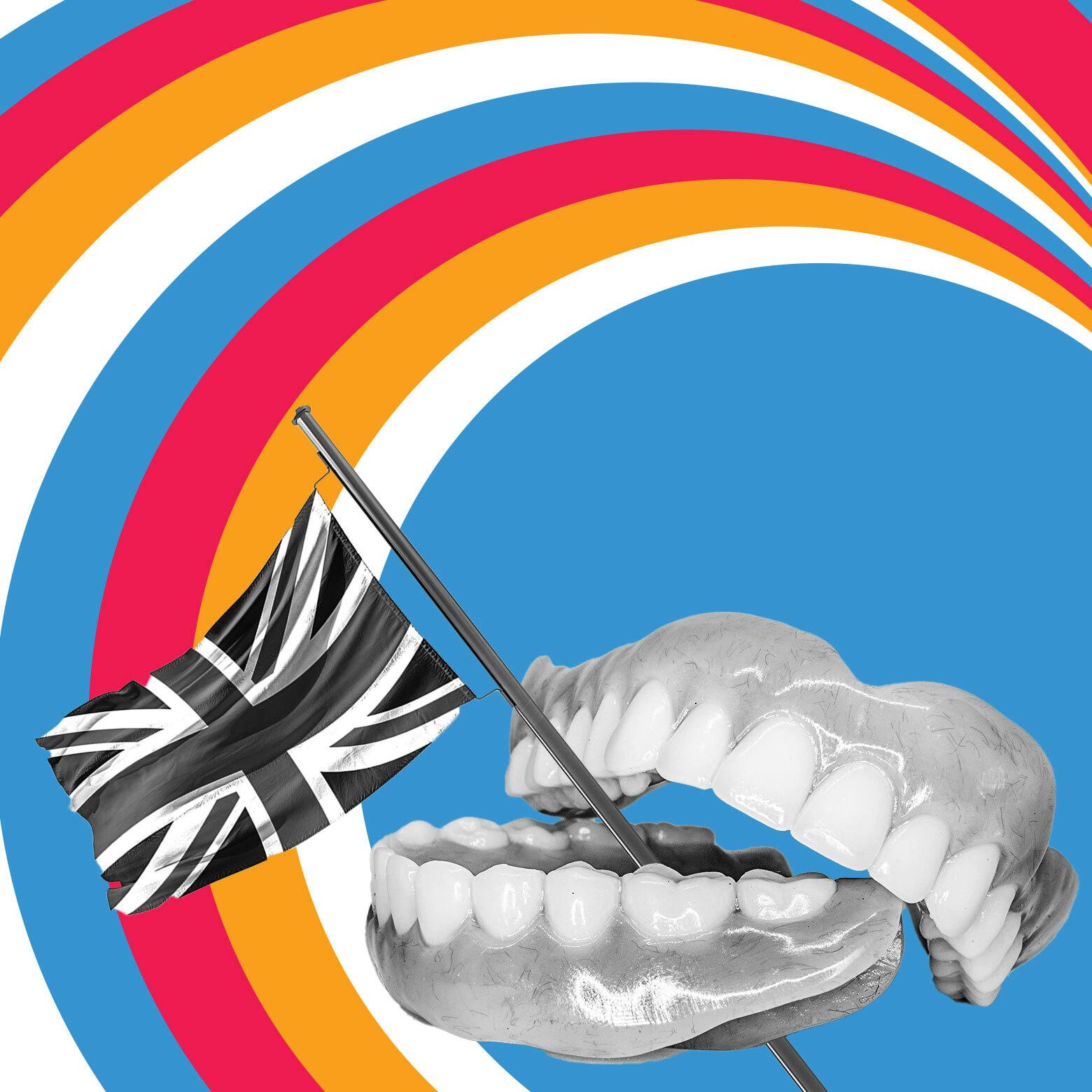
I am obsessed with teeth. And I can't really deny it, like after the apocalypse when like, we're all just doing things that somebody's got to do this right? I, I will try and maybe do a bit of dentistry because I find it absolutely fascinating.
- [01:28]
Willa Paskin
It's a fascination. Born out of a lifetime of dental work, June was raised in a small mining village near Manchester, England by parents who both had dentures.
- [01:37]
June Thomas
There's in no way any kind of neglect. It's just that my parents, you know, they just never had me brush my teeth because they'd never brushed their teeth. So my teeth were just bad. When I was young, I had terrible toothache. Like just constant. Like I was, I looked like a wee one of those animals. Animals like Chip and Dale. A chipmunk. A chipmunk. I look like a chipmunk. I often was like totally, you know, puffed out with infections. I had a lot just open decay. Like it. Honestly, it was a, it was a very ugly situation.
- [02:10]
Willa Paskin
In the mid-1980s, when June was in her 20s, she moved to the United States. As an adult with a good paying job and dental insurance, she began to invest in fixing her mouth. Over nearly 40 years in America, she spent something like a hundred thousand doll on dental treatment.
- [02:26]
June Thomas
It got a whole lot better, but it like it's never gonna be normal. You know, they're not white, they're, they're getting all snuggled up, all tangled up. It was kind of a little bit too late.
- [02:38]
Willa Paskin
Nobody in America ever commented on the state of her teeth directly, which I think is because June's teeth look perfectly lovely. But she started to suspect it was because Americans didn't find her teeth out of the ordinary. You know, not for a British person.
- [02:55]
June Thomas
It's shocking to me that there's this idea that all Britons have bad teeth. And conversely, I suppose by extension, all Americans have great teeth.
- [03:04]
Matthew Thompson
Don't let American dogs suffer from British teeth. Give them greeny streets. Why don't you get your teeth fixed? I live in Britain.
- [03:11]
Willa Paskin
I don't want to stand out.
- [03:13]
June Thomas
Well, British people have notoriously bad teeth. So you can just say British teeth. And that's the joke. Like, that's it.
- [03:20]
Willa Paskin
That's the joke in a memorable Simpsons episode from 1993, when a dentist tries to scare Ralph Wigham into proper tooth care.
- [03:28]
Matthew Thompson
Let's look at a picture book. The Big Book of British Smiles.
- [03:33]
June Thomas
And he flips through the pages and it's full of horrific drawings of completely snarled up mouths. That's enough. That's enough.
- [03:43]
Willa Paskin
And then there's the most notorious example of all.
- [03:47]
Matthew Thompson
Name Austin Danger Powers. Sex? Yes, please.
- [03:53]
Willa Paskin
In the Austin Powers movies, Mike Myers plays a British spy from the swinging 60s who's unfrozen 30 years later only to have everyone fixate on his crooked off white teeth.
- [04:04]
June Thomas
Okay, let me guess. The floss is garotte wire, the toothpaste.
- [04:08]
Matthew Thompson
Is plastic explosives, and the toothbrush is the detonation device.
- [04:13]
June Thomas
No, actually.
- [04:14]
Willa Paskin
Well, since you've been frozen, there have.
- [04:16]
June Thomas
Been fabulous advances in the field of dentistry.
- [04:19]
Matthew Thompson
What do you mean?
- [04:21]
June Thomas
It wasn't just a one minute joke. Like, it was the entire premise of Austin Power's personality.
- [04:28]
Willa Paskin
Like, do you think it's fair to say Americans just actually all believe that British people have horrible teeth?
- [04:34]
June Thomas
I don't doubt for a minute that they believe that. This is not a fringe opinion.
- [04:40]
Willa Paskin
And the longer June lived here, the more she found herself holding that opinion as well.
- [04:46]
June Thomas
I know. I too have been incepted by this, because when I think if I just say the words British smile, I'm seeing those images.
- [04:54]
Willa Paskin
Like, you had come around. Like, you. You basically thought, like, British teeth were a situation.
- [04:58]
June Thomas
Yeah.
- [05:01]
Willa Paskin
But then in 2022, June moved back to the UK after decades of internalizing and accepting the American stereotype about British teeth, she was now looking upon real British teeth again. And she saw something unexpected.
- [05:19]
June Thomas
So when I came back, I was looking around, I was looking in people's mouths. I was looking at teeth like I always do, and I thought they're fine. And actually, many of them are great. So, like, what happened? What happened, America? Why are you so obsessed with knocking British teeth?
- [05:46]
Willa Paskin
This is Decoder Ring. I'm Willa Paskin.
- [05:49]
June Thomas
And I'm June Thomas. Look, I get it. Brits are smart and funny. We go around telling jokes in Latin and quoting Shakespeare. So sure, America poke fun. But why our teeth? Why are Americans so sure that British teeth are uniquely terrible? Worse than Greek teeth, Egyptian teeth, Australian teeth, and every other nation's teeth. My fear is that I'm to blame for the trope that it's nightmare mouths like mine that skew the image. I owe it to my compatriots to prove that I'm the exception, not the rule. I want to determine once and for all if the American stereotype of bad British teeth has any merit whatsoever. So today on Decoder Ring, why do Americans badmouth British teeth?
- [06:59]
Willa Paskin
This podcast is brought to you by Progressive Insurance. You chose to hit play on this podcast today. Smart Choice. Progressive loves to help people make smart choices. That's why they offer a tool called Auto Quote Explorer that allows you to compare your progressive car insurance quote with rates from other companies so you save time on the research and can enjoy savings when you choose the best rate for you. Give it a try after this episode@progressive.com Progressive Casualty Insurance Company and affiliates not available in all states or situations. Prices vary based on how you buy.
- [07:44]
June Thomas
So I had a mystery to sink my teeth into. Where does the stereotype of manky, snaggled British teeth come from? And is there any truth to it? When I drilled down into the history, what I found is that if you go back far enough, you reach a moment when British teeth could not possibly have stood out. Because teeth were awful everywhere. All across Europe, basic dental hygiene was abysmal. In the 1600s, people were using bone and animal bristle toothbrushes that effectively coated teeth in bacteria. When you inevitably got a rotten, painful toothache, the only recourse was to have it out. But you couldn't go to the dentist because the dentist as we know it didn't exist. Instead, there were tooth pullers, dreaded fang yankers with no medical training or access to painkillers who plied their trade. In barbershops and sometimes even tooth pulling.
- [08:47]
Matthew Thompson
Contests, we see who is the victor now. Ready? Ready.
- [08:52]
June Thomas
There's a song from the musical Sweeney, the Demon Barber of Fleet street that takes place at one such contest to.
- [08:59]
Matthew Thompson
Pull the tooth without the skill can damage the root.
- [09:05]
June Thomas
Now hold the steel. Events like that were pretty common. Traveling tooth pullers like to draw a crowd by making a show of their extraction skills and not coincidentally, surrounding themselves with musical performers and lots of commotion to muffle the screams of their pain. Patience. For centuries, losing your teeth was considered a natural part of aging, and the few you managed to hold onto would be in gnarly shape. So, yes, this was the state of things in England, but also in France and Italy and Estonia and all over Europe. But it's not the French or the Italians or the Estonians who get ribbed about their choppas. It's not Europeans writ large whose teeth were being described by doctors and anthropologists, anthropologists in the 1930s as notoriously defective, the worst in the world. Why have the English, in particular, spent centuries taking lumps about our grotty teeth? I found a clue in the earliest reference to bad English teeth that I came across. It was made in 1598 by a German visitor to the court of Queen Elizabeth the First. Here's how he described Her Majesty. Her lips are narrow and her teeth black, a defect that the English seem subject to from their great use of sugar. In other words, the root of our alleged tooth problems is our sweet tooth. More than 400 years ago, English people were already notorious for consuming unusually large quantities of sugar.
- [10:54]
Alyssa Picard
I mean, it starts incredibly early. There are constant references to the British love of sugar.
- [11:02]
June Thomas
Mimi Goodall is a historian who has studied England's appetite for the sweet stuff.
- [11:07]
Alyssa Picard
John Evelyn, a diarist, says, because of the peculiar nature of the British people, who can't even eat salad dressing or a Rhenish wine without sugar in it. So it does seem to be something that's tied to British identity.
- [11:19]
June Thomas
Most humans are drawn to sweetness, but experts have floated lots of theories about why the English became particularly fond of it. Some have blamed the climate. The best way for Britons to keep produce after the short growing season was to candy it or preserve it as jam. But in the centuries before marmalade, Britain's preferred sweetener was honey, which they loved to put into their beer and wine. At least until Queen Elizabeth's father came.
- [11:48]
Alyssa Picard
Along during the Reformation, when Henry VIII divorces Catherine of Aragon and sets up his own church and he dissolves all the monasteries. So the Catholics are sort of pushed out of Britain. Monasteries were really, really important beekeepers. And when there's no bees, there's no honey. And therefore the price of honey shoots up.
- [12:07]
June Thomas
And just as the price of honey was skyrocketing, A cheaper alternative was becoming more widely available in England than ever before, thanks to the growing British Empire.
- [12:20]
Alyssa Picard
Britain goes over to these islands, Jamaica, Barbados, it colonises them, it takes them over and then it starts to grow sugar. Using the labor of enslaved Africans.
- [12:32]
June Thomas
Portuguese, Dutch and French merchants had previously developed sugar plantations and processing techniques. But the English were particularly predatory in their approach to the trade.
- [12:44]
Alyssa Picard
They do it at scale, they do it with huge volumes. So they are trafficking more Africans and they are much more invested in colonizing other islands. They're shipping back much, much greater volumes of sugar back to Britain. And then when it's in Britain, it remains an expensive good, but it is something that everyone is consuming, even very, very poor people can still consume small volumes of it.
- [13:10]
June Thomas
Handwritten recipe books from this time are full of foods with an unexpected helping of sugar.
- [13:16]
Alyssa Picard
Things what I think sound interesting, but kind of quite disgusting, with sugar and herbs and spices in a kind of eggy blob, that sort of thing, which is called a tansy. They would have it in wine, they would have it in lots of different medicines as well. You could have it in those sort of little solid sugar figurines. They were called subtleties.
- [13:36]
June Thomas
So basically just sucking on sugar.
- [13:38]
Alyssa Picard
Sucking on sugar, yes. And I think. But it was also cakes, tarts. By 1797, there's a figure that kind of ordinary people, 11% of their income, was going on tea and sugar.
- [13:50]
June Thomas
So because of its connection to colonialism and the slave trade, sugar, an imported good, had become a huge part of the English diet. Making it even more central still was a seismic cultural change originating in England itself. The Industrial Revolution. Beginning in the 1750s, people shifted from cultivating the land, toiling according to the sun and the demands of the season, to working in factories on someone else's schedule.
- [14:22]
Alyssa Picard
You're clocking in and you're clocking off. In a much, much more formalised system, that means that break time and lunchtime are regulated and how to get cheap and easy energy. Jam is incredibly important because bread is obviously easily transportable, but you want something to make bread taste nice.
- [14:43]
June Thomas
Poor children ate bread and jam, which back then was mostly sugar, for two meals out of three, as did a lot of adults, especially women. By 1900, sugar made up about one sixth of English people's caloric intake. More for the poor. By this time, other countries, sugar consumption had caught up, but English stereotypes were already entrenched. We're a nation of tea drinkers. We like our sweets and allegedly, as a result, we have terrible teeth.
- [15:18]
Alyssa Picard
There is historical validity to the idea that they eat lots of sugar. Absolutely. Whether that leads to tooth decay, I feel uncomfortable saying yes, because I think there are lots of reasons why dental hygiene is bad beyond sugar. I'm sort of. I think I've got a very sort of knee jerk gut reaction of like, hang on a moment.
- [15:44]
June Thomas
Hang on a moment, indeed. Even if Elizabeth I really did rot her teeth with treacle TART More than 400 years ago, what does that matter today? Dentistry and diet have changed dramatically since the age of Empire and the Industrial Revolution. And it seems to me that the English are still being saddled with a stereotype that has grown pretty long in the tooth.
- [16:11]
Matthew Thompson
Okay, I get it.
- [16:12]
June Thomas
I have bad teeth. I wanted to know if there was evidence to back me up.
- [16:19]
Matthew Thompson
I think it's a cliche. The British mouths are ugly, unattractive, whereas Americans have got perfect teeth. So what we wanted to do was test that out with data.
- [16:32]
June Thomas
Richard Watt is a professor of dental public health at University College in London. In 2015, he and a group of scientists decided it was time to conduct a study putting the stereotype to the test.
- [16:46]
Matthew Thompson
I was quite keen to sort of dispel that if that was true, because it's a bit irritating. Americans always thinking their teeth are brilliant.
- [16:54]
June Thomas
And so they got to work analyzing and comparing information gathered from more than 20,000 adults across two national data sets from the US and England. They looked at a range of measures, but paid particular attention to missing teeth.
- [17:11]
Matthew Thompson
Because number of missing teeth is important in terms of function, in terms of biting, chewing, nutrition, but also is a really strong indicator of social exclusion of disadvantage.
- [17:30]
June Thomas
So is the stereotype true, based on your findings, Do Brits have worse teeth?
- [17:36]
Matthew Thompson
What we found, to our surprise, to be honest, was that American teeth were not better than British teeth.
- [17:45]
June Thomas
There you have it, straight from the horse's mouth.
- [17:48]
Matthew Thompson
In England, there were significantly fewer missing teeth than in the us so that is a suggestion that people's oral health is better in England at a population level than in the us.
- [18:03]
June Thomas
While the UK data was just from England, it very likely holds true for Scottish, Welsh and Northern Irish mouths as well. Richard and his colleagues published their findings in the British Medical Journal under the title Austin Powers Bites Back.
- [18:18]
Matthew Thompson
Yeah, baby. That was my. My idea, by the way.
- [18:22]
June Thomas
Well done.
- [18:22]
Matthew Thompson
Thank you.
- [18:24]
June Thomas
Richard admits that he was moved by the study's findings.
- [18:28]
Matthew Thompson
Well, I think I felt a bit of pride, actually, because I thought, well, actually, bugger the Americans. We're not so bad after all. We've got real problems, but our system is still better than the Current US system for oral health.
- [18:42]
June Thomas
When Americans learned about this study after it was published in 2015, filled with humility, they took a good long look at their own teeth. Just kidding. They reacted exactly how you'd expect.
- [18:55]
Willa Paskin
British dental hygiene has, you know, I don't want to offend anybody here, but.
- [18:59]
June Thomas
It'S really been considered inferior to dental hygiene in America. Very often. The coverage of the paper pointed out the same thing.
- [19:09]
Mimi Goodall
The study did not take orthodontics or.
- [19:11]
Willa Paskin
Aesthetic dentistry into account.
- [19:15]
June Thomas
It's true the study was based on factors like whether teeth were missing, not whether they looked straight or white, which some angry visitors to the British Medical Journal website picked up on. I read one of their comments to Richard, your quote unquote study is rubbish from my perspective and is just a bunch of yap yap aimed at hiding from the reality that generally speaking, British people have very dark yellow stained teeth. I honestly don't see how this can even be compared with Americans teeth situation. I mean that is this. There's so much passion there. What do you make of that?
- [19:52]
Matthew Thompson
Well, what I would say is, is dentistry about beautification and appearance or is dentistry about health and well being? And there's a real danger if it's that sort of a commodification of the mouth as being about beauty to me is that's a big, big worry.
- [20:14]
June Thomas
A perfect appearance is not the same as good dental health, which is, Richard says what really matters.
- [20:22]
Matthew Thompson
People that have dental diseases can suffer incredible pain. People with bad oral health can have problems with schooling, poor educational performance. So you know, your mouth is not just about a smile.
- [20:39]
June Thomas
But Americans seem to think that it is. Where did they get that idea? Maybe it's not the peculiarities of British teeth that need to be explained after all. Maybe it's time for the magnificent American mouth to undergo an examination.
- [21:06]
Willa Paskin
This episode is brought to you by Wondery. Before the Internet ruled society as we know it, AOL brought America online with email and instant messenger. By 2000, AOL was so powerful it set its sights on media giant Time Warner. The deal was supposed to bring digital society into the future. Instead, it became one of the messiest corporate disasters on record. But what went wrong? Was it a culture clash, the dot com crash? Or something deeper? Business wars gives you a front row seat to the biggest moments in business and how they shape the world. Because when your flight perks disappear, your favorite restaurant chain goes bankrupt, or new tech reshapes everything overnight, there's always a deeper story behind the headlines. Follow Business wars on the Wondery app or wherever you get your podcasts. You can binge all episodes of Business wars, the AOL Time Warner Disaster early and Ad Free Radio right now on Wondery Plus.
- [22:16]
Matthew Thompson
This podcast is brought to you by Progressive Insurance. Do you ever think about switching insurance.
- [22:21]
Willa Paskin
Companies to see if you could save some cash?
- [22:23]
June Thomas
Progressive makes it easy. Just drop in some details about yourself and see if you're eligible to save money.
- [22:28]
Willa Paskin
When you bundle your home and auto policies, the process only takes minutes and.
- [22:33]
June Thomas
It could mean hundreds more in your pocket.
- [22:35]
Willa Paskin
Visit progressive.com after this episode to see.
- [22:38]
June Thomas
If you could save Progressive Casualty Insurance Company and affiliates. Potential savings will vary.
- [22:43]
Matthew Thompson
Not available in all states.
- [22:52]
June Thomas
So English people do have healthy teeth, but that's not good enough for Americans because it turns out Americans are peculiar about teeth in their own way. They have come to believe that the only good teeth are cosmetically perfect teeth.
- [23:11]
Matthew Thompson
The Americans, they want to look very aesthetic, whereas the Brits are maybe not as keen.
- [23:17]
June Thomas
I went to a trade show in Glasgow and asked some dental professionals about their take on American teeth.
- [23:24]
Matthew Thompson
Everyone there does seem to be this tendency to want like nice bright, shiny pearly whites. Everything's perfect and white and clean.
- [23:32]
Alyssa Picard
They look very like fake.
- [23:33]
Mimi Goodall
They look very white.
- [23:34]
Alyssa Picard
And whereas here I've always had patients.
- [23:37]
June Thomas
Tell me, oh, don't make my dentures.
- [23:39]
Mimi Goodall
Too white, they actually call it horse teeth.
- [23:43]
June Thomas
How did Americans come to prize horse teeth? Teeth as shiny, white, straight and large as piano keys? After all, American teeth were once as bad as English ones. Need I remind you that most colonial Americans were also English and also ate a lot of sugar? Indeed, one of the British laws that provoked the Americans to revolt was a tax on sugar. And Americans dental problems didn't magically disappear with the Red Coats.
- [24:17]
Mimi Goodall
At the turn of the century, dentists were fighting for their professional lives.
- [24:21]
June Thomas
Alyssa Picard is a medical historian and author of the book Making the American Mouth.
- [24:27]
Mimi Goodall
They agreed we are in bad shape here because Americans have terrible teeth.
- [24:34]
June Thomas
According to a report from 1909, no more than 8% of Americans had ever visited a dentist and 90% suffered from tooth decay. On the verge of World War I, potential army recruits needed to pass a simple dental inspection to prove they could chew their rations in the field. They had to show six opposing sets.
- [24:57]
Mimi Goodall
Of teeth and at that point one out of every three failed that standard.
- [25:03]
June Thomas
A third rejected. They didn't even have six sets of teeth. So at this point the US and UK were on pretty equal footing or mouthing. But the country started to part ways in the years after World War II America burst out of the war as a superpower, and the American people now had buying power. And all that, combined with scientific improvements that eased the pain of a dentist visit, made Americans a lot more willing to spend time and money fixing their mouths.
- [25:37]
Matthew Thompson
Brush your teeth with Colgate. Colgate Devil cream. It cleans your breath.
- [25:41]
June Thomas
What A toothpaste. Post war, Americans were soon inundated with toothpaste and mouthwash ads that based their appeal on aesthetics. Because improving dental hygiene would bring a brighter smile and with it, perhaps even romance.
- [25:59]
Matthew Thompson
Darn it, Sally, what did I do to ruffle your feathers Every time I try and kiss you lately, you give me the bird.
- [26:05]
June Thomas
Listen, Tom, nobody's going to coo with until.
- [26:09]
Matthew Thompson
Until you see your dentist.
- [26:11]
June Thomas
Make it sloppy, chappie. But there was one discovery that, more than anything, turned dental aesthetics into an American obsession. Decades earlier, dentists had noticed that something unusual was happening to the teeth of people living in certain parts of the American west.
- [26:31]
Mimi Goodall
They had yellow and brown staining on their teeth color, but bizarrely, they also had teeth that were intensely resistant to decay. And of course, dentists got really interested in the question of why this was the case.
- [26:45]
June Thomas
Over the 1930s, they conducted scientific studies in those locations to try to determine the cause.
- [26:52]
Mimi Goodall
And they reached the scientific conclusion. It's the fluoride.
- [26:57]
Matthew Thompson
What is fluoride? It is a natural substance found in.
- [27:01]
June Thomas
Varying degrees in nearly all water and most foods. As a mineral, fluoride can naturally flow from rocks and soil into water sources. Scientists realize that in all of the places where people were getting discolored but very strong teeth, the local water supplies contain very high natural levels of it. So they began to wonder what would happen if they put very low doses into the water supplies of locations whose landscapes provided less of the stuff. If that could build stronger enamel for everyone without causing staining, it would be a game changer, especially for kids.
- [27:43]
Mimi Goodall
It can be critical in helping to make sure that the enamel that's forming for their permanent teeth is actually going to be robust enough to stand up to decay.
- [27:50]
June Thomas
Beginning in 1945, they conducted tests artificially formed, fluoridating the water in cities across America.
- [27:58]
Mimi Goodall
And finding in the places where we fluoridated the water, the level of decay dropped by 90%.
- [28:04]
Matthew Thompson
Now our children can have better health through fluoridated water. They can drink away tomorrow's tooth decay.
- [28:13]
June Thomas
And so dentists began a series of public health campaigns to convince municipalities all across America to fluoridate their water.
- [28:21]
Matthew Thompson
That's why we of your health department feel that fluoridation merits your approval.
- [28:27]
June Thomas
But even with the overwhelming evidence about the benefits of fluoride, in just about every municipality there were loud and deeply suspicious citizens who offered fierce resistance.
- [28:40]
Matthew Thompson
What do you mean, fluoride? I like my water clean and pure, not doped up with a lot of chemicals. It's against the laws of nature. It's an unnatural poison. You want to feed our kids.
- [28:51]
Mimi Goodall
And now here they are, showing up at every single municipal meeting, coming at them with the argument that it's going to weaken people's brains and turn them into communists and make them more susceptible to various other kinds of illnesses for which there was no real evidence.
- [29:06]
Matthew Thompson
It attacks the bones, kidneys and hearts of older people and increases the chance of cancer. It's an infringement on human rights, a communist conspiracy where the people are helpless to resist.
- [29:16]
Mimi Goodall
Dentists found this experience bruising, chafing and infuriating.
- [29:22]
Matthew Thompson
Those statements are not right. There is absolutely no danger.
- [29:27]
June Thomas
These battles would go on for decades, deep into the 2000s, often egged on by conspiratorial far right organizations. For the most part, though, the dentists were persuasive in most municipalities. Despite the opposition, they were able to convince communities to add fluoride to the water. Today, more than 200 million Americans have fluoridated water, including residents of 42 of the 50 largest cities. For the generations who have grown up with fluoride, teeth are now strong, cavity resistant and long lasting. As a matter of course, you no longer expect your teeth to rot, fall out, or need to be pulled. You expect to keep them for life. It was an incredible accomplishment, what many.
- [30:18]
Mimi Goodall
Historians continue to see as one of the greatest public health achievements of the 20th century.
- [30:23]
June Thomas
But this public health achievement is also the key to understanding how America became obsessed with. With gleaming, straight smiles. Because when fluoride largely solved the problem of dental health as it had existed to that point, dentists suddenly had to find some new things to do.
- [30:43]
Mimi Goodall
We've just had the slate cleaned. We now have an opportunity to do things that we were not able to do before, because our time is not being spent on drilling, filling and extracting and debating with patients which of these we would do now we could do some other stuff.
- [30:57]
June Thomas
Fluoridation provided a reset for the entire American dental profession. And that reset would primarily concern itself with braces.
- [31:09]
Mimi Goodall
Dentists had developed a whole index of arguments that they could make for how could you pitch orthodontics to somebody? And there are some real reasons that it's an attractive idea if you move around the teeth in somebody's mouth. You might actually make it easier for them to chew and bite and maintain all their teeth for a lifetime. You might make it easier for them to clean their teeth adequately.
- [31:31]
June Thomas
That is absolutely true. It's the reason that I had braces as an adult. And straightening my teeth really did make it a lot easier to clean them properly. But that was never the main reason Americans got sold on orthodontics.
- [31:45]
Mimi Goodall
Dentists always saw that it was arguments for aesthetics that were the most effective pitch to patients.
- [31:52]
June Thomas
Of course, straight white teeth look great. Braces were an easy sell. Even if they were expensive and not always medically necessary, they were also lucrative. The bruising squabbles about water fluoridation had left American dentists feeling disrespected by the public. So they pivoted away from public health for everyone toward increasingly intense levels of treatment for those patients who could afford it. Treatment that dentists also stood to make money on. And so, in the post fluoridated world, a new set of American standards was born.
- [32:35]
Mimi Goodall
And that includes having astonishing, glistening white teeth at all times.
- [32:40]
June Thomas
Once they're the norm, they become a necessity. A gleaming American smile turned into a status symbol, and not having one, a social liability.
- [32:50]
Mimi Goodall
I'm not going to be able to get a job. I'm going to have a hard time getting a mate. People are going to think of me as, you know, subhuman. You don't want that to happen to you.
- [33:00]
June Thomas
Parents had the message drilled into them that the choice to take their kids to the orthodontist might determine their future success.
- [33:10]
Mimi Goodall
And over the progression of the 20th century, land where we are today, in a place where, for middle or upper middle class, aspirational folks in the United States, getting your teeth done by an orthodontist was a normative part of childhood where you can walk into a dentist's office. The dentist may be offering you medical spa services while you are receiving health care.
- [33:32]
June Thomas
And orthodontics is just the beginning. Whitening, veneers, everything's on the table, it's all expensive, and very little of it is geared toward healthy teeth. But across the ocean, things turned out very differently. When Americans were adding fluoride to their water, the British were not. To this day, fewer than 10% of UK residents have community fluoridated water. Scotland, Wales and Northern Ireland don't have any fluoridation at all. And the ultra white, ultra straight smile isn't quite the norm. And yet British teeth, a little beige, a little crooked though they may be, are in general healthier and that's because there is a whole other side to this story, one that also traces back to to the period just after World War II, at almost exactly the same time that Americans were turning to fluoridation, Great Britain was engaged in its own vast new public health initiative, an even more radical path that may not have produced Hollywood smiles, but would have transformative consequences for teeth. This episode is brought to you by JCPenney.
- [35:10]
Willa Paskin
And if you've been to JCPenney recently.
- [35:12]
June Thomas
Yes, JCPenney, you'll know it's becoming the way to find good clothes for prices that still make sense.
- [35:19]
Mimi Goodall
They've got hidden gems for everyone and.
- [35:22]
Willa Paskin
Every budget, with deals and rewards that.
- [35:24]
June Thomas
Actually make a dentist. If you already shop JCPenney, you feel like you know a secret. But if not, it's time to ask. Wait, am I sleeping on JCPenney? Shopjcpenney.com Yes, JCPenney, are you ready to dairy free your mind this summer?
- [35:40]
Willa Paskin
Melt away your dairy free expectations with so delicious dairy free frozen desserts. Enjoy mind blowing flavors like salted caramel.
- [35:46]
Alyssa Picard
Cluster chocolate cookies and cream cookie dough and more.
- [35:49]
Willa Paskin
For over 35 years, so delicious has.
- [35:52]
June Thomas
Been cranking up the flavor with show stopping products that are 100% dairy free, certified vegan by Vegan action, and are so unbelievably creamy your taste buds will.
- [36:01]
Matthew Thompson
Do a double take.
- [36:02]
Willa Paskin
Dairy free your mind. Visit sodelicious dairy free.com.
- [36:08]
June Thomas
Matthew Thompson is a historian of modern Britain at the University of Warwick where he teaches the history of medicine. And several years back, something happened that got him thinking.
- [36:19]
Matthew Thompson
I guess this must have been quite soon after the death of David Bowie. It's one of those do you remember where you were when you heard the news moments. To his fans, he was simply one of the most important and original figures in the history of rock music. I was listening to all the obituaries and there was this whole thing about his shape shifting kind of history.
- [36:39]
Alyssa Picard
Over a career spanning four decades, he.
- [36:41]
June Thomas
Continually reinvented himself and his his music.
- [36:44]
Mimi Goodall
From the alien rock star Ziggy Stardust to the thin White Duke, he just.
- [36:48]
Matthew Thompson
Changed and changed and changed and changed. And I thought, well, actually there's one part of that shape shifting history that no one talked about at all. In fact, when you actually look at pictures of him in kind of the early 70s and then look at pictures of him now, his teeth are spectacularly different.
- [37:08]
June Thomas
At the beginning of his career, Bowie's teeth were yellow, overcrowded and misaligned.
- [37:15]
Matthew Thompson
I know they're not very straight, but they're the only ones I've got.
- [37:19]
June Thomas
But as he enjoyed more success, his teeth seemed to evolve.
- [37:24]
Matthew Thompson
The ones that he ends up with, they're pretty, you know, they're white and straight. Yeah. And less interesting.
- [37:32]
June Thomas
I think Matthew realized he preferred Bowie's original teeth, imperfections and all.
- [37:40]
Matthew Thompson
I mean, I think they're very engagingly crooked and yellow. I mean, for me, that's part of the attractiveness of David Bowie in that period. And it's sort of. I don't know. For me, it really captures his personality in many ways as well.
- [37:56]
June Thomas
There was beauty, confidence, swagger in that easy grin. And the historian in Matthew recognized something even more significant. Those imperfect teeth represented an absolute triumph of British healthcare, a crowning achievement of one of our greatest treasures, the National.
- [38:17]
Matthew Thompson
Health Service, a state medical service which everyone in Britain is entitled to use, so that the expense of necessary treatment is no longer an obstacle to any.
- [38:25]
June Thomas
Who may need it. The National Health Service is Britain's publicly funded health care system and it's the country's most beloved institution. It arrived in 1948, around the same time that America was starting to get serious about fluoridation. The NHS meant that everyone could get medical, optical and dental care and it would be free at the point of delivery.
- [38:50]
Matthew Thompson
When you're ill, you won't have to pay for treatment. It's all yours whenever you want it, with your own choice of doctor. I mean, the great thing about the National Health Service is it stops you thinking about healthcare. You just. You just got your health care.
- [39:05]
June Thomas
And among other things, this led to a huge shift in Britain's relationship to our teeth.
- [39:12]
Matthew Thompson
I mean, the big thing pre National Health Service is a culture where you take your teeth out. If they're bad, you take them out. Well, we've got our remedy, haven't we? Have the whole lot out, the whole boiling and you got dentures. Basically, people thought that was just a good thing to do.
- [39:29]
June Thomas
And once everybody could see a dentist, that's exactly what they did.
- [39:34]
Matthew Thompson
You know, one of the first things that happens, everyone rushes out to get their dentures. That was the height of being modern and, you know, healthy, really.
- [39:41]
June Thomas
I think 1 million people got new dentures in the first nine months of the NHS. My mother and father soon followed. They both had all their teeth removed in one sitting in their homes before they were married. It was just something that people did in their early twenties. But after that initial extraction spree, as people got used to going to their NHS dentist, and as dental treatment became less painful, the NHS began to push Brits in another direction, toward actual treatment and preventative care through public health information.
- [40:17]
Matthew Thompson
Encouraging children to use toothpaste, teaching children to make friends of their dentist is the latest idea in the campaign against Britain. They try to make a treat out of treatment. What happens quite quickly with the National Health Service is that our teeth rapidly get better. Yeah. And they don't need to be taken out.
- [40:40]
June Thomas
In a short time, the NHS had accomplished something remarkable. It made it possible for British people to keep their teeth and at very little cost to the patient. The NHS literally reshaped the British mouth, every British mouth.
- [40:57]
Matthew Thompson
What happens is that everybody's teeth, just like everyone's healthcare, quite quickly becomes very, very similar. You know, functional, not unhealthy, but not particularly pretty teeth.
- [41:10]
June Thomas
And that also shaped how Brits felt about their teeth.
- [41:13]
Matthew Thompson
If you've all got the similar sort of teeth, the posh boys and the. The poor boys. Yeah. Then it actually just becomes a kind of a norm. It's not embarrassing, I suppose, which is the huge thing, isn't it? Yeah. You grow up thinking that that's nothing that remarkable.
- [41:31]
June Thomas
So unremarkable, in fact, that for younger generations, overly pretty teeth began to signify something undesirable. Perfect smiles suggested dentures, the ones they grew up seeing parents and grandparents remove at night for a moment. Then the more imperfect smiles, like David Bowie's, signalled that the teeth in your mouth were actually your own. And so you see similar teeth all over the place, from pubs to palaces on working class O minor royals. British teeth may be imperfect, but they're equitable. And that's not something you can say about American teeth. Remember that study Richard Watt and his colleagues conducted, the one that found that English teeth were, on the whole, healthier than American teeth? Well, there was another, perhaps even more important finding.
- [42:25]
Matthew Thompson
What came out particularly strongly was that the inequalities in oral health were much, much worse in the US than in England.
- [42:36]
June Thomas
The researchers wanted to understand if there was a connection between oral health and socioeconomic status. And in America, there certainly was.
- [42:45]
Matthew Thompson
The people with higher income or better education in the US had much fewer missing teeth than poorer people in the us. Poorer people have bigger problems accessing care.
- [42:59]
June Thomas
So, sure, there are plenty of Americans who can afford good dental care and fancy orthodontics, but there are also millions of Americans who don't have the means to see a dentist at all. You can literally see class in American mouths. But they found it was a very different story in England.
- [43:18]
Matthew Thompson
There was less of a difference across these economic groups. So this is A bit of a pun, but the gap, oral health gap, was much greater in the us.
- [43:31]
June Thomas
My fellow Americans, please don't bite my head off. I'm one of you. I'm a naturalized US citizen, but right now I'm talking to you from my British roots with a claim you might find hard to swallow. That so called bad British teeth are actually a sign of something healthy, something democratic. In Britain, it doesn't matter where you land on the social media, socioeconomic spectrum, rich or poor, oral health is pretty comparable. So you may look at British teeth and see snaggles and stains, but I look at them and see a point of pride, a victory for equality. Something Americans didn't get because the thought of socialized medicine sends you into a tizzy. I don't want to suggest that the NHS solved every problem with health care and inequity. Plenty of issues, especially around funding, remain and NHS dental care stopped being totally free a long time ago. Nowadays, more and more people go private instead. Costs are still much smaller than in the us, but the more people pay for treatment, the more they expect in return.
- [44:48]
Willa Paskin
In more recent years, there has been.
- [44:50]
Matthew Thompson
A bigger shift towards having better aesthetics, whiter teeth, straighter teeth.
- [44:55]
June Thomas
The people I spoke with at the dentistry show in Glasgow confirmed this trend.
- [45:00]
Matthew Thompson
Certainly American culture has come over. Everyone wants veneers, everyone wants invisalign, everyone wants their teeth to look straight and have the classic Hollywood smile. Nowadays, more than in the past, social.
- [45:11]
June Thomas
Media'S probably got a lot of transfer.
- [45:12]
Alyssa Picard
That because everyone's taking pictures, you know, it's so much more now like you smile, like take pictures, smile, smile, smile, you know, whereas years ago you really only took pictures on holidays and special.
- [45:21]
Willa Paskin
Events, you didn't really have pictures taken.
- [45:23]
Alyssa Picard
All the time, whereas now people take.
- [45:25]
June Thomas
So I think people have become a little bit more conscious of how their teeth look. Yeah, and it's not just how they look to other Brits they need to be conscious of, as the actress Amy Lou Wood discovered after appearing on the White Lotus.
- [45:38]
Willa Paskin
The 31 year old actress is furious after Saturday Night Live mocked her overbite, calling the sketch mean and unfunny.
- [45:46]
Matthew Thompson
Oh look, a monkey. No, not the monkey.
- [45:53]
June Thomas
But Americans may not be laughing for much longer because while fluoridation is what made American teeth healthy, there is now, in the face of all science, scientific evidence, a growing government backed effort to do away with it.
- [46:09]
Willa Paskin
Health Secretary Robert F. Kennedy Jr.
- [46:11]
Alyssa Picard
Doubling down on his calls to ban.
- [46:13]
Mimi Goodall
The mineral from public water supplies.
- [46:15]
Matthew Thompson
It makes no sense to have fluoride in our Water.
- [46:18]
June Thomas
In other words, brace yourself. American and British teeth might be getting realigned. Look, if I claimed I wouldn't have loved a gleaming American smile, I'd be lying through my teeth. But I'm okay with my okay teeth. I'm even okay joking about them because I've come to view my meh mouth as a reflection of British national values at their best. Egalitarianism, communitarianism and modesty. And, of course, the great British tradition of self deprecation.
- [47:01]
Matthew Thompson
It's kind of like, you know, make do with what we've got. And it's, you know, laughing at ourselves. We're very good at laughing at ourselves, I think, but it's very affectionate.
- [47:13]
June Thomas
Matthew Thompson told me about a poem that encapsulates all of this. The British comedian Spike Milligan wrote it back in the 1950s, and it's called simply Teeth.
- [47:24]
Matthew Thompson
I wrote it down because I. I thought it was relevant. Yeah. So English teeth, English teeth shining in the sun A part of the British heritage I Each and every one English teeth, happy teeth Always having fun Clamping down on bits of fish and sausages Half done English teeth, hero's teeth Hear them click and clack let's sing a song of praise to them Three cheers for them Brown, grey and black.
- [48:04]
June Thomas
The poem is more than 70 years old now, and some of the details no longer pertain. You hear a lot less of the click and clack of dentures these days, and teeth that were once brown, grey and black today are more vanilla, ecru and cream. But the evocation of joy, decency and affection for imperfection, it still makes me smile. This is done. Welcome to Decodering. I'm June Thomas.
- [48:42]
Willa Paskin
And I'm Willa Paskin. June's latest book is called A Place of Our Six Spaces that Shaped Queer Women's Culture. I highly recommend you check it out. I also want to direct you to a new bonus episode, available right now, exclusively for Slate plus members. In it, Slate writer and decoder ring regular Henry Girbar dives into the strange world of graduation commencement photos, a world he got intrigued by when his wife finished graduate school.
- [49:12]
Matthew Thompson
You know how it is. You try your best to take the.
- [49:14]
June Thomas
Best photo you can.
- [49:15]
Matthew Thompson
Then the graduate gets up there and there's somebody up there with a really.
- [49:19]
June Thomas
Nice camera taking their photo with the.
- [49:21]
Matthew Thompson
Dean right in front of the flags and all that.
- [49:24]
June Thomas
And so I thought, great, they took care of it.
- [49:26]
Matthew Thompson
They meaning the university.
- [49:28]
June Thomas
But then it turns out, no, like.
- [49:30]
Matthew Thompson
After all this time, they're really going to nickel and dime us over this commencement photo.
- [49:37]
Willa Paskin
To hear more, sign up for Slate Plus. You can do that from the Decoder Ring show page on Apple Podcasts or Spotify, or visit slate.comdecoder ring+ to get access wherever you listen. This episode was written by June Thomas and edited and produced by Evan Chung, Decoder Ring Supervising Producer. Our show is also produced by by me, Katie Shepard and Max Friedman. Merrick Jacob is Senior Technical Director. We'd like to thank the Decoder Ring listener who suggested this topic to us on Twitter, but whose name is now all but impossible to find there.
- [50:15]
June Thomas
Thank you.
- [50:16]
Willa Paskin
If you have any cultural mysteries you want us to decode, please email us@decoderinglate.com or call us on our phone number, 347 460-7281. We love to hear from you and we'd love to hear all of your ideas for the show. We'll see you in two weeks.
- [50:42]
Matthew Thompson
Hi, I'm Josh Levine. My podcast the Queen tells the story of Linda Taylor. She was a con artist, a kidnapper, and maybe even a murderer. She was also given the title the Welfare Queen, and her story was used by Ronald Reagan to justify slashing aid to the poor. Now it's time to hear her real story. Over the course of four episodes, you'll find out what was done to Linda Taylor, what she did to others, and what was done in her name. The great lesson of this for me is that people will come of their own conclusions based on what their prejudices are. Subscribe to the Queen on Apple Podcasts or wherever you're listening right now.