← Slow Burn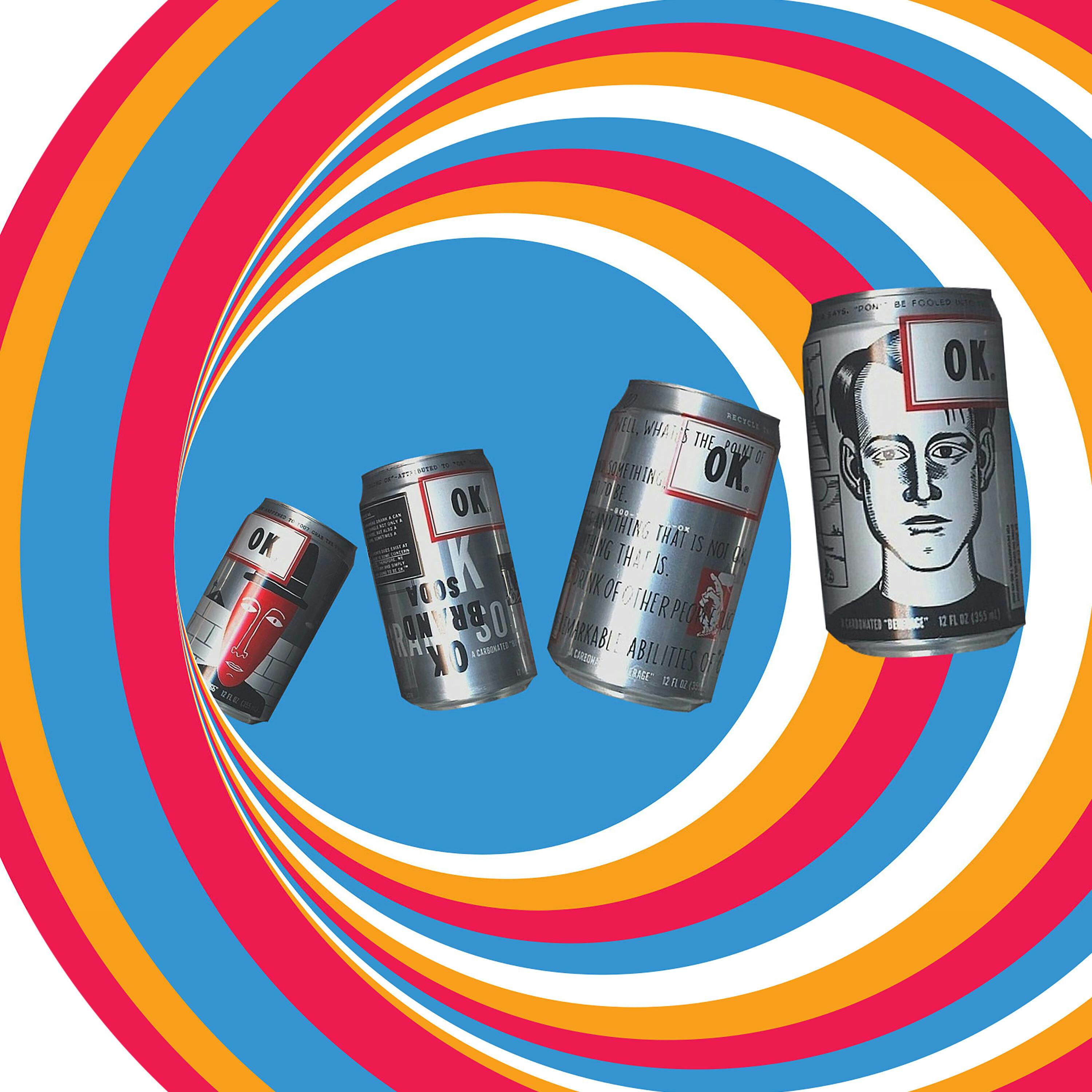
Slow Burn
Decoder Ring: The Gen X Soda That Was Just "OK"
00:39:48
Thirty years ago, OK Soda arrived in select stores and offered up a fizzy irony.
Loading summary
Transcript172 lines
- [00:00]
Advertiser/Voiceover
The new year brings new health goals and wealth goals. Protecting your identity is an important step. Your info is in endless places that could expose you to identity theft, leading to lost funds. LifeLock monitors millions of data points per second. If your identity is stolen, our restoration specialists will fix it, guaranteed, or your money back. Resolve to make identity, health and wealth part of your New year's goals. With LifeLock, save up to 40% your first year. Visit LifeLock.com Special offer terms apply.
- [00:39]
Narrator/Willa Paskin
There's a rite of passage that's coming for you whether you want it to or not.
- [00:43]
Co-narrator/Dakota Ring
They're called, among other things, millennials.
- [00:46]
Narrator/Willa Paskin
It's when your generation is lapped by the one coming up behind it. Gen Z is the next wave. And turns out there's quite a bit.
- [00:53]
Robin Janitis
That makes them uniquely them.
- [00:54]
Narrator/Willa Paskin
You may be a little skeptical about the very concept of generations. You might think that they're just conjured up to sell us stuff and make us feel like we belong. It doesn't matter. Heard of Gen Y, but what about Generation Alpha? The world turns young people get older. They look at the new young people and say, what's your deal? I'm a little scared what the Alphas are going to be like as a pack. In the early 1990s, the generation of the moment inspired even more head scratching than usual. Generation X. They apparently feel the older baby boomers have taken all the good jobs and all the good real estate. They are angst ridden, a bit bitter, and their chief talent seems to be the ironic aside. The skeptical, flannel clad, authenticity craving members of Generation X had watched the baby boomers sell out, their values morphing from hippies to yuppies, and they were not impressed. Everything on TV sucks. Yeah, yeah, yeah, that sucks. Notoriously disdainful. Gen X was particularly put off by marketing, which presented a problem for companies trying to sell stuff who began to explore novel sales bitches. And no product from this era was marketed with more novelty than one from Coca Cola.
- [02:19]
Co-narrator/Dakota Ring
What exactly is ok, a carbonated beverage? Why the quotation marks around beverage to make it more special? What makes it so special? The okayness of it.
- [02:32]
Narrator/Willa Paskin
OK Soda was a soft drink that sold itself by underselling itself, an attitude that was right there in its name. If the kids were skeptical about advertising, here was advertising that said, I know, right?
- [02:46]
Co-narrator/Dakota Ring
OK Soda has been criticized for marketing efforts that exclude some people.
- [02:51]
Narrator/Willa Paskin
This wasn't a soda for everyone, just for people in on the joke. But even so, its ambitions were not small. And for a brief moment, even Coca Cola thought a soda Promising to be just okay just might be a billion dollar idea. This is Dakota Ring. I'm Willa Paskin. Thirty years ago, OK Soda arrived in select stores. Instead of crowing about how spectacular it was, it offered up a liquid shrug, a fizzy irony. It was an inside joke of a soda for people who knew soda wasn't cool. And it promptly went viral and then had to try and figure out how to sustain itself. In today's episode, we're going to ask how Coca Cola, a company predicated on the idea that soda is more than okay, ever bankrolled such a project. A project that, depending on how you look at it, was either a corporate attempt to market authenticity or a bold send up of consumer capitalism. A project that either utterly, predictably failed or that surprisingly almost succeeded. So today on Decoder Ring, how do you make the taste of a generation? I want to start the story of OK Soda a couple of years before the first Gen Xer was even born. When Coca Cola reigned supreme and its rival Pepsi decided to do something about it. In the 1960s, Pepsi began appealing directly to young people on one side of the so called called generation gap. You're in the Pepsi generation. And it worked. Aligning themselves with the young baby boomers helped Pepsi grow faster, as did another infamous campaign.
- [05:15]
Advertiser/Voiceover
That's why the Pepsi Challenge has been.
- [05:17]
Co-narrator/Dakota Ring
Asking thousands of people across the country to let their own taste decide.
- [05:21]
Narrator/Willa Paskin
In ads featuring the Pepsi Challenge, regular people blind taste tested both colas. Pepsi, Pepsi, Pepsi. I like Pepsi a lot better. Pepsi tastes better. By the late 1970s 70s, Coke was still the larger company. But Pepsi had been gaining on it for years. Coke needed to shake things up. So the president of the company took a young ambitious Mexican born Pepsi employee named Sergio Zieman out to lunch and.
- [05:47]
Sergio Zieman
He said, so what do you think of Coke? I said, I think you guys are incredibly powerful and successful and you just squander every opportunity that you have. So he offered me a job.
- [06:00]
Narrator/Willa Paskin
Zeman understood his new role in very specific terms.
- [06:04]
Sergio Zieman
I got hired to challenge the status quo.
- [06:08]
Narrator/Willa Paskin
The status quo at Coke had long been we make one flagship product that tastes one way. Zman was charged with spearheading the first drink to challenge that.
- [06:18]
Brian Lanahan
You know, it's new Diet Coke and.
- [06:21]
Co-narrator/Dakota Ring
You'Re going to drink it. Despotic taste of it.
- [06:25]
Narrator/Willa Paskin
Diet Coke launched in 1982. Its success showed Coke that it could change while also turning Zeman into a company wunderkind for his troubles. He was put on Coke's next new top secret project. One meant to combat Pepsi's claim about its taste. For nearly a century, Coca Cola has had the same distinctive taste. Well, hold on to your hats.
- [06:47]
Co-narrator/Dakota Ring
It's being changed, we'll tell you.
- [06:49]
Narrator/Willa Paskin
New Coke was rolled out with much fanfare in April of 1985 by a Coke leadership. Sure it was going to revive, revitalize the company. What do you think about Coke changing its formula? I don't like it.
- [07:02]
Advertiser/Voiceover
Why not?
- [07:03]
Narrator/Willa Paskin
It's too sweet.
- [07:04]
Co-narrator/Dakota Ring
I don't like it. I don't like it at all. I don't understand it. Because they were doing fine. I thought, they can't do it. That's un American. Because we fought wars to have a choice, to have freedom.
- [07:15]
Sergio Zieman
Something like 75% of America says they didn't like New Coke. But I know we're dead, we're done.
- [07:23]
Narrator/Willa Paskin
77 days after launching New Coke, the company backed down and reintroduced the original Coke, now called Coca Cola Classic.
- [07:32]
Co-narrator/Dakota Ring
We're really sorry for any discontent that we may have caused for almost three months. And Coca Cola Classic is truly a celebration of loyalty.
- [07:43]
Narrator/Willa Paskin
Coke had blundered badly and someone was going to have to pay the price.
- [07:48]
Sergio Zieman
I was the guy that took the blame. It was convenient, right? I mean, I was disposable.
- [07:53]
Narrator/Willa Paskin
New Coke's failure was an odd kind of failure, though. It ended up reminding people how much they loved the old Coke and the company started to gain market share over Pepsi. So this failure ended up being an unwitting success, albeit one that cost Sergio Zeman his job. It was also one from which you could take all sorts of lessons. And for our purposes, I want to point at two in particular. The first has to do with risk. New Coke was a huge risk that failed massively. And yet the company not only survived, it thrived. Someone not so conservative could point to what happened and say, it's not that risky to do new things. We just lived through violently face planting with New Coke. What could be risky compared to that? The second lesson has to do with taste. One of the ideas driving New Coke was that taste is all important. Pepsi was beating Coke in taste tests. So Coke made a soda that tasted better. It should have all been easy from there, but it wasn't, because what Coke tasted like mattered less than what Coke and the tradition of Coke meant to people. And I'm drawing all of this out because it has direct bearing on the birth of OK Soda, a risky project dreamed up by Sergio Zeman that began with no particular taste at all. As the 1990s dawned, Coke found itself once again fending off rivals. The Iced tea. Snapple was gobbling up market share and so was the seltzer company, clearly Canadian, and the highly caffeinated, antifreeze colored Mountain Dew. But Coke didn't make a tea or a seltzer and sales of its Mountain Dew rival, Mellow Yellow, were minuscule. Coke again needed a change. And so five years after he'd left the company as the fall guy for new Coke, Sergio Zieman was brought back to challenge the status quo now as the chief marketing officer. And Sergio thought he knew exactly what Coke needed.
- [09:59]
Sergio Zieman
I think we got to create a brand new soft drink from scratch. Nobody had launched a brand new software. Mellow Yellow was a copy of Mountain Dew. Powerade was a copy of Gatorade. This was a brand new something and.
- [10:11]
Narrator/Willa Paskin
He wanted to develop it in a brand new way.
- [10:14]
Brian Lanahan
We always start in the lab and we try to come up with a new flavor, then we kind of stick a brand on it and then try to market it. And he said, let's reverse that.
- [10:23]
Narrator/Willa Paskin
Brian Lanahan was an employee at Coca Cola when Zeman tapped him to become his director of special projects.
- [10:30]
Brian Lanahan
Let's go find an idea that connects with consumers, AKA teenagers, and then build the product to suit the brand.
- [10:38]
Narrator/Willa Paskin
Brian was the point guy on this new undefined soft drink. One that wouldn't start with a taste, but with a brand custom made for young people. And it was unusual in another way too.
- [10:50]
Brian Lanahan
This was all, of course, top secret. Coke loves to have, you know, secrets, secret formula locked in a bank vault. This is the wellspring of the company.
- [10:58]
Narrator/Willa Paskin
The company wanted this new project to be secret for a reason, because there.
- [11:03]
Brian Lanahan
Was this sense of ideas got deboned as they went up and by the time they got to the top, all the edges had been honed off.
- [11:10]
Narrator/Willa Paskin
Did this project have a secret code?
- [11:11]
Brian Lanahan
Dam yes, it was called Project X. You can believe it.
- [11:20]
Narrator/Willa Paskin
In the summer of 1993, Koch reached out to a number of advertising agencies about Project X, including Wieden and Kennedy. Just do it. Wieden and Kennedy was Nike's agency. And like Nike, it was based in Oregon, in Portland. Campaigns like Just do it and sneaker ads featuring the Beatles song Revolution had helped it build a reputation as one of the hippest advertising shops in the country.
- [11:48]
Brian Lanahan
They were cooler than we were. You know, we were like Coke. And so, so we wanted to be out there on the edge of, of culture. And this is Coke letting its ha.
- [11:57]
Robin Janitis
They said to us, look, you understand teen boys, you're doing amazing work for Nike. We're getting Killed by Mountain Dew. And we need to create a drink that would be successful with a teen boy audience.
- [12:09]
Narrator/Willa Paskin
Robin Janitis was fielding new business at Wieden and Kennedy. When Coke called.
- [12:13]
Robin Janitis
They were looking for kind of the overnight success billion dollar brand. So I went to Dan Wyden and said, hey, Dan, Coke called.
- [12:21]
Brian Lanahan
And of course when Coke calls, any agency is going to be like, yeah.
- [12:24]
Robin Janitis
And he's like, why would we want to work with them?
- [12:27]
Narrator/Willa Paskin
Robyn explained to Dan Wieden, her boss, that though the project was coming from stodgy old Coke, it was a rare opportunity to make a brand completely from scratch. Coke asked Wieden and Kennedy to put together a team dedicated to this new unformed brand.
- [12:44]
Robin Janitis
Well, we basically went out to talk to teen boys and we were asking them about their lifestyle and what they were interested in. And there was definitely like kind of an air of pessimism.
- [12:55]
Brian Lanahan
I think there was this sense that brands were all about celebrities and beautiful people. Everything was asking them to be more than who they were. I'm just this kid who's trying to become an adult and trying to assemble an identity, and all these brands are putting these images out of me that I have to live up to. And at one point this one kid just said, you know, everyone, all these sodas, like, try to act like they're going to change your life. And really, sodas just okay. For some reason that just rippled through us and we're like, what if soda was just okay?
- [13:27]
Narrator/Willa Paskin
What Coke's Brian Lanahan is saying is that ok, Soda would say the quiet part out loud. Soda is just fine. In acknowledging this, the brand was putting itself in cahoots with the consumer. It was making eye contact and winking about all the patronizing, dishonest basic brands that pretend they're so great. Brands that include, of course, Coca Cola itself.
- [13:55]
Brian Lanahan
But you know, that's not going to play well inside the tower at Coca Cola.
- [13:59]
Narrator/Willa Paskin
So that is not how they sold the name to Coke. Instead, the official story about where OK Soda's name comes from, the one you read in articles and books, hinges on a series of connections between the word okay and and the word Coke. Like O and K are the second and third letter in the word Coke and OK is Coke's stock ticker symbol K O backwards. But the most compelling connection of all is that apparently Coke is the second most well known English language word in the world. And the first is the word okay.
- [14:37]
Brian Lanahan
So that that sense of scope and scale helped bring the idea into the building because it, you know, it fit that. That language of big business and power and worldwide effect.
- [14:49]
Narrator/Willa Paskin
So, ok, Soda had its name, even if it was a name that meant different things to different people. Now all they had to do was figure out every single other. The core creative team tasked with making okay. Soda wasn't your typical group of marketing suits and advertising executives.
- [15:27]
Robin Janitis
You know, you're putting something out into someone else's space that they don't even want to see, but they're going to run into it. You're kind of polluting.
- [15:35]
Narrator/Willa Paskin
Charlotte Moore was an art director at Widening Kennedy, and she was amused to find herself selling a soda that promised everything would be okay.
- [15:42]
Robin Janitis
I'm a person who never thinks that things are going to be okay whatsoever. And so for me personally, there was a lot of just making fun of myself.
- [15:52]
Narrator/Willa Paskin
Charlotte was teamed up with a copywriter named Peter Wegner, who was just as ambivalent about advertising.
- [15:58]
Peter Wegner
It was just a way to make money. It wasn't actually what I set out to do.
- [16:04]
Narrator/Willa Paskin
He wanted to be an artist, and so he would take jobs, save some money and leave. In fact, he'd already quit Wyden and Kennedy once, but then he got a call about the Koch project.
- [16:14]
Peter Wegner
I was destitute and I just had to have work. And I remember I looked at a job as a photo finisher and I thought, okay, this is minimum wage and toxic chemicals, so I guess I'll throw my hat back in the ring.
- [16:29]
Narrator/Willa Paskin
Advertising is better than that, basically, yes.
- [16:32]
Peter Wegner
Or let me put it this way, it paid better.
- [16:34]
Robin Janitis
Peter and I got along really, really well in terms of kind of like just batting the ideas back and forth. You know, I would say things to him, or vice versa, that were completely absurd. But Peter knew how to play with that frequency.
- [16:50]
Peter Wegner
Any brand has to establish, let's just say, for lack of a better word, a voice, a personality, some kind of a presence. We just went about building that.
- [17:01]
Narrator/Willa Paskin
Charlotte and Peter wanted the brand to be interactive, but low tech. They wanted it to be surprising by tweaking familiar forms. They wanted it to be intricate and absurd and to make it real. They knew they were going to need way more than just concepts.
- [17:17]
Peter Wegner
The role I had as I walked in was how do I bring kind of shape and voice and form to it from a design perspective?
- [17:27]
Narrator/Willa Paskin
That's Todd Waterbury, the designer who joined the team to handle the logo, the packaging, the two liter bottles, the cans. And the cans are where I want to start looking closely at what this trio would build. Because there wasn't just one. Ultimately, there were seven. They were Sleek and graphic in silver, white, red and black, with the OK logo slightly like a sticker. They had large deadpan faces staring out of them, including one drawn by the now famous graphic novelist Dan Clowes. They were dappled with text and they looked like metallic alt weeklies, vending machine zines. Some of them would be placed in cardboard, 12 packs covered in illustrations. But Todd didn't stop with what was on the outside of the box.
- [18:12]
Peter Wegner
And I had this idea of printing on the inside of it so when you'd open it up you want to find out like, what is this?
- [18:19]
Narrator/Willa Paskin
In one instance he drew a diagram outlining how to turn the box into an ice cube tray. This sort of absurd, unduly elaborate humor was all over the project. OK Soda's name might be lackadaisical and blase, but in every other way the brand was trying hard to amuse and delight its target customer with send ups of traditional marketing.
- [18:43]
Co-narrator/Dakota Ring
Perhaps more OK Soda would make you feel even more ok. Please note there's no such thing as too much okayness.
- [18:51]
Peter Wegner
We were trying to talk to people in a tone of voice or in a register that might catch somebody off guard, address them in a way they hadn't been addressed before.
- [19:03]
Narrator/Willa Paskin
Peter wrote an OK Soda manifesto that kicked off with the line, what's the point of ok? Well, what's the point of anything? Todd made OK Soda shoelaces and pocket tees with lines from the manifesto in inside of the pocket. Charlotte came up with the idea of putting an OK Soda chain letter in the mail. It described oddball coincidences that befell people after they drank ok and then they decided to turn the chain letter idea into a TV commercial.
- [19:33]
Co-narrator/Dakota Ring
Dear Blank, this is a television chain letter promoting OK Soda.
- [19:38]
Narrator/Willa Paskin
And then there was the hotline.
- [19:40]
Peter Wegner
I managed to persuade the people at Coca Cola to do an 800 number. And I think at that time they had no 800 numbers for any of their brand.
- [19:49]
Co-narrator/Dakota Ring
Thanks for being such a devoted caller of the okay hotline. Please listen closely to this okay coincidence selected especially for you callers.
- [19:58]
Narrator/Willa Paskin
The 1-800 number would be able to use the keypad to take an OKAY Soda personality inventory, assessing their levels of okayness. They would be able to hear more okay Soda coincidences or be put on perpetual hold or hear a poem, among other delightfully ridiculous options.
- [20:17]
Co-narrator/Dakota Ring
Tweet, tweet.
- [20:24]
Narrator/Willa Paskin
They would also be able to leave messages of their own.
- [20:28]
Robin Janitis
The thing starts inventing itself. It's generative. It just goes and goes and goes.
- [20:33]
Peter Wegner
It's kind of dangerously close to Just amusing yourself. But for money, you were developing this world that became incredibly identifiable.
- [20:44]
Narrator/Willa Paskin
If you scour this world, though, there is one thing that is not identifiable and it's what the soda, what the fluid that people would put in their mouths actually tasted like. In fact, the only description of the drink itself in all of this is that it's a carbonated beverage. With the word beverage in quotes.
- [21:06]
Robin Janitis
There is that acknowledgement that it is just soda. It is just what it is.
- [21:12]
Narrator/Willa Paskin
This is what made OK Soda unique. It knows it's just a soda and that's kind of responsible, respectful and refreshing. There was, however, a more pragmatic reason. The soda itself was barely mentioned in any of the zany materials the team was developing. And it's that it didn't have a taste yet. So you'll recall OK Soda was developed in a new way. Brand first, then the liquid. Don't start in the lab, start out in the field. You'll also recall that OK Soda was developed in secret so it could stay weird. But now it was time to stop keeping the secret in order to develop the soda itself.
- [22:07]
Brian Lanahan
I remember our first meeting with the technical folks. They have their own building in the Coke complex and they wear white coats. They're almost like the high priests and priestesses of Coca Cola.
- [22:16]
Narrator/Willa Paskin
Brian Lanahan, the Coke employee, was part of the OK Team.
- [22:20]
Brian Lanahan
And we sat down with the head of technical and he goes, okay, what do you want me to make?
- [22:24]
Peter Wegner
What should the drink taste like?
- [22:26]
Narrator/Willa Paskin
Peter Wagner, the copywriter, was there too.
- [22:29]
Peter Wegner
And I said, ironic.
- [22:30]
Brian Lanahan
And he just looked at us, he wasn't amused. But the idea.
- [22:35]
Narrator/Willa Paskin
What's the taste of irony, sir?
- [22:37]
Brian Lanahan
Exactly. Therein lies the problem. As we had gotten so far into the idea that it was like, how do we pin it to something you're gonna buy and drink?
- [22:44]
Narrator/Willa Paskin
Thus began a long belabored process in which OK Soda had to become a soda. The team had some ideas. Ironic might be a difficult flavor profile, but OK Soda was not supposed to be a regular soda. It was supposed to be for people who got it. Maybe it should be less sugary. Maybe it shouldn't be carbonated. Maybe it should be sold in smaller batches in smaller non chain stores. Maybe it should be put out by a company with a different name that was just owned by Coca Cola.
- [23:16]
Brian Lanahan
Of course, none of that fit with the scale that Coke wanted to bring to this because they saw the idea as like, this is the, you know, second most understood word in the world. We can have this everywhere and we'll sell millions.
- [23:27]
Narrator/Willa Paskin
You Know, ultimately, they landed on a drink with a reddish brown color and a taste that already was kind of everywhere.
- [23:35]
Brian Lanahan
We ended up choosing a product that was based on what's called a suicide, which is a nickname for when teenagers are at burger King or McDonald's and they take a squirt down the fountain line, they take some orange and some Dr. Pepper and some Coke and you mix it all up.
- [23:49]
Narrator/Willa Paskin
In taste tests in the lab, people seemed to like it. And the project started to gain momentum. Coke had wanted a soda that wasn't conventional or created by committee. And now OK Soda was just about the weirdest drink they'd ever made. They were thrilled.
- [24:05]
Brian Lanahan
The excitement around the idea caused it to just get put on this fast train, you know, into the Koch system.
- [24:12]
Narrator/Willa Paskin
And the Koch system did what the Koch system does. It took this oddball drink aimed at a standoffish and selective audience and tried to treat it like Coke. So, for example, Coke's lawyers looked into trademarking the phrase things are going to be okay. And in the run up to its release, OK Soto was featured in Time magazine. Serious, prestigious, lots of eyeballs, but not exactly the bible of America's youth. Then Coke introduced it to journalists and investors at a luncheon at the Four Seasons in New York and started running wall to wall print, radio and TV advertisements. In the spring of 1994, as the soda was released in seven test markets, including Seattle, Austin, Boston and Little Rock, Coke predicted OK Soda would become a $1 billion brand.
- [25:05]
Brian Lanahan
So we went from kind of this edge of culture idea to this is gonna be the biggest thing since New Coke.
- [25:13]
Narrator/Willa Paskin
That sounds like a jinx, but somehow it wasn't.
- [25:19]
Co-narrator/Dakota Ring
Loved it.
- [25:20]
Advertiser/Voiceover
Like, the flavor of it was nothing like I had ever tasted before.
- [25:23]
Narrator/Willa Paskin
That's Dustin Ness. He spent the summer of 1994 biking and rollerblading around his hometown in western Minnesota.
- [25:30]
Advertiser/Voiceover
Yeah, just to paint the picture a little bit, right. The town is ada very small. We had roughly about 1700 people.
- [25:37]
Narrator/Willa Paskin
How old were you when this was happening?
- [25:39]
Advertiser/Voiceover
So I would have been right around 13. Yeah. And I'm a year younger than Dusty, so I was.
- [25:45]
Narrator/Willa Paskin
I was about 12. That's Dusty's cousin, Matt Parrington.
- [25:49]
Advertiser/Voiceover
Matt would come for the summer, about two weeks. Those summers, those were the best summers of all time.
- [25:54]
Narrator/Willa Paskin
The cousins spent their days outside, often stopping at one of the convenience stores to fuel up on sugar.
- [26:00]
Advertiser/Voiceover
One day we show up and there is this gray bottle and it just says okay on it. It was kind of this weird blend of really kind of strange art that you'd Never really seen on a soda before. You know, one of the cans has a person sitting on a rock with a cloud above their head that's supposed to be. Usually say something but it's empty, right? They included the word beverage in quotation marks on the packaging. I was like, what? What is this? This is crazy. It had this really funky like fruity soda cola, Dr. Pepper, like it tasted wild. So from that day we would buy a ridiculous amount of soda. And that's when we discovered the the 1, 800 number on the bottle.
- [26:47]
Co-narrator/Dakota Ring
Due to the controversial nature of this product, a toll free number has been established to handle stories regarding its consumption. That number is 1, 800, I feel okay. We encourage you to report the good things that happen when you drink. Okay.
- [27:00]
Advertiser/Voiceover
We called that number. I don't know Matt. Maybe a million times that summer we'd go to the one payphone in town and just hog that payphone all day calling that 1, 800 number, leaving the craziest, most rambling messages.
- [27:15]
Narrator/Willa Paskin
And Dusty and Matt were not alone.
- [27:19]
Co-narrator/Dakota Ring
Yeah, I was drinking OK Soda and like everything turned out to be okay for the day. Color seemed a lot brighter too.
- [27:28]
Brian Lanahan
That toll free line, we were getting a million calls a week. High school principals were calling the company because they said kids are skipping class to hang out on our payphones.
- [27:37]
Co-narrator/Dakota Ring
I drank OK Cola and I came up with this flaw. I drank your soda today.
- [27:45]
Robin Janitis
It's like, oh, it's caught on up there. These people understand it even better than we do.
- [27:50]
Co-narrator/Dakota Ring
Hi, this is Linda from Denver and I drink okay. And then I could read my dog's mind.
- [27:56]
Peter Wegner
They determined that if you called 1-800-I feel okay. If you called it one time, you called back an average of eight more times. It was like crashing AT&T servers. People went bananas.
- [28:12]
Narrator/Willa Paskin
The Wieden and Kennedy team began hatching a plan to launch an OK Soda website. The first ever website for a Coke product. An early Usenet group popped up on the Internet for fans of the can's design and OK sold a million units in just seven test markets.
- [28:29]
Brian Lanahan
If we had been a startup, we would have been high fiving.
- [28:33]
Narrator/Willa Paskin
But as Brian Lanahan knows as well as anyone, OK Soda was not a startup. Coke wanted a billion dollar brand asap and they didn't have the patience to noodle around with OK Soda. Even though there was one fundamental aspect that needed work.
- [28:49]
Peter Wegner
We kind of just had some anecdotal data coming in that this was a bad tasting drink. Like maybe the chemists had succeeded a little too well in their not Entirely serious brief. To make an ironic beverage, Peter Wegner.
- [29:03]
Narrator/Willa Paskin
The copywriter decided to do his own investigating, going to a local Portland 711 to see how OK Soda was doing.
- [29:10]
Peter Wegner
And what I found was three or four liter containers that had a couple of gulps taken from them, not more. And then they ditched the bottle. So I just think people didn't like the way it tasted.
- [29:27]
Narrator/Willa Paskin
Even OK Soda superfans Matt and Dustin couldn't sell their friends on it time.
- [29:31]
Advertiser/Voiceover
Like, you guys gotta try this, it's the best thing. And no, no, they hated it.
- [29:37]
Narrator/Willa Paskin
Almost every single person involved with OK Soda thinks there was something wrong with the taste. Though it's not quite as simple as it just tasting bad because there are bad tasting drinks that succeed. Think about the syrupy slick of an energy drink, like Red Bull in a vacuum. It doesn't taste that good, at least not to me. But what it does do is justify why it's a quasi medicinal product that giving you energy and in that context you can tolerate, even appreciate the cloying thick taste. It gives you a framework for understanding what you're drinking.
- [30:15]
Peter Wegner
The question that people asked was what does it taste like?
- [30:19]
Narrator/Willa Paskin
Todd Waterberry, the designer on the project.
- [30:21]
Peter Wegner
And being able to say, oh, it's a cooler, spicier version of root beer. Oh okay. Or it's this orange soda that's super zesty or has like caffeine in it. Oh, I have a, I have a reference point for it.
- [30:38]
Narrator/Willa Paskin
But OK Soda didn't provide a reference point. It didn't say it tastes like being mischievous at the soda fountain. It didn't say it tastes like not caring about what you drink, so you drink everything at once. This was in part a knock on effect of the backwards development process. For a long time Peter and Charlotte and Todd didn't know what the taste. It may also have been a hangover from New Coke and the idea that taste wasn't that important. But the other thing happening here is that selling people on the soda the liquid was antithetical to OK Soda's whole promise, which was to cut the bullshit.
- [31:20]
Peter Wegner
It was never about what was in the can. I mean it's, it's sugar water. It's not a boon to civilization.
- [31:29]
Narrator/Willa Paskin
Even as the problems with the taste became clearer, all that was added to the cans was a circle describing it as a unique fruity beverage and its own winking ads couldn't fully commit to saying what it tasted like.
- [31:43]
Co-narrator/Dakota Ring
Amber C thinks it's a mixture of many different soft drinks. Germaine D feels it's a tea citrus combination. To Todd W. It's carbonated tree SAP. All point to the feeling of okayness that may result.
- [31:56]
Narrator/Willa Paskin
By mid-1995, Sergio Zieman, the Koch executive who had kicked all of this off, was having doubts about OK Soda's future.
- [32:04]
Sergio Zieman
It's not doing well. I mean, it's doing okay, right, but it's not doing well.
- [32:09]
Narrator/Willa Paskin
So he says he had the super agent Michael Ovitz assemble a panel of a listers for him. Zeman says it included Danny DeVito, Penny Marshall and Jerry Seinfeld, whose publicist did not respond to my request for comment. And Sergio says he presented OK Soda to all of them.
- [32:27]
Sergio Zieman
So we go through the whole thing and then Seinfeld says to me, it's never going to work. And I go, oh, tell me more.
- [32:37]
Narrator/Willa Paskin
Zeman says Seinfeld talked to him about the structure of a joke. He explained that you've got to set up a delivery and a punchline. And according to Zieman, Seinfeld said OK Soda was set up on all wrong.
- [32:51]
Sergio Zieman
He says, so you're coming here telling me that this is the greatest soft drink in the history of the world. And then when somebody says so, how is it people say okay?
- [33:03]
Narrator/Willa Paskin
Seinfeld had honed right in on the contradiction that had been there from the minute OK Soda got its name. Was it supposed to be the world's greatest beverage, globally popular and widely known? Or was it supposed to be an ironic self aware brand for people delighted to see a soda owning up to the truth that soda was nothing special? Sergio Zieman knew which one he thought was the answer.
- [33:28]
Sergio Zieman
It should have been named extraordinary or fantastic.
- [33:33]
Narrator/Willa Paskin
He immediately got on a plane back to headquarters. And once he was there, he says he went up the elevator to talk to the CEO and I tell him.
- [33:40]
Sergio Zieman
The story about Seinfeld. And he looks at me and he says, I agree with you. I think we're going to kill it. And we killed Ok Soda.
- [33:51]
Narrator/Willa Paskin
In 1995, just a year after it launched, Coke started pulling Ok Soda from the shelves. Coke did not ultimately want to be in the business of making a niche product for people who wanted to roll their eyes about Soda unless it was going to be an out of the park home run. And OK Soda was not. And this is not, I don't think, just because Coke's expectations for it were off kilter or too high. It's because Seinfeld was right. OK Soda was an imbalanced joke. And not just to the suits at Coke, to the customer too they experienced the setup, the spectacularly strange marketing, the twisted Zen slogans, the cans that looked like zines, the 1-800-number. They experienced a brand that was, if they were the right kind of person, extraordinary. And then they bought it, popped it open and tasted the ordinary rusty colored sugar water inside, and it fell flat. It really was just a soda. After OK Soda was killed, the team that made it disbanded. Brian Lanahan, the Koch emissary on the project, realized he was never going to work on anything else as interesting if he stayed at the company. And besides, he and Robin Junitas, the Wyden Kennedy employee who'd gotten the call about Project X, realized there might be something going on between them.
- [35:26]
Brian Lanahan
So I quit Coke and came out to Portland and to hang out with her.
- [35:30]
Robin Janitis
Hey, I actually met the person who changed my life through this.
- [35:34]
Narrator/Willa Paskin
She's now Robin Lanahan.
- [35:36]
Robin Janitis
Our kids have OK Soda T shirts, and they walk around with them and people stop them everywhere and ask about them.
- [35:42]
Brian Lanahan
So we've lasted longer than OK Soda. So you could say it changed my life for sure.
- [35:47]
Narrator/Willa Paskin
Their children's names both start with the letter O, and that's not a coincidence. Todd Waterbury, the designer, moved onto Target, where he is the chief creative officer. Charlotte Moore, the art director, has had a long career as a creative director, and she now works for a pasta company in Italy. Peter Wagner did become an artist. His playful, witty artwork has been shown in major museums across the country. And OK Soda was his last advertising gig.
- [36:14]
Peter Wegner
There were definitely moments when it was confusingly art, like, where I felt like, God, I've been given permission to do stuff at a huge level, reaching millions of people, and there's enormous response, and I am prepared to cut the cord on this at any moment.
- [36:34]
Narrator/Willa Paskin
The brand they all made together, its look, sensibility, ambivalent attitude. The Dan Clowes illustrations remain so distinctive that OK soda cans have become collector's items, with a six pack going for nearly $200 on eBay. Matt and Dusty, who fell in love with OK Soda as kids and who are, I feel obliged to point out, millennials, are some of its leading collectors. They even have a working OK Soda vending machine. It, of course, has no OK Soda inside of it, but they found a workaround.
- [37:06]
Peter Wegner
Dusty and I have taught our kids.
- [37:08]
Advertiser/Voiceover
Like what we think the recipe is 2 parts Coca Cola to one part orange soda with a cap of Dr. Pepper. That's about right on.
- [37:19]
Narrator/Willa Paskin
Coke, for its part, has not launched a soft drink from scratch since ok, opting instead to make many different versions of its existing products and to buy up smaller brands. And if you walk past the refrigerator aisle in a convenience store or gourmet shop these days, you will see dozens of beverages aimed not at a huge audience, but just a small one, trying to speak to different niches in a voice that resonates with them. This is how products are sold now that the mainstream has fractured and companies can't reach everyone even if they tried. In aiming for a demographic that really got them, OK Soda was prescient in its interactivity, its virality, its utter lack of concern about selling out, and in the way its logo looks like it could belong to a streetwear brand, it was too. And this makes people wonder if OK Soda could have thrived in some other circumstance if it wasn't just a bizarre play from a big company, but an idea a little before its time. But I think the low simmering, decades long interest in OK only exists because it did fail. It was quintessentially Gen X to believe that some things shouldn't be sold. Only in failing could OK Soda embody that belief to be the taste of Gen X. Failure was the fitting option. Success. That's some other generation's soft drink okayness.
- [38:54]
Co-narrator/Dakota Ring
It's a feeling that everyone loves, unlike being cold and not having gloves. Thank you.
- [39:06]
Narrator/Willa Paskin
This is Decoder Ring. I'm Willa Paskin. If you have any cultural mysteries you want us to decode, please email us@decoderinklate.com this episode was written by me. It was edited by Jenny Lawton. It was produced by me and Katie Shepard along with Evan Chung. Derek John is Executive producer. Merritt Jacob is Senior Technical Director. I'd also like to thank David Cowles, Art Chantry, Seth Godin, Jeff Beer, Gabriel Roth, Mark Hensley for all of the OK Soda commercials, and Mark Penny, whose book For God, country and Coca Cola was indispensable. If you haven't yet, please subscribe and rate our feed and Apple Podcast or wherever you get your podcasts. And even better, tell your friends if you're a fan of the show. I'd also love for you to sign up for Slate Plus. Slate plus members get to listen to Decoder Ring without any ads, and their support is crucial to our work. So please go to slate.com decoder plus to join Slate plus today. We'll see you in two weeks.
- [40:24]
Robin Janitis
Hey y'. All.
- [40:25]
Narrator/Willa Paskin
As a growing family, my husband and I love game night, especially when it's Wayfair Edition.
- [40:29]
Advertiser/Voiceover
Let's do it. You gotta name as many Wayfair furniture and decor categories as you can. Ready, Go.
- [40:36]
Narrator/Willa Paskin
Sofas, barstools, beds, ottomans, outdoor seating, bookshelves, kitchen tables, garden sheds, mid century modern lamps. Time Nice.
- [40:44]
Advertiser/Voiceover
You got nine out of a lot. Not too bad. Keep practicing by visiting Wayfair.com where you can shop every style for every home.
- [40:51]
Robin Janitis
Wayfair Every style, every home With Plan.
- [40:54]
Narrator/Willa Paskin
B Emergency contraception, we're in control of our future. It's backup birth control you take after unprotected sex that helps prevent pregnancy before it starts. It works by temporarily delaying ovulation, and it won't impact your future fertility. Plan B is available in all 50 US states at all major retailers near you, with no ID, prescription or age requirement needed. Together we got this. Follow Plan B on Insta at Plan B. One step to learn more Use as directed.