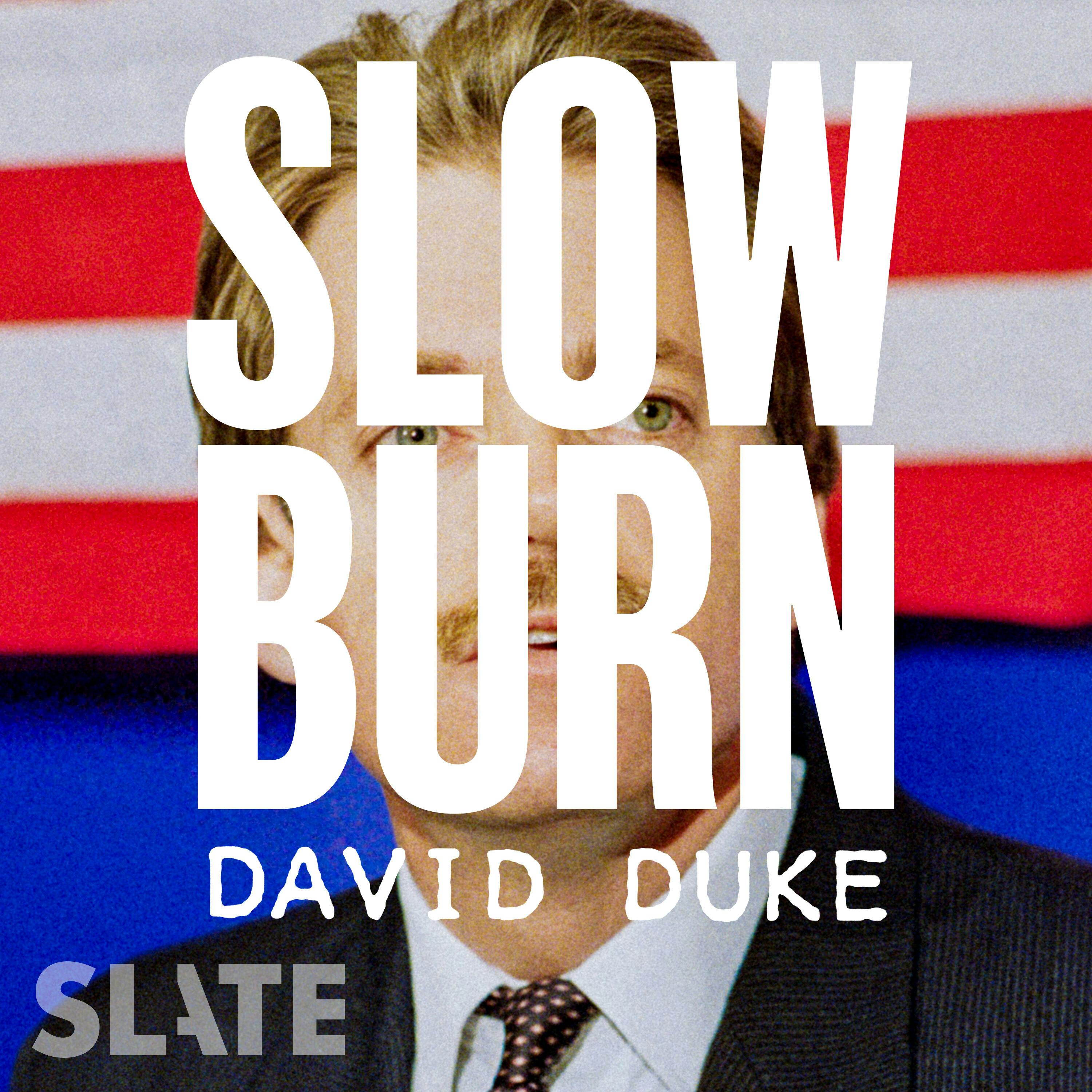
Slow Burn – Season 4 Trailer: David Duke
Release date: June 8, 2020
Host: Josh Levine (Slate Podcasts)
Episode Focus: How David Duke rose to political power and nearly became governor of Louisiana – and what it took to stop him.
Overview
This trailer introduces the fourth season of Slow Burn, focusing on the life and rise of David Duke – America’s most notorious white supremacist and former leader of the Ku Klux Klan. Host Josh Levine, who grew up in Louisiana and witnessed Duke's political ascent, sets the stage for a season that will unpack how Duke leveraged racism and mainstream anxieties to transform himself from fringe extremist to credible political threat. The season promises a deep dive into the forces and personalities that made Duke’s run possible, and a candid exploration of the darkness at the heart of his political appeal.
Key Discussion Points & Insights
David Duke’s Evolution: White Supremacist to Political Force
-
1970s: Duke was the best-known white supremacist in America, leading the Ku Klux Klan and advocating "white power."
- Quote:
"The American white people are searching and are reaching out for a movement, and the Ku Klux Klan is that movement. White power. White power."
(David Duke, 00:09)
-
1980s–90s: Duke transformed himself into a political phenomenon, gaining traction despite open condemnation.
Personal Reflections & Experiences
- Host Josh Levine shares his personal connection to the story, having watched Duke’s political rise as a child in Louisiana.
- Quote:
"Back then, I had no idea how the David Duke story was going to end. On the new season of Slow Burn, I'm going to look back at the Duke movement and how he nearly became Louisiana's governor."
(Josh Levine, 00:47)
The Mechanics of Duke’s Popularity
-
Strategy:
Duke used scapegoating tactics and focused on issues like taxes and welfare that resonated with some voters, blending racism with economic populism.
- Quote:
"Duke was a master scapegoater. He was saying things about taxes and welfare that people wanted to hear."
(Commentator, 01:29)
-
Public Perception:
Discussion around how some voters downplayed Duke's extremism as he appeared less monstrous over time.
- Quote:
"You warned about Duke, and then when he don't turn out to be this monster, you give him more credit for not being the monster than you would give somebody who's never been a monster."
(Commentator, 01:42)
The Danger & Seduction of Extremist Rhetoric
Reflections on History’s Lessons
- Quote:
"I hope I'm wrong. I hope he fades away. I hope all this was incredibly useless and ridiculous and none of this comes to pass. But I'm a great believer in history and learning from history and not repeating mistakes of history."
(Commentator, 02:16)
Notable Quotes & Memorable Moments
-
David Duke on his movement’s appeal:
"The American white people are searching and are reaching out for a movement, and the Ku Klux Klan is that movement. White power. White power." (00:09)
-
On the success of his campaign, despite broad condemnation:
"We had no big political endorsements. Even the President of the United States came out against us. But we won." (00:37)
-
On the subtle but real pull of Duke’s rhetoric:
"We could feel the fish hooks of his propaganda, like, hooking into part of our brains and just reeling us off to the side." (01:17)
-
On the challenge of public perception:
"You warned about Duke, and then when he don't turn out to be this monster, you give him more credit for not being the monster than you would give somebody who's never been a monster." (01:42)
-
Warning from history:
"I hope I'm wrong. I hope he fades away. I hope all this was incredibly useless and ridiculous and none of this comes to pass. But I'm a great believer in history and learning from history and not repeating mistakes of history." (02:16)
Key Timestamps
- 00:03 — Introduction of David Duke as a white supremacist figurehead
- 00:28 — Duke’s political ascent becomes a "scary" national story
- 00:37 — Duke celebrates his win despite opposition
- 00:47 — Host Josh Levine introduces personal perspective
- 01:17 — Discussion of Duke's persuasive, dangerous rhetoric
- 01:29 — How Duke repackaged extremism using mainstream issues
- 01:42 — Complications in public reckoning with Duke’s extremism
- 02:16 — Reflections on learning from history
Tone & Style
The trailer combines archival audio with candid commentary, mixing a sense of urgency and foreboding with a clear-eyed examination. The host’s Louisiana roots bring a personal element, while various voices highlight both the seductive appeal and the peril of Duke’s politics. The tone is reflective, serious, and at times incredulous, aiming to illuminate the persistent dangers of racist populism.
Summary for New Listeners
This trailer promises a season that will unravel how a figure often dismissed as an extremist nearly claimed real political power—and what it reveals about American society. With first-hand perspectives, archival audio, and narrative urgency, the new season of Slow Burn aims to teach, warn, and provoke reflection about the influence of bigotry when it finds a voice in political life.
Coming soon wherever you get your podcasts.