← Slow Burn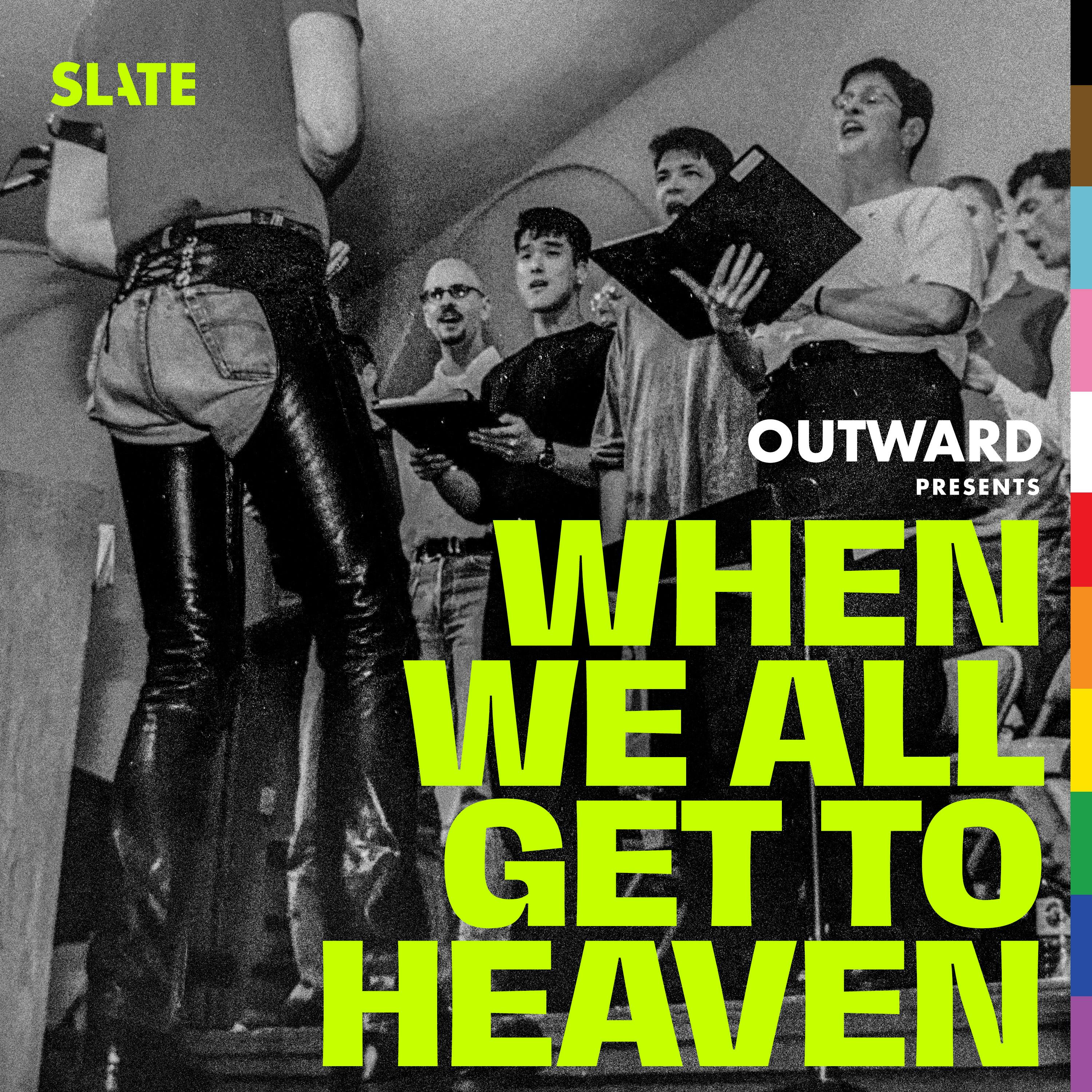
Slow Burn
When We All Get to Heaven | Setting the Table
00:25:12
A queer church tries to remember all they lost to AIDS. We do too.
Loading summary
Transcript43 lines
- [00:01]
A
Hey, it's Christina Cotterucci, host of season nine of Gays Against Briggs. We have a special treat for you. It's the first episode of a new narrative history series from Slate created by Eureka Street Productions. It's called When We all get to heaven. This 10 part series is about one of the first pro gay churches, the Metropolitan Community Church of San Francisco, and how it dealt with the AIDS crisis in the 1980s and 90s. Hundreds of its members died and hundreds more were searching for meaning and solace in a time of unimaginable fear. It's one of the best things I've listened to this year, full of music and warmth and fascinating stories, kind of like a good church service. We hope you like the first episode. And to listen to the rest, head over to Outward Slate's LGBTQ podcast. We'll be dropping new episodes there every week for the rest of the year. Enjoy.
- [00:54]
B
Have you had the experience of not even being able to remember the names of people who were once dear to you? This week I was driving in my truck and I popped in a Madonna tape. And when I did, I had a remembrance of a person who was very dear to me with whom I saw Truth or Dare three times in one week. But I could hardly remember him anymore because there have been so many people that we've lost, that I've lost. I really, for a moment, almost couldn't remember his name. And he really was very dear to me. And I wanted to cry out, I remember you.
- [01:41]
C
It's 1993. The guy speaking is Jim Matulsky. He's a Minister, and at 35, he's already officiated at more funerals than many pastors will ever do in their whole lives.
- [01:56]
B
And there are people here that I want to cry out to the universe. They lived, they were here. We knew them. We loved them. We remember them tonight at this table.
- [02:13]
C
The table sits at the front of a church sanctuary, which looks a little bit like the inside of a barn with a high ceiling, a small balcony, and rafters painted white. The building itself is wedged between two houses on a residential street in a busy San Francisco neighborhood.
- [02:33]
B
And I invite you at this moment to. To lift up the names of people that perhaps you can barely remember, or people who you remember so well it hurts to say their names, almost say their names so that they become part of this communion.
- [03:01]
C
It's a Sunday night, and the people there are mostly men. A lot of them are young and a lot of them are sick. Some may be walking with canes or IV poles. Some may be lying in the laps of their friends, too weak to sit up. If you listen closely, you can hear their coughing. Some walked just a few blocks to be at this healing service. Others drove for miles.
- [03:28]
B
This is a table of remembrance and a table of promise as well, that one day we will be with all the people that we've ever loved together at a heavenly banquet where no one can ever separate us ever again.
- [03:59]
C
The people here didn't always necessarily spend a lot of time in churches. Neither did the people they were remembering. They usually weren't welcomed. They were told that their suffering was their own fault and that, by God's logic, it was deserved. They were gay men at the height of the AIDS epidemic, and a month earlier, In January of 1993, San Francisco reached the grim marker of 10,000 dead.
- [04:32]
B
Our healing comes tonight, in our remembering and in our claiming that promise of love that is stronger than death and of love that never ends.
- [04:44]
C
The people Jim's talking to are living or trying to live through the overlapping crises that were AIDS in the 1980s and the early 90s. The medical crisis of a novel, brutal, fatal disease with no treatment and no cure. The social crisis hitting mostly marginalized people, queer folks, drug users, people of color, with everyone else terrified of being next. The political crisis of a government that seemed indifferent to aids, contemptuous of people with it, and doing close to nothing to support sick people or the search for treatment, especially in that first terrible decade. So what do you do if you're one of those people facing aids? You're up against an existential threat. You need to make meaning of suffering, death and what comes after, if anything comes after. And you need the support of community, the kind of community that knows how to do stuff like bring over meals and organize rides to doctor's appointments and tell stories and sing songs that make crises make a little more sense. A community like a church. But many, many churches won't welcome you or the people you love most. They don't recognize you in life and won't remember you in death. And what do you do if you're Jim or one of the other pastors facing this congregation with these tools of Christian faith, knowing full well how that faith can betray queer people. Because as out gay and lesbian ministers, it's betrayed you too. Maybe you make another kind of church, one where the question of homosexuality is settled as a blessing, not a curse. Where the queer lost are remembered and queer kin are recognized. Where queer lives can be grieved and fought for and remembered and maybe even saved. The recording of folks calling out the names of their dead is from a communion service at the Metropolitan Community Church of San Francisco, or mcc. It's a queer Christian church, and it offered communion two or three times every Sunday through the hardest years of the AIDS crisis, when people were too sick to come to church, the church brought the ritual to their homes and their hospital rooms. And starting in 1987, they also brought cassette tapes. The reason we have any story to tell at all is those tapes. In 1987, a guy named Keith was a regular at MCC. He worked in audio and wanted to help folks who were sick and missing out on the spiritual center of the week. This is the Tech Alden Days. If you missed an event, you couldn't watch it on the Internet five minutes later. Cassette recordings would help people stay part of things. People who were too sick to come to church could get news from the announcements, sing along with the hymns, learn a little something from the sermons. They could stay part of the church's community. So Keith designed a sound room, got professional equipment, pulled together. Some volunteers recorded services and made copies on humble portable cassette tapes. They made these recordings for years. Then times changed and technology changed, and these recordings were put away and forgotten. Almost 25 years later, a guy named Steve, another longtime MCC congregant, asked me if I knew about all these tapes he had found. I'm a scholar of American religion and a longtime friend of the church, and I had recently gotten interested in their history. Now I'm not Christian and I'm not a lesbian. And I told MCC that when I first started hanging out there, and they told me, you know, we have this. If you're here, you're queer. So there I was in the church office when Steve told me he had picked all these tapes out of a trash pile and stored them under the floor of the sound room. I wasn't sure that I really wanted to know what Steve found while poking through the church's garbage. I imagined a box or two of random, wobbly recordings of Christmas services or choir concerts, maybe a sermon or two. But it turns out my imagination was seriously limited and his trash picking a revelation. He showed me a collection of 1200 cassettes, recordings of two services every Sunday for most of the years between 1987 and 2003. I knew what those years were about in San Francisco and that these tapes had to be a remarkable record of a terrible time. But I didn't know specifics. Then I started listening, and my imagination was utterly taken by the stories these tapes were telling. Stories of people, of relationships, of crises, of fear and fury and faith. I didn't know people laughed then that much in church. I didn't know all the different ways they channeled their grief. I didn't know any of the songs. The combination of utter queerness and utter Christianness messed with my head. I listened and I listened, and I've been listening ever since.
- [11:00]
B
Dear God, There were times I hated my life.
- [11:03]
A
From up here, I can see every.
- [11:05]
C
Kind of dyke I've ever heard of.
- [11:06]
A
And a few new ones. I can see high femmes and stone butchers and baby dice.
- [11:16]
B
As good as it gets.
- [11:18]
C
We of the Metropolitan Community Church refute the claim that any person's sexual orientation needs to be changed.
- [11:25]
B
I don't know whether to laugh or to cry when I think about Randy Nasser, who was losing his vision when I came to see him in the hospital. And I walked in the room and I said, it's Jim Mitolsky. And he said, I. I know. I recognize the shape. I do remember one time at dinner, there was a very handsome male couple sitting at the table next to me. And one of us decided that they were much too attractive to be together. And we went over and told them that they had to break up and go get ugly lovers. And I told her what safe sex is, and I told her how I aim to survive. And I told her that I didn't come out of the closet not to have sex.
- [11:59]
C
And one of his T shirts, I think it says, I have, is it 4 or 8 T cells left? And I've named them. And the last one, his last T cell is named God.
- [12:24]
B
I remember standing with my friend at the corner of Castro Market, and I remember saying, I wish we could level all these pretty Victorians. And if this was a meadow and there were a thousand corpses rotting in the sun, then people would look at it and they would understand what was happening to us here. I stood down in front of doctors and said, what are we going to do now? And they looked at me and said, well, we're going to try this. I said, what do you mean we're going to try? You mean you don't know? He said, no, we don't. There's a place for us.
- [13:01]
C
We may not be able to cure AIDS right now, but every time a person with AIDS lives one more day connects with one more person, eats one more meal, sings one more praise, they are participating in healing.
- [13:19]
B
Each one is of infinite worth, whether that person is diseased or not. We have AIDS as a community, and God loves us. And to the enemies who are attacking us, we say to you, we're not closing up shop. We're just starting a revival here at.
- [13:38]
C
Eucarica street at Metropolitan Community Church. And we're going to go on. God bless you this morning.
- [13:45]
A
Amen.
- [14:08]
C
I first got interested in this church's history because of what MCC called the AIDS years and and how the disease had devastated the congregation and the community. I remembered the 80s and how talk of AIDS was saturated with moral and religious condemnation. I could not have imagined a way for Christianity to be redeemed from that, or that queer people would even bother trying. But I started to listen to these tapes and I was totally riveted.
- [14:41]
B
When We all get to Heaven 174.
- [14:44]
C
Because the congregation's refusal to deny their queerness or their religiousness and the religious things they made out of that very refusal moved me in this way that I couldn't let go of. Take this as an example. When we all see Jesus, we'll sing.
- [15:11]
B
And shout the victory. Sing the wondrous love of Jesus.
- [15:18]
C
Sing God's mercy and thy grace on first listen. To a religious outsider like me, this sounds like a kind of Christianity that could give me real pause. The kind of Christianity that sets itself up in opposition to urban coastal dwellers such as myself and queer people everywhere. On a different kind of first listen, a religious insider might hear things I couldn't. Like how they changed the words. If you grew up in church singing this song and were humming along, you might have gotten through the Sing the wondrous love of Jesus part just fine. But you might have stopped short at seeing God's mercy and thy grace, because odds are good, the words you sang as a kid were Sing his mercy and his grace. But McC is a queer church and a feminist church, and in some ways an orthodox one. By orthodox, I mean that they believed certain theological basics of Christian faith that stretch way back into antiquity. And according to those basics, God is beyond all human categories, gender included. MCC knew their theology, and they were serious enough about their own blend of queerness, feminism, and orthodoxy to rewrite all of their beloved hymns to reflect what they truly believed. First, listeners across the board may well hear the kind of queer sensibility in the same singing that made me unable to turn away. A sensibility that becomes more visceral on the second or third listen. When you realize that this is being sung by a gay church at the height of the AIDS epidemic and the words start sinking in. When we all get to heaven, Heaven is real. We queer folks are going to get there. And some, some of us with AIDS are going to get there really soon. Some of us are there already. We'll sing and shout the victory. There's something for us to celebrate here. We think we won something, the biggest thing, actually, and we're going to shout about it. And just the sheer audacity of the we, we all. This song is about us, all of us. The promise of this place is for all of us, and we're going to make church as if that might actually be true. We're going to go on faith.
- [17:58]
B
You can't feel that you're dead.
- [18:09]
C
Back in the MCC sanctuary, that Sunday evening in 1993, communion is about to start.
- [18:16]
B
Our healing comes tonight in our remembering and in our claiming that promise of love that is stronger than death and of love that never ends.
- [18:28]
C
Jim picks up a loaf of bread and a chalice and raises them before the congregation.
- [18:34]
B
We remember Jesus taking bread and breaking it and sharing it with his friends and saying, this is my body. We remember him taking a cup and sharing it with them and saying, this is my life.
- [18:52]
C
Sharing the bread and the cup is the core of communion, a ritual remembrance of Jesus last night before his crucifixion. For many Christians, it's the sacred center of their ritual life. The Bible says Jesus asked his friends to eat bread and drink wine to remember him after he was gone. And they did.
- [19:16]
B
We remember the woman who broke open an alabaster jar and about whom Jesus said, remember her. She has done a beautiful thing, the.
- [19:28]
C
Woman with the alabaster jar. She was an outcast, sexually suspect, shamed for this extravagant offering she made to Jesus. But she wasn't shamed by Jesus himself. He's the one who saw the beauty in her gift and said it would be remembered. Few Christians remember her, especially at communion. But that night MCC did, and tonight.
- [19:55]
B
We remember all the people we love. Let us pray. God, we give you thanks for this bread and this cup, these symbols of remembrance and of promise to us. Nourish us in this meal with food that satisfies.
- [20:12]
C
When We all get to Heaven is a podcast for all of us, religious or not, queer or not, HIV positive or not, alive in the early AIDS years or not. The people that made these recordings encompass those differences. Those of us making this podcast do too, and we know our listeners will too. Whether you've spent half your life in a church or would never enter a real live one, we invite you to spend some time with this one. Because this is a community that knew how to face loss and make hope in hard times. And that's something all of us are going to need to learn how to do if we're going to get through the existential crises in front of us.
- [20:58]
B
In your many names we pray. Amen.
- [21:04]
C
Before they share Communion at MCC San Francisco, before folks are invited to eat a piece of bread and take a sip of juice, they let folks know that the table is open to everyone. That you don't have to believe in Christianity, in God, or in anything at all to be welcomed to the table.
- [21:24]
B
Everyone is welcome to come forward tonight to share in this communion. Communion with God. However it is that you understand God, communion with people past and present, and to come come forward and receive the bread and cup. Come forward and have someone pray with you for healing of any sort if you like. This is a time to receive, a time to be open to God's grace. If you wish to receive healing, come here. If you wish to receive communion, go there. If you want to, just be in your seat and pray for healing for others. Let us create a tabernacle of healing tonight with our prayers and our thoughts.
- [22:07]
C
We're setting in different kind of table of remembrance with this project. A table set in sounds and stories, in moments captured on tape decades ago and in conversation we've had with folks about those moments in just the last few years. Different listeners will hear different things in it and will take different things from it. But here too, all are welcome. When We all get to Heaven is a project of Eureka Street Productions and is distributed by Slate. It was co created and produced by by me, Lynn Gerber, Siri Colom and Arianna Nettleman. If you love the show, we'd love your help. The best way for new listeners to find us is through word of mouth. Please spread the word and tell folks about us. The next best way is through listener reviews. Please review us on whatever app brought you here. Thank you so much. Our story editor is Sarah Cavedo, our sound designer is D. David Herman. Our first managing producer was Sarah Ventri, and our current managing producer is Chrissy Clark. Tim Dillinger Curentin is our consulting producer, Betsy Towner Levine is our fact checker and our outreach coordinator is Ariana Martinez. The music comes largely from MCC San Francisco's archive and is performed by its members, ministers and friends. Additional music is by T Tasty Morsels. We had additional story editing support from Arwen Nix, Allison Barringer, and Chrissy Clark. Our interns are Nico Kosakowski, Carrie Hale and Victoria Nascimento. A lot of other people helped make this project possible. You can find their names on our website. You can also find pictures and links for each episode there@heavenpodcast.org Our project is supported by the Henry Luce foundation, the E. Rhodes and Leona B. Carpenter foundation, and some amazing individual donors. It was also made possible with support from California Humanities, a non profit partner of the National Endowment for the Humanities. You can Visit them at www.calhum.org. eureka Street Productions has a 501 status through our fiscal sponsor, FJC, a foundation of philanthropic funds and many thanks to MCC San Francisco, its members and its clergy, past and present, for all of their work and for always supporting ours.