← Smart Girl Dumb Questions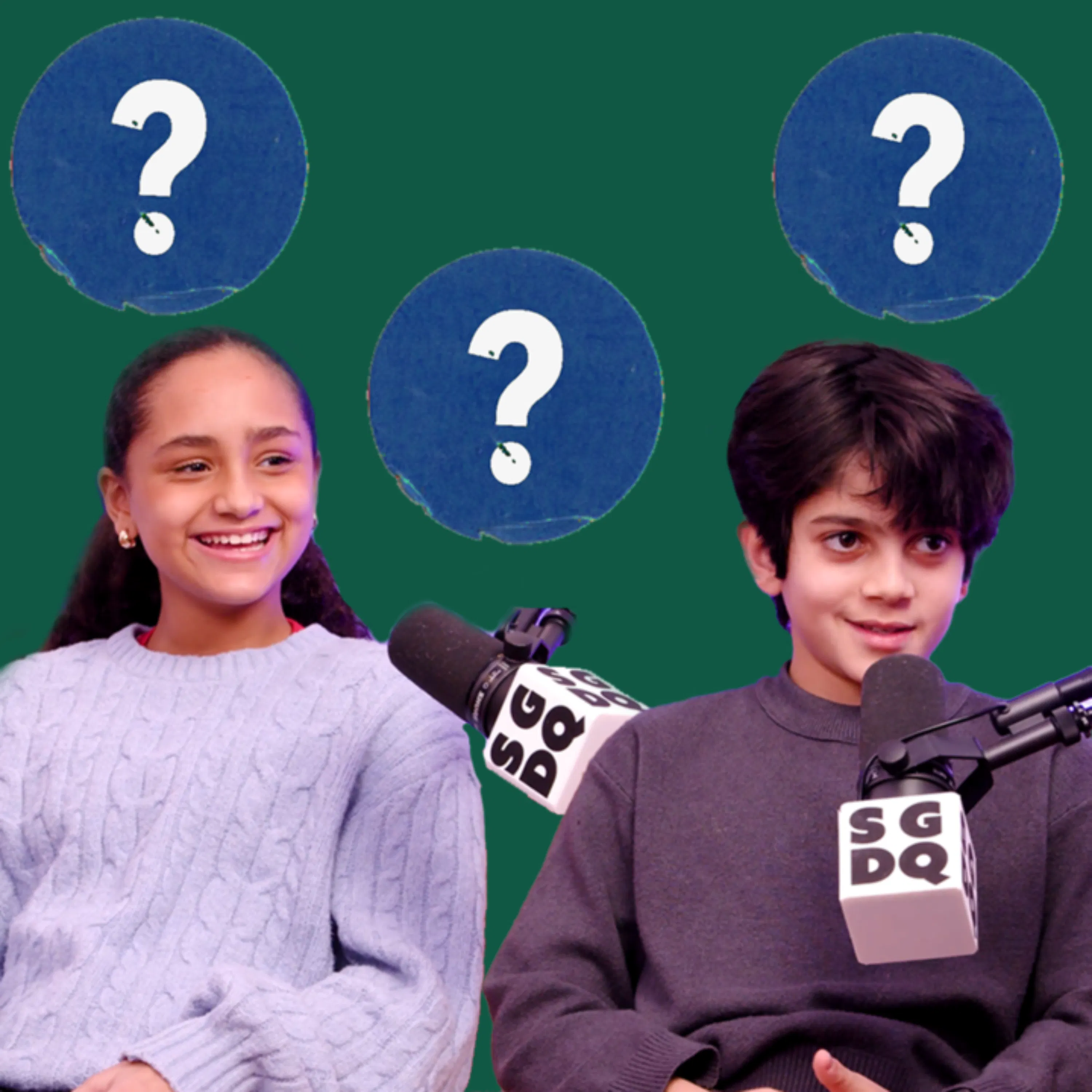
Smart Girl Dumb Questions
What Do 11 Year Olds Do All Day? with Sophie and Dilan
00:55:45
Are kids more chronically online than adults? Why do they feel more connected on FaceTime than IRL? And since when was recess cancelled? Also - do they drink coffee? And fall in love? What is Roblox? Why are Pokemon cards worth anything?
Loading summary
Transcript701 lines
- [00:00]
Sophie
Me and my friend just FaceTime, but we don't talk, you know, you just like keep them on FaceTime.
- [00:05]
Dylan
I've seen people do that.
- [00:06]
Sophie
A year ago, stayed on FaceTime for.
- [00:10]
Dylan
Like six hours without saying anything to each other.
- [00:13]
Sophie
Like once or twice we talked.
- [00:16]
Dylan
And how does it feel different to you? Like when you go see your friends and are in the same place versus you're just on FaceTime on a screen together doing the same thing.
- [00:23]
Sophie
It just makes you feel more like with them when you're on FaceTime even.
- [00:29]
Dylan
More than real life.
- [00:30]
Sophie
Yeah.
- [00:33]
Naima Raza
Smart Girl Dumb Questions welcome to Smart Girl Dumb Questions.
- [00:43]
Dylan
I'm Naima Raza and that explaining to.
- [00:45]
Naima Raza
Me why the virtual world feels so much More real than IRL are two 11 year olds, Sophie and Dylan. I have read so much about kids and screen time and the rise of online, mostly in books written by adults, like this one, the Anxious Generation by Jonathan Haidt.
- [01:03]
Dylan
It's a great book, but yet I really wanted to hear kids talking about themselves, not translated to me. And I thought 11 was the perfect age because I remember being 11 and.
- [01:12]
Naima Raza
Feeling like freedom and independence and the ability to shape my own preferences and privacy all for the first time. And yet no one really knows what 11 year olds do. Not their parents, not their teachers, not even their friends. I don't think all the time.
- [01:25]
Dylan
So I wanted to ask them the.
- [01:26]
Naima Raza
Dumb question, what do 11 year olds do all day? And like what is this Roblox thing I'm hearing about? And do they trade in crypto or Pokemon cards or all of the above? Do they worry that AI is going to take their jobs? How online are they? Are they more online than we are as adults? And what do they think that the.
- [01:43]
Dylan
Future is going to look like?
- [01:45]
Naima Raza
Here's my conversation with Sophie and Dylan, age 11.
- [01:53]
Dylan
Welcome to Smart Girl Dumb Questions. Guys, hello. Thanks for being here. I want you guys just to introduce yourselves.
- [02:02]
D
I'm Dylan, my threadanya. I love track and soccer and I love caviar.
- [02:08]
Dylan
And you love caviar, Dylan. Really?
- [02:11]
D
Yes.
- [02:12]
Dylan
How many times have you had caviar?
- [02:14]
D
Four times.
- [02:15]
Sophie
I'm Sophie, I'm an athlete, I play soccer and squash and I've never had caviar, but I really want to have caviar.
- [02:23]
Dylan
I don't even have caviar that often. I don't know if I've had it four times. Dylan, I know Dylan's parents, family, friends, and Sophie, you're a new friend and you guys are both 11 years old.
- [02:33]
Naima Raza
In one word, what is life like?
- [02:35]
Dylan
At 11?
- [02:36]
D
Unrelaxing.
- [02:37]
Dylan
Unrelaxing?
- [02:38]
D
Yeah.
- [02:39]
Sophie
Difficult.
- [02:40]
Dylan
Difficult.
- [02:41]
D
Cause it's, like, right when you start middle school, so it's, like, inconvenient or something.
- [02:46]
Dylan
Inconvenient? How so?
- [02:49]
Sophie
11'S a weird age because you're in the middle of, like, being young and also being, like, a teenager.
- [02:55]
Dylan
Teenager, yeah.
- [02:57]
Sophie
So it's, like, weird because people either, like, consider you, like, a baby or, like, older, but mostly a baby.
- [03:03]
Dylan
Mostly a baby. I want to talk to you about that. There are a bunch of things that were cool when I was 11, and I wonder if they're still cool now. Okay, so I'm going to say things, and you tell me if you recognize them. Do you know what a Discman is?
- [03:14]
Sophie
No.
- [03:15]
D
Yeah.
- [03:15]
Dylan
You know.
- [03:16]
D
Yeah.
- [03:16]
Dylan
Do you have one? Because.
- [03:19]
D
Ancient.
- [03:20]
Dylan
Ancient. Thanks, Dylan. You know how to make a girl feel real special. What about Tamagotchis? Are Tamagotchis still a thing?
- [03:28]
Sophie
I've never had one, but all my friends are, like, raving about them.
- [03:32]
D
Yeah, no idea.
- [03:34]
Dylan
No idea what a Tamagotchi is. Explain what it is, Sophie.
- [03:37]
Sophie
It's like a. Like, it's a device that you have to keep it alive, but it's, like, not real. And you can name it, and you have to feed it and do, like, sorts of stuff to keep it alive.
- [03:51]
D
Like those tiny things?
- [03:52]
Dylan
Yeah, it's like on a keychain. You've seen them, right? It's like a little animal or pet.
- [03:56]
D
Well, there's always a reset button.
- [03:57]
Dylan
So the point is to keep it alive, not to reset it. You have all these things that I don't know and understand. Like Roblox.
- [04:05]
D
Well, Roblox is just the middleman. Like, Roblox has a platform called Roblox Studio, where you create the games. Like I created a game. It's not good, but other people create games that take them years, and they just make revenue. Robux. $10 can get you 800 Robux. Roblox takes all of that, but you can spend that 800 robux in the games that people make.
- [04:29]
Dylan
Oh, so it's like money.
- [04:30]
D
Yeah. And then the coins and. But only 70% goes to actual creator.
- [04:35]
Dylan
So Roblox is kind of like Nintendo meets YouTube. People come on, they make their own games. Then other people play those games. They all put money. You get Roblox money, and then you use it to pay for things inside of the games.
- [04:46]
D
Yeah.
- [04:47]
Dylan
And then some of that money, 70% goes back to the actual Robux.
- [04:51]
D
Not actual cash, actual. And then the actual cash goes to Roblox.
- [04:55]
Dylan
And what do the creators do with all those Roblox?
- [04:58]
Sophie
They, like, use it on their avatar. It's a big thing. And in games, a lot of games, like, you can, like, pay for something with Roblox and then you get to, like, pick stuff and stuff like that.
- [05:11]
Dylan
Give me an example. Like, what's a game in Roblox that everybody plays?
- [05:14]
Sophie
Dress to Impress.
- [05:15]
D
Yeah. Dress to Impress.
- [05:16]
Dylan
Dress to Impress.
- [05:17]
D
Like, there's a theme, and then you have to dress to the theme, and then everyone rates you.
- [05:22]
Sophie
Have you played Fashion Famous?
- [05:25]
D
You dress up yourself.
- [05:26]
Dylan
Explain. Fashion Famous.
- [05:28]
Sophie
There's a category and you have to, like, dress up. And then there's judges that are robots, so they don't. They're not real people. And then they judge your outfit based on what the theme was.
- [05:40]
Dylan
Avatars judge you, but they're not real people. They're just like. Is it like AI in a way?
- [05:45]
Sophie
Yeah, I guess.
- [05:46]
Dylan
It's like a computer is judging you based on its understanding of how good your outfit is.
- [05:50]
Sophie
Oh, wait, no. I think that people. People actually judge you too.
- [05:55]
D
Okay, so it's like a mix and mix. I think there's 10. And then, like, because some people just joke around in the game and then, like, you can just, like, not win. It's like. Like, if you go get a theme, people are gonna dress up very different to the theme.
- [06:08]
Dylan
If we were in a Roblox Dress to Impress game, who would win right now?
- [06:13]
D
It depends what the theme is. It could be.
- [06:14]
Sophie
It's like a democracy.
- [06:16]
Dylan
Okay, what would the theme be if I won? Right now, I'm wearing a white T shirt and black jeans.
- [06:21]
Sophie
Basic girl.
- [06:22]
Dylan
Basic girl. Okay.
- [06:25]
D
Basic. Yeah.
- [06:26]
Dylan
Is that one of the themes?
- [06:28]
Sophie
Yeah. And then the people vote out of five stars.
- [06:31]
Dylan
Okay.
- [06:31]
Sophie
There's also the Greek mythology, and based on how many wins you have, you get coins, your rank levels up. So I'm a fashionista, which I don't think is very good. But that's my rank in dti because I don't play DTI a lot.
- [06:44]
Dylan
Pokemon cards were big, I think, when I was a kid.
- [06:45]
D
Oh, yeah. Still big.
- [06:46]
Dylan
But now they're worth money.
- [06:47]
Naima Raza
Right?
- [06:48]
Sophie
My brother only has them, so he can, like, sell them when he's older because that's. He has a big book. But it's not like he likes the cards. He just wants money.
- [06:57]
Dylan
Is it investor, like, someone in our.
- [06:58]
D
School made, like, $4,000 on a Pokemon card.
- [07:02]
Dylan
Really? Where did he. Where did this person sell it?
- [07:04]
D
He spent, like, a $600 pack for, like, money. He just got like birthday and then he got really lucky, but then he bought a 4000 pack and got really nothing. So money well spent.
- [07:15]
Dylan
So it's like a stock market kind of.
- [07:17]
D
Yeah.
- [07:17]
Dylan
Do you guys have like a favorite streamer or someone that you watch playing games online? Like Mr. Beast type?
- [07:22]
D
I love Mr. Beast.
- [07:23]
Dylan
Yeah, you love Mr.
- [07:24]
D
Beast Beast games. He just invented that. It's cool.
- [07:27]
Dylan
Who's cooler? Mr. Beast or.
- [07:28]
Naima Raza
Or Taylor Swift.
- [07:31]
Sophie
Mr. Beast.
- [07:31]
D
Mr. Beast.
- [07:32]
Sophie
Boys hate on Taylor Swift a lot. Like, they're really mad at Taylor Swift for just being like popular. Boys like Mr. Beast better. My brother has. I know a lot of boys that don't like Ms. Taylor Swift because they just hate her music. But she didn't do anything.
- [07:50]
D
Yeah, it's just like the fame.
- [07:52]
Dylan
But you don't hate Taylor Swift.
- [07:54]
D
I don't hate her. Everyone in my school hates her because of Travis Kelsey and like, football. She's dating Travis Kelsey and they hate the Chiefs.
- [08:03]
Dylan
Oh.
- [08:04]
D
And that's why the whole thing started.
- [08:06]
Sophie
People are mad because she, like, took over football, but she didn't actually. But there's a whole, like, dispute about how like, no one. She like, ruined the NFL because she is always at the games and that the NFL is all about Taylor Swift.
- [08:20]
D
Yeah, yeah. Like, like when the NFL even thinks all about Taylor Swift because, like, when they're like broadcasting people, it's either Trump or Taylor Swift.
- [08:29]
Dylan
And you think that we should talk about more people than Trump and Taylor Swift?
- [08:32]
D
Yeah, yeah.
- [08:33]
Sophie
Like the players and. Well, I don't think this, but a lot of people are like, we should be focusing on the NFL, not Taylor Swift.
- [08:39]
D
Yeah.
- [08:40]
Dylan
Do we think it's Taylor Swift's fault that that happens?
- [08:42]
Sophie
No.
- [08:43]
Dylan
Whose fault is it?
- [08:44]
D
It's NFL's fault or like, because they get fame because of Taylor Swift. Like, everyone goes crazy when they put Taylor Swift.
- [08:50]
Dylan
Yeah.
- [08:51]
Naima Raza
So board games you guys still play?
- [08:52]
Dylan
That's still a thing.
- [08:54]
D
It's more like electronic board games.
- [08:56]
Dylan
Electronic board games?
- [08:58]
D
Yeah. Like Game Pigeon. Like, you text each other like archery.
- [09:01]
Sophie
Oh, yeah. Like, instead of like at sleepovers, me and my friends. Instead of like playing Uno, there's a game Pigeon version of Uno. And so we'll just be on our phones and play Uno on our phone.
- [09:12]
Dylan
What is Game Pigeon?
- [09:13]
D
It's like many like my common games, like Connect4pool.
- [09:18]
Dylan
It's like an app.
- [09:19]
D
Yeah. And then you text each other to play.
- [09:21]
Dylan
And is it lo Fi? Like, does it not look as cool as, like, it's not. Look, it doesn't look like Roblox. Did you guys ever know the. The game Snake on Nokia phones? Yeah, that's like our version of this I think, right?
- [09:32]
Sophie
Yeah, I played during class.
- [09:33]
Dylan
Is it like it's like that you play during class?
- [09:36]
Sophie
Like people have extensions and I have it on my little extension bar because you know, you guys have computers.
- [09:42]
D
Lucky.
- [09:43]
Dylan
You guys have computers in school all the time.
- [09:45]
Sophie
It's not very smart because everyone in my class is like playing Isoto or Snake.
- [09:51]
Dylan
But Snake is just like this one line that goes like this. Game pigeon. I should get that. If I text you, will you play with me?
- [09:58]
D
Yeah.
- [09:58]
Dylan
Yeah.
- [09:59]
D
I mean I might beat you.
- [10:00]
Dylan
I want to come back to like all this digital world, but first I just want to understand what your lives are like a little bit. Like how do you pay for this stuff? How do you pay for. Do you have money? Do you have money right now in your pockets?
- [10:11]
Sophie
No, my mom pays.
- [10:13]
Dylan
Your mom pays? Do you guys get allowance?
- [10:16]
D
No allowance.
- [10:17]
Sophie
Apple pay you whenever you need.
- [10:19]
D
Apple cash.
- [10:20]
Dylan
Apple cash. So it's all through your phone or through something. Okay, so there's never cash?
- [10:26]
Sophie
No.
- [10:27]
Dylan
No credit cards. Do you work? Do you do some chores? What do you, what do you do?
- [10:31]
D
At my dad's office I just clean the place around.
- [10:33]
Sophie
I do the laundry, but I don't get paid. It's like I don't spend a lot of money except when it's like outside of school and I want a snack and like so I go with my friends to Starbucks but my mom just Apple cashes me then Starbucks is so.
- [10:46]
D
Over rate is like $8 for a drink.
- [10:49]
Dylan
Do you guys drink coffee?
- [10:50]
D
No, like they go for like the, like the ice drinks, like the Frappuccinos. Right.
- [10:54]
Sophie
The strawberry acai refresher.
- [10:57]
Dylan
Wow. Okay, well we're not gonna talk about Starbucks because they're not sponsoring this podcast. Do you own any crypto?
- [11:02]
D
Yeah. Bitcoin, dogecoin.
- [11:04]
Dylan
You really do?
- [11:05]
D
Yeah.
- [11:06]
Dylan
How did you get that?
- [11:07]
D
Robin Hood.
- [11:08]
Dylan
You have a Robin Hood account?
- [11:09]
D
Yeah.
- [11:10]
Dylan
Your own?
- [11:10]
D
No, my dad's. But he doesn't do anything so he.
- [11:13]
Dylan
Has it on his phone for you. What time do you guys wake up?
- [11:17]
D
6:30.
- [11:18]
Sophie
6:30.
- [11:19]
Dylan
That's cause school is at 8:15.
- [11:22]
Sophie
I have to get there by 8:15.
- [11:23]
Dylan
Do you have a bedtime?
- [11:25]
D
Until I finish my homework because I come home at 7:00.
- [11:28]
Dylan
Do you guys ever rage and stay up till like midnight?
- [11:30]
Sophie
No, I'm too tired.
- [11:32]
D
Same. Too tired.
- [11:33]
Dylan
Too tired from school. Do you think school is more work than a job?
- [11:38]
D
Yes.
- [11:39]
Sophie
I don't know, because it depends on job. Scared adults scare you with like, work because, like, they're like, oh, you think school is hard, but wait till you have to get to work.
- [11:48]
Dylan
Do you think work is going to be that hard or do you think.
- [11:50]
D
They'Re just, well, finding a job nowadays extremely hard.
- [11:53]
Dylan
How do you know that? Are you in the job market?
- [11:56]
D
No, I just hear my parents conversations every day.
- [11:59]
Dylan
Do you think that AI and stuff is going to make it more likely for you guys to have jobs or.
- [12:05]
D
Less easy to have jobs harder because like, most businesses can just run off of AI now if they need someone to think of, like, things to do, they don't ask a person, they ask AI.
- [12:15]
Dylan
Are you allowed to stay in the house by yourselves and like, for how many days?
- [12:20]
Sophie
Oh, I've never stayed by myself for like overnight, but I'm allowed for like, hours. Like five hours.
- [12:27]
Dylan
What are decisions you think you should make for yourselves that you're not allowed to make for yourselves yet?
- [12:33]
D
Like, the ability to, like, do whatever you want sometimes. Because, like, sometimes, like your parents put you on the calendar as to what to do. Like, some days you should be able to just go like roam free around New York and do something like go to the park.
- [12:49]
Sophie
I feel like I should be able to have as much like social media. I'm only allowed to have YouTube, but I've been like, I want to have like Snapchat and Instagram, so I feel like I should be able to make that decision because I know I will be responsible. They don't want me to have that.
- [13:08]
D
You're not missing much.
- [13:10]
Dylan
It's so boring, really. Okay, we're going to talk about social media in a minute. But what other kinds of decisions do you think you should make where you want more independence?
- [13:19]
Sophie
Your schedule? My mom, I always have like soccer practices and then if I'm not doing that, she signs me up for something else. And like, I once had like a writing workshop that I didn't really want to go to. So like, I wish I got to control my schedule because there's like two priorities.
- [13:36]
D
Like, there is school, there's sports, and then there is homework, which is part.
- [13:41]
Dylan
Of school, I guess.
- [13:42]
D
Yeah. And then like in the middle, you should be able to do whatever you want.
- [13:45]
Dylan
Sounds pretty fair. Okay, we can play this back for your parents. How much longer do you think it's going to be until you can make all decisions by yourself?
- [13:53]
Sophie
Well, I have an older sister, so whenever it happened for her, it will happen to me. So like, she got social media when she was 13. So I'll be 13. So it's, like, fair.
- [14:03]
Dylan
It's fair.
- [14:03]
D
My dad's fine, whatever I do, but my mom's a different story.
- [14:07]
Dylan
At what age will you be able to make all your decisions by yourself? Like, what is that, like, 13?
- [14:11]
D
14.
- [14:12]
Dylan
13, 14. You think you'll be independent?
- [14:14]
D
Yeah, I mean, I'm already pretty independent. I came here.
- [14:17]
Dylan
By yourself today?
- [14:18]
D
Yeah.
- [14:18]
Dylan
There's a lot of, like, people in their 20s and 30s. They live with their parents. Do you guys want to do that?
- [14:23]
D
No.
- [14:25]
Dylan
What age do you want to move out from the house?
- [14:27]
Sophie
Well, I. I think I would live in a dorm at college and then. You can't really move out when you're in high school, can you?
- [14:34]
D
I mean, kind of.
- [14:35]
Dylan
Unless you go to maybe a boarding school. How can you move out when you're in high school?
- [14:39]
D
Because if you're, like, 18.
- [14:42]
Dylan
Yeah, but you'll probably be 18. I graduated high school before I was 18.
- [14:45]
D
Well, you can, like, fail a couple grades, and then you could.
- [14:49]
Dylan
Yeah, it's a long play to get out of the thing. I think one of the things you talked about having independence over is, like, is your ability to choose to be on social media or what you do with your phone. So you both have phones?
- [15:00]
D
Yeah.
- [15:01]
Dylan
Okay. And you have flip phones or you have real phones?
- [15:03]
Sophie
Real phones.
- [15:04]
D
Real phones.
- [15:04]
Dylan
Does anyone in your school have a flip phone?
- [15:06]
D
I know, I know. Like, people that have a flip phone.
- [15:09]
Dylan
Instead of a smartphone.
- [15:10]
D
Yeah.
- [15:11]
Dylan
And why?
- [15:11]
D
Their parents want them just to have a phone, like, to call, text. But with, like, normal phones nowadays, it's mostly like social media, video games.
- [15:20]
Sophie
People would rather not have a phone than have a phone.
- [15:23]
Dylan
You'd rather have no phone at all than have a flip phone?
- [15:26]
Sophie
Because the main purpose for my phone is to, like, take photos and watch videos.
- [15:33]
Dylan
Motorola Razors, they. They're back now. They were when I was a kid.
- [15:36]
D
But they were flip phones. Like Samsung Galaxy Flip. Those don't count.
- [15:39]
Dylan
Yeah, those count. That's a flip phone, right? Oh, but that's, like, got a smartphone with a flip. Yeah, no, that doesn't count. That doesn't count. Are you trying to trick me?
- [15:47]
D
It's still it. Flip.
- [15:48]
Dylan
How much time do you spend on the phone?
- [15:50]
D
Three hours, four hours. But it depends on, like, the weekends. If you count, like, electronics.
- [15:55]
Dylan
Yeah.
- [15:55]
D
Like computer. Maybe, like, seven hours. That's if I have nothing to do.
- [16:00]
Dylan
Seven hours. What do you think, Sophie? You seem shocked by that.
- [16:03]
Sophie
The thing is, if it's on my iPhone, it will probably Be lower. Because I have a computer and iPad, so I spend a lot of my time on my iPad. But on the weekdays, I have no time to be on my phone because I have, like, my homework. And then I have, like, sports. So my phone doesn't really get, like. I don't have a lot of time to be on my phone.
- [16:25]
D
Yeah, same, like, I come home at 7, I do homework, then I go to sleep.
- [16:29]
Dylan
It's like prison. Guys. Such a schedule. Your schedule is completely controlled. Do you think that it's too much? Do you. How much of the stuff you learn in school do you think is going to be useful to you?
- [16:39]
Sophie
None.
- [16:39]
Dylan
How do you know that? Why do you think that?
- [16:41]
Sophie
My mom doesn't even remember any of it. Oh, like, sorry. She. Some of the stuff that I'm learning. History is important, but I'm learning about, like, ancient civilizations that, like, my mom doesn't know anything. And, like, I know a lot of adults that don't know anything about that. And they were also educated. Unless you work in, like, history.
- [17:05]
Dylan
So why do you think they teach you that?
- [17:06]
D
There's no point.
- [17:08]
Dylan
No point. You think it's a waste of time.
- [17:10]
Sophie
I have to memorize the dates of stuff, and I don't think that was very important. Like, I had to know when woman got married in the Maya civilization.
- [17:19]
Dylan
When was that?
- [17:20]
Sophie
I don't even remember anymore.
- [17:23]
D
Like, the only important class, in my opinion is, like, writing. Like, English class.
- [17:28]
Dylan
Yeah.
- [17:28]
D
Math class, which can help you in, like, all sorts of jobs, but only, like, high school math. Like, middle school math is, like, not worth it.
- [17:35]
Dylan
What is middle school math?
- [17:36]
D
It's like math you're not. You're never gonna use, like, what math that's possible to use with a calculator.
- [17:42]
Dylan
But isn't all math possible to do with the calculator?
- [17:44]
D
Not really. Because, like, some math, like, use your brain to use, like, can you I.3 inches? Like, my dad would eye 3 inches.
- [17:52]
Dylan
Because he's an architect.
- [17:53]
D
Yeah.
- [17:53]
Dylan
You think English is useful? You think math is.
- [17:55]
D
And language, whatever, because that's, like, the most useful.
- [17:57]
Dylan
And language.
- [17:58]
Sophie
I think history is useful because you have to learn history. But, like, some of the things that we're learning are not relevant to modern day. Like, they should, like, modify the curriculum ever, like, every 10 years or something to, like, learn different stuff.
- [18:15]
Dylan
What do you think that you're not learning about that you should be learning about Instead of my taxes? Taxes in history. Why do you want to learn? What do you know about taxes?
- [18:25]
D
You don't want to Give money.
- [18:27]
Dylan
The IRS that you don't need to give.
- [18:30]
D
Yeah.
- [18:30]
Dylan
You don't need to give more money than you have to give.
- [18:32]
D
Yeah.
- [18:33]
Dylan
So you're stressed out about taxes at 11?
- [18:35]
Sophie
Yeah.
- [18:36]
D
You're stressed out about taxes after. After I watch young Sheldon.
- [18:40]
Sophie
Young Sheldon can do his parents taxes. So my mom was like looking at me like, aren't you like really good at math?
- [18:48]
D
I was like, not good enough to do your taxes.
- [18:51]
Dylan
You don't want that responsibility. No. Like you want responsibilities and ability to make your own schedule, but not to.
- [18:56]
Naima Raza
Do your parents taxes.
- [18:58]
Sophie
Yeah.
- [18:58]
Dylan
When you're living with them, when you're in your 30s, you can do that.
- [19:01]
Sophie
I think my parents have someone who.
- [19:02]
D
Financial advisor.
- [19:04]
Dylan
Yeah, I think lot of adults don't. We don't know how to do our taxes either.
- [19:07]
Sophie
Yeah.
- [19:08]
Dylan
We go to other people and ask them.
- [19:10]
D
Specialists and taxing specialists.
- [19:12]
Dylan
Which will probably be maybe replaced by AI.
- [19:14]
Sophie
Yeah, probably.
- [19:16]
D
Probably is right now.
- [19:17]
Dylan
People like. I don't know, it's like, I think the same thing. Like. Yeah, I guess there's a lot of stuff I don't remember when I was a kid. Remember when you were like five? You probably knew every single kind of dinosaur.
- [19:26]
Sophie
No, no.
- [19:27]
D
Or like, I know T. Rex. That's it.
- [19:29]
Dylan
That's it. But there was probably an age at which you knew like all these animals and dinosaurs. Like I just think that's what knowledge is. Right. Like you move in and out of knowing something.
- [19:39]
Sophie
Yeah. They never taught us like dimes or the 50 states of America or like they didn't teach us a lot of stuff that they used to teach. I still don't know. Like the 50 states they don't teach a lot of geography anymore.
- [19:53]
Dylan
Okay. So what do you think you're not learning about that you should be learning about in school? Besides taxes? I like that answer. Taxes is good.
- [20:00]
D
How the world doesn't like revolve around you. Like life is not going to be easy because in school they think it's all easy. You study for something and you're going to ace it. But like in the real world it's like you have to get. If you do 100 times and you might only get into one job, for example.
- [20:17]
Dylan
So you think you should be taught about failure.
- [20:18]
D
Yeah. And we're not taught about that.
- [20:20]
Sophie
Like they should teach you personality or like classes. Like there should be more classes that teach you how to be a better person.
- [20:28]
Dylan
Where do you learn that now?
- [20:30]
D
Social media?
- [20:31]
Sophie
Yeah. YouTube. And that's not great if you're learning like how to Be. I mean, it's not bad, but if you're getting all your knowledge from being a good friend or a good person and you're getting that from YouTube.
- [20:43]
Dylan
Yeah.
- [20:44]
Sophie
That's not the most reliable source.
- [20:46]
Dylan
Yeah, you're just talking about YouTube and social media, so it sounds like you don't have it. So if you're not allowed to be on social media.
- [20:52]
Sophie
I just have YouTube.
- [20:53]
Dylan
Just YouTube, Dylan, you have Instagram, TikTok and stuff like that?
- [20:57]
D
No, I've Snapchat.
- [20:58]
Dylan
When you spend time on social media, do you feel good?
- [21:01]
D
Oh, I don't really spend that much time. It's like. It's like, pretty boring because, like, all my friends are addicted to sending snaps and it's like the only thing I do is I send one snap to to keep our snap streak.
- [21:14]
Dylan
When you guys, like play games and stuff on, you're playing Dress to Impress or you're like playing Roblox on your home. Do you also, on your iPad, have other friends that you're like, in a chat with that you're FaceTiming with at the same time that you're playing the game?
- [21:26]
D
Yeah, yeah.
- [21:26]
Sophie
Me and my friend just FaceTime, but we don't talk. You know, you just like, keep them on FaceTime. You do a bunch of stuff.
- [21:32]
Dylan
Yeah.
- [21:33]
Sophie
You just don't talk to them.
- [21:34]
Dylan
I've seen people do that. It confuses me.
- [21:37]
D
Yeah, very confusing.
- [21:38]
Dylan
Why does that happen?
- [21:39]
Sophie
The company just makes you feel like you're talking with them. A year ago, it feels better. It made my friend stayed on FaceTime.
- [21:46]
Dylan
For like six hours without saying anything to each other.
- [21:50]
Sophie
Like once or twice we talked, but.
- [21:53]
Dylan
You just feel like you're together.
- [21:54]
D
Yeah.
- [21:55]
Dylan
Wouldn't you like to just be together?
- [21:58]
D
Well, yeah, but that's like too much work.
- [22:01]
Dylan
Did that change, like in the pandemic or something?
- [22:03]
Naima Raza
Is that when this started?
- [22:05]
Sophie
Facetiming got a lot bigger in the pandemic because people couldn't go places. But you wanted to communicate, but you don't want to text.
- [22:12]
Dylan
So just like your parents are spending more time on Zoom instead of going into the office, you guys are spending more time on FaceTime instead of hanging out with your friends. And how does it feel different to you? Like when you go see your friends and are in the same place versus you're just on FaceTime on a screen together doing the same thing?
- [22:28]
Sophie
I don't know. It just makes you feel more like with them when you're on FaceTime even.
- [22:34]
Dylan
More than real life.
- [22:35]
Sophie
Yeah. Because when you're like, in Real life, a lot of people are on their phones, but like, when you're on FaceTime with them, you're like doing stuff together, like playing Roblox together. Because now in days when you're with them, everyone's on their phones.
- [22:53]
Dylan
So people are more distracted when they're together in real life.
- [22:56]
D
Yeah.
- [23:01]
Naima Raza
Are our elected officials doing anything to make kids safer online? I'm Naeema Raza, host of Smart Girl, Dumb Questions. And this is the sponsored Dumb Question brought to you by Omidyar Network. With so many kids spending so much time online these days, there's broad concern out there. More than 80% of adults and almost 50% of teens think that parental consent for social media is a good idea. More than 50% of teens think that age verification is a good idea. And there's another world that's usually even more divided than parents and kids that seems to agree here, and that's Democrats and Republicans. Last July, the Senate finally passed the Kids online safety act, cosa in this rare bipartisan love fest with like 91 senators voting for it and only three against. But fast forward to now and the House still has not passed the bill. Now, I know they take their summers off, but guys, school is back in session and it's almost summer 2025. I'm not saying you have to agree with Cosa, but I think if you're a kid, a parent, or just anyone who uses the Internet, it's totally worth checking out this bill. Here's of the things that were in the version the Senate put forward, defaulting to the highest privacy and safety standards for anyone under the age of 17, turning off targeted advertising, turning off the autoplay on videos, and creating an erase button for parents and for kids. While the House sits on this bill, states like California and Maryland have pushed forward state specific laws. You can get up to speed on cosa, these state efforts and everything that's being done to advance these initiatives by visiting Omidyar Network or clicking on the link below.
- [24:36]
Dylan
Do you guys have like group chats? How do you keep in touch?
- [24:39]
D
Group chats are like so annoying because like there's like 10 or like five annoying people that would just type random things.
- [24:47]
Dylan
What do you think the rules should be for a group chat?
- [24:50]
D
Well, there's no rules.
- [24:51]
Dylan
There was going to be an etiquette for a group chat. Like, you know how you say thank you, then another person says, you're welcome. Like, can we come up with some ideas of what the rules should be for a group chat?
- [24:59]
D
You say one thing like, is there going to be school tomorrow? And then one person says no. Then another person just keeps saying no. It gets annoying.
- [25:07]
Dylan
You should have a cap number.
- [25:08]
Sophie
Yeah.
- [25:09]
D
And one of my friends in my school, well, I don't know, friend would just type every country with the flag handwritten. So he would be going in order, in alphabetical order all the way.
- [25:21]
Dylan
Oh, wow. He should teach the geography class that you guys aren't taking.
- [25:25]
D
He kind of did to be fair.
- [25:27]
Dylan
What do you think of group chats, girls my age?
- [25:30]
Sophie
There's a lot of drama on group chats.
- [25:32]
Dylan
Why?
- [25:34]
Sophie
A lot of people get removed and get mad and then screenshots are sent and then it's really easy to talk about someone on there.
- [25:44]
Dylan
Oh, so screenshot. So people are screenshotting their conversations. There's no privacy on the Internet.
- [25:49]
D
Yeah.
- [25:49]
Dylan
Do you guys know that? Like there's no privacy on the Internet. You think that's true?
- [25:52]
Sophie
I never like send stuff in life and on text that I wouldn't want other people knowing because it's happened before. When you're like texting something bad about someone else, I just get screenshot.
- [26:04]
D
Yeah.
- [26:04]
Dylan
Do you, have you ever left a group chat because you're so annoyed by this? I mute mine. Do you mute your group chats?
- [26:11]
D
No. Because sometimes there could be valuable information in the school. Yeah, like schools canceled, like last minute thing or something. Or like do we have. We don't have homework or we have homework. Yeah, like that's the only reason I don't, I don't need it.
- [26:25]
Dylan
Do you use group chats? Like choose your outfits to things.
- [26:27]
Sophie
There's a fit chat group chat and then there's a snack of the day group chat, a halls group chat, a get ready with me group chat. And then there's the logistic group chat and a homework group chat.
- [26:39]
Dylan
Everybody in the class is in all of the group chats or yeah, well.
- [26:43]
Sophie
Like the people who have phones.
- [26:44]
Dylan
But also sometimes like I'll send a text out of group chat and then every. But no one liked it, but they liked the last person's group chat. Does that ever happen?
- [26:51]
Sophie
I always get scared on the halls group chat. Do you know what haul a haul is?
- [26:55]
Dylan
Like a haul like shopping.
- [26:56]
Sophie
Yeah. So I always scared. Yeah, I always get scared because there's so many likes on each video. So I don't want to be the only one when I send my haul that there's no likes.
- [27:06]
Dylan
Like, oh, it's all videos that you guys are sending to each other. So it's like your own little YouTube?
- [27:10]
Sophie
Yeah.
- [27:11]
Dylan
Wow. And you watch everybody's.
- [27:14]
Sophie
All the group chats, like, the homework. All of those. They're just videos of you, like, sharing your snack, sharing your outfit, sharing your get ready with me.
- [27:23]
D
So it's like you have Snapchat 2.0.
- [27:26]
Dylan
You have Snapchat 2.0 in your group.
- [27:28]
D
No, it is Snapchat 2.0. That's exactly what everyone does on Snapchat.
- [27:32]
Dylan
Is your group channel video, or is this girl thing?
- [27:34]
D
Girl thing.
- [27:35]
Dylan
Okay, yours is text. Yours is like, is school on? And then someone says, yes. And then that guy sends the emojis with the flag so you don't.
- [27:42]
D
Like, there's like, no emojis. Like, no one sends emojis except for, like, thank you. And then someone would say, you're welcome.
- [27:48]
Dylan
That sounds like a boring group chat, Dylan.
- [27:50]
D
It's boring.
- [27:52]
Dylan
Your group chat sound kind of fun.
- [27:54]
Sophie
But also it's just emojis. And then everyone responds. It's like, there's no school today. And then everyone. There's 32 people in the group chat.
- [28:01]
D
Really?
- [28:02]
Sophie
Everyone responds.
- [28:03]
D
Really?
- [28:04]
Sophie
Really? Really.
- [28:05]
D
Are you sure about that?
- [28:06]
Dylan
Okay, so group chats. You got a group chat. Have you guys ever heard of this guy called Jonathan Height?
- [28:11]
Sophie
Is he a YouTuber?
- [28:13]
Dylan
No.
- [28:14]
Sophie
What does he do?
- [28:15]
Dylan
He's a professor at NYU.
- [28:17]
D
Definitely not.
- [28:18]
Dylan
He's a. He's a psychologist, and he. He is a researcher. Like, he's. He's basically. He wrote this book about young people. He's very concerned about phones, smartphones.
- [28:31]
D
Everyone is.
- [28:32]
Sophie
Yeah, all parents, all adults are.
- [28:34]
Dylan
So he wrote this book called the Anxious Generation, and it's all about how phones have changed people's lives. And he talks about how it makes people. It makes it really hard for young people to get together. It's led to a lot of challenges. And so you guys have heard your parents talk about these ideas how, like.
- [28:51]
D
Steve Jobs, when they had kids, he wouldn't allow them to have, like, the ipod because he knew how powerful.
- [28:57]
Sophie
Mark Zuckerberg. I think he was talking about how he wouldn't let his kids have Instagram or a phone until a while, even though he was the, like, creator.
- [29:09]
Dylan
So what does that make you think?
- [29:11]
Sophie
People are crazy?
- [29:12]
Dylan
What it. Why?
- [29:13]
Sophie
Because they know what they're doing and they continue to do it.
- [29:18]
D
Well, when you think of a phone, you think of it, like a daily aspect. What it should be is, like, a book. You use it one day, and then you just throw it on the bookshelf.
- [29:27]
Dylan
You pick it up when you want to read it.
- [29:29]
D
Yeah. But like, nowadays, it's like you can't go anywhere without it.
- [29:33]
Dylan
But it's not a book because it's, like, endless. It's like a book with thousands and millions and zillions and infinity pages because.
- [29:39]
Sophie
There'S so much it can do. Like, you don't have to, like, get up to do it. Like, it's all on your phone, everything that happens.
- [29:46]
D
Yeah. And with, like, Alexa now, you don't. You can. You don't even have to get out of bed.
- [29:49]
Dylan
You can just do everything from your phone.
- [29:51]
D
Yeah.
- [29:51]
Dylan
So. So he has this idea that Jonathan Haidt, who is not a YouTuber, he has these guidelines that he has. So he says he has this idea. There are four guidelines that he kind of gets to in his book. One is that no smartphones till high school.
- [30:05]
Sophie
The people who don't have phones feel, like, isolated and different from the people because everyone else has their own world where they're on a phone, but then they can't take part in that and feel different.
- [30:17]
D
But in my school, the people I don't have electronics, they would take advantage of the school electronics and they would, like, play. Find random games in this play. Like they have electronic. While, like, people that have a phone and they can play video games any day just by a click of a button don't really care about playing Snake on an iPad.
- [30:38]
Dylan
So you think this is a bad idea? No smartphones till high school.
- [30:42]
D
Well, it's smart from, like, a different aspect. Like, in my aspect, I need it to do my everyday life. And with that comes all the features that it has. Whether, like, the people that don't have phones are more likely their mom and dad takes them to school, picks them up, takes them everywhere, or they're like, they micromanage them. While, like, people that have phones and, like, responsibility are not micromanaged.
- [31:10]
Dylan
So you have some independence because you have your own phone.
- [31:12]
D
Yeah. Like Google Maps, texting, calls. Yeah.
- [31:16]
Dylan
He also thinks no social media till 16. Do you guys agree with that one?
- [31:21]
D
That's fair.
- [31:21]
Dylan
Yeah, that's fair.
- [31:22]
D
That's fair.
- [31:23]
Dylan
Even though you want it when you're 12.
- [31:25]
Sophie
Yeah. Well, I.
- [31:26]
D
That's because of all.
- [31:27]
Sophie
I feel like for some people, like, I know that my parents rule is like a lot of other people's rules. So, like, I'm not the only person whose parents think that they shouldn't have social media. Even though I'm from a kid's perspective, it's unfair. I get that. From a parent's perspective, it might be, like, valid.
- [31:44]
D
We're all compared to, like, your friends. Like, if no one had social media in your school, no one would really care that much. But if one person got it, then what? Another person would be like, oh, that's so cool. Let me get it. And then it starts a huge chain.
- [31:57]
Dylan
Because either, like, it's something that makes you feel, like, in the group or.
- [32:01]
Naima Raza
Outside of the group.
- [32:02]
D
In the group, either.
- [32:03]
Dylan
Like, by getting it, it's, like, cool. And by not getting it, it's.
- [32:06]
D
It's a gleam in a way.
- [32:07]
Sophie
Yeah.
- [32:08]
Dylan
He has a third rule, or a third kind of idea is that there should be no phones in schools.
- [32:13]
Sophie
That makes sense. My school doesn't allow phones. It would completely alter or shift the environment of school. Schools already have a lot of computers. All of my schoolwork takes part on my computer. I don't do anything off the screen. But if there were phones, it would be, like, 10 times worse because it would be, like, less socializing at lunch. That's our only time to socialize.
- [32:39]
Naima Raza
So that's like the time where, like.
- [32:41]
Dylan
You'Re talking about earlier how when you're in these. When you're FaceTiming with all your friends doing the same thing, playing on Roblox or. Or whatever, doing whatever. You're doing your homework, you feel like.
- [32:50]
Naima Raza
People are together and you feel like.
- [32:51]
Dylan
They'Re present even though you're not talking. And then when you're in, you're out at Starbucks with your friends, everyone's on their phone and not talking to each other. But when you're in school, that's the one place where people are focused and they're talking to each other.
- [33:03]
D
Yeah, I don't know. Like, in high school, you're allowed to use your phones. I don't know about you. And, like, the high schoolers, like, don't even talk to each other. All they do is they go to the library, tell the teacher they're doing homework, but they're playing, like, video games. Social media.
- [33:17]
Dylan
Oh, wow. Okay. So you think it shouldn't. There should be no phones in school. One of the reasons they need phone. Some people say they need phones in schools is because parents like to call their kids or check in with their kids.
- [33:27]
Sophie
We have, like, we.
- [33:28]
D
There's phones everywhere.
- [33:29]
Sophie
Like, these types of phones.
- [33:30]
Dylan
What are those kinds of phones called? Do you remember the. What? You're putting your. You're putting your hands to your ears.
- [33:36]
D
A dial? I don't know.
- [33:37]
Dylan
A dial. A landline.
- [33:38]
Sophie
Oh, okay. Well, we have landlines.
- [33:40]
Dylan
You have landlines.
- [33:41]
Sophie
And they're all throughout the school so parents don't have to worry.
- [33:43]
Naima Raza
He has a last idea.
- [33:44]
Dylan
His fourth idea is that people should play more outside.
- [33:47]
D
We have f. 10 minutes of recess every day.
- [33:49]
Dylan
You don't get outside a lot.
- [33:51]
Sophie
We don't have recess. We are all inside, but we have P.E.
- [33:55]
D
So that's like, when he means outside, like, getting fresh air doesn't mean, like, getting exercise.
- [34:00]
Dylan
He means, like, everybody in the school should be able to, like, go out and, like, in a community and just spend time outside in the community and, like, be outside. Maybe you're, like, planting a tree. Maybe you're just playing in the garden.
- [34:12]
D
If you're outside with friends, they're on their phones.
- [34:15]
Sophie
Well, I don't go outside at all. Like, they keep us inside the whole day. We don't have recess, and then when we do, we either go to the park for, like, 15 minutes or just stay inside. And it's, like, kind of hard because you're just in the side all day. Yeah, it's, like, depressing.
- [34:33]
Dylan
Would you like to spend more time outside? I mean, you're a New York City kid, so I feel like we're more used to being inside all the time.
- [34:40]
D
Yeah.
- [34:41]
Dylan
Well, your cousins and stuff who live outside in more suburbs or other places, do they spend more time outside and when you visit them?
- [34:49]
D
Yeah, kind of, except the social media is still grabbing them, so even there.
- [34:54]
Dylan
What about when you go to camp? Is everyone still on their phones? You're not allowed. So camp is, like, the one. Is camp super fun for that reason, it's completely different.
- [35:03]
D
Well, if you, like, it's not. It's not fun if you're so addicted to social media. Like, some kids would, like, have to beg people to, like, do stuff. Like, it's fair if you get, like, 30 minutes of your phone every day, so you're not extremely bored. But having this, like, no phone for, like, a month is pretty fun.
- [35:22]
Dylan
Also, how long does it take you when you don't have your phone for a couple of days to, like, forget about your phone?
- [35:27]
Sophie
You're so busy that you don't even realize.
- [35:29]
D
You don't even care.
- [35:30]
Sophie
Yeah.
- [35:30]
D
Like, in our camp, it's so, like, packed.
- [35:33]
Dylan
Is that one of your favorite things to do? Go to camp?
- [35:35]
Sophie
It's fun because there's so many people.
- [35:38]
D
It's fun. Except, like, last time I had, like, the worst roommates type of thing.
- [35:42]
Dylan
Oh, I hope they're not listening to this. So you don't think adults are overreacting about phones and wanting to keep kids off of Phones.
- [35:50]
D
I mean, it's a fair argument, but, like, it's not gonna stop someone because it's addicting.
- [35:56]
Sophie
I know a lot of parents who are like, get off your phone. But they're the ones who are on their phone constantly.
- [36:02]
Dylan
That doesn't seem fair.
- [36:03]
D
Yeah, not fair at all.
- [36:04]
Dylan
Do your parents do that?
- [36:05]
D
No, it depends. Like, if I ask them, like, it depends If I'm on YouTube or like something like that for like five, 10 minutes, then my dad would say stop. But if I'm like playing with my friends or something, then he would, like, be fine with that. Because I'm socializing with someone, I'm so surprised.
- [36:21]
Dylan
Like, it shocks me that you think that it's more social to be on FaceTime with your friends than to be in person.
- [36:27]
D
If you're like playing sports, then it's different.
- [36:31]
Dylan
So talk about sports because earlier we're talking about how you learn nothing in schools that you think is. Or a lot of very few things that you are learning in schools seem useful for grown up life.
- [36:42]
Sophie
You learn a lot about sportsmanship. Me and my brother, he doesn't play sports and I do. And yesterday we were bowling and he had a harder time losing. I lost all the time to him. But I was able to, like, accept it because I was constantly losing in soccer, which it like, builds up your ability to lose.
- [37:01]
Dylan
How long did it take to get good at losing?
- [37:04]
Sophie
Four years.
- [37:05]
Dylan
Four years?
- [37:05]
Sophie
Yeah.
- [37:06]
Dylan
When you were 7 to 11 or even before that?
- [37:09]
Sophie
Probably before that. My team was really bad and we lost every game and it was hard, but after a while, you're.
- [37:17]
Dylan
You get better at it, you get better at losing.
- [37:19]
D
But at the end of the day, it's like, if you had fun, it's worth it.
- [37:24]
Dylan
Are you. Did you get better at losing or.
- [37:25]
D
You can like, the sport I do is like, hard to not lose, which.
- [37:30]
Dylan
Is track and field.
- [37:31]
D
Yeah. Like, yes, you race, place, and then the rest you lose. And there's always like some kids that are extremely fast because they're like devoting their life to it.
- [37:40]
Dylan
Is second place losing?
- [37:42]
D
Yeah, well, kind of. Because second place isn't gold.
- [37:45]
Dylan
What do you guys think that adults don't understand about you knowing that, like.
- [37:52]
D
20 minutes worth having, like, spending with a friend is like minimal time because when you're having fun, time flies. If I was playing video games with a friend, 20 minutes is like nothing because it's like they don't understand that we're like, socializing and having fun.
- [38:09]
Sophie
We don't need such a busy schedule. The Parents are trying to cram so much into the kids schedule maybe because they think it's like, will help them later in life with like learning how to do so much stuff and one will like help them. Yeah, but I feel like it's makes it worse because you have less time to focus on work and it's just like so overwhelming. You get less sleep more, less time to do homework and then you just feel like rushed and unorganized.
- [38:40]
Dylan
It sounds like you guys have a sense of what you think life is going to be like when you're grown up and you have a sense that like you're going through the world and you see a bunch of things that seem like they're silly to spend time on because you don't think they're going to be useful. Could you be wrong?
- [38:55]
D
Not really. Because the chances you're going to be like historians are like extremely low. Where the chances you're going to be a doctor or more higher because like many people become a doctor, but still we do not learn anything about Dr.
- [39:08]
Sophie
As we get older doctors. I don't, I assume that AI won't be coming, won't be doctors, but like historians might become like AI might be taking over the story because like ChatGPT knows a lot about the history.
- [39:23]
D
But they can be wrong.
- [39:25]
Sophie
Yeah, they can be wrong.
- [39:26]
D
But when it gets better, it's going.
- [39:27]
Sophie
To be AI can't treat patients. So in some fields, like AI can dominate more.
- [39:33]
D
AI can do micro surgeries. That's the only thing.
- [39:36]
Dylan
Yeah, I mean a lot of technologies, it's not just AI, it's like all robots.
- [39:39]
D
Right.
- [39:39]
Dylan
Like you can imagine robot doctors who are just like doing.
- [39:43]
D
Yeah, it's probably more accurate because like when you're trying to find something in like a body, for example, like the liver, some humans could like shake. But robots are precise and know exactly where to go.
- [39:55]
Dylan
What do you think when you're grown up, like the world will look like, do you think though, what, what's one.
- [39:59]
D
It'S gonna look like very electronic.
- [40:02]
Sophie
I feel like the kids won't have any electronics. Either they'll have a lot of electronics or none. Because our generation will get so like dramatized by the amount of electronics that they'll either like banish it or the people who enjoyed it or had so much of it would like give it to their children.
- [40:23]
Dylan
Which one do you think is a better universe?
- [40:25]
D
Well, it depends what you think of a universe is. What do you think a universe should be like, equal? Like you should have the choice, but at the same time, like, technology is getting so advanced at the point where you don't even need a phone. You can have a watch or like, you can have it like a projector from your like chest or something and it just projects on your hand.
- [40:47]
Dylan
When you have kids, would you want them to have no technology?
- [40:50]
Sophie
I. My parents aren't strict about it, but I know I would be the strict mother and be no technology until you're like 20.
- [40:59]
Dylan
Really?
- [40:59]
Sophie
Maybe not 20, like 16.
- [41:01]
Dylan
So why not apply that rule to yourself?
- [41:04]
Sophie
I feel responsible. I don't think my children would be responsible.
- [41:08]
Dylan
Why do you think your children. Why are you diminishing these unborn?
- [41:11]
Sophie
Well, they're going to be crazy.
- [41:14]
Dylan
Do you guys think that age matters? Like how old you are matters?
- [41:18]
D
In a way, it depends. Like, what do you mean?
- [41:21]
Dylan
You're 11 now. You used to be 10. Was there a big difference between 10 and 11?
- [41:27]
Sophie
Yeah.
- [41:27]
Dylan
What was the difference?
- [41:29]
Sophie
Oh, so different. Because when you're 10, especially 10 year old girl, there's so much drama and you want to be someone who's like really popular, but when you get older, you start to realize like other more important stuff.
- [41:43]
D
Yeah. Like job and stuff.
- [41:45]
Dylan
Job. You're like, Dylan, you're 11, you're so concerned about jobs and taxes.
- [41:49]
D
That's the most thing you should be concerned of. How hard is it to get a job nowadays? You gotta apply early. When I'm 12, I'm gonna hopefully get a job.
- [41:58]
Dylan
I don't think they're gonna hold the job for you for nine years until you're 21.
- [42:01]
D
They will, they will, they will.
- [42:02]
Dylan
What job are you gonna apply for?
- [42:04]
D
I have a couple more months to decide that.
- [42:07]
Dylan
Are you not stressed knowing, like even we're talking about Taylor Swift and Trump. Like, does it stress you out to know about these things?
- [42:14]
Sophie
No.
- [42:14]
Dylan
Do you know a lot about politics?
- [42:16]
Sophie
Yeah, I know a lot about politics.
- [42:18]
Dylan
Are you, do you care about politics?
- [42:20]
Sophie
I do. Because like, it's the future for us, but like, it doesn't really bother me that much. Like I get bothered by like stuff that people do, but I have so much other stuff going on, like grades that like, if I'm worrying about politics, then I won't be able to worry about my like, grades.
- [42:43]
D
Yeah.
- [42:43]
Dylan
What do you think on, are you worried about politics? Same.
- [42:46]
D
I mean, I'm not worried about politics. At the end of the day, it's going to most likely be the same if you compare it to like different years.
- [42:54]
Dylan
You're talking about how it felt to be cool or you want the drama and you want everyone to like you. Do you feel a lot of peer pressure?
- [43:01]
Sophie
Peer pressure meaning like feeling obligated to do something?
- [43:04]
Dylan
Yeah. Or like oh, I wanted, I need to post a haul video because everyone else has haul videos. I need to buy this jacket because everyone else has a jacket.
- [43:12]
D
It's like trends that are going trends.
- [43:15]
Sophie
Like when there other people have stuff. You feel like you won't fit in if you don't have that. Yeah, but I don't feel that way anymore because I've gone through so much like that. But like I know a bunch of people that feel like so like lost just because they don't have what the.
- [43:32]
Dylan
Popular girls have at 11, which is you know, five years away from six years old and five years away from 16 years old. Do you guys feel like people see 11 year olds? More like six year olds or more like 16 year olds?
- [43:45]
D
Six year olds? Yeah.
- [43:46]
Dylan
And how should they see them 12 year olds?
- [43:49]
Sophie
Because when you think of 12 year olds you think of like 13 year olds and then you think of teenagers of love in such a weird age.
- [43:55]
Dylan
Do you like it?
- [43:57]
D
No.
- [43:58]
Dylan
No.
- [43:58]
D
Because like what do you classify yourself as?
- [44:01]
Dylan
A middle schooler.
- [44:02]
D
When you're a middle schooler people think you're a teenager.
- [44:05]
Dylan
They're just like without a category.
- [44:07]
D
Yeah, yeah.
- [44:08]
Sophie
You fit like weirdly. It's like so weird. I don't even know. It's like you want it. You feel like the 11 year old yourself. You feel like a teenager but no one else like feel considers you as a teenager.
- [44:21]
Dylan
Yeah. That's why I was so interested in the year 11, because I feel like at 11, I remember I felt really independent. I could all of a sudden do a lot of things for myself. I don't think my parents knew what my life was like anymore because I didn't rely on them in the same way that I did when I was like 8 or 9.
- [44:35]
D
Yeah. But some 11 year olds have like the opposite of you or like their parents completely take them to school, make sure everything's okay.
- [44:43]
Dylan
Yeah.
- [44:44]
D
And then some are like do whatever you want and.
- [44:46]
Dylan
Yeah.
- [44:46]
D
So weird.
- [44:47]
Dylan
There's a lot of range. But I felt like a grown. I started feeling like I was, you know, growing up at 11 in a real way. It felt like a big deal for me. I also like double digit birthdays, like 11 and 22 and then 33.
- [45:01]
D
That's cool. I never thought about that way.
- [45:02]
Sophie
Me neither.
- [45:03]
Dylan
Do you guys get excited when you meet people who have birthdays similar to yours?
- [45:07]
Sophie
I Have.
- [45:07]
D
So I have someone that's exactly. My birthday goes to my school.
- [45:10]
Dylan
Do you think it's cool? I remember when I was a kid, I'd be like, so excited. And then as I grew up, I learned from statistics, it's just like a 1 out of 365 probability. So.
- [45:19]
D
Yeah.
- [45:19]
Dylan
What will it mean to you to turn 12? So if you're gonna do it. If not, not so long.
- [45:24]
D
Three days, right?
- [45:25]
Sophie
Yeah. On Thursday. I'm so excited.
- [45:27]
Dylan
Are you excited to turn 12?
- [45:28]
D
I mean, I don't think there's going to be that big of a difference in my opinion, because what could happen? At, like, 10, I had no independent. At 11, I have independence. So, like, what more could I get? It's like, I'm gonna. It's gonna be the same.
- [45:41]
Dylan
Who's your best friend at 11? Like, is it the same best friend you had when you were six or seven?
- [45:47]
D
Yeah.
- [45:47]
Dylan
Really?
- [45:48]
D
Yeah.
- [45:48]
Dylan
And do you think that person's gonna be your best friend?
- [45:50]
D
Yeah.
- [45:51]
Dylan
Till when? To high school and then after high school?
- [45:55]
D
Yeah.
- [45:55]
Dylan
Is it hard to make new friends at 11?
- [45:58]
D
No, it's like the age where, like, you could make friends, but, like, next year it's like, you have friends or you don't.
- [46:06]
Dylan
Why is this so much pressure on 11?
- [46:08]
Sophie
Oh, that's a lot of pressure. Because this, like, this is your middle school friend group. Like, this is the year where you make your friend group. And then if you don't have a friend group, it's, like, sad.
- [46:17]
D
You, like, you have to, like, try joining other friend groups or try and find a person that doesn't have a friend group and be friends with him and then try and create a friend group kind of.
- [46:28]
Dylan
Okay. Sounds like auditioning almost for a play or something.
- [46:31]
Sophie
Yeah, there's a lot of pressure because if you, like, I had. I've been through a bunch of friend groups, and then when I got, like, kicked out of one, I was like, oh, no, I'm not gonna have a friend group in all of middle school. And that was like, the scariest, scariest moment of my life.
- [46:46]
Dylan
Did the people in the group stay friends with you afterwards? Some of them.
- [46:50]
Sophie
Oh, I have a no, but I have a new one. So, like, I've been able to find new friends.
- [46:55]
Dylan
It's weird, right? Like, to become unfriends with somebody. Yeah.
- [46:59]
Sophie
Yeah.
- [47:00]
D
Because you're, like, so used to each other at the point where, like, you know things that maybe other people don't about them. I'm like, that's pretty much it.
- [47:10]
Dylan
Yeah. It Seems sad. My adult life, I've only kind of had a couple of friends that I'm no longer friends with. Maybe two. Even my ex boyfriends, I'm kind of friends with most of them. Do you have any tips for making friends for adults? What have you learned about you can't.
- [47:25]
D
Be making friends by like buying them something. Like real friendship could just come from like the heart. Like of course you can be nice to your friends and buy them like waffles, for example. Yeah, like real friendship could come by just like running into each other and playing.
- [47:41]
Sophie
I would say quantity over quality.
- [47:44]
Dylan
Quantity over quality.
- [47:45]
Sophie
No, no, sorry. Quality over quantity.
- [47:48]
Dylan
You want quality over quantity and friends. So having a few good friends is.
- [47:53]
D
More important than like a hundred bad friends.
- [47:55]
Dylan
What types of friends are in a friend group? There's like your best friend who you're going to tell everything to your best.
- [48:00]
D
Friend that you should like be able to keep a secret with.
- [48:03]
Dylan
Okay.
- [48:03]
D
Then there's friends like you can relate to for advice or something. And then there's like friend that you're sort of friend with but your frenemies. And you don't want to tell them information, but you still talk to them.
- [48:13]
Dylan
And how many of each kind do you have? What percentage of your friends are each of those categories?
- [48:18]
D
Maybe 10 to 20% best friends, mostly like 60 to 70% normal friends. And then the rest is just like unloyal friends. Like frenemies.
- [48:28]
Dylan
Frenemies.
- [48:29]
Sophie
A lot of people in your friend group you're not gonna like, but you just have to deal with it.
- [48:33]
Dylan
And are the frenemies related to the people who talk the most in the group chat?
- [48:37]
Sophie
Yeah.
- [48:37]
D
Yes, definitely.
- [48:39]
Dylan
Yeah. They create the drama. Have you guys ever been on a date?
- [48:42]
Sophie
No, but all my friends have.
- [48:44]
Dylan
All your friends have?
- [48:46]
Sophie
Yeah. Dances are crazy.
- [48:47]
Dylan
What happens in the middle school dances?
- [48:49]
D
It's not middle school. It's like a place that they do dances. Exactly. The horse. They play like the weirdest music ever.
- [48:55]
Dylan
What music do they play at the dance?
- [48:57]
D
Sigma boys.
- [48:58]
Dylan
I don't even know what Sigma boys is.
- [49:00]
D
It's brain rot.
- [49:01]
Dylan
It's brain rot.
- [49:02]
Sophie
They play a lot of brain rot.
- [49:03]
Dylan
Brain rot? Yeah, I've heard this word, like bedrot. Brain rot.
- [49:06]
Sophie
Yeah.
- [49:06]
Dylan
All these rots. Okay, so it's brain rot music. And what is it? Do you get nervous before you go to the school dance?
- [49:12]
D
Yeah, it's like the food is so bad it's not even worth it. Just that when all your friends are there, you have to go.
- [49:18]
Dylan
Okay, so you haven't been On a date. Have you been on a date, Dylan?
- [49:21]
D
No.
- [49:22]
Dylan
Do you want to go on dates?
- [49:23]
D
No.
- [49:25]
Dylan
Have you had a crush?
- [49:26]
D
No.
- [49:27]
Dylan
You've never had a crush?
- [49:28]
D
I mean, a celebrity crush is different, but, like, an actual cross. No.
- [49:31]
Dylan
Have you ever had a crush, though?
- [49:33]
Sophie
At camp, like. But, like, nothing ever happens because it's weird, because you just feel weird because you're 11 years old.
- [49:41]
Dylan
Have you ever been in love?
- [49:42]
Sophie
No.
- [49:44]
D
No.
- [49:44]
Dylan
Do you think that having a crush feels like being in love?
- [49:47]
Sophie
No. Because it's so, like, little and minor that you're like, after, like, two days, you're like, ugh.
- [49:53]
Dylan
That's how long your crushes last.
- [49:55]
Sophie
Yeah.
- [49:56]
Dylan
Two days. And who is your celebrity crush?
- [49:58]
D
It changes. I have no idea.
- [50:00]
Dylan
Now sounds like. Not Taylor Swift.
- [50:02]
D
Not Taylor Swift. It was probably, like, Zendaya, one of those.
- [50:08]
Sophie
Yeah.
- [50:09]
Dylan
Do you have a celebrity crush?
- [50:10]
Sophie
Tom Holland. So. Oh, wow.
- [50:12]
Dylan
You guys could totally be, like, you know, homewreckers, the two of you.
- [50:16]
Sophie
I love Tom Holland. I just like that he's British.
- [50:19]
Dylan
Yeah, well, there's millions more like him.
- [50:22]
Sophie
Yeah.
- [50:23]
Dylan
So this show is called Smart Girl. Dumb Questions. Do you think there's such a thing as a dumb question?
- [50:27]
D
The flip phone and the smartphone. I think that was the dumbest question. Because in this generation, who wants a flip phone?
- [50:35]
Sophie
Yeah, well, like, a dumb question would be, like, what's your name? If you know. Yeah, you know their name. Not dumb. It's just annoying.
- [50:43]
Dylan
It's an annoying question. Do you guys have, like, a question that you really want to know the answer to?
- [50:48]
D
Afterlife.
- [50:49]
Sophie
Oh, yeah.
- [50:51]
Dylan
Afterlife. Why are you interested in afterlife?
- [50:54]
D
Am I gonna be in a spa when I die? Or am I gonna be doing work? Or am I just gonna be dead?
- [51:01]
Dylan
Wow.
- [51:02]
Sophie
Or, like, what? How do you know you're dead? You know, when you die, are you just, like, okay, if you're dead, you don't know you're dead if you're, like, alive?
- [51:11]
D
Yeah.
- [51:11]
Sophie
I'm so confused. How can you determine, like, determine which one?
- [51:15]
Dylan
You know a lot of people who've died. I know your grandfather died.
- [51:19]
D
Yeah. Well, it got different because I didn't see him.
- [51:21]
Dylan
Every day, that's a different feeling.
- [51:23]
Naima Raza
I've lost people like that, too.
- [51:25]
Dylan
That's confusing sometimes.
- [51:26]
Sophie
Yeah.
- [51:26]
D
Yeah.
- [51:27]
Sophie
Someone dies, you don't feel like they actually died.
- [51:29]
D
You know, like, you don't think they're. You're with them.
- [51:32]
Sophie
Yeah.
- [51:32]
Dylan
I think you sometimes still can be. Maybe they're feeling that too. We don't know.
- [51:36]
D
We don't know.
- [51:37]
Dylan
Depends. Maybe they're in a Spa feeling like they're hanging out with us on this podcast.
- [51:41]
Sophie
Do you believe in reincarnation?
- [51:44]
Dylan
I don't, but, I mean, maybe. I don't know. I don't know the answer. Do you guys have any questions about adulthood that you would like to ask me as an adult who's not your parent?
- [51:52]
D
Is taxes fun?
- [51:53]
Dylan
Taxes are not fun. What are the other things you're looking forward to doing as an adult beyond taxes, Dylan?
- [51:59]
D
To, like, be able to, like, have fun one day and, like, go rent a car or something and go travel. Like doing something alone, like a solo trip.
- [52:12]
Dylan
All right, thank you guys so much for doing my show.
- [52:14]
Sophie
Thank you. Welcome.
- [52:22]
Naima Raza
I think it was Benjamin Franklin who said that there are only two certainties in this life, death and taxes. And while it's wild that 11 year olds are thinking about either of these things, I thought their questions about death and dying were so meaningful and deep and important. And I will be looking for a consciousness expert to help answer those stats. But the question about taxes, taxes being fun, that might be the dumbest question on the history of this show with my smartphone. Flip phone question aside. But in all seriousness, I learned a ton from Sophie and Dylan. I appreciated how thoughtful they are about what they learn in school versus math class, how aware they are of, like, our modern media environment and the incentives to click and scroll on things like Donald Trump or Taylor Swift. And I was 100% floored by this idea that sitting on FaceTime silently with your friends could feel more connected than real life because irl, we are all so distracted by our phones and devices. I mean, that was shocking to me. But it also makes total sense given how extremely online we are in our real lives. But I still left more hopeful after that conversation because if these two 11 year olds from New York, Sophie and Dylan, are any indication of the next generation, then they're a lot more thoughtful, a lot more open where a lot more plugged in, not only to the technology, but to the risk of that technology as well. And they're thoughtful about it. I mean, I loved what Dylan said about this idea of a phone as a book that you could go put down on your shelf and be done with for the day. And I loved how Sophie talked about that pendulum shift, that maybe the next generation is going to be even less online because they're so, quote, traumatized. I mean, that actually explains a lot of the nostalgic fashion and like the retro of Gen Z and Gen Alpha. And I want to know what you think. Like, did you leave more optimistic more hopeful or did you just leave more confused because my friend Dana Belloute, who helped edit this episode, said that I had to clarify three things that are just not immediately apparent to a non gen Z non gen alpha population. And those are one. Sigma Boys. That's a song by this Russian tween duo. It kind of went viral on TikTok and then hit the charts on Spotify and a bunch of other places. 2. Brain rot. This is what happens to our minds as we scroll through kind of mindless frivolous information. You know, it's pretty self explanatory. And third is Bedrot, which I said, which is when you just sit in bed all day, you don't want to get out because you're sad or you're scrolling or whatever the case might be. And it's something that I might do tomorrow because one Dylan called me ancient and two it's almost tax day. That's it it for this week of Smart Girl Dumb questions. I'm off next week, but I'll see you in April. Today's show was produced with Sick Bird Productions, Jade Watson, Diana Dacosta and Cass Agnew, with additional editorial direction from Dana Balut and additional editing by Holly Thiel. Our theme music is by David Kahn. We taped at WTF Media Studios in soho and I want to say a special thanks to a Midyar network for their support in this episode and for being a great partner to me. Please visit the website below to learn more about about the Kids Online Safety Act. That's it for this week. Please send me your dumb questions, leave me a comment and if you like the show, leave a review. If you do not like it, tell me why. Make it better by sending me your dumb questions. I'm naimaraza101mail.com or you can leave it on YouTube, Spotify, Apple, wherever you are listening to this thing. Thanks so much guys.
- [55:40]
Dylan
Bye.