← Snap Judgment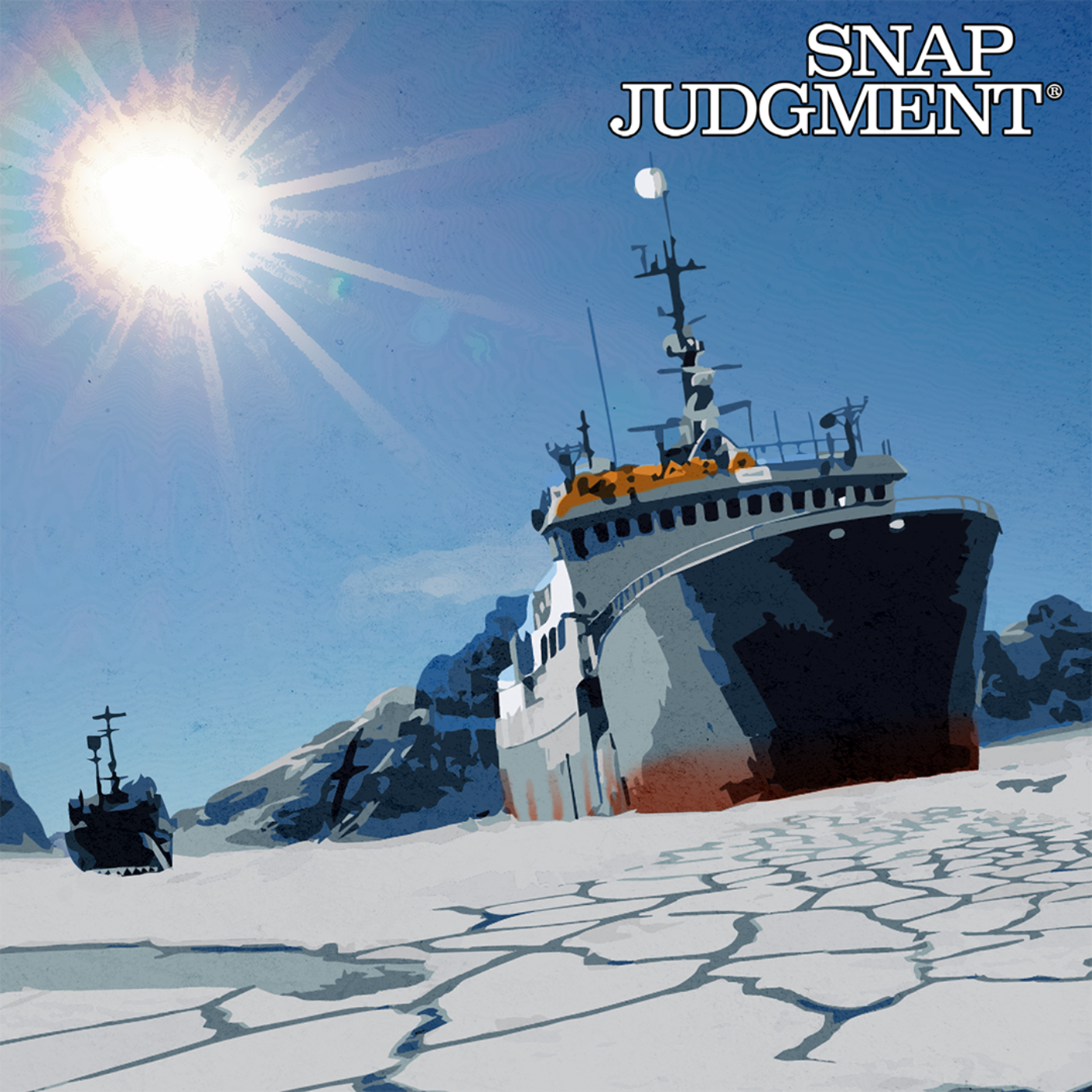
Snap Judgment
Chasing Thunder - Snap Classic
00:49:10
A group of ocean vigilantes hunts the most notorious poacher of sea bass on the high seas, known as the Thunder.
Loading summary
Transcript126 lines
- [00:03]
Glenn Washington
Snap Studios. Okay, Snappers. I'm a home cook, not a chef, not a gourmand or whatever. A cook I can throw down in the kitchen. And I'm all about feeding my people. Real food, real dinner. And there's Covid. This Covid's created a paradox. At first, everything was off the menu. Can't go to the restaurants, couldn't even find some of your favorite ingredients to cook. But then the farmers, they respond. The stuff they normally save for the high end restaurants, for the guys wearing the chef hats. Now they'll bring their stuff directly to you, if you know where to look. Fancy mushrooms, high altitude greens, the perfect peaches. You can even find your own butcher or contract with your local fisher person. And it takes a minute. But now if you can cook, if you've got some patience, everything's back on the menu. So I'm thinking it's a seafood type of day. And what was that fish I had last year in that place with that pepper sauce? Chilean sea bass. I see it listed on the website, they call it toothfish. And all I have to do is click, what could be better? Wow. Today on Snap Judgment, the epic tale behind what is for dinner. Recalling it, Chasing thunder. My name is Glenn Washington. Strap your life jacket on tight because you're listening to Snap Judgment. Now then, today's story begins in a German prison where a man is going to see his boss. This story does contain explicit language. Sensitive listeners are advised.
- [02:24]
Peter Hammerstedt
I show up at the maximum security jail in Frankfurt and present myself to the guard at the gate. I give him my ID and I go through an X ray machine.
- [02:36]
Narrator
Peter Hammerstedt is walking in to see his boss.
- [02:39]
Peter Hammerstedt
I guess the big question here now is the uncertainty of it all. He's been in jail now for some days and we don't know how long this imprisonment will last. In the entire time I've known Paul Watson, it's been being at sea with him in this space that epitomizes freedom and independence. And so meeting him in a prison, it's the antithesis of the space in which I've always known him to be.
- [03:05]
Narrator
Peter's boss. Paul Watson is the leader of the radical conservation group called Sea Shepherd. He's being held in a German prison because allegedly he had rammed his ship into a boat of illegal shark hunters, smashing it apart. So now he's facing charges. But this is just what it's like to work for Sea Shepherd.
- [03:23]
Peter Hammerstedt
We were putting our ship between the harpoons and whales to prevent it from conducting its illegal whaling Operations physically getting in the way of sealers, clubbing seals, blocking those clubs with our bodies.
- [03:35]
Narrator
You've probably heard of them. They're often in the news. They've had their own reality TV show, and they're the butt of a lot of jokes.
- [03:43]
Peter Hammerstedt
Yeah. Butters, you want to help? No, no, no, no. I got stuff to do. But I wanted to tell you, there's these fellers on tv. They go out in the ocean and try to stop the Japanese wherever they are.
- [03:53]
Narrator
Yeah, we're badass spirit.
- [03:57]
Peter Hammerstedt
Any means necessary. We're not protesters. We're pirates.
- [04:04]
Narrator
So now, for the first time, the pirate crew, the Sea shepherd, would be without a leader, which is why Peter was here to see Paul in prison.
- [04:14]
Peter Hammerstedt
And then ultimately, I'm sitting in the visitor's room across a table from my mentor, and he handed me a piece of paper. The piece of paper is handwritten and it says, peter Hammerstead will represent me. Signed, Paul. He just said, you'll be taking command of the next campaign that we're doing, and if anybody questions you, here's this piece of paper. And so when he hands me this single eight and a half by 11 piece of paper, it weighs nothing. But I feel this huge sense of responsibility weighing on my shoulders because now I'm being given this trust.
- [04:49]
Narrator
Peter is in charge of the Bob Barker, a massive ship which flies an actual black pirate flag with a trident and a hook crisscrossed underneath the skull. The ship is menacing, painted in military camo with shark teeth on the bow. And now Peter, at only 27, will represent the entire Sea shepherd fleet.
- [05:10]
Peter Hammerstedt
It is very confusing to poachers when we come across them, but a great number of them have heard of the vessel before, and the teeth and the flag reaffirm to them that they've just been found by the people they least want to be found by.
- [05:30]
Narrator
His first mission was to find a ghost ship, a renegade trawler that everyone was looking for but that no one had seen. It was called the Thunder.
- [05:40]
Peter Hammerstedt
It had been blacklisted for 10 years, and this is just the second ship in history to ever have an Interpol notice issued for them. Usually, Interpol notices are issued for persons, for war criminals and other international fugitives. And yet, for a year and a half, nobody had seen this ship.
- [05:58]
Narrator
The high seas are notoriously lawless, and the Thunder was the most persistent criminal enterprise to be found in the Antarctic. For nearly a decade, it had made more than $76 million by illegally hunting toothfish.
- [06:13]
Peter Hammerstedt
This is the Patagonian toothfish, a Fish that lives in the wild waters of the Southern Ocean off the islands of Antarctica. It's so valuable that it's known as white gold. A mile beneath the surface of the.
- [06:26]
Narrator
Southern Ocean, the toothfish swam in inky dark obscurity for thousands of years. And within a decade, the rich white.
- [06:35]
Peter Hammerstedt
Flesh was showing up in some of the world's fanciest restaurants.
- [06:40]
Narrator
But no one calls it toothfish because people at a fancy restaurant don't want to eat something called toothfish. So a merchant renamed them Chilean sea bass. And actually one of the worst things to ever happen to the toothfish was Jurassic Park.
- [06:57]
Peter Hammerstedt
Alejandro said prepared a delightful menu for us. Chilean sea bass, I believe. Shall we?
- [07:05]
Narrator
After Jurassic park topped the box office and audiences saw them eating toothfish on the big screen, they went crazy for its buttery white flesh. They nearly wiped out the entire population. And they're actually a critical part of the Antarctic ecosystem. And that is why Peter is hunting the elusive Thunder.
- [07:26]
Peter Hammerstedt
A lot of so called experts around the world said that we were wasting our time, that we would never find the ship. And even if we did, they assumed that we wouldn't be able to stop them. We don't know who the crew are and so we set off to find a ghost ship.
- [07:42]
Narrator
They took two ships to hunt down the renegade trawler. Captain Sid Chakravarti was leading the Sam Simon and Peter was at the helm of the Bob Barker. They sailed south to the most remote and dangerous waters on Earth.
- [07:56]
Peter Hammerstedt
As you head south, you pass through these latitudes. The 40s, the 50s, the 60s. They say that when you go south of the 40s, there is no law. South of the 50s, there is no God. And south of the 60s, there's no hope. And yet for toothfish, it's this bountiful place where for them is a refuge.
- [08:17]
Narrator
The Bob Barker and the Sam Simon pressed through the churning gray water as they moved through a tide of icebergs, some the size of tall buildings. And they began to search the horizon for the ship that hasn't been found by law enforcement for 10 years.
- [08:33]
Peter Hammerstedt
And so we're searching on the Binzari Bank, a place that's deep enough for there to be tooth fish.
- [08:39]
Narrator
This is a radio exchange on their first day.
- [08:41]
Peter Hammerstedt
Yeah, Jeremy, I've got a radar target about nine miles at, looks like about 11 o'clock. See if you can see anything over that way.
- [09:01]
Narrator
24 hours later, something on the radar screen caught Peter's attention.
- [09:05]
Peter Hammerstedt
It's got 100 possible targets, probably 100 of them being icebergs and yet, staring at this radar screen, I see that one of these begins moving at about 3 knots. Icebergs don't drift that quickly. And I know that we have a ship. That's a ship. Yeah. All right. They just slowed down. It's turning around the other direction. Yeah, I've got four buoys in a row right here. Around that time, I see some orange buoys in the water as we're motoring past. And I know, okay, this isn't just a ship. This is a fishing vessel. This is fishing gear. All right, we've got ourselves a fishing boat.
- [09:51]
Narrator
Peter changes course towards the unknown ship. And then he hears a noise coming from the distance.
- [09:56]
Peter Hammerstedt
I can actually hear seabirds. And I can see them diving into the wake of this ship, eating the slaughter remains from processing the toothfish. And when it's about a mile and a half on the bow, I pull down from a shelf this purple binder. That's a collection of mug shots of illegal fishing boats.
- [10:16]
Narrator
With most ships, you could get close enough to just read their name and ID them. But with poachers, that's not reliable because of this trick called the James Bond license plate.
- [10:26]
Peter Hammerstedt
They would essentially leave with one name on their stern. And then what they do is they.
- [10:31]
Narrator
Take one of these big metal plates and they hang them over the edge of the boat with a different name.
- [10:37]
Peter Hammerstedt
Once Customs and Border Protection Service would fly over one of these vessels and document their illegal activity, as soon as that plane was over the horizon, the ship would already be operating under a different name.
- [10:49]
Narrator
The Thunder is rumored to have had at least six other names, including the Arctic Ranger, Typhoon One, and the Wuhan N4. So Peter has a folder of mugshots of illegal fishing ships. He memorizes the paint schemes and builds, and then he goes to match them with the ship he sees far off in the distance.
- [11:07]
Peter Hammerstedt
I pull up the binoculars, and it starts appearing out of the fog that kept it hidden. Yeah, that's the Thunder. Yeah, we got the Thunder. I think what shocks me the most is that here is the most wanted fishing vessel in the world. Hasn't been seen for a year and a half. It's still called the Thunder, and it still has the same paint scheme. That's how audacious they were.
- [11:33]
Narrator
Peter and the crew had found the Thunder after searching for just two days.
- [11:37]
Peter Hammerstedt
When I identified it as the Thunder, I immediately go to sound the ship's alarms. That gets all of the crew out of their bunks immediately to essentially their battle stations. I have to assume that the Thunder is still actively fishing and that we may have to physically block them or physically intervene. And that means that nobody can be asleep in their beds. Everybody has a role to play. I quickened the pace of the Bob Barker to get in closer to the Thunder, close enough that they can see the name Bob Barker painted on this on the bow of the ship. And I grab the radio on Marine VHF channel 16 and make my first contact. So I grab the mic and I say, thunder, this is Bob Barker. Bob Barker, you are fishing illegally. I'm sorry, I'm sorry, I'm not speaking.
- [12:31]
Narrator
English, only speaking Spanish.
- [12:33]
Peter Hammerstedt
To which the Thunder replies, sorry, I only speak Spanish. That's very lucky because we speak Spanish as well. And so I tell them with as much authority as my voice can muster, we're conservation law enforcement. We are placing them under arrest and they are to come with us to Fremantle, Australia. To which the captain of the Thunder replies, negativo, negativo. No, no, no. And he says, you have no authority over this vessel. And what is that pirate flag that's on your bow?
- [13:13]
Narrator
So the captain of the Thunder is kind of right. Sea shepherd is basically a group of ocean vigilantes.
- [13:19]
Peter Hammerstedt
We were going to be this searchlight lighting up their criminal activity to the world. The idea being that if we had eyes on them, they couldn't change their name, they couldn't change their flag. We were going to be this loud hailer exclaiming to the world, this is where the ship is right here, right now. Someone take over this citizens arrest from us.
- [13:38]
Narrator
Now that Peter had found the Thunder, the plan was that they were going to stay by their side no matter what and force them into port or deliver them to law enforcement.
- [13:47]
Peter Hammerstedt
After the radio exchange, the Thunder changes course. And I can see in the distance that there's this heavy pack of ice ahead of them. And I feel that their strategy is going to be to try to lose us in the most dangerous way possible in the ice. And the chase is on.
- [14:09]
Narrator
As the Bob Barker begins the pursuit, Peter radios to their sister ship, the Sam Simon, and tells them, go get the nets that the Thunder left behind so that they can be used as evidence later.
- [14:21]
Peter Hammerstedt
The net is a deep sea gill net, and that means that it's weighted to sit right on the ocean bottom. Marine creatures are not going to be able to see it. And so they'll swim in, they'll get entangled, and as they try to reverse and swim back, the net has then caught their gills. It's hard to really comprehend how long this net really Is it's more than 40 miles long. That's the length of over 700 football fields.
- [14:48]
Narrator
While the Sam Simon recovers the nets, Peter steers the Bob Barker into the ice pack.
- [14:55]
Peter Hammerstedt
You can imagine this ice pack being like a broken mirror, and we have to navigate our way slowly along and around and through the broken pieces.
- [15:07]
Narrator
And it's really slow. So what would normally take hours to cross is going to take days.
- [15:15]
Peter Hammerstedt
As I'm navigating the ship, I'm in the middle of this ice field. We have to maintain a very, very slow speed to limit or try to mitigate any damage to the ship. And there's no sleep at all. I feel like my presence is always required on the bridge when I do go below decks just to use the bathroom. I always have one ear to the sounds that are happening around the ship. I'm listening to the sound of the engine to see if there's any change in the sound of that. I'm listening to the sound of ice scraping along the hull. And because the ship is made of steel, it becomes like an echo chamber that amplifies the sound of the ice just dragging along the side of the hull. And I'm really on edge all of the time because these pieces of ice are the size of cars and buses, and these are then potentially rams that might stick out that pose a danger. And by disaster, I don't mean just that the thunder gets away, but that we could breach the hull and we could take on water, and we are a far, far, far away from rescue. All of the crew are on standby as I'm picking my way through this ice because we need our damage control team ready. If. If there is a breach, a hole in the hull, then they have to quickly mobilize to try to plug that hole. So very few crew are sleeping. Everybody's listening for that welcome sound of just water lapping against the ship again, that sign that we've gotten through the ice and made it out to open water. I can see this blue band on the horizon, and I'm relatively sure that we're coming up to open water. And because we're following the thunder, the thunder is the first vessel in the chase to break free of the ice. So I push through that, and then everything changes. I can feel the relief of the crew as I hear some of them cheering from the deck. I feel like a weight is lifted off my shoulder and I can finally step down from the bridge. But that sense of elation doesn't last long at all. I look at the Weather chart. And I can tell that having not lost us in the ice, they're going to try to lose us in bad weather. It looks like the eye of Zoron in Lord of the Rings. This place saying here is where evil resides. This is the place to avoid. And with the course and speed that we're on, we're heading right into it. For every hour that passes as we approach the eye of the storm, the swell builds in size and these storms build up very, very quickly because there's very little land to break up. Almost like a runaway train that will beat you and batter you until you finally get north of it.
- [18:13]
Narrator
To pass through this region, ships typically wait on the sidelines and slip between the storms. The thunder, knowing this just pushes straight ahead.
- [18:23]
Peter Hammerstedt
When I'm in the storm, we're being turned and rolled over at 35, 40 degrees. This is where your stability is affected the most. And being on your side in bad weather is the last place you want to be. It feels like being on the elevator and that elevator is going up six stories and then as soon as it gets to the sixth floor, it drops down to the ground floor again and it's being in that elevator going up 6, dropping 6, going up 6, dropping 6. Over and over again.
- [18:58]
Narrator
Plus everything around you can become a projectile. On day six, a loud crash vibrates the front of the bridge.
- [19:24]
Glenn Washington
It's not over. When we return, Peter finds out exactly what was smashing into his ship. Stay tuned. Snap Judgment is brought to you by Progressive Insurance. Do you ever find yourself playing the budgeting game? Well, with the name your price tool from Progressive, you can find options that fit your budget and potentially lower your bills. Try it@progressive.com progressive casualty insurance company and affiliates price and coverage match limited by state law. Not available in all states. From Snap Judgment's underground lair. Welcome back to Snap Judgment. The Chasing Thought Thunder episode where Peter had just heard a very loud crash because something hit his ship.
- [20:23]
Peter Hammerstedt
I run up to the forward facing windows and I look outside and I see one of these one to two ton rubber Yokohama fenders that we have. These big, big essentially almost like balloons if you can imagine them. This has come loose and like a big black wrecking ball is swinging around the deck.
- [20:43]
Narrator
Peter decides to send his crew out to try and secure the wrecking ball.
- [20:48]
Peter Hammerstedt
I'll suit up. Bridge, go ahead if you're ready for us. Okay. As soon as you get to the forward facing bit of our superstructure, you need to clip in right away. It's not as if they're just Going onto the deck of a ship, you gotta imagine that they're almost at the top of a skyscraper. The danger of falling overboard is almost as real in terms of the likelihood of death. And therefore I'm on the radio with the crew going out on deck. Make sure you're always harnessed in. Make sure you always have one point of contact with the ship. The crew are struggling to move back on the ship. And because they're concentrating on putting one foot in front of the other, it's up to me to really look at what the waves are doing.
- [21:39]
Narrator
They make it to the fender and scramble to get it into place. And just then Peter sees a monster wave coming.
- [21:45]
Peter Hammerstedt
And so I get on the radio and I tell them, here's a big one, it's coming. Hold on tight. And it's white knuckle and brace for impact. Hold it, hold on, hold on. The wave smacks against the side of the ship. We roll over 40 degrees and all I see is white in front of the window looking ahead. All of my visibility obscured as the ship rights itself. I see that they're still holding on. They're able to tie down this fender.
- [22:17]
Glenn Washington
One, two, three.
- [22:20]
Peter Hammerstedt
There you go. Push it. And they then scramble back into the ship.
- [22:26]
Narrator
All safely inside.
- [22:27]
Peter Hammerstedt
Peter, all safely inside. Close down the hatch and they're safe. After three days in this terrible weather, we emerge from the storm and I can feel the mood of the crew lift. And although there isn't a single seabird in sight, there's almost this psychological feeling that you can almost hear birds chirping. That calm has come.
- [22:58]
Narrator
On the 20th day of their pursuit. Peter had chased the thunder through a broken field of icebergs. He chased them through raging winds and five story waves all the way to the warm waters of the Indian Ocean, always right on their tail. When suddenly the thunder stops, cuts its engines and gives up running. It just sat there drifting, waiting.
- [23:25]
Peter Hammerstedt
There's this great uncertainty. We don't know how long the thunder will drift for. It feels like the First World War and the trench warfare where the two warring parties just covered no ground at all. Spent most of the time just looking at each other and shelling one another's positions, but not gaining one way or the other. Nothing has changed.
- [23:48]
Narrator
It seemed like the thunder had a new plan. They were going to try to wait out Peter.
- [23:53]
Peter Hammerstedt
I'm woken up at 2 in the morning. It's almost a daily thing that the thunder captain drunk calls the Bob Barker simply to call me a piece of shit or say something terrible about my Mother. And to every radio call he gives me, I'll just say, thank you for your time. I appreciate it. And I just kind of let him rant.
- [24:19]
Narrator
The crew had not planned for this kind of hunt, otherwise they probably would have brought more board games.
- [24:25]
Peter Hammerstedt
I play Settlers of Catan, this board game, with some of the crew, but there's really only so many times you can play it.
- [24:31]
Narrator
After a few days, Peter realizes that this might not be ending anytime soon. So he starts to figure out his fuel reserves to see how many days they can actually stay at sea.
- [24:42]
Peter Hammerstedt
Now that our engine was shut down, we were only consuming what the generator was burning. I was able to calculate that if the thunder drifted indefinitely, then we could be out at sea for over two years. And that was a dreadful thought.
- [25:01]
Narrator
Most of the members of the Sea shepherd crew are actually volunteers. So Peter decides to give them the option of leaving on their sister ship, the Sam Simon, or staying here in the standoff indefinitely.
- [25:14]
Peter Hammerstedt
And I remember bringing them all together into the mess, the dining area of the ship, and having a meeting where I said, okay, well, here are the two options. Either you can move on to the Sam Simon and you can be home in two weeks, or you stay on board the BAAL Barker. We remain at sea possibly for two years, with no guarantee of how this will turn out. We could have a mechanical issue a year and a half from now. That makes us lose the Thunder. We could escort them into port two years from now, and the government, in whatever port we end up in, could release the ship, and there's no repercussions whatsoever. And yet we put two years of our lives into this. But we are in the best possible position that we can be to shut them down. And if nothing else, every day that we're with this ship is a day that they're not able to post toothfish. If that's all we accomplished, then that's something. And I gave them 24 hours to think about it.
- [26:06]
Narrator
Peter decided that no matter how many people left, he would keep up his pursuit. But he hoped that his crew would stay with him. And after 24 hours, he found out only 10% of his crew chose to leave, and the Bob Barker stayed at the Thunder side.
- [26:24]
Peter Hammerstedt
I had a lot of strength and a lot of support from the other 26 people who were willing to see this through to the end. And I wasn't going to let them down. I wasn't going to let Paul Watson down, and I wasn't going to let our supporters down either. And I wasn't going to let the tooth fish down.
- [26:40]
Narrator
So they dug in for the long haul and rationed out their food.
- [26:44]
Peter Hammerstedt
We're starting to enter this new phase of eating on board where the food is more rice and beans, and that becomes more apparent with every meal that were served as there's less and less lettuce on the plate.
- [27:00]
Narrator
So, yeah, they're vegan pirates. But despite the lack of lettuce on their plate, they still planned a Super bowl party on the 50th day of their chase.
- [27:09]
Peter Hammerstedt
I was watching the super bowl with the crew. The galley had spent all day making football super bowl snacks, and it was down to the last four minutes of the game. It was the New England Patriots against the Seahawks, where everything was decided in those last four minutes. It had taken us three or four days over our satellite connection to get the super bowl, and there had been a pact among the crew that nobody was allowed to ask at home who the winner was. And four minutes before the game was over, I was radioed. I was told to come up to the bridge, and for whatever reason, after 50 days of pursuit, the Thunder had decided when there was just four minutes left of the super bowl remaining to start fishing again. I remember seeing their trawl door open, their deck alight. We gotta get ahead of them and Annette, then come out. It was a sprint to get there with the ship. Get some life jackets on, get out on the bow with the people. You need to do it. Grab a radio. Yeah, I've got a radio. I had several crew members lined up on the bow with grappling hooks ready to fish it out of the water. Four or five grappling hooks went over the bow into the water. Got it, Got it. Pull it up. Come on. The first hook, the line was snagged. They pulled it up onto the bow, and at that moment, I see the Thunder turn around where they are now. Dead ahead, Dead ahead, Dead ahead, dead ahead. Yeah. Tell them to hurry up because the Thunder's coming at us. Peter says, hurry up. The Thunder's turned back towards us. Over. The Thunder captain radios the Bob Barker, and he says, we're going to take our gear back, either the easy way or the hard way. And I interpret that to mean that he's going to ram my ship. They're going to come in pretty aggressively now.
- [29:17]
Narrator
Yep. Peter had been a pirate for a decade, but he'd never been in a situation like this.
- [29:23]
Peter Hammerstedt
The Japanese whaling ships we chased could be quite aggressive, but there was also a bit of restraint there because they were backed by a government they were also concerned about public perception and public relations. I didn't think that they were going to kill us, for example, but with the Thunder, this is an operation that's tied not to a government but to a criminal syndicate. And we don't know how far they'll go to protect those commercial interests. And at that moment, I radio down to the crew and I say, cut it from the ship. Cut it from the ship. We gotta. We gotta go. I'm dead in the water. Tell them to tell us as soon as it's up and cut free from the ship. Boy, could you please tell us as soon as we are free from the mine? Over.
- [30:13]
Narrator
The Thunder is barreling down on the Bob Barker. So Peter throws the engines into reverse.
- [30:20]
Peter Hammerstedt
Standby for possible impact. That's going to be close. We narrowly miss. And I watch from the bridge of my ship as the bow just passes a couple of feet from the stern of the Thunder. As they go across. We're so close that I can see the crew on the Thunder and I can make out the expressions on their faces. Nice, Peter. That must have been a meter. I could have jumped at it.
- [31:05]
Narrator
The chase was back on and on. Day 62, 400 miles from South Africa. Peter looks out to see thick black smoke rising off the Thunder.
- [31:15]
Peter Hammerstedt
When I see them burning on the deck of their ship, it's an eerie sight that almost looks like an offshore oil rig burning off gas. They're destroying the evidence on board. And maybe we won't have enough evidence to get them for this crime. I'm left with no other choice but to sit by and watch as possibly years off their senses or millions of dollars off their fines is disappearing.
- [31:42]
Narrator
The fire burns for two days. And on the Bob Barker, Peter and his team come up with a plan.
- [31:48]
Peter Hammerstedt
If the Thunder goes into port, having burned all the physical evidence that was on the ship, then the only thing that we really have to go off of is the testimonials of the Indonesian crew. And those testimonials can be influenced. The captain can coerce the crew, so we have to get to them first. So Sid and I come up with this idea of delivering this message in a bottle.
- [32:11]
Narrator
So they clean out a dozen peanut butter jars, add a little rice for weight, and in each one they put a note.
- [32:17]
Peter Hammerstedt
We should work together. We have more fuel and food than the thief. The captain and the owner must be brought to court to answer for their illegal fishing. Any information about the names of the officers and the owner of the ship will greatly help us. Sincerely, me, Captain Bob Barker.
- [32:33]
Narrator
Then Peter sent out his team on a speedboat to launch the Jars onto the deck of the Thunder.
- [32:38]
Peter Hammerstedt
As my crew is throwing these messages in a bottle onto the deck of the Thunder from the small inflatable boats. Balaclava's coming out. He's out. He's out. Balaclava man's coming out. I see a large built man wearing gray sweatpants and a balaclava on his face come out onto deck. Balaclava man's got something to throw. And he immediately starts throwing metal implements at the small boat team. A bit of chain whizzes by the head of our ship's photographer. A bolt the size of my fist comes and hits him in the groin.
- [33:21]
Narrator
Fearing for the safety of his crew, Peter radios them back.
- [33:24]
Peter Hammerstedt
Get my breath. You okay?
- [33:27]
Glenn Washington
Yeah.
- [33:29]
Peter Hammerstedt
There was a bolt about 3, 4 inches in diameter straight at me. Just hit me right on the inside of my groin. He threw a bolt at you? Nuts. Yeah. He's a pretty good shot, that guy. You're okay? Yeah, it was cool. I mean, it bounced right off into the water, unfortunately.
- [33:47]
Narrator
Day 110. The crew is fatigued and restless. Peter is sick with the flu when he gets a call to the bridge.
- [33:56]
Peter Hammerstedt
I'm woken up around 6:30 in the morning because my bridge crew sees that the Indonesian crew on the Thunder are walking around wearing life jackets. And I grab a pair of binoculars and I stare intently at the scene that's developing in front of me and then notice all of a sudden that one of their life rafts goes overboard. That's their distress call.
- [34:37]
Glenn Washington
Don't go away. Snappers. When we return. This doesn't end the way anyone expects. Stay tuned from snap Judgments Orbiting hall of Justice. Welcome back to Chasing Thunder. My name is Lynn Washington and when last we left, Peter had just heard the mayday call from the thunder.
- [35:19]
Peter Hammerstedt
That's their distress call. He said he's got a problem in their sinking, he's got a problem in their sink. 15 minutes is it. It's not gonna sink in 15 minutes. Just keep doing circles. We gotta get a boat in the water.
- [35:44]
Narrator
As the thunder starts listing, Peter surveys the weather and it's calm as can be. There's hardly any waves, there's hardly any wind. And the ocean is really deep at this point. So it's impossible that they're strange.
- [35:59]
Peter Hammerstedt
I'm immediately skeptical. I see that some of the Indonesian crew are going down the rope ladder into the life raft. They're clearly abandoning ship. We're not respecting the law like this. Come on, tell him we're the all scene coordinator. We're dealing with this the safest way possible. Tell him to take care of his sinking ship. The captain of the Thunder has set his crew adrift, but he's delaying abandoning the ship himself. Very, very strange behavior for somebody who wants to be rescued. Once I see the water reach the hauling area on the Thunder, I know that the vessel for certain is going to sink. I suspect that the Thunder captain refuses to leave the boat because he's probably sinking his own ship. Yeah, they don't want anybody to get the boat. The boat's evidence, and he wants to ensure that the vessel will actually sink before disembarking. It's just a real desperate move, no matter how you look at it. With the ship sinking, is all of the potential evidence on board. The tooth fish computer hard drives, nautical charts, all of the things that I hoped we'd be able to present to Interpol that we'd be able to present to the authorities and the port of whatever country we would eventually end up in. Tell him get the rest of his crew off so we can take all of them on board. Tell this son of a bitch. Tell him his crew have attacked my crew. We cannot take them on board until I know that all 40 people are on the life rafts. We can deal with all of this later. Tell him to get off his boat so we can take him on board. We're going to argue about this for an hour while he's sinking.
- [38:09]
Narrator
But then the captain of the Thunder quickly scrambles down the ladder and jumps into the life raft. Peter radios Sid, the captain of his.
- [38:24]
Peter Hammerstedt
Sister ship, putting somebody on the Thunder to see if they've left any paperwork behind on the bridge. I think that's a great idea. Before she lists any further. Okay.
- [38:36]
Narrator
The chief engineer of the Bob Barker, volunteers to board the sinking ship.
- [38:40]
Peter Hammerstedt
I tell him that it's gotta be his choice. I can't order him to do it. But I also know that I'm ultimately responsible for all of these people. We're so close to getting these guys, and I can't stomach the idea of seeing all that potential evidence going underneath the surface of the water. So I'll approve it if he can find two other volunteers. And those other two volunteers come very quickly. We have to scramble quickly because we don't know how much time we have before the ship sinks. The captain of the Thunder is now in a life raft. He looks elated to be off. He thinks that he's gotten away with it. And I see that demeanor Change very, very quickly as he sees my crew scramble up the pilot ladder onto the side of the ship and getting on board.
- [39:32]
Narrator
In his last communication with the volunteers, Peter tells them to radio every five minutes and no matter what, get off the sinking thunder in 10.
- [39:41]
Peter Hammerstedt
The reason I choose such a small window is because it's past the point of no return. And so we're running against the clock. It happens almost in the blink of an eye that they're on the deck and then inside the ship that we'd been pursuing for 110 days. And then we are laying claim on this vessel and anything on board.
- [40:03]
Narrator
They've officially become pirates. Yeah, we're badass.
- [40:11]
Peter Hammerstedt
Any means necessary. We're not protesters, we're pirates. It's going down fast. Let's give him another five minutes on board and let's get these guys off. All right. I don't want them to stay on too long. My crew go right for the bridge. That's where they're going to find nautical charts, computer hard drives, and they basically turn the place upside down trying to grab evidence and stuffing it into big black garbage bags to be brought back to the Bob Barker. I really want these guys to disembark. Yeah, they're supposed to be leaving now. And after about 20, 25 minutes, finally one of them appears. They throw some evidence in a plastic bag into the small boat. Let's have these guys get off and going back. I'm thinking, no, no, no, get back onto the boat. We don't have enough time. Leave what you have and you've got to get out. We don't know where that critical point of no return will be, where the ship actually capsizes. Irwin, Irwin, Bob Barker, get off that ship. Is there any way we can get to the engine room to try and stop this from sinking? Room's this way. I guess if they're in the engine room or if they're in the fish hole, then all of a sudden they may almost upside down and they won't be able to escape and this ship will become a coffin. And not only that, but even if they were able to get off just last minute, the force and pull of that vessel going down may pull them down with it. And so they need to get off that ship as soon as possible. Are they still on the boat? Yeah, they have been told repeatedly to get off and they're really drawing it out. Gemini. Bob Barker, bridge. Yeah, this boat's going down much quicker now. So get them off.
- [42:10]
Narrator
But the three volunteers scrambling around the sinking thunder Are searching for one last piece of evidence. A dead toothfish.
- [42:18]
Peter Hammerstedt
The vessel is leaning more and more, and because the water has now completely submerged the engine room of the thunder, there's no generator working, so the ship is in a blackout. My crew are working their way through unfamiliar compartment down to unknown corridor. Using just their flashlights and headlamps and.
- [42:39]
Narrator
Hero cams, they record damaging evidence on their cameras.
- [42:43]
Peter Hammerstedt
Clean the place out. They see that every door that they go through is open, which means that this vessel was rigged to sink. That the captain had ensured that water would be able to freely move from one area of the ship to the other, flooding compartment after compartment.
- [43:04]
Narrator
That also means they're taking on water faster and faster, and they need to get off the thunder. But they still haven't found their dead tooth fish.
- [43:13]
Peter Hammerstedt
When my chief engineer enters the fish hold, the deck of which is slick and wet, he slips and falls and hits the deck. He slides down the incline almost like it's a water slide and smashes against the side of the wall. And that's where they see toothfish for the first time. That's all toothfish there. We say bags and bags. Take a bag. Just take a bag. Just keep it. Anything, okay? They grab one of the toothfish about four or five feet in length. They grab it, put it in a bag, and then they're ready to disembark the sinking thunder. Roger. Good job. Finally, after 37 minutes on board, they get into the small boat and come back to the safety of the ball barker with the net confiscated by the Sam Simon. With the evidence that we were able to secure from the sinking thunder, we had the best possible case that we could to seeing a prosecution of the captain. It wasn't anywhere near as watertight as escorting the thunder into port, but we had as much evidence as we could gather.
- [44:32]
Narrator
Now there's nothing left to do but watch the ship go down.
- [44:37]
Peter Hammerstedt
Attention, all crew. Attention, all crew. Looks like the thunder's going down.
- [44:45]
Narrator
That's insane.
- [44:46]
Peter Hammerstedt
That's fucking radars and antennas and thousands of dollars worth of gear. They're just sinking it. It's hard to fathom. In a way, it just shows how much money they're making. I know they're just willing to give all this off. We see this vessel go from leaning over to one side to then going stern down into the sea. And now it's just a bow, the front of the boat sticking up skywards. This looks like a. A monolith, this vessel sticking up vertically in a way that ships aren't Meant to stand. It's a beautiful sight to see a ship that had been pillaging the Antarctic for 10 years sinking. Oh my God. Time is 12:52. 12:52. The thunder is gone.
- [45:48]
Narrator
They had traveled more than 10,250 miles, burned through 300 tons of diesel fuel, with over 60 crew members working across two ships day and night for 110 days. And it had come down to this. 33 tons of frozen toothfish in plastic bags in a massive steel ship sitting on the ocean floor for eternity. And Peter saw it as a big win. But so did the captain of the Thunder.
- [46:16]
Peter Hammerstedt
My small boat crew reported that the captain of the Thunder was elated. And for a captain who had just lost his ship, he was pumping his fist to the air and cheering. And the rest of the crew were chanting, thunder. Thunder. Thunder. Thunder. As the ship sank below the waves.
- [46:52]
Glenn Washington
The Indonesian crew of the Thunder was flown back home. The Thunder's captain, the chief engineer and the second mechanic were tried and convicted of forgery, pollution, damage to the environment, and recklessness. They were also collectively fined $17 million, but were mysteriously released even though their appeal had failed in court. Thanks so much to Peter Hammerstead for sharing historical snap. We first heard about this story thanks to the reporting of Ian Urbina and his book the Outlaw Ocean Journeys across the Last Untamed Frontier. It's got the complete Sea shepherd story and so much more. And finally, Big Banks to Brick City TV and Mark Benjamin for sharing the audio from their documentary Chasing the Thunder. To find any of these links and more, go to our website snapjudgment. The original score for this story was by Renzo Gorio. It was produced by Nika Sing It Happened again. Snap Nation. If you missed even a moment of this epic tale of the high seas, subscribe to the Snap Judgment podcast to hear it all and get so much more. And if you love SNAP storytelling, storytelling that is made for all the fish in the sea, support it, go to patreon.com snapjudgment and help us continue telling amazing stories. Patreon.com snapjudgment Snap is brought to you of a team that always knows exactly where to weigh anchor. Except of course for the uber producer, Mr. Mark Ristic, Ms. Pat McIntyre Miller, Anna Sussman, Renzo Gorill, John Fasile, Shayna Shealy, Marissa Dodge, Nika Singh, Liza Smith, Lauren Newsome, Tayo Dakot, Flo Wiley, Nancy Lopez, Regina Badiaco and Leon Morimoto. And this is not the news. No way is this news. In fact, you could chase your mortal enemy across the seven seas finally have him in your grasp Only to watch him fly Fly away from your outstretched hands as you look up to see he is just a boy A boy with could it be a fairy on his shoulder? What's this? And all of that all of that could happen and you would step still not be as far away from the news as this is. But this is prx.