← Snap Judgment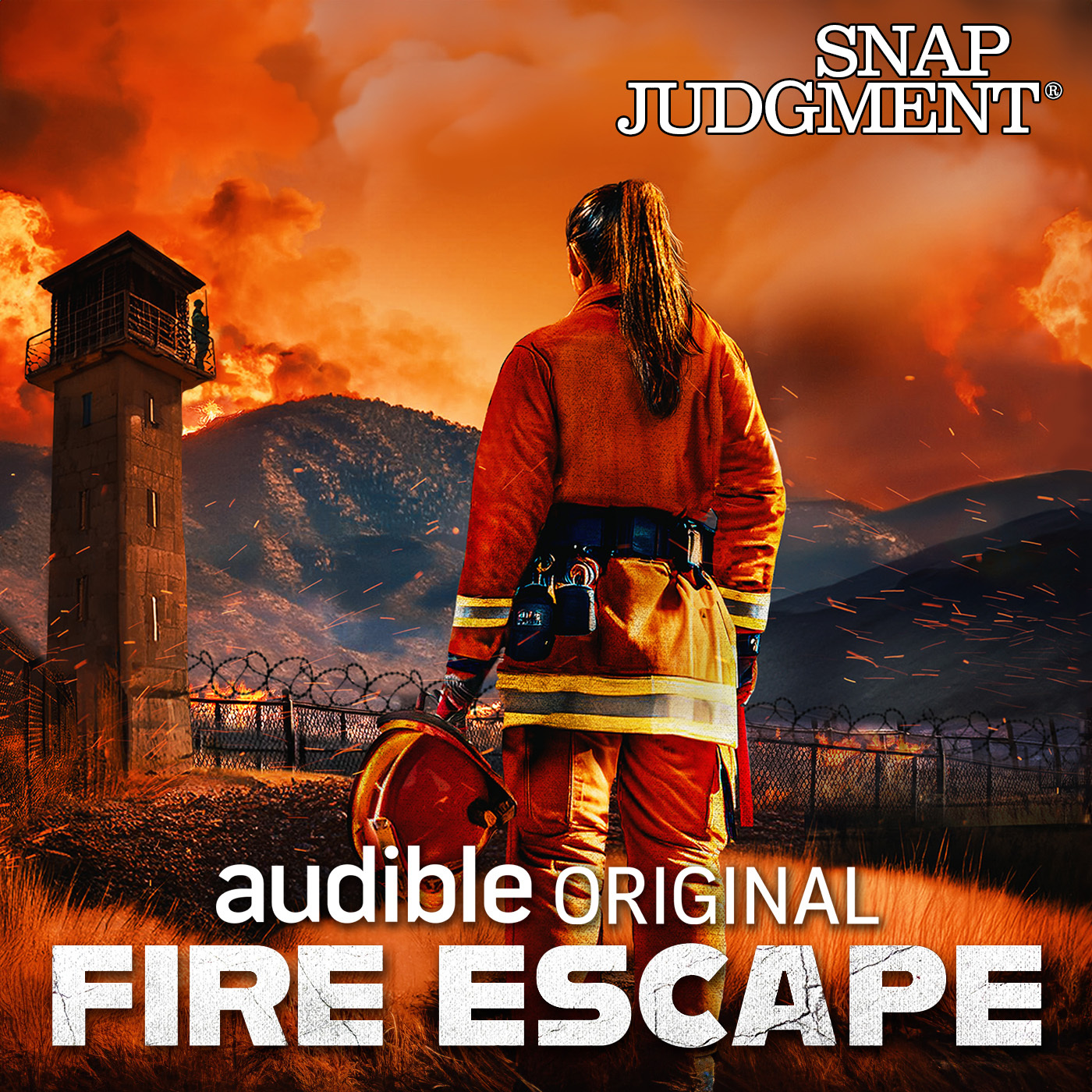
Snap Judgment
Fire Escape: Reckoning EP4
00:35:40
Amika and the Fire Girls are called to the scene of a terrible crash to rescue the passengers from the wreckage. Amika realizes the driver of the car is intoxicated. While saving his life, she reckons with lives lost and the harsh future awaiting the young patient. Back at the firehouse, Amika’s crew are called out to a Christmas Eve emergency.
Loading summary
Transcript169 lines
- [00:03]
Narrator/Host
SNAP Studios Snap Judgment is brought to you by Progressive Insurance. Do you ever find yourself playing the budgeting game? Well, with the name your price tool from Progressive, you can find options that fit your budget and potentially lower your bills. Try it@progressive.com Progressive Casualty Insurance Company and affiliates Price and coverage match limited by state law not available in all states. Okay, if you're a billionaire you can skip this part. But if you're not, if you don't appreciate putting your paycheck into a bank only to see it immediately zapped with fees for this, with fee for that and the fee on the fee, you should know that Chime is changing the way real people bank Fee free and smarter banking built for you Because Chime isn't just another banking app. They unlock smarter banking for everyday people with products like MyPay giving you access to up to $500 of your paycheck anytime and getting paid up to two days early with direct deposit. Some banks still don't do this. And yes, I wish the younger me would have learned about this a long time ago. Chime is not just smarter banking. It is the most rewarding way to bank join the millions who are already banking fee free today. It just takes a few minutes to sign up. Head to chime to.com snap that's chime.com
- [01:31]
Progressive Insurance/Chime Ad Voice
snap Chime is a financial technology company, not a bank. Banking services and the secured Chime Visa credit card are provided by the Bancorp Bank NA or Stride bank na. Optional services and products may have fees or charges. See chime.com feesinfo terms apply. Limited time only. Must open the new account and complete qualifying activities to earn rewards. Advertised annual percentage yield with Chime plus status only. Otherwise 1% APY applies. No minimum balance required. Chime card on time Payment history may have a positive impact on your credit score. Results may vary. See chime.com for details on applicable terms.
- [01:55]
Narrator/Host
Welcome back. We're bringing you episode four of our Fire Escape series. Sensitive listeners are advised.
- [02:05]
Narrator/Storyteller
Amika was sitting in the captain's office. She'd only been at the prison firehouse for a few months and she'd already gotten reprimanded once. She was on very thin ice. If she got caught doing anything out of pocket again, she'd be sent back inside prison.
- [02:21]
Anna Sussman
The two fire captains looked at her
- [02:22]
Narrator/Storyteller
and told her they'd been carefully watching her and they said she was getting promoted to the top position at the firehouse.
- [02:31]
Anna Sussman
Engineer.
- [02:38]
Fire Captain/Interviewer
We knew that she had a medical background and anytime that we have somebody that comes out here with A medical background is very helpful. So, yeah, she was very good. All that stuff, all medical stuff, not just being a midwife delivering babies, but she was just bright. And it's a leadership role here in the house for the other inmates.
- [02:59]
Amika Mota
You know, I was honored to be in that position. And it also shifted. I felt very responsible and it felt important to me, and I didn't want to mess it up.
- [03:10]
Anna Sussman
As engineer, Amica now held the lives
- [03:12]
Narrator/Storyteller
of the crew in her hands.
- [03:15]
Amika Mota
You had to be really good at
- [03:16]
Jody Veerse
kind of learning about the incoming calls, catching what they said, because you have to be writing it down. That's my job, is to write down the incoming call and where we're going and then navigating. And then the other thing that I had to learn is how to do all the controls on the control panels on the fire engine. So because I was in charge of the water and the pressure and getting the girls what they needed and basically directing the whole fire scene, we were watching for any kind of approaching danger or any risk that your crew is in.
- [03:49]
Narrator/Storyteller
She had to know every dial, every hose attachment, every protocol perfectly.
- [03:55]
Amika Mota
It was a big. A big jump, you know, from being like a baby firefighter just barely learning to now running a crew. I had this big level of responsibility because if anything goes wrong, they look to you as to why it went wrong.
- [04:12]
Anna Sussman
From Wondry and Snap Studios at kqed, I'm Anna Sussman, and this is Fire Escape, the story of a woman whose world burned down and then she learned to fight fire from behind bars. This is episode four, Reckoning. As engineer, Emiko was training all day.
- [04:32]
Narrator/Storyteller
When she wasn't training, she was working out, and she'd be sent out on multiple calls most days.
- [04:38]
Amika Mota
Yeah, there's actually another call that I never talked about that is pretty big.
- [04:44]
Narrator/Storyteller
The call came in at about 3 o' clock in the afternoon, and that timing would be important. The speaker mounted on the walls of the prison firehouse went off, and Amica and the other firefighters dropped what they were doing, jumped into their boots and hopped on the truck. They rolled out of the prison, and as engineer Ameca navigated them to the scene,
- [05:07]
Amika Mota
it was a back road. And we arrived at the call and could see a car on the side of the road that had smashed into, like, a utility. A wooden utility pole. The airbag had been deployed and you could tell that there was somebody in the car. Nobody moving. Right. So we pull up behind the vehicle, jump out,
- [05:38]
Narrator/Storyteller
and right away they can see that the driver, the only person in the car, has Died. She's leaned over the airbag. Amica tells the other firefighters that they
- [05:48]
Anna Sussman
have to wait for the coroner to
- [05:50]
Narrator/Storyteller
arrive before they can do much.
- [05:52]
Anna Sussman
So they stand there in their gear
- [05:54]
Narrator/Storyteller
in the hot sun.
- [05:57]
Amika Mota
It's like in the middle of, kind of, I would say, fields or something. There's like, her personal belongings around. And so we're kind of trying to, like, look and see if we could see who she is. And the most vivid memory is the heat, the smell, and the flies. It was this hot day,
- [06:15]
Jody Veerse
you know,
- [06:16]
Amika Mota
like, we're trying to, like, get the flies off of her, you know, it didn't do much good. And it's always strange to, like, be looking at somebody that is not there anymore and, like, trying to determine if their spirit is there, if it's gone, and kind of like navigating, like, dealing with the body. So it's in the afternoon. It's like three. Three o', clock, school pickup time. And so we see this school bus approaching, like, from down the road, because it's a country road, so we could see it a ways coming. And we hadn't draped the car yet.
- [07:01]
Narrator/Storyteller
Draping the car means pinning up these big yellow sheets around the scene of the accident so passersby don't see something traumatizing and also to protect the dignity of the dead inside. But this school bus was approaching down the highway, and they realized they hadn't draped the car yet. The scene was still totally exposed.
- [07:23]
Amika Mota
It was like, oh, God, like, what if she has the baby on that bus? Can you imagine, like, these children rolling by and somebody recognizing a car that belonged to their mom?
- [07:37]
Narrator/Storyteller
So Amica and the firefighters scrambled to quickly get the yellow sheets over the car. And they finished just as the school bus was approaching.
- [07:45]
Amika Mota
The school bus rolls by. The kids have their little hands and faces plastered to the window because everybody's looking out to see what just happened. You know, they see the fire truck and the lights, and they see a vehicle run into a pool. And, yeah, that vision is vivid and clear. I don't think I'll ever forget that. Like, slow motion, slow motion.
- [08:10]
Anna Sussman
When the coroner came, Amica and her
- [08:12]
Narrator/Storyteller
team began the work of extracting the woman from the car.
- [08:17]
Amika Mota
Just excruciating. It was so hot, and we were in our full gear, you know, and so I remember pulling her. She was very heavy.
- [08:28]
Narrator/Storyteller
The firefighters gathered around quietly.
- [08:35]
Amika Mota
That was always something that was really beautiful to me about our crew was there was always something that was a little. We approached things just a little bit differently than the men and I think we were able to hold space a little bit more for just the presence of death in and what that meant to all of us.
- [08:55]
Narrator/Storyteller
When the coroner got to work, the fire crew was dismissed. They drove back to the station, and when they got there, they cleaned themselves up and washed down the truck. And a few days later, a firefighter named Frankie came in. Frankie was from a nearby firehouse and would come by a lot. Frankie said he'd learned that the child of the woman who died in that car was on the school bus and had seen the accident.
- [09:19]
Amika Mota
We're all envisioning what it would be like for our own children to roll by and see her car and then to have the news broken to that child that they lost their mom. And I'm grateful that we were able to cover the car and drape it before the baby would have seen Mom. Like
- [09:43]
Narrator/Storyteller
Amica and the incarcerated responders at Station 5 almost never found out what happened to the people they treated, the people they pulled from cars or escorted out of fires. They'd be with them in those life and death moments, and then they'd drive back to the prison and, like, you
- [10:00]
Another Firefighter/Interviewee
feel deeply connected to someone and you
- [10:03]
Jody Veerse
have a job and you finish your
- [10:04]
Another Firefighter/Interviewee
job and you move on, right? I could love you up for in
- [10:09]
Amika Mota
that minute and then be gone. And, like, I remember my midwife saying that too. Like, midwives are fickle lovers. Like, we love you. And then we leave.
- [10:20]
Narrator/Storyteller
And then something almost unheard of happened. About 30 days later,
- [10:27]
Amika Mota
we are at another car accident. Early morning car accident with a father and his two children.
- [10:36]
Anna Sussman
It wasn't a terrible accident. Everyone was okay.
- [10:39]
Narrator/Storyteller
They were just a little shaken up. So Amica took the kids and brought them over to the fire truck and
- [10:44]
Jody Veerse
sat them down, checking in, keeping them calm, keeping them comfortable. We would keep, like, little tiny bears in the truck to give to kids and things like that, you know, just to keep them calm and warm and safe.
- [10:57]
Amika Mota
And then so I'm comforting the kids on this call, and one of the babies starts crying and is like, my mom is gone. I was like, oh. And then it all starts connecting those children. That was their mom. So 30 days before, the dad explained
- [11:17]
Narrator/Storyteller
that these were the children of the woman whose body Amica had covered up in the car. The children who passed by on the
- [11:25]
Jody Veerse
school bus, we had tended to this little one's mama. And we did that with, like, a lot of tenderness and grace.
- [11:35]
Amika Mota
It was a really sad car accident.
- [11:37]
Jody Veerse
And then to be down the road, you know, like the arms of a child that's with you that doesn't have their mama anymore and you're connecting at all.
- [11:48]
Amika Mota
It felt like there was this spiritual,
- [11:51]
Jody Veerse
beautiful thing that happened. Right? I just, I felt right and I felt heartbroken all at the same time because it was painful and horrific and the moments are fleeting.
- [12:05]
Another Firefighter/Interviewee
And anytime we get to
- [12:09]
Jody Veerse
connect and
- [12:11]
Amika Mota
just be there for each other as
- [12:12]
Jody Veerse
humans, like, that's a blessing. And I got to be me for that moment.
- [12:21]
Another Firefighter/Interviewee
I got to be loving and kind of and nurturing and warm, and I got to be all the things that I wasn't anymore when I was in
- [12:35]
Jody Veerse
prison or away from my own kids.
- [12:49]
Anna Sussman
Don't go anywhere.
- [12:50]
Narrator/Storyteller
The story continues right after this break.
- [13:05]
Anna Sussman
Welcome back to Snap Judgment. This is Fire Escape, the story of
- [13:09]
Narrator/Storyteller
a woman whose world burned down, and then she learned to fight fire from behind bars. Figuring out how to be a mother to her own kids seemed almost impossible. Sometimes she'd find herself just staring at the payphone or avoiding it altogether. She said even more than the ongoing humiliation by guards or being punished arbitrarily, it was moments of trying to connect to home that were the hardest.
- [13:36]
Amika Mota
It was the moments when my papa would be telling me about what happened with my kids, and I couldn't do a damn thing about it. Sometimes you don't even want to call home because it's just. That's too much, you know?
- [13:51]
Narrator/Storyteller
She knew that she was missing milestones, and that year after year, she was missing their lives. Like, one time, it was her youngest daughter's birthday, Blossom and Amica called home to wish her a happy birthday.
- [14:03]
Amika Mota
And they had scheduled a birthday party for her. And so, you know, she had been excited telling me about this party. She really hadn't had a party for ever.
- [14:17]
Blossom (Amika's Daughter)
I was excited to have my little birthday party, and it was gonna be like a sleepover, do little games, you know, have a summer party.
- [14:28]
Narrator/Storyteller
Blossom was six years old when Emika went to prison. Now she's grown.
- [14:32]
Blossom (Amika's Daughter)
I remember loving to play that game where you put the donut on the string and you have to eat it. Yeah. Eat it. With no hand.
- [14:43]
Amika Mota
She never. My daughter was, like, super introverted and kind of, she just, we were so connected. That baby was by my side all the time. I mean, she never knew a day away from me. She was, like, literally connected to me at all times. And so when I got locked up, she wouldn't let anybody hug her. She just wouldn't allow folks to connect with her. And so it was kind of a big deal that she had connected with some friends, even, because she, even with her peers and, you know, kids her age, she just was very distant. And so it was a big deal that she had connected with these other kids at school.
- [15:29]
Blossom (Amika's Daughter)
I went to school with a, like pretty bougie white, you know, like nobody else's mom was in prison.
- [15:40]
Amika Mota
One of the parents found out that I was incarcerated and found out about my crime and shared that with the other parents. And so, you know, the kids that were coming to her birthday party, they weren't allowed to come.
- [15:57]
Blossom (Amika's Daughter)
And I remember being so mad, so mad.
- [16:02]
Narrator/Storyteller
She wasn't mad at her mom. She said she was mad that other people had the chance to make her feel less than.
- [16:09]
Blossom (Amika's Daughter)
Because this was my norm. My mom being locked up. That was my norm, is that she wasn't in my life and she wasn't. She was away.
- [16:18]
Amika Mota
You know, my daughter wore this coat around of like the girl whose mom was locked up. It was just like, what have I done? I think that that was a moment for me that I, you know, just wearing the shame of what I'd done to my. My kids was really, really present. I think it was a huge moment for me of like, needing to remind my kids about who I was.
- [16:51]
Blossom (Amika's Daughter)
I remember being pretty little and no one really talked to me about it. I actually looked it up. I googled was. It was tragic. I remember in the articles, like,
- [17:08]
Amika Mota
his
- [17:09]
Blossom (Amika's Daughter)
family was just so sad. I don't know what to think about that. Cause it's like my mom from there from this point of view, it's like this menace, crystal meth addict, you know? You know, like, gets in car crash and a man dies. Like, I see it from that side, but also it's like, oh, that's my mom. Honestly, it was. It's really hard for me even now to even relate that to my mom. And I loved getting letters from her and I. I loved her. And she was always. It was different than anybody else. You know, it's. To your mom,
- [17:57]
Amika Mota
it's like how to just like reconcile this identity of who I was. Like this, this good person in their life for a long time. And now I'm like this fucked up, you know, person with this stripe. It would take me a long time and a number of calls responding to these car accidents at the firehouse before all of it started to kind of digest and the impact of what I had done really sat with me. And I would see it. Each accident.
- [18:48]
Narrator/Storyteller
Amica arrived at a cornfield. It was covered in mist and smoke, and the sun was just coming up
- [18:57]
Jody Veerse
as the fire truck pulled up we could see it was a really bad accident.
- [19:01]
Another Firefighter/Interviewee
I mean, you could tell that there
- [19:02]
Jody Veerse
was kind of the beginning of the corn plows were just kind of wiped out. And we saw an overturned vehicle. And then we saw folks coming out of the beginning of the cornfield. And that was the vision of that call that I'll remember because they were covered in blood and also covered in dust from the fields.
- [19:30]
Narrator/Storyteller
The car had been headed to a party.
- [19:32]
Jody Veerse
So as we're walking towards the car, it's kind of the spiky, broken pieces of the cornfield.
- [19:41]
Narrator/Storyteller
The car had flipped over and one of the passengers had been thrown from the vehicle. Amica rushed to check on the driver, who was still in the upside down car.
- [19:51]
Jody Veerse
And, you know, I do remember, like, kneeling down in kind of this. What was now muddy dirt, just kind of checking vitals and, you know, kind of assessing injuries that he had. You gonna be okay. We're getting you out of here. You're gonna be good. You're gonna be good. You're all right.
- [20:11]
Narrator/Storyteller
And while she was talking to the driver and holding him still, a helicopter came and landed in the corn. It was loading up the passenger who'd been ejected from the car. And it was clear to Amica that that passenger wasn't going to make it. So she held the driver's head in her hands and she smelled alcohol.
- [20:35]
Amika Mota
But I just was thinking, like, that's it. He's gone too. He's gone. Like his life's over too. Cause he's going away. Like, he's going away for life, right? Because they are all drinking. It was this car full of people partying together, and it was like a boys and girls, and they were like, girls were sitting in the boy's lap in the back. And then, you know, but just having this feeling of like, he's gone too. He's gone.
- [21:02]
Jody Veerse
Not only are his friends injured and one friend turns out to be dead, but that this man is about to head to prison. I was more and more aware of the harm I had done with like a split second action.
- [21:27]
Anna Sussman
The story continues right after this break. Welcome back to Snap Judgment. My name is Anna Sussman. Today we're listening to our series Fire Escape already in progress.
- [21:50]
Narrator/Storyteller
A lot of firefighters at Station 5 were incarcerated on DUI related charges. Jodi Veerse was one of the firefighters on Amiga's crew, and she was also locked up because of a car accident. She had actually been a firefighter before
- [22:03]
Anna Sussman
she was sent to prison, too.
- [22:06]
Jodi Veerse
So one of the hardest things about being an incarcerated first responder for me, was reliving my crash from another perspective.
- [22:20]
Narrator/Storyteller
After Jodi got out, we were talking one time, she had her baby on
- [22:23]
Anna Sussman
her lap, and she described to me
- [22:26]
Narrator/Storyteller
pulling up at the scene of an accident with two girls who had been killed by a man driving a truck and how she felt she needed to volunteer to remove their bodies.
- [22:37]
Jodi Veerse
I just. Something deep inside me just really needed, really needed to do that. But I remember just looking at that man and feeling equally for him, knowing that he was probably a good person that made a bad mistake. And the cops were there, the firefighters were there, everyone, all the first responders were there. You know, they were talking about this person, about what a piece of pos he was, you know, And, I mean, I agreed with them and I felt myself to be the same, but yet I had this just huge empathy for him too. Like, he didn't go out that day intending to end someone's life.
- [23:24]
Narrator/Storyteller
When Jody got back to the station, she found Amika.
- [23:28]
Jodi Veerse
She had a lot of love to give to everyone, but she made you feel very, very special and important. Just. That's part of her, like, motherly instinct. Her just intuitive love that she gives out and projects to the world. She was a midwife to the girls. She was a midwife to us. I mean, she's just. She would just be with you and make you feel okay without even really saying a whole lot.
- [24:02]
Jody Veerse
I knew that Jody and I had similar trauma, and I knew how traumatic
- [24:10]
Amika Mota
those first calls are. They're really hard to process.
- [24:14]
Jody Veerse
It brings up all your own shit.
- [24:16]
Amika Mota
Like.
- [24:20]
Jody Veerse
And I was a go to for Jodi because she could relate. She knew I could relate to her.
- [24:31]
Narrator/Storyteller
Jody said amica would talk to her about what it meant to forgive herself.
- [24:36]
Jodi Veerse
Just accepting, accepting yourself. And she's a very forgiving and just grounded person. And so she really, you know, gave a lot of self love back to me.
- [24:51]
Narrator/Storyteller
But of course, working on her own self love, her own forgiveness, was harder. The accident she caused would creep up
- [24:58]
Amika Mota
on her, you know, because I heard about the man that I had killed, but I never. I don't remember those moments, and I don't. Like, it was a story told to me after the fact. It was this surrealness to it. Like, it just was so hard to believe. All it was was a picture to me of a body.
- [25:24]
Anna Sussman
Can I ask, does that.
- [25:27]
Narrator/Storyteller
Did your relationship to the grief go through different stages or evolve?
- [25:35]
Another Firefighter/Interviewee
It did.
- [25:36]
Jody Veerse
It really shifted for me over the years.
- [25:41]
Another Firefighter/Interviewee
Initially, it was a lot of shock and grief and a lot of pain, physical pain. That I would feel in my heart, in my chest, in my body. And it evolved for me over the years.
- [25:59]
Jody Veerse
It was like there was different stages
- [26:00]
Another Firefighter/Interviewee
of doesn't hurt in the same way that it used to.
- [26:10]
Jody Veerse
And I've had to do, you know,
- [26:13]
Another Firefighter/Interviewee
through each one of those stages, I have had to work on my own healing and figuring out what that means.
- [26:22]
Jody Veerse
Right.
- [26:23]
Anna Sussman
Can I ask you a question?
- [26:24]
Narrator/Storyteller
Hard question. When you talk about your healing, when you make that turn in talking about grief for the loss of this man and talk about your own healing, I am worried. It makes me nervous that people will be hostile or frustrated with those two things in the same sentence.
- [26:49]
Another Firefighter/Interviewee
Yeah, I totally understand that. And what I can say to that is that I'm no good to the world if I am not working on my own healing. The reason I got to that place in the first place, the reason I caused this harm, the reason I landed in prison and the reason that most people land there is because we have a lot of trauma and shit we haven't worked through and we've harmed other people. And I know that these people that want me to stay stuck in the pain and the grief and not move forward. Like I really don't believe that. Even though that's like a knee jerk reaction from folks, right?
- [27:41]
Amika Mota
That.
- [27:42]
Narrator/Storyteller
Is it a reaction that you feel from the world?
- [27:44]
Another Firefighter/Interviewee
Absolutely, yeah. I mean, I think that's really clear. Like it's really clear in the way that folks look at folks that are criminalized or have done time or caused harm, that we are now these non deserving folks that are not that. Like our own healing and growth and survival and even joy. Like those are things that we should not be able to experience anymore. That we shouldn't be able to move on from the greatest harm that we've ever committed in our life.
- [28:15]
Amika Mota
But I disagree with that.
- [28:17]
Another Firefighter/Interviewee
Like I believe that we are responsible to heal ourselves because the healing is a ripple effect. And all I can say is that it's actually like it's my own taking responsibility for what happened and taking accountability. I am not going to fit inside a box that somebody else wants me to.
- [28:42]
Jody Veerse
Right.
- [28:42]
Another Firefighter/Interviewee
Because it's complex. Like moving through your whole life with a harm that you have committed that you can't fix for anybody else. Like the only thing that I can
- [28:56]
Jody Veerse
do
- [28:58]
Another Firefighter/Interviewee
is work on what I give to the world.
- [29:03]
Jody Veerse
Right.
- [29:03]
Another Firefighter/Interviewee
Which is moving in love and integrity. Like those, those are my types of commitments to the world, to his family and to my children. And I know it's not enough,
- [29:19]
Narrator/Storyteller
but even though they felt so much hesitance toward anything that might look like moving on. Amika and the women inside would find little ways year after year to allow themselves happiness, to find joy.
- [29:40]
Jody Veerse
Christmas at the firehouse was like, a little more kind of traditionally like Christmas, maybe you would have at home. And they had a fake tree that they brought out, and it was right in the middle of our kitchen living area, and we got to decorate the tree. We'd get a turkey once in a while, not from a state turkey, but
- [30:00]
Another Firefighter/Interviewee
like, you know, a store bought turkey.
- [30:03]
Amika Mota
We had lights up outside the firehouse too, which was so cool. Like, we just loved that.
- [30:08]
Jody Veerse
I loved seeing the Christmas lights, like, on the window that framed the firehouse. And then riding in the truck at Christmas time was also super dope because we got to go see Christmas lights and, you know, things we hadn't seen for years. We loved that because it was kind of. It was novel. I mean, we were all beef, just full of smiles, and it made your heart feel some type of way, just kind of remembering what the outside world looks like. During the holidays, we were getting a taste of something that we couldn't quite
- [30:40]
Amika Mota
touch, but we were getting a taste. And then at the holidays, they would also do a crew picture and let us send them home to our families. I remember my girls just freaking out like, mom, we had, like, Santa hats on.
- [30:59]
Narrator/Storyteller
Do you remember sending the first one home to your family?
- [31:01]
Amika Mota
Yeah. What do you remember about it? I remember calling home and just my daughter just, like, laughing like, mom, you're the cutest firefighter I've ever seen. You're so little, but, like, you're so big.
- [31:15]
Blossom (Amika's Daughter)
I never saw my mom like that, you know, Like, I knew that she was a firefighter. I knew she did this and did that and she lived in the firehouse. But, like, I never saw her geared up or, like, in action.
- [31:29]
Amika Mota
Oh, she's a real firefighter. It's not just like she's playing firefighter in prison or something. It was legit. Like, mom's a firefighter and she's next to the truck.
- [31:42]
Blossom (Amika's Daughter)
Before, I would tell people that she lived out of state or she lived out of town. But then when she was a firefighter, I got to be like, my mom's a firefighter in Chowchilla.
- [31:57]
Amika Mota
I mean, they were proud of me,
- [31:59]
Jody Veerse
you know, they were proud of me.
- [32:09]
Narrator/Storyteller
On Christmas Eve, typically, the firefighters would open presents sent to them by women on the outside. But this one Christmas Eve, they got called to a house fire.
- [32:21]
Amika Mota
When we roll up to the scene, there's Smoke pouring out of the top of the house, and we could see that the back portion's on fire. So then we, you know, get our hoses out to the back. We start figuring out, like, a plan of attack for the fire. We always do a check to see if anybody's in the house during the fire. And so, you know, we knew there was nobody there.
- [32:47]
Jody Veerse
It was really smoky. Like, when you have a fire that hits a roof, like, the whole house will be smoked out.
- [32:54]
Amika Mota
Like, you can't actually.
- [32:57]
Jody Veerse
It doesn't really just stick to the one area where there's fire. I mean, the smoke kind of spreads throughout, and you can kind of see that. So a house fire is a combination of every of the worst smells that you can imagine.
- [33:12]
Amika Mota
So it's like, it smells like electric fire, but it also smells like heavy
- [33:17]
Jody Veerse
wood and foam and material. So it just smells very toxic.
- [33:25]
Narrator/Storyteller
There was another fire crew on the scene when they got there, a civilian crew, and they were putting out the flames.
- [33:31]
Amika Mota
And so they're working on the fire in the back. And you walk into the living room, and there's, you know, TV couches, and their huge tree with all the gifts under the tree. And so we're like, oh, well, it's like, we gotta save Christmas for the kids. We're just thinking about the impact of the fact that the kids are gonna wake up and know that they don't. Half of their house burned down on Christmas. We had a chain going of us. It was this little chain.
- [34:17]
Narrator/Storyteller
The firefighters lined up in the living room and out the front door to the lawn.
- [34:21]
Jody Veerse
We're tossing them, tossing them, tossing them. Long box and short box and small box and big. Probably toy something. I remember that it was really dark outside. Even though we had the lights of them, the engine and things like that,
- [34:35]
Amika Mota
but it was really dark. And we always had this level of, you know, we'd be on scene and be like, do they think we're going to steal from them? Do they think we're going to take their stuff or not? And then we actually got the tree out and the family photos. And I don't think we realized that it was a correctional officer's house until that was happening. The family rolled up, and a CO steps out.
- [35:04]
Jody Veerse
So the CO that owns the house that we're working on pulls up and just the whole energy changes. I think that was when we realized whose house we were in. And it was like during that moment, we were in the line bringing those presents out, and it was this,
- [35:29]
Jodi Veerse
like,
- [35:29]
Jody Veerse
the look in his eyes was a look of what the fuck are you doing?
- [35:35]
Narrator/Storyteller
When the CEO pulled up to his
- [35:37]
Anna Sussman
house on Christmas Eve and saw a
- [35:39]
Narrator/Storyteller
bunch of incarcerated women removing gifts from his house, everything and everybody stopped.
- [36:13]
Anna Sussman
Fire Escape is a production of Snap Studios and Wondry. The series was created, written and produced by me, Anna Sussman and I want to thank Amika Mota for her help and generosity in sharing her story with us for SNAP Studios. Our senior story editors are Mark Ristich and Nancy Lopez. Marissa Dodge is our Director of production. Original music by Renzo Gorio and Doug Stewart. Doug Stewart also created our theme song. Sound design and engineering by Miles Lassie for Wondry. Our Senior Story editor is Phyllis Fletcher. Our Development Producer is Eliza Mills. Claire Chambers, Lauren D And Mandy Gorenstein are our Senior producers and Sarah Mathis is our Managing Producer. Our Executive producers for Snap Studios are Glenn Washington and Mark Christich. Executive producers for Wondery are Marshall Louie, Morgan Jones, George Lavender and Jen Sargent. On Team snap, the union represented producers, artists, editors and engineers are members of the national association of Broadcast Employees and Technicians, Communication workers of America, AFL CIO Local 51 fire escape. The full six part series is dropping weekly on the Snap Judgment feed. You can listen wherever you get your podcasts and on our website snapjudgment. Org.