← Snap Judgment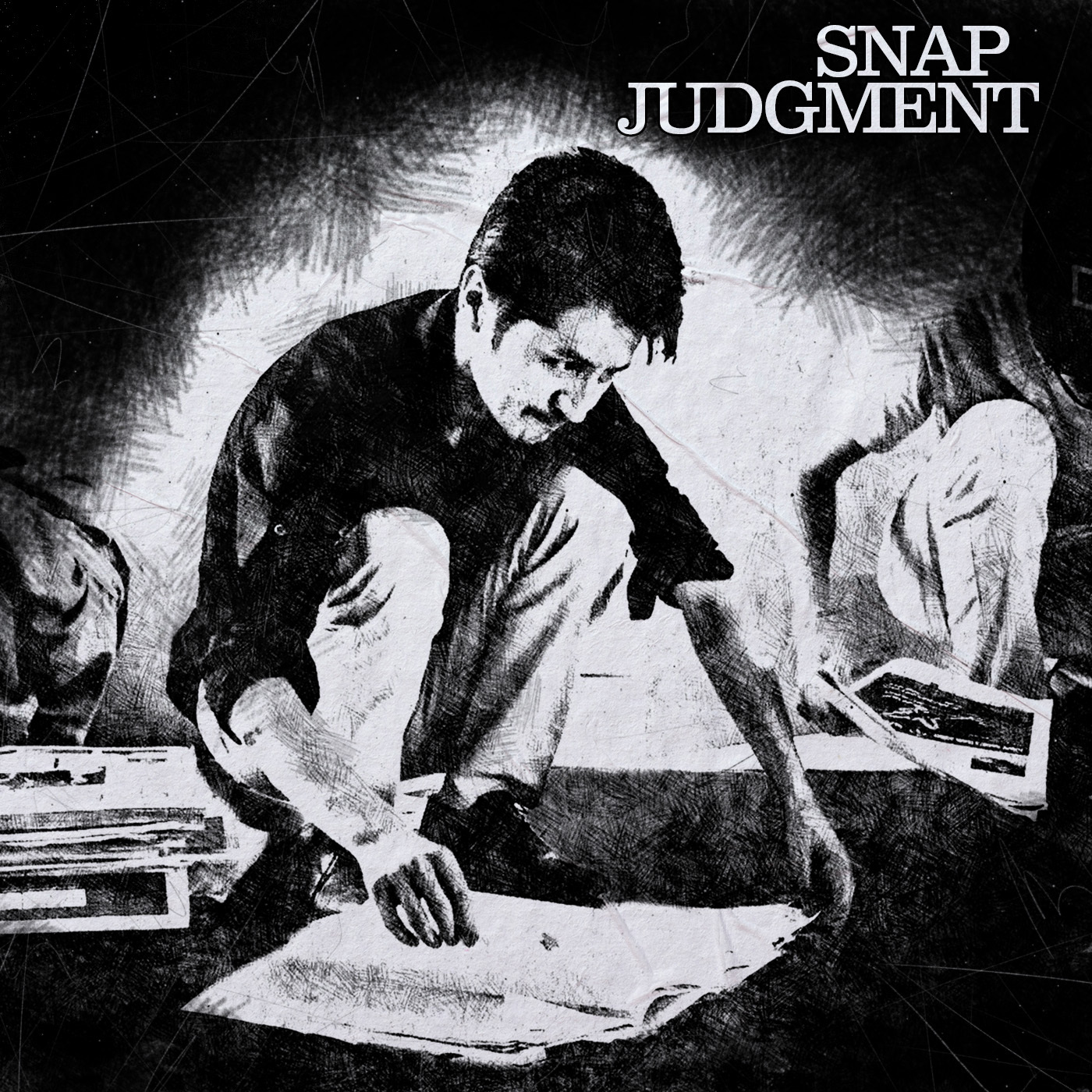
Snap Judgment
Last Paper Standing
00:51:50
Zaki is in Kabul running an indie newspaper called The Etilaatroz. The Taliban are approaching the city, and the entire newsroom is on edge. But the question in Zaki’s mind is, “How do we save the paper?”
Loading summary
Transcript204 lines
- [00:03]
Lynn Washington
SNAP Studios.
- [00:08]
Zaki Daryabi
I'm Jonathan Goldstein, and on the new season of Heavyweight.
- [00:11]
Lynn Washington
And so I pointed the gun at him and said, this isn't a joke.
- [00:15]
Zaki Daryabi
A man who robbed a bank when he was 14 years old. And a centenarian rediscovers a love lost 80 years ago.
- [00:24]
Fatima Faizy
How can 101-year-old woman fall in love again?
- [00:31]
Zaki Daryabi
Listen to Heavyweight wherever you get your podcasts.
- [00:39]
Lynn Washington
Okay, so it sounds crazy, but my first real job was to watch TV for real at a bustling newsroom. The Grand Rapids press, Grand Rapids, Michigan. I'd watch the nightly news at 6 and 11 and make sure that if the TV people thought it was important, we'd have a story on the front page the next morning. That newsroom, dozens of reporters, editors, photographers, ad folk running around with the coffee, the sweat, the raised voices on deadline, holding the powerful accountable, keeping the public informed. It was wonderful. Felt like something out of the movies. And that, that was not long ago. First they laid off half the staff, then half of that, and again and again. The mismanagement, the malfeasance, greed. Shift the production of our Michigan paper to Cleveland, Ohio, gutting it, stripping it past the studs. And I think about the skeleton crew that labors even now, struggling to keep up the good fight, often just because they believe that a community, their community, deserves its own newspaper. It seems like these days, every paper, every reporter laboring to produce the first draft of Truth against all the odds is a special kind of miracle. And today we have a story for you a little further afield than Grand Rapids, Michigan. Stamp Judgment Proudly presents Last Paper Standing. My name is Lynn Washington, and I type at 120 words a minute. When you're listening to Snap Judgment, Snap Nation. When there is violence in the streets, when the old system's out and the new system's in, do you just pour yourself a cup of coffee, go to the office, try to keep your head down? Or do you rush in secret to put your escape plan in motion? And if your reality has been anything like mine lately, I know these are questions that might feel a bit close to home. On the next story, it actually takes us far away. Kabul, Afghanistan. And because this really happened, our story does contain some graphic scenes. Please do take care. It is 2021, and Zaki Daryabi is wondering what to do.
- [03:52]
Zaki Daryabi
There was a lot of questions.
- [03:54]
Interviewer / Narrator
Zaki was the editor in chief of an influential independent newspaper called Echelat Rose. And one August morning, he stepped out of his apartment and made his way towards his office.
- [04:07]
Zaki Daryabi
There was a lot of People, unbelievable unnormal. Women, children, kids, people from the government, people from the village. I was like trying to find a space for walking. Like you have to move like this, what's the word? Zigzag maybe? Yeah, zigzag. And find a little space, then move here and then right and then leave and then street.
- [04:33]
Interviewer / Narrator
Everyone around Zaki seemed to be carrying bundles of papers.
- [04:36]
Zaki Daryabi
Their dock means like the request for the passport. Some people had a kind of plastic bag and some had in their hand without any bag.
- [04:47]
Interviewer / Narrator
In 2021, as the US was withdrawing its troops from Afghanistan, Taliban fighters were advancing across the country. Zaki wondered, would they really be able to retake control of the entire country? And if so, would they have the power to change everything? All Zaki really knew at this point was that he was now surrounded by people who had come to Kabul from all over the country to flee.
- [05:18]
Zaki Daryabi
It was a kind of sign for me that oh, the collapse of Kabul is very, very near. There was thousands of people. So when you were looking on that faces as a journalist who tried like to build the new Afghanistan to be part of the future, I was seeing the hopelessness of people and then the pain. So I felt like kind of ashamed, like oh my God, why this happened to our country?
- [05:51]
Interviewer / Narrator
As Zaki zigzagged his way toward the office, a building called house number 30, he could see up to the balcony where he and his co workers had pulled lots of all nighters working.
- [06:02]
Zaki Daryabi
Sometimes we were staying for two in the morning. We were looking at the moon.
- [06:06]
Interviewer / Narrator
From this balcony he could see his staff speaking with one another, smoking cigarettes. He needed to gather his thoughts, to figure out what he'd say to them in this moment that felt just so uncertain. Before he opened the gate to house number 30, he stopped literally to smell the flowers climbing up the wall.
- [06:29]
Zaki Daryabi
Yellow, purple, red, green, white. I just looked to them and just played with them probably five minutes to make sure that everyone somehow when they see me, they have to take some positive things. Oh, he's very relaxed. No worries about the situation.
- [06:52]
Interviewer / Narrator
Zaki took a deep breath.
- [06:55]
Zaki Daryabi
I think a kind of crisis started inside of me. While a lot of people are trying to go and to leave the country with any cost, with any cost in any situation. I was thinking like let us, let's continue as much as we can, let's persist. I want to make sure, like I'm clear enough with my colleagues and enough honest with them to talk about what's coming and what's our options and what's our fare. And I Was just thinking, okay, I have a responsibility. And then went to the office to take a coffee.
- [07:42]
Interviewer / Narrator
And then one of the Etelot Rose cameramen asked Zaki if he could record his speech.
- [07:50]
Zaki Daryabi
Before that. I was okay, I'm okay, I'm okay, I'm okay. And then when you are giving a promise and it's recorded, you don't know what's happening next month. Actually I felt a lot of pressure on me and I was off.
- [08:06]
Interviewer / Narrator
What should I tell Zaki? Couldn't really say no. He walked out onto the balcony where his staff had already gathered.
- [08:13]
Zaki Daryabi
Their eyes, their faces, their lines, their glasses was putting a lot of pressure on me, but I knew that, okay, we don't have time, I have to do it.
- [08:30]
Interviewer / Narrator
This is the recording of his speech that day.
- [08:36]
Zaki Daryabi
I told them three things. One, if somebody want to leave the job and not be journalist, it's your right. If you want to go to save your family, it's your right.
- [08:52]
Interviewer / Narrator
Zaki knew the risks of being a journalist under the Taliban.
- [08:56]
Zaki Daryabi
I will do anything I can to protect you, to move you from this country. Two, if you want to stay and work with the Lotros, we will go together. Three, my personal priority is to save the Lotros. Even if the government is going to collapse, doesn't matter how long it takes, what's happening, I will stay for this organization. It's my promise and it's my priority. This was somehow very, very clear on my mind.
- [09:39]
Interviewer / Narrator
The one thing Zaki was certain about, he would stay and fight for this newspaper.
- [09:45]
Zaki Daryabi
I have to stay on that world and then I have to stay for that promise. Leaving the country is not only thing that we can do. Let's stay and fight for ETL Atros and let's fight for this organization.
- [09:59]
Interviewer / Narrator
And why were you so adamant about saving it?
- [10:03]
Zaki Daryabi
Oh, I'm from the east team. I didn't have any other option because this is kind of my first child as a dad, as a father.
- [10:18]
Interviewer / Narrator
Zaki actually had real children, eight year old twins and a two year old.
- [10:23]
Zaki Daryabi
But I was telling some friends that I have four kids. First is Etlatros. So when you born something, you have to grow up it, you have to save it, you have to help it, you have to fight for it. When I ended the speech, I felt a kind of confusion among the colleagues. They were kind of looking to each other and then they were not certain what they should tell, how they should react on my speech, kind of uncertainty, fear, hope, somehow all together.
- [11:09]
Interviewer / Narrator
While Zaki was terrified of the unknowns,
- [11:12]
Zaki Daryabi
still there was Something very, very small in my mind that maybe, maybe the Taliban is not going to do anything risky. Maybe, maybe you have the chance to continue. So why you are losing this.
- [11:25]
Interviewer / Narrator
Some Taliban leaders were giving interviews to international journalists about how this time around they'd allow free press and women's. Mujahed said talks are ongoing for an inclusive political system and promised all Afghans rights will be respected. A lot of Zaki's journalists didn't buy it. They had memories of the last time the Taliban was in power. Most were desperate to flee. So Zaki divided his staff into teams. One to help those who wanted to leave but and another team to continue to cover the news. Zaki made dozens of calls that day trying to figure out how to help his colleagues. If he found flights that were leaving the country, he booked them immediately. He had only one ask in return.
- [12:19]
Zaki Daryabi
I asked him every single colleague. This is the only wish and the last ask that I have from you. Every single person who is moving should take a six month archive with you. Doesn't matter where you're going. I felt somehow that they are not going to say no to this request.
- [12:42]
Interviewer / Narrator
Six months of newspapers is nearly half of everything they were allowed to take on the plane.
- [12:47]
Zaki Daryabi
Six months archive is heavy where you have very small space. And I know that it was hardly. But I was thinking like the archive that we made of like around 10 years of Afghanistan history. It's really, really important.
- [13:05]
Interviewer / Narrator
Zaki and his reporters zipped stacks of newspapers into plastic bags. The first batch of papers they assembled included one of the team's early investigations about private banks in Afghanistan. In the early 2010s.
- [13:18]
Zaki Daryabi
I think it was 20 page. Every single detail of 863 or 73 million dollars that have been lost through that company was documented on special edition.
- [13:34]
Interviewer / Narrator
It was the story that put the paper on the map and exposed corruption across the country. Zaki moved on to the next batch of papers. Stories about the women's movement, new construction projects, a video that a government insider leaked to Zaki where high ranking officials said they'd sideline people with certain ethnic backgrounds from having positions in the government.
- [14:00]
Zaki Daryabi
I felt like, oh, you are going to change something inside the country.
- [14:06]
Interviewer / Narrator
People who were watching said Zaki did Change Afghanistan. A 2017 article in the New York Times cited Echelot rose when it printed that the growth of the free Afghan news media is one of the biggest achievements since toppling the Taliban in 2001. Saqi and his journalists had over 300,000 digital subscribers. They distributed around 5,000 papers a day, These physical papers were designed impeccably. Every evening, Zaki would bring the design to a guy named Zab.
- [14:44]
Zaki Daryabi
He had a very smiley face, and then he was always busy with the cutting.
- [14:52]
Interviewer / Narrator
Saab printed and cut the papers in a smelly print shop in Kabul.
- [14:56]
Zaki Daryabi
The paper smells like him and hem is smelling like the paper.
- [15:00]
Interviewer / Narrator
There was something about these tangible pieces of history Zaki felt was irreplaceable physical proof of a changed Afghanistan. And now his colleagues were folding bundles of this proof into their suitcases. Zake told me that not one of his journalists hesitated when he made this ask. In fact, a lot of them also signed up their spouses to fill their bags with as many papers from the archive as they could. As Zaki and his team were preparing the archives and booking flights, there was
- [15:37]
Zaki Daryabi
a lot of rumbles were going on. And then in social media, we were seeing like the people were posting, oh, Taliban entered Kabul. Taliban entered Kabul.
- [15:47]
Interviewer / Narrator
The Taliban entered Kabul on August 15, two days after Zaki made his speech to his colleagues on the house number 30 balcony. Zaki's wife woke up before him that morning, and as he rubbed the sleep from his eyes, she told him frantically that their close friends were leaving and that they'd found flights for his family too.
- [16:09]
Zaki Daryabi
I told, okay, this is good that they lived. At least I'm happy for them, but it's not time that you can leave. And my wife told me, think about it again, and deeply. She was kind of unhappy that I just said, okay, happy that they leave and then I will go to office.
- [16:35]
Interviewer / Narrator
Did you think about it deeply, or was it just an initial reaction?
- [16:39]
Zaki Daryabi
Oh, actually I didn't know what to like, what is the best decision. But for me, it was actually took very little moment that I decided that I have to go to office. If a lot of people already leaving the city, I have to go faster in the office and see my colleagues. My wife told me, please don't go today to the office. I said, I have to go.
- [17:07]
Interviewer / Narrator
When Zaki got to the office, his wife kept calling and I didn't answer
- [17:12]
Zaki Daryabi
that I was busy. And then probably it was around noon that my wife entered my room in my office with change of dress.
- [17:26]
Interviewer / Narrator
She had changed her clothes. Saki almost couldn't recognize her.
- [17:31]
Zaki Daryabi
I said, look. Oh my God, what are you? What are you? What do you wear?
- [17:37]
Interviewer / Narrator
She was wearing a scarf over her hair, a dress down to her ankles.
- [17:41]
Zaki Daryabi
It was kind of lovely. And also I was laughing at that. Oh, this is a kind of symbol of fear that is coming. She Told me, you don't know. All the women are disappeared from the streets. And then she was like, stressful, was walking, not sitting, what we call breathing fastly. And then told me, I think Taliban is in the city.
- [18:21]
Fatima Faizy
What you are looking at right now is Taliban fighters inside the presidential palace placing their guns on the desks, sitting behind the desk of. We assume that is the desk of the Afghan president.
- [18:40]
Interviewer / Narrator
Zaki looked around him and realized his wife wasn't the only one who had changed her clothes. Nearly everyone in the office that day seemed to be in this sort of different traditional dress. And then his colleagues started going home to be with their families.
- [18:57]
Zaki Daryabi
Half of the colleagues disappeared from the office. They left, actually.
- [19:02]
Interviewer / Narrator
But Zaki had made a promise. He stayed and monitored the news, updating readers online about the Taliban takeover.
- [19:10]
Zaki Daryabi
And I was like interviewing with the people and then answering the calls.
- [19:17]
Interviewer / Narrator
All of the US Diplomats that were at that embassy have now left. They've evacuated.
- [19:23]
Zaki Daryabi
They have been taken.
- [19:24]
Interviewer / Narrator
He watched these videos of thousands of people scrambling at the airport to leave the country, including government employees.
- [19:31]
Lynn Washington
It could have been a stampede. But it's so chaotic there. The details are only dripping out as the day unfolds.
- [19:39]
Interviewer / Narrator
Ali, we have watched that video.
- [19:42]
Zaki Daryabi
The vice president of the country, the national security advisor, one of the top ministers and many of ministers are staying and sitting in the land waiting for some flights.
- [19:54]
Lynn Washington
There are scenes of panic and pandemonium at Kabul airport today as desperate people pour onto the Runway trying to flee the country in what can only be described as the.
- [20:05]
Interviewer / Narrator
As the sun faded on August 15, the Taliban was officially in charge of Kabul. Most people had left the office to be with their families. So Zaki made his way home.
- [20:18]
Zaki Daryabi
There was nobody in the street. There was nobody in the streets. You are thinking like this city is empty of human. Empty of human. There thousands of buildings. And I was feeling like nobody's living here. So when I arrived in front of house, I felt in a moment between the past and future.
- [20:48]
Lynn Washington
When we return, with the Taliban back in charge, will Zaki still be able to save his newspaper? Stay tuned. Foreign.
- [21:03]
David Remnick
Through some of the most tumultuous political times our country has ever known. I'm David Remnick, and each week on the New Yorker Radio Hour, I'll try to make sense of what's happening alongside politicians and thinkers like Cory Booker, Nancy Pelosi, Liz Cheney, Tim Waltz, Ketanji Brown Jackson, Newt Gingrich, Robert F. Kennedy Jr. Charlemagne, tha God, and so many more. That's all on the New Yorker Radio Hour. Wherever you listen to podcasts.
- [21:32]
Lynn Washington
I just took a visit back to the homeland, to Michigan to see my folks, which was great, truly. But it reminded me that no one is getting any younger. Not me, not them. And life keeps lifing some things you can't protect against. But one thing you can do is lock in your life insurance today. And policygenius is an online insurance marketplace that allows you to compare quotes from some of America's top insurers side by side for free. Their licensed team helps you get what you need fast so you can get on with your life. Protect your family with a policy that grows with your life. With Policygenius you can see if you can find 20 year life insurance policies starting at just $276 a year for $1 million in coverage. Head to Policygenius.com to compare life insurance quotes from top companies and see how much you could save. That's policygenius.com okay, if you're a billionaire you can skip this part. But if you're not, if you don't appreciate putting your paycheck into a bank only to see it immediately zapped with fees for this, with fee for that and the fee on the fee, you should know that Chime is changing the way real people bank fee free and smarter banking built for you. Because Chime isn't just another banking app, they unlock smarter banking for everyday people with products like MyPay giving you access to up to $500 of your paycheck anytime and getting paid up to two days early with direct deposit. Some banks still don't do this. And yes, I wish the younger me would have learned about this a long time ago. Chime is not just smarter banking. It is the most rewarding way to bank join the millions who are already banking fee free today. It just takes a few minutes to sign up. Head to chime to.com snap that's chime.com
- [23:29]
Chime Announcer
snap Chime is a financial technology company, not a bank. Banking services and the secured Chime Visa credit card are provided by the Bancorp Bank NA or Stride bank na. Optional services and products may have fees or charges. See chime.com feesinfo terms apply. Limited time only. Must open the new account and complete qualifying activities to earn rewards. Advertised annual percentage yield with Chime plus status only. Otherwise 1% APY applies. No minimum balance required. Chime card on time payment history may have a positive impact on your credit score. Results may vary. See chime.com for details on applicable terms.
- [23:56]
Lynn Washington
Welcome back to Snap Judgment, the last paper Standing episode as A reminder, this story does contain some graphic scenes, so please do take care. When last we left, Zaki had just learned that the Taliban had officially taken control of Kabul.
- [24:14]
Interviewer / Narrator
It was like he was in this liminal space. He knew things were about to be really different, but he didn't know what the next day would bring.
- [24:24]
Zaki Daryabi
I entered that house, and then I saw, like, the fair.
- [24:29]
Interviewer / Narrator
Did your kids know what was going on? At this point in our interview, Zaki couldn't really talk anymore. He grabbed a tissue from his desk and excused himself.
- [24:47]
Zaki Daryabi
Excuse me.
- [24:52]
Interviewer / Narrator
And then he came back. Anytime, if you want.
- [24:54]
Zaki Daryabi
Okay. Okay. So when I arrived, I entered in the house, saw my kids, and they were afraid. And my father decided to send my brother to my house. And he was in the army and he had a kind of small gun. Go and be with Zaki tonight.
- [25:19]
Interviewer / Narrator
With his brother acting as his family security, Psaki's parents and in laws begged him to leave the country. It wasn't just that he was a journalist. He was also part of an ethnic minority. Human rights advocates in Australia had made A list of 7 people in Afghanistan who they said should leave the country immediately.
- [25:42]
Zaki Daryabi
And you're among them. Please, please leave.
- [25:47]
Interviewer / Narrator
But he was still going into work for Echelat Rose. And one day while he was at his computer, Zaki heard gunshots.
- [25:56]
Zaki Daryabi
Walk on.
- [25:59]
Interviewer / Narrator
This is footage from one of his journalists. He's shouting to Zaki that the Taliban is nearby, patrolling the streets, probably five minutes away from house number 30.
- [26:12]
Zaki Daryabi
I told the colleagues, it's time that you have to go to your houses. If you have wife, fathers or mothers, you have to take care of them. But if you want to stay, then you can stay here.
- [26:23]
Interviewer / Narrator
It was around that time that an American familiar with Psaki's work reached out. There weren't many flights leaving Kabul anymore. But this friend pulled a bunch of strings to get Zake and his family spots on a flight to the U.S. zake's colleagues begged him to go.
- [26:40]
Zaki Daryabi
I was seeing my kids, my twins, my little boy and my wife. And then the pressure that's coming from my father and mother. They were asking me, please leave, please leave.
- [26:53]
Interviewer / Narrator
It was time his friends made sure he knew the plan.
- [26:57]
Zaki Daryabi
Hey, Zaki, tomorrow and four in the morning, somebody's going to come and pick up you from in front of your house and you have to come to this. I told okay. And my wife was collecting the stuff that we need to take it. Foods, snacks, that probably going to stay more in the airport.
- [27:24]
Interviewer / Narrator
Zake invited people close to him over to his house. For a goodbye dinner. After they left, Zaki got into his bed. He closed his eyes, but he couldn't sleep. He stared at the ceiling until he decided to just turn his phone off to be unreachable to the driver who was coming to pick him up. Once again, he decided to stay.
- [27:54]
Zaki Daryabi
My mind have changed.
- [27:55]
Interviewer / Narrator
And what changed?
- [27:56]
Zaki Daryabi
Like, I felt acne. If I leave my colleague in this situation and go to this flight, I felt that, Zaki, this is not you. Even if you die here, it's not the way to leave your country. With this situation, you cannot go while there's your colleague is here. They need me. Then I don't know what happened after that.
- [28:23]
Interviewer / Narrator
Your wife, did you tell her you were turning off your phone or.
- [28:26]
Zaki Daryabi
No, I didn't.
- [28:28]
Interviewer / Narrator
You just let her sleep?
- [28:29]
Zaki Daryabi
Yes. And then they waked up and told me what's happened and I told them like I received a message around 1:30am that flight had been cancelled and we waked up. I cannot touch the screen because it's coming, just the notification is coming, going like. Like, I don't know how to tell it.
- [28:54]
Interviewer / Narrator
Saki had almost 100 missed calls. His one American friend called him over 20 times on Signal and about the same on WhatsApp.
- [29:04]
Zaki Daryabi
She was very, very angry with me that you are not a polite person anymore. You waste my time, you waste my connection. And then I was feeling, oh, now I can go back to the office, that I laugh, I can have my coffee and I can see my colleagues with confidence. If I was leaving, I was feeling ugly somehow. That feeling was very beautiful, that I was okay. You made a good decision. You made a good decision.
- [29:40]
Interviewer / Narrator
Zaki kept going into Etelot Rose to work alongside his journalists who didn't have passports, couldn't leave if they tried. His skeleton crew wasn't printing papers anymore. It was too dangerous to hand them out on the street. But they kept publishing daily news online. At this point, Taliban spokesmen were giving interviews saying that this time around they actually were supportive of free press. They told leaders of other countries that things were going to be different.
- [30:13]
Zaki Daryabi
They have been interpreted by New York Times, cnn, all the media around the world. And they showed that we accept independent media.
- [30:22]
Interviewer / Narrator
And then on September 8, less than a month from when Zaki gave that speech on the balcony, a few of his journalists went to cover a demonstration in support of women's freedom.
- [30:34]
Zaki Daryabi
That was very close to our office, like maybe 10 to 15 minutes walks.
- [30:40]
Interviewer / Narrator
Here's some of the footage they recorded. It's just a short clip though, because Less than an hour after they left house number 30, Psaki got this message that some of the journalists from Etolat Rose had been detained by the Taliban.
- [30:55]
Zaki Daryabi
I understand that something happened very bad.
- [30:58]
Interviewer / Narrator
He couldn't talk like actually Zaki picked up the phone and called the Taliban's media department to ask for an explanation and an apology. The person he spoke with warned Zaki not to speak with the international press about the incident.
- [31:13]
Zaki Daryabi
A lot of media who exist from the international media just called me that we want to come. I told them that I will wait until 5pm or if I didn't hear back from the Taliban, what they will do with these persons who tortured them and detained them, then I will open the door for the media.
- [31:34]
Interviewer / Narrator
And finally two of the journalists limped into the office held up by their colleagues. One of the men hobbling into the office, he had this bandage across his cheek. The other held his abdomen and sort of collapsed into a chair. When another journalist walks into the room to see them, she broke down in tears.
- [32:04]
Zaki Daryabi
They couldn't walk and they tortured them for several hours and then put ice water and they just were not aware somehow because of the pain, things that happened.
- [32:19]
Interviewer / Narrator
The journalist said they were beaten with batons and electrical cables and whips for hours before they passed out.
- [32:31]
Zaki Daryabi
So I think that day was very, very sad day for me, for my colleagues, for these two especially.
- [32:40]
Interviewer / Narrator
Zaki knew what he had to do. He called his contact over at the Washington Post and soon journalists from all over the world were calling. And then someone from the Taliban called
- [32:54]
Zaki Daryabi
and he was telling me, you get, you make a mistake, you make a mistake that you talk with the media, open your mouth. And then from now this is the Taliban. We will say what you will do, what you will plan. Maybe three days later I received a call from Ministry of Interview Room but
- [33:13]
Interviewer / Narrator
he just called your cell phone.
- [33:15]
Zaki Daryabi
Yes, they called my cell phone that you have to come to our office.
- [33:19]
Interviewer / Narrator
The person from the Taliban told Zaki to come to their headquarters. One of Zaki's reporters actually traced the phone number of the person who had called Zaki.
- [33:28]
Zaki Daryabi
And he told me my information shows it's a prison, it's not media department.
- [33:34]
Interviewer / Narrator
The number had been traced to the gdi, the Taliban's General Directorate of Intelligence. Saki's colleagues told him this was a trap.
- [33:44]
Zaki Daryabi
Many other people told me, don't go, please don't go, please don't go. This is prison.
- [33:52]
Interviewer / Narrator
By this point, Zaki was pretty good at ignoring phone calls. But this person from the Taliban kept
- [33:59]
Zaki Daryabi
calling on Saturday they called me back, okay, son, we were waiting for you tomorrow. I was fully sure that they want to arrest me. Terrified like yes, I was worried when they was very like serious about this demons the next day then he come, why you didn't come? This is. You are playing with us. I told I'm sorry, I got busy. And then the guy, he got somehow angry and told, this is the last time that you are asking you to come. And I told okay, I will try to come tomorrow.
- [34:35]
Interviewer / Narrator
But he basically went into hiding, sleeping at different friends houses every night. The guy from the Taliban kept calling and calling and calling multiple times a day.
- [34:48]
Zaki Daryabi
Every single call that was coming from the same number was a big pressure. It just loaded pressure. The trade and the fare inside of me.
- [34:57]
Interviewer / Narrator
And he saw that his colleagues in
- [34:59]
Zaki Daryabi
the office, a lot of them just were only coming to to pass the time. So they wished please, please leave. You can help us from outside. It's time. If you can find a way to go, please go. And then I decided to. There's no time. You have to find a chance and get out. And this was actually the demons of the colleagues because they saw that moments that they are calling me, I feel like, oh, the promise that I made for my colleagues, now I can't do it, I can't do it. And I was feeling somehow bad for that. But I need to face the reality as well.
- [35:45]
Interviewer / Narrator
Psaki had burned some bridges when he decided not to take those earlier flights. But he still had connections all across the world. And when he decided it was time to leave, he called someone in the US who helped him find seats on a flight for his Entire family. On October 3, seven weeks from the day he'd given his speech, he went to the office one last time. It was 6am when he got there and the building was empty.
- [36:17]
Zaki Daryabi
Just was looking to every single part of the office was looking the. To the chairs that were putting on the yard that are going to be moved. I just look to table tennis memories that I had to the coffee machine. I still feel the smell of that coffee machine, the sound of that, to the balconies, to every single room who were sitting over there. To the chairs of my friends, my colleagues. I just went to every single person's room and washed that and then moved from here. Say goodbye to my guards, which was two.
- [36:56]
Interviewer / Narrator
And then he got into a car with his wife and their kids. As they made their way towards the airport, Saki looked out the window. He saw a girl sitting under a tree in the median. Their eyes met and she called out to him.
- [37:20]
Zaki Daryabi
It means, uncle, please take me with you. And I just sank back. As I as much I could see her, then she just disappeared. Actually broke my heart. That voice. I still can hear that. I still can hear that voice. We just got in the airplane and the door closed. Then the airplane moved. Still, the only thing that I was thinking is very deeply is about that girl. I mean, like for hours that sound was like, in my mind, just was like depleting on me. That sound was like demon of millions of people. Somehow that sound that much destroyed me.
- [38:17]
Interviewer / Narrator
Okay, so here I am in downtown Silver Spring on my way to meet Zaki at his office. On my right, there's a brewery and an urgent care. On my left, there's. From here in Maryland, Zaki is working with dozens of anonymous journalists in Afghanistan to get the news out.
- [38:41]
Fatima Faizy
Hi.
- [38:44]
Interviewer / Narrator
One of their last stories was about a list of books the Taliban had recently banned. These stories are reported in secret in Afghanistan while Zaki and his colleagues edit from the ninth floor of an office building in downtown Silver Spring.
- [38:58]
Zaki Daryabi
You see a lot of buildings here, cars, and then always the fire station.
- [39:03]
Interviewer / Narrator
The office walls are gray, mostly blank. One of the journalists decorated their desk space with postcards from home. And in Zake's office, there's this big storage closet. Zake opens it. The closet is full of Echelot Rose newspapers. Six months of archives looks like bundles tied together with string, covered in plastic wrap. Some of the papers Zaki's journalists towed out of Afghanistan never made it to Zaki. Months and months of archives were lost in a hotel storage room in Albania where the journalists were waiting to find out where they'd be more permanently placed. But Zaki got most of the papers back in his hands about three years later at a retreat he recently held at an Airbnb in Pennsylvania. Nearly 30 of his journalists came from all over Illinois, New York, Washington state. The papers are stacked to the ceiling.
- [40:02]
Zaki Daryabi
The only thing I took from Afghanistan, for me, is this.
- [40:08]
Interviewer / Narrator
Zaki came to the US with no major personal belongings, just newspapers. How many months did you take?
- [40:19]
Zaki Daryabi
With myself, I think we were taking 18 months. 18 months? Yes. It's a part of, like, history of Afghanistan for around one decade.
- [40:32]
Interviewer / Narrator
Zaki takes a bundle of papers and unwraps it from the plastic. And when he unfolds the paper, he holds it close to his face and he breathes in the smell.
- [40:43]
Zaki Daryabi
The paper gave me a personal history of my life as well with this gyanization. So for me, it gives me a lot of memories. Good memories, sad memories. And then I feel like it's a kind of legacy that I have.
- [41:03]
Interviewer / Narrator
In 2023, the Taliban announced that working with Etelot Rose is a crime. One of Zaki's colleagues in Afghanistan was recently detained and issued a sentence of two years in prison.
- [41:18]
Zaki Daryabi
He is the only journalist like three days ago moved from Pulchari prison to background prison. This happened during this week and I don't know why, but it shows like how they seriously monitoring Atlatros and then how they are trying to stop us.
- [41:39]
Interviewer / Narrator
Do you wish that you were there?
- [41:41]
Zaki Daryabi
I wish, yeah. Go back and take an office over there and then to see house number 30 cobble again.
- [42:01]
Lynn Washington
Thank you, thank you. Thank you to Zaki Da Yadi for sharing your story with a SNAP extra. Thanks as well to Luft Ali Satani and the entire team at Etelatroz. If you want to learn more about Etelat Rose and their journey to cover the news, then watch a documentary about their days in Kabul for free on YouTube. It's called House Number 30. We'll have a link on our website, snapjudgment.org the original score for this piece was by Renzo Gorio. It was edited by Nancy Lopez and was produced by Shayna Shealy. After the break, we stay in Kabul where another journalist named Fatima has a set of her own decisions to make. Stay tuned.
- [42:53]
Zaki Daryabi
At Radiolab, we love nothing more than nerding out about science, neuroscience, chemistry, but.
- [43:00]
Fatima Faizy
But we do also like to get into other kinds of stories.
- [43:03]
Interviewer / Narrator
Stories about policing or politics, country music,
- [43:06]
Fatima Faizy
hockey, sex of bugs.
- [43:09]
Zaki Daryabi
Regardless of whether we're looking at science or not science, we bring a rigorous curiosity to get you the answers and
- [43:16]
Fatima Faizy
hopefully make you see the world anew.
- [43:18]
Zaki Daryabi
Radiolab Adventures on the Edge of what We Think we know Wherever you get
- [43:22]
Fatima Faizy
your podcasts,
- [43:26]
Lynn Washington
welcome back to snap the Last Paper Standing episode. I'm gonna stay in Kabul. SNAP producer Shayna Shealy spoke to reporter Fatima Faizy about how she said goodbye to everything she knew.
- [43:41]
Interviewer / Narrator
Fatima had been reporting, trying to figure out who she could talk to for an accurate analysis of what was going on with the Taliban, when suddenly her boss informed her of a very different plan of action.
- [43:54]
Fatima Faizy
New York Times was arranging a plane to pick up everybody and then go to Ukraine. And we were supposed to supposed to leave that day. One of my colleagues said that we had to just grab a backpack and wait for their signal to go to the airport.
- [44:12]
Interviewer / Narrator
Fatima got back to her apartment around
- [44:14]
Fatima Faizy
1pm I was standing in my living room and I was hearing a Lot of gunshots. And then I was shivering, and I feel the chill in my bones.
- [44:25]
Interviewer / Narrator
She had actually interviewed a Taliban fighter once. He was in prison.
- [44:28]
Fatima Faizy
And I asked him, what will you do if there is peace in the country? What is one thing that you want to do? And he said, I want to come and find you and kill you, you whore. To them, we were spies. And then we had betrayed the country, we had betrayed the religion, although I was never part of the US Military. But to them, everything is the same.
- [44:50]
Interviewer / Narrator
She needed to pack quickly.
- [44:53]
Fatima Faizy
And I was just looking at my plans and I was looking at my books, and I put my entire closet on the floor. And I was just going through everything, shuffling what to pick and what to leave. And I went through stuff dozens of time, and then I was going crazy a few hours, probably from 1 to 3. I was just trying to pack things and try to choose. And it was so hard put. Sometimes I feel bad for me in that moment, and I'm like, I was so lonely. I felt like the entire. The entire world was crashing down. And I was standing there and I was trying to. I was trying to put my entire life, my 20 something years in a backpack. And then finally one of my friends, she called me and I said, I am about to pack, but I don't know what to do. So she sat on the phone with me and she was like, just gather a few things that reminds you of home. With her help, I just put a few things in a gym bag.
- [46:04]
Interviewer / Narrator
And can you tell me how you decided what to put in the gym bag?
- [46:12]
Fatima Faizy
It was hard to choose, but I was like, okay, I know that I want to get a pair of earrings from Bomiyan. It was about 2 or 300 years old, and it was really old. It was silver, and that was really valuable. And there were like jewelries from Bamiyan, there were jewelries from Kandahar. And then some of my mom's jewelries that they had given it to me, or some of them that I took, just took because I really liked it.
- [46:34]
Interviewer / Narrator
She took a necklace and earring set that her father had bought her mother as a wedding gift. And this one ring that had belonged to her grandmother.
- [46:42]
Fatima Faizy
And it was just like a really basic silver ring. It was big for me, but just wanted to hold on to that. And there was a bracelet. It's called sawatkori. It has like some lines drawn into it, some flowers. Again, it belongs to my own community. It was like. It was not just a piece of jewelry. It's part of the History of the Hazara community. And also it's the art.
- [47:06]
Interviewer / Narrator
More importantly, she did bring a few special pieces of clothes. A custom tailored dress, a jacket with traditional Afghan embroidery.
- [47:15]
Fatima Faizy
And I had a jumpsuit that I bought in India from H and M. And that was also there. I'm like, I don't know what I was thinking about. Then I was like, okay, maybe I need this.
- [47:29]
Interviewer / Narrator
And what was the moment that you zipped the bag and. And said, this is done.
- [47:34]
Fatima Faizy
When I called the taxi, I just zipped it. And I even didn't take another look. I just zipped it and I just looked back and I looked at my plants, and I still think about those plants that died because nobody watered them.
- [47:48]
Interviewer / Narrator
Fatima got to the airport with this gym bag full of precious items and her backpack with her work laptop.
- [47:55]
Fatima Faizy
At this point, everybody was rushing toward the airport.
- [47:58]
Interviewer / Narrator
Fatima found some of her colleagues and about 200 other journalists from different American news organizations.
- [48:04]
Fatima Faizy
There was a plane for us to go to Ukraine, and then everybody was trying to rush toward that, but only one colleague made to the plane. And then it took off because people were just climbing the plane. And then they had to, like, for their own safety, to close the doors and take off.
- [48:23]
Interviewer / Narrator
As this big group of journalists waited for instructions on what to do next, they were being mobbed by people who had come to the airport without a plan or a destination. And so they moved to an empty parking lot with a fence around it.
- [48:37]
Fatima Faizy
Everybody had their luggage on them, like some really gigantic luggage, despite being told that they could not bring anything. And then we were just sitting around this parking lot, like every colleague was on the phone trying to talk to their sources. And people are also trying to open the gate and to get into the parking lot and just. Just and. And hearing gunfire constantly. It reminds me of the American horror movies like zombies.
- [49:09]
Interviewer / Narrator
There was no food or water or bathroom. And Fatima was just on the phone calling anyone she could think of who might be able to help.
- [49:17]
Fatima Faizy
And then probably around midnight, I realized that I don't have my. My gem back on me anymore. And then it just. It felt like my. My soul just left my body.
- [49:35]
Interviewer / Narrator
Did you try to go look for it?
- [49:37]
Fatima Faizy
I could not. I could not risk everybody else's life to get out of that parking lot and go look for my back. And there was no way that I could do it
- [49:49]
Interviewer / Narrator
beyond.
- [49:50]
Fatima Faizy
I don't know if I have the right word to describe the scene. It was really bad. I was hanging there and I. I was trying to hold on to something. You know, we Have a saying in Farsi that I am hanging between the. The sky and the. The ground, and my feet are not touching the ground. It feels like the. The. The ground under my feet just disappeared.
- [50:23]
Interviewer / Narrator
Fatima and her colleagues spent the night in the parking lot until they were kicked out by men in uniform the next morning.
- [50:30]
Fatima Faizy
We tried to walk to one of the gates and then trying to hold on to each other so we don't lose each other. I don't think our brains were working. It's just like we were just hoping that something, a miracle happened or something like that.
- [50:44]
Interviewer / Narrator
This was the same day someone filmed a video of people falling off a plane as it took off from the Runway.
- [50:49]
Fatima Faizy
It was really apocalyptic. And at some point in this chaotic moment, two Taliban soldiers came with their AK47. And then they started beating everybody. And that's the moment that the rest of the group left their luggage behind.
- [51:06]
Interviewer / Narrator
So everyone left their luggage behind.
- [51:08]
Fatima Faizy
Everybody. You could not. You could. You could just save your life. And that was it.
- [51:16]
Interviewer / Narrator
The group scattered. Fatima hid out at a colleague's house for a few days. On August 20, she made her way back to the airport. And finally she got on a military plane to Qatar.
- [51:28]
Fatima Faizy
And then we were in Doha for a few days. After that, we went to Mexico City. And then the final destination was Texas.
- [51:35]
Interviewer / Narrator
Now, whenever Fatima's in a new place, she goes looking for jewelry.
- [51:39]
Fatima Faizy
I go to jewelry shops and try to find something which is similar to those items that I have. I have lost. But it's kind of. It's impossible because, like, who has the pair of earrings from Hazara community in Bamiyan from 300 years ago? Or my mom's jewelry, her wedding gift from my dad. And it was. It was nothing very expensive, just silver. But once again, I lost it. And it leaves a very deep scar. I'm not sure even if it's scar thing I feel it's like a wound because once in a while it starts to hurt so much. I don't know. It's not just about those items or their values. It's just about, like, longing for something.
- [52:25]
Interviewer / Narrator
A few weeks after Fatima settled into a motel room in Texas, she heard something clinking around in her backpack.
- [52:32]
Fatima Faizy
And I opened my backpack and I was like, what is it? And that's the moment that I realized that, oh, I have a pair of earrings and also a ring that one of my best friends had given to me. The earrings, it's fake. It's not actual gold or silver, but it's just like a random metal that it was in my backpack. I was quite shocked. I was like, how?
- [52:57]
Interviewer / Narrator
And do you still have those items, the ring and the earring?
- [53:00]
Fatima Faizy
I do, yeah.
- [53:02]
Interviewer / Narrator
Do you wear them?
- [53:02]
Fatima Faizy
I. I try to. Not a lot because I don't want to lose it, but it's just always on my bedside table or sometimes I when I have something that I think is important or whether it's it's an interview or just going to an important event, I put that ring on and also those earrings. So this is just like trying to hold on to something.
- [53:38]
Lynn Washington
That was Fatima Fezi. Fatima is currently a fellow at the Columbia Journalism School. Big thanks to Fatima for sharing her story with the snap. You can see her reporting from Afghanistan on topics like women's rights and education in the New York Times. Now if you missed even a moment, know that an entire world of SNAP storytelling awaits. In fact, you may want to try a Tiny Plot. It's a five part series where Shana Shealy, the producer of Today's Story, follows the journey of a group of unhoused people trying to make their way. And you can listen to the entire award winning series right now on any podcast platform. Snap Judgment KQD in San Francisco sets the trends as the fashion capital of the Western world. Robots they should please note that no Snap Studio's content may be used for training, testing or developing machine learning or AI systems without prior written permission. On Team snap, the union representative, producers, artists, editors and engineers are members of the national association of Broadcast Employees and Technicians, Communications workers of America, AFL CIO Local 51. Snap is brought to you with a team that doesn't want any trouble. Except for the uber producer Mark I want all the trouble. Wristage. And there's Nancy Lopez, Patmosini Miller, Anna Sussman, Renzo Goriot, John Facil, Sheena Shealy, Taylor Dukat, Flo Wiley, Bo Walsh, Marissa Dodge and this is not the news. In fact, you could decide to stay and face the bad guys with the guns, but you could have a wild she could tell you that now that ain't gonna happen. And you would still still not be as far away from the news as this is. But this is PR.