← Snap Judgment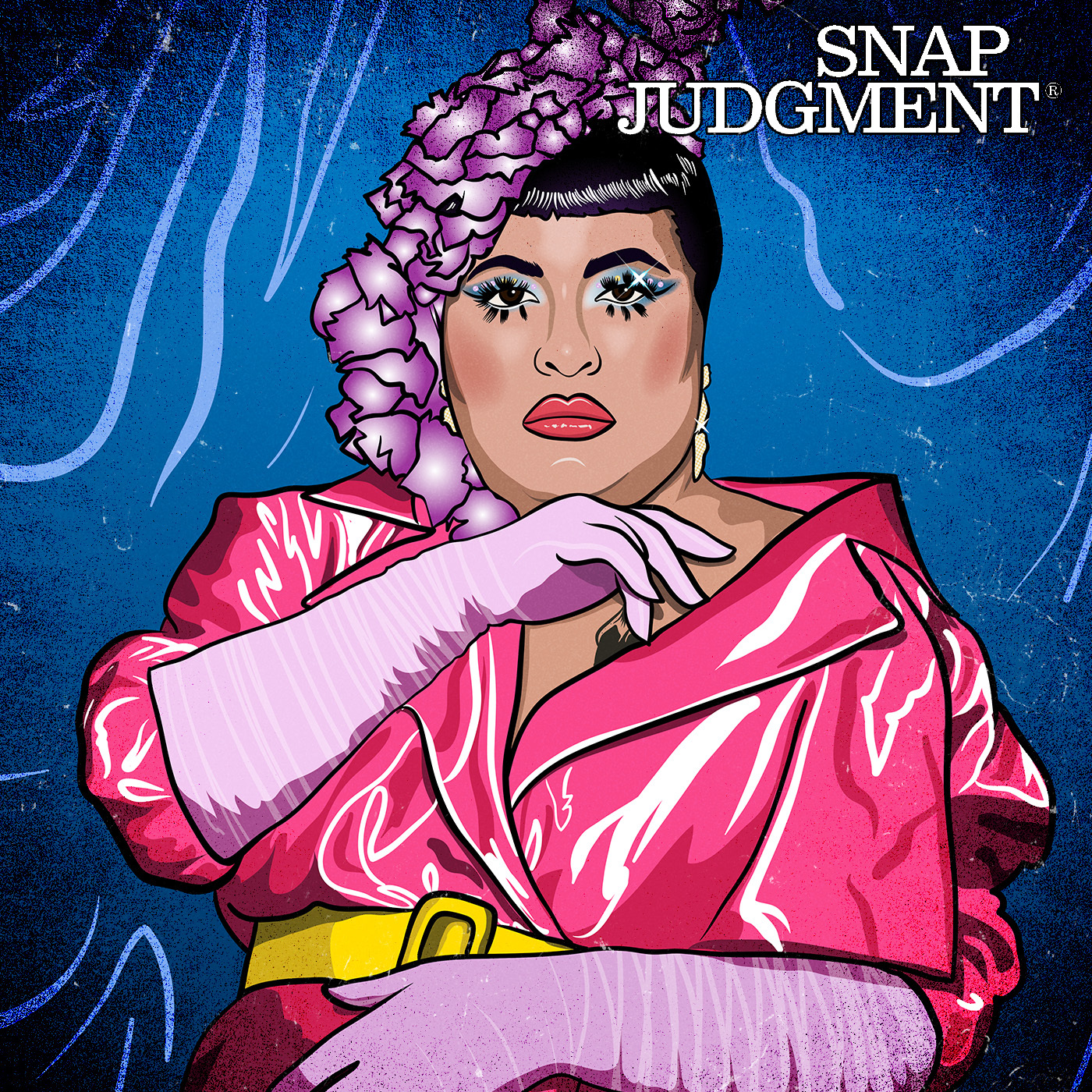
Snap Judgment
Movement - Snap Classic
00:48:26
The story of a self proclaimed “drunk drag queen,” and the music that saved them. Plus, we go on an adventure underwater to visit a secret kingdom for seahorses.
Loading summary
Transcript173 lines
- [00:03]
A
Snap Studios.
- [00:07]
B
This show is supported by Odoo. When you buy business software from lots of vendors, the costs add up and it gets complicated and confusing. Odoo solves this. It's a single company that sells a suite of enterprise apps that handles everything from accounting to inventory to sales. Odoo is all connected on a single platform in a simple and affordable way. You can save money without missing out on the features you need. Check out odoo@o-o.com that's o d o o dot com.
- [00:41]
A
Okay, so to my house, trying to feed my family. I'm not one of those planner people with the list menu shopping reminders. Now, at my house, figuring out what's for dinner is an adventure. I get home the other day, open the fridge to take stock. Couple ears of corn, some cabbage. What is this? Shrimp. The mushrooms have maybe one more day in them. And I think these are peppers. Tiny bit of leftover chicken. It's a random assortment of what have you. But the clock is ticking. Everybody's hungry, so I figured it's time. You see, every culture has a version of throw everything in the pot. In Japan, it's called okonomiyaki. And the best way to describe it, and this is not a fair description, but the best way to describe it is as a savory pancake. Mix up some batter, throw whatever in, pour it on a hot griddle, flip it over, top it with a little sauce, and voila. Okonomiyaki. Never, ever the same thing twice. But crazy as it sounds, I promise you, 98% of the time, it is delicious. And today on Snap, we're mixing it
- [02:07]
B
up,
- [02:10]
A
chopping, stirring for a brand new flavor you've never tasted before. Snapjustment proudly presents Movement. Movement. My name is Washington. Well, Glenn, you said it works 98% of the time. What about that other 2%? That, my friends, is what pizza's for when you're listening to Snap Judgment. Okay, so I have a friend who is an artist in every sense of the word. TED talks, Sublime music albums, storyteller, fashionista. That is her born with a spotlight. And what I love so much is that she points that light toward people and stories that would otherwise go unnoticed and unremarked. Today we're featuring a story from a Clete Hydero from her podcast Movement, which lives on the edge of story, migration and music. I think you're gonna dig in today's episode. It chronicles the story of another artist, Sancha, that I think is about to become one of your favorite artists as well. Snap judgment.
- [03:36]
C
Can you tell us about your name Sancha?
- [03:41]
D
Yes.
- [03:41]
C
And what it means and why you chose it.
- [03:46]
D
So Sancha, as one word, means mistress,
- [03:51]
C
but her artist name is two words. Sancha.
- [03:55]
D
I separated it because I wanted it to be like a saint, like San Francisco. And I wrote the name down, and it was just something that, like, struck me because if you call someone a Sancha, it's basically like calling her A or something. Like, it's really derogatory. And I was like, I wouldn't call myself that. And then also thinking about how, like, the role that saints play, and especially in Mexico, like, sometimes people go to them for very specific things. Like, this is the saint that helps us cross the border. That's the one by my mom's town. You know, like, you go to them for something, Right. With the name Sancha, I was like, people would come to me for something.
- [04:40]
C
And what would they come to you for?
- [04:43]
D
For the drama.
- [04:55]
C
Yes, the drama. Let me tell you what I mean by that. On stage, Sancha is a revelation in rhinestones, fur, and feathers, with plenty of dewy blue eyeshadow to boot. Roots as a San Francisco drag queen show up in this bountiful costuming. And then underneath it all, Sancha's love of ranchera in its full complexity shines through. My name is Matvit, and this is movement music and migration remixed.
- [05:44]
D
My parents are both, like, from rural Mexico. Like, they don't have an education further than, like, sixth grade, but then they did all their sacraments. Like, they're baptized, they're confirmed. They did their first communion, they got married. So the catechism is there, you know, like, so they're taught by the church. And rancheras really affirmed those beliefs, like, of monogamy, of, like, the way your family's supposed to be, the way you're supposed to love with your entire heart, or else you die, you know, like, that person is for you, and they belong to you forever. And if you don't have them, your life is miserable, you know? And having, like, lived a different life in San Francisco and being queer and not identifying with that made it scary to go back into those. Those tropes, you know, Portuenti tuam.
- [07:07]
C
So I was wondering if you could tell us about your auntie's farm and your rediscovery of ranchera.
- [07:17]
D
So the farm is the farm that my mom grew up on with her 12 siblings. So it's my grandparents farm. And. And this aunt that's there, my Tia Luz, is the only one that didn't get married in the family. And so she worked the farm the longest. Out of 12 kids, there were seven girls. The men, as soon as they were 16, wanted to come to the US to make money. So that left the women at home to do the men's jobs. The farm had like 25 cows, so that was a twice a day kind of thing. So it was at 5am they had to milk them and at 3pm, and so my mom said that, like, half of them would do the house chores, and then the other half would do all the men's chores and then they would switch, you know.
- [08:11]
C
So everyone could do everything.
- [08:12]
D
Yeah, everyone could do everything. So I started going to Mexico when I was 2. I think my mom was undocumented for the first, like, until I was like six or something. So we'd go every two years and she'd come back on her own. Wow. During those. Those times and leave us with an aunt or something. So. Yeah. So the farm, I remember the bath being like a room with a big rock on it that you'd sit on and you'd have to heat up water and stuff like that. And there's like, the oldest room in the house is made out of adobe. And so it's always like, oh, where's this thing? They're like, el cuerto de, you know, the adobe room. And it used to have, like, one of those old ovens that you had to fire with, like, wood. And my aunt was like, I don't want that anymore. Like, it's too much of a mess. And sometimes, like, I'll go to like, one of these fancy pizza spots with the oven. And I like. It's that same smell.
- [09:24]
C
Sometimes I think, like, how far back do any of us have to go before you reach the farmers, you know?
- [09:30]
D
Right.
- [09:31]
C
It's like, it's not that long for
- [09:33]
D
anybody long, you know.
- [09:36]
C
So you started going to the farm when you were two?
- [09:39]
D
Yeah.
- [09:40]
C
And you returned a few years ago in a kind of transformational way.
- [09:47]
D
Yeah, it was going to be my 27th birthday. And at that time, I think I was getting tired of. Of working so much in the bay and not having anything to eat, you know, like, it was just. It was a lot of work for nothing. And I was like, I don't see how this would get better. I just want to do music, you know? And I was like, it's about to be my Saturn return and I need a change. And my mom at one point, like a couple months before that had joked that I should just go keep my aunt Company on the farm because she was by herself. And I was like, oh, you just want me to be reformed? And like, you know.
- [10:37]
C
Reformed? What is reformed?
- [10:39]
D
Yeah, like, because I was basically a drunk drag queen. So she was like, when are you gonna get better and not be so crazy? And so she thought she could send me to basically a reform school with my aunt. And then I was like, actually, that's not a bad idea. That would be like a writing retreat or something.
- [10:59]
C
Right.
- [10:59]
D
And. And when I was into the idea, she was not into it.
- [11:03]
B
What?
- [11:04]
C
What? She. She flipped.
- [11:06]
D
She changed. She flip.
- [11:08]
E
Why?
- [11:09]
D
All of a sudden Mexico was dangerous. And.
- [11:13]
C
Well, that.
- [11:13]
D
That's interesting. But I, at that point I was like, oh, that's not a bad idea. I should go to my aunt. And my friend actually bought me my plane ticket. So I like went to Mexico City for a couple days, partied, because it was my 27th birthday. And then I took a bus from there to my aunt's farm. It's like a nine hour bus ride. Yeah. And then the first kind of month was really hard because my aunt, like, they're still really religious. And at that time it was like September, and they take the towns Vidhin and they take like this doll in like a glass case and they take her to all the different farms. So my aunt was following her around to the different farm and praying like three rosaries a night, having mass on each farm. Wow. And at that time, when I got there, I had like lavender hair, I had no eyebrows, and I still had all my clothes that I wore as a little club kid in San Francisco.
- [12:21]
C
So you stood out a little bit.
- [12:23]
D
Big old platform shoes. And my aunt would say things like, you know, that they kind of insinuated that I was in a bad place or, you know, things like that. So I had such a rough time in the beginning with her because she never left the town. So she has these ideas of like, how things are supposed to be and doesn't actually have experience with like dating anybody even, you know, like, she's lived a very sheltered life. So she didn't know what I was like, didn't understand me, you know. But then we also have like a. Have always had like a really good relationship. So at a certain point, like, it. It just like shifted to where we could talk about things. Like we'd sit and have coffee at lunch and then like, we'd come out understanding each other a lot more, you know.
- [13:20]
C
What changed? What do you think that shift was between the kind of distance between you and the coming Together.
- [13:28]
D
I don't know. It just. It started happening just naturally, like. And I think that she was appreciating the fact that I would help her around the house and we'd come together for telenovelas and, you know, mutual things that we liked together.
- [13:43]
C
Yes.
- [13:43]
D
And then we would talk about really honestly about things, like, maybe even more honestly than I would talk to my mom, you know, like people calling me a witch or saying that I was crazy. And I'd be like, you're here. And you see me every single day. Like, what kind of brujerias do you think that I'm doing?
- [14:03]
F
Right.
- [14:04]
D
Like, right. And I found more acceptance with her than I have found with queer communities.
- [14:10]
C
Wow.
- [14:11]
D
At times, you know, and so, like, people are ignorant no matter what, you know? And my aunt really helped me see that even though she sheltered and has lived a different life, I could find acceptance with her and understanding.
- [14:27]
C
That's beautiful.
- [14:29]
D
Yeah.
- [14:30]
C
And how did rancheras figure into that? Was that part of the telenovelas and the things that you could share with each other?
- [14:37]
D
It wasn't. It was like I went there to write these songs that I had had before. I had Logic on my computer, had this microphone, and my aunt would hear these songs as I was working on them, and she'd be like, you came here with, like, torn clothes. You don't have any money. You're sad. Obviously whatever you were doing is not working out. Don't hold back.
- [15:07]
C
Don't hold back. Yeah, right.
- [15:11]
D
And she was like, you should start singing rancheras. Like, And. And I was like, no, I've never been able to sing rancheras. Like, I didn't think that I had the capability, like, the VOC capability, you know? And I was like, watch. I'll show you. I can't do this, but I'll show you. Nuesto.
- [16:00]
A
You're gonna want to hear what comes next. It is not what you think. Snap, Judg. You know, I often think about that younger me, the guy who would howl in front of the ATM at the treachery of having his paycheck devoured by withdrawal fees, banking fees, fees on fees. That poor guy could have used chime because chime is fee free Banking that changes the way people bank fee free. And you get savings that grow faster with a 3.75% APY. Nine times higher than the national average. And did I mention chime spotme, which lets you overdraft up to $200 fee free. I could have so used that. Chime is not just smarter banking. It's the most rewarding way to bank. Join the millions who are already banking fee free today. Head to chime.com snap that is chime.com snap. It only takes a few minutes to sign up. Chime is a fintech, not a bank. Banking services for MyPay and Chime Card provided by Chime Bank's partners. Optional products and services may have fees or charges. Stated annual percentage yield and cash back for Chime prime only. No minimum balance required. Checking account ranking based on a J.D. power survey published 10-20-20. For more information on APY rates, MyPay, Spot Me and travel perks, go to Chime.com disclosures. Welcome back to Snap Judgment. The Movement Episode when last we left with one click of an ipod, Suncha is about to push open the door to the world of ranchera music and step inside.
- [18:22]
D
I took her ipod with a little circle and was looking through songs, and then she would listen to the the radio every day. And I, I heard Pedro Infante doing Historia del Namor and I was like, oh, this song is gorgeous. So I just was like, picking songs. And then she also gave me requests like, do this song. It makes me think of your grandparents. And I was like, I'm gonna record it all for you. And I had a CD burner. And I did that for her. And as soon as I did that, she started trading it around like, oh, the priest wants a cd. Oh, your uncles in the US Want a cd. And then when people would come over, she'd be like, where's the guitar? Bring the guitar. And I was like, oh, I guess I could do this convincingly.
- [19:35]
E
Go.
- [19:42]
D
And while I was doing it, I was like, let me, like, remake these little trumpet sounds with synthesizers and whatever I have with me. I think that was my moment of, like, seeing the darkness like where I come from, you know? Like, all. All the repression, like, that's the birth of place of it, you know, of all, all the things I'm afraid of, all the things I'm taught I'm supposed to be. The rancheras kind of represent that too. But then I could do it in a way that's mine. In reality. Like, even if we're queer, like, we still feel that love that's so intense that, like, you're gonna die if you don't have it. Like, or when you're heartbroken, you think you're just gonna absolutely, like, drop dead. So it's like, it's all the same feelings and they all come from the same place and we're more like than we want Want to.
- [21:07]
C
So how did you end up coming back to the us?
- [21:14]
D
Well, my mom went to Mexico and she was like. She really convinced me. She was like, you need to come back and stop ignoring the things that you're running away from. And specifically taxes. Like, the reality started seeping in that even on the farm and in the town, like, to send songs to people and share things would take days, uploads
- [21:42]
C
and, like, wi fi speeds and stuff. Yeah.
- [21:45]
D
And at one point I had this fantasy that I would just stay on the farm and teach kids music and, you know, like, things that I. They're not me, you know, But I had that little fantasy and then the reality started seeping in that I wasn't going to be happy doing that, you know, and that I really wanted my music to travel. And I was like, oh, I do need to come back. And I had friends living in la and they were. They were like, we'll make it really easy for you. And it was just. I never thought about moving to la, but since they made it really easy for me, I was like, okay, I'll try this out. And it became home, like, instantly.
- [22:30]
C
Really? Yeah. Say more about that. What was it that made it home?
- [22:35]
D
It was just like, everything. Like, I felt like in the Bay, nobody understood the intersectionality of all the things that I was doing. And in la, it's like, we've been doing this for years, Decades. Girl. Welcome home. I love that. Oh, you mean punk and cumbia. Like, that's been done. So it was. Yeah, it was really refreshing. So when my parents started hearing the rancheras, they cried.
- [23:21]
C
Really?
- [23:22]
D
Yeah. But they also.
- [23:24]
C
Because they felt. Because they felt what. What were they tears of?
- [23:29]
D
I think, like, oh, maybe she does have something, and we've just been ignoring it, you know? And I even had this moment where I did a music festival in San Jose and my parents went to see me for the first time. And at that. That time, I had like, nine bandmates or something, and they all went with me. I got an Airbnb for half of them, and half of them stayed with my parents. And my mom made food that night, and she stayed up till 4am with us. And we were all just singing rancheras the whole time. Boleros, like, songs that they knew. They'd request songs and we'd just, like, play the chords for them and they would sing. And, like, it became this, like, big melting pot of, like, cultures and worlds because it's all like, my bandmates were all queer and super gay and, like, trans. And, you know, my Parents being from this very traditional background, like experiencing joy with all of us, you know, and you know, sometimes like with the rancheras, I'll add the screaming, I'll add like the high drama and things like that. But you know, when I'm at my parents house, I'm at my parents house and it's for them, you know, it doesn't become a performance for me. It's like, this is for you guys. This is my gift to you guys. Like I might not be everything that you wanted me to be, but I understand you, you know, and I understand your needs. And I also understand that I'm something that you never would have imagined, you know, And I feel like that was, was probably the moment where my parents were like, oh, she's not gonna stop. This is, this is her thing that she's gonna keep pursuing forever. There's a song I released that I actually wrote on the farm and I. So it was a demo for a long time and I had named it Hijo Prodigo, the prodigal son. Then when I started sending it out to people, they started calling it Ovejanegra, which is Black Sheep. The song is about, like being on the farm and knowing that I always cry that like, I'm not what my mother would have wanted and acknowledging that like, my mom prays every day that I'd be good and be okay. Even when I've been in places that are really dark and, and feeling like the, you know, when I went to the farm, I was the prodigal son. Like I came back to them and how much they celebrate me now. So the song is about returning to them, but returning as myself.
- [27:04]
C
Me.
- [27:33]
D
Sa.
- [28:01]
A
Thank you, thank you, thank you. This story is produced by Macleet Hadero and Ian Coss as part of their podcast movement. The show was co created by Julie Cain. You can find all of Sancha's music and projects@churchofsancha.com or have it@snapjudgment.org if you want to find more stories at the crossroads of music and migration. Search for movement with Bakwit Hedero wherever you listen to podcasts. Now after the break, we're going to an underwater world made of dreams for real when Snap Judgment continues. Stay tuned.
- [28:52]
D
Let me the.
- [29:32]
A
From Snap Judgments, orbiting Hall is justice. You're listening to Snap Judgment. My name is Bryn Washington and now we're going to take you somewhere where you've probably never been before. Snap producer Liz Mack has a story.
- [29:47]
G
What are you doing right now?
- [29:49]
F
Just suiting up camera. This will be yours when you get underwater. Just turn it like this. Okay?
- [29:57]
A
Okay.
- [29:59]
F
If you lose it, I'll find it. Don't worry.
- [30:00]
G
Okay.
- [30:01]
F
Not today. Another day.
- [30:02]
G
Okay, so you got your slate, you got your flashlight?
- [30:08]
F
Got your air pencils?
- [30:12]
G
Got your underwater camera?
- [30:13]
F
Yep. Here's my extra pencils. We have to get this down to a fine size. Bingo.
- [30:21]
D
We're ready.
- [30:26]
G
For years, Roger Hansen has been building a secret underwater kingdom a few yards away from a busy street in Long Beach. Today, he's taking me there to see it up close.
- [30:38]
F
And this is an official night dive, because by science, it's after sunset, officially. Okay, so this is a night dive. You have to go by the rules.
- [30:49]
G
Roger actually carries a logbook with him everywhere, recording dates and times.
- [30:55]
F
We can rinse our mask off in the water tonight, which we should. Arla.
- [31:00]
G
After this dive we're about to take, he'll pick up his pen and his colored pencils and add one more dive at the bottom of a long list.
- [31:07]
D
All right, any last wor.
- [31:09]
G
What's the plan?
- [31:12]
E
We're gonna go down to number seven
- [31:13]
F
and see if we can find Deep Blue.
- [31:15]
G
Okay.
- [31:16]
F
That's our best chance. And yours is going to be 8. 21.
- [31:20]
A
We're gonna.
- [31:36]
G
We're going to a world that Roger finds both quiet and calm. He's taking me to see what he considers to be his underwater family. And while I'm his dive partner today, his story really starts with his favorite dive partner, Mike.
- [31:52]
E
Mike and I, we were both just about like twins. The reason we were best friends, especially underwater, was we both knew where the other guy was. All we'd have to do is go eight feet to the left because we
- [32:09]
F
know he would be there.
- [32:11]
G
Back in the day, Roger and Mike
- [32:13]
E
dove constantly 100 times a year for 30 years, I've averaged 221 dives every year. Average. Yeah, I could call him up in the middle of the night and go, hey, it's snowing. Wanna go scuba diving? He goes, sure. And so we kept doing things that were on the edge. Dumb, but we would have so much fun doing.
- [32:41]
G
Was a sunny day in May when Roger and Mike were out on Geneva Lake diving for the millionth time together. They were on their boat when they heard a call over the radio.
- [32:51]
F
Mayday, mayday. We have a diver down. Are there any experienced divers on the lake?
- [33:06]
G
A young man was lost somewhere under the water. The mayday callers were asking for any experienced divers to help find him more than 90ft under the lake's Surface. They joined the search and rescue mission, and Roger dove down. First 10ft, then 20, then 90.
- [33:30]
F
It was like wading through molasses. My chest was very tight, breathing it, like, every muscle was just really stiff. So I was trying to avoid fixating on anything other than the normal sequence that I would do underwater, checking all my gauges.
- [33:49]
G
Roger remembers feeling the pressure on his body underwater. And then he remembers the pressure he felt from above.
- [34:01]
F
Can we save them? Do we get them before they get too much brain damage?
- [34:08]
G
Roger couldn't find the missing young man, but some other divers did. Roger remembers watching as they pulled him out of the lake.
- [34:16]
F
I assumed that he was going to be okay. People were cutting away the suit. My friend immediately started to do mouth to mouth. I was in shock, just staring. We did not find out till later in the day that he didn't make it. He was 19 years old.
- [34:43]
E
My friend Mike was a physician. We talked about what happened, and, you know, he was already in the 99.9 percentile for safety to start with. So he, you know, kept speaking about, I did everything right. I did kind of wanting to orally hear a check mark by each one. I did that, I did this, I did that. You know, that he had done everything he could do.
- [35:17]
G
That night. Roger took out his logbook, and like he did every day he was out in the water, he recorded that day's dive. But instead of marking start time and
- [35:26]
F
end time, I have a picture drawn of that day. You know, it's not very descriptive, but it's there. And I don't have his name. I just had where it was. It just shows a person laying there without any facial features.
- [35:46]
G
After the incident on Geneva Lake, for Roger and Mike, scuba diving became less of a hobby and more of a mission.
- [35:54]
F
I became an instructor because of that day. Matter of fact, the two of them
- [35:59]
G
began learning about rescue diving together.
- [36:01]
F
I said to myself, I am going to train people so this doesn't happen again.
- [36:07]
G
It was eight years later when something did happen. One morning, Roger woke up in a panic.
- [36:19]
F
I just woke up one day and said, something's wrong, something's wrong. I just knew. And I called the police department. I said, would you go out and check on my friend? And he wasn't there. In about a day after I had called, they found his vehicle parked over along the coast, and his boat was gone. And they never found the boat. The only thing they ever found was his scuba tank. And it floated clear across the other side one of the Great Lakes.
- [36:58]
G
And while they searched and Searched for Mike's body in the water. They came up empty.
- [37:05]
F
So I went to his house. You know, go into his bedroom and see his, like, slippers laying sideways in the bed. And you almost could see the contour of his body pressed into the mattress and the pillow. It was like it was a negative. And do you know what. Where that doctor is who is my best friend? You know where he is? Lost on the bottom of Lake Michigan. That's where he is right now. How does it affect me? It just shattered me. Shattered me. He was my best friend. We went and had. We had a big ceremony at a place we used to dive.
- [38:03]
G
It was a quarry where Roger and Mike had found a safe deep underwater years ago. They liked to practice there.
- [38:13]
E
We got together about 40 of his various friends. So we were in a big circle and down by the shore, and we each just took a minute to say something nice about our friend. And we took some of his trophies that were at his home. And they were long, tall, gold figurines on the top.
- [38:36]
G
And a handful of them went down to the water in their diving suits, holding onto Mike's trophies.
- [38:47]
E
And we took them down to leave them in an area where ice was as a memory.
- [38:56]
G
Roger and his friends planted the trophys deep into the sand.
- [39:01]
E
I've reviewed in my mind what I felt like would have been his final minutes and things, and I've thought about it a lot of times, and, oh, let's move on.
- [39:26]
G
After Mike's death, Roger lost his appetite for diving. He went from going hundreds of times a year to 16.
- [39:35]
F
I kept track. I didn't hardly dive at all because I was so upset that my best friend passed diving. It lost its luster.
- [39:50]
G
So first I want to ask you, you know, like, 20 years ago, did you ever think that you would be. Could you ever have imagined yourself as, like, a custodian of seahorses?
- [40:00]
E
Never, ever. No. I didn't even know. They hardly existed 20 years ago. No way.
- [40:09]
G
Yeah.
- [40:09]
D
All right, Any last words?
- [40:11]
G
What's the plan?
- [40:14]
E
We're gonna go down to number seven
- [40:15]
F
and see if we can find Deep Blue. That's our best chance.
- [40:23]
G
Today. Fourteen years later, Roger's back in the water.
- [40:27]
E
Today I did seven dives because now
- [40:30]
G
he has new friends to dive with.
- [40:32]
E
They're cute, they're sweet, they're nice, and they model the kind of behavior that humans should model.
- [40:46]
G
He met the first one on January 30, 2016,
- [40:51]
F
and I saw an orange seahorse swim by. I knew that's not normal at first. I thought someone must have probably just thrown out of a fish tank. Well, I followed it because I was totally curious.
- [41:08]
G
He started coming back a couple times a week to try and find the orange seahorse again and to see if there were any more.
- [41:15]
F
I started to see more seahorses coming into the area. They'd just pass by, kind of checking things out. Ended up seeing about 16 different seahorses.
- [41:25]
G
He even started to recognize some of them by their coloring.
- [41:29]
F
I followed one who I named Solomon, who, after I studied my photography and learned more, he was actually a girl.
- [41:38]
G
His underwater life was coming back to him, and he'd get into his wetsuit and strap on his air tank more and more to visit his new friends.
- [41:49]
E
The seahorses are like your best friend, pet.
- [41:53]
G
But as the days got shorter and cooler and Roger was still visiting his new seahorse friends, he had a kind of terrifying thought.
- [42:02]
F
The first winter, I thought, they're all going to leave these rare creatures that everybody thought was fantastic.
- [42:10]
G
He got more protective of them.
- [42:11]
F
I measured the area. I put yellow plastic tent stakes down in front of 10 areas with numbers on them so I could keep track of who was going where. Then I had to learn seahorse102 to identify each seahorse, which I can do.
- [42:33]
E
We're submerging and going through fields of tall, green, thick eelgrass. Below the eelgrass, we'll run into our first biome with sticks and palm fronds and pine branches. And then we'll take our light and shine in there to see if anybody is home. And if not, we'll move down another 15ft across some bare sand areas to the next.
- [42:58]
G
If you dive down underwater with Roger, you'll see that he's constructed a sprawling complex of 10 different biomes, which are kind of like different neighborhoods in this massive world he's made for his seahorses. Each section is marked with yellow stakes and filled with sticks planted into the seafloor so seahorses can latch their tails onto them like the way that land horses do at an old timey hitching post. From there, they'll swim up sideways and into the palm fronds that Rogers planted, Knowing that seahorses need a place to
- [43:27]
E
hide a little deeper to an area called the redwood forest, which is made up of 1500 sticks stuck in the sand that run along the shoreline underneath these homemade beds.
- [43:53]
G
Right now, there are four seahorse friends who have stayed behind this whole time. Bathsheba's tall and orange. When we pass by her, Roger takes my hand so I can pet her back.
- [44:05]
F
Bathsheba, I've seen like 833 times. So do you think she knows me? She's very cute. She can get any man she wants. Okay. Is she a black widow, I wonder, because her husbands keep getting rubbed off.
- [44:21]
G
Then there's CD street, her boyfriend.
- [44:24]
F
CD Street's new. He's only been here. I've only seen him 21 times. He's just that five and a half inch guy who's got a ten and a half inch long girlfriend. It looks kind of like an 18 year old dating a 45 year old. I'm not judging.
- [44:38]
G
And Deep Blue, who's more petite.
- [44:41]
F
Deep Blue, he's a boy. He's often pregnant. He's pretty chill. He doesn't mind you coming around as long as you understand when he's had enough of you, he's going to rotate around on his stick.
- [44:52]
G
And then of course, there's Daphne, the loner.
- [44:55]
F
Daphne is this wild card. She's way different of a seahorse, I'll tell you. Usually I sit there about 40% of the time when I go.
- [45:03]
G
Roger does everything he can to keep his seahorse kingdom safe from harmony.
- [45:09]
E
Compared to our outside world where we have such terrible things happening as people hurting other people, you don't see that underwater ever. You know, things may have to eat because they have to eat, but they don't just kill to kill.
- [45:25]
G
He knows that there's always the threat that his seahorses could be eaten by another creature or that they could die of old age.
- [45:35]
E
Well, I know the time's going to come where this rare experience that I've been blessed to have will end. This spring, Bathsheba and Daphne, two of the four seahorses are four. They don't look like they're slowing down. But I would like to find out what happens in this last chapter. I'm sort of in my last chapter too, so. And then we would scuba down, come back up.
- [46:05]
G
The very first time I met Roger, he told me he was a C minus on land and Mensa level genius underwater.
- [46:12]
E
And we do that after 20 minutes so we don't scare the seahorses, take a break, talk, and then go again and see who has moved or who's gone where.
- [46:20]
G
That's because he says there's something about being underwater that makes him feel safe.
- [46:24]
E
There are four, five areas that have names. The other ones just have underwater.
- [46:29]
F
It is quiet.
- [46:30]
E
It is a quiet world. It's a slowed down pace. You see all different kind of things. You feel differently because of a difference in pressure, that's on you. It doesn't hurt at all.
- [47:13]
A
Now, recently pregnant Deep Blue stopped showing up. Roger thinks he was eaten by an octopus, so he's moved any remaining octopuses in the area and resettled them elsewhere. It's good thinking. Thanks so much to Roger Hanson and keeping an eye out for his forthcoming children's book, It's a Seahorse of a Different Color. To find out more about Roger and his work, along with photos of his seahorses, go online snapjudgment.org the original score for that story was by Leon Morimoto, was produced by Liz Mapping. Now then, you know tis the season. Let me tell you a secret. None of your friends, your spouses, your family, none of them want any more plastic junk. Instead, let them know you care with the gift of story. Send them your favorite episode of the Snap Judgment podcast. Ho ho ho. It's a compliment to them, their good taste, superior intellect and winning smile. Stories galore. Available right now@snapjudgment.org on Team Snap. The union representative, producers, artists, editors and engineers are members of the national association of Broadcast Employees and Technicians, Communications workers of America, AFL CIO Local 51. Step is brought to you by the team that always looks on the bright side. Except for the uber producer, Mr. Mark Ristich. He's not fooled because he knows his enemies lurk everywhere. There's Nancy Lopez, Pat with CD Miller, Anna Sussman, Renzo Gorio, John Facile, Shayna Shealy, Taylor Ducat, Flo Wiley, Bo Walsh, Marissa Dodge, David Exame, and Regina Medioco. Of course, this. This is not the news. No way is this the news. In fact, it's been around in circles hoping to find enlightenment. And when you wake up after hitting your head on the floor, you would still, even then not be as far away from the news as this is. But friends, this is PRS.