← Snap Judgment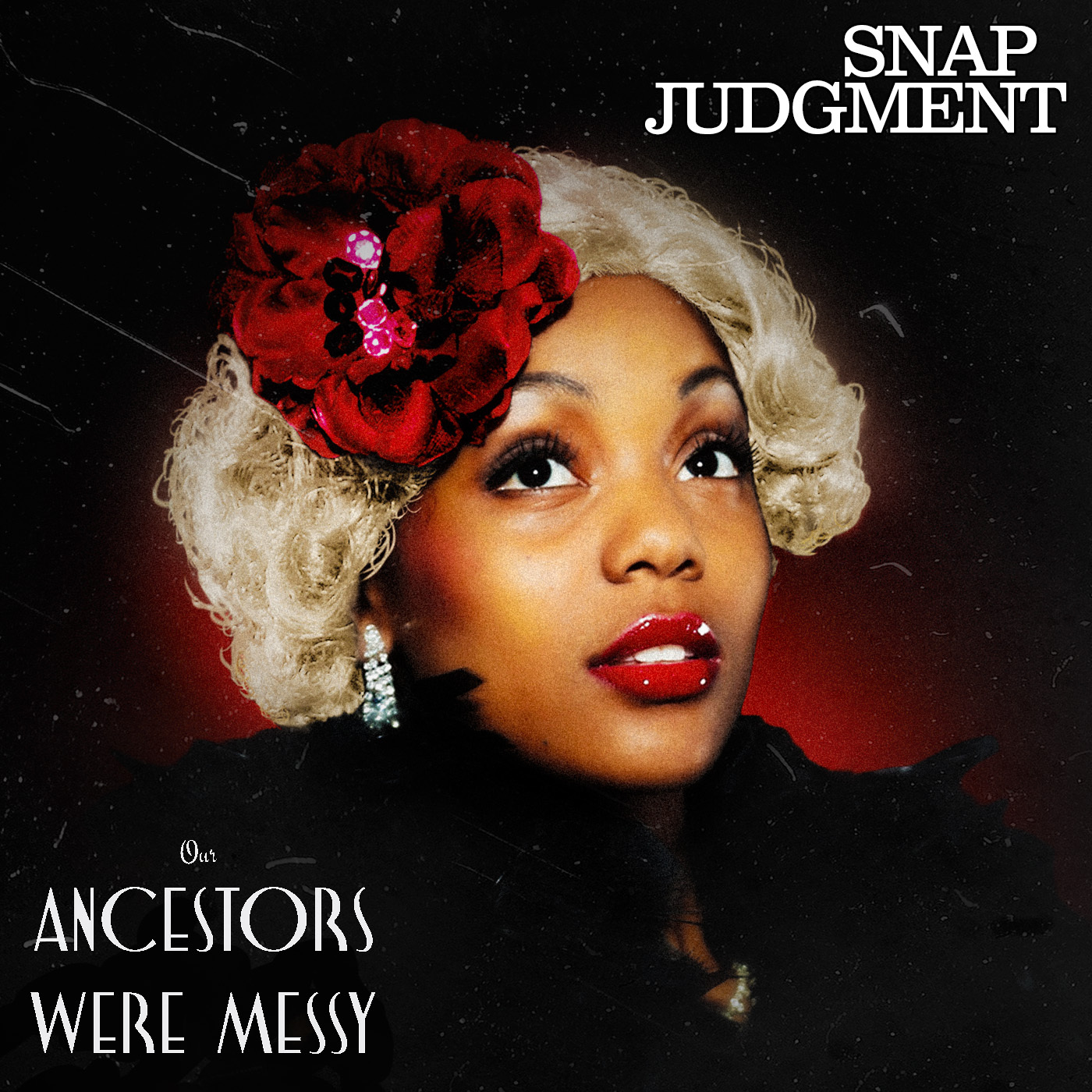
Snap Judgment
Nora Holt: The Lives and Loves of Harlem's Legendary Blonde Bombshell
00:50:38
A musical prodigy from Kansas becomes a renowned race woman in Chicago, a tabloid sensation in Harlem, and a musical force the world over. These are the many lives and loves of one of the most famous women of the era: Nora Holt.
Loading summary
Transcript220 lines
- [00:03]
Snap Judgment Host
Snap Studios. Did you know there's an online cannabis company that ships federally legal THC right to your door? And they found a way to combine THC with carefully selected functional ingredients to create gummies, baked goods, flour for the type of experience you're looking for. I'm talking about mood.com. they have an incredible line of cannabis gummies. And you can get 20% off your first order@mood.com with with promo Code Snap, like the Mind Magic gummies for focused deep work and enhanced creativity, or even the Pure relief CBD gummies for general relaxation without any psychoactive effects. Now, you can find gummies anywhere these days. But Mood's functional gummies combine premium federally legal THC with targeted botanicals to help you dial in your perfect mood, usually in as little as 15 minutes. And right now, Mood is offering our listeners 20% off their first purchase with code Snap at checkout. So head to mood.com to find the functional gummy that matches exactly what you're looking for. And let Mood help you discover your perfect mood. That's mood.com and code snap at checkout for 20% off your first purchase. Okay, I'm walking down the street. I'm minding my own business. And the two women behind me, they're gossiping about people I do not know. But it's crazy interesting, right? So maybe I do slow down a little bit to listen in better. And the woman says, should we talk
- [01:40]
Commentator 1
louder so you can mind our business better?
- [01:45]
Snap Judgment Host
Whoops. Caught. I couldn't help myself. It's too juicy, too scandalous. In the show, our ancestors were messy. It's kind of like that. It's sneaky. It lets you listen into the gossip, the scandals of pop culture. But back in time, stories that made headlines in pre civil rights era America. The host, Nicole Hill, she takes us inside the lives of real people. Inside their loves, betrayals, twists, turns, all as they struggle to beat Jim Crow and the messes. This is not amateur hour. You gotta step into some real devilment to land in the gossip columns of those black newspapers. And it makes you think. Someday people are going to be scouring the names of people at the center of pop culture right here and now and ask, who is that? What, you ain't never heard of Prince? You never heard of Whitney? How is that even possible? But time comes for all of our heroes, and such is the case for today's story. Today we're gonna go back in time to learn the history of one of the most incredible music composers of her time. Nicole sits down With a couple of guests to explore the archives. Nicole Hill. Take it away.
- [03:06]
Nicole Hill
This is the story of the woman dubbed the greatest newspaper copy in the world. Nora Holt. Lena Douglas, Rebel Without a cause. Nora Holt was actually born Lena Douglas in Kansas City, Kansas, somewhere between 1885 and 1890. She's the daughter of the Reverend and Mrs. Douglas of the AME Church. I read that both her parents were likely enslaved in Kentucky, and then upon emancipation, they moved to Kansas City and they had Lena there. She grew up playing the organ in church, and by her teens, she's understood to be a prodigy. She decides that she wants to be a composer when she grows up, which is a person who arranges and writes music like Beethoven and Pharrell. But before she sets out to do that, at the age of 15, she gets married to a man named Sky James. I couldn't find any information about sky except for that he's a musician, and maybe he introduced her to the new black sound coming out of the Midwest and the South. Ragtime, which Lena comes to love. It's secular music, so I feel like she probably shouldn't have been listening to it. Like, it wouldn't have been cool. But she likes it and she listens to it. She finishes high school and enrolls in Western University to study classical music. The school no longer exists, but back in the day at this time, it's like the number one school to go to if you want to study music in America. Before she goes to school, she says goodbye to her hometown, she says goodbye to her family and friends, and she says goodbye to husband number one. After two years of marriage to the musician Sky James, they divorce, and she marries Philip Scroggins. I couldn't find any information about him except that he was a politician.
- [04:44]
Commentator 2
Moving on.
- [04:45]
Commentator 1
I was gonna say she married up.
- [04:48]
Nicole Hill
If she had to do things like help him with his debate prep, she would've. Great at it. Because Arlena does not back down. Case in point, she's invited to compose her university's theme song, which she proudly does with her father, who writes the lyrics. And when she goes to turn the song in, one of the male teachers tries to take credit for the composition. Lena's like, absolutely not. Both of you, look at your face. Exactly. That's exactly different.
- [05:14]
Commentator 1
Yes, same stuff.
- [05:15]
Nicole Hill
Exactly what Lena says, But this is. This teacher is insistent. Like, if we're going to use this theme song or we're going to use this anthem, I have to be credited. Now, what would you all.
- [05:26]
Snap Judgment Host
Because why?
- [05:27]
Nicole Hill
What would you do in this situation? You're Lena.
- [05:31]
Commentator 2
So if she's such an argumentative person, I'm like, okay. I'm thinking she also has aspirations to do big things. So I can also see her, well, not backing down, but negotiating. Okay, I can give you a little bit of credit, but my name comes first or something. Right. You taught me, blah, blah, blah. And so I can give you a credit just to get my name out there. So I could see a compromise, actually, if she wants to go further in her career.
- [06:02]
Nicole Hill
Right.
- [06:03]
Commentator 1
I think it was bold that she divorced, because I'm. I would imagine that was not the done thing at the time. So she clearly was a rebel. She would negotiate. She's got to take this hit, but the hit would be a negotiation.
- [06:15]
Nicole Hill
All right, let me tell you what she does.
- [06:16]
Commentator 1
Okay.
- [06:17]
Nicole Hill
She tears the song up. She did what? She tears the song up. Destroys it.
- [06:24]
Commentator 2
Wow.
- [06:25]
Nicole Hill
She is not okay with not getting credit for her work.
- [06:29]
Snap Judgment Host
Wow.
- [06:29]
Commentator 2
She's like, start over. Go write your own song. Good luck.
- [06:32]
Nicole Hill
Exactly.
- [06:33]
Commentator 2
Wow.
- [06:33]
Nicole Hill
Mo fo is what she said. All right, so Lena is studying classical music. She's got a really intense course load and very Victorian era expectations for her behavior, her appearance. And there's no reports of her stepping out of line with this. Like, she's wearing all black, she's being demure. And in this environment, she seems to fall more and more in love with classical music. She attends a performance by the Russian composer Tchaikovsky, and this is what she says of the experience. I remember when the last song of each instrument had gone away, I was crying softly, not knowing why, but cognizant of but one thing. Supreme joy.
- [07:18]
Commentator 2
Wow.
- [07:18]
Nicole Hill
She falls in forever love with the opera with Tchaikovsky and Russian symphonies, but out of love with husband number two, Philip Scroggins. And at 18, they divorce. And shortly thereafter. And she marries Bruce Jones. I couldn't find any information about him except that he was a barber whose name.
- [07:39]
Commentator 1
Bruce.
- [07:39]
Nicole Hill
Bruce Jones.
- [07:41]
Commentator 1
Bruce the barber. Bruce Jones the barber. I would hope that he is indeed a free spirit because there's no way he's going to keep up with this woman who is intensely curious and, you know, feels things deeply and is passionate, clearly. So, yeah, these marriage choices, I don't know, man.
- [08:01]
Nicole Hill
Lena graduates valedictorian of Western University. And then about 10 years pass, seemingly uneventfully, until we arrive in 1917. So now she's around 28 and she's decided to pursue her master's at Chicago Musical College. Wow. She packs her bags. She kisses her life in Kansas goodbye, including husband number three. Look at Your faces. You already know.
- [08:25]
Commentator 2
We were waiting to hatter.
- [08:27]
Commentator 1
Yeah, exactly. At this stage, it's a trend, right? Three prints.
- [08:32]
Nicole Hill
You already know. She kisses husband number three goodbye and makes her way to Chicago. In Chicago, Lena is writing more compositions for her own personal collection. She's studying classical music. She's doing her thing. But she's broke and she is single for the first time since she was 15. So she goes out and she books two gigs. The first one, Chicago's red light district, was down by the wharves and home to some of the city's classiest brothels. So classy, in fact, that they offered their guests, their patrons, live musical Entertainment. So by 1917, ragtime's out. But now it's all about the blues. And Lena would go to the brothels and perform popular blues standards, including what became her signature song, My Daddy rocks Me with one steady role. Can I. Have you read the lyrics?
- [09:27]
Commentator 1
My man rocks me with one steady roll there's no slipping when he. When he wants, he takes hold. Is that meant to say once again?
- [09:36]
Nicole Hill
Yeah, it takes hold. Yeah. I don't know how, but that's what it says. Yeah.
- [09:39]
Commentator 1
I looked at the clock and the clock struck one I said, now, Daddy, we got fun he kept rocking with one steady roll That's. Yeah.
- [09:50]
Nicole Hill
And the clock keeps. The clock keeps rocking until like six or seven. Six or seven or something like that.
- [09:55]
Commentator 1
So with one steady row.
- [09:57]
Nicole Hill
Sure does.
- [09:59]
Commentator 1
All right.
- [09:59]
Nicole Hill
We're not in Kansas anymore. After a year of studying in 1918, Lena graduates with a master's degree in music composition, making her among the first women of any race to earn this degree in America. And can you guess what she does to celebrate?
- [10:19]
Commentator 1
Does she tear it up?
- [10:22]
Nicole Hill
You know her by now, so what would she do?
- [10:24]
Commentator 2
Is she single at this point?
- [10:26]
Snap Judgment Host
She is.
- [10:26]
Commentator 2
She finds a husband to celebrate.
- [10:28]
Nicole Hill
You're exactly right. She gets married to husband number four, George Holt. Now, this one's different because I have some information about George. He is in his 60s, she's 29. He got his start training racehorses, which led him into the world of organized betting, which expanded into the black hotel and theater business. And finally he became the treasurer of Liberty Insurance Company, one of the first black owned insurance agencies. He is a very wealthy man. Somehow he and Lena meet and eventually they travel to Michigan and they elope. Lena, she seems quite taken with George's ability to reinvent himself. She calls him inspiring and she raves about his intellect and his taste and the gift that he got her. The world's. This is what she said, quote, the world's finest piano. A Mason and Hamlin concert grand. I googled it. It is worth $30,000 today. So.
- [11:24]
Commentator 1
Wow.
- [11:25]
Commentator 2
Okay.
- [11:26]
Nicole Hill
So now she's able to compose up a storm. They buy season passes to the symphony, and they travel, travel, travel. Now that she's married, she decides to go by an entirely new name and identity. From here on out, she will be Mrs. Nora Holt. Race woman.
- [11:44]
Commentator 1
Wow.
- [11:47]
Nicole Hill
So race, men and women were people who dedicated their lives to the betterment of the conditions of the black race. And many were part of the black elite. This goes hand in hand. If you're successful, you're not doing something for the community, people are gonna call you white. And you know, that's a devastating, devastating thing to be called. So for women, the expectations were especially pronounced in 1895. So this is back when Nora was a baby. Thirty years after the end of slavery, this thing happened that set women off. So a white lady reporter was writing letters to other white reporters and asking them to take a stand against lynching. The president of the Missouri Missouri Press association got this letter and he wrote back, being like, lynching is none of my business. It's not white people's problem. Lynching is the fault of black women because they are liars and they have no morals and they're proud to be, quote, unquote, prostitutes. That's his language.
- [12:44]
Commentator 2
I'm confused. So confused. The logic isn't logic in right here now at all.
- [12:50]
Nicole Hill
It doesn't for a lot of people. So this reporter, when she gets this letter back, she gives it to the black press, and it goes, like, Victorian era viral. So they demand that this man apologize. And black women call it, quote, their shot heard round the world. So the ladies hear about this Harriet Tubman, Ida B. Wells, Mary Church Terrell. Get on the phone. There's no phones. They're writing to each other. They're being like, have you heard about this? No, not on our watch. So they organized the national association of Colored Women, and they choose the motto lift as we climb. The group decides that their focus will be education for women and children, civil rights and equal protection for all, and above all, for women, respectability. So they believe. They believe that the view of them is so low, some of them have actually been enslaved. So they know what people think of them. And they're like, we have to do the opposite. We have to be above reproach so that we can prove everybody wrong. And this is the crew that Nora has decided she wants to run with.
- [13:57]
Commentator 1
Nah, that ain't gonna work.
- [13:59]
Nicole Hill
That's not gonna work.
- [14:01]
Commentator 1
Night.
- [14:02]
Commentator 2
Day one, first meeting from the notes. Nora stormed out.
- [14:07]
Commentator 1
Stormed out.
- [14:08]
Nicole Hill
This is what she's. This is what she's picked. She's like, I can ride with these women. So here we go, Nora. Let's see. Good luck.
- [14:15]
Commentator 1
Good luck.
- [14:16]
Nicole Hill
Nora lands a job at the Chicago Defender, America's number one black newspaper. She's a music critic, one of the first women of any race to provide music criticism for a major publication.
- [14:26]
Commentator 2
Oh, my God. Wow.
- [14:27]
Nicole Hill
Huge. Yep. She's doing it. She uses her column to spell out her theory of what could lead to the best outcomes for black people. Can I have you on page five? Yes.
- [14:37]
Commentator 1
She got the respectability. Respectability.
- [14:42]
Commentator 2
Do you realize what a tremendous, tremendous moral weapon the Negro holds by virtue of his wonderful music? Negro music, if used as propaganda, might easily become the most potent factor in softening prejudice and creating an understanding between the races. Lovely quote. But you can play the most beautiful music. You can sing the most beautiful song, do the most beautiful dance. You cannot dance your way to freedom.
- [15:13]
Commentator 1
Nope.
- [15:14]
Nicole Hill
The theory here, what she's kind of what they're thinking at this time. People think black people do not have the intellectual capacity to speak English correctly, to make beautiful music, to understand anything. And so she's thinking, we need to show them. So she gives this example, a very out of touch example. We love her so much. But she says to her readers, like, somewhere around at its height, 500,000 people are reading this newspaper all over the country, many of them poor, like, almost exclusively black. She's like, hey, guys, me and my husband, we were at the symphony. You know how you go to the symphony? And we were there to hear Tchaikovsky, and he was so beautiful. And the white lady next to me just turned to me. And then we started discussing the movements and the symphony and the orchid, the instruments. And she completely forgot about race for one minute. And I think that if we are in more situations like this, then we can create change. You all, when you come to the symphony, meet me during intermission and we can talk about this. But, like, none of them are going to the symphony.
- [16:14]
Commentator 1
None of them are going to the symphony.
- [16:15]
Nicole Hill
She's very excited about her idea.
- [16:17]
Commentator 2
You want to give her grace because we're not there. And I can get. I get it. I truly do. Because there's always a point in your life where if you think if you just do that thing and perform, they will get it. That I bleed too, and.
- [16:33]
Commentator 1
Exactly.
- [16:33]
Nicole Hill
Never happens.
- [16:34]
Commentator 1
No, it never happens because. Yeah, go ahead.
- [16:36]
Nicole Hill
I'm vexed.
- [16:37]
Commentator 1
That's why I was interrupting.
- [16:38]
Commentator 2
I'm also speaking from a different time with my privilege of how I get to show up. Right. So I get it. I can see why back then. If you give us the opportunity to read and write, we will see. Show you that we're just as brilliant.
- [16:52]
Nicole Hill
I get that.
- [16:54]
Commentator 1
And then they'll like us too. Yeah, but no one's gonna like you if they don't want to like you.
- [16:58]
Nicole Hill
Right. Nora wants to create change, not just through music. Black classical music. She really hates jazz, which she feels is debaucherous and not advancing the cause of freedom. She calls it one of America's terrible creations, on par with prohibition and the kkk.
- [17:18]
Commentator 1
What happened to her?
- [17:19]
Nicole Hill
Oh, no, Zora.
- [17:20]
Commentator 2
This is where. I know where I am. This is where we break up.
- [17:24]
Commentator 1
Yeah, it was that old man she married.
- [17:26]
Commentator 2
What's she talking about?
- [17:28]
Nicole Hill
She starts a magazine called Music and Poetry and co founds the Chicago Music Association. And then through her column, she calls for a national association of Negro musicians. And people are very into this idea. So she hears they start writing to her, and she hears that some other people were trying to do the same thing, including a D.C. music teacher named Henry Grant. She's like, let's work together. So they plan a conference that will kick off their association, and it's to be held in Chicago starting July 29, 1919. This will be her greatest achievement as a race woman.
- [18:06]
Snap Judgment Host
The Platinum Blonde episode from Our Ancestors Were Messi continues right after this short break. Snappers. Stay tuned.
- [18:33]
David Remnick
Right now, we are living through some of the most tumultuous political times our country has ever known. I'm David Remnick, and each week on the New Yorker Radio Hour, I'll try to make sense of what's happening alongside politicians and thinkers like Cory Booker, Nancy Pelosi, Liz Cheney, Tim Waltz, Ketanji Brown Jackson, Newt Gingrich, Robert F. Kennedy Jr. Charlemagne, tha God, and so many more. That's all in the New Yorker Radio Hour. Wherever you listen to podcasts.
- [19:02]
Snap Judgment Host
Okay, if you're a billionaire, you can skip this part, but if you're not, if you don't appreciate putting your paycheck into a bank, I want to see it immediately zapped with fees for this, with fee for that, and the fee on the fee. You should know that Chime is changing the way real people bank fee free and smarter banking built for you. Because Chime isn't just another banking app. They unlock smarter banking for everyday people with products like MyPay giving you access to up to $500 of your paycheck anytime and getting paid up to two days early with direct deposit. Some banks still don't do this. And yes, I wish the younger me would have learned about this a long time ago. Chime is is not just smarter banking, it is the most rewarding way to bank. Join the millions who are already banking fee free today. It just takes a few minutes to sign up. Head to chime.com snap that's chime.com snap
- [20:02]
Chime Advertiser
Chime is a financial technology company, not a bank. Banking services and the secured Chime Visa credit card are provided by the Bancorp Bank NA or Stride bank na. Optional services and products may have fees or charges. See chime.com feesinfo terms apply. Limited time only. Must open the new account and complete qualifying activities to earn rewards. Advertised annual percentage yield with chime status only. Otherwise 1% APY APPL. No minimum balance required. Chime card on time payment history may have a positive impact on your credit score. Results may vary. See chime.com for details on applicable terms.
- [20:24]
Snap Judgment Host
I just did a visit back to the homeland, to Michigan to see my folks, which was great, truly, but it reminded me that no one is getting any younger. Not me, not them. And life keeps lifing some things you can't protect against. But one thing you can do is lock in your life insurance today. And policygenius is an online insurance marketplace that allows you to compare quotes from some of America's top insurers side by side for free. Their licensed team helps you get what you need fast so you can get on with your life. Protect your family with a policy that grows with your life. With Policygenius you can see if you can find 20 year life insurance policies starting at just $276 a year for $1 million in coverage. Head to Policygenius.com to compare life insurance quotes from top companies and see how much you could save. That's policygenius.com. Welcome back to Snap Judgment. The Platinum Blonde episode from Our ancestors were messy already in progress.
- [21:38]
Nicole Hill
The summer of 1919 is America's first summer since the end of World War I and racial tensions everywhere are very high. The Great Migration is in effect. So black people are fleeing the south by the hundreds of thousands and a lot of them are ending up in the cities and white folks, they're having feelings about it. So at the same time, millions of servicemen, black and white, they come home, they go out looking for jobs. White men find that they have to compete with black men for the jobs and sometimes they lose because the employers know they can pay the black people less. But then the white guys get mad at the black guys
- [22:17]
Commentator 2
as they do.
- [22:18]
Nicole Hill
As they do. Because that makes sense.
- [22:20]
Commentator 1
And finally, I'm like, it also sounds. It's too soon. Still too soon. It sounds way too convenient.
- [22:25]
Nicole Hill
Triggered. Everybody's triggered. Finally, one of the last reasons, or one of the other reasons, is that white people have really been working themselves up about this idea that because black men went overseas, particularly the ones who went to Paris, they're going to expect to be treated like this back home. And this is not like a new expectation. They're not like, oh my gosh, we should be treated like this. They already know. It's just that being overseas told them like, oh, this is literally possible. We're not that far away from this. And leaders like W.E.B. du Bois called on them to not just return from fighting, but to return to fighting. In response, lynchings increase, KKK membership increases. And everyday people not even just like the ones who you would think they would join the kkk, but like people who seem nice and fine. This adds to the terrorism. People who seem chill join mobs.
- [23:17]
Commentator 1
I refer to my previous comment, too soon.
- [23:22]
Nicole Hill
These people join mobs, violent mobs, and attack black communities. Oftentimes they're fueled by false threats of black violence spread with the help of the white press.
- [23:33]
Commentator 2
Sounds so, so, so familiar.
- [23:36]
Nicole Hill
So familiar. So it's July 27, 1919, just two days before the national association for Negro Musicians conference is set to begin. Nora is probably running all over town. Meanwhile, a 17 year old named Eugene Williams and his friends decide to go hang out at the beach at Lake Michigan, along with tons of other Chicagoans. This is the hottest day of the year. Eugene absentmindedly drifts into this area of the beach that's understood to be whites only. It's not officially, but it's understood to, to be. And a white man sees him and throws stones at him. And one hits Eugene in the head and he falls in the water and he drowns. Black beachgoers call the cops. The cops arrive, they refuse to make an arrest. Black beachgoers are furious. Then, in response to them not being okay with this, a group of white beachgoers leave the scene, drive to a black neighborhood and begin randomly shooting into homes and businesses and attacking people on the streets. Hundreds of others join in with this. They're not even associated with the beach thing, they just hear about it. And now they're an angry mob. And into this 200 of the best classically trained black Musicians from across the country arrive for the first ever national association for Negro Musicians conference. Lenore gathers them together at the YMCA in Bronzeville and tells them that the Chicago race riots have begun and that the mob has either destroyed or is targeting a lot of the places that they had planned to meet in. She asked them if they want to cancel the conference, presumably so that the attendees can get out of the city, but they decide to go forward. So that's what they do while the riots rage on for days around them. Now, the white press didn't tell their readers the full truth about things like this, but the Chicago Defender and other black papers had been publishing reports of how that summer, veterans in D.C. and Houston and Charleston had been organizing a resistance against similar violence. So in Chicago, there's this group of young black men. They were members of America's first all black national guard unit, the 8th Illinois Regiment, known as the Fighting 8th. And they see this, what the mob is doing to their community, and they decide, absolutely not. So they break into a nearby armory, they seize weapons and supplies, they distribute them, and they fight back to protect their community. The mob was reportedly caught completely off guard. After about a week of fighting, the US National Guard arrives in Chicago. The official death count is reported to be 38 people, 23 black and 15 white. But historians say that in actuality, 350 people lost their lives that week, while hundreds more were injured and thousands of black homes and businesses were destroyed. The Chicago race riot was the bloodiest in the city's history and one of 25 recorded race riots that year. And that summer becomes known as the red summer of 1919. Understandably, the first national association of Negro Musicians conference gets lost in the story of that week. But it's incredibly important to Nora and the people in attendance. With violence all around them, these artists dream of ways to better support black musicians and their. And at the end of the conference, a young contralto out of Philly named Marian, she's very rattled by the violence. She takes to the mic and she sings a song by Nora's favorite composer, Tchaikovsky. And the song is written from the perspective of a young Joan of Arc saying goodbye to everything that she knows because she's decided to fight and die to protect her home. When she finishes, Nora says that everybody jumps to their feet, they're crying. And Nora spontaneously decides to. To start a scholarship for the singer. And then everybody else starts contributing to the scholarship so that she can continue her studies. And after that, they decide, we are gonna make scholarships a part of this conference. Every single year. So then the group takes a vote on who should be their president. And after putting out the call, organizing the conference, steering them safely through a race riot, they named Nora their VP.
- [27:53]
Commentator 1
The VP?
- [27:53]
Nicole Hill
They choose that music teacher.
- [27:55]
Commentator 2
The VP?
- [27:55]
Nicole Hill
You said the VP. I said, yeah. They chose that teacher from D.C. uh huh. And he's gonna be their president.
- [28:05]
Commentator 2
Black women are always too much. Too much.
- [28:08]
Nicole Hill
Nora's devastated. She came up with the idea, she landed, executed.
- [28:14]
Commentator 2
And then he.
- [28:15]
Nicole Hill
Okay, see, Nora believes that this is happening to her because she's a woman.
- [28:21]
Commentator 1
I agree. Nora, Absolutely.
- [28:23]
Nicole Hill
Not long after that, Nora's husband, George, gets sick. She turns her attention to caring for him, and then he passes away. The next year when he does, Nora leaves her post at the Chicago Defender. She ends her magazine, Music and Poetry. She leaves the Chicago Music association, and she steps down from her VP position at the national association of Negro Musicians. And after that, she just kind of vanishes. Reappears again in New York City two years later, in July of 1923. She's 34 now. And do you want to guess what she is doing married to another man? She's getting married. You already know. And this one is a royal affair. Husband number five, Joseph Ray. Joseph is fabulously wealthy. He's the secretary to the extraordinarily wealthy steel magnate Charles Schwab of the commercials. Like, wow, okay, that Charles Schwab, he is one of the. He's one of thousands of employees working for Schwab. But Joseph Ray has his ear, and he uses his proximity to advocate for equal pay for black workers. Because he is a race man. He linked up with Nora, we don't know how, and they got engaged. Charles Schwab and his wife, they give their blessing. Joseph is thrilled. And he makes Nora a promise. A very expensive promise. More on that later. Ooh. Anyway, now they're getting married. After the ceremony, the couple and their guests, they head to this lavish reception where one of the greatest black violinists and composers named Clarence Cameron White performs. Everyone is talking. Oh, my God. This event is amazing. It's so elegant. But did you notice, Nora? All the guests have been whispering because every time they caught a glimpse of Nora's face behind the veil, they say that she looks completely empty. Oh, let me catch you up to what she's been up to. So after husband number four, George Holt's death, prior to this marriage to husband number five, Joseph Ray, Nora had decided to change things up a bit. She moved to New York City. She landed right in the middle of the Harlem Renaissance. There's no mention of her going to hear her beloved Tchaikovsky or working at the piano, adding to her collection of over 100 personal compositions or any organizing efforts. Instead, it's all stories of her nights spent in Harlem at glamorous jazz joints like the Cotton Club, drinking and dancing and having a ball. On other nights, she may have joined the stars of the Harlem Renaissance. At house parties, Nora and people like Langston Hughes and Gwendolyn Brooks would pack into an apartment and smoke and rub shoulders with every kind of black person in Harlem.
- [31:07]
Commentator 2
Wait, wait. So she's loving jazz now, right?
- [31:11]
Snap Judgment Host
Mm.
- [31:12]
Nicole Hill
On some nights, she's so funny. At these parties, our musical prodigy turned race woman turned rich divorcee would give a performance of some of her old signature songs, like My Daddy Rocks Me with one steady role in an expensive, sexy, slinky gown.
- [31:30]
Commentator 1
What?
- [31:31]
Nicole Hill
And on very special nights, Nora would sing one of the new jazz hits, reportedly in nothing at all.
- [31:40]
Commentator 1
What happened to her?
- [31:45]
Nicole Hill
Oh, my God. But now she's married. If Joseph knew anything about Nora's Harlem nights, he probably figured they were behind her. Now, after their wedding, when they reported on the nuptials, this is what they said.
- [31:59]
Commentator 2
The poor widow holding more stock in the Great Liberty Life Insurance Company than several of the largest directors put together will add to her possessions. And $10,000 worth of securities of the U.S. steel Corp. The gift of Joseph L. Ray to his charming bride. That is a nice gift. She said she didn't even need to get married.
- [32:23]
Nicole Hill
She didn't even need to get married. Exactly. The article was titled More Like White Folks Every Day.
- [32:29]
Commentator 2
That's a bit judgy, but whatever.
- [32:32]
Nicole Hill
But this is the thing we're dealing with. This, like, race woman thing. And this. If you're not actively working to further the race, then what are you doing?
- [32:41]
Commentator 2
Yeah, but you don't have to be poor doing it. You can further the race and also make bank.
- [32:46]
Nicole Hill
So after their whirlwind honeymoon, Nora and Joseph returned home to his lavish accommodations in Bethlehem, Pennsylvania headquarters. This is where Schwab's steel empire is located. So the plan was that Nora would stay home, maybe compose a little, and raise Joseph's two kids from a previous marriage, while Joseph traveled the country on behalf of Bethlehem Steel. So what actually happened was that Nora used any excuse she could to get back to New York City. Joseph is very shocked by this. He's like, why can't you stay home? She's like, joseph, why don't you buy me an apartment in Harlem, and I'll do my weekends there and My weekdays here.
- [33:25]
Commentator 2
How old are the kids?
- [33:26]
Nicole Hill
I don't know. They don't say, but they sound young. They're school age for sure. Okay.
- [33:30]
Commentator 2
I kind of like you married and you're raising these kids. I don't care how many nannies you have. If you agree to help care for the kids, you should help care for the kids.
- [33:42]
Nicole Hill
This is. This is a good point. But she's like, I will on the weekdays, and on the weekends, Joseph is like, we literally just got married. Why do you need weekends off? And she's like, I'm bored. She accuses him of being jealous of her fame. They fight.
- [33:59]
Snap Judgment Host
Wow.
- [34:00]
Nicole Hill
Mm. And then she hops on the train to New York City, stays with her friends, imagining enjoys nights full of jazz and liquor, whatever she wants to do.
- [34:09]
Commentator 2
You know I get it though, right? She's what, 34? Two kids that are her step kids. She has to kind of be on her schedule. She's never done that before. I get it.
- [34:20]
Nicole Hill
So after a year and a half of this, going back to New York all the time, Joseph alleges that Nora had spent only 32 days at home with the kids. After a year and a half with him and his kids, and he was over it.
- [34:33]
Commentator 2
I'm just perplexed, though, because I'm really trying to understand, because I don't get greedy from her. I really don't. So I'm trying to figure out, did she just really love this guy and really wanted it to work? But if you looked miserable at the wedding, like, be a runaway bride.
- [34:52]
Nicole Hill
Get out of there. Like, maybe you thought it was a good idea at the time. Maybe now you're like, wait, I've made a terrible mistake. One day, around January 1926, Nora leaves her home in Bethlehem. She makes the trek to New York City, and unknowingly, a PI is on her tail. She arrives in the city. The PI follows her to an upscale rooming house in Harlem, which is like a fancy Airbnb. Nora, I imagine, disappears inside. The PI Hangs back. He spots a maid, and he pulls her aside. He says, do you know this lady? And the maid spills everything.
- [35:35]
Snap Judgment Host
When Snap returns, a scandalous scandal when the Platinum Bond episode continues. Stay tuned.
- [36:00]
Nicole Hill
At Radiolab. We love nothing more than nerding out about science, neuroscience, chemistry. But.
- [36:07]
Commentator 2
But we do also like to get
- [36:08]
Nicole Hill
into other kinds of stories. Stories about policing or politics, country music, hockey, sex of bugs. Regardless of whether we're looking at science or not science, we bring a rigorous
- [36:21]
Snap Judgment Host
curiosity to get you the answers and
- [36:23]
Nicole Hill
hopefully make you the World Anew Radiolab Adventures on the Edge of what We Think We Know Wherever you get your podcasts.
- [36:36]
Snap Judgment Host
Welcome back to Snap Judgment. The Platinum Blonde episode from our ancestors were messy when last we left. Our All Star composer returns to Harlem. But little did she know, a private eye was watching her every move, looking for a scandal. And a scandal they did. Fine. The type of scandal that makes headlines.
- [37:00]
Commentator 1
Early Wednesday morning, private detectives broke into a furnished room at 158 West 132nd street and exposed attorney William L. Patterson and Mrs. Nora Holt Ray, beautiful wife of Joseph Ray, according to the 12 or more witnesses. 12 or more witnesses? Excuse me, 12 or more witnesses in the raiding party, including attorney Patterson's wife. Shame Guy is a face of that. Anyway, both parties were undressed and in bed when the sleuth crashed in the door of the room after its occupants had refused to open it. That's because he was what's the name of her song?
- [37:44]
Nicole Hill
Oh yeah, My Daddy Rocked Me, yeah,
- [37:45]
Commentator 1
he Rocks Me so what I said. Anyway, the hour was around 4:30 in the morning. 4:30 in the morning. Anyway, a fist fight between attorney William L. Patterson and one of the detectives took place. Soon after, an entrance was made into the room.
- [38:05]
Nicole Hill
Wow. Now Joseph Ray, husband number five, has all he needs to get his divorce. Joseph, the thing that he's mainly trying to fight is that he'd made her this promise. That money he wants out of the promise. So now we're in court. Joseph's lawyers have accused her of having been married three times before. It's actually four. And they say that she never divorced one of her husbands, Bruce the barber. Nora is not worried. She'd served her third husband papers the way that you do when you can't find the person. So Bruce the barber ran out on her?
- [38:42]
Commentator 2
Seemingly.
- [38:43]
Nicole Hill
Either way, it's legal. So the point goes to Nora Joseph, who the papers report as being visibly agitated all the time, keeps losing his temper, he tries another route. According to the Baltimore Afro American, which was covering the trial, this is what happened next.
- [38:59]
Commentator 1
Ears were pricked and necks were strained when Mr. Wray declared that on the occasion of one of Mrs. Holt's visits prior to their marriage, she took $12,000 worth of jewelry. And you proposed to her after suspecting her of taking this jewelry? Demanded one of the attorneys. You're asking the right questions there.
- [39:18]
Nicole Hill
Exactly.
- [39:18]
Commentator 1
Mr. A paused for a moment, then answered sharply, making no effort to hide his anger. No, she proposed to me. She even made all of the arrangements, from sending out the invitations to securing the minister Is that why she looks so blank in the face?
- [39:34]
Commentator 2
A liar? Please. Sorry. And also, you are a grown ass man. You can say no. You think you're doing her a favor. And also if you think she's a thief, you say no, say no.
- [39:48]
Commentator 1
So now you look dumb. Please continue.
- [39:51]
Nicole Hill
Nora is called to the stand.
- [39:54]
Commentator 1
Mrs. Ray, attractively gowned and visibly bored, proceeded to slowly break down her husband's testimony. She and Ray met before the war.
- [40:06]
Commentator 2
Woo.
- [40:06]
Commentator 1
She kept the receipts.
- [40:07]
Nicole Hill
So this is pre1914. She is still Lena Douglas. She still lives in Kansas. She is maybe with husband number three or two, we're not quite sure. But they met way, way back. She continues her testimony.
- [40:22]
Commentator 2
Mrs. Ray and Mr. Ray saw very little of each other after this first meeting. During this interval, she married George Holt. Nora and Mr. Ray again met and Mr. Ray pursued her, even inviting her to his home before the death of his wife. She declared. She denied that she proposed to Mr. Ray, but said that while riding on an eastbound train that Mr. Ray was also on, he came back to her coach and discussed marriage. He then sent her a ring by parcel to her home. Mrs. Ray denied that she had been accused of the larceny of the jewelry from the Ray home, but admitted that she had been the recipient of many valuable presents from Mr. Ray. She also related how at the time of the proposal, Mr. Ray told her that he was willing to place all of his property in their joint names if she would do the same with her Chicago property. She accepted Ray's promise, which he carried out, but made no promises relative to her own property.
- [41:25]
Nicole Hill
Wow, that's a.
- [41:28]
Commentator 1
That's a lot.
- [41:29]
Commentator 2
That's a lot of secrets and lies.
- [41:32]
Commentator 1
I'm telling you, man.
- [41:33]
Commentator 2
Some shady shanty business story.
- [41:36]
Commentator 1
Yeah. So what was the deal?
- [41:37]
Nicole Hill
She's just saying we met back in the day. I was like, no, thank you. I'm already married. She marries George Holt.
- [41:43]
Commentator 1
So he was pursuing her.
- [41:44]
Nicole Hill
He was pursuing her all this time.
- [41:47]
Commentator 1
All this time.
- [41:48]
Nicole Hill
She finally gives in. He says, I wanna give you all this property. I'll put it all in our joint name. She says, okay. But she said she never promised to do the same with her Chicago property. And he wants that Chicago property now?
- [41:59]
Commentator 1
Yes.
- [42:00]
Commentator 2
Remember we couldn't figure out why she was so sad. She never came that way.
- [42:04]
Commentator 1
She didn't want to pursued.
- [42:06]
Commentator 2
She was like, okay, let me give it a try. But her heart wasn't in it.
- [42:11]
Commentator 1
And then he was mad because he didn't get what he wanted. Ultimately, he was just chasing her. And now he's trying to punish her for it.
- [42:18]
Commentator 2
Can't put her in a cage. Come on now. She gave you a pity yes.
- [42:24]
Nicole Hill
This is what happens when you take a pity yes.
- [42:26]
Commentator 1
Go a Y' all see?
- [42:27]
Commentator 2
Never do a pity yes. Never do pity sex, pity date, pity anything.
- [42:32]
Commentator 1
You'll regret it, listeners. You'll regret it.
- [42:35]
Nicole Hill
Joseph Ray and his attorneys give comments readily to the press, but Nora remains silent. Nora at first believes that actually all this press is great for me. I can turn this into money. But she actually can't because the public is really baffled and a little bit grossed out. Because up until now they knew her as a race woman and they covered this, like, drama of it. It's in every paper she's published again and again.
- [42:59]
Commentator 1
So they turned her into a. Basically, they turned her into a loose woman. Yes, I'll say it, they turned her into a whore.
- [43:05]
Nicole Hill
So it's actually not good for her. And she decides, like, I am gonna have to leave town until this divorce gets settled. So she rents a storage space and she stores her possessions there, including the most valuable thing she owns, the now 200 musical compositions that she's written over the course of her lifetime. Then she dyes her hair platinum blonde. And then, as you do, she buys a one way ticket out of town. Nora decides to tour Europe. While the details of her divorce settlement are being battled in court, she does residencies where she sings jazz in glamorous nightclubs in London, Monte Carlo, Berlin, Paris.
- [43:47]
Commentator 2
Yes.
- [43:47]
Nicole Hill
Everywhere she goes, crowds go wild. They think she's so sexy. Her voice is unreal. Her skills on the piano are unmatched. And they're really going wild about the fact that she's a black woman with blonde hair. People cannot get enough of it.
- [44:02]
Commentator 2
Oh, my God. Can you imagine how many people want to touch it? Is it yours? Can I touch it?
- [44:11]
Nicole Hill
It's so true. There's an Associated Negro Press with correspondence overseas, and they write stories and then they sell them to the black press back in America. So they are breathlessly covering her travels and her meetings with royalty and celebs and gorgeous just gowns and the gifts that they're giving her. And all the black press all over the country is like, oh, my God, thank God for this woman and her outrageous life. The Pittsburgh Courier calls her the greatest copy in the whole wide world. Wow.
- [44:43]
Commentator 1
It's the story world over. You get vilified in the place you're from. You leave and then everyone goes, you're amazing.
- [44:50]
Nicole Hill
We love you. We love you. Wow. Nora's called back to the US Tons of times for this court situation, the divorce thing. But finally, in 1930, after five years, the court reaches a decision. She was gonna have to give up that land that Joseph promised her. But she does get some money, and her property is safe, so. Okay, I can deal with that.
- [45:16]
Commentator 1
That's fine. She hasn't lost. Yeah, she has lost.
- [45:18]
Nicole Hill
Yeah. We're like, okay, okay, we'll take that. We'll take that.
- [45:19]
Commentator 1
Yeah, that's fine.
- [45:21]
Nicole Hill
In theory, she can come back home. So Nora goes to her storage space, and she discovers that someone had broken in, and they'd specifically stolen every single one of the 200 compositions she'd been composing her entire life. They're gone.
- [45:37]
Commentator 2
Wow.
- [45:37]
Nicole Hill
She decides she's not gonna try to recreate them. She's not gonna try to go back to Harlem. She's not gonna try to redo any of it.
- [45:44]
Commentator 1
So somebody knew that it was there and that it was valuable and that it was good.
- [45:49]
Nicole Hill
I mean, they may have stolen other things. I don't know. But they always say the thing that they. The only thing that anybody ever talks about is they stole those compositions, her life.
- [45:58]
Commentator 1
So we could be listening to her music right now, and we don't even know it.
- [46:03]
Nicole Hill
So she decides to go back overseas. She keeps touring. Jakarta, Indonesia, Singapore, Calcutta, Manila, Tokyo. And finally, in 1932, she lands in Shanghai, China. So in 1932, Shanghai was a fishing village turned financial hub and the fifth largest city in the world. The US And Britain had set up what was called, like, the International Settlement, which is basically like, here. You know, we have Chinatowns there. This is like, America town, Britain town, but, like, put together. And so it has its own culture and legal system that operated independent of the Chinese government and their rules where anything goes. Gambling's legal, sex work is fine, Drinking till you drop. One of the quotes I read said that it had the best art, best architecture, the strongest business in Asia. Dance halls, brothels, glitzy restaurants, international clubs, a racetrack, and catered to every whim of the rich. So this is, like, for the wealthy, a great place to be, but for the poor, locals. It's racist. It sucks. You know how it is.
- [47:07]
Commentator 1
Sounds like sandals.
- [47:09]
Nicole Hill
Exactly like sandals.
- [47:12]
Commentator 2
Oh, my God.
- [47:14]
Nicole Hill
Nora would have lived in a neighborhood called the Bund inside of the International Settlement. And when she arrived, she would have been welcomed by quite the roster of black Americans. New Orleans own Teddy Weatherford had been in Shanghai for nearly a decade at that point and made a small fortune performing and operating a music school. Buck Clayton, a fellow Kansan headed up a popular jazz band and Valadia Snow, nicknamed the Queen of the Trumpet, who was dazzling and vibrant like Nora and had also been accused of bigot like Nora, was an absolute sensation. From Chattanooga, Tennessee, Black artists enjoyed freedoms in Shanghai. They couldn't have even. Definitely you can't imagine them in the US but also other places in the world. And in two at this time, they say that there were more black people living in Shanghai, like more black performers there than in Paris.
- [48:07]
Snap Judgment Host
Wow.
- [48:08]
Nicole Hill
The city's home to 70,000 foreigners. A lot of them are artists. And there are black artists who learn to play Chinese music so that they can play in Chinese clubs. And what they discover is that Chinese folk music is on the same pentatonic scale as the blues and jazz. And so the artists blend the music and create this Chinese folk blues jazz combo. And it's so beautiful, it just like works all around. Her music is being composed in real time. 42 year old Nora stays in the city for about five years, which is the longest that she'd stayed anywhere up until this point. She's a blues singer now and a hostess. She learns to speak Chinese and I like to imagine her actually happy here. In 19. In 1937, it becomes clear that a Japanese invasion is imminent and that the world is on the brink of World War II. So they know they have to get out of Shanghai. Black artists are not like excited to go back to America. So Nora's not sure what to do. She kind of like makes people wait and then she announces that she is coming back to America. She moves to la. She opens a beauty school, becomes a music teacher, enrolls at USC at the age of 47 to study music. She's composing again. Then she settles back in New York and spends the rest of her life making, promoting and talking about black artists and classical music. She gets a job as a music critic at the black owned Amsterdam News. She writes about black performers and composers like she did back in the day. She finally gets to compose her anthem with her name on it. She co composes it with Thelma Brown and Langston Hughes. It's called Ithi Ethiopia Marches On. They wrote it for the Ethiopian Resistance. She gets a radio hour with WLIB called Nora Holt's Concert Showcase. And she rejoins the national association of Negro Musicians which finally names her their president in 1950. Yes. So this is the last piece. I'll say. She enters in and out of black history, I guess so many times in the story, but this is how I like to remember her legacy. One of the. You know, she helped any number of countless musicians. She's always publishing their names and accomplishments in her column. But I just want to talk about one. Do you remember way back in the red summer of 1919 when Nora started a scholarship for the young singer Marian out of Philly? Well, thanks to that scholarship and the support of the national association of Negro Musicians, Marian goes on to become one of the most renowned opera singers in history.
- [50:50]
Commentator 2
As in Marian Anderson.
- [50:51]
Nicole Hill
Her name is Marian Anderson.
- [50:53]
Commentator 2
Mm mm. Way to bury the league.
- [50:59]
Commentator 1
Excellent storytelling.
- [51:00]
Commentator 2
Oh my God.
- [51:01]
Nicole Hill
In 1939, Marian held a benefit concert for Howard University on the steps of the Lincoln Memorial. After other venues turn her away because she's black. Among her many famous firsts, she becomes the first solo artist of any race to perform there. 75,000 people come out to hear her sing and millions more listen over the radio, including a 10 year old boy in Atlanta named Martin Luther King Jr. When he grows up, he'll choose the Lincoln Memorial as the site of his 1963 march on Washington, in part because he wanted other people to feel as inspired as he did listening to Marion sing there. Marion will join him at the March on Washington to sing the national anthem and represent for the national association of Negro Musicians, which she remains a member of for the rest of her life. I hope Nora was there too. I don't know, but I hope she was.
- [52:08]
Commentator 2
Me too.
- [52:10]
Nicole Hill
Nora never marries again, but she does have a lot of dogs. After all that living, Nora passes away in 1974 at the age of somewhere around 89ish. There's so much more that happens, but for now, that is the story of the woman dubbed the greatest newspaper copy in the world, Nora Holt.
- [52:32]
Commentator 2
Kudos to Nora. Life well lived.
- [52:37]
Commentator 1
What a story. I'm so happy.
- [52:40]
Commentator 2
That is legacy upon legacy upon legacy upon legacy. American legacy, an international legacy. Like, I feel like she was kind of teeth there in on the Pan African movement there when she wrote that song for Ethiopia, like.
- [52:54]
Commentator 1
And she wrote that song for a nation that was not colonized. Ethiopia was colonized. The only nation.
- [53:01]
Nicole Hill
Exactly.
- [53:02]
Commentator 1
The levels of deepness. It's crazy for me going back to this thing about legacy. It's the seeds that you plant. It's not about the thing.
- [53:10]
Commentator 2
The thing that scholarship and the ripple effect of that one scholarship. Right? You change one person's life, who changes the other person's life. And it's. I think most people think of legacy not on the grand scale of like this big life, but it's in the small things and those small decisions that really have impact and doing the things even. Even when you're terrified. Because I cannot imagine that was an easy life because the threat to your actual life was so ever present they decided to keep that conference on even during that's a life or death situation.
- [53:49]
Commentator 1
I wonder how bitter she was or wasn't because doing all of that, she struggled through that, she was exploited by people, she was lied about and she still carried on. But what hope there is for all of us. You might be hardened, but it doesn't mean that you stay hard. It means that if you continue, there's always a way through.
- [54:20]
Snap Judgment Host
To hear the full version of this episode and so much more, check out Our Ancestors for Messi on any podcast platform with sound design by Pat Mesiti Miller with additional music by Melot Laquetta. The guests were Natalie Tulla and Christabel Insia Boyde. The story was written and produced by Nicole Hill. If you missed even a moment, you can listen to Snap anytime, anywhere on any podcast platform. And this. This is not the news. No ways. It's the news. In fact, you can discover that nice, chaste little old lady next to you has a wilder past than you could possibly have imagined, and you would still not be as far away from the news as this is. But this is PRX.