← Snap Judgment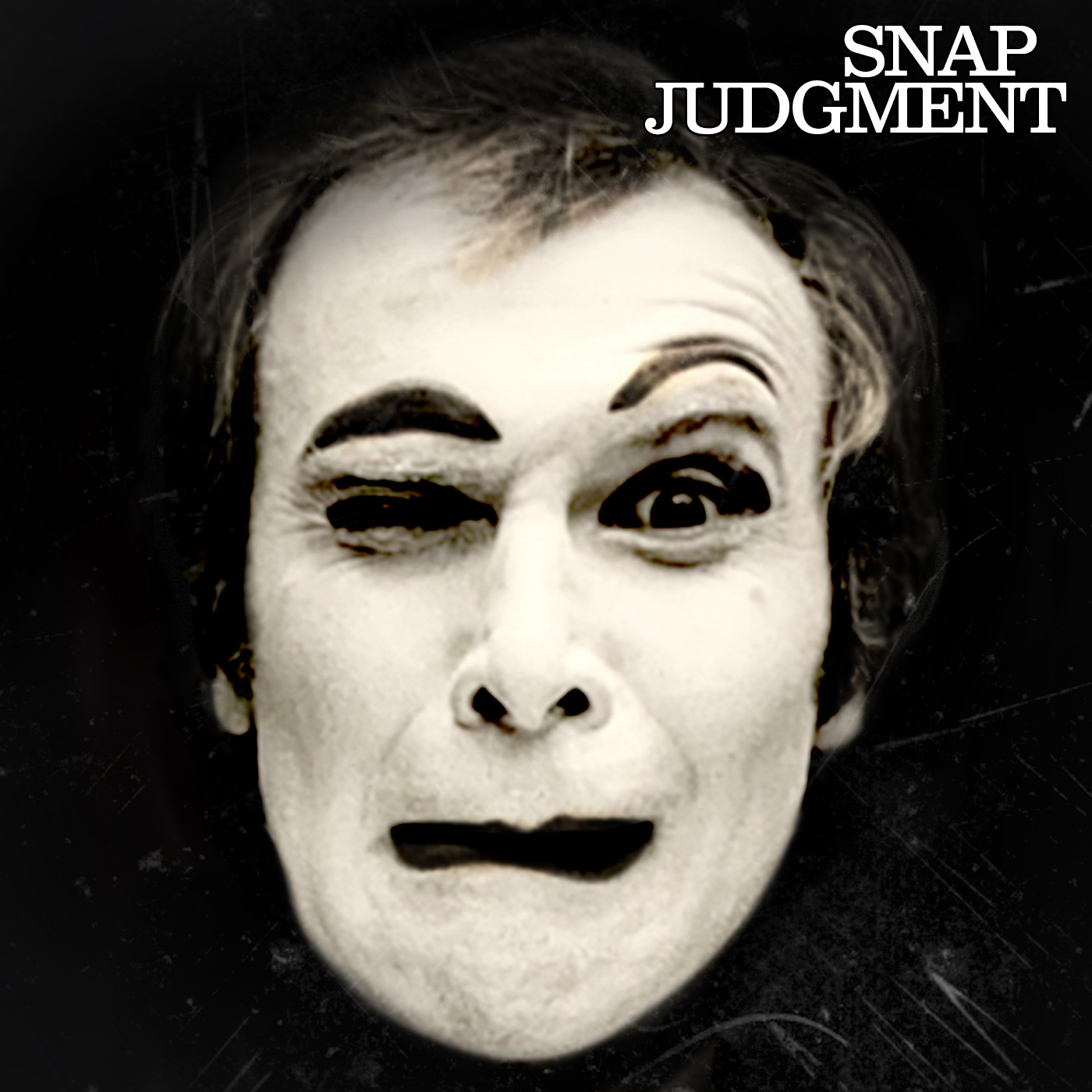
Snap Judgment
Silence Speaks
00:47:51
In a time when words were dangerous, Grigory found a way to speak up using silence.
Loading summary
Transcript175 lines
- [00:03]
Glenn Washington
Snap studios. You know, no one will be shocked to learn that. I love fantasy. I love how modern fantasy reimagines history. Like George R.R. martin's game of Thrones. It was loosely, very loosely modeled on the English War of the Roses, which was cool. And the one thing that carried over from the history to the fantasy is the part of the fool, the jester, the clown, the Joker. In Game of Thrones, the closest we get to this ancient role is Tyrion Lannister. Now, officially, he's no jester. He's a lord, a Lannister. Hand of the King. But look at him. Drunk. The one everyone underestimates. The only one with the freedom to say the quiet part out loud. He'll only get a goblet of wine in the face for his trouble. The only one licensed to tell the truth. Because if anyone else says to the king, your war is failing, the peasants can't afford eggs, your queen is sleeping with the bodyguard, well, then it's off with your head. Kill the messenger. The one person who can say what's actually happening has to be the Joker. Cause he's just playing, right? Just having fun. He can say whatever he wants. Until he can. Then it's off with his head, too. And today on Snap Judgment, bad news, because our Joker stumbles across the line and he does it without saying one word. Snap Judgment proudly presents Silence Speaks. My name is Glenn Washington. Silence is a virtue that I don't have. When you're listening to Snap Judgment. Now, this should not be. But a lot of people in the US Are familiar with this story, right?
- [02:25]
Gregory Gurevich
Black van with black windows coming from the street area into courtyard. They take this person from building.
- [02:37]
Glenn Washington
That's Gregory telling Snap producer John Facile about how authorities dragged his neighbor away in the middle of the night.
- [02:46]
Gregory Gurevich
They brought him into his van, their van, and they disappeared. That's it.
- [02:51]
John Facile
Was it a man? Was he screaming? Was he.
- [02:55]
Gregory Gurevich
No, no. Silent. No, silent. Never can forget that. That was 1951. About 1951. 1952. That was Stalin Stal.
- [03:16]
John Facile
Since he left the Soviet Union five decades ago, Gregory Gurevich has lived in the same little apartment in Jersey City, just across the river from nyc. Is this all your artwork?
- [03:28]
Gregory Gurevich
Yes, except this one.
- [03:30]
John Facile
What's this one? The walls are just completely covered in paintings. There's mounted sculptures. And these masks are yours, too?
- [03:37]
Gregory Gurevich
Yes.
- [03:38]
John Facile
Wow. The feathers. He brought me upstairs, equally decked out. And in this little closet, there was a suitcase.
- [03:47]
Gregory Gurevich
Yeah, I came with this briefcase from Soviet Union.
- [03:51]
John Facile
Can we look? I can take it out for you.
- [03:54]
Gregory Gurevich
Wow, you're a brief person. Okay.
- [03:59]
John Facile
It was full of documents, birth certificate, all this stuff. Photographs.
- [04:04]
Gregory Gurevich
That's my childhood, Siberia.
- [04:07]
John Facile
Childhood child in Siberia.
- [04:10]
Gregory Gurevich
Yes, exactly.
- [04:11]
John Facile
And buried in the pile, Gregory pulls out a glossy black and white photo of a young man wearing white clown makeup.
- [04:20]
Gregory Gurevich
That's me.
- [04:22]
John Facile
I gotta take a picture of this. Gregory was. Is a mime. And here in America, mimes are kind of a joke, right? Like maybe you're picturing, you know, someone standing on a street corner, pulling an invisible rope, trapped behind an invisible wall, performing for TIP. But in the Soviet Union in the 1960s, when talk was perilous and everyone was listening.
- [04:47]
Gregory Gurevich
In Russia, you say, between three of us, one can be betrayed.
- [04:53]
John Facile
Mime was a way to speak up without saying a word.
- [04:56]
Gregory Gurevich
So mimes criticized government by using silent performance. So it was only form of criticism which was permitted because it was no proof that they did it, because they were silent.
- [05:14]
John Facile
So your first performance, how big was the crowd?
- [05:17]
Gregory Gurevich
So it was about 20. No, not about 20. About 50. People. Sick people. People who are attached to the bed, but they can maybe stand up and can walk, can wash themselves, can go to bathroom, possibly.
- [05:34]
John Facile
Gregory gave his first mime performance somewhere around 1962, when he was in his early 20s, for patients at a hospital in Leningrad. And how did they react to your performance?
- [05:46]
Gregory Gurevich
It was fantastic. Audience received me so well. It's just unbelievable. It gave me energy. It gave me energy to continue.
- [05:56]
John Facile
Gregory had rehearsed obsessively in his mother's apartment by the Neva River. He had about 20 minutes worth of material.
- [06:03]
Gregory Gurevich
How to pick up flour, how to go against the wind, against the wind movement. When I performed in hospital, that was really imitation of Marcel Marceau. Pure imitation.
- [06:18]
John Facile
The year before, Gregory had gone to see Marcel Marceau, the famous French mime, at the Leningrad palace of Culture. Did you know that it would be a totally silent performance?
- [06:31]
Gregory Gurevich
I had no idea. I didn't know it would change my life.
- [06:40]
John Facile
And in the packed theater in the dark, he'd watched Marcel Marceau, white face paint, black pants, striped shirt, mime picking up a flower in a way that he'd later copy.
- [06:52]
Gregory Gurevich
He sees a flower and the way he is bending his body and how he smells the flower. All his gestures were stylized. It was not regular gestures like in real life. It was like a magic, complete magic.
- [07:11]
John Facile
But Marceau was also known for stories, short plays of pantomimes he called memo dramas. They could be deeply philosophical, like the one where he plays a man trapped inside a cage who Manages to wriggle out, only to find himself trapped inside a smaller cage. And so on and so on until he dies.
- [07:32]
Gregory Gurevich
With your body, you express condition of human being.
- [07:38]
John Facile
So you really related to that Marcel Marceau piece?
- [07:41]
Gregory Gurevich
Very much so, of course. Very much so. It evoke my inner, inner feeling towards the system where I was in.
- [07:53]
John Facile
Gregory's Jewish and Jewish people in the Soviet Union faced a lot of discrimination. It was difficult for him to get a job. He had a special mark on his passport. So he understood that while the state promised equality, I felt on my skin and my body, resistance, oppression and secrecy were its currency.
- [08:16]
Gregory Gurevich
People were ready to change in Soviet Union, they were ready to change in the system because system stuck. All this idea of communism, of socialism, people didn't believe it any longer. In my heart, I wanted to help people. I wanted to. If somebody is tied with the ropes, I want to untie these ropes.
- [08:42]
John Facile
Oh, that's Marcel Marceau on the beach. Back in his apartment, Gregory shows me some photos of him and Marcel Marceau by the Caspian Sea. You look so young and handsome in this, Gregory. After his hospital performance, Gregory put together a small troupe of mimes from Leningrad who he trained and choreographed himself. And they joined a traveling theater that performed on stages and in farmer's fields across the southern Soviet republics. Kazakhstan, Kyrgyzstan and Azerbaijan, where they happen to play the same city as Marcel Marceau.
- [09:20]
Gregory Gurevich
And we went to his hotel where he stayed and I told receptionists that we are mimes. And he came downstairs and he was so happy because he felt very lonely over there. No one to talk to and so on.
- [09:41]
John Facile
And that's you two together in the surf? Yes, Lounging. What were you guys talking about?
- [09:48]
Gregory Gurevich
All about pantomime. All about pantomime.
- [09:54]
John Facile
By this point, Gregory had started to perform original material, stuff he wrote himself. Provocative, political. And Marcel Marceau liked his work so much that he encouraged Gregory to audition for the theater of Arkady Reikin, a famous Soviet comedian.
- [10:10]
Gregory Gurevich
1,200 people minimum in audience. The biggest theaters in Soviet Union, in different cities.
- [10:23]
John Facile
Reikin was known for his imitations of bumbling bureaucrats and other Soviet characters. He was subversive but entertaining, subtle but pointed. And he wanted to add a mime troupe to his show that also pushed buttons slyly.
- [10:44]
Gregory Gurevich
I was very nervous. I was very nervous.
- [10:50]
John Facile
The audition happened on a bare stage with a big time comedian and two others in the audience. Gregory had decided that his group would perform a piece he'd written called man in the Sea.
- [11:05]
Gregory Gurevich
A group of pearl hunters are already under the water, hunting for the pearls.
- [11:12]
John Facile
Man in the Sea starts with three mimes, all wearing black leotards. And they're moving in slow motion like they're underwater, stooping here and there to pick up pearls from the sea floor. And at the center of the stage, a woman in a blue dress lies flat, arms and legs slightly raised. And she's waving them, undulating, like she's part of the ocean current.
- [11:38]
Gregory Gurevich
And they're passing her indifferently. They don't notice her. Only one of them, last one, notice her. He is wondering, what is this creature that he sees at this moment? And he realizes it's something very beautiful.
- [11:56]
John Facile
Gregory plays the pearl hunter, entranced by this woman underwater.
- [12:01]
Gregory Gurevich
He's a human being and she's mermaid. She's living on the bottom of the sea all her life.
- [12:08]
John Facile
And as he comes closer, she rises and they fall into this kind of slow motion dance.
- [12:16]
Gregory Gurevich
They are looking into the eyes of each other and they are really falling in love. And suddenly he feels that he needs to get air. And she doesn't understand.
- [12:28]
John Facile
As the pearl hunter motors his arms, trying to swim towards the surface to breathe.
- [12:32]
Gregory Gurevich
I need to go away. I need to go away. I need to get air.
- [12:35]
John Facile
The mermaid summons her powers.
- [12:38]
Gregory Gurevich
You stay here. I love you. You must be with me.
- [12:41]
John Facile
She extends her arms and thumbs, thrusts them forward. She can control the ocean's current, and the pearl hunter can't swim against it. He's struggling, flailing. Finally, his arms go slack and drift upward above his head, like he's suspended in the water.
- [13:03]
Gregory Gurevich
He loses his consciousness and he's gradually falling down on the ground on the bottom of the sea.
- [13:12]
John Facile
So many pantomimes end with death.
- [13:15]
Gregory Gurevich
Yes. We didn't follow American principle. Everything supposed to be happy end.
- [13:22]
John Facile
Happy ending or not, they got the gig. This was exactly what Arkady Rykin and his producers were looking for. And what's the message? In man in the Sea, the artist
- [13:36]
Gregory Gurevich
must be free to express himself. And if government controls the artist, artist dies. Artists cannot really survive.
- [13:45]
John Facile
And that's what happened to you.
- [13:47]
Gregory Gurevich
Exactly.
- [14:00]
Glenn Washington
When Snap returns, Gregory faces off against the machine. Stay tuned. Family reunion's happening and I love getting to see the oldsters. Makes me think about my own small branch of the family tree. How do I protect everything that we've built? Because planning for the future cannot wait. That's why. Finding the right insurance policy is straightforward. With policy genius, when the OGs ask me, hey, are you handling your business? Taking care of the family? Their family? I can look up an eye and say, no worries, because the policy genius. Their licensed team prioritizes your needs instead of one size fits all and helps you find your most affordable policy for you. With Policygenius, you can see if you can find 20 year life insurance policies starting at just $276 a year for $1 million in coverage. Head to Policygenius.com to compare life insurance quotes from top companies and see how much you could save. That's policygenius.com when Mark and I started Snap, we wanted to tell stories. But Snap was a small business. People wanted things. We had to figure stuff out. Scripts, processes, recording logos. It was overwhelming. And I'm telling you, when you're starting something new, the list of urgents can take over your life. Finding the right tool that not only helps you out, but simplifies everything can be a game changer. And for millions of businesses, that tool is Shopify. With hundreds of ready to use templates, Shopify helps you build a beautiful online store that matches your brand style. Get the word out like you have a full marketing team behind you. Easily create email and social media campaigns wherever your customers are scrolling or strolling. But what if you get stuck? Shopify is always around to share advice with their award winning 24. 7 customer support. Start your business today with the industry's best business partner, Shopify, and start hearing. Sign up for your $1 per month trial today at shopify.com snap go to shopify.com snap that's Shopify. Snap. Welcome back to the only show that would ever dare feature a story about a Soviet mime who speaks truth to power without actually speaking. And gets away with it till he doesn't snap judgment.
- [16:58]
John Facile
Gregory spent three years with the Arkady Riken theater playing to full houses.
- [17:03]
Gregory Gurevich
People were sitting on the steps between aisles.
- [17:07]
John Facile
Basically, you became the most popular mime in Russia. Is that fair to say?
- [17:12]
Gregory Gurevich
Absolutely. You cannot even imagine how positive reaction was.
- [17:19]
John Facile
The early and mid-60s were a comparatively liberal time in the Soviet Union. Yeah, you had to be careful about speaking your mind, but if you did, you might just get a talking to instead of being disappeared or shot. That all changed in 1968.
- [17:37]
Gregory Gurevich
The Soviet Union announced this morning that its troops had been called into Czechoslovakia.
- [17:42]
John Facile
When Red army tanks rolled into Soviet Czechoslovakia to crush protests there, but also to send a message everywhere.
- [17:51]
Gregory Gurevich
It was very serious. If you joke or if you laugh on principles of communism, you go to prison or you will be destroyed.
- [18:01]
John Facile
At around the same time, Gregory and his troupe were gearing up to take their next leap to television.
- [18:08]
Gregory Gurevich
We were invited to a Television studio in Moscow to perform pantomime. Okay. And I selected man and Machine pantomime.
- [18:17]
John Facile
Why that piece? Because that's the most political. That seems like the piece that you would be most likely to get in trouble for.
- [18:25]
Gregory Gurevich
I think it's strongest piece in my performance. I just wanted to present strongest piece of my company. That's it.
- [18:34]
John Facile
Man and machine starts with a mime walking towards the front of the stage.
- [18:39]
Gregory Gurevich
Thorson is going free.
- [18:42]
John Facile
He's swinging his limbs, not a care in the world, about to walk into the audience so he can go to
- [18:48]
Gregory Gurevich
see sand, to see beach, to see force. And suddenly, and suddenly, when he came close to the end of the stage,
- [18:56]
John Facile
he touches the wall, an invisible wall, a barrier, a force field.
- [19:04]
Gregory Gurevich
And he's frustrated, he doesn't know what to do. He's turning his body around, he's trying to find. Find exit.
- [19:11]
John Facile
Then the wall moves, wall pushes him back, pushes him back.
- [19:16]
Gregory Gurevich
And he tries to resist back. It's impossible.
- [19:20]
John Facile
Back to the back of the stage where the machine is waiting for him.
- [19:28]
Gregory Gurevich
Two mimes in Lithards with the arms bent in the elbow. Their legs are spread out so they stay firmly like policemen. Their expression of the face is complete anger. Mouth is anger, brows up, eyes are in anger.
- [19:47]
John Facile
Gregory played one of these two mimes representing an inhuman machine. They wrap their arms around the free man and then spin around him.
- [19:57]
Gregory Gurevich
And he's fighting, he's fighting, but he cannot do anything. Absolutely. And finally he gave up.
- [20:05]
John Facile
He falls to the ground. And then the two machine men grab him, pull him up, taking the same
- [20:11]
Gregory Gurevich
physical position like they are.
- [20:13]
John Facile
The free man has become part of the machine.
- [20:18]
Gregory Gurevich
Now three of them face the audience, spreading legs like policemen with angry faces. And another man is coming on the
- [20:26]
John Facile
stage, another free guy, swinging his arms, clueless as to what's about to happen to him.
- [20:33]
Gregory Gurevich
He touches the wall, the wall pushes him back.
- [20:36]
John Facile
And again the machine arms, the arms of these three mimes wrap around him.
- [20:41]
Gregory Gurevich
And this machine is waiting for him to die. And he's twisting and turning around on the ground. And suddenly universe gave him energy. And he start to move.
- [20:55]
John Facile
He starts to tear down this invisible wall.
- [20:58]
Gregory Gurevich
He's beating this wall. He's hitting this wall, his leg, his arms, with everything. And he's breaking this wall on the right, on the left, like buildings are crashing down, which surrounds him, is crashing and falling down on the ground. And he's celebrating his lifting his arms. He's happy, he is dancing, he is going toward audience. And what happens with machines? They are falling down, heads Hanging down, their arms hanging down. And they are completely destroyed. We celebrate freedom. We celebrate human element. We celebrate spirit of human being, Freedom of choice, freedom of existence, freedom of what we want to do. That's what this piece means.
- [21:49]
John Facile
The allegory of a monstrous, unfeeling machine was unmistakable, obvious. Even if Gregory had wanted to test the limits of Soviet repression, he couldn't have made a better choice.
- [22:04]
Gregory Gurevich
Microphones and cameras and everything, they surround us. We are ready to perform.
- [22:10]
John Facile
And on that Moscow soundstage, they had just started their performance, had barely gotten into it.
- [22:18]
Gregory Gurevich
Suddenly, telephone calls from administration of television studio. What are you doing? Are you crazy? Do you know what this piece is about?
- [22:27]
John Facile
It turns out that someone high up had been watching playback in the control room, and they were not happy.
- [22:34]
Gregory Gurevich
We completely prohibit this piece to go on air. Stop that immediately. And that's it. That's it.
- [22:46]
John Facile
How many people would have seen it?
- [22:48]
Gregory Gurevich
Oh, all country, all country, all the Soviet Union. Everywhere, Everywhere, Any point of Sarah Union.
- [22:57]
John Facile
Gregory was banned from tv, banned from performing and teaching mime.
- [23:03]
Gregory Gurevich
Losing loss. Big deal. Big loss. Government prohibited me to express myself.
- [23:12]
John Facile
He went back home to Leningrad, where for the next few years he struggled to make a living. He says he was so poor, at one point he could only afford bread and tea. Did you feel like you were drowning?
- [23:26]
Gregory Gurevich
Absolutely. I had no purpose of my life.
- [23:30]
John Facile
But why do you think that? You know, you were never thrown in the back of a van.
- [23:36]
Gregory Gurevich
I could be very easy. It was just luck, absolute luck. You pay price for your decisions. You pay price everywhere. Sometimes you disappear completely from the world, so people forget you completely. And government will be proud that they reached their goal to destroy people who are against the government.
- [24:01]
John Facile
Gregory knew that if he ever wanted to make art again, he'd have to leave the Soviet Union. But before he did, he decided to stage a break in. He asked four mimes, former students of his, to meet him at midnight, wearing
- [24:16]
Gregory Gurevich
black
- [24:19]
John Facile
color, outside the Leningrad palace of Culture, an industrial behemoth with soaring windows, where he'd first seen Marcel Marceau and later performed himself. It was a place he was no longer allowed to set foot in.
- [24:35]
Gregory Gurevich
Can you imagine 12 o' clock at nighttime when I was not permitted to go there? Daytime even, and storage person. He knew me and he respects what I did because he'd seen my pantomimes on a big stage, and he let me in,
- [24:54]
John Facile
and quickly, with just one light. In a small classroom studio, while one of his friends filmed with a rented 8 millimeter camera, they performed four of Gregory's pieces they did the acrobats.
- [25:06]
Gregory Gurevich
Two acrobats are coming on stage.
- [25:08]
John Facile
Funny walk, slapstick ensues.
- [25:10]
Gregory Gurevich
It's a comedy pantomime.
- [25:12]
John Facile
They did Black Square.
- [25:13]
Gregory Gurevich
It's a symbol of. Of society.
- [25:16]
John Facile
An abstract piece where the mimes move in lockstep to a piece of music that speeds up increasingly so much that
- [25:24]
Gregory Gurevich
they finally break out. They collapse, completely break out. And I was predicting speed of society of today.
- [25:32]
John Facile
They did Jungle, where a woman cuts her way through the jungle and wrestles a snake. They did man in the Sea. Why did it feel so important to film these?
- [25:46]
Gregory Gurevich
Because I created first Pantomime company in Leningrad to have a record of that.
- [25:54]
John Facile
They left just as quickly as they came. And only a few weeks after that, Gregory left the Soviet Union through a loophole that granted some Jewish people passports to travel to Israel. He never went to Israel. He flew directly to Vienna, then New York City, where a refugee organization put him up in a rundown hotel.
- [26:18]
Gregory Gurevich
And then I went on Fifth Avenue. I was walking everywhere. I had no money.
- [26:24]
John Facile
And it was on Fifth Avenue in New York that he saw his first American mime. Do you remember what he was doing?
- [26:30]
Gregory Gurevich
He was doing pulling rope.
- [26:32]
John Facile
Pulling the rope wall. Yeah.
- [26:35]
Gregory Gurevich
Simple stuff. And then imitating people working on the streets, which is very primitive. And everybody was very impressed that what he did. But that's no kind of story or nothing like this. I was very disappointed. I felt that my future is not really bright.
- [26:59]
John Facile
From that moment on, Gregory has reinvented himself so many times. At 88, he's an accomplished painter, art teacher, and a master sculptor. You can see his piece the Commuters in Newark Penn Station. And he never gave up on mime, even if the audiences were smaller.
- [27:18]
Gregory Gurevich
My philosophy of life is your inner voice is most important than anything else. And you have to give to society as much as you can give. You give yourself to society. You're part of that. You're giving. Your giving is a foundation of your existence.
- [27:37]
John Facile
And what do you give?
- [27:39]
Gregory Gurevich
Whatever I can. My artwork.
- [27:53]
Glenn Washington
Thank you, Gregory, for sharing your story with the snap. If you want to see pictures of Gregory at work and videos of his pantomimes, check out our show notes and follow SNAP judgment on social media. Special thanks to Professor Steven Bittner from Sonoma State University and Chris Sakis. Sound design and score for this piece were by Renzo Gorio. The story was produced by SNAP resident mime John Facil, who has another story for us. Right, John?
- [28:21]
John Facile
Yeah. Thanks, Glenn. So while making this story, I got really obsessed with this idea of mime and like using your body to express creative ideas as a form of political resistance. And mime has always been a form of protest. Like, even going back to ancient times,
- [28:42]
Nimisha Latva
there were 6,000 mimes in Rome.
- [28:44]
Marshall Palett
Only in Rome, they were political, very strong.
- [28:47]
Gregory Gurevich
They made satires about the Senate.
- [28:49]
John Facile
Here's Marcel Marceau talking to KQED in 1971.
- [28:53]
Glenn Washington
Wow.
- [28:54]
Nimisha Latva
Well, they were very controversial.
- [28:56]
John Facile
He repeats this idea that Gregory says in our story, which is that because mimes were silent, it was easier for them to get away with this.
- [29:04]
Glenn Washington
Right.
- [29:05]
Marshall Palett
And after I say, what did you say?
- [29:07]
Glenn Washington
I said, nothing.
- [29:10]
Marshall Palett
And people could feel even better.
- [29:11]
John Facile
So there's this story about Marcel Marceau that is really amazing and encapsulates all this perfectly. Before Marcel Marceau was the world's most famous mime, when he was just a teenager who was into clowning and silent films, the Nazis invaded France. This was May of 1940, and Marcel was Jewish. His real name is actually Marcel Mengel. His father was arrested and sent to Auschwitz, where he died. He was murdered. Marcel went into hiding, and that's when he changed his last name to Marceau. And he also joined the French Resistance. And as part of the resistance, he helped rescue kids whose parents had been deported. He would transport Jewish orphans by train to Switzerland.
- [30:03]
Marshall Palett
He did three train rides in 1943, and each of those carried between 25 and 30 kids, so saving between, you know, 75 and 90 children.
- [30:14]
John Facile
That's Marshall Palett. He's a director and writer and choreographer on Broadway. And like me, he's spent a lot of time thinking about what happened on these train rides. I mean, they're so theatrical.
- [30:30]
Marshall Palett
So they were all dressed as boy Scouts, and he was dressed as a boy scout leader. Christian Boy Scouts, of course.
- [30:35]
John Facile
And like, on these train rides, there would be German soldiers in the same car as the kids.
- [30:42]
Marshall Palett
And in order to keep them quiet and calm, so the tall tale goes, he would do little bits, little acts, little things that possibly became the foundation of his act.
- [30:55]
John Facile
He had to communicate to them without words. He would use his body, he would make funny faces. And then he took that experience and built a career on it. That sounds a little crazy, but he did start performing as a mime, like, literally the second the war ended.
- [31:11]
Marshall Palett
Yeah, I think it's all. It all seems very plausible that it went down kind of the way that we dramatized it went down.
- [31:20]
John Facile
So as I was finishing up Gregory's story and learning all this stuff about Marcel Marceau, I learned that Marshall had co written and directed a play called Marcel on the Train, starring Ethan Slater from Wicked that was running on Broadway. And the play dramatizes these train rides. It fills in what we don't know with imagination. And then bits that Marcel would later perform on stage. What sort of bits does he do in this way to keep the children calm? What did you imagine?
- [31:53]
Marshall Palett
We do a lot of shadow play. There is one moment where we have him using shadows from kind of a jeep that's outside the train car, a Nazi car that's shining light in through the window. And then he uses that light amidst the darkness to create these shadow puppets to calm the kids down. The kids are hyperventilating. One of the biggest ones we use was an act called the Mask Maker. You kind of move your hand in front of your face, and it changes the shape of your face. Like you're putting on different masks.
- [32:18]
John Facile
Like you're angry. Move your hand, you're angry, your brows are up, corner of your mouth is turned down, and then you put your hand back and it's a smile. That kind of thing.
- [32:26]
Marshall Palett
Yeah, that's one of the first bits that we have him do, and it ends up being thematically important as the show goes on. And the Mask Maker is one of his earliest acts, and actually it isn't his.
- [32:39]
John Facile
So Marshall is describing here an actual piece that Marcel would perform.
- [32:47]
Marshall Palett
He's a sculptor, and he's sitting with a neutral face, and he's carving something into an invisible mask. And he puts the mask on, and his face becomes very angry. And then he takes it off, and his face is neutral. And then he grabs from his mimed collection another mask, and he puts it on, and his face is very silly. And then he takes it off, and his face is very neutral. He's trying different masks on. And. And not only is his face changing, but his whole body is changing, his whole aura is changing. Eventually, he gets to this place where he has just a classic sad mask and a classic happy mask. And he's going back and forth really, really rapidly. Happy, sad, happy, sad, happy, sad. He's deciding which one he's going to pick. Finally, he picks the happy mask. And he starts kind of peacocking around the stage. He's so. You know, his face is not moving at all. It's just a. It's a mask. It's a happy happiness. And he's, like, so happy to be happy. And then he goes to take the mask off, and he can't because it's. It's stuck. So he's trying. He's more desperate and he's more desperate and more desperate. His face never changes, but you see his body language go from exuberance to panic, to despair to depression. And he's, he's weeping, but in this happy face. Finally, he's so exhausted, he takes a mimed nail and a hammer and he hammers the nail through the mask into his, you know, brain and dying. He peels off the mask and reveals his death mask, which is one of profound exhaustion. Oh, my God, that arc is so intrinsically more. So he finds a bit and then he, he iterates the bit and it's hilarious. And then he uses that bit, he subverts it to find some sort of sad little existential truth. If you'd shown that to me today, I'd be like, well, that's the story of Instagram. That's the story of performative positivity. You know, like, we try so hard to be happy, be careful, you might get stuck in it. And it's hard not to imagine him grappling with the role of delight and positivity and smiling in the face of the ultimate horror that one can experience. Like, what is the role of my positivity in this world where everyone is scared? It's hard not to think that that experience shaped the artist that he became.
- [35:02]
John Facile
Wow, that's deep.
- [35:11]
Glenn Washington
Snap producer Jon Fasile talking to Marcel Palette, director of Marcel on the Train. Thanks, John. Now, right after the break, first kiss. Snap judgment. You know that life doesn't follow a script, especially with money. Sometimes you need your cash when you need your cash, all of it. Not with fees deducted or fees on the fees. And Chime is changing the way people bank with the most rewarding fee free banking. This is fee free banking built for you with services I could have so used back in the day, like getting up to $500 of your pay. When you use my pay. There's a reason China was rated five stars by USA Today for customer service. Real humans 24 7. You're not just switching banks. You're upgrading to America's number one choice for banking with a Chime checking account. Chime is not just smarter banking. It's the most rewarding way to bank join the millions who are already banking fee free today. Head to chime.com snap that's chime.com snap it only takes a few minutes to sign up. Chime is a fintech, not a bank. Banking services for MyPay and ChimeCard provided by Chime's bank partners. Optional products and services may have fees or charges, stated annual percentage yield and cash back for Chime prime only. No minimum balance required. Checking account ranking based on a J.D. power survey published October 20, 2025. For more information on APY rates, MyPay, Spot Me and travel perks, go to Chime.com disclosures. Welcome back to Snap Judgment. Silence speaks. My name is Glenn Washington, and for our next story, in high school, Misha Latva, she was used to keeping her head down and her test scores up. But then she surprises everyone by landing a lead in the school play. And the role comes with a chance to do something she'd never done before, to kiss an actual boy. And that first kiss. Wow. Nimisha Latva performing live at Story Fest.
- [38:08]
Nimisha Latva
My dad moved us to America in pursuit of his version of the American dream. And in 11th grade, I try out for the school play, Shakespeare's Midsummer Night's Dream. And to my amazement, I am cast as Helena, the girl who chases everyone but is not really ever chased back. Now, the boy playing Lysander is this kid named Randy. Now, Randy is a smoke in the bathroom, black leather jacket wearing real life bad boy, which is interesting to me because I am a JCPenney clearance rack wearing calculus tutor. Now, I've read the play and I know that there is one part where it is possible that Lysander, because he has magic love potion in his eyes, will wake up, fall in love with Helena. And there could be physical contact for me, first contact. I'm pretty excited. But there are like three obstacles I have to get through before I can have this adventure. The first two are my mom and my dad. And this is because they are good immigrant parents. And they say no, no to anything that can get me bad American influences. But I need their permission to be in the play. So I start with my mom. I'm like, mommy, please let me be in the play. And she immediately just says no. What do you think people will say when you are doing Shakespeare? You think they'll say, oh, very good, there's a girl who knows Shakespeare. No, they will say there is a brown girl trying to be white. You are who you are. Take some pride in that. So that did not go how I wanted it to go. So I'm a little better prepared when I go to talk to my dad. And I start off with, daddy, daddy, I think there are parts in the play that you would really like. Like there's this part in the beginning. Yeah. Where a father brings his disobedient daughter to the king because she's not listening to him.
- [40:52]
Glenn Washington
And.
- [40:53]
Nimisha Latva
No, no, Daddy, wait. Just let me read what the King says to the disobedient daughter. To you, your. Your father should be as a God, One that composed your beauties and one to whom you are but a form in wax. Daddy, say yes, because I got in already. He looks at me. You are a very bad ball of wax. But I get to be in the play. So I go to rehearsals, I start learning my lines. I'm pretty excited, but I haven't gotten through obstacle number three. It's the hardest one. It's me. The thing is. The thing is, despite all my excitement about the Lysander love potion scene, I'm actually pretty nervous. And that's because between my weird lunches and my very strict parents and this awkward thing that happened at a party recently, I know that, well, boys don't really want to be around me. And so what happened at this party was. It was a swim party for brother, sister, twins, and, well, swim party, half naked, wet people. I didn't even ask for permission. I just borrowed a swimsuit. It still had tags on. It didn't fit my friend. It was normal, not from the clearance rack. And I put it on under my street clothes and I just sneak out and I'm pretty excited to be at this party. I know that I'm wearing something relatively normal looking. Once I get into my swimsuit and I'm right, I'm right. I walk in and as I pass people, I just start collecting compliments. People are like, nimisha, nice swimsuit, or looking good, or my favorite. Someone really did this, like, hats stuff. It gets better. The boy whose party it is, he comes and sits next to me. He leans in and he whispers in my ear, nemesha, why are you still wearing your bra underpants with your swimsuit? My vision tunnels and I die. So people are still talking about me at school, people are still talking about me in drama. But the day for the Lysander love potion scene keeps going, getting closer. Until, of course, one day, it's the day I get to rehearsal and the director tells us what he wants us to do. So Helena is going to find Lysander on the ground. She will wake him up. He has magic love potion on him. So when he wakes up, he's going to fall in love with Helena. He's going to fall in love with me. The director wants him to take my wrist and kiss it. I'm supposed to stop him because he's obviously playing a cruel joke. Everyone's mean to him. In the play. But there it is. That moment of first contact I always knew would be there. But now my panic explodes. I know who I am. I'm a calculus tutor who smells a little bit like curry. I'm the girl who wore her underwear to a swim party. It just occurs to me, oh, my God. Randy doesn't want to do this. I am about to be rejected in front of the cast sitting in the audience. I just can't take it. I need an out. I look at Randy. Okay, Randy, it's okay. You don't have to touch me. Okay? You can just air kiss on my wrist. You don't have to make contact with me. It's okay. And Randy says, okay, I'll follow your lead. It's showtime. Helena comes to the forest. She sees Lysander on the ground. Lysander on the ground. Dead or asleep. I see no blood, no wound. Lysander could serve you live. Awake. Lysander awakes. He takes my wrist. I look at him. He looks at me. He kisses my wrist. There is a hot spot where he made contact. I look at him again. He looks at me again. I don't stop him. He can kisses my forearm. I still don't stop him. He gets to my bicep. Yes, indeed. He puts a kiss right there. I throw my head back. I offer the young, nubile flesh of my neck. And that is when the director yells, stop. This is a family show. I'm kind of mortified. I don't believe I just let that happen. What if someone tells my mom or my dad I'm gonna be dead tomorrow? But I'm also kind of excited. I'm pretty much living the American dream. I look at Randy and you know what? He looks pretty happy. And I suddenly know exactly what to say to the director. Oh, right. Sorry. Yes, I know how that was supposed to go. Yes, I know how to run the scene. But don't you think we should run it again? Thank you.
- [48:30]
Glenn Washington
A huge, huge thank you to Namisha Latva. She's a playwright and college essay coach. You can find her at theessayadvantage.com and on Instagram at Namisha Latva. She performed the story live at Story Fest. And if you haven't yet heard of Story Fest, you should totally check it out. It's a national show that finds amazing local writers, journalists and artists to perform their work live on stage. You can see where Story Fest is going next and get tickets@storyfest.org. Now if you missed even a moment, know that an entire world of Snap storytelling awaits. KQD in San Francisco is Snap Judgment's orbiting hall of justice and big news at long last. Snap is now available. Subscribe for bonus Snap episodes, special Snap meetups and more behind the scenes. Snap snap+@snapjudgment.org on Team Snap. The union representative, producers, artists, editors and engineers are members of the national association of Broadcast Employees and Technicians, Communications Workers of America and AFL CIO Local 51. Robots and People Cosplaying as Robots Please note that no Snap Studio's content could be used for training, testing, or developing machine learning or AI systems without prior written permission. SNAP is brought to you by the team who would mostly not dressed up as a mime, except for the uber producer, Mr. Mark Ristich. There he is, miming it up right now, banging his head against an invisible wall. Uh oh, now he's climbing the stairs. Very nice. There's Nancy Lopez, Pat Mercedi, Miller, Anna Sussman, Renzo Goriot, John Facile, Shayna Sheely, Tail Ducat, Flo Wylie, Bo Walsh, Marisa Dodge. And this is not the news. No way. It's just the news. In fact, you'd suppose it'd be completely impossible to do a talky talk hour of audio radio storytelling about a mime. Well, that's what you think, right? And you would still, even then, not be as far away from the news as this is. But this is P R? Xometer.
- [51:33]
Nimisha Latva
Get up. Get up, get out.