← Snap Judgment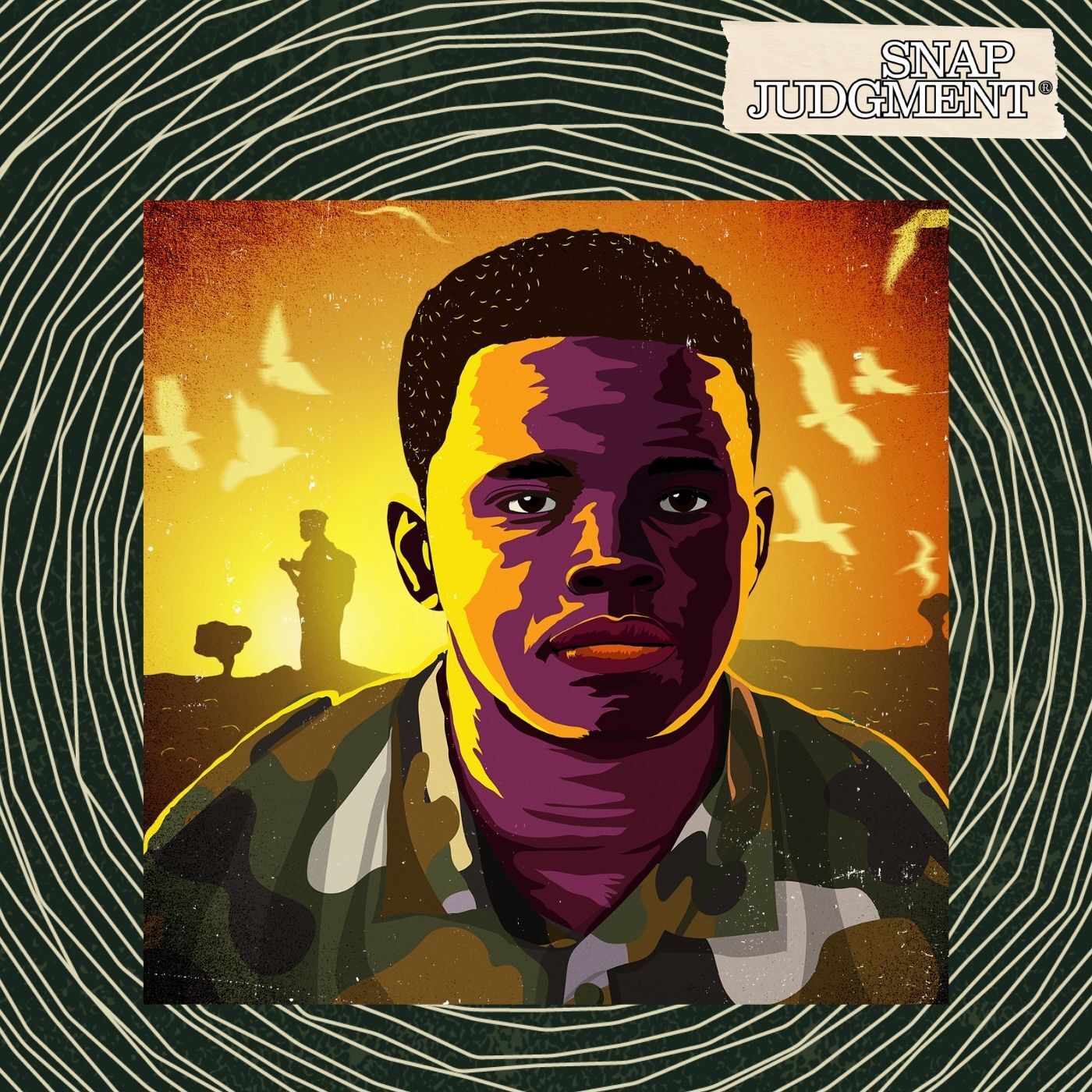
Snap Judgment
The Wedding Guest - Snap Classic
00:49:12
After years of fighting battles as a child soldier, a Sudanese man finds himself a refugee in Australia. As he struggles to overcome his past, he comes face-to-face with his childhood tormentor on a TV show.
Loading summary
Transcript171 lines
- [00:03]
Lynn Washington
Snap Studios.
- [00:07]
Eric Glass
I'm Eric Glass. On this American Life. We tell real life stories, really good ones.
- [00:12]
Lynn Washington
My mother said, I'm sorry you weren't here because Father Sager was here visiting, and he found a very nice orphanage for you. And I said, but I'm not an orphan.
- [00:30]
Eric Glass
Surprising stories every week.
- [00:32]
Lynn Washington
This American Life.
- [00:35]
Eric Glass
Listen, wherever you get your podcasts.
- [00:52]
Lynn Washington
Okay, so there's a story that I wanted to tell you. It's a personal story, an odd story, for sure. And I work on this story for probably two weeks, rewriting, refining, tweaking. Then finally, I go into the studio and I perform the hell out of this story, if I do say so myself. Bam. And I know that you are gonna love it. But then a few days later, my partner in all things snapped, the uber producer. He wants to have a chat. Okay. First starts in talking about the old days. We've known each other since we were in school in Michigan. Many, many years ago. He asked me, yeah, where'd you go on that college trip with your daughter? And I started to get a little suspicious. What is it? Where's the knife? And he's like, well, I was thinking that story you did? Yes. That story, yes. Well, that story doesn't work.
- [02:09]
Eric Glass
What?
- [02:10]
Lynn Washington
What do you mean, that story doesn't work? And I argue. I disagree. But he knows me well enough as a friend to tell me his truth in a way that I can hear it. Like I said, we've been through some things together, he and I. One of my oldest and dearest compatriots. So he's already anticipated how I'm going to react, what I'm going to say before I even know myself. It's one of the universe's greatest gifts to have someone like that, not someone like that, to actually have him in my life. Because what if instead, the person that knows you most of all better than your mama, better than your spouse, what if that person. What if that person's not your friend at all, but your enemy? Today, in snap judgment, we proudly present the Wedding Guest. An amazing chronicle of two men with the very closest of bonds. My name is Lynn Washington. Please tell everyone to go away and leave you alone for the next few minutes. Go on ahead. Let them know they can wait, because you're listening to Snapdudg. We begin in Australia, a place where a refugee thought, at long last, he could finally stop running. In this story, it does recount real events that happened to a child soldier. Graphic scenes inside a prison camp. And as such, listener discretion is advised. Ruby Schwartz has the story.
- [04:25]
Ruby Schwartz
In late 2004, Aikshut Deng was on the road. He was driving to a church in Brisbane, a city on Australia's east coast. He'd been invited by a friend to the wedding of a South Sudanese couple. He didn't know them all that well, but he still had that kind of giddy, excited feeling you get before a wedding. Which drove him to formalities he might not otherwise subscribe to.
- [04:48]
Eric Glass
I'm not a suit person so I like to wear a polo shirt, but I think I was wearing a nice button up shirt just for respect of the wedding.
- [04:57]
Ruby Schwartz
In the church, the 70 or so guests milled about making small talk before taking their seat on one of the wooden pews.
- [05:05]
Eric Glass
And then the bride and the groom got married. Everything went all right. People ate food and all that. So all the Sudanese food, lamb stew, fish stew, because we are Dinka, so it's all stew. And then at the end of the service, I was sitting to the left side of the building of the church. I was just looking around.
- [05:28]
Ruby Schwartz
And Ayik recognizes this guy off to the side on his right.
- [05:33]
Eric Glass
So he was just a few seats, he was just a few seats in front of me. He was talking to someone, said, this guy can't be here. This, Nah, no way, that's not him. I look again, you know, I just said, no, I can't be right. You know, I thought maybe something wrong with me in church. I just couldn't believe saying that this guy is gone years ago. I can't be him. He's not here. He's in Africa. He's dead. And I look again just to double check to make sure that it's him and it was him. Honestly, just the eye was the thing. I never forget the look. His face never changed. After I realized it was him, my brain was about. It's just like a bomb just about to explode. I felt so angry.
- [06:25]
Ruby Schwartz
Ayik had always thought that if he ever came face to face with this man again, he'd kill him. But at this point, many years had passed and he was a different person now.
- [06:36]
Eric Glass
I said, nah, this time I can do anything to him and he can't do anything to me because I'm not a kid anymore. I'm not that skinny child anymore. So what I did, I walked straight back to my car, jumped in the car, went home. While I was at home, everything start pouring back in my head. I went back to when I was a child again. When I was a child under his, you know, under his power. I never went through so much pain in my life until I met Anyang.
- [07:16]
Ruby Schwartz
Ayik last saw this man Anyang about 10 years ago when he was just a 13 year old boy. He was living in Sudan, which at the time was experiencing its second civil war. And Ayik had just been enlisted in the Children's Army. That first day when he arrived at the base, this sprawling encampment with tents dotted all over the red, dusty earth.
- [07:38]
Eric Glass
I look around, children everywhere, everywhere. There were hundreds of them. I felt, okay, this is good. Now I'm going to get trained. I'll get my uniform, I'll get my boot, I'll get my gun. I wasn't really scared, you know, I was excited.
- [08:03]
Ruby Schwartz
But it didn't take long for Ayik to realise that the Children's army wasn't what he'd expected.
- [08:08]
Eric Glass
The training was hard.
- [08:10]
Ruby Schwartz
He had to train from 4am well into the afternoon's hottest hours.
- [08:15]
Eric Glass
You run 20 meters away, 20 meters back, and if you make a little mistake, you get whipped by the trainers from the back. You know, there might be two of them or three and you just run, you know, you just have to get it right or you pay for it.
- [08:31]
Ruby Schwartz
There was very little food to go around, usually just ground maize or corn if they were lucky.
- [08:37]
Eric Glass
I was just sick of the punishment you get from training.
- [08:43]
Ruby Schwartz
But the thing is, once you join the Children's army, there's no just packing up and leaving. You're stuck.
- [08:51]
Eric Glass
Once you join, yeah, that's it.
- [08:53]
Ruby Schwartz
The only way to get out is to escape. So Ayuk started asking himself, how can I get out of here?
- [09:00]
Eric Glass
Because I can't go back to my auntie. Because my auntie's hours away toward Ethiopia.
- [09:05]
Ruby Schwartz
He also couldn't go back to his village in Sudan.
- [09:08]
Eric Glass
Unless you go as a group and you got guns. Yeah, but if you're a child, nah, no way you gonna make it.
- [09:15]
Ruby Schwartz
His only option was this nearby refugee camp called Zima, about two kilometres down the road.
- [09:22]
Eric Glass
Cause we're in Ethiopian jungle. There's nowhere to run. You can only run there.
- [09:28]
Ruby Schwartz
So one night, under the blanket of darkness, clutching a metal plate and rocks for protection, Ayik ran out of the camp towards the dirt road to Dimma.
- [09:38]
Eric Glass
From leopards, from hyenas, lion. I didn't think I can make it.
- [09:42]
Ruby Schwartz
He kept looking back, expecting to be caught or attacked. But 15 minutes later, panting, sweating, the refugee camp was finally inside. He'd made it.
- [09:57]
Eric Glass
And then a few weeks later, the refugee camp. The army come at nighttime, they get a bunch of grass Light it up. They walk into this little hut, light it. Looking for boys.
- [10:09]
Ruby Schwartz
Every few days, the bosses from the Children's army camp would do a sweep through the refugee camp looking for children that might have escaped. During one of those sweeps, they found Ayik. They pulled him out of the hut he was sleeping in.
- [10:25]
Eric Glass
And they caught me and took me back to the camp, to the Red army camp. We got thrown into this. It was a makeshift little prison. It made out of branches of tree. And during the day, around 12 o' clock, they bring you out.
- [10:44]
Ruby Schwartz
That's when Ayik met the army's prison guard for the very first time. The guy responsible for punishing those who tried to escape.
- [10:52]
Eric Glass
And his name was Anyang.
- [10:54]
Ruby Schwartz
Anyang was 16 years old. He was solid and he towered over A Yik.
- [10:59]
Eric Glass
But I didn't take him as just he's gonna be a bad person. I thought, he's doing his job and he's probably gonna punish us today. And that's it.
- [11:13]
Ruby Schwartz
First Anyang put him in a hogtie.
- [11:15]
Eric Glass
You know, your elbow, Sita to your, to your ankles, you know, and you just on your chest and you in the sun, you know, lying in the sun.
- [11:28]
Ruby Schwartz
After a day of almost non stop beatings, Anyang threw Ayik back in the prison. AIK begged him for water. By the end of the day, Ayik was so thirsty that he had no choice but to drink his own urine.
- [11:42]
Eric Glass
So what happened was escape. Escape.
- [11:46]
Ruby Schwartz
That very same night, Ayik broke out of the prison and ran back to the refugee camp.
- [11:52]
Eric Glass
I thought, I'll disappear into the crowd and they wouldn't forget about me because there's other hundreds of child soldiers coming from Sudan every night. As refugee they can go and take them. And then I got caught again.
- [12:07]
Ruby Schwartz
So he tried escaping again a third time.
- [12:11]
Eric Glass
Some night around 3 o' clock, I'll just go and climb the tree because when they come, they didn't know there'd be someone on the tree.
- [12:21]
Ruby Schwartz
Then a fourth time, and then again.
- [12:23]
Eric Glass
The same guy with his group, come and get me, come and get me. And a fifth time I came up with a plan that I used to sleep between the girls. Because when the rebel rock up in the morning, they're only looking for boys. They didn't take the girls.
- [12:38]
Ruby Schwartz
But each time Ayik was caught and delivered back to the prison camp and back into the hands of Anyang.
- [12:47]
Eric Glass
Every time I come back, it's him. And then he realized, this is the guy that don't listen. This is the guy who think he knows everything.
- [12:55]
Ruby Schwartz
So the punishments got worse.
- [12:57]
Eric Glass
When the skin start peeling off from your elbow or your feet, he'll rub chili in there. So he just had a hate for me. He hated me at the time. He had a big boss ahead of him, you know, when his boss is there, fair enough. You can go as hard as you want.
- [13:16]
Ruby Schwartz
To some extent, Ayik knew that Anyang was just doing his job and following the orders. But then Anyang would torture Ayik and the other boys in the prison camp, even when the superiors weren't around.
- [13:27]
Eric Glass
Every time he see me, he just. He just. He punished me worse than any other person in that prison. I asked myself, yeah, why is he doing it? Is it for his own pleasure? Why? Why see other people like him suffer like this? Why is he doing it? There was an anger inside me, you know, all that time, I became very angry.
- [13:51]
Ruby Schwartz
But that still didn't keep A Yik from that same cycle. Escaping, getting caught, escaping, getting caught again.
- [13:59]
Eric Glass
I lost track. So many times. I lost track probably 15 to 20 times. And I thought, oh, they get sick of me and let me go. And that's why I kept doing it. But after a while, I just got sick of it. And I just said, there's no point. I might as well just give up. I stopped running.
- [14:20]
Ruby Schwartz
Ayik was eventually deployed and spent more than two years fighting with the Sudan People's Liberation Army. He finally got out when his sister, who was married to an army captain, managed to organise a passage for him to travel from Sudan into Nairobi, Kenya.
- [14:36]
Eric Glass
When I came to Kenya, we went to this hotel and I just felt so, you know, saved. Nothing felt like that. I swear to God, I never felt like that.
- [14:51]
Ruby Schwartz
From there, they applied for resettlement, and not long after, they were on a flight to Australia to get away.
- [14:57]
Eric Glass
Go somewhere where you can eat. You feel of your belly. You sleep peaceful. You're not gonna hear weapon, you're not gonna run, you know, I felt like this is it. This is a new life. I was very awful.
- [15:22]
Ruby Schwartz
Now, as a grown man, back at his apartment in Brisbane after the wedding, Ike was pacing around his living room.
- [15:30]
Eric Glass
To me, I felt like, this is crazy. I said, why? Why him to where I am? Some of my best friends live in America, Canada. Why not one of them? Why bring my enemy next to me? I thought of that. I thought about him so many times.
- [15:49]
Ruby Schwartz
Even though A Yik was living this new life in a new country of peace, these thoughts about Anyang and all the pain he inflicted on him, and they kept Coming up in flashbacks. It was like this movie rolling in front of his eyes that he just couldn't press pause on.
- [16:05]
Eric Glass
Sometime when I was in the kitchen, because there were three of us in my family there that used to cook for everyone. Me and my sister and my cousin. Sometime when I was in the kitchen, I'll look at these trays sitting in front of me of meat. My mind will start thinking, okay, if you cut into that meat, you'll be like you're cutting into your nephew and nieces. All these things, crazy thought come into my mind sometime I'll just stick the knife in the stake and go to the park and then come back and my sister will say, how come you didn't do that? I said, because I don't want to. I didn't want to tell her what I was going through. I didn't want to tell her. That thing remind me of the war when I was a soldier.
- [16:54]
Ruby Schwartz
Ayuk's life in Australia had not gone how he'd planned. He couldn't hold down jobs. He got a taste for drugs and booze and eventually became a low level drug dealer.
- [17:05]
Eric Glass
I went through in Australia going to prison, having a fight with a girlfriend, having fight with the police, having fight with people at the pub. I was diagnosed with post traumatic stress disorder. Sorry, Ruby.
- [17:30]
Ruby Schwartz
He says for almost a year he couldn't stop thinking about Anyang. So he had to keep reminding himself he's not 13 anymore, he's not a child soldier. Anyang can't hurt him anymore. And then.
- [17:46]
Eric Glass
I had a little boy. I had a child, I had my son. So I had something to live for.
- [17:52]
Ruby Schwartz
He called his son Freeman. And Freeman totally changed the way Ayik saw the world and his place in it.
- [18:00]
Eric Glass
I mean, children, if you have a child, you think. You think different and not do things that you would do.
- [18:07]
Ruby Schwartz
And this man Anyang, while still there, faded back into the recesses of his mind.
- [18:14]
Eric Glass
So I was just trying to focus on myself. I got a child now and I want to live. I want to move on with my life and I try to find a career or something just to prove that, you know, I can do something with my life.
- [18:31]
Ruby Schwartz
And that's when he started pursuing his childhood passion.
- [18:35]
Eric Glass
The first time I saw a movie, I was in the jungle. So what happened was the Bodyguard came with a tv. It was just as big as a microwave. It was black and white. And I just see this white guy jumping out of the plane doing all this crazy stuff. So when I came here, when I came to Australia, I tried to get to the bottom of it, how they make movies.
- [19:00]
Ruby Schwartz
And you got into acting.
- [19:02]
Eric Glass
I was in Scooby Doo, the movie. I was in In Between Us Two, which is a Pomeus movie. It's a comedy, sort of like In Between Us. Remember that movie? This in betweeners 1. In betweeners 2, I was in that.
- [19:21]
Ruby Schwartz
One day, Ayuk was scrolling through Star Now, a website that matches producers and casting directors with actors and performers. He came across this call out for a TV show called Look Me in the Eye, which would be broadcast on SBS all across Australia. The premise of the show was to reunite two estranged people by placing them in a room where they'd look at each other in the eyes for five minutes to see if eye contact alone can bring people back together. Think long lost father reuniting with his child, or best friends coming back together after a fight. That kind of a thing.
- [19:58]
Eric Glass
So what I did, I wrote to them about a guy who I helped save from a leopard. When I was a child soldier, we had a leopard that we were racing. That leopard got big one day, attacked this guy, nearly killed him. So I helped save him from a leopard, and it'd be good to see him.
- [20:17]
Ruby Schwartz
A few days later, he got a call from the show's producers.
- [20:21]
Eric Glass
They say, okay, you're telling us that you helped save someone from a leopard? Okay, and how did you get to have a leopard? I told them I was a boy soldier in Sudan. And. And then they told me, okay, who can prove that you were a child soldier?
- [20:43]
Ruby Schwartz
It had been more than 10 years since Ayik had seen Anyang in church that day. But at that moment, for whatever reason, Anyang was the first name that popped into his mind.
- [20:54]
Eric Glass
I said I didn't want her to talk about it. But the guy that used to torture me, I ran into him years ago in church and the Serai Kai. So what did this guy do to you? I said, this guy was. He ran the prison. He was the boss of the prison. And he tortured me when I was in the war.
- [21:13]
Ruby Schwartz
As soon as he said those words, he knew what the producer was going to say. Of course, that's the story they wanted to hear. Not the one about Ayik saving a boy from a leopard, but the one about Anyang, the man who had tortured him.
- [21:28]
Eric Glass
We think this story is more powerful than that. I say, yeah, it's more powerful, but there's so much pain in that one.
- [21:36]
Ruby Schwartz
When the producer asked Ayik if he'd be willing to confront Anyang on National Television. He wasn't sure what to do. He didn't know what to say.
- [21:53]
Lynn Washington
When we return, will Ayek go on national television to confront Young. Stay tuned. Snap Judgment is brought to you by Progressive Insurance. Do you ever find yourself playing the budgeting game? Well, with the name your price tool from Progressive, you can find options that fit your budget and potentially lower your bills. Try it@progressive.com Progressive Casualty Insurance Company and affiliates Price and coverage match limited by state law. Not available in all states. Welcome back to Snap Judgment, the wedding guest episode. This is a real story, an amazing story that recounts disturbing memories. And as such, listener discretion is advised. Now, Ayek was on the phone with a TV producer who wanted him to go on national television to finally look his childhood tormentor in the eye. Snap Judgment.
- [23:14]
Eric Glass
We think this story is more powerful than that. I say, yeah, it's more powerful, but there's so much pain in that one.
- [23:22]
Ruby Schwartz
When the producer asked Ayik if he'd be willing to confront Anyang on national television, he wasn't sure what to do. He didn't know what to say.
- [23:30]
Eric Glass
It was something that I've been keeping to myself. You know, like, even the mother of my child, she didn't know much. She knew that I was a child solo. But I never got into detail. So anyone, any close friend that knew me, they knew I was a child soldier, but not in detail.
- [23:46]
Ruby Schwartz
He also honestly wasn't sure what he was capable of, if he'd be able to control himself in front of Anyang.
- [23:54]
Eric Glass
And I say, I got a boy now. If I snap, then I'm gonna do something bad to this guy, then I'm gonna spend the rest of my life in jail.
- [24:02]
Ruby Schwartz
Ayuk told the producer that he had to think about it. And so he did. For weeks, he went back and forth about whether to confront Anyang on national television. And finally one morning, he woke up and decided that, yes, he would do it.
- [24:19]
Eric Glass
I decided to just go with coming face to face with Anyang because he's the only person that can tell me what he was thinking at the time, why he did what he did to me. I wanted to do it for myself. Because all these years I was in Australia with. It was like a ticking bomb.
- [24:39]
Ruby Schwartz
A few months later, Ayuk found himself on a plane to Sydney, where the show would be filmed.
- [24:44]
Eric Glass
I just was just really nervous that.
- [24:49]
Ruby Schwartz
Night in his hotel room, he barely slept.
- [24:52]
Eric Glass
It was just a mixed emotion, you know, I wanted to forgive him. At the same time, I was angry.
- [24:59]
Ruby Schwartz
When he woke up the next Morning, he put on a pink shirt, khaki trousers and tan leather shoes. He was picked up from the hotel and driven to a large studio with polished concrete floors and bright lights.
- [25:11]
Eric Glass
It's like a warehouse. It's huge. And in that studio, I got told there'll be two seats there.
- [25:21]
Ruby Schwartz
The show is set up so that participants sit facing one another, staring into each other's eyes for five minutes. After that, they have to make a decision. Either end the relationship there and then, or decide to talk and reconnect.
- [25:36]
Eric Glass
I was shaky. Everything was a bit blurry.
- [25:40]
Ruby Schwartz
At this point, Ayik didn't actually know if Anyang would be turning up to the filming. The producers hadn't told him. It seems that in true reality television fashion, they wanted A Yik to be in as much suspense as their audience would be in.
- [25:55]
Eric Glass
You know, they say after a while you get told he's in the building, but we're not sure if he's going to come or not. What about if he doesn't come? What are you going to do, Mr. Shoot?
- [26:04]
Ruby Schwartz
Eventually, a producer led Ayik to the center of the room and sat him down in one of the chairs. The lights dimmed. The question of whether Anyang would turn up loomed large.
- [26:20]
Eric Glass
When I heard the footsteps, someone coming, tick, tick, tick, tick. And then set right, which is just about 2 meters or 3 meters in.
- [26:29]
Ruby Schwartz
Front of me, Ayik has his head down. Anyang, tall and lean, wearing glasses and a black suit, takes a seat in front of Ayik. He looks directly at him, and Ayik still has his head down.
- [26:51]
Eric Glass
And then I look up and there he was, Anyang sitting right in front of me, looking at me, looking at me. The first moment when I was looking at him, what I saw was the Anyang and the rebel, the Anyang, the prison guard, the boss. What came back to my mind was just what I saw when I was in Ethiopia in the training camp. You know, just a blank face just looking at me, just about to deliver his orders. It still looked the same as when I was in that dust on the ground, looking up at him. That's all I saw in his eye. I didn't. I didn't see any sympathy. His eye was just so blank and just staring at me.
- [27:46]
Ruby Schwartz
Ayik looks away, but Anyang keeps a steady gaze on him.
- [27:51]
Eric Glass
I was hoping to see some changes face, you know, but I didn't see it. I was thinking, you know, I just think it's the same guy, it's the same person. This is. People learn Grow and change, but I haven't seen any change.
- [28:19]
Ruby Schwartz
Suddenly, the lights brightened and the five minutes were up. Anyang was the first to stand up and walk out. But Ayik, he doesn't move from his chair. It's like the weight of those last five minutes keep him in the chair. Eventually, each man is directed into a separate room to consult with their producers. And Ayik had a decision to make.
- [28:47]
Eric Glass
The eye contact was the beginning. But I wanted to know the way he was looking at me, what was. What was in his mind, what was he seeing? Because what I was seeing there is hard to read.
- [29:02]
Ruby Schwartz
So you definitely want to go and you want to talk to him?
- [29:05]
Eric Glass
Yeah, I want to talk to him.
- [29:10]
Ruby Schwartz
But of course, reality television producers are kind of known for their pushiness. That sort of nothing gets in the way of good TV kind of an attitude. Was that really a decision for you when you were kind of talking to the producer? Was there any chance that you wouldn't actually talk to Anyang after?
- [29:29]
Eric Glass
I wanted to talk, I wanted to talk. And he wanted to talk too.
- [29:34]
Ruby Schwartz
Back in the studio in their seats, Ayik began asking questions. He says he ended up talking with Anyang for quite a while. But only a few minutes of that conversation was actually aired. The most tear inducing minutes set to a dramatic melancholic orchestra of strings and piano.
- [29:55]
Anyang
Just.
- [29:55]
Eric Glass
Just going back to the training. You know, you put me in jail a few times. Yeah, There were a lot of other child soldiers there. I wanted to know exactly, did anybody. Did you ever kill anyone in there? Whether it was a mistake, take or what have you done? I wanted to know.
- [30:21]
Anyang
Yeah, actually, I didn't kill anyone there. See, to be honest to you, I knew what I. What I did. Is something wrong? I understand the feeling in your heart. Because every single night when the memories come up, what I did, it is there in my mind throughout. So when I revise what happened, I don't feel comfortable when I don't sleep. It hurt you. And you went through it all these years. I knew it still in your heart there. But please, I'm asking you, can you forgive me? Let us start a new chapter of life. Please, Please.
- [31:24]
Eric Glass
Before I came here, you know, I went mental. And then when I was here, my life changed. You say you sorry. Yeah.
- [31:49]
Anyang
Yes.
- [31:49]
Eric Glass
Are you really sorry?
- [31:50]
Anyang
Yes.
- [31:55]
Eric Glass
I forgive you. And I mean it. So I'm finished with this today, here, just to move on. And I wish you the best in everything you do. You know, go on with your life and be good. Be good to everyone. But I have forgiven you. A breakdown, you know, like tears of, you know, someone who is angry. Tears of someone who wanted to forgive. After that, he just couldn't take it anymore. I thought, oh, his past is catching up with him. So he just took off. He said, I have to leave.
- [32:40]
Ruby Schwartz
After embracing Ayik, Anyang says to him in Dinka, I'm going. I'm going. And walks out of the studio.
- [32:58]
Lynn Washington
Is that the last we've seen of Anyang? Find out when the Wedding Guest episode continues. Stay tuned. Welcome back to Snap Judgment, the Wedding guest episode. My name is Glenn Washington, and when last we left, Ayek had just confronted Anyang, the man who had been his tormentor for years as a boy, as a child soldier in Sudan. The meeting took place in Australia on national television. It had been tearful and emotional under the bright lights of a TV studio. But the moment was cut short. Nan Yang left the set. Snap Judgment.
- [34:00]
Ruby Schwartz
After embracing Ayik, Anyang says to him in Dinka, I'm going. I'm going. And walks out of the studio. I'm wondering, because I. I know that Anyang apologized to you on the show. He said, I'm sorry. And you said to him on the show that. That you forgive him. I'm wondering, like, you know, did you really. Did you really mean that? Because it feels to me, it feels kind of unbelievable that such a brief moment and something so public could kind of, I guess, lead to that.
- [34:48]
Eric Glass
Some people say, I'll never forgive anyone like that. I forgive. So I move on with my life. Because if I don't forgive, I'm the one suffering. I felt myself that to forgive is the only way to make me move forward. Hello?
- [35:15]
Anyang
Hello. How are you, bro?
- [35:21]
Eric Glass
I tried to contact you a while ago because I was gonna hang out with you, but you've been busy. Did you get my text?
- [35:28]
Anyang
Yeah, but no, I. I didn't get your text, to be honest to you.
- [35:34]
Eric Glass
No, it's all right. So how's the family anyway?
- [35:37]
Anyang
Oh, God. Doing good, bro.
- [35:42]
Ruby Schwartz
A few weeks after the show aired, Ayik went searching for Anyang. He found his number through a mutual friend. He wanted to see him again.
- [35:51]
Eric Glass
I just wanted to just get to know him as a person and see more about him. If he's changed. Is he really sorry for what he said on national tv, or does he mean it?
- [36:02]
Ruby Schwartz
So Ayik was really nervous that first time. He dialed Anyang's number, and he couldn't believe Anyang's reaction. Anyang said, yeah, sure, come to my place. Hang out.
- [36:14]
Eric Glass
I went there, parked my car, walked to the Unique. Here's water. Do you want tea? Do you want coffee? You have a seat.
- [36:23]
Ruby Schwartz
At first, it was mostly just small T. But pretty quickly, they started opening up to each other.
- [36:29]
Eric Glass
And he talk about his own family, that he's got children, what he's doing with his life. And then something just connect. And he says, are you gonna stay? I said, yeah, I want to stay here tonight.
- [36:45]
Ruby Schwartz
One night extended to two and then three.
- [36:48]
Eric Glass
I was sleeping at his house for a week.
- [36:53]
Ruby Schwartz
Every evening that week, Ayuk would finish work, pack a bag, and drive to Seon Young. They shared meals, they watched TV together.
- [37:01]
Eric Glass
I even learned his humor side. He's got humor, you know, Like, I felt like. Like I was close to him. And from there, he said, bring your son. So I took Freeman there.
- [37:16]
Ruby Schwartz
Ayek says that seeing Anyang with his son felt oddly natural, comfortable.
- [37:21]
Eric Glass
It was just good to see him just hugging free men, walking, playing like. Playing like these kids play, you know, can you do this, Freeman? It was good. It was good. And it made me realize, okay, this guy has changed. He's not the same person he was back then.
- [37:42]
Ruby Schwartz
Eventually, Ayuk got up the courage to start asking Anyang questions about the war.
- [37:48]
Eric Glass
He said he was a child too, and he was worried about his life if he doesn't do what he was supposed to do. And then I even told him, I said, if I was in your shoes, I would have done the same, but not as bad. Anyang had his own anger that he was taking out of us. And I can't tell why, because he said his father and mother were killed when the war first started. Maybe that's the anger that he took on to pass it on to us. He suffered himself in the war as well.
- [38:27]
Ruby Schwartz
I have a question for you, which is so the show look me in the Eye, it sets up a kind of oppressor versus victim narrative, basically, where, like, anyoung's the bad guy and you're the good guy, and. And it makes the situation seem really black and white. But I'm wondering, you know, what would you say to that? Because it does seem more complicated than just. Than just that maybe he was a.
- [38:56]
Eric Glass
Victim, but I don't know how bad he was, who punished him, like, what he did to me? That's why I see him as a bad guy. But a bad guy become a good guy.
- [39:11]
Ruby Schwartz
Bariak says that knowing this, knowing how Anyang also suffered during the war, it made him realize something because he's the.
- [39:20]
Eric Glass
Only person I can talk to about the war is Anyang.
- [39:26]
Ruby Schwartz
And at that moment, he knew that what he thought he'd come for, an apology wasn't actually what he'd come for.
- [39:34]
Eric Glass
I feel like he's the only one that knew about me when I was a child, the person I was, if I was good or bad. Then he knows. No one knows. I don't even know what kind of person I was when I used to run that many times. But Anya will tell you that 100% exactly who I was. He was like a friend, but an enemy friend. I don't know if I'm making sense. So he knows me. He know my personality back then, and he know my personality now. He probably know me better than anyone.
- [40:07]
Ruby Schwartz
Over the years, the two men have spent quite a lot of time together. But these days, it's more a yik reaching out to Anyang.
- [40:15]
Eric Glass
See, but yeah, we do talk. But I think he's going through a lot right now. That thing. Probably him being through the war and all that has Catch is catching up with him.
- [40:28]
Ruby Schwartz
Sometimes Ayik does reach him on the phone, and they catch up like they used to.
- [40:35]
Anyang
How are you doing, bro?
- [40:37]
Eric Glass
I'm all right. And young man, it's just. It's hard with the babies. That's about it. But everything is all right. Just struggling. Just struggling. Yeah, yeah. Everything will be all right. Everything will be all right.
- [40:49]
Anyang
Do you know there's two things.
- [40:53]
Eric Glass
Yeah.
- [40:54]
Anyang
To be alive is good, but living is hard. So.
- [41:01]
Eric Glass
Okay. I like that saying. Yeah. When are you gonna come from here?
- [41:28]
Lynn Washington
A very big, big, big thank you to Ayek Chut Dang for sharing his story with snap judgment. Ayek and Anyang are still in touch, and they remain friends. That story is produced by Ruby Schwartz and edited by Nancy Lopez. Special thanks as well to Wendy Love. Now, there is no way we came even close to covering all of Ayek's story. You can catch Ayek on Harrow, a crime drama now airing on the Australian Broadcasting Corporation abc. He appears as a biosecurity officer. In between acting and parenting, Ayek has also managed to write a memoir. One of those stories. In that memoir, you may be familiar with. Recall the leopard story, the one that those fancy TV producers in Australia turned down? Now, it's a bit graphic. Sensitive listeners are advised, but let's give you the chance to judge for yourself. Ike's going to take us back to his days as a young boy soldier in Sudan.
- [42:32]
Eric Glass
When I was a child soldier, we had a leopard that we were racing. Somehow, some of the Child soldiers went to the bush one day and found and brought a little cub, one of the cub home. And then we raised our cub. We tied the leopard under the tree and it got about maybe 10 meter up so he can, the leopard can climb on the tree to have a sleep there a night because Hein has attacked him a few times and then in the morning will come down and run around. Yeah, it was crazy because if a leopard attack you, that's it, you're dead because you know you'll die straight away. And I used to worry about that. And then one day that leopard got big one day, attacked this guy. Now his name is Bulaguang. The guy was coming, walking, we didn't see him. He walked past us, but we playing card, some traditional stuff. And I was playing card like 15 meters away from where he was. All I can hear is just a guy screaming and the leopard on top of him. I load my gun and I ran toward the leopard. I was just about to shoot. One of the guys said, no, don't shoot, don't shoot. So what I did, we turned the gun around. I turned the back of my gun around and start hitting the leopard on the head. This leopard probably about 100, 100 kilos because we fed him too much. And by the time the leopard let go, the blood was pumping out of the guy throat. Every time he was breathing there's a bubble. So one of the guy took a shirt and tied on his neck just to keep the blood in there. And then the guy was transferred to another. I think it was maybe an hour drive because we were, we were at this place where we only keep weapons. So there wasn't good doctors there. But if you drive an hour, there's United Nation there. There are real doctors, what you call white doctors. They're the one that can save him. So he got there. I never heard from him. I thought he was dead. Until three months or six months later I ran into him and he was alive. And I say, oh, you made it. He said, yeah, I made it. And I just couldn't believe it. But it was him. And I helped save him. And it's true, it's true. I swear to God. Even in the war there's a lot of child soldiers who I'm friends with now here in Brisbane as well. When they tell me their stories, I get goosebumps, I shake, I shivered, you know. You know, because we all, every one of us got a story. So I thought if we tell my story, it might not be good one. But I can learn from a funny story. I can learn from a bad story. We all got story, any story you learn something from.
- [45:27]
Lynn Washington
So if you want more stories from Ayek, check out his memoir the Lost Boy. We have a link on our website stampjudgment.org the original score for this piece and the entire episode was by Renzo Gorio. In fact, so many stories on Snap are scored by Renzo Gorio that we gotta give him some love. He produces under the name Hydroplane and has a new album. It's called Rockets. It's out right now via a special collection collaborative released by Schematic and Nablina. Here's a taste of the first track called Rocketeer. That's just a sample. The latest track from our own amazing irreplaceable in house musician genius Renzo Gorill. It goes by Hydroplane from the brand new album Rockets. It's out right now be available digitally on vinyl and cassette. We'll have a link to Renzo's work@snapjudgment.org oh yes, we did it again. We got here together. If you missed even a moment, subscribe to the Snap Judgment podcast. More stories, more music, more adventures await. If you want to join the conversation, follow Snap on the Twitter, Instagram, Facebook. Don't miss a beat. Yes, there is swag. Snapjudgment.org yes, more stories. You have a story you need to share with us. We'd love to hear it. Send it to us. Pitchesta Snap Judgment the Org Snap is brought to you by the team that knows to run away from leopards. Except for the producer Mark Ristich of course, Nancy Lopez, Pat Mercedes Miller and A. Sussman. Renzo Goria, John Facile, Shayna Shealy, Teo Da Cott, Flo Wylie, Marissa Dodge and Regina Bediaco. Well, this is not the news. No way is this the news. In fact, as a youngster you would see your pet leopard attack a gun toting militant and recount the incident. It's just an interesting childhood memory and you would still still not be as far away from the news as this is. But this is prx.
- [49:49]
Eric Glass
It.