← SOFcast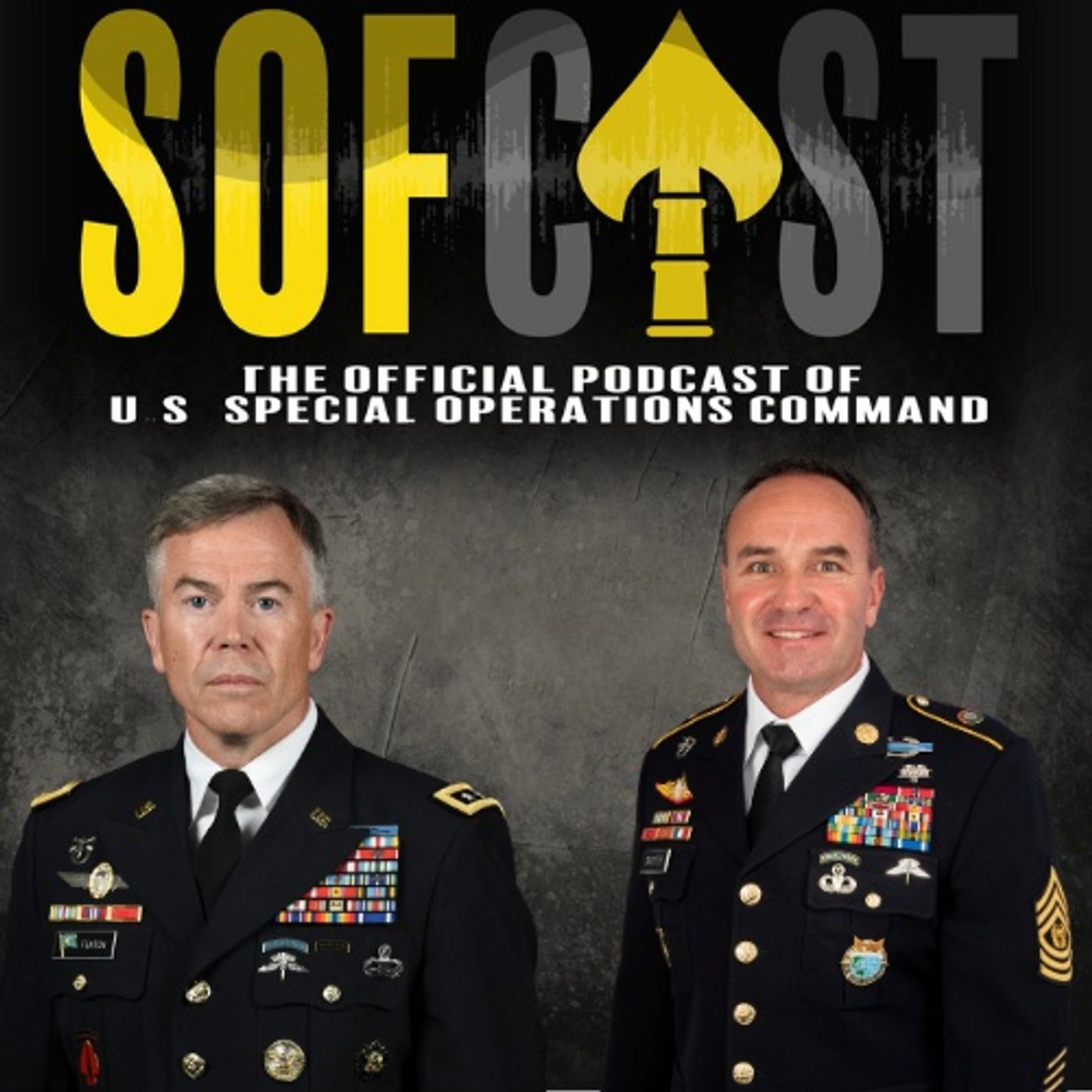
SOFcast
S6 E12 - GEN Fenton and CSM Shorter - We Owe It to the Force
01:10:43
What does it take to lead the most elite warriors in the world? For GEN Bryan Fenton and CSM Shane Shorter, it starts with listening. In this rare and candid episode, the Commander and Senior Enlisted Leader of United States Special Operations Command...
Loading summary
Transcript82 lines
- [00:00]
A
Foreign.
- [00:12]
B
Well, hey, first off, thanks for carving out the time. I know how busy both of you are, especially in this season of Transition and all those things. So really appreciate the time to be able to sit down, chat with both of you, hear a little bit about, you know, sort of catch up from the last time we spoke, which was now it's been six months or so. A little bit before soft Week.
- [00:32]
A
Been that long. Like we were just here yesterday.
- [00:35]
C
It does seems that way to me.
- [00:40]
B
But also get into some of the things over the course of the last three years from, from both of your time here at SOCOM and throughout your career. Right. And so I want to start with, you know, as I said, we. We spoke a little bit before Soft Week. We were talking in the last episode that started this season on kind of the, the, the pivot towards deterrence and lethality and, and all of those things catch us up as the listener. What's been going on in the last six months? How is that shift continued to mold and where do you kind of see the forces it currently sits?
- [01:16]
A
Yeah, I'll. I'll take a couple and then see some bang in here. So I, first of all, I'd say Soft Week best ever in the sense of. I think it was 23,000, folks.
- [01:28]
C
Yeah, it was amazing.
- [01:29]
A
We did our first ever global Special Operations command team conference. I think we had 300 teammates in one big old ballroom downtown.
- [01:38]
C
I think that was the first of its kind, too.
- [01:39]
A
I do too.
- [01:40]
C
I don't think there's been a global soft conference. I agree with all the soft command teams from, you know, I don't know how many. 70.
- [01:48]
A
It's like 70, 80 nations in there.
- [01:50]
C
Partner nations.
- [01:51]
A
Yeah.
- [01:51]
C
Holy cow.
- [01:52]
A
Yeah. Yeah. You know, they were probably as surprised as we were that we're all in
- [01:55]
C
that room and we had simultaneous translation.
- [01:58]
A
Yes, we did. Using modern technology. Most of us had some little app.
- [02:02]
B
Nice.
- [02:03]
A
It was great. You know, I think the, the thing that came away. And I'll pitch it over to Shane. First, we got everybody together. Yeah. Second, I think we had topics that were appropriate for everybody or we didn't, you know, ask a government or a soft team by any stretch to kind of get out over their own government skis. Sure. So I think we tried to make the topics respectful to everybody in that room, especially for the first. You know, it's one of those. If you give somebody, can't say any products or companies on this thing, but if you give somebody a can of fill in the blank, they can't get it. Open. Well they're probably not going to drink that thing anymore. They're going to go to the competitor and we wanted this to be one where they're going to want to keep coming back. And we absolutely got those echoes. I think it was get everybody together in one room very powerful. You think a gathering of soft nations through the lenses of their command teams to talk about a couple of issues and, and we did that and I think it, it is going to be asked for every single time provided folks want to do it in the future. I think the second thing was these weren't softball issues. I mean these were issues about health of the force, thoughts on technology and how that's going to enable a special operator. Not take the place of. Because we've all talked about most powerful really piece of technology is between our ears especially in soft when we think about we really choose folks for all kind of reasons but there's a core reason of we need you to have that soft brain to solve really challenging, wicked hard problems. And then the one I'll just pitch the Shane it was dominated I say this in a highly respectful and a really good way by soft non commissioned officer. You want to hit that one.
- [03:49]
C
The team we have and the standing across the globe is just amazing.
- [03:55]
A
Right.
- [03:56]
C
So that's the first thing I think the power to convene and all of our like minded nations that want the same things that we want, they're all there. So that was the first thing I would say. The second thing the boss brought it up to me. I was super proud of the NCO involvement. I mean we all know that NCOs and SOF are empowered and NCOs and SOF are really our secret sauce. It's, it's our NCOs but, but really it takes our officers to empower our NCOs. Right? So, so if the officers don't empower us then the secret sauce doesn't exist. So, so it's a, it's a mutually beneficial thing. Right. They empower us and, and then we deliver for them. And, and I think that that our partner nations showed that in, in, in that they're, they're, they're doing the same thing we're doing, especially sof. Right. It's all soft nations and you know, shoot. Boss kicked it off and then of course he threw the mic to me and of course my heart rate went
- [04:52]
A
way up and he said is this softcast? I said no, no, this is a global soft command team conference.
- [04:59]
B
Way easier.
- [05:00]
A
Right?
- [05:01]
C
I don't know, my heart went way up. But, but you know, he just sets a standard, right? The boss sets a standard. He's done that for his three years here in empowering non commissioned officers. He's done it from the top. It takes the officers to do it. And he's done it every single time, every single day. And then I make some comments and then we start the program and it was a moderated program and we had a lot of these questions that the boss talked about that were good, tough questions. And man, I was so surprised. It's like us NCO's started banging in and then partner nation NCO's started banging in. And I gotta say it was at least 50, 50 NCOs versus you know, general officers speaking or flag officers. It was amazing to me. So that, that was a true highlight for, for me as a lifelong soft Green Beret that, that loves partner nations and, and grew up training with partner nations to see not only where our NCO Corps has come in my 37 years of service, it's to see where our partner nation non commissioned officer corps have developed, you know, over the years to just, just by the, the constant engagement that, that, that we have and they have with each other. So it's, it's not just us, right? It is the US out there setting the example. But they, they do a lot of bilats and multi lats together without the us and it's still, the NCO corps is, is banging in all the time. So, so I was really proud of it.
- [06:24]
A
Yeah, I would double, triple, quadruple down on that. It was amazing. And I think it was noticed throughout that room by everybody, even the folks that were putting it together, moderating it, standing on the wall, so to speak, who made it happen. And that set the tone. That was the very first thing we did as a group to set off soft week 2025. And it just took off from there. As I mentioned, 23,000 folks, I think it was 900 industry partners. You couldn't find a can of Zen Monster, whatever. All those other drinks are Celsius for sure by the end of the conference. But it's because everybody's getting after it. Whether it be in the National Security panel discussions where we're blessed to have the Chairman and the SEC def come down, reiterate the value of SOF and really go hard in the paint to all the various panel discussions that went, everything from ops, what's the future of SOF and what do we need to look like for an ever changing Environment all the way to technology, what type of technology and how does SOF need to be a pathfinder trailblazer in that? For the entire Joint Force, it was really where we wanted to be and I think continue to drive up in many spaces, industry, national security, internationally, the value of sof, not just us, but the global SOF network as we talk about it. And they all, many of the SOF teammates from the international arena said how helpful it is because many of their jobs came. So we also had a number of chiefs of defense, ministers of defense, Many of them were former SOF operators in their nations, and all of them going back to report, so to speak, to their national security elements about what SOF can do, how it can lead for their nations, and frankly, how it can provide incredibly outsized returns on very little investment.
- [08:22]
C
Yeah, that's another great piece too that you bring up, boss. It's, you know, we have our soft components there, you know, Army, Navy, Air Force, Marines, and then we have our theater special operations commands there. And every single one of them, to a person, is, is so thrilled with, with how many nations come every year. And they'd have to spend what, probably six to eight months and about a million frequent flyer miles to get around and get the ground hold that they get done while they're here in this, with the bilateral meetings, the trilateral meetings and everything going on. It's just a bevy of soft activity. So I guess if you're listening to this and you ain't never been soft week, you better get your butt there.
- [09:05]
A
Absolutely. And I think after that, we had a chance to start to go back into theaters, so we got a chance to go out and see the Indo Paycom team, where there was a bit of a SOF gathering and, you know, a little bit miniature to that, get a chance to see what's going on through the eyes of the regional sof. And then of course, we continue to have engagements with our Congress to remind them what we'd said in posture. You know, as you heard Shane and I talk about before, the value of the SOF proposition. What we bring across, as you mentioned, not only counterterrorism and crisis response, but in deterrence or, you know, anything left of conflict. It's in our DNA. You know, many folks only have seen the 2024, unfortunately, since 9, 11, 24 years of what we've done in the CT space. But we all know that we're so much more than that. I think the discussions we had about the soft Renaissance document continued, meaning that, you know, Renaissance. I didn't know what this word meant until Shorter man told me, you know, renaissance means enlightenment. You obviously are not enlightened, but was a really a shout out to not the SOFT community. We've always understood the full array of what we bring, but really to the national team, to our congress and maybe even to the ever changing world that we're purpose built for the world we see right now and it's everybody else who's getting enlightened to that in a good way. We're grateful, but we've known it all along. It's just now we're able to really get it understood much more widely and much more deeply and be called on that much more. And you know, certainly we relish that. It's high end compliment to Soph when we get these national level missions, hardest missions, wicked missions, wicked places against wicked problems and frankly wicked timelines. Usually they want it now and to get it now we have usually have had to plan two years ago, which we do. So I think that's what we've really been getting after this summer and then reporting back to the force and we had a great all hands a couple weeks ago or had the chance to lay out the things that we've been working to move the needle on and some of them in the end zone, other things, you know, you're 75% of the way there, but you need more time and some stuff. It's kind of infinite. You're gonna have to work on it as a life of an organization, as new folks come in at all kind of positions. You gotta educate them, take them on the journey and like most people want, show them the outcomes. And when we do that with either our soft ncos or you know, our storyboards, whatever it is, you can't help come away going, man, I'm going to put my money down on special operations forces, whatever type they may be.
- [11:58]
C
I think boss, the Soft Renaissance document you talked about, it come at a good time because I think that, you know, if you look at the world today, it's not one thing, it's not just CT, CT is still here, hasn't gone away. I think it's as long as the ideology's running around out there, it's going to be there. And that's something that's right in soft's wheelhouse. And I think over the last 24 years people understand that. But, but I also know that, that the amount of crisis out there, our crisis response is, is, is up drastically over the last few years. And I don't see the world settling down where our crisis response force can just, you know, take a vacation and chill. I think that's going to continue. But, but then when you look at the fusion of the foes out there, they're all working together and when you take those problems and you put all those together, it's a recipe for soft. And I think that that's a lot of what we tried to portray in that document, that it's a different time. There's not one wicked problem anymore. There's multiple sets of wicked problems. And so soft just can't be a one trick pony. We got to get out there and get after all the wicked problems that the nation faces, because that's what we do. We solve our nation's wicked problems. That's off.
- [13:17]
B
No, it's incredible. I want to talk kind of leading off of that a little bit towards messaging.
- [13:24]
A
Right.
- [13:25]
B
You both are doing, you know, and what you spoke about throughout that messaging to partners, messaging to our policymakers, messaging to our own force, but also messaging to the enemy in some ways. Right. And so there's always this balance in software as the quiet professionals. Right. Of how much do we talk about certain things, how much do we not talk about different things? You know, we've seen a shift in some of the conversation and sort of talking points from now the Department of War versus the Department of Defense, it's all the kind of the same stuff to us because we've been doing all of those same things. How have you seen kind of messaging and your thoughts about messaging evolve really over the last three years? But even throughout your career, from sort of your times on a team where you're like, hey, I don't want to talk to anybody about anything about any at all. All the way to now where you're talking out in the open about certain things because the messages are important to get to those key stakeholders. What's been your lens on sort of that quiet professional versus silent professional?
- [14:27]
A
Yeah, you, you hit what that last one I think is, you know, really where we, we, we trended toward, you know, a majority of what we do. And I would say the, the tactile operational things that would give away ttp.
- [14:42]
B
Sure.
- [14:43]
A
Or how we utilize peace technology.
- [14:44]
B
It's never going to be, we want
- [14:45]
A
that to be quiet and silent. Right. 100 yet I think there's a point maybe, I don't know really where the right break point is that at certain levels with the command teams, we, we, we, you know, empowered them and, and actually encourage them. You gotta Go tell the story. Not with all the tactile details, not with all the, you know, anything that's got a security piece against it. Because at some point, if we're silent, then folks can think, hey, we're really not, A, engaged in all the things that the NDS and the national security and the policymakers would want us to be doing, which we are. B, maybe even the American public starts to wonder at the backdrop of the significant budget. And we're blessed that the American people provided the Department of Budget that they do. Frankly. We have a nation that has trillions of dollars, capital market and economic engine that we can do this. But like anybody, there's a bit of, hey, what's the return on investment? So I think at some point we decided we want to make sure that we do it just right. Not too hot, not too cold, not too much. Growing a third arm, patting ourselves on the back and laying out details that otherwise I think most Americans would actually want to stay in the confines of professionals like us. Yet here's what you're getting with one, the incredible advocacy we already have from the American people and can't take it for granted. We're blessed and we got to earn it. Keep their trust every day. And our policymakers. Here are the things we are doing that we could talk about. To take a narrative that primarily as we chatted very early on, maybe in our fifth episode with you, if we can pull that across, that we weren't just Counterterrorism Command. And that was a narrative that I thought at our level and our T socks and components, as Shane mentioned earlier, we all needed to take on and say, while we do that incredibly well, and to Shane's point, terror is not gone. We also know that the crisis response, in many ways, you know, the failure of which we didn't do it right vis a vis Tehran, is a soft mission. And decades later, one of the most incredible ones we've ever done, maybe two or two and a half short years ago, was the most complex, complicated event we've ever done. And we did it successfully, brought everybody home, needed to be home. All the force came home. No, no, you know, no. No piece of equipment was lost. It was, you know, dare I say it was pretty close to flawless. And I think folks like Congress and others, they need to know that because in many ways, they took a leap of faith when they stood up the socom headquarters in 87 and said, let's get all the SOF elements under one nest, give them a budget, give them an acquisition team Expect them to do really hard things and know that the environment's going to shift and every once in a while there's a good check back in with the tower saying, hey, we did it. Here's what we've done and here's what we can say in classified spaces and Congress and those who have those certifications. But here's what the American people should know. So pray others to judge whether we hit the right balance or did too much, too little. But my sense is that journey of making sure we were seen as Special Operations Command, from bringing the PASSED into full view from the oss, Vietnam and beyond to what we're doing now and what frankly we're gonna have to do in the future was. Was really important to us. And I think we were backed up by the force which always, you know, you've got it. You got to look to the culture movers, the team sergeants, platoon sergeants. If you're talking about our Ranger teammates, our force master chiefs and our chief master sergeants and petty officers to make sure they're okay with it and then bring it forward so that the end. The resources they need to keep doing that and the modernization they need to keep doing it with resources keep coming. Because I think we've said it over and over, we need to win tomorrow just like we win right now and like we won yesteryear. Well, that, that doesn't come without some level of resources and some level of advocacy. And I think when you wrap all that up, we know we stand pretty confident that we know the force is going to deliver every day. I mean, that's probably the greatest capital in a sense, if I could figuratively that we have as a base. We know the incredible formation, everybody in it, the leaders, we have the chains of command and frankly, they deliver outcomes every single day. So I think it was important to have that narrative out there. And that's some of its messaging. It's engagements big and small, Congress, the national security team, policymakers, industry. We need to understand our requirements, what we're getting after and the American population. And you know, I think it's. It's. You're never where you want to be, but we felt pretty committed to moving that needle. Folks knew what their Special Operations command was doing in an ever changing and as Shane mentioned, ever volatile world.
- [19:57]
C
Yeah, I think boss, you, you, you hit it great. I think the, the too little, not enough to. Too much. You know, like you said, growing a third arm patent, patting ourselves on the back. I think most soft, Most soft folks are like Me or I'm like most of them, you know, I'd rather be the silent professional and just get stuff done and let the actions speak for themselves. But when you get to a certain level, you know, I realize that we can't just do that. There's gotta be somebody out there. Cause it's not cheap to produce a soft force today. That's the best soft force in the world. It's definitely not cheap. So we have to get out there and we have to inform the decision makers, our hires that hey, you know, SOF is a, is of value. And I think for me it's not what I love to do, but it's something that's my job and I need to do it. And I'm going to do my damn job to the best I can until it's time to go. But you know, it's not just that, it's the fact that I actually believe in it. Right? Because there's, there's, you know, I want the us to win. I want us to dominate. And I think my 100% thought is that if SOF isn't in all of the mission buckets that we're in and with the authorities we need, the personnel we need and obviously the equipment and resources that we need, that the nation is not as good as it could be, it's not as strong as it should be. So for me, it was a point of, hey, I just believe in this. So I got to get out there and make sure that we have what we need in this enterprise to create the most lethal soft force on the damn planet. And, and the boss said it, and win in the future, right? Because the future is changing so fast and so rapidly that we need to stay on top of that. And you can't do that without dollars and you can't do that without trust of our leaders. So in order to get those dollars and to get that trust, we have to be out there on point with, with the right level of messaging for them to understand the, the value prop that SOF actually brings to the nation.
- [22:11]
A
And then our actions and all those ops, the outcomes that sends a message to adversaries. And we don't, we don't have to do a whole bunch of, of messaging that's just focused for an adversary because of those command teams, because of that great soft enterprise that we're a part of. When they do those outcomes, those send some really powerful messages and others pick those up and then what I call, they bounce them and over time, somebody pick an adversary that's already, you know, it's the old phrase I got in their head. Now there's a cognitive piece of that. There's certainly an overt. They're actually seeing something happen, whether it be about deterrence, a counterterrorism mission, a crisis response mission that very, very few nations in the world could do and probably even fewer have as many reps and sets that doing it as we do. So as folks chat, I always talk about, hey, we've played a lot of varsity games. We're not just practice players. And so when you see a varsity team or at some point an NFL team that's just dominating and we're not complacent, we know that the game will change, as Shane said, and we got to keep calling audibles and having a new playbook using different equipment, all based on the same soft teammate that we know how to build and bring in the formation that sends a different message to a brand new varsity team, whoever they may be, or one that's never been on the real field of play. They've scrimmaged against themselves or maybe against maybe a middle school team, but they haven't played in the big show. And I think that sends messages that they're unmistakable, if I might add.
- [23:53]
B
Yeah, I think, I think it's a great point of the push and pull of not too much, not too little. I think even going back to the first kind of discussion that we had about soft week, things like the empowerment of the NCO come from both top and bottom through messaging.
- [24:09]
A
Right.
- [24:10]
B
We see, you know, the impact that you guys were talking about at soft week with the entire international force there and having a 50, 50 split of NCOs speaking, that's an evolution that we've seen in the last 20 years, right? And a lot of our different partners, 20 years ago that wasn't the case. But from both working together at the team level and also the messaging throughout. And it doesn't hurt that a lot of those folks matriculated up over the last 20 years from having been in the dirt with, with a lot of our teams. But I think those are things that we do want, especially partners, to have a little bit of a window into, hey, both our technology tools and what makes us great there, but what makes us great in the people side and all those things. And I think to your point, sir, you know, messaging to adversaries is both, you know, overt and getting in their head a little bit as they see some of those things and it's passed on. You mentioned something in Your last answer there, sir, that I want to pull the thread on and it was, hey, having the right people that we know how to assess, select, bring into the force. You know, we talk about this, you know, and I've heard you say world class onboarding.
- [25:24]
A
Yeah.
- [25:24]
B
Right. Can you talk to me a little bit about how you see our current assessment, selection, training, talent management, all those things so that we can get the right people, maintain the right people and have them be the secret sauce of sof?
- [25:39]
A
Yeah, it probably comes in a number of layers if you think about teammates that may be going through NSW piece. So if you talk about, you know, whether it be the SWIC side or the SEAL side, same thing in RSoft, if you're going through SFAS or you're doing the psych, the Psychological Operations assessment selection or CA 1 60th Rangers, MARSOC, AFSOC, same thing. I think the, the first thing is we know what the standards are, right? Majority of them and I would say, you know, all of them have a science based underpinning and then at times is, there's a, there's a bit of art, right, that goes into all that and I leave that to all the great assessment selection components to pull it better than I do. But I think what I'm confident in is that that standard is there. Right. And you don't have to go far to validate it. Just go talk to any of the great NCOs that are running those courses. I challenge anybody. Go talk to the Sergeant Major that's running sfas. One of the best we got. Let him talk to you about the arduous, rigorous process we take people through just to get to a point where a board still has to select them. Say the same thing in nsw, same thing in marsoc, certainly the same thing in the rest of our soc and even in even the AFSOC community. So it starts with a trusted confidence in our NCO corps, the master trainers, frankly, those who've done reps and sets and have competencies just aplenty in their cargo pocket, so to speak, who are first, passionate about that program and second, maybe the overwatchers of those programs. We've had the chance to go visit every single one and I think we come away, number one, we're exactly where we need to be now. The qualification courses, I think beyond behind every one of those, they are exactly where we need to be and yet they keep their eye on the future. They know that things. Just use myself as an example. When I went through the qualification course, I didn't do any cyber training. It was 1992, we didn't know anything about cyber. You know, space is up there somewhere. Right. But it wasn't a component of the type of operations we're doing today. Especially when we talk about soft space, cyber convergence. That gives the nation, as Shane said, advantage is that if we don't do it, we're not serving the nation well.
- [28:16]
C
Right.
- [28:17]
A
In the qual courses, I like what I see. The things they're doing in terms of uncrewed systems from FPVs, the group ones, beyond even just taking a PowerPoint class. You go out there, they're on a bench, they're soldering things, they're putting stuff together, they're making their own, they're learning how to adapt them to put dropper arms or whatever they need. If they're kinetics or doing isr. I think that's right because, you know, while we're looking for a core product and you know it better than anybody from your time and different, that is trainable. In our qualification courses there's a standard and it's physicality, it's cognitive, it's grit, it's native guile, it's whatever the characteristics or traits each of our components are looking for. I feel really good about that. I also feel good that teams have come and checked it out that aren't us. They're unbiased third party teams who've come and reported back exactly as you said. You know, you didn't drop the standard standards, not been dropped and gold seal of approval, so to speak. Not from us, we looked at as conflict of interest. I got it and I think it's really important that people above us know the product they're getting from the very beginning of an assessment course through a qualification course and to a point where they join the operational force and then more is added in their rucksack. I think we'll always have great discussions with command teams of what do you need in the qualification course and what's right for the operational force to take on. And we've all been there over my 38 years. It's gone back and forth, hey, I want somebody. Is, you know the qualification course fast you can get them. I need him, the operational force. They give me the operational force like,
- [30:03]
B
hey, he doesn't have any of the calls I need.
- [30:06]
A
Cat hadn't been in the oven long enough, not fully baked. You know, I think that'll always go on and that's right because there's, there's always. You need to, you need to check the rheostat, make sure it's about right. I feel good on that. I think I feel good as well. In terms of how we bring folks in our formation that come in in a direct assignment or in terms of having expertise that we wouldn't otherwise have. And there's always processes. We've visited a lot of the units where you're coming in on direct assignment. Your first month is, hey, here's who we are as an organization, wherever that may be. Here's our history, here's our lineage. Oh, now here's a combat skills course. Because we all have to have a level of, of bonding that brings us no matter how we came into the organization. And the good ones we've had the chance to visit and they're all good, but some are doing a little better than others. They got a really tight grip on that. So that the understanding is we're all one team, no matter our skill rate, mos, specialty, you name it. We all have jobs we have to do. Go back to the Belichick, just do your job. We don't give them an instructions on that, then you know, it's on us. And then there's a commonality about what we all do as sof that is, it's really important. I mean folks bond over these things, as we all know. I always used to say nobody tells stories about sitting in the team room. They tell stories about either hops training events that go horribly awry and somebody's there to be made fun of AARs afterwards where we're just brutal. No matter who you are, no matter who your rank is and you come out, you've bonded because of that. And it's a virtuous cycle. It happens over and over and over. So, you know, I feel really good about where we are. I think as I should say, Shane can double down here. We can't ever be complacent. We always got to be watching over these. And when we think about the assessment processes, I think one thing I would always I've said it to myself, I've been in charge of those processes. I've been a subject of those processes. And we always need to make sure we're not moving into what I call excellence creep. Meaning that the standards got to be higher for somebody because I've already got mine. Right. Those standards been looked at for a long time. As I said, they have underpinnings. Sometimes they're in secret little sheets sitting in somebody's safe. Usually the assessment senior and non commissioned officer officers aren't allowed to see it and they've got to be pulled out before anybody's going to make changes to make sure, hey, there's, there are not tongue in groove pieces of that that all have to fit together and you pull out one now it's the Jenga puzzle block. The whole thing comes tumbling down. But I don't, I'm not, I'm not seeing that yet. I always thought about it myself when I was somewhere, hey, I'm running this assessment process. I'm cadre now. I'm not the same person running this as I was when I came through it. Nor could I expect that person to be. And thankfully nobody expected that of me way back when. Just meet the standard. Are you trainable after that? Do we fill you up in our qualification course and then get you to the OPS force? But I'll turn over the master trainer of all master trainers here.
- [33:27]
C
Yeah, boss. Thanks, Matt. I feel good about the selections. The boss and I have personally went out and checked them out and I think it's solid. And we've been doing this right, for, for a good many years. And the boss also mentioned we've had a third party look at it, an outside look that I trust that was definitely, you know, kicking over some rocks and looking and kicking the tires for sure. And you know, came back very positive across the board. So I feel good about the selection courses, the qualification courses. I think there's a, it's kind of like we talked about with the messaging, right? There's a sliding scale there. And I think that to find that sweet spot is tough because we can't, you know, jam all this new tech into, in, into the qualification course because there's some, there's some things that a base Navy SEAL or, or Green Beret or, or Raider, you know, has to be able to do. Right? And, and I think that some of those things that we ingrain and inculcate in those qualification courses. This is just me talking here. I should throw that disclaimer. This does not reflect the thoughts of the, the commander of SOCOM or something. But my take on it is that there's a chance if things start to go really bad, that we're going to have to revert back to some of the things that we knew how to do for years and years and years that are maybe a little more analog in nature but actually will come through when the chips are down. So you still have to include those things to me, into those qualification courses. That's a base. And then, yes, we have to feather in some of the newer technology or we're just sending like the boss said, someone that's half baked and we're counting on the operational force to take this person that's went through the same course that I went through if they didn't change it at all. And now boom, you jam that person into 2026 graduation and the world has changed so much. So we have to jam that into feather that in, you know, and find that happy medium. In the qualification courses. Where I've seen a lot of change is in the operational force. The, the, the, the operation, especially at the 06 level. Those 06 level commands out there are actually when, when I was in 06 level and that wasn't, I guess it was a long time ago, but it
- [36:03]
A
was a long time.
- [36:03]
C
It wasn't that long ago. And when I was at the 06 level, I think of our advanced skills that we taught.
- [36:10]
B
Sure.
- [36:10]
C
In the group and they've, they've almost completely changed. They're, they're still doing some of what we did but, but they're the ones that are actually. They're in that theater or they're in that force and they know those missions and they know what the, you know, the, the, the theater socks and the, the geographic Combatant Commands which are the customer are asking that force to do. They have firsthand knowledge of that. So I think that they've created new courses and We've talked to multiple 06 level commands lately and, and some of the new courses that they're developing to get their, their folks up to speed. And you, you can imagine what it is a lot of, you know, uncrewed and, and, and all kind of different. Even leadership, leadership in a, in a battlefield that looks completely different. How do you command and control? How, how are you a ground force commander today compared to a ground force commander when, when and, and the boss graduated? It's, it's a wholly different look. So, so I think that's the force that's actually out there on the cutting edge. But they're taking that, you know, base person that we select and then that feathered in some tech in the course. But someone who knows exactly what are. Whatever tribe they're in is, is known for and has to do well at a base level. And then they're feathering in the new tech that's actually needed by the customer, which is the gccs and the T socks.
- [37:32]
A
And you see it in the, you know, I'm shaking my head because I can't tell you how Many engagements we've had, and in this case with NCOs, let's say a staff sergeant and just take it across, whether they be a Raider, a Ranger, a Green Beret, SEAL, swick, and they start off, they got the base, they could shoot, move, communicate, do combatives, all that as well as we ever could, probably, you know, way better than I can ever imagine. I wouldn't want to compete with them. And then they go to the next level. By the time they get done talking that next level, I look at them like, you sure you're an 11 bravo? You sound like you work at Google and you're a software engineer. Because they've got the technology as an enabler. To Shane's point, they got the base and they're still, and they're still able to, they're whatever combatives you call it, they'd still dominate. Even if they had a pair of Chuck Taylors, a light coat of oil and nothing but a butter knife, they still win, right? But the way they can, they got extra gears. They get up to this next level and we look at each other and we're like, my gosh, number one, I wouldn't want to compete with that guy or gal number two, I know why we're going to win because it's that constant like striving to take it to the next level while knowing that you got to have a solid base. So I've, you know, I, I've got a lot of confidence in where they are now, the whole team, and where everybody will keep driving. As Shane mentioned many times, we all see it, the environment will not stay the same. Harder, more wicked, more fusion, more challenges. And that's not just terrestrial, you know, it's also cyber. It's going to be space. Think about artificial intelligence, think about uncrewed systems. And if, if I were to put money down right now to invest in the future of this place, I'd be a very rich man because I know the Force is going to meet it unequivocally.
- [39:34]
B
Yeah, I think it's a great point. Csm, you know, there's a, there's a push and pull, as you mentioned, sir, between how much do we shove into the Q course or the whatever different version of the qualification course versus how much is, hey, we just got to get someone who's trainable and a lot of the analog skills and some of the technical skills, they're also a mechanism for us to assess, right? Like do you have the capability, capacity? It's not even necessarily that day one or day 2000 on a team, you're going to use that exact same thing. I just need to know if I introduce, you know, that's why we always go back to old land nav and things like that. If I introduce something, can you learn it and can you execute it in a short period of time at a high level? Let's talk a little bit to education and then, and then we'll get into some of the other people stuff. But you know, we talked about assessment, selection, we talked about qualification, we talked about a little bit of sort of the, the tactical skill education and continued learning. How about into some of our professional military education as we're sitting here in jsau and I know that's one of the things that you guys have been tuned into and continue to work through over your last three years, but throughout all of your time, what's your lens now and how is it, how is it sort of matriculated over the last three years to, to JSAU and sort of professional military education across the force?
- [41:00]
A
I think, you know, if you start with we train for certainty. So if you think about, we have mock ups of targets, got a lot of good intel. You know, it's not totally certain but you get an idea of dimensions and wall or how many windows or get it on your grg, where you're going to be. There's a, there's a level of certainty and I'm not making light the uncertainty that's out there. And what we've really started to think about, especially with jsau is, hey, the great equalizer for uncertainty is education. The more you can open somebody's aperture like all of us have from or whether whatever level, initial entry, mid, you name it, at some point all of our stuff's gotten open. The old skydive analogy, you first getting thrown out of the aircraft in MFF training, you're looking at your altimeter and you're just like five seconds, got it? That's it after X number. For some it goes faster, for others, you know, it takes a little longer. Now you're seeing the whole place, right? You know where all your buddies are, you know where to get away from slide. I get over somebody's back. You don't know that on your very, unless you've done it, you know, in a previous life. I think that's, you know, the way we think about it for at least in JSAU joint soft peculiar education. How are we helping the force through the lens of the enlisted academy and our set programs and where we're Going all the way up to, you know, our summit course that you know, Shane and the whole team watches over very carefully to our, you know, our sergeant majors academy. And the same thing on the other track, Pre Command Courses. 0506-TSOC Commander Command Team course. We started a component command team course because there'd been a bit of time where maybe we looked at the operational side of the SOCOM remit. Maybe a little less than we should have at the service like side, but having command teams that go in and take, whether it be USASOC or MARSOC or NSW or afsoc. In this case we all came out of the operational force. None of us went to very many classes at the 03,0405 level on the palm or the budget, right. But when you get to that level, that's how you move the needle for your force. What do you know about three years of a cycle where you're going to put your money down against whatever resources you may need, right at need, maybe a little early to need, maybe a program is underperforming at need and that thing needs to go a different direction. And so we ran our first one last year. Long overdue, really great echoes from our command teams from those components. And it also introduced I think a level of here's what SOCOM headquarters does for you in that arena as we get the requirements up, whatever the demands of the force may be that they know better than we do. And to your point, even down the 05, it goes all the way up to the components on this. And then to your point, we can either centralize when needed and I'll say this in an organization, I grew up in this place 38 years, that is not a good word. I got it to the listening audience out there because we are a grassroots organization. If A whatever, if an 06 command is pulling the team or the company or the battalion, we got it backwards, right? And so we still prize that we want all the way deck plate all the way up to us and chain off talks about, hey, we turn the organization diagram upside down, all 70,000 are at the top, we're at the bottom. Right on. But when it comes to the bottom, this case and we could put lots of horsepower, money, advocacy, now we can help the entire force. So I think this type of education, that's the antidote for an uncertain future. You won't have the exact answer, but you'll have a Rolodex of experiences or education you could draw on quicker. To your point about making that decision and moving out fast than you would. If all I have is my tactical level experiences, we got components that do that great job in their schoolhouses. Some operational level, you've got the PME from the services that we enjoy and we leverage and we appreciate at the ops to strategic. There's a spot for joint soft peculiar education for our leaders on both the enlisted force and on the officer warrant officer force. It really helps kind of level this out and be ready for something and won't have. We've never guessed right probably in the history of our nation on some horrific event, but you can get it less wrong and you get up on your feet faster. If you've got some ideas about what the future is looking like and you've had some experience, you had some education. Put all that together, that's a recipe for getting back on your foot a lot faster.
- [45:55]
C
Yeah, I think first off, we're, we are absolutely blessed as a combatant command to have our own corporate university. I mean, to me, you know, I sat as a geographic combatant command seesaw. We didn't have our own corporate university. It would have been a boon if we did, but we didn't have one. So I think we're blessed to actually have it. And the boss talked about it. Joint soft peculiar. Right. We don't want to be duplicative every, every single person out there. You know, we do a lot of PME through the services and we don't need to duplicate it or rehit it or rehash it. Right? Because, you know, we need our folks out there in the operational force educated, yes, but out there doing the damn business they need to do. So we need to look hard at what these courses are and how much time they take and then what they're providing to the force. And I think if you just peel back the, the, the joint soft peculiar, you, you'll get it, you'll get the answer, right. I can tell you, you know, you know a story from, from, from my life, right. In my, my career. So, so I felt pretty good going from a team sergeant to a company sergeant major because I was still an army soft and I still was in the same company. And now instead of being on one oda, I had six of them. Right. And then you jump up the battalion and you got 18, 18 ODAs and you got three companies. Well, I just came from A company. Then you jump up to the group. Well, when I stepped in, when this guy over here hired me at, at sock Pack and I stepped into that joint role and I had, I didn't have the joint education back then and we were very stovepiped by tribe back then. And when I got to that, that, that, that command, you know, I, I, I felt useless to the boss for, for months and months because I had to learn it all on the job. Right. So, so I didn't get the J part of that joint soft peculiar at all. And I think that, that, you know, if you look at joint just in how we fight and how we're going to fight in the future, it, it, it's not going to be joint just at the geographic combatant command level or the, or the task force or, or, or the, the, the sojitif level. It's going to be joint at the 06 level. It's probably going to be joint at the 05 level and it may be joint lower than that. So I think pushing that and inculcating that down into our force, that is soft peculiar because we are the ones that we present as a joint force. We present to the joint force as a joint force. So, so I think that's absolutely critical here in, in this university.
- [48:34]
A
Agree?
- [48:34]
B
Yeah, absolutely.
- [48:36]
A
Well, for the record, he knew what he was doing the day he walked in that door. That's my story. I'm sticking to it.
- [48:42]
C
No way.
- [48:45]
A
Just like he did here.
- [48:46]
C
I had good officers that drug me along for sure.
- [48:51]
B
Well, I want to get to people, you know, we've talked about people throughout all of this. Right. But I want to talk specifically about preservation of the force and family, about pot. If obviously having, you know, that's one of my passions has been and continues to be both from my time in uniform and now from the outside, sort of from an industry side of trying to figure out how can we help from the outside. Every commander comes in, every senior enlisted leader comes in caring about people because it's part of that river of our culture of soft. Right. Like, you don't get to that position without understanding the importance of people really being what drives our force. But I also can tell from both of you all, from all the interactions that we've had and all the time that we work together, your personal, you know, it's not a bumper sticker. It's not, hey, I'm going to throw people on my thing because that's what I got to do as the SOCOM commander, because I got all these people and I need them to follow me and do the right thing. I know you're both of your personal passions for taking care of our force. Where do you see pot if. And the warrior CARE program and our people, you know, our people enterprises, the, the programs that we specifically set aside to take care of our people. Where do you see them? Where do you see them going? What have you seen over the last six and six months and three years?
- [50:15]
A
I guess I'll start to your very good point. They always got to be number one. And when we talk about that, I think Shane and I have mentioned it on maybe the first or second soft cast, you know, as we came in. What's your priorities? And one of the things we sat down and kind of scoped out was, well, I don't know what two and three are yet, but we know what number one is and it was going to be people. Right. And to your point, not just a bumper sticker, but this underpinnings of all that we've all held dear for years, ever since you've come to soft. Human is more important to hardware. And all that we'd seen in terms of the elements and the icons and things around us was a person. We don't have pictures of, of, of platforms per se in our, in anywhere in our headquarters, wherever we go. If you went and did a survey, 80% would be of a human somewhere in the struggle and the saving and the rescuing and mission completion, obstacle course going, it's people, right? And so how you get under that? What does it mean to buttress that human that's in our organization? I think POTIP is a part, but we hit one. You know, education is a huge part. We had a commitment to folks that as you stay in sof, we're going to develop you to some level. As Shane just mentioned, it's a tactical level. As you're moving your way up through the tactical formation, we have both component level courses, military courses, greater level interagency courses folks can go to. And then as you get even beyond that, what are we doing to make sure that, as I mentioned, it's the great equalizer for the uncertain environment. I think the other thing we thought about in this headquarters in particular, this wasn't really meant necessarily for a composer AT T socks. Do folks understand what they're getting into when they come in? The SOCOM headquarters can be daunting, right? If you've never been joint, you're coming to a joint headquarters. If you've never been soft, you're coming to a soft headquarters. What does that mean, if you've never been joint or soft? Well, both of those have to be addressed and I think we took a pretty big swing and I'm sure there's more for the, you know, the future command team to fall in on, on how you bring folks in and inculcate to them wherever they may be in this enterprise here. What we do, the privilege of the pressure, we have to never let those who came before down. That's a very odd statement to most folks. Pressure is a privilege. Yeah, it is here. Right. You have to look at it that way because there's a lot of folks who put tons of skin in the game for if you go back to the oss, eight decades of soft, but the modern day, so calm with all the elements underneath it. 38 years of doing this. There's planks that have been laid that we've got to be very respectful to and make sure we don't screw it up. We'll lay our own planks, so to speak, on the road to wherever the vision goes. So really important to bring folks in here and know what they're getting into even before they parachute into their section. Mosquito rate, skill or specialty, we hired them for that, but we're bringing them in to be soft. One year, two year, three years, whatever it may be. I think the next thing was absolutely the prize possession pot. If how we take care of a performance based organization through those five pillars, I'd say in some ways we're in a recasting era of that. We want that to grow faster, stronger, harder, better. In an age of both the human and now, the technology and all the things that can address, I think from challenges folks have personally, professionally, if we talk about behavioral health or even mind health, the science based approach to working out and nutrition and sleep and things we didn't know three decades ago, at least when I came in, you know, if we ever talked about sleep, it was how little can you get? We talked about nutrition, it was again, I can't properly, hey, have you had your bag of potato chips today? Because you got to keep moving. All things we know now that we do totally different. Sure. And you watch our young team, younger five generations in the workforce. When you look at I think generation three, two and one, so mid to new to newest, a lot of them got it. I mean they're in a world that that stuff matters. They work out differently, they nutrition themselves differently. Either two of you hear about meal prep when you first came into. No, it was called go to the vending machine, get the quarter. Here's your meal prep. Folks take it seriously because they know that it makes them a more performance based human. It's also better for them in the long term. So I think we want to make sure that thing number one is on the upward ascendancy even more than it already has been for the formation. And then I would offer that it's also been about us taking on really hard issues through the first soft truth series and we started not too long after we got here Once a quarter now, 05 command teams and above from across the entire soft enterprise running right at those things that really get that get to the heart of who we are as humans. Behavioral health, suicide, suicide prevention, cancer studies, transition. Somebody come up to me after the transition event, say it's scarier hitting a target in Afghanistan in the middle of the night than it is to figure out what am I going to do as a civilian, how do I get there when it's time for me to leave? And I couldn't disagree with them. So I think a lot of those in terms of the number one priority of people, they became passion projects. And while there's always going to be more work to do, our job was to put, Shane says put our shoulders in the scrum and push. Get an inch, get a foot, get a yard. And some of those we move the needle. Maybe not as far as we'd wanted, some maybe we did. And some of those would be needles for folks to continue to move. So I think work to be done across all those because all those things are going to be here with us for as long as we're around. When you think about angst of transition, not only service member but the family, people having personal and professional challenges that cause the ups and downs of life and then the requirement to have a performance based organization that can in a moment's notice go from cold start into war Wolverine. And how you do that, there's science efficacy all along, the physical, cognitive behavior, all those domains. So yeah, I think there's, you know, if we were staying another 10 years, we'd have 10 years worth of work to do on that.
- [57:16]
B
Yeah, well back to your first point when we started, there's some things that, hey, they're at a certain point. There's some things that need to go further and there's some things that are always going to be.
- [57:23]
A
Yeah, a push.
- [57:24]
B
Right. And that's going to be one that's always going to be a push. It's always going to be evolving. It's always going to need the shoulder in the scrum. But that's the right way to look at it. That's the way it has to be looked at.
- [57:35]
C
Yeah, we're not, I think Also though, you know, to me the people are always going to take us to the victory and soft, right? We're not platform centric, we're people centric. So, so our people are always going to have to be a top priority. That's just in my mind, you know and the boss talked a little, you talked a lot about Potiph and you, you talked about a lot of great things. But you know that, that focus on the first off truth. When, when I think of that thing, we didn't know exactly how it was going to go when we created it. And, and it really, I think what it's turned into is it, it's tools in the tool bag for the leader at the 06 and the 05 level. Because when I think back when I was an 05 leader or an O6 leader and a soldier came to me or, and hey, they've got this problem, right? That. What is that? That's people. That's taking care of people. That's what we do. That's one of our, our humans that you know, their mom and pop have entrusted us with that. And plus we need them to do the mission. So you know, when I look at that, whatever that problem was, I probably had one or two options at my disposal, right. And, and you know it's like, it's like you got to take your engine out of your jeep and, and you got a crescent wrench and a screwdriver, you know. Well that's really not the right tools for the job. You probably need a little bit more than that. So, so the way I look at that thing is just tools in the tool bag. So we're trying to cross level across all the 06 and all the O5 commands, all the damn good ideas. And you already, you already talked about it. Some, some oh five level commander over here has got that figured out. Me and the boss don't have it figured out. POTUS probably doesn't have figured out but they got it figured out. But, but if we don't bring them together and talk about this stuff then all the other oh5 commands out there won't know what they're doing and they got the answer. So, so I think it's a cross level and it's providing resources and tools and great ideas to help leadership which helps take care of service members which puts people first.
- [59:42]
A
And you know, Shane used to remind as those who turn on, he'd remind everybody, hey, this is kind of a two part equation. You know your people better than we ever will from 05 and below, I mean, that's the green notebook. You know, you, you, you know, 05 might be the last time you felt like you really knew everybody. You could figure out the whole battle. You get up a little more in group, you get up higher, you don't get to see everybody eye to eye all the time. We at socom, we have some resources if we can marry those two things up. We give you a level of insight into what we have, we push them down and somebody's got great ideas out there that even we and everybody else should take notice of. We do those things in this first soft truth, whatever the subject may be about. We met the object 10 ring shot and just keep it going because new people come into the formation all the time. And, and as Shane mentioned back in the day, you knew what you knew inside your own little ecosystem. If you didn't have another tool, whatever left handed monkey wrench, you didn't get it or maybe somebody else had it. We didn't really have a way to communicate that across. And it was also at times probably fortunately, a competition. And so folks didn't share and they had best business practice and it just stayed on a world where we can just get this information out, you know, within the day of a first soft truth couple hours, you almost transmogrify that stuff across 24 time zones or however many time zones are out there. I think so something like that. We'll do math in public. X number of continents and how many outstations we have that are O5 level because they're all in. And the more we've done them, the more folks start really chattering from all parts of the Enterprise, whether it be somebody sitting at SWCC who says something about breaching. When we talked about our repeat exposure to blast, what should be done, what they're doing, or whether it be suicide prevention and somebody out one of the outstations deployed in the Middle East. Hey, here's what we're doing. We thought, man, first of all, humans take us to victory. We talk about ops. Humans also take us to the answer. When we're talking about these kind of subjects, at least the rough edges of it in a way we wouldn't get it individually.
- [62:00]
B
Yeah, shameless plug for the show. Our last episode was born out of one of those first, you know, focus on the first soft truth days with the cars. Phenomenal episode. If you haven't had a chance to listen to it yet and you're listening to this, go check it out because that story is really inspiring and really focuses on all the things that we've been talking about here. I want you to think back. You know, everybody steps into the position that you're in, both fully capable and qualified, but also like, oh, man, what am I, what am I getting into? Because it is a different evolution of leadership. It is a different level. Right. I'm curious for both of you, what was the best piece of advice you received from a predecessor from one of your positions? Because I know everyone stays involved in the previous SOCOM commanders are always, you know, kind of welcoming the next one in. And same with the C cells. Was there a piece of advice that you really, whether you realized it at that moment or later, kind of realized that kind of helped shape you, and then follow on from that will be the question of what do you plan on trying to pass over as the new command team comes in?
- [63:09]
C
Yeah, when you come into a position, that's this, this broad, right. It's all you, us off. It's 70,000 folks. It's the whole globe. It's a global command. You need to come in and with your eyes wide open and your mouth shut initially. So basically, you need to. Two ears, one mouth, or really two ears, no mouth. And you need to take a look with your ears, your eyes, and look at what's going on out there and really take the input from those that came before us and then seek input from outside of this organization. So that was one piece of advice, and I think we did that. It started with Silent Horizons at the beginning of our. Our. Our term. And a lot of people have talked about it, but it was. It was a time where we pulled in all kind of people from within and from without. That, that, that taught us so much of how to see SOCOM from a different pair of glasses than our own. So. So we did that. And I would think the second thing coming into a position like this is you can't do everything. And if you don't set a dive plan up where you have three, four things that you really want to get after in your three years, then you're going to spend 99.9% of your time shooting alligators that are trying to get right in your boat, and you're not going to really get any big things done, because big things, big things take time. Time. They take the three years and then probably the next three years of the next command team before they actually get done. And I think that that was a. A piece of advice that we also heeded and we tried to lay out, hey, these are our top Three or four things that we're going to try to get done throughout our three years here. And, and we're going to keep driving on those things over and over. Sure, you do a million other things in the day, but. But you always have those things that's out there that, that's your. You know, we called them the big five, and really it was four. It was the big four. So I think for us, I think those two bits of advice, you know, really helped us get clarity on the organization and then move the organization to a certain end.
- [65:20]
A
State A. Hey, this is beyond all the leadership. Beyond. This is a relationship business. In the business of people make relationships. Don't just go somewhere when you want something. Don't just go see somebody when you're in trouble. Don't go up just when your time is called. That could be in the Pentagon, it could be at Congress. You'd be seeing folks on, you know, on the industry side or academia side. You got to work at it and you got to spend a lot of time on relationships. One, to foster trust. And when that trust barrier is down, then you can actually make real progress. The second one was after you did that strategic appreciation, as Shane mentioned, because this is a big tiger to get around the tail. I mean, we've all grown up in the SOF enterprise at every level. Yeah, I got this. And you think you know what they're doing above you until you get there. And you're like, what?
- [66:19]
C
I thought they were just chilling.
- [66:21]
A
Yeah.
- [66:22]
C
I literally thought they had their feet on their desk and they were drinking
- [66:25]
A
scotch, watching, smoking cigars and Absolutely not. The. We used to look really young and now we don't. But after three years. But the, the idea was once you got it, strike, go fast. Because three years goes in a blink of an eye. And so moving toward irreversible momentum and you got to move out quick as soon as you come on and then don't come in right away and turn everything upside down. But once you make it, and it's like with all your military might move out because you're. You're setting a table for whoever may come after you and you don't want them to have to mess with all the stuff that you think you were trying to get after. Underbrush being cleared or ledge proposals or things that you really wanted done because there'll be enough to transfer. But you ought to at least think, hey, I got enough. I took as many of them as we could in our rucksack and we got it to whatever the finish Line, the start line, the midway line of probably not even that. If you're talking about the life of an entire organization. I think those were two pretty important ones. Trust, relationship, go build it. And it's not a transaction with the ecosystems you really need on your side and then strike so that there's irreversible momentum on things that deserve it, you know, and you're doing a plan as you all, there's points you come up, you're like, hey, this is not worthy anymore over to transom. Some of it's like, man, I wish we would have started that when we were team leader, team sergeants, because there's no way. But you gotta, you gotta start making the motion. And I think that those would be the two. And you know, you look at corporate world, there aren't many elements that maybe I'll think about a COO CEO level that make real change that aren't there beyond five years and beyond. They say if you're really going to do transformation in the private sector, you got to have somebody or some teammates at the very top that are years there for five years, six years, seven. Because you're really talking about pushing stuff through all layers of an organization, communicating to all layers and seeing things take shape. And as Shane always mentioned is it's not micromanaging but it is macromanaging, IPRS tweaks because once you get the thing out into the wild, whatever the great idea is on the PowerPoint slide now you're getting the real density of action, you're getting your real inputs. Looks good on flat Stanley. Big swoopies. We're gonna do all this. You unleash that thing, you're like whoa. You hope you thought through all the things that can happen, but this impossible. Now you're adjusting it and you're moving it towards what the North Star was. It just maybe going in a different azimuth, you know, maybe going on a different route. So those would be the two I think I take away.
- [69:20]
B
Yeah. Well, gentlemen, thank you both for your time. It's been an honor for me to be able to sit with both of you now on third time for both of you, but each time has been an honor. But this one especially, I know neither of you would categorize yourself as this, but I'm the host, so I get to say this. Two soft legends, right? Your time and commitment in this force, both of you has pushed this force in a better direction. And I know that hasn't been single handedly and I know you're going to qualify that and shift around. But both of you have made an impact and a genuine impact. And I really appreciate your leadership for both of you, but your time being willing to come and sit and be able to share this, you know, some of that wisdom to not put the tomato in the fruit salad and some of those other things. So, hey, on behalf of all the softcast listeners, thank you guys for taking the time. Thank you for everything you've done, but thank you for sharing it with us on this show.
- [70:25]
C
Ra.