Loading summary
Transcript88 lines
- [00:01]
Tom Bowman
Today on Up First Winter Games, NPR's daily video podcast, Team USA's Alyssa Liu broke a 20 year medal drought to take home gold in women's figure skating and a thrilling overtime gold medal win for U.S. women's hockey. Reaction and more from behind the scenes today on Up First Winter Games. You can watch us on NPR's YouTube channel.
- [00:27]
Jennifer Pak
If I go anywhere near a sensitive site, I probably would be stopped.
- [00:34]
Mary Louise Kelly
Did China conduct secret nuclear tests? The United States thinks so. This is Sources and Methods from npr. I'm Mary Louise Kelly. Every Thursday on this podcast, we look at some of the week's biggest national security stories with the NPR reporters out there covering them. This week I get to welcome back Tom Bowman, NPR Pentagon correspondent. How are you, Tom?
- [00:55]
Tom Bowman
Good to be here.
- [00:56]
Mary Louise Kelly
And we welcome a new new voice to this pod and npr, Jennifer Pack, our new China correspondent. Welcome. Hello. Hello.
- [01:03]
Jennifer Pak
Thank you.
- [01:04]
Mary Louise Kelly
So let's put a timestamp on this. We're taping. It is a little past 10am here on the East coast, which makes it 11pm where you are in Shanghai. Way past my bedtime.
- [01:16]
Jennifer Pak
It's not my bedtime yet.
- [01:18]
Mary Louise Kelly
Not yet. All right, let's get into it. We are talking today about nukes and about China and the question of whether China conducted a secret nuclear weapons test back in 2020. The US government shared new intelligence this week on Tuesday, claiming that that is exactly what China did. What is the new intelligence? What's it say?
- [01:40]
Tom Bowman
Well, our colleague Jeff, Mr. Science Brumfiel, he was all over this story. So let me take you back to June 2020 in what was thought to be an earthquake through a detection of a sensor in Kazakhstan, was actually, according to the US Government, an illicit Chinese nuclear test. Now, the event originated the USS at China's main nuclear test site, saying there's very little possibility it was anything other than an explosion, a singular explosion According to this U.S. state Department official, Christopher Yaw. But you know, one expert, Jeff, spoke with Ben Dando at this Norwegian organization that watches for nuke tests, said he's not so sure. This expert said the signal is weak and was recorded at just this one single station. So no strong conclusive evidence. This guy said it could be just a natural event.
- [02:34]
Mary Louise Kelly
Okay. But this State Department official is out there on the record saying China tested a nuke. Jennifer, what's China say?
- [02:41]
Jennifer Pak
China says this is entirely unfounded. A spokesperson for the Chinese embassy in Washington says that Washington is just trying to use this as an attempt to fabricate excuses to restart nuclear testing for itself, has accused America of trying to pursue nuclear hegemony.
- [03:00]
Tom Bowman
You know, and it's actually a good point because Donald Trump has said he wants to resume nuclear tests in the Nevada desert.
- [03:05]
Mary Louise Kelly
So it would be helpful if somebody else were already doing it and then the US could say, look at that.
- [03:09]
Tom Bowman
He said, those guys are doing it now. We can do it.
- [03:11]
Mary Louise Kelly
I mean, the timing is interesting. As we've talked about on this podcast, the last nuclear arms treaty between the US And Russia, new Start, just expired. So the timing of the US Choosing this moment to, to come out and tell us what they think happened back in 2020 is kind of interesting, kind
- [03:31]
Tom Bowman
of suspicious, wouldn't you think?
- [03:33]
Mary Louise Kelly
We've actually got some tape of this State Department official Christopher Yaw. The remarks he made accusing China of testing were made here in Washington on Tuesday at the Hudson Institute. That's a conservative think tank here. Here is how he described China's nuclear programs. We have not seen an expansion like this in many decades, ever since the beginning of the Cold War, in fact, the early days of the Cold War.
- [03:59]
Tom Bowman
So they have an obligation to become involved and the world needs to stop
- [04:07]
Mary Louise Kelly
giving them a pass on that. Tom, this is going to that if there's going to be a new nuclear arms deal, the US Says China should be part of it, too, not just the US And Russia.
- [04:16]
Tom Bowman
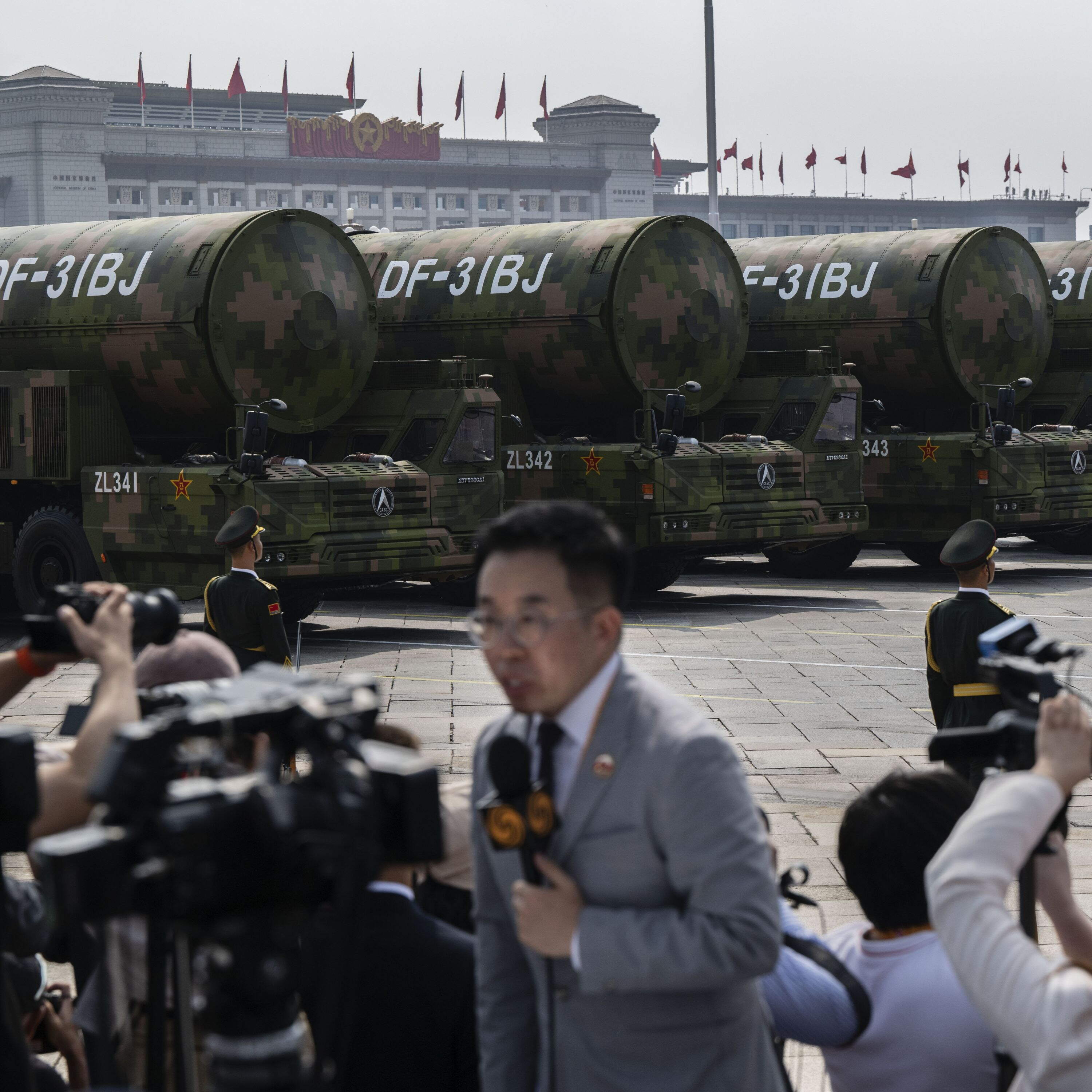
You're right. And China's never been part of these deals. And it's also important to note that China is expanding its nuclear arsenal. It has around 600 or so nuclear warheads. It wants to get to around 1,000 in the coming next several years, but
- [04:29]
Mary Louise Kelly
would still be less than what the
- [04:31]
Tom Bowman
US has, a lot less. Both the US and Russia each have, get this, roughly 5,000 nuclear warheads each.
- [04:39]
Mary Louise Kelly
Jennifer, China does not deny that it is working on its nuclear arsenal and that it is trying to expand that arsenal. Right.
- [04:48]
Jennifer Pak
Well, in its white paper on arms control last November, it did say it's going to modernize its nuclear forces, but it says it's only to safeguard its own strategic security. And it said it doesn't give any numbers, but it has said it's going to keep its nuclear capabilities at the minimum level required for national security. Read what you will into that. And China has always insisted that it exercises the utmost restraint regarding the scale and development of its nuclear weapons.
- [05:18]
Mary Louise Kelly
So does China think that the US Is overestimating, underestimating its nuclear arsenal and its ambitions?
- [05:25]
Jennifer Pak
Well, China says the US Is overestimating. It points to the US Itself saying it has a massive nuclear arsenal, that the US Itself should Start fulfilling its responsibility to disarm. And as you guys pointed out, you know, the US And Russia combined have a lot more than what China has. So who are they to point to it? And they have been against trying to go to the table for negotiations because China's position has been that its nuclear strength is nowhere near the same level as that of the US So it said it's not fair or reasonable to ask China to join these talks. And that was just repeated earlier this month by the spokesperson at the Chinese Embassy in Washington.
- [06:07]
Mary Louise Kelly
It's worth just noting this is kind of a side note, but there are, is it fair to say, somewhat different goals to the nuclear arsenals of these program? We hear a lot about the US Nuclear umbrella, Tom. The US Says we have nuclear weapons to protect the United States in the defense of the the United States, but also US Allies who rely on the US Nuclear program to protect them too. Not so for China. Right, Jennifer, that China's nuclear program is about China's defense. Yeah.
- [06:35]
Jennifer Pak
I mean China's military has always been about protecting its territorial claim. And if you look at what's happened in Venezuela with the seizing of the leader Nicolas Maduro, what did China do? It's good friends with Venezuela. It had strengthened their strategic partnership in recent years. But all it issued were very strongly worded statements calling for the US to release the leader and his wife, but nothing more. It didn't really stretch to security commitments.
- [07:04]
Mary Louise Kelly
One just kind of reporter's notebook question for both of you on how we know what we know. The US Says we have this intelligence that proves China did something. China says, no, we absolutely didn't. It's very difficult to fact check nuclear claims, right?
- [07:19]
Tom Bowman
No, it really is. And obviously, as you know, covering the intelligence community, you're looking at human sources, you're looking at signals intelligence, intercepting phone calls and so forth. You're also looking at satellite photos, for example.
- [07:31]
Mary Louise Kelly
It's not like a lot of beats where you can just go see something firsthand with your own eyes and say,
- [07:36]
Tom Bowman
hey, what's going on in here? But if you look at what's going on in Iran, you know, their program is also very secretive. You know, back in last June, the US And Israel blew up their three nuclear sites, but still they're supposedly rebuilding those sites. But a lot of times it is opaque and that what's going on here? What are they exactly doing? It's very, very difficult.
- [07:58]
Mary Louise Kelly
Well, yeah, I mean conquest. It's underground. So it's very difficult even for satellites to see what's happening. I'm guessing all of this is even harder in China. Jennifer.
- [08:07]
Jennifer Pak
Oh, absolutely. If I go anywhere near a sensitive site, I probably would be stopped. A taxi driver told me actually that he is obligated to report it to officials if he drives any foreigners close to any sensitive sites. You know, the maps here are not exactly accurate for that exact purpose. And also, if you're flying from airports that support both civilian and military planes, you're you have to close the window shades during takeoff and landing. And you've been warned that you're going to be severely penalized if you open them. So sources, you know, as Tom said, it's also very tough and unreliable. But in China, there's an added layer where, you know, the definition of national security has broadened massively to now even include economic numbers. So what can you do? We mentioned maybe satellite imagery. The New York Times recently did that to identify a few sites in southwestern China. We can look at what the Chinese government media says and more importantly, what they don't say. There are other sources, for example, foreign experts who interact with their Chinese counterparts. Maybe sometimes they write a book. And also other governments, smaller players that maybe they were briefed in these closed door meetings. Sometimes they have little tidbits. So we could look to Southeast Asian countries or Japan, Korea. But I think a lot of governments do rely on US Intelligence because much like good journalism, it relies on resources
- [09:36]
Mary Louise Kelly
and time sources and methods. All right. We're gonna take a short break, but we are not leaving China. When we get back, we're gonna look at why China's President Xi Jinping has been removing dozens of senior military officials from their roles. What does that mean for that country's military and nuclear ambitions? That's ahead on Sources and Methods from NPR.
- [10:02]
Jennifer Pak
This year on Throughline, NPR's history podcast. For generations, an American quest has shaped the world. Life, liberty, the pursuit of happiness. Now, 250 years in, what is that pursuit really about? Join us each Tuesday for an essential new series, America in Pursuit from Through Line on the NPR app or wherever you get podcasts.
- [10:29]
Mary Louise Kelly
All right. We're back. Let's continue with China and what is happening in China's military. Over the last few years, China's President Xi Jinping has removed top military officials. Then last month he placed his second in command under investigation. Jennifer, from where you sit in Shanghai, what the heck is going on?
- [10:50]
Jennifer Pak
That's a good question. Here's what we do know. In January, China got rid of two senior military officials named Liu Jianli and Zhang. Youxia they were investigated for severe violations of party discipline and state laws. Now, much of the focus has been on Zhang because he is the number two, as you mentioned, of the Central Military Commission. And you can think of that as the decision making body of the military. Only Xi Jinping stands above him. As for the why, that's a complete black box. We don't know what led to the investigations. We don't know who tipped them off or why. But there has been a report by Wall Street Journal saying that senior military officials were briefed that Zhang was accused of leaking nuclear weapons data to the US and accepting bribes. Now, we can't fact check that. And also, just because it was said as the reason doesn't really mean people believe it.
- [11:48]
Mary Louise Kelly
They.
- [11:48]
Jennifer Pak
But it's also kind of hard to believe because, you know, to leak information to the US for such an important official, I can't really imagine it. Only because even when meeting lower level officials here in the last few years, you can't meet them alone. They have to come in pairs because they have the right reports together. So, you know, when these purges happen, it's always done. You don't know when it happened because it's always announced way after the fact. So a lot of people can just speculate. But what is known is that Xi has now purged five of the six senior generals that he handpicked. That's quite unprecedented. And so people are wondering, what does this actually mean for the future of China's military?
- [12:33]
Mary Louise Kelly
And how does it work when you try to fact check something like this? I mean, here in Washington, if five top generals had just been fired, Tom would be calling the Pentagon and saying what happened, why? And they can choose to respond or not or stonewall you, whatever, but there is a process for asking questions. How's it work in China?
- [12:52]
Jennifer Pak
I mean, we could send a fax, we still have to send faxes to the State Council. I think there might be an email address, but very rarely do we hear back.
- [13:00]
Tom Bowman
Are you kidding me?
- [13:01]
Mary Louise Kelly
Yeah, yeah.
- [13:02]
Jennifer Pak
We have to maintain the fax number at our bureau just for that purpose sometimes.
- [13:06]
Tom Bowman
Welcome to the 1980s.
- [13:08]
Jennifer Pak
But I think nobody's really faxing anymore, but we still keep it. I think the other option is, of course, there's daily press briefings by the Foreign Ministry. That's the closest we can get. But oftentimes when it comes to these purges, they, they probably don't have much more information. They'll just refer you to whatever statement came out in the state media in the past. I've Heard of journalists who were based here decades ago who said it was possible to have these sources on the periphery of power that would sometimes give them some tidbits or their reading of what might be happening. All of that has gone away. It's been. Well, I myself have not been in the same room as a senior Chinese official within arm's distance. And that was a huge shock. When I went to Malaysia, I was based there for about six and I was getting cell phone numbers of ministers and their press secretaries. And there is no such spokesperson system in China. It always has to be the boss. And, you know, in this instance, are you going to go talk to Xi Jinping? Likely not.
- [14:07]
Mary Louise Kelly
Tom Bowman, what are you getting when you fax your military sources here about Darren, I haven't faxed in quite some time. I mean, the US Military must be tracking with great interest what is happening with their Chinese counterparts.
- [14:20]
Tom Bowman
No, absolutely. And also I reached out to two China experts, John Zinn and my go to guy in China, David Finkelstein, and they said, you know, there could be a number of reasons why these generals are being thrown over the side. It could be corruption, it could be lack of loyalty to Xi. It could be Xi basically saying, I'm in charge, I'm going to rattle you guys. And also it could be, according to David Finkelstein, maybe some mistakes were made in some of these military exercises off Taiwan. And they want to make sure that by next year 2027, that the Chinese military will have the capability of taking on Taiwan, of invading Taiwan if they want to. So maybe, you know, there are problems with the readiness of the Chinese military. And also another question is if you remove all these top generals, what does that mean for the future of the Chinese military in being ready in 2027 for a Taiwan operation?
- [15:18]
Mary Louise Kelly
Yeah, Jennifer, the Taiwan question may put that to you. What could this purge mean for China's ambitions regarding Taiwan?
- [15:27]
Jennifer Pak
I mean, the, the year that people keep stating is somewhere 2027 or it could be, you know, 2030 that they're looking at. I think it's up in the air at the moment because Zhang Youxia is the last general who actually had any kind of military combat experience. So the, that's what people have been focusing on. But really what people say is going to happen down the road is that now this is Xi Jinping's military, it's going to listen to him only. Is he going to get feedback, differing opinions on Taiwan? Hard to say. So the other thing is that a lot of times people do focus on Taiwan about the military aspect. But there are things that China is doing and can do that are just short of combat. Right. So they can do maritime blockades, coercive campaigns, disinformation, misinformation campaigns as well.
- [16:22]
Tom Bowman
So also, you know, cyber attacks.
- [16:24]
Mary Louise Kelly
Cyber. Yeah.
- [16:25]
Tom Bowman
You know, they could hit their satellites as well.
- [16:27]
Jennifer Pak
Exactly.
- [16:27]
Mary Louise Kelly
A related twist to all of this, which is the CIA has put out a recruitment video aimed at China's military, saying, hey, why don't you come help us? Why don't you come spy for the United
- [16:45]
Tom Bowman
States?
- [16:56]
Mary Louise Kelly
Jennifer, that's a taste of the video. Can you tell us the gist of what they're saying?
- [17:00]
Jennifer Pak
Yes. So in the video, you see this military officer who's walking into work and it starts with the words, this is the world. I'm familiar with defending the country, protecting the people. Day after day, the truth becomes increasingly apparent. And he says that the leaders are really showing themselves to be protecting their own self interest and that their power is based on countless lies. So it's kind of building up this narrative of a disillusioned officer and eventually leading them to disclose information or leak
- [17:32]
Mary Louise Kelly
information to the US and plenty of dramatic music.
- [17:35]
Tom Bowman
I love that music career in sb.
- [17:39]
Jennifer Pak
Would you be, would you be swayed?
- [17:42]
Mary Louise Kelly
And one more just intriguing little detail on this, which is the CIA director John Ratcliffe has been getting asked, you know, how are you getting these videos into China? It's not like you can just beam them straight in from CIA headquarters. And he put out a statement, we've got it saying the CIA believes these videos are reaching people in China. And that's despite the fact that YouTube is blocked in China. We're going to take a short break. When we come back, we're going to check in on Ukraine, Iran and oh yeah, President and Trump's Board of Peace, which is meeting today here in Washington. That's all ahead on Sources and Methods from npr. Okay, we're back. Lots of national security topics swirling this week. So I want to just tick through a few of the other developments. We are tracking the Board of Peace, President Trump's Board of Peace. We have talked about it a lot on this podcast. President Trump is hosting the inaugural meeting today here in Washington. And we should also say that while Trump is meeting to discuss the future of Gaza, Israel is still attacking Gaza. The ceasefire agreement is in effect, but fire has not ceased in Gaza. Also, diplomatic developments in Geneva this week. The United States is in talks with both Iran and with Ukraine shuttling all over that Swiss city. Tom, let's talk Ukraine. Just briefly the war there, of course, is about to hit its fourth anniversary. Did anything emerge from these talks in Geneva?
- [19:17]
Tom Bowman
Well, you know, a source familiar with the talks, the military to military talks, said, you know, one of the things is the military guys, Russian, Ukrainians, and of course, Army Secretary Dan Driscoll was involved in these talks, that they're actually kind of agreeing on things. What does a ceasefire look like? What does a truce look like? And also, they're coming up with what's, you know, kind of like a dmz, a demilitarized zone, which would be in the east and it could be miles wide, and it would be policed with sensors or drones. So that's something they agree. On the political side, they're pretty far apart because the Russians want to take over the land they don't own now, 20% of the Donbas. And what Volodymyr Zelensky is saying is, we're not giving up an inch of our territory. So they're pretty far apart. But the military to military guys, they seem to be getting along pretty well.
- [20:07]
Mary Louise Kelly
They seem to be making a little bit of progress. Okay. Iran also talks to do with Iran negotiations that happened in Geneva this week. And speaking of difference between diplomats and military planning, Trump's armada is growing in the region. First, just the diplomacy. Any update on the talks?
- [20:25]
Tom Bowman
No, they're still pretty far apart as giving up their enrichment capabilities, removing what they have to another country, or reducing what they're enriching in the uranium.
- [20:36]
Mary Louise Kelly
Iran says they have a right to a peaceful nuclear program.
- [20:38]
Tom Bowman
Yeah, that's right. So, you know, they're pretty far apart on that. As far as the armada, the Gerald Ford, the aircraft carrier, will soon be in the Mediterranean, maybe this weekend. And Mary Louise, remember last June, Can
- [20:51]
Mary Louise Kelly
I just jump in on the Ford? Isn't that the same aircraft carrier that got sent off the waters of Venezuela? Those sailors have had quite a ride.
- [20:58]
Tom Bowman
The fort was in the Mediterranean of Croatia. They were told they were sent to the Caribbean, and now they're heading back, back to the Mediterranean for possible strikes on Iran. Now, last June, when the US Hit those three nuclear sites in Iran, they did have two carriers there, because you do need, really two carriers to carry out sustained military operations there. Now, here's the thing. Is this saber rattling, is this putting pressure on Iran to come up with some sort of a nuclear deal, increasing leverage? Right. Or is this basically mowing the lawn, going back to hit those sites again? Or, you know, some people say they could move from those, attack those sites to maybe more regime Targets like the Iranian Revolutionary Guard Corps or even, you know, the hierarchy of the leadership in Iran itself. If that's the case, that's a whole different ballgame because that you could be looking at putting pressure on regime change. Now, that's pretty hard to do. You know, it's a really tight country run by the mullahs and by the Iranian Revolutionary Guard Corps. Now, when the US Invaded Iraq and Afghanistan with tens of thousands of ground troops, you could, you know, throw out those governments and put in, you know, people that you thought would be better leaders. No sense you're gonna put any ground troops in Iran. It's never gonna happen.
- [22:26]
Mary Louise Kelly
It's time, you know, you're ready. Time for OSINT Open source intelligence. The not so secret yet telling details we stumble across in our reporting. Tom Bowman.
- [22:37]
Tom Bowman
Okay, let's go. As we all know, Defense Secretary Pete Hegseth has fired a number of admirals and generals charging their woke or got their jobs because of diversity rather than talent. Or had ties to retired Army General Mark Milley, who Trump despises. Now, Hegses has fired a colonel who worked as a media advisor for Army Secretary Dan Driscoll. That's the guy we just talked about. Who's in Geneva for talks with the Ukrainians and the Russians. Now, it's unusual, Mayor Louise, to fire someone at the colonel level particular down the chain. But get this, this colonel is Dave Butler, who also worked for General Milley. Milley, who criticized Trump member as a wannabe dictator and who was investigated by the Pentagon for that very reason, supposed insubordination.
- [23:22]
Mary Louise Kelly
Okay, so hold on, I'm trying to keep up. Dave Butler, Colonel, used to work for Mark Milley, now works for Driscoll. Driscoll, right.
- [23:30]
Tom Bowman
Now here's the thing.
- [23:31]
Mary Louise Kelly
Why was there a reason given?
- [23:32]
Tom Bowman
No reason was given for firing Colonel Butler. He's a highly respected officer. But Mayor Louise, there's also intrigue here. Sources I talk with say this could be a shot at Secretary Driskill, whose stature is on the rise, you know, with these talks and could replace Hegseth. Driscoll has the confidence of the White House for his negotiating skills, but he's Also Vice President J.D. vance's roommate at Yale Law School when they were there. Hegseth could be hearing footsteps.
- [24:03]
Mary Louise Kelly
Such a small world.
- [24:04]
Tom Bowman
Amen.
- [24:05]
Mary Louise Kelly
It all goes back to your roommates. Amazing. And military purges far and wide, I guess.
- [24:10]
Tom Bowman
Right?
- [24:10]
Mary Louise Kelly
Jennifer, your offset?
- [24:12]
Jennifer Pak
Well, mine is not as juicy and I don't have my sources tell me, but I did hear an interesting tidbit from a publisher. So you know how China is very sensitive about its own territorial claims. If you misname it, if you don't have the right nine dash line in the South China C, it will censor that. Right. But apparently when books come in and it has nothing to do with China, but it's a world map and it labels things that differ from China's agreements with other countries, then it also censors it. So, for example, some digital maps have the borders of Israel, but it doesn't say Israel on them. So I hope to get my hands on these maps because as we go further ahead, as we've said, China's view of the world is becoming more important. So it's important for us to understand, you know, how does China see the rest of the world and their borders
- [25:10]
Mary Louise Kelly
and how might their actual maps of the world look different from the ones we may be looking at, which is
- [25:14]
Tom Bowman
kind of like changing names like the Gulf of America, the Gulf of Mexico
- [25:19]
Mary Louise Kelly
as we call it on this network. Indeed. All right, I will end Mine is just I want to paint you a little picture. We are speaking on February 19. So the anniversary of the full scale Russian invasion of Ukraine is coming up. That's coming up next week as that war drags on entering a fifth year. I pass Ukraine's embassy here in Washington every morning. It's at the bottom of the hill, at the bottom of my block. And I just wanna I took a picture as I drove past this morning cause it's sitting there and they've got a huge banner that has been up for I don't know how long. That is the boat, blue and yellow, the colors of the Ukrainian flag. This banner runs from the roof down, two stories down, ends at one of the second story windows and it reads three sentences, we are free. We are strong. We are open for business. So that's the message Ukraine is sending out on this anniversary. And a little note, NPR is going to be talking to all kinds of people as we mark that anniversary next week and ask what comes next for Ukraine. We hope to have Ukraine's ambassador to the United States. I'm going to interview her next week. So we hope to bring you a bit of that interview so you can come back for that next week on Sources and Methods. With that, let me say thank you to you both. NPR Pentagon correspondent Tom Bowman, always a pleasure, always fun. And NPR China correspondent Jennifer Pak in Shanghai. Thank you and good night. I hope you get some sleep.
- [26:54]
Jennifer Pak
Thank you for having me.
- [26:56]
Mary Louise Kelly
A reminder, you can email us with your feedback and your questions at sources and methods, all1wordpr.org we can't always reply to your notes, but we do read them all. We really appreciate you writing. And before we go, a special thank you to our NPR supporters who hear each episode without sponsor messages and who can access our complete archive. If that is you, thank you. And be sure you're taking advantage of benefits from other NPR shows, too, things like sponsor free listening, bonus episodes and more. You can get details of all of that@plus.npr.org I'm Mary Louise Kelly. We're back next week with another episode of Sources and Methods from NPR.