← Sources & Methods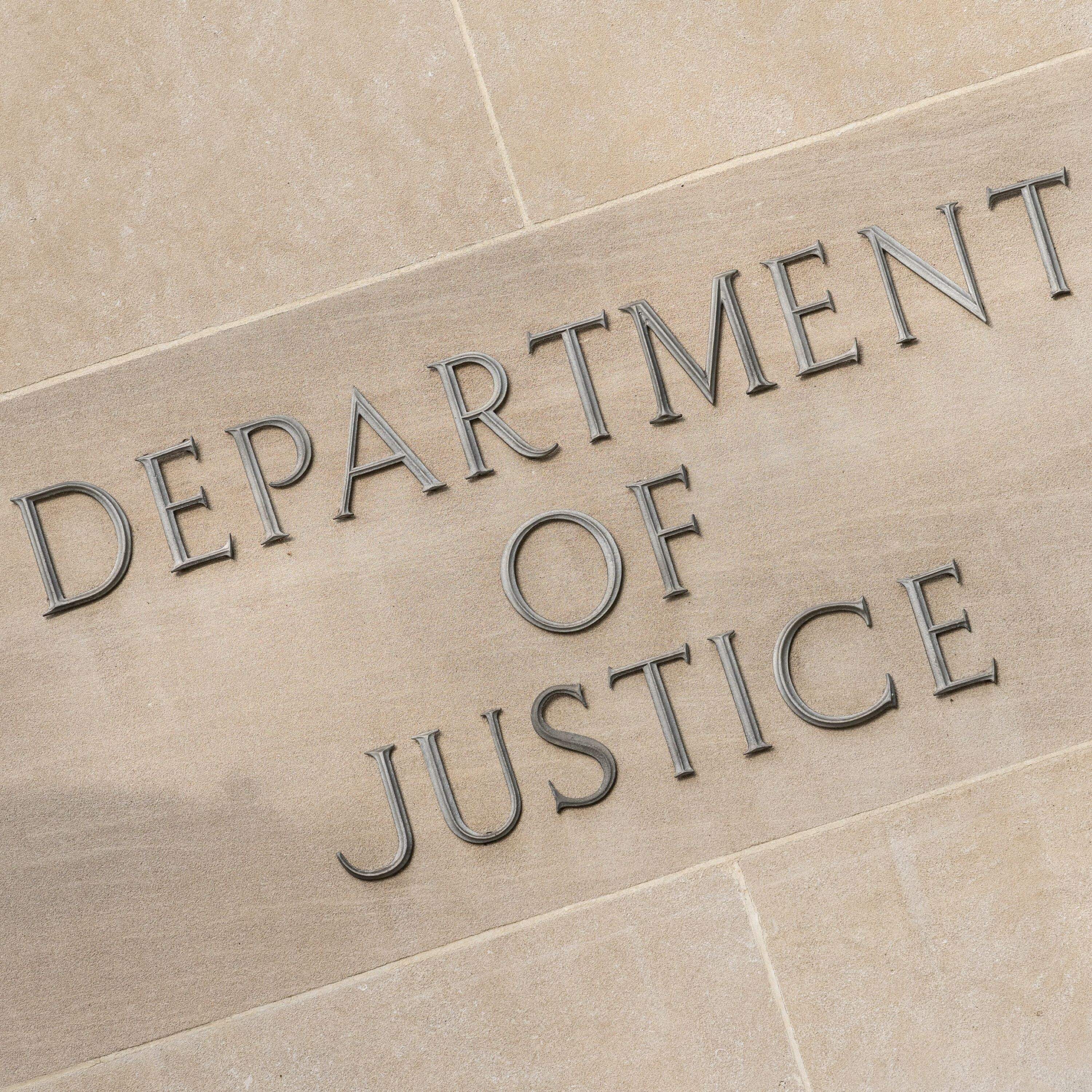
Sources & Methods
Insiders reveal 'wrecking ball' at Trump's DOJ: how two reporters got the scoop
00:21:02
Loading summary
Transcript84 lines
- [00:00]
Mary Louise Kelly
You know, following NATSAC news right now is like drinking from a fire hose. We try to help you track what matters and why. And if you want to do that in less time and support our work, sign up for npr. You'll hear every episode without sponsor messages. And your support helps keep NPR journalists around the world safe and doing their jobs. Learn more at the link in our episode notes plus.NPR.org.
- [00:26]
Carol Leonnig
We had a tip. That's where it all starts, right? We had a tip that there was no real robust investigation being conducted or it had been delayed significantly into evidence that Donald Trump had tried to essentially engage in a coup.
- [00:45]
Mary Louise Kelly
A new book argues the nation's top law enforcement agency has been, quote, vanquished. Also, that while the decline started in President Trump's first term, it gained momentum during the Biden presidency and that today Donald Trump and his lieutenants are taking, quote, a wrecking ball to the Department of Justice. This is SOURCES and Methods from npr. I'm Mary Louise Kelly. Every week you hear me talking through the top nat sex stories with my NPR colleagues, peeking into their reporters notebooks, trying to draw back the curtain on how they know what they know. Well, today we have an opportunity to do that with two investigative journalists who I should say, seem to break news like just walking across the newsroom from the elevator to your desk and back. Carol Linnick and Aaron Davis, welcome.
- [01:35]
Carol Leonnig
Thank you. Thank you.
- [01:37]
Mary Louise Kelly
I counted seven Pulitzer Prizes between the two of you for your work at the Washington Post.
- [01:43]
Carol Leonnig
Well, one we had together.
- [01:44]
Aaron Davis
Most of them are Carol's.
- [01:46]
Mary Louise Kelly
If anybody had any doubt that what we're about to hear is important, I think we have just vanquished that. The new book is titled How Politics and Fear Vanquished America's Justice Department. And Carol and Erin are here in the studio to talk with me about it. This is another of our guest interview episodes which we are loving bringing to you every so often along alongside our regular Thursday show. Erin and Carol, welcome to Sources and Methods.
- [02:11]
Carol Leonnig
Thank you.
- [02:12]
Aaron Davis
Thank you so much.
- [02:13]
Mary Louise Kelly
Take us to the moment. I gather it was September 2023 that y' all set out to write this book. You describe it in the opening pages. What was going on?
- [02:22]
Carol Leonnig
We had a tip that we were pursuing as reporters at the Washington Post that there was no real robust investigation being conducted or it had been delayed significantly into evidence that Donald Trump had tried to, you know, essentially engage in a overturn, a free and fair and secure election in which he lost and Joe Biden won. We were surprised to find that the tip completely panned out that investigation under the Biden DOJ and Attorney General Merrick Garland really did not get fully started for 15 months after a low level investigator first raised the concern that there seemed to be a coordinated conspiracy. And that person raised it in December 20and the case really didn't get started until April, mid April of 2022.
- [03:17]
Mary Louise Kelly
I was struck by your account of the day after of January 7th when the top federal prosecutor in D.C. this guy named Michael Sherwin, came out and did a press call. Aaron, what happened?
- [03:32]
Aaron Davis
Well, yeah, and this goes to the point of why it was so shocking because hundreds of reporters from the United States and all over the world are dialing in to try to understand what is the, the Justice Department going to do about what just happened yesterday.
- [03:45]
Mary Louise Kelly
Were you all on that call?
- [03:47]
Aaron Davis
I didn't get the whole thing, but I was on there for part of it. And Michael Sherwin is asked a question, will you investigate politicians and what they did yesterday? And he says, we will investigate anybody. And then another reporter comes back at it and says, will you investigate Donald Trump and what he did yesterday? And Michael Sherwin says, you know, it doesn't say Trump's name, but says anybody who was involved in, you know, leading to what happened yesterday, even if they weren't at the Capitol, will be part of this investigation. And so that begets headlines across the country.
- [04:20]
Mary Louise Kelly
Right, because Donald Trump is still president.
- [04:23]
Aaron Davis
Yeah.
- [04:23]
Mary Louise Kelly
So to speed through many, many, many front pages over the days that followed, members of the Trump administration, including his cabinet, began resigning. Even some Republicans were calling for the president to be removed from office, either by the invocation of the 25th Amendment or by impeachment. There is a transition of power. Biden comes into office, he names Merrick Garland as his Attorney general. And you focus a good chunk of the book on what happened and what didn't happen In Merrick Garland's doj, it sounds like you'll summed it up in a way as like, noble intentions, disastrous consequences. Is that fair, Carol?
- [05:02]
Carol Leonnig
You know, Merrick Garland, one of the most respected appellate judges in the country, has broad support among judges appointed by Republicans, judges appointed by Democrats, and came in with very much noble intentions. I'm going to, if I can paraphrase his comments to his aides, I'm going to make sure this DOJ is trusted, that we restore its independence from the White House and that we never even appear to look political.
- [05:33]
Mary Louise Kelly
So, I mean, I want to make this concrete with an example of things that were getting slow walked. I mean, you mentioned that, for example, it was a full year into the Biden administration before the DOJ began an investigation into possible election interference. And that was only because the House was already all over. There was a House committee investigating.
- [05:53]
Carol Leonnig
That's right. And in fact, you know, we noticed that the House investigation actually spurs, whether for embarrassment or for whatever reason, spurs real time response from DOJ inside. When we did the book reporting, we learned so much more. The week of January 10, 2022, news begins to leak out of that really unusual congressional investigation. This team is like a little U.S. attorney's office. And news leaks that that committee is finding coordination with the Trump campaign and the fake electors in swing states who tried to allege that Donald Trump had won the presidency that week. As that news leaks out in various outlets, Thomas Windom, a Prosecutor in the D.C. u.S. Attorney's office, reaches out privately to a low level investigator who had first raised this issue full year earlier and says, I think we're going to investigate this. Do you want to join us?
- [06:51]
Mary Louise Kelly
Just a basic question because you were reporting all this in real time for your newspapers, what, as you research the book, what, what surprised you? What were you really shocked to learn that we didn't know about what was unfolding behind the scenes at the DOJ during this period?
- [07:07]
Carol Leonnig
You know, there's a lot of things that made our jaws drop and you know, we're pretty cynical, skeptical reporters. It takes a lot to shock us. But I think it was a combination of things. Mary Louise. One, learning that an investigator in December 2020 tried to get this investigation rolling and was batted back as sort of annoying, like, we've got a going on here. Sorry. Another was that Jack Smith, the special counsel, kind of a bionic man kind of figure in terms of how quickly he brought the cases, how much he was sprinting against the clock, and he tried to get Judge Eileen Cannon removed from the case because she had shown, in his view, a lot of bias in handling the classified documents case and favoring Trump and the Department of Justice under Joe Biden. And ultimately the Solicitor general rejected his request to try to get her removed.
- [08:08]
Mary Louise Kelly
Go back to Jack Smith, who ran the Mar a Lago, the classified documents probe and also the 2020 election interference probe. How much trouble could Jack Smith cause President Trump today if he were so inclined?
- [08:23]
Aaron Davis
This classified documents case was really the black and white case where they thought there was obvious evidence of a crime. There's a lot of evidence there and it's never really had a full airing the way that, you know, when there was a report that came out with the election interference. So what trouble could be made? There's a whole probably a fairly significant news cycle to go if we really ever got the entire story of what investigators found in their classified documents investigation.
- [08:49]
Mary Louise Kelly
So let me just jump in and bring us up to the present. And I do realize there was a certain point you had to hand in your book, and this is outside the scope of this book, but there are a lot of things happening right now that are informed by the history you're documenting here. Of the many developments we could make note of at the Justice Department so far in 2025, what stands out?
- [09:11]
Carol Leonnig
I think the tipping point, the moment that I thought, wow, all the warnings that we heard from Biden era prosecutors that this place is going to be shredded when Trump takes it. The tipping point for me seeing that that was coming true was when former FBI Director James Comey was indicted. The arraignment, his very, very, very good attorney, Patrick Fitzgerald essentially said, I cannot tell from the charges before us what my client is accused of doing. That was a big deal because the mighty Justice Department is using its incredible powers to charge someone criminally when the facts appear to career prosecutors as slim to non existent.
- [09:57]
Mary Louise Kelly
So let me just telescope out and ask a big picture question, just about the stakes of what y' all have documented through your reporting. If indeed the Justice Department has been vanquished. And how profound is that damage, how lasting is that damage? What does that mean for our national security, for our democracy?
- [10:17]
Carol Leonnig
The people who agreed to talk to us, Mary Louise, are folks who would usually run away from you, me and Erin at a Christmas party because we're reporters. Well, they came to us in droves because they wanted to sound the alarm about what was happening, what had happened and the things they wished could be fixed and the things that are happening now, starting on January 20th, the afternoon of Emile Beauvais telling folks they were.
- [10:43]
Mary Louise Kelly
Going to be reassigned January 20th this year.
- [10:45]
Carol Leonnig
Yes. And those folks, prosecutors and agents who spoke with us, many of them are hoping that by sounding the alarm, they are going to make Americans wake up to the esoteric academic sounding phrase rule of law. If you cross Donald Trump, you may get a knock at the door, a subpoena, a grand jury indictment that when, as John Keller told us, former acting chief of the public integrity section that pursues public corruption cases and resigned rather than do something he was ordered to do, dismissed the Mayor Adams case. As he said to us, when you bring cases like this, that's the hallmark of a dictatorship. So Americans are both now in danger of crossing Donald Trump and potentially finding themselves in hot water with the Department of Justice. And they're also at risk because we've gotten rid at the Department of Justice of centuries worth of experience in stopping a terror attack, in combating corporate fraud, protecting us from a cyber hack. There's no imaginary force field around America. It's these people that have been driven out.
- [11:55]
Mary Louise Kelly
Any positive developments you're tracking at the Justice Department? Anything good coming out of these changes?
- [12:01]
Aaron Davis
Well, I think that one of the things that Carol said is important right now and you shouldn't lose sight of it, that people are talking, people are trying to draw attention to what is going on, that there are people fighting the good fight, trying to make sure that cases are weighed appropriately and fairly as they always have been. And also a lot of things that we're seeing right now are emanating from what we call the main justice, the big marble building downtown in D.C. and those are the people closest to Donald Trump, the political appointees who rule that building. But there are U.S. attorneys offices out around the country and they are solving and prosecuting real crimes and still, you know, taking care of the American public in so many ways. There's this pattern, though, that is concerning where if there's a case in Virginia or a case in Maryland that the president really cares about, that someone can very easily lose their job until the right outcome that he sees fit takes place there.
- [12:57]
Mary Louise Kelly
We'll be right back because I want to dig in more on how Aaron Davis and Carol Linnig know what they know. How do they get their sources to talk? You're listening to Sources and Methods from npr.
- [13:12]
Carol Leonnig
This message is sponsored by dsw, the birthplace of the humble brag, full of all kinds of shoes that get you at prices that get your budget. And when there are never ending options for every style, mood, occasion and budget, there is unlimited freedom to play. And that's something to brag about. So go ahead, stock up on fresh sneakers from your favorite brands or try those boots you always secretly knew you could pull off. Find the shoes that get you at prices that get your budget. Dsw, let them surprise you.
- [13:45]
Mary Louise Kelly
There are tens of thousands of veterans.
- [13:47]
Carol Leonnig
Behind bars in the US Often without.
- [13:50]
Mary Louise Kelly
Any of the mental health services they may need. When you go to prison, you automatically.
- [13:56]
Aaron Davis
Lose your benefits as a veteran, you.
- [13:58]
Mary Louise Kelly
Become a ward of the state.
- [13:59]
Carol Leonnig
How much do we owe these veterans.
- [14:01]
Mary Louise Kelly
Who have fought out? Listen now to the Sunday story on the up first podcast from npr. I'm Rachel Martin. If you're tired of small talk, check out the Wild Card podcast. I invite influential thinkers to open up.
- [14:14]
Carol Leonnig
About the big topics we all think.
- [14:16]
Mary Louise Kelly
About but rarely talk about. Tune in this fall to hear Mel Robbins, Malala Yousafzai and Brene Brown talk about everything from grief and God to ambition and forgiveness. Watch or listen on the NPR app, YouTube or wherever you get your podcasts. You care about what's happening in the world.
- [14:34]
Carol Leonnig
Stay informed with NPR's State of the World podcast. In just a few minutes, we take.
- [14:39]
Mary Louise Kelly
You to stories around the globe. You might hear the latest developments in world conflicts or about what global events mean for the price of your coffee.
- [14:49]
Carol Leonnig
Listen to the State of the world podcast from NPR. Keeping up with the news can feel.
- [14:56]
Mary Louise Kelly
Like a 24 hour job. Luckily, it is our job. Every hour on the NPR News now podcast, we take the latest, most important stories happening and we package them into five minute episodes so you can easily squeeze them in between meetings and on your way to that thing. Listen to the NPR News now podcast now. Aaron and Carol, you have described this new book as an inside the room story of the Department of Justice, which prompts a question of how you tell an inside the room story about a room that you were not inside. Start with how many people did you interview for this book?
- [15:36]
Aaron Davis
A lot. We interviewed over 250 people over the course of two plus years and say.
- [15:46]
Mary Louise Kelly
More about something that Carol nodded to about people seem to be more willing to come forward to talk. I mean, are you noticing more people willing to speak on the record or the contrary or how's it working?
- [15:59]
Aaron Davis
Well, I'll just say that, you know, the way we handled this reporting, obviously very sensitive. Right. The Department of Justice usually only speaks through its court record. These are not people who welcome and naturally come to a reporter. But as we were learning things and we were reaching people and said we have heard some about this and you know, we said we're writing a book to try to make sure the American public understands what's going on. So if, if the Justice Department is not operating the way that you historically think it should be and the way that everybody would hope it is, we hope you would tell us that so that we can bring it to light. And that was a convincing argument a lot of times.
- [16:38]
Mary Louise Kelly
How has official access to the Justice Department changed in this second Trump presidency? I've never been a Justice Department beat reporter.
- [16:50]
Carol Leonnig
Usually.
- [16:50]
Mary Louise Kelly
Do you have hard passes? Can you wander around? How's it working?
- [16:54]
Carol Leonnig
People do. We do not view ourselves as DOJ beat reporters, although we've been covering it for a long time. But it's interesting, Mary Louise, because usually when you're a reporter, you get a tip, you confirm it, it's unofficial, and then you go to the officials to say, hey, we're thinking about writing this story, we think we have enough to do it. And the front office engages with you pretty significantly at DOJ to correct you, tweak, tell you what. You also don't know, share your, maybe.
- [17:27]
Mary Louise Kelly
Give you somebody on the record to confirm what you're hearing from sources if.
- [17:30]
Carol Leonnig
You'Re more likely background. But yes, but also context, really important context. And I feel like we're indebted to prior administrations that engaged. This one often doesn't engage at all. And that happened in the first Trump presidency.
- [17:48]
Mary Louise Kelly
In the non official access sphere, you know, trying to get sources to speak to you. How do you even start when it's someone you don't know? What, what, what's the opening pitch?
- [18:00]
Carol Leonnig
I have a stock one which is, look, you and I don't know each other, but it's my job to figure out what happened here. And if you don't tell me, I don't think the public's ever going to learn. It's going to be harder for the public to learn. And I think, you know, it's important for this to be public and people really respond to that. And they really respond to it now because it's too important to let this be under a bushel basket. It's too important for the country and for Americans to get it. And you know, when we were writing the book, Mary Louise, our editor said you're writing about an institution that sounds like a big building, but there are people that make it a living, breathing organism. There are people with shared values and a sense of integrity and mission. And that sense of shared values and mission, I think is at the heart of why people spoke.
- [18:53]
Aaron Davis
I think that's really important. You know, people consider this job a calling. They could make a whole lot more money as attorneys and private security to work all those January 6th cases that they went around the country to try to find these people that they felt had been involved in this very attack on this sentinel of our democracy. And they watch those cases disappear in smoke as 1500 people are pardoned and let out of jail. And so there was a lot of angst about what has been going on that helped feed our reporting.
- [19:23]
Mary Louise Kelly
What's your opening pitch when you call someone, Aaron, who has not yet seen the light and does not yet know that they wish to take your call and share their thoughts with you?
- [19:33]
Aaron Davis
Well, this is a very iterative process. But. But I would say we are writing. We are writing this story. This is not a typical DOJ story. We were writing a story about what happened in this room for this meeting. You know, we are going to talk to as many people as we possibly can who are in this meeting. We reported, as we were flying the wall, watching what happens. And the only way we could really do that was to get to a certain level of comfort that we'd talk to enough people that we kept hearing the same thing about what happened in that room. And so, you know, if you get two people and three people and you start to draw a circle around all the things that sound similar, you feel like you're getting closer to ground truth. And if you can get the people sitting on opposite sides of the table and don't like each other or had different opinions and they agree about what happened, then you're in pretty good space of feeling confident in what. In your reporting. And so that was what I'd say. You know, we're not going to expose you as the person who told us this, but it's a puzzle, and if you can offer a piece, you're going to help the big picture.
- [20:29]
Mary Louise Kelly
Either of you ever had a source knowingly mislead you, or. I'll limit that to the. In the course of reporting this book.
- [20:37]
Carol Leonnig
Yes.
- [20:37]
Aaron Davis
Yes.
- [20:38]
Mary Louise Kelly
How do you handle it?
- [20:40]
Carol Leonnig
I mean, there are political reasons often why people mislead you. They're defending a boss who. They do not want to look bad. They want to defend their own behavior. I think there's no reason getting angry at people who mislead you. The only thing you have is truth and fact. And when Erin and I, in a couple of cases, found the truth and fact, we returned to that source or sources and said, so sorry, but what you told us does not stack up.
- [21:11]
Mary Louise Kelly
Do you want to add that?
- [21:12]
Aaron Davis
No. I was there for those conversations. And even now, there are people who will read sections of the book and will still believe. I know this other thing happened. People were so adamant about something like, but I keep hearing this. People keep tweeting this, and they're like, it just did not happen.
- [21:30]
Carol Leonnig
I know what you're thinking of.
- [21:33]
Aaron Davis
And then you get five people and people who are the one who authorize it, and you're like, okay, yeah, I'm confident now.
- [21:39]
Carol Leonnig
Well, here's an example. You know, a lot of people have said that the Biden administration immediately began investigating Trump's campaign. And the evidence of that is that the Southern District of New York collected and subpoenaed Rudy Giuliana's phone and that it's proof that the DOJ under Biden was hunting, hunting, hunting this election interference case. Well, what what Aaron and I learned was that no Southern District of New York grabbed his phones for a very specific foreign lobbying case. And the information from that phone was not shared for the election interference case with investigators until September of 2022. So that's one of the ones where you're like, stop tweeting that this happened when it didn't.
- [22:31]
Mary Louise Kelly
Carol Linnig and Erin devas, pulling back the curtain on how they do what they do. Thanks very much to both of you.
- [22:37]
Aaron Davis
Thank you.
- [22:38]
Carol Leonnig
Thank you.
- [22:39]
Mary Louise Kelly
The book is How Politics and Fear Vanquished America's Justice Department. A reminder before we go, you can hear all our episodes in less time when you sign up for NPR Sponsor. Free episodes are a perk of supporting public media. You can also unlock a whole host of other perks, bonus episodes, discounts on merchandise and more. And across many more NPR podcasts. Think things like up first and Consider this and the NPR Politics Podcast. You can learn all about that@plus.npr.org oh, and if you already are a supporter, thank you. We're back in a couple of days with our regular Thursday episode. I'm Mary Louise Kelly. Thanks for listening to sources and methods from npr.
- [23:32]
Carol Leonnig
Making time for the news is important, but when you need a break, we've got you covered on All Songs Considered. NPR's music podcast. Think of it like a music discovery.
- [23:42]
Mary Louise Kelly
Show, a well deserved escape with friends.
- [23:44]
Carol Leonnig
And yeah, some serious music insight. I'm gonna keep it real. I have no idea what this story is about. Hear new episodes of All Songs Considered every Tuesday. Wherever you get podcasts.
- [23:56]
Mary Louise Kelly
Latin music has never been bigger, but it's always been big on all Latino 15 years in, we continue celebrating Latinidad through a music lens, transcending borders through Ritmo. Get to know artists from La Cultura on a deeper level and throw some new Latin music recs into your rotation. Listen to Alt Latino in the NPR app or wherever you get your podcasts.
- [24:19]
Carol Leonnig
Instead of letting an algorithm throw mediocre podcast recommendations at you, Sign up for NPR's Pod Club newsletter. We comb through hours of audio to find the gems, the episodes that will make you gasp, cry, or crack up in a public place. Then every week, we send those pics.
- [24:35]
Mary Louise Kelly
To your inbox and tell you why.
- [24:37]
Carol Leonnig
They'Re worth your time. Subscribe now@npr.org podclub.