Loading summary
Transcript52 lines
- [00:00]
NPR Sponsor Announcer
This message comes from Schwab. Investing with Schwab is like a hike with endless trails. Go solo with self directed investing, take stops along the way with trading or choose a guide with full service wealth management. Whatever trails you take, you can invest your way with Schwab.
- [00:19]
James Wolfe
Spy operations are real head scratchers. Sometimes they begin in confusion and they end in doubt. And then a whole lot of stuff happens in the middle and, and it's not always entirely clear what the point of the whole thing was.
- [00:31]
Mary Louise Kelly
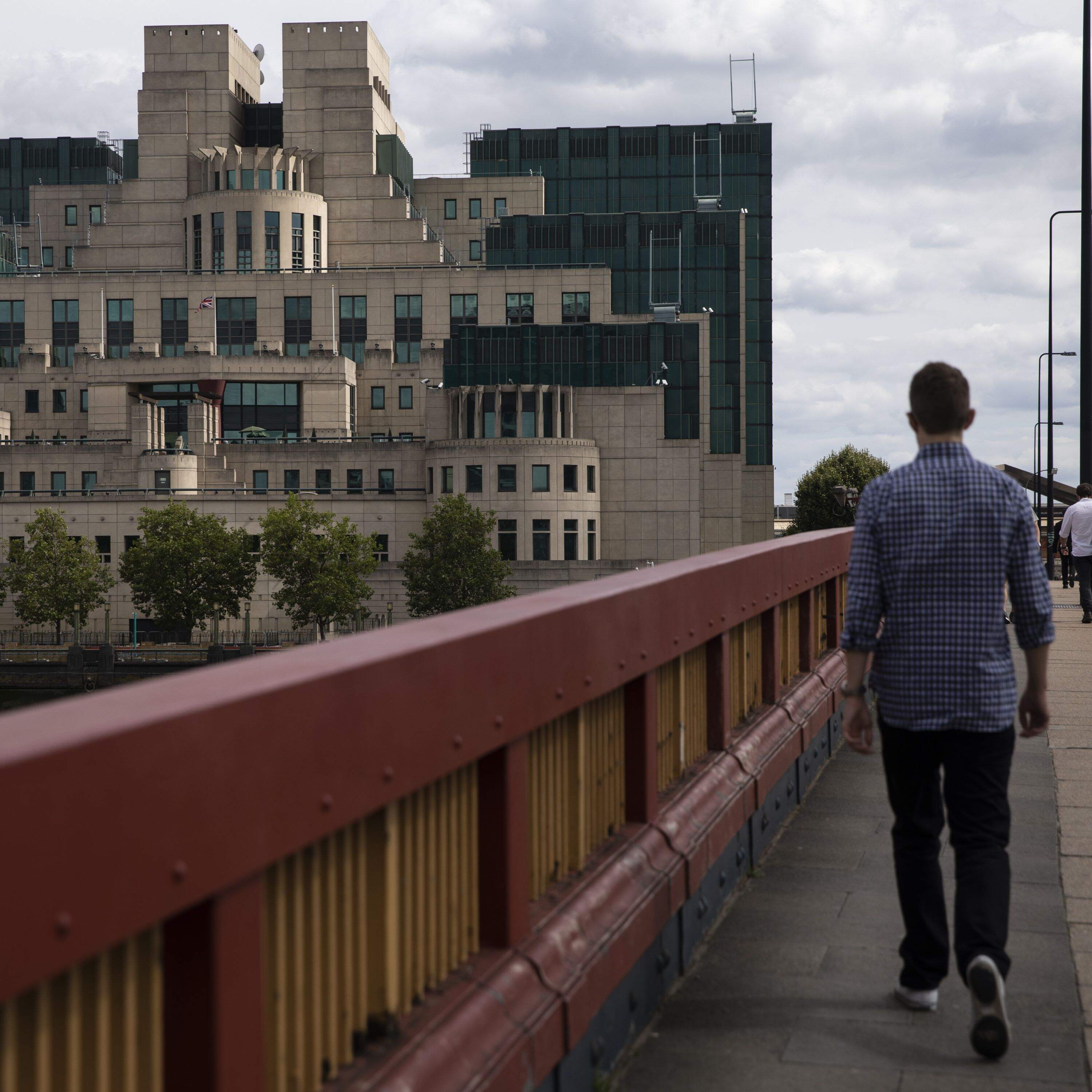
There's keeping a low profile and then there's James Wolfe. Not his real name, that's a pseudonym. I would tell you what he looks like, but his official headshot on the jacket of his novels is just the back of his head shot from behind so you can't glimpse his face. I'm Mary Louise Kelly. This is Sources and Methods from npr. James Wolfe had a career as a British intelligence officer. Now he writes about them. His latest espionage novel is Spies and Other Gods. It is chock full of spies, of people pretending to be spies, secret operations, deceit. I spoke to James Wolfe about all of that and about writing fiction as an ex spy, when the truth can be stranger and more tangled than fiction. A note as always, we are back again Thursday with our regular episode to unpack the week's biggest national security news. James Wolfe, welcome to Sources and Methods.
- [01:29]
James Wolfe
Thank you very much.
- [01:30]
Mary Louise Kelly
I gather from your acknowledgments that even your kids give you a hard time about the pseudonym.
- [01:35]
James Wolfe
They do. They're young enough that they don't quite understand the reason for it. And obviously they, I mean, I think they feel, in a very nice way, they feel proud on my behalf and so they'd like me to be able to be a bit more front footed about publicity for the book. So we'll see. We'll see how things go. You know, I often look with some envy at novelists in the States or novelists who were once intelligence officers and the way that they're able to be a little bit more open than we are in the UK So maybe one day in the future I can be a bit more open about these things.
- [02:05]
Mary Louise Kelly
I'm so curious about what you're allowed to write as a former British intelligence officer and what you're not allowed to write here. In the CIA, I covered national security for years. I've reported on all of the hoops that say former CIA officers have to jump through before they can publish a single word and put it out in the world. In Britain, how does the publication review process work for someone like you who says, I want to write a spy
- [02:32]
James Wolfe
thriller, Well, I mean, I'll give you the answer from my side, which is that it feels like a very ad hoc or frequently frustrating process. I mean, I send the manuscript in and then I wait and I wait and I wait, and then I will get back a long list of proposed redactions. But I mean, with this last novel with Spies and Other Gods, it took something like 16 months for them to approve it.
- [02:58]
Mary Louise Kelly
And when you say proposed reductions, are they proposed or are they like, this has got to go well? I mean, is it optional is what I'm asking?
- [03:06]
James Wolfe
You've put your finger right on one of the kind of complexities here. There are secrets that are properly secret and they are protected by legislation. And if you divulge those secrets, the police come to your door and you get taken to prison. I mean, that's one aspect of this. But then there are a whole host of other things that aren't properly secret and that I might have made up totally from my own imagination. But for whatever reason, the spy agencies might think, well, we'd rather he didn't put that in. From my perspective, as far as I can see, I don't think that's often thought out particularly thoroughly. I think someone reads the thing and thinks, oh, we probably don't want that out there. Let's just ask them to remove it. So that's why this process can take so long and feel so difficult. Because I. I'm fighting to include every word and they're fighting to take some things out, but I'm asking them to justify it. And sometimes they don't really want to. And this is how a process that should take a couple of months stretches into 16 months.
- [04:02]
Mary Louise Kelly
I suppose if you are a censor or the publication review officer, there's just no advantage to erring on the side of just letting it go. It's always easier to be cautious. Nobody ever got fired for making sure a detail didn't make its way out into the world.
- [04:20]
James Wolfe
I think you're absolutely right. I mean, I think there's, you know, these organizations are like bubbles, and everyone inside them is very focused on secrecy and the need to preserve techniques and identities and not divulge too much. I think exactly as you said. I think whenever something comes up that causes an eyebrow to raise, the sensor just thinks, well, safer to take it out. And they put their line through it and they tell me to take it out. But. But whether or not they have the legal authority to demand that is questionable. There have been some instances with this book where they asked me to take something out and I refused. And then as we sort of progressed through the argument about it, they changed their language to saying, well, actually, we're asking you to remove this as a good faith gesture. So I think they try to derive some benefit from blurring the boundaries here. I think they sometimes present stuff as a legal obligation, whereas, in fact, they're really just asking for a favor.
- [05:17]
Mary Louise Kelly
I've read a piece that you just wrote for the Spectator in which you described it. This is your words, the polite and not so polite discussion that you have been having, not just with this novel, but with your past novels as well. And I was laughing out loud that you wrote that. You often get the comment back, please remove from manuscript. But if they're really annoyed, it's just removed from manuscript. Like, if they drop the please, that is about as annoyed as the. As the British redaction officers can get.
- [05:47]
James Wolfe
Exactly. You know, you're in trouble when the, when the pleas is missing. Is missing from the. From the email. Yes. I mean, I think, you know, often when they are making these requests about redactions that they want, they will couch it in very legal language and they will remind you what the most severe penalties are if you were to sort of transgress. But I think, you know, it's very difficult for me as just a lone individual out here. I don't want to sort of put myself at any risk by saying something that I shouldn't.
- [06:14]
Mary Louise Kelly
Although you note that during the redaction process for this novel for Spying and Other Gods, that more than once they asked you to remove details that you were compelled to point out they had published on their own website for the. The whole world could already see them.
- [06:29]
James Wolfe
I mean, there, there. I've got dozens of examples from. From the. The redaction process with this book where they would say, you must remove this. And then I would say, well, it's on your website you boast about this. And an example of this is the ethics counselor. So there's a character in my book who is the ethics counselor. So she will talk to staff members who have some doubts about what they're doing or. Or suspect that there may be, you know. You know, ethics are engaged somehow by. By the operation that they're involved with. And I have a character who fills that role. And I wrote it thinking this is pretty harmless. They came back and said, please remove any reference to an ethics counselor and change it to staff counselor. And I. And I said, well, if you look, on your website, you boast about the fact that you have an ethics counselor because it makes you seem, you know, more modern, more relevant, more contemporary. You know that you're. As an organization, you're very sensitive to your staff's ethical concerns. So on the one hand, they want to boast about this. On the other hand, they want to block its publication. A lot of this is very incoherent and contradictory, very hard to make sense of.
- [07:34]
Mary Louise Kelly
Although you make a point that I hadn't considered, because I do totally get the policy. You have to protect national security secrets you've signed up to protect. You have to protect sources and methods. But you wrote in this essay about a different consideration. Depictions of British spies as incompetent or lacking a moral compass eat away at the public's confidence in organs of state that cannot speak up for themselves. And you add that maybe it could damage ability to recruit the best and brightest going forward. And I hadn't thought about that. People read fiction and they know it's fiction, but they also may walk away thinking, yeah, maybe these spies are incompetent or lacking in an ethical, moral compass.
- [08:23]
James Wolfe
I quote Sir Richard Dearlove, who was the head of MI6, in the article, saying that that is how a lot of people within MI6 thought about John Le Carre, that he portrayed an organization that was a bit shabby in moral terms and that this didn't really do the service any favors. I mean, I am sensitive to that argument. I obviously worked in that world for close to 15 years, and I believe in their mission. I believe in what they do. I have friends who are still doing it. And I'm not spoiling for a fight for the sake of a fight. I'm really just trying to, you know, defend the work that I'm doing now. And I really think that the work I'm doing now might not always be complementary to them. In fact, I'm pretty sure it's not. But I also don't think it's going to harm them. I mean, I think there have been plenty of examples in the past of films or books that have depicted spies, you know, doing horrible things and receiving horrible treatment. But all of it just goes in the mix and ultimately enhances the appeal of these agencies. I mean, you know, there are thousands of people who apply for every single job, so something must be going right for them.
- [09:27]
Mary Louise Kelly
Coming up, we dig into James Wolf's fiction and what his new novel reveals about what makes a good spy. You're listening to sources and methods from npr.
- [09:42]
Podcast Promo Announcer
This message comes from NPR sponsor Carvana. Carvana believes selling your car should be refreshingly simple. Enter your license plate or vin, get a real offer down to the penny, and schedule a pickup on your time. No surprises. Sell your car today@carvana.com pickup fees may apply. This message comes from Designer Shoe Warehouse. You know that feeling when you find shoes you love at a great price and want to tell everyone about it? Find something to brag about at Designer Shoe Warehouse like the latest styles from brands you love, the trends everyone's obsessing over, and shoes that make you feel like you. Head to a DSW store or dsw.com today for shoes that get you at prices that get your budget. Dsw. Let us surprise you.
- [10:29]
NPR Sponsor Announcer
This message comes from NPR sponsor Shopify. No idea where to sell? Shopify puts you in control of every sales channel. It is the commerce platform revolutionizing millions of businesses worldwide. Whether you're a garage entrepreneur or IPO ready, Shopify is the only tool you need to start, run and grow your business without the struggle. Once you've reached your audience, Shopify has the Internet's best converting checkout to help you turn them from browsers to buyers. Go to Shopify.com NPR to take your business to the next level. Today, support for NPR and the following message come from the Walton Family foundation, working to create access to opportunity for people and communities by tackling tough social and environmental problems. More Information is at WaltonFamilyFoundation.org this is
- [11:14]
Podcast Promo Announcer
Ira Glass on this American Life. We tell stories about when things change. Like for this guy David, whose entire life took a sharp, unexpected and very unpleasant turn.
- [11:24]
James Wolfe
And it did take me a while to realize it's basically because the monkey pressed the button.
- [11:29]
Podcast Promo Announcer
That's right, because the monkey pressed the button. Surprising stories every week wherever you get your podcasts.
- [11:40]
Mary Louise Kelly
Okay, we are back with James Wolfe talking about his new spy novel, Spies and Other Gods. Let's go to the cast of fictional characters that you have invented for this novel and start with Sir William Rintoul. He's the head of British Intelligence. When we meet him, he is not enjoying it much.
- [12:02]
James Wolfe
No, he's at the tail end of a long and very successful career, but he's suffering from what the book describes as a brain fog, the descent of brain fog, which is making him struggle to remember names, details, faces even. And he's finding this enormously difficult because he's someone who's been celebrated throughout his life, really, for his mental acuity, you know, to get to the top of an Organization like that, you have to be really on the ball, very capable, very good with people, very good with facts. And he feels that that is starting to slip away from him at, you know, the end of his career. He's also grieving the loss of his wife. And I think he feels that he's in a bit of a tailspin, and it leads him to make some rather unusual decisions.
- [12:47]
Mary Louise Kelly
Unusual is one way to put it. Yeah. I was touched by Sir William and what he's dealing with because it seemed like he's already struggling with what I imagine is a struggle in the life of an intelligence officer. This whole world of double agents and deception and difficulty distinguishing what's real from what may be a trap set by your adversary. And I kept thinking, gosh, that's already hard enough. And then it's made that much harder by the fact that he is struggling just to remember what happened yesterday.
- [13:21]
James Wolfe
Yes. I mean, I think it would be a difficult situation for anyone. It's a particularly difficult situation for him because of the kind of work he's done and the way that spying can play tricks on one's mind. You know, in a way, spying is about creating illusions. It's about double bluffs. It's about creating a sense of uncertainty in your opponent. And I think he's done all these things throughout his career. They've been done to him. And he finds himself in this phase of life in which his mind is a very uncertain territory. And, you know, he's a sad figure. I mean, I think he tries to fight back. There's a spirit of defiance that rises up within him. But I think he is a sad figure and in a way reflects some of the personal cost of spying, that you spend a lifetime lying to other people and also lying to those people near to you. You might not be able to tell them what you do or where you went in a particular day. And I think that he is looking back and counting the personal cost of all that and finding that perhaps it wasn't all worth it. Yeah.
- [14:21]
Mary Louise Kelly
You mentioned that he's recently lost his wife after a long marriage and a marriage that was, as all marriages are, complicated, and it's only after she's gone, he realizes how much. The fact that he couldn't tell her anything about where he was, what he was doing, any of it, that that opened up this whole distance in that relationship. I thought that was fascinating.
- [14:45]
James Wolfe
Yes. I think there's also the hint in there that perhaps, you know, he developed a certain set of deceptive skills that he used in the course of his profession, and then found himself unconsciously using within his marriage as well, little habits that you might learn as a spy, little ways of deceiving other people or leading them down the wrong path. And I think he probably did some of that with his wife. You know, treated her in some senses as though she was an asset or a source, keeping her at arm's length, not letting her in. And then only when she's gone, does he realize just how sad that is, how regrettable that is.
- [15:21]
Mary Louise Kelly
Is he inspired by anyone in particular?
- [15:23]
James Wolfe
No. I mean, like. Like many of the characters in this book, he started off as a bit player, and then he started speaking during the course of the book, and he just took control of the scenes that he was present in, sort of demanded to be there and, you know, seemed to suggest ways in which he could not take over the book quite. But, you know, have a more central role in the book than I had envisaged. I mean, maybe this is partly to do with his character. You know, he's used to being a leader, but the second he appeared on the page, it started to feel that he wanted a larger role in the novel than I had originally imagined. But, you know, and that's what he ended up having.
- [16:03]
Mary Louise Kelly
Well, the operation that is threatening to ruin Sir William's last days on the job has to do with an Iranian assassin, codenamed Caspian, who has killed Iranian dissidents all over Europe. Does it feel strange to be putting out a novel with all these Iranian characters, an Iranian villain, at a moment when, in real life, the whole world is focused on Iran?
- [16:28]
James Wolfe
Yeah, I suppose it does in a way. I mean, when I. When I wrote the book, I think no one was really interested in Iran. There were far more pressing things to worry about with Russia and Ukraine, that felt like the central conflict that the world was focused on. So it definitely wasn't my intention to be, you know, current or contemporary or somehow in step with today's headlines. And it's usually something I shy away from. I'm much more. I'm much more interested in the psychology of spying, in the way that spy fiction reveals character, in the way that it places people under unique stress, and in the way that it is a combination of the. Of the global, but also the personal. I mean, the individuals involved in the book, involved in spying, are often doing something that no one else knows about. And so spy fiction does seem to me to have this unique capability of being, you know, of having the broadest possible canvas, something global that's happening, but also the smallest possible in that it's about an individual isolated, in secrecy, trying to do their best.
- [17:30]
Mary Louise Kelly
So the book has intelligence services all over Europe cooperating, kind of to. To catch this assassin, Caspian, the only lead that British intelligence has, a mild mannered dentist. So introduce us to this character, to Zach.
- [17:51]
James Wolfe
Well, he is someone who the intelligence agencies have tried to use as a way of getting to this Iranian assassin. So the spies think they've worked out who the assassin is. The question then is how they get close to him. How do they find out his movements? How do they find out his intentions? When is he next planning to travel from Iran to Europe? Obviously, if they know in advance, then they can be ready and catch him, and that would be a very successful operation. So the question is how they target the assassin and they discover that the assassin has a nephew, and then they discover that the nephew has an associate in the uk. This is, you know, it sounds very arm's length, but this is often the way that spy agencies work that, you know, you have to work very patiently and slowly, quite far away from your target and build slowly, step by step towards them in order not to spook them, in order not to alert them to your interest. But Zach, the character here, is, you know, really someone who's, in his own way, struggling with life, with addiction, with divorce, with a life of disappointment. I don't think he's in a place where we meet him in the novel where he is content or feels that he's done everything he could have done. And he sees the brief glimmer of an opportunity to become involved in spying. He sees it as something that will, in a way, redeem him, that will transform his life and give it meaning and excitement again. But I think as he goes down that path and becomes more involved with the spies, I think he develops a more realistic sense of what's involved. And I'm not sure he is always totally happy with it.
- [19:26]
Mary Louise Kelly
No, he said, poor Zach, he is constantly being manipulated on your pages by spies, by people pretending to be spies. I was sympathizing with him. And then I got to. I actually want you to read me a few lines that speak to his state of mind as he's trying to figure out what the heck is happening. In my copy, we're at the top of page 197. I'll read a few words and then pick up. Every book he's read on the subject
- [19:55]
James Wolfe
of spying has used the term smoke and mirrors at some point, but he didn't appreciate until now how apt the phrase is how it's possible to be confused about your confusion, to be unsure whether you're confused about the right things, to suspect that your confusion is a wispy simulacrum of some deeper confusion that you haven't yet experienced but lies just around the corner or something like that.
- [20:20]
Mary Louise Kelly
To be confused about your confusion is just the perfect way of putting it. Is that what it feels like some days in your old world, the intelligence world?
- [20:29]
James Wolfe
Yes, absolutely. I mean, I think just before I joined the intelligence world, I probably had this misapprehension that the moment you were on the inside, everything would be made clear. That you'd browse the archives and discover who shot JFK or the truth about the moon landings or whatever it is.
- [20:47]
Mary Louise Kelly
Yeah, you'd get your hands on the classified intel and all would suddenly be clear.
- [20:52]
James Wolfe
Exactly. The world would make sense, finally. But the truth is that it's frequently just as confusing on the inside as it is on the outside. I mean, I think I'm somewhere in the, in the novel, I make the point that it's possible to pick up an intelligence file and read it and have no idea what it's about, what the spies are doing, what they're trying to fix, and whether they're making anything better. You know, I've had the experience of looking at police files before, and police files are incredibly logical collections of documents. There's a crime, then there's the collection of evidence, there's interviews, they might charge a suspect and then there's a court case. It all, it all follows according to a pattern that we're familiar with. But spy operations are real head scratchers sometimes and they begin in confusion and they end in doubt. And then a whole lot of stuff happens in the middle and it's not always entirely clear what the point of the whole thing was.
- [21:45]
Mary Louise Kelly
So you name several real life intelligence agencies. In this book, you name gchq, the British Signals Intelligence Agency, I guess roughly equivalent to the National Security Agency here in the us. You name dgsi, French Domestic Intelligence. If I'm not mistaken, you never name the agency that Sir William runs. Why not?
- [22:12]
James Wolfe
You're right, I don't. I mean, I think I want to have my cake and eat it. I mean, GCHQ is a SIGINT agency. As you, as you said, the other two agencies, MI5 and MI6, have similar roles or go about collecting intelligence in similar ways, but have one has a largely defensive domestic remit and the other one has a largely offensive and international remit. And the truth is As a novelist, I'm a bit greedy and I just want to be able to portray an agency that does all of that rather than an agency that's limited to one aspect of that. So that's the reason that I don't name it and that I just refer to British intelligence as though it was one single community, which in some ways it is.
- [22:53]
Mary Louise Kelly
So, last question. You told us that you didn't set out to write a novel about Iran, something that was majorly in the news, and that Iran wasn't in the news when you set out and wrote this. And now, of course, here we are. Any idea for what the next novel will be? And I guess I'm asking so we can all brace ourselves for whatever your next focus is. Suddenly dominating world headlines.
- [23:19]
James Wolfe
Well, the area. So I'm always very interested in exploring areas of the spying world that might not have received very much attention before or characters or roles. So in this book, Spires and Other Gods, there's, there's a character called Susan who is what's called a building escort. Part of the reason that she's in there is that it's, it's one of the most humble and lowly jobs. You basically will escort a tradesperson, a plumber, a painter, an electrician around the building as they do their work and you sit with them to make sure they stay in the right area. And I thought it's good. And it's maybe my duty to introduce some of these less high profile roles into spy fiction. And what I want to write about next is the crossover between the spy agencies and media. Twenty, 30 years ago, there was just very little contact between the spies, the spy agencies and journalists. But that's really changed now. I mean, the agencies have social media accounts, they publish books, all sorts of things like that. So they have a kind of PR strategy and that involves engaging with journalists. And I think that's the area I'm going to focus on next.
- [24:27]
Mary Louise Kelly
Oh, I will be fascinated to read that. There's, there's overlap too, I think. You know, as I say, I covered the intelligence beat here in the US for years and I also was always fascinated. It's, it's, you can get an interview with the director, you can get an interview with prominent people, but it's often the people doing the jobs. Nobody ever thinks about that. You end up finding the most interesting stories and details that shed light on how a building, how an institution, how its ethos all work. And I think that's maybe in common the life of a reporter and how we approach our subjects in the life of an intelligence officer turned writer.
- [25:09]
James Wolfe
I think there's incredible overlap between the two professions. I mean, obviously, what you do with the information you uncover and what a spy does, that's the point of difference. But, you know, that kind of, you know, knows for a story, that ability to, to build rapport, to build relationships, to get secrets out of people, to build trust, I mean, I think all of that is, is a real connector between the two professions.
- [25:34]
Mary Louise Kelly
We've been speaking with former British intelligence officer turned spy novelist James Wolf. His latest is Spies and Other Gods, James Wolfe, thank you.
- [25:44]
James Wolfe
Thank you.
- [25:45]
Mary Louise Kelly
And again, we're back in a few days with our regular Thursday episode tackling the latest news from the national security world. If you are enjoying the podcast, a really easy way you can support us is recommend us to a friend. We know that word of mouth is one of the top ways that people discover new podcasts, kind of like the intelligence world in a way. Nothing beats a trusted source. Our appreciation if you are willing to be one. I'm Mary Louise Kelly. Thanks for listening to Sources and Methods from npr.
- [26:24]
NPR Sponsor Announcer
This message comes from NPR sponsor Shopify. No idea where to sell? Shopify puts you in control of every sales channel. It is the commerce platform revolutionizing millions of businesses worldwide. Whether you're a garage entrepreneur or IPO ready, Shopify is the only tool you need to start, run and grow your business with. Once you've reached your audience, Shopify has the Internet's best converting checkout to help you turn them from browsers to buyers. Go to Shopify.com NPR to take your business to the next level. Today.