Loading summary
Transcript74 lines
- [00:00]
Mary Louise Kelley
Do you ever wish you could predict the future? Well, some scientists try to do that every year, forecasting when cherry blossom trees will bloom each spring.
- [00:09]
Tom Bowman
It's a wild guess, but there is
- [00:11]
Mary Louise Kelley
some science involved in that and there is a lot riding on the peak bloom forecast, tourism, climate change models and more. Listen to Short Wave on the NPR app or wherever you get your podcast to hear how scientists are predicting the future.
- [00:28]
Greg Myre
He didn't say is there going to be some agreement that's going to end this war, or is us simply going to walk away?
- [00:36]
Mary Louise Kelley
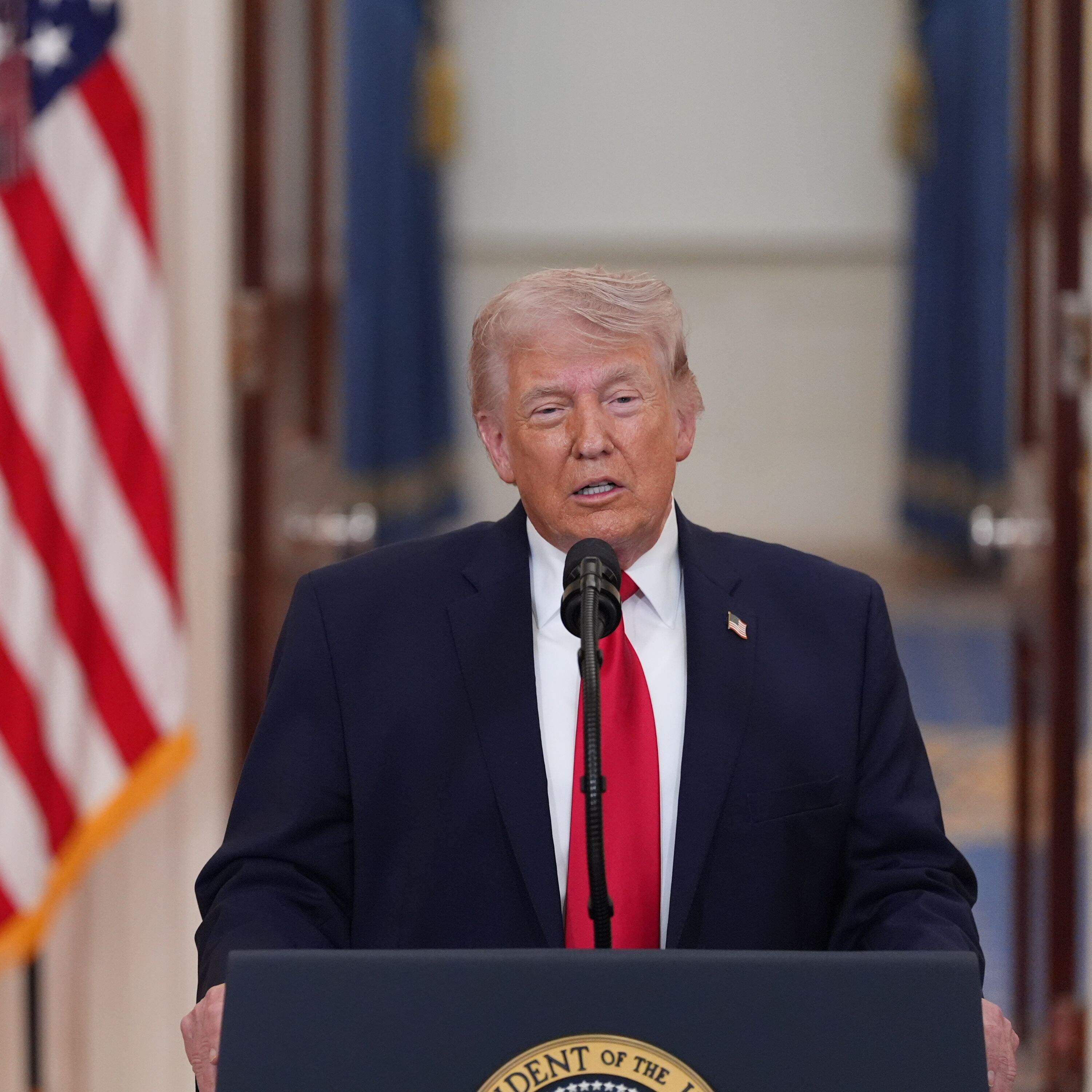
More than 30 days after the United States launched a war in Iran, just as President Trump says that war is nearing completion, he finally made the case for war to the American people. This is Sources and Methods from npr. I marry the wise Kelly. Every Thursday on this podcast, I dive deep on some of the week's biggest national security stories with NPR reporters out there covering them. For the last few weeks, the story has been Iran, and happily, we have two of our most regular regulars in the studio with me to talk about it. NPR Pentagon correspondent Tom Bowman. Hey, Tom.
- [01:15]
Tom Bowman
Hey, Mary Louise.
- [01:16]
Mary Louise Kelley
And sitting right next to him is NPR national security correspondent Greg Myrey. Howdy, Greg.
- [01:22]
Greg Myre
Hi, Mary Louise.
- [01:22]
Mary Louise Kelley
So nice to have the gang all together. I will note timestamp. We are speaking. It is 11am Eastern. It is Thursday. And here we go. Five weeks into this war with Iran, President Trump broke into primetime, addressed the nation from the White House and said this.
- [01:42]
Donald Trump
We are going to finish the job and we're going to finish it very fast. We're getting very close.
- [01:47]
Mary Louise Kelley
He spoke for 19 minutes, which is kind of a long time to speak uninterrupted and manage not to say that much, by which I mean most of what we heard last night we had already heard. It was a rehash of a lot of his recent social media posts. Either of you gain any deep new insight into this war last night?
- [02:08]
Tom Bowman
Yeah. You know, one of the things is, remember, he wanted regime change. Remember he said, I want to select the next Iranian leader, Mushtava Khamenei, who is the leader now? I don't think he's a good guy. He'll find someone else.
- [02:20]
Mary Louise Kelley
Didn't he say it wasn't ever our goal, which he in fact suggested it was a goal.
- [02:25]
Tom Bowman
He said it was a goal and the regime is still in power. It's not regime change, as he and others have said. It's it's a leadership change. The regime is still in power and more importantly, they control the Strait of
- [02:36]
Mary Louise Kelley
Hormuz, the Establishment is still running things. The clerics, the irgc. Greg, what did you hear that made your ears perk a fast?
- [02:43]
Greg Myre
The one thing that really jumped out at me was this two to three weeks timeline for wrapping it up. And you know, it's always risky to set a timeline. Military commander say you set objectives, not timelines. You don't want to get tied to a deadline that you've created artificially. But he didn't say how the two critical issues are going to be resolved. Opening the Strait of Hormuz or dealing with Iran's nuclear program. He also didn't say, is there going to be some agreement that's going to end this war or is us simply going to walk away? So I'm sure Trump will claim a success whenever this war ends. But he left these huge, huge critical questions unresolved.
- [03:25]
Tom Bowman
And also the two to three weeks that he mentioned, he said, if they don't come to negotiate, we're going to bomb them back to the Stone Age. Well, what if the Iranians say, yeah, let's meet in June in Geneva? Is he gonna say no? Is he gonna keep bombing? We don't have a sense of exactly what the plan is going forward.
- [03:42]
Mary Louise Kelley
That is something I was listening for and did not hear last night. Greg, I'll throw this one to you. I did not hear an offer to Iran. No diplomatic opening. Do we know how this landed in Iran? Have we heard a response from Iran?
- [03:55]
Greg Myre
A little bit. We've heard from a couple people in Iran, including a member of the Revolutionary Guards, and he said Trump has been po reasoned with, quote, Hollywood delusions, and he sort of mocked the U.S. you talk about the Stone Age when your 250 year history. This is a civilization with a 6,000 year history. You know, it's rhetoric, but it is this tone of defiance. You're certainly not getting a sense that negotiations are going anywhere. We know Pakistan is trying to broker some talks and maybe passing on messages, but you really don't have a sense that there's real movement towards a peace negotiation that could resolve this and address the US And Iranian issues.
- [04:37]
Mary Louise Kelley
And we've been circling this, but just to land for a moment on that, the contradictions here. You referenced, Tom, the line in the address last night about we're gonna bring them back, bomb them back to the Stone Ages, even while President Trump is saying, we're very close to finishing the job. How do we square those?
- [04:57]
Tom Bowman
You know, we really like, are we escalating or not? Well, we're not sure yet. And again, it's contradictory. It's like, we'll bomb you negotiate. We don't trust you back and forth. We don't get a sense of that. And also, you have more U.S. troops heading into the region, the 11th Marine Expeditionary Unit out of San Diego. They're in the Pacific now heading toward the Persian Gulf area.
- [05:20]
Mary Louise Kelley
So just to be clear, we've got 50,000 or so already in the region, but more still pouring in.
- [05:25]
Tom Bowman
Right. And the number you really have to look at are the ground troops. So you have roughly 2,000 from the 82nd Airborne already there in the region. You have roughly 800 Marines afloat, Marine infantry afloat. And then that other Marine unit coming from San Diego should be there, like, 10 days or so. They have another 800 infantry troops. So if you add all that up, it's like, what, 3,600 infantry troops that could actually do something on the ground. We've talked repeatedly about Kharg island, you know, the most famous island on Earth. Now, because everyone's talking about it, they could seize Carg Island. They could seize some of the ports on the mainland. We don't have a sense of what exactly they'll do once everyone's in place.
- [06:12]
Mary Louise Kelley
We also don't know how that would be done in two to three weeks.
- [06:15]
Tom Bowman
No, that's precisely it. You're not gonna put troops on the ground in Iran for two or three weeks. It just makes no sense. So, again, a lot of what Trump was saying, you're kind of head scratching when you listen to what he was saying, because, again, it's contradictory. Some of it makes no sense. He's right about attacking the Navy and their Air Force and their missile infrastructure. Yeah. There's no question they've been severely weakened, but they're still in power, and they have a stranglehold on the Strait of Hormuz.
- [06:46]
Mary Louise Kelley
Greg, what else were you listening for and hearing or not hearing in the remarks last week?
- [06:50]
Greg Myre
Yeah, I mean, it was a couple of these verbal U turns that Trump made within the course of his speech last night to pick up on what Tom said about the contradictions, you know, of the many reasons he's giving for going to war in Iran. Certainly the nuclear program was one of the top ones, if not the top one. And he devoted the first part of his speech to saying how serious and imminent the threat was. And then later on in the speech, he said, well, the most critical component, this highly enriched uranium, is buried under rubble in a mountain, and it's not really that important. We can monitor this from a satellite. So Is this the reason you went to this is something you can monitor from a satellite. He also talked again, this sort of back and forth on regime change, that the Iranian leaders are the world's leading sponsors of state terrorism, that they've committed all of these violent acts against the US and others. And then he went on to say he's found much more, less radical, more reasonable people to deal with. So which is it? Some of these things within this speech that were just utterly contradictory, using it on one hand to justify the war and then on the other, for reasons I could end this war in the next two to three weeks and we'll be fine.
- [08:08]
Mary Louise Kelley
Another thing we didn't hear a lot about last night was the price of gas at its top of a lot of Americans minds. I know, Tom, you like to update us every week on how much you're paying to fill up your tank.
- [08:19]
Tom Bowman
And it keeps going up 10 per gallon. In Alexandria, Virginia, it's up a buck 10 right at the Delray Service center, my go to place. And it's going to probably go up more oil prices have gone up just in the last 24 hours. So we're likely going to see that number for a gallon of gas increase.
- [08:38]
Greg Myre
Yeah. And just to add to that, there's been a bit of a cushion built in because there's the lag. There were already ships at sea delivering oil, and countries like the US and others have released some oil from their strategic stockpile. So there's this buffer that's this cushion we've seen for a month now. We're starting to hit the point or getting very close to the point where those tankers that are stuck in the Gulf are not reaching Asia or Europe or wherever they're headed. And suddenly the shock to the system could be much greater than what we've seen so far. We've seen rising prices, but not dramatic physical shortages that could actually be coming someday fairly soon.
- [09:20]
Mary Louise Kelley
We're going to take a break. When we come back, is the U.S. on track to accomplish what it set out to do in Iran? That's ahead on Sources and Methods from NPR Foreign. We're back. And we want to take a moment here to thank all the NPR supporters who joined Greg and me on zoom. We did a live Q and A earlier this week. We talked Iran, of course, also talked about how we cover the intelligence community, how we go about international assignments, how we report from countries like China and North Korea, loads of other stuff if you missed us. We did make the audio of that call available as an episode of sources and methods. We dropped it on Tuesday. You can go check it out and we will see you on the next zoom call. For NPR supporters, we do hope to do that again down the road. Now back to today, back to the news and back while we are at it, to the beginning of this war. So we're talking very end of February, the start of March. President Trump did not consult or try to persuade Congress or American allies or the American people about the wisdom of attacking. In fact, the first Americans heard from their commander in chief about the war was a prerecorded video posted on social media after the war was already underway. Trump endorsed regime change in Iran and spoke directly to the Iranian people.
- [10:47]
Donald Trump
When we are finished, take over your government. It will be yours to take. This will be probably your only chance for generations.
- [10:57]
Mary Louise Kelley
He also listed four objectives. Destroying Iran's missile program.
- [11:02]
Donald Trump
It will be totally again obliterated.
- [11:06]
Mary Louise Kelley
Also destroying its navy.
- [11:08]
Donald Trump
We're going to annihilate their navy, its proxy network. We are going to ensure that the region's terrorist proxies can no longer destabilize the region or the world and attack our forces.
- [11:21]
Mary Louise Kelley
And one final goal, and we will
- [11:23]
Donald Trump
ensure that Iran does not obtain a nuclear weapon. It's a very simple message. They will never have a nuclear weapon.
- [11:33]
Mary Louise Kelley
Okay, that brings us up to last night when Trump said this and tonight
- [11:37]
Donald Trump
I'm pleased to say that these core strategic objectives are nearing completion.
- [11:43]
Mary Louise Kelley
Okay, so Greg, we heard the whole list of what the core strategic objectives are, regime change, which, by the way, President Trump last night said that was never a goal, but we achieved it anyway. Setting back the nuclear program, setting back Iran's state sponsored terrorism. Those were the reasons the president laid out for going to war. He says we've nearly checked them all off. Is that true?
- [12:07]
Greg Myre
If you look at very narrow military accomplishments about the Navy, the Air Force, degrading its missile capabilities, yes, true. I mean, the US has, the Pentagon says it's hit more than 12,000 targets in Iran. So. Yes, but you have to draw this absolute, very clear distinction between specific military objectives and then larger strategic goals. Obviously, this is to reduce Iran as a threat in the region, to stabilize the region. And that hasn't happened. We have this huge problem of the Strait of Hormuz being closed that we didn't have at the beginning of the war. The Gulf countries are very fearful about how this will end with an angry, embittered Iran that could threaten them. The global economy is holding its breath to see how oil prices will play out. There are all These issues that we just haven't resolved. Not to mention what the new leadership in Iran will be like. Will it be very much like the old one or perhaps even more radical? It's really hard to tell at this point. So, yes, on military objectives, you can claim a lot of those things. Strategic objectives not clear, but not looking great.
- [13:24]
Mary Louise Kelley
And the nuclear question, which has been central all along, President Trump has been consistent and consistent with American presidents who came before him. Iran's not going to get a nuclear weapon. But as I have listened, I keep thinking, okay, we are told the nuclear material is still exactly where it was before this war. It was buried under rubble before the war. As far as we know, it still is.
- [13:49]
Greg Myre
Yes, Presumed to be much of it, most of it, maybe all of it in Isfahan, one of the big Iran nuclear centers, possibly somewhere else. We don't know. We've heard from the UN's nuclear agency that they lost track. They knew where it was before the bombings that the US and Israel carried out last June. They haven't been able to go back and confirm it. Maybe Iran has access to it. Maybe it's too deeply buried to get to. So there's all of these questions and we justthere have been some attack on nuclear sites and facilities, but we haven't been getting details. We don't know what has changed since the bombing took place last summer. So really unclear. And again, it was quite striking to me the way Trump sort of has said in the last day, in his speech last night and in some other comments that he could just walk away, we'll monitor it by satellite that that seems to be sufficient now in his mind. And we haven't heard that before. I mean, there's been this need for absolute certainty on accounting for nuclear material and nuclear facilities and a commitment for Iran to reduce or eliminate nuclear enrichment.
- [15:04]
Mary Louise Kelley
Just one more on the nuclear point, which is there have been questions, there has been some theories that may be part of what the US boots on the ground might be aimed toward, is a high risk mission to go in and get the nuclear deal, get it out. We didn't hear anything about that last night. It doesn't sound like that is front and foremost in the President's mind.
- [15:27]
Tom Bowman
No. The Washington Post reported that the Pentagon put forward a plan that you would put boots on the ground, specialized troops that would go in, somehow seize all of this enriched uranium. Listen, the Pentagon plans for everything. And I'm sure, as the Post reported, the President wanted a plan. And I'm sure that once you look at that plan, people will say that's a suicide mission. They know where you're going. Isfahan, number one. Number two, it would take weeks with heavy equipment to dig into the tunnels to try to retrieve that nuclear material.
- [16:06]
Mary Louise Kelley
And if you got to it, it's radioactive nuclear material.
- [16:09]
Tom Bowman
Right. That is serious, but clearly a problem. And these teams know how to extract that.
- [16:15]
Mary Louise Kelley
So not off the table, but we didn't hear anything in terms of that.
- [16:18]
Tom Bowman
I'm sure that every adult that looked at that said, this is foolhardy.
- [16:23]
Mary Louise Kelley
I want to zoom out. And I'm going to throw this one to you, Greg. You were starting to get to the whole, is the region safer if the US Is very good at winning battles, very good at hitting targets, We've seen that in this war. Winning a lasting peace in the Middle east is a very different matter. And the three of us have all covered the wars in Iraq, the war in Afghanistan, two decades of combat in the Middle east, and here we are with the Middle east on fire again, more U.S. troops going in, 50,000 already in the region, missiles flying, as you just noted. Tom, do the people you interview have any wisdom to impart on this? Like the long view?
- [17:09]
Greg Myre
Yeah, this is the fourth major American war since 1991 in the region. And all three of the previous ones, they've had this quick military success within a matter of weeks, but haven't worked out with real strategic success in the long run. You know that 1991 war, the US drove Iraqi forces out of Kuwait, and you thought, well, that seemed pretty successful. But that inspired Osama bin Laden, drive US Forces out of the region, and ultimately led to the September 11 attacks. So the bill didn't come due until a decade later, but it led to that massive 9, 11 attack, which then led the US to go to war in Afghanistan. And then the Bush administration tried to draw a parallel to Iraq, and that led to the Iraq invasion. So all three of those wars were linked. And in fact, while the US Was fighting in Iraq, Iranian proxies killed hundreds of American troops. President Trump cited that night in his speech as one of the reasons to go after the Iranian leadership. So there are direct links and interconnections to all these wars. And you keep seeing this same experience. US Military might allows quick military success, but do you wind up with a more stable, peaceful, predictable Middle East? And so far, that has not been the case.
- [18:33]
Tom Bowman
And what's different in this war that you didn't have in the other wars is the US could have walked away after it overthrew those governments. It could just walk away this time. It looks like he wants to walk away in two or three weeks. But the government is still in power. The regime's still in power. And again, we keep saying this. They have a stranglehold right now on the Strait of Hormuz that you didn't see in those previous wars, that no one had an economic stranglehold on you.
- [18:59]
Mary Louise Kelley
We'll take a short break. When we come back, President Trump told the American people early on in this war that Iran posed an imminent threat. Where are we now at sources and methods from npr. We are back with Greg Myrey and Tom Bowman. And I want to try to land us here. President Trump told Americans this war was necessary because Iran posed an imminent threat. Is that threat any less imminent now?
- [19:33]
Tom Bowman
No, I think that's probably true. It is less imminent because they've destroyed, you know, their navy, their air force. Clearly the missile facilities have been destroyed as well. But it was not an imminent threat. He keeps saying that the Defense Intelligence Agency said it would take at least another 10 years before the Iranians could have an ICBM that could reach the United States. Ten years. And I'm sure now they'll be moving that, that date to the right because of the Iran war. But there was no imminent threat to the United States. It's just not true.
- [20:07]
Mary Louise Kelley
Let me ask it in a slightly different way. Countries go to war for all kinds of reasons. Protecting their own national security is usually top of the list. Has that been accomplished? Is the US Safer now than it was six weeks ago?
- [20:21]
Greg Myre
I don't think you can say that. I think the jury is still out. We'll have to see how this war ends and how it plays out if, if the Gulf countries, if Israel still feel threatened. The US has often gotten involved in the Middle east not because there was an immediate direct threat to the U.S. but because Iraq invaded Kuwait or because of some other development in the region. So even if I think the question remains unresolved is whether the US Is safer, but is the region more stable and secure? And I think the answer is pretty clearly no on that front. And the US Will still probably be involved in some level of in the region militarily, as Thomas laid out, regardless of whether there is or isn't a direct threat to the United States.
- [21:08]
Mary Louise Kelley
Well, on that sober note, let me perk us up with Osint. We're going to end as we usually do with open source.
- [21:15]
Tom Bowman
I was just going to add that my neighbors, when they talk with me, they say, Tom, every time I talk with you, I'm more depressed. I said, that's my job. Make you more depressed.
- [21:26]
Mary Louise Kelley
Open source intelligence, the not so secret details we stumble across in our reporting. Tom, you want to kick us off?
- [21:35]
Tom Bowman
Sure. I sat down with a group of reporters and we sat down with this diplomat from power in the region, and his country is involved as an intermediary in talking with Iran. And he said something that really struck me. He said, we're not sure who's in
- [21:53]
Mary Louise Kelley
charge in Iran because we're told there is a new supreme leader, but we have yet to see him or hear from him directly. Much to Bahamini.
- [21:59]
Tom Bowman
That's right.
- [22:00]
Mary Louise Kelley
Time will tell. Interesting, though, that even the intermediaries are trying to figure this out.
- [22:06]
Tom Bowman
So who do you deal with?
- [22:08]
Mary Louise Kelley
That's the question, Greg.
- [22:09]
Greg Myre
Yeah. Related oil issue. While we've been focused on oil in the Middle East, Ukraine has been busy striking Russia's oil export terminals in northwest Russia, setting off these huge fires at these oil export depots. And you've seen massive black clouds. They've hit some of these ports three and four times. And it's not coincidental. The rise in oil prices would be a real boon for Russia if it can continue exporting oil as it does in a major way. And Ukraine clearly doesn't want Russia to have more revenue from those oil exports and has targeted these terminals and has had sort of extraordinary success. It's quite remarkable that Russia hasn't been able to defend these sites, these key oil export terminals, which are hundreds of miles away from the Ukrainian border.
- [23:08]
Mary Louise Kelley
Well, I am grateful to you for providing a segue to Russia, because that's where I'm going to land with Osint. My Osint is about a Moscow court and a Russian journalist named Andrei Soldatov. Have you crossed paths with him, either of you?
- [23:23]
Tom Bowman
No.
- [23:24]
Greg Myre
Familiar with him?
- [23:25]
Mary Louise Kelley
Okay, so I met him 10 years ago now in Moscow when he was able to live and work and write and do his work as an investigative journalist there. The Kremlin didn't like him then. They really don't like him now. The war in Ukraine, when that happened, Andrei Soldatov was put on Russia's wanted list. His bank accounts were frozen. He was charged with fake news, spreading fake news about the war as he tried to report on it. He was forced to leave. He's been living in exile ever since. He faces prison if he goes back. The development is that he this week was sentenced again in absentia, because as I say, he's not in Russia. He faces four years imprisonment now for allegedly violating the foreign agent reporting requirements and the kind of black humor part of this is that part of that ruling includes a ban on what Andrei is allowed to do online, which I only learned about because of his activity online, because he was posting about this on X this week. It's just such a reminder. We're all focused on the Middle east and Iran right now, but the rest of the world is ticking on and the work of Russian journalists and writers and intellectuals, many of whom are now operating outside the country, still trying to work, facing severe penalties if they ever try to go home. All right. That brings us to an end. NPR's Tom Bowman and Greg Myrey, thanks as always.
- [24:58]
Tom Bowman
You're welcome.
- [24:59]
Greg Myre
Real pleasure.
- [25:00]
Mary Louise Kelley
Before we go, a plug. You can listen to this podcast on the NPR app, which brings you the best of public radio, personalized for you. And yes, you may have a podcast app you like. But if you are willing to try something new on the NPR app, not only can you hear all your favorite podcasts like Sources and Methods, you can also hear local news from your NPR station, along with other great national and international coverage that we bring you at npr. It's got all the news you need all day long. So you can download the NPR app today. Once you are in there, make sure to search for and follow us. Sources and Methods. That's it for today's episode. Thank you for listening. I'm Mary Louise Kelley. We're back next week with another episode of Sources and Methods from npr.