← Sources & Methods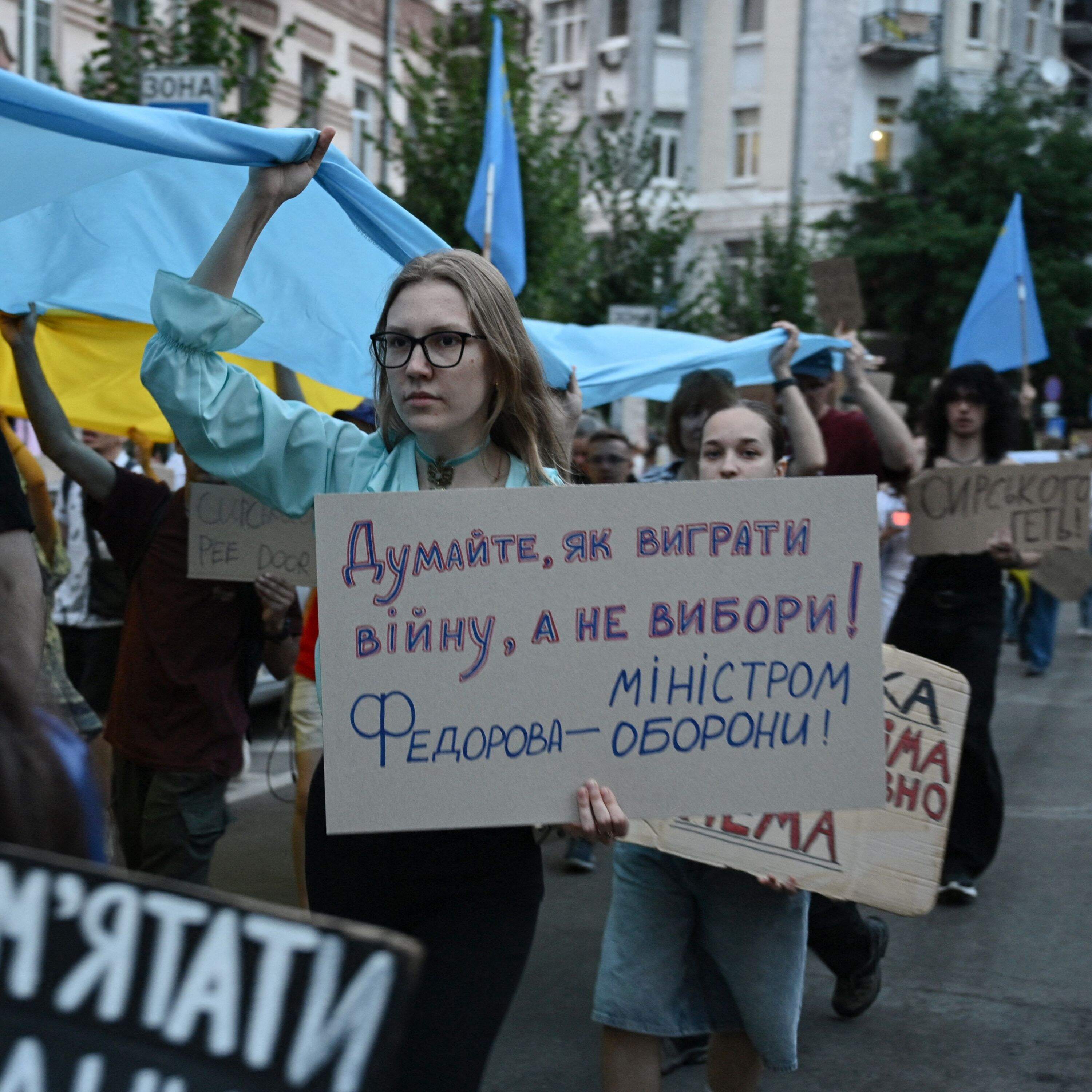
Sources & Methods
Ukraine’s leadership shakeup / View from Moscow / Is Russia a friend or foe?
00:32:42
Loading summary
Transcript83 lines
- [00:00]
Ira Glass
This is Ira Glass of this American Life. Do you know our show? Okay, well, either way, I'm going to tell you about it. We make stories that hopefully pull you in at the beginning with funny moments and feelings and people in surprising situations. And then you just want to find out what is going to happen and cannot stop listening. That's right. I'm talking about stories that make you miss appointments. This is American Life. Wherever you get your podcasts.
- [00:26]
Charles Maines
This absolutely plays to a narrative that the Kremlinists said from the beginning that Ukraine is an unserious sma fail failed state. It's corrupt, it's incompetent. And so in some ways, really, this has been a game changer in the battlefield. And the question is, what happens going
- [00:39]
Mary Louise Kelly
forward as Russia and Ukraine pound each other on the battlefield? A showdown in kyiv between a 30 something tech wizard and a 60 something battle hardened general. What might that battle tell us about the direction of the war in Ukraine? This is Sources and methods from NPR. I'm Mary Louise Kelly. It is Thursday, July 23rd, which means it's Sources and Methods Day, which means we are diving into the week's biggest national security stories with NPR reporters out covering them this week. We have got NPR national security correspondent Greg Myri who has made his way to Kyiv. Greg, welcome back. You're holding down the fort in our bureau there for the next, what, month or so?
- [01:23]
Greg Myre
Yeah, that's right, Mary Louise. Joanna Kakissis, our correspondent here, is taking a well deserved break for a month and I'm replacing her.
- [01:30]
Mary Louise Kelly
Excellent. Happy late summer in Kyiv. We also have NPR Russia correspondent Charles Maines, who is at his post in Moscow. Hi, my friend.
- [01:40]
Charles Maines
Good to be with you.
- [01:41]
Mary Louise Kelly
All right. To timestamp this, it is just after noon here in Washington. Makes it just after 7pm in Moscow and in Kyiv. And can I note just a tiny bragging right here we are one of the only American, maybe the only American news organization to keep permanent correspondence in both Kyiv and in Moscow. So congrats you two, I gather. Did you two actually meet for the first time in Moscow?
- [02:05]
NPR Announcer
We did.
- [02:06]
Greg Myre
Yes, we did. Way back in 1999. We were both based in Moscow. And I'll just note Charles is obviously still there. And I think Vladimir Putin was mere director of the fsb, the Russian security service, at that time. He hadn't even made it to the Kremlin.
- [02:25]
Charles Maines
Well, I remember writing when he first was a candidate and I said his chances of success were unlikely because of his dour smile. How right I was right there. So And I have to say that Greg was back then, was the guy we all looked up to because he seemed to know what he was talking about. And I think he still does.
- [02:41]
Mary Louise Kelly
With that, we will avail ourselves of both your seniority on this beat and let's kick it off in Kyiv where the news has included a clash over Ukraine's military strategy. A clash that has broken into the open. People have been out in the streets protesting for several days. And all this has cost not one, but two people their jobs. And for loyal listeners who remember last week's episode, Greg, this was your Osint. You weren't even in Kyiv yet, but you were giving us a heads up that this big story might be coming. And here we are now leading the podcast with it. What is the latest?
- [03:17]
Greg Myre
Yeah, so the two main figures leading the war for Ukraine have both been dismissed in the past week. The Defense minister, the young 30something tech whiz, and then the head of the army, a 60 year old Soviet trained, hard nosed, very old school type general. They could not get along to the point of not being able to communicate. And so President Zelensky felt he had to step in, take some action. And he got rid of the, the young guy, Mykhailo Fedorov, the tech whiz
- [04:00]
Mary Louise Kelly
who you have been covering for a while now, right?
- [04:02]
Greg Myre
Yeah, I mean I first really came across him three years ago at a sort of drone exhibition here in Kyiv. And it was kind of strange because he was the Minister of Digital Technology, not a military figure, but it was clear he was a real driving force here. I mean, when Russia launched this war four years ago, he took to Twitter and challenged Elon Musk to provide Star link to Ukraine. Musk did that's greatly improved Ukraine's communications network. And then when he became Defense minister again, he's just 35, he called Musk again, or got in touch with him again and asked him to cut off Russian military use of Starlink, which Musk did. And that has hobbled the Russians, it seems, to some degree. Yeah.
- [04:50]
Mary Louise Kelly
Been a total game changer.
- [04:51]
Greg Myre
Absolutely. Probably more than any other individual, he has represented the rise of drones here. He just told people to start building drones and they did it in their garage. And he cut through the red tape and now we've seen this absolute revolution in the way that Ukraine is using drones. And he was dismissed last week. That led to protests in the streets saying he should be kept in that position.
- [05:18]
Mary Louise Kelly
Okay, so that's one of the players. He was dismissed last week. And then speak for a moment to this old guard general who was his rival, who seemed for what, about five minutes there to have been prevailing in that rivalry. But the latest twist is now he's out too.
- [05:33]
Greg Myre
Yeah, that's right, mary louise. He's general alexander syrsky, 60 years old. When he joined the military four decades ago, it was as part of the Soviet Union and learning this very rigid, doctrinal style of fighting, a real heavy emphasis on ground troops and artillery. And never retreat. You hold your ground. And Syrsky seemed to prevail in this showdown last week when Zelenskyy fired the younger Fedorov. But the protests started taking place in the street daily. And then late Tuesday night, Zelenskyy put out a video on social media and said he was dismissing Syrsky as well. So these two major figures, the two people you were kind of watching as they ran the war in Ukraine, are now both out of a job. And Syrsky, while he was old school, he played a huge role here. I think probably his most impressive moment was right at the beginning of the Russian full scale invasion in 22, when Russia sent a long convoy of tanks and armored vehicles toward Kyiv. But Syrsky was the commander of the ground forces, and he led those ground forces to stop the Russians, halt them in their tracks outside the city, and then ultimately the Russians retreated. So that was a huge, huge, critical victory for Ukraine. But over the past several years, his critics have come to call him the butcher, saying he's been too willing to sacrifice troops and that he was resisting some of the innovations, the sort of drone innovations. He wasn't opposed to it, but he was not moving as quickly as some of the younger guys would like.
- [07:24]
Mary Louise Kelly
So to sum up, we're talking about two different posts. The Defense minister and the commander in chief of the armed forces. Both these guys got sacked by Zelenskyy within the last week.
- [07:36]
NPR Promo Host
Who.
- [07:36]
Mary Louise Kelly
Who is running Ukraine's war now?
- [07:39]
Greg Myre
Yeah, well, they've picked a new army chief. Zelenskyy named him Tuesday night. He's Major General Mykhailo Drapaty. He really shot to fame back in 2014 when Russia first invaded. He was just a major then, and he led a charge in an armored vehicle against some blockades that had been set up in Ukraine. And there's a sort of amazing video of him just charging through this, this tire blockade in an armored vehicle, going seemingly 40 or 50 miles an hour, just blasting through it and sending tires in all directions. And so he kind of became a folk hero way back then. Zelenskyy does seem to be leaning toward the younger guard, the more innovative side that wants to emphasize the drone warfare. But all the pieces aren't in place yet and we'll have to see if that has an impact in terms of prosecuting the war at a time when Ukraine seems to have the momentum.
- [08:40]
Mary Louise Kelly
It sounds like it's just been a total soap opera. I know you only got to Ukraine a few days ago, Greg, but all of this has unfolded just in the last few days. How are ordinary Ukrainians making sense of this? How big a deal is it? How closely are people tracking it?
- [08:55]
Greg Myre
Yeah, I think they're tracking it very closely. I mean, again, we saw the protests in the streets. So yeah, it's a big deal here. And I think they're waiting to see how this is going to play out. And again, what Zelenskyy is going to do, this is not the first time where he sort of made a big move like this and then stepped back and made some changes. And I'll just note in the past four years, this is the third leader of the army he's had and he also just recently named his third, third prime minister. So he has made these shakeups. It's not entirely new. It is being closely watched.
- [09:28]
Mary Louise Kelly
How different do things look? How different do things feel just walking around than when you were last in Ukraine, which was what, a year ago last summer?
- [09:37]
Greg Myre
Right? That's right. That's right. I drove in from the border in Poland. It's about a seven hour drive. The roads are good. The roads are clear. We didn't see any troops. Now we're coming from the west and the fighting is in the east. But we got all the way to the outskirts of Kyiv and it was midnight before we got stopped at a checkpoint and had a very friendly one minute conversation with the soldier who chatted with us.
- [10:00]
Mary Louise Kelly
So no roadblocks all the way from the Polish border?
- [10:03]
Greg Myre
You know, there may have been one or two, but we didn't even have to stop. There may have been a couple of places where there were a few troops on the side of the road. And again, it just struck me. I really, this is not hyperbole. I'm not exaggerating. I probably saw fewer troops on a seven hour car ride from the Polish border to Kyiv than I see on my little commute in Washington D.C. where I see more National Guards troops walking around on the streets on a, on a typical day. So you just don't see. And it's also true within the, the city limits of Kyiv. In fact, you don't really see any at all.
- [10:37]
Mary Louise Kelly
Time for a quick break. First, a quick reminder to make sure you are following this show wherever you listen. So you always get new episodes as soon as they are available. That's usually around 5 or 6pm Eastern on Thursday. When we get back, the view from Charles Maines and Russia. That's ahead on Sources and Methods from npr.
- [11:02]
NPR Politics Host
This week on the NPR Politics podcast, we uncover a pattern in political ad spending. As the midterms get closer, Republicans are leaning into an issue they've won on before, immigration. We look at their message and also what Democrats are saying on the issue in a very different way. Listen. Now on the NPR Politics podcast, you
- [11:25]
NPR Promo Host
might have heard of Nepo babies, maybe even Nepo parents. Now there's Nepo husbands, spouses or partners to high profile women riding on their coattails. On It's Been a Minute. We talk about the many shapes and forms they come in and the scrutiny they face. See what's shaping culture this week. Watch or listen to It's Been a Minute on the NPR app or YouTube.
- [11:48]
NPR Announcer
The NPR app cuts through the noise, bringing you local, national and global coverage. No paywalls, no profits, no nonsense. Download it in your App store today.
- [12:04]
Mary Louise Kelly
Okay. We're back. Charles, how has Moscow responded to this whole I was calling it a soap opera, certainly a drama in Ukraine.
- [12:12]
DSW Advertiser
Yeah.
- [12:13]
Charles Maines
You know, the official reaction here is that it doesn't matter much who's the defense minister in Ukraine, who's the commander of the arm, you know, chief of armed forces, because they insist, at least in the Kremlin, the Russian forces are on the march, that Ukraine's success of late is overblown. The problem seems to be that neither is quite true. Certainly if you look at, for example, these pro war bloggers, these so called Z bloggers, you know, they celebrated the firing of Fedorov, acknowledging that he'd really revamped the Ukrainian drone program to the point where they were having a lot of success. They were certainly like, you know, making a real impact in terms of daily life in Russia, hitting these oil and gas refineries.
- [12:53]
Mary Louise Kelly
There was that telling comment from Zelensky who was asked the other day, like, would you go to Moscow for talks? And he said, I don't know, it's pretty dangerous, it's difficult.
- [13:01]
Charles Maines
There are a lot of Ukrainian drones there.
- [13:03]
Mary Louise Kelly
There are a lot of Ukrainian drones flying around Moscow.
- [13:06]
Charles Maines
There are. And I can tell you we're now in the fifth year of this war. And in the first four, I probably heard personally maybe two or three drones, you know, detonating nearby my apartment here in the center of Moscow. One was near the Kremlin, another was at a Moscow city business center. Now you hear them regularly. They're on the outskirts of the city all the time on approach. So it's a real discernible difference.
- [13:30]
Mary Louise Kelly
So some celebration from Russia of the ousting of Fedorov, the young tech wizard. I can imagine if I were sitting in the Kremlin, I might also try to explain this as weakness. Ukraine is failing. Ukraine isn't working. So that's why they're firing all the guys who were running the war there.
- [13:51]
Charles Maines
Absolutely. This absolutely plays to a narrative that the Kremlinists from the beginning that Ukraine is an unserious sma, failed state, it's corrupt, it's incompetent. And here you have, I mean, for example, the Foreign Ministry spokesperson said, let me get this straight, okay? Ukraine is supposedly having all this military success on the battlefield, and yet they've just fired their top two military officials. It makes no sense. And I think in that sense it plays this counter narrative that Russia has been providing all along, that this is somehow fake news. The problem is that Western intelligence at least says that Russia's gains are minimal at best. They're often coming with heavy losses. And so in some ways, really, this has been a game changer in the battlefield. And the question is, what happens going forward?
- [14:33]
Mary Louise Kelly
Yeah, I suppose one other way of fact checking that narrative would be to circle back to what you were just speaking about with drones hitting targets in Russia. Tell us what has been happening at warehouses for wild berries and first explain just what. What is wild berries?
- [14:52]
Charles Maines
Absolutely. So Wildberry is Russia's equivalent of Amazon.com so it's this online retailer, it has these massive warehouses all over the country. And Ukraine has started striking these warehouses, several outside of Moscow. There was another one hit today in southern Russia. Ukraine has acknowledged these strikes, saying that they accuse wild bears essentially of helping the Russian army with tactical gear with dual use technologies from China. It's certainly possible. I can also say that Wildberries is also where you get goods for everything. In some ways. Wild Berries and some of these other online retailers have been how Russian consumers during the war, despite all these Western sanctions, have managed to kind of keep goods flowing. I mean, you can get anything. It may take a little while to ship from China, but it's quite efficient. And the little shops, you can go pick up everything in your neighborhood or have it delivered to your home. So I just picked up a bike helmet for my kid. For example.
- [15:47]
Mary Louise Kelly
Right.
- [15:47]
Charles Maines
It's worth pointing out that as we talk about these debates over Ukraine's military strategy and this infighting, Russia has its own version of this. You think back, Mary Louise, to the Wagner rebellion led by Yevgeny Prigozhin several years ago, which was the culmination of this mounting squall against the top brass for what the rank and file saw as poor strategy of essentially wasting Russian lives by throwing them into the meat grinder in some of these small towns in eastern Ukraine that Syrsky was involved in defending. And so we know what happened. This rebellion ultimately failed. Prigozhin, the head of the Wagner rebellion, is now dead under questionable circumstances. He died in a plane crash. But I think there's no question that these issues over Russia's sort of strategy going forward, they're still there.
- [16:35]
Mary Louise Kelly
Yeah. And what might this tell us about the problems Vladimir Putin may face even as he maintains such firm control in Russia? I'm thinking it would be super annoying if I were trying to order a bike helmet for my kid and I couldn't get it because a Ukrainian drone had just blown up the factory that is hitting Russian consumers who may be many, many, many miles from the front lines, but making them feel the impact of this war.
- [17:02]
Charles Maines
It's Russian consumers. It's also Russian small business that's also already been tapped with higher taxes to try and help fund the war. There's a real question of how the Kremlin keeps paying for this and these attacks on wild berries, whether or not this is true about there's some dual use technology in these warehouses or not, they're certainly affecting impacting Russians lives. And so whether it's my getting a helmet for my kid or some small business owner who had all their stock stock in these places, a lot of these things have burned up. And it seems clear that Ukraine has settled on this as a strategy alongside the strategy of hitting some of these energy infrastructures. So we've had in recent weeks gas shortages here throughout the country. It's settled down here in Moscow, but in some places, like the Far east, in Siberia, this is a real problem. People are lining up for gas for hours. And just to put it in context, I mean, we're here, we're sitting talking now in end of July. Well, you have the harvest coming up, you've got the winter coming up. And you may see Ukraine try and sort of reverse engineer some of the strategies that Russia has employed against Ukraine, essentially trying to punish them through the winter months and freeze them out into
- [18:08]
Mary Louise Kelly
some Kind of submission worth pointing out, you know, since Greg was just nodding to protests that have been underway there in Ukraine, in Russia, you can't exactly go out and easily protest if you don't like what your government is doing, if you don't like who it's putting in charge of the war effort. Is it possible from where you are in Moscow to get a sense of how people feel about how this war is going on the Russian side?
- [18:36]
Charles Maines
Well, to say you can't protest is putting it mildly. You'll go to jail for quite some time. And so they've essentially snuffed out any form of public protest. We just this week saw one lone anti war candidate trying to run for the Russian Duma. I interviewed him. He was banned by the courts on a questionable charge of extremism. But just there's a shift in Moscow these days. You can feel it when you're out in the street talking to people. And I mean this by everyone. The ladies in the shops, it's the taxi drivers, it's anywhere you go. There's just a fatigue, a sense that this has gone on too long with too minimal gains, and they want this to end. And it may not be that they are against Vladimir Putin, the Russian president. It may not be that they think it was a terrible idea to begin with, but there's a sense that this has just gone on too far. And it's backed up by polls, even ones who are independent here inside Russia to a degree, as well as state polls that show Vladimir Putin's own ratings falling for the first time in a sustained drop for the last several months, as they see the war come home. So in this sense, I think you see Ukraine with this kind of sustained campaign of drone activity inside the Russian interior, really effectively bringing the war home to Russian lives. And I think that's kind of matched with other timelines here. The sense that we hit the five year mark and that's a long time, that's longer than World War II, which really was the justification as this kind of battle against a neo fascism in Europe, as Vladimir Putin likes to frame it.
- [20:08]
Mary Louise Kelly
Just to ask it bluntly, does Vladimir Putin care about polls and public opinion? Does any of that add up? The fatigue you're describing that you are hearing out and about as you wander the Moscow streets, does any of it add up to real pressure on him to find a way out or a way to end this?
- [20:26]
Charles Maines
I think yes and no. I think yes and no. Because of course, you know, there's publicly, there's no sense that there's any shift in policy. Every time the Kremlin spokesman or Vladimir Putin gets up, they say our goal is the same, we're going to reach our military objectives in Ukraine and onward. They say all the same that they're always open to a negotiated settlement provided it achieves Russia's aims, in other words, provided it's serious.
- [20:49]
Mary Louise Kelly
Which means comes down on the side of what Russia wants.
- [20:52]
Charles Maines
Exactly. This is Ukraine submitting to Russia's demands. So there's no sense that they sort of switch their view on that front. And yet I think you can ignore the fact that public pressure, they're certainly aware of that. I think it's also important to point out we have elections coming up here in Russia for the Duma, for the parliament in September. Now, many critics will say that Russia doesn't have free and fair elections. And while that may or may not be true, they are reflective of a certain public mood. And I can see already that the United Russia Party, this is the Kremlin pro Putin Party, they're lowering expectations because they realize that this war is unpopular. And if they have numbers that they're used to getting, they'll fly in the face of reality to many in the Russian public.
- [21:34]
Mary Louise Kelly
Time for our last break. Is Russia America's friend or foe? Plus, we'll open up our reporter's notebooks for osint. That's ahead on Sources and Methods from npr. We'll be right back.
- [21:51]
DSW Advertiser
This message comes from Designer Shoe Warehouse. You know that feeling when you find shoes you love at a great price and want to tell everyone about it? Find something to brag about at Designer Shoe Warehouse, like the latest styles from brands you love, the trends everyone's obsessing over, and shoes that make you feel like you head to a DSW store or dsw.com today for shoes that get you at prices that get your budget. Dsw. Let us surprise you.
- [22:20]
NPR Announcer
From the light bulb to the Internet, human history has been driven by innovation. And shortwave is exploring how the technology of tomorrow will transform our future. Would you ride in a flying taxi? Will AI models fight wars? Hear about the technological frontier Every Monday on TechCamp, the new series from Short Wave Listen on the NPR app or wherever you get your podcasts.
- [22:44]
Layla Faldel
The midterms are coming, and that means the news cycle, which is already intense, is about to get more intense this fall. So this summer is a perfect time to make sure your news diet is calibrated. I'm Layla Faldel on up. First, we unpack the three biggest stories every morning so you can stay informed and get on with your day in less than 15 minutes. Follow or subscribe to Up First Today,
- [23:06]
Mary Louise Kelly
wherever you get your podcasts. We are back with Charles Maines and Greg Myre. And let's pick up with the relationship between President Trump and President Putin and how that relationship may be changing. Of late, Trump seems to be keeping his distance maybe a little bit from Putin while maybe warming up a bit to Volodymyr Zelensky in Ukraine. And if you are confused about the hot, cold relationship dynamics there, it appears appears Trump's top brass may be, too. Here is General Dan Kaine, chairman of the Joint Chiefs, being asked about this during a hearing. This was this week on Capitol Hill. General, in the war between Russia and Ukraine, who do we want to win? Senator John Kennedy, Louisiana. Republican Sir, I want Ukraine to win. Is Russia America's friend? I'm sorry, sorry, I couldn't quite hear your question. Is Russia America's friend? I think that depends on your definition of friend. I think it's a complicated relationship,
- [24:16]
Ira Glass
but
- [24:17]
Mary Louise Kelly
no, I don't think there are friends, Charles. Depends on your definition of friend. How would Moscow answer that question? How would the Kremlin answer the question? Are the US And Russia friends?
- [24:27]
Charles Maines
Well, they wouldn't say they're friends, but Russia these days in the Kremlin, they go out of their way to point the US as relatively neutral in sort of these certainly with the war in Ukraine and trying to sort of revive some kind of sense of relationship that this is too important for two nuclear superpowers to ignore each other. And that's been really the mantra. And they certainly have done that in comparison to Europe. So it's also part of this as an attempt to kind of cleave some differences between Washington and Brussels and NATO. And so while they paint the Europeans as sort of the, the enemy sort of fascism rising again in Europe, the US Is seen as essentially as an honest broker. And part of that, I think, is done, in other words, to reach out to the Trump administration, which after all, was making efforts to and has been making efforts to sort of negotiate an end to the war in Ukraine. And until recently, seemingly very much on Moscow's terms. Frankly, Trump, when he would talk about the war, the famous lines to Volodymyr Zelenskyy in the White House, that you have no cards and suddenly now things, everything is flipped. And so Russia seems to be kind of holding onto that view for now, hoping that Trump, who seems to sway back and forth often will sway back in Moscow's favor.
- [25:45]
Mary Louise Kelly
Greg, a thread that feels relevant to introduce here, which is people in President Trump's orbit, people in the MAGA world, not necessarily people in official positions, but who also maybe are singing a different tune. And you know, I'm about to ask you about Laura Loomer, a pro Trump influencer who has turned up in Ukraine.
- [26:07]
Greg Myre
Yeah. Surprised a lot of people because she's been outspokenly pro Russia and anti Ukraine. She posted on X saying I realized I was wrong, that I was imbibing all this Russian propaganda and I've come to Ukraine to see the country for myself. In fact, she's met with President Zelensky. She's really doing an about face and
- [26:30]
Mary Louise Kelly
publicly like posting all the time about
- [26:32]
Greg Myre
her multiple times a day revelation everywhere she goes. Yeah. So no, quite, quite striking. And you know, President Trump hasn't made that kind of turnaround. He has been treating President Zelensky and Ukraine with a little more respect, certainly in meetings with him. They met at the NATO summit in Turkey recently. He's showing respect. He's not providing weapons that he effectively cut off. He's not saying that he doesn't believe President Putin when he says he wants to end the war. So, you know, not exactly a 180, but he has taken a more respectful stance towards Ukraine. And now we see somebody like Laura Loomer making this unexpected visit.
- [27:20]
Mary Louise Kelly
Charles, thoughts? I mean, pro Trump influencers have been frequent visitors in Moscow.
- [27:27]
Charles Maines
I was going to say this is really surprising in other ways to me because I've seen, you know, the Russians have done a lot of outreach to conservative America and the far right in particular. They really, you know, built on sort of culture war issues, whether it's migration issues or LGBT or sort of woke America and the woke west to try and kind of present Russia as the alternative, kind of a conservative bastion where conservatives should feel very comfortable. In fact, there's a visa program which allows Americans and other Westerners to come on so called traditional values visas where they're given sort of green lit residency permits and the rest. And I've met with some of these people and just to the degree also where you see other, you know, very popular right wing influencers like Candace Owens was in town for the St. Petersburg Economic Forum. I ran into her. The Tate brothers before their arrest in the US this week were in Russia and greeted with bread and salt at the airport. So this is the customary Russian greeting of welcome. Tucker Carlson gets interviews with Vladimir Putin. Other right wing figures get video influencers get interviews with top Russian officials that we see certainly don't get. And so there's been this outreach and I think it's been using kind of culture war issues as the gateway to introducing them, right wing America, to Russian geopolitics and its worldview relative to Ukraine in particular. And so I think that's what, in some ways, which makes the Loomer situation all the more remarkable sitting here in Moscow.
- [28:58]
Mary Louise Kelly
All right, with that, let me kick us on to Osint Open Source Intelligence, the not so secret but telling details that we stumble across in our reporting. Greg?
- [29:10]
Greg Myre
Yeah, Mary Louise, One place you don't want to be in Ukraine these days is at a gas station. The Russians have been systematically bombing civilian gas stations all around the country recently. Now, a lot of people are surmising that this is the Russian response to Ukrainian attacks on big Russian oil refineries and oil depots. But those are massive industrial sites in Ukraine which doesn't have those kinds of things. It's not an oil producer. We're just talking about ordinary gas stations. And these gas stations often tend to have attached to them a little convenience store, kind of a cross between 711 and Starbucks. You know, you can go in and buy candy bars and energy drinks, but you can actually order a coffee and a sandwich as well. So the Russians keep hitting them, and Ukrainians are saying, do not linger there. They've been hit time and time again when air raid sirens go off in the past, people might just stay inside if they're indoors like that. But now if they're at one of these convenience stops while they're filling up their gas tank, they'll flee because they fear the gas station is going to be hit. I talked to actually a former American and military official who's here, and he said on the drive back to Kyiv from the north, he saw 20 or so gas stations that had been hit. Just one after the other 20 or so.
- [30:34]
Mary Louise Kelly
Did you stop at a gas station and fill up and get your coffee on your drive?
- [30:38]
Greg Myre
We did. We did indeed, but we didn't linger. And I've been hearing this every time I stop at a place like that or speak to Ukrainians, they're saying, hey, just be alert at a gas station.
- [30:49]
Mary Louise Kelly
Get in, get out, get on the road again. All right, Charles.
- [30:52]
Charles Maines
So my Osint is Lunin, Alexander Lunin. He's a soldier who is demanding a meeting with Putin to tell the Russian president about what he says is widespread torture and abuse of soldiers by their superiors in the Russian army. He, he warned that if Putin refused, he would turn their weapons on the Kremlin. Now, this Lunin, in contrast to, say, Ukraine, where you can demand changes and some of them seem to come well, in Russia, that's not the case. Lunin was jailed for 11 days before then recanting. But certainly it shows that these issues with the Russian military about their strategy and everything that we're seeing in Ukraine, they're certainly here as well, and they're not going anywhere.
- [31:31]
Mary Louise Kelly
Okay, Mine is a quick memory of Jim Woolsey. Jim Woolsey was the director of the CIA. He died this week on Tuesday. He was 84. He led the agency back in the early 90s under President Clinton, although those two famously did not always get along. Greg, you may remember the story that Woolsey liked to tell after he left office about this was a pilot who crashed a small propeller plane onto the South Lawn of the White house back in 94. And Jim Woolsey used to tell the joke that, oh, that was me. I was just trying to get a. Trying to get a meeting with Bill Clinton. It was the only way he would see me. I used to talk to Woolsey when I was a young reporter, trying to get my head around the intelligence beat. He had left office by then. He was working at the consulting firm Booz Allen Hamilton. And I would go see him at his office out there. And when I saw that he had died, I dug out tape of one of those interviews. This is. I'm just gonna play you a little snippet. 20 years ago, 2006, the story that I was asking him about was Scotland Yard in the UK had done this big investigation into the death of Princess Diana, and they were gonna release the findings. And one of the bombshell findings was, according to Scotland Yard, US Intelligence had been bugging Princess Di's phone calls the night that she died. So, of course, we try to check that. The CIA denied it. They told me it was absolute rubbish. The National Security Agency, the nsa, denied it. But I asked Jim Woolsey for his thoughts.
- [33:19]
NPR Announcer
Woolsey, who ran the CIA in the mid-90s, argues that spying on allies is quite rare. He concedes the US does participate in economic espionage, but. But that it doesn't try to recruit spies inside friendly governments.
- [33:34]
Mary Louise Kelly
I sounded totally different 20 years ago. Who knew? But Woolsey answered, and I'm going to play this. The US doesn't need to spy on an ally like the UK or like Germany. He said, even when relations are tense, like during the Iraq war, it was no secret what the Schroeder government or any of the governments that opposed us very substantially on Iraq thought nobody was hiding anything. Espionage is about stealing secrets, and we just don't do that with allies. Espionage is about stealing secrets, and we don't do that with allies. So there you have it. No stealing secrets from allies. At least that was what Jim Woolsey said. I will say I interviewed other people for that story, Greg, who had different thoughts on it.
- [34:10]
Charles Maines
I wonder about that.
- [34:13]
Mary Louise Kelly
We will let Jim Woolsey have the last word on it today. And I also just want to say my condolences to his friends and to his family. With that, let me say thank you. NPR national security correspondent Greg Myrey speaking with us this week from Kyiv. Thank you, Greg.
- [34:30]
Greg Myre
Sure thing, Mary Louise.
- [34:31]
Mary Louise Kelly
And our Russia correspondent, Charles Mains in Moscow. Thank you to you.
- [34:35]
Charles Maines
My pleasure.
- [34:37]
Mary Louise Kelly
Before we go, a thank you also to our NPR listeners. You help support the work of our journalists around the world, many of whom you hear right here on this podcast every week with npr. You can hear every episode of this show, and you can hear those episodes without sponsoring messages. You can unlock access to our complete episode archive, and you can listen, sponsor free to a lot of other great NPR podcasts as well. So make sure you're taking full advantage of all those benefits. You can Learn more at plus.npr.org that is it for today's episode. I'm Mary Louise Kelly. Thanks for listening. We're back next week with another episode of Sources and Methods from npr.
- [35:28]
NPR Promo Host
Every episode of it's been a minute. NPR's what's Happening in Culture podcast starts by asking three questions. Who? How? Why now? If the culture's asking it, we're talking about it at npr. We stand for your right to be curious and indulge your cultural curiosity. Follow It's Been A Minute wherever you get your podcast, and we'll break down the zeitgeist y topics that are filling your feed. Oh, hey there. I'm Brittany Luce, and I don't know, maybe this is a little out of pocket to say, but I think you should listen to my podcast. It's called It's Been a Minute, and I love it. And I think you will, too. Over the past couple months, over 100,000 new listeners started tuning in. Find out why. Listen to the It's Been a Minute podcast from NPR today.