Podcast
Sovereign Finance
Hosted by Rob Drummond · EN
Connect the dots between personal finance, global finance trends, and deep human history. Tune in every week to demystify the money puzzle, and protect your interests in a turbulent world.
sovereignfinance.substack.com
sovereignfinance.substack.com
33episodes
Episodes
Newest firstAll episodes
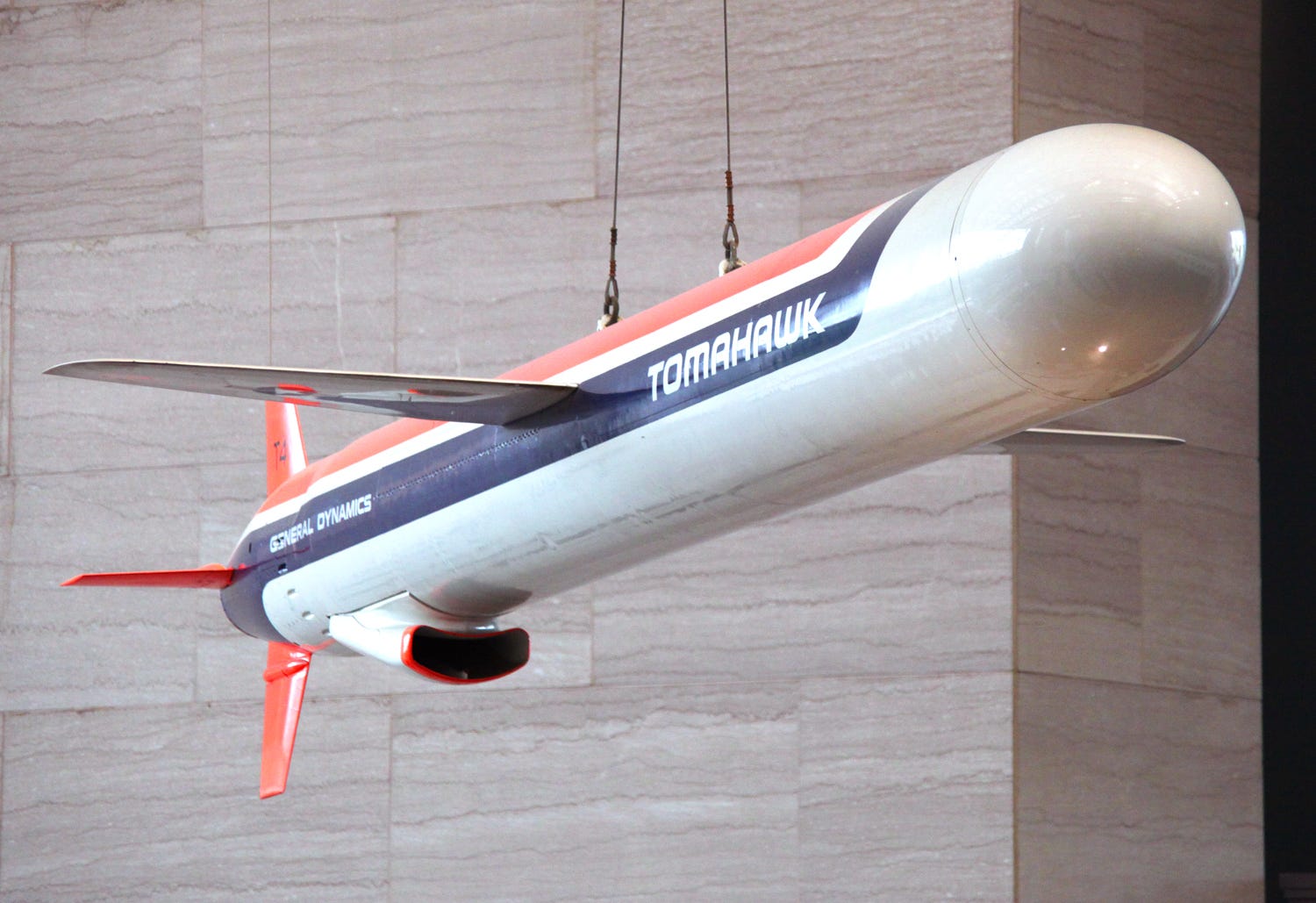
How Many Tomahawk Missiles Would It Energetically Take To Run Your Car?
Mar 2400:20:22Tap to summarizeRob’s comments below are in italics.Derek’s comments below are in normal font.We were talking last week about the outbreak of war in Iran. There’s going to be an economic knock-on effect, and we thought we’d speculate about what it might look like.Well, I wanted to cover one or two events from last week. We’re now March 13th, which is day 14 of this war in Iran. In many ways, it has continued to develop in the predictable fashion it has so far, without any sign of sanity breaking out.Apart from summarising some of the key features of the last week, I also wanted to look at the likely economic effect. There’s also the more fundamental issue of what I see as a foretaste of things to come — patterns of energy consumption over the next few decades, which still don’t seem to have been taken seriously by those in positions of power, despite the fact that the writing is clearly on the wall for the energy consumption we’ve been taking for granted in recent decades.The public discourse around the closure of the Strait of Hormuz seems to focus mainly on the likely effects on oil prices. Even the less optimistic mainstream estimates seem to me to vastly understate the possible downsides if this situation persists for any length of time.The main point is that the Strait of Hormuz has remained effectively closed. The Iranians are letting their own tankers through, which would suggest that reports of mining are probably inaccurate. They have complete control over the strait and are not allowing any other vessels through. A cargo ship was attacked, and the last time I checked, six vessels had been badly damaged — the cargo vessel and five oil tankers.There were two very dramatic destructions of American-owned oil tankers off the coast of Iraq, which appeared to have been fully loaded. They spectacularly went down in flames, triggered by unmanned naval drones against which there seem to be very few effective defences. Trump has been saying that his forces destroyed the Iranian Navy. He may well have destroyed a lot of large, possibly obsolescent warships, including one that was completely unarmed and returning from a joint peaceful exercise with India.Trump made a couple of announcements in the last day or two, which temporarily reversed the climb in oil prices. One was that he was relaxing sanctions on Russia exporting its oil, which has enraged those who hoped to starve Russia of funds to force an end to hostilities in Ukraine. These events have now provided Russia with a massively larger income. There doesn’t seem to be much joined-up thinking in their policymaking.The other announcement was that Trump said they’d be releasing 172 million barrels of oil from the strategic reserves. Those reserves are already at their lowest level in 30 years, so this further depletes them. The easing in crude oil prices caused by those announcements has been very short-lived, and prices have bounced back up. As of this morning, the price of Brent crude has exceeded $100 per barrel.Looking at the energy implications of all this destruction and the energy consumed in running a war, it really does seem that warfare is reaching the point where it truly becomes a losing proposition any way you look at it. With modern weaponry, it is clearly much easier to destroy things than to make them. The costs of going into conflict are likely to outweigh any conceivable benefits. This has been obvious to many people for the best part of the last century, but unfortunately not to those controlling whether we embark on these adventures.Ultimately, it benefits Raytheon, BlackRock, Lockheed Martin, and various other weapons manufacturers.Yes, on a very short-sighted view.So we’re going to be looking at vastly increased petrol prices, which is what most people focus on. The implications of cutting the flow of oil and natural gas go way beyond that.It’s not just about filling your car, is it?It’s not just about filling your car. It’s about the whole way our industrial and economic system is configured, and the assumptions underlying it. A huge use of natural gas, beyond the obvious heating and energy production, is as a major component in the manufacture of fertilisers. A considerable amount of fertiliser is produced in the Gulf States and shipped out. Already, there has been a near doubling of fertiliser prices in the United States in just these two weeks. That will have long-term effects on farmers’ economic viability, their ability to produce food, and food prices.We rely on fertilisers because of big farm consolidation, which has made it more efficient to paper over soil degradation with more fertiliser. With smaller farms and regenerative farming, this wouldn’t be as much of an issue.Yes. If there is a human race at all by the end of this century, we will have to return to fully regenerative, fully organic farming. This isn’t some fanciful hippie idea — it’s simply an acknowledgement of reality.There’s another thing I learned in the last few days. A significant byproduct of refining the heavy grades of crude oil produced in these regions is a great deal of sulphur. Sulphur is an important industrial feedstock for several reasons, most notably in the manufacture of sulphuric acid. Sulphuric acid is itself a major feedstock for a number of industrial processes, most particularly for the extraction of copper and manganese.Worldwide copper production is already struggling to keep up with demand — another factor to consider when trying to re-engineer our energy supply to be more electric, since there is really no substitute for copper as an electrical conductor.A similar story for silver, perhaps. There isn’t enough silver in the world for everything they want to do.Exactly. Another factor in the Strait’s closure is that the Gulf states are almost entirely dependent on imported food, given that most of them are desert. Not only can no oil be exported, but no food supplies can be delivered if the Strait is closed. There will be a severe crisis across all those states.The other strategic implication is that the deal with the Gulf states was that America would place all those bases there to guarantee their protection. As we’ve seen, it has had quite the opposite effect.That’s going well, isn’t it?It has made them a target. Iran has said a couple of things — one being that it will open the Strait to shipping from nations that have expelled their Israeli and American ambassadors.That’s not likely to happen, is it?Spain, as I understand it, has already withdrawn its own ambassador to Israel. Under normal diplomatic protocols, if any country withdraws its ambassador, the other country is obliged to reciprocate. The Israeli ambassador in Spain should therefore be recalled soon. It would be a very serious reversal of a well-established diplomatic understanding if that didn’t happen.Another development this week is that Saudi Arabia has apparently rescinded the agreement made in secret between Kissinger, Israel, and Saudi Arabia in 1974. As we’ve discussed, Nixon withdrew the dollar from the gold standard. To limit the damage, they entered into an arrangement with Saudi Arabia: the Saudis would not repatriate the dollars paid for oil in return for gold, but would instead purchase American treasury bonds with those dollars. This has given the United States a free ride for the last 50 years.It’s an amazing thing to pull off. If you had something someone wanted to buy, you could say: “You can buy it on the understanding that you’ll lend me back the money you’ve just paid me.” A pretty gross diversion from normal economic operations.I wanted to look at the underlying energy implications of warfare. The most typical oil tanker today is what they call a VLCC — a very large crude carrier — which holds two million barrels of oil. One barrel of oil is equal to 159 litres and has an energy content of 1,700 kilowatt hours.To put that in perspective, your annual household electricity consumption might be around 5,000 kilowatt hours. That’s the equivalent of three barrels of oil. A tanker with 2 million barrels is equivalent to three and a half gigawatt hours — the equivalent of running a top-end nuclear power station for two hours. Every time one of those tankers is destroyed, that’s literally gone up in smoke.In the first 100 hours of the conflict, America launched 168 Tomahawk missiles. Each Tomahawk contains a half-tonne warhead and carries 2,200 litres of jet fuel. If you fill your car tank once a month and the tank holds around 50 litres, you might use roughly 600 litres of petrol a year. So by comparison, there is about four years’ worth of fuel in a single Tomahawk flight.Then there’s the warhead, which is half a tonne. A tonne of TNT has an energy content of 1,200 kilowatt hours, which is equivalent to 133 litres of petrol. So the warhead alone contains the energy equivalent of running your car for three months. That energy has to come from somewhere. These explosive manufacturing plants are chemical engineering establishments that start with a fossil fuel, pass it through a series of processes, and produce the explosive at the end. At each stage, energy is lost due to the laws of thermodynamics.Then there’s all the material that went into it — the steel, the aluminium, the electronic circuitry. Every single warhead exploded on any side represents a quantity of energy consumed purely for destructive purposes. The point is that we will clearly have to adjust to a way of life much less energy-intensive than what we’ve grown accustomed to. I’d like to do another session going through in practical terms what that might look like.Just buying local and making local goes a...
Transcribe →
Thoughts on War in Iran
Mar 1100:18:27Tap to summarizeRob’s comments below are in italics.Derek’s comments below are in normal font.Today, as we record, is the 6th of March. The war in Iran that has long been predicted broke out on Saturday?It was the day after we recorded our last piece. In the last episode I made a few remarks about the fact that it was looking increasingly likely that the United States was talking itself into open conflict with Iran.A number of fairly obvious consequences followed from that. Lo and behold, within a matter of days, the invasion did indeed go ahead, and it had almost exactly the immediate responses I predicted. We’ll go through that in a bit more detail.How many White House insiders happened to invest in oil and military companies right before these things happened?There is that. Although Robert Anton Wilson made a remark on a number of occasions, more or less to the effect that the more powerful an individual is, the less they are in touch with reality. The reason being that they are increasingly surrounded by people who are either too frightened to contradict the powerful actor, or are simply sycophantic by nature.They are trying to advance themselves by ingratiating themselves. The consequence is that they get no objective advice about anything and retreat further into a world of their own imagination.Catherine Austin Fitz recently said this in a conversation with Tucker Carlson. She said she has lived it all — having been very wealthy, moderately wealthy, and completely poor. She reckons that as you go higher up the wealth spectrum, people are less in touch with reality, with what is going on, and with what people think of them.Quite apart from Donald Trump’s obvious lack of intellectual strength, he has surrounded himself with similar intellectual mediocrities. He has also surrounded himself with people who seem utterly devoid of any moral principles. The most extraordinary thing to me is that events of this consequence can be set in motion without any coherent notion of the strategic goals you are trying to achieve.I wonder if World War I was instigated in the same fashion.Probably. There does not seem to be any clear definition of what the end of this exercise is intended to look like.It has all the hallmarks of “two weeks to flatten the curve”, hasn’t it?Absolutely. Another thing is that the negotiations going on with Iran were utterly cynical. There was no sign of any good faith — it was simply lulling them into a false sense of confidence ready for the attack.Ever since the 12-day war last June, it is pretty clear that Iran had been expecting this.If we were expecting this, surely Iran was expecting this.Not only that, they were well prepared in any number of ways. For instance, by comparison, if somebody had succeeded in assassinating Hitler, it would obviously have brought an end to the Second World War because pretty well everybody else had a more realistic grasp of the situation than he did.In Iraq, Saddam Hussein obviously had a very tight top-down grip on the country. In Libya, you could say the same of Gaddafi. Regardless of what you think of their policies, the intervention clearly did destabilise those countries.If you look at all of these attempts at regime change, there is not a single one you can point to that resulted in replacing a dictatorship with a healthy democratic liberal society. They either replaced it with another dictator, or more often, Syria being the most extreme case, it resulted in the total destruction of civil society in any form. Whether that was the United States’ intention in Iran, I don’t know. It almost certainly is Israel’s endgame. Although how they imagine they are going to have a safe little bubble of a society to their liking, surrounded by people they have spent decades antagonising and wreaking destruction on, I cannot imagine.One of the almost certain consequences that was easy to see in advance was that the Strait of Hormuz would be closed. This is exactly what happened. There have been seven tankers hit and either sunk or severely damaged. Fully loaded tankers are now apparently stranded in the Persian Gulf, valued at something like 10 to 20 billion dollars, which has already been paid by traders around the world to the authorities in the Gulf monarchies.The arrangement is that the contract is set up several months in advance and the funds transferred at that point. The buyers of the oil on those tankers have already paid for it. They are not going to get the oil, and I should think they are extremely unlikely to get their money back. The damage to American bases within the Gulf monarchies is obviously considerable.None of us can know exactly how much that damage is. It has obviously been far more severe than any of the American military personnel responsible for this decision could have imagined. It is going to go on. There is plainly no coherent political opposition inside Iran.Regardless of the humanity or otherwise of the murder of Ayatollah Khamenei, it was a tactical and strategic blunder of the highest order. Rather than decapitating the country and giving the population space to rise up against the government, it had exactly the opposite effect. The street demonstrations in Iran following that assassination are absolutely massive and clearly in support of his memory.Once again, the projection of him as some kind of evil ruthless dictator appears to be a highly partisan judgement.He wasn’t exactly carpet bombing cities in America, was he? Or ripping school children to shreds with military explosives?On the first or second day, one of the immediate targets was next to a girls’ primary school. There has been no sign of any remorse or apology, no explanation that it was not actually the intended target. That was an act of sheer barbarism.I don’t know to what extent the population of our country, or of any of the other supporters of America, goes along with this. Even within our own populations, there is increasing alienation from these actions and from our government’s spineless support of them. What’s your take?It is so difficult to know how much we live in our own echo chambers. From my home office here, what do I actually know? You try to triangulate different things you have read or seen. A lot of people just go with whatever is on the news.I think there is quite a big age divide here. Increasingly large proportions of the under-40s just don’t slavishly absorb the mainstream news media. They might get it from social media, which can be an echo chamber of its own.We certainly don’t buy newspapers and things like that.No, but I am heartened by the quantity and quality of independent journalism online. Without even going onto Substack, Rumble, and fully alternative channels, even on YouTube — which is obviously censored to a significant degree — there is a huge amount of content against the official narrative.There is a huge amount of really high-quality journalism of the sort that, a few decades back, we could get on the BBC. It has been a long time since there has been anything of that impartiality or intellectual rigour.The consequences of the closure of the Strait of Hormuz will be absolutely devastating for the world economy. Last Sunday morning I went out at about nine o’clock to fill the car up. It was completely normal and petrol at the local station was still 134 pence a litre. There were no queues.Going out this morning, it has only gone up by three pence in the last week. But we are going to be back to two pounds a litre of petrol any day soon. We are also going to be in the situation we seem to have already forgotten about a few years ago, when large numbers of forecourts were simply closed and the ones that were open had cars queuing up along the street. That is only the most immediate effect. It will have a knock-on effect on the availability and prices of everything else.The liquefied natural gas plant in Qatar, which was the main supplier, has now been shut down. Even when it starts up again, it will take a great deal of time to stabilise that situation. There is also an aluminium smelter there that has been shut down, and that can take anything up to 12 months to get operational again. Aluminium smelting is a continuous process — once it is interrupted, the entire factory is full of solidified aluminium.It is not like a tap.No. We have not even really begun to see this, nor the knock-on effects on public sentiment once we all start to be affected personally.What I was saying about the assassination of Khomeini being a strategic blunder is that it not only rallied the entire Iranian population in a unified show of national solidarity. He was also the second-most senior cleric in the Shia religion for all Shia Muslims worldwide. Whatever misgivings they may or may not have had about America have immediately aroused their implacable enmity against the United States and its allies. How we come out of this is anybody’s guess, but it is not going to be to any of our advantage.No, that much is fairly obvious.The only hope I have is that the consequences of this move will lead the entire population of the planet to a wholehearted rejection of these methods for resolving disputes. We’ll have to see how that goes.Shall we leave it there for this week?Yes. As usual, we sign off by saying watch this space, and we’ll see where we are next week.The other thing I would say about that assassination: it was trumpeted as a major intelligence coup to locate his position. Of co...
Transcribe →
A Critique of Bitcoin
Mar 600:20:00Tap to summarizeRob’s comments below are in italics.Derek’s comments below are in normal font.You were just about to launch into a long spiel about Bitcoin and some reservations about it before we started recording. This has stemmed from some revelations about the Epstein files. Shall we start there?Yeah. There was a very interesting interview released today by James Corbett with Aaron Day. It’s an hour-long conversation that goes into great detail. Anyone who wants that level of detail, I thoroughly recommend it. It also provides quite a lot of clarity about the whole principle of Bitcoin — what it was originally set up to do and what it has evolved into.Aaron Day has dredged up a whole lot of material from the released Epstein files. It’s really interesting, the range of different things revealed in those files. With three million pages published, even with the redactions, it’s a huge amount of material. There’s a massive open-source collaboration of people going through it to tease out the information, because it’s not at all well organised or indexed.The area he was focusing on was Epstein’s involvement with Bitcoin — essentially the attack to derail it from its original intention as a fully transparent, peer-to-peer payment method that enabled people to sidestep banks.Yeah, something you could actually use to buy coffee with.Yeah, in the early days, it really was possible to do that. There were many traders taking it in various places. It was very strong in Canada, for example, probably in the States as well. It was fast, and there were low transaction fees.Personally, I had misgivings for reasons of the indirect experience I’d had. My son Leo had the idea of becoming a Bitcoin miner. He was fairly early into it, but not early enough to make it viable.Originally, the generation and verification of transactions could be done by anybody with a laptop in the early days. If you were the one who verified the latest tranche of transactions, you were rewarded initially with 50 bitcoins, which would of course be worth millions now.Every so often, the number of coins the miners received as a reward for completing a block decreased. This was touted as a virtue in that the number of bitcoins would eventually be capped. The argument was that this gave it a guaranteed rarity value, unlike pounds, dollars or euros, which can be created by banks and central banks on a whim.After a while, the amount of computation required grew. Although it was, in principle, possible to do it on any general-purpose computer, it moved to specialised hardware. My son Leo bought one of these pieces of equipment with a view to becoming a Bitcoin miner.Unfortunately, it took about a year or 18 months to arrive. In the interval between when he bought it and when he received it, the computation needed to stand any chance of verifying a block had escalated greatly. He ran it out in the shed, 24 hours a day. It used so much electricity that it heated the entire shed. As I recall, he attempted this for a few months, during which time he never verified a single block. So he used up a lot of electricity without any benefit.This is why you get mining pools, isn’t it — where pools of miners share the rewards between everyone in the pool.Yeah. Now, of course, it’s got to the point where you only receive a fraction of a Bitcoin if you do succeed. Miners can no longer support themselves from the Bitcoin they earn, so they have to charge transaction fees to people using it for purchases.This has made it extremely expensive. Rather than being much cheaper than using a credit or bank card, it’s become enormously more expensive and therefore impractical for small transactions. Then in 2017, there was a distinct shift towards promoting it not as a regular means of payment, but as a speculation. As we’ve said before, it’s essentially like any other currency exchange speculation — some winners and some losers.Two things might have evolved Bitcoin into a viable operation. One is if there was such substantial use of it in normal trade that it didn’t get swamped by the wild swings that occur when most transactions are purely speculative. Another thing that might have validated it would be if someone had set up a solid arbitrage system between Bitcoin and gold, which could also have stabilised it.But to cut to the chase, this interview explained in great detail how Epstein was involved in funding the MIT group of developers, which solidified it in a way that it was no longer going to be what had originally been hoped for. This is definitely something to bear in mind.Once you’ve separated it from the likelihood of becoming a replacement for fiat currencies — which is what early enthusiasts claimed — it becomes purely a speculative bubble. Just like any other bubble, it’s fuelled by people buying in the hope of selling later at a higher price. This works until people no longer believe the price will continue to rise, at which point it’s likely to plummet.What I’ve always said is that it may well be worth having a speculative flutter with an amount that is small relative to your overall wealth, which you actually own and haven’t gone into debt to fund. As with any other speculation, it should be smaller than the amount that would cause real pain in the event of a total loss. That remains my position, subject to our usual disclaimers — I’m not making financial advice.No financial advice here, yes.So, having said that, that remains the position, even more so having discovered this. My own view of its viability was coloured by observing my son attempting to mine it — this was probably ten years ago, before the shift in emphasis towards purely speculative or store-of-value usage.The interview with Stephen Keen, the Australian economist, was essentially stating the same thing. He said there was no real solidity to it. The amount of energy used to run the computers was enormous and only going to get larger. That is why the analogy with mining breaks down.After all, if you sink a gold mine, it takes a lot of energy to dig the hole, excavate it, carry the material out and sort the slag from the gold.The energy in true mining is front-loaded, isn’t it?Yeah, but once you’ve done that, if the mine is successful, you have the gold and don’t have to keep piling energy into it. With Bitcoin, energy is indefinitely required to maintain the integrity of the chain. That, in itself, summarises the essential weakness of the whole system.So once again — if you want a flutter, feel free, but don’t expect to retire on it.We’ve talked in earlier episodes about the need for money that actually works, money that isn’t just created out of nowhere by a central bank that doesn’t have your interests at heart. So Bitcoin does tick some of those boxes. I also wonder whether Bitcoin has let a genie out of the bottle and got a bunch of people interested in making something work that will actually function as money. It might not be Bitcoin in its current form.The idea is correct, though: anyone should be able to trade with anyone anywhere in the world using the same unit of measure, whether you’re in the UK or Kenya. You should be able to transact easily and quickly without intermediaries. So there are elements of it that are right.Yeah.When the dust settles — assuming society hasn’t destroyed itself in the meantime — before the end of this century, we will have a single global currency. In my opinion, that currency will very likely be calibrated in gold.That’s what’s been used for thousands of years. There’s a principle called the Lindy Effect, which holds that something that’s been used for a long time is likely to be used for a long time in the future. Whereas something fairly new is unlikely to last far into the future.The reasons why gold has been a perennial form of money are very sound. There’s a finite amount of it. The rate at which the world’s gold stock changes is small and fairly predictable. It’s universally attractive, durable, divisible and easily verifiable in terms of quality.The downsides are that it’s hard to take self-custody, and it doesn’t scale well — you can’t go to a shop and hand over a gold bar. So you end up creating derivatives of value, a tokenisation of it. That system is then open to abuse, which is what happens with every single currency ever. They all end up worthless.Yeah.So what’s the solution? If we end up back on a global gold-backed system, how do we avoid this tokenisation making it worthless?It obviously requires somebody to hold the gold securely, with that holding linked to the transactions conducted. For this to work, there needs to be some form of real-time, transparent auditing of the ledger. This is possible in principle. I’m not going to sit here and design a definitive global trading system, but those are the features it would need.Also covered in that interview was an indication of Epstein’s involvement in setting up the Tether cryptocurrency. Tether is a form of cryptocurrency guaranteed to be backed by dollars. This means the Tether company is required to hold dollars, which they hold in the form of short-dated United States Treasury bonds.The forces within the US Treasury and the Federal Reserve see this as a way to sell short-dated Treasuries to the Tether Company to back its cryptocurrency. They’re talking about raising two or three trillion through bond sales. They’re hoping this will rake their chestnuts out of the fire as countries around the world, which have been holding Treasury bonds fo...
Transcribe →
The (Quite Serious) Shortcomings of Economics
Mar 500:17:54Tap to summarizeRob’s comments below are in italics.Derek’s comments below are in normal font.As we record it’s Monday, 23rd of February. I want to comment on what seems to me the most critical cliffhanger in the world at the moment — the movement of two American battle groups closer and closer to Iran, along with lots of threatening rhetoric. It’s difficult to know what will happen. It seems quite suicidal to attack Iran.They’re unlikely to destroy its retaliatory capabilities with the opening salvo. The retaliation — probably on Israel, certainly on American bases, and probably on the American fleets — is likely to be utterly devastating. How America would respond, and what that means for Israel, is anybody’s guess. Many of those things could be very hazardous to all of us. It’s difficult to view any of that with equanimity.I’ve come to the assessment that they basically just do whatever’s most profitable. If it’s most profitable to go to war, they’ll go to war. If it’s more profitable to have peace, they’ll have peace. War would appear to generate trillions of dollars.Well, as we’ve said before, in terms of the amount of real wealth at the end of the process, it’s a lot less than it was at the beginning.Anyway, on the topic of putting together our Sovereign Finance worldview—if we’re looking at the money system, the obvious place to start would be the academic discipline that supposedly deals with these matters. That’s called economics, sometimes called the ‘dismal science’. That’s a misnomer, because in real terms it’s not a science at all.The main reason I say it’s not a science is that we don’t discredit paradigms or theories when they fail to make accurate predictions. That’s what happens with any of the so-called hard sciences. To take one example: there was a time when the theory of combustion held that a substance within the material called phlogiston was emitted during burning. On the face of it, it looks obvious. If you set fire to a piece of wood, flames come off — it appears to be emitting something. So it was a reasonable theory.But when people looked into it experimentally in a controlled, sealed environment, they found that at the end of the burning process, once everything had cooled down, some of the air had been consumed. It wasn’t that anything within the fuel was emitted. Rather, it was combining with something in the air, which they eventually discovered was oxygen. That’s the way a real science progresses. It makes predictions based on a theory or hypothesis.It’s hypothesis, then evidence, then a new hypothesis. Plus no hypothesis can ever be beyond question. If you can’t question it, it’s not science.Yeah, exactly. That alone rules economics out as a science. There are also various dogmas which appear to be sacrosanct. There’s the image of the rational actor who is trying to improve his own circumstances at everybody else’s expense, essentially motivated by egocentric considerations.That’s probably where the adjective “dismal” comes in — it’s a very dismal view of human nature, that everybody’s trying to do everybody else down. There might be plenty of people who do that, but there are also plenty of people who are motivated by all kinds of things other than selfishness. That obviously needs to be taken into account in any model of human behaviour we’re trying to construct.There’s another facet of economic theory: the idea of things seeking equilibrium in the marketplace. This is a complete fiction. The marketplace is in a continuous state of flow, and in particular, it requires a constant input of energy for anything to happen at all — something that is largely ignored. I’ll come back to that in more detail.Market fundamentalists, as George Soros described them, hold up Adam Smith as a poster boy for modern capitalism. That wasn’t really the point he was trying to make at all. His writings are predominantly ethical, promoting upright moral behaviour rather than dog-eat-dog competition.I’ll link back to the episode we did on Adam Smith and the various other economists, because a lot of these people are partially represented by a small number of things they said.Yeah, exactly. When he spoke about the marketplace, he had in mind a literal market where people met once a weekI have a lot of issues with the word “marketplace” anyway. What on earth is this fabled marketplace that I’m supposed to be in?Yeah. Even 50 years ago, the stock exchange was a real marketplace where the same people met each other every day. You’d only survive in that if you were regarded as trustworthy. Now it’s become a complete abstraction. Many people never even meet those they’re conducting transactions with. It’s all done - not even over the telephone - but through a computer screen.The danger for sovereign entrepreneurs as well is that “the marketplace” implies you’re just a vendor — just another supplier of a commodity. That isn’t what most of us are doing.Yeah. In Adam Smith’s time, the marketplace was where people actually met. They were all part of the same community. Establishing a bad reputation for honesty or quality of goods would be self-defeating very quickly.It was also a predominantly Christian society. Even if people weren’t deeply motivated by the golden rule — do unto others as you’d have them do to you — they’d have to make at least a reasonable show of it, or they’d be ostracised. None of those factors applies to the theoretical modern global economy.Many early economists regarded the economic process as involving labour, capital, and land. After the Industrial Revolution, when the agricultural part of the economy became less dominant relative to the factory economy, the discussion narrowed as though only labour and capital were involved, and what might be an equitable or practical distribution of rewards between them.Marx felt that labour was entirely responsible for the addition of value and should therefore receive a larger share of the rewards. In fact, all of these analyses ignore one critical thing: without energy flowing through the system, none of this happens. Labourers can’t do anything unless they’ve had enough energy — in the form of food — to provide the muscle power for whatever work is involved.Empty sacks don’t stand up, as my dad would say.Yep. Capital, in terms of industrial machinery, doesn’t do anything until you put the coal into the furnace, or whatever source of energy you have. This means it’s not an equilibrium system — it’s what’s called an open system.Ultimately, it’s powered by the flow of energy from the Sun to the Earth, then released as lower-quality energy after whatever operations have been performed. It’s a continuous flow. It’s been supplemented for the last two or three hundred years by energy that came from the sun millions of years ago, stored in the form of fossil fuels. We’ve burned through those at a great rate, and still — as we’ve noted elsewhere — failed to properly account for the fact that as they become more exhausted, they’ll become increasingly expensive in energy terms to harvest.Finally, an important part of the analysis, almost entirely missing from mainstream economics, is the insights of system dynamics. This is the study of complex systems with multiple interacting feedback loops. Some of those loops are reinforcing, creating increasingly large results as output increases. Others are stabilising ones, bringing things back into balance by feeding output back into the system — the classic example being the thermostat. If the room gets too hot, the heating turns off, and vice versa.The equilibrium framing is mistaken. Energy flows through the system and must be replenished to keep it going. That’s why we need to bring these other factors in, if we’re going to build an economics that really reflects how things work and provides useful tools for strategising and selecting tactics.It sounds to me like economics, as it stands today, largely just serves the existing power structure.Exactly. Economists know which side their bread is buttered. They can’t afford to rock the boat, or they won’t get promotion and tenure. Those employed by banks or financial institutions are obviously there to serve the interests of the people paying their salaries.Economic theory also has nothing to say about the role of banks and how banks create money.That’s another major missing factor.The other thought I had on the subject of energy — we’ve discussed in the past that money in its purest form is energy, assuming it represents people trading for goods and services rather than speculating. Most transactions going on at the moment are the latter. But that movement also implies energy moving around.Yeah, exactly.It feels to me like if you fix the money, you solve a lot of the problems. There’s just a lot of vested interest against fixing it.Yeah. I was thinking about this the other day. We’ve talked at times about pensions and how far short they’re falling of how they’re supposed to work. It occurred to me that a major factor in the failure of the pension system is inflation.If you imagine a world of stable purchasing power — as existed in this country for 300 years before the disruption of the two world wars undermined Britain’s financial position — the theory of pensions makes sense. You accumulate a fund over a lifetime by paying in regular amounts, which grows via compound interest into a sum large enough to provide an income in your post-work years.The earliest payments into the account have the most effect o...
Transcribe →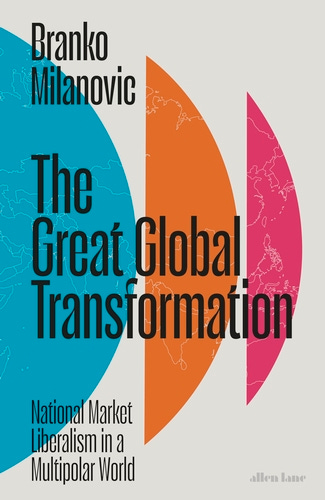
The Great Global Transformation
Feb 2500:12:08Tap to summarizeRob’s comments below are in italics.Derek’s comments below are in normal font.We’re talking about a book you’ve been reading today. What is it, and what do we need to know?It’s called The Great Global Transformation, written by a chap called Branko Milanovic. I got it on a whim when Amazon recommended it — people who bought this also liked that — which, apart from being a clever upselling technique, is actually pretty useful at times.Anyway, this author was a former economist with the World Bank. He’s an economics professor at City University of New York and also a visiting professor at the London School of Economics.It’s a very data-heavy book, but the statistics are extremely well presented. There are plenty of good graphs and tables. One thing that drives me mad is when a book would really benefit from visual presentation and it’s just solid text. This author is clearly a very good communicator.The main thrust of it is something we’ve discussed before — the shift in wealth and productivity, particularly to Asia, predominantly China, but also many other parts of the region.I noticed at lunchtime that the honey I was using was made in China… It’s not like we don’t have bees here!Yeah, that is ridiculous.Well, I do get it — it’s cheaper to exploit people on the other side of the planet and ship it over to sell in Aldi.Our village shop sells locally produced honey from a man just down the road who has 200 beehives. How you run an operation like that, I can’t imagine.You have thick skin!In more ways than one! Anyway, one interesting statistic in this book was the increase in the share of global production in China versus the United States. Measured in purchasing power parity, the two actually crossed over in 2015 — eleven years ago.How do we define purchasing power parity?It’s the opposite of measuring currencies at market exchange rates. According to exchange rates, the U.S. produces significantly more than China—about 1.5 times as much. However, if one dollar’s worth of renminbi buys you twice as many goods in China as a dollar would in America, then purchasing power parity adjusts the statistics to allow for that.It also buys you twice as much honey, apparently.Yes. So it’s obviously a more accurate measure of actual goods produced, rather than just a numerical figure.The other interesting thing about the two graphs is that on the purchasing power parity version, the curves are essentially smooth — a steadily rising production rate in China and a steadily declining share in America. Whereas on the market exchange rate version, there are fairly wild zigzags. Throughout the 1980s, it appeared that America’s share of world production was climbing rapidly, and similarly in the latter half of the 1990s.That’s highly artificial. It’s not reflecting anything happening in the real economy — it’s a reflection of the dollar appreciating rapidly on the currency exchanges. This shows how loose the coupling is between the real world of factories, farms, and work on the one hand, and financialised measures on the other.It also surprised me that the gap is so large, since there should be arbitrage opportunities when currencies are misaligned with their actual purchasing power. The whole idea would be to bring those into line with one another. Of course, the reason the dollar has such strength is that it remains the world reserve currency — for now. As we’ve said several times, that could change extremely rapidly.I’ll go through the book further, and perhaps next week I’ll have a few more insights to summarise. The other thing I was slightly sceptical about is that many of these statistics are expressed in terms of GDP. As I’ve said previously, I’m sceptical of GDP as a real measure of wellbeing, and we’ve given a number of reasons for that.In this context, though, whilst I’m confident in my scepticism of it as a measure of wellbeing in developed, prosperous economies: GDP is often inflated by ever-faster obsolescence. The faster your washing machine wears out and has to be replaced, the higher the rate at which currency flows through the economy. That’s plainly not a serious advantage to anyone.You get whatever you incentivise. If you incentivised longevity, your washing machine would never break — you’d just replace parts. But that’s not what’s incentivised or measured.Absolutely. On the other hand, if you take a poverty-stricken part of the world where many people lack clean water, sanitation, indoor bathrooms, or anything beyond the most basic appliances, there is obviously enormous scope for improving their material circumstances. That improvement would correlate fairly well with GDP as a measure.So perhaps the higher up Maslow’s hierarchy of needs you go, the less important GDP becomes?Exactly. Those were the main points on that. As for world events, did you pick up on the scale of the police brutality in suppressing demonstrations against Herzog’s visit to Australia?Yes.It’s remarkable to me that such indiscriminate government-sponsored violence can be unleashed in what we consider a civilised country. What surprises me too is that they felt there might be some advantage to it.Just shows their true colours, doesn’t it?Even if they dislike people demonstrating against Israeli war criminals visiting the country, the far more astute response would have been to sit it out, wait for it to blow over, and let people forget about it the following week — rather than going out and clubbing and pepper-spraying inoffensive elderly people.It’s worth remembering that Australia was founded by prison guards, not by convicts.Yes. Anyway, those are my comments for this week — we’ll pick up a few more threads next week.Thanks for reading Sovereign Finance! Subscribe for free to receive new posts. This is a public episode. If you would like to discuss this with other subscribers or get access to bonus episodes, visit sovereignfinance.substack.com
Transcribe →
Why We Do What We Do
Feb 1700:25:35Tap to summarizeRob’s comments below are in italics.Derek’s comments below are in normal font.We were talking last time about marketing and sales for sovereign entrepreneurs who want a guide to how to market and sell themselves and their services to trade on their own terms. In editing the show, I reflected that we talked about a lot of tactics, but there’s actually a foundation: the best marketing is a business that markets itself. People go through the service, they talk about it, they talk to each other about it, and they leave great reviews.Once you’ve got that basis, that alignment really stems from you doing work that is aligned with your purpose, values-driven, and, in some regard, mission-driven. Once you’ve got that foundation in place, then all of the stuff you’re doing with ads, with writing the book, with all of the other stuff that we talked about, is really going to amplify that. Whereas if you’re trying to amplify something that’s out of alignment, you’re just going to make problems for yourself and fund the Google Christmas party when you run ads. There’s more than enough of that happening already. So I just wanted to mention that because it’s been bugging me for a week or so!Yeah, good point.I wondered what you thought about that?Well, when you say it, I thought, “Why didn’t I say that?” The reason I didn’t say that is because I thought it would be obvious, but maybe the obvious needs stating more than anything.My motivation in running my own businesses, which I’ve now been doing since I finished my last employment in 1975, was that I didn’t want to be at the dictate of somebody else telling me what my schedule had to be, what I had to do, what I wasn’t allowed to do and all the rest of it. But beyond that, it was a form of self-expression.A lot of us end up as accidental entrepreneurs, where we end up out of work for a time and go it alone, or in my case, I was a boneheaded entrepreneur because I just thought I could do it better myself! Then I got into business doing something that I thought I wanted to do, but actually it wasn’t really what I’m here to do. I’ve had to unpick that over several years. So business is the ultimate journey of self-discovery.Yeah.You might have to go on that journey, but once you’ve got that alignment in place with purpose and passion in service to others, marketing and sales will become a lot easier.Well, the whole point about what we’re doing here is to save people the pain of finding things out the hard way! But anyway, yeah, good point. I’ll just say one more thing: the whole point is self-expression. When we were talking about sales, we were talking about meeting the real needs or desires of your potential customers or clients. So it goes without saying that you’ve got to have a clear idea of what you actually want to contribute.You’ve got to really be in their corner.Of course, you’ve also got to operate with the world as it is.There’s this tension, isn’t there, between doing the work that you love and finding a commercial fit in the marketplace. You’re finding problems people are trying to solve and trying to marry that up with what you love doing. It requires a degree of art to marry those two things up, and it can take time. You might not get it right the first time.Yeah.Don’t Get Blindsided By Environment or Market ChangesGoing back to my lessons from Hard Knocks, a key one I was going to mention is that you’ve got to have an eye on the world and how it changes around you. I was completely blindsided by that.I had more or less accidental success for several years. That came from the fact that I was in a very unusual position. I had a fair degree of competence in both digital and analogue electronic design. I’d also had a background in computer programming during my time in various corporate environments.I was developing software at that time, a torturous process on big mainframe computers. So I knew about computer programming, and then microprocessors came along. That was a natural development on the hardware side, given the digital electronic design I’d been working on. I also had a grasp of the principles of writing computer code as software.There were very few people who had both electronics knowledge and software capabilities because they were just entirely different fields until the arrival of the microprocessor. In most environments, people would be doing either one or the other.So things went brilliantly because there were plenty of problems that could be solved cost-effectively with this technology. There was very little in the way of finished products. Not even very much in the way of tools to help you with the design and implementation.As well as having that mix of skills, I also had the ability to talk to people and listen to them and engage with them and figure out whether or not I could address their problems, which was again quite unusual for people who were tech boffins.So with all of those things, it was an automatic success. I thought I’d discovered the keys to the kingdom. I was going to be set up for life. What I didn’t realise was that the world around me was evolving all the time. I only had about 10 years of things going that swimmingly well.First of all, there was an economic downturn that wiped out the ability of many of my potential customers to buy what I was offering, no matter how much they wanted or needed it. Secondly, these skills that I had became commoditised. The third thing is that there were a lot of already off-the-shelf solutions to the things that would have had to be custom-built before.There were already things that made it very easy. For instance, you could go a long way by setting up a spreadsheet and putting a few macros into it without needing the next level of expertise in software design. For all these reasons, I could no longer command the same premium.Had I been aware of that, I could have easily pivoted to my strengths. I could probably have focused more on getting the deals together and subcontracted out the day-to-day implementation. But I didn’t realise that, and so I had a very rough few years and got really demoralised.I’m getting huge echoes of what’s going on today in a lot of places. That would be like still coding websites by hand when you can get AI to do it. A lot of people have had the rug pulled from under them.Keep an Eye on Macro ChangesThere’s also the bigger situation in the world as a whole. Looking around today at current events it’s similar, but more extreme. We’ve still got the ceasefire being ignored in Israel while a frightful human tragedy unfolds in real time that we can actually see and stream - to the extent that we’ve got the stomach for it.Do you want to talk about the documentary you mentioned before the call?Yeah, it’s a dramatisation of the slaughter of an entire family that happened in Gaza. It’s called The Voice of Hind Rajab.Hind Rajab was a six-year-old child who was left alive in the car which had been gunned down by the IDF. It had 350 bullet holes in it. A rescue centre had managed to contact the child after being contacted by a relative in Germany.So they were speaking to her. Some of the movie is an actual live recording of this child going through the attempt to rescue her. I won’t go into any more than that about it. But it was a very harrowing experience for an hour and a half. But I was glad I went through it. Because even though I get the picture, I know how bleak it is, this brought it home to me on a completely different level.It was an hour and a half for a set of events that in real life took four hours for the people on the ground to go through. So it was fairly close to real time, except that it was actually in reality about a third of the time span that it unfolded to play out. So that, I guess, underlines the tragedy, because you’re faced with that. You think, this is appalling. How can human beings do things like this? You realise that this is exactly what has happened tens of thousands of times over.The people who are perpetrating it are either convinced they’re doing the right thing or completely oblivious to the suffering.It’s a broken overarching narrative.Yeah, which we’ve got, you know, the insanity breaking out, the obviously warlike threats towards Iran. I thought it would have been obvious after the events of last September that Iran is not going to take another attack lying down. The consequences for so many people are going to be so appalling.This comes back to the fact that whatever we do in our own lives, we depend on a functioning planet. That functioning is really quite a fragile system. One of H.G. Wells’ novels was The War in the Air. In that, he wrote it around 1905. So it was a prophetic novel.In that, at the end of the novel, the world economy had completely unravelled. All of the cities had collapsed. People were eking out a bare existence subsistence farming wherever they could.Obviously, that was unduly pessimistic with the next two wars, because although there was a great deal of ruination, it didn’t actually destroy the whole of human society’s functioning. But there’s no guarantee that any escalating conflict now wouldn’t have that effect and send us back at least to the Middle Ages, if not the Stone Age.You have to look, you have to look these things in the face though, don’t you? That’s the point that we’re trying to make.You get nowhere by being an ostrich and sticking your head in ...
Transcribe →
Globalists vs Localists: Are Things Unravelling?
Feb 800:17:47Tap to summarizeRob’s comments below are in italics.Derek’s comments below are in normal font.We’ve had the World Economic Forum meeting in Davos recently and various other events. We thought we’d review what’s gone on from a Sovereign Finance lens. Where do we start?Well, I just wanted to point out that in the last few days, gold has broken the £4,000 an ounce mark. It’s down slightly from that, but the short answer is it’s up 50% since five months ago. It’s up by about 25% over the last three weeks, which is pretty dramatic. Once again, as I would always say, this is not the rise in the price of a substance. It really is a reflection of the currency’s decline in value.Right, because people are more interested in gold when they lose confidence in the currency.Yeah, it’s not an investment in the sense that it’s going to actually provide anything, but it’s a hedge against inflation is the simplest way of putting it. The central banks are making no bones about the fact that they’re stocking up on gold and replacing large amounts of their dollar reserves with gold. This is now being openly discussed. As we’ve said several times over the last few months, a feedback loop is at play. The decline of the dollar and its position in the world is likely to enter a positive feedback loop, accelerating the process much faster than many people would have expected. That was the subtext of a lot of what was going on in Davos.All of those Davos meetings, as long as we can remember, have been a mutual admiration society of extremely wealthy people. They reinforce confidence among the “elites” in how things are moving. Of course, these people are essentially globalists: not merely being realistic about the fact that we live in one world, but that they would like a unified global power structure with them in charge.Does that make us “localists”?What’s the buzzword for it? The principle of subsidiarity. It would be the opposite of that, I guess: making every decision at the lowest level that it is possible to make it.Which was how the United States was envisioned, wasn’t it?Yeah. For the last 75 years, since the end of the Second World War, there’s been a constant set of assumptions amongst the financial and political elites. One of those assumptions is the dominance of the United States dollar as the safe harbour, if you like, to rush to when there’s any uncertainty. As the backbone of the international currency system. As a solid reserve in the accounts of central banks everywhere. The funny thing is that it made sense when the dollar was locked to gold at $35 an ounce.That relationship has been severed for an awfully long time.Yeah. Once that was severed, you would have thought that would have been the end of it. But it has managed to hold on for twice as long as it was actually “as good as gold”. That’s one of the assumptions that we’ve been working on for the last 75 years.Another assumption was the unity of the European nations, at least the more prosperous Western European nations. Another was that transatlantic cooperation would exist between those prosperous European nations and the United States. Another was United States hegemony over the rest of the world, either through its economic stranglehold or its military power. That’s being projected on its fleets all over the oceans and its military bases all around the planet.Finally, you know, again, something we’ve touched on several times is that the United States is now, whichever way you cut it, in the end-of-empire part of the cycle. Every single empire in history has followed the same trajectory, starting out as a previous one was declining. Gradually ramping up faster and faster, then reaching a plateau of complacency. Then things start to unravel and fall into a steeper and steeper decline.The British Empire had, to all intents and purposes, about 350 years of dominance, culminating in a period when it effectively dominated the globe. Just like every other empire, it was pretty brutal towards the populations of its vassal states. Every empire is essentially grand larceny on a huge scale, enforced with brutal naked force. But it took 350 years for it to reach the end of its cycle.In 1913, I don’t think many people could have realised where it would be by 1925 or 1930, let alone by 1946. Then we had the gradual coming to terms with reality as we severed ties with all our colonies. We turned them into members of the Commonwealth, which, of course, has not actually improved the lot of most of the population there either. The point being that in that end cycle, they become deranged. Certainly, this is the only way to view global events now, as the behaviour of the United States seems increasingly irrational.Of course, there are a lot of people who think that Trump is the cause of this. It’s better to look at it in terms of him being the symptom, not the problem.If they got rid of Trump and replaced him with anybody else, would it be any better? It might be handled with a bit more subtlety, that is all.It’d still be the same s**t.Yeah, it would be the same old thing. At Davos, we saw many presentations from various people, either trying not to face up to this or, frankly, admitting it. There was Mark Carney, the Canadian prime minister and former governor of the Bank of England, so - a globalist through and through. He said it was the end of the rules-based order. He had another phrase about values-based realism, but it’s just another cliché trying to paper over the cracks.There is a potential for international legality, which is called the United Nations Charter. It was set up at the end of the Second World War, as we know, with the idea that this would never happen again. Of course, the promise of the European Union was that it would prevent warfare between the European nations. It would deliver peace and prosperity. We’re increasingly seeing that the European Union is visibly failing to deliver prosperity. It’s far from delivering peace. It seems to be uttering more and more warlike proclamations.Part of the reason for the EU’s fragmentation is the loss of cheap Russian energy. There’s also the demographic collapse. The population age has peaked. We’re now getting a far larger proportion of the population being of an increasingly elderly age, such as myself. That means that there are fewer and fewer younger people.Whether the retired people are supported by state pensions which are coming from taxation on the people who are working, or whether they’re arrangements through investments through pension funds that are invested in industrial concerns or invested in government bonds which have to be again funded from taxation, the bottom line is that the support of the no longer working part of the population has to come from the people who are. Once population peaks and goes into decline, we lose that ratio. That is happening right across Western Europe.As I said, we’ve got political fragmentation, with more and more nationalistic rabble-rousers coming to prominence across Europe. The existing leadership, as we’ve pointed out, is not only devoid of strategic thinking but has also failed to carry the support of the electorate. The only trouble is that the alternatives coming to the fore seem even worse than the current incumbents.The Labour Party didn’t really win the last election. It was just that the Tory party lost it. It’s looking increasingly likely that both the Tories and Labour will lose the next election, with the Reform Party under Nigel Farage being the likely alternative.Farage is being teed up by the powers-that-ought-not-to-be as the next PM.Yeah, it looks very much like it. It seems out of the frying pan into the fire to put it bluntly.Yeah.Up until now, the Davos crowd has taken for granted that global integration was well along the way and would solve all other problems. All of a sudden, over the course of literally the 12 months since the last meeting there, this is no longer looking at all plausible.Meanwhile, on the other side, as we’ve discussed before, a parallel system is being set up by the BRICS nations. Various other combinations of Asian and the global south generally. Increasingly, they’re setting up a parallel system that will override the dollar-based global banking system. In the background, of course, we’ve got the four major areas of serious conflict in the world: Iran, Venezuela, Ukraine, and Israel.The takeaway here is that the playbook, which has worked very reliably for the US empire over the past 70 years, is suddenly ceasing to function. We mentioned a week or two ago about Venezuela. They tried various measures to destabilise the country and bring it into line. None of them had really worked. Culminating with the kidnapping of Maduro, rather than causing the regime to collapse, it actually seems to have solidified the solidarity of the population behind their government. We could say the same thing for Iran.This was one of the things that was admitted, not only admitted, but declared proudly at Davos by the American Treasury Secretary. Iran had been subjected to economic warfare, for want of a better term. He was openly admitting that that was one of the prongs of the attack on Iran. Then they had the attempt by Israel to decapitate the leadership, which didn’t have the desired result.There seems to be an increasing assumption that the US will make another attempt to attack it. But the results are not entirely predictable and are certain to be catastrophic. The only question is how catastrophic and to whom. My guess is that in some conflict, Iran is the most likely one, there will be some massive loss of life of American servicemen on a scale w...
Transcribe →
Marketing & Sales for Sovereign Entrepreneurs
Feb 500:23:48Tap to summarizeRob’s comments below are in italics.Derek’s comments below are in normal font.We’re going to talk about marketing today, which is my wheelhouse and probably yours as well. Many people are always in search of the next marketing secret or hack. So what do we have to say about it?Whatever you’re doing in business, unless you’re finding customers and they’re actually making a purchase from you, you haven’t got a business at all. I’ve titled this segment “Marketing and Sales,” which may cause some dissonance for many people. Usually, the phrase is put as sales and marketing. But it’s worth bearing in mind that marketing comes first, and the sale is the end of the process.SalesThat said, many people are intimidated by selling. Part of that is the misconception that it’s an adversarial contest in which the winner is the person who makes the sale. A good shift in mindset is to realise that as long as you’ve got an honest product that is appropriate for the customer, the actual winner in a sales transaction is the purchaser. The purchaser has got something they wanted or needed. The seller has only got money. The money’s only of genuine value to them when they exchange it for something they actually want or need.So in that individual transaction the value should be greater to the buyer.Yeah. So having said that, the marketing comes first. What marketing is doing is providing a stream of customers, of prospects who are ready for the sales conversation.I have a client who says that a lead a day keeps the downturns away.Yes, it does. Anyway, so as the sale is the simplest part, I’ll just discuss that because we can dispose of that fairly rapidly. As I’ve said, what is important is that you’ve got an honest product at a price which appears fair to the prospect, a price that feels appropriate to their circumstances and their needs. If they’ve been prepared by what you’ve done in the marketing process by the time they’re having the conversation, if they are genuinely matched to what you have on offer, the product will practically sell itself.There’s a really brilliant book called The Secret of Selling Anything by Harry Browne (Amazon link). Although it’s a rather cheesy title, it’s the exact opposite of what you might be expecting. It’s not full of slick tricks and techniques to bamboozle or coerce people, which is how many people view the sales process. It’s basically a very detailed exposition of giving people what they want and making sure the value is highest to the buyer..Essentially, Browne says want to conduct an honest conversation with the buyer. The best way to start is to ask them what their most pressing problem is. Presumably, if they’ve been through any kind of nurturing process, they’ll know the sort of thing that you’re offering and the sort of issues that it addresses. So they will answer in that context. Then you explore it. You explore whether the price you want for it is fair to them and whether your product actually meets the need or desire they currently lack. Then you explain how your product meets that desire or need. The sale will only happen under those circumstances.There are a few other things. A great list called the five power disqualifiers by John Paul Mendocha. Do you remember him?Yeah, John is one of Perry Marshall’s colleagues. I was literally just trying to pull up what the five power disqualifiers were. Yeah, from memory, it was something like, do they have the bleeding neck problem? Do they have the decision-making capability? Do they have the money to pay for it? Do they buy into your unique selling proposition?If you run through the list of disqualifiers, you’ll save yourself a lot of wasted time by talking to people who are not going to buy for one reason or another. One disqualifier it to find out whether they really have the authority to make the purchase decision. Many salespeople spend a lot of time talking to people who are perfectly happy to talk to them, but haven’t got the authority within the business to make the decisionSo the full five power disqualifies are:* Do they have the money?* Do they have a bleeding neck? A bleeding neck is a dire sense of urgency, an immediate problem that demands to be solved right now.* Do they buy into your unique selling proposition? Perry says, if you’re just going into a market, the question is what big benefit will they buy into? What deal would they snatch up in a hot second? What benefit do they want that other guys are not promising?* Do they have the ability to say, yes, we’ve just been over this. Major decisions in our house are made not by me, but by Linzi.* Does what you sell fit their overall plans? If your service requires major brain surgery on the part of the customer. He ain’t gonna take your offer unless brain surgery is literally a lot less painful than the alternatives.Right. Okay, so that deals with sales.MarketingNow, marketing really covers everything involved in acquiring, developing, and retaining a customer for repeat business.That was Peter Drucker’s definition, wasn’t it? That marketing is everything to do with making and keeping a customer.Yeah. So let’s talk about the arrangements we’ve got to, to harness potential customers and get them engaged with you. Obviously, a starting point for that is advertising. We’re all aware of the myriad forms of advertising that you have. An important thing to understand is the necessity of split testing.You can come up with the most brilliant creative you can imagine. Unless you actually test it against some alternatives, you’ll never know whether what you’re putting out actually resonates with the target audience. This has been made much easier with the internet, because it’s very quick and easy to put out alternative wordings, see which gets the best response, try alternative versions of the sales page, see which gets the best response, and gradually dial it in.This is something which really smart advertisers have recognised for over a hundred years. There are a couple of classic books on this. One is Scientific Advertising by Claude Hopkins and the other is Tested Advertising Methods by John Caples. A little bit of a caveat on that: the fifth edition of Tested Advertising Methods was totally revised by people who had no idea really what John was getting at.Yeah, I’ve got a copy of the fourth edition.So you want to look for a secondhand copy of the fourth edition or earlier, which is what John actually wrote.Claude Hopkins in particular was a pioneer of the discount coupon for groceries and the like. The obvious reason for the discount coupon is to encourage people to try it at a lower price and feel they’re getting a bargain. But the real purpose of the discount coupon was to include a small code somewhere on it. When the coupons came back, and the retailer was reimbursed for the discount they’d given to the customer, it’s worth noting that this is a win-win-win situation. Assuming that the product is one that the customer likes when they try it out for whatever reason, they’re a winner. They’re a winner because they’ve got it cheaper than the first purchase, which has reduced the risk involved.The retailer is pleased because he’s made a sale he might not otherwise have made, perhaps bringing in the customer. He’ll also buy some other things while he’s there. The retailer also wins because they get a share of the cash when the vouchers are redeemed. The supplier is winning because he’s expanding his customer base. But more importantly, he’s getting feedback and intelligence on which of the adverts he used to offer the coupon worked, because each coupon carried a code indicating which advert it was.You could run a lot of different adverts across different media. You could see which ones were most effective in terms of the return he got on his advertising spend. Once again, this is a classic technique that has been around for over 100 years and has been supercharged by how we can deliver messages on the internet.You can even do it for phone calls. You could have multiple phone numbers that can be tracked to different sources. Or you say, ‘ring up and ask to speak to Derek or John’, or someone who doesn’t exist. Then you know that if they ask for John, they came from that ad.Yeah, you know where they came from. So that’s a core skill to master in this area.Another important concept is the ladder of awareness. Depending on what your product is, it might be something the prospect is already aware of or already exists, and that’s the question. You have to move them on to: why should he choose your version of this product rather than any other?Going back down the scale, there are some products that the customer doesn’t even know exist yet. So informing him about the product’s existence is something you do. According to what your product is and how aware they are of it, the kind of communication you need to start having with them is determined. Do you want to say a bit more about that?Yes, I do. So if you go to Google and run a search and look at the ads, most of them speak to solution-aware people. But in any market, there might be a much wider pool of people who are less solution-aware or aware that their ankle hurts, but are not aware of ways to fix the problem. Although not even problem-aware. They’re just like hob...
Transcribe →
5 Current Affairs Events Worthy Of Your Attention
Jan 2400:16:46Tap to summarizeRob’s comments below are in italics.Derek’s comments below are in normal font.We were originally going to cover entrepreneurship, sales and marketing in this conversation. That is coming next time, but we felt compelled to comment on some goings-on. So what are those goings-on that we need to talk about?Right, well, there are five that are worthy of comment. Obviously, one is the ongoing situation in Venezuela. The second one was a speech from the Iranian representative to the UN Security Council. The third one is Trump’s latest soundings on Greenland. The fourth is Trump having done another U-turn over who he says is responsible for failing to reach a peace treaty in Ukraine. It’s now gone back to being Zelensky’s fault.The fifth is a speech Putin gave to ambassadors from 32 other countries in Moscow. As far as I can see, it hasn’t received any media coverage. So let’s dive straight in.1. VenezuelaIt’s still a mystery how they pulled off the arrest of Maduro….It could all be theatre. It smacks of theatre, doesn’t it?It does. Having got him to New York, he’s now going to wait two and a half months until he gets the next bit of his trial. I don’t know what conditions he’s been kept under. It seems like a very high-risk move without it being at all clear what outcome they want.It’s clear that the United States would like to simply steal all of Venezuela’s oil and any other mineral resources it has. But it doesn’t appear to have been thought through. It wasn’t clear what they were going to have as a result of the immediate abduction. The vice-president, who is now acting president, has made it absolutely clear that they’re not turning themselves into a vassal state. They haven’t got an alternative government plausibly lined up. The ridiculous opposition leader who was given the Nobel Peace Prize for no noticeable reason and has now donated her medal to Trump is in no position to form a government.It’s not at all clear that if American oil companies sent in their executives and technicians to improve the infrastructure and extract the oil, they’d be safe, or that their safety could be ensured. So it’s difficult to know where it goes from here.This is actually the fifth attempt to destabilise Venezuela and bring it under US control. They started off by imposing sanctions a few years back. They then attempted to have a regime change, putting forward Juan Guaidó. Having said that, the 2024 election was invalid; elections seem to be getting less and less credible everywhere in the world.More and more people are realising that we’ve been given a plastic steering wheel to try and steer the car with.It looks a bit like it. Then they tried diplomatic isolation. Finally, they had a system of conditional export licences for Venezuelan goods, none of which was enough to pressure Venezuela into falling in line. It does seem that the major impetus for feeling they had to do something comes back, yet again, to dollar hegemony in international trade, specifically in oil. Once again, Venezuela had made it clear that it was about to start accepting alternative currencies and to use the Chinese financial settlement system to conduct the deals.Then, of course, we’ve had the blatant piracy of attacking and capturing oil tankers on the high seas. It seems that if the United States wanted to destroy any credibility it has as an honest operator on the international stage, it couldn’t be going about it more rapidly.I saw a Pirates of the Caribbean AI-generated meme with Trump’s face on it. There’s a lot of banter going around the internet at the moment.Yeah, replacing Johnny Depp’s face with Trump’s. It’s almost too easy, isn’t it? Okay, so that’s a question of ‘watch this space’. Any attempt to invade a place which is three times the size of Vietnam and similarly mountainous and jungle-covered would obviously be catastrophic for any forces that the United States could bring to bear. Bluntly, it seems like yet another failed attempt to rerun the playbook, which has worked so well for the last 50, 60, 70 years: drum up some protest, work behind the scenes to get a disgruntled opposition group with enough power, weapons and training to rush in and take over, then provoke some triggering event. This also appears to be what is happening in Iran.I was going to say that. That sounds very similar to what we’re seeing in Iran. We’ve had open admission from certain people in power that there are Mossad agents on the ground.2. IranYeah. This is extraordinary. Once again, there are broadly two... There’s no doubt that there have been a lot of demonstrations in Iran. In the Western media, they seem to have been portrayed as protests against the government in general. The alternative narrative is that the first wave of demonstrations was a protest demanding that the government address the rapid inflation caused by the rial’s devaluation.They just circulate photos of protests that may or may not even be in the correct location or the correct time. You can’t believe anything you see.The reports I find credible from Iran say they were entirely peaceful. Then there was a flare-up of violence, which included the burning of mosques, which doesn’t seem likely to have been instigated by Iranian anti-government protesters, bearing in mind that it’s a very solidly Islamic country. As you say, there have been actual honest admissions by people in the West that Mossad agents were involved. That seems highly plausible.In other words, it’s the same thing we’ve seen in all kinds of things, from the World Trade Organisation meeting in Seattle years ago to the student fee rises protests when the Conservative government came in about 10 years ago in this country. You get a few people in there who are not actually part of the protest group, but they’re there to stir up trouble and create violence.Yeah, I suspect that stage name ‘Tommy Robinson’ falls into that category.Yep.So then there have been very large demonstrations. The agent provocateur factions seem to have quietened down. Incidentally, there are again two narratives about the jamming of the Starlink signals in Iran. This is being portrayed as an attempt at censorship to prevent the protesters from getting accounts of the demonstrations out to the wider world. The alternative explanation is that they were shut down to prevent coordination of the agent provocateur factions. Anyway, be that as it may, the violence subsided.There have then been very large demonstrations, which again are portrayed as anti-government. But there seems to be a strong case that they were actually pro-government demonstrations, demonstrations of support and solidarity. At the UN Security Council, the Iranian delegate made a very forthright and clear statement about the entire thing. Once again, this doesn’t seem to have been widely reported, though it’s easy enough to track down on YouTube. It’s well worth investing 10 or 20 minutes in listening to.It’s important to actually listen to people and form our own assessments of their integrity and their plausibility.Otherwise, your worldview gets hijacked by powerful interests.Yep. So there’s no doubt that the United States is genuinely rattled by the amount of Chinese infrastructure being installed in South America, including ports, railways, and energy facilities. There seems to be very little they can do about it. Again, over time, we’ll find out whether this can be taken at face value as Chinese support for improving the lot of those countries and for building a mutually beneficial relationship, or whether claims of some underhanded motivation can be justified. But it’s worth watching.3. GreenlandTrump’s been nattering about Greenland on and off ever since he was inaugurated. It seemed to me totally implausible that they could actually act on this. It seemed like empty rhetoric, but all the indications are that he’s fairly serious about this. The thing that I am continually puzzled by is wondering how many of these things that Trump comes up with are, first and foremost, his own brainstorms, and how much of it is him putting the public rhetoric on the surface of decisions that have been made behind the scenes by other actors.As this is an audio-only podcast, I can tell the listeners I have a large grin on my face at this question!Of course, we now know that the Europeans have protested about this because they say Greenland really belongs to Denmark. Although Denmark, of course, has no more claim on it than the United States does, and they haven’t behaved particularly supportively or generously towards the island’s native population. Nonetheless, this has led to greater fragmentation between Europe and the United States. We had a suitably unimpressive speech about it this morning from Keir Starmer.4. Trump’s n’th U-Turn on UkraineThen, fourthly, the latest on the Ukraine situation is that Trump has now been saying that the obstacle to peace is Zelensky. I would say that’s fair comment, but yet again, it’s a bit like a weathervane in a whirlwind. The fact that he says this today doesn’t mean it’s what he’s going to say tomorrow, and it certainly wasn’t what he was saying yesterday. I’m sure the Russians have just decided that they did their best to engage in some dialogue.I thought back at the time of the Alaska meeting that this was really the dawn of a more sane opening of dialogue, normal diplomatic exchange, and communication and cultural exchanges between the West and Russia. But clearly there’s no sign of it. Once again, the best way to put it is that it was pure theatre.5. Unreported Putin SpeechFinally, there was a speech by Puti...
Transcribe →
A 2026 Review of US Debt & The Future Prospects of the Dollar
Jan 1400:18:08Tap to summarizeRob’s comments below are in italics.Derek’s comments below are in normal font.I’ve come across some numbers regarding the United States’ current financial position. Now, of course, the debt numbers we’re talking about run into the trillions. Bear in mind that a trillion dollars represents in round figures the lifetime earnings of a million people.I will put a link into the episode we did on big numbers, where we explored the true scale of millions, billions, and trillions.Yeah thanks. So now we’re talking entirely in trillions. The US stock market valuation (equity stocks in United States corporations) is $42 trillion, and $22 trillion of that is held by overseas investors. So if they start to have reservations about the dollar’s ongoing purchasing power, this could itself trigger a stampede.Then you’ve got the US government debt, which is now up to $38.6 trillion. It seems to add a trillion every time I come back and have another look at it! Once again, a substantial portion of that is held by foreign investors.I had to go back and see how much China holds. China, of course, has to tread a fine line. It doesn’t want to get left holding the baby if the value of the dollar goes into free fall. At the same time, it obviously doesn’t want to be blamed for crashing the global financial system by holding a fire sale. But it’s been steadily reducing its dollar holdings by amounts that are pretty big movements when we’re talking about national currency reserves.When the music stops you don’t want to be the one left without a chair.That’s right. For those figures there, of course, you’ve got a vast amount of US consumer debt as well. That also runs into the trillions. But the context is that the United States’ GDP is about $31 trillion a year. But bear in mind that much of that is imported goods, paid for with dollars created out of thin air. A lot of it, as we’ve discussed, is either financial transactions or replacing things that become obsolete or worn out, rather than the creation of any novel wealth.But either way, those liabilities, if you add them all up, vastly outweigh the actual economic activity going on in the United States.I was motivated by this because there are various discussions about, well, yeah, this will take years to play out. But I thought it was worth revisiting the hyperinflation in Germany in the 1920s. At the time of the Versailles conference, it was apparent to people who were really on the ball that Germany would never be able to pay the reparations imposed on it for the cost of the First World War.That much was obvious to me as a 13-year-old sitting in history class 80 years later, too.Yeah. It appears that spinning up the printing presses was a colossally naive move. The alternative view is, of course, that the German finance minister was not at all stupid, and he was not economically naive, and he knew perfectly well what he was doing. This was to essentially inflate the debt to the point of non-existence.In fact, even after that conference, the German economy appeared to be holding up quite well. The stock exchange was still rising. That continued until December 1st, 1921, when the German stock market peaked and began to decline. It took less than two years from that point to the point when they threw in the towel, discontinued the Reichsmarks, and issued the new currency in Deutschmarks. This was in November 1923.So from the beginning of December, when the economy turned round, it took 23 months for the fall to happen. By the time they abandoned the Reichsmark, the exchange rate, which I hadn’t picked up on, was actually $4 trillion to one Reichsmark.I’m not sure what the exchange rate was. I’ll check up on that and we can add a note to the page when we publish this. But in round figures, it would have been somewhere around parity. All of the currencies were broadly similar at the beginning of the 20th century.The exchange rates were in single digits, whether one, two, three, or four, depending on the direction. So these astronomical amounts persisted in some European currencies before the euro was introduced. I remember thinking, you know, why are these Spanish pesetas such tiny amounts? What about the lira, which was running at 2000 to the pound when I was travelling in Italy. If you needed change from a 100 lira note, they gave it to you in sweets. Of course, this was all because of the collapse of the currency values during the war. The French franc had been broadly in the same ballpark and was replaced by francs at the rate of 100 to 1 after the Second World War.So basically, the German currency went down and down in value until it was literally one-trillionth of its value at the beginning of the First World War. That is essentially what happens when confidence is lost, and it is lost through the process of currency debasement.For instance, the $38 trillion US federal debt had gone up from $14 trillion in 2007. So it increased by a factor of about two and a half in less than 20 years.I’m deeply suspicious about the accusations of incompetence as well. I think it has been allowed to happen.Well, when you’ve got debts on this scale, it’s obviously physically impossible for them to actually be repaid in reality.Yeah, because there’s not enough wealth in the world. The GDP of the world wouldn’t scratch the surface.If they attempt to, they’re now caught between a rock and a hard place. They can’t repair it, and any attempt to have another round of so-called quantitative easing will accelerate the evaporation of confidence worldwide. So we could certainly be looking at something far less than the two years it took for the German currency to collapse in the 20s. Bearing in mind that we live in a much more rapid world in every respect now.The feedback loops are everywhere.Yeah. Which reinforces my prediction that we’d see something dramatic sometime this year. The other thing, of course, is that all the time, American government securities are being retired at the end of their time, and they can no longer sell long-dated bonds. So it’s all being refinanced by short-dated ones, and the prevailing interest rates are going higher and higher.Which ties into what I was talking about recently: the market interest rate is determined by both the basic rental of money, which has historically been about two and a half per cent. Plus factors to allow for your evaluation of the likelihood of default and your estimation of the likely buying power of the currency when you repossess it at the end of the loan period.It comes back to confidence, doesn’t it?How that process had been short-circuited by the ongoing creation of new currency. It looks like that levitation effect has now run out of steam, and so all the feedback loops are going to be going in the opposite direction.This is the situation we’re in, and it also explains the hysterical and reckless attempts to do things like attempt to seize Venezuelan oil. Which one way or another is not going to happen. There’s no doubt that the American oil companies would like to go in there. They’re not going to go in there if any people they send in to manage the oil wells and the refineries are in danger of getting sorted, and there’s no way that the Americans can provide security.So that is the main thing on my mind when I look at the global financial situation. Of course, you know, we’ve now got the Singapore Gold Exchange opening vaults in Hong Kong and Saudi Arabia. At some point in the future, we’re going to see convertibility of the Chinese Yuan into gold. At some point, that’s going to become a fixed rate.This will be a full circle back to the situation of America at the end of the Bretton Woods Conference in 1946, where because the dollar had a fixed exchange rate to gold and America had the gold, and nobody doubted it at that time. The dollar was as good as gold, which is why it became the reserve currency and people were prepared to hold it.Plus, there was the deal Kissinger made with Saudi Arabia: they would always sell oil for dollars, would not present them for conversion to gold, and would invest them in US government bonds and other US securities. Which was a confidence trick that held up for 50 years and is now running out of steam. So the only question is how rapidly and what form the ensuing chaos takes.We were talking last week about the various promises that Trump made, pre-election, and we omitted one…Which was perhaps the most important one: the promise to audit the gold in Fort Knox. At the end of Bretton Woods, it was asserted that the American Treasury’s gold holdings at Fort Knox would be audited annually. In fact, they were only audited once over the next 10 or 12 years, during the Eisenhower presidency. They haven’t been since. There was a publicity stunt within the last decade. I can’t remember exactly when they took a bunch of American politicians on a sightseeing tour of Fort Knox, opened one or two vaults, and showed them cages full of gold bars.Nobody actually checked whether it’s real gold. Nobody actually checked whether there was anything behind the front row. Nobody looked in more than a very tiny proportion of the total vaults in the building. Nobody even counted the number of bars in the ones they looked at. So it was purely a PR exercise.So nobody knows whether there’s anything significant there at all or what relationship it has to the nominal holdings of the US government or the US Federal Reserve balance sheets.We let the fox guard the hen h...
Transcribe →