Podcast
Sovereign Finance
Hosted by Rob Drummond · EN
Connect the dots between personal finance, global finance trends, and deep human history. Tune in every week to demystify the money puzzle, and protect your interests in a turbulent world.
sovereignfinance.substack.com
sovereignfinance.substack.com
33episodes
Episodes
Newest firstAll episodes
Current Affairs Commentary - And Parking Costs Hyperinflation!
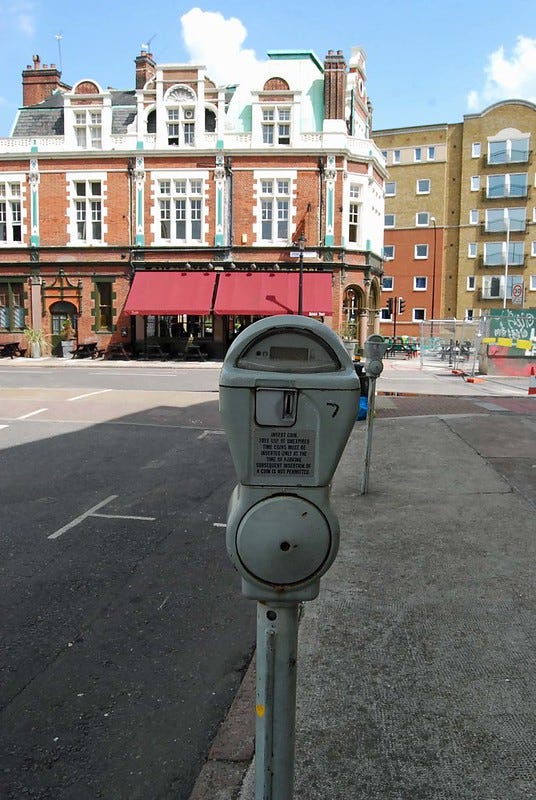
Oct 24, 202400:26:17Tap to summarizeKey: Rob’s comments are in italics. Derek’s comments are normal font.As the world is rapidly changing around us, I thought we could maybe comment on some current affairs items on this episode...Terrorism Under The “Anti-Terrorism” ActYeah, it's been quite a week. One bit of news that really struck me is that a journalist in London had their house raided by 10 metropolitan police officers from the anti-terrorist group, who arrested him and confiscated all his computers and phones and so forth. I don't know whether he's actually been charged yet, but he's been accused of offences under Section 7 of the Anti-Terrorism Act, which covers providing information in support of terrorist groups. I think what struck me is that we're rapidly moving into a surreal world that was depicted in the book 1984 by George Orwell.They got very dystopian quite quickly, haven't they? Or have they always been like that and it's maybe just not been as obvious maybe?Well, that was a point I was going to come along to later. It's a real case of truth is lies, lies are truth. Good is evil. Evil is good. He was reporting about the atrocities that have been carried out by the Israeli assaults on Hamas and Hezbollah and various aspects of those, which he's been doing fairly consistently. But there you have it. I don't want to say too much because I don't want to get raided by the anti-terrorist squad. But you have to ask who are the terrorists in this exchange.Who are the bad guys? I'm hearing big echoes of the Julian Assange situation as well. Obviously, look how that played out.This brings to at least five the number of journalists in the UK who've been arrested or harassed or accused under anti-terrorist legislation, including ones who were agitating for the release of Julian Assange a year ago. This is something that even five years ago, if you'd said Britain is going to be clamping down on freedom of speech in an draconian way, you'd go, no, no, that kind of thing was not going to happen here. I remember back in the 1960s, there were left-wing activists, friends of mine saying, well, there'll be a fascist state established in this country.But there's certainly a case to be made that this is exactly what's unfolding at the moment. Now, your point about it always having been going on and we don't know about it, that more or less leads into the next observation I was going to make. One thing is that even though I've been highly skeptical about the government all my adult life, and I've been highly skeptical about the mainstream media my entire adult life, in the last three or four years, I have discovered things that never in my wildest dreams would I have. Just recently, I'm reading a book called Trading with the Enemy.It's specifically about the major American corporations, various banking groups, particularly Chase Manhattan and JP Morgan, the Ford Motor Company, IT&T and most of all the Rockefeller's Standard Oil Group of companies. All of these were trading with the Nazis, not just in the run-up to the war, but also right through it. They were supplying products without which Hitler would not have been able to wage the Second World War. These were fuelling the bombers, providing the ammunition, providing industrial components, providing motors, providing trucks, providing communication systems, all of which were directly involved in killing their fellow countrymen and the countrymen of our allies.It's really extraordinary that that happened. There were various people trying to reveal this. All of the people who were trying to reveal it were marginalised, discredited and ruined. Except that it's not working today in the same way. Some people have got a pessimistic view of the way it's going to work out. But the powers that be are almost openly bemoaning the fact that they've lost control of the narrative, as though that's something that we should sympathise with!If you go back, this has been going on at least since the 1930s. And actually, if you go on prior to that, and you look into the origins of the First World War, the First World War was actually instigated, not by the way that it was told in the history books, but it was planned. Whether or not the assassination of Archduke Ferdinand really tipped it off, or whether that was just a convenient excuse, much like we've had various large-scale justifications for things that the plans had already been long laid in resonance.So, interesting times indeed. Pushback on mRNA VaccinesOne other thing that's hit the news in the last day or two, there's significant pushback against the latest generation of mRNA vaccines. They've been introduced in Japan and it's not the people who are in line for this are people who are having their eighth boosters. After I (Derek) had my first two - for reasons of convenience rather than conviction that they were beneficial - I very firmly said, well, I don't seem to have been damaged by that, but absolutely no more without question of doubt! And apparently in Japan at least, they're up to eight. I've had numerous invitations to go back for more and the last one I think said “come in and get your flu vaccine and COVID vaccine in the same visit”, which strikes me as not a good idea anyway, even if they were effective and even if they were conventional technology vaccines.Even when you look at conventional vaccines, what has transpired in recent years is that these things have not gone through the rigorous testing that any other drug would be required to do. They don't have to do long-term placebo controlled trials. Sometimes they're measuring looking for adverse effects for a matter of weeks. That's another thing that's transpired.Well anyway, the point is that the latest ones are not even the same technology as the previous seven. They're what they call amplified or enhanced. Not only do they hijack your own cells for manufacturing the spike protein, which is supposed to prompt an immune response, but they actually stimulate your cell biology to produce more copies of the mRNA messenger strand itself. And this strikes me as utterly reckless. I mean, if there had been 10 years of testing I would still have misgivings about it, as there hasn't been time to do any of that, it's beyond belief.Anyway, the interesting thing is it's being introduced in Japan first, and Japan has a famously obedient and compliant population. There have been several businesses have actually put notices on the door turning customers away saying, “if you've had this latest untested shot, please don't come in here!” That's a new level of protest, how effective it will be or how widespread it will be I don’t know. But the mere fact that people are saying things like that in public is, I think, something that hit me. Has anything in the news truck you?Just coming back to journalists, I think we do need good independent journalists now more than ever. It's even being admitted by part of the mainstream that it was very easy for them to control the narrative. It was very easy to control the narrative when there were a whole bunch of newspapers which have always operated within the Overton window of acceptable conversation, and a handful of broadcasters. And then bemoaning the fact that now there are all these other channels.All these pesky podcasters and substacks and whatnot!Substack and Rumble continue to provide a platform for free speech. And, you know, I don't think there's a single person that I regard as 100% reliable to the point that I would uncritically take as gospel everything they say. I'm prepared to listen to anybody, even to people that I might well have been inclined to write off as nutcases a few years ago. I've got confidence in my own critical judgment and my own ability to triangulate between different sources of information, and come to my own conclusion.That's important and I think within the freedom movement there's a lot of accusations of so-and-so being controlled opposition, just because you don't agree with him or her on certain things, or they've said certain things in the past. It’s not helpful.Escalating Financial PressureThere's another observation that occurred to me this morning, which is the amount of sheer pressure that people are under for their time and money. One of the things that prompted it is that Gina went to collect somebody from the station car park and the strict regulation is that you can park there for 20 minutes to deliver or collect people from the train. She overstayed the 20 minutes either because she arrived a bit earlier than she'd intended or because the train was a bit late, which does happen.Then she got a penalty notice for £85, reduced to £50 if you pay it within 14 days, which is pretty draconian. I mean, that would be a fairly stiff penalty if you'd parked the car there all day and not bothered to get the ticket! Anyway, she never got a prompt saying the 14 days have expired and you now owe £85, but this was the end of August, so that's been September, so coming up to well over a month and a half. Anyway, she got a letter yesterday from a debt collector saying there was also a £70 charge, so it's now £155.Whether or not this is legally valid or not, we're looking into it at the moment. I've got a friendly lawyer. It's full of threatening rhetoric, and it's difficult to know whether this is a bluff.Sometimes they need to prove that they own the land, and often they can't.I think in this case since it was a railway car park the railway certainly do own the land so I don't think that is...But yeah, a lot of these privately owned car parks actually can't enforce the fees they issue.We'll see. I mean, worse comes to worst, we should ha...
Transcribe →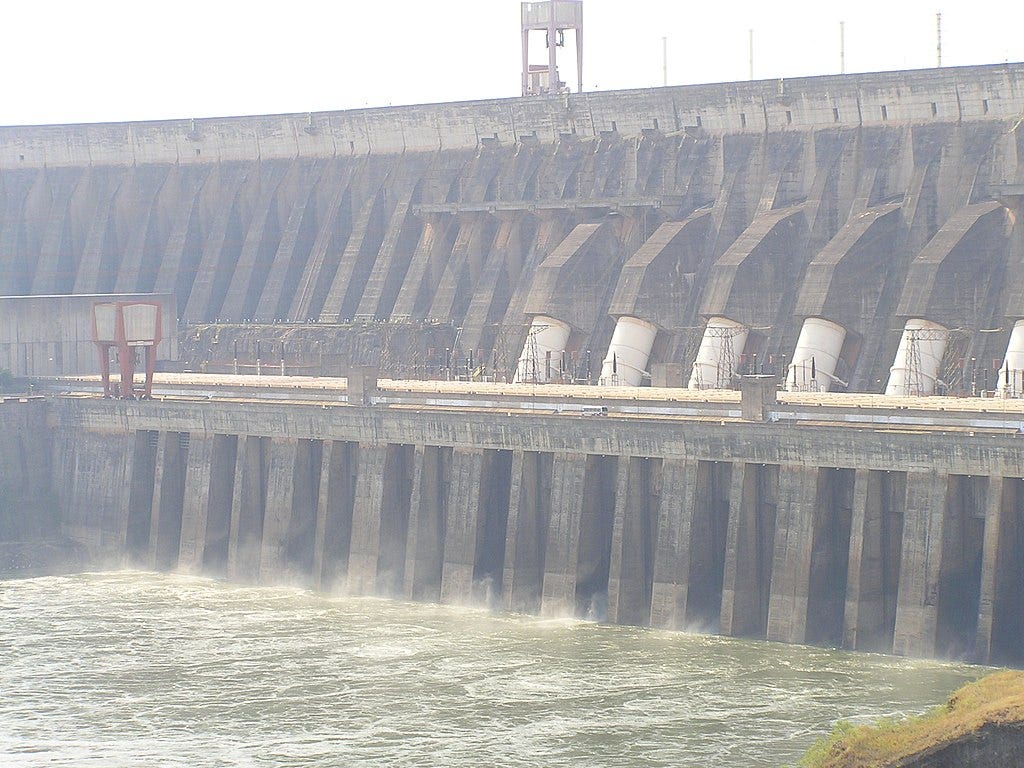
The Role of Energy in Value Creation
Oct 18, 202400:30:19Tap to summarizeKey: Rob’s comments are in italics. Derek’s comments are normal font.Our topic today is energy, which on the face of it may not seem to relate that obviously to sovereign finance, but we think it does. So where do we need to start?Why We Need EnergyLet's start first off with why we actually need energy. We need energy first and foremost for staying alive in the form of food. We need energy for moving around and we need energy for moving things around and we need energy for manufacturing anything.It's important to realise that until the Industrial Revolution, the sources of energy we had consisted of human muscle power, animal muscle power, and a little bit of energy from windmills and water mills, and the burning of wood.If you think about it, all of that derives directly or indirectly from the sun. The energy from the sun is turned into organic matter by the action of photosynthesis in plants and algae. That is either directly consumed by animals or human beings, or else it's eaten by other things which in turn are eaten by animals or human beings. The wind power derives from the sun warming the atmosphere and creating currents of air as some parts of it rise and air moves from other places to move into it. The water flowing down a stream derives from the sun evaporating the seawater and lakes, going into the atmosphere, condensing as rain and falling, running into the water courses and eventually into a river where it drives a watermill. So the entire thing is from current sunlight.Even tidal energy would come from the moon?Well, no, that is actually an exception to it. The tidal energy really is tapping the angular momentum of the Earth and the Moon. The water is, if you like, lifted in a hump towards the Moon and to a lesser extent towards the Sun. As the Earth rotates underneath it, that hump in the water creates a high tide and as it passes it creates a low tide. So tidal energy comes from that angular momentum of the Earth and consequently, if you like, slowing the Earth down and slowing the orbit of the Moon very slightly. In fact, that is happening whether or not we put a Tide Mill somewhere and extract some of it in the form of useful energy.The laws of thermodynamicsI just want to say briefly a few words about the two laws relating to conversion of energy. These are called the laws of thermodynamics, which makes it sound obscure and complicated. But in everyday terms, we'd say the laws of heat and movement. And in fact, it's slightly wider than that.It was given that name because the initial interest was in relation to improving the efficiency of steam engines. The first law says that energy is neither created nor destroyed. Since Einstein discovered the principle of relativity and the equivalence of energy and mass, strictly speaking, we should say that the total amount of energy and mass is neither created nor destroyed. I'll come back to that in a minute when we talk briefly about nuclear power. But for all intents and purposes, the traditional law of conservation of energy is the first law. The second law has got various forms.One way is that heat cannot of itself run from a cold body to a hotter one. Another way is to say that entropy always increases. Entropy is, although I think science courses never discuss this until you get to university level, in fact, something that we're all familiar with. We're all aware that if you watch a movie, it's usually pretty obvious whether the movie is running forwards or running backwards because things look ridiculous if the movie is running backwards. If you have a glass falling from a table to the floor and shattering, the energy at the end of that process is the same as at the beginning. But because there's a certain amount of energy by the fact that the glass is higher up in the gravitational field to start with, as it falls it gets faster and faster. That changes into the energy of movement. When it hits the floor it breaks into pieces, the pieces scatter around and they stop moving. The energy is now being transferred into a small amount of heat because all the molecules in the bits of broken glass are moving a bit faster on average than they were before it happened. But there's no way that energy is going to organise itself so that they all spontaneously move back together, stick together and jump up in the air and go onto the table.Yeah, just like you can't un-bake a cake.You can't unbake a cake, can't unscramble an omelette. These are all, if you like, equivalent ways of stating that second law in everyday terms. It also explains the processes of rot and corrosion and decay and erosion by wind and other natural processes. On the face of it, it seems that the phenomenon of life is a contradiction to that, which is why in the past there were various theories about the vital force and so forth. But it isn't actually an exception because whenever you get order happening, and probably the simplest example of this is if you've got a super concentrated solution of salt and something precipitates it's starting to crystallise. Obviously the crystals have got much more order than the solution because there's a structure there, there's a defined position subject to a little bit of vibration of all the atoms in the crystal, whereas in the liquid all the molecules could move around.But there is heat released when something crystallises, when anything solidifies. Similarly, you have to put heat in in order to melt something. That actually balances it out because low grade heat, heat which is not significantly different from its surroundings is a higher entropy state than heat which is at a much higher temperature than its surroundings. The same thing happens with human beings. We need to take in something like 2000 kilocalories a day of chemical energy in the form of food. That is for the most part dissipated by the heat that we lose from our bodies to the surrounding environment. The heat that we lose from our bodies offsets the maintenance of the structure and the organisation of our bodies and it also offsets anything that we do, whether it's writing a poem or building a house. That obviously is creating order and it's offset by the disorder that we create by the heat that we radiate.The entire phenomena of life on Earth and everything that living things do is because of that flow of energy from the sun. You've got the surface of the sun at around about 5,000 degrees centigrade. That arrives at the Earth every day and a similar amount of heat is radiated from the Earth on the dark side during the night time into deep space, which has got a temperature of approximately minus 270 degrees centigrade, three degrees absolute. So it's that flow of energy. Of course, the fossil fuels, that also is energy which came from sunlight. But the difference is it came from the sunlight three or four hundred million years ago, over a long period of time, many millions of years. We have burned through the overwhelming majority of that which is available to us from those sources in the last 300 years.Of the easy pickings. Yeah.Using Energy to Get EnergyIt's not just a question of difficulty. It's also the question that it takes a certain amount of energy to extract those fossil fuels to transport them from wherever they are to wherever we're going to use them. Whereas 300 years ago, there were lots of coal fields where all you had to do was scrape the surface topsoil off them and dig the coal straight out of the ground. That's why they're called coal pits, even though, of course, before long, it was no longer a pit in the sense of a surface hole like a gravel pit or a chalk pit where you could just dig it up and cart it straight away but the veins were hundreds of feet under the ground. You needed to sink a deep mine shaft and send the miners down in a lift and bring the coal back up in the same haulage arrangement.Similarly with oil, a hundred years ago you could dig through 20 or 30 feet of rock and the oil would be there under pressure, it would spurt out of the ground and you'd simply have to put a pipe and a valve on the top and run it from there into barrels. Whereas now of course we have to drill down thousands of feet under the ground, often in very inaccessible places on the bed of the sea. All that takes energy.So you have what we call energy return on energy invested. Once we reach the point where the energy that it takes to get a kilowatt hour of energy worth of oil, once it takes as much energy to get to it as you're going to get back, you're no longer getting a net result. I think we must actually be very close to that because already, as you may well be aware, when you buy a tank full of petrol, 10% of that petrol is actually ethanol, ethyl alcohol.That comes from the fermentation of cornstarch and then the distillation of that. All of those are pretty energy intensive processes, although the energy going into the cornstarch which you then get into the alcohol, is available to us. It's come from the sun. It's been captured by the leaves of the corn plant stored in the corn cobs. These need to be harvested, mashed, fermented. Heat needs to be put into it to distill the alcohol off. It's difficult for me to believe that that is actually a net energy gain.The only reason for it is that the economics of it subsidise the cost of the crude oil and the processing of that. Anyway, what we're going to see is not a sudden running out but increasingly increasing difficulties and supply shortages and that and we've had little hints of that already, haven't we?You've talked in the past about there being various inflection points in human history and the industrial revolution being the last major one of those. And these changes in energy consumption from things like water...
Transcribe →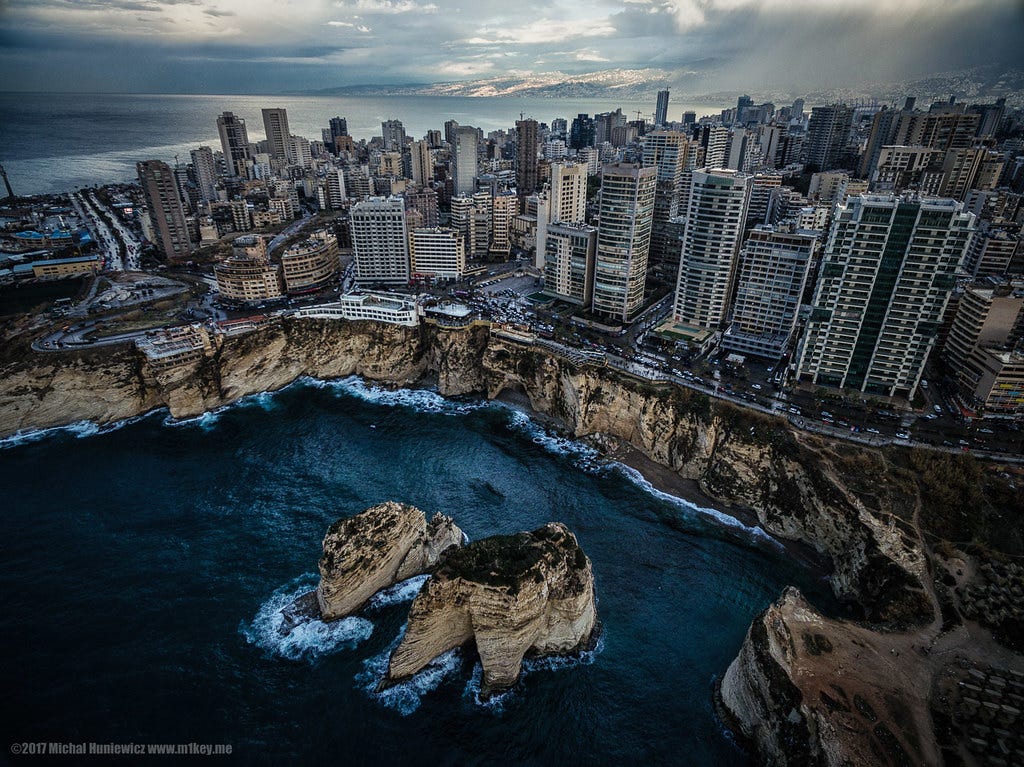
Comments on Global Warming and Current Affairs
Oct 11, 202400:19:59Tap to summarizeKey: Rob’s comments are in italics, Derek’s comments in normal font.We've argued on this show several times that the human species has been through a number of inflection points throughout history. It's fairly clear to anyone alive today that we are living through one of those inflection points. Like a wide range of, on the face of it, crazy things happening. We thought we might dedicate an episode to comment on some of these events.Yes as I've said in the past, we're certainly running into the wall on various things. We'll run out of fossil fuels in the next few years or decade or two. It won't be a sudden thing. It will just get harder and harder to extract, more and more expensive. As that happens, the wider population will likely be at the back of the queue.I think that also means they just put energy bills up and up?We've already seen that happening. Anyway, that's one thing. The main topic of this podcast series is finance and in particular, we're seeing the world hovering on the edge of hyperinflation. It'll be very interesting to see how that unfolds.Escalating Conflicts…As people grow more frustrated with the situation, there's activation on a number of fronts, much of it unhelpful. Right now, one unavoidable issue is the two major conflicts in the world: the Ukraine versus Russia war and Israel versus an increasing number of surrounding states. This past week, the three biggest events were the beginnings of Israel's sneak attack with many booby-trapped pages, which, apart from targeting Hezbollah personnel, caused significant collateral damage to people nearby, followed by missile strikes into Lebanon on an extraordinary scale.Then came retaliation from Iran. It seems this is yet another situation where provocation was ramped up until they acted, and then they blamed those who retaliated, which is exactly what we're seeing in the media. To clarify my position, I don't support violence on either side, but it seems particularly—You've got to pay attention to the narrative and to the things that just are nonsensical.Indeed. We've heard much about the Iron Dome of anti-missile defences. I heard someone describe it as a toilet paper dome. Obviously, this worked fine against 30-year-old Soviet missiles and homemade rockets.But when faced with modern missiles that Iran clearly has, despite heavy censorship, we've seen plenty of footage where streams of missiles obviously got through. There are reports of very few casualties for the size of explosions we've seen. I'm unsure how well-targeted the missiles were. Apparently, they aimed at several air bases and the Mossad headquarters. Once again, we've heard complaints that this was in the middle of a civilian area. Of course, when the other side suffers massive civilian losses, we're told it's because Hamas or Hezbollah were hiding in civilian areas. Israel has obviously put their Mossad headquarters in the middle of a city somewhere.It's bang in the middle of Tel Aviv, isn't it?This is clearly, once again, a regime backed by the United States. Sooner or later, this will bring the United States into a confrontation with Russia, even if the Ukrainian conflict doesn't set that off first. It's a situation that only a few years ago would have seemed inconceivable. For decades, we've been told that the policy of mutual assured destruction, or MAD as it's quite appropriately abbreviated, was what prevented major conflict between world powers. Yet it seems that the sheer recklessness with which these military objectives are being pursued would give lie to that.I've heard several commentators say that obviously with mutual destruction, that's effectively a stalemate. And if a stalemate is the best you'll get in a losing situation, then maybe that's why the people instigating these things are pursuing that tactic.These events are at the forefront because they've been in the news within the last seven days, so I didn't think we could run an episode ignoring them.I guess the question then is, what are the likely knock-on effects? Is this just something to monitor and be aware of?It's a surreal situation because it's difficult to believe this is happening on the same planet where we're sitting here in relative peace and prosperity, even if it's been more constrained than a few years ago. I can't really imagine what it would be like living in Beirut or Gaza, seeing increasing waves of destruction day after day, losing everything I own, and witnessing people indiscriminately murdered all around me. It's also extraordinary how numb people seem to be in the face of it.I think when it happens in other parts of the world, it's just a distant thing that's easy to ignore or say you're not political and therefore it doesn't apply to you or I don't know.But it does apply to us. I think it's critical to the long-term survival and prosperity of the human species. Indeed. For instance, during Vietnam, there was enormous pushback against it. There was a massive protest movement against the war in all kinds of ways. It's more active involvement than the US though, isn't it? In terms of troops on the ground. Do you think?As there weren't British troops on the ground, it didn't explain the strength of the opposition here. It did seem that amongst the people who weren't against the Vietnam War, at least they were prepared to enter the debate and trot out the arguments. Even if, particularly with the hindsight of viewing it from this historical perspective, the arguments seem a bit lame. Well, you know, otherwise the communists will get in and subjugate the population, then communism will spread all over Southeast Asia and that's really evil so we have to deploy it. At least people were saying that, whereas I don't get the impression that, apart from media outlets, there's really any great public debate on either side about what's happening with these things.It certainly seems to be accelerating us towards some kind of crunch point, and people seem oblivious to the very real threat that it could tip over into a nuclear exchange. That would probably mean a life of deprivation and misery for those of us left alive at the end of it, even if there is anybody left alive, which is not a foregone conclusion.It's certainly contributing to the inflationary pressures and to think it's towards hyperinflation on the fact that there seems to be unlimited money available to send to Israel or Ukraine or whatever. And yet we can't pay pensioners a fuel allowance over the winter. Like that tells you where the priorities are.Exactly. So anyway, those are just the thoughts closest to the surface, given that this is the week we've just lived through.Comments on the Climate Change DebateYeah, in terms of current events, I wanted to ask you about the climate change debate as well. You know, we've, this is obviously something that crops up a lot. We've got an episode coming out about energy. My stance personally is that I am pro-environment. I think we are living under a capitalist system, which is chewing up our natural ecosystem in the pursuit of short-term profits or zero long-term thinking. I don't think you can argue against things like deforestation or species collapse, particularly looking at insect populations. I also think that the climate change debate has been completely hijacked by carbon as a single issue. I don't actually think the amount of carbon in the atmosphere is that big of a deal. I think historically it's been much higher. So...I'm mostly interested in it from a narrative perspective of like, where has the narrative been hijacked? What powerful interests are doing that?I agree. I'll come back to what I said that regardless of the amount of pollution in the form of carbon dioxide, it's only one of many forms and it's possibly not the most extreme form. Having said that, the carbon which has been locked up underground in the form of coal and oil and natural gas suddenly being consumed and turned into carbon dioxide over the course of a couple of hundred years is obviously an unbalancing act. It's undoubtedly the case that the concentrations have gone up and that the concentrations of carbon dioxide in the atmosphere do raise the average temperature. It's beyond doubt that fairly small temperature ranges can have a disproportionate effect on weather systems. So all those are true. It's also true that increased concentrations in the air cause an increase in concentrations in seawater and therefore—Yeah, because the ocean is the biggest sink of carbon, isn't it? And it trails temperatures, like the temperature has to change and then there's a reaction in the atmospheric contents of carbon about 800 years later or so.Yeah, whatever the effect is on the climate, there is also the direct effect it's having in killing off coral reefs at a great rate, which has a knock-on effect because that's an important part of the entire marine ecosystem.It's a complex ecosystem. And when you destroy complex ecosystems, you can't just regenerate them. It's like when you chop down a forest.The concentration is going up. It's undoubtedly the case that the combustion of fossil fuels is putting a greater amount of carbon dioxide into the atmosphere. We've had a very significant proportion of the world's forests felled over the last few decades, which is also pushing the situation out of equilibrium in that way. Now, having said that, it's very interesting that in the past week or so, it's come out that John Kerry, who was the minister in the US government for dealing with climate change, was revealed to have had a family private jet. I don't know whether you've seen...
Transcribe →