Loading summary
Transcript42 lines
- [00:00]
David Kraus
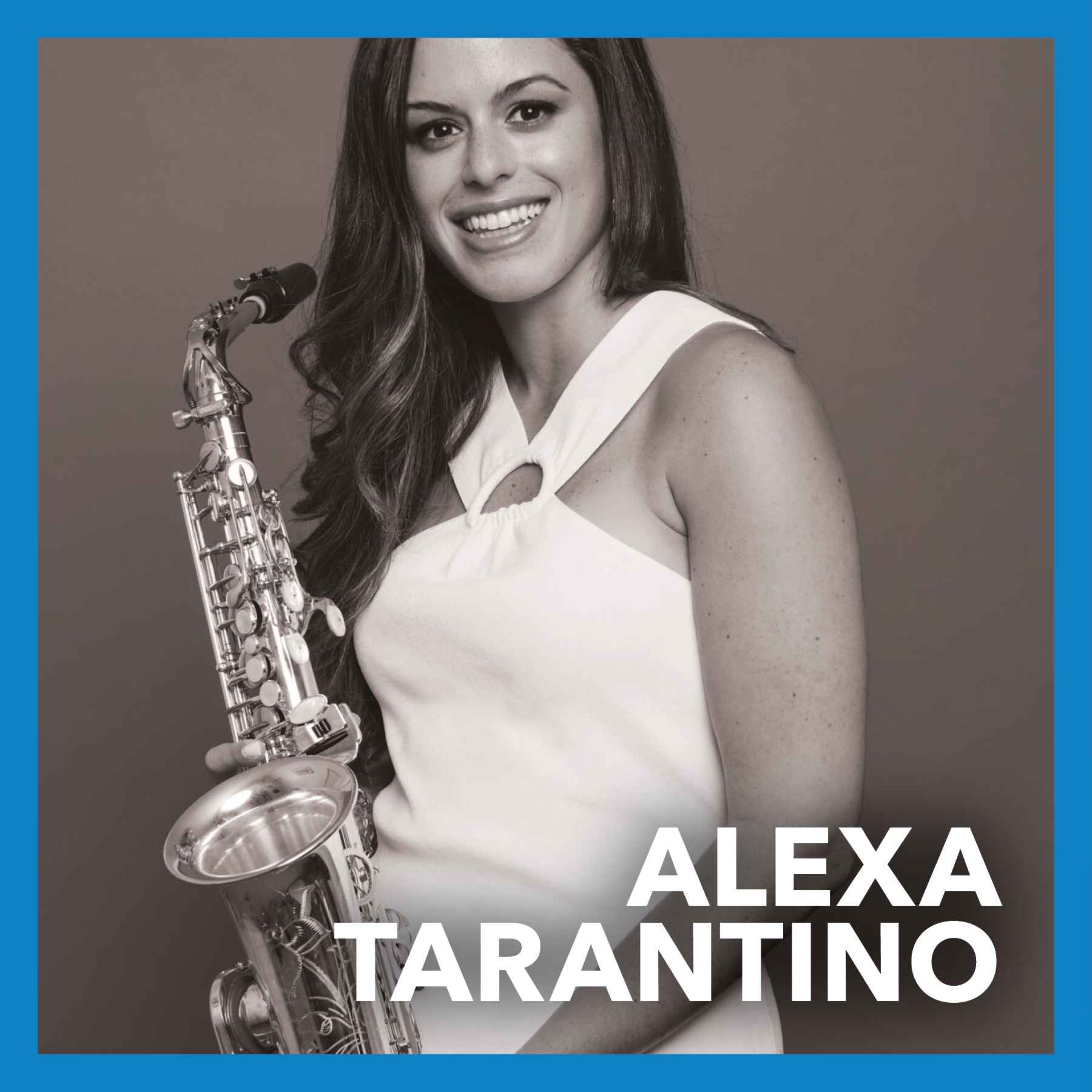
Hey listeners, if you're enjoying speaking soundly, please consider supporting our work with a tax deductible donation. You can easily contribute on our website@artfulnarrativesmedia.com donate click the link in the show notes of this episode or you can follow us on Instagram eaking sndly and get all the information there. Either way, every donation, no matter the size, helps us keep bringing you inspiring conversations with remarkable artists. So thank you for your continued support. We really appreciate it. Looking for world class performances at an accessible price point? See yourself at Lincoln center presents free and choose what you pay Performances. Where else in New York City can you experience contemporary flamenco, mental health, inspired choral works, experimental jazz, and an interactive family dance performance all in the same week and for less than the price of lunch? Explore the full calendar of events today@lincolncenter.org presents. Be sure to check out slippeddisc.com for the latest inside information on classical music. Now. Alexa Tarantino is a dynamic saxophone performer, composer and educator who recently made history as the first female full time member to join the Jazz at Lincoln Center Orchestra with Wynton Marsalis. While this achievement is groundbreaking, she's quick to point out that she did not get there alone.
- [01:31]
Alexa Tarantino
I appreciate the use of the word trailblazer, but I think there are so many incredible people that I was so fortunate to be around. Just so many incredible contributions from women in the field, and I'm very grateful to take a full time seat at the table.
- [01:47]
David Kraus
You're listening to Speaking Soundly, a backstage pass to today's biggest stars of the music world. I'm your host, David Kraus, principal Trumpet of the Metropolitan Opera. During each episode, you'll hear me speak with inspiring performers about their creative process and the personal journey that led them to the stage.
- [02:07]
Unnamed Interviewer
Congratulations on your recent appointment as a permanent member of the world's preeminent big band Jazz at Lincoln Center Orchestra. We're speaking now high atop Columbus Circle in New York City, backstage right outside the House of Swing. This place represents a connection to the past, present and future of jazz. What does it mean to you to call this iconic place home?
- [02:31]
Alexa Tarantino
Thank you so much for having me, David, and thank you for your congratulations. I'm super honored and thrilled. All I can say is that every day is really a pinch me moment. So to be here every day in a, you know, working capacity to contribute what I can is truly an honor.
- [02:50]
Unnamed Interviewer
The band here has such a tight and unified sound. It's really unmistakable. But that sound is made up of a bunch of individuals like yourself, bringing your own voice, sound and spirit to the ensemble. How would you describe your own sound and what does it feel like to have it in the mix of this amazing ensemble?
- [03:14]
Alexa Tarantino
It's incredible. It feels incredible. And that is the magic of the orchestra, I agree, is that it's this culmination of individual. I love that about the orchestra because everybody's truly their character. The same way you'd interact with them in the hallway is like the same way they stand up to play a solo. It's so much fun to just say, like, yeah, that's Vincent Gardner. Yeah, that's Kenny Rampton. Oh, yeah, that's Carlos, you know, and.
- [03:40]
Unnamed Interviewer
Now that's Alexa Tarantino. In addition to your great artistry, you bring something novel to the ensemble. And being the first woman in the group, it's a groundbreaking achievement for sure. But on the other hand, you've played in all female groups before, like the Diva Orchestra. And as you were growing up, you had many great female role models to follow into the field. Looking back on your experience getting you here, do you feel like a trailblazer or do you feel like the journey was a natural progression of your hard work, talent, support and opportunity?
- [04:15]
Alexa Tarantino
What you just said is the perfect way of phrasing it. I mean, I appreciate the use of the word trailblazer, but I think there are so many incredible people that I was so fortunate to be around. Sherry Miracle of the Diva Jazz Orchestra, she guided me right out of college into my first full time job, which enabled me to move to New York City. And then another incredible mentor is Reni Rosnes of Artemis. So there's just so many incredible contributions from women in the field and in the orchestra as well, People who have come through and subbed. Camille Thurman, Erica von Kleist, Tanya Darby, Helen Sung. So, so many amazing people have been in the rotation and I'm very grateful to take a full time seat at the table.
- [04:58]
Unnamed Interviewer
You had just mentioned Erica Von Kleist. You first heard her in the third grade and that's really what inspired you to be a saxophonist.
- [05:07]
Alexa Tarantino
Yes. Yeah. So we both came from West Hartford, Connecticut. Hall High School was the local high school music program there. And my parents took me to one of the Hall High concert jazz band concerts as an elementary schooler. And it was about the time that you start thinking about what instrument you might want to play. And I saw a young woman stand up and play saxophone. I'm pretty sure it was a ballad feature, if I remember correctly. And I just sort of Tugged on my mom's jacket and said, that's what I want to do.
- [05:38]
Unnamed Interviewer
So you're inspired to play the saxophone in elementary school. It's one thing to want to do something, it's another thing to actually put your hands on it. What was that first interaction with the instrument like? Did you take to it right away or were you wrestling with it?
- [05:53]
Alexa Tarantino
Actually, I've never thought about this moment until just now. I'm remembering one of the first times I put the instrument together was in my parents bedroom. And I think I was with a babysitter. And I remember her name was Lindsay, but that's all I remember. And she had played the saxophone, she had dabbled in it before and I think I like had the read on upside down. I don't know what was happening, but I remember her giving me like some concrete tips, you know, the functional tips of the assembly. And I think once I made a sound, that was it. You know, it's just that vibration, that resonance that just sparked something. And in fifth grade, I was able to join the before school jazz band. So like from that moment, that's the, that's what really hooked me was getting to play with other people, the potential for it to be slightly different every time, you know, to riff on a little something or to just kind of walk around the house playing little things, you know, just the spontaneity and the freedom of it and. But there were certainly things that I wasn't, you know, I'm also quite a perfectionist and I want to be a good student. And I remember even at 4th and 5th grade, early morning jazz band rehearsals, I made my parents fire my carpool person because they weren't getting us to rehearsal early enough. So I think I just like really wanted to be there like 20 minutes early every time to prepare and get my stuff together and warm up and do some play some little things. And unfortunately the other kids I was carpooling with, you know, their parents, it was just sort of like, you know, get there just in time like normal people. But apparently my parents, I think that was not an easy to their best friend. I think they had to say, actually, we'll drive Alexa from now on and if, if so and so wants to ride with us, that's fine, but we don't blame you.
- [07:45]
Unnamed Interviewer
Wow, that's amazing.
- [07:47]
Alexa Tarantino
Yeah.
- [07:48]
Unnamed Interviewer
For so many kids, carving out time to practice is a total drag. Did you enjoy practicing when you were younger or did you consider it a chore?
- [07:57]
Alexa Tarantino
I enjoyed it. My dad told me when I first started and he bought my first saxophone. He said, you know, okay, we'll get you a saxophone, we'll get you lessons, but I'm not going to get on you about practicing. He's like, it's all up to you. And that sort of was like, okay, you know, this is my baby now. And of course there were times where they would check in and say, you know, did you practice today? What did you do? You know. But besides that, like casual parent check ins, it was very self directed. And in high school I had a really strict routine of what I would do after school into the basement, like late at night, as I think, as any of us did. I'm sure you did this too. You know, anybody who chose something that requires that sacrifice of time, you know, versus your, maybe your social life or your high school life, I think we all did that and felt like the only ones perhaps, or one of a small few. But then when we graduated, you know, public school and went on to music school or college and then into the music world and we found our people, that's really the common thread is being willing to make that sacrifice. Because it's not really a sacrifice at the end of the day. It's a trade for something that becomes much more meaningful down the line.
- [09:17]
Unnamed Interviewer
When was the first time you played for someone and you felt like you affected them with your sound and with your style?
- [09:27]
Alexa Tarantino
That's such a good question. I remember in high school, over the holiday season we would go do concerts at the Salvation Army. Those were some of the more meaningful concerts for me. Just to think like, wow, I'm in love with doing something that brings joy to people. I am so fortunate to be able to do what I do now as a professional. But even as a student then in high school, I thought, wow, I'm so lucky to have something I'm so passionate about, to have people around me that can help me get there. And that's what started to make me feel like this was really my purpose. It's really about actually just making people feel joy and hope and leaving any room better than it was when I first walked in. And I often think about, you know, what might happen when I'm like 80 or 90. You know, you hear stories of people start to have difficulty playing their instruments. Such a physical thing, the travel, the touring and I.
- [10:29]
Unnamed Interviewer
It starts way before 80 or 90.
- [10:31]
Alexa Tarantino
I'll tell you that right now. But I think to myself, like, wow, I'm so lucky to do what I do now every single day. And like, should anything ever happen, really what it boils down to is just helping other people. When I get nervous about, you know, technical passage or something like that, or intonation or whatever, I mean, all that is so important, but to balance it with the larger scope is very meaningful.
- [10:58]
Unnamed Interviewer
Yeah. You went to school to study jazz at two amazing schools, in the Eastman School and at Juilliard. When you were at Eastman, while you were an undergrad there, didn't you step in to play with Earth, Wind and Fire?
- [11:12]
Alexa Tarantino
Yes.
- [11:13]
Unnamed Interviewer
Talk about a trial by fire. How does that even happen? And have you always been that fearless?
- [11:23]
Alexa Tarantino
Hmm. I really appreciate that word because it's something I work on. I try to be fearless. The Earth, Wind and Fire thing was wild because it was honestly just a moment of expressing gratitude that led me there. I was a scholarship recipient from a family foundation that had put on a benefit concert featuring Earth, Wind and Fire, and those proceeds went to scholarships for students at the Eastman School of Music. And so I connected with the family, of course, to say thank you. And we stayed in touch over the years. And when I was at Eastman over the summer, the Rochester Festival was happening Jazz festival, and Earth, Wind and Fire was the big headliner. And I got a text from a friend of mine of the family and the family foundation, saying, philip Bailey of Earth, Wind and Fire is in town. And I think he's gonna be at Java's, the local coffee shop, right next to the school. And if you wanna meet him, like, run over to Java's and see if you can find him. So I ran downstairs and walked in, and there he was. And I just introduced myself. I just said, hi, you know, I'm Alexa Tarantino, and I love your music, and you're my mom's favorite, and I actually am a scholarship recipient. I just wanted to say thank you so much. And he said, what do you play? And I said, I play saxophone. And he said, where's your horn? I said, it's in my apartment across the street. He said, okay, soundcheck's at 4:30. Like, come by. And I was like, okay. So I went to soundcheck, and it was so sweet. He said, what do you want to play? And I was like, I'll play anything. You know, whatever you want. And he said, how about a jazz piece? I want to feature you. You know, that was the craziest thing. He said, we want to. He inserted a whole chunk into the show for me. So I played I Remember your. Because that was the tune I was learning at the time. And we, like, ran through it with the band and he sang part of it and then passed it to me for a solo. And then the rest of the night, he had me just kind of sitting in the horn section and, wow. So I appreciate that you said it was fearless, but truly, I just was like, I was just trying to say thank you. And I guess that's the biggest lesson that I learned is, you know, not to be afraid to introduce yourself and to say thank you. You know, when it. When it matters, and you never know what can happen.
- [13:50]
Unnamed Interviewer
I want to talk for a minute about a superpower that you possess that I am in complete awe of. That's the power of improvisation, because it just mystifies me as a classical musician. I just play the notes someone else wrote for me on a page. But you create music instantly, in real time. Is this a natural skill that anybody can learn?
- [14:14]
Alexa Tarantino
Anybody can do it. No, truly, 100%. Anybody can do it. It's not a superpower, I promise. I mean, I appreciate that because that's so cool. That word is cool. But I still, you know, I still look at people and I'm like, wow, they have the superpower. You know, we all are still figuring it out. And it's a lifelong search. We're always working on new language, expressing what we are feeling on the instrument. Whether it's frustration, joy, concern, you know, like, what can we do on our instruments to bring these emotions out? Or, you know, what can we play on our instrument to respond to what that drummer just played? You know, all of these elements that come into play, whether it's communication, emotion, those all create these variables. So it's. Every single time it's different. Even though we might have that bass toolbox, we're always taking a risk when we stand up.
- [15:21]
Unnamed Interviewer
You're also an amazing composer. Many tracks on your albums feature your own tunes. Is composing a different muscle than improvising?
- [15:32]
Alexa Tarantino
Composing is different for me in the sense that I have to stick to my decisions. There are so many options, and so there's a lot of question and answer in my head when I'm composing. And so it's actually a great exercise for me to just commit to something and stick to it and sort of be fearless about it and say, no, this is what I just. This is what I heard. This is what I plunked down. I don't hate it. I think there might be a couple other options. I've exhausted those options. Let's put it down. So it is a great exercise in that aspect.
- [16:03]
Unnamed Interviewer
Every tune you compose likely reflects a specific moment in time in Your life. When you revisit these tunes, does it take you back to those moments that the tune was based off of?
- [16:17]
Alexa Tarantino
Yeah, yeah, it does. It's. It's fun. It's like a snapshot. And that's how I've tried to think about my records as well. What are the themes of this year for me? What are the highlights of this year for me or the lowlights of this year for me? Where did I travel? Who did I see? What were my challenges? And sometimes it can be literally about a particular style or tempo. Like this year, I told myself, I'm gonna get my up tempo stuff together. So sometimes I've used it like that in the past, like a challenge to myself. And other times it will be like I'm envisioning a beautiful garden in Italy that I love. And so, like, let's recreate that.
- [17:01]
Unnamed Interviewer
At the rate that you're churning out albums, you're gonna have this retrospective of your life that you can look back on any time.
- [17:08]
Alexa Tarantino
I hope so.
- [17:09]
Unnamed Interviewer
Yeah. That's amazing. You have a new album coming out this June with one of my all time favorite jazz vocalists, Cecile McLaurin Salvante. She was on the podcast earlier and I'm such a fan of hers. When you're playing in a small combo, whether it's with Cecile or any great musician, there's this amazing phenomenon that happens where you're communicating with people at lightning speed without words. What does it feel like to be able to communicate with another human being on that level night after night?
- [17:41]
Alexa Tarantino
It's amazing. It's electric and it's. It's better than real life in that respect. It does feel. That feels like superpower vibes. That feels like, whoa. Like, you know, similar. I'm sure athletes would feel the same way. You know, on a, on a court, there's, yeah, that heightened sense of connection that can only take place there. It's a sacred space. And it's like, I'm sure athletes or I'm imagining like a football team hitting the field as the lights come on. And for us, it often feels the same way when we walk out on stage and they say jazz Lincoln Center Orchestra with Wynton Marsalis. And I look at us all walk on stage and that's my big pinch me moment is like, oh, my gosh, am I walking on stage right now? Because I used to see them walk on stage. I'd be in the audience as a high schooler, you know, I'd be watching them.
- [18:35]
Unnamed Interviewer
You're so easy to talk to and you're so nice. I would imagine that you're just a great collaborator based on that. Does that go hand in hand? Like, do you have to have an agreeable personality to be a good citizen on the bandstand?
- [18:50]
Alexa Tarantino
I think you do, yeah. Yes. I mean, we've all heard stories of bands back in the day you know, having difficulties, but I really, truly believe that at the core of everything, it's about being a good person. And nobody wants to work. I mean, nobody wants to work with somebody who's difficult to work with. And so, like, for, you know, from a practical perspective, as if somebody were going to attempt, you know, the freelance world and being a professional musician, it's all we all know. It's all about people and having a, you know, positive impact and, you know, being early on time, prepared, all that good stuff. But, yeah, I do think that you got to be cool.
- [19:34]
Unnamed Interviewer
You've benefited from a great music education in West Hartford. Now you're a faculty member at Jazz and Lincoln Center's music education program. From your perspective, both as a teacher and a student, what's the hardest thing to learn and to teach about music?
- [19:53]
Alexa Tarantino
You have good questions. This is good. I actually think the hardest thing to teach is getting somebody to believe in themselves and the potential for what is to come, and that the making mistakes in the immediacy is part of the process, trusting that process. Nobody wants to pick up an instrument and start squeaking and squawking, but you have to do the squeaking and squawking to eventually, potentially walk on stage and play for thousands of people. And even if that's not what you want to do, I mean, what I always say to people is, it's not about getting students to be the next Miles Davis or John Coltrane, but it's about bringing strong and positive citizens into the world and into our communities. And so in music education and jazz education specifically, our students are developing communication skills, public speaking skills, you know, respect, responsibility, empathy, and listening, especially in jazz, to have to, you know, really focus on what somebody contributed and respond to it and to work as a team, understanding the role of your instrument in an ensemble. It's the same type of teamwork that you want to see and collaboration that you want to see in a staff meeting somewhere. So I really believe that the impact of music education and jazz education specifically is crucial to developing a community that appreciates each other for our differences and celebrates those and also has the ability to bring them together in a way to create positive change for the future. Getting kids to practice is also challenging.
- [21:55]
Unnamed Interviewer
Ever since you were a young child, music has been central to your life. Whether you're on the bandstand, playing with some of the best musicians on the planet, working with young students, exploring the first blues scale, you're inspiring and moving others. How has this life spent making music impacted you on a personal level? Like, what does it mean to you and how does it shape who you are beyond the stage?
- [22:20]
Alexa Tarantino
Hmm. I'm just grateful, so grateful to be a part of this community that has warmly welcomed me and challenged me and supported me. And I'm talking about the jazz community at large, but also for this community here at Jazz at Lincoln center. Who, you know, I first interacted with when I was in high school, when I first met Winton and a lot of the members of the band. It was here as a participant in essentially Ellington as a high school student, and then to come back after college and start teaching for them and then eventually to start subbing for Ted and then to be here today. I never could have imagined it ever. And it just makes me want to show anyone else who has any type of dream, as much as you think might be standing in your way, you can knock it down for sure. It just takes a lot of hard work.
- [23:24]
David Kraus
I hope you enjoyed this episode of Speaking Soundly. If you liked what you heard, please tell your friends about it. Help spread the word and follow us on Instagram peakingsndly. For more information you can visit our website artfulnarrativesmedia.com if you're new to the show, you can go back and check out earlier episodes featuring Wynton Marsalis, Regina Spector, Joyce Didonato, Emmanuel Axe and Rufus Wainwright, just to name a few. And tune in two weeks from today on April 1st as we hear Grammy Award winning virtuoso Comanche player Kehan Calhor speaking soundly.