← Speaking Soundly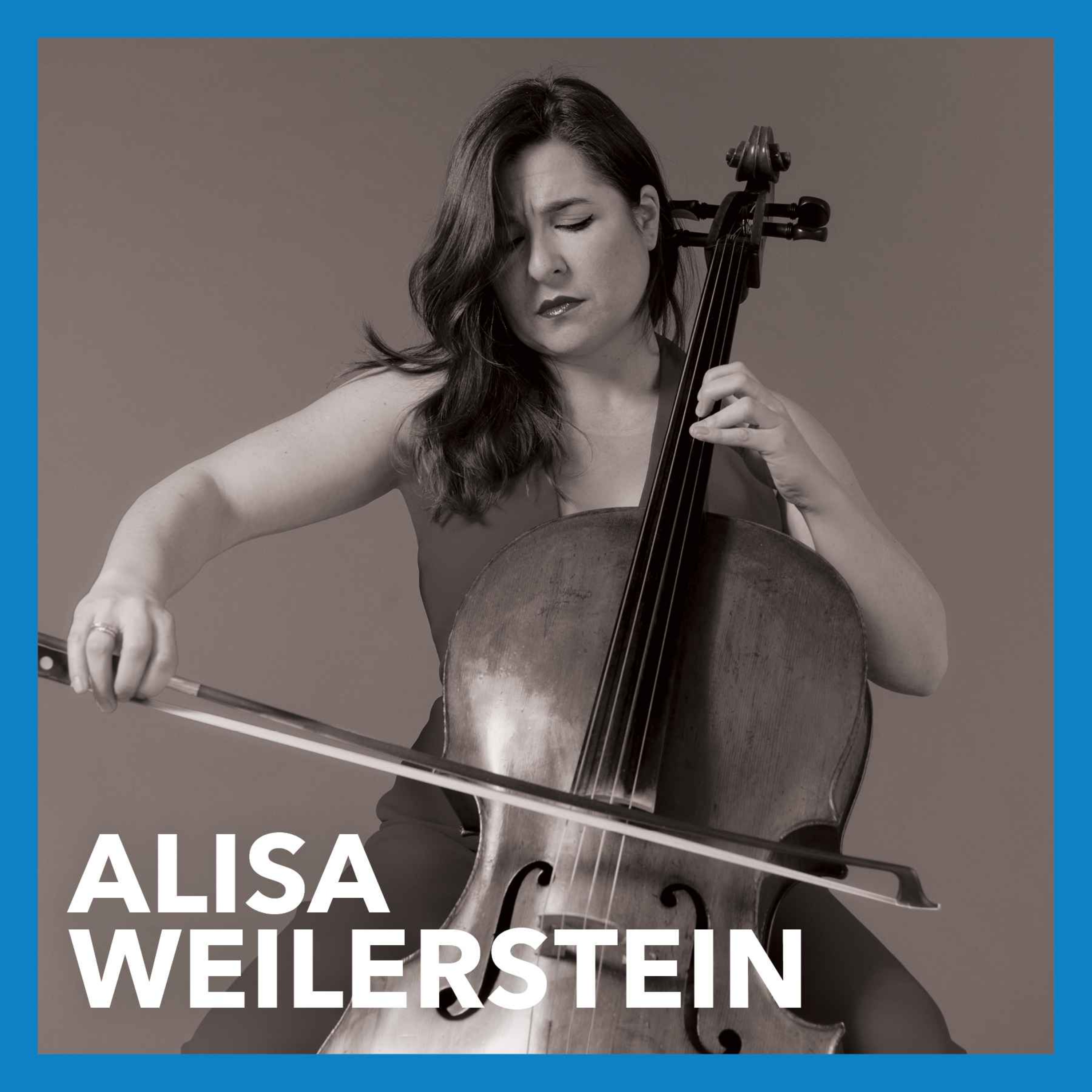
Speaking Soundly
Alisa Weilerstein: Her musical beginnings and groundbreaking solo concert series Fragments
00:20:07
Loading summary
Transcript67 lines
- [00:00]
A
Hey listeners, I hope you're having a great holiday season. As 2024 comes to a close, we're reflecting on an incredible year of speaking soundly. We brought you 21 brand new episodes with amazing artists who have shared their inspiring stories. Thanks for being here, for listening and spreading the word about the show, and for your contributions. It's actually not too late to make one if you haven't already. They're 100% tax deductible and can be made at artfulnarrativesmedia.com we'll be back in the new year on Tuesday, January 7th with a new episode featuring one of today's most celebrated composers and the Carnegie Hall Deb's composer chair Gabriela Ortiz. Make sure you're following the show in your podcast app. You won't want to miss this captivating conversation. Be sure to check out slippeddisc.com for the latest inside information on classical music. Now, Alisa Weilerstein is one of the foremost cellists of our time. The MacArthur Genius Grant recipient and best selling recording artist grew up in a famously musical household and recalls what it was like to play in a trio with her parents from the age of six.
- [01:11]
B
They allowed me to fully participate in rehearsals and so it became less of a parent child relationship. Just in the rehearsals it was kind of like I was playing a role, like being a colleague. And then of course, the, you know, the fights between us when we rehearsed were epic, but you know, we were fighting about music. So that's good.
- [01:31]
A
You're listening to Speaking Soundly, a backstage pass to today's biggest stars of the music world. I'm your host, David Kraus, principal trumpet of the Metropolitan Opera. During each episode, you'll hear me speak with inspiring performers about their creative process and the personal journey that led them to the stage. When my son was really young, he started the cello and his teacher gave me instructions on how to build like this preliminary cello for him by gluing a yardstick to a cereal box. And I'm looking at this picture of you right now of you playing your Rice Krispies cello box. Can you tell me who made that for you and how old you were in that picture?
- [02:11]
B
Yeah, for sure it was my grandmother. So as, as you know, both my parents are musicians and at a certain point we were out touring and my grandmother was taking care of me and I got, conveniently, I got chickenpox. And so she, I think felt extra sorry for me or something and she made me a string quartet of instruments out of cereal Boxes. So she made me two violins of viola and a cello so I could then participate in my parents rehearsals. They, they would often rehearse in their living room. So in that picture I think I'm like two and a half or three maybe. And one of my first, my earliest memories of trying to, I don't know, they got to some sort of climactic point and I don't know, Shimon Piano Quintet or something like that, and I was trying to scrub at this thing, trying to make a sound, and I realized it didn't make any sound, so I got a bit frustrated. And then when I was around four, I asked for a real one and a cello teacher. And my mother said, well, you're young for that. But I kept asking. So when I was around four and a half, I started lessons.
- [03:13]
A
You start playing the cello at four and a half and by the time you're 13 you make your solo debut at the Cleveland Orchestra. Now, nine years sounds like a long time to hone a craft. But you were a child. Most kids biggest accomplishment by that age is getting braces, but you were already playing with one of the greatest orchestras in the world. Did you feel somehow different than the other kids your age?
- [03:39]
B
I. Yes and no, but not because of what I think you're implying, but because, yeah, I just always felt like I was odd and I didn't really fit in somehow. And so I didn't have very many friends when I was, you know, sixth and seventh grade and beginning of eighth grade, I didn't have that many friends. I was kind of a strange one. I mean, it wasn't only because of my love for music, but also, I mean, I was small, I was, I don't know, I like different things. And so I didn't fit in there until I started the Young Artist program at the Cleveland Institute of Music when I was in eighth grade. And then I. Then I started to really make friends, you know, so all of us misfits were kind of together. And then I made some everlasting friendships there.
- [04:24]
A
You know, I've been to those plain white cinder block practice rooms at the Cleveland Institute of Music where you spent hours.
- [04:32]
B
Pretty grim.
- [04:34]
A
Yeah, it's not unlike solitary confinement. Did you enjoy that solitude?
- [04:40]
B
I loved it especially. Also I was presented with such an incredible gift by having musician parents. I mean, also they were very loving and wonderful parents anyway. But it was important for me to learn how to practice independently without my parents either helping me in the room or being in the house and knowing that I could kind of Ask them something. And so from the time I was 13, 14, I really wanted to learn how to practice on my own.
- [05:08]
A
Well, you were raised in a famously musical household. Your dad's a violinist, your mom's a pianist, your brother's a conductor. What did your house sound like when everybody was home practicing? It must have been pretty intense.
- [05:19]
B
Cacophony. Total cacophony. But it was. Yeah, sounded like a conservatory.
- [05:26]
A
It's a good thing you didn't grow up in Manhattan like my kids did. I'm a trumpet player, so I was often relegated to the bathroom to warm up.
- [05:33]
B
Well, yeah, I mean, that's a different thing.
- [05:34]
A
Yeah, yeah, it is completely. When you were really young, you started playing in a trio with your parents, and surely they didn't know that this would become the famous Weilerstein Trio that it would eventually become. What do you think it was like for your parents at that time to be rehearsing chamber music with a six year old kid?
- [05:55]
B
You'd have to ask them, I think. But they were amazing that they allowed me to fully participate in rehearsals. I mean, when I was very small, of course, they had to tell me everything. But then as I grew a bit older, they wanted me to be able to verbalize musical ideas. And so it became less of a parent child relationship. Just in the rehearsals, it was kind of like I was playing a role, like being a colleague, you know, and that happened very naturally and, you know, organically. And then, of course, the, you know, the fights between us when we rehearsed were epic. But, you know, you were fighting about music, so that's good, right?
- [06:34]
A
I mean, that's amazing because most children don't get an opportunity to be well heard. And in this sense, you're not only being heard on your instrument, but your ideas are being heard and you're collaborating. But I want to hear more about the fighting.
- [06:48]
B
You're like, I want the juicy stuff.
- [06:50]
A
Yeah, right. Did that carry over to the dinner table too?
- [06:55]
B
No, that was important that whatever argument we were having was relegated to the rehearsal. And we also had a role. You never go to bed angry type of. Type of role in the house. And when we were at the dinner table, we wouldn't talk about it. But during the rehearsal, if you get very heated.
- [07:11]
A
You gave an interview when you were 10 and you told the reporter that your ambition was to go around the world playing concerts with different orchestras.
- [07:20]
B
Oh my God, I'm impressed that you found that article cool. Yeah.
- [07:25]
A
And then three years later, at age 13 in Cleveland, you did just That, I mean you, you had already achieved your life's ambition. Did that dawn on you at that young age?
- [07:37]
B
No, it didn't really occur to me, honestly. Although I did think in my 13 year old brain, I thought, I have waited a very long time for this. Which is really funny now. You know, if you take yourself back to adolescence, I mean, you feel like you've got all this experience and you know that you own the world and all that. That's how I felt. And then following that, that concert, that was when I, I signed with at the time, Scott, it was icm. That was when I really started my say, performance training, on the job training, let's say. And I did, you know what, one week per month with, with the, with regional orchestrants for basically all of my high school time. So. And that's how I learned the repertoire.
- [08:21]
A
Severance hall in Cleveland is such a beautiful hall. What do you remember from that experience? Looking out.
- [08:29]
B
I was so happy. I was really. Yeah, I had reached nirvana. I was thrilled.
- [08:36]
A
And since you lived in Cleveland Heights, the audience must have been packed with family and friends to watch you perform. Well, in that Respect, at age 13, was it basically like having a musical bat mitzvah?
- [08:51]
B
In a way, yes, because I also had a bat mitzvah that year. Of course there was 13, so it was, yeah, it was a very important year.
- [08:57]
A
How did those two performances rank?
- [09:01]
B
Let's say they were two incredibly important moments in my life. Yeah, eighth grade was a big, was a big year for me.
- [09:08]
A
You think after high school you'd go straight to conservatory like Juilliard or Curtis to continue this musical education, but you end up at Columbia University studying of all things Russian history. Why the left turn?
- [09:22]
B
I was still performing during college, of course, and, and kind of building, building that. And I knew that that was what my life path was going to be. But having grown up in a musical household, having also taken most of the conservatory, let's say undergraduate courses in high school, I really wanted a different kind of education for university level education. And I've also, I wanted to make friends in different fields and I, I'm a nerd as well. And I wanted to, wanted to read and learn about different things.
- [09:54]
A
Well, for most people, getting a BA in Russian history is hard enough, but you did it while performing and while forging a professional career. When did you sleep, much less study?
- [10:04]
B
I didn't sleep. I didn't sleep for four years. Probably a night or maybe like, I don't know, four hours a night or something during the school Year I would catch up on sleep in the summers. But, you know, when you're 18, you can do that, you can get away with it. But my junior year I really kind of overloaded with classes and I was performing quite a lot and I would stay up till 2 and then I'd wake up at 6 to go to Starbucks to study and I would practice at night. So it was, yeah, I burned a candle at both ends for sure.
- [10:36]
A
Well, clearly it worked because just a few years after graduating Columbia, you'd find yourself at the White House performing for the Obamas. Not many people get an audience with the two most powerful people on the planet. What was that experience like? It must have been amazing.
- [10:53]
B
I mean, I think it's no secret where I stand politically. So I was thrilled to be there and I was thrilled to meet them. And their girls were, they were school age at that time. And so, I mean, so the whole family was there and Michelle Obama's mother was there as well. So I met all five of them and they were sitting in the front row in East Room. And so like, having them there was just, it was just so thrilling. And then he, you know, he announced all of our names, all of those that were performing. And, and so he says, and, and Alyssa Willerstein. And he clearly struggled. And I thought, oh, well, you know, he said my name though. I was just happy that. And then there, there was David Szebnik from SiriusXM radio at the time he announced my name correctly. He said, alisa Wilerstein is now going to play Kodai solo Sonata or something. And then the president kind of looked at me and then thanked us all by name. And then he got to my name and he said Elisa Weilerstein.
- [11:53]
A
So it clocked with him.
- [11:55]
B
Oh, definitely. And then, you know, we got the chance to, you know, to shake hands and take a photo with him afterwards. I mean, it's as they do in sort of in events. And then he said, I apologize for mispronouncing your name, but I got it right. The second time you heard that right.
- [12:11]
A
You got an apology from the President of the United States. That's huge. That's amazing. It's clear that your career is littered with amazing accomplishments, but I want to talk about your latest one. It's a solo concert series of you performing called Fragments. You created and developed the idea. It's really a new concert experience and it sounds amazing. Can you take me through what a concert is like and talk to me about the genesis of this somewhat revolutionary idea in classical Music well, the genesis.
- [12:45]
B
Was during, let's say, the height of the lockdown. So it was like December 2020. And I think everyone had their own, say, personal low point during the, during lockdown. And mine was then I had 15 projects canceled in as many days. And I just was like, you know what? Hell with it. I put the cello away for like two weeks. I didn't touch it. And I just took some long walks and was trying to reflect on where we were. And then I. I forced myself to take the cello out again and just kind of staring out the window, playing scales. And then I thought, you know, we're kind of, we're going to have to come out of this somehow. Let's try not to waste a good crisis. Let's see how, how can we recover? How, how is it going to look when we can finally get back in the concert hall together? And so I was thinking about how to do that, and then this idea, you know, kind of flashes of inspiration don't happen so often, but when they do, they're quite fun to play with. And so I just started scribbling ideas down on pencil and paper. And then I started to compile a very, very large group of 27 composers that are varied in every possible way, in terms of age, gender balanced, also racially and ethnically very diverse and nine different nationalities. It's a fantastic group of people, great musicians, great artists. And I asked them each to do the same thing, which was to write 10 minutes of music for solo cello in two or three fragments that could live alone so that I could intersperse them with movements of Bach and. Or movements of other new music. And I didn't want the audience to have a program in their hand in real time. I just wanted to create a kind of hypnotic, visceral experience and a very direct experience so that they said that the music would just hit people without context and without all sort of baggage around it. So what you receive when you go to a performance, a fragments, I hope you do, is you get general information about the project. You would get the list of composers that are specifically on that program, and you would say that this program will last approximately one hour and there will be 18 different fragments on it. That's all there is. And then at the very end, you get the full menu of what you've.
- [15:04]
A
Heard, you know, what you've created with this. I mean, this is an 18 course tasting menu of music right? Where you just sit down, you don't know what you're getting. And I love the fact that there's nothing to read. There's so many times when I go to a concert and I find myself more interested where the person went to college and I'm reading about their hobbies and not really listening to the music that they're making.
- [15:27]
B
You hit the nail on the head. It has always bothered me, too, that I feel like I know more about the person than what they actually want to say. And. Well, of course, it's wonderful to find out about the people, particularly if you like their music. This is great. But in the moment and in a performance, you're more interested, hopefully, in their true voice, which is through their music. And so I wanted to kind of recreate that.
- [15:55]
A
Well, when you're busy performing on stage, can you actually sense the audience? Can you feel that connection?
- [16:02]
B
You can always feel when the audience is with you, always. And I can say with the Fragments programs, and I've done it now a few times since the premiere in January, you could have heard a pin drop in the hall. And so. And the kind of. The tension in the. In the hall was really palpable for me on Stage two. And so, I mean, you know this, too, for when you're. When you're playing, when the audience is there with you, there's nothing like it. When you feel like you're really having a conversation.
- [16:37]
A
Yeah. Musicians and conductors can have somewhat adverse.
- [16:43]
B
Musicians and conductors. I like that.
- [16:45]
A
Well, you know what? That wasn't even premeditated. It just came out. Sorry. I guess I should have said instrumentalists and conductors can often have adversarial relationships. But you seem to have found a conductor you get along pretty well with. It's your husband, Rafael Pallare, who's the music director of the Montreal Symphony Orchestra and the San Diego Symphony Orchestra. What's it like to be married to someone whose day job requires them to tell people what to do and when to do it?
- [17:18]
B
Well, we're not married because of that. You know, you might be very.
- [17:23]
A
Despite that. I don't know.
- [17:27]
B
No, I mean, let's see. How. How can I frame this in terms of the, say, our working lives, our artistic lives? I actually think we are extraordinarily similar in terms of the passion for what we do and the way that we experience music. I very rarely met somebody like that that I truly share that with, let's say, that I really connected with on in that way. I mean, this is not an Oprah interview where I'm. No. Spend the rest of the time gushing about my husband. But there's something so pure and so deep about the way in which Raphael experiences and emanates music from his whole being that it's really palpable. This is my experience as an audience member listening to his concerts with various orchestras, not only the OSM or San Diego Symphony, but with everyone that he works with, but also playing with him. I mean, I played as a soloist with him many, many times. And that is. It's a thing that we share.
- [18:37]
A
Okay, last question. And it's been just great talking to you.
- [18:40]
B
Oh, it's been nice to talk to you, too.
- [18:42]
A
So my wife's family's from Cleveland. She still has relatives there. And when we visit, I'm obsessed with the subtleties of the Cleveland accent. But despite having grown up there, you have zero of it.
- [18:56]
B
Thank you.
- [18:57]
A
Was it a conscious effort or did it just kind of leave you?
- [19:02]
B
No, it just left. I don't think I ever had it, though, actually.
- [19:06]
A
Yeah.
- [19:07]
B
One of my hobbies is mimicry. I love mimicking different accents.
- [19:11]
A
Really?
- [19:12]
B
So I'm very aware of accents, and I was aware of the heavy Cleveland accent, and I was very conscious not to get it. I didn't want it.
- [19:20]
A
So could you mimic a Cleveland accent if you had to?
- [19:25]
B
Yeah, of course.
- [19:27]
A
That's pretty good.
- [19:28]
B
Do you want some Mel?
- [19:30]
A
Same for me. I think our river is on fire.
- [19:33]
B
No, that was before my time.
- [19:37]
A
It's too soon. I get it. I hope you enjoyed this episode of Speaking Soundly. If you liked what you heard, please tell your friends about it. Help spread the word. Be sure to subscribe, rate and leave us a review in your podcast app and follow us on Instagram eaking sndly. For more information, you can visit our website, artfulnarrativesmedia.com.