Loading summary
Transcript59 lines
- [00:00]
David Krauss
Hey listeners, thanks for tuning in. If you're enjoying speaking soundly, please consider supporting our work with a tax deductible donation. You can easily contribute on our website@artfullnarrativesmedia.com donate or just click the link in the show notes of this episode. Every donation, no matter the size, helps us keep bringing you inspiring conversations with remarkable artists. Thank you so much for your continued support.
- [00:26]
Unnamed Co-Host
We really appreciate it.
- [00:28]
David Krauss
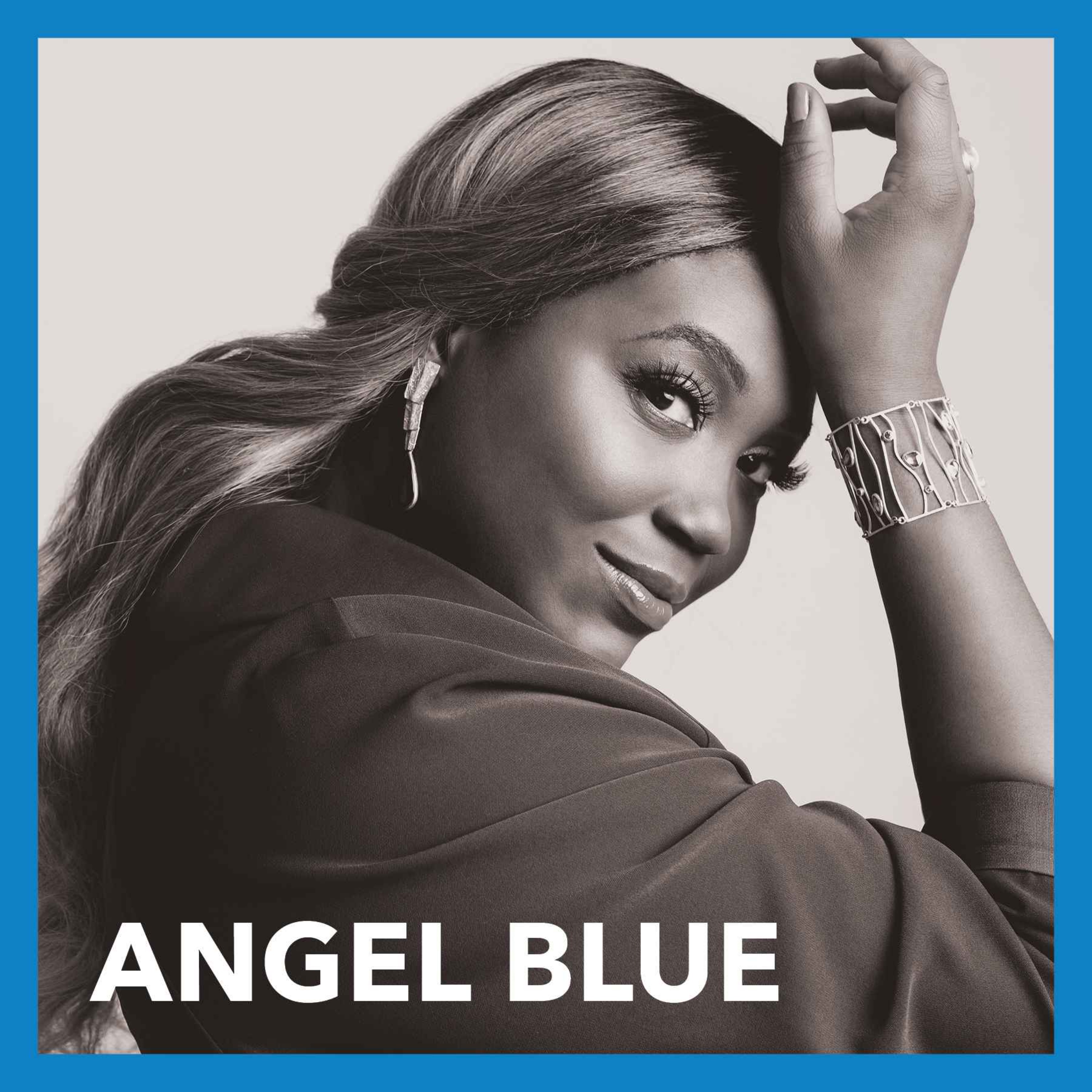
Be sure to check out slippeddisc.com for the latest inside information on classical music now. Want to know more about your favorite composers, masterpieces and instruments of the orchestra? Check out Weta Classical's podcast Classical Breakdown, your guide to classical music to discover more about the music you love. You can find Classical Breakdown wherever you listen to podcasts or online@classicalbreakdown.org Looking for world class performances at an accessible price point? See yourself at Lincoln center presents free and choose what you pay performances. Where else in New York City can you experience contemporary flamenco, mental health, inspired choral works, experimental jazz, and an interactive family dance performance all in the same week and for less than the price of lunch? Explore the full calendar of events. Today@lincoln center.org presents Grammy Award winning American Soprano Angel Blue captivates audiences with heartfelt and soulful performances. Every note she sings reflects the profound emotions of her life's journey.
- [01:40]
Angel Blue
If one is listening to me sing, you'll hear me crying out because I miss my dad. You'll hear me happy because I am thrilled and loved my life. You'll hear just about every emotion and I'm just trying to be honest with those emotions.
- [01:56]
David Krauss
You're listening to Speaking Soundly A backstage pass to today's biggest stars of the music world. I'm your host, David Krauss, principal Trumpet of the Metropolitan Opera. During each episode, you'll hear me speak with inspiring performers about their creative process and the personal journey that led them to the stage.
- [02:15]
Unnamed Co-Host
I was blown away by your performance last night on the stage of the Met as we premiered Oswaldo Galitov's opera Aina Damar. You were amazing in it. So first of all, congratulations.
- [02:27]
Angel Blue
Thank you so much. I had a beautiful time last night and it was just nice to hear the audience applauding because that shows their appreciation for the piece and it shows that all of our hard work has paid off. So it was very special.
- [02:43]
Unnamed Co-Host
Everything was just so polished and perfect. It's hard to believe just a few weeks ago was the first time you sang together with the orchestra in rehearsal and it wasn't lost on me that that during those rehearsals, I had my trumpet part right in front of me, and all the members of the orchestra.
- [03:00]
David Krauss
Had music in front of them, including the conductor.
- [03:03]
Unnamed Co-Host
But you have to have everything memorized.
- [03:06]
Angel Blue
Yes.
- [03:07]
Unnamed Co-Host
You rely on a prompter who's a person who's a real lifeline to you.
- [03:12]
David Krauss
Giving you cues, even though he or.
- [03:14]
Unnamed Co-Host
She has never seen from the audience perspective, but is always just a few feet away from you. How important is the relationship between you and this invisible person hidden within the stage who always has your back?
- [03:29]
Angel Blue
Yes, it's incredibly important. I'm very fortunate that everyone who works at the Metropolitan Opera is fortunate, because we do have the prompter who is there to. As you called it. I've never thought of it like that, but it really is a lifeline. They're incredibly important because sometimes on stage, we can't always see the conductor. It actually happened to me last night where there was a section where I couldn't hear the orchestra and I couldn't see Maestro Miguel either. So I was staring at Jonathan Kelly, our prompter. And I have worked in situations where there isn't a prompter, and it's a bit scary at times. But I'm very thankful that Jonathan is there because it's. I know for me, I need him.
- [04:14]
Unnamed Co-Host
Yeah, it sounds like a pretty unique and necessary relationship.
- [04:18]
Angel Blue
Yes.
- [04:20]
Unnamed Co-Host
During the opera, your character sings and dances flamenco with a rose in your hair and in stunning costumes. The whole show is a real spectacle. In fact, at one point, your face is projected against the entire front of the stage, making you literally larger than life. How do you come back down to earth after the intensity and drama of the stage, night after night?
- [04:44]
Angel Blue
I don't really ever leave the earth, though. I think that's the trick for me, because I recognize that it's not about me, it's not about Angel. I think the first thing that I try to make everything about is the tradition, and that's the tradition of singing classical music. It's never about me, so I always feel like I'm on the ground because of that. It is about the character. It is about the storytelling and trying to portray them in the most honest way that I can. I like to think of them as real. They're real people. And that's. You know, art does imitate life. And there's so much that has happened in my life that I can draw from when it comes to performing. There's. I've. You know, I've experienced. We all have. We've all experienced love, loss, happiness, extreme grief and Extreme joy and everything in between. And so I think that informs me, if one is listening to me sing, you'll hear me crying out because I miss my dad. You'll hear me happy because I am thrilled and love my life and love my husband and my son and the blessings that I have. You'll hear just about every emotion. And I'm just trying to be honest with those emotions. And I know that's not. It's not easy. It's a very vulnerable place to be, but it's also therapeutic in some weird way, on stage to be able to go there for me. Maybe that's selfish, but it is true.
- [06:10]
Unnamed Co-Host
No matter what you sing, you have this confidence that just radiates out onto the stage. Are you naturally a confident person? And does that confidence influence your singing, or is it the other way around? Like, does your singing embolden your life off the stage?
- [06:28]
Angel Blue
Oh, I don't know. That's a beautiful question. I suppose the confidence in singing comes from just repetition. I wouldn't be confident in getting on stage and performing if I hadn't rehearsed a lot. I like to rehearse. I'm the annoying one in the rehearsal room that when the director says, does anyone want to do it again? Everybody's like, no, let's go home. And I'm the one that's like, can we just. Can we do this one scene just one more time?
- [06:53]
Unnamed Co-Host
I respect that. But, yes, that is annoying.
- [06:56]
Angel Blue
It is annoying, yes. And I did that a few times for Ina Demar, and I got a couple of looks from my colleagues like, are you serious? You wanna. But for me, the repetition helps. And that does help with confidence because I've done it so much that when. By the time I am on stage and I do need to let go and let that freedom of the piece happen, I'm able to do that.
- [07:17]
Unnamed Co-Host
And that freedom really shows, because when you're on the stage, it looks like there is nowhere else you'd rather be. And I know you felt that for a very long time because you started singing when you were very young. Was there a particular moment or a performance that made you realize that you were truly destined for the stage? When did it become clear that this is just where you had to be?
- [07:40]
Angel Blue
Yes, I was four years old. My parents took me to see a concert of Turandot, and I was just. I fell in love with the stage. I fell in love with what I saw. Actually, my favorite section of the orchestra is the brass section, because, yes, I love the brass instruments, and I fell in love with it because now I recognize that it was. What I was listening to was the aria was in questareadja, the famous aria that Turandot sings in Act 2. And what I heard was bam, bam, bam, bam, bam, bam, bam bam, ba da da. I'm sure you've played that many times. And that little tune just stayed in my head for years. And I would go around just singing it. So my dad, because he was a classically trained musician, my dad said, okay, maybe, you know, maybe she's a singer. And I actually said to him that night, I said, dad, I want to be like the woman in the light. The lady in the light is what I called her. And he smiled at me and said, angel, you can absolutely be like the lady in the light. And so I just had a beautiful love, wonderful relationship with opera since then. And before I even knew what, you know, any words in Italian meant, or any other foreign language, I just. The music just captured me, you know, it enveloped me and it still does to this day.
- [09:07]
Unnamed Co-Host
First of all, thank goodness you didn't say I wanted to be like the trumpet player in the orchestra because this could have been a very different conversation. I mean, this was at age 4. I know many 40 year olds that can't sit through an entire opera.
- [09:26]
David Krauss
What inspired your parents to bring a four year old to an opera in the first place?
- [09:31]
Angel Blue
I've asked my mom that many times because I'm one of five and for whatever reason, they just took me and I loved it. But it's funny because that moment when I was 4, I still have those moments. I still feel like that when I go to the Met and that joy is still there. It's like I was bit by a bug and that bite is still going through my blood today.
- [09:56]
Unnamed Co-Host
So at six years old, you'd have your first voice lesson with your father. How did he balance being both a teacher and a dad to a six year old during those early lessons?
- [10:07]
Angel Blue
Yes, well, he was a. My dad was. He passed away 18 years ago. He was just. He was so kind in his delivery of everything. I think that really made a huge impression on me. And when I watched him sing, he just brought so much joy. I don't know, I always just wanted to be like him. I just wanted to sing, I wanted to be. I was a daddy's girl. So I just wanted to do whatever he did and it just made me excited and I wanted to imitate it. So that's what I've tried to do.
- [10:42]
Unnamed Co-Host
I suppose it's probably Impossible for you to encapsulate into words what you loved about your dad, but maybe you could describe what you loved about his voice.
- [10:56]
Angel Blue
Peace. Peace. He was peaceful. That's why I say when we listen to someone sing, you can hear life. You can hear what they're. If they're being honest, we can hear what they've gone through. And in my dad's voice, I always heard just peace of just calming. Maybe that's. I mean, I'm not a father. I wouldn't know. But maybe that's the duty of every dad is to sort of be responsible for, you know, their daughters in some way. They are. I know I felt that way about my dad. He was like my protector, you know? And so when I heard him sing, I always thought I was always like, wow, my dad's voice is so peaceful.
- [11:38]
Unnamed Co-Host
He also predicted when you were born that you would become the next Leontine Price. Was growing up with this prophecy on your shoulders, a North Star for you, or was it a lot of pressure to live up to?
- [11:51]
Angel Blue
It was a North Star. My mom. My mom says that he said that because he was just always listening to Leontine Price. He loved her. But I honestly, I mean, I know that so many people have their opinions and ideas on this kind of a thing. You know, who's the next this and who's the next that. But I've always held it to just be that I was just going to follow in her footsteps, that, you know, angel, you'll be the first angel blue. The next Angel Blue. But just as someone to model myself after in terms of not just singing, but their life, the way they carried themselves. Leontine Price has always been my role model, and, no, I never felt any pressure.
- [12:36]
Unnamed Co-Host
Well, it's pretty clear that following that North Star worked out well. I'm curious about the journey along the way, though. When was the first time you realized you had the ability to affect someone else with your voice?
- [12:51]
Angel Blue
Oh, my gosh. I think I was about 8 years old. I might have been 9, but I think I was. I was in the. I was in the fourth grade, so I was probably eight. And my school did a children's version of Handel's Messiah. And I sang Come unto me all ye that labor. And when I was singing, I remember that the lady, I don't remember who she was, but someone, a teacher or someone sitting on the front row was crying. And I saw that at 8 years old, and I thought, oh, well, she's crying, and I hope she's okay. I hope everything is all Right. And after we performed, my mom said she was crying because of you. Your singing made her cry. And I felt bad because I thought I hurt her feelings. And my mom said, no, it's a good thing. You made her feel something very good. And then I. And then I Learned also. At 10 years old. Wow. Sorry. At 10 years old, my dad, I really. My father was a pastor and I sang Amazing Grace in church one time. And at the end of it, the people in the church stood up and clapped. I didn't know what to do. I was so happy. I was so thankful. And you know, my dad was very quick to let me know that that was a good thing. But he also wanted to make sure that I received that the right way so that I, you know, so that I. So that I wouldn't get a big head. Just period, just real simple. So that I wouldn't, you know, be conceited or anything. Because I think he saw all of this before I even understood what it was. But that was. Those were the moments where I realized that there was something that I had a gift. And I'm so thankful for the gift I have. And I hope that today, I hope people are still moved by it the same way. And I try to be as honest with it as possible so that, you know, so that I'm moved too. So that I'm inspired too, by the gift that God has given to me. It's a big responsibility.
- [14:58]
Unnamed Co-Host
You also worked really hard to foster that gift. For example, you attended the Los Angeles County High School for the Arts. You studied voice and piano there. Is it true you had a two hour commute to school every day?
- [15:11]
Angel Blue
Yes.
- [15:12]
Unnamed Co-Host
And your parents would drive you, right?
- [15:14]
Angel Blue
My parents. It was so beautiful. Just, oh, there's no way to do that without your parents being dedicated to it. You know, my day for three years of high school that I went there was. I Woke up at 4:15, between 4:15 and 4:30 in the morning. And by 5:00 we were out of the house. And my parents drove me to Rancho Cucamonga, which is one hour away. And the Metrolink train came to pick us up. And we'd get to school around 7:45 and I'd start at 8. From 8 until 12:00 we had academics, and then from 1 until 4 we had our arts classes. So I took music theory. I actually found my old report card. I did not do well in theory. I didn't remember. I didn't remember that I had a B minus Theory is not easy. It's it's such a. It's so difficult. I thank God that's not what I. That's not what I do.
- [16:11]
Unnamed Co-Host
So as you were studying opera throughout college, you also competed in and won many beauty pageants.
- [16:19]
Angel Blue
Yes.
- [16:19]
Unnamed Co-Host
I'm assuming you sang for the talent portion.
- [16:22]
Angel Blue
Yes, I did.
- [16:23]
Unnamed Co-Host
Did any part of that experience of beauty pageants, aside from using the prize money to fund your singing education, did any of it help you in your performance on stage as an opera singer? Like, are there any crossovers between the two stages?
- [16:40]
Angel Blue
Yes, there's a lot actually. I think the main one is not to compare. I don't know if that's. I don't think that's negative. It's positive actually, because in pageants we're so. Were different, you know, we're. I'm 5 foot 11 and so I would be standing on stage probably 6 foot 2, 6 foot 3, you know, at the time, I don't know, 145, 150 pounds, standing next to a woman who's 5 foot 4 and she in heels is 5, 6, 5 7, maybe, you know, 105 pounds or 110 pounds or something like that. And I always felt really just large and big and tall and bigger than everyone. But I had to learn that that was a part of my package. And it's sort of the same, I think anyway, that it's the same as being an opera singer, that I have a certain package that I bring, that someone else has a different package and that's okay. It's good for the art form. So I can say there are a lot of similarities from pageantry to performing on stage. Also, learning how to carry the body on stage, learning how to just be aware and alert of how much space I'm taking up and how the body looks or how to use the body on stage is very important as well.
- [18:06]
Unnamed Co-Host
I watched the masterclass that you gave and before it started, you had everybody in the audience join in with you in your pre performance ritual of stretching and breathing. And at one point during it you recite to yourself, I love my voice.
- [18:25]
Angel Blue
Yes.
- [18:26]
Unnamed Co-Host
I think it's just so great because so much of what you do as a performer is scrutinized not only by others, but I'm sure you scrutinize every note that you sing, every interpretation, every role. How did you develop this self affirmation practice? And have there been times where this ritual really helped you overcome particularly difficult moments in your career?
- [18:50]
Angel Blue
Yes, every time I have to sing, I think is a difficult moment just because I Care. I want to represent my voice and me in the best way possible. I mean, from one musician to another, everything is just sort of under this weird microscope. And it can be anyone looking through the microscope, just taking apart everything. And I. I don't want to be the person holding the microscope, picking myself apart all of the time. Because at some point I have to say, wait a minute. I know what I'm doing. At some point, I have to say, no, I do know what I'm doing. I'm doing this well. I have studied. I have worked on this. I do have great breath control. I do have good high notes, you know, angel, you're from Apple Valley, California. You're from the high desert of California. People in California don't even know where that is. And you're singing in German, Italian, Spanish, Russian. You know, at some point, I have to say, I did a good job. That's good. Good for you. At some point, I have to say, I love that I put the work in for this thing. So every performance, I have to say, I like this. I like what I do. I do love my voice. I'm very thankful for it.
- [20:04]
Unnamed Co-Host
Your voice is inspiring to so many, and I know that you took great inspiration in Kathleen Battle's voice. I remember the first time I fell in love with it. She did an album with Wynton Marsalis called Baroque Duet, and I think I wore out the CD listening to it so many times. As keyed in and focused as I was on the brilliant trumpet playing, it was really her voice that captivated me, that amazingly colorful voice. What was your first encounter with her, and what kind of impact did it make on you?
- [20:38]
Angel Blue
It had to be the spirituals in concert. I think it was 1991 or 1992, and my dad recorded it on DHS. My sister and I would go into her room and we would play He's Got the Whole World in His Hands. And because my sister had more of a mezzo sound to her voice, she was Jesse Norman, and I was Kathleen Battle. So that was my introduction. Then after that, I started buying more and more of her albums and just listening to just how she paints with her voice.
- [21:14]
Unnamed Co-Host
That album was actually recorded live on stage at Carnegie Hall. And this season, you'll be singing from that very stage twice. First in recital with the incredible Lang Lang this March, and then again with. Well, actually with me playing in the orchestra behind you. You perform with the Metropolitan Opera Orchestra this June. You must be really excited for these performances. What do you hope the audience takes away from them?
- [21:40]
Angel Blue
Just a great experience. I hope that they would just be happy.
- [21:44]
Unnamed Co-Host
Just.
- [21:44]
Angel Blue
I pray and hope that they bring joy to people. Whatever someone is experiencing in their life. If they're having a difficult time in their life, I hope that it eases that difficulty for them. And if they're having a good time in their life, I hope it brings more joy to them. I hope they get from it whatever it is that they need.
- [22:04]
Unnamed Co-Host
Well, I'm really looking forward to hearing your voice, Phil. Carnegie Hall. It's a big space, of course, but it's also intimate in a way because unlike an opera stage, you won't have an orchestra between you and the front row. And you also won't have lights shining in your face. So you might actually be able to see the effect your voice has on the audience in those moments. What does it mean to you to be able to move people so deeply with your voice?
- [22:35]
Angel Blue
It's an honor and it's a big responsibility. But it's also, I think, for me, and maybe it's selfish, I know I said that earlier, but it's also therapeutic for me because I'm giving a lot of myself and I'm sharing parts of me that I can't really express in words. I'm not able to sit down with the first row, share with them my life story and have this kind of a conversation with them. But through singing, I can. I just. I think I have a responsibility to just be honest on stage. And I'm not concerned so much with being technically perfect. I know I'm singing well. If I'm singing honestly, if I'm just being honest with what, with how I'm feeling, with what the words mean, with what the music means, with what the composer is asking me, with what the director has instructed me to do. And I if all of that is there and I'm completely in that moment, then the audience members will really get something special because they'll get. They'll get me.
- [23:39]
David Krauss
I hope you enjoyed this episode of Speaking Soundly. If you liked what you heard, please tell your friends about it. Help spread spread the word and follow us on Instagram at Speaking Sndly. For more information, you can Visit our website, artfullnarrativesmedia.com if you're new to the show, you could go back and check out earlier episodes featuring Wynton Marsalis, Regina Spector, Joyce Did Donato, Emmanuel Axe and Rufus Wainwright, just to name a few. And tune in two weeks from today on December 10th as we hear violin virtuoso Maximum Bengoroff speaking soundly.