Loading summary
Transcript35 lines
- [00:00]
David Krause
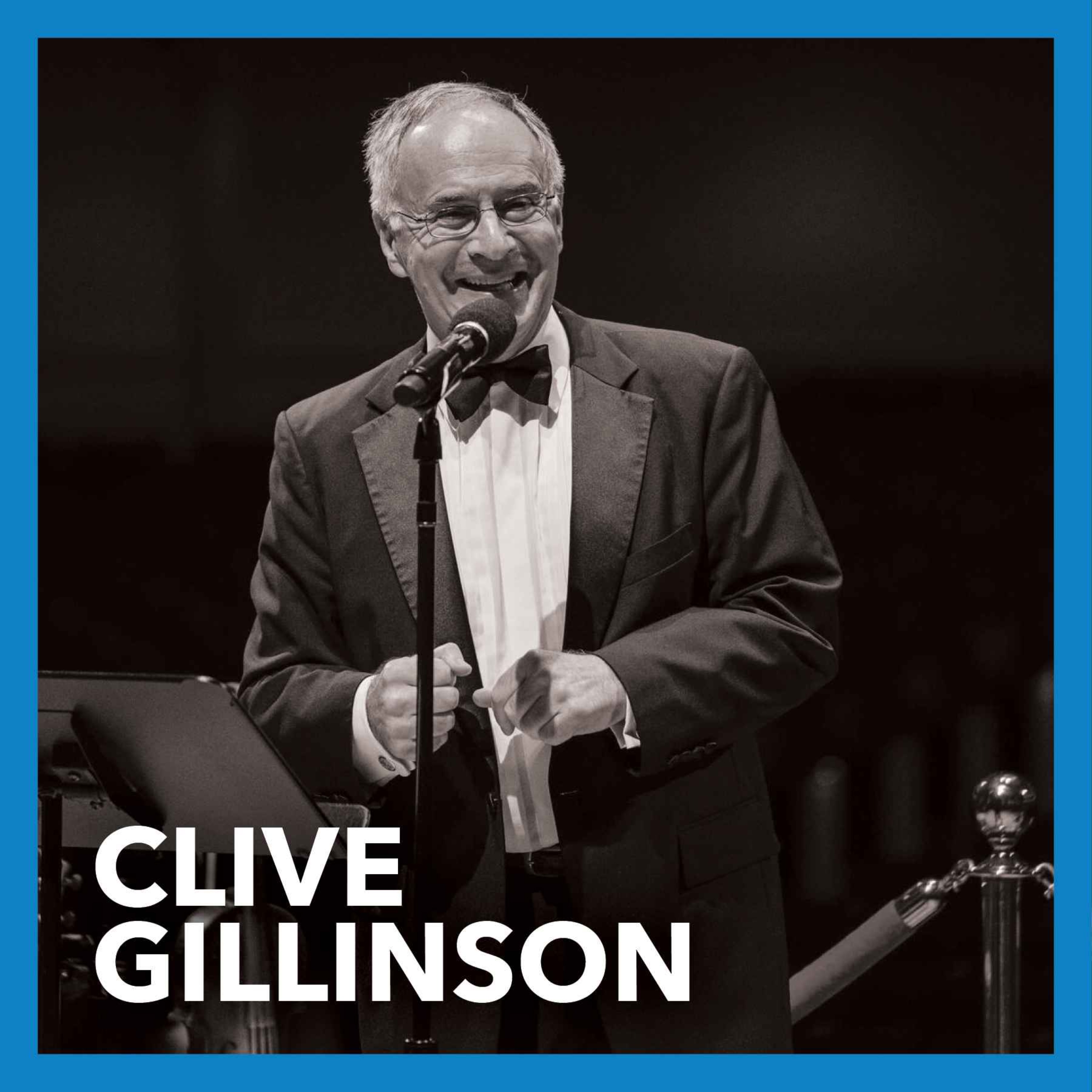
Hey listeners, if you're enjoying speaking soundly, please consider supporting our work with a tax deductible donation. You can easily contribute on our website@artfulnarrativesmedia.com donate click the link in the show notes of this episode, or you can follow us on Instagram peakingsndly and get all the information there. Either way, every donation, no matter the size, helps us keep bringing you inspiring conversations with remarkable artists. So thank you for your continued support. We really appreciate it. Be sure to check out slippeddisc.com for the latest inside information on classical music. Now executive and artistic director of Carnegie Hall, Clive Gillinson credits his previous career as a young cellist with the London Symphony Orchestra for shaping his creative approach to managing the world's most iconic concert hall.
- [00:58]
Clive Gillinson
If you can't make one plus one equal more than two, you can't be in music management because there's never enough money to do everything. So you've got to make things happen that wouldn't happen otherwise. If you don't have creativity, you're not going to achieve anything.
- [01:13]
David Krause
You're listening to Speaking Soundly, a backstage pass to today's biggest stars of the music world. I'm your host, David Krause, principal trumpet of the Metropolitan Opera. During each episode, you'll hear me speak with inspiring performers about their creative process and the personal journey that led them to the stage. It's great to be speaking with you here backstage at Carnegie hall in your offices. Over the past 20 years, I've been lucky to perform regularly with the Met Opera Orchestra in this iconic stage. And one thing that I've come to really appreciate about you specifically, is the warm welcome you give our orchestra on the stage, usually before our first rehearsal. It's not unusual for institutional executives to offer such greetings, but when you do it, it's different, it's sincere. And it's not just a formality. I think the difference comes from your own background as a musician, giving you perspective that most executives simply will never have. Do you feel a sense of kinship with the musicians on the stage? And does that perspective influence your leadership and vision for this great institution?
- [02:27]
Clive Gillinson
I mean, the simple answer is yes. I'm still at heart, a musician. That's what I wanted to be with my life. Became a manager by mistake. You know, it was never a plan. In fact, it was something I knew I did not want to do. I went literally overnight at the London Symphony Orchestra, having played for 14 years as a cellist. The next day I walked into the office as the manager. And so the only thing I knew was how musicians think, because I was one of them. So I've always looked on that as a huge advantage because I don't actually have to think about how the musicians think or what matters to them. Which doesn't mean you just do everything they want. But on the contrary, it enables you to have a conversation when things get difficult. It enables you to at least have a conversation based on knowledge and understanding and, and empathy. And so now I absolutely always feel as though I am one of the musicians. And, you know, and there's something very personal about welcoming everybody.
- [03:26]
David Krause
Your job title as artistic and Executive director of Carnegie puts you at odds with yourself right from the start. I mean, it's inherent in the title of your job. What's harder? Dreaming up new artistic initiatives or finding the money to make them happen?
- [03:42]
Clive Gillinson
Well, both I enjoy. When I first went from being a cellist to being manager, I said I'd do it on two conditions. One is that I never have to make speeches. The other is I never have to raise money. Now eventually I started learning how to raise money, but the only reason I began to enjoy it was because I think it's not actually about raising money, it's about relationships and about sharing vision. So I never believe in doing anything unless it's an idea that is so compelling that it has to exist. And in that case, it is really quite easy to communicate that to other people.
- [04:20]
David Krause
One of your initiatives that's been wildly successful is the formation of the National Youth Orchestra here in the United States. This is a program which is free to its many participants who work with world class conductors and embark every summer on a tour playing sold out concerts all over the world. My own students have played in these ensembles. I've coached the orchestra over the years. It's an amazing program. Talk to me about the significance of it and about your own experience as a young musician in the National Youth Orchestra of Great Britain.
- [04:53]
Clive Gillinson
Playing in the National Youth Orchestra of Great Britain was one of the greatest experiences of my life and it remains so to this day. Almost every kid who joins a National Youth Orchestra is coming from an environment where they play in a school orchestra or a local youth orchestra, where in your own local orchestra you think you're a bit of a star. Then you go into the National Youth Orchestra and almost everybody's better than you. That is so inspiring and so thrilling. But then to build relationships with those people, to actually spark each other, inspire each other and really grow together, it was one of the most thrilling things I ever did. I mean, the only sad thing for me, although quite entertaining, is towards the end of what should have been my time at the National Youth Orchestra, I was actually thrown out because the lady who ran it was very puritanical. And we'd gone on a trip to Israel. And at the end of the trip, she invited me in to talk to her and she said, I assume you no longer want to belong to the National Youth Orchestra. And I said, I don't understand. I'm not sure what you're talking about. And she said, you were seen kissing your girlfriend on the bus. We think that is totally inappropriate. And you're going to have to go completely bizarre. Did they kick you out? Of course. Yeah. That was the end of it. It's hilarious, really. But it also tells you something about the world we live in today, and the world then, I mean, that is so unthinkable today and so ludicrous.
- [06:16]
David Krause
Despite having made New York City your home for the past 20 years, in London before that. Your story has a very unique beginning. Your parents met in Palestine. You were born in India, an upbringing that spans multiple places and multiple cultures. How did that come about?
- [06:34]
Clive Gillinson
Right. Well, my mom, she was a fantastic cellist. I mean, she. She was really a star. But she then, leading up to the late 30s in Europe, she felt, as a Jew, even though she was Swiss, she didn't feel safe in Switzerland. So she decided to go to Palestine, and so she built her career there. And meanwhile, my father went straight off into the army during the war. He was that age, so, I mean, he went from school to the army, and he was fighting in Iraq, and he decided, as a Jew, he wanted to see Palestine. So he went to Palestine, went to a concert, heard my mother play and said, can I invite you for lunch tomorrow? And at lunch, he handed her a. A watch, and on it was engraved rg and she said, what is rg? And he said, regina Gillinson, we're going to get married.
- [07:23]
David Krause
That's a baller move.
- [07:24]
Clive Gillinson
So, I mean, literally less than 24 hours. And so he then married my mother, and I was conceived in Palestine. So then they decided, because he had no profession, because he'd gone straight from school, his father was in India doing business, so he thought he'd go to India because his father said, lots of opportunities. So he bought a farm, 5,000 acres in Kenya, in Africa, as one does. As one does. And so I was brought up on the farm, and my sister and I were unbelievably shy because we hardly Ever saw anybody on the farm. And so if anybody came to the farm, we'd just run and hide under the beds. We wouldn't, you know, we didn't want to talk to anybody. We're too nervous, too shy. And then with the rise of MAU MAU, the independence movement, my dad said to my mum, you better go back to England. Take the children back to England where they should get their education. And it's also not safe here any longer. They used to go to bed every night with a gun under the pillow. And so she brought us back, and about a month later, she had a letter from my dad saying, the marriage is over, you're on your own. So she basically brought us up on her own. And in those days, it was very tough because the men got all the jobs. And as a woman, even though she was better than most of the men as a musician, it was still tough. But she was so good, she still managed to actually earn a living. She didn't build a solo career the way she was doing before the war, but she built a very good and successful career.
- [08:51]
David Krause
Was there something in particular about her playing that you truly admired?
- [08:56]
Clive Gillinson
Well, she was a totally natural talent, which I was not. I mean, I was talented, but I wasn't somebody who just was born to play the cello. I loved playing the cello. I really enjoyed it. But for her, it was as if it was almost like breathing. You know, the greatest artists is. It's almost as if they were born with the instrument as part of them. I was not. So that, to me, was astonishing. I mean, I loved that. It was so natural, so easy. All she needed to do was think about what she was trying to express. So in that way, she was also an inspiration.
- [09:31]
David Krause
An inspiration that would propel you through school into your first job when you landed a spot in the Philharmonia Orchestra, where you'd soon find yourself sitting in the cello section with your mom. What do you think that experience was like for her?
- [09:46]
Clive Gillinson
The very first thing I ended up doing was Otto Klempere's last Beethoven cycle, which was astonishing, but also scary because the reality was Klempera was so sick at that time, he hardly was moving. But everybody in the orchestra had worked with him for years and years, so they knew what his minimal movements meant. As a kid out of college, I hadn't a clue, so all I could do was follow everybody else. And she was so proud, and I was so embarrassed. So it was one of those things, as a kid, you want to have your own identity. I Wanted to be there in my own right. So, you know, she was bursting with pride and I was just completely embarrassed. And it was, it was, it was.
- [10:26]
David Krause
Really pretty typical mother son relationship.
- [10:29]
Clive Gillinson
Absolutely. Yeah. Well, then coming out of that, at the end of the three months, the London Symphony Orchestra was calling and they said, look, we didn't have any vacancies when you auditioned before, but somebody's just leaving now. Would you like the job? My advice to any young musician would be, after three months, you do not drop a job and move somewhere else because you look totally unreliable. Everything. But on the other hand, the LSO was the orchestra that appealed to me because it was more enterprising. I mean, the Philharmonia was a wonderful orchestra, but the LSO was one that actually was a great, much greater risk taker. And so I said yes.
- [11:05]
David Krause
So at that point, you're playing in a dream job in a great orchestra, you're totally fulfilled. Yet in the 80s, when the orchestra was facing financial ruin, you were tapped to become their finance director. You managed to right the ship and eventually would become their managing director of the London Symphony Works for the next 20 years. These are all positions you never sought out, you never had a formal degree to do, yet you were undeniably suited for each one of those jobs. How does something like that even happen?
- [11:36]
Clive Gillinson
I haven't a clue. I had no idea why they chose me to go in. And it was only for three months whilst they looked for a real manager. And at the end of three months, they offered me the job because they still couldn't find anybody. And I said, well, no, because after three months, you've no idea if I'm the right person and I've no idea if I want the job. I've always wanted to be a musician. So I said, hold my job, open in the cello section for a year. At the end of a year, you'll know if I'm the right person and I'll know if I want to do the job. So that was how that came about. But the answer is, I don't know, really. I mean, what's so odd? Firstly, I couldn't conceive why they'd chosen me. Secondly, for probably the first year or two, I utterly had the imposter syndrome that somebody would say to me, look, this is a joke, this is ridiculous. You shouldn't be the manager. You're pretending to be a manager. You don't have the slightest idea what you're doing, but you can't see yourself as others see you. That's One of the things in life. So when they asked me to do it and even when they offered it to me, I thought, it's no good going by my own judgment, which is that I'm a fake, I'm an imposter. All I can do is, if they think that I can do it, I'm going to take their view and I'm not going to take my own view because it's the only way I can judge it. I can't be objective about myself and they've got a choice. So if they're choosing me, I guess they must think I can do it. So it's a really odd thing because it takes so long for your mind to catch up with the reality.
- [13:08]
David Krause
You effectively turned around the orchestra's fortunes when you look back on your time there at the lso. One day you were sitting in the cello section and the next day you had, well, ostensibly gone to the dark side of management. Did your relationship with music change as your job title did?
- [13:28]
Clive Gillinson
There's an extent to which you did, yes. Although after 14 years as a member of a string section, the reality is you, you do not have many creative opportunities. I mean, you've got to just be very disciplined, all play together. As you know, I wasn't getting any space for personal creativity in the orchestra. I mean, I still loved working with people like Abado and Bernstein and Colin Davis. That was extraordinary. But then lots of other periods when you're just doing a job. But when you then step to the other side, onto the dark side, as he said, I mean, what's interesting is, firstly, running the business is extraordinarily creative, which I'd never dreamt of. I'd assumed it was just a boring paper pushing job and it was only when I went into it that I realized it was extraordinarily creative. And you know, because if you can't make 1 +1 = more than 2 almost every minute of every day, you can't be in music management because there's never enough money to do everything. So you've got to make things happen that wouldn't happen otherwise. So if you don't have creativity, you're not going to achieve anything. So the creativity doesn't just come from the music. Creativity comes from actually being involved in making things happen. So that was one piece. The other piece, it always just made me laugh. At the very beginning, I'd be sitting in the audience and when the orchestra was asked to get up, I automatically got up saying I'd forgotten I wasn't the Best, So I'd just stand up. But the fact is, it was very engrossing to be part of putting something onto the stage and then seeing what you put onto the stage happen, that's also incredibly gratifying. And then the final piece, which is very profound, in fact. And to me, you know, possibly the most important thing of the lot as a musician, basically, your life revolves around you. You're concentrating on your playing, the quality of your playing. We're all focused on ourselves. When I went into the office and started managing, I didn't realize until some time had gone by that having been somebody whose central focus was personal, that as time went by, I realized I wasn't thinking about myself at all. The whole point when you're running an orchestra is, how are you serving other people? How are you serving the music? And how are you serving other people? And it actually was like finding freedom. The fact that I no longer was thinking about myself, and it. Because it happens very slowly, you don't realize it's happening. It's only when you've traveled a lot of the journey that you suddenly realize you have changed completely and your entire life is now about service rather than service to yourself. And, you know, that difference is monumental.
- [16:23]
David Krause
Here's the part where I ask how you got to Carnegie hall, and I'm sure you practiced, practice, practiced. But I wonder what the circumstances in particular brought you from the Barbican center to 57th Street.
- [16:36]
Clive Gillinson
Well, I didn't apply for the job. I wasn't looking to move. I was very happy. I mean, I'd been offered other jobs around the world, but I wasn't really very interested. And then I was called one day, was I interested in being interviewed as a possible candidate for the job? And I said no, because it's the LSO's 100th birthday and we've got a huge fundraising gala, the biggest we'd ever had. So therefore, I can't talk now. If by June 10th, after our gala, you're still interested in interviewing me, then please call. But, you know, if you fill the job, you fill the job. So they did phone on June 10th. They said, we're down to a short list of three, and would you, you know, we'd like you to come over. So I went over in July for two days of interviews. And I think the monumental advantage I had was I knew I wouldn't get the job. There was no hope. I was a foreigner. I hadn't run a concert hall. I hadn't raised money like Americans have to raise money. So I thought, there's no way I'm a contender. I think I'd handle the interview probably very differently than I would have done had I thought I had a chance.
- [17:47]
David Krause
As it turns out, you had a chance, and you got the job. What was it like for you, knowing that your office is now going to be in the world's greatest concert hall?
- [17:57]
Clive Gillinson
I couldn't believe it when I got the job. I mean, I was completely astounded. Not only was it the most glorious, wonderful place, and I feel that every single day I walk in here, Even today, after 20 years, it's breathtaking. It's just staggeringly beautiful. The sound is so extraordinary. And, you know, and how this guy who knew nothing about concert halls created the greatest hall in the world in 1891, and all this time later, nobody's done it better is completely incomprehensible. I mean, it's something that can't be anything but totally inspiring. And the potential is completely limitless. This could be a hundred times better than it is today. I mean, we've created, obviously, a vast number of things that didn't exist before, but that's only the beginning of what's possible. And so you can't ever not be inspired about the potential. And I just feel there's a responsibility to try and fulfill the potential of the whole, which you will never do. But that is what the place demands and what it deserves.
- [18:56]
David Krause
While I'm in your office, I want to come clean to you. When I was a student at Juilliard, my friends and I would regularly sneak into Carnegie during intermissions to try to snag one empty seat way up at the top. And the thing I remember most about the seats up there was how amazing the acoustics are. You could hear everything. It was amazing.
- [19:16]
Clive Gillinson
I don't know that there's a bad seat in the hall everywhere you sit. And the architect did everything wrong. I mean, if you ask acousticians today, they'll say concert halls shouldn't be more than 2,000 seats. This is 2,800. They'll tell you they shouldn't have any curves. This is curved front and back. So he did everything wrong, and he got it more right than anybody has ever done before or since. It's just one of those miracles. But that's the miracle that, in a way, makes our job so fulfilling.
- [19:45]
David Krause
Throughout your career, whether in London or in New York, you've profoundly shaped how people experience music. From leading the London Symphony Orchestra to transforming Carnegie hall, you've expanded artistic possibilities, launched initiatives and brought music to communities near and far. At the heart of all of it is your deep commitment to creating meaningful musical experiences. As you look around the hall, you can see that impact on audiences every night. But since you're always creating it for others, I'm curious what the process of sitting within a group of people, in an audience and taking that music in. What does it do for you?
- [20:27]
Clive Gillinson
Well, firstly, I think the thrill, obviously, is trying to create things that are memorable and extraordinary and where you're going to give people an experience. Hopefully they'll walk out of here and they're not going to forget it. But it's also, with the education, it's saying that everybody should have the right to music and access to music. And so we reach hundreds of thousands of people a year, hundreds of thousands of kids a year, millions more online. So all these fundamental values lie behind everything that we do and trying to make sure that music is something that's transformational in terms of people's lives. But I think creating something and seeing that it actually has the impact that you had dreamed or hoped of, and it's not going to happen every single time. But the fact is, you've got to create everything with the view that I said it earlier, that it must happen. I mean, I think of us as an artist. You've got to conceive it as something that's an extraordinary experience, but also understanding who that audience is. Now, I always tend to think of myself not as somebody who's a trained musician. I like to think of myself as every man. I've got to think, if I knew nothing about music, but, you know, was just going along, and this was the only concert I was ever going to go to, how is that going to be extraordinary? The minute one gets into the thing of becoming intellectual, you know, too intellectual or too erudite, all of those things. Music is not about that. It's not about being smart and impressing people with your cleverness. It's got to be about how you engage people. And a lot of that is about emotion and reactions and the pure sound. And I think a lot of places go wrong by getting wrapped up in ideas rather than experiences.
- [22:14]
David Krause
As I was walking to Carnegie Hall, I looked on 7th Avenue and you see the placards of upcoming performances. And I saw that the London Symphony, your former orchestra, is coming. And one of the pieces that's going to be performed on it is Walton's First Symphony, which was a piece that you first played here in Carnegie hall when you were in your 20s playing with the London Symphony Orchestra. Was that your first time playing here at Carnegie hall with that piece?
- [22:41]
Clive Gillinson
Yes, it was right at the beginning when I joined the LSO with Andre Previn conducting. And because they performed Walton one many times, it's an incredibly difficult piece. He was only topping what we call topping and tailing, which is just doing the beginning and end of movements because they all knew it inside out. And I was a kid out of college basically, and so I spent the entire trip carrying my cello with me on the bus wherever we went and going off to my hotel room. The minute we arrived, practically Waltham won and it scared the hell out of me. So yes, I mean, that was within that first series that we played at Carnegie Hall.
- [23:16]
David Krause
Are you prepared for the emotional full circle that's going to come when you're sitting in your executive box and you hear that very piece being played by your orchestra?
- [23:24]
Clive Gillinson
I have no idea what it's going to feel like. I mean, I'm sure it will be very emotional. It's a big moment, certainly for me and I hope for them too.
- [23:34]
David Krause
I hope you enjoyed this episode of Speaking Soundly. If you liked what you heard, please tell your friends about it. Help spread the word and follow us on Instagram peakingsndly. For more information, you can visit our website artfulnarrativesmedia.com if you're new to the show, you could go back and check out earlier episodes featuring Wynton Marsalis, Regina Spector, Joyce De Donato, Emmanuel Axe and Rufus Wainwright, just to name a few. And tune in two weeks from today on April 29, as we hear the brilliant and visionary pianist Leif Ova Ansnes speaking soundly.