Loading summary
Transcript27 lines
- [00:00]
David Krause
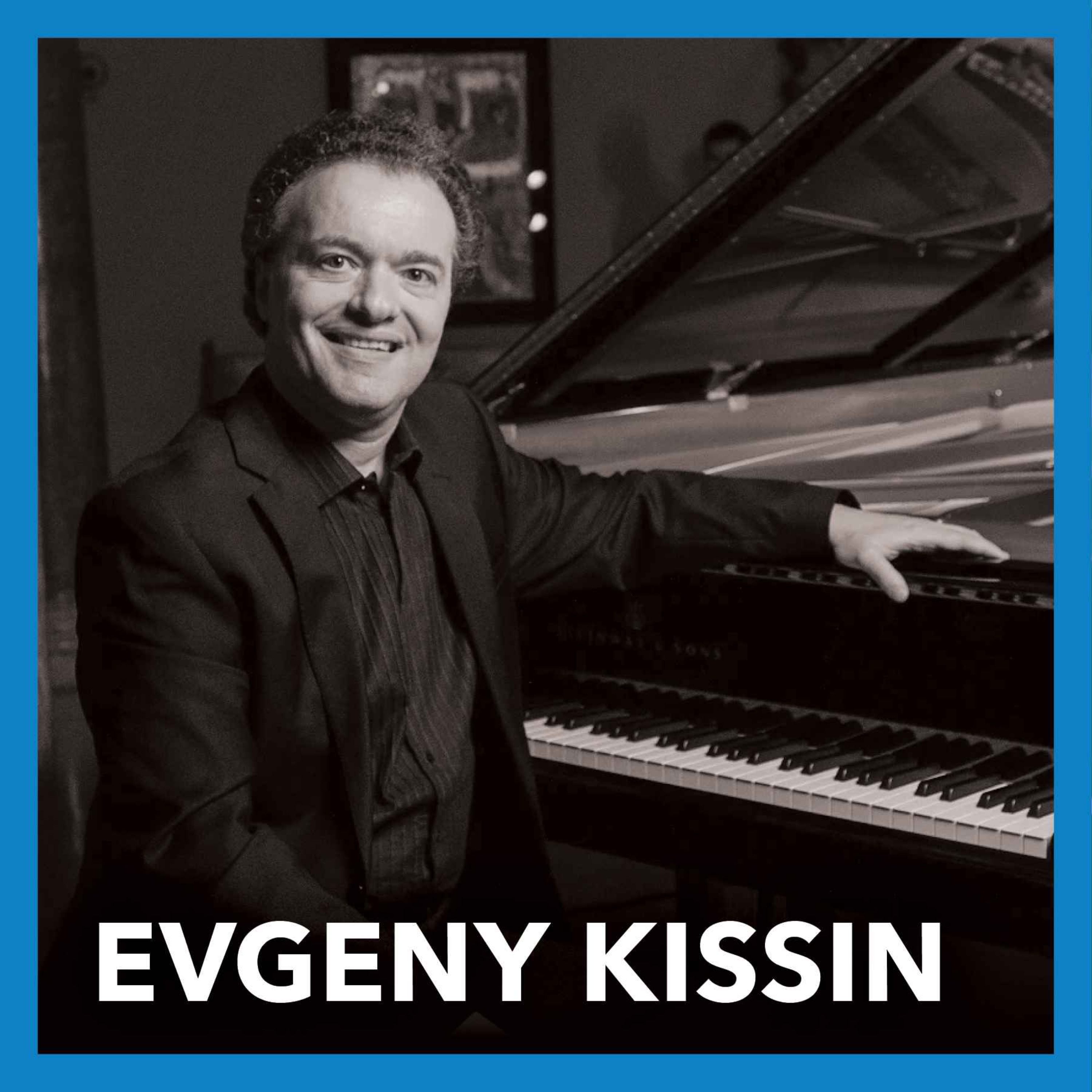
Hey listeners, if you're enjoying speaking soundly, please consider supporting our work with a tax deductible donation. You can easily contribute on our website@artfulnarrativesmedia.com donate click the link in the show notes of this episode or you can follow us on Instagram peakingsndly and get all the information there. Either way, every donation, no matter the size, helps us keep bringing you inspiring conversations with remarkable artists. So thank you for your continued support. We really appreciate it. Be sure to check out slippeddisc.com for the latest inside information on classical music Now. Grammy Award winning pianist Evgeny Kissin has been a towering presence in the classical music world for decades. A favorite among audiences, his performances are so compelling, occasionally it takes more than applause to bring down the curtain.
- [00:59]
Evgeny Kissin
In the end, the audience made me play as many as 13 encores until at half past midnight, firemen walked onto the stage and said, this is a municipal building. We have to close.
- [01:15]
David Krause
You're listening to Speaking Soundly, a backstage pass to today's biggest stars of the music world. I'm your host, David Krause, principal Trumpet of the Metropolitan Opera. During each episode, you'll hear me speak with inspiring performers about their creative process and the personal journey that led them to the stage. We're very close in age, just about a month apart. Which makes it all the more striking to me that while I was just starting at Juilliard, you're already deep into a full blown international career and giving your sold out, live recorded now legendary US debut recital here at Carnegie Hall. Of course, you've performed regularly here since then. Does just walking in the backstage entrance bring you back to that monumental performance? Performance?
- [02:03]
Evgeny Kissin
I've played at Carnegie hall dozens of times, so I cannot say that every time I am backstage I'm thinking of my very first performance here. But I remember it very well. I remember that during the first half of it I felt very nervous and played some wrong notes during the intermission. I was somehow able to hold myself together. The second half went better. Quite good in fact.
- [02:45]
David Krause
Yeah, well, it's understandable to be a little nervous playing for a sold out Carnegie hall in your U.S. debut recital. In fact, these few missed notes led one reviewer to say that those slips only prove that you are human. On the rare occasion when you do miss a note, do you have a strategy or an ethos for shifting the focus to the task at hand?
- [03:08]
Evgeny Kissin
I have no such strategy for during a performance. I developed one for before my performances in order for them to go well, namely to Prepare well and to just concentrate on the music totally, even before I go on stage.
- [03:34]
David Krause
But no superstitious rituals?
- [03:38]
Evgeny Kissin
No. I guess practicing and warming up cannot be called a ritual, right?
- [03:46]
David Krause
Yeah. Can you recall the first time you realized your playing had a real impact on an audience?
- [03:55]
Evgeny Kissin
I remember several occasions. I think it was sometime in 1993. I played a solo recital in Berlin, and after the program was over, the audience would not let me go and made it play eight encores. I must have prepared only four. So the rest I played from memory. And at a certain point I addressed the audience in my bad German, saying, thank you so much. You cannot imagine how happy I am. And then in April 1994, I performed in Bologna. Before the concert, I told the organizer about my Berlin experience, and the audience would not let me go either. After the fourth encore, which I had prepared in advance, I had to start playing more from memory. And the organizer backstage kept saying, we must beat Berlin. And they did. In the end, the audience made me play as many as 13 encores, until at half past midnight, firemen walked onto the stage and said, this is a municipal building, we have to close. And of course, that's when I really felt an impact of my playing on the audience.
- [05:29]
David Krause
You grew up in Moscow to a very musical household. Your mother and sister, both pianists, and your father, though an engineer, played the accordion. I read that at 11 months you were already singing Bach, and by two you were climbing up on the piano keyboard and improvising at the piano. While you likely don't remember that far back, how do you think your family responded to this extraordinary display of musical talent?
- [05:57]
Evgeny Kissin
They were certainly extremely surprised. Originally, they did not think that I would become a musician. My sister was studying piano, and my parents thought that I would be doing something different, and they would just let me do what I wanted to do. Sing and play by ear and improvise.
- [06:23]
David Krause
I Wonder what a 2 year old improvising sounds like.
- [06:26]
Evgeny Kissin
Me, I certainly don't remember what it sounded like.
- [06:29]
David Krause
Yeah. Older siblings often set the stage for us as we grow. And I would imagine that hearing your sister practicing had a tremendous impact on you. Was there a moment or something specific in her playing that made you want to sit down at the piano yourself? When did music stop being something around you and start becoming something within you?
- [06:55]
Evgeny Kissin
I don't even know how to separate the one from the other. If I felt like singing and then playing by ear, it means that the music had already been in me since I had an urge to reproduce it.
- [07:13]
David Krause
As a piano teacher, Your mom must have recognized your natural talent very early on. What do you think she saw in you, and how did she guide or protect your musical path along the way?
- [07:27]
Evgeny Kissin
Until the last moment, she did not want me to study music. Because in the school where my sister was studying, which was actually considered the best music school in Moscow and in the whole country, the atmosphere was very competitive, not only when the pupils, but also between their parents. My mother found that unhealthy, and she did not want me to experience that. In the end, I went to the other special music school in Moscow. In those two schools, music was the main subject and was taught on the top professional level. But all the other subject of the regular school curriculum were taught as well. And in the school where I went to, the atmosphere was better. My mom just hadn't been aware of it before.
- [08:39]
David Krause
You've said that playing music has always been your greatest joy. But I'm curious. What about practicing? Did you ever resist this tedious aspect of the process of becoming a musician? Or was practicing just a further extension of your love for music and the instrument?
- [08:55]
Evgeny Kissin
When I was a child, I did not like practicing at all. And during the first years of my music studies, I was able to achieve things without practicing much. Only later came a point when it became obvious to me that in order to play well, I had to practice a lot.
- [09:18]
David Krause
You perform a wide range of repertoire, connecting deeply with music from all periods and all composers. But given your upbringing, do you feel a particular closeness to Russian composers? Or does your connection to music somehow transcend culture, geography, and even time?
- [09:38]
Evgeny Kissin
Yes, Russian music has always been very close to my heart. And I assume that the fact that I grew up with that music was at least one of the important reasons for that. I assume that had I grown up in Italy, I would have felt close to the Italian opera, which I generally do not, not having grown up there. In spite of my great love for Italy and its culture in general, my love for music certainly does transcend culture, geography, and time. Music is the most international of all arts, even though lots of classical music contains national elements. And I find it wonderful because I believe in both. I believe that there should be brotherhood and peace between different nations. And. And at the same time, I think it's wonderful that there are so many different nations on our planet which have created and continue to create so many different cultures.
- [10:57]
David Krause
You've had great success as a performer throughout your career, but you also compose music and write poetry. How does the process of creating music for others to perform differences from performing someone else's work yourself. Does composing give you a different connection to the creative process?
- [11:19]
Evgeny Kissin
Playing music is my profession. Writing music as well as poetry and prose are my hobbies. Therefore, I devote almost all of my time to playing piano. As for writing, whether it's music or literature, I do that only sporadically, when time permits. So these are two completely different things for me. I have no illusions about the quality, the level of my writings. When I started playing piano by ear at the age of 2 years and 2 months, I began to improvise my own music. Soon afterward, and after I went to school and learned how to read music, I began to write down my own music. That continued for several years until at a certain moment, I felt that I had no more musical ideas coming to me. I stopped hearing my own music in my ears. That coincided with the moment in my life when I started giving more and more concerts. So then I decided that it was meant to be so. However, maybe 13 or so years ago, I again began to conceive ideas of my own music. Maybe that had to do with certain important developments in my personal life. Maybe that opened some hidden potential, creative potential inside me. So I started writing my own music again. I remember my third opus is a string quartet. When I wrote it, I sent it to the members of the Koppelmann Quartet, who were good friends, some of them old friends. They liked it, they played it and even decided to record it. They recorded it in a small place in Wales. I went there for the recording sessions with my wife. And I remember how while we were working, the musicians were playing and I was making comments. At a certain moment I felt something and immediately shared my feelings with my wife. I said to her, you know, I have dubious feelings now. On the one hand, it's really exciting to hear my own music being played and even recorded. But on the other hand, I'm hearing my own music now and thinking. But compared to Chophear, it's such a shame. About one week ago, I listened to a recording of the very last piece I wrote. It is a piano trio about the current war in Ukraine. And then I said to my wife, remember what I said to you when our friends from the Kotlman Quartet were recording? Mike washed it. But now, listening to my own trio, I feel that I am actually liking it. But again, of course, I know, but it cannot be compared to Shostakovich's, Tchaikovsky's or Beethoven's Trio. I'm perfectly aware of that. In fact, after I wrote what became my very first opus, Four Pieces for Piano Solo, I showed them to our Pat. And I said to him, please tell me absolutely honestly, do you think I should continue doing this, writing music or not? And he said, you definitely should. So I continued and some people like it and want to perform it, which of course I'm very happy about. As for literature, again, of course I have no illusions. I'm perfectly aware I'm not and shall never become a great poet.
- [15:49]
David Krause
In your memoir, which was published in 2018, you recall writing your last will and testament. As a child, you had specific instructions on what your gravestone was to read. Here lies Evgeny Kissin, a servant of music. On the one hand, it seems pretty dark for a kid to imagine their own gravestone, but on the other it reflects a deep and early connection to music as your life's purpose. What was it about music, do you think, that gave you such a strong sense of identity back then and now, as you reflect on it? What has a life dedicated in music given to you?
- [16:27]
Evgeny Kissin
Regarding the first question, I honestly do not know. No one cannot explain love, and to tell you honestly, I'm very happy that one cannot explain it because I personally would like to such things as love to retain their mystery. Even if one day scientists are able to explain it, and I'm sure they will one day, I'm not sure if I'll want to learn about it. As for your second question, one cannot be an artist without love for art, and therefore I believe that I'm a very lucky person. My life is devoted to what I love. In this respect, we musicians are much luckier than most people on our planet.
- [17:26]
David Krause
I hope you enjoyed this episode of Speaking Soundly. If you liked what you heard, please tell your friends about it. Help spread the word and follow us on Instagram peakingsndly. For more information, you can Visit our website artfulnarrativesmedia.com if you're new to the show, you could go back and check out earlier episodes featuring Wynton Marsalis, Regina Spector, Joyce Didonato, Emmanuel Axe and Rufus Wainwright, just to name a few. And tune in two weeks from today for our season finale on May 27th. As we hear pianist Orli Shaham speaking soundly.