Loading summary
Transcript47 lines
- [00:00]
David Kraus
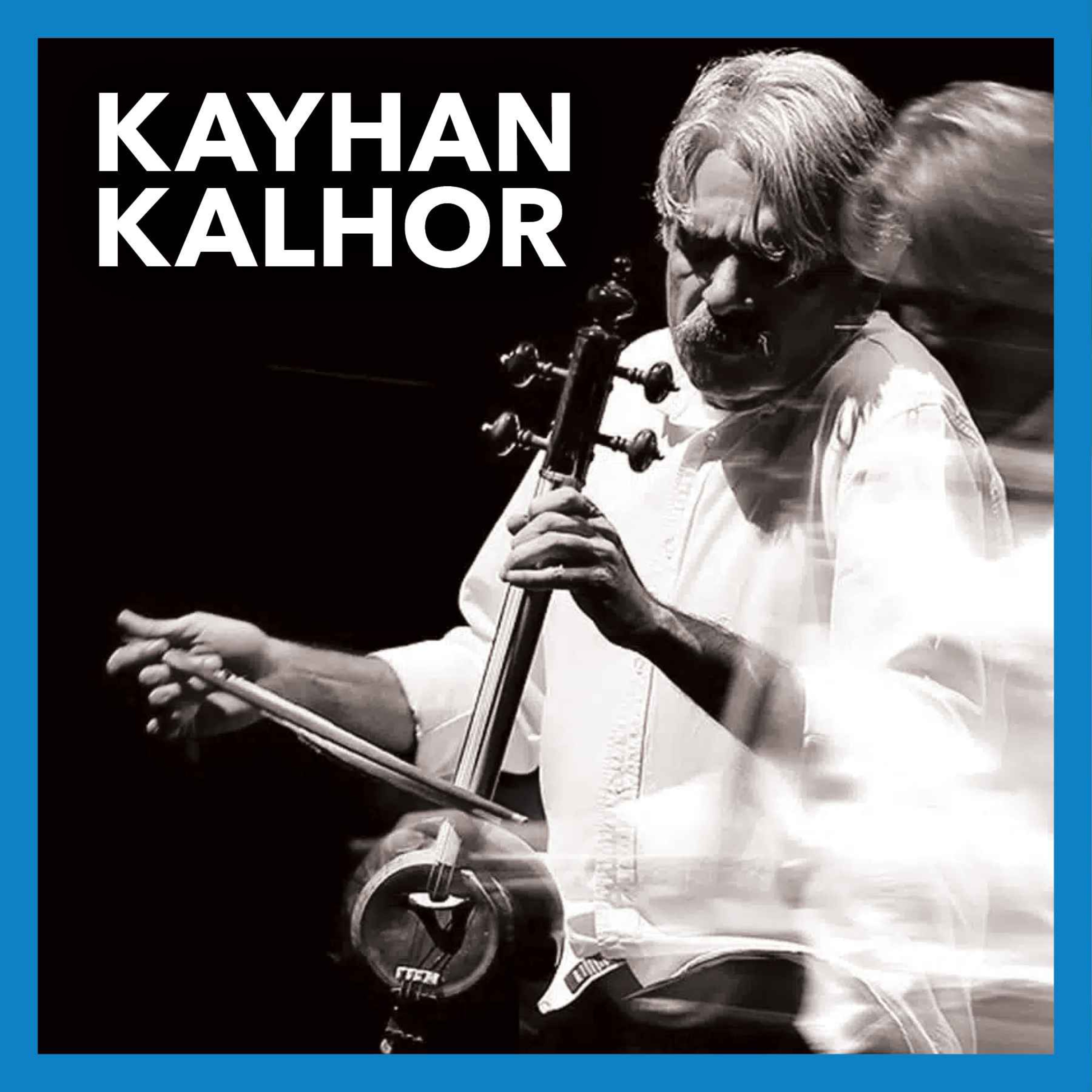
Hey listeners, if you're enjoying speaking soundly, please consider supporting our work with a tax deductible donation. You can easily contribute on our website@artfulnarrativesmedia.com donate click the link in the show notes of this episode or you can follow us on Instagram peakingsndly and get all the information there. Either way, every donation, no matter the size, helps us keep bringing you inspiring conversations with remarkable artists. So thank you for your continued support. We really appreciate it. Be sure to check out slippeddisc.com for the latest inside information on classical music. Now, Kehan Calhor is a multi talented virtuoso of many instruments, including the Comancha, the ancient Persian predecessor of the violin, which he's helped to popularize through his solo performances and collaborations. When he was just a teenager, forced to flee Iran during the revolution, music became both his refuge and bridge to the world, carrying him from exile to global acclaim.
- [01:05]
Kehan Calhor
One day everything changes, you know, and your life is not the same anymore for your family, for anyone around you. And I was one of them. But considering that I was this child with my Comanche and my backpack and leaving my country, I was very lucky.
- [01:24]
David Kraus
You're listening to Speaking Soundly, a backstage pass to today's biggest stars of the music world. I'm your host, David Kraus, principal trumpet of the Metropolitan Opera. During each episode, you'll hear me speak with inspiring performers about their creative process and the personal journey that led them to the stage. I ride the subway to work every day, and when I'm on the train, I'm usually listening to music to drown out the noise. And the other day I'm listening to one of your impromptu improvisations from an early album you did, and something happened to me while listening to it, which as a lifelong New Yorker, never happens to me.
- [02:01]
Kehan Calhor
I hope it was something good.
- [02:03]
David Kraus
No, it wasn't good. I missed my stop.
- [02:05]
Kehan Calhor
Oh, okay.
- [02:07]
David Kraus
Yeah, I have no idea what happened. There was something about the way you were playing the Comanche that distorted my sense of time in between subway stations. When 66th street came up, I was completely lost. Does Persian music just exist in a different time universe compared to all other Western music?
- [02:26]
Kehan Calhor
I would say yes. Actually, that's what that kind of music should do. It's another entity from another time. I wouldn't start listening to something like that in the middle of the day when I have to go to work myself. It's actually good and bad because it's nice that it can transform you and, you know, take you to a Place that you forget the reality and where you are, you know, the everyday life. But at the other hand, it's designed for you to take your attention for a long time, make you sit down and think of a place and a mental state that it wants to build for you. This is why I perform all the time. You know, I just want to try that state of mind, try to get there. And when you get there, it's another world. And it's. It's, you know, every time is different. And you have to bear in mind that this. This is a very, very old musical culture that, you know, comes from the time that people have a lot of time, you know, to listen to music.
- [03:38]
David Kraus
So not ideal for a busy commute, I guess. The instrument that you play, the comancha, combines elements both of the cello and the violin in terms of the way it's tuned and the way you play it. And I apologize in advance because explaining your instrument to people like me is probably something you have to do all.
- [03:56]
Kehan Calhor
The time, but it's totally okay.
- [03:59]
David Kraus
Okay, good. Well, can you tell me about the origin of the instrument?
- [04:03]
Kehan Calhor
Well, camanche is probably the oldest boat instrument that was created in Central Asia, and Central Asia back then was Persia. And Comanche in Persian language means little hunting bow, which is a very interesting name because, you know, at some point this instrument used to be a pluck instrument. And, you know, somebody at the hunt, you know, some people, you know, they probably got drunk and, you know, after hunting and fooling around with it, used their hunting bow to make this plucked instrument sound. Obviously, you know, the hunting bow is huge, and they couldn't, you know, use it to play an instrument, and they made smaller version of it. So it means little hunting bow, literally.
- [04:52]
David Kraus
You were born in Iran and began the Comanche at a very young age. What were your first memories of the instrument and what initially drew you to it?
- [05:01]
Kehan Calhor
Interesting question. You know, I. There was this old master of Comanche, you know, back then, not many people played this instrument. It was almost an abandoned or forgotten instrument. Maybe one old master played Comanche very beautifully. Ustad Bahari, you know, he was maybe in his late 70s back then, and once in a while he did this kind of 15 minutes, 20 minutes solos in the national TV. And I used to. To watch him and just fell in love with that sound. At that time, I played Iranian violin, and that was enough for me to switch on Comanche. And I didn't have any teachers, you know, in. In my small city. But, you know, I decided to buy a Comanche and which was a difficult task to begin with.
- [06:01]
David Kraus
How old were you at this point?
- [06:03]
Kehan Calhor
Around 10. When I started music, I was 5. But when I decided to play Comanche, I was probably 10 years old and I started to play Comanche. You know, just watching his films and things like that, you know, so how to hold the instrument, how to play it and imitate his sound.
- [06:20]
David Kraus
What was it specifically about the instrument that just grabbed hold of you?
- [06:24]
Kehan Calhor
The human quality of the sound that it produced, that the. The violin didn't do it for me. There was this reedy human voice quality into it. And that's what it probably taken me. I don't know. I'm still in love with the sound. And I have great respect and regards for Usad Bahari, who initiated my love to Comanche and who was responsible for this love relationship with this instrument.
- [06:56]
David Kraus
And you took to it quickly because by the age of 13 you were already playing professionally with the National Radio and Television Orchestra of Iran. What was that experience like for you? I mean, you were probably the only child among all these adults.
- [07:11]
Kehan Calhor
Scary in the beginning because, you know, all my colleagues were in their 40s or 50s or more. But I tried to be myself, you know, be part of the ensemble. There was this old member of the ensemble who was in his 60s back then, Ustad Maskadi, and he helped me a lot to find myself and not be intimidated by, you know, where I was and the situation. So a lot of people helped me to find myself in that world and function. And then later on, you know, probably I had enough self esteem to continue.
- [07:53]
David Kraus
Well, you were obviously a very talented young music student. But while you were studying and practicing all day, you also had a talent and a passion for riding horses. How in the world did you find time to do both while keeping up with school and dealing with family and all that?
- [08:09]
Kehan Calhor
Yeah, school was always secondary for me. I tried to pass exams and, you know, don't pay attention to anything that goes on and then ran home to play music. And my brother was into horses, so, you know, that world was very attractive for me. But after 1314, I realized that I cannot do both. So I just put that aside, you know, I still have horses, you know, but just. Just for fun, you know, I. I never got really serious in horses, so I knew that music is more serious for me.
- [08:46]
David Kraus
Well, between riding horses and studying music, it sounds like you had an idyllic childhood. But during this time, Iran was undergoing significant cultural and political upheaval. During the revolution, that's how the world collapsed. Yes, so amid that turbulence, did you feel the weight of those changes, or did music somehow insulate you from that?
- [09:08]
Kehan Calhor
Well, I can't say that I was insulated, but in the beginning, as a teenager, you think, well, this is gonna pass. This is not gonna be a per and change. But as any society that experiences a revolution, you know, you realize, well, that this is going to be permanent and it's going to stay. So you have to adapt yourself. Every Iranian family went through that, and that affected everybody's life.
- [09:37]
David Kraus
The way it affected yours was that at 17, you decided to leave home for Europe. Was that a tough decision to make, or did it feel like the only option at the time?
- [09:48]
Kehan Calhor
It wasn't the only option, but because at the time, I played with the best ensemble in the country, with few best musicians, masters, you know, around me to learn from. And it was ideal situation for anyone, any young musician. But I never wanted to imitate others and wanted to find myself. Plus, I was fascinated with Western classical music and the Western world of music and to learn and see what's out there, you know, as any other young person in this world, I was trying to find myself, learn more, and develop my career as musician.
- [10:37]
David Kraus
I've heard you speak about this journey, and you tend to downplay the cinematic aspect of the fact that you walked through Turkey, Romania and Yugoslavia more than 2,500 miles to finally reach Rome, carrying only two things, a backpack and a Commancha.
- [10:55]
Kehan Calhor
That is correct.
- [10:55]
David Kraus
Okay, so what part of the story do you think should not be turned into a movie?
- [11:00]
Kehan Calhor
I'm not downplaying it. I'm not diminishing the importance of it in my life. But what we have to bear in mind, what have to know, is that every Iranian experienced that after the revolution, you know, in different ways. Some went to the war and never came back. So I don't see myself as the only one being affected by the situation. You know, there were many people who experienced it. They were ordinary people just living their lives. But, you know, one day everything changes. And your life is not the same for your family, for anyone around you. And I was of them. But considering that I was this child with my Comanche and my backpack and leaving my country, I was very lucky to do what I. I did.
- [11:54]
David Kraus
After you studied in Italy, you moved to Canada and then eventually settled in Brooklyn, where it sounds like your career really took off.
- [12:02]
Kehan Calhor
Yes.
- [12:02]
David Kraus
I'd say a pivotal moment came when you performed with Yo Yo Ma and the New York Philharmonic in 1998. Here in New York. What was it? Like for you to be on stage with Yo Yo Ma and the New York Philharmonic. Kurt Mazur, yeah, he could be pretty intimidating.
- [12:18]
Kehan Calhor
That was a scary moment for me already of the conductor, that famous orchestra. You know, everything was bigger than the size that I was used to. I wasn't used to that world. The first night was not very ideal for me, but it was a good experience. You know, the second, third, and fourth night went much better. Fortunately, yo yo was there and talked to me a lot about the situation. And, you know, you have to be yourself. You're a performer. You know, the way he can bring niceness and optimism to every situation. Overall, I learned a lot. And then it led to, you know, many other activities that I was involved with later on.
- [13:02]
David Kraus
Right after this concert, Yo Yo Ma invited you up to Massachusetts to collaborate with a group of international musicians, which eventually grew into the legendary Silk Road Ensemble. What was it like as a founding member of this great ensemble, bringing together so many musicians from such diverse backgrounds? Did it come together right away or was it cacophony?
- [13:25]
Kehan Calhor
At first, no, it didn't come together right away. It was a process. But the idea behind it was very fascinating and important, you know, because in the world that we live today, we need that. We need this diversity in every way, and we need to recognize each other's cultures, mind, existence, and musically, we were doing it there. And I think it was very important for what it was and the idea that it presented. As a young musician, I found it that, you know, this project is exactly what I'm trying to do, to present my music in different contexts and present other musical cultures in different contexts and put them together with an icon like Yo Yo Ma. And it just broadens the angle of what I want to do and helps me present my musical culture. So this was something that I was already trying to do, but Socio put me in a greater seat to be able to be part of that.
- [14:39]
David Kraus
It sounds like you were in the right place at the right time.
- [14:42]
Kehan Calhor
I told you I was lucky.
- [14:44]
David Kraus
While you're thriving here in the States, it's around the time of 9 11.
- [14:48]
Kehan Calhor
Yes.
- [14:48]
David Kraus
Anti Muslim sentiment is growing, and because of that, you decide to return to Iran despite the cultural limitations of your native country. But while you're there performing, you decide to invest in it and dedicate part of your life to teaching. Did you somehow feel a responsibility to help cultivate a new generation of talent in your homeland?
- [15:11]
Kehan Calhor
Definitely. I definitely felt a responsibility towards younger generation of musicians because I didn't want them to go through What I went through to learn, and I learned it in a difficult way and had a lot of hardship and difficulties to become what I am. And by the time they returned to Iran, they were a huge number of younger generation people that wanted to play traditional instruments, especially my instrument. And right now, as we speak, there are hundreds of thousands of Comanche players in Iran. And I feel the responsibility of passing around my experiences, my knowledge, and whatever I think is right for the future of the instrument.
- [16:06]
David Kraus
This chapter of your life had you moving between Iran and the US and it was deeply influenced by world politics and shifting cultural climates of the time. Was music an anchor for you during these difficult times?
- [16:21]
Kehan Calhor
Oh, definitely. Music was an anchor and a reason other than music or culture. We're humans, and these difficulties, maybe political difficulties or climates made me more determined and more righteous to continue what I was doing. Because through arts and culture, we can overcome that hatred that unfortunately exists between different ethnicities or cultures or countries to offer each other peace and music and culture, you know, the political difficulties are there, but we as people have to try to somehow soften the effects of that on people, learn to touch each other and to have dialogues. I hope it doesn't sound like a cliche, but it has saved me. That's a refuge. And when you feel alone, when you feel sad about the events in the world, music is the only refuge and the only way to go. I hope every person in the world has something like that, but I don't think anything is comparable with art or music. When you have that world and you find yourself in that sphere or whatever you want to call it, and just recharge yourself with it, focus and become a better person the next day to be able to continue and see this brutality, ignorance and ugliness, you know, so all of these things, I think music helps me to become a better person.
- [18:05]
David Kraus
Your music is amazing and your life is inspiring. So thank you. Well, I'm going to take your advice and listen to your music as I go to work in about 20 minutes.
- [18:15]
Kehan Calhor
Don't lose yourself, though.
- [18:19]
David Kraus
I hope you enjoyed this episode of Speaking Soundly. If you liked what you heard, please tell your friends about it. Help spread the word and follow us on Instagram peakingsndly. For more information, you can Visit our website artfulnarrativesmedia.com if you're new to the show, you can go back and check out earlier episodes featuring Wynton Marsalis, Regina Spector, Joyce De Donato, Emmanuel Axe and Rufus Wainwright, just to name a few. And tune in two weeks from today on April 15, as we hear Carnegie Hall's executive and artistic director, Clive Gillinson speaking.