Loading summary
Transcript55 lines
- [00:00]
David Kraus
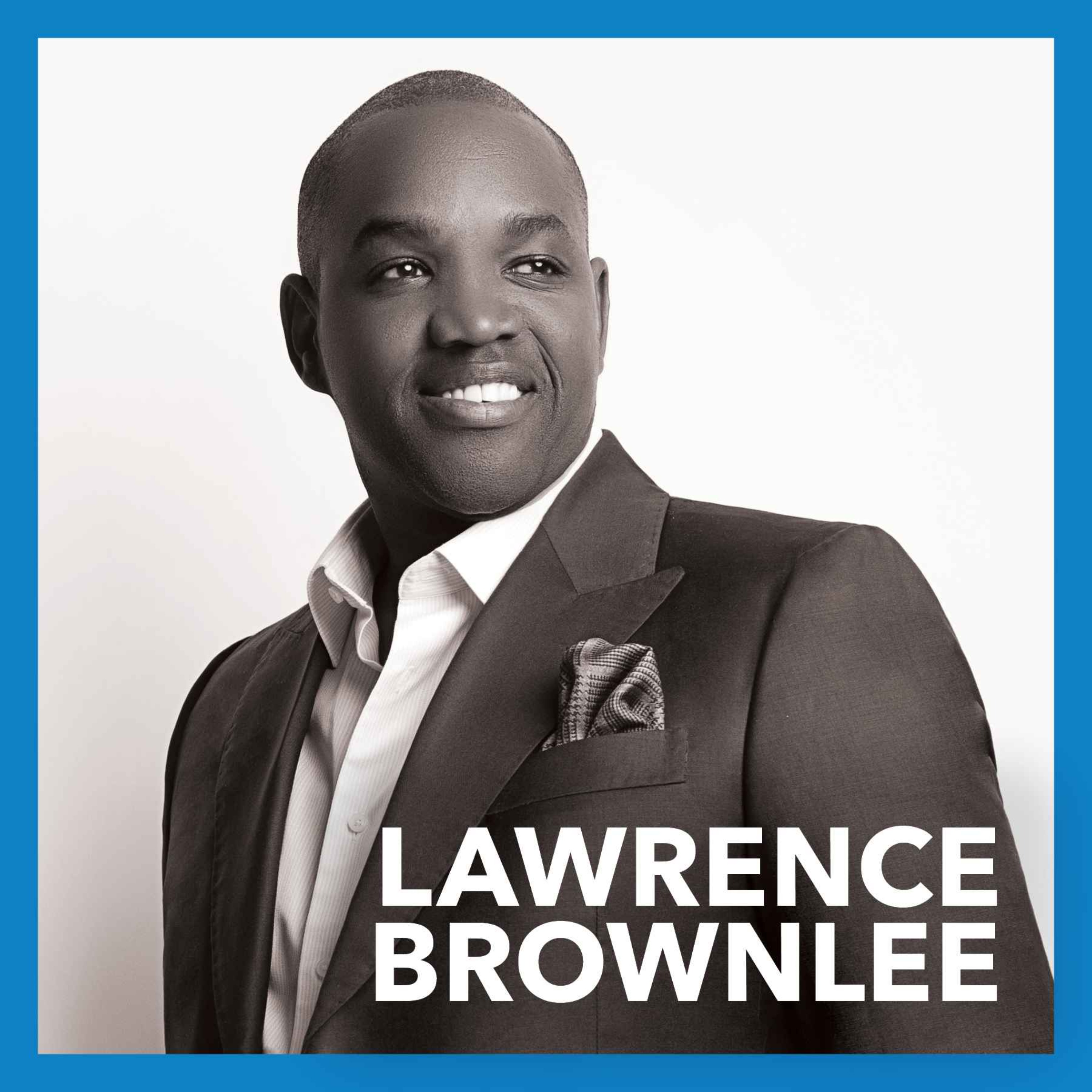
Hey, listeners, be sure to check out slipdisk.com for the latest inside information on classical music. Now, Lawrence Brownlee is a celebrated American tenor, renowned for his vocal brilliance and jaw dropping range. His journey to operatic stardom is as remarkable as his voice, given the fact that his talent was discovered before he knew he had any.
- [00:26]
Lawrence Brownlee
I was faking what I thought an opera singer sounded, whatever. And when I finished, it was like a standing ovation. And I was like, what? There was a gentleman who approached me and he was like, you have a special, special gift. I hope you're going to pursue it. And I thought, okay, maybe I need to look into this.
- [00:49]
David Kraus
You're listening to Speaking Soundly, a backstage pass to today's biggest stars of the music world. I'm your host, David Kraus, principal trumpet of the Metropolitan Opera. During each episode, you'll hear me speak with inspiring performers about their creative process and the personal journey that led them to the stage.
- [01:08]
Unnamed Interviewer
The expression world famous gets thrown around a lot. Like every pizza place you see going down Broadway has that plastered all over it. But to be considered among the best in the world at a specific thing and as an artist, well, that's something very different. You're known as an international star in the bel canto operatic style. You're actually one of the best in the world at a thing that is so hard to do, not many people can do it even poorly. Do you ever take a step back to realize that there's not many people on the planet that can do what you do?
- [01:49]
Lawrence Brownlee
You know, David, it's funny because I think about that often. And even when I'm doing something where I'm a student of something else, for example, I have fallen in love with the game pickleball. You know, I'm decent at it and it's a really fun game. It is strategy, it is understanding where, how, when, what, it's all these other things, you know. And so I consider myself very much in student mode. But when I'm sitting there and I'm making stupid mistakes, my mind will reflect sometimes thinking, well, even though you're not great at this thing, some people consider you one of the very best in the world at this other thing. And I get centered because I feel like I'm always a student and I'm always learning. And so I respect the process of learning and, you know, reminds me to continue to be a student of something like pickleball. Absolutely.
- [02:47]
Unnamed Interviewer
I can vividly remember the first time I heard you and thought, this guy's one of the best in the world. I was in the orchestra, and it was really hard for me to play the trumpet because my jaw was on the floor. Like, you have to have your mouth closed when you play the trumpet. Listening to you sing that aria with nine high Cs in it from Daughter of the Regiment was like watching Evel Knievel jump his motorcycle over 13 buses. What is it about the sound of a high C that makes it so thrilling to hear?
- [03:22]
Lawrence Brownlee
A high C from a male voice is not necessarily a natural sound. And you have to have really, really good technique be settled in your body, make sure you don't overshoot it. Make sure that you sing technically well so you can sing on the interest of your voice and not on the principle of your voice. To take the natural element, to take the support, the technique, and put them together to produce this sound that it sounds thrilling, that it sounds energetic, that it sounds meaningful. It doesn't sound like a cat that's being put through the wringer, you know? So it's been something that I've worked on throughout my whole training and my career to make sure I can maintain the consistency of sound and to sing it in a very natural way that it can be a pleasant sound in a given season.
- [04:09]
Unnamed Interviewer
I mean, I've heard you sing that aria gotta be like eight or 12 times in one season. You know, two times a week for any number of weeks. How many times have you sang that one aria in your career? Have you ever counted?
- [04:25]
Lawrence Brownlee
I've done it so many times. It was the thing that kind of introduced me to the world. I remember when I did the met auditions in 2001, that was the piece that helped me to be one of the five winners. When I did auditions, I presented that piece, and I remember I had a coach who told me that it's not about the high seas. Yes, everybody's waiting on them. But everything you do up to the high seas, if that is just top drawer, the high seas are like cherries on the cake. And so I remember thinking about that aria and wanting to prepare it, that it would just. It just was so powerful, and it had a certain sense of magnetism that people are immediately drawn to. But again, it's not just the high seas. So in the preparation, I sang it all the time, and then I sang it out all the auditions. And if I do concerts now, people always ask for an encore, and that usually is one of the pieces. It's just one that I do often. And so I couldn't even tell you a number. But it's Been hundreds and hundreds of times that I've sung that aria.
- [05:27]
Unnamed Interviewer
Yeah, so that's. That's thousands of high Cs.
- [05:29]
Lawrence Brownlee
Yes.
- [05:30]
Unnamed Interviewer
Your journey into opera started not from opera, but really from gospel music, which you sang from within a church choir that your mom directed.
- [05:42]
Lawrence Brownlee
My dad directed the choir and my mom was a featured soloist. Oh, okay. Yeah. But that's where my musical training began.
- [05:49]
Unnamed Interviewer
So essentially, were your parents your first vocal inspiration and your first vocal teacher?
- [05:56]
Lawrence Brownlee
They were. And you know, it's interesting, as my father would teach some of the songs to the choir, we didn't learn by sheet music. People would be told their parts. And I remember just having, I guess, an affinity toward, you know, to music. And my father would be teaching a song and he would teach the part incorrectly. And myself as a 10 year old or 11 year old, I would pipe up in rehearsal and say, that's not right, that's wrong. And that I would sing the right note or the, you know, the right harmony. And he would say, oh, you know what? That's right. And you know, it was one of those things that my. My mind, my ears, my. Everything about me was just gravitating towards music. And so it was an easy thing, but it wasn't something I did. I didn't want to do as a singer. I wanted to be an instrumentalist. So it was being around music and being around the production of music that was the beginning of my musical education.
- [06:53]
Unnamed Interviewer
Did your parents encourage you to sing?
- [06:56]
Lawrence Brownlee
Yes, it was my mom and dad that said, you need to sing. I remember my mom said, she said, last night you were singing this Christmas carol, go tell it on the mountain. And it was so good. You were singing at the top of your lungs. As you were asleep, you were asleep singing. And she said, music is in you, son. It's inside you, and so you have to let it out. And so it was then this was like 9 or 10 years old that they were encouraging me to sing. And then I remember being 12 years old and I was given this solo that I had to sing at church. And that was the beginning that people just started to respond in a very positive way about my singing. And I wasn't even really excited about singing. I was pretty nervous about it. But people kept saying, no, kid, you have something really, really special and the world needs to hear your voice. And so that's the thing I heard from 12 years on. And then I later on I started to believe it and then became more comfortable with singing.
- [07:59]
Unnamed Interviewer
It's just hard to believe that you ever were not comfortable singing. But at this point, was opera there or was gospel music everything? You grew up in Pennsylvania, right?
- [08:11]
Lawrence Brownlee
I grew up in Youngstown, Ohio, which is about 45 minutes away from Pittsburgh, Pennsylvania.
- [08:17]
Unnamed Interviewer
Okay.
- [08:17]
Lawrence Brownlee
It's right on the Ohio, Pennsylvania line.
- [08:20]
Unnamed Interviewer
I knew you were a Steelers fan, so thought you were from Pittsburgh or.
- [08:25]
Lawrence Brownlee
Yeah, I am from Youngstown, Ohio. And it's interesting because I would say we're probably equally divided between Pittsburgh Steelers and Cleveland Browns fans. And I was born in 1972, so, you know, that's the heyday of the Steelers. And so there's a picture. Even when I was probably five years old with the Steelers jacket on, I was already bought in. So I've been a Steelers fan my whole life. But, yeah, that's where I was born. And no, classical music was not a part of it. It was all gospel. Until I got into high school. I was in choir because I had three sisters older than me. I'm one of six kids, but three of my sisters were in the choir. And so by the time I got to high school, the first thing the music teacher says to me, your sisters are really good, so you're going to be in my choirs. And I remember singing. And he said, there is something special about your sound, kid, like something really special about your sound that lends itself to classical music. And that was the beginning of me doing anything classical.
- [09:27]
Unnamed Interviewer
This is all before you fell in love with classical music. Before.
- [09:33]
Lawrence Brownlee
Oh, my gosh. I knew nothing about classical music. And I just like anyone else who, you know, you turned on the TV and you saw someone with horns in their head singing in a language you didn't understand and you thought they broke glass. I was that guy, you know, I was. I am. I continue to be a huge sports junkie, a huge football fan, huge into playing sports. So I was that guy. And then when I got into high school, I got into show choir. It wasn't until my senior year in high school that I got kind of directed towards serious classical voice. And that was because there was a program called Upward Link at Youngstown State University. So Upward Link gave you the opportunity as a high school senior to study with someone at the university. So I got a chance to study with this guy named Mike Reed. And at the end of this program, there was a recital that many, many people were. Were at. And when I sang, I sang this song, Tulo Sigh. I was faking what I thought an opera singer sounded, whatever. And when I finished, it was like a standing ovation. And I was like, what? And then after this standing ovation, my father and I went. And there was a gentleman who approached me and he was like, who are you, kid? Oh, my gosh. Do you understand what you have? And I said, no. He was like, you have a special, special gift. I hope you're going to pursue it. And I thought, okay. Knew nothing about classical music, but because I'd done that training for those weeks that semester, that was my introduction into classical music. And it, like I said, people responded so positively that I was surprised by it. But I thought, okay, maybe I need to look into this.
- [11:31]
Unnamed Interviewer
When was the first time someone sang opera and you said, okay, yeah, that's what I should sound like.
- [11:44]
Lawrence Brownlee
During the time of my introduction to classical music. Do you remember the Three Tenors? Yeah. Pavarotti, Domingo and Carreras. They were doing those concerts in the Caracala, right? And they were doing the LA Dodger Stadium during one of the World Cups. And so I remember hearing Pavarotti sing Rondina Al Nido. And when I heard him sing, I was like, that is what I want to try to do. Of course. No, he's the king. No one will ever do it the way he did it, but it was him and then subsequently, many other singers, but Pavarotti was the first one who sound. That sound in my ear just made me sit up and say, okay, I want to try to do that if I can. And it was. It was early on in my studies when they were doing all these things with. With the Three Tenors concert that that really shifted the trajectory of my life and made me think, okay, so along.
- [12:45]
Unnamed Interviewer
This way, when's the first time that you actually sing in an opera?
- [12:51]
Lawrence Brownlee
Midway through my freshman year at Youngstown State University, my two best friends, seniors in high school, said, we're leaving Youngstown. We're going to go to a college in Indiana. And I said, you guys are not leaving me. I'm going to. So when I auditioned for Anderson University, the teacher came out after my audition and was like, you have to come here. I want you. I'll give you a scholarship or whatever. You are coming to the school and I'm going to fight for you. So I got a scholarship to go to Anderson. And when I got to school, like, the first week of school, a young lady comes up to me and she said, you're Tamino. I said, what? You're a tamino. And I said, what is a tamino?
- [13:41]
Unnamed Interviewer
What is a tamino?
- [13:44]
Lawrence Brownlee
And I was like, what? She was like, you've been cast in the opera as Tamino. So before I even saw an opera. I was cast in an opera. As To Me now for the Magic Flute.
- [14:00]
Unnamed Interviewer
You just did that with us last year, right?
- [14:03]
Lawrence Brownlee
Yeah, last year. That was full circle, right?
- [14:05]
Unnamed Interviewer
Every turn of your career so far. It's amazing. You had your aspiration to work at Juilliard, but you weren't granted an audition there. You didn't even get a chance to compete for that. Were you kind of devastated by that?
- [14:23]
Lawrence Brownlee
I was devastated. You know, Juilliard for me was the pinnacle. And I just thought, you know, I wanted to put myself amongst the best. Not that I thought that I was the best, but I just wanted to aim high. So I applied, and they didn't grant me an audition, and someone I was dating at the time got an audition. So she got her acceptance and I didn't get mine. And I just thought, this stinks. So I ended up going to the Indiana University, and the reason why is because it was the only school that still had an audition date open. I went to audition at Indiana University. And I have to tell you, immediately, when I stepped on the campus, I said, this is the absolute place I need to be.
- [15:10]
Unnamed Interviewer
Well, it obviously worked because you would go on to sing at the Metropolitan Opera. But shortly after that, you were told by an agent that because of your height and because of your race, you would never get big roles. Did that victory immediately seem somewhat diminished?
- [15:33]
Lawrence Brownlee
It did. This agent really dampened that experience. You know, the way that Met auditions work. I knew that I was the top winner because one of the people told me that I had been so positively received by the judges, everyone else. And so I appreciated that. But this person said that I wouldn't have any career, maybe in some small theater in West Germany. And so basically, he told this guy, a friend of mine, he was like, when I walked out on stage, he was thinking, what is this little guy doing here? That's what he said. What is this little guy doing here? And then I sing, and the audience responds, but also he responds, like, with his mouth open, like, oh, my gosh. But sadly, after even hearing that and having a positive, you know, response to what I did, he said, but sadly, he's not going to have a career. And so just like other things in life, when people try to limit you, for me, it is always motivation. So I was like, okay, I will show you. And that was the fire that was the fuel that made me really want to work. Not necessarily to prove him wrong, but to prove myself right in the abilities that I felt that I had and the gift that I felt like I should share with the world.
- [16:55]
Unnamed Interviewer
He commented on your size and your color, but really leaned into the fact, well, he's short. Do you think that's just like a veiled way of saying, he's black, he doesn't belong? Absolutely.
- [17:08]
Lawrence Brownlee
Absolutely. My father told me a long time ago, worry about the things that you can control. Yes, I can work on my languages, I can work on stage deportment. I can work on all these other things that set you apart. I can't be taller, I can't be lighter. Those are things I can't control. But when I can focus on who I am as an artist and singer, those are the things that always set me apart in my career.
- [17:34]
Unnamed Interviewer
And where did you get this confidence? From my dad.
- [17:39]
Lawrence Brownlee
He's someone that is a man of integrity. He's a man of standard and morals, but he's just a good person. And so I idolized him, I admired him. I would tell him all the time, I'm so grateful to have a father like you. And so when I saw him not be deterred, someone who just had the supreme faith in himself and his abilities, that's what I always felt like I should do. And my father's not a philosopher, but there's a lot of things that he said and he's taught me in my life that made me believe that anything is possible. He said, you know, opportunities come and you have to be ready when they come, not getting ready. So prepare yourself before they get there so you can really grasp that opportunity. So that's how he led, and that's the way I want to live my life. So I have that confidence that I can do. But it's. It's based upon the work and the preparation that I've done to get to that point. So it's. My dad has been my biggest influence in my life.
- [18:37]
Unnamed Interviewer
What do you think it's like for him, the times that he's been in the audience and he sees his confidence reflected in your voice on some of the biggest stages in the world.
- [18:50]
Lawrence Brownlee
I remember him coming to the Met, and he was pretty overwhelmed to see me on stage. He didn't. He thought, how in the world did my son get to this point? My big career debut was at La Scala in Milan. So when I was in Milan, I used to call him, and I said, dad, you know, hey, I'm in Milan. How you doing? He said, hey, you know, I wanted to ask you a question. Where are you singing right now? And I said, I'm singing at this theater. It's called La Scala. He said, man, I told this guy that you were singing at La Scala, but he didn't believe me. He was at McDonald's, and they all go to McDonald's every day, and they talk about the war stories, and they were in the military and everything. They talk. And so my dad was like, oh, yeah, my son's over in Milan right now. He's singing at this theater. And he couldn't say it, really. He was like, la Scala. And the guy, the Italian American, oh, La Scala. I'm sure that's. That's not the La Scala. That's probably some other place. And my dad was like, no, I think that's right. The guy's like, your son's not sinking there for sure. Just understand. And my dad was like, okay. Kind of, like, confused when he. When I got on the phone and he had me clarify that I was at Laala, and he said, I want you to send me the poster. So I sent my dad the poster. And so he takes it to McDonald's and puts it on the table. I told you my son was seeing that. And the guy was like, oh, my gosh. I can't believe it.
- [20:19]
Unnamed Interviewer
At a McDonald's in the middle of Ohio. Wow. It's been amazing and inspiring to talk to you. I just have one last question for you.
- [20:30]
Lawrence Brownlee
Sure.
- [20:31]
Unnamed Interviewer
You often sing an aria. The crowd goes insane. 4000 people are screaming for you. And the audience will not let you not take an encore in the middle of the opera. And just to be clear, like, that doesn't happen very often. But when you're singing certain repertoire, it's almost mandatory because you make it mandatory by bringing the house down. And the weird thing that happens is that there's. That, you know, sometimes you get a conductor who has, you know, just wants to get out of there, and it's, like, been a long day. So, like, the conductor's like, come on, stop. Stop clapping so we can keep going. So he's got. Or she's got that look in their eyes and, like. And you're up there and you're kind of frozen because you're not allowed to, like, respond to the clapping, right? You just gotta, like, pretend, like, it's not happening and just smile or be frozen in this state. But it's this weird thing that I think only really happens on the operatic stage, so. And then inevitably, you do it. You give this smile. They go berserk. And then you sing the whole aria again. And it's even better the first time you did It. So here's my question. In those two minutes of suspended animation where there's this white noise of applause being screamed at you and you're frozen and, and you're staring straight ahead. What's going through your head?
- [22:09]
Lawrence Brownlee
You know that's happened. You know, I had a recent time, recent situation that happened. And in that moment, you appreciate what you've created. You appreciate that you could capitalize on that opportunity. You appreciate the fact that people responded. And so immediately you think, do I have it in me to do it better than it was last time? Because it can only be better, it can't be worse. And so, so first negotiation, you're figuring.
- [22:44]
Unnamed Interviewer
Out if you have it.
- [22:46]
Lawrence Brownlee
You're like, first of all, they want it, or do they really want it? Maybe they're just being kind. How many friends do I have in the audience that are just acting crazy and trying to make noise, saying, bravo, beast, or whatever? No, you go, those things go through your mind. You think, you know, part of it's like, okay, I'm. I'm okay with how that was. And then you're thinking, the audience is. Really appreciates it. Okay, okay, let's see if this keeps going. Maybe I need to get my mind right. If I have to go back, okay, calm myself, breathe. You know, when you sing it on course, just like you have to put two feet on the ground and just sing the absolute best you can and be really hyper focused on producing your. Your best in that moment with what you have. And so you're like, okay, you nod to the conductor, you know, let's do it again. And then you just sit there and you think about what you feel you do well. So you don't overshoot, you don't bite off more than you can chew. And you really want to deliver it because people want to see you deliver the thing that they're asking for. And so you sing it, and then you get to the end, you're like, okay, let me get that good supported breath so I can hold the high sea even longer. And so maybe they'll go more berserk than they did the first time. And so all those things go through your mind. But more than anything, at the root of it, it is in service to the composer into that audience that is appreciating you in that moment. It is not a vanity moment. It's never about me. And so whenever I have those moments, and I've had a few of them in my career, it is very humbling but also incredibly gratifying that people appreciate what you do as an artist.
- [24:33]
Unnamed Interviewer
Well, it's an amazing thing to watch and I'm excited for the next one. I'll be screaming.
- [24:41]
David Kraus
I hope you enjoyed this episode of Speaking Soundly.
- [24:44]
Unnamed Interviewer
If you like what you heard, please.
- [24:45]
David Kraus
Tell your friends about it.
- [24:46]
Unnamed Interviewer
Spread the word.
- [24:47]
David Kraus
Be sure to follow, rate us and leave a review wherever you get your podcasts. To keep up on future episodes, follow us on instagram @speaking sndly and visit our website, artfulnarrativesmedia.com Tune in next week as we hear another inspiring artist Speaking Soundly.