Loading summary
Transcript55 lines
- [00:00]
David Kraus
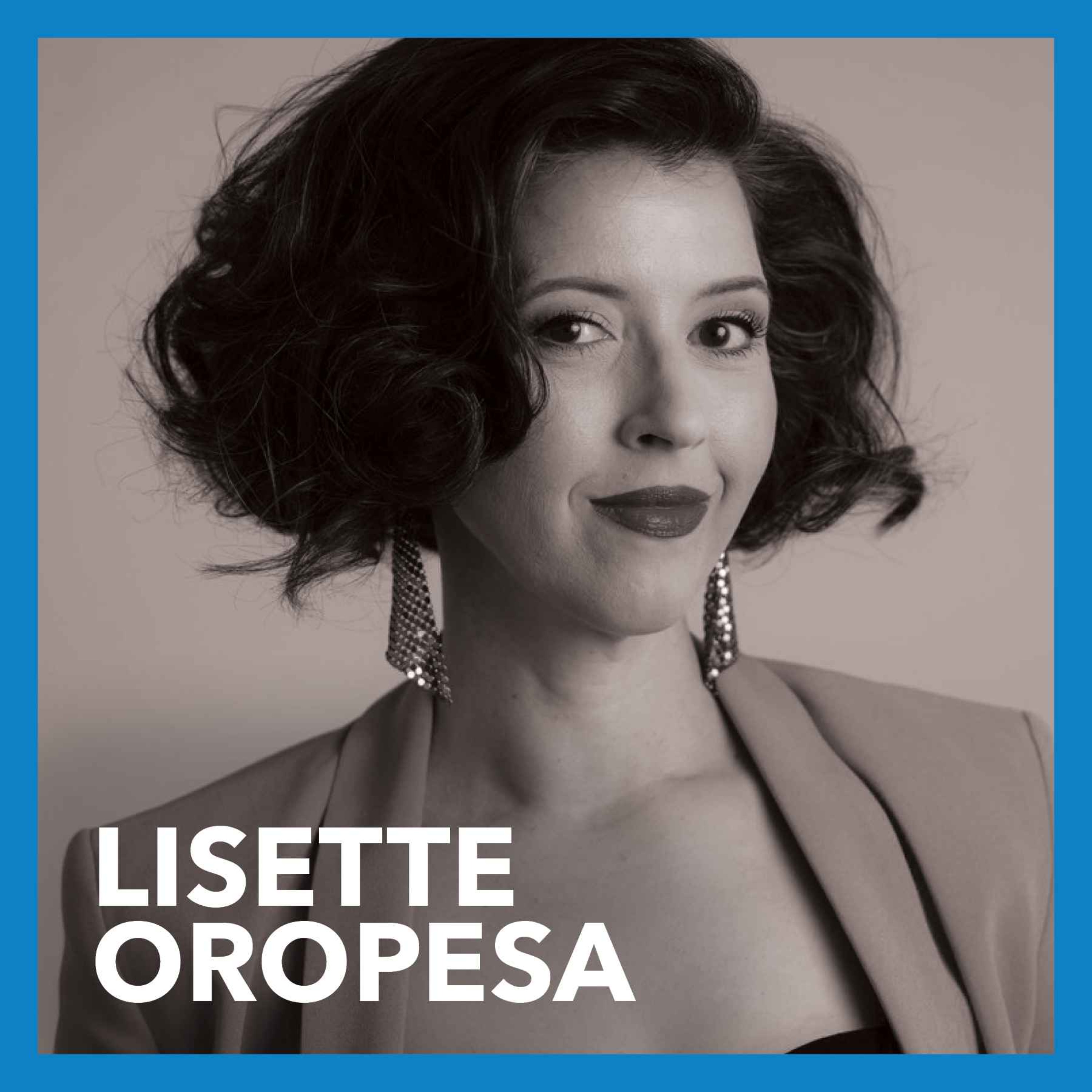
Hey, listeners, be sure to check out slippeddisc.com for the latest inside information on classical music now. And while you're here, could you do me a favor? Since you like the show already, follow it. That's it. It's pretty simple and it's free. Just click the Follow or Subscribe button on whatever podcast app you're listening to right now. And if you already follow the show, thank you so much. But there's actually still something you can do. Click the Share Podcast button and send Speaking Soundly to your friends and relatives that also like listening to candid and inspiring conversations with some of the best musicians on the planet. Okay, that's it for now, I promise. Thanks for the continued support. We really appreciate it, and I hope you enjoy this episode of Speaking Soundly. American soprano Lisette Oropessa is known for lighting up opera houses with her thrilling voice and brilliant technique. To achieve these captivating and focused performances. She admits that her head has to be in two places at once.
- [01:07]
Lisette Oropesa
A lot of singers say, oh, I'm totally in the moment and I'm just inspired. I never think about technique. Well, I'm 50 50. I've got a part of my brain that's recalling technical details. I have to remember the practical things when I'm singing, but the other side of my brain is totally focused on the moment and the text and the inspiration. There you go, 50 50.
- [01:31]
David Kraus
You're listening to Speaking Soundly, a backstage pass to today's biggest stars of the music world. I'm your host, David Kraus, principal trumpet of the Metropolitan Opera. During each episode, you'll hear me speak with inspiring performers about their creative process and the personal journey that led them to the stage. The last time I saw you was on. On stage in Taiwan.
- [01:54]
Lisette Oropesa
Yes.
- [01:55]
David Kraus
We were finishing a long tour throughout Asia with the Met Orchestra and our conductor, Yannick. While I was watching you perform, I realized that there are a few different perspectives going on simultaneously. First and foremost, there was the sold out audience, all of whom were completely transfixed on your voice and taken by the music. But there was also the perspective of Janik and the orchestra, who were focused on how our parts interact and support as you're singing. But I'm curious what performance is like from your perspective when you're singing, what are you focused on?
- [02:34]
Lisette Oropesa
Ooh, that's a great question. I'm going to be very, very honest. A lot of singers say, oh, I'm totally in the moment and I'm just inspired. I only think about the character and I completely am Focused on the story and the moment and the text.
- [02:52]
David Kraus
I love your impression of other opera singers, by the way. That's spot on.
- [02:56]
Lisette Oropesa
I'm so in the moment, I never think about technique. Well, I'm 50. 50. I'm left brain, right brain. I've got a part of my brain that's going, okay, you know, depth of breath or just recalling technical details. Okay, I know this phrase is weird. Just remember on this one vowel. This needs to be a little more closed or. Oh, I got a note about this last week from Yannick. He told me to not drag here. I have to remember those practical things when I'm singing. If I don't remember those practical things when I'm singing, I make mistakes. Not only do I make mistakes, but I don't sound my best. But the other side of my brain is totally focused on the moment and the text and the inspiration. There you go, 50, 50.
- [03:34]
David Kraus
When I watch you perform, you make me and the audience forget that what you're doing is unbelievably difficult. And there's only a handful of people on the planet that can do what. What you do. But of course, it's not easy, just as you said. And there's decades of training and a life dedicated to singing that makes the audience blissfully unaware of the challenges. Can you be in that bliss at all, or do you have a job to do?
- [04:06]
Lisette Oropesa
Well, first of all, I appreciate you saying that. That's extremely generous of you. And, David, I have to say the same for you. You make me think I can pick up a trumpet and play and do it.
- [04:17]
David Kraus
Probably could.
- [04:17]
Lisette Oropesa
It's only got three valves. How hard could it be? Exactly. I mean. Yeah, so I mean, I appreciate that you say that. And I think that's one of those things about, you know, we watch a great gymnast or something. We go, oh, she makes me feel like I can walk on a balance beam too. I could do a cartwheel, sure. You know, and that's the idea. And you want people to forget about the hard work that goes into it. But you also. I do want people to appreciate when they know that something is difficult. And sometimes it takes a connoisseur to appreciate that about a performance because they know, oh, I know that that register is very difficult to sing in. Or even people who. In fact, sometimes the most lay people are the ones that say to me, wow, that's the most impressive thing. You sang this really high note and then this really low note back to back. Wow. How did you do that? And sometimes people who have never sung a day in their life are so impressed by things that actually, for me, might be very easy. But that's fine, I'll take it. You know, I do try, because the thing is, I do love music. If I got too, too caught up in the weeds of technical detail and precision and never being satisfied with anything, then I don't have a whole lot of fun. No, it's the tortured musician, I think. But I don't want to be that because it's music and it is fun and it is pleasurable and especially when you do something and you really feel like you did it, you nailed it, the audience liked it. That is the blissed out feeling. I live for that. It's like dopamine.
- [05:49]
David Kraus
You mentioned that inner self critique. I know when I play there's a constant neurotic dialogue of self critique that goes on in my head. Sometimes I wish I could turn that off. But I think ultimately it's that, that inner critic that keeps me wanting to improve. How do you balance the self criticism necessary in your business with the reckless abandon that is also needed? Is there, is there a compromise point that you can find?
- [06:22]
Lisette Oropesa
Yes. And the compromise point is that no self criticism is meant for self harm. In other words, just because you're sitting there telling yourself, oh, that was out of tune, oh, that wasn't very supported. It's not. You're a crappy singer. You suck. You shouldn't be here. I don't want to sound arrogant in saying this, but I can criticize myself and not take it personally. Like, I can say, lisette, that was flat. When you do it again, sing it sharp and it'll be in tune. So I have to take those as notes that I can improve on and not beat myself up over it. Because I never think, oh, boy, that was just perfect. I couldn't have sung that any better. I think I've thought that twice in my entire life. Maybe there's always things that can be improved.
- [07:14]
David Kraus
Getting back to that tour, when we were in Tokyo, I somehow managed you to come out with a bunch of orchestra musicians, tour a bar, and it was my turn to buy round for everybody. So when I asked you what you and your husband want to drink, you said, two ginger ales, please. And I thought to myself, you idiot. You invited an opera singer out to a loud dive bar the night before performance. Her body is her instrument. And you offered her cheap tequila and chicken wings the night before.
- [07:48]
Lisette Oropesa
She's about to sing, oh, bless your heart.
- [07:50]
David Kraus
So, A, I'm sorry about that.
- [07:52]
Lisette Oropesa
B, oh, no.
- [07:53]
David Kraus
Are you just constantly aware of your surroundings and how they might affect your voice and your body? I mean, just being inside of a loud bar where everybody's, like, scream talking can take a tremendous toll on your voice.
- [08:09]
Lisette Oropesa
Yeah, yeah, yeah. I mean, David, I. I mean, people always. Oh, singers are so neurotic. Yeah, but you would be, too. I mean, I certainly like to enjoy myself and have a drink and have a glass of wine or whatever. But I also. If I have to sing the next day and I want to be at my best, I'm not gonna throw any monkey wrenches into that machine. I just feel that, unfortunately, everything goes to the throat, David. Everything goes to the throat. I wish it didn't. I wish it go somewhere else.
- [08:43]
David Kraus
Yeah. So you start your musical life not as a singer, but as a flautist. Do you still play?
- [08:51]
Lisette Oropesa
I can. I don't have the chops that I used to, but, yes, I did. I played until I was in college. I went to college majoring in flute and voice, and I eventually had to choose one, and I gave up the flute because, quite frankly, I was a better singer than a flutist. Even though I wanted to play flute, I enjoyed being in band and orchestra more than I ever enjoyed being in choir. And I'm sorry. I know it's like blasphemy to say.
- [09:18]
David Kraus
That band is the best.
- [09:20]
Lisette Oropesa
Band is the best.
- [09:22]
David Kraus
Your mom is a music educator and former opera singer herself. Did she kind of steer you toward singing as opposed to the flute? Like, where. Where was she in the middle of that?
- [09:34]
Lisette Oropesa
Oh, she's 100% pro singing, but opera was her thing. And I always thought, I want to do something else. I want to make music, but I want it to be my thing. And she never pushed me until I got to my last year of high school, when my mom was like, you know, just for giggles, could you just audition for the voice faculty, Lisette, because I really think you have such a nice voice. You would be happier singing on stage as a soloist. You're a singer. You're not a flute player in an orchestra. I was like, what? How dare you tell me who I am? I am 100% a flute player in orchestra. I'm not an opera singer. And my mom, she was so nice about it, but she said, you know, just sing for them. Here, learn this aria. And just to make her happy, I did it. And I auditioned for the voice faculty at Louisiana State University, and they were like, you have to sing. They wanted to pry the flute out of my cold, dead hands. They were very enthusiastic. They were very enthusiastic about my singing, and I think, you know, and I just was very stubborn about it for, like, a whole year. I took a year to decide, and eventually I kind of went with it. And I was like, you know, actually, this isn't so bad. I kind of like this. And also, I wasn't as good a flutist as I was a singer. Even though I had been playing flute and doing nothing but flute and living flute for my entire scholastic life. I was just a better. There's where talent comes in. I was just gifted. My mother is a singer, so I started to cultivate that.
- [11:07]
David Kraus
It sounds like your mother's singing was an early inspiration. What do you love about your mother's voice?
- [11:15]
Lisette Oropesa
It's the prettiest in the world. Ever. Well, it's just. It's comforting. My. My. My voice is just fine. My mother's voice is extraordinary.
- [11:28]
David Kraus
You grew up in Louisiana.
- [11:31]
Lisette Oropesa
Yes.
- [11:32]
David Kraus
You've said that. You grew up happy and healthy, but economically poor.
- [11:39]
Lisette Oropesa
Poor, yes.
- [11:41]
David Kraus
When you're pursuing a life in the arts, it takes a lot of support. Obviously, you've had the emotional support necessary, but how did you manage and your family manage the financial support necessary to get the training to fly to competitions, to buy the outfits needed to compete in those competitions and succeed in this world of opera?
- [12:04]
Lisette Oropesa
Well, I was lucky that I had all the people around me already. Friends and people who loved me and teachers and other students. We all kind of supported each other. But I had to have a lot of side jobs, eh? You know, I mean, I worked at church for side jobs. Every summer I would take side jobs. I taught lessons for extra money. I worked in retail for extra money. I would do whatever I had to do to earn extra money so that I could even apply, try out for competitions. But I got very fortunate when I went to do the Met competition. I kept progressing, and by the time I got to the point that I got to the New York stage, where we would do the semifinals in New York, you know, I had a couple of very sweet ladies from Baton Rouge who were supporters of the opera at lsu, at Louisiana State University. And they took me shopping and bought me a week because I'd never been to New York. What. What the heck was I gonna wear? And they took it upon themselves to take me shopping and buy me a gown and a week's worth of professional clothes because all I had was LSU T shirts. I mean, really. So they were very, very generous. Yeah. So I. I had that help. And then I won. And the winnings the earnings from the competition helped me with all the next part. Moving to New York. So I got into the Met program. I auditioned for the Met program, and they accepted me. So all of that money that I won help New York. And then I just did competitions. And that's what you do. You take side jobs, you do competitions. And if people are generous and kind, you know, and can help you, it's wonderful. I was very lucky. Very lucky.
- [13:43]
David Kraus
On paper, your path to this wonderful career looks straight as an arrow and without a hitch. I mean, you studied at lsu, you go to this national competition at the Met in 2005, you win that, you join the Lindemanna Young Artist Development Program. You make your Met opera debut in 2006. So was your journey to the stage as linear as it sounds, or were there hurdles along the way that may not appear in your Wikipedia page?
- [14:15]
Lisette Oropesa
Well, it was more linear than a lot of people's can be. I have to be honest and say I got very lucky because I won the competition at a young age, because I was accepted into the program and because I was able to make a debut at a young age. And that's all luck and work and yes, sure, all of that, but also just fortune. I know that a lot of singers don't have that path. That's rare. And I understand that, and I appreciate that. Of course, there were things I had to change. Like when I got to the Met, you know, I had to lose weight because I was quite overweight. And I was told that was going to be my project. One of my projects for the program was that I was going to get myself into shape and continue my journey on that. So that's a hitch that a lot of singers struggle with, of course, and I still do to this day. But it's, if you kind of follow what I'm saying is that I feel like, yes, I was very blessed, I was very fortunate, I worked very hard. But I also appreciate and understand that what I had is exceptional.
- [15:25]
David Kraus
As an opera singer, you're on stage, you move as you sing. But as a trumpet player, my job is to sit for hours at a time as I play and teach. And about seven years ago, I realized that if I didn't start exercising regularly, I'd gradually fall into this sedentary lifestyle and feel increasingly uncomfortable in my tuxedo that was getting tighter and tighter every season. So I started running slowly at first. I mean, really slowly, and then eventually progressed to a 5k and then a 10k and a half, and then finally to The New York City Marathon. And it's been a real positive thing, physically, mentally, and musically as well. I know that you're an avid runner. I mean, you're famously athletic now. When did you start running? And has it affected your life in the same way that it affected mine?
- [16:22]
Lisette Oropesa
Well, first of all, I want to say congratulations on that amazing running journey.
- [16:28]
David Kraus
Thank you.
- [16:29]
Lisette Oropesa
I'm always so happy to meet other people who enjoy it, and it's a beautiful sport. And actually, it's a sport that I'm terrible at. I'm just consistent and persistent about it. But, yeah, I same for me. It became part of my weight loss journey. That's how it kind of started. My husband and I, we just. Just said, okay, put on buy a pair of running sho. Let's just try this. It's free, it's outdoors, and it can't be that hard. One foot in front of the other. And it was awful. It was so difficult. It was so hot. What is this? Why do people do this? Okay, well, let's just keep trying. And it's just one of those things that we. If you find a practical need for something and you're the type of person that's like, I am persistent, resilient, and not willing to take it personally that I'm not good at something, I'm happy to just keep practicing. I will improve. Because that's what happens when you practice. You improve. And hey, after a while, I can run for 10 minutes and not have to stop. Wow. Oh, my God. I never thought I could do that. And next thing you know, after a few months, we're getting into it. We're joining athletic groups, we're joining running clubs. We're going to sign up for a race. This is the best thing that's ever happened to me. And then you get to a point somehow that's very blissful, and you start going, this is the greatest thing. And now I love it. It's a huge part of my life. Running has helped me breathe better, my alignment is better. I feel lighter on my feet. You know, I feel a stronger sense of connection with my. With my respiration. All that comes from physical activity.
- [17:58]
David Kraus
Well, as far as my career is concerned, had I not started running, honestly, I don't think it would have affected my career much at all. As an orchestral musician, do you think your career as an opera singer would be vastly different today had you not started running?
- [18:15]
Lisette Oropesa
Well, I can say a couple of things. Number one, if I hadn't gotten healthier, the career would have been a lot More challenging, for sure. Staging would be harder. Costume fittings would be harder. I even remember doing costume fittings when I was still overweight. The things that the costumers would say, the comments that they would make, oh, well, she's gonna need a different type of corset or she's just not as compact, quote unquote, as the woman that had this costume before her. I mean, of course you hear these comments and they hurt your feelings. They make you feel like you're not a singer in that moment. You're just a fat girl in that moment. And that hurts. And that's hard. So there's the sense of, yes, I needed to be healthier, a for my health, just my health in general. Of course, I was way too overweight for my height. I needed to lose weight anyway. My doctor was telling me, singer or not, Lisette, you need to lose weight. There was that. There was also my confidence, David. My confidence. Hearing things like that over time, you either have to build like a strong wall of resistance to it, which a lot of of people do, who are the size that they are and proud to be the size that they are and they're strong about it and. But I wasn't. I was very insecure about it. I was insecure about how I looked. I was insecure about how other people thought I looked. I was insecure about how I looked in costume. And of course, when I'm up on stage and I'm being looked at, not just listene but looked at, I'm thinking, wow, people aren't really liking what they see. Would I have had the same career? I honestly, I have to be fair and say probably not. I definitely think losing weight and getting healthier gave me a boost. Because your health is always going to make your voice better. Better health, better voice. That's 100% true. But also more confidence makes you a better performer. You feel less insecure on stage, you're not self doubting and you have to have that confidence.
- [20:14]
David Kraus
You're making your Carnegie hall recital debut this season.
- [20:20]
Lisette Oropesa
Oh, yeah.
- [20:21]
David Kraus
What was your first experience at Carnegie Hall? Do you remember it?
- [20:26]
Lisette Oropesa
Oh, gosh, yeah. I went to go hear a messiah there. I love Messiah with all my heart. And I went to go here at one holiday season. That was my first experience sitting in the audience in Carnegie and I just was in heaven. It was the best experience ever to sing on the stage of Carnegie. The first time was when I won the Tuckers. The year that I won the 2019 when we did the Tucker gala. And I Got to sing as the winner. Yeah. Did you play at that concert? Do you remember? Yeah, yeah, absolutely. Yeah.
- [20:55]
David Kraus
Yeah.
- [20:55]
Lisette Oropesa
That was my first time singing on the stage at Carnegie. Really great. Really something. And I'm very happy to be here.
- [21:03]
David Kraus
When you know that you're doing your Carnegie hall recital debut, how do you even start to piece that together, what you're gonna do? It's like, what am I gonna bring to the moon when I fly there? That's a huge decision. How do you even begin to form that?
- [21:22]
Lisette Oropesa
Well, I knew that the season's theme this year was Latin American music and perform, you know, composers and artists and stuff. And so I wanted to highlight my heritage, which would be essentially presenting music in Spanish of Cuban composers and Spanish composers. And actually, I had already, past couple of years, been accumulating repertoire by Spanish composers because I didn't sing a lot of Spanish art song growing up. And as I got older and I started. As I started actually becoming a. An opera singer, believe it or not, I would sing recitals, and they would say, hey, could you sing a Sarsuela aria or something? Like, we really love to hear you sing that stuff. I'm like, you know what? Yeah, I should. In fact. And so as it kind of started getting suggested to me over the years, and as I've pieced it together with, oh, I'm going to add this set and that cycle and this aria, I have amassed a full repertoire, a range of repertoire in the Spanish language. And so I knew that when Carnegie said, you know, this is our theme this year, I was like, oh, I have the perfect recital. In fact, I have too much rep. I need to narrow it down to the stuff that I think is going to work really well. And I just. I feel like this is the recital of a lifetime, and I'm just really, really, really grateful to get to do this in New York. It's already sold out.
- [22:45]
David Kraus
I know, because I happened to be off that night, and I really wanted to go. So they're going to have to build a bigger recital hall. I think whether it's training for a race or training for a role, you do it with a smile that is infectious and inspiring. And it seems that you love being at that intersection between determination and grit and effortless artistry. What does it feel like when you're on stage and those two points actually meet? Like, what does it do for you?
- [23:21]
Lisette Oropesa
Dopamine, adrenaline, all those great things? Oh, yeah. No, it feels fantastic. It's kind of like when you're. You get to the bliss. Blissful. Miles in a race. The ones that actually feel good. The moments in the practice room when this part was, I just couldn't get it. Every time I get to this phrase, this would happen or I would always sing this part flatter. I always couldn't hold the breath long enough. And when I nail it, that feeling is just like, yes, yes, yes, yes, yes, yes, yes. In fact, last night I had a moment like that on stage in the concert I just gave here in Salzburg. It was my last note. That you sing as Ofeli is a high floated B natural. And occasionally when you're tired, the note will break. That happens lots. And I nailed it last night. And when I walked off that stage, I was like, yeah, like what a feeling when you just nail the one gosh doggone thing that is always away from you. Now, of course, there were other imperfections in the concert, don't get me wrong, but that one part that I was just like, oh, please let me nail this. That feeling, I don't think there's another feeling more satisfying. So, yes, I live for that feeling, David. I wish I could have it every night after every single phrase that I sang. And I'm always chasing it. It's like a little dragon you're always chasing, you know? How do you feel when you nail something?
- [24:40]
David Kraus
I mean, I can't express it any better than you already did. Yeah, it's all the feelings. Definitely. Well, Lisette, you're a continued inspiration and you make me want to perform, run, succeed, work. So thank you for that.
- [24:58]
Lisette Oropesa
You're very generous, David. I feel exactly the same. And you're the nicest guy. You really are so nice and humble.
- [25:04]
David Kraus
Now look, I'm going to edit a lot of stuff out of this, but that, that is going to be in there for sure. I hope you enjoyed this episode of Speaking Soundly. If you liked what you heard, please tell your friends about it. Help spread the word. Be sure to subscribe, rate and leave us a review in your podcast app and follow us on Instagram peakingsndly. For more information, you can Visit our website artfulnarrativesmedia.com if you're new to the show, you could go back and check out earlier episodes featuring Wynton Marsalis, Regina Spector, Joyce Didonato, Emmanuel Axe and Rufus Wainwright, just to name a few. And tune in two weeks from now on October 15th to hear the amazing Grammy nominated pianist and composer Aaron Deal speaking soundly.