Loading summary
Transcript61 lines
- [00:00]
David Kraus
Hey listeners, be sure to check out slippeddisc.com for the latest inside information on classical music. Now. Looking for world class performances at an accessible price point? See yourself at Lincoln center presents free and choose what you pay performances. Where else in New York City can you experience contemporary flamenco, mental health, inspired choral works, experimental jazz, and an interactive family dance performance all in the same week and for less than the price of lunch? Explore the full calendar of events today@lincoln center.org presents. Now, since you're here and already a fan of Speaking Soundly, I want to tell you about another podcast that I think you're really going to like. It's called Tacit no More, hosted by Joseph Conyers and Yumi Kendall. You may remember Joe from his episode here on Speaking Soundly. If you haven't heard it, you have to check it out. He is a force of nature. Together on their podcast, Joseph and Yumi are giving voice to what really needs to change in the classical music world. Like advocating to open up pathways for black orchestral musicians, envisioning new ways to support arts education, and young professionals who are charting their own course in the classical music industry. Tacit no More is a podcast that asks the tough questions and speaks the truth about classical music. You can listen to Tacit no More wherever you get your podcasts. Oh, and one more thing. Before we get to today's episode, you can support Speaking Soundly by doing one simple thing.
- [01:32]
Michael Fabiano
Follow it.
- [01:33]
David Kraus
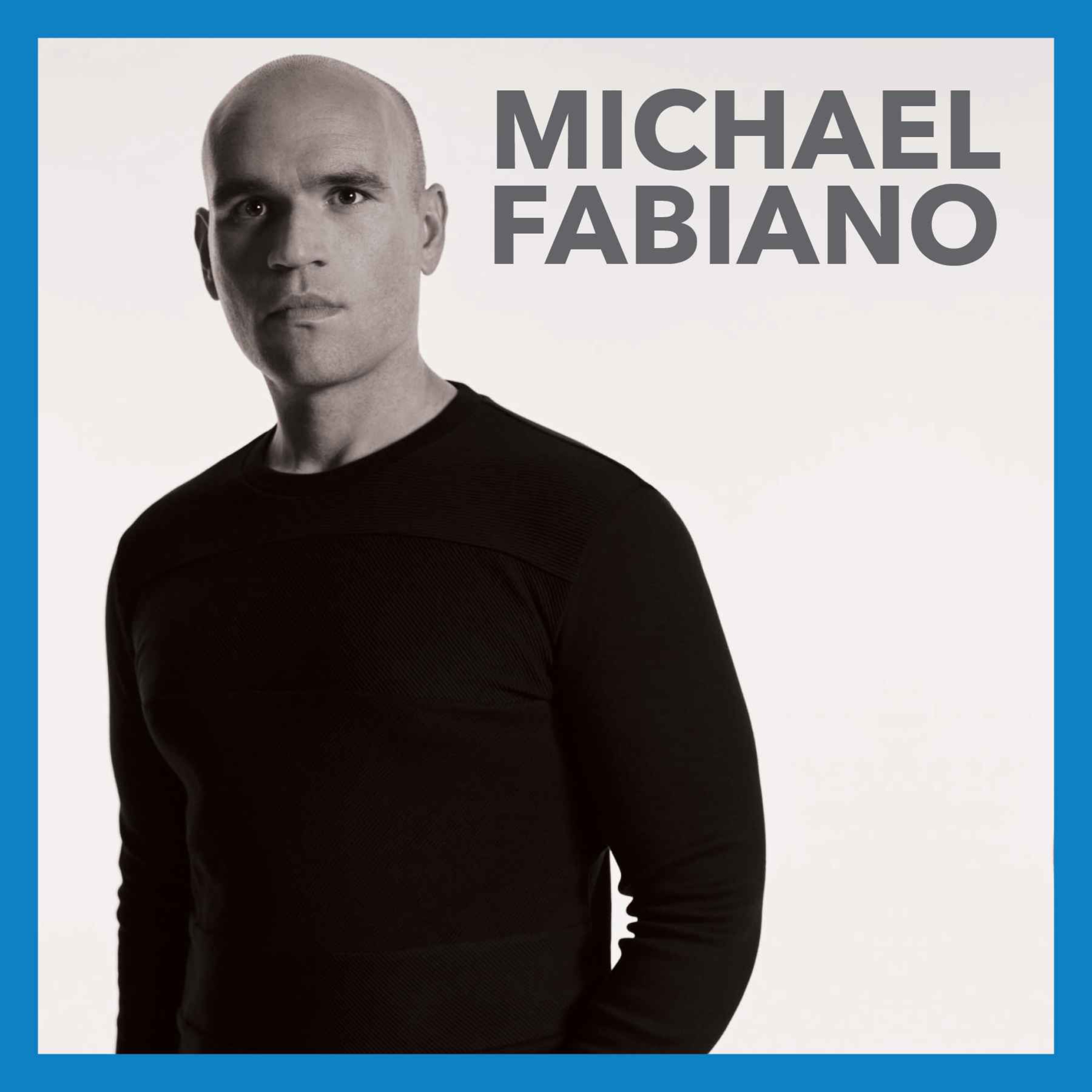
That's it. It's pretty simple really, and it's free. Just click the Follow or Subscribe button on whatever podcast app you're listening to right now. And if you already follow the show, thank you so much. But there's actually still something you could do. Click the Share Podcast button and send Speaking Soundly to your friends and relatives that also like listening to candid and inspiring conversations with some of the best musicians on the planet. Okay, well, thanks for your continued support. We really appreciate it and I hope you enjoy this episode of Speaking Soundly. American tenor Michael Fabiano fills opera houses all over the world with his passionate and lyrical voice. He credits his successful career on stage to his ability to think strategically.
- [02:22]
Joseph Conyers
So many people in my career, said Michael, you're an artist. All you should do is behave like an artist. Don't think like a business person. Well, you know what? I would not be an opera singer today if I didn't think like that. If I just behaved artistically, I definitely would not have the career I have. At the moment.
- [02:40]
David Kraus
You're listening to Speaking Soundly, a backstage Pass to today's biggest stars of the music world. I'm your host, David Kraus, principal trumpet of the Metropolitan Opera. During each episode, you'll hear me speak with inspiring performers about their creative process and the personal journey that led them to the stage.
- [03:00]
Michael Fabiano
We haven't met, but I'm very familiar with your voice in that I've been playing in the Met Orchestra for a long time and in the pit a lot. When you're singing. Most recently during a run of Carmen.
- [03:12]
Joseph Conyers
Oh, cool.
- [03:13]
Michael Fabiano
Yeah. Well, it's a popular opera that we do a lot, and honestly, I have a tendency to kind of go on autopilot, having played it so much. But you're one of those singers that when you're on the stage, there's something about your voice and intensity that pulls me right back into the music. It sounds like you're singing right on the edge and going all out all of the time. How do you bring that kind of passion to every single performance?
- [03:40]
Joseph Conyers
First of all, I deeply appreciate that observation, and you encapsulate what I think is the obligation of any singing actor, which is to live on the edge of the line when they perform. It's what the public pays for, and it's what we're trained to do. And if we don't go to that edge, what's the point? You know, I think it's akin to a slugger in baseball that when they get behind the plate, if a slugger gets a great shot and it's going for the wall, the audience is waiting in incredible anticipation if that ball's gonna go over the fence, and they go absolutely bananas when it makes it by 15ft over the fence and the center fielder can't catch it. That's the kind of energy that an opera singer has to always bring to the stage. And they've got a slug for the wall, and sometimes they're gonna miss, and that's okay. Some of the greatest singers in history slugged and missed, and yet they're still the greatest singers in history because they went out for it and they lived for it and they bled for it. That's what I like to do, and that's what I will always do as a performer.
- [04:48]
Michael Fabiano
It's funny that you came up with a baseball analogy, because I think what you do is more akin to what a relief pitcher would be in the major leagues because you're always in critical situations. You're always expected to deliver at every performance. Can that kind of pressure be overwhelming, or does that fuel your performance and help you thrive? In those high stakes moments.
- [05:14]
Joseph Conyers
You see, I love these kind of interviews because you just gave me an insight that I never considered before. You're totally right. That analogy is a better analogy than the one I just gave you. I mean, I really appreciate it. It's true. A relief pitcher, when they get in there, they know that the stakes are on the line. They know that if one run comes on the ticker, the game is over. They're going to lose. That's what we live with as performers. There's an extra issue that I think opera singers today face that didn't even face 15 years ago. Someone is invariably always recording this from the audience. You can. No one. We're not. We never get away with the fact that someone's iPhone is not taking a video of what we do and is going to end up on Facebook or YouTube or Instagram within five minutes of the end of the show. And if we screw up, everyone will see the screw up. If we do great, most people won't know that we did great. So our obligation is to do as well as we possibly can all the time, knowing full well that if we screw up, someone is going to have something to say about it. And I don't live in fear of that. I know it's going to happen. It happens to all of us. And I think if singers understand that and say, yeah, I'm not perfect, the stress is zero, then there are no nerves. And that's how I behave.
- [06:34]
Michael Fabiano
I knew baseball analogies would not be lost on you because you're an actual baseball umpire. You're the only baseball umpire I've ever spoken with, actually.
- [06:44]
Joseph Conyers
Oh, my God.
- [06:44]
Michael Fabiano
You've been one since the age of 14. Most kids want to be in the game when they're 14, not calling one. What drew you to want to be a baseball umpire at such a young age?
- [06:56]
Joseph Conyers
Well, lots of little things. First of all, I was an overweight kid, and so as a 12, 13 year old, I've hit the ball pretty well, but I never could run around the bases. And I'll never forget when I was 13, player on one of my teams said, fabiano, you run around the bases like you got a piano glued to your back. At the time, it was cruel. It felt like, you know, crap. And I don't want to say comeuppance, but I loved baseball then and I love it now. And I'm a statistician type of person. I love stats, I love rules. And I knew more of the rules and the way that the game worked than anyone Else when I was 13. And it just was kind of a natural progression to go from playing to officiating. And that's what it did for me for 15 years, even after I was active in my operatic career. And I stopped only because I. I just didn't have time anymore.
- [07:59]
Michael Fabiano
But 14. So were you officiating games of kids that were older than you?
- [08:05]
Joseph Conyers
Oh, yes. When I was 16, I was already doing varsity baseball. Because I was good at it. And my bosses recognized that I had talent, But I also had authority. And the advantage I had that was a disadvantage as a player. Is that I was overweight and big. So people took me as a bigger person than I was. And then the double bonus is that I had a very loud voice. So I commanded authority on the field. And then the third was that I really knew the rules. I just love them. I love the rules. And the knowledge was its power, Just like the talent is our power. We have an innate power because we have talent. So we have an obligation to the talent. I had an obligation to the knowledge that I had as an umpire.
- [08:50]
Michael Fabiano
It sounds like you were a really busy kid. I mean, before becoming a professional umpire at 14, you were also a championship debater. How did music at that point fit into your life? I know you come from a very musical family, but did you have any time to devote to it?
- [09:08]
Joseph Conyers
Very little. I played the piano from the age of 5. I always loved to sing. When I was young, People innately noticed my talent in high school in particular, and said, oh, you really could do something with this singing voice. I honestly had a number of people in my family that pursued music as careers. And it was a path to nowhere. Or a path to limited success in certain cases. And a path of a lot of stress and aggravation and disappointment. It doesn't mean that the music making was disappointing. It's that the opportunity for success was very hard. And you know as well as I do that even if you're talented, if you're in the wrong place at the wrong time, you're not going to catch a break. So the key for any great artist Is having a level of preparedness that is unmatched and unrivaled. When I got to college, my interest in rules and my interests in knowledge Leveled up into music. And so then I suddenly had an interest in how to speak Italian and the rules of the Italian language. And how to speak French and the rules of its French language. And the theory of music and why music works the way it does. I never thought analytically before College about music whatsoever. And then suddenly I did. And so my basis of thinking analytically about anything that's in front of me applied directly to the music I was making. And the luck is, is that I'm. I'm an emotional character as well. So the two of them merged into one.
- [10:47]
Michael Fabiano
I have to say, your journey into opera is unique and honestly improbable when you consider your life before you made it in opera.
- [10:59]
Joseph Conyers
Absolutely correct.
- [11:00]
Michael Fabiano
For example, you went to University of Michigan to study voice, but you pursued a business degree.
- [11:06]
Joseph Conyers
Yeah, that was my goal. I mean, my goal was to get a economics degree heading towards an mba, and I wanted to stay there for the MBA because it was such a great school. I come from a business oriented family. A dad that was a successful businessman, A grandfather was a successful businessman. Strategic planning and strategic thinking is kind of like the gravy of my entire family. So that's how I thought it was going to be. And it just didn't happen.
- [11:38]
Michael Fabiano
So you're at University of Michigan, you're studying voice, but you're also pursuing a business degree. And that was the end game. At what point did you change directions and decide to dedicate your life to singing?
- [11:52]
Joseph Conyers
Yeah, fast. I was in the men's gui club and I remember thinking, I really dick out in this group of other men. My voice is obviously different than everyone else in this room. That's not a compliment to myself. It's just I noticed I was different. People were always telling me to be quiet, you know, you're too loud, don't sing so loudly. And I think that combined with the fact that I was taking music lessons right away, George Shirley, who said to me from the beginning, when a young person is imbued with a notable talent, they have a moral obligation to serve their talent. I think those two things combined that the kind of, aha. My voice is different than everyone else's in this room. And George's observations just led me to say I better take the plunge and go for it and not hold back.
- [12:44]
Michael Fabiano
In making that decision. Like you said, you had family members that didn't achieve their goals in music. Was that always hanging over your head and guiding that decision?
- [12:55]
Joseph Conyers
It still does to this day.
- [12:57]
Michael Fabiano
Yeah.
- [12:57]
Joseph Conyers
Literally this second. Honestly, I mean, we all live with our skeletons of our family and the opinions of what other people think we should do. I mean, I've made the right decision. Trust me. I'm very happy in what I do, but I'm fallible like everyone else, and I am okay with that.
- [13:18]
Michael Fabiano
Well, by the time you were 22, you'd win the National Council audition at the Met. And is it true that one of the judge's comments on your singing was, well, he's either going to be fantastic or he's going to be dead?
- [13:33]
Joseph Conyers
Yeah. Sarah Billinghurst said that she was not wrong. I'm not mad about that observation. She's completely right.
- [13:39]
Michael Fabiano
But how did you take it?
- [13:40]
Joseph Conyers
At the time, I knew I'd prove her right. I knew that I would be successful. Some would call that arrogance. So be it. I don't think that's arrogance. I think it's that I planned properly. I had moments plotted out throughout the years in my plan. Milestones of success, metrics. If I don't achieve this success, what's the trigger to exit the business? If I achieve the success, what's the next step? Things like that. So many people in my career said, michael, you're an artist, all you should do is behave like an artist. Your obligation is just be an artist. Don't think like a business person. That takes up too much space. Well, you know what? I would not be an opera singer today if I didn't think like that. If I just behaved artistically, I definitely would not have the career I have at the moment.
- [14:30]
Michael Fabiano
Let me ask you a practical question. When you're backstage and you're with an artist, you know, they have to be in their own orbit.
- [14:38]
Joseph Conyers
I'm not like that at all.
- [14:39]
Michael Fabiano
No, you're not. So how do you get along with them?
- [14:42]
Joseph Conyers
My view is that we're all human beings. We should have a great time. We're all very fortunate to do a job like this. We're making incredible music. And so when we're not on stage, the best thing to be is kind to each other. And so when I'm on stage and the curtain is open, I live and breathe it and I bleed it when it's off. I am Michael the normal guy, and I don't live in my nervousness offstage. I don't have that like other singers, there are many other performers that are really low key as well. A lot of us are normal. Just so you know.
- [15:17]
Michael Fabiano
You know, you should really have that on a T shirt. Right. So before anyone's career takes off in your business, your life is all about competitions, auditions, getting feedback and striving to improve. What were some of the biggest obstacles to performance that you faced and how did you navigate through them?
- [15:38]
Joseph Conyers
Great question. I would say to start getting over my own inner demons. I grew up as a fat kid. I'm openly Gay. Now, at the time of the beginning of my career, I was not openly gay yet. I was open with my friends and my family, but in my career, I was not. Um. An overweight person always sees themselves in the mirror as someone that's inevitably always fat, even if they are tiny. So just the inner demons, me figuring out emotionally who I was, and am I comfortable in my own skin. I think that's a huge bridge for many artists because at the end of the day, we have to be comfortable in our shoes and in our skin when we get on the stage. And over the years, I've become more and more comfortable with who I am. Take it or leave it. And if you don't like it, too bad.
- [16:35]
Michael Fabiano
I gotta ask you about one of your debuts was in 2008 at La Scala. What was it like to sing an Italian opera on the stage of the epicenter of the Italian operatic tradition? It must have been intimidating.
- [16:50]
Joseph Conyers
It was. And I was not ready for the moment. I was too green. I was not prepared emotionally for it, and I should have never done that job. It was probably one of my biggest career mistakes. I just wasn't ready for it. And I think because I went from being this accomplished young artist and student to suddenly singing leading role at La Scala at the age of 23, that big question of worthiness approached itself and created nerves. Do I deserve to be here? Why am I here? And because I was not emotionally ready for the moment that question emerged. That's why shooting stars in our business are scary. It's exciting for the public, and they love it because there's an incredible energy. But then there's that moment, and every artist faces it. Am I worthy? Do I deserve to be here? And what happens if. If they see that I'm not who I am, if there's no answer to that question? As I said, the emotionalism and the overthinking attached to those questions bleeds into the singing, and then the singing is not what it should be.
- [18:05]
Michael Fabiano
Well, that feeling of worthiness is merited because every role you sing comes with a long tradition of every tenor who sang it before you. Audiences have their favorites, and I'm sure you draw inspiration from your favorites.
- [18:19]
Joseph Conyers
Totally.
- [18:19]
Michael Fabiano
How do you manage to retain your own unique interpretation while honoring that legacy? Like, where do you fit into that tradition?
- [18:27]
Joseph Conyers
Amazing question. George Shirley, my first voice teacher, always told me, you must know your history. You must know the people that came before you, but you can't over listen to them because it converts into imitation. So I've made a point of knowing as much as I can about our world. But what I don't do is I don't obsess or over listen to any given singer to the point where I feel like I have to sing like them because that fails my test. From the beginning of my strategic plan, which is develop a unique talent that stands the test of time and that people know innately. If I try to imitate someone, I will be a person who sounds like someone else rather than sounding as myself. I want to know what people did in the past and respect it and say, bergonzi did this, Delmonico did this. Why did they do that? Why did they take those choices and then do something that is unique to my being and unique to my talent and bring it forward?
- [19:40]
Michael Fabiano
I want to ask you about a potentially harrowing experience when in 2015, after just getting home from singing in Paris, you get a call from the Metropolitan Opera at 1:00 in the afternoon asking you to step in for a sick tenor that same night. Now you're living in Philly, so you lose two hours right there just getting up to the Met. What time do you get there? And take me through those hours before the performance of an opera that you.
- [20:09]
Joseph Conyers
Had not yet rehearsed, Peter called me at, yeah, something 1:30 and asked could I sing Lucia that night. And the first thing I said is, I haven't sung in a while. I gotta. And I said. I said something like, give me 15 minutes or 20 minutes. I gotta go check on the piano if I have it in my brain enough. And I ran home and I took out the score. And I just quickly moved through the score and just said, do I have enough awareness of it to, you know, pull it out of the weeds in the brain? And yeah, it was there. It was there. And I called back and I said, yeah, of course. Honestly, it was exciting because I had no idea what, you know, where to go. ABCD on the set. I ran into a light fixture at one point. I remember because I didn't know where to exit on the stage. I couldn't really see. You know, honestly, it was just fun. I don't. I didn't overthink it. The worst thing that could happen is I can crack a couple of notes. And again, we're not doing brain surgery or open heart surgery. That's the logic, you know, like, okay, so a couple things go foul. Big deal.
- [21:21]
Michael Fabiano
Well, I gotta tell you, I was playing that night.
- [21:24]
Joseph Conyers
Oh, my God.
- [21:24]
Michael Fabiano
And I got to tell you, you killed it. I remember the crowd went Nuts gave you a standing ovation not just for your beautiful voice, but also because you looked comfortable and confident on a stage that you had just gotten instructions on how to maneuver on. How do you stay connected to the music while also having to act, hit your marks. Remember the sword fighting, staging, and all the demands of staying several steps ahead of a high pressure situation.
- [21:55]
Joseph Conyers
Preparedness. Right time, right place. If one has that, the mind is calm and there's no reason to be nervous.
- [22:07]
Michael Fabiano
High pressure situations seem to be your comfort zone.
- [22:10]
Joseph Conyers
I do like them.
- [22:11]
Michael Fabiano
Yeah. Well, when you're on the stage, it's clear that audiences respond to the visceral connection that you're making with them in those moments. What does that connection mean to you? What do you get out of that?
- [22:26]
Joseph Conyers
That's a great question. I'd say that if I'm connecting with another individual, I'm giving something bigger than myself and by extension, the public, because that's at the end of the day, that's what we're obliged to do. We're communicating not just something that's sonorous. We're not just communicating prose or poetry. We're communicating life through music. And if I'm able to use a talent that I believe God gave me and that I have to cherish and really protect at all costs, my obligation to that one person and by default, the rest of the audience, is to give them something that they'll remember after the performance is over. Even if it's one note. My burden is to give them something they haven't had before. That's the thing that I guess I would live for.
- [23:26]
Michael Fabiano
I hope you enjoyed this episode of Speaking Soundly.
- [23:29]
David Kraus
If you liked what you heard, please tell your friends about it.
- [23:32]
Michael Fabiano
Help spread the word.
- [23:33]
David Kraus
Be sure to subscribe, rate and leave us a review in your podcast app and follow us on Instagram peakingss. For more information, you can visit our website artfulnarrativesmedia.com if you're new to the show, you could go back and check out earlier episodes featuring Wynton Marsalis, Regina Spector, Joyce DiDonato, Emmanuel Ax and Rufus.
- [23:56]
Michael Fabiano
Wainwright, just to name a few.
- [23:58]
David Kraus
And tune in two weeks from today on November 12, as we hear conductor Semyon Bichkov speaking soundly.